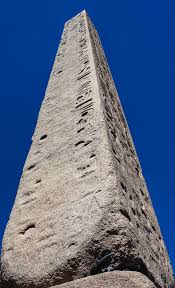
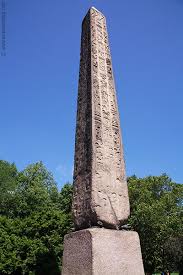
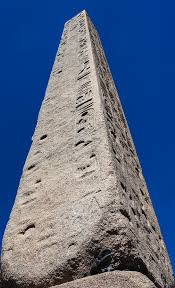
I always admire Cleopatra’s Needle whenever I am touring Central Park West after an afternoon at the Metropolitan Museum of Art. The obelisk sits in back of the Metropolitan Museum of Art on Fifth Avenue and the pathways behind the museum lead to the site.
It is one of the few place where you can see hieroglyphics up close unless you are in Egypt and the sad part is that the natural surroundings are wearing them out. Still it is one of the most interesting outside artifacts that Manhattan and New York City has on display. Take time to observe all four sides of the obelisk and observe the writings.
Sometimes I think the tourists miss this interesting artifact and how it got here from Egypt.
The History of Cleopatra’s Needle:
(From Wiki)
Cleopatra’s Needle (obelisk) was erected in Central Park, just west of the Metropolitan Museum of Art on February 22, 1881. It was secured in May 1877 by Judge Elbert E. Farnam, the then United State Consul General of Cairo as a gift from the Khedive for the United States remaining friendly neutral as the European powers, France and Britain, maneuvered to secure political control of the Egyptian government.
The obelisk is a twin of the obelisk given to London at the same time and come from the ancient city of Alexandria. The name is a misnomer as they have no relationship with the Ptolemaic Queen Cleopatra VII of Egypt and were already over a thousand years old in her lifetime (please see the Wiki link attached to the blog for more information on the obelisk).
The obelisk is free to the public and can be seen by taking the path behind the Metropolitan Museum of Art. It is open all day.
Franklin D. Roosevelt Four Freedoms Park is the first memorial dedicated to the president in his home state of New York. Located on the southern tip of Roosevelt Island in New York City, it is the last work of Louis I. Kahn, an iconic architect of the 20th Century.
The interior of the park facing Roosevelt Island
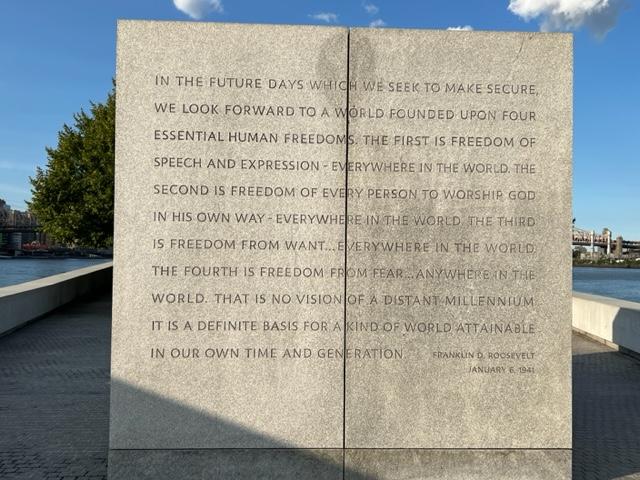
The memorial, which opened to the public in October 2012, celebrates the four freedoms, as pronounced in President Roosevelt’s famous January 6, 1941 State of the Union address: freedom of speech and expression, freedom of worship, freedom of want and freedom from fear. This has been prominently etched on the memorial.
FDR Four Freedoms Park from a view
Our Mission:
As steward of this civic space, Four Freedoms Park Conservancy advances President Roosevelt’s legacy and inspires; educates and engages the public in the ideals of the four freedoms. The Conservancy does this by:
*Safeguarding the memorial as a space for inspired use.
*Fostering community and understanding.
*Igniting conversation about human rights and freedoms today.
The Four Freedoms that were the goals of the President
On January 6, 1941, President Franklin D. Roosevelt delivered his eighth State of the Union address, now known as the Four Freedoms speech. In his address, Roosevelt presented his vision for the world, “a world attainable in our own time and generation,” and founded upon four essential human freedoms: freedom of speech and expression, freedom of worship, freedom from want and freedom from fear.
Roosevelt’s call for human rights has created a lasting legacy worldwide, forming the basis for the Universal Declaration of Human Rights adopted by the United Nations in 1948.
For a richer of FDR, his legacy and the four freedoms, visit fdr4freedoms.org.
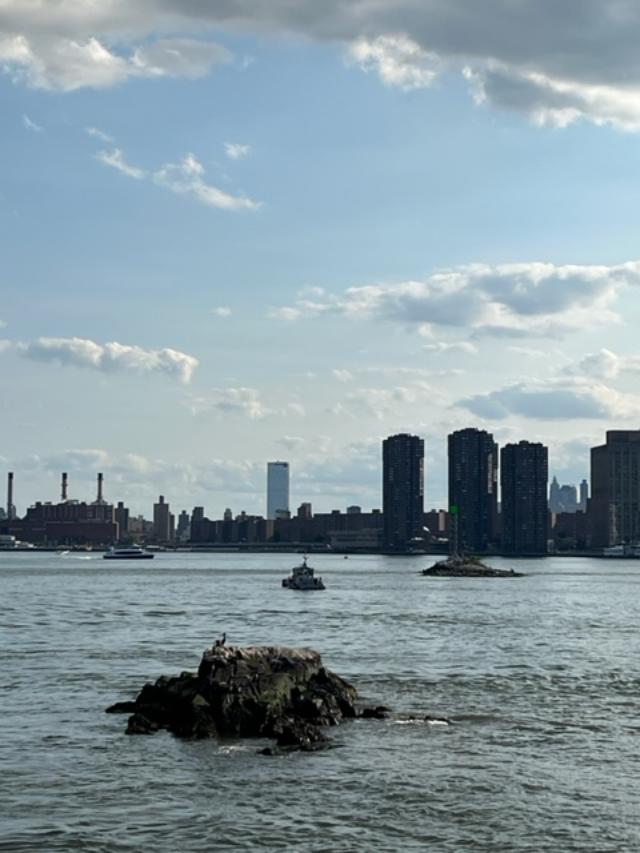
The view from Roosevelt Island of the Upper East Side
Franklin D. Roosevelt Island: A History
Originally called Minnahannock by Native Americans and Varkins Island by the Dutch settlers, the island was acquired by the Blackwell family in the 1600’s, who renamed the land Blackwell Island. The Blackwells lived on and farmed it before selling it to the City of New York in 1828 for $30,000.
In the 19th Century, the island was used by the City for institutional facilities, including the Workhouse, Penitentiary, Lunatic Asylum, City Hospital and City Home and given the name Welfare Island in 1921. These institutions served the City until the 1930’s., before gradually being relocated to areas more easily accessible to public transportation.
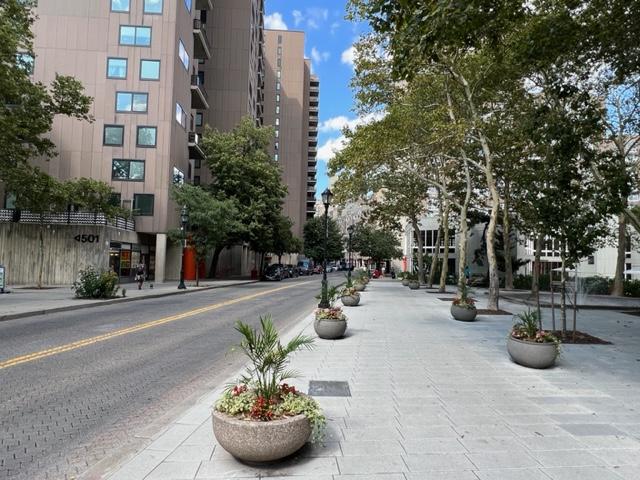
The Roosevelt Island Main Street
In 1969, this two-mile island was lease to the State of New York for 99 years. Under New York State’s Urban Development Corporation, Welfare Island became a beacon for the affordable housing movement within the City. Construction of the Island community was completed in 1975 with four housing developments. In 1973, the island was renamed Franklin D. Roosevelt Island.
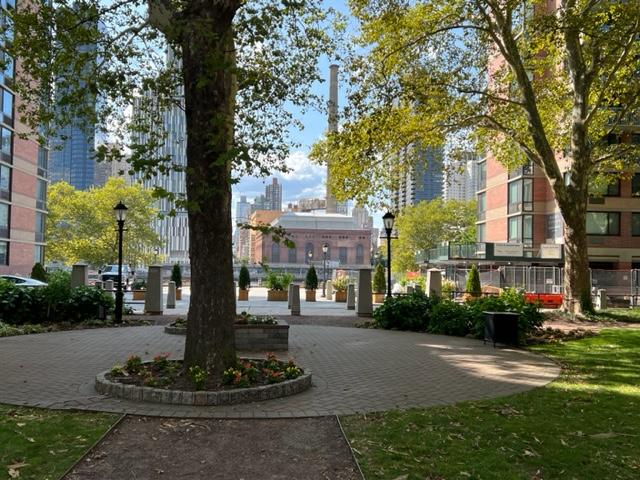
The Gardens in the Main Street of Roosevelt Island
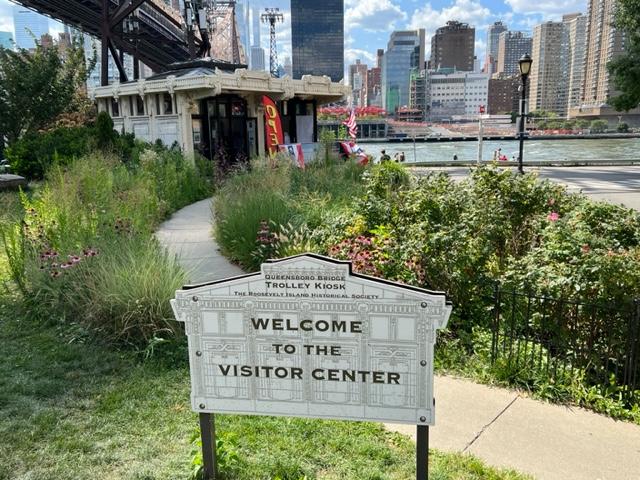
Today, Roosevelt Island has a small town feel with approximately 20 buildings and 14,00 residents. The island is home to six landmarked structures and proudly houses Four Freedoms Park, one of the original visions for the Island. To learn more, visit the Roosevelt Island Visitor Center at the Tram Plaza.
The Visitors Center at Roosevelt Island
(Judith Berdy, President, The Roosevelt Island Visitor Center)
A Memorial to Franklin D. Roosevelt
Nearly 40 years before the Park opened its gates to the public, Louis I. Kahn presented his vision for what would become Franklin D. Roosevelt Four Freedoms Park. It was a simple idea. “I had this thought,” Kahn said. “that a memorial should be a room and a garden.”
The FDR Hope Memorial
This was 1973. Less than a year later, Khan had died; Governor Nelson Rockefeller, who had announced the project with Mayor John Lindsay, became Vice President of the country and the City of New York neared bankruptcy.
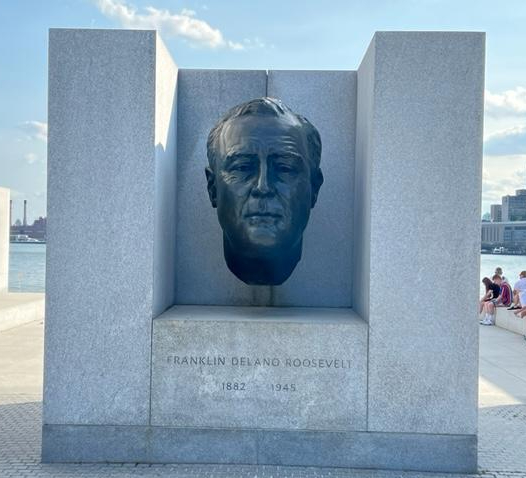
The bust of President Roosevelt
The future of the memorial seemed a fragile and tenuous dream. Yet, through the power and determination of a small but dedicated group, nearly four decades after Kahn completed his architectural design, Four Freedoms Park became the place he envisioned. In 2012, following 30 months of construction, the Park opened to the public. The Park is operated and maintained by Four Freedoms Park Conservancy in partnership with New York State Parks.
(Part of the New York State of Opportunity: Parks, Recreation and Historic Preservation)
I admired the FDR Hope Memorial in which the statue of the President reaches to a young girl with a disability herself. The statue offers encouragement to those with a disability and the power to persevere.
The statue was designed by artist and sculptor Meredith Bergmann, who herself was inspired by the photos and stories of the President (FDR Hope Memorial).
Artist Meredith Bergmann (Cooper Union Alumni Picture)
Ms. Bergmann is an American born artist with BFA from The Cooper Union School of Art and attended Parsons School of Design and Wesleyan University. Her public works explore history, social justice, human rights and disabilities (Author’s bio).
Franklin D. Roosevelt Four Points Freedom Park is the first memorial dedicated to the president in his home state of New York. Located at the southern tip of Roosevelt Island in New York City. It is the last work of Louis I. Kahn, an iconic architect of the 20th century.
FDR Four Freedoms Park
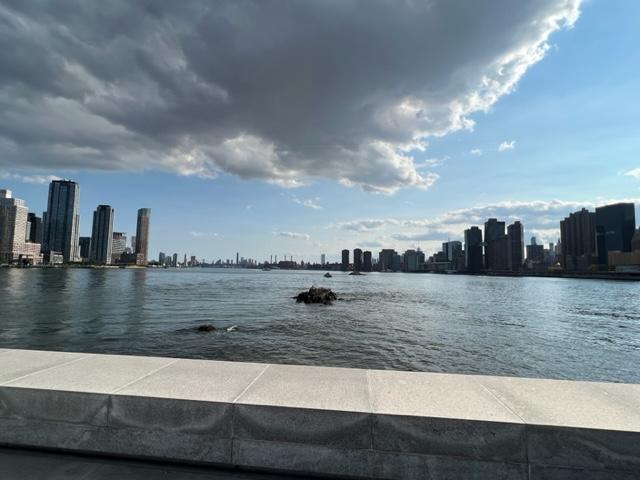
The memorial, which opened to the public in October 2012, celebrates the four freedoms, as pronounced in President Roosevelt’s famous January 6, 1941, State of the Union address: freedom of speech and expression, freedom of worship, freedom from want and freedom from fear.
The skyline from the southern part of the park.
Disclaimer: this information was taken from the NYS Parks, Recreation and Historic Preservation pamphlet. Please call the park or email to check on opening times when in season.
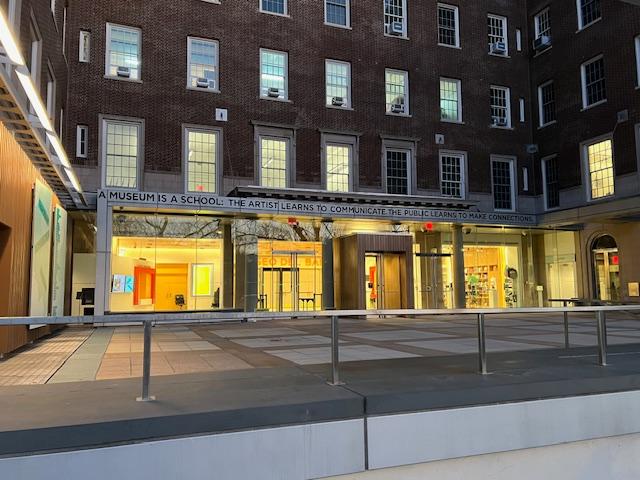
The mission of El Museo del Barrio is to present and preserve the art and culture of Puerto Ricans and all Latin Americans in the United States. Through its extensive collections, varied exhibitions and publications, bilingual public programs, educational activates, festivals and special events, El Museo educates its diverse public in the richness of Caribbean and Latin American arts and cultural history.
By introducing young people to this cultural heritage, El Museo is creating the next generation of museum-goers while satisfying the growing interest in Caribbean and Latin American art of a broad national and international audience.
The History of the Museum:
El Museo was founded 45 years ago by artist and educator Raphael Montanez Ortiz and a coalition of parents, educators, artists and activists who not that mainstream museums largely ignored Latino artists. Since its inception, El Museo has been committed to celebrating and promoting Latino culture, thus becoming a cornerstone of El Barrio and a valuable resource for New York City.
The exhibitions in the Main Gallery
El Museo’s varied permanent collection of over 6,500 objects, spans more than 800 years of Latin American, Caribbean and Latino art, includes pre-Columbian Taino artifacts, traditional arts, twentieth-century drawings, painting, sculptures and installations as well as prints, photography, documentary films and video. For a brief overview of our history and to explore the institutional chronology and exhibition history year by year.
The Galleries of El Museo del Barrio
Our Purpose:
El Museo del Barrio’s purpose is to collect, preserve, exhibit and interpret the art and artifacts of Caribbean and Latin American cultures for posterity.
To enhance the sense of identify, self-esteem and self-knowledge of the Caribbean and Latin American peoples by educating them in their artistic heritage and bringing art and artists into their communities.
To provide an educational forum that promotes an appreciation and understanding of Caribbean and Latin American art and culture and its rich contribution to North America.
To offer Caribbean and Latin American artists greater access to institutional support in the national and international art world.
To convert young people of Caribbean and Latin American descent into the next generation of museum-goers, stakeholders in the institution created for them.
To fulfill our special responsibility as a center of learning and training ground for the growing numbers of artists, educators, art historians and museum professionals interested in Caribbean and Latin American Art.
The mission reaffirms the vision of Raphael Montanez Ortiz, who founded El Museo del Barrio in 1969 and of the Puerto Rican educators, artists and community activities who worked in support of this goal.
(El Museo del Barrio pamphlet online)
The Collection:
The museum features an extensive collection of around 8,500 pieces composed of pre-Columbian and traditional artifacts, particularly a large permanent Taino exhibit as well as 20th century arts and crafts, graphics and popular media, Mexican masks, textiles from Chile and photographs and traditional art from Puerto Rico. There are often temporary exhibits on Puerto Rican and Latino modern art. The museum also sponsors numerous festivals and educational programs throughout the year including the annual Three Kings Day parade. Due to a lack of space prior to their 2009-2010 expansion, the museum began to place some of their permanent collection online. This also served as a means of audience development. (Wikipedia)
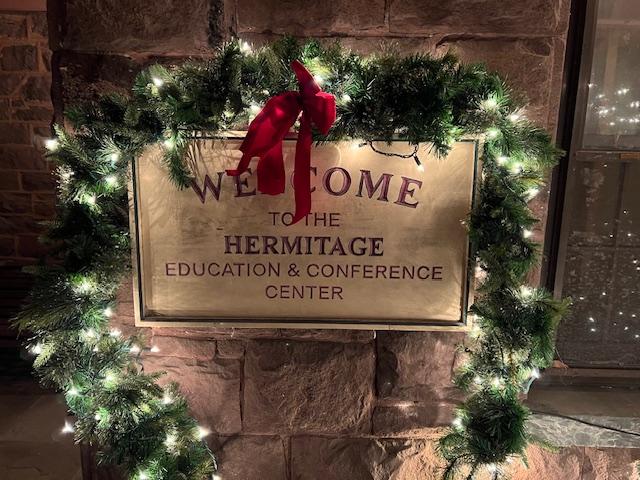
I have been to the Hermitage Museum many times for events and they do a nice job portraying the house in different periods at different times of the year. Both Christmas and Halloween at the homestead are always a treat.
The Hermitage at Christmas is very special.
The front of the Visitors Center and Gift Shop at Christmas time.
I have taken the Haunted House tours during Halloween when The Hermitage hosts seances. Their medium was not that convincing and I did not believe a word he said. We took a tour around the house at midnight and that was interesting. The house can be quite spooky at midnight but then every house is spooky at midnight. I noticed the boards creaking and the wind blowing around the house but that’s what old houses do. The house does creak a lot and when the wind acts up you can jump. Still there was noting to convey to me that the place was haunted.
The Hermitage is spooky at Midnight at Halloween.
The tour guides will go through how the family fortunes changed the way people lived in the house up to the 1970’s when the last family member died. Please don’t miss visiting the home during Halloween for their ‘Ghost tours’ . It can get quite spooky in the house at midnight with the wind hallowing and things creaking.
Things are much more cheerful at Christmas time when the house is decorated for the holidays. During the Revolutionary War, things were kept simple. There was church service in the morning and then a Christmas lunch and visits to family. It was not until the Victorian Age and the Industrial Revolution that things got more elaborate. Queen Victoria’s husband, King George came from Germany and brought with him Pagan traditions of evergreens, garland and greens all over the house to show life in the colder months of the year.
The tours of the house are $25.00 and very reasonable for a hourlong tour.
The house was decorated in 2018 for Christmas in the 1930’s during the Depression and it showed that people still decorated and gave presents in a more subdued way during this tough time.
The Hermitage keeps this tradition alive by decorating the house for the holidays. The entrance to the kitchen was kept simple but welcoming for visitors.
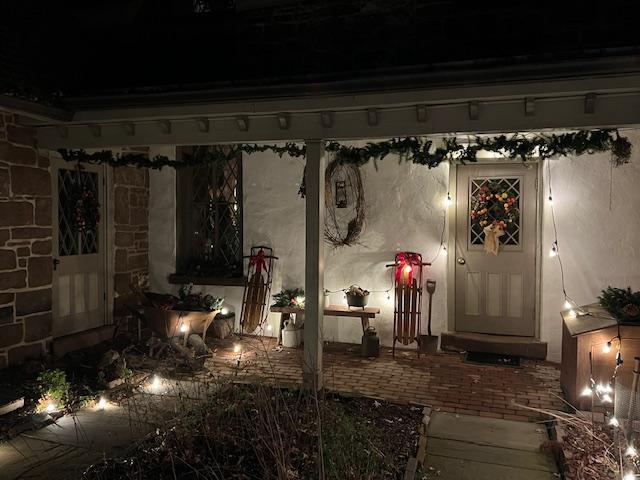
The decorations outside were kept simple with greens.
The outside of the house for the tour in 2023 was done in simple lights and greens but when it gets dark the magic of the holidays shows it beauty in the house. Each room is decorated for the holidays and there are all sorts of displays about Christmas, life at the Hermitage and elaborate displays of toys and gifts and meals that would have been served to the family at that time. There did not seem to be a nook or cranny that was missed and the house was just beautiful.
Getting ready for the holidays at the Hermitage.
The docent took us room by room and we got to see how the families lived at different times of the house’s history. We were allowed a glimpse into their daily lives at the holidays.
The Hermitage decorated for Christmas
In 2019, the house was decorated for the Victorian era and was done up quite elaborately. The Dining Room was set in the best china and silver with decorative poppers for Christmas lunch. The meal that day was one of the biggest and finest of the year with roasted oysters, roast turkey, sweet and mashed potatoes and many root vegetables.
The Hermitage is beautiful at Christmas time
The Living Room was decorated with an elaborate tree with lights and beautiful Christmas ornaments and there was garland all over the room leading into the hallway with more garland on the banister. The upstairs rooms were set with seasonal plants and clothing depicting the era. It looked like the family was going on an outing.
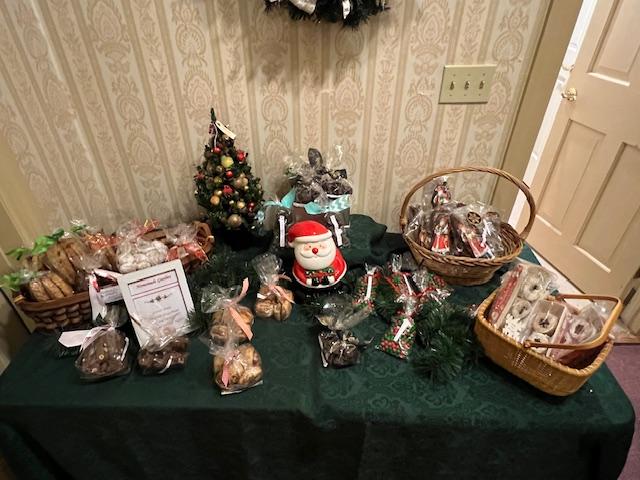
Sweets and Treats on sale and after the tours at Christmas time.
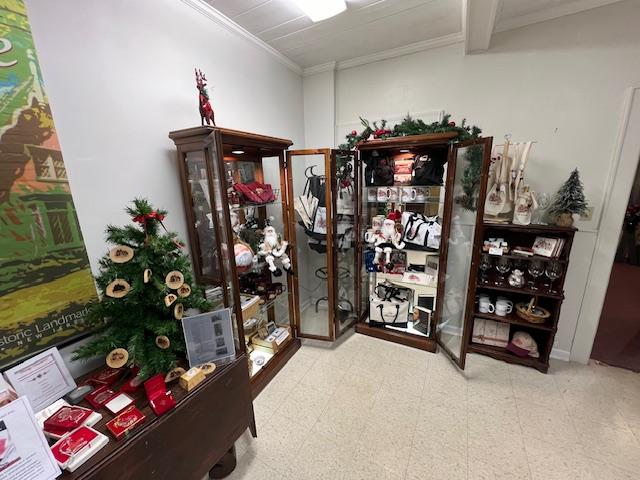
The Hermitage gift shop has amazing things at Christmas.
Touring the house at Christmas is always a treat as it was set up for a Victorian Christmas and the whole house was decorated inside and out. The pathways were set with luminaries and white lights and the porches were elaborately decorated.
The side of the house was decorated with white lights and luminaries.
The porch was decorated with an old fashioned sleigh
The front entrance to the house at Christmas.
The Hermitage Museum History:
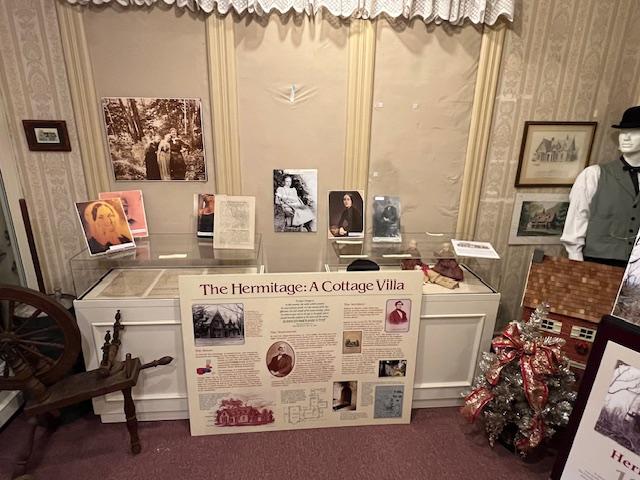
The Hermitage Museum in Ho-Ho-Kus, New Jersey is a charming and romantic mid-19th century Gothic Revival cottage. Surrounded by more than four acres of park land, the Hermitage is restored and furnished to reflect the lifestyle and interests of the Rosencrantz family during the second half of the 19th century.
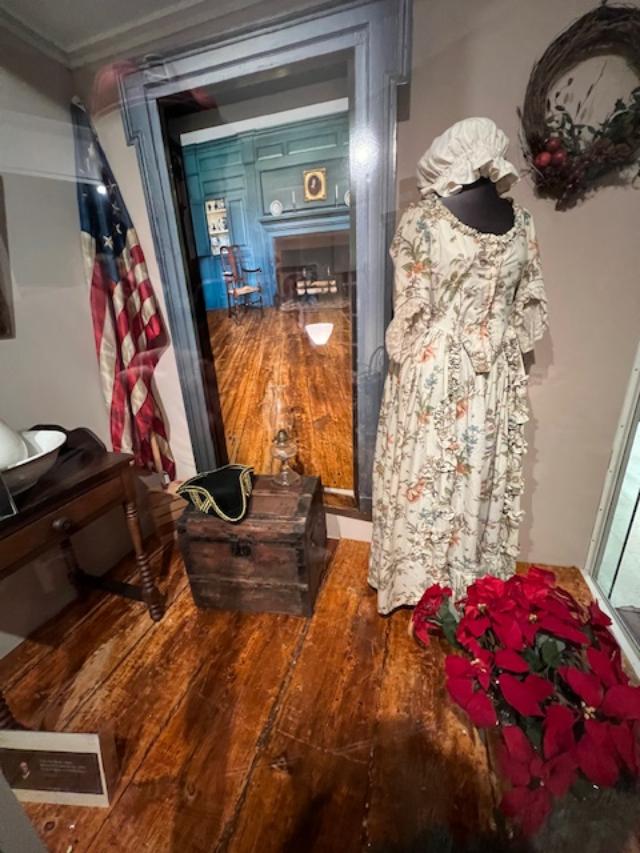
The Revolutionary War display.
The fourteen room home is built in the Gothic Revival architecture that surrounds the original Dutch American home built in the 1700’s. The original colonial estate was bought by Ann Barlow DeVisne, who was from Manhattan, for herself and her five children.
The Rosencrantz Doll collection at the Hermitage.
One of the children, Theodosia Bartow Prevost, lived in the house with her husband, James Marcus Prevost. Major James Marcus Prevost fought on the side of the British during the Revolutionary War in battles in Georgia and North Carolina. Her husband would be later killed in the War.
The front of the house decorated for Christmas 2023.
During battle time with the British, Theodosia invited General Washington to stay at the house which he and his troops did in 1778. Theodosia welcomed all troops, both British and American to stay at the house during the war. In 1782, she married Aaron Burr, a soldier she had met during the war. On top of her five children by her first marriage, she had another child with Aaron Burr named Theodosia. Theodosia Prevost-Burr died in 1794.
The original Ice House/Smoke House at night.
The house was then sold to the Rosencrantz family in 1807 and then the house was expanded from the Dutch tradition into the Gothic Revival addition between 1847-48 by noted architect, William H. Ranlett. The addition was at the request of Elijah Rosencrantz Jr.
The Revolutionary War display at the Hermitage.
The house was lived in by four generation of Rosencrantz’s. Elijah’s daughter, Mary Elizabeth, was born in the house in 1885 and lived there her entire life until 1970 when she fell ill. She left the house to the State of New Jersey as a National Historical site.
The history of the Hermitage display at the museum.
The Hermitage is special at the holidays
During Christmas time, the house is decorated for the holidays. This year’s theme in 2018 is “Home for the Holidays: A 1930’s Christmas at the Hermitage”. The house is decorated at the time of the Great Depression and how people dealt with those times while still providing holiday cheer to their families. The decorations do not reflect Victorian times but more when times were tough and people had to watch their budgets.
The house was beautifully decorated for the holidays.
Even the gift shop offered cheerful items such as ornaments, collectables, small trees and elaborate gifts.
This cheerful Santa was on sale at the gift shop at the Hermitage. By the time I came back from the tour, he was sold.
Disclaimer: this information was taken directly from The Hermitage pamphlet and Wikipedia and Google. Please call the facility for information on special events.
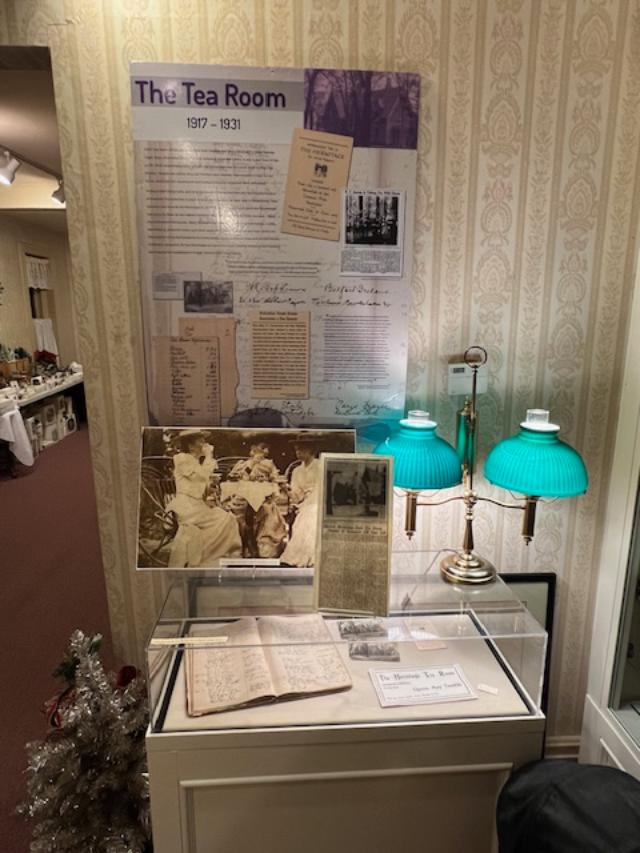
The Hermitage “Tea Room” exhibition where the family made money during the 1900’s -1930s.



















 Visiting a Museum: The Unique, Unusual, Obscure and Historical