Tag: diningonashoestringinnyc.com

Instituto Italiano di Cultura (The Italian Cultural Institute of New York)                                                                                  686 Park Avenue                                                                                    New York City, NY 10065

Instituto Italiano di Cultura (The Italian Cultural Institute of New York) 686 Park Avenue New York City, NY 10065

Instituto Italiano de Cultura (The Italian Cultural Institute of New York)

686 Park Avenue

New York, NY 10065

(212) 879-4242

https://www.instagram.com/accounts/login/?next=https%3A%2F%2Fwww.instagram.com%2Fiicnewyork%2F&is_from_rle

My review on TripAdvisor:

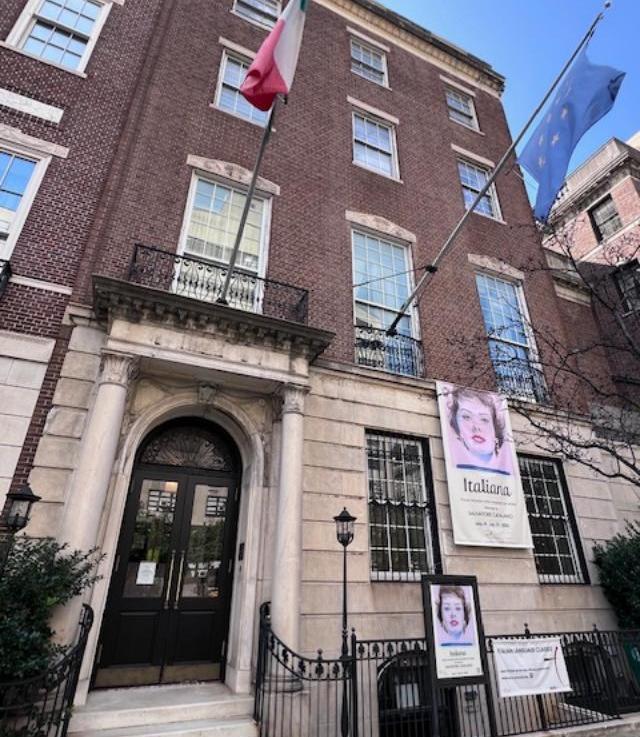
Instituto Italiano de Cultura at 686 Park Avenue

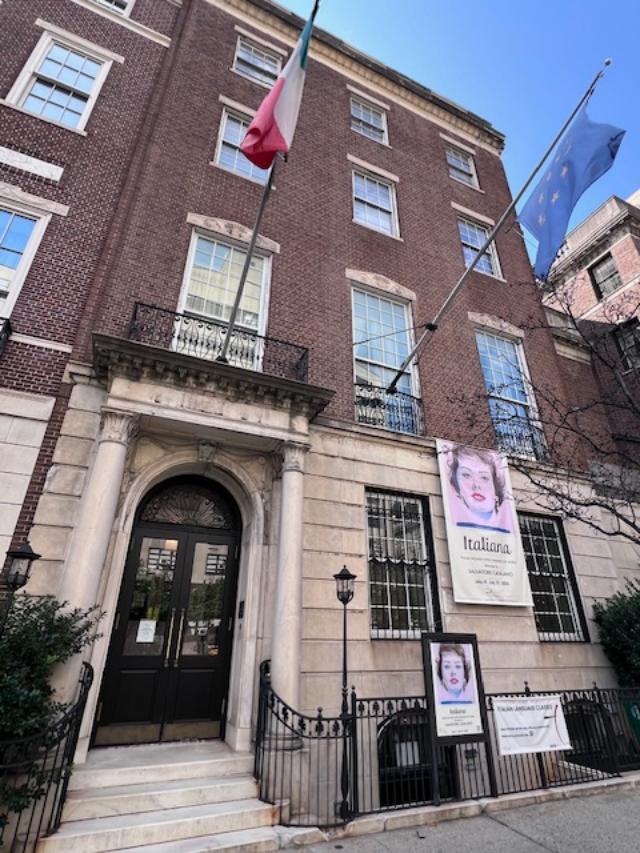
The Institute of Italian Culture has a small gallery in it that several times a year hosts small art gallery events that are open to the public. This one caught my eye when I saw the picture of Sophia Loren looking back at me when I passed.

I thought it might be interesting and I stopped to see “Italians: Italian Women who changed the World” by artist Salvatore Catalano. The gallery held about fourth pictures of Italian women from all over the world and of different time periods who influenced art, fashion, politics and business.

There were many names I recognized and a few who I did not know. The works were very interesting and engaging.
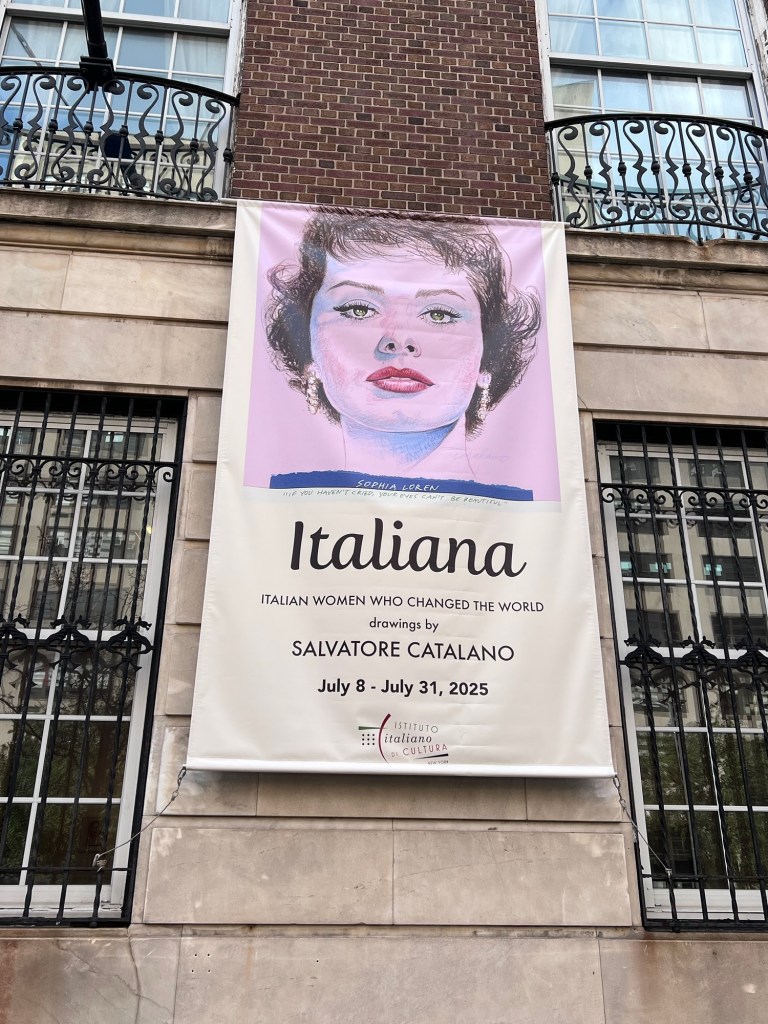
The sign that welcomes you to the gallery
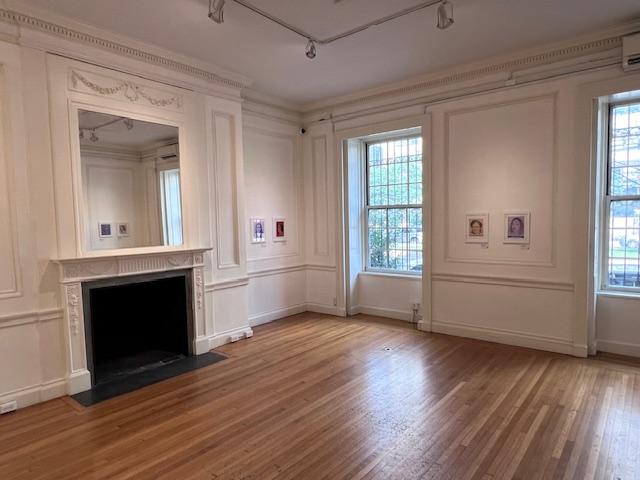
The main gallery at the Instituto Italiano di Cultura for the “Italiana: Italian Women Who Changed the World” exhibition
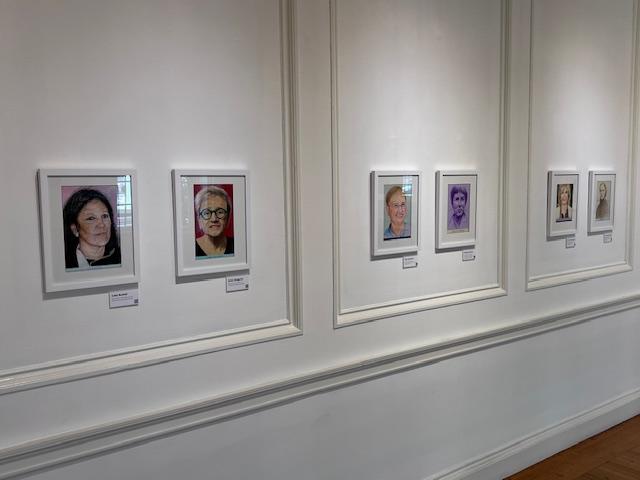
The exhibition Italiana: “Italian Women Who Changed the World” by artist Salvatore Catalono highlights the many impressive achievements by Italian women over the course of the last few centuries, until today.

(From the museum website):

These formidable women all greatly impacted the world in one way or another, often also against the odds imposed by a “male-ruled” society. The selection of 22 portraits includes scientists, politicians, entrepreneurs, artists, humanitarians and writers. These women all accomplished incredible feats and have contributed to the world in ways that still continue to resonate nowadays.

The Institute of Italian Culture exhibition sign:

The show Italiana: Italian Women Who Changed the World”
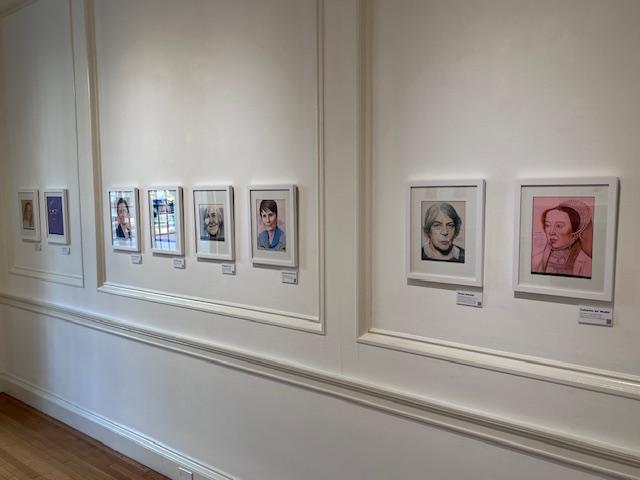
These were my favorite sketches from the show and women I most admired in the show.

Miuccia Prada, of the Prada fashion empire

Catherine de Medici, who revolutionized French Culture

Sophia Loren, the famous Italian actress

Lidia Bastianich, the Chef and restauranteur

The sketching’s represented different eras.

(From the museum website)

They are not all household names, but they are all at the top of their professions and exemplify the spirit of Italy. Salvatore Catalano uses his art as a vehicle to transmit these stories and to highlight the lives of these incredible Italian women.

Artist Salvatore Catalano

https://www.salvatorejcatalano.com/

https://www.instagram.com/catalano7127/

(from the Italian Cultural Institute of New York website)

Salvatore Catalano is an artist, illustrator, and educator. Catalano works in all forms of visual communication. His art has appeared on everything from postage stamps to billboards and his work is in many private and corporate collections. He is an educator at the college level, teaching in New York City and Florence, Italy.

Catalano has worked with The United Nations, U.S. Government, Department of The Interior, National Audubon Society, The New York Times, The New Yorker, ABC, CBS, NBC, American Museum of Natural History, Smithsonian Institution, N.Y. Zoological Society, Merck, Pfizer, Johnson & Johnson, Bayer, GlaxoSmithKline, Coca Cola, Pepsi Cola, Seagram’s, General Foods, Sony, Panasonic, Citibank, Scholastic, Harper-Collins, Bantam-Doubleday, Dell, MacMillan, DuPont, Exxon, State of New Jersey Children’s Television Workshop, McGraw-Hill, Ranger Rick, among others. He has also worked on more than thirty books for children.

The History of the Instituto Italiano di Cultura in New York City:

(from the Instituto Italiano di Cultura website)

The Italian Cultural Institute in New York was founded in 1961 by the Italian Government. Its mission is to promote Italian language and culture in the United States.

Under the guidance of its trustees at the Ministry of Foreign Affairs, its advisory board, and its staff, the Italian Cultural Institute in New York fosters cultural exchanges between Italy and the U.S. in a variety of areas, from the arts to the humanities, to science, and technology.

Central to the Italian Cultural Institute’s activity is its collaboration with the most prominent academic and cultural Institutions of the East Coast. The scientific exchanges, the organization of, and support to, visual arts exhibitions, the grants for translation and publication of Italian books, inspire and nourish the Institute’s initiatives.

In particular, we focus on the relationship between memory and innovation, and the multiplicity of identities in the Italian civilization. The Italian Cultural Institute in New York, therefore, provides an “open window” on main cultural and social aspects of past and current Italy.
Van Houten Family Cemetery                                                            108 Delaware Lane                                                                          Franklin Lakes, NJ 07417

Van Houten Family Cemetery 108 Delaware Lane Franklin Lakes, NJ 07417

Van Houten Family Cemetery

108 Delaware Lane

Franklin Lakes, NJ 07417

https://www.findagrave.com/cemetery/1598327/van-houten-family-cemetery

https://www.myheritage.com/names/john_vanhouten

https://www.wikitree.com/genealogy/VANHOUTEN

My review on TripAdvisor:

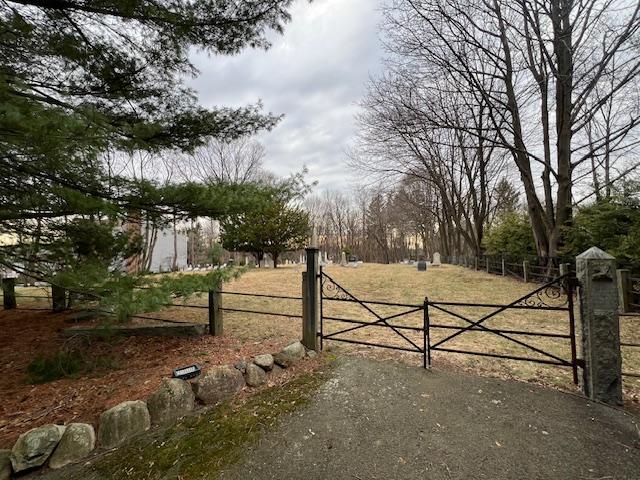
The Van Houton Family Cemetery at 108 Delaware Lane on what was once the family farm

The historic Marker from 1822

The family plot from the entrance of the cemetery

About five generations of Van Houton’s have been buried in this spot, with an impressive list of family members who have served in all the nation’s wars.

From the Revolutionary War up to World War II, the family’s contribution extends not just to Bergen County but our entire country.
The family extends to other older ‘first families’ of Bergen County, such as the Snyder’s, the Demarest’s, DeBuan’s and the Van Ripper’s.
History of the Cemetery:

https://www.interment.net/data/us/nj/bergen/vanhouten/van.htm

(From the research of Richard Hrazanek)

This multi-generational cemetery is still used today by the descendents of John Van Houten, who left the property in his will. The grounds of the cemetery are well maintained. A metal fence around the property could use some minor repairs. Unfortunately a couple of the obelisk markers have fallen off their bases.

In the August 1992 Cemetery Inventory Booklet, published by the Bergen County Department of Parks, Division of Cultural and Historic Affairs, they listed Andrew Schaaf as a contact person for the cemetery, with an address of 749 High Mountain Road, Franklin Lakes, NJ 07417. The same publication mentions that an inventory of the cemetery was done by John Neafie in 1911.

The oldest tombstones in the center

The History of Franklin Lakes:

(From the Franklin Lakes Town website):

https://activerain.com/blogsview/238626/franklin-lakes-new-jersey-history

In the 17th century, Lenape Indians traveled the land we now call Franklin Lakes.  They made winter camp in the “Clove” near Buttermilk Falls and fished in Micharagrape Pond ( now Franklin Lake).

Slowly, the Dutch settlers made their way west from the Hudson River Valley.  In 1701 the East Jersey Proprietors confirmed to Michael Hawden the land around the Pond.  In 1772 Franklin Township was formed and included much of northwestern Bergen County.  Farming was the major occupation of the early inhabitants, mostly Dutch with the names of Van Winkle, Van Houten, Ackerman, Pulisfelt, Van Blarcom, etc.  They built solid farmhouses of sandstone and fieldstone.  Fourteen of these historic homes still stand in our Borough.

Some of the original family member tombstones in the cemetery

Mills sprang up along the creeks: sawmills, gristmills, tanneries and forges.  Daniel Youman’s Grist Mill on Franklin Lake was probably the first business established (it later served as a saw mill and a cider mill).

The 1876 Walker Atlas showed Franklin Lakes had about 100 residences, 5 mills, 1 tannery, 3 schools, 4 blacksmith and wagon shops, 1 church, 2 hotels, 1 store, and 2 railroad depots.

The railroad stations were built in 1869 when the New Jersey Midland Railroad was extended to Oakland.  One station stood at Campgaw on Pulis Avenue, the other at Crystal Lake on High Mountain Road.  Residents used the train for commuting, moving goods and mail.

Around the turn of the century, estate houses and mansions began to appear in the area.  The industrial revolution brought wealth, and many of the wealthy became “gentleman farmers,” sometimes living here only in the summer.  Examples of these houses include the Bartholf-Hughes house on Somerset, the Post-Terhune house on Franklin Lake Road, and the Atterbury-Brockhurst house on Ewing Avenue.

Eventually, the Campgaw section became the civic center of our Borough.  In 1922 Franklin Lakes separated from Franklin Township, incorporated, and elected William V. Pulis as its first Mayor. 

Edward May built three lakes and started the Shadow Lake Swim Club, which evolved into Shadow Lakes Estates.  On the other side of the Borough, J. Nevins McBride purchased land around Franklin Lake and began building single-family homes in Urban Farms.

When Route 208 was extended to Oakland in 1959, Franklin Lakes became more accessible, and by 1980 there were more than 8,500 residents.  The completion of Interstate 287 in the early 1990’s stimulated another boom in building.  Today, the population of our Borough is 10,422.

From a sleepy rural community to an affluent metropolitan suburb, Franklin Lakes has changed extensively, continuing to be a desirable place to live and raise families.

The Franklin Lakes Historical Society was created to help preserve our Borough’s rich history, while at the same time looking to the future of our unique community and those who choose to make this their home.

courtesy http://www.franklinlakes.org 

The family still uses the cemetery into the twenty-first century

Part of the cemetery into modern times

Multiple family members are often buried together

The cemetery in modern times

The children of Ralph Van Houten who passed within a few years of one another

The grave of Abraham Van Houton and his wife, Bridget

The front part of the cemetery shows the different branches of the family and when they were buried.

The back part of the cemetery is rather old

The Snyder branch of the family

Another branch of the Van Houten family is buried together here

Members of the Ackerman and Cooper side of the family

Conrad and Elizabeth Van Houten

Jacob and Elizabeth Van Houten

Some of the modern graves of the Van Houten’s and Ackerman sides of the family

Many of these small family plots sit on buffs and have the most amazing views. It is as if the final resting place was to be a place of beauty and contemplation.

Unfortunately the family farm is long gone and the cemetery is now surrounded by McMansions. Talk about progress!

Day Three Hundred and Seventy-Six Touring the Met-Cloisters at Christmas time ‘The Yule Tide Tour’-The Walking tour of the Museum                                          January 4th, 2026

Day Three Hundred and Seventy-Six Touring the Met-Cloisters at Christmas time ‘The Yule Tide Tour’-The Walking tour of the Museum January 4th, 2026

I love the holidays in New York City. There are so many Christmas themed events to go to and decorated homes to visit. One of my favorite tours is at the Met Cloisters for their Christmas themed walking tours that take place from December through early January.

The Cloisters Museum & Gardens: A Branch of The Metropolitan Museum of Art

99 Margaret Corbin Drive

Fort Tryon Park

New York, NY  10040

(212) 923-3700

Open: March-October 10:00am-5:15pm/November-February-10:00am-4:45pm

http://www.metmuseum.org

https://www.metmuseum.org/visit/plan-your-visit/met-cloisters

Fee: Adults $30.00/Seniors $17.00/Children $12.00/Members & Patrons and Children under 12 are free (prices do fluctuate).

Museum Hours:

Hours: Open 7 days a week

March-October 10:00am-5:15pm

November-February 10:00am- 4:45pm

Closed Thanksgiving Day, December 25th and January 1st.

*Some galleries may be closed for construction or maintenance.

TripAdvisor Review:

https://www.tripadvisor.com/Attraction_Review-g60763-d106609-Reviews-The_Met_Cloisters-New_York_City_New_York.html?m=19905

My review on VisitingaMuseum.com:

To finish my weekend of holiday festivities before the Epiphany, I took the annual Christmas walking tour of the Met Cloisters. The museum hosts an interesting walking tour of the history of the holidays during the Medieval era. Each tour has a different theme to it. There is the history of Christmas in that era, the use of plants and flowers in the decorating of the religious sites and the historic significance of the visit of the Three Kings.

Each tour guide incorporates the artwork, architecture and plants into the discussion. On average you will have about forty people on the tour.

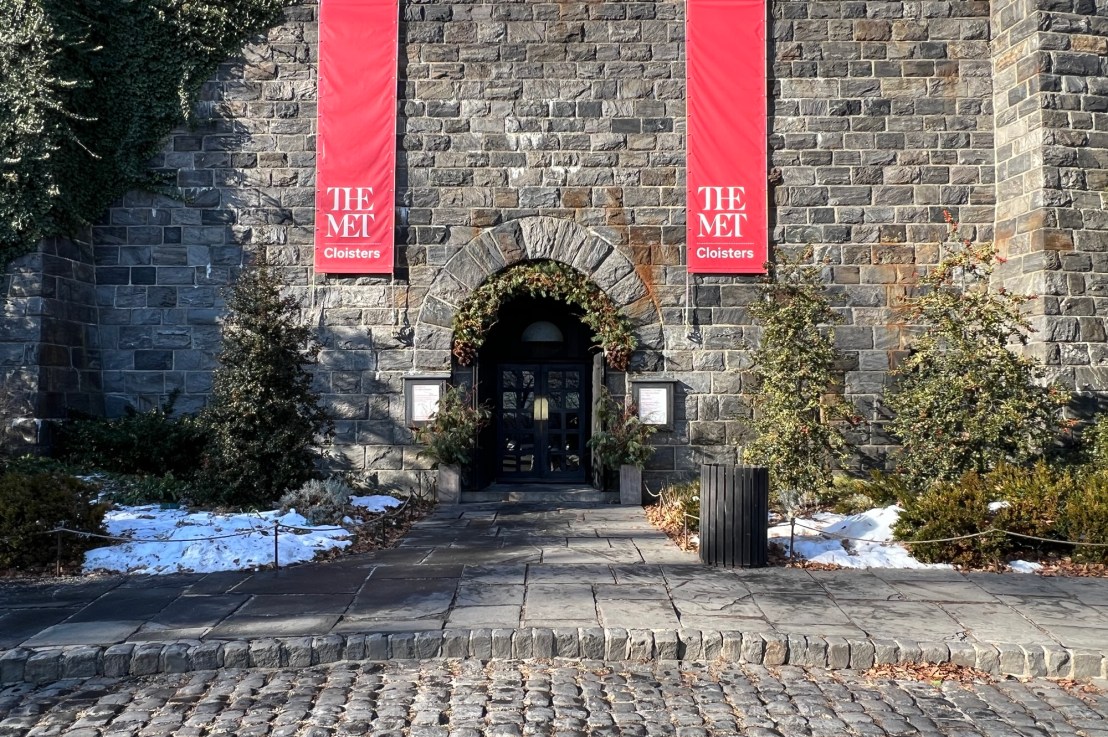
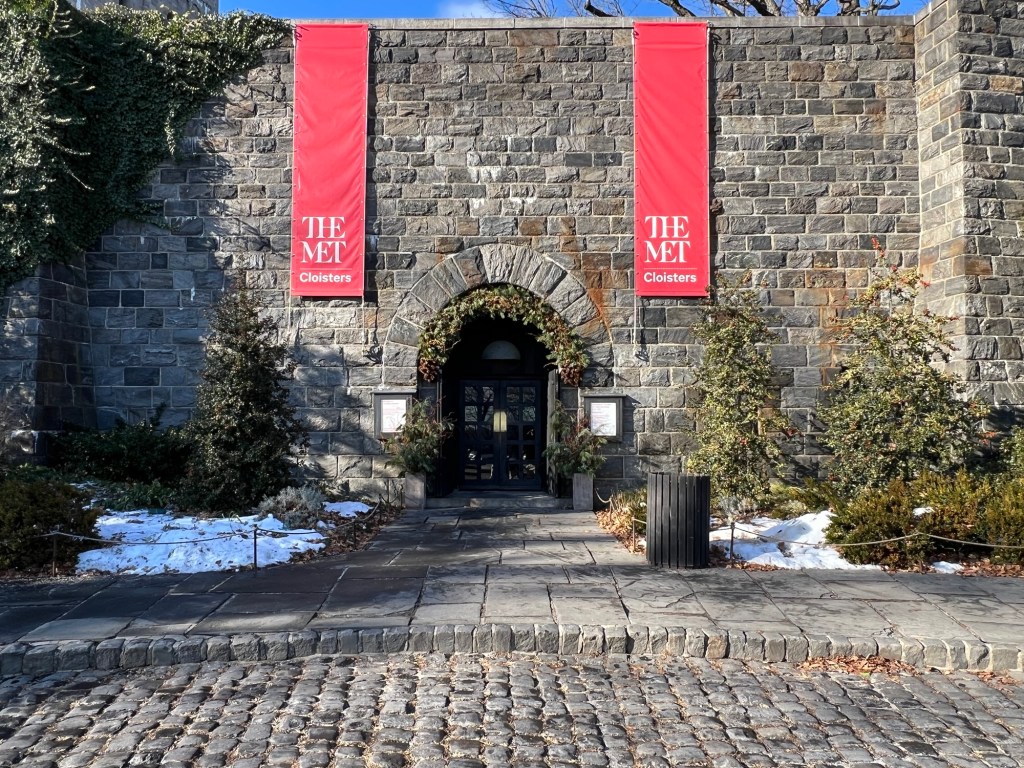
The entrance of the Cloisters decorated for the holidays

The Christmas Tide Tour:

https://www.metmuseum.org/perspectives/christmastide-deck-the-halls

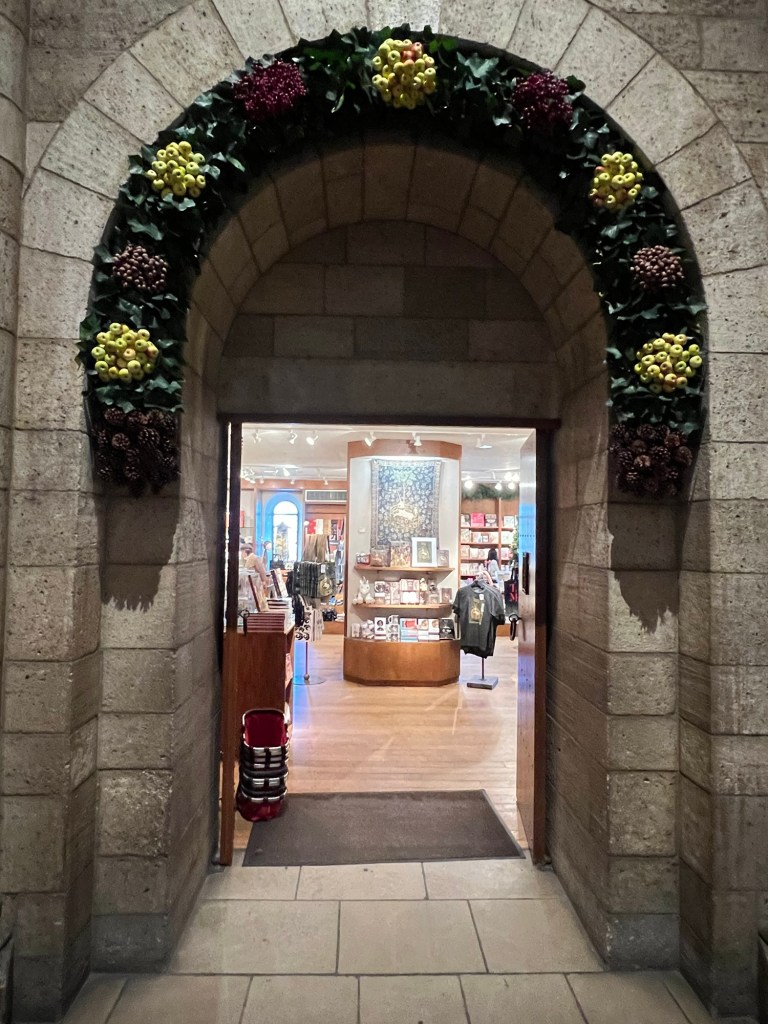
The entrance of the gift shop decorated for the holidays

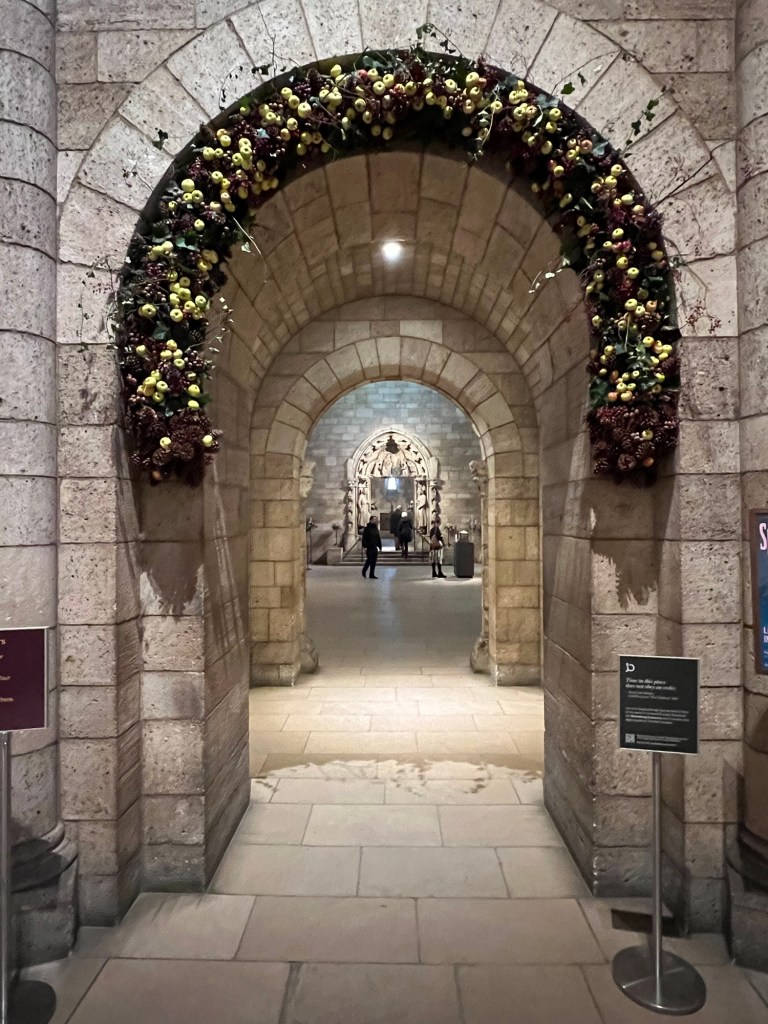
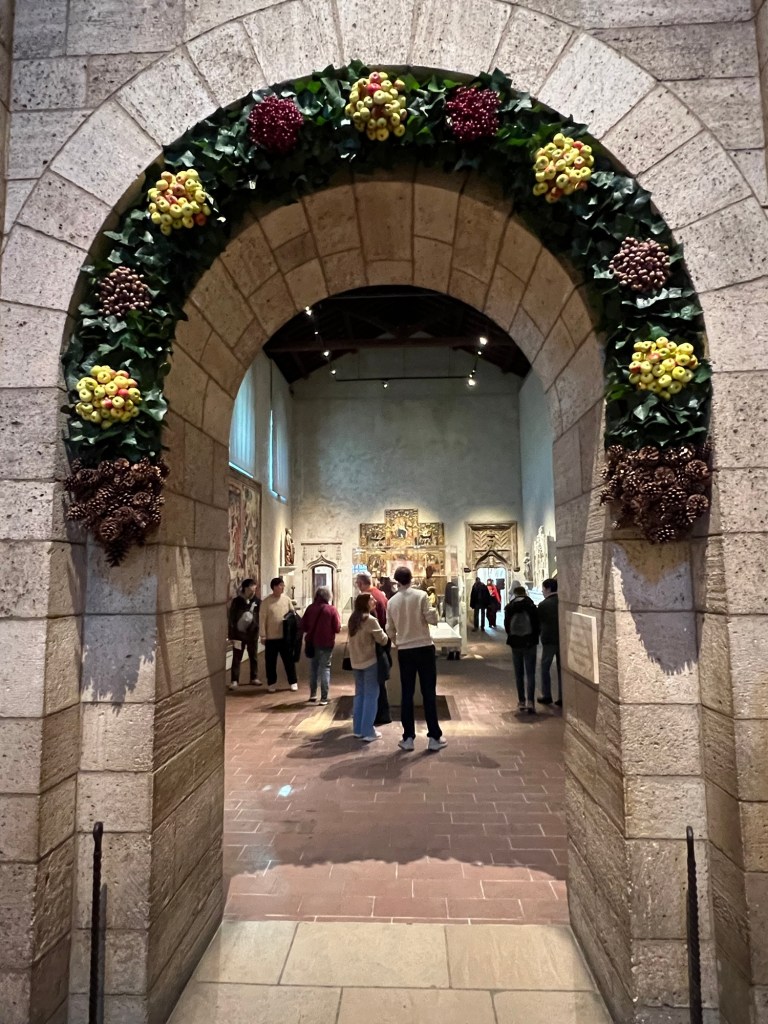
The archways were decorated with seasonal plants and fruits. I read online that the volunteers went into Fort Tyron Park and collected ivy from the wild to decorate the museum. Every day the museum is open during the holidays these are replaced on a daily basis.

The entrance to the galleries decorated for the holidays

We started the tour with a discussion of plants that once decorated churches and ministries

With the change in attitude towards the Christmas holidays during the Middle Ages and its incorporation into church traditions, decorating for the holidays came back into style. The use of holly, evergreen and mistletoe became part of the Christmas tradition and to justify the decorating, they were related to Christian symbols.

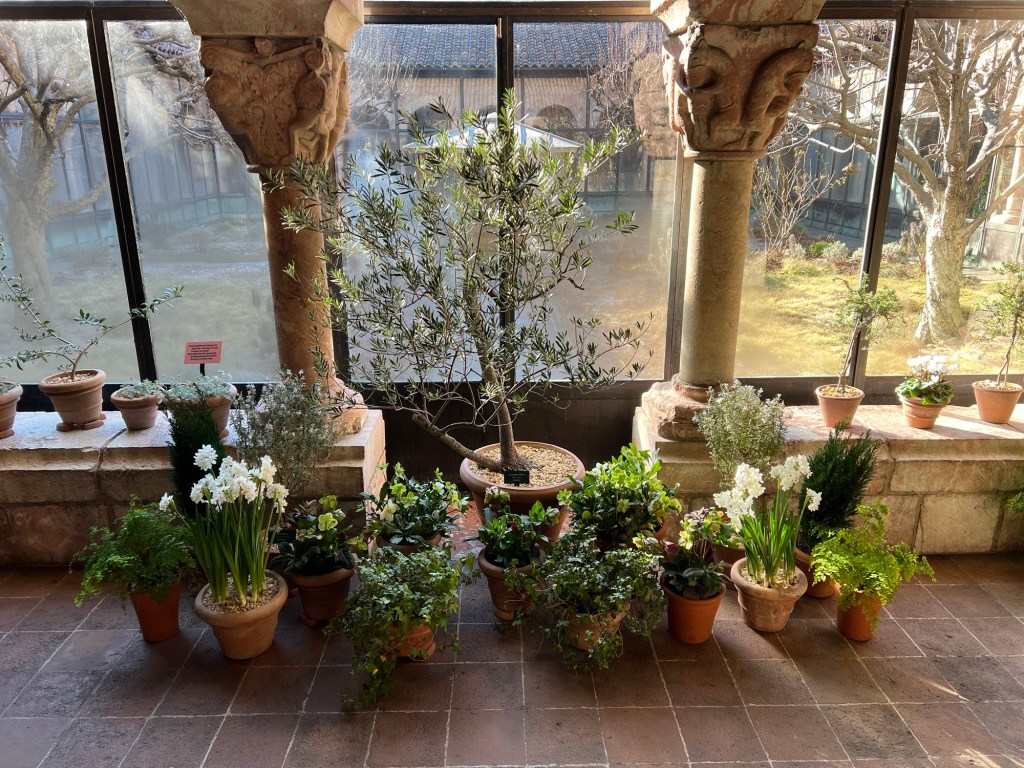
The beauty of the life plants in winter

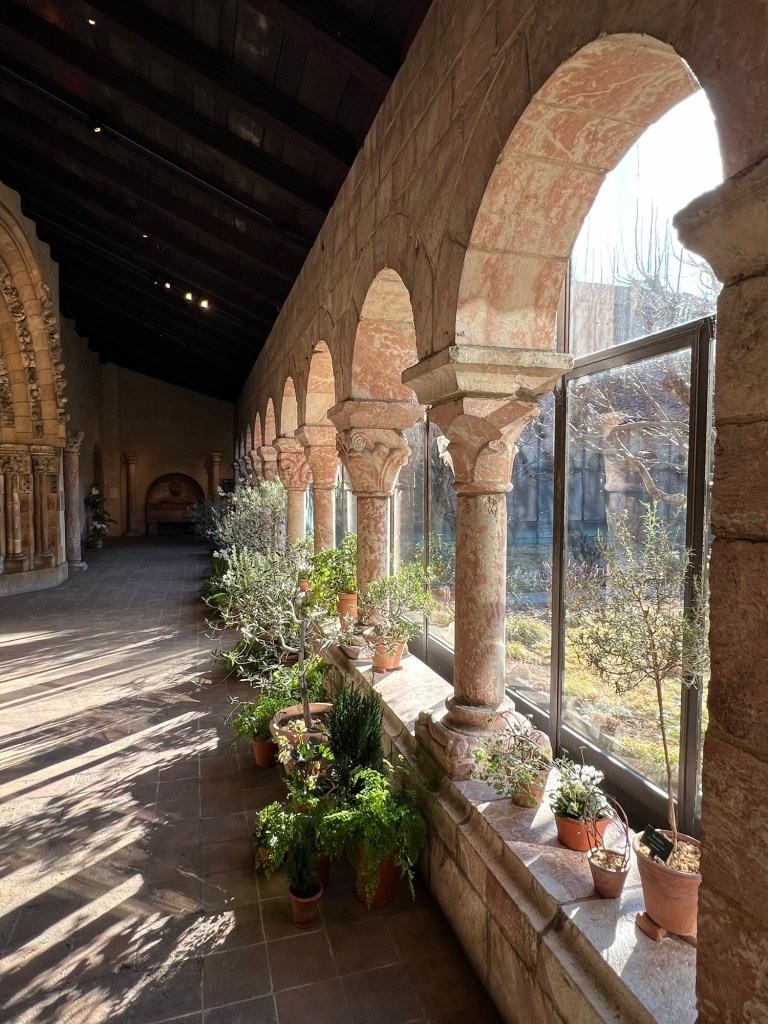
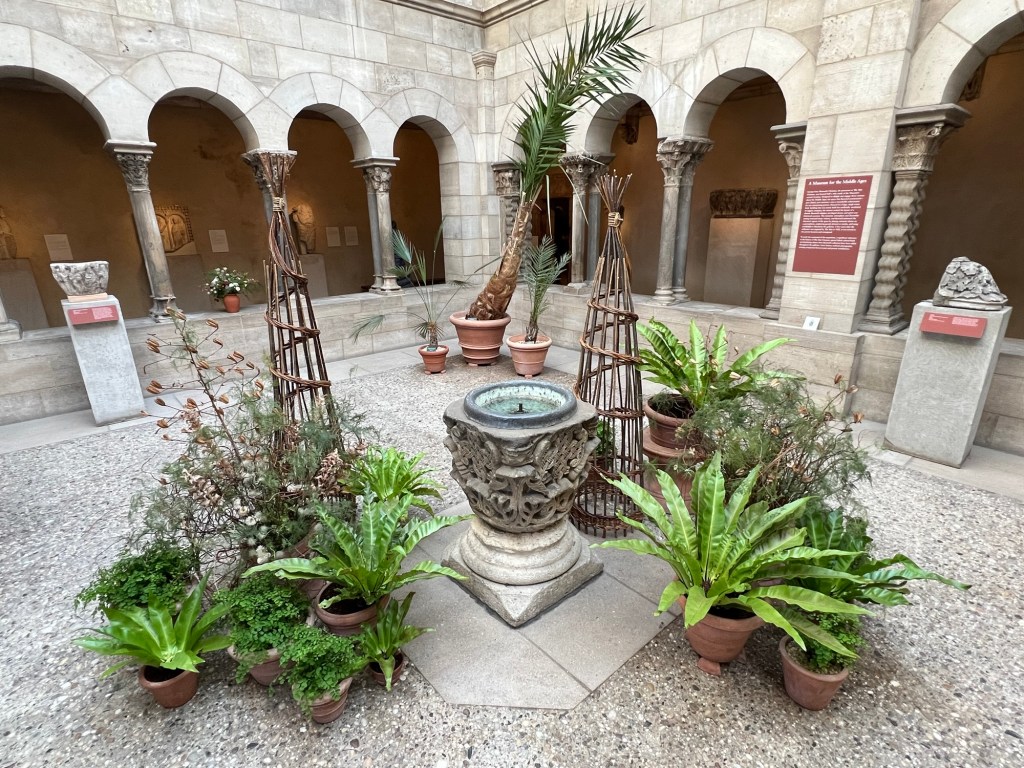
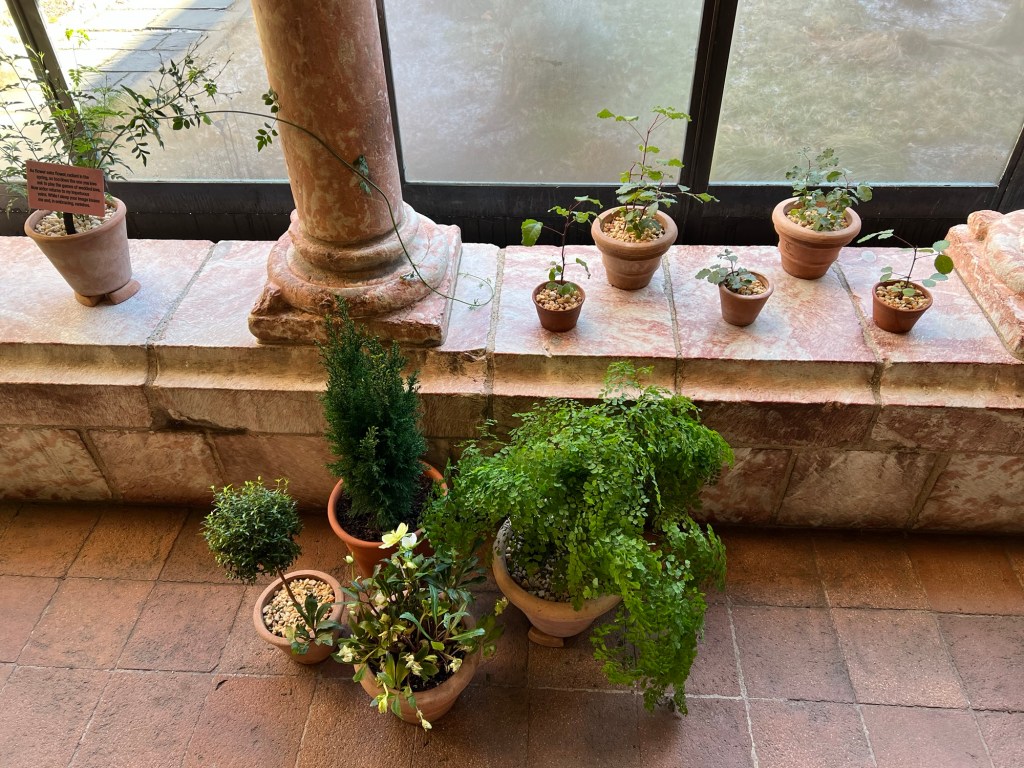
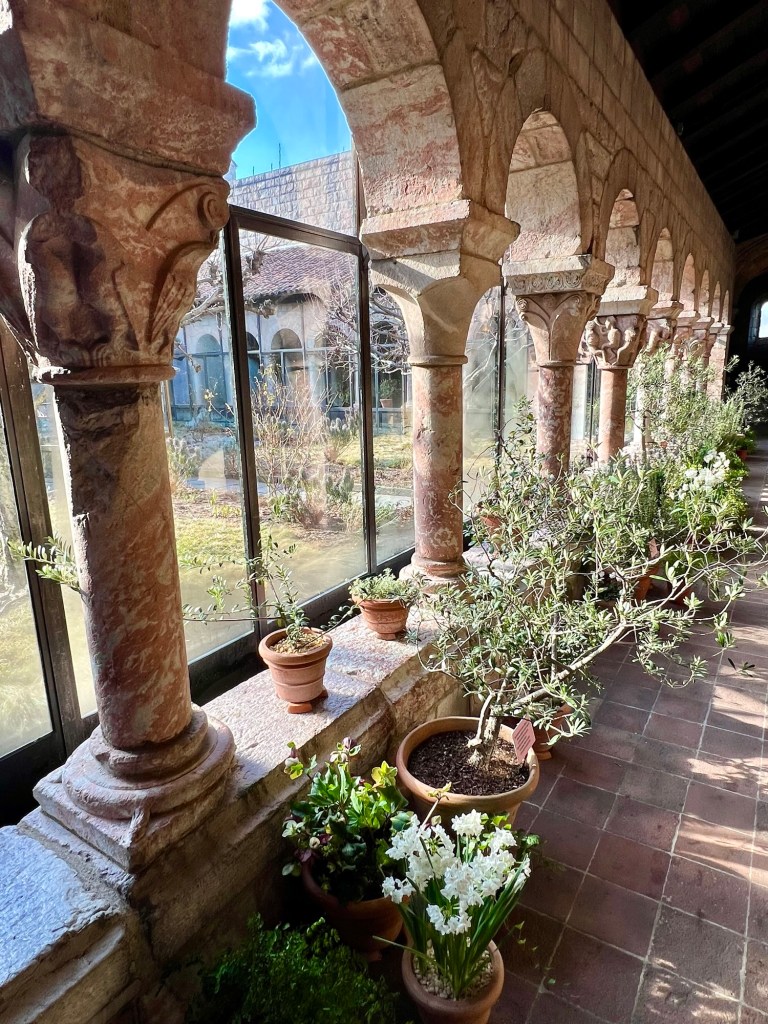
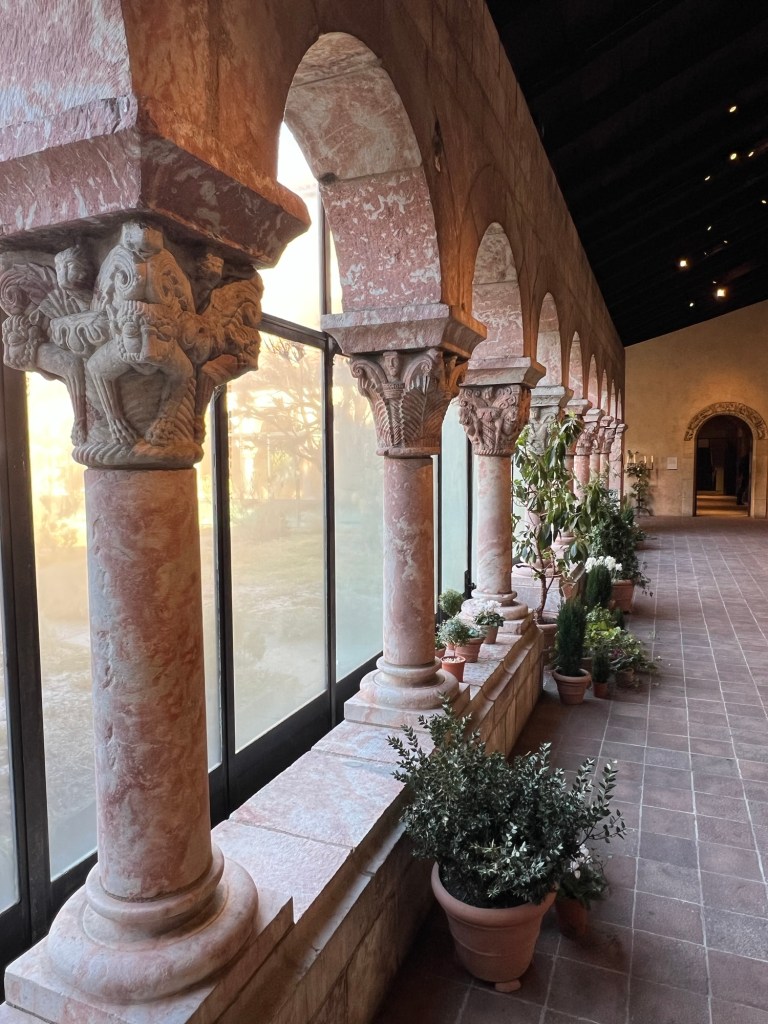
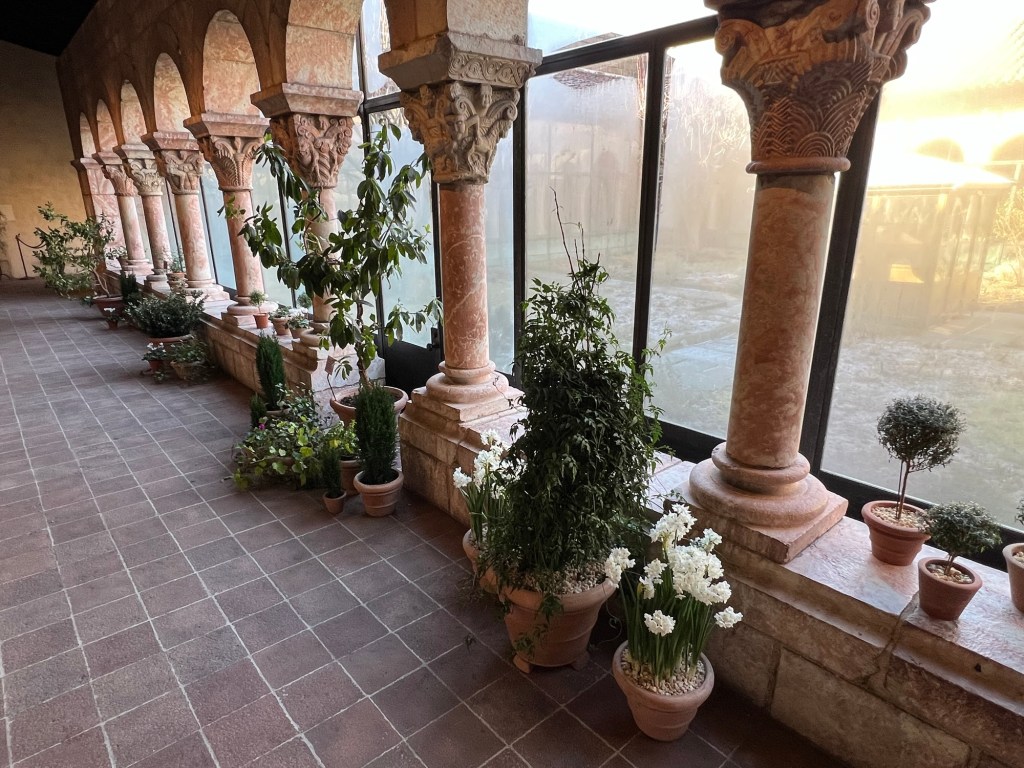
Each of the Cloisters were lined with fresh greens and potted plants giving each of the Cloisters its own special mood.

One of the Cloisters bright with plants

The stairs leading into the chapel decorated for the holidays

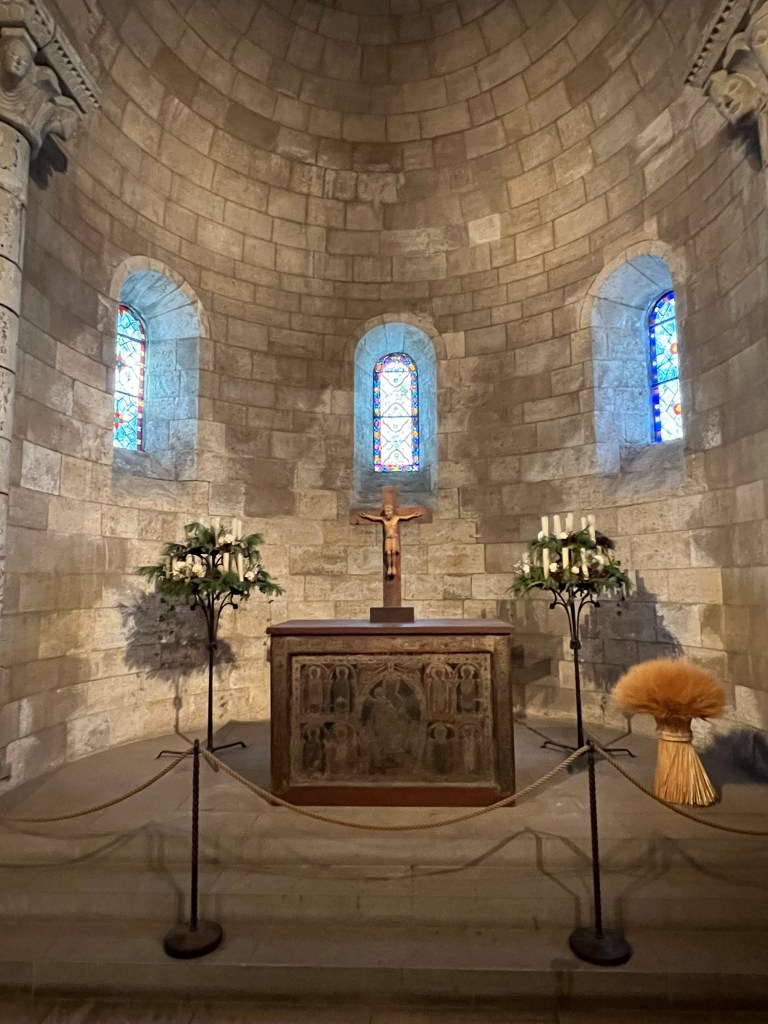
The chapel on the main floor decorated for the holidays

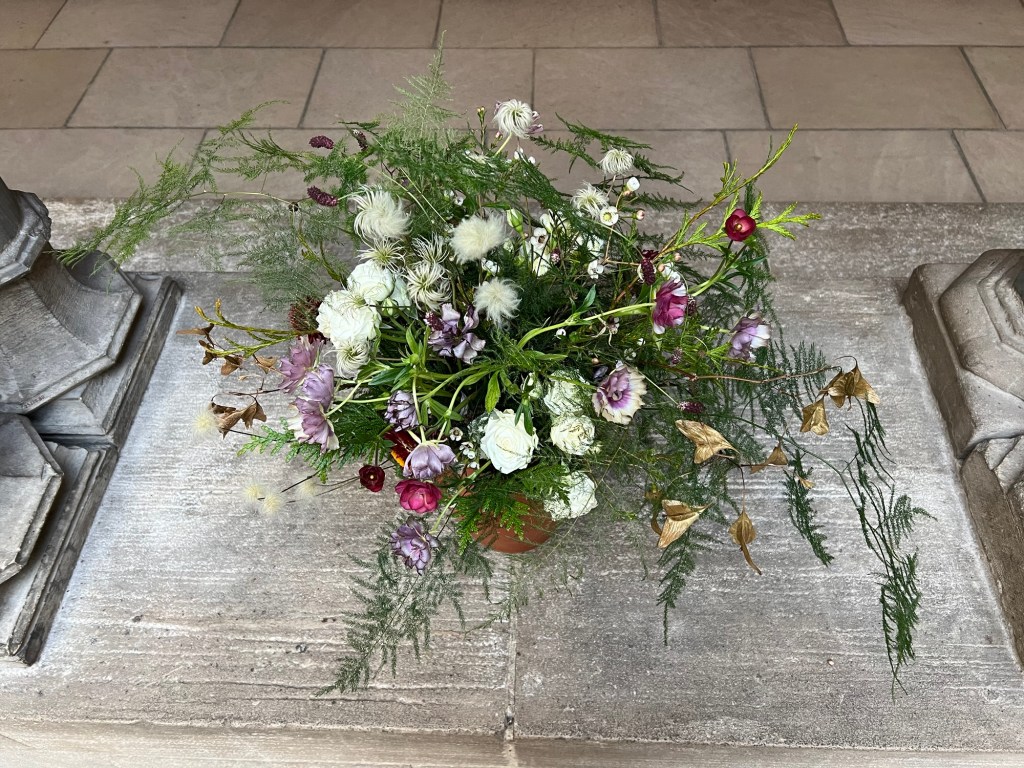
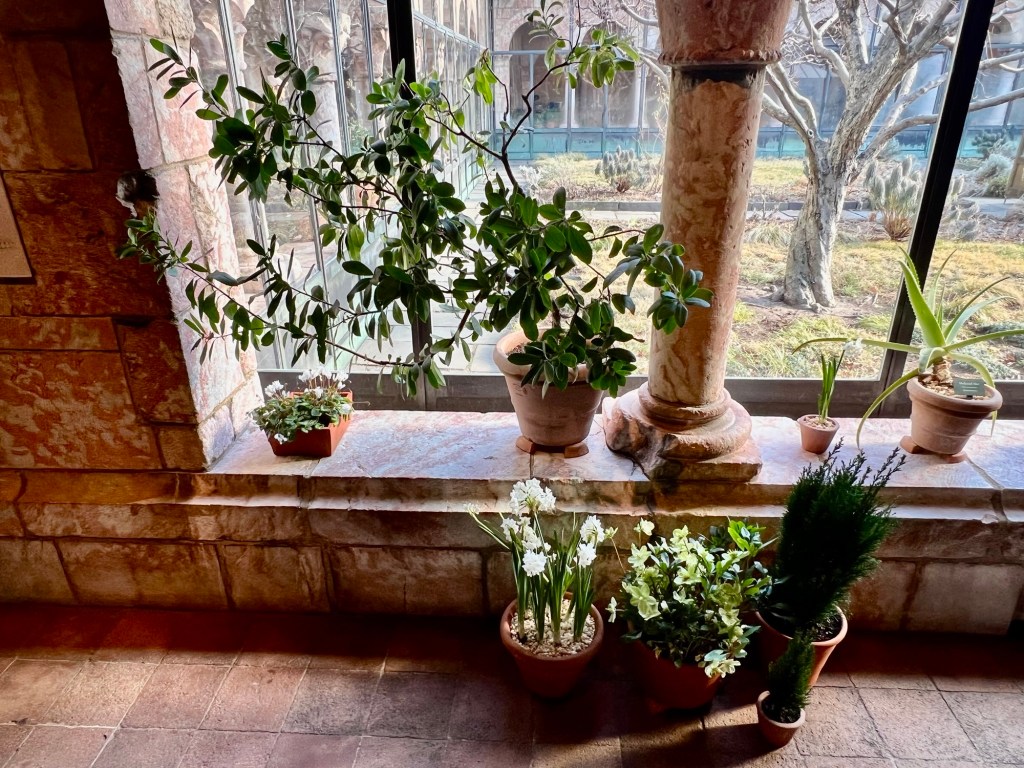
The colorful floral displays lining the window sills of the chapel

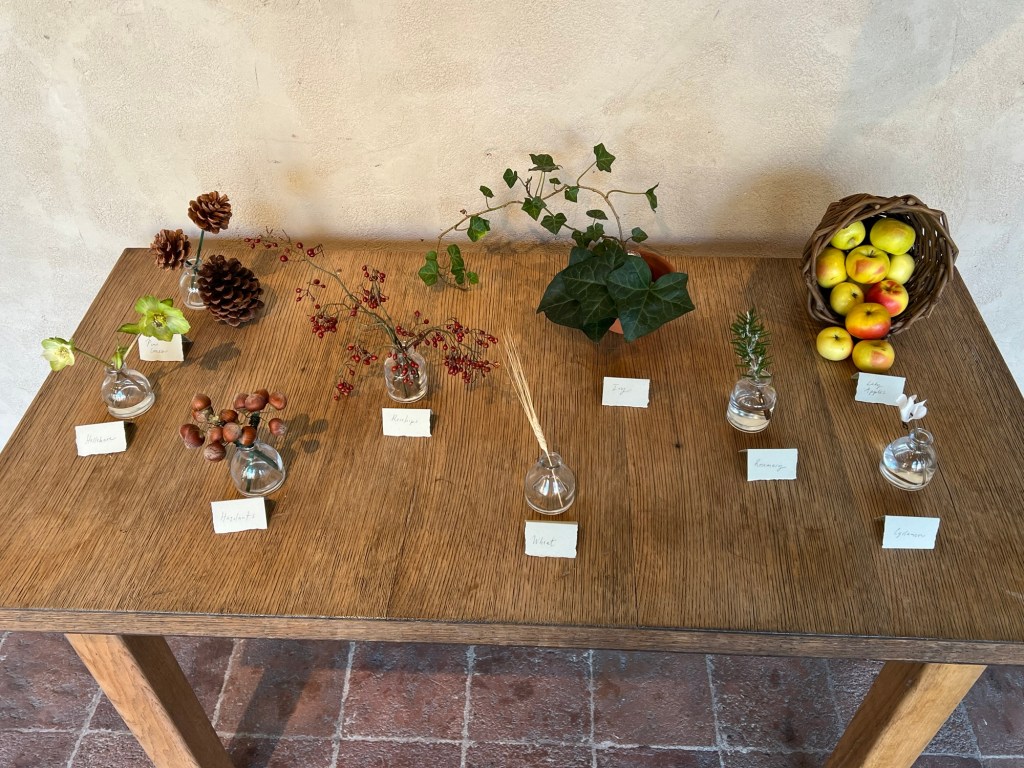
This led to a discussion about what each plant, flower and fruit meant in the Christian tradition, a clever way to justify decorating and celebrating during the holidays. Ivies, pine, winter flowers and even late season apples not only lined places of worship but gave a festive look and district smell to these buildings. A symbol of life in the cold winter months while they waited for the arrival of Spring.

The plant types that decorated the houses of worship

The flowers and plants lining the chapel

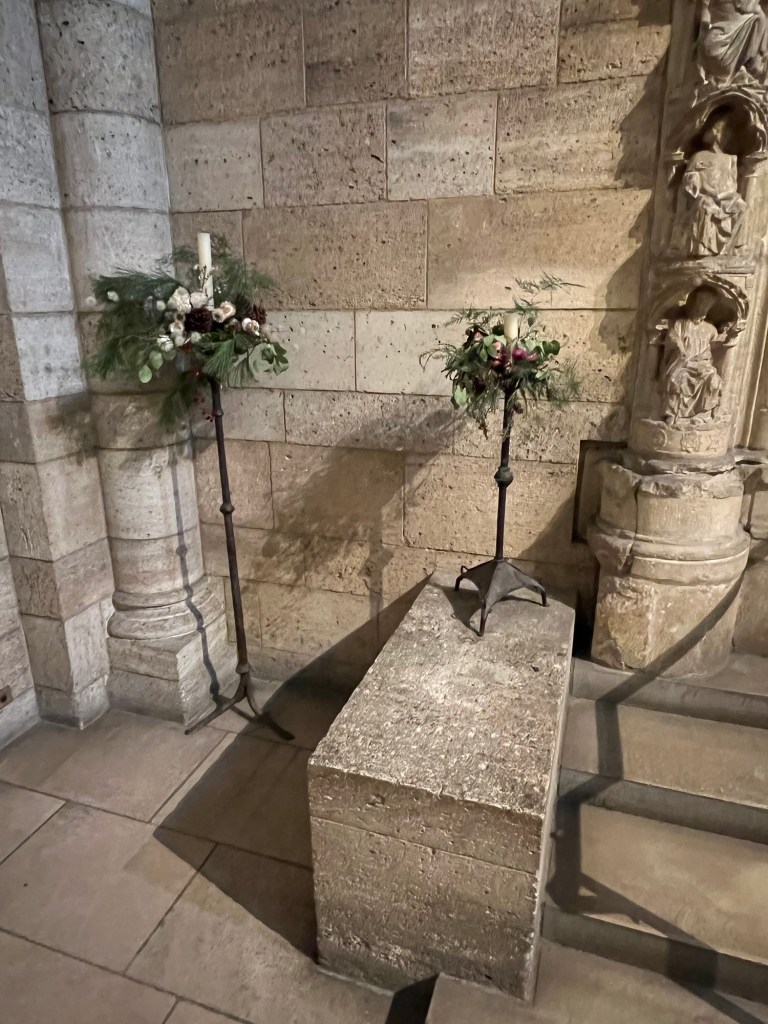
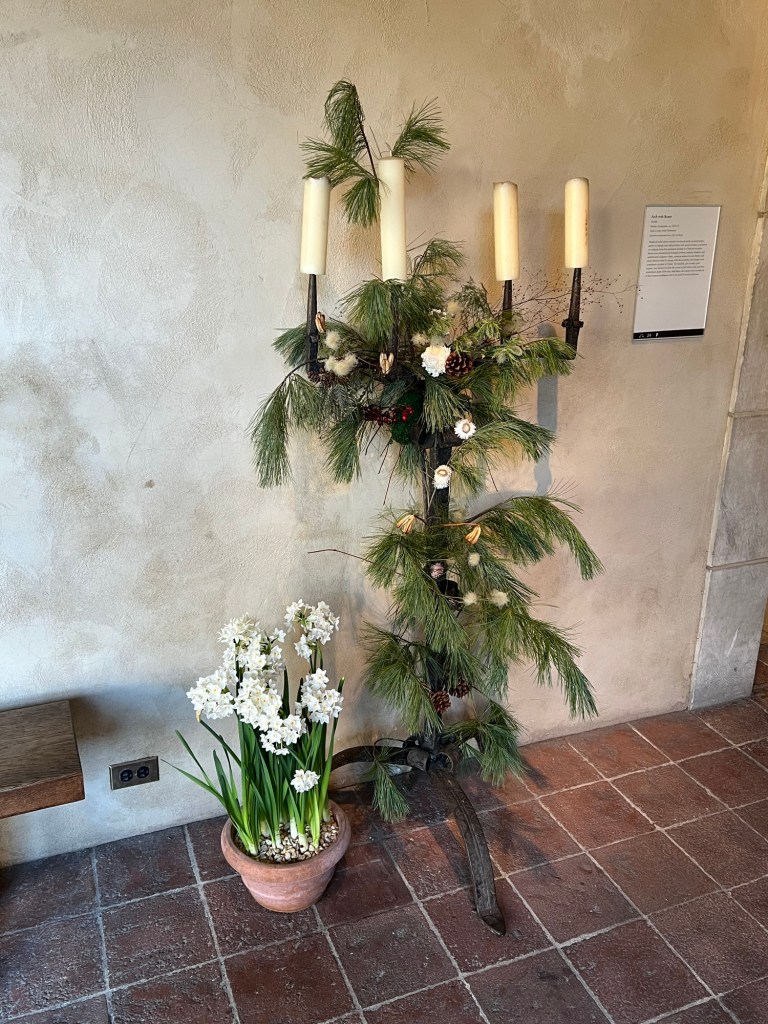
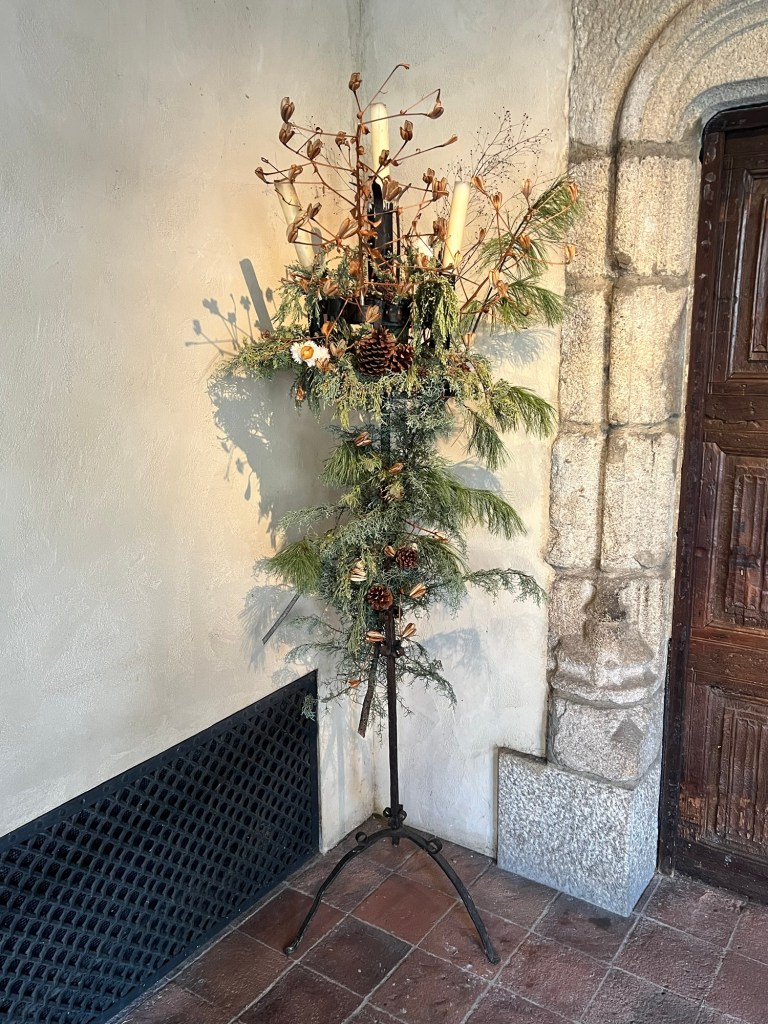
The decorative candle stands lining the walls of the chapel

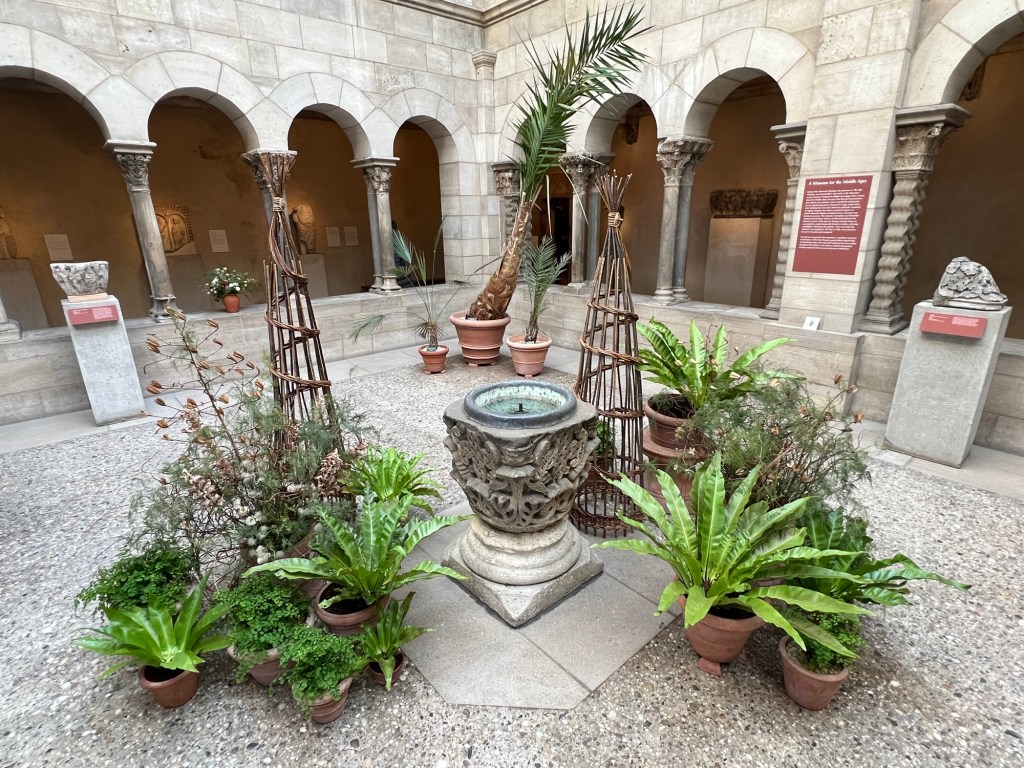
We then toured the main Cloister, closed for the Winter but was lined with plants, flowers and greens brighting every corner of the building. These were examples of plants and flowers that would have decorated these halls at the holidays.

Walking the halls of the Cloisters

Touring the halls of the Cloisters with flowers and plants to celebrate the season

Walking the halls of the Cloisters

The flowering plants of the Cloisters

The flowering plants and vines that would have decorated churches in Medieval times

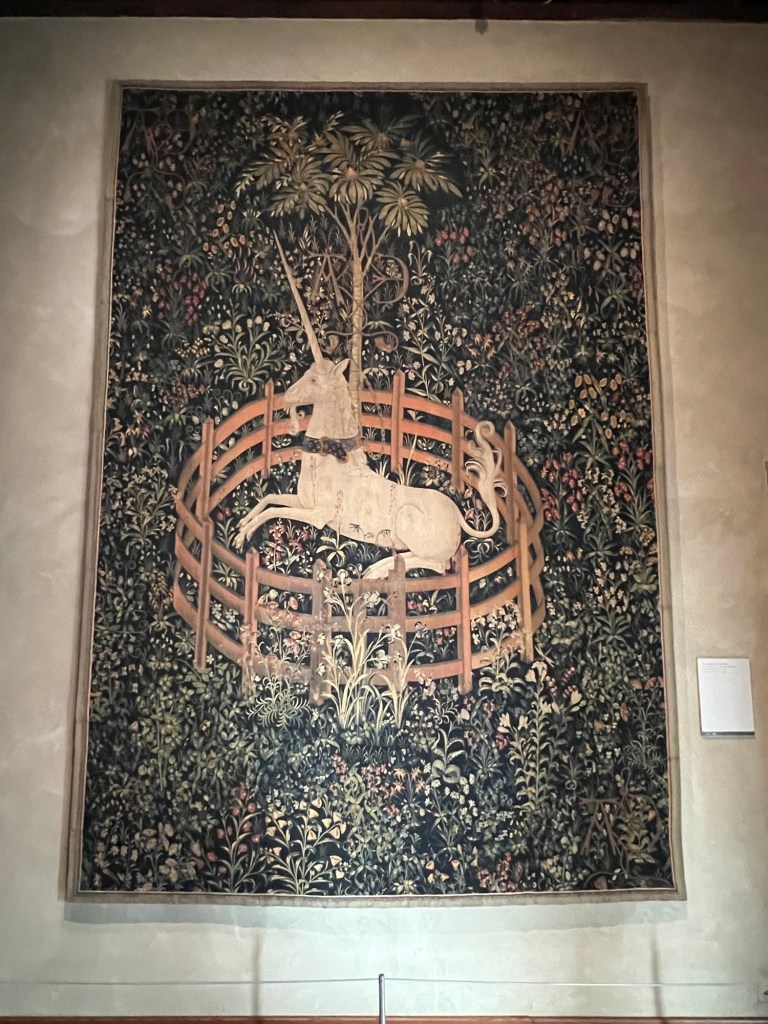
We then toured the Tapestry Room and discussed the use of plants in art form and the use of the detail as symbolism in art. These tapestries were meant to cover the drafty walls of palaces and bring in color and decoration to the stone walls.

The famous ‘Hunt of the Unicorn’ tapestry

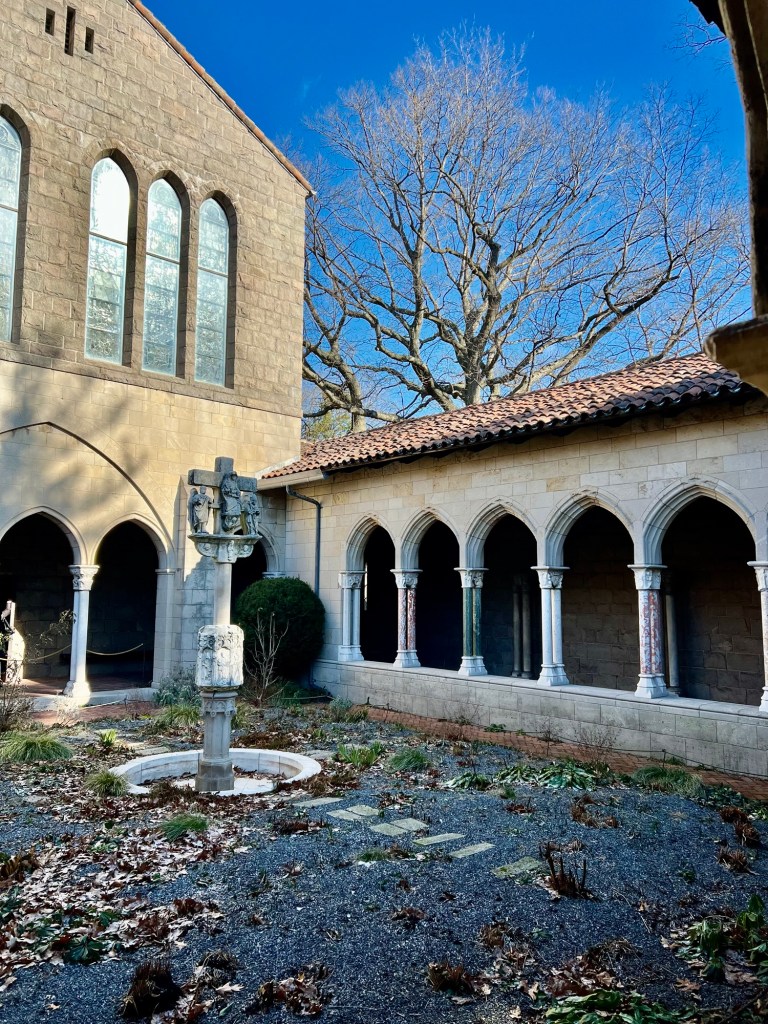
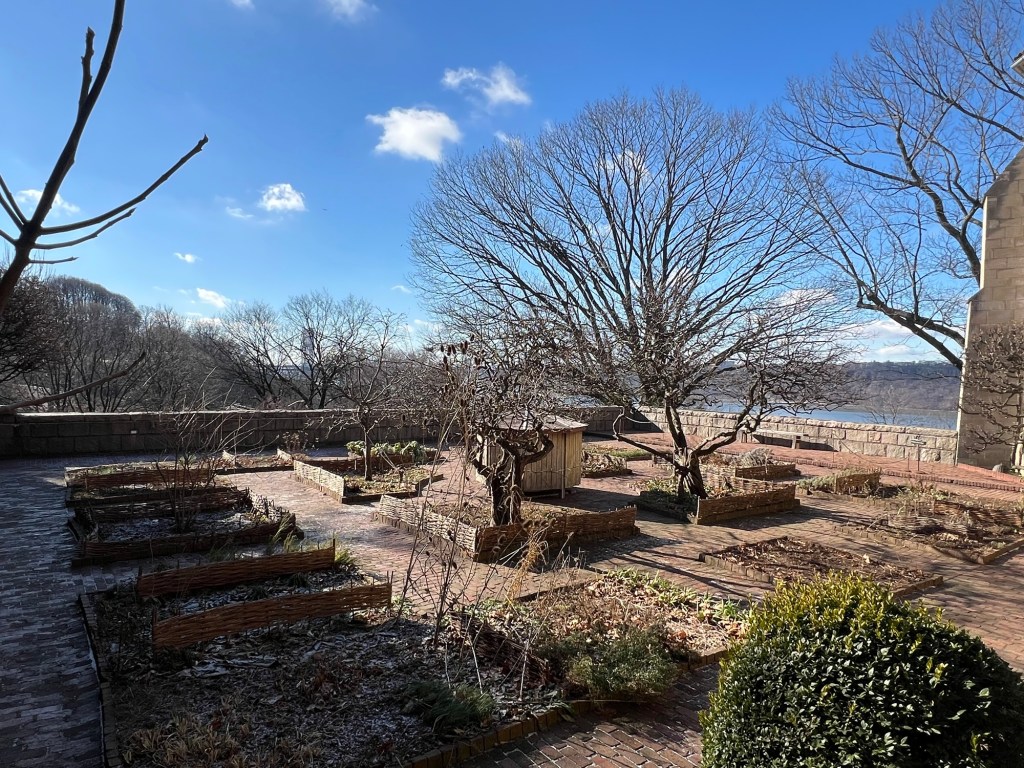
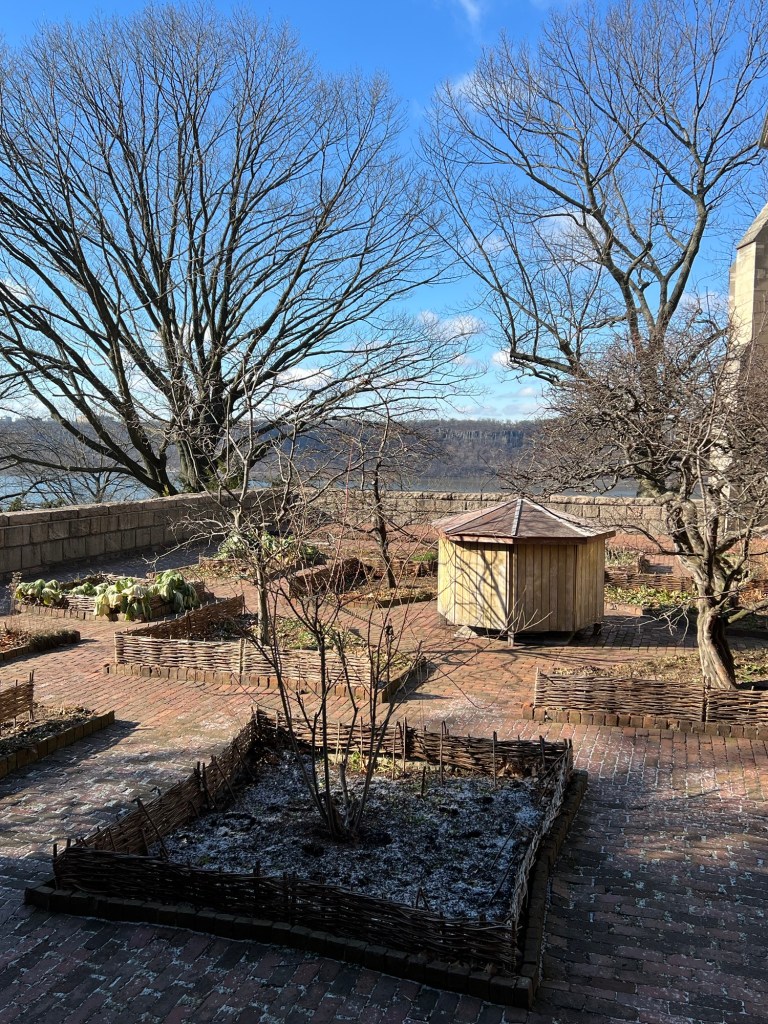
We then took a detour to the outside gardens that are enjoying their winter slumber. These gardens were used by the cloisters for food, medicines and decorative use. They will start coming to life in a few months.

The Cloisters Gardens

The garden terrace over looking the Hudson River

The terrace gardens in the winter waiting to come to life

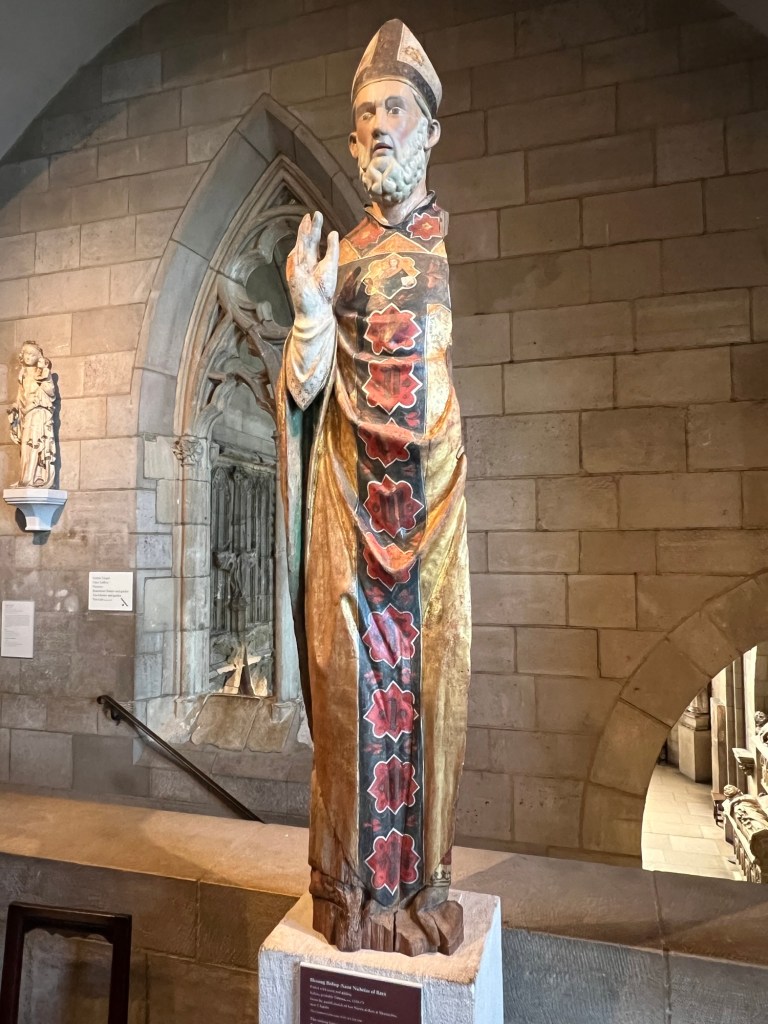
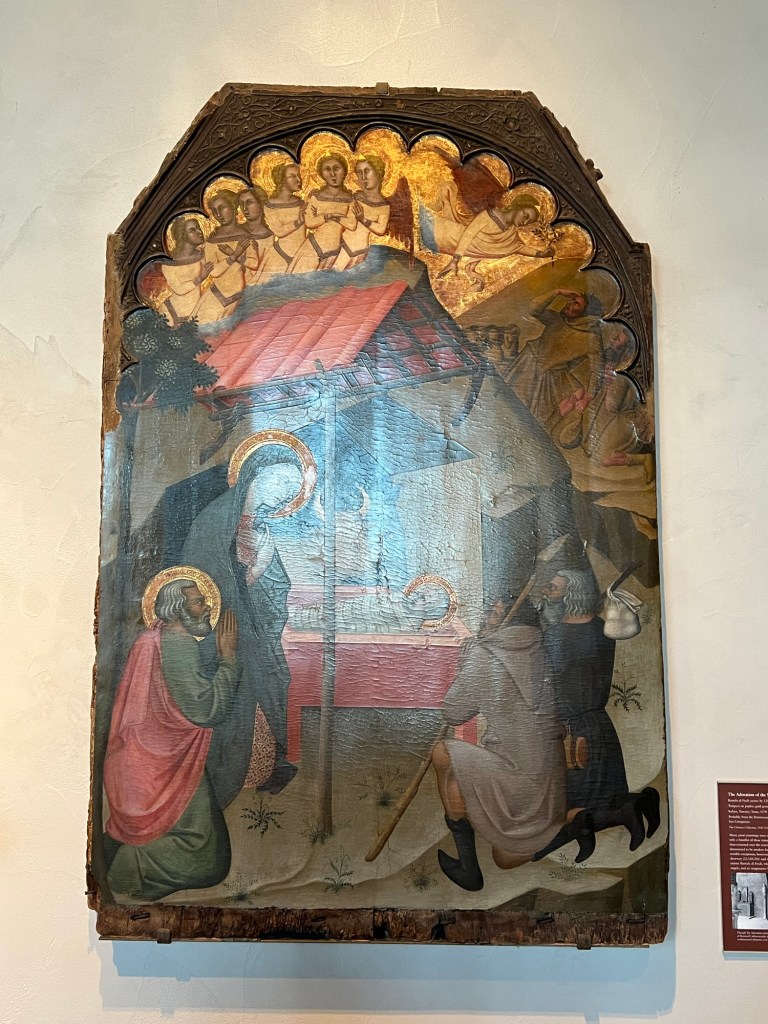
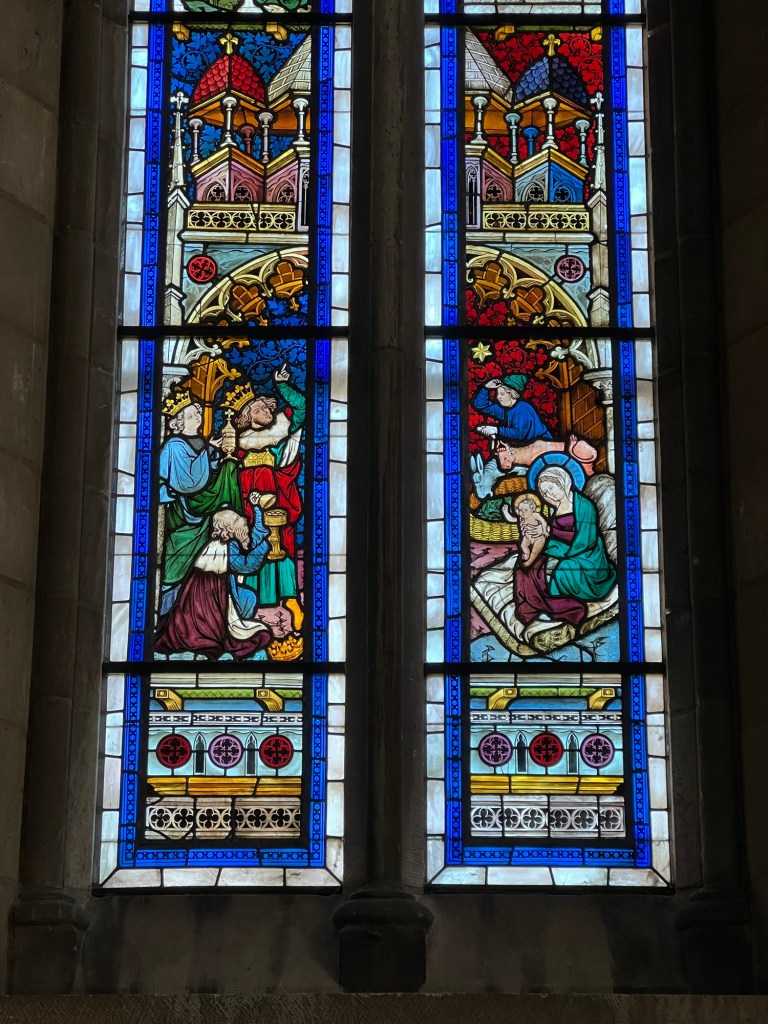
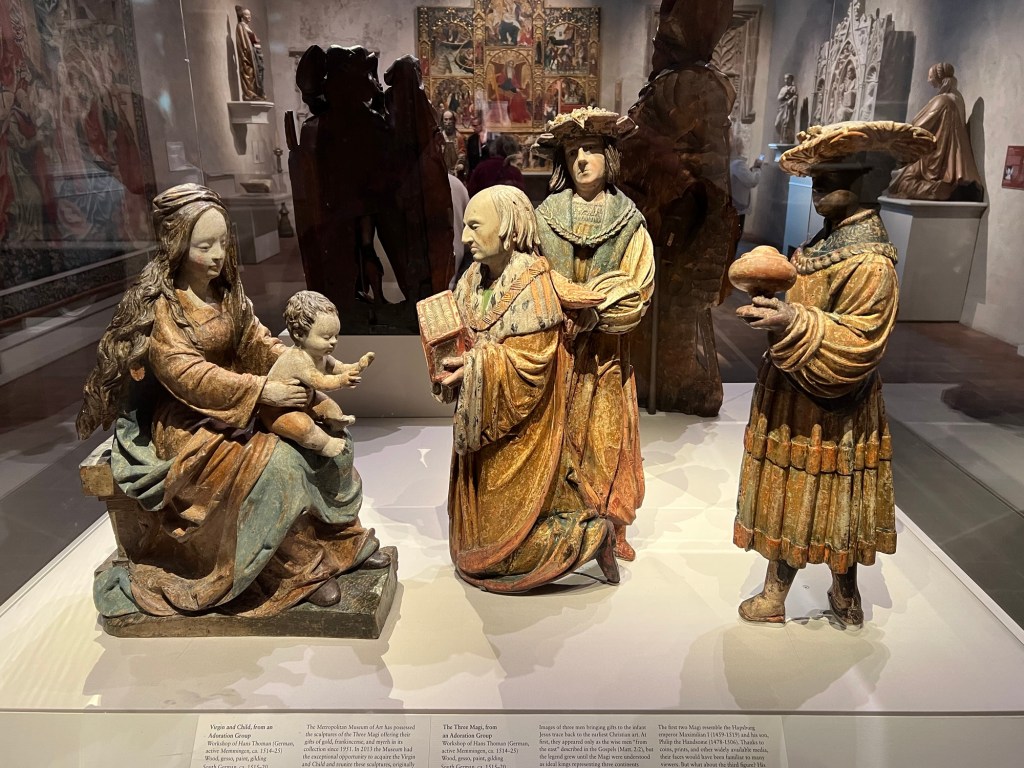
Then we went back inside for a discussion of the Three Kings and the Epiphany and its symbolism in art at the Cloisters. These are some of the works featured on the ‘Christmas Tide’ tour to symbolize that visit.

Some of the woodwork from that era

The Visitation of the Three Kings

The Visitation of the Three Kings depicted in stained glass

The Visitation of the Three Kings depicted in statuary

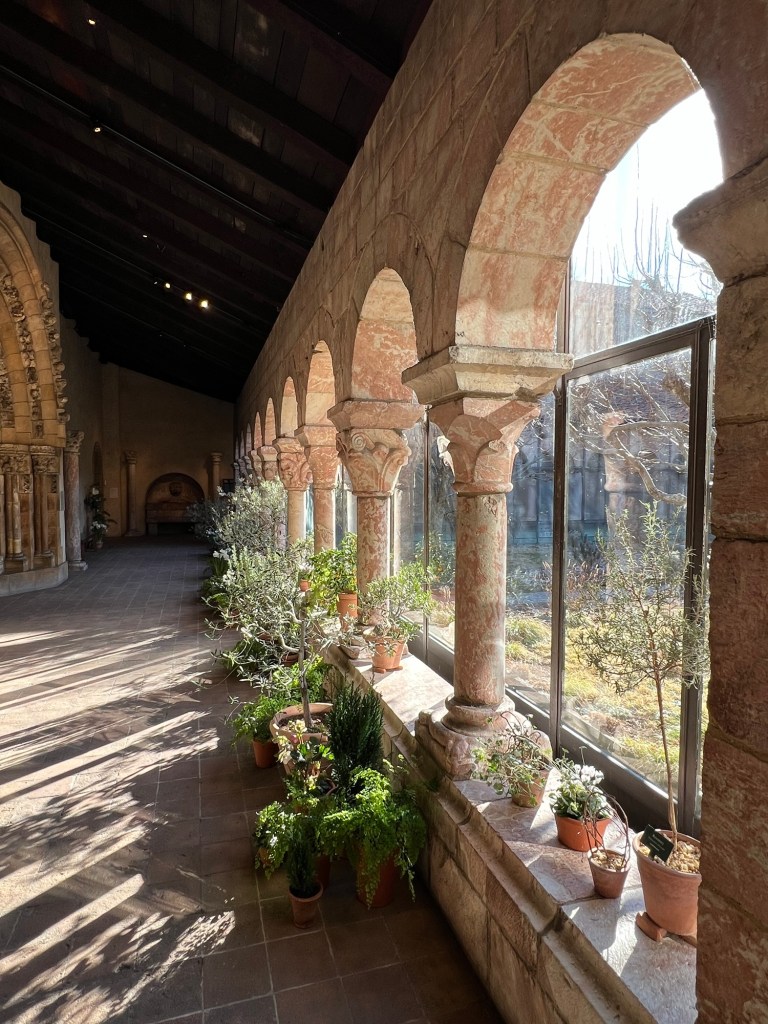
We visited the last of the Cloisters and discussed some of the plants in the collection

We were admiring the plants and flowers

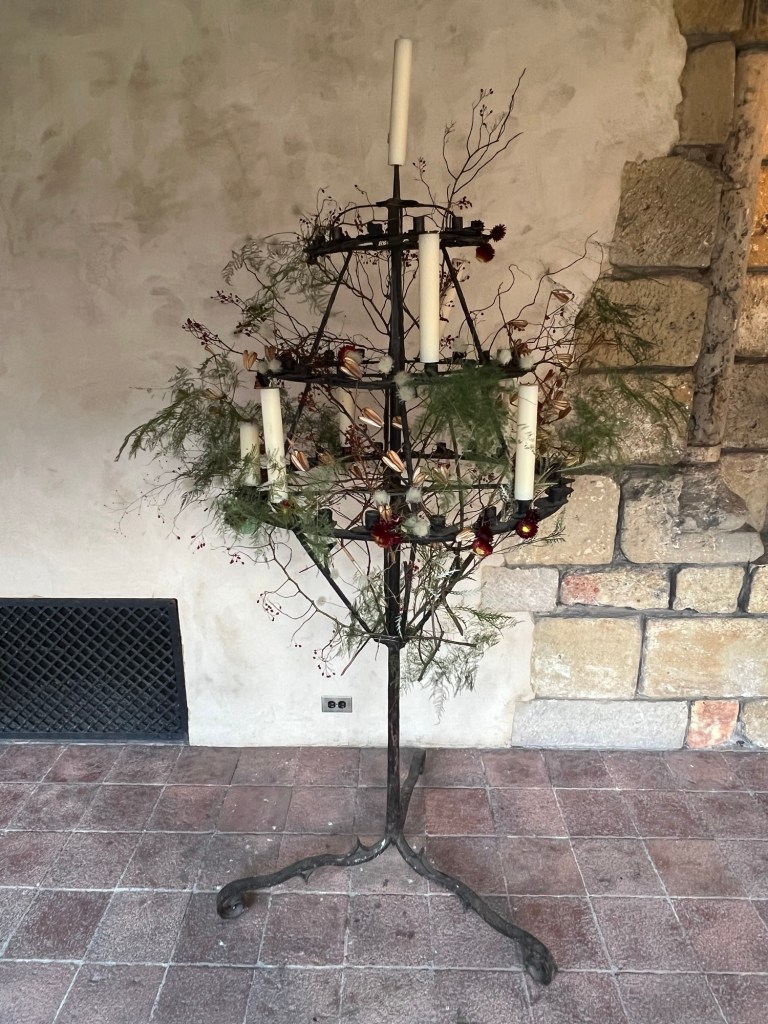
A candelabra in the hallway of the Cloisters

As I exited the building that afternoon, there were potted plants at the entrance of the Cloisters. It was a real treat to walk around the building at the holidays.

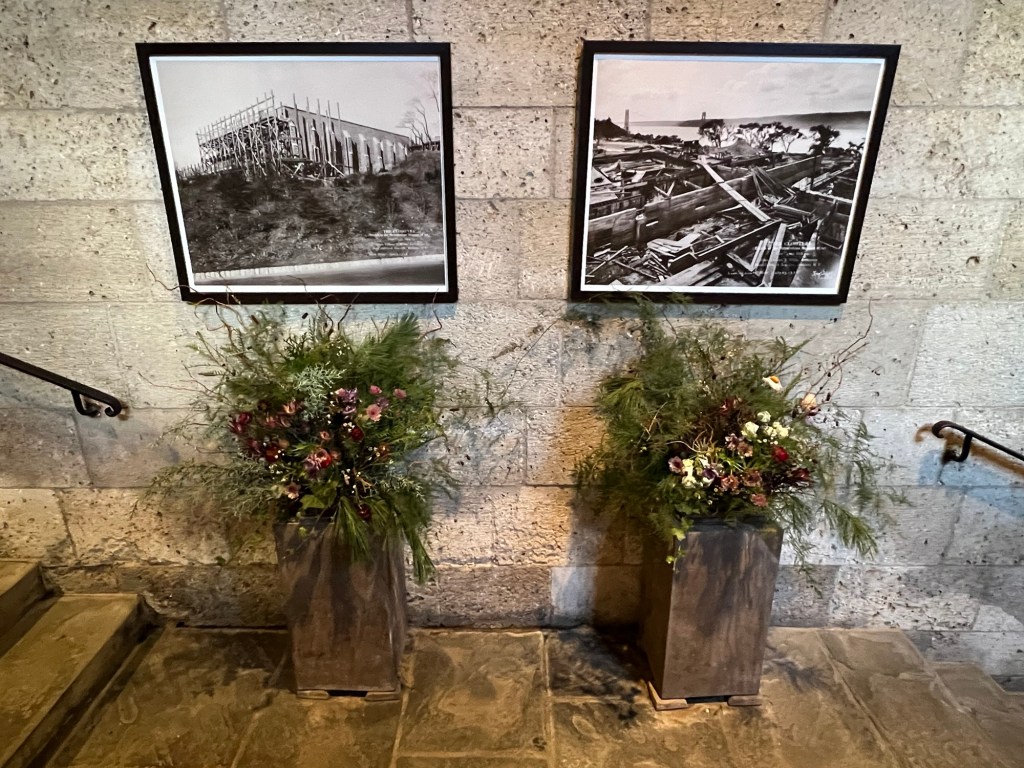
The potted plants outside the entrance of the museum

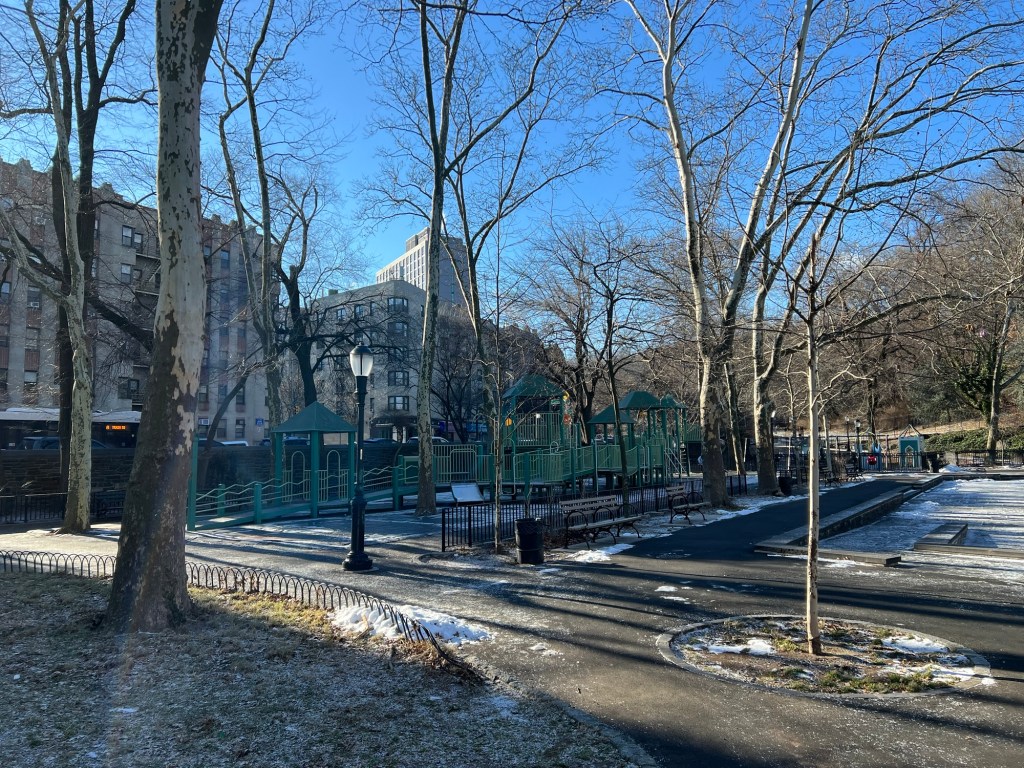
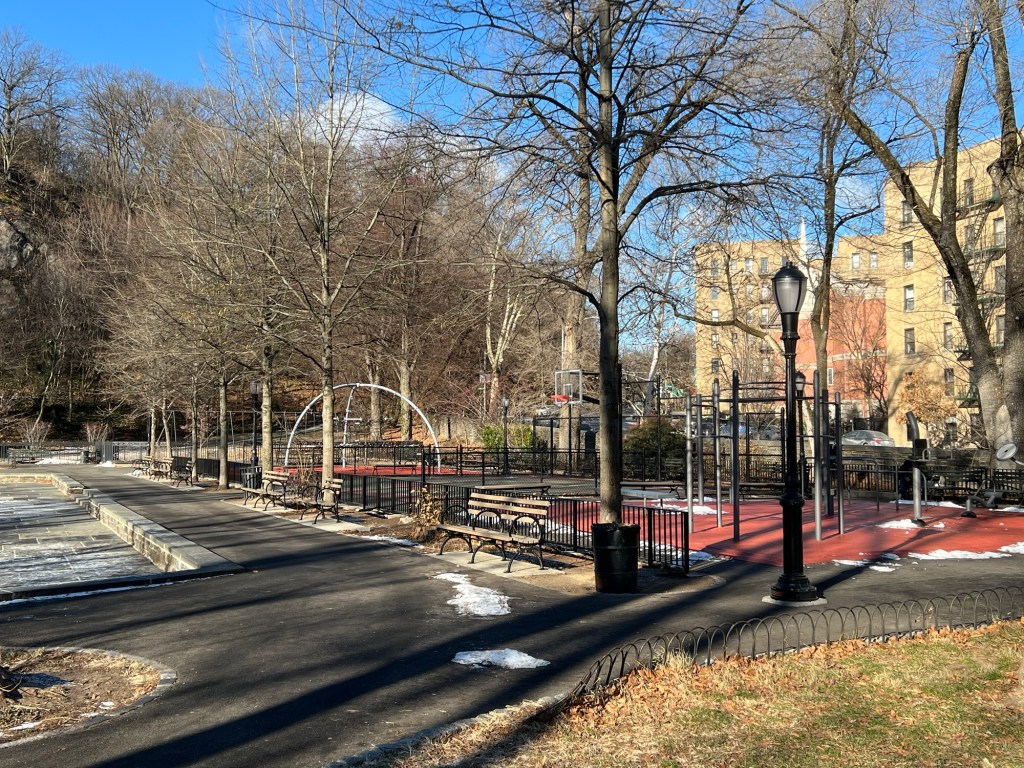
On my way down the stairs and out the door to Fort Tryon Park, I took another walk down the stone steps and walked through Ann Loftus Park. This popular playground was quiet this time of year, awaiting the Spring and the wonderful warm afternoons ahead.

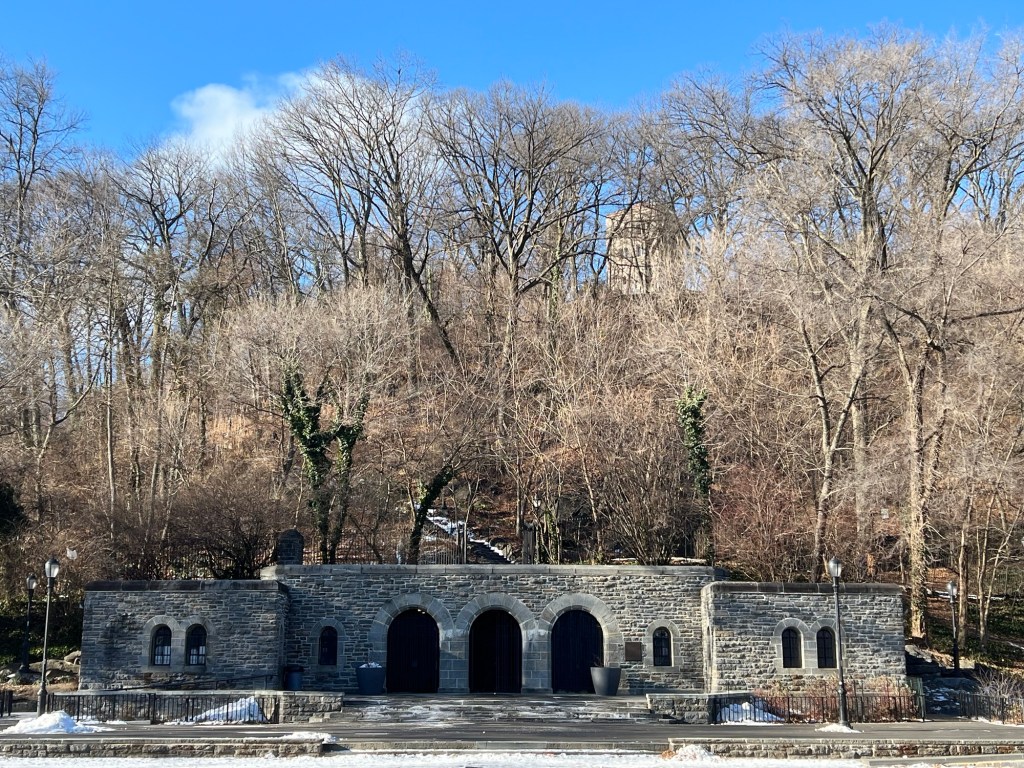
Walking through Fort Tryon Park

Fort Tyron Park

Riverside Drive to Broadway

New York, NY  10040

https://www.nycgovparks.org/parks/fort-tryon-park

https://www.nycgovparks.org/parks/fort-tryon-park/history

Open: Sunday-Saturday 6:00am-1:00am

My review on TripAdvisor:

https://www.tripadvisor.com/Attraction_Review-g60763-d2305249-Reviews-Fort_Tryon_Park-New_York_City_New_York.html?m=19905

My review on VisitingaMuseum.com:

https://visitingamuseum.com/tag/fort-tyron-park/

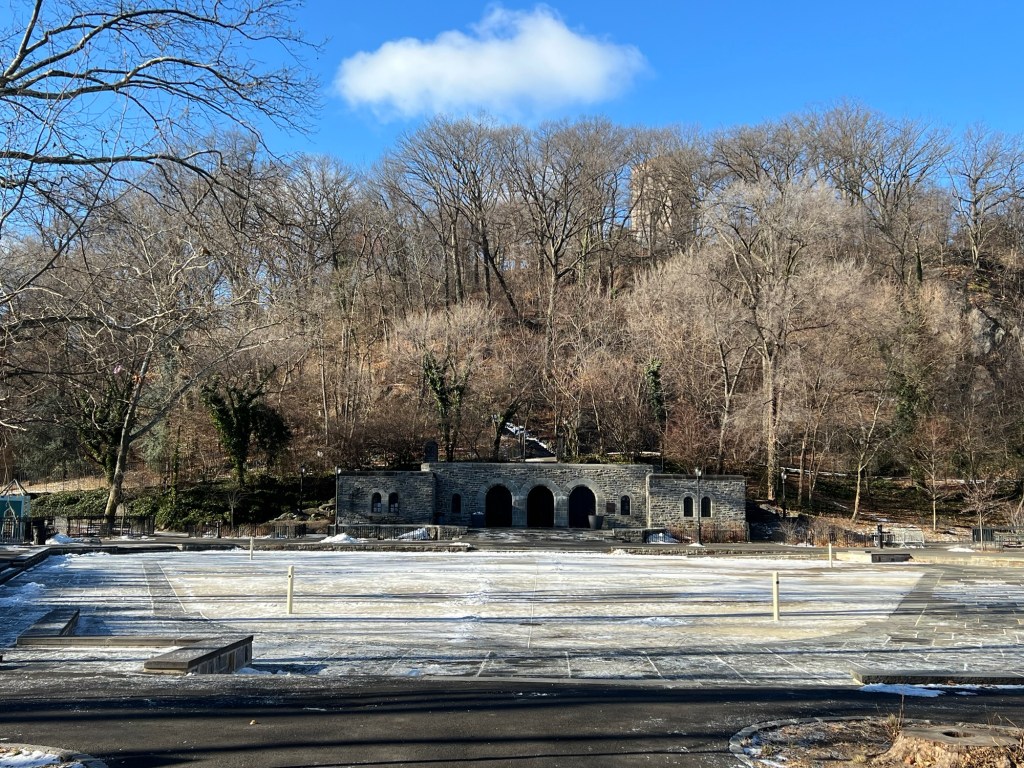
Ann Loftus Park in the winter time

Ann Loftus Park quiet in the winter

Ann Loftus Park upon leaving the park that afternoon. The quiet beauty of the Winter.

https://www.nycgovparks.org/parks/fort-tryon-park/highlights/11234

https://www.nycgovparks.org/facilities/playgrounds/325

After the tour was over, I went to G’s Coffee Shop for second breakfast that morning.

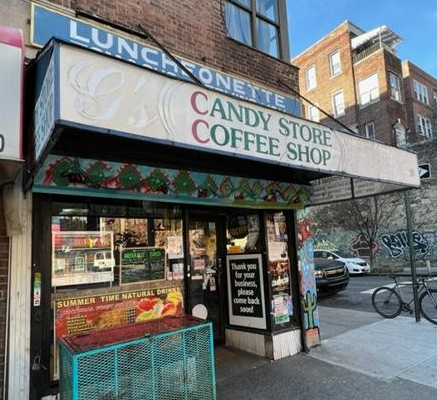
G’s Coffee Shop at 634 West 207th Street

G’s Coffee Shop

634 West 207th Street

New York, NY  10034

(212) 942-0679

Free Delivery

Open: Sunday-Saturday 7:00am-9:00pm

https://www.facebook.com/pages/category/Breakfast—Brunch-Restaurant/Gs-Coffee-Shop-205601462950934/

My review on TripAdvisor:

https://www.tripadvisor.com/Restaurant_Review-g60763-d17445018-Reviews-G_s_Coffee_SHop-New_York_City_New_York.html?m=19905

My review on DiningonaShoeStringinNYC@Wordpress.com:

My breakfast at G’s Coffee Shop

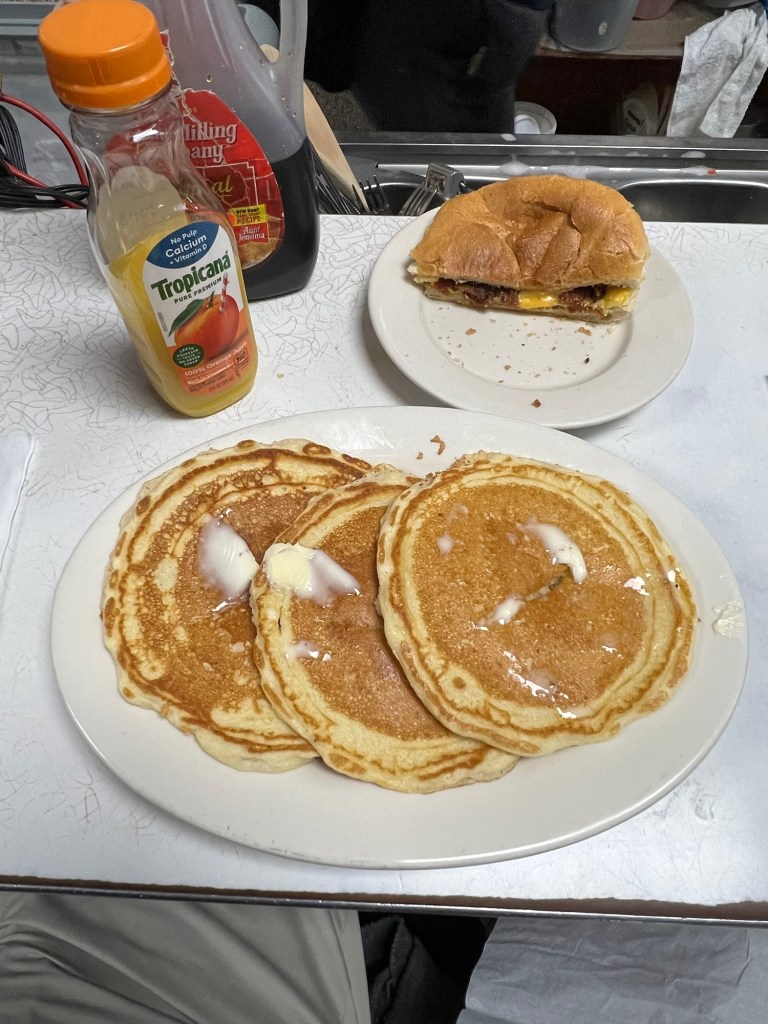
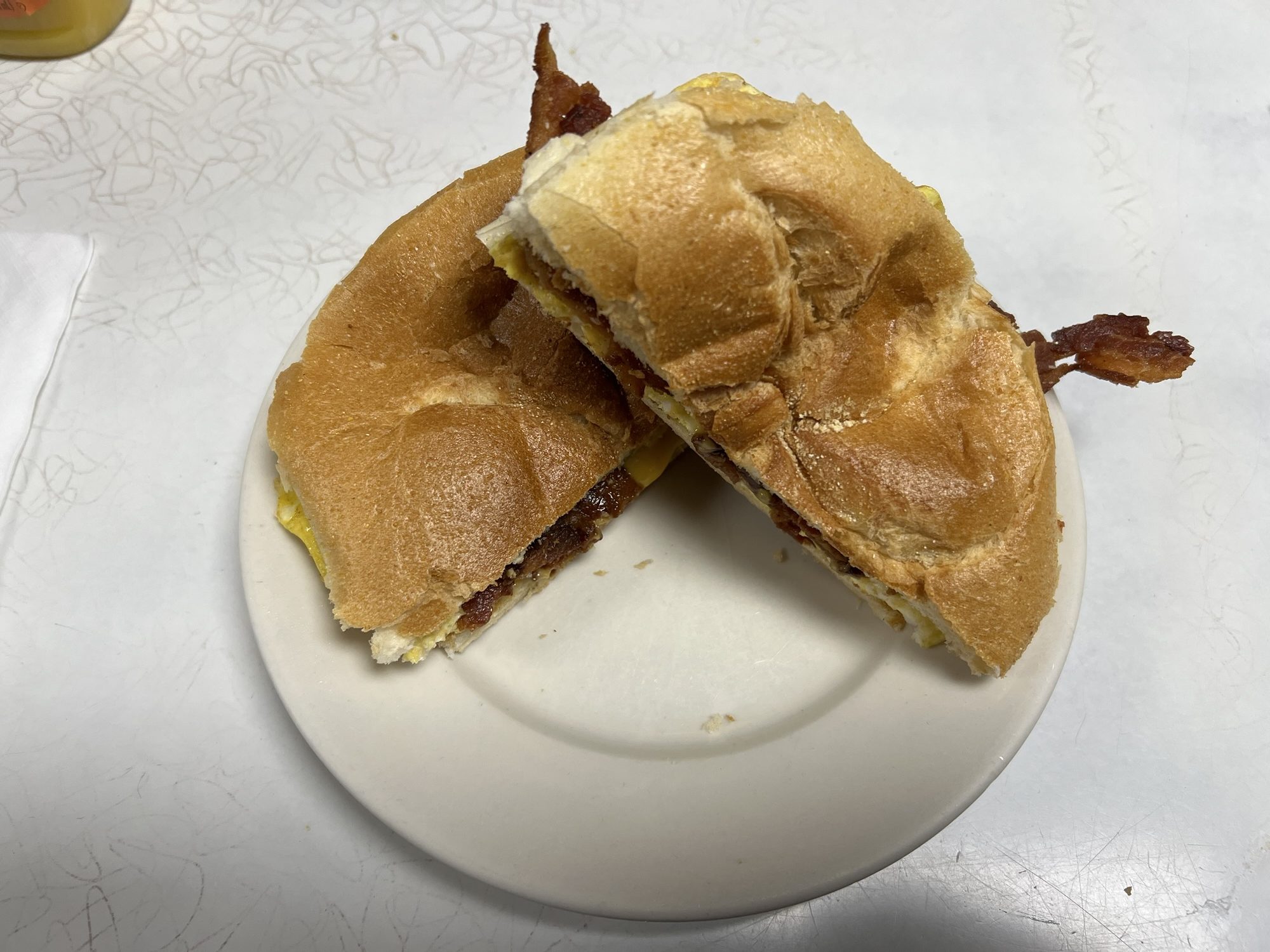
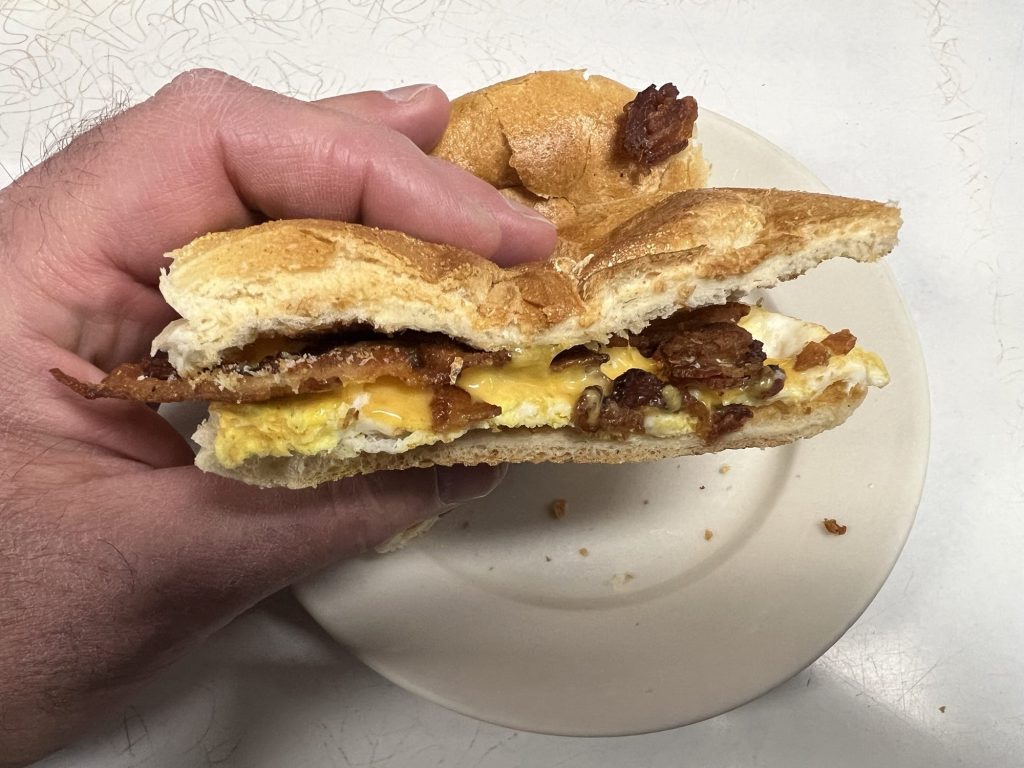
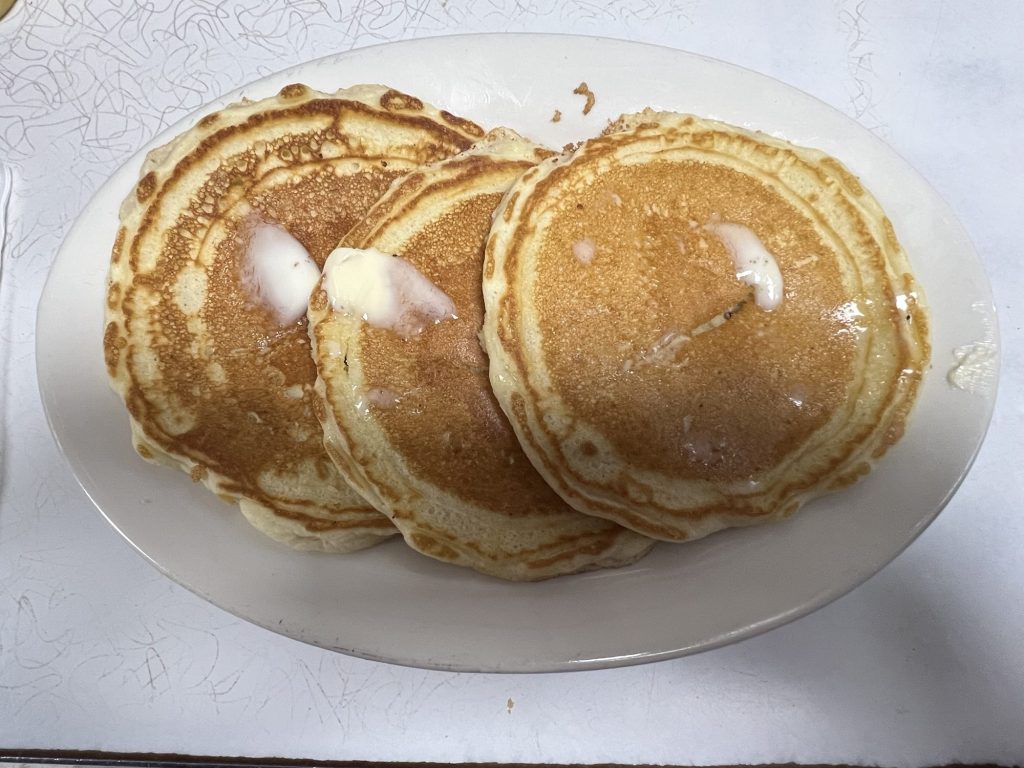
I love coming for breakfast at G’s Coffee Shop after a tour of The Cloisters. The food and service of this small ‘hole in the wall’ diner is wonderful. The meals are so reasonable and when you dine at the counter, you can watch the food cooked right in front of you. I had a wonderful Bacon, Egg and Cheese sandwich with a side of golden pancakes. What a great meal on a cold winter morning.

The Bacon, Egg and Cheese sandwich

The breakfast sandwiches here are so good

The pancakes were wonderful. The perfect comfort food on a winter day.

It was a really great tour and it was fun to walk around the neighborhood through the parks and seeing all the post Christmas decorations. Inwood is a really beautiful section of Manhattan with lots to do and see. It is the perfect place to spend the Christmas break.

Gobbler’s Knob and Trail                                                      1548 Woodland Avenue Ext.                                            Punxsutawney, PA 15767

Gobbler’s Knob and Trail 1548 Woodland Avenue Ext. Punxsutawney, PA 15767

Gobbler’s Knob and Trail

1548 Woodland Avenue Ext.

Punxsutawney, PA 15767

https://www.facebook.com/weathercapital

https://www.groundhog.org/getting-here-and-around

Open: Sunday 10:00am-4:00pm/Monday-Tuesday Closed/Wednesday-Saturday 10:00am-4:00pm (Visitors Center) Site open: Dawn to Dusk.

Admission: Free

My review on TripAdvisor:

https://www.tripadvisor.com/ShowUserReviews-g53500-d106564-r936944434-Gobbler_s_Knob-Punxsutawney_Pennsylvania.html?m=19905

My review on Exploring Punxsutawney, PA for Groundhog’s Day:

(this will give you some great places to stay, eat and visit)

https://mywalkinmanhattan.com/category/exploring-punxsutawney-pa

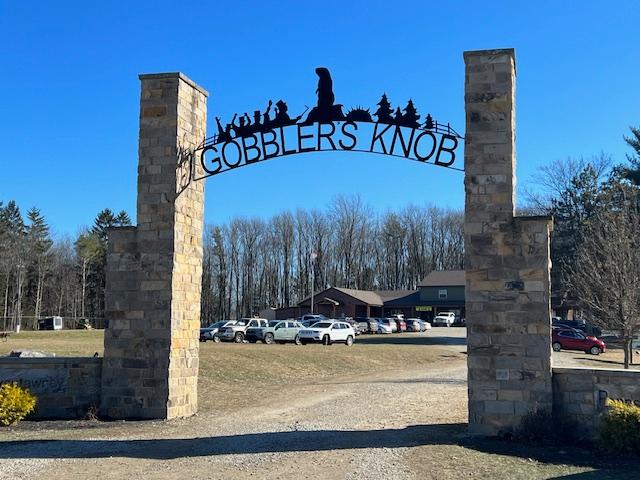
The entrance to Gobbler’s Knob when you arrive in the morning.

“Are you off to see the Groundhog?” is a famous line in the movie “Groundhog’s Day”. The one thing is that the scene in the movie was shot in the square of Woodstock, ID. The real Gobbler’s Knob is located in Punxsutawney, PA, the real home of Phil.

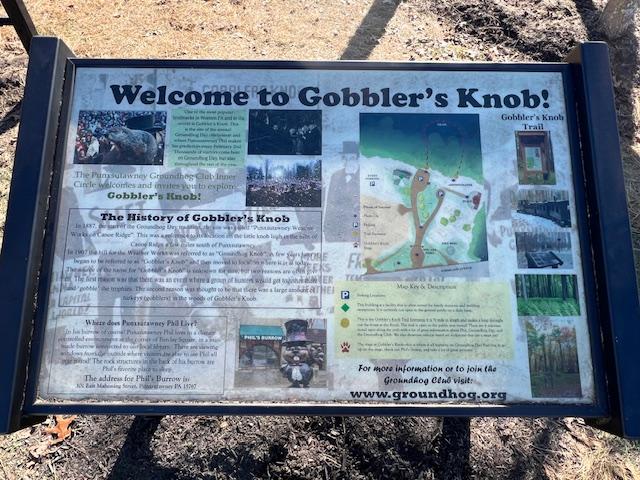
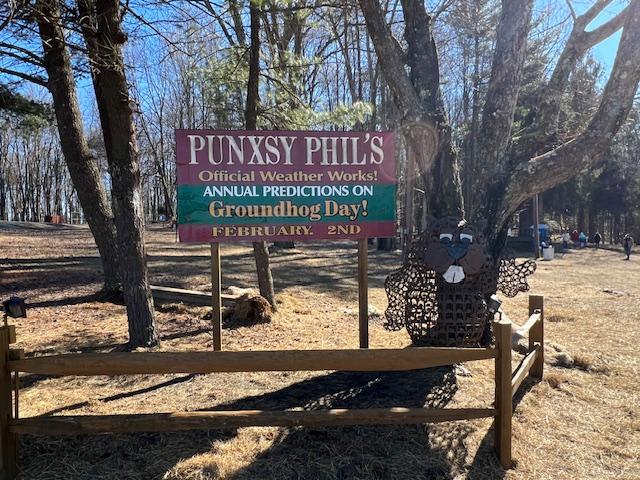
The welcome sign to Gobblers Knob.

Located just outside the downtown (ironically behind a Walmart; talk about progress), Gobblers Knob is located in what was once woods in the back of town has become an open field with a stage, Visitors Center and gift shop. Every years thousands of people flock to this small town literally in the middle of Pennsylvania to see the Groundhog’s Day Festival.

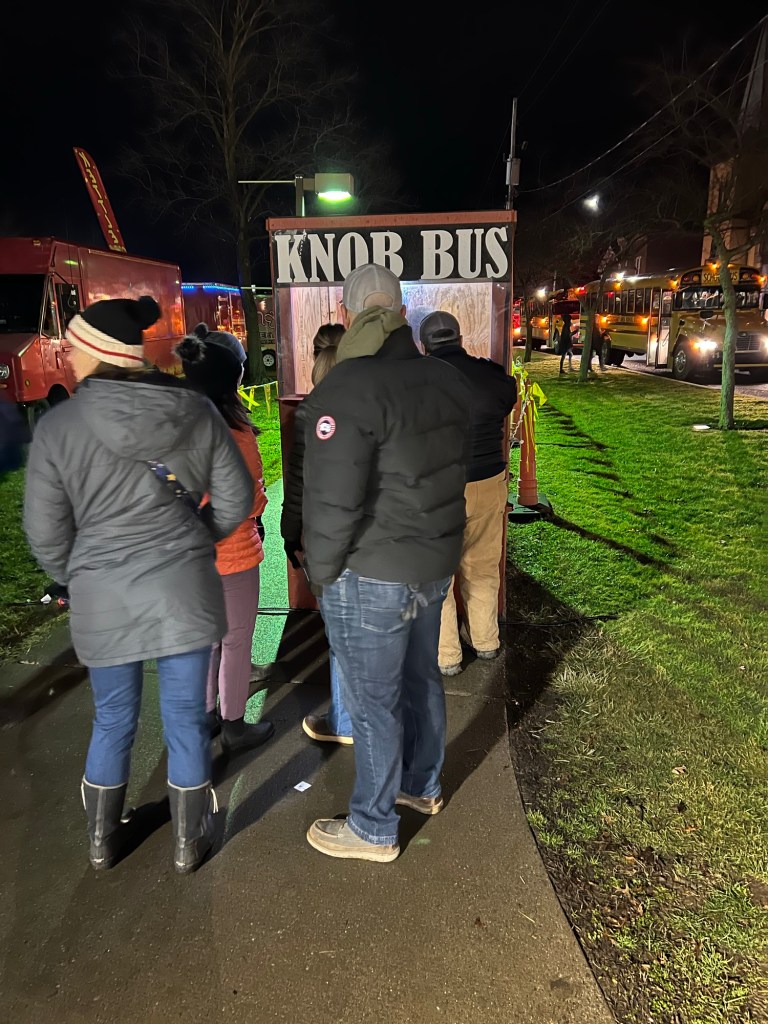
Taking the bus to Gobblers Knob on Groundhog’s Day morning.

Gobbler’ Knob is the famous home of the “Groundhogs Day” festival and swells into a crowd of more than thirty thousand people from all over the world. It is an incredible event to join in.

I attended the festivities here twice. Once in 2016 and again in 2024 and I have to say that it is something you have to do once in your life just to experience the excitement of the morning that Phil sees his shadow.

Arriving in the morning for the prediction.

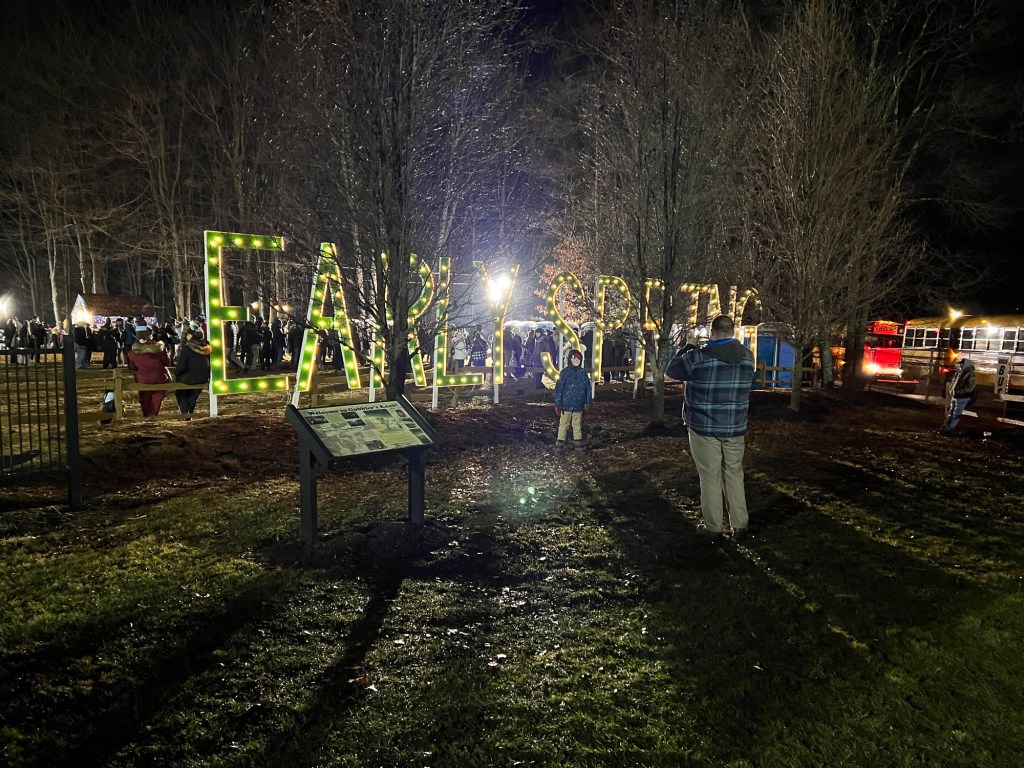
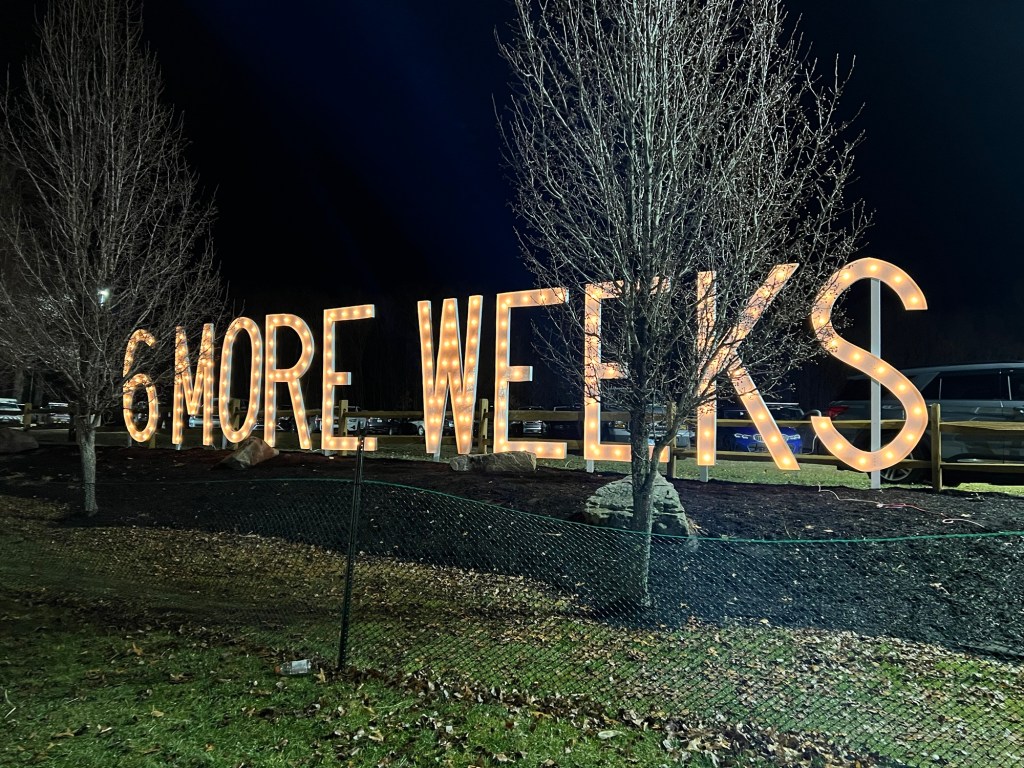
The signs were out and lit for the prediction. No one knew how Phil would react. Would he see his shadow or not?

They emphasize both predictions.

The History of Groundhog’s Day (From the Groundhog’s Club website):

The Christian religious holiday of Candlemas Day has become most commonly associated with the current celebration, but it’s roots are older than that. The celebration started in Christianity as the day, (February 2nd), when Christians would take their candles to the church to have them blessed. This, they felt, would bring blessings to their household for the remaining winter.

As time rolled on the day evolved into another form. The following English folk song highlights the transition to weather prognostication.

If Candlemas be fair and bright,
Come, Winter, have another flight;
If Candlemas brings clouds and rain,
Go Winter, and come not again.

This “interpretation” of Candlemas Day became the norm for most of Europe. As you can read, there is no mention of an animal of any kind in the preceding song. It wasn’t until this traditional belief was introduced to Germany that an animal was introduced into the lore, hence another evolution of February 2nd. If, according to German lore, the hedgehog saw his shadow on Candlemas Day there would be a “Second Winter” or 6 more weeks of bad weather. As German settlers came to what is now the United States, so too came their traditions and folklore. With the absence of hedgehogs in the United States, a similar hibernating animal was chosen. This leads us to yet another evolution in the legend and to present day Punxsutawney.

In Punxsutawney, 1886 marked the first time that Groundhog Day appeared in the local newspaper. The following year brought the first official trek to Gobbler’s Knob. Each year since then has seen a steady increase in participation of the celebration from people all over the world.

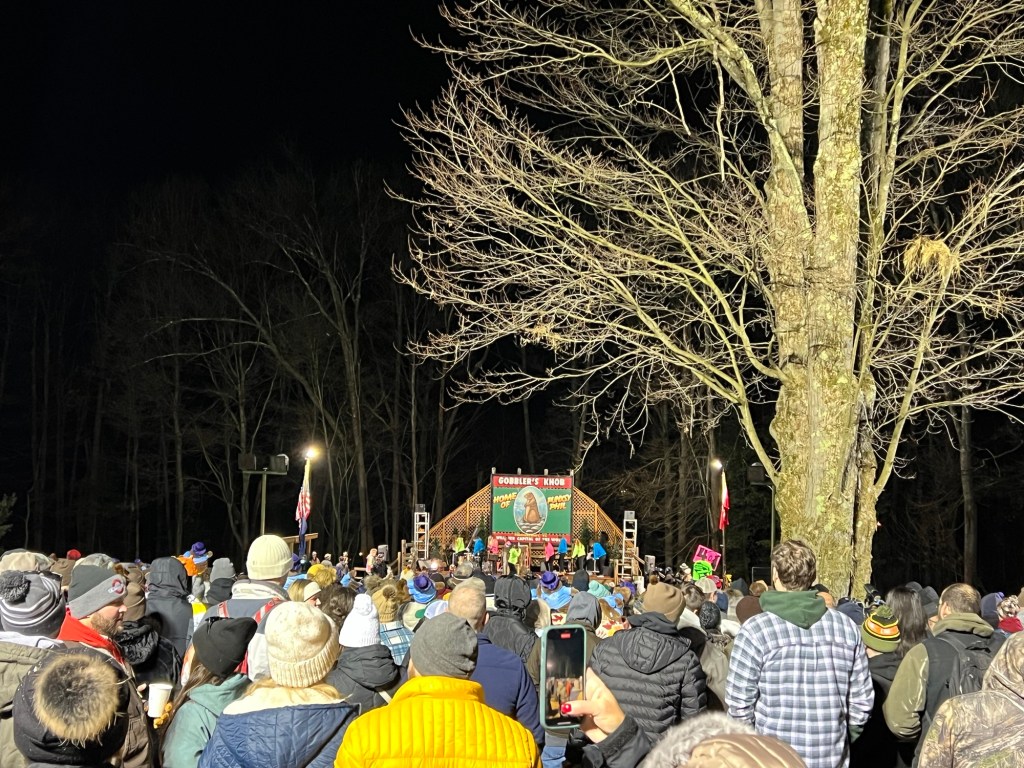
When the knob is full that morning you can feel the excitement of the crowd. From three in the morning until Phil comes out to make his prediction, there are all sorts of bands, comedians and singers to entertain the crowds all morning.

The main stage in the distance.

The crowds get bigger as the morning gets later, most arriving before 6:00am.

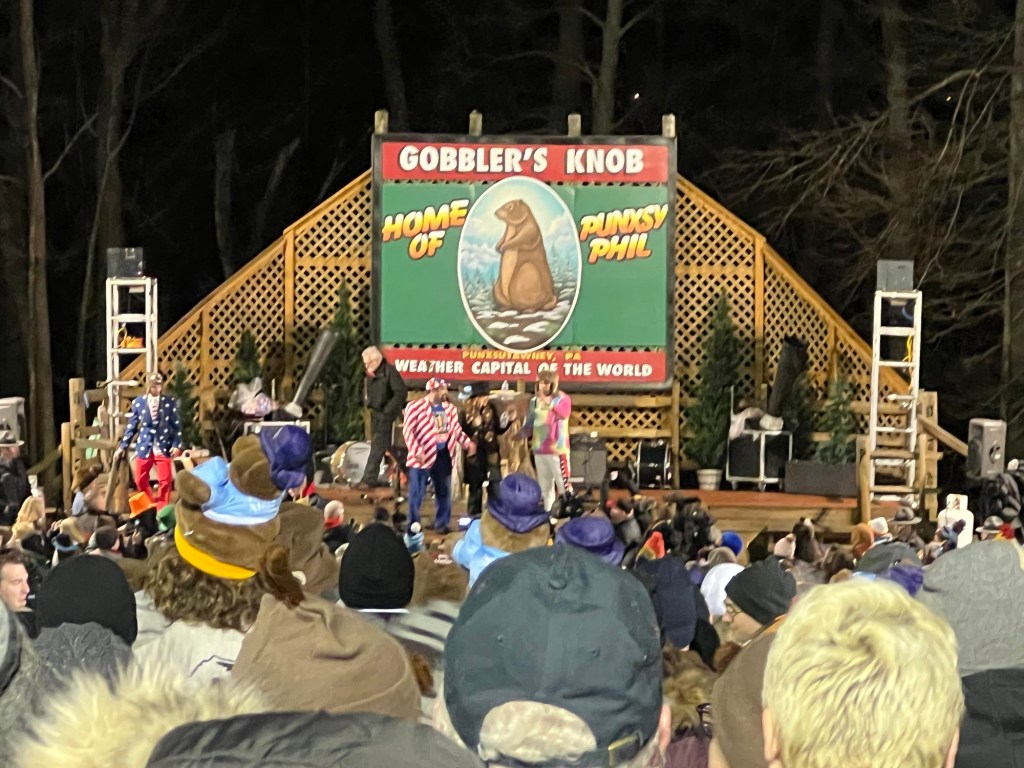
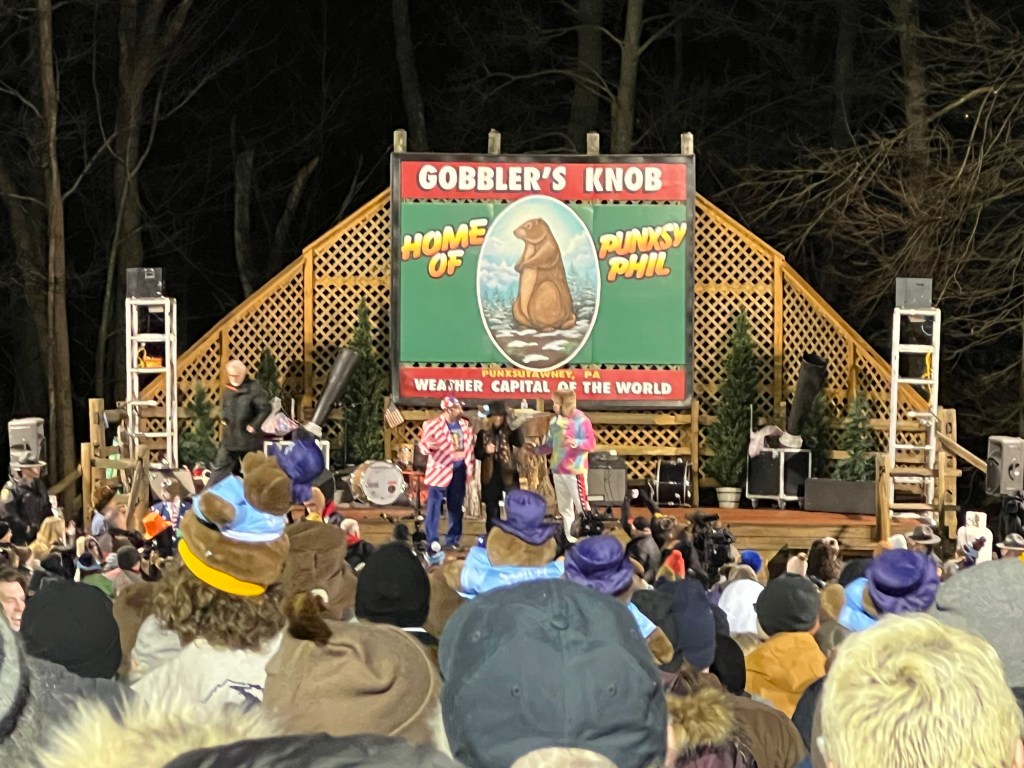
The singers entertaining the crowds.

The stage was always filled with entertainment acts.

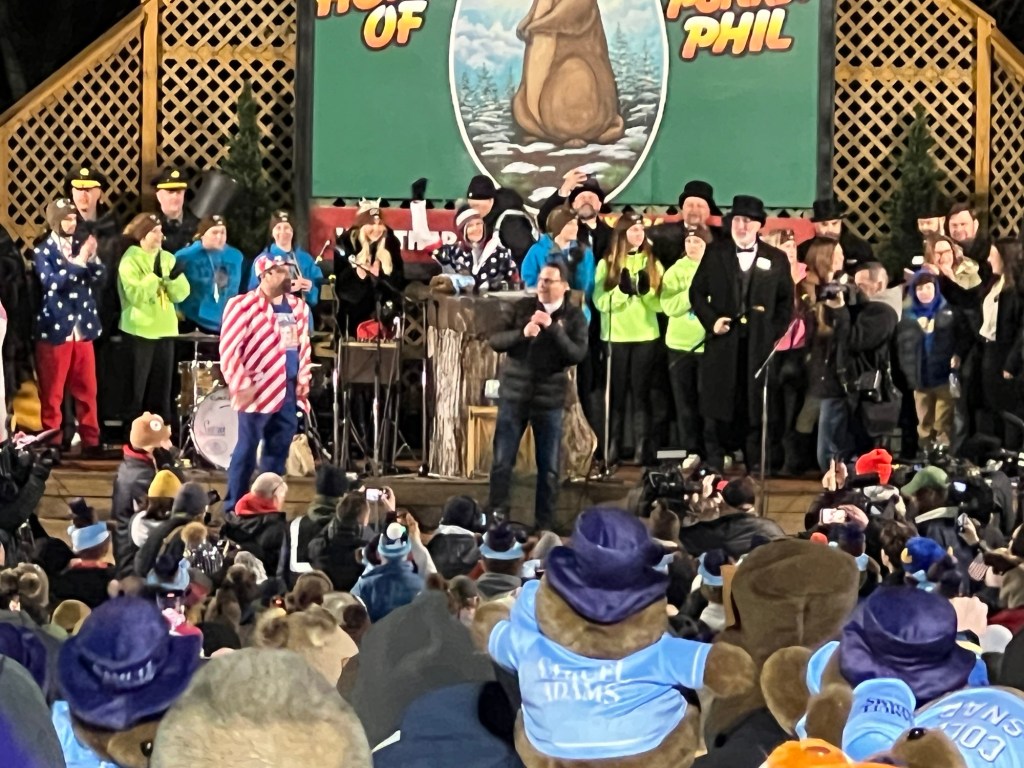
The entertainment for the evening until the top hats arrive and the fun begins. First they are the introductions of the VIPs, like the Governor of Pennsylvania showed up as well as all the other politicians to follow him.

The governor of Pennsylvania talking to the crowd.

Watch my video of Phil seeing his shadow in 2024:

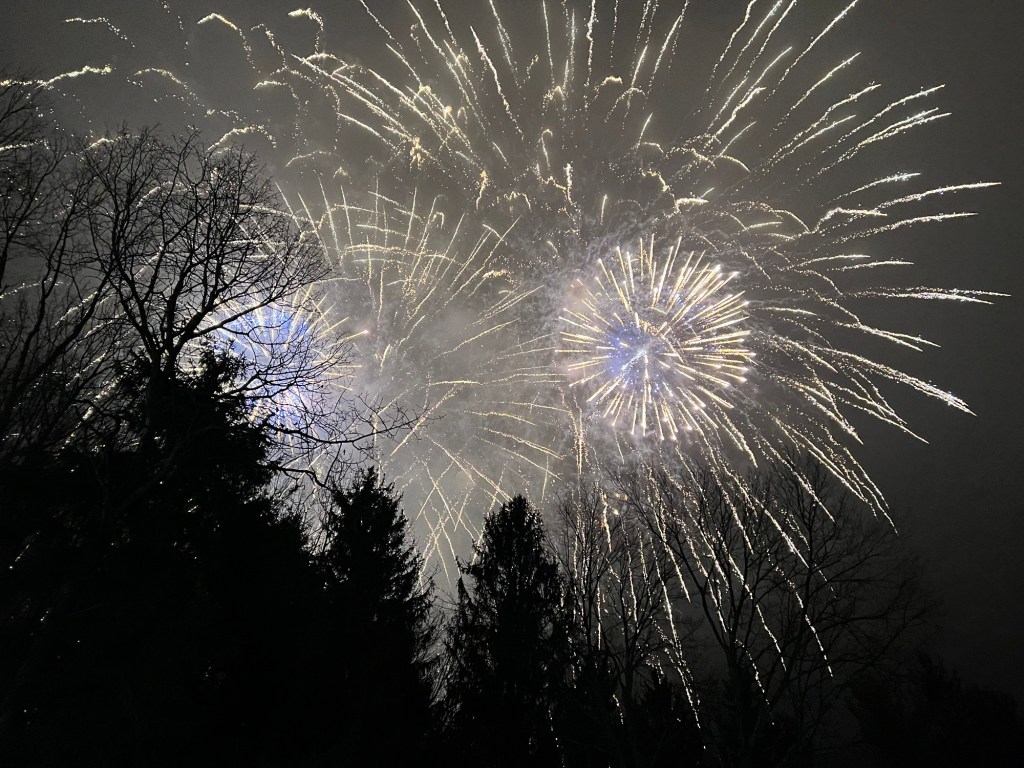
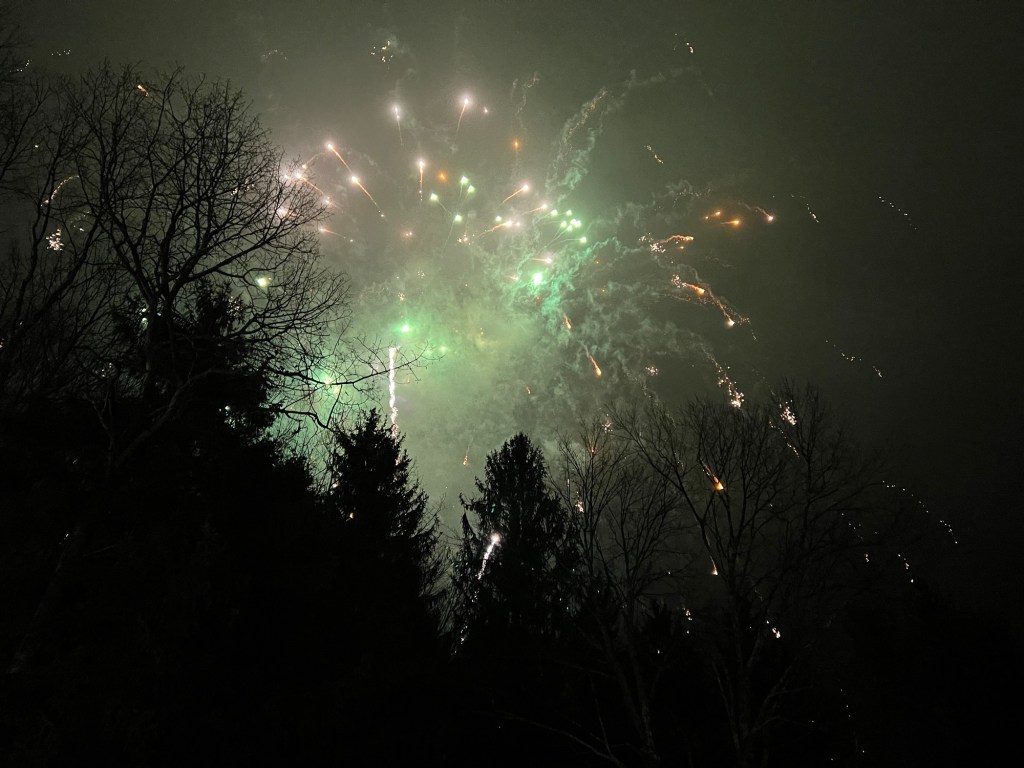
Then there is a fantastic fireworks display. This lasted about a half hour.

The fire works were amazing that morning.

Watch the fireworks display and you will see why you need to be there at 3:00am to enjoy the festivities:

The fireworks display.

The video on the finale was the best:

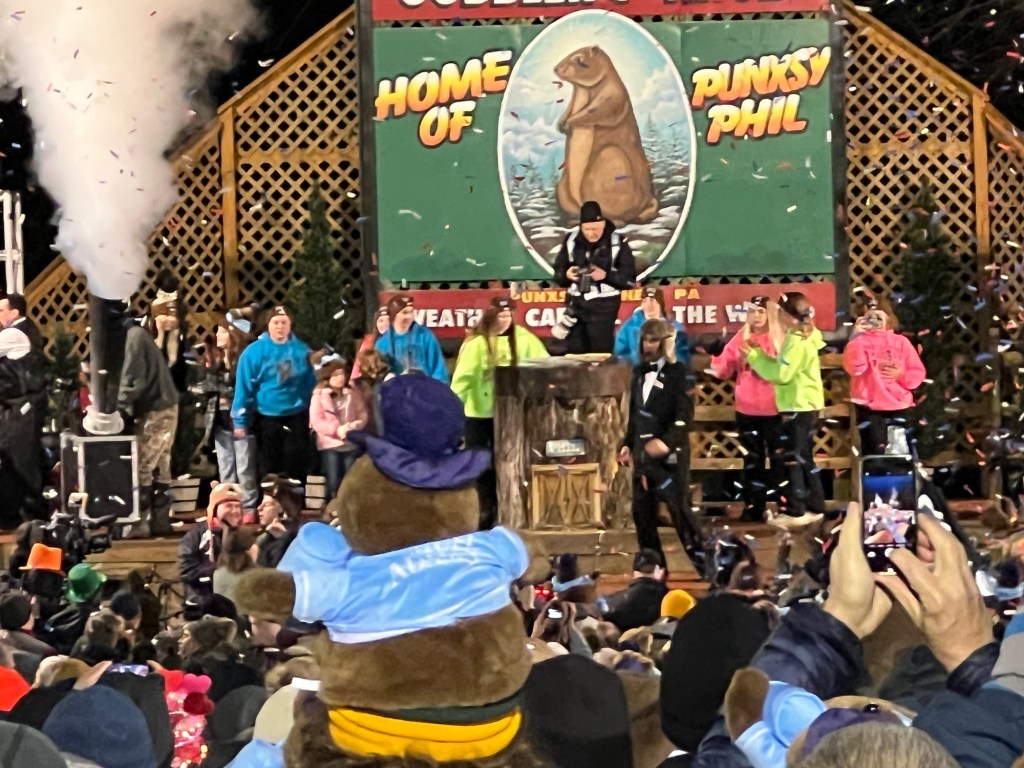
Then the camera’s arrive and it time for the prediction. Will it be an early Spring or will Winter keep going.

It’s time to start the show.

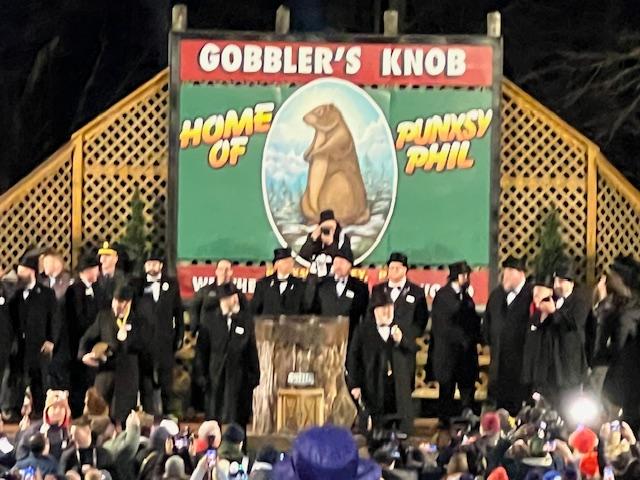
The arrival of the Punxsutawney Groundhog’s Club starts the program.

Phil did not see his shadow in 2024. Spring is on its way!

On the day after Groundhog’s Day, I went back to Gobblers Knob to visit it when it wasn’t so chaotic and crowded. It can magical in its own way in that you see the field and knob empty and realize that people all over the world watch the activities here every February 2nd. It is fascinating to just think about.

The entrance to Gobblers Knob the Saturday after Groundhog’s Day 2024.

The history of the site.

The historical marker of the site.

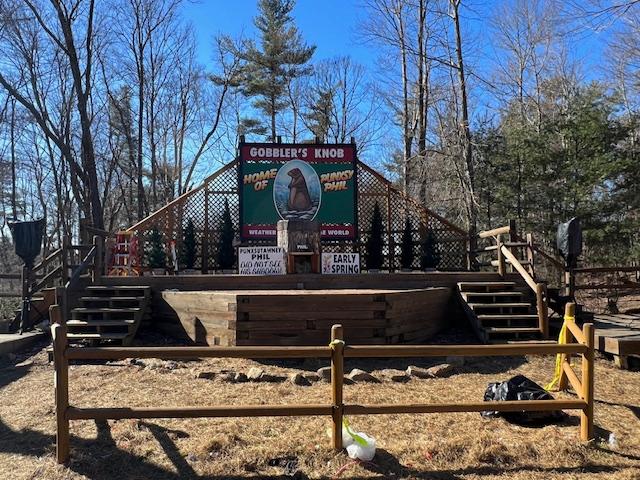
The stage area when it is quiet.

The end of the ceremony on Groundhog’s Day people were still milling around.

Gobbler’s Knob from the stage area.

The entrance display to the field.

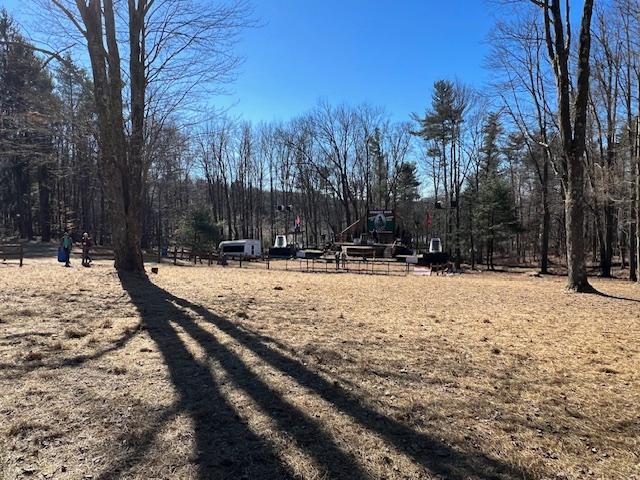
The field when things were quiet after the event the next day.

Groundhogs Day in Punxsutawney, PA is a real experience that you should experience once. To sit out in the field with thousands of others to celebrate the day is a lot of fun. Until next year.