Tag: Smile! Your Visiting New Jersey!

Day Three Hundred and Eighty:                                                 Three Bergecco-Parc Consulting presents “Bergen 250: Exploring Bergen County’s Revolutionary War Era Cemeteries and Graveyards”                                                                                         April 29th, 2026

Day Three Hundred and Eighty: Three Bergecco-Parc Consulting presents “Bergen 250: Exploring Bergen County’s Revolutionary War Era Cemeteries and Graveyards” April 29th, 2026

Every semester for my Business Marketing, Management and Communications classes, I create one big Team assignment for my students. In a Commuter College, it is a lot tougher for students to get to know one another between their studies and their jobs, so I create these projects to foster learning, creativity and especially Teamwork.

This semester I taught International Marketing. This is a tough course to teach as you always have students of various age groups and various levels of industry experience. The Spring semester was no different. This makes the class more interesting yet more challenging to teach. I still challenge them and test them to see what type of future executives they will become.

I also taught Principles of Management and International Marketing which came with their own challenges. It was the amount of people in each class and what projects would they be working on. I knew the things I wanted to work on, I just had to figure out how to frame them.

In the past, I have created these projects under the Bergecco-Parc Consulting Inc. banner, the main consulting company, the Orion Malls banner, a Mall design company and the Buscomonzefi.com banner, my Tech Division.

Each business concept does its best to be creative, forward thinking and have a thought producing presentations. I also challenge the students to top on another in their presentations and build on what they have seen others do in the past.

The Bergecco-Parc Consulting Inc. concept is an acronym for Bergen Community College Paramus campus where I work. It came to me one night around 3:00am in the morning when I was trying to figure out a project for my students to work on.

Professor Justin Watrel, CEO Bergecco-Parc Consulting Inc.

Our Corporate site (created my one of my former President’s:

This semester I attempted one of the toughest and most extensive Team projects in all the historical projects I have created, taking the listing of the Daughters of the American Revolution created for Bergen County Historical Division for the “Bergen 250”and we took it to another level.

I challenged the students to visit all the cemeteries and graveyards on the listing (using my blog if needed), find the tombstones of the veterans of the Revolutionary War and photograph them. Next they needed to create a biography of each of the veterans.

From there, they needed to create a short video of that gravesite and put it all into a QR code so visitors can find them. It was a big challenge but I knew this class could do it. There was something about the personality of this class that would make it work.

I then planned a series of field trips so that the students could visit particular sites in a more formal tour. I asked a lot of the contacts who I have met over the years to help me out, so the students could see why this project was so important to the 250th Anniversary to both our County and our Country. It took a lot to plan and execute. I gave them six weeks to do the research and create other sections of the project.

Bergecco-Parc Consulting Inc. Project Proposal:

The project came in four different sections:

A. They had to take the listing of all the veterans and their list of grave sites and play ‘detective’ to find the tombstones and then film and create the QR codes.

B. They had to create a special “250th Medallion’ that would be placed at each veteran’s tombstone to honor them on the “Bergen 250”. These pieces of art were very clever.

C. They had to create a “Farm to Table” fundraiser with three courses and an American selection of wines, one being from New Jersey. They also had to create the menu and the invitation to the event. The Teams created the menu, cost and budget to show how much they would raise for the event.

D. As an extra credit assignment, I had the Teams create a special “Halloween Tour”, with a special concession menu, tour script of the cemetery or graveyard of their choice and create the logo and advertising for it. Three of the four Teams created this.

Then I planned a series of field trips to visit the most important sites in Bergen County, some were tiny stand alone family cemeteries, some were historical sites and some were very important church graveyards with family plots.

I think this is where the students had the most fun. This is where the comradery of the class was created. As I took the Team out to many of the sites on their listings, the Teams got to see the concept of “Dark Tourism”, the desire to visit places were either bad things have happened, the site has an evil past or something to do with death. This has become a popular form of Tourism in the Twenty-First Century. (Think the 9/11 Memorial).

It was also a chance to get out of the classroom and get some fresh air and sunshine. These are some of the places our Team visited.

My Graveyard and Cemetery Team “Out in the Field”:

The first site I took my Team to was the Baylor Massacre site in River Vale, NJ, where the British had ambushed a battalion of soldiers and killed them. The site has a rather dark history from the war.

Touring the Baylor Massacre site

https://www.discoverbergencounty.com/baylor-massacre-burial-site

https://en.wikipedia.org/wiki/Baylor_Massacre

My review on TripAdvisor:

https://www.tripadvisor.com/ShowUserReviews-g46777-d12277914-r1054278914-Baylor_Massacre_Burial_Site-River_Vale_New_Jersey.html?m=19905

My review on VisitingaMuseum.com

My Team tour of the Baylor Massacre site

The Team tour of the site

Tour of the Baylor Massacre site

Touring the Baylor Massacre site

The irony about the site is that all my students were from Bergen County and none of them had been here before. I had taken my previous ‘Bergen 250’ class here as well as our next stop, the Haring Farm Cemetery just a few blocks away.

The Team picture at the Baylor Massacre site

We next toured the Haring Family Cemetery down the road on Old Haring Farm Road. This was one of the many examples of small family cemeteries that used to be placed at the edge of family farms, who wanted loved ones buried close by or the distance to the family church was too far away at that time.

Touring the Haring Family Cemetery

The Haring family is one of the most important and prominent Colonial families in New Jersey (and are very distantly related to me by marriage), so I felt this site was very important to visit to show the family dynamic of that era.

Our Team at the Haring Farm Cemetery at Old Haring Farm Court

https://www.findagrave.com/cemetery/1974293/haring-family-cemetery

My review on TripAdvisor:

https://www.tripadvisor.com/ShowUserReviews-g46777-d33055554-r1054278214-Haring_Farm_Cemetery-River_Vale_New_Jersey.html?m=19905

My review on VisitingaMuseum.com:

We then went on our Team lunch at Pompilio’s Pizzeria in Downtown Westwood, NJ. I feel on projects like this to build comradary and for the students to start their projects, we need to ‘break bread’ with one another and get to know each other in a relaxed place. Plus the students seem to love free pizza and Coke. This lunch has started many successful projects.

Our Team Divisional at lunch at Pompilio’s Pizzeria:

Our Team lunch at Pompilio’s Pizzeria

We all had such a nice time at lunch and feel this is the best way to get to know one another. The food at Pompilio’s is also excellent. I always host the lunch with large Cheese Pizza and Coke.

My Executive Team at our lunch

Our next Field Trip was the Old Stone Church in Saddle River at 481 East Saddle River Road in Saddle River, NJ. This is one of the oldest churches in Bergen County and in New Jersey.

The Old Stone Church at 481 East Saddle River Road in Saddle River

https://oldstonechurchonline.org

https://en.wikipedia.org/wiki/New_North_Reformed_Low_Dutch_Church

My review on TripAdvisor:

https://www.tripadvisor.com/ShowUserReviews-g46882-d33349708-r1053127966-Saddle_River_Reformed_Church_and_Cemetery-Upper_Saddle_River_New_Jersey.html?m=19905

My review on VisitingaMuseum.com:

Touring the oldest part of the graveyard

This church has the most complete set of tombstones of Revolutionary War veterans and the church website has some of the most complete information on their veterans.

Our group picture at the Old Stone Church

Our next trip was to the First Reformed Church of Hackensack, the second oldest church in New Jersey and one of the most important for the Revolutionary War. Their graveyard has the most amount of Revolutionary War veterans in Bergen County.

My students outside the First Reformed Church of Hackensack at 42 Court Street

https://en.wikipedia.org/wiki/First_Dutch_Reformed_Church,_Hackensack

https://dspace.njstatelib.org/items/4de999c0-1b3c-442a-867c-c3d5e3ee75e7

My review on TripAdvisor:

https://www.tripadvisor.com/ShowUserReviews-g46480-d34352436-r1058240159-First_Reformed_Church_of_Hackensack-Hackensack_New_Jersey.html?m=19905

My review on VisitingaMuseum.com:

The historic outside cornerstones of the church with the original family founder names carved in the bricks

The family keystones

John Paulson keystone

Henry Berry keystone

Albert C. Zabrifky keystone

The Historic First Reformed Church pews and stained glass windows.

The first floor of the church and the inside pews

The alter

The view of inside of the church

The Revolutionary War artifacts

My student visit on the second floor of the church. The church’s artifacts are displayed in the cases here.

Tour of the church

The Child’s family windows

Voorhis-Lozier-Moore Windows

The Kraissi family windows

The Van Valen windows

The War years windows

The church is the second oldest church in New Jersey and one of the oldest in the country. We then walked outside to tour the historic graveyard in the back of the church. It had the most amount of Revolutionary War veterans buried in Bergen County, NJ.

Many of the veterans of the American Revolution were buried closest to the church, which was the tradition of the time to be buried as close to the church as possible. Their graves were marked by Revolutionary War medallions and American flags.

The Demarest-Voorhis Revolutionary War graves

General Poor’s grave

Albert Romin grave Revolutionary War veteran

The front part of the church by the Hackensack Green was the resting place of many of these heros

Our Team of Student Consultants picture inside the historic graveyard

It is also the resting place of General Enoch Poor, who died during battle, whose funeral was attended by General George Washington himself. We took this group picture by the General’s grave.

Our Team pictures with General Poor

Our last field trip and one of our most important was to the Old South Presbyterian Church in Bergenfield. This was the place of the Demarest family plot, which is currently under a full renovation.

The Old South Presbyterian Church and Graveyard

https://www.southchurchtoday.org

My review on TripAdvisor:

https://www.tripadvisor.com/Profile/R4960NKjustinw/mediabatch/13264450?m=19905

My review on VisitingaMuseum.com:

We worked with Melissa Naylis, who is leading the renovation of the church and master carver, Bob Carpenter, who showed us how he is restoring the graveyard. He had led one of my previous classes when we visited the graveyard for my ‘Bergen 250’ project.

Master Carver Bob Carpenter leading our tour

The South Presbyterian Church and the Demarest family plot

The Demarest family plot

Melissa Naylis starting the tour with us

The students got to learn of the important history of the grave sites and why they are an important piece of the United States founding. The were the men who fought for our freedom and the wives and families that supported the effort.

Melissa leading the tour and introducing Bob Carpenter to us

Melissa Naylis explaining the work that is being done in the graveyard

Bob Carpenter explains his work

Some of the earliest tombstones in the graveyard

Bob Carpenter explaining the renovation

Bob Carpenter talking about the Demarest plot renovation

Pastor Glen from the Old South Presbyterian Church introducing himself to the students and joining us on this part of the tour.

Talking about the care of the tombstones

Talking about care of the tombstones

We then moved to tombstone of the founder of Rutgers University for a marble carving demonstration. Bob Carpenter wanted the students to know the effort into carving into stone and brought the tools of that era and a piece of marble for the students to use. The students got a kick out of this and some really enjoyed it.

Bob explaining the work of a marble carver

Describing the process

My students giving it a try

My student Amy, carving marble

My student, Walid, carving on marble

Demonstrating the process

After the demonstration, we talked about the work of the Demarest family and their contributions within Bergen County.

The founder of Rutgers University, John Henry Goetscheus and a member of the extended Demarest family.

Our Team picture after the tour

Taking a quick tour of the graveyard after the formal tour, the Blauvelt-Kipp family burial ground

I found that being ‘out of the field’ really exposed the students to not just to visiting parts of the county they had never seen but showing them how cemeteries and graveyards are part of our culture of respect and memory. They can be looked at less as religious standpoint but as a historical value of who we are and how it part of all of our pasts.

We also looked about how these sites could play a role of building Bergen County tourism by promoting these sites as a part of the history of our country. Not just during the Revolutionary War but as part of our cultural fabric.

On April 29th, 2026, the students made their formal Presentation of the project and showed off their research of the sites and their fundraising tools to support the restoration of these sites.

Here is their work:

The Bergen 250 PowerPoint:

https://docs.google.com/presentation/d/1WdalxqzFy9NJE-6D2Y9nRrHBTB9Z14N2WgSzn119EqM/edit?slide=id.p1#slide=id.p1

The Bergen 250 Website:

https://sites.google.com/me.bergen.edu/bergecco-park-consulting-inc/our-journey

The Bergen 250 Presentation Video:

https://drive.google.com/file/d/1ow37gAAbXF22uoae_bwix6mAseVn_TXy/view

The Bergen 250 YouTube Video:

This was an amazing project that will benefit so many people from historians to researchers to people who love the Revolutionary War and its history to family members looking for loved ones.

It is my class’s contribution as well as other future and past projects to benefit the “Bergen 250” and the rich history of Bergen County, NJ. Our County has contributed so much to not just the building of the state but of the United States as well. It was one of the best projects I ran as CEO of Bergecco-Parc Consulting Inc.

Our Executive Picture:

The “Cemetery and Graveyards” Team

Our Reception following the Presentation

Our Presentation was followed by a Q & A with many people we had met along the way from our visits “out in the field” who had come to see the final project and this was followed by our Corporate Team picture and then a reception in honor of the Student Consultants who made this important possible and come to life.

Great job Team!

Henry Doremus House                                                                   490 Main Road                                                                             Towaco, NJ 07082

Henry Doremus House 490 Main Road Towaco, NJ 07082

Henry Doremus House

490 Main Road

Towaco, NJ 07082

https://www.montvilletwphistoricalsociety.com/museums

https://en.wikipedia.org/wiki/Henry_Doremus_House

https://www.facebook.com/groups/1141264633508766/posts/1764205224548034

Open: Special Events and Pathways Tours in Spring and Fall-Please contact through their website

Admission: Free but donations are accepted

My review on TripAdvisor:

https://www.tripadvisor.com/ShowUserReviews-g46639-d4814175-r1059078529-Henry_Doremus_House-Montville_Morris_County_New_Jersey.html?m=19905

a

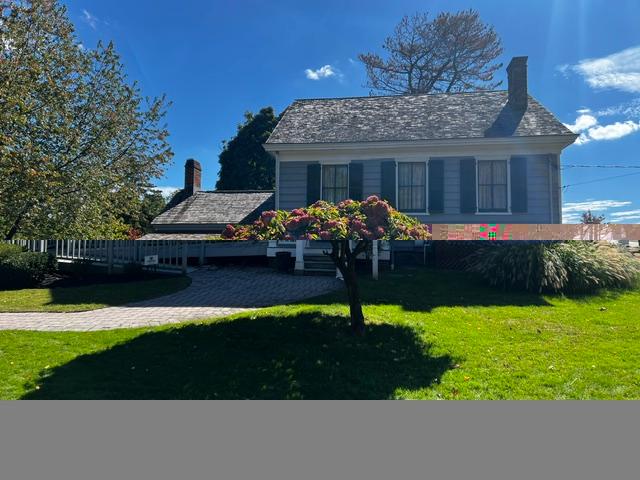
The Henry Doremus House during the Pathway’s tour

I visited the Henry Doremus House during the Morris County Pathways Tour in May of 2026 and it is good look at the early farming communities of New Jersey under the Dutch and then the English. The house was used by General George Washington while he was passing through this section of New Jersey during the Revolutionary War.

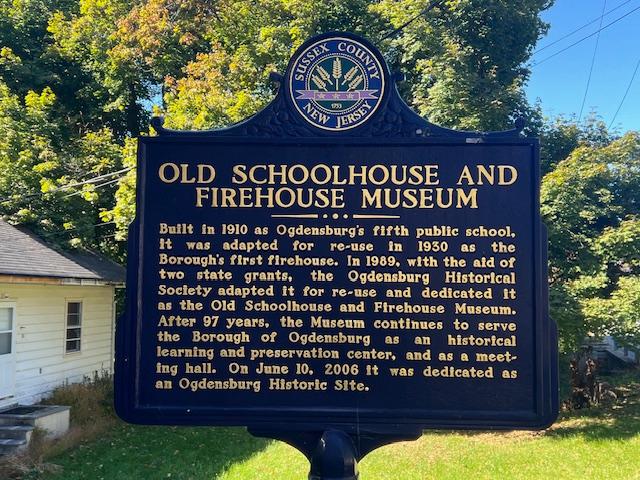
The sign for the Henry Doremus House

The historic sign for the house

Montville Township Historical Society:

(from the Museum website)

Established in 1963, the Montville Township Historical Society is dedicated to the preservation and promotion of the cultural heritage of Montville Township. Our unwavering commitment to meticulous archival work, interactive educational programs, and community outreach initiatives is aimed safeguarding the rich history of our town. Our ultimate objective is to ensure that the stories and traditions of Montville Township are cherished and celebrated for years to come.

The farm and harvest equipment

General Washington’s payment to the Doremus family for use of their home during the Revolutionary War

The farming equipment

The farm and household equipment room

The farm equipment from the time of the Revolutionary War

Henry Doremus House History:

(from the Museum’s website)

The Henry Doremus House is a Dutch American stone farmhouse that has been remarkably preserved since the time the first portion was built, circa 1760. The house has never been modernized with heating, plumbing, electricity, or wiring, and is one of only seven left in New Jersey without modern electricity. What is now Route 202 was one of the main military routes during the Revolutionary War through Montville and Towaco, (then part of Pequannock Township). The Henry Doremus house was located in a small community often referred to as Doremus Town.​

The main room of the original house during the tour

The kitchen and cooking equipment by the open hearth fireplace

The open hearth fireplace for cooking and heat for the home

Cooking items

(from the Henry Doremus website)

General George Washington and his troops often traveled this route between Morristown and West Point. In June of 1780, Washington’s troops (2000 soldiers and 40 aides) were in Whippany and traveled to Doremus Town after the retreat of the Battle of Springfield. General Washington and his aides (which General George Washington at age 45 about the time he stayed at the Henry Doremus House (Mount Vernon)  included Alexander Hamilton) stayed two and a half days in the Doremus House as General Andre Rochambeau (NIAHD Journals)   documented by Washington’s expense account and letters. A payment of $40 was  made to Mrs. Doremus at Pequannock on June 25th, to house General George Washington and his soldiers after the Battle of Springfield. French General Rochambeau stayed in the orchards around the house with over 5000 of his men, women, and camp followers on his way to the Battle of Yorktown in 1781.​

The items for processing wool and flack for clothing

A closer look at the equipment

Household equipment

The house addition towards the back had a spinning wheel and demonstration on how to make cloth.

​The Henry Doremus House was placed, in 1972, on both the National Register of Historic Places and the New Jersey Register of Historic Places. It was also listed on the Montville Township Local Register in 1987, as well as the Crossroads of American Revolution Greenway. In addition, the preservation and protection of the Henry Doremus House won the New Jersey Historic House Preservation Award in 2009.

The demonstrations on spinning yarn and making clothing in the back of the house

When I toured the house, the docents described how the household functioned and how the farm worked during the season. Men and women had different roles to make the household function. There was not much buying things for the house so clothes were made, foods were preserved and pickled for the Winter and then meals had to be prepared while the men worked out in the field. Men had to grow, tend to and then pick all the fruits and vegetables. Then there was tending to the animals, sheering animals and just working on tending the farm with repairs and working through the seasons. It was a lot of physical work through all the seasons.

Household equipment and furnishings plus another open hearth for heating the house

The front of the house facing the street with twin Dutch doors and entrance to the root cellar

The Doremus House is open mostly during the Pathways tour in May and October. The Montville Historical Society also runs the Montville Historical Society Schoolhouse Museum in Montville.

Van Bushkirk Burial Ground                                                      45 East Saddle River Road                                                              Saddle River, NJ 07458

Van Bushkirk Burial Ground 45 East Saddle River Road Saddle River, NJ 07458

Van Bushkirk Burial Ground

45 East Saddle River Road

Saddle River, NJ 07458

https://www.findagrave.com/cemetery/2160733/edit

The Van Bushkirk Burial Ground behind the residence at 45 East Saddle River Road

The Van Bushkirk Burial Ground is part of the history of Saddle River, NJ’s early settlement period. The burial ground has about 40 tombstones that are arched and shaped. These are some of the first residents both of Saddle River and Bergen County, NJ.

The burial ground lies next to a creek off East Saddle River Road and can only be accessed by going through private property of the residents living at 45 East Saddle River Road. Please do not enter without permission of the owner of the home. These pictures were taken with a long distance camera from the street.

The Van Bushkirk Burial Ground at 45 East Saddle River Road

The History of Saddle River:

(from the Saddle River Town website):

In 1675, Lenni Lenape tribal leaders sold a large amount of land on the Eastern side of the Saddle River (known as Werimus) to Albert Zabriskie. In 1708, Zabriskie sold this tract of land to Thomas Van Buskirk. The first house in Saddle River was built by the Van Buskirk family in 1709. The original Van Buskirk homestead still stands at 164 East Saddle River Road across from Borough Hall.

In 1709, the Lenni Lenape sold the land on the west side of the Saddle River to the English as part of the Ramapo Tract. Property on the west side of the Saddle River was acquired from this Tract throughout the 1700’s. The Ackerman Family was the most prolific buyer of these early Saddle River parcels and first settled on the West side of the Saddle River in 1745 when Johannes Ackerman acquired 245 acres.

The graves of George and Margaret Achenbach

Saddle River continued to grow and populate during the 18th century.  Families such as the Van Buskirk’s, the Ackerman’s, the Achenbach’s, the Hopper’s, the Zabriskie’s, the Stilwell’s and the Baldwin’s farmed and developed the area.

The grave of George Achenbach

The first of many Saddle River mills was built in 1714 and the first school was constructed in 1720. Another early 18th century business was the blacksmith shop operated by the Ackerman family. Over the years, these 1st families built the quintessential “Old Dutch Homesteads” from actual sandstone that was found in town.

The Revolutionary War era tombstones

The Revolutionary War was a horrendous time for the residents of Saddle River. The townsfolk had spent the entire 18th century developing the area into a well established community and all growth essentially stopped during the war. Since the Jersey Dutch initially considered the revolution to be an English issue, it was particularly shocking when the fighting came to their backyards. From December 1776 until the end of the war, both American and British forces traveled through Saddle River and many times set up camp in the center of town.

Residents were in constant fear of the British employed Hessian soldiers who would terrorize families by raiding the houses for food and then burning the fields before leaving. Although no major battles took place in Saddle River, there were small skirmishes to fend off raids and the Blue Mill on East Saddle River Road was destroyed. Even George Washington, the future father of our country, passed through Saddle River on multiple occasions and tradition has him staying overnight at the Ackerman Homestead on the East road.

When the Revolutionary War ended, Saddle River residents picked up right where they left off in terms of community and industry development. The Ackerman’s built a Foundry on what is now Waterford Gardens. Tice and Berdan both opened stores in town and the Bulls Head Tavern opened its doors to weary travelers in 1802. Old mills were re-opened and new ones such as Van Riper’s Saw Mill and Basket Factory were established. The post war growth continued for decades and culminated in the 1820s with the construction of the Zion Lutheran Church in 1821 and a new schoolhouse behind the church in 1825.

The worn tombstones in the cemetery

History of the Van Bushkirk family in Bergen County during the Revolutionary War:

(From the Bergen County Historical Society website):

Loyalists in Bergen County | Bergen County Historical Society

Loyalists in Bergen County came from all backgrounds, religions and economic classes. At the beginning of the war, a number were officers in the militia, the military force composed of all able-bodied males maintained by each province, and later the states. The lieutenant colonel of the militia was John Zabriskie of New Bridge. Zabriskie understood the sentiments of many of his neighbors, particularly those of Abraham Van Buskirk, whose property was directly across the bridge in Teaneck. Van Buskirk was a surgeon in the militia under Zabriskie, and with whom he served on Bergen County’s Committee of Correspondence, an entity established to keep in touch with other New Jersey counties and the events occurring there.

Van Houten Family Cemetery                                                            108 Delaware Lane                                                                          Franklin Lakes, NJ 07417

Van Houten Family Cemetery 108 Delaware Lane Franklin Lakes, NJ 07417

Van Houten Family Cemetery

108 Delaware Lane

Franklin Lakes, NJ 07417

https://www.findagrave.com/cemetery/1598327/van-houten-family-cemetery

https://www.myheritage.com/names/john_vanhouten

https://www.wikitree.com/genealogy/VANHOUTEN

My review on TripAdvisor:

The Van Houton Family Cemetery at 108 Delaware Lane on what was once the family farm

The historic Marker from 1822

The family plot from the entrance of the cemetery

About five generations of Van Houton’s have been buried in this spot, with an impressive list of family members who have served in all the nation’s wars.

From the Revolutionary War up to World War II, the family’s contribution extends not just to Bergen County but our entire country.

The family extends to other older ‘first families’ of Bergen County, such as the Snyder’s, the Demarest’s, DeBuan’s and the Van Ripper’s.

History of the Cemetery:

https://www.interment.net/data/us/nj/bergen/vanhouten/van.htm

(From the research of Richard Hrazanek)

This multi-generational cemetery is still used today by the descendents of John Van Houten, who left the property in his will. The grounds of the cemetery are well maintained. A metal fence around the property could use some minor repairs. Unfortunately a couple of the obelisk markers have fallen off their bases.

In the August 1992 Cemetery Inventory Booklet, published by the Bergen County Department of Parks, Division of Cultural and Historic Affairs, they listed Andrew Schaaf as a contact person for the cemetery, with an address of 749 High Mountain Road, Franklin Lakes, NJ 07417. The same publication mentions that an inventory of the cemetery was done by John Neafie in 1911.

The oldest tombstones in the center

The History of Franklin Lakes:

(From the Franklin Lakes Town website):

https://activerain.com/blogsview/238626/franklin-lakes-new-jersey-history

In the 17th century, Lenape Indians traveled the land we now call Franklin Lakes.  They made winter camp in the “Clove” near Buttermilk Falls and fished in Micharagrape Pond ( now Franklin Lake).

Slowly, the Dutch settlers made their way west from the Hudson River Valley.  In 1701 the East Jersey Proprietors confirmed to Michael Hawden the land around the Pond.  In 1772 Franklin Township was formed and included much of northwestern Bergen County.  Farming was the major occupation of the early inhabitants, mostly Dutch with the names of Van Winkle, Van Houten, Ackerman, Pulisfelt, Van Blarcom, etc.  They built solid farmhouses of sandstone and fieldstone.  Fourteen of these historic homes still stand in our Borough.

Some of the original family member tombstones in the cemetery

Mills sprang up along the creeks: sawmills, gristmills, tanneries and forges.  Daniel Youman’s Grist Mill on Franklin Lake was probably the first business established (it later served as a saw mill and a cider mill).

The 1876 Walker Atlas showed Franklin Lakes had about 100 residences, 5 mills, 1 tannery, 3 schools, 4 blacksmith and wagon shops, 1 church, 2 hotels, 1 store, and 2 railroad depots.

The railroad stations were built in 1869 when the New Jersey Midland Railroad was extended to Oakland.  One station stood at Campgaw on Pulis Avenue, the other at Crystal Lake on High Mountain Road.  Residents used the train for commuting, moving goods and mail.

Around the turn of the century, estate houses and mansions began to appear in the area.  The industrial revolution brought wealth, and many of the wealthy became “gentleman farmers,” sometimes living here only in the summer.  Examples of these houses include the Bartholf-Hughes house on Somerset, the Post-Terhune house on Franklin Lake Road, and the Atterbury-Brockhurst house on Ewing Avenue.

Eventually, the Campgaw section became the civic center of our Borough.  In 1922 Franklin Lakes separated from Franklin Township, incorporated, and elected William V. Pulis as its first Mayor. 

Edward May built three lakes and started the Shadow Lake Swim Club, which evolved into Shadow Lakes Estates.  On the other side of the Borough, J. Nevins McBride purchased land around Franklin Lake and began building single-family homes in Urban Farms.

When Route 208 was extended to Oakland in 1959, Franklin Lakes became more accessible, and by 1980 there were more than 8,500 residents.  The completion of Interstate 287 in the early 1990’s stimulated another boom in building.  Today, the population of our Borough is 10,422.

From a sleepy rural community to an affluent metropolitan suburb, Franklin Lakes has changed extensively, continuing to be a desirable place to live and raise families.

The Franklin Lakes Historical Society was created to help preserve our Borough’s rich history, while at the same time looking to the future of our unique community and those who choose to make this their home.

courtesy http://www.franklinlakes.org 

The family still uses the cemetery into the twenty-first century

Part of the cemetery into modern times

Multiple family members are often buried together

The cemetery in modern times

The children of Ralph Van Houten who passed within a few years of one another

The grave of Abraham Van Houton and his wife, Bridget

The front part of the cemetery shows the different branches of the family and when they were buried.

The back part of the cemetery is rather old

The Snyder branch of the family

Another branch of the Van Houten family is buried together here

Members of the Ackerman and Cooper side of the family

Conrad and Elizabeth Van Houten

Jacob and Elizabeth Van Houten

Some of the modern graves of the Van Houten’s and Ackerman sides of the family

Many of these small family plots sit on buffs and have the most amazing views. It is as if the final resting place was to be a place of beauty and contemplation.

Unfortunately the family farm is long gone and the cemetery is now surrounded by McMansions. Talk about progress!