Tag: Small Museums in New Jersey

Old Schoolhouse and Firehouse Museum                                    6 Passaic Avenue                                                                   Ogdensburg, NJ 07439

Old Schoolhouse and Firehouse Museum 6 Passaic Avenue Ogdensburg, NJ 07439

Old Schoolhouse and Firehouse Museum

6 Passaic Avenue

Ogdensburg, NJ 07439

https://www.sussex.nj.us/561/Old-Schoolhouse-Fire-Museum

https://www.facebook.com/oburghistoricalsocietypage

Open: Sunday 1:00pm-4:00pm (Only on the forth Sunday of the Month) Monday-Saturday Closed-Check the website for seasonality.

Admission: Free but a donation is appreciated

My review on TripAdvisor:

https://www.tripadvisor.com/Profile/R4960NKjustinw/mediabatch/14495681?m=19905
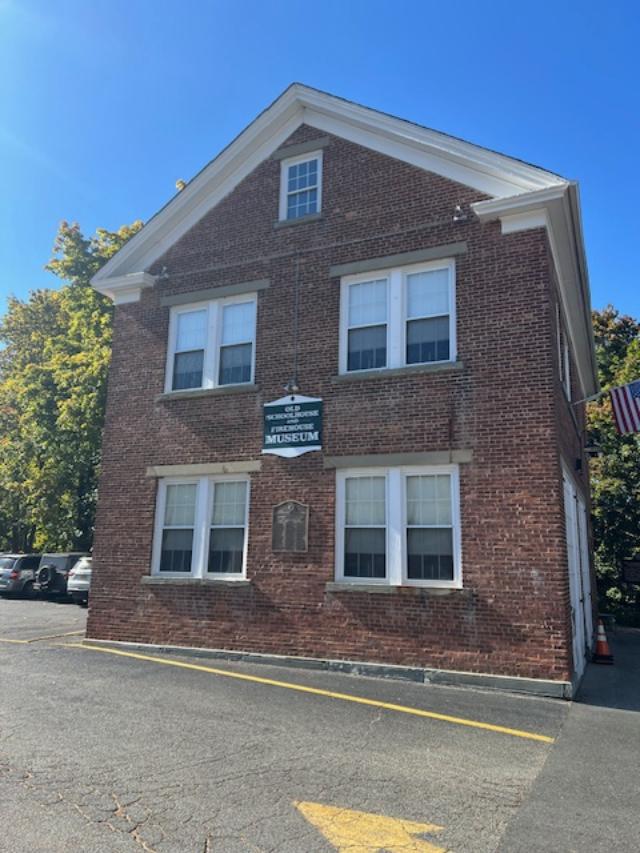
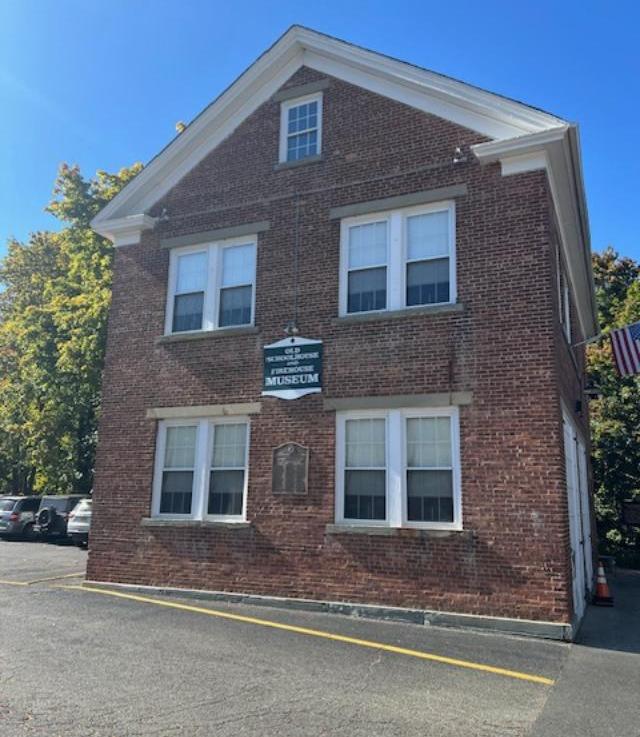
The front of the museum

I recently visited the Ogdensburg Old Schoolhouse and Firehouse Museum at 6 Passaic Avenue in Downtown Ogdensburg and discovered the community’s rich history of farming and mining in its past and its current destination as a weekend vacation spot and a up and coming bedroom community of New York City.

The County still has some farming and agriculture going on as the County continues to be built up with expats from the City, and Bergen and Morris Counties. The first floor is dedicated to the history of the Ogdensburg Fire Department with an old Engine and Ladders trucks, artifacts from the Sterling Mine just up the road and township property such as an old voting booth. You can read about the history of the Ogdensburg family as you head to the outside gallery.

The second floor has displays of various town departments including the Rescue, the Police Department and Fire Department. There are various displays of the town’s school system and various clubs in town. There are displays on the town’s mining and agricultural past with items such as farm advertising and mining equipment and minerals. Each display plays a role in the development of the community and how it progressed from farming to mining to manufacturing to the bedroom community it is today.

History of the Building:

“Built in 1910 as Ogdensburg’s fifth public school, it was adapted for re-use in 1930 as the Borough’s first firehouse replacing the one built in 1872. In 1984, with the aid of two state grants, the Ogdensburg Historical Society adapted it for re-use and dedicated it as the Old Schoolhouse and Firehouse Museum in 1987.

After 97 years, the Museum continues to serve the Borough of Ogdensburg as an historical learning and preservation center, and as a meeting hall.  On June 10, 2006 it was dedicated as an Ogdensburg Historic Site.”
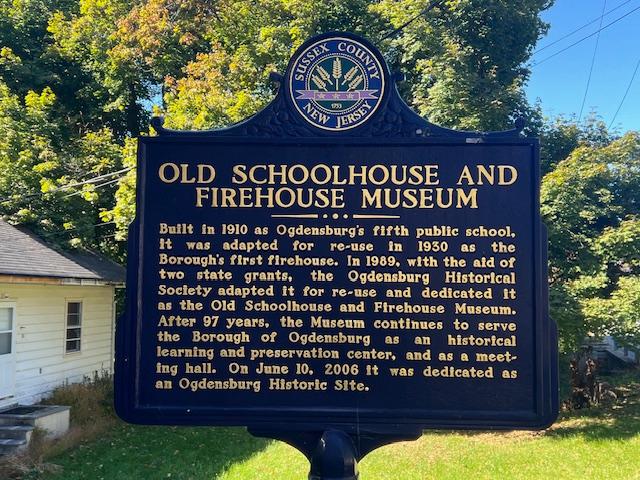
The historic sign of the museum

The Borough of Ogdensburg is the host of this marker commemorating the rich history provided by this building.  This building has been maintained with much thought and care and remains as a museum and meeting place for the residents of the town. The marker is located in front of the building on Passaic Avenue just off Main Street by the Ogdensburg Elementary School.  This marker was part of the 2008 placement (Museum website).

The outside of the museum which served as a school and a firehouse

The first floor of the building has the fire trucks, the history of the fire department and Ogdensburg’s 250th Anniversary of the United States on display.

The museum artifacts from the 250th celebration of the Country

The museum is on the heart of mining country of Sussex County, NJ and the museum has an interesting mineral collection along with their collection of mining artifacts.

The Mineral and Mining Collection

The museum being home to the Ogdensburg Fire Department contains the history of the local fire department along with vehicles and artifacts from the department.

https://www.facebook.com/oburgfd

The history of the Ogdensburg Fire Department

One of the early Ladder Trucks

The history of the department

One of the early Engine Trucks

The history of the department

One of the early pull hose beds pulled by men and then by horses

The first floor also contains the history of the Ogden family in the region.

The history of the Ogden family in the community

The town voting booth and a turn of the last century phone

The second floor gallery used to serve as offices and living space of the fire department.

The main gallery on the second floor

The gallery case lines are filled with memorabilia from different aspects of the community telling the story of the growth of the community that included Mining and Farming. It explains the growth into the modern suburbs of today. This includes the Fire and Police and Rescue Departments, the School System and cultural events in the community.

The main gallery on the second floor of the museum

The main gallery on the second floor

The display case of Ogdensburg departments including school, fire and police departments

The display of the Ogdensburg Police Department

https://www.facebook.com/people/Ogdensburg-NJ-Police-Department/61590226020577

The display of the Ogdensburg First Aid Squad

Blanket with historical sites and artifacts of the town of Ogdensburg, NJ

The businesses including schools and the domestic and farming industries

Each of the display cases represented different aspects of the town and has a variety of pictures and memorabilia from a variety of eras. The case lines show how the community changed over time from a mining community to the changes of a bedroom community of Newark and New York City.

The school system with classes and sports teams

https://www.obboe.org/apps/events

Household, town and business artifacts

Military and early Native American artifacts

The Glenbrook Farm Milk Bucket

The Domestic home display

The Entertainment display of recorders, phonographs, radios and early record players

The influence that Thomas Edison had on the community with new technology. Several pieces of Thomas A. Edison memorabilia are on exhibit to honor the ten years Edison spent mining iron ore at the old Edison Ore Milling Company on Sparta Mountain. Several of his phonographic inventions were created here (Ogdensburg Historical Society website).

Close up view of record players and Victrola’s

The Ogdensburg School system display

The Ogdensburg Presbyterian Church display of artifacts from inside the church

The NJ Zinc Mine display with minerals and equipment

The NJ Zinc Mine and Mineral display is a small s as molding of the museum down the street and the importance of the mining industry at the turn of the last century.

A closer look at the minerals display

A replica of a working mine operation. The machine shows how workers descending and brought up rock from the mines.

The Dedication to Mr. Waco Hadowantez, the town historian

The last display as you leave the museum is dedicated to the man who founded the historical society, Waco Hadowantez.

The museum tells an interesting story of the history of Ogdensburg and the surrounding area. It shows the importance of the Mining Community at the turn of the last century and how the community is pivoting towards tourism to tell its story.

Please contact the museum directly for seasonal hours and tours.

Day Three Hundred and Eighty-Three:                                         Bergecco-Parc Consulting presents “Bergen 250: Touring & Marketing the Pascack Historical Society Museum in Park Ridge, NJ for Tourism”                                                                                       April 29th, 2026

Day Three Hundred and Eighty-Three: Bergecco-Parc Consulting presents “Bergen 250: Touring & Marketing the Pascack Historical Society Museum in Park Ridge, NJ for Tourism” April 29th, 2026

Every semester for my Business Marketing, Management and Communications classes, I create one big Team assignment for my students. In a Commuter College, it is a lot tougher for students to get to know one another between their studies and their jobs, so I create these projects to foster learning, creativity and especially Teamwork.

This semester I taught two sections of Business 101-Introduction to Business, which is the entry level course to the Business/Hotel Management School. This is a tough course to teach as you always have students of various age groups and various levels of industry experience. The Spring semester was no different. This makes the class more interesting yet more challenging to teach. I still challenge them and test them to see what type of future executives they will become.

I also taught Principles of Management, which came with its own set of challenges. It was the amount of people in the class and what projects would they be working on.

In the past, I have created these Team projects under the Bergecco-Parc Consulting Inc. banner, the main consulting company, the Orion Malls banner, a Mall design company and the Buscomonzefi.com banner, my Tech Division. All of these business concepts are simulated.

Each business does its best to be creative, forward thinking and have a thought producing presentations. I also challenge the students to top on another in their presentations and build on what they have seen others do in the past.

The Bergecco-Parc Consulting Inc. concept is an acronym for Bergen Community College Paramus campus where I work.

Professor Justin Watrel, CEO Bergecco-Parc Consulting Inc.

Our Corporate site (created my one of my former President’s:

While my morning Business 101 classes worked on their ‘Breakfast at Primo Pizza’ project and my International Marketing students worked on their “The Historic Revolutionary War Graveyards and Cemeteries of Bergen County” projects, I had my Principle of Management students create a game plan to market the Pascack Historical Society Museum in Park Ridge, NJ to a younger, more modern audience.

When choosing a project for this class, I had had two other ideas that fell through, then I had remembered working with the Pascack Historical Society Museum the prior year for my “Bergen 250” Team Project. We had proposed a Farm to Table Dinner at the Wortendyke Barn down the road with the dinner starting with a Cocktail Party here with a tour of the museum. I asked the museum again to partner with me on this project.

The “Bergen 250” Project in Spring 2025:

The Video Presentation of the “Bergen 250” in 2024:

The museum had created a wonderful exhibition for the “Bergen 250” but when I went to visit it, no one was at the museum but myself. When I asked the volunteers that day how many people had visited the museum, they told me I was the first one. That got me thinking why people were not visiting this wonderful museum with its interesting artifacts and intriguing displays.

The outside of the Pascack Historical Society Museum at 19 Ridge Avenue in Park Ridge, NJ

Then I looked at their website and their displays. I realized that the museum was not adapting to the cellphone age. There were no QR codes at any of the displays, not enough pictures of the display on their website and their scavenger hunt bingo game needed an update to engage a younger crowd.

https://pascackhistoricalsociety.org

https://www.facebook.com/pascackhistoricalsociety

My review on TripAdvisor:

https://www.tripadvisor.com/ShowUserReviews-g46713-d12610386-r1051662243-Pascack_Historical_Society_Museum-Park_Ridge_New_Jersey.html?m=19905

My review on VisitingaMuseum.com:

That’s when I came up with a Marketing plan for the museum and proposed it to their Executive Board. We worked together to come up with new ways to promote the museum and its collection. This was our combined idea and we looked at how to bring more traffic to the museum.

The Proposal for “Bergen 250: Touring the Pascack Historical Society Museum”:

I presented the project to my students after the Spring Break and then the next week took my students on a mandatory field trip to the Pascack Historical Society Museum in early April. The Board members of the Museum led us on a tour of all the exhibitions, then discussed their plans for the “Bergen 250” and then discussed some of the challenges that the museum faced with attendance.

Touring the museum

The students on their part took pictures and notes about the museum and their displays. Many would make various trips back to the museum to crest the QR codes for the displays and map the museum’s backyard for the Farm to Table fundraiser and a proposed afternoon tea.

Touring the museum

Touring the museum

Touring the museum with the Board of the museum

The museum’s Board members could not have been nicer and more helpful to the students and myself. We got a lot of insights on what direction the Board wanted to go.

Our Team picture at the museum

The tour of the museum took about an hour. We then had a Division Team Dinner at Pompilio’s Pizzeria in Downtown Westwood, NJ:

https://www.pompiliospizzeria.com

My review on TripAdvisor:

https://www.tripadvisor.com/ShowUserReviews-g46923-d4643410-r1053567938-Pompilio_s_Pizzeria_Restaurant-Westwood_New_Jersey.html?m=19905

Dinner with my Divisional Team

I find that these Team dinners and lunches are very helpful in getting the students together to get to know each other and we share a nice meal as a Team should. We asked the Board to join us so we could continue the conversation.

Dinner with both the Board and my Team

For the next five weeks the three Teams broken into Marketing, Historical and Foodservice created their ideas and game-plans to help the museum increase traffic by trying to bring a younger and tech savvy visitor into the space.

The Pascack Historical Society PowerPoint:

The Pascack Historical Society Corporate Website:

https://ekucevic4.wixsite.com/bergecco-parc-consul

The Pascack Historical Society YouTube Presentation:

The video of our Presentation to the Board of the Pascack Historical Society Museum on the evening of April 29th, 2026

On the evening of April 29th, the Board members of the museum joined us for the Presentation of ideas the students came up with including setting new QR codes for all the displays, a revamped Marketing plan to showcase the museum, a new historical walking tour, one aimed at adults and one to children and the ideas for the fundraising dinner, a children’s birthday party concept and a Afternoon Tea fundraiser.

After the Presentation, we had a Q & A on the ideas and after the Presentation was over, we had a reception for our guests and for the student consultants. Then we took our Corporate Team picture.

My Divisional Team the night of the Presentation

Our reception after the Presentation

It was another successful project accomplished and it looked like the Board went home with new ideas and the students learned a few things about themselves. I could not have been more proud of the students.

Henry Doremus House                                                                   490 Main Road                                                                             Towaco, NJ 07082

Henry Doremus House 490 Main Road Towaco, NJ 07082

Henry Doremus House

490 Main Road

Towaco, NJ 07082

https://www.montvilletwphistoricalsociety.com/museums

https://en.wikipedia.org/wiki/Henry_Doremus_House

https://www.facebook.com/groups/1141264633508766/posts/1764205224548034

Open: Special Events and Pathways Tours in Spring and Fall-Please contact through their website

Admission: Free but donations are accepted

My review on TripAdvisor:

https://www.tripadvisor.com/ShowUserReviews-g46639-d4814175-r1059078529-Henry_Doremus_House-Montville_Morris_County_New_Jersey.html?m=19905

a

The Henry Doremus House during the Pathway’s tour

I visited the Henry Doremus House during the Morris County Pathways Tour in May of 2026 and it is good look at the early farming communities of New Jersey under the Dutch and then the English. The house was used by General George Washington while he was passing through this section of New Jersey during the Revolutionary War.

The sign for the Henry Doremus House

The historic sign for the house

Montville Township Historical Society:

(from the Museum website)

Established in 1963, the Montville Township Historical Society is dedicated to the preservation and promotion of the cultural heritage of Montville Township. Our unwavering commitment to meticulous archival work, interactive educational programs, and community outreach initiatives is aimed safeguarding the rich history of our town. Our ultimate objective is to ensure that the stories and traditions of Montville Township are cherished and celebrated for years to come.

The farm and harvest equipment

General Washington’s payment to the Doremus family for use of their home during the Revolutionary War

The farming equipment

The farm and household equipment room

The farm equipment from the time of the Revolutionary War

Henry Doremus House History:

(from the Museum’s website)

The Henry Doremus House is a Dutch American stone farmhouse that has been remarkably preserved since the time the first portion was built, circa 1760. The house has never been modernized with heating, plumbing, electricity, or wiring, and is one of only seven left in New Jersey without modern electricity. What is now Route 202 was one of the main military routes during the Revolutionary War through Montville and Towaco, (then part of Pequannock Township). The Henry Doremus house was located in a small community often referred to as Doremus Town.​

The main room of the original house during the tour

The kitchen and cooking equipment by the open hearth fireplace

The open hearth fireplace for cooking and heat for the home

Cooking items

(from the Henry Doremus website)

General George Washington and his troops often traveled this route between Morristown and West Point. In June of 1780, Washington’s troops (2000 soldiers and 40 aides) were in Whippany and traveled to Doremus Town after the retreat of the Battle of Springfield. General Washington and his aides (which General George Washington at age 45 about the time he stayed at the Henry Doremus House (Mount Vernon)  included Alexander Hamilton) stayed two and a half days in the Doremus House as General Andre Rochambeau (NIAHD Journals)   documented by Washington’s expense account and letters. A payment of $40 was  made to Mrs. Doremus at Pequannock on June 25th, to house General George Washington and his soldiers after the Battle of Springfield. French General Rochambeau stayed in the orchards around the house with over 5000 of his men, women, and camp followers on his way to the Battle of Yorktown in 1781.​

The items for processing wool and flack for clothing

A closer look at the equipment

Household equipment

The house addition towards the back had a spinning wheel and demonstration on how to make cloth.

​The Henry Doremus House was placed, in 1972, on both the National Register of Historic Places and the New Jersey Register of Historic Places. It was also listed on the Montville Township Local Register in 1987, as well as the Crossroads of American Revolution Greenway. In addition, the preservation and protection of the Henry Doremus House won the New Jersey Historic House Preservation Award in 2009.

The demonstrations on spinning yarn and making clothing in the back of the house

When I toured the house, the docents described how the household functioned and how the farm worked during the season. Men and women had different roles to make the household function. There was not much buying things for the house so clothes were made, foods were preserved and pickled for the Winter and then meals had to be prepared while the men worked out in the field. Men had to grow, tend to and then pick all the fruits and vegetables. Then there was tending to the animals, sheering animals and just working on tending the farm with repairs and working through the seasons. It was a lot of physical work through all the seasons.

Household equipment and furnishings plus another open hearth for heating the house

The front of the house facing the street with twin Dutch doors and entrance to the root cellar

The Doremus House is open mostly during the Pathways tour in May and October. The Montville Historical Society also runs the Montville Historical Society Schoolhouse Museum in Montville.

The Endicott-Reardon Family Museum                                   3036 South Shore Road (Route 9)                        Seaville, NJ 08230

The Endicott-Reardon Family Museum 3036 South Shore Road (Route 9) Seaville, NJ 08230

The Endicott-Reardon Family Museum

3036 South Shore Road (Route 9)

Seaville, NJ 08230

(609) 624-0600

https://www.facebook.com/EndicottReardonMuseum/

https://visitnj.org/endicott-reardon-family-museum

Open: Sunday Closed/Monday 10:00am-2:00pm/Tuesday Closed/Wednesday 10:00am-2:00pm/Thursday Closed/Friday 10:00am-2:00pm/Saturday Closed. Seasonal-Seasonal Please see the website.

Admission: Free

My review on TripAdvisor”

https://www.tripadvisor.com/Attraction_Review-g46811-d20911361-Reviews-Endicott_Reardon_Family_Museum-Seaville_Upper_Township_Cape_May_County_New_Jersey.html

The front the museum

The sign welcoming you the the Endicott-Reardon Family museum

The original Endicott-Reardon Homestead that sits in the front of the museum

The entrance to the museum dedicated to the lives of both the Endicott and Reardon families.

The family artifacts and heirlooms at the museum as you enter the museum

The Endicott family display at the entrance

The museum is a real surprise as entire set of displays is dedicated to the lives of the local Reardon and Endicott families and their family items. A fascinating look of the lives of these early New Jersey families for over a hundred years. This is the collection of Harriett Reardon Bailey and her family. All these wonderful items were saved over the last 100 years and now it was time to share them with the world.

The various family items are organized by sections categorized by lifestyle and collection.

I was given a personal tour that I had arranged with the current curator who had known and worked with the owner of this extensive collection. It had been her dream to open a museum to share her collection with the public.

This beautiful, well lit and displayed collection of family heirlooms and personal items gives a glimpse of the lives of an upper middle class family in Southern New Jersey. It is organized and displayed as a household would be at that time. The first section of the museum was dedicated to items from the kitchen and preparations.

The family Living room furnishings and decorations

The family piano that once graced their Living Room

A decorative toy car used in the Living Room

The kitchen area and artifacts of the cooking and washing done in the house

The table set for a formal dinner

The next part of the exhibit was the formal Dining Room and on display were many of the China patterns that the family owned.

All the china collections the family owned plus other decorative pieces

The family collection of China and glass pieces

The family had various collections of China

Mainly of the bedroom items have been preserved too from linens to comforters to every day clothing. There are also a selection of family member’s clothing, jewelry and personal items.

The Bedroom vignette with clothing and accessories

Another view of the bedroom

Harriett Reardon Bailey had been a school teacher like her mother and there were displays of items that reflected her time in the classroom including a classroom setting.

Time on the classroom and family employment

The classroom set up

Activities and programs at the school

More local school items

There were also displays on her father’s time in the army and her uncle’s time working on the railroad with carefully preserved outfits, programs and railroad artifacts from the job.

The Railroad display

School and family items

Work on the railroad

The display on the family contribution to the armed forces

What I thought was interesting was that the founder of the museum, Harriett Reardon Bailey, had been an only child with relatives that had never been married so that she was the only child and a bit spoiled.

The Toy Room

In a separate room off the side held her extensive collection of dolls and games. She had kept all her childhood items in such beautiful shape and with great care. What impressed me was there was a picture of her as a little girl with all her dolls and stuffed animals her room and since she kept everything, they were able to recreate the display.

The picture of the owner of the museum as a little girl in her bedroom

The exact replicated display of toys in the same spots in the display

The collection of tea sets

The collection of toys and playthings are extensive and they are all in wonderful working shape

There was a large collection of dolls plus all their clothes and accessories that were kept together in her collection. Even into adulthood, all of her childhood items were kept in pristine condition.

The collectible dolls and clothing

The extensive collection of childhood dolls

The collection of China and baby dolls

The collection of baby dolls

The collection of cloth and rag dolls

The handmade dollhouse and rag dolls

The fancier imported and collectible dolls

What I thought was interesting during the tour was that the curator had said that the founder of this museum was dedicated in keeping all these items for so long and packing the house with family memorabilia. I think she knew what she was doing.

She was not just preserving memories, she was preserving a past that was fading away and the memories of a different time. As her family died, she kept their memories alive by preserving their past as well. The curator had said that she had always wanted to create a museum with all her family’s items and share them with the public. Now we get to glimpse into her family’s history and everyday life.

The museum shares with the public the day to day happenings and life of the Endicott-Reardon branches of the family and life as a middle class Victorian family. I think she preserved the best items with such care as to share them with future generations of what life was like at that time. When people knew each other and times were slower and quality mattered. I think she loved her beautiful things and wanted to share them with all of us.

The inside of the Endicott-Readon Family Museum

Video on the Museum