The Coney Island Sand Castle Building contest is a lot of fun to see and experience. You see so many people’s creativity from professional artists to families just having a good time to a group of kids really showing their artistic touch. It seems though that it always falls on a weekend where so much is being planned at other cultural sites that I am a member of that it takes a lot of juggling and running around to get to that day. Being the end of the Summer and getting close to September, so many places are trying to cram in Members events before the kids head back to school.
In 2017, before I left for Brooklyn, I had a busy day running around Newark and then in Brooklyn visiting both the Newark Museum and Coney Island. I love how everything gets planned on the same day.
Everyone was preparing for the Solar Eclipse on Monday, so both the Newark Museum and the American Museum of Natural History are getting ready for the viewings. So I stopped at the Newark Museum first today to see what they were planning knowing that New York was going to be very busy.
The Newark Museum is running a series of members mornings with an early morning tour of the museum and a light breakfast that seems to be catching on with the membership. We had a early morning tour of the kinetic sculpture of Uram Choe, a Korean artist who specializes in metal working sculptures that move on motion.
His one piece upstairs in the Asian galleries opens up like the sun would in the morning and his downstairs on the second floor piece is a serpent eating itself, which is based on an old legend.

Uram Choe’s work at the Newark Museum
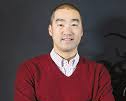
Artist Uram Choe
http://www.uram.net/eng_new/intro_en.html
Mr. Choe’s is a South Korean born artist from an architect background. He was educated at the Chungang University in Seoul and graduated with both a B.F.A and M.F.A. from the college. Choe’s works push the genre of moving kinetic art toward its newer-generation iterations, such as robotic art (Wiki).] Each one of his pieces moves on a series of motors based on motion and is placed with such detail and the way it moves is so intricate.
The Newark Museum (See TripAdvisor review) is going though a major renovation where they will be opening the original entrance to the museum in the Fall after twenty years and hopefully a new beginning for a museum with a major identity crisis.
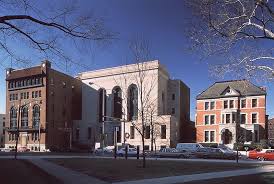
The Newark Museum at 49 Washington Street
https://www.newarkmuseumart.org/
My review on TripAdvisor:
My review on VisitingaMuseum.com:
The museum has such amazing works to see in a beautiful setting but the problem is that Newark still has a negative image to most suburbanites. No one I know wants to go there and that is a real problem for the city. The museum in a great area of the downtown that is being rebuilt and refigured with all sorts of new housing and lofts but it will take time to shake the riots of the 60’s from people’s minds.
They just opened the new American Indian exhibition and refigured the American Art wing to reflect the development of the United States from Native American time to the present. Their Asian and African galleries are very detailed but the biggest problem they have is the imagine of an ‘African’ museum which they can’t seem to shake. It is such a gem and try not to miss going there.
We had a long talk in the gallery about the artist and about the development of Korean Art from Ancient times until today and then the museum had a beautiful Continental breakfast on the top floor of the Ballentine House. This was Mrs. Ballentine’s daughter’s section of the house that was built in the late 1890’s when they moved in after her husband’s death. The room, now used as the trustee’s room, is a look back on the Gilded Age and the invention of electricity in modern homes. It really showed me the treasure trove of artifacts that exist in this small museum.

Ballentine House at 43 Washington Street
https://www.newarkmuseumart.org/ballantine-house-newark-museum-art
After the tour, there was a quick tour of the museum and then a train ride to Manhattan and then a long subway ride on a beautiful clear sunny day to Coney Island. The whole thing took about two hours and I got there by three o’clock.
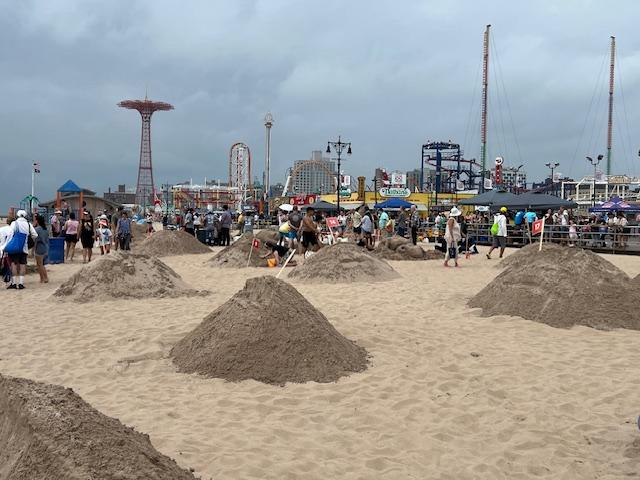
The contest was gloomy at both times I visited but everyone was eager
The Annual Sandcastle Building Contest in both 2017 and in 2024, I thought would be much bigger than it was. Only about twenty people were competing in it in 2017 and in 2024 about the same amount. With all the artists living in Brooklyn and in the Metropolitan area, I thought this would be a bigger deal than it was but still the works coming from it were spectacular. Several mounds of sand in one section of the beach outside of Luna Park were used but still the imagination of the work was spellbound.
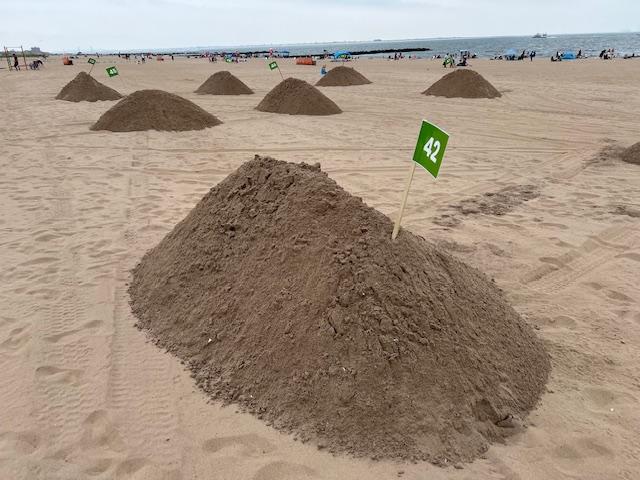
The piles were set with numbers along the beach

Artists and families starting to work around 12:30pm
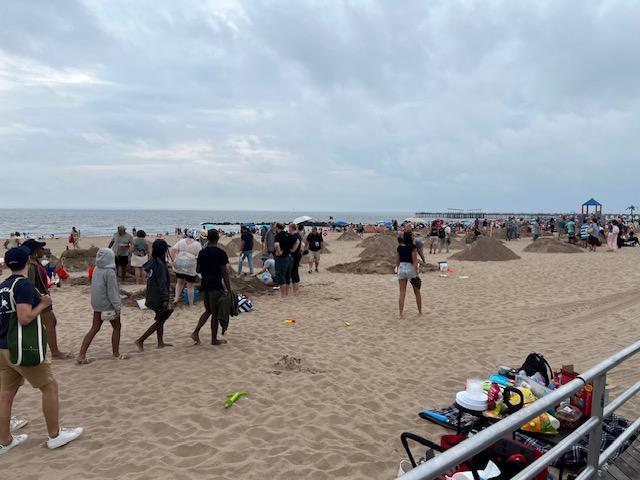
Getting ready to start
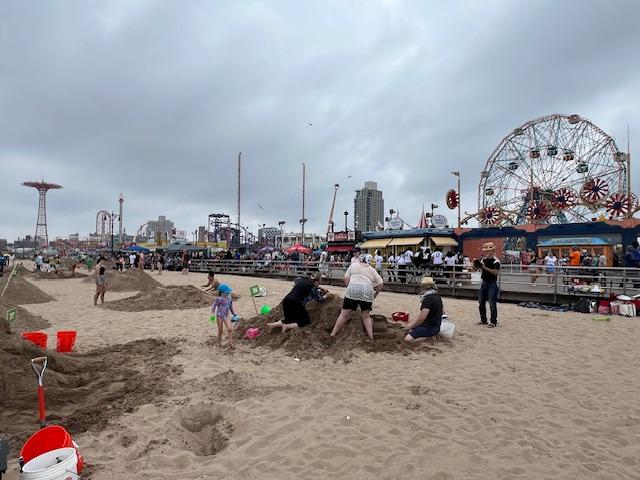
By 1:00pm, everyone was getting to work for the 4:00pm deadline
Most of the works that I saw were some forms of castle which seemed to be the object that everyone based their idea on but some people were a little more creative. There were bears, mermaids and in 2017, one artist even dug out a complete hole and had the imagine of a woman lying in the sea.
In 2024, the creativity was the same with themes of brownstone neighborhoods to mermaid queens to just a simple smile in the sand. There were professionals whose sand creativity was part of their artistic employment to families just having fun and spending time together.

This simple face just appeared on one of the piles at the end of the contest
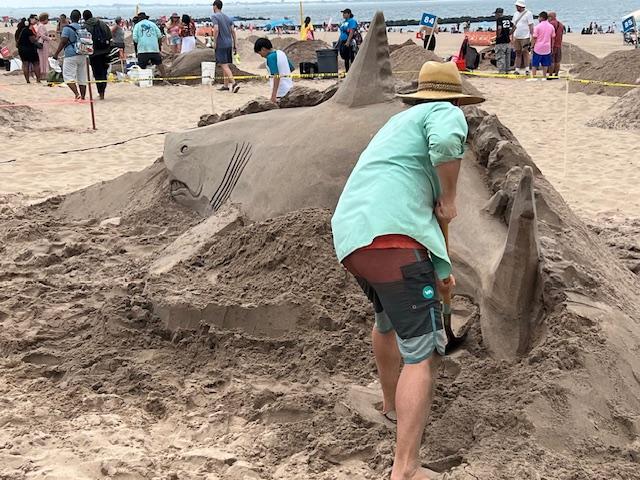
The creation of the Shark sculpture

The Shark Sculpture in process

The Shark almost finished

The finished Shark Sculpture
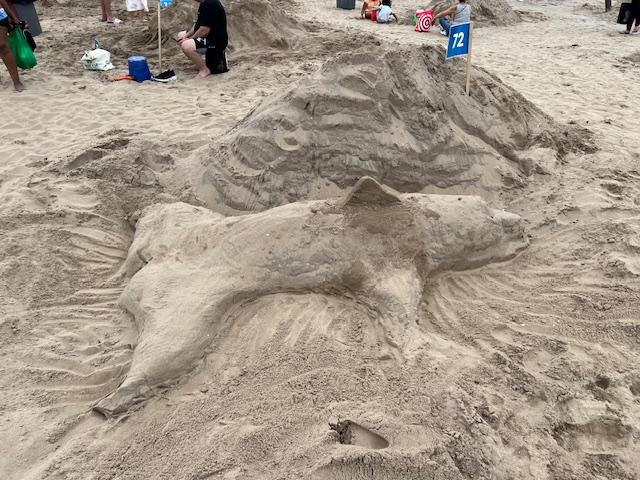
Another artist created this Shark display
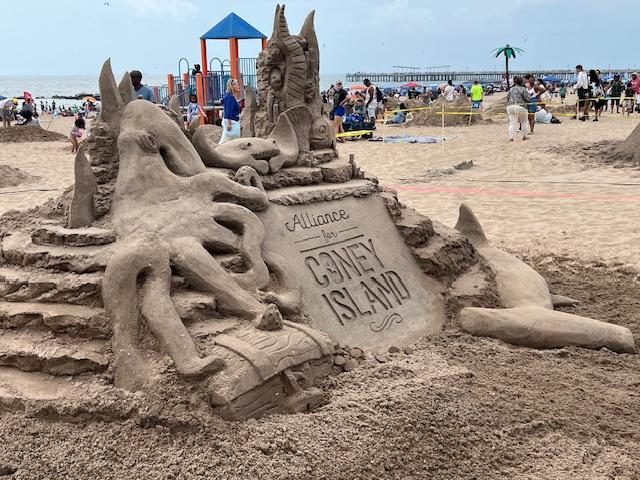
The Coney Island Alliance hired an artist to create this masterpiece. It just shows the creativity of some artists.

The Coney Island Alliance sculpture in form in the beginning

He kept carving and sculpting
The piece took form

Almost finished

The finished sculpture for the Coney Island Alliance was just beautiful
The final work that represented the Coney Island Alliance. This was the ultimate piece done by a professional artist. I loved the details on this. Some of the professional artists did works to welcome everyone to the contest and their detail work was interesting as you see in the picture above. This was not done by a group of ten year old’s.
Still there were all sorts of works of art created by people of all ages and they showed their stuff by creating their interpretations of their views of New York City and mythical animals that roam the woods, beaches and streets of the big City. Some were fun, some were whimsical and some just stood out in their creativity.

The ladies putting the final touches on the Rat with Pizza sculpture
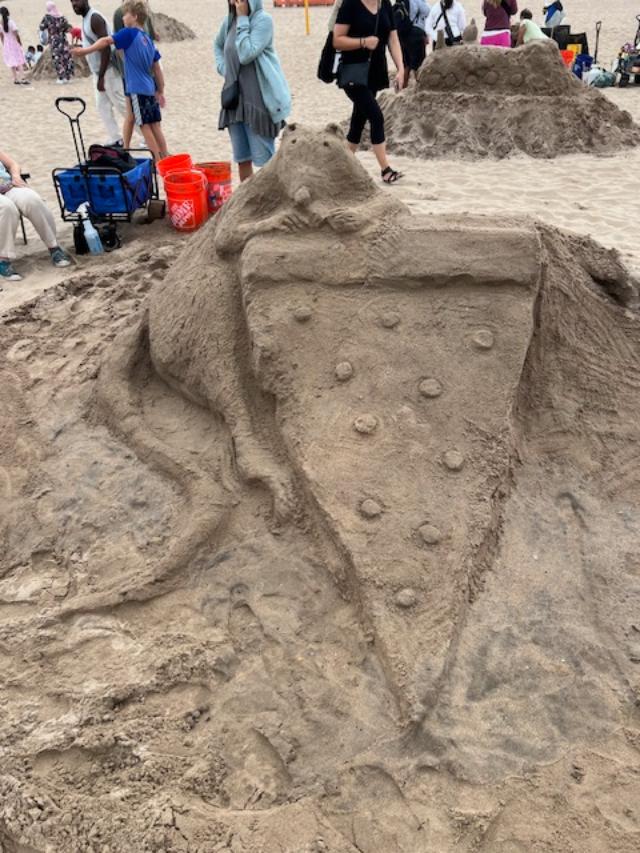
My favorite sculpture of the contest the rat with a slice of pizza
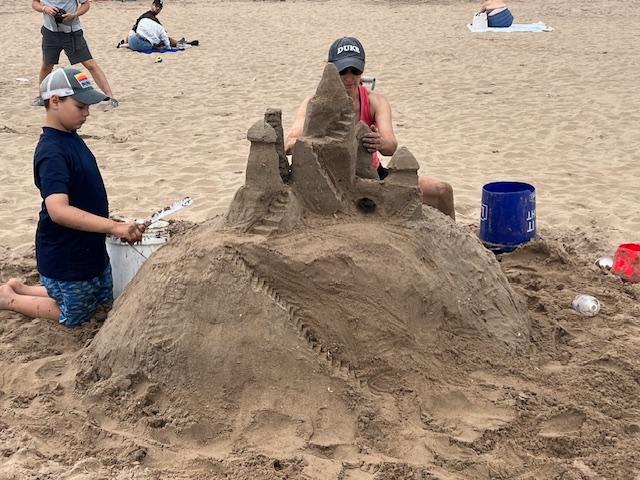
The start of Beware of Dog sculpture done by this mother and son team
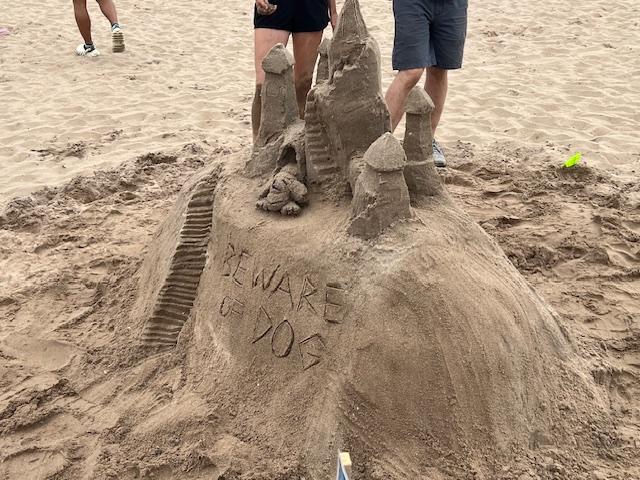
The finished Beware of Dog sculpture
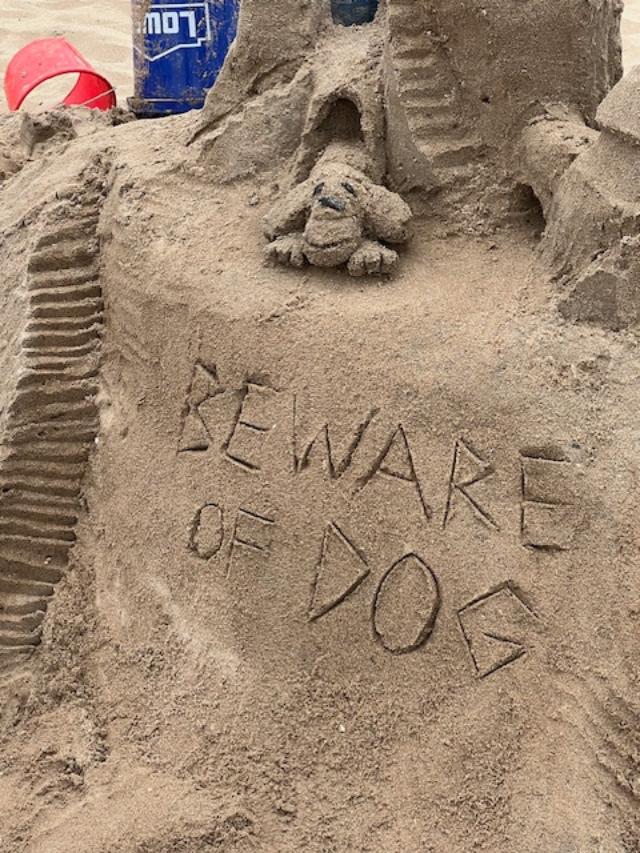
The final touches of Beware of Dog. The details were very clever
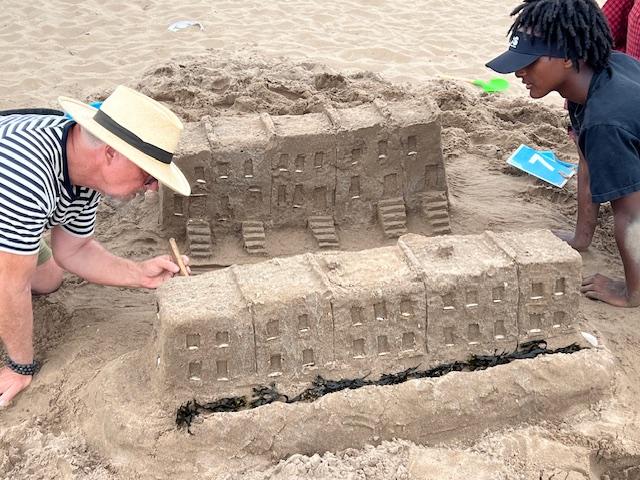
These artists created their own affordable brownstone neighborhood in Brooklyn

Then there was the Tales of Two Coasts, New York and Los Angeles, which had real estate details of their own.
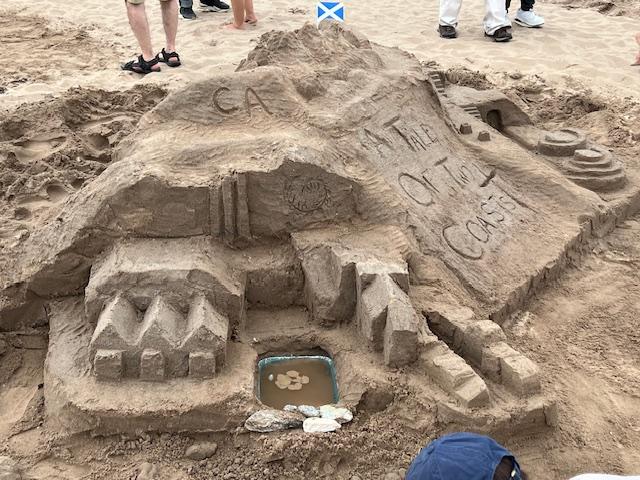
I loved this look of Los Angeles, CA

This was the New York City side of the sculpture

Home ownership continued with this kitchen sculpture
Some of the mythical creatures included mermaids, animals and creatures large and small.

This family was sculpting the most clever cat

The finished Cat Inquiry sculpture

Another family was finishing this Hammerhead Shark towards the end of the contest

This Sea Maiden appeared in the sand
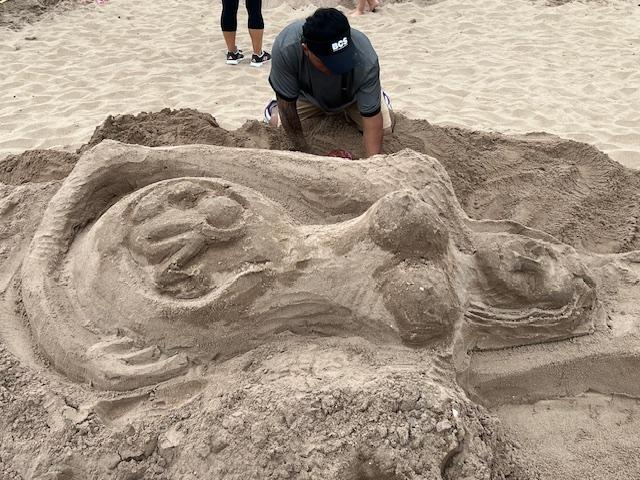
Rebirth and Birth Sculpture

This penguin found a home in the sand
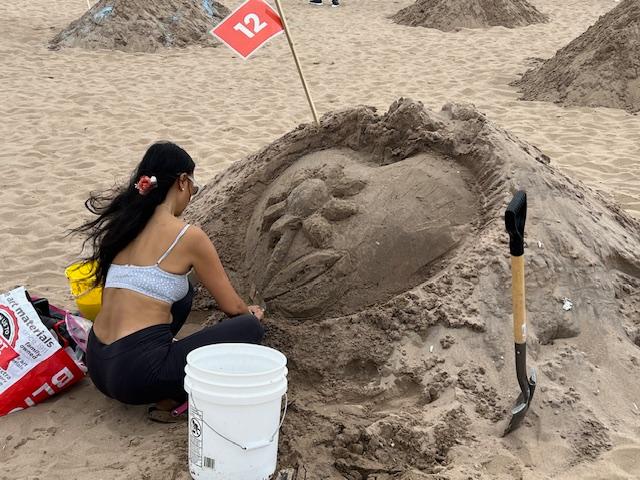
This Heart with a Sunflower was in its final stages when I saw it last
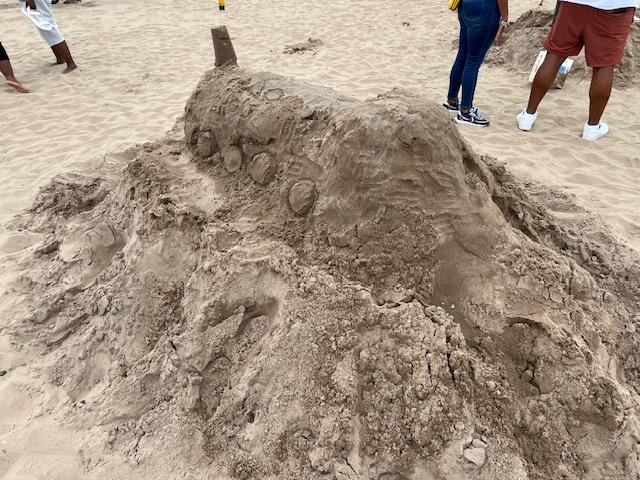
The Magical Train was one of the first sculptures done
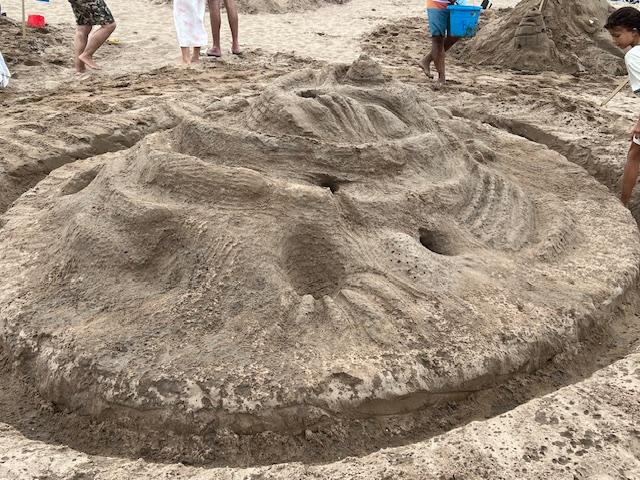
A Castle with a Moat was created

The mighty Elephant was being worked on towards the end of the contest
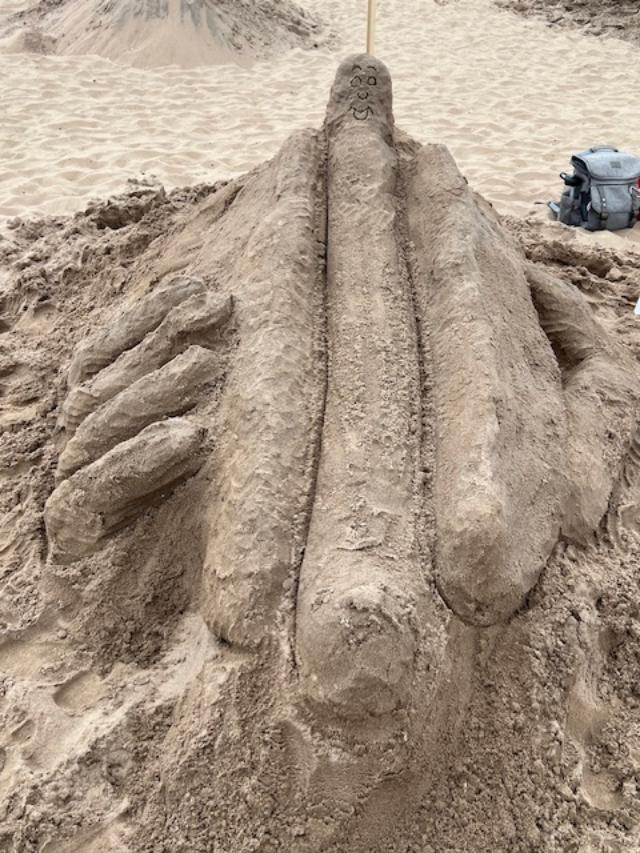
The iconic New York Hot Dog is happily served

The Shellebrity Sightings sculpture

The Phoenix sculpture on the beach
One of the most detailed sculptures I saw the creation of the Mermaid Queen.
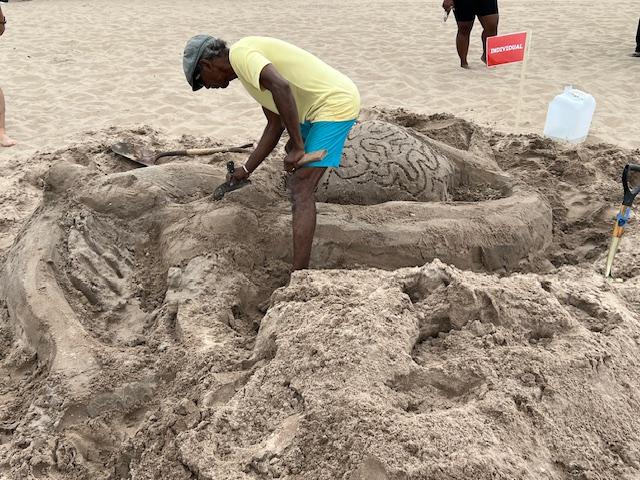
The creation of the Mermaid Queen

The Mermaid Queen takes shape
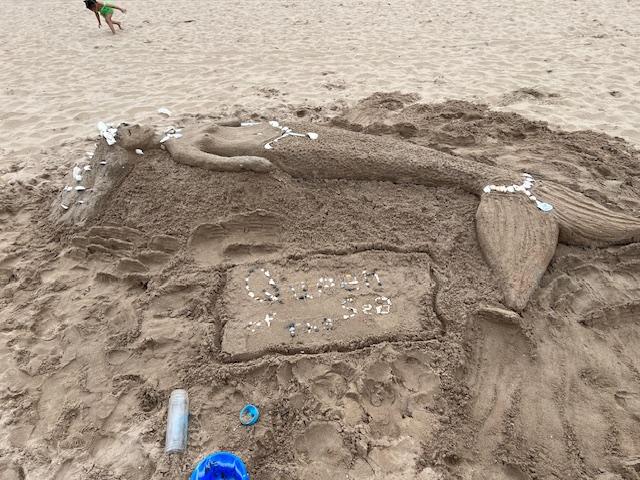
The finished Queen Mermaid with her Crown
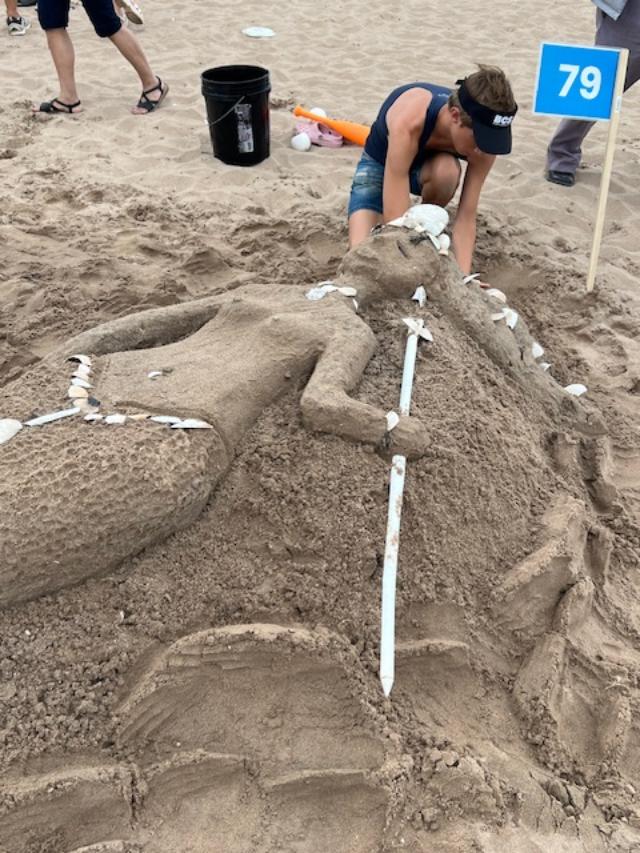
The finished Mermaid Queen
There was also the creation of the Sand Witches with their big smiles.
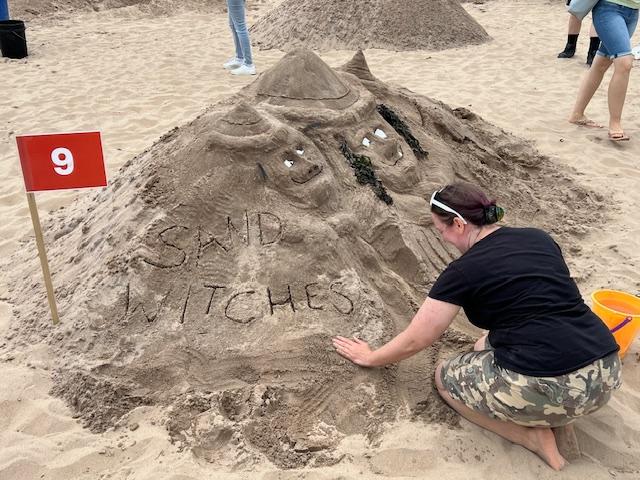
Creating the Sand Witches
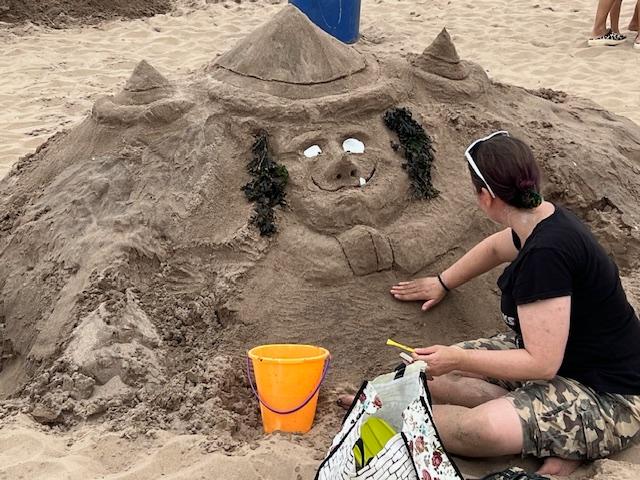
Creating the main character

The Sand Witches sculpture

The creation of Do Not Feed the Bears
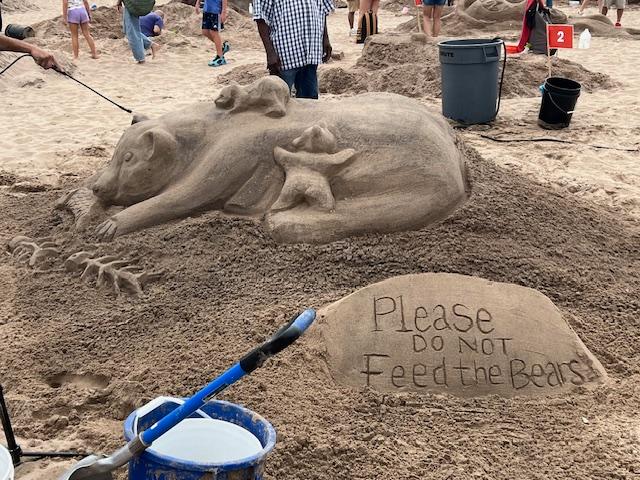
The finished Do Not Feed the Bears sculpture
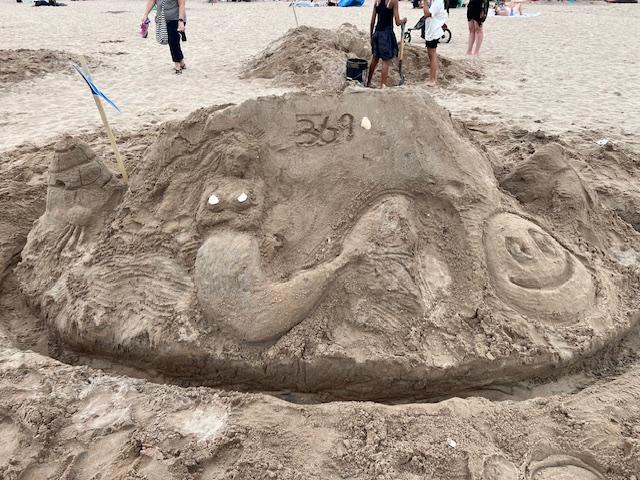
Another Mermaid appears
Here and there during the contest and for the rest of the day, the sun peaked out now and then giving us some sun but the rest of the day remained cloudy. Still that did not dampen the spirits of our artists and by 4:00pm the winners were announced. The Winners were sculptures numbers 63, 07 and 39 with the People’s Choice being 01 (I am not too sure I have everything numbered) but the ones above are my favorites and worthy of all the picture taking.
In 2017, I walked along the beach to relax my feet and as I walked, I could not believe how empty the beaches were for a Saturday afternoon in August. By the water it was full but towards the back by the boardwalk it was empty. In 2024, the incoming hurricane weather kept people away as the beaches were closed for swimming. The surf was really rough that morning and afternoon and the weather was gloomy. Even when I visited on the 4th of July, the beaches were not as crowded as I would have thought. Not the Coney Island of yesteryear when every spot was full. I guess its just not that place anymore.

Taking a walk along the gloomy and almost empty Midway by Luna Park
After a long walk along the beach, I dried off and walked the boardwalk to the end to Seagate, a private community at the end of the boardwalk. Along the way, I passed by the Coney Island Houses, one of the more dangerous housing complexes in Brooklyn. I don’t know whose brilliant idea it was to build low-income housing along the shore front but that made no sense to me.
It looked like the complex was having a barbecue, that is until two guys went after each other in the basketball court area as the DJ was announcing a kids dance. She was beside herself to tell them to calm down. Then you had two groups of people trying to calm the situation down. It was not a pleasant scene.
I got to the end of the boardwalk and decided I wanted to see all of Surf Avenue to see the real changes on the island since the closing of the amusement area. I agree with an article I read years ago; it still is like a war zone.
They built all this public housing outside Seagate and as you walk along Surf Avenue until you get to about where the rehab center is, it just looks like Beirut. The whole area is full of rundown looking public housing and the street itself is a shell of the once glorious resort if it ever was that. If there are ever going to get this island back into shape, the city seriously needs to rethink this part of the island.
I walked the entire length of Surf Avenue down to Brighton Beach and really looked at the stretch of the island facing the shore. By Brighton Beach, the area got so much nicer and more built up. Even in some of the pockets before the amusement area, they are building new condos along the boardwalk in between the projects. Even still, even when you reach Nathan’s, there is just too much wasted opportunity along the shore front.

Walking on the Coney Island Boardwalk in 2017
I turned around and walked up Stillwell Avenue by the subway spot and there they are starting to knock down the block and replacing it with low rise apartment buildings. This is where all the hipster people must be living. It looks like more of this area is about to come down.
In 2024, I got to the beach at 12:30pm and walked around the shore until about 2:00pm watching everyone build their creations. Then I walked around Deno’s Wonderwheel Park, watching the patrons on the Wonderwheel and going into Spookarama, their haunted house ride.

Spookarama in Deno’s Wonderwheel Park
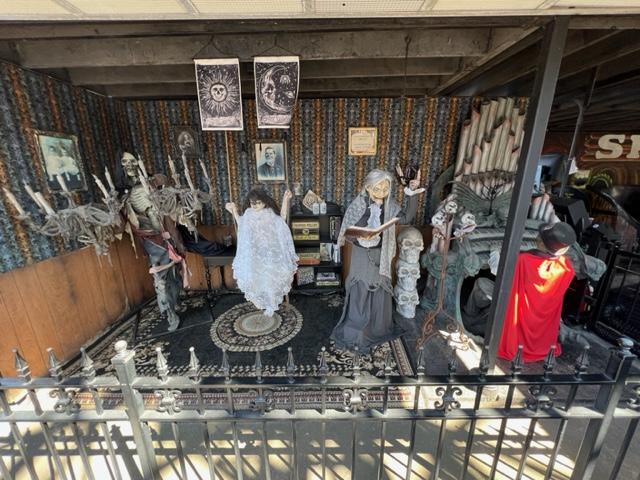
The haunted display by the ride
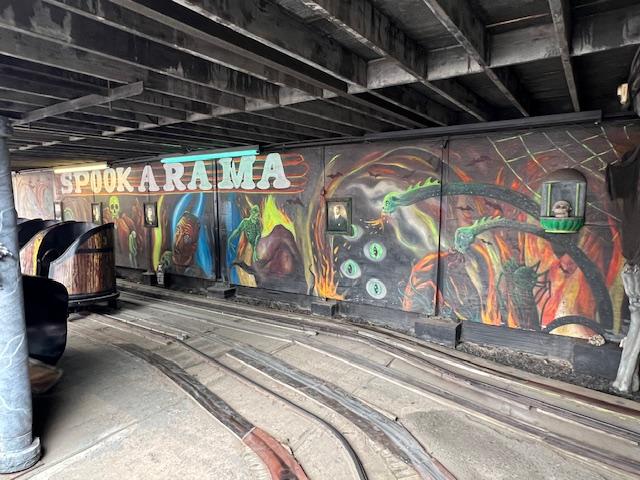
The haunted display in the park
In 2017 for dinner, I went to Totonno’s Pizzeria Napolitano at 1524 Neptune Avenue between 15th and 16th Streets (See TripAdvisor review). This place is harder to get into than any trendy restaurant in Manhattan. They only make so much dough and as a matter of fact the smaller pizzas sold out before I got there and it was 4:30pm when I ate my lunch/dinner. The place was busy the entire time I got there. The only bad thing about the restaurant is the seating. They need to reconfigure their tables to accommodate more people. You can’t seat a single person like myself at a six top table.

Totonna’s Pizza at 1524 Neptune Avenue
https://www.totonnosconeyisland.com/
My review on TripAdvisor:
The menu is so simple. Either you get a small or large pizza with a choice of ten toppings for $2.50 extra. The drinks were pricey with a bottle of Coke being $2.50. The pizza was $20.50 for the large or $18.50 for the small. The place is cash only.
The pizza was wonderful and with the size and the quality of ingredients, well worth the money. You get a large pizza that is a large pizza with fresh tomato sauce and fresh mozzarella, which gives it a different flavor from the shredded processed cheese most places use giving it a creamy flavor. The whole thing was topped with fresh basil and I added sausage to it. Cooking it in a coal brick stove gave it a nice smoky flavor. Needless to say, the owner could not believe I ate almost the entire pie at one sitting.

Totonna’s Cheese Pizza
I met Louise Ciminieri, the current owner and the granddaughter of the original owner. She told me how the business passed down from her grandfather to her uncle and then to her. Her uncle had a habit of only making so much dough and after it was gone, the restaurant closed for the day. A little strange for a business to make money.

Owner Louise Ciminieri of Totonno’s Pizza
She could not have been nicer or more welcoming to me and seemed to get a kick at the fact that I made such a fuss in meeting her. I told her of all the reviews online and the fact that my own mom had eaten here probably when her uncle first owned the business. She has not changed the place much over the years and she explained how the neighborhood has changed so much since they opened. What was once an Italian neighborhood is now all car repair places.
After dinner in 2017, I took once last walk around Surf Avenue and then headed back to Manhattan where I ended up spending the rest of the evening at an outdoor concert in Bryant Park. It was nice to just relax and listen to the music.
In 2024, I passed the pizzeria and it still has not opened for in house dining but people were buying pizzas to go. I thought I saw the owner sitting at the only booth left inside but I was not sure. I have to say that without in house dining, there is no reason to go. There is no place to eat around the restaurant (it is not the best part of Coney Island) and I don’t want to drag a pizza three blocks back to the beach to eat it on a bench. The pizzeria is only open on the weekends as well, so I searched around Mermaid Avenue for someplace else to dine.
Here I found Pizza on the Run at 1627 Mermaid Avenue near the side entrance to the subway station. I had passed the place many times but the outside always looked a little shoddy and I avoided it. Big Mistake! The pizza is amazing!

Pizza on the Run at 1627 Mermaid Avenue
https://www.doordash.com/store/pizza-on-the-run-brooklyn-25003736/
My review on TripAdvisor:
I have to admit that the pizza was a little pricey at $3.50 a slice but the slice was oversized and their sauce on the pizza was delicious. It was so well spiced and gave it so much flavor that I enjoyed every bite.

The Cheese slice was amazing and I plan on going back in the future and trying more items here.
After lunch was over, I gave myself some time before the contest was officially over and walked around this section of Coney Island. Little by little it is getting better. As the luxury rentals along Surf Avenue are getting ready to open for residents, I can see that they are trying to fix up Mermaid Avenue behind it. A lot of the businesses that had been there a few months ago are now closed and the side walks from the subway station down three blocks are being fixed. Along the walls was a bright mural welcoming people to Coney Island from the subway side.
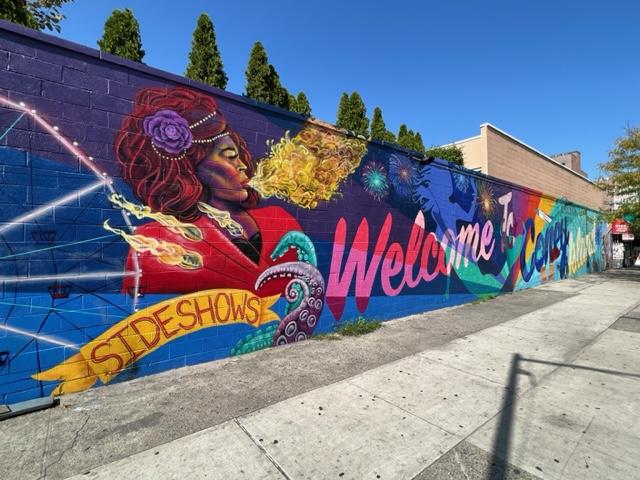
The Welcome to Coney Island mural by Mermaid Avenue
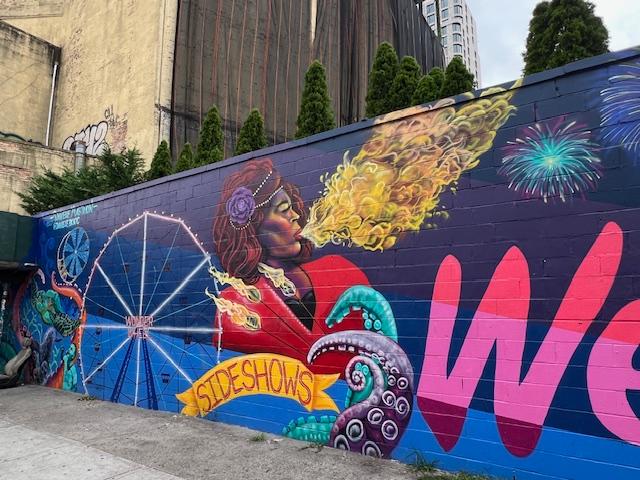
Taken from the other angle
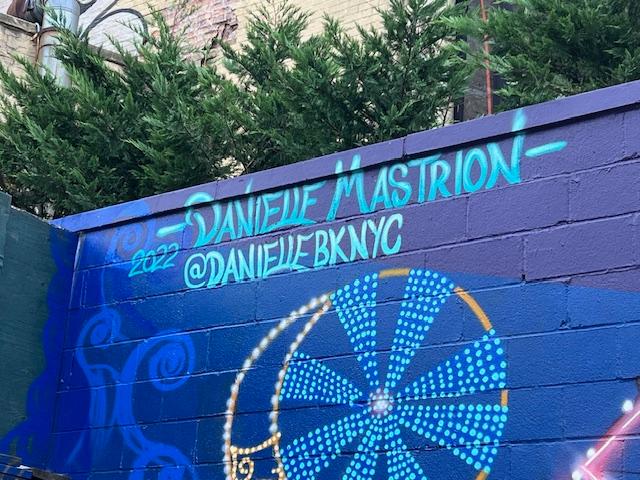
The mural was created by artist Danielle Mastrion
Artist Danielle Mastrion
http://www.daniellemastrion.com/about.html
Danielle Mastrion is a Brooklyn-born, New York City based painter and muralist who specializes in large scale, brightly colored murals (Artist bio).
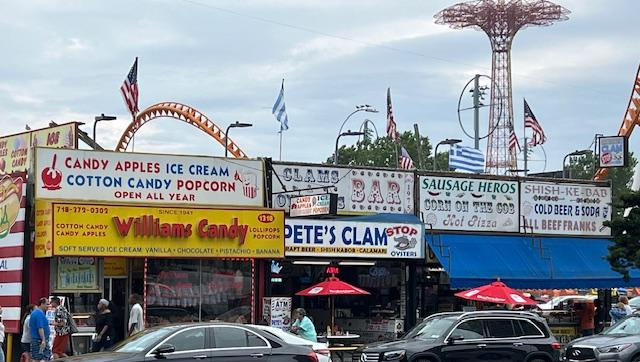
Coney Island Surf Avenue businesses next to Nathan’s
On the way back to the beach, four other murals stood out as well. These are located on the walk down the sidewalk to Nathan’s on Surf Avenue.
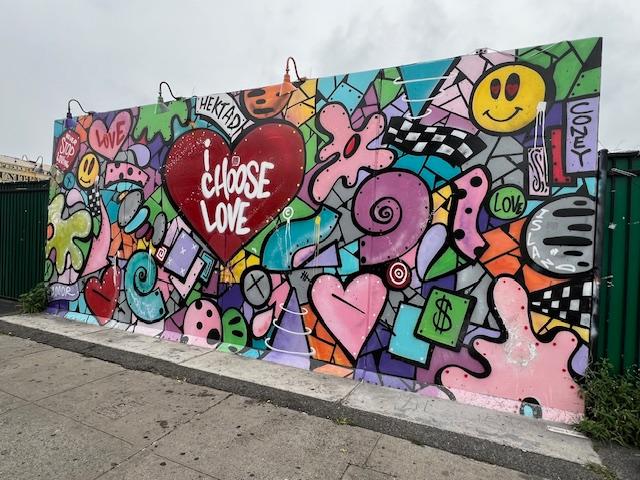
Mural One
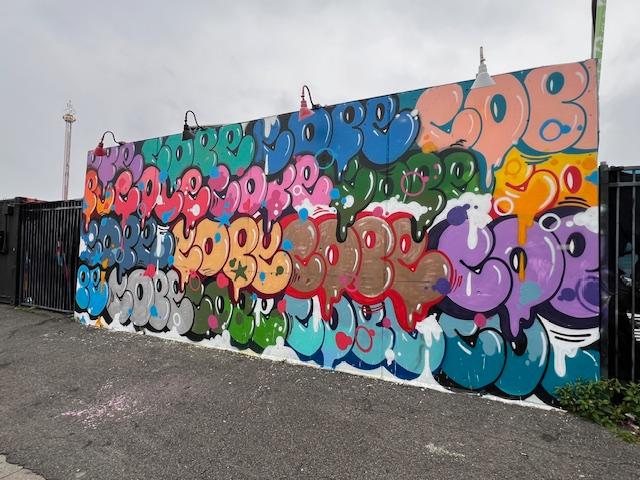
Mural Two

Mural Three

Mural Four
After the contest winners were announced in 2024 at 4:00pm, I left to head back to Manhattan. It was such a gloomy day. There was not much else going on that afternoon and people were leaving the beaches. As I took a look back at the shore, the waves were really coming in meaning the storm was on its way up the coast (we did get hit in Sunday).
I headed back to Manhattan to see the movie “The Funhouse” at the MoMA. They were having a retrospect on director Toby Hooper’s movies so I had already seen “The Texas Chainsaw Massacre” and “Poltergeist” .
The trailer for “The Funhouse” by director Toby Hooper
After the movie was over, trying to find a restaurant for dinner was trying in of itself. I had not realized how many restaurants in Midtown were closing at 9:00pm even on Friday night post-COVID.
I went into Murray Hill and the restaurant I had planned to go to had already closed at 8:45pm so I looked at my dine around program and found that Dim Sum Garden at 338 Lexington Avenue. I was really in the mood for Chinese food that evening and it came highly recommended.

The new Dim Sum Garden at 338 Lexington Avenue
My review on TripAdvisor:
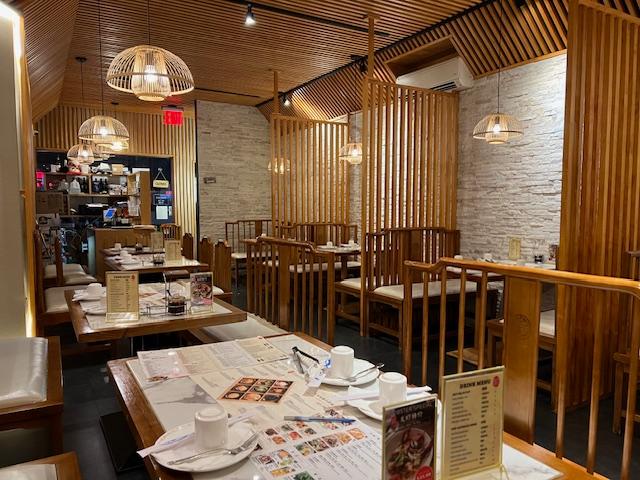
The inside of the restaurant
I was able to order before the kitchen closed and it was a nice dinner. The food was so fresh and it looked like everything was made to order and homemade in the kitchen. The Shrimp Balls were especially good. They were made with sweet shrimp meat, nicely coated with rice flour and deep fried perfectly. It was one of the best Dim Sum meals I have had in a awhile.

My dinner of Soup Dumpling, Shrimp Balls and Roast Duck Rolls

The Shrimp Balls

The Soup Dumplings

The Roast Duck Rolls
It was a fun and very productive day and a great way to end the trip to Coney Island. The weather may have been a bit gloomy both times I visited Coney Island for the contest but it did not damper the spirit of the event. It looked like everyone had fun.
The Sandcastle Contest in 2026:
It was another afternoon of double booking when I attended the Bergen County Firemen’s Home Association picnic in the morning and finished up there at 1:00pm.
My blog on the Bergen County Firemen’s Home Association Barbecue in 2026:

Our Group picture in August 2026

Our lunch time preparation
I then raced into the City and hopped the subway to Brooklyn to see the contest results. Somehow I went from the Barbecue to the beaches of Coney Island in two and a half hours. Coney Island was packed that afternoon both on the beach and the boardwalk.

I arrived at the beach at 3:45pm just as the contest was completing

The contestants completing their creations
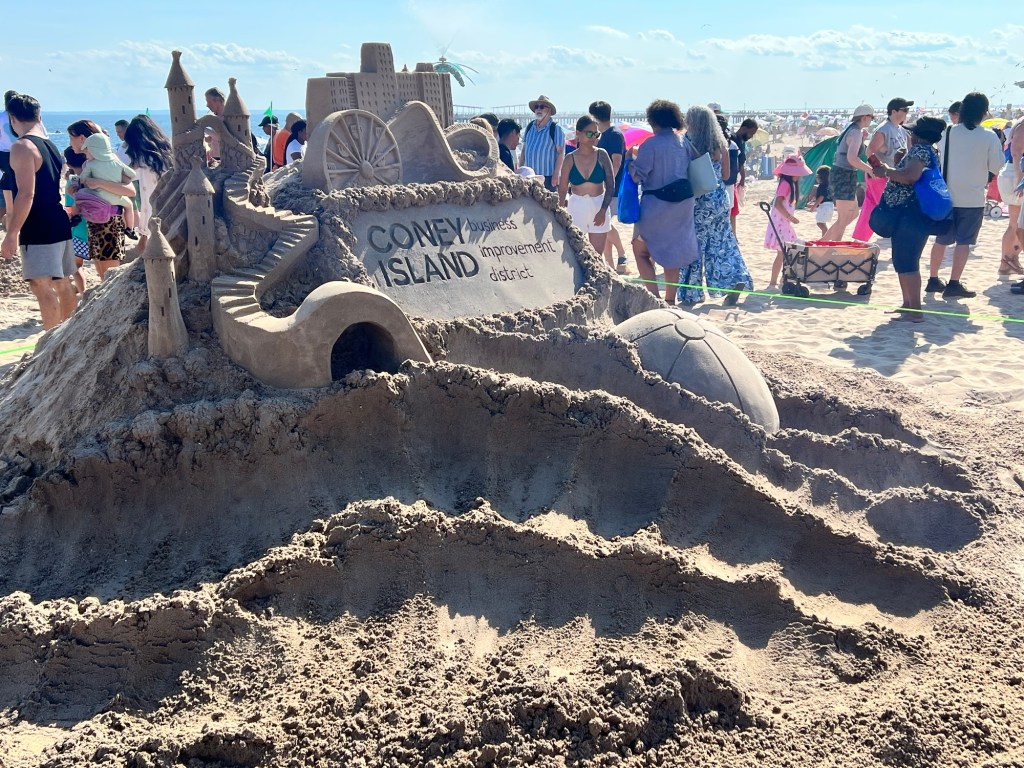
The professional artists who were commissioned to create their works for the contest were closer to the Boardwalk. They got really creative this year.

The work for the Coney Island Alliance

The other artist’s work for the Coney Island Alliance
Then I walked around the beach to see the works of the artists who participated in the contest from professional artists to families who partnered up and looked like they were having a good time.

Some of the works on the beach
I roamed around the sand piles and these were the works that I saw that afternoon:

I did not know if this was friendly poo or ice cream

An octopus

Homer Simpson on the beach

The Swan family

I was not exactly sure what this was

A shark eating a hot dog

The Cool Power plane to Puerto Rico

The Neck St Level sculpture

The castle
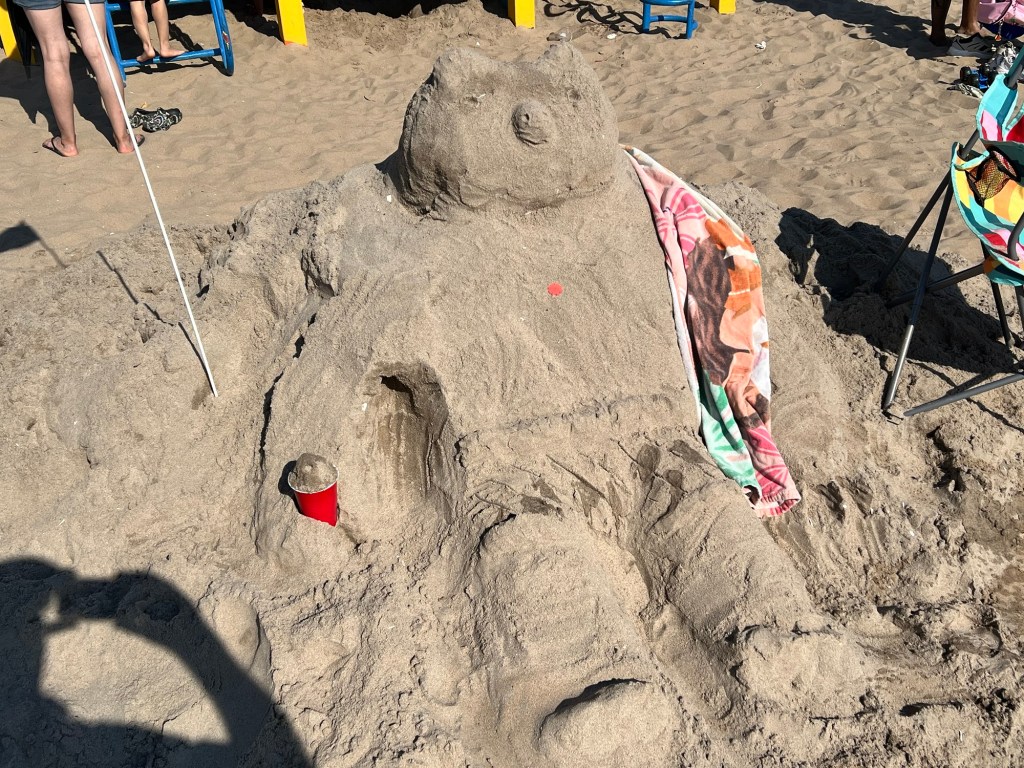
The beach goer
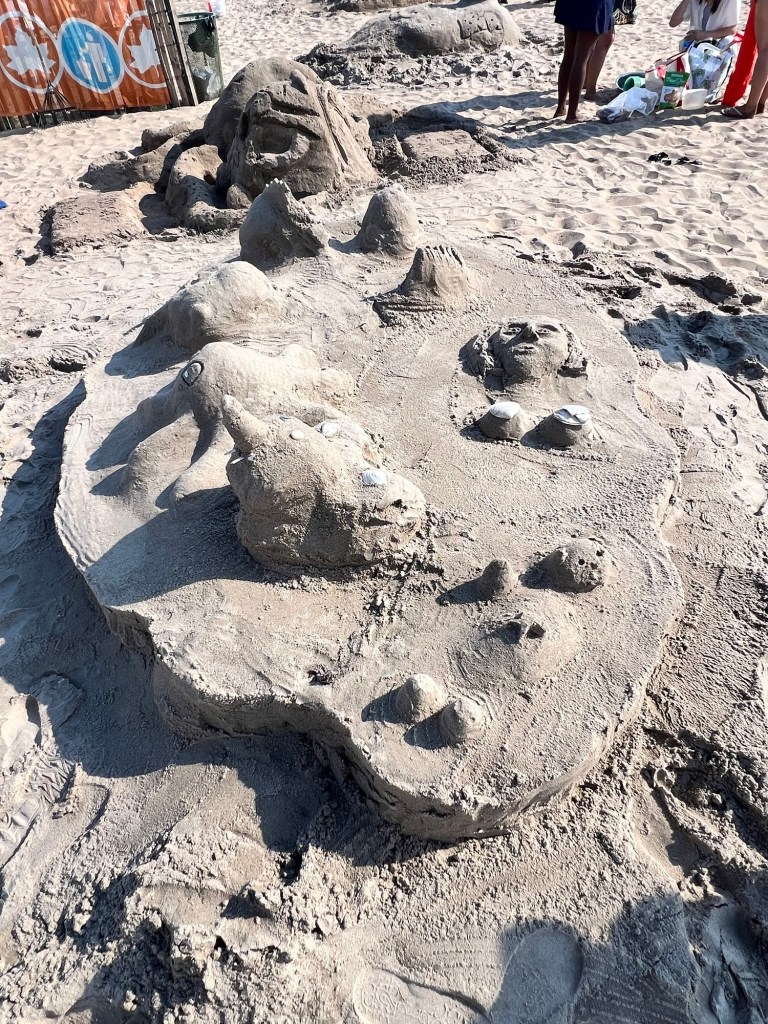
The monster
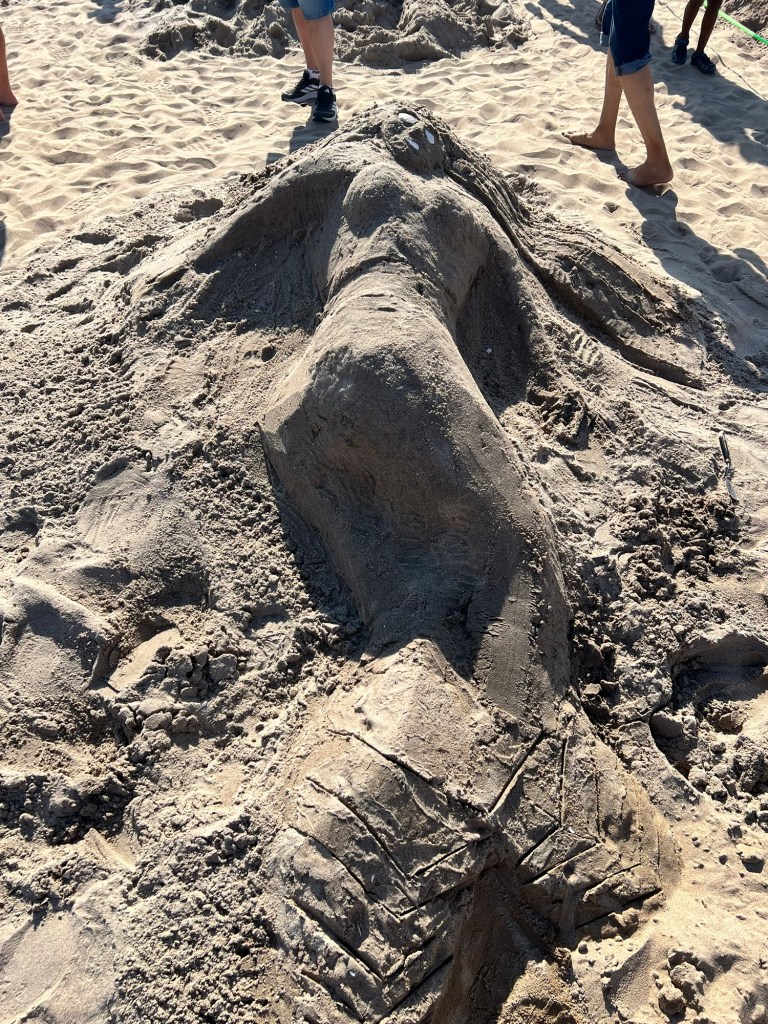
The mermaid
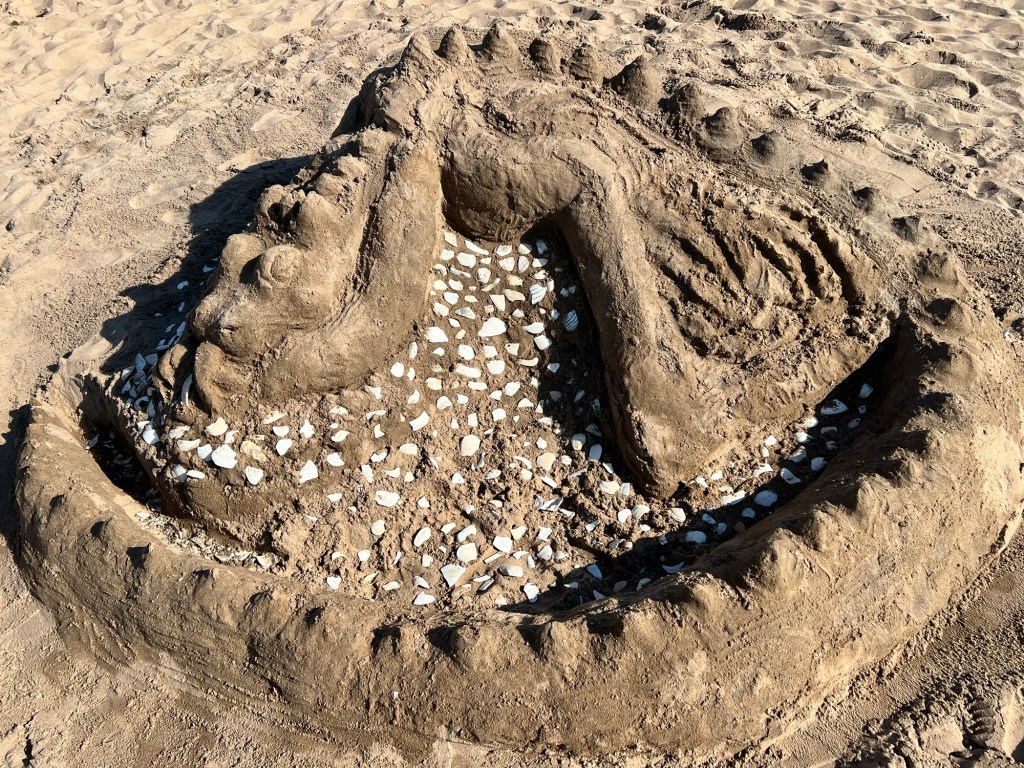
The mermaid
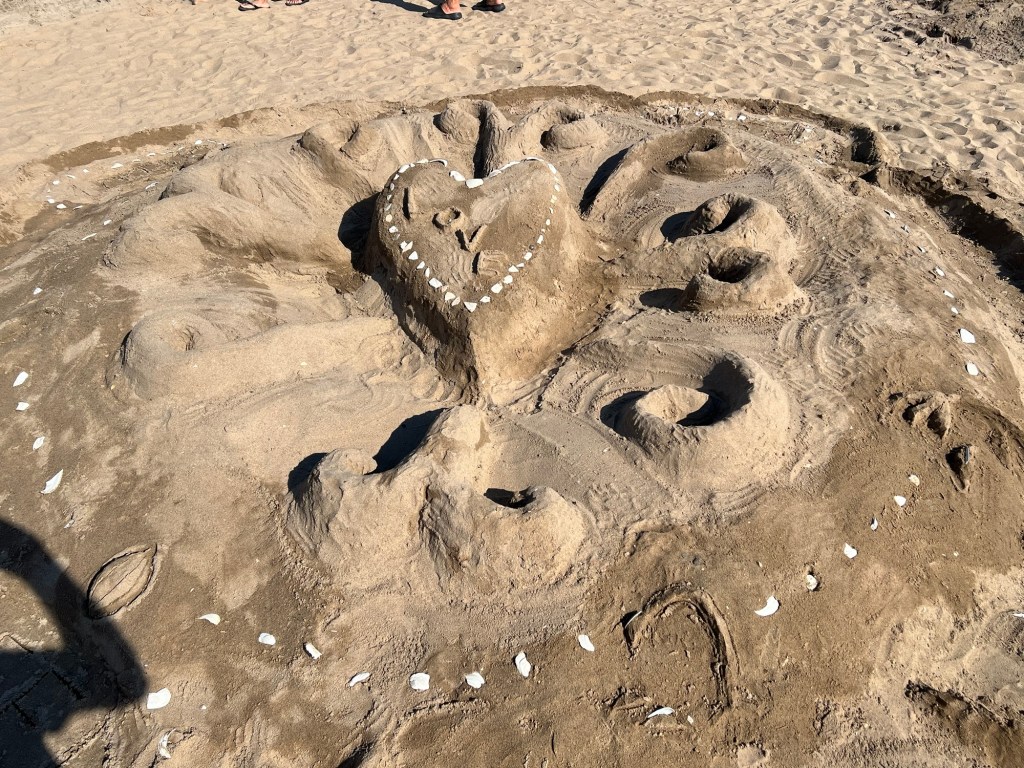
The heart
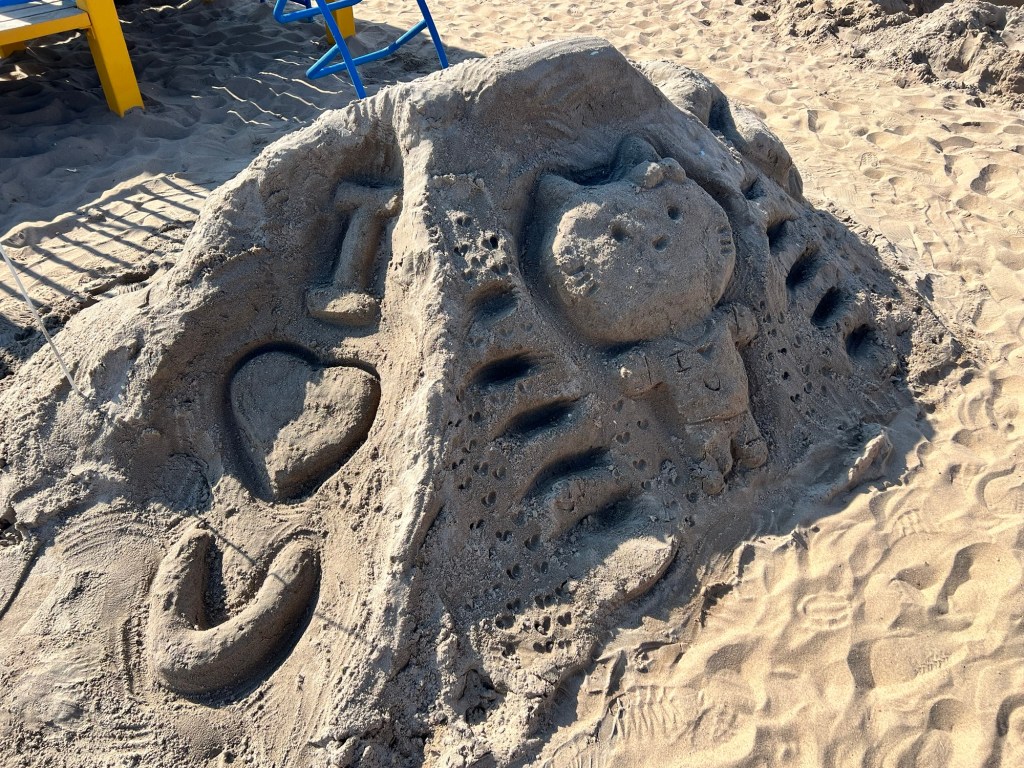
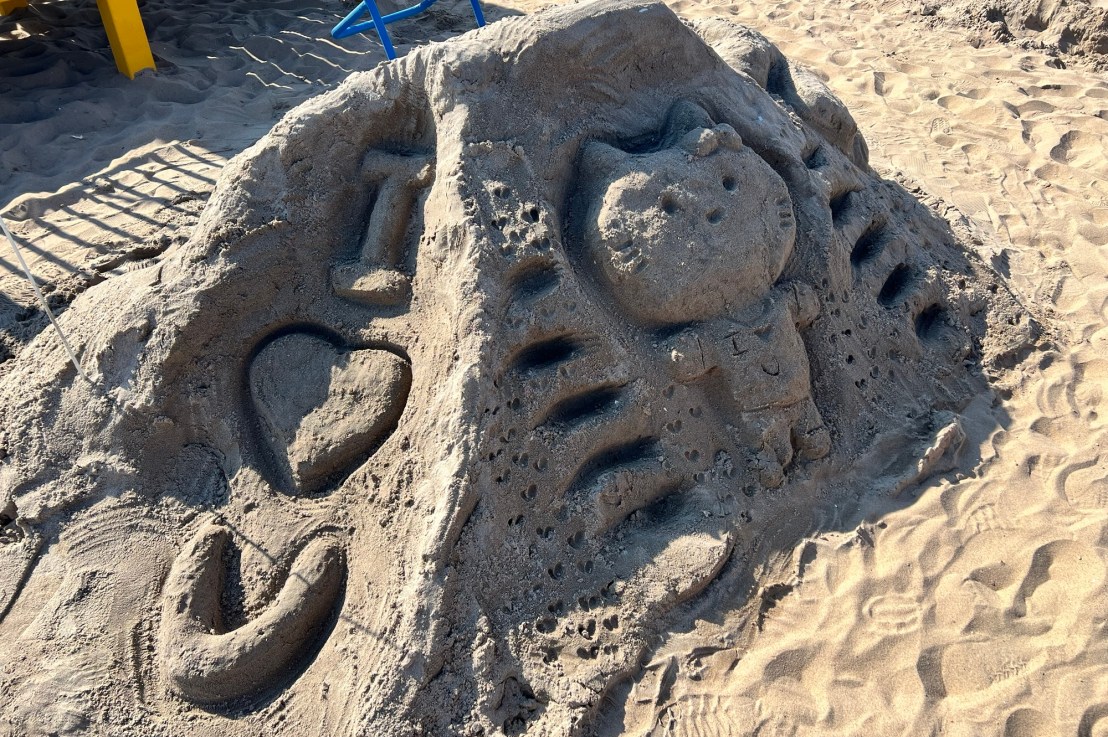
Hello Kitty
Walking around the finished sandcastles
When I was finished watching the judging of the contest, I walked on the beach to relax my feet. It had been a long day. The beach was busier today than it was on the 4th of July but then the weather was cooler the day of the Sandcastle building contest.

Watching a sailboat go by the shore
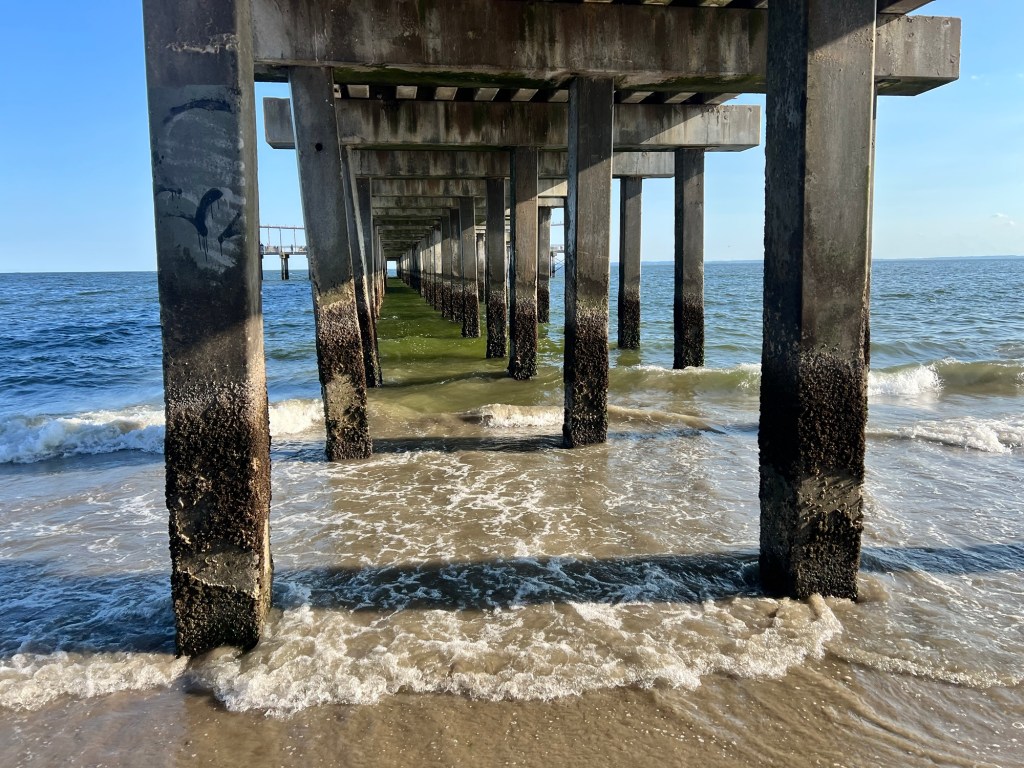
Walking under the pier
The Coney Island Sandcastle Building Contest is held each August.
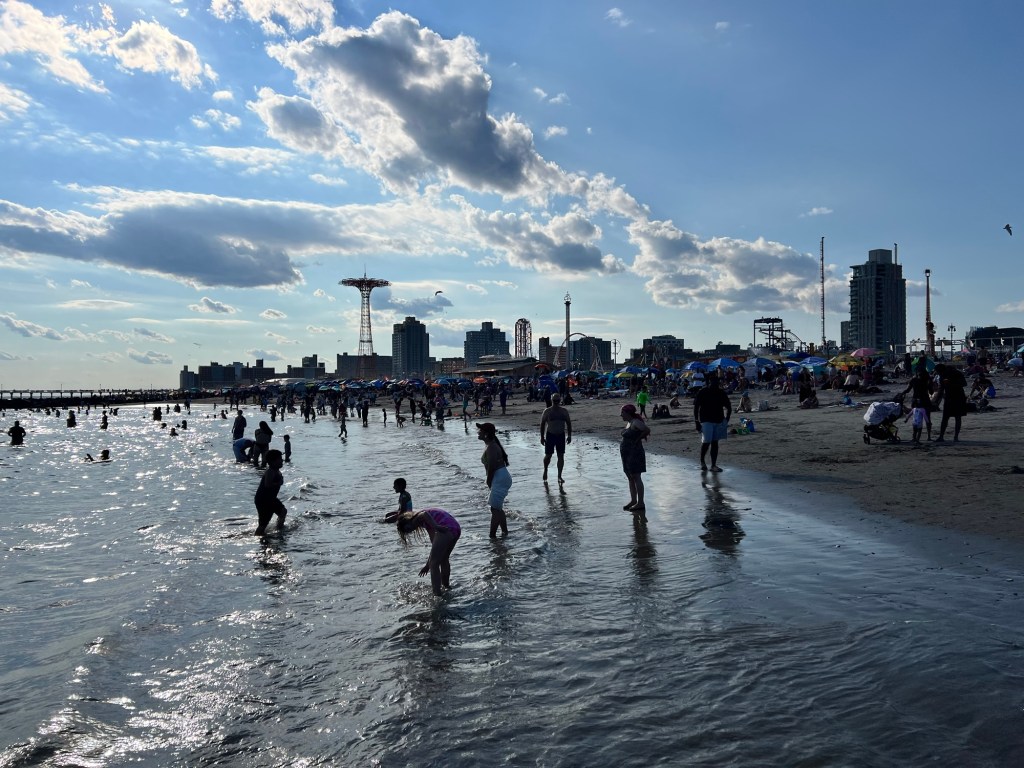
The beach was busy the whole day
As I walked along the beach, I looked over the amusement area from the shore. I wondered what people thought of Coney Island as the entered the harbor. It still is quite a site.
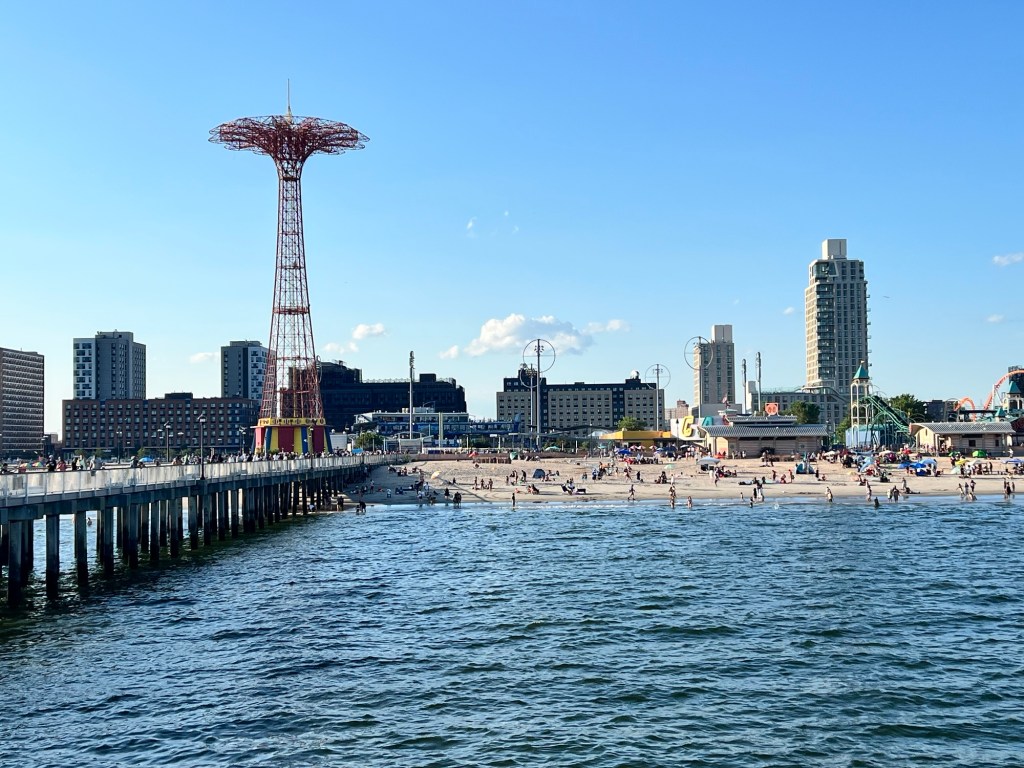
The view of the amusement area from the pier
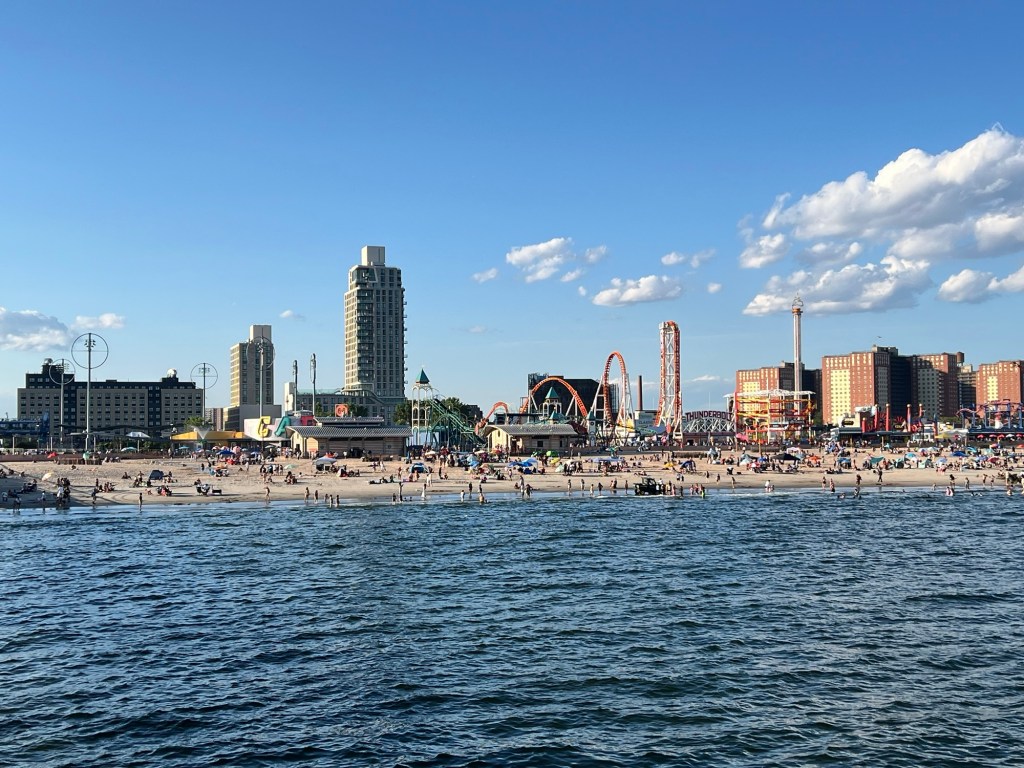
The view of the amusement area in the late afternoon
I walked back to the Boardwalk at the end of the afternoon. It was a really beautiful afternoon in Coney Island.
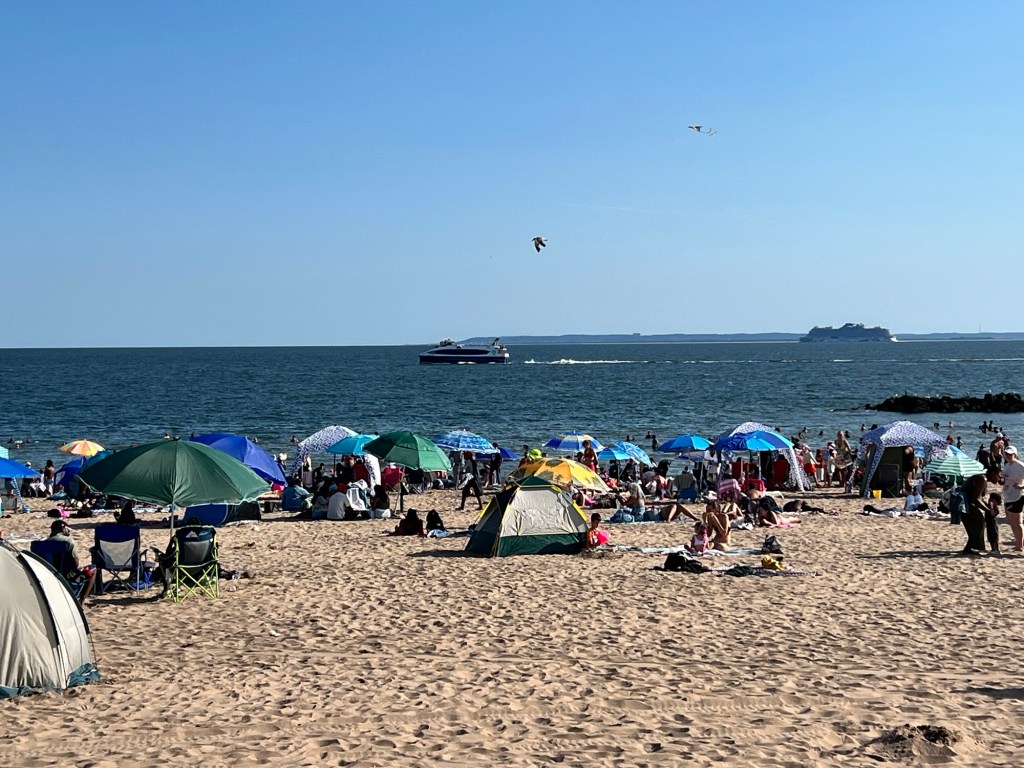
The Coney Island beach in the afternoon
I can’t wait to see the contest again in the Summer of 2027! Who said that the Coney Island beach is not its own gallery of art!