Tag: hiking

Historical Society of Boonton Township/Oscar A. Kincaid Home of History                                                                              591 Powerville Road                                                                       Boonton Township, NJ 07005

Historical Society of Boonton Township/Oscar A. Kincaid Home of History 591 Powerville Road Boonton Township, NJ 07005

Historical Society of Boonton Township/Oscar A. Kincaid Home of History

591 Powerville Road

Boonton Township, NJ 07005

https://historicalsocietyofboontontownship.org/

Open: For Special Events and Pathways Tours only

Admission: Free on the Pathways Tour

My Review on TripAdvisor:

https://www.tripadvisor.com/Profile/R4960NKjustinw/mediabatch/14296162?m=19905

The Historical Society of Boonton Township

One of the last places I visited in the 2026 Pathways tour of Morris County was the Historical Society of Boonton Township which is located in the former Oscar Kincaid Farm Homestead. The house and what was left of the acreage of the farm was part of the current museum. The museum was an example of early New Jersey farming that dated from the 1800’s to the Twenty-First century. There was not much in the way of period furniture or farm equipment (items of the home were sold off since Mr. Kincaid’s passing), but the new historical society is buying artifacts and bringing them back to the farm. This includes one of Mr. Kincaid’s tractors. His roll up desk is also still in the display room which was once the Living Room of the home.

The Kincaid Homestead

History of Oscar Kincaid and Homestead:

(From the Morris County Historical Society website)

Originally a part of the extensive tract belonging to William Penn, the earliest portion of the home was constructed in 1785 by Adam Miller and Anna DeMouth Miller. Just over a decade later, they sold the property to Adam’s cousin, Sarah Miller Parlimen (of the Miller/Dixon homestead) and her husband, John, who built a sawmill there. After a brief ownership by William Scott of Powerville, a Miller relative, the land was sold to John Decker in 1828. An industrious man, Decker operated both a farm and successful forge, shipping his goods to New York via the Morris Canal. By 1837, he expanded the home, adding a distinctive folk-art painting of a face and unique plasterwork that can still be seen today (MCHS website).

The homestead passed through generations of Decker’s family, ultimately being inherited by Oscar Kincaid Sr. in the early 20th century. Kincaid ran a popular ice cream stand and dairy business throughout the 1920s and 30s. Following World War II, the family opened Valley Farm on the site, which continued until the death of Oscar Kincaid Jr. in 2000. Added to the National Register of Historic Places in 2005, the Decker-Kincaid Homestead today operates as a museum and headquarters of the Historical Society of Boonton Township (MCHS website).

The Kincaid House

The historical marker for the house

The front yard

The entrance to the house

The main foyer of the house

The house is a small farmhouse built in two sections. The original part of the house dates back to the late 1700’s and the newer part in the early 1800’s. The once furnished rooms now hold displays of Morris County and the farming industry of the time plus community artifacts.

The former Living Room

Oscar Kincaid’s desk

There were not much left in the way of family furnishings and heirlooms but this desk was Oscar Kinkaid’s.

The back bedroom

The Flag display for the ‘250th Anniversary’

Story of Oscar Kincaid’s life: Oscar Kincaid was a farmer/businessman, a politician and a conservationist.

On Community:

(From the museum website)

Oscar’s commitment to his community transcended farming. He served as a member of  the Boonton Township Committee for 30 years and was mayor for two terms. He was also a founding member of the Morris County Agricultural Development Board, on which he served for 17 years, six as board chairman. Oscar led the charge for farmland preservation in Morris County. His efforts resulted in the preservation of 41 farms covering 3,100 acres spanning several municipalities throughout the county. As one person put it: “Oscar had more impact on preserving the character of Boonton than any single individual.”

But to Oscar: “Farming and being active in local politics was simply a way of life.” Oscar passed away November 11, 2000

The contractor’s face on the wall

The face came about when Oscar Kincaid did not want to pay a contractor for his work. He created this face so that he would have to live with it for the rest of his life. It can not be planted over.

The ‘Mr. Face’ in Weird NJ

On Farming:

(From the Museum website)

Oscar Kincaid, Jr., was born into farm life. It was 1824 when the Kincaid family purchased 30 acres in Boonton Township, Morris  County and began farming. More than a century later, a young Oscar took over the operation, working alongside his father as they raised dairy cows, grew vegetables and developed a poultry business.  For years, they delivered eggs to retail establishments and sold vegetables from their roadside stand. Over time, Oscar moved away from the dairy and poultry business and focused his efforts on vegetable and hay production. 

The Kincaid house from the side

After the short tour around the house, I walked around the farm grounds. The house was set on a beautiful piece of land that sloped down to the old farmstand. There was also a swimming pond which was once part of the farm which is now private property.

The farm property from the side with the barn

The barn across the street

The property was about ten acres at the time of his death and parts have been developed. It still has some of the most wonderful views of the area.

The view of the old farm from the front porch

The farm land stretches over different sections of the road and the property is very picturesque. It is a very beautiful homestead.

The view of the farm from the lawn

The swimming pond on the edge of the property

The old farm stand that had been used for eighty years

The old Farm stand was used into the mid 2000’s

The full view of the farm

Since the house was just recently bought, there is still some design and artifacts that need to be collected to complete the look of a Jersey farm.

The Historical Society of Boonton Township is still expanding the collection of farm equipment for property and finding furniture for the home. The property is a beautiful and picturesque and shows how the traditional farm has adapted to modern times. Mr. Kincaid only passed a few years ago but kept the farm traditional and that worked for him. He left a legacy for us to appreciate the independent Jersey farmer.

Van Bushkirk Burial Ground                                                      45 East Saddle River Road                                                              Saddle River, NJ 07458

Van Bushkirk Burial Ground 45 East Saddle River Road Saddle River, NJ 07458

Van Bushkirk Burial Ground

45 East Saddle River Road

Saddle River, NJ 07458

https://www.findagrave.com/cemetery/2160733/edit

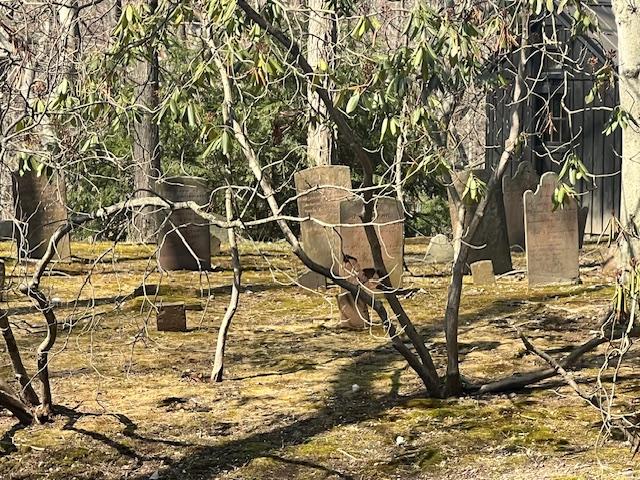
The Van Bushkirk Burial Ground behind the residence at 45 East Saddle River Road

The Van Bushkirk Burial Ground is part of the history of Saddle River, NJ’s early settlement period. The burial ground has about 40 tombstones that are arched and shaped. These are some of the first residents both of Saddle River and Bergen County, NJ.

The burial ground lies next to a creek off East Saddle River Road and can only be accessed by going through private property of the residents living at 45 East Saddle River Road. Please do not enter without permission of the owner of the home. These pictures were taken with a long distance camera from the street.

The Van Bushkirk Burial Ground at 45 East Saddle River Road

The History of Saddle River:

(from the Saddle River Town website):

In 1675, Lenni Lenape tribal leaders sold a large amount of land on the Eastern side of the Saddle River (known as Werimus) to Albert Zabriskie. In 1708, Zabriskie sold this tract of land to Thomas Van Buskirk. The first house in Saddle River was built by the Van Buskirk family in 1709. The original Van Buskirk homestead still stands at 164 East Saddle River Road across from Borough Hall.

In 1709, the Lenni Lenape sold the land on the west side of the Saddle River to the English as part of the Ramapo Tract. Property on the west side of the Saddle River was acquired from this Tract throughout the 1700’s. The Ackerman Family was the most prolific buyer of these early Saddle River parcels and first settled on the West side of the Saddle River in 1745 when Johannes Ackerman acquired 245 acres.

The graves of George and Margaret Achenbach

Saddle River continued to grow and populate during the 18th century.  Families such as the Van Buskirk’s, the Ackerman’s, the Achenbach’s, the Hopper’s, the Zabriskie’s, the Stilwell’s and the Baldwin’s farmed and developed the area.

The grave of George Achenbach

The first of many Saddle River mills was built in 1714 and the first school was constructed in 1720. Another early 18th century business was the blacksmith shop operated by the Ackerman family. Over the years, these 1st families built the quintessential “Old Dutch Homesteads” from actual sandstone that was found in town.

The Revolutionary War era tombstones

The Revolutionary War was a horrendous time for the residents of Saddle River. The townsfolk had spent the entire 18th century developing the area into a well established community and all growth essentially stopped during the war. Since the Jersey Dutch initially considered the revolution to be an English issue, it was particularly shocking when the fighting came to their backyards. From December 1776 until the end of the war, both American and British forces traveled through Saddle River and many times set up camp in the center of town.

Residents were in constant fear of the British employed Hessian soldiers who would terrorize families by raiding the houses for food and then burning the fields before leaving. Although no major battles took place in Saddle River, there were small skirmishes to fend off raids and the Blue Mill on East Saddle River Road was destroyed. Even George Washington, the future father of our country, passed through Saddle River on multiple occasions and tradition has him staying overnight at the Ackerman Homestead on the East road.

When the Revolutionary War ended, Saddle River residents picked up right where they left off in terms of community and industry development. The Ackerman’s built a Foundry on what is now Waterford Gardens. Tice and Berdan both opened stores in town and the Bulls Head Tavern opened its doors to weary travelers in 1802. Old mills were re-opened and new ones such as Van Riper’s Saw Mill and Basket Factory were established. The post war growth continued for decades and culminated in the 1820s with the construction of the Zion Lutheran Church in 1821 and a new schoolhouse behind the church in 1825.

The worn tombstones in the cemetery

History of the Van Bushkirk family in Bergen County during the Revolutionary War:

(From the Bergen County Historical Society website):

Loyalists in Bergen County | Bergen County Historical Society

Loyalists in Bergen County came from all backgrounds, religions and economic classes. At the beginning of the war, a number were officers in the militia, the military force composed of all able-bodied males maintained by each province, and later the states. The lieutenant colonel of the militia was John Zabriskie of New Bridge. Zabriskie understood the sentiments of many of his neighbors, particularly those of Abraham Van Buskirk, whose property was directly across the bridge in Teaneck. Van Buskirk was a surgeon in the militia under Zabriskie, and with whom he served on Bergen County’s Committee of Correspondence, an entity established to keep in touch with other New Jersey counties and the events occurring there.

Tuckerton Seaport Museum                                    120 West Main Street                                      Tuckerton, NJ 08087

Tuckerton Seaport Museum 120 West Main Street Tuckerton, NJ 08087

Tuckerton Seaport Museum

120 West Main Street

Tuckerton, NJ 08087

(609) 296-8868

Open: Sunday-Wednesday 10:00am-4:00pm/Thursday-Friday Closed/Saturday 10:00am-4:00 pm

Admission: Based on tours arranged during the season. Please check the website.

My TripAdvisor:

https://www.tripadvisor.com/ShowUserReviews-g46876-d271270-r1033440153-Tuckerton_Seaport-Tuckerton_New_Jersey.html?m=19905

The Tuckerton Museum and the Seaport at 120 West Main Street in Tuckerton, NJ

The entrance to the complex from Route 9

The entrance to the Tuckerton Seaport complex on a sunny Saturday morning

The complex was once a bustling fishing and shipping area that has now been preserved as a cultural site with tours, a series of restaurants and a museum.

The Mission of the Museum:

(from the Tuckerton Seaport Museum website)

Our mission at the Tuckerton Seaport is to preserve, present and interpret the rich maritime history, artistry, heritage and environment of the Jersey shore and the unique contributions of its baymen.

The dock area by the coffee shop

The artwork by the parking lot and coffee shop

I walked over to the main building which served as both the gift shop and museum. It was funny that the gift shop took both the first two front rooms of the museum. I had to look behind shirts to see the displays.

The docks and touring boats by the museum

The Seaport Tuckerton Museum at 120 West Main Street

The History of the Complex:

(from the Tuckerton Museum website)

Originally launched as the Barnegat Bay Decoy and Baymen’s Museum, the Tuckerton Seaport has evolved over the past twenty-two years into a community museum and community center occupying 40 acres located along historic Tuckerton Creek in Tuckerton, New Jersey. Tuckerton Seaport benefits from a prime location at the center of the Jersey shore, easily accessible via Exit 58 on the Garden State Parkway. Tuckerton Seaport works as a coastal cultural center to bring folklife traditions of the past and present to life through programs on land and water.

The museum was just opening up as I arrived and the staff was busy getting everything ready so I just walked around the museum. It is an interesting museum on New Jersey’s nautical past and the growth of the shipping and trading that went on in the turn of the last century. The museum also showed the bustling fishing industry that still exists today.

The Giant Chicken greets you at the door

The Giant Chicken was a road stop symbol of the White Way Farm Market and a tourist attraction

I thought it was rather cute and could see why people stopped

The view from the front porch of the museum was spectacular on this sunny day

The exhibit at the museum ‘Museum in the Making’, which is a through look at Tuckerton, its past and its contributions to the growth of New Jersey

The first room also served as a bustling gift shop with the main attraction this carving of the ‘Jersey Devil’

A display of Duck Decoys

A collection of woodcarvings of fisherman

The popular businesses that once lined Route 9 up and down the shore area

Displaying life down the shore in that era with quilting and sewing

The display of wood carvings and artwork on the first floor

The artworks made of driftwood by local artists

The driftwood art display on the first floor

The rooms both on the first and second floor were displayed by themes of Lenape Indian life at the shore, the Dutch and English traders, growth of shore farming, shipping and trade and fishing industries and the development of tourism in the area with steamships and the railroads.

The first room in the museum is a detailed look at the life of the Lenape and the froth of the fishing industry

The early life at the Jersey shore

The Native American display

The first part of the early development of Tuckerton started as the fishing and hunting grounds of the Native Americans until the settlement of the Dutch

The history of the Lenape

The arrival of the Europeans started the bustling shipping and trade industries that supplied the home country

With the growth of industry and farming many people started businesses to supply the population

Some started popular businesses that lasted over a century

E. Walter Parsons Jr. had a very successful fishing business that was in the family until 1984

With the rich soil in the area, local farmers worked the land providing fruits and vegetables for the growing population

Early farming equipment on display

The second floor galleries depicted the developing life at the shore with creating of modern life saving for the shipping and fishing industries and with coming of railroads, the bustling tourism industry with the change of leisure travel after the Civil War and the Industrial Revolution.

The second floor rail transportation display

The second floor display on shipwrecks off the Jersey coast

The development of modern Life Saving procedures

With storms at sea and affecting life in the area, as it still does today, there was a growth and development of modern Live-saving procedures and rescue methods.

The Life Saving exhibit

The use of the Lyle Gun in rescues

The series of pulleys and wenches are still used today in different forms. They had to create a safe way to rescue people not just from storms but accidents as well.

The Life Saving and Rescue display

Rescue display

The railroad made its way to the Jersey shore bringing tourists from both New York and Philadelphia and bustling North Jersey. This opened the area up to tourism as leisure travel grew at the end of the nineteenth century.

One example of a visiting tourist was the Cinderella Cramer display with long distance travel to the shore.

The first female passenger of the Tuckerton Railroad

Getting the rail ticket

Tourism developing at the Jersey shore

The Cinderella Cramer display representing that eras travels to the shore with Victorian standards and use of steamer trunks

Packing the steamer trunks for the long journey

Artifacts from the shore

Life at the shore still had its perils as it does today with storms affecting development and shifting shore lines

The lighthouse light display

The museum once served as a beacon for shipping and the top level served as a lookout. Today you can walk upstairs and enjoy the views.

Traveling up the tower stairs

On this beautiful sunny and clear morning that I visited, the views were spectacular.

The view of the port area of the complex

The view of the inlet and Lake Pohatcong across from Route 9

My video of the views from the top of the lookout

The Tuckerton Seaport Museum tour was a very thorough look at the community and its development over the last three hundred years. The exhibits showed the progress the community has made and where it is headed in the future as the shore communities keep changing.

With the economy, the rise of AI, climate change and overall population growth toward the shore, it will be interesting to see the changes of the future.

Leaving the museum complex at the end of the trip

Tuckerton has an interesting past as a shipping and fishing destination and now you can tour the buildings and see what life was like back then and there it is moving in to the future today.

Bethany Beach Nature Center                                        807 Garfield Parkway                                                Bethany Beach, DE 19930

Bethany Beach Nature Center 807 Garfield Parkway Bethany Beach, DE 19930

Bethany Beach Nature Center

807 Garfield Parkway

Bethany Beach, DE 19930

(302) 537-7680

https://www.townofbethanybeach.com/397/Nature-Center

https://visitsoutherndelaware.com/listing/bethany-beach-nature-center

Open: Sunday-Monday Closed/Tuesday-Friday 10:00am-3:00pm/Saturday 10:00am-12:00pm

Admission: Free

My review on TripAdvisor:

https://www.tripadvisor.com/Attraction_Review-g33997-d1632695-Reviews-Bethany_Beach_Nature_Center-Bethany_Beach_Delaware.html

The front of the Bethany Beach Nature Center

The Nature Center sign

The wonderful little natural preserve is the perfect getaway on a sunny day. With something for the whole family, there are nature paths, gardens, aquatic tanks to view and even a butterfly area, the preserve is a nice way to spend the afternoon.

The front of the historic Addy Cottage

The historic Addy Cottage building

The Addy Cottage historic marker

The history of the Addy houses

The cottage where the Nature Center is located is an example of early beach homes in the community. Once a series of homes by the same family , this is the last surviving home in the series.

The History of the Bethany Nature Center:

(from the center’s website)

The Addy Cottage houses the Bethany Beach Nature Center.  It was built circa 1903 by John Addy, one of the Pittsburgh Six that founded Bethany Beach.  Located on the 26 acre Delaware land conservation trust, the property was originally owned by the heirs of the Natter Family.  

In 2001 the U.S. Fish and Wildlife Service, Delaware Division of Parks and Recreation, and the Town of Bethany Beach successfully funded the acquisition of this natural land to be preserved for all future generations in Bethany Beach.

The inside of the Nature Center

The inside of the nature center is perfect for children and families with interactive games and playthings plus fish and turtle tanks.

The fish display

The Box turtle display

The Box turtle display

Finding this Baby Terrapin turtle hiding in the display

The Box Turtle display

The Box Turtle display

The Red Eared Slider Turtle display

The Aquatic display of marine life in the community

The highlight of the visit on a beautiful sunny afternoon is the half a mile long Baldwin Trail into the marshes.

The entrance to the Baldwin Tral

The dedication sign

The pathways as part of the trails

The Garden of Native Plants was in full bloom at the end of the summer and I started my walk of the Nature Center here.

The Garden of Native Plants

The entrance to the Gardens

The gardens were still in full bloom when I visited and offered a sanctuary for insects and birds who were flying all over the place. There were areas to sit under the shade and paths to walk down to admire the gardens.

The center of the garden

The gardens in bloom toward the end of the summer

A view of the gardens from the back

I then continued down the path and toured the area by the wetlands. The back trails took you to the marshes.

The sign for the wetlands

The pathway into the Wetlands

The wetlands were very picturesque with the marshes glistening in the light. The trees still reflected a summer not quite over.

The entrance to the wetlands

The pathway to the pools

The beauty of the pools

After I left the pools, I headed to the back of the Wetlands area, to the woods and marshes.

The pathways to the back of the marshes

The marshes

The Hard Surface runoff

The back paths were dense with trees and brush but you could still hear the running of water and the birds calling.

The paths to the back part of the natural preserve

The natural preserve

It was such a beautiful day

The fresh water marshes

The fresh water marshes

The fresh water marshes

The very back of the fresh water marshes

Heading back to the Visitors Center

When I headed back to the Natural Preserve, I visited the other part of the gardens again.

People were reading books and relaxing

Visiting the Butterfly Gardens

The flowers were in full bloom

The gardens in the back of the Nature Center

Off to the side of the property, the catch basin was planted as a Butterfly Garden. The area was full of flowers and plants to attract butterflies and other insects.

The Rain Garden

The Rain Garden in bloom

Then it just so happened that a butterfly flew in the gardens. He just sat there not doing anything and I actually yelled at him to open up so I could take a picture of him.

The butterfly flew into the gardens

He listened and opened up and after I showed him the picture he flew away. Everyone is a critique.

The Nature Preserve is the perfect place to just walk around and just relax. When the weather is beautiful, there is nothing like it. Take time to walk the paths and enjoy the surrounding environment. You will surprised what small creature might pop up.

Video on touring the Nature Center:

Visiting the Nature Center: