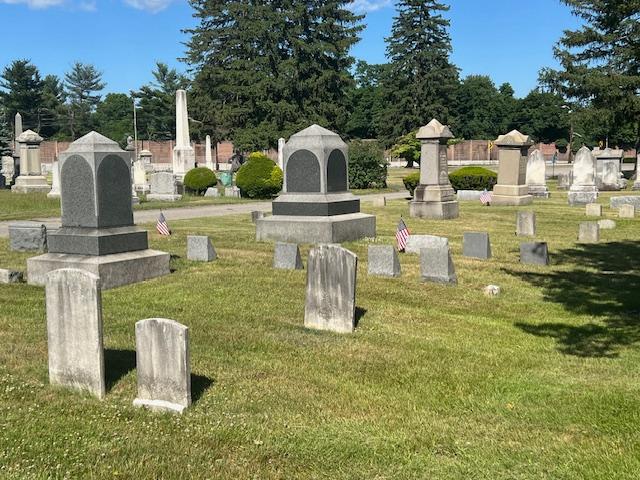
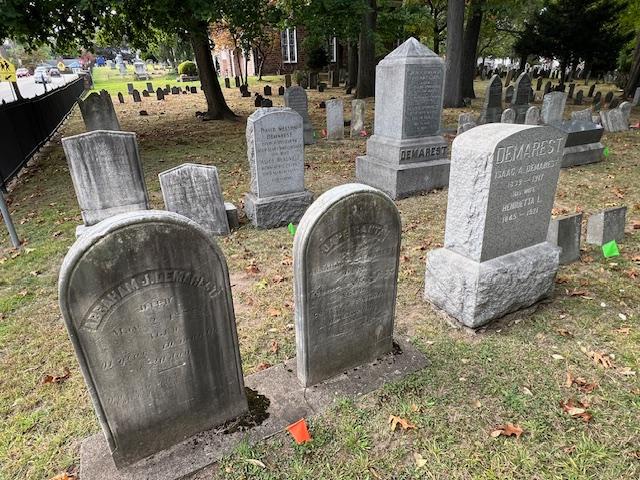
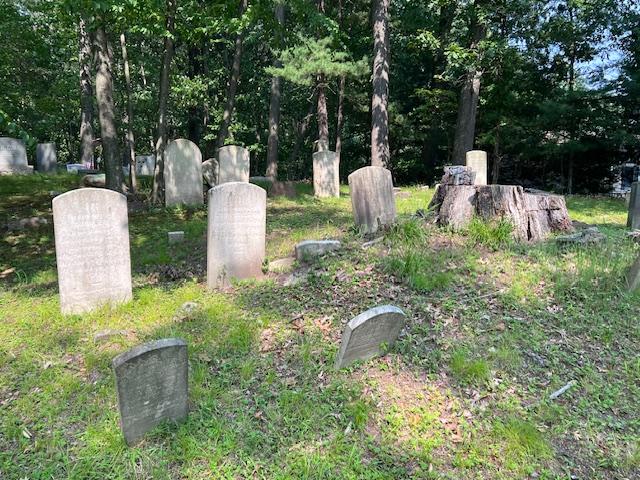
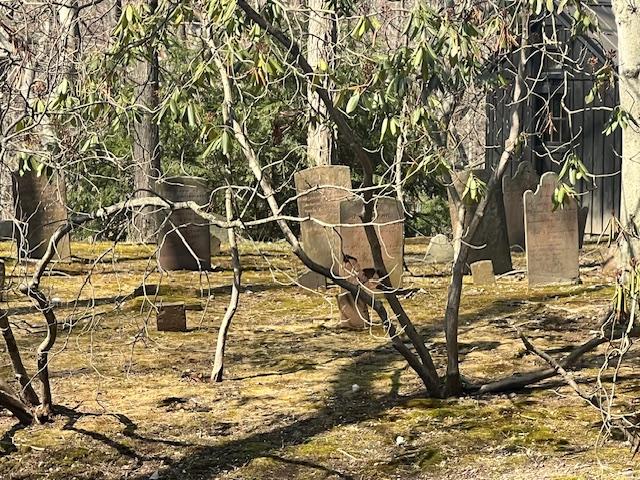
Maple Grove Park Cemetery in Hackensack, New Jersey, is a historic burial ground originally established around 1850 by the Dutch Reformed Churches of New York City. Formerly known as the New York Cemetery, it is a significant local repository for both 19th-century history and rescued historical remains.
Originally founded to serve members of the True Reformed Dutch Church, the cemetery was previously referred to as the New York Cemetery on Plank Road. As older churches and their surrounding burial grounds in northern New Jersey were decommissioned, their headstones and remains were frequently relocated to Maple Grove
The historic front section of the cemetery in the front of the cemetery
My International Marketing class at Bergen Community College recently did a complete study and marketing plan for the “Bergen250” on the Revolutionary War veterans buried at graveyards and cemeteries all over Bergen County, NJ:
For a Mapping of all the historic graveyards and cemeteries, I had the students visit all the sites that the Daughters of the American Revolution had researched and I had the students find all the locations, photo the tombstones and create a bio on each of the veterans. I enclosed a copy of their work above.
My blog on the historic graveyards and cemeteries of Bergen County:
I visited the Maple Grove Park Cemetery one afternoon in search of a Revolutionary War Veteran, Albert Voorhis. I did not find his particular tombstone but I did find his family plot and many of the ‘first families’ of Bergen County. These include families such as the Demarest’s, Haring’s, Voorhis, Ackerman’s, Christie’s, Hopper’s, Van Saun’s and Blauvelt’s.
The Demarest family plot
The front part of the cemetery is nicely landscaped with interesting family plots dotted all over the this part of the cemetery. These were the families that shaped this history of the County and other branches of their extended family are either buried in historic Reformed Church graveyards or are in small cemeteries that were part of the family farm that now sit in subdivisions of McMansions, neglected and forgotten.
The Demarest family plot
I found it interesting to note how big many of these families were and how all of these ‘first families’ married into one another, probably because of family stature or maybe to extend the length of the family farm. These interconnections shaped and developed how Bergen County developed over a three hundred year period.
The Demarest/Hopper family plot
The Westervelt Family plot
The extended Voorhis family plot
The Zabriskie family plot
The extended Terhune family plot
The DeBaun family
The Brinkerhoff family plot
The Van Winkle family plot
The Ackerman family plot
The Blawvelt (Blauvelt) family plot
The Van Saun family plot
Another Terhune family plot
The Vreeland family plot
The Quackenbush family plot
The Hopper family plot
The Hopper-DeWolfe family plot
The extended Christie family plot
The extended Lydecker family plot
The Van Valen family
Another branch of the extended Demarest family
This cemetery is an interesting look at the early history of not just Bergen County or New Jersey but of the United States. These extended families contributed so much not just in military activity but in business, religion and education that helped build this country.
This unique cemetery is more than just a place of rest but a place of history and of respect. These were the extended families who contributed so much to the progress of our country and how it was directed into the future.
I visited the Alpine Cemetery, which is a historical active cemetery just off Closter Dock Road. This is the resting place of Revolutionary War Veteran, William Wilson and many other veterans from the Civil, Spanish American, World War I and II as well as from Vietnam, Korea and Desert Storm. All the graves were marked with American flags as we just finished Memorial Day weekend.
The family plots that separate the site
My International Marketing class at Bergen Community College recently did a complete study and marketing plan for the “Bergen250” on the Revolutionary War veterans buried at graveyards and cemeteries all over Bergen County, NJ:
For a Mapping of all the historic graveyards and cemeteries, I had the students visit all the sites that the Daughters of the American Revolution had researched and I had the students find all the locations, photo the tombstones and create a bio on each of the veterans. I enclosed a copy of their work above.
My blog on the historic graveyards and cemeteries of Bergen County:
There are many family plots of “First Family’s” of Bergen County like the Westervelt’s, the Haring’s and the Campell’s. The family plots are separated by small fences and some are marked by the family names.
The cemetery on the hill in Alpine, NJ
The separate family burial plots
The Campbell Family burial plot
The Campbell family plots
The Van Sciver family plots
The Anthony Family plots
The Anthony family plot
The Haring Family plot
The Haring family obelisk
The Westervelt family plot
The Jordan/Wilson family plot
I looked at the Wilson family plot for the Revolutionary War veteran but the burial spot is probably has been lost to time. William Wilson may be lost to history but I know he was buried here.
The front part of the cemetery
The Veteran’s Memorial Rock with the names of World War I and II, Vietnam and Korea veterans
The Van Valen family plots
The Pearsall family plots
The Older family plots
The burial grounds from the front
There is a quiet elegance to these historic cemeteries. Who were these people? What did they do? Do people remember them? They are very interesting places to visit.
The history of the cemetery:
(From the historic sign)
The cemetery was founded in 1822 by resident William Gecox along Closter Dock Road when he bought 23 and a half acres as a burial ground for neighbors and for laborers who worked in the area. Mr. Gecox sold these plots on what had already been a burial ground.
The people buried in the cemetery were farmers, laborers, and tradesmen and their family. By 1870, the village “in the Closter Mountain” had take the name “Alpine” in the 1890’s. When William and his wife, Susan Helms pass in the 1890’s, their children sold the remaining plots. The cemetery has continued to be used into the twenty-first century.
The front of the English Neighborhood Reformed Church
The sign in front of this historic church
The front of the church
The front of the church from Church Road
The historic marker in front of the church
Since my project studying the historic graveyards and cemeteries of the Revolutionary War with my International Marketing students, I have taken my time to walk these sites and try to understand the history and importance of these sites as part of the memories of who these people were, the contributions that made to not just our county but the country and trying to keep their memories alive while many have been forgotten by their families.
The newer back part of the cemetery
My International Marketing class at Bergen Community College recently did a complete study and marketing plan for the “Bergen250” on the Revolutionary War veterans buried at graveyards and cemeteries all over Bergen County, NJ:
For a Mapping of all the historic graveyards and cemeteries, I had the students visit all the sites that the Daughters of the American Revolution had researched and I had the students find all the locations, photo the tombstones and create a bio on each of the veterans. I enclosed a copy of their work above.
My blog on the historic graveyards and cemeteries of Bergen County:
Visiting during a recent post Memorial Day visit, I got to see how many veterans of all the wars from the American Revolution to Desert Storm were buried here. Even though we studied just the veterans of the Revolutionary War, I was fascinated by the number of Civil War and World War I and II veterans here as well.
The older section of the graveyard
The history of our County and Country are shown among the rows of tombstones that represent the contribution of our County residents to the many causes. It was very humbling to see them being honored at this time.
What I found interesting was many of the branches of ‘Founding First Families’ of Bergen County were interned here, representing Bergen County’s contributions to the foundation of the United States.
The Engle family plot where Revolutionary War veteran John Engle was a member
The Vreeland family plot closest to the church is the resting place of Revolutionary War veteran Michael Vreeland (again this site was once their family’s farm)
A closer look at the Vreeland family plot
I believe this is the tombstone of Michael Vreeland, Revolutionary War veteran
Another branch of the Vreeland family
Another branch of the Vreeland family
The Herring (Haring) family crypt
The Outwater family crypt. General Outwater’s side of the family is buried in a family plot in Carlstadt, NJ
The Banta family plot
The DeGraw family plot
The grave of Benjamin Westervelt
The grave of a soldier I could not read
It was so interesting to walk amongst the rows of tombstones and trying to understand each person’s story and their personal contributions to the way our community was founded and developed. So many of these family names are woven into the history of Bergen County.
There is a quiet elegance to these graveyards and on a warm sunny afternoon they are less scary and more of a place of understanding and respecting our past. It was an interesting history lesson.
Looking at the oldest section of the graveyard where many Colonial family plots are located
History of the Church:
(From the Church website)
The English Neighborhood Reformed Church is the oldest building in Ridgefield, NJ, erected on its current site way back in 1793, long before Bergen County became the bustling metropolitan area it is today.
But even before this, way back in 1675, Ridgefield was known as “The English Neighborhood” and covered roughly 10 miles of land between the Hackensack and Hudson Rivers. This is where our church gets its historic name. The first construction of the church (in Leonia) dates back to 1768, but was moved to its present site in Ridgefield, in 1793.
This area played a role in the Revolutionary war, when General Washington retreated with the Continental Army in 1776 from NY City and passed through the English Neighborhood. Those who fled the area for their cause, included the English Neighborhood Church’s first minister, Garrit Leydekker, an Englishman and a Tory, who fled for the safety of New York City, taking the church’s first records with him.
The historic graveyard next to the church
The church’s steeple was the tallest structure to rise above the flat meadowlands and would become a surveyors landmark. It is approx. 80 ft. in height and made from hand-strewn timbers and wood dowels, rather than nails.
The historic church on a sunny afternoon
In 1804, Edgewater Avenue was a bustling artery for commerce and was part of the toll road known as the Bergen Turnpike. For 100 years, covered wagons transported their goods from the farms of NJ, to the ferries that would carry them to market in NY City, right past the church. The church was once located in the heart of the bustle of life as it was, before the industrial revolution.
The historic doors of the church
In 1854, the railroad was brought to Ridgefield, which introduced industry and growth to the town. Throughout the Civil War, members of the congregation were active in the “underground railroad.” Runaway slaves were hidden under the bridge by Overpeck Creek. They were given food, clothes and other necessities to help move them to the next safe haven, during the night.
In 1912, the Sunday school building was added, across the way from the church. Additions to the building were completed in 1954 and 1962.
A bridge was built over the Railroad tracks in 1932, which led to the closing of Edgewater Avenue and the “Old Highway” that once brought passersby with regularity, became a dead-end street. These gradual changes have meant that the historic legacy of the English Neighborhood and its church, goes largely unnoticed.
However, these changes also, today provide the quiet hamlet that the church finds itself surrounded by – a little piece of heaven on earth – right here in a busy, and often congested, Ridgefield. It is this history and this unique location that makes the English Neighborhood Church a one-of-a-kind place to worship.
We hope you will join us some Sunday to see for yourself. God has blessed this congregation for nearly 233 years (2026). Jesus is doing some amazing things with this church and its people. You are welcome to be one of them, as we move into the next thing God is calling us to do and be, as Jesus’s disciples.
Every semester for my Business Marketing, Management and Communications classes, I create one big Team assignment for my students. In a Commuter College, it is a lot tougher for students to get to know one another between their studies and their jobs, so I create these projects to foster learning, creativity and especially Teamwork.
This semester I taught International Marketing. This is a tough course to teach as you always have students of various age groups and various levels of industry experience. The Spring semester was no different. This makes the class more interesting yet more challenging to teach. I still challenge them and test them to see what type of future executives they will become.
I also taught Principles of Management and International Marketing which came with their own challenges. It was the amount of people in each class and what projects would they be working on. I knew the things I wanted to work on, I just had to figure out how to frame them.
In the past, I have created these projects under the Bergecco-Parc Consulting Inc. banner, the main consulting company, the Orion Malls banner, a Mall design company and the Buscomonzefi.com banner, my Tech Division.
Each business concept does its best to be creative, forward thinking and have a thought producing presentations. I also challenge the students to top on another in their presentations and build on what they have seen others do in the past.
The Bergecco-Parc Consulting Inc. concept is an acronym for Bergen Community College Paramus campus where I work. It came to me one night around 3:00am in the morning when I was trying to figure out a project for my students to work on.
Professor Justin Watrel, CEO Bergecco-Parc Consulting Inc.
Our Corporate site (created my one of my former President’s:
This semester I attempted one of the toughest and most extensive Team projects in all the historical projects I have created, taking the listing of the Daughters of the American Revolution created for Bergen County Historical Division for the “Bergen 250”and we took it to another level.
I challenged the students to visit all the cemeteries and graveyards on the listing (using my blog if needed), find the tombstones of the veterans of the Revolutionary War and photograph them. Next they needed to create a biography of each of the veterans.
From there, they needed to create a short video of that gravesite and put it all into a QR code so visitors can find them. It was a big challenge but I knew this class could do it. There was something about the personality of this class that would make it work.
I then planned a series of field trips so that the students could visit particular sites in a more formal tour. I asked a lot of the contacts who I have met over the years to help me out, so the students could see why this project was so important to the 250th Anniversary to both our County and our Country. It took a lot to plan and execute. I gave them six weeks to do the research and create other sections of the project.
A. They had to take the listing of all the veterans and their list of grave sites and play ‘detective’ to find the tombstones and then film and create the QR codes.
B. They had to create a special “250th Medallion’ that would be placed at each veteran’s tombstone to honor them on the “Bergen 250”. These pieces of art were very clever.
C. They had to create a “Farm to Table” fundraiser with three courses and an American selection of wines, one being from New Jersey. They also had to create the menu and the invitation to the event. The Teams created the menu, cost and budget to show how much they would raise for the event.
D. As an extra credit assignment, I had the Teams create a special “Halloween Tour”, with a special concession menu, tour script of the cemetery or graveyard of their choice and create the logo and advertising for it. Three of the four Teams created this.
Then I planned a series of field trips to visit the most important sites in Bergen County, some were tiny stand alone family cemeteries, some were historical sites and some were very important church graveyards with family plots.
I think this is where the students had the most fun. This is where the comradery of the class was created. As I took the Team out to many of the sites on their listings, the Teams got to see the concept of “Dark Tourism”, the desire to visit places were either bad things have happened, the site has an evil past or something to do with death. This has become a popular form of Tourism in the Twenty-First Century. (Think the 9/11 Memorial).
It was also a chance to get out of the classroom and get some fresh air and sunshine. These are some of the places our Team visited.
My Graveyard and Cemetery Team “Out in the Field”:
The first site I took my Team to was the Baylor Massacre site in River Vale, NJ, where the British had ambushed a battalion of soldiers and killed them. The site has a rather dark history from the war.
The irony about the site is that all my students were from Bergen County and none of them had been here before. I had taken my previous ‘Bergen 250’ class here as well as our next stop, the Haring Farm Cemetery just a few blocks away.
The Team picture at the Baylor Massacre site
We next toured the Haring Family Cemetery down the road on Old Haring Farm Road. This was one of the many examples of small family cemeteries that used to be placed at the edge of family farms, who wanted loved ones buried close by or the distance to the family church was too far away at that time.
Touring the Haring Family Cemetery
The Haring family is one of the most important and prominent Colonial families in New Jersey (and are very distantly related to me by marriage), so I felt this site was very important to visit to show the family dynamic of that era.
Our Team at the Haring Farm Cemetery at Old Haring Farm Court
We then went on our Team lunch at Pompilio’s Pizzeria in Downtown Westwood, NJ. I feel on projects like this to build comradary and for the students to start their projects, we need to ‘break bread’ with one another and get to know each other in a relaxed place. Plus the students seem to love free pizza and Coke. This lunch has started many successful projects.
Our Team Divisional at lunch at Pompilio’s Pizzeria:
Our Team lunch at Pompilio’s Pizzeria
We all had such a nice time at lunch and feel this is the best way to get to know one another. The food at Pompilio’s is also excellent. I always host the lunch with large Cheese Pizza and Coke.
My Executive Team at our lunch
Our next Field Trip was the Old Stone Church in Saddle River at 481 East Saddle River Road in Saddle River, NJ. This is one of the oldest churches in Bergen County and in New Jersey.
The Old Stone Church at 481 East Saddle River Road in Saddle River
This church has the most complete set of tombstones of Revolutionary War veterans and the church website has some of the most complete information on their veterans.
Our group picture at the Old Stone Church
Our next trip was to the First Reformed Church of Hackensack, the second oldest church in New Jersey and one of the most important for the Revolutionary War. Their graveyard has the most amount of Revolutionary War veterans in Bergen County.
My students outside the First Reformed Church of Hackensack at 42 Court Street
The historic outside cornerstones of the church with the original family founder names carved in the bricks
The family keystones
John Paulson keystone
Henry Berry keystone
Albert C. Zabrifky keystone
The Historic First Reformed Church pews and stained glass windows.
The first floor of the church and the inside pews
The alter
The view of inside of the church
The Revolutionary War artifacts
My student visit on the second floor of the church. The church’s artifacts are displayed in the cases here.
Tour of the church
The Child’s family windows
Voorhis-Lozier-Moore Windows
The Kraissi family windows
The Van Valen windows
The War years windows
The church is the second oldest church in New Jersey and one of the oldest in the country. We then walked outside to tour the historic graveyard in the back of the church. It had the most amount of Revolutionary War veterans buried in Bergen County, NJ.
Many of the veterans of the American Revolution were buried closest to the church, which was the tradition of the time to be buried as close to the church as possible. Their graves were marked by Revolutionary War medallions and American flags.
The Demarest-Voorhis Revolutionary War graves
General Poor’s grave
Albert Romin grave Revolutionary War veteran
The front part of the church by the Hackensack Green was the resting place of many of these heros
Our Team of Student Consultants picture inside the historic graveyard
It is also the resting place of General Enoch Poor, who died during battle, whose funeral was attended by General George Washington himself. We took this group picture by the General’s grave.
Our Team pictures with General Poor
Our last field trip and one of our most important was to the Old South Presbyterian Church in Bergenfield. This was the place of the Demarest family plot, which is currently under a full renovation.
We worked with Melissa Naylis, who is leading the renovation of the church and master carver, Bob Carpenter, who showed us how he is restoring the graveyard. He had led one of my previous classes when we visited the graveyard for my ‘Bergen 250’ project.
Master Carver Bob Carpenter leading our tour
The South Presbyterian Church and the Demarest family plot
The Demarest family plot
Melissa Naylis starting the tour with us
The students got to learn of the important history of the grave sites and why they are an important piece of the United States founding. The were the men who fought for our freedom and the wives and families that supported the effort.
Melissa leading the tour and introducing Bob Carpenter to us
Melissa Naylis explaining the work that is being done in the graveyard
Bob Carpenter explains his work
Some of the earliest tombstones in the graveyard
Bob Carpenter explaining the renovation
Bob Carpenter talking about the Demarest plot renovation
Pastor Glen from the Old South Presbyterian Church introducing himself to the students and joining us on this part of the tour.
Talking about the care of the tombstones
Talking about care of the tombstones
We then moved to tombstone of the founder of Rutgers University for a marble carving demonstration. Bob Carpenter wanted the students to know the effort into carving into stone and brought the tools of that era and a piece of marble for the students to use. The students got a kick out of this and some really enjoyed it.
Bob explaining the work of a marble carver
Describing the process
My students giving it a try
My student Amy, carving marble
My student, Walid, carving on marble
Demonstrating the process
After the demonstration, we talked about the work of the Demarest family and their contributions within Bergen County.
The founder of Rutgers University, John Henry Goetscheus and a member of the extended Demarest family.
Our Team picture after the tour
Taking a quick tour of the graveyard after the formal tour, the Blauvelt-Kipp family burial ground
I found that being ‘out of the field’ really exposed the students to not just to visiting parts of the county they had never seen but showing them how cemeteries and graveyards are part of our culture of respect and memory. They can be looked at less as religious standpoint but as a historical value of who we are and how it part of all of our pasts.
We also looked about how these sites could play a role of building Bergen County tourism by promoting these sites as a part of the history of our country. Not just during the Revolutionary War but as part of our cultural fabric.
On April 29th, 2026, the students made their formal Presentation of the project and showed off their research of the sites and their fundraising tools to support the restoration of these sites.
This was an amazing project that will benefit so many people from historians to researchers to people who love the Revolutionary War and its history to family members looking for loved ones.
It is my class’s contribution as well as other future and past projects to benefit the “Bergen 250” and the rich history of Bergen County, NJ. Our County has contributed so much to not just the building of the state but of the United States as well. It was one of the best projects I ran as CEO of Bergecco-Parc Consulting Inc.
Our Executive Picture:
The “Cemetery and Graveyards” Team
Our Reception following the Presentation
Our Presentation was followed by a Q & A with many people we had met along the way from our visits “out in the field” who had come to see the final project and this was followed by our Corporate Team picture and then a reception in honor of the Student Consultants who made this important possible and come to life.