Tag: Exploring Historic Cemeteries and Graveyards in Bergen County, NJ

Westwood Cemetery                                                                                23 Kinderkamack Road                                                                Westwood, NJ 07675

Westwood Cemetery 23 Kinderkamack Road Westwood, NJ 07675

Westwood Cemetery

23 Kinderkamack Road

Westwood, NJ 07675

(201) 664-7161

https://westwoodcemetery.org

Open: 24 Hours

My review on TripAdvisor:

https://www.tripadvisor.com/Profile/R4960NKjustinw/mediabatch/14364553?m=19905

The Westwood Cemetery

The History of the Cemetery:

(From the Cemetery website)

Westwood Cemetery was established in 1861 as the Old Hook Cemetery. The earliest burial was in 1791. Westwood Cemetery is a non-sectarian cemetery and continues to offer final resting places that suit individual needs. Whether you are planning for the future or purchasing for an immediate need, we have a variety of options available within the 35 acre park.

The newest part of the Westwood Cemetery where the family burials start around 1840 to Present sits on the Kinderkamack Road side of the cemetery

The back of the cemetery sits on a buff overlooking the pond that is parallel to Old Hook Road

My International Marketing class at Bergen Community College recently did a complete study and marketing plan for the “Bergen250” on the Revolutionary War veterans buried at graveyards and cemeteries all over Bergen County, NJ:

The project:

For a Mapping of all the historic graveyards and cemeteries, I had the students visit all the sites that the Daughters of the American Revolution had researched and I had the students find all the locations, photo the tombstones and create a bio on each of the veterans. I enclosed a copy of their work above.

My blog on the historic graveyards and cemeteries of Bergen County:

https://visitingamuseum.com/tag/historic-cemeteries-of-bergen-county

The original family members were buried in this section of the cemetery while their grandchildren and great grandchildren are interned in the front section.

The oldest section of the cemetery which sits next to Old Hook Road is the Hopper Family plot which dates back to before the Revolutionary War

The Blauvelt Family plot sits next to the Hopper Family plot

The oldest section of the cemetery by Old Post Road home to family members of the Post, Blauvelt, Voorhis and Hopper members

The Demarest family plot overlooking the pond from the buff

The Blauvelt and Bogart family plot

The DeBaun family plot by Old Hook Road

One of the original Demarest family plots

The Haring family plot overlooking the pond

The Ackerman family plot

The Eckerson family plot with members of the Hopper and Demarest families

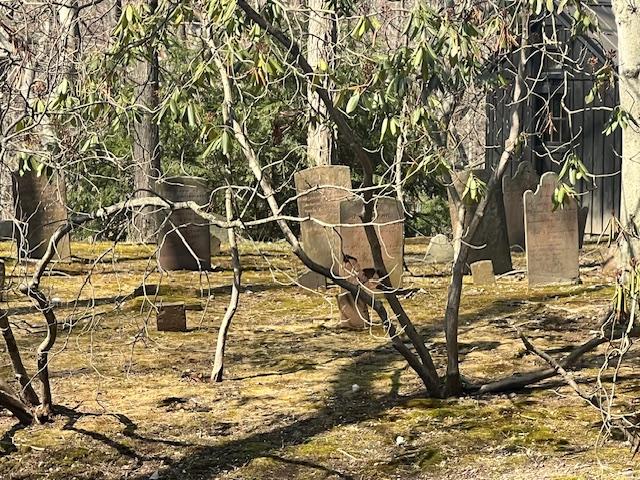
This section of the cemetery contains the oldest tombstones in the cemetery so many have broken or crumbled away. The lawn in this section of the cemetery is also not as well maintained so there are overgrown bushes and trees hiding the tombstones so you really have to look.

Then I worked my way back to the front of the cemetery finding the graves of these people’s children and grandchildren by following the names and dates of these people’s family members.

One branch of the Demarest family is front and center in the front of the cemetery

Next to them are the DeBaun and Vanderbeck families

Another branch of the Demarest family is a few rows behind

The Kipp family have a rather large family plot

The Hopper & Banta families share this large twin family plot

The Bogart family has this large family plot

The Westervelt family is near them with many of their members of the family

The Demarest family had two large family plots in the middle of the cemetery

The family plot of the Demarests and the Harings

The Demarest and Van Bushkirk family plot

The large Blauvelt family plot

The DeWolfe family plot

The Voorhis family plot

The Terhune Bogart family plot

What I found fascinating about this cemetery was to see the progression of each of these families from parent to child to grandchild just by walking through it. The families branch out in all sections intermarrying with similar families and the buried next to them. From back to front here they rest.
Maple Grove Park Cemetery                                                                      535 Hudson Street                                                               Hackensack, NJ 07601

Maple Grove Park Cemetery 535 Hudson Street Hackensack, NJ 07601

Maple Grove Park Cemetery

535 Hudson Street

Hackensack, NJ 07601

(201) 440-1607

https://en.wikipedia.org/wiki/Maple_Grove_Park_Cemetery_(Hackensack,_New_Jersey)

https://everloved.com/cemeteries/NJ/hackensack/maple-grove-park-cemetery-hackensack-nj-07601

https://www.findagrave.com/cemetery/1593999/maple-grove-park-cemetery

Open: Sunday 8:00-6:00pm/Monday-Saturday 10:00am-2:00pm

My review on TripAdvisor:

https://www.tripadvisor.com/Profile/R4960NKjustinw/mediabatch/14358447?m=19905

The front sign on the cemetery

The History of the Maple Grove Park Cemetery:

(From Wiki/Facebook)

Maple Grove Park Cemetery in Hackensack, New Jersey, is a historic burial ground originally established around 1850 by the Dutch Reformed Churches of New York City. Formerly known as the New York Cemetery, it is a significant local repository for both 19th-century history and rescued historical remains.

Originally founded to serve members of the True Reformed Dutch Church, the cemetery was previously referred to as the New York Cemetery on Plank Road. As older churches and their surrounding burial grounds in northern New Jersey were decommissioned, their headstones and remains were frequently relocated to Maple Grove

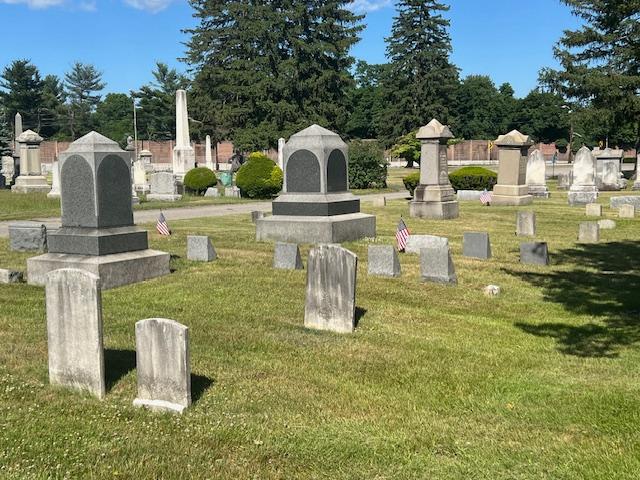
The historic front section of the cemetery in the front of the cemetery

My International Marketing class at Bergen Community College recently did a complete study and marketing plan for the “Bergen250” on the Revolutionary War veterans buried at graveyards and cemeteries all over Bergen County, NJ:

The project:

For a Mapping of all the historic graveyards and cemeteries, I had the students visit all the sites that the Daughters of the American Revolution had researched and I had the students find all the locations, photo the tombstones and create a bio on each of the veterans. I enclosed a copy of their work above.

My blog on the historic graveyards and cemeteries of Bergen County:

https://visitingamuseum.com/tag/historic-cemeteries-of-bergen-county

I visited the Maple Grove Park Cemetery one afternoon in search of a Revolutionary War Veteran, Albert Voorhis. I did not find his particular tombstone but I did find his family plot and many of the ‘first families’ of Bergen County. These include families such as the Demarest’s, Haring’s, Voorhis, Ackerman’s, Christie’s, Hopper’s, Van Saun’s and Blauvelt’s.

The Demarest family plot

The front part of the cemetery is nicely landscaped with interesting family plots dotted all over the this part of the cemetery. These were the families that shaped this history of the County and other branches of their extended family are either buried in historic Reformed Church graveyards or are in small cemeteries that were part of the family farm that now sit in subdivisions of McMansions, neglected and forgotten.

The Demarest family plot

I found it interesting to note how big many of these families were and how all of these ‘first families’ married into one another, probably because of family stature or maybe to extend the length of the family farm. These interconnections shaped and developed how Bergen County developed over a three hundred year period.

The Demarest/Hopper family plot

The Westervelt Family plot

The extended Voorhis family plot

The Zabriskie family plot

The extended Terhune family plot

The DeBaun family

The Brinkerhoff family plot

The Van Winkle family plot

The Ackerman family plot

The Blawvelt (Blauvelt) family plot

The Van Saun family plot

Another Terhune family plot

The Vreeland family plot

The Quackenbush family plot

The Hopper family plot

The Hopper-DeWolfe family plot

The extended Christie family plot

The extended Lydecker family plot

The Van Valen family

Another branch of the extended Demarest family

This cemetery is an interesting look at the early history of not just Bergen County or New Jersey but of the United States. These extended families contributed so much not just in military activity but in business, religion and education that helped build this country.

This unique cemetery is more than just a place of rest but a place of history and of respect. These were the extended families who contributed so much to the progress of our country and how it was directed into the future.

Van Bushkirk Burial Ground                                                      45 East Saddle River Road                                                              Saddle River, NJ 07458

Van Bushkirk Burial Ground 45 East Saddle River Road Saddle River, NJ 07458

Van Bushkirk Burial Ground

45 East Saddle River Road

Saddle River, NJ 07458

https://www.findagrave.com/cemetery/2160733/edit

The Van Bushkirk Burial Ground behind the residence at 45 East Saddle River Road

The Van Bushkirk Burial Ground is part of the history of Saddle River, NJ’s early settlement period. The burial ground has about 40 tombstones that are arched and shaped. These are some of the first residents both of Saddle River and Bergen County, NJ.

The burial ground lies next to a creek off East Saddle River Road and can only be accessed by going through private property of the residents living at 45 East Saddle River Road. Please do not enter without permission of the owner of the home. These pictures were taken with a long distance camera from the street.

The Van Bushkirk Burial Ground at 45 East Saddle River Road

The History of Saddle River:

(from the Saddle River Town website):

In 1675, Lenni Lenape tribal leaders sold a large amount of land on the Eastern side of the Saddle River (known as Werimus) to Albert Zabriskie. In 1708, Zabriskie sold this tract of land to Thomas Van Buskirk. The first house in Saddle River was built by the Van Buskirk family in 1709. The original Van Buskirk homestead still stands at 164 East Saddle River Road across from Borough Hall.

In 1709, the Lenni Lenape sold the land on the west side of the Saddle River to the English as part of the Ramapo Tract. Property on the west side of the Saddle River was acquired from this Tract throughout the 1700’s. The Ackerman Family was the most prolific buyer of these early Saddle River parcels and first settled on the West side of the Saddle River in 1745 when Johannes Ackerman acquired 245 acres.

My International Marketing class at Bergen Community College recently did a complete study and marketing plan for the “Bergen250” on the Revolutionary War veterans buried at graveyards and cemeteries all over Bergen County, NJ:

The project:

For a Mapping of all the historic graveyards and cemeteries, I had the students visit all the sites that the Daughters of the American Revolution had researched and I had the students find all the locations, photo the tombstones and create a bio on each of the veterans. I enclosed a copy of their work above.

My blog on the historic graveyards and cemeteries of Bergen County:

https://visitingamuseum.com/tag/historic-cemeteries-of-bergen-county

The graves of George and Margaret Achenbach

Saddle River continued to grow and populate during the 18th century.  Families such as the Van Buskirk’s, the Ackerman’s, the Achenbach’s, the Hopper’s, the Zabriskie’s, the Stilwell’s and the Baldwin’s farmed and developed the area.

The grave of George Achenbach

The first of many Saddle River mills was built in 1714 and the first school was constructed in 1720. Another early 18th century business was the blacksmith shop operated by the Ackerman family. Over the years, these 1st families built the quintessential “Old Dutch Homesteads” from actual sandstone that was found in town.

The Revolutionary War era tombstones

The Revolutionary War was a horrendous time for the residents of Saddle River. The townsfolk had spent the entire 18th century developing the area into a well established community and all growth essentially stopped during the war. Since the Jersey Dutch initially considered the revolution to be an English issue, it was particularly shocking when the fighting came to their backyards. From December 1776 until the end of the war, both American and British forces traveled through Saddle River and many times set up camp in the center of town.

Residents were in constant fear of the British employed Hessian soldiers who would terrorize families by raiding the houses for food and then burning the fields before leaving. Although no major battles took place in Saddle River, there were small skirmishes to fend off raids and the Blue Mill on East Saddle River Road was destroyed. Even George Washington, the future father of our country, passed through Saddle River on multiple occasions and tradition has him staying overnight at the Ackerman Homestead on the East road.

When the Revolutionary War ended, Saddle River residents picked up right where they left off in terms of community and industry development. The Ackerman’s built a Foundry on what is now Waterford Gardens. Tice and Berdan both opened stores in town and the Bulls Head Tavern opened its doors to weary travelers in 1802. Old mills were re-opened and new ones such as Van Riper’s Saw Mill and Basket Factory were established. The post war growth continued for decades and culminated in the 1820s with the construction of the Zion Lutheran Church in 1821 and a new schoolhouse behind the church in 1825.

The worn tombstones in the cemetery

History of the Van Bushkirk family in Bergen County during the Revolutionary War:

(From the Bergen County Historical Society website):

Loyalists in Bergen County | Bergen County Historical Society

Loyalists in Bergen County came from all backgrounds, religions and economic classes. At the beginning of the war, a number were officers in the militia, the military force composed of all able-bodied males maintained by each province, and later the states. The lieutenant colonel of the militia was John Zabriskie of New Bridge. Zabriskie understood the sentiments of many of his neighbors, particularly those of Abraham Van Buskirk, whose property was directly across the bridge in Teaneck. Van Buskirk was a surgeon in the militia under Zabriskie, and with whom he served on Bergen County’s Committee of Correspondence, an entity established to keep in touch with other New Jersey counties and the events occurring there.

Union Cemetery                                                                                    316 Darlington Avenue                                                              Ramsey, NJ 07446

Union Cemetery 316 Darlington Avenue Ramsey, NJ 07446

Union Cemetery

316 Darlington Avenue

Ramsey, NJ 07446

(291) 327-3879

https://www.findagrave.com/cemetery/1680177/union-cemetery

https://www.countyoffice.org/ramsey-union-cemetery-ramsey-nj-4cf/

Open: Sunday-Saturday Dusk to Dawn

My review on TripAdvisor:

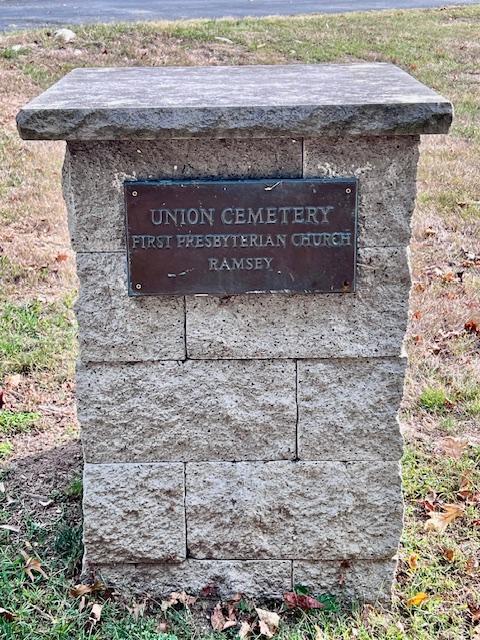
The Union Cemetery of The First Presbyterian Church of Ramsey, NJ

History of the Cemetery:

(from the church website)

Union Cemetery is a religious cemetery located at 316 Darlington Ave. in Ramsey, NJ. The cemetery is owned and managed by the First Presbyterian Church in Ramsey. As a religious cemetery, the cemetery is restricted under New Jersey state law and is not open to the general public. Only members of a Christian church and their immediate relatives may be interred at the cemetery.

The historic cemetery from the road. To the left is the oldest part of the cemetery

Entering the cemetery from Darlington Avenue

The newer part of the cemetery is to the right of the driveway

I was visiting the Union Cemetery in search of veterans of the Revolutionary War and found an interesting cemetery with a deep history in Bergen County. Many first families of Bergen County are buried here and veterans not just from the Revolutionary War but the Civil War all the way up to today are buried in this active town cemetery.

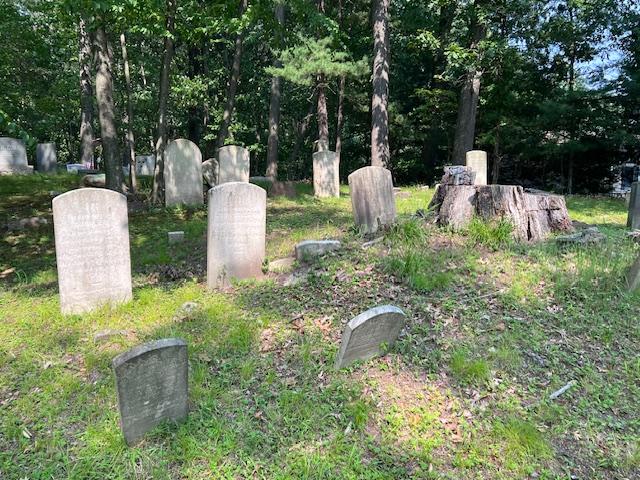
The older part of the cemetery is to the left of the driveway. These tombstones are from the early 1800’s.

The older part of the cemetery dates back to before the Revolutionary War

Many of the early family plots are located here with well known names like Hopper, Christie, Ackerman and the town’s namesake, the Ramsey family, whose family plot is in the oldest section of the cemetery.

The grave of Hannah Jane Ramsey in the Ramsey family plot

Part of the Ramsey family plot

The Ramsey family plot

The Union Cemetery to find the graves of Revolutionary War veterans and found some but not all of them. The tombstones are so worn after over two hundred years that they either had disappeared or were so worn you could not read them.

The oldest section of the cemetery where many veterans both from the Revolutionary and Civil War are buried. It was hard to read many of the tombstones. Some the veterans were buried in their family plots, others with their spouses separately. The burials were concentrated in the oldest part of the cemetery. Most of the veterans have been honored with American flags.

The first tombstones I found were from Ackerman family members

https://www.njgsbc.org/files/familyfiles/g0/p10.htm

The grave of veteran John Ackerman

The grave of veteran James Ackerman

I could not make out the name of this Ackerman member but I figured it was one of the brothers wife

The grave of veteran John P. Post

The Post family history:

(from the Saddle River Historical Society website)

The Post family was of Dutch descent. The first Post was a soldier, who came here to protect the new settlements along the Hudson. They soon turned to milling; the name Post is attached to several mills in Bergen and Rockland Counties. Joseph Post, born in 1775, built a mill on the west branch of the Saddle River about 1800. He also opened a tavern and store on what is now West Saddle River Road, just north of Parker Place, across from the entrance to the mill.

The graves of members of the community at that time including the grave of John P. Post

The grave of veteran William Vanderbeck

The grave of a member of the Van Brock family, who was married to James Ramsey

I was not too sure who this was but by the veteran’s flower I am assuming the grave of veteran John Van Blarcom

The grave of Hannah (I believe Ackerman)

The Christie family plot

The Hopper family plot

The Hopper Family history:

(from the Saddle River Historical Society website)

The Hopper family is one of the oldest of European descent in Bergen County. Andries Hopper came from the Netherlands to New Amsterdam in the 1640’s. His widow and her son Hendrick were in the Polifly area (Hackensack) by the late 1600s. There was land to be had in the unsettled areas of what became Bergen County. Hendrick’s two oldest sons, Andries and Jan settled in the HoHoKus area (part of Paramus) around 1712. The Hopper name appears on many old homes and mills on early maps of the area. It was two of Andries’ children, Abram and Jan, who settled sometime around 1730 along the Saddle River in what is now Upper Saddle River.