Tag: warren george watrel

Vineland Historical Society                                                                    108 South Seventh Street                                                               Vineland, NJ 08360

Vineland Historical Society 108 South Seventh Street Vineland, NJ 08360

Vineland Historical Society

108 South Seventh Street

Vineland, NJ 08360

(856) 691-1111

https://discovervinelandhistory.org

https://www.facebook.com/discovervinelandhistory.org

Open: The third Saturday of each month from 1:00pm-4:00pm

Admission: Free but donations are appreciated

My review on TripAdvisor:

https://www.tripadvisor.com/ShowUserReviews-g46890-d28176052-r1078896843-Vineland_Historical_Society-Vineland_New_Jersey.html?m=19905

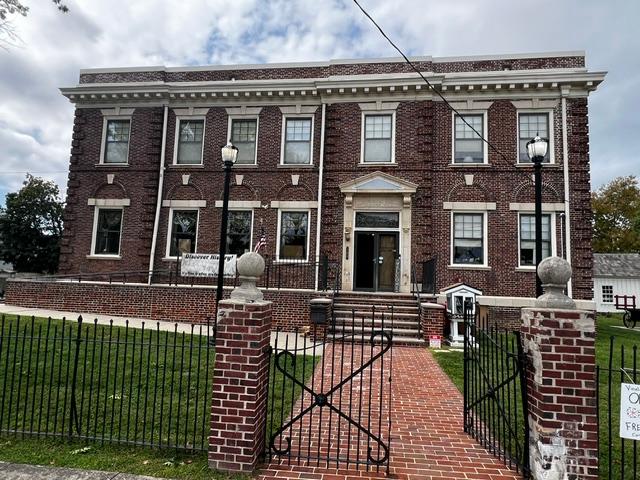
The front of the Vineland Historical Society Museum at 108 South Seventh Street in Downtown Vineland, NJ

On my off time from the Firemen’s Convention after voting, I decided to visit a group of small museums in Cumberland and Glouster Counties in New Jersey. Most of the small ones were closed or had changed their hours online but the Vineland Historical Society was open for touring and was having a speaker that day. I had been invited to come by the President of their Board of Directors about a year earlier so I was glad that I was able to visit this weekend where the schedules matched up.

What an interesting museum with its focus not just on the history of the Town of Vineland but of the surrounding communities and the impact that Vineland had and has on Urban Design, Farming, Manufacturing and Inventions that contribute to the whole country.

The museum had been designed as a Historical Museum for community leaders who wanted to share their love of historical objects and the past history of the community. This is what built the collection over the years. Each section of the museum tells a different part of Vineland’s history from the community events like its “100th Anniversary” of the town, the history of the Police, Fire and Veterans of Foreign Wars, members of the community who contributed to Women’s Suffrage and to the number of everyday products we use like Grape Juice and Marshmallow Fluff that were invented here. Each section of the museum tells an interesting story.

About the Museum:

The museum is a stop on the Woman’s Suffrage Tour

The Mission of the Museum:

The Vineland Historical and Antiquarian Society is the oldest local historical society in New Jersey and its museum is the oldest purpose-built museum in the State of New Jersey. The Society is dedicated to collecting and preserving artifacts and records related to Vineland and the South Jersey region, and to sharing that material with visitors through exhibits, programs and other appropriate venues. Vineland has a rich, culturally-diverse past that is reflected through our collections. To learn more, please contact us or make an appointment to visit. 

The Rain Garden outside the museum

The Rain Water Garden sign

The Rain Water Garden outside the museum was in full bloom at the Summer and you could see that the garden was trying to attract butterflies and other insects that would help pollinize the garden. It must be very colorful during the Spring.

The first floor of the museum is the lecture room, the library and the gift shop along with local artifacts and the Glass Manufactured Gallery

The main gallery was set for a lecture later that afternoon. On all sides of the museum tell the story and the timeline of Vineland and the surrounding communities. There is the City of Vineland and Vineland Borough and Landis Township in 1952. So you see the artifacts of the farming communities and those of the developing City (Wiki).

https://en.wikipedia.org/wiki/Vineland,_New_Jersey

The early views of the museum with the original heating unit and turn of the century shell art

Historical community information

The First floor collection of artifacts

The bust of Charles K. Landis, who founded the town

The display of the early Women’s Suffrage Movement in town, which helped women earn the right to vote. New Jersey was an early pioneer in the Movement.

The photo of Portia Kellogg Chase, an early leader in the Women’s Suffrage Movement in Vineland, NJ

https://en.wikipedia.org/wiki/Portia_Gage

The artifacts on the start of the early creation of a local family business. Putting shovel to the ground.

Early musical instruments that were part of both home and social life

The portraits of early leaders of the community and artifacts related to their families

The portrait of Charles K. Landis

https://en.wikipedia.org/wiki/Charles_K._Landis

https://www.cumberlandcountynj.gov/Charles-K-Landis

https://atlanticcityweekly.com/the-complex-life-of-charles-k-landis/article_ab932703-da12-5ee7-aa26-a1c425eb347d.html

The portrait of Portia Kellogg Chase as a young bride

https://en.wikipedia.org/wiki/Portia_Gage

https://www.findagrave.com/memorial/206936062/portia-gage

The portrait of John Gage

https://en.wikipedia.org/wiki/John_Gage_(19th-century_landowner)

https://www.findagrave.com/memorial/236816796/john-gage

Made in Vineland: A Celebration of Local Inventors and Their Creations:

The exhibition highlights the remarkable people and ideas born right here in Vineland. From everyday household items to groundbreaking innovations in transportation, food, tools, and telecommunications, this special 2026 exhibit tells the stories of local inventors whose creations shaped daily life far beyond our city. Visitors are invited to explore these inventions and the fascinating individuals behind them during our Open House held every third Saturday of the month.

The ‘Made in Vineland’ exhibition:

The inventions of the Flower vase, the Woodruff Train Car and the Self Adjusted Plane

The inventions of Angel Food Cake Marshmallow fluff

The inventions of the Grape Juice industry and Skee-ball game

The post office desk from the turn of the last century

Just off the side of the main room is the Blown Glass Room. The area is known for special sand that is used for glass making. This made the State of New Jersey one of the leading manufacturers of glass in the country at the time.

https://www.beachcombingmagazine.com/blogs/news/new-jersey-the-birthplace-of-the-american-glass-industry?srsltid=AU7gw4VmSsTWgq56VQaUU1IgBpYBhNDyFzMGxARg4JFXY0pb6nKkrDiF

The Blown Glass Room

Each of the cases displays glass for different purposes and for different industries made by different companies. The museum has a very extensive collection of glass.

The Blown Glass Room

The Blown Glass Room

The Blown Glass Room

The Grape Juice industry glass and advertising display

The founding of the Welsh Grape company

https://www.welchs.com/en-us

https://en.wikipedia.org/wiki/Welch%27s

The photo of Thomas Bramwell Welsh, the founder of the company

https://en.wikipedia.org/wiki/Thomas_Bramwell_Welch

https://christianhistoryinstitute.org/magazine/article/raise-a-juice-box

The medical glass display

The Kimble Glass Company display

The display of the artwork of glass ends and tests. These items are made what is left over after production.

The displays on the way to the second floor galleries were the early photography display and the Vineland High School display.

The early photography display

The Vineland High School display of photographs and memorabilia

https://www.vineland.org/o/vshs

https://en.wikipedia.org/wiki/Vineland_High_School

As you walk up the stairs to the second floor, you pass the Portrait Gallery of prominent family members of the community.

The family Portrait display leading to the second floor galleries

The Second floor gallery and glass display

The display on the immigrant contributions to the Vineland Community.

The Italian immigrant contributions to Vineland

The Italian immigrant artifacts

Individual display cases

Farmhouse cooking equipment

Formal wear and accessories

The Vineland Egg industry

The Vineland ‘100th Anniversary’ exhibition

The Vineland’s Veterans display

The Vineland Fire Department display

https://www.facebook.com/vinelandfire

The Military, Vineland Police and Fire Department displays

https://police.vinelandcity.org

https://www.instagram.com/vineland_police/?hl=en

The Charles K. Landis Room:

The Landis family continues to add to the Charles K. Landis Room with family furnishings and heirlooms so there are items from many different eras.

The entrance to Charles Landis Family Room

https://en.wikipedia.org/wiki/Charles_K._Landis

https://www.cumberlandcountynj.gov/Charles-K-Landis

The Landis Room display of Indian Artifacts

The inside of the room of the Landis family mementos and heirlooms donated over the years by family members

At the end of the tour by the first floor entrance were the museum library where researchers and residents can find family records.

The museum Research Room and Library

The Museum Gift shop on the first floor of the museum

Looking at the historic map of Vineland by the door as I was leaving

It was a really interesting visit to the museum and I learned not just about the history of the community but its place in New Jersey as well.

Touring historic Downtown Vineland after the tour

https://www.facebook.com/mainstreetvineland

https://www.instagram.com/mainstreetvineland
Empire State Railway Museum                                                          70 Lower 70 High Street                                                            Phoenicia, NY 12464

Empire State Railway Museum 70 Lower 70 High Street Phoenicia, NY 12464

Empire State Railway Museum

70 Lower 70 High Street

Phoenicia, NY 12464

(845) 688-7501

https://www.esrm.com/

https://en.wikipedia.org/wiki/Empire_State_Railway_Museum

Open: Sunday 10:00am-4:00pm/Monday-Friday Closed/Saturday 10:00am-4:00pm (the museum is seasonal and closes Columbus Day weekend until the next April)

Admission: Free but donations are accepted

My review on TripAdvisor:

https://www.tripadvisor.com/Attraction_Review-g48391-d587665-Reviews-Empire_State_Railway_Museum-Phoenicia_Catskill_Region_New_York.html

The front of the Empire State Railway Museum

The History of the Rail Station:

(From the museum pamphlet)

The Empire State Railway Museum is housed in the historic, restored Phoenicia Railway Station, which was built in 1899 and example of the stations built by the Ulster & Delaware Railroad.

From the 1800’s through the 1940’s, the steam locomotives of the Ulster & Delaware climbed the mountain grades bound for the grand hotels and boarding houses of the Catskills. The trains carried thousands of passengers over the years. This transportation system was instrumental in the region becoming famous. All the trains stopped at the Phoenicia Station. Beside the passenger trains, there were many freight trains carrying lumber, blue stone, dairy and agricultural products bound for New York City and beyond.

The History of the Museum:

(From the museum website)

Founded in 1960 and then moved to Phoenicia in 1983. The historic Phoenicia Station, built in 1899, allow visitors to view the three interior rooms of the building. Enjoy the unique architecture of the Waiting Room with its framed artwork, photographs and artifacts on display. Step into the Agent’s Office and view the diorama with the HO-scaled layout of the Ulster & Delaware Railroad as it was in the early 1900s, plus several other dioramas and antique telegraph equipment (The Empire State Railway Museum website).

The front of the museum station

The welcoming sign to the Museum in the Summer of 2026

The Mission of the Museum:

The Empire State Railway Museum’s mission is to preserve the history of the Catskill Mountain and surrounding railroads and their impact on our culture, society, economy and communities through education, interpretation, restoration and preservation of not only railroad records, photographs, equipment, cars and locomotives, but also that of the personal histories and recollections of those involved with and affected by the railroads (Empire State Railway Museum website).

The Rail Explorers Building

When I visited the museum for the first time, I started with a tour of the grounds where the tracks are still being used for recreation purposes by the bike business that runs on the tracks next to the museum.

The railway on the museum’s grounds

I then toured the caboose that has been restored and displayed outside where the trains used arrive from the City. The museum did a nice job with the restoration showing was life was like on the train lines back at the turn of the last century.

The caboose car at the museum

The caboose car was acquired recently is from the Leigh Valley, PA line and is from the 1940’s (Museum pamphlet).

The inside of the caboose

The view from the back of the caboose

The cooking area of the caboose

The views from the caboose of the railways

I then toured the barn where train cars were being restored. This was fascinating. The volunteers are restoring all these train pieces back to their original glory with a small staff of volunteers.

The barn where the train cars are being restored and renovated

The cars being renovated

The front of the locomotive

Fixing the locomotive equipment

The sides of the cars being restored

It was fascinating to see how these train cars were being cared for by a small army of people and for the many hours it takes to care for these train pieces.

The inside of the museum and the building once served as the train station bringing people from the City to the Hudson River Valley for recreation and tourism to the Grand Hotels. The original waiting room has a rustic opened ended look about it and still looks like it is ready to welcome people from the early 1900’s.

The inside of the old train station that serves as the gallery

I love how elaborate the main Waiting Room was with the dark woods and rustic appearance, which must have fascinated visitors to the hotels when they arrived.

The history of the train station

The hallway that leads to waiting rooms and the old offices

The artifacts from railways

The sides of the museum displayed all sorts of artifacts that would have been used on the lines for maintenance and construction. There is all sorts of lanterns and lights on the tables and shelves.

The train artifacts

Lanterns, spikes and oil cans used on the rail lines

The lanterns used on the rail lines by workers at the station

The signal lights used on the train lines

All around the museum, the history of the area is told in pictures from the turn of the last century. People arriving to the area, the construction of the rail lines, the development of the Grand Resorts and the functions of the trains. It was an interesting history of the affects of the railroads on rural areas.

The development on three rail industry in the area

The construction of the Ashoken Reservoir

The Grand Hotels that brought tourism to the area

The area once boast the Grand Hotels of the Catskills long before air travel. Once upon a time, this was only accessible to the wealthy by carriage but with the coming of the railroads, opened these resorts up to a larger clientele. The famous Mountain House Hotel and others are featured in this display.

A video discussions on the tools to repair the rails

Rail and tourism artifacts from the era

In the center of the museum, there was a display case of many artifacts used in the rail service. All sorts of tools of the trade, functions of the rails and memoribilia are displayed in these cases.

The museum artifacts in the displays cases

The display of the rail cars and movements

Servicing the railroad

The deeds and business of the railroad

The workings of the railroads

The old Brake Stand of the rail yard on display

Off to the side of the old Waiting Room was the Conductor’s old office, which was now another gallery of model trains. The displays showcased the old railroads and have all sorts of artifacts on the Conductor’s old office and life at the station.

The Conductor’s old office now the Model Train Room

The model of the old railways

The Conductor’s old desk

A picture of the old station

The pot belly stove that kept him warm in the colder months

At the end of the tour is a small gift shop and information area of other cultural sites to visit. There is all sorts of information about the area and other cultural sites in the area.

The Gift Shop

The information area

The museum is an interesting look at travel after the Civil War until after WWII when the area opened up to automobiles. Jet travel in the 1960’s changed the area again as families left these grand hotels and traveled to places like Florida and the Caribbean.

It is an interesting peek at the past and the volunteers really showcase all their restoration work.

The Town of Shandaken Historical Museum                                      26 Academy Street                                                                                Pine Hill, NY 12465

The Town of Shandaken Historical Museum 26 Academy Street Pine Hill, NY 12465

Shandaken Historical Museum

26 Academy Street

Pine Hill, NY 12465

(845) 254-4460

https://shandakennymuseum.org

Open: Sunday 10:00am-4:00pm/Monday-Thursday Closed/Friday-Saturday 10:00am-4:00pm

Admission: Free but donations are accepted

My review on TripAdvisor:

https://www.tripadvisor.com/ShowUserReviews-g48400-d12862963-r1076722006-Shandaken_Historical_Museum-Pine_Hill_Catskill_Region_New_York.html?m=19905

a

History of the Museum:

(from the museum website)

The Shandaken Historical Museum began as the second school house of Pine Hill, District #10. There were two school rooms on the second floor. Where the office of the museum is now located was the library. The rooms were divided by a cloak room used by both rooms. The room to the right was used by the upper grades.

When they started to send high school children to Fleischmanns High School their room was closed. The large room on the left them housed grades 1-8. Downstairs was the gym. On the west end was a stage that folded up against the wall. The stage was used for recitals and at Christmas time, a play was put on for the whole town. For most of the year it was the gym, the favorite sport was basketball (TSHS website).

The old school could tell some pretty good tales. It has housed a coat factory, a furniture stripping business, a community center, as a village building it held Boy Scout meetings, Red Cross gatherings as well as free vaccination clinics and is now the Town of Shandaken Historical Museum (TSHS website).

The museum sign that greets you outside

The Museum’s Mission:

The museum displays a fascinating collection of 19th and 20th Century tools, machinery, clothing, letters and artifacts relating to the Town of Pine Hill and the surrounding hamlets of Allaben, Big Indian, Bushnellsville, Chichester, Highmount, Mt. Pleasant, Mt. Tremper, Oliverea, Phoenicia, Pine Hill, Shandaken and Woodland.

The inside of the main gallery showcases the best of the surrounding hamlets. Each small town surrounding Pine Hill history is displayed town by town with artifacts from each community.

Pine Hill’s history is prominently displayed in the front starting with a display of an old classroom. It is amazing how things stay the same over the years.

Each of the displays have interesting details in all the artifacts that being showcased in each section. There are all sorts of photos, historical objects, artworks and personal affects of local citizens.

The classrooms of the past are similar to today

Local artifacts from the town

Each of the small hamlets surrounding Pine Hill had their own displays of artifacts ranging from local history, schools, fire and police departments, local events and residents and their day to day lives. Many of the residents from these communities have donated their or their family’s personal affects to the museum to build this collection.

When you visit some of these communities and look at the pictures on the wall, you can see in some cases not much has changed in these Upstate towns.

The display of artifacts from Pine Hill

https://www.centralcatskills.com/pine-hill

https://www.pinehillny.com/general-8

The display for the Town of Phoenicia

https://en.wikipedia.org/wiki/Phoenicia,_New_York

The artifacts from the Town of Phonecia

The Wedding ‘Morning’ Dresses from Phonecia

The display of Opera Singer Amelita Gaffi-Cicco, a star of the stage in the 1920’s

https://en.wikipedia.org/wiki/Amelita_Galli-Curci

The Town of Big Indian display

https://www.centralcatskills.com/big-indian

https://www.americancatskills.com/blog/2023/1/big-indian-in-the-catskills

https://www.iloveny.com/listing/big-indian-park/124196

The Town of Big Indian display

The Town of Mount Pleasant display

https://www.mtpleasantny.gov

https://en.wikipedia.org/wiki/Mount_Pleasant,_New_York

The Town of Allaben

https://www.catskillarchive.com/gazetteer/Allaben/index.htm

The museum celebrated the 250th Anniversary of the United States with an interesting display of the history of the Country and New York’s contributions.

The New York State display of the 250th Anniversary of the Country

The lower level of the museum is a reflection of life on the farm and an agrarian society from the turn of the last century. The funny part is that only being two hours out of New York City, many small towns in New York State still have that feel.

The lower level Farm Living Galleries

The first set of artifacts are dedicated to the home, family and faith. Everyday living to most families in the small farming communities of Upstate New York. These artifacts reflect homelife from the late 1880’s to the 1930’s.

Home and Living on the farm

The kitchen tools and equipment to run a household

The tools of the trade for the life in these rural communities was based on what they could grow and trade with other farmers. Before WWII, you can see the life of the rural housewife was tedious with growing, preserving, pickling, baking and canning for the winter months long before modern supermarkets and refrigeration. It was a lot more work to get meals on the table and took a lot of grit and a budget of both money and time.

The Baking and Jarring on the farm to prepare for the Winter Season

The workings of the farm kitchen

Children’s playthings and cribs

Children’s play was based around the household and work in the future.

The family and faith

The items in a household that make it function

The workings of the home and farm

Life and functions of the Upstate Farm

The communities of Upstate New York still have agriculture as a base and even though electronic gadgets still help, many of these ‘tools of trade’ are still being used. These are the tools that built the farming industry Upstate through the 1970’s.

Tools of the Trade

The farm tools

Farm and field equipment

The equipment of the Farm

Small businesses were part of the community and the druggist was very important

The museum touches on life in small and large Upstate New York towns and the challenges they still face in a economy where farming and tourism are dependent on the economy. Though many of these communities are only two hours outside New York City, they might as well be a world away.

The displays are an interesting look of how communities develop and how they sustain themselves over time and we can see how COVID and the transplants from New York City and beyond are still shaping these communities.

Old Schoolhouse and Firehouse Museum                                    6 Passaic Avenue                                                                   Ogdensburg, NJ 07439

Old Schoolhouse and Firehouse Museum 6 Passaic Avenue Ogdensburg, NJ 07439

Old Schoolhouse and Firehouse Museum

6 Passaic Avenue

Ogdensburg, NJ 07439

https://www.sussex.nj.us/561/Old-Schoolhouse-Fire-Museum

https://www.facebook.com/oburghistoricalsocietypage

Open: Sunday 1:00pm-4:00pm (Only on the forth Sunday of the Month) Monday-Saturday Closed-Check the website for seasonality.

Admission: Free but a donation is appreciated

My review on TripAdvisor:

https://www.tripadvisor.com/Profile/R4960NKjustinw/mediabatch/14495681?m=19905

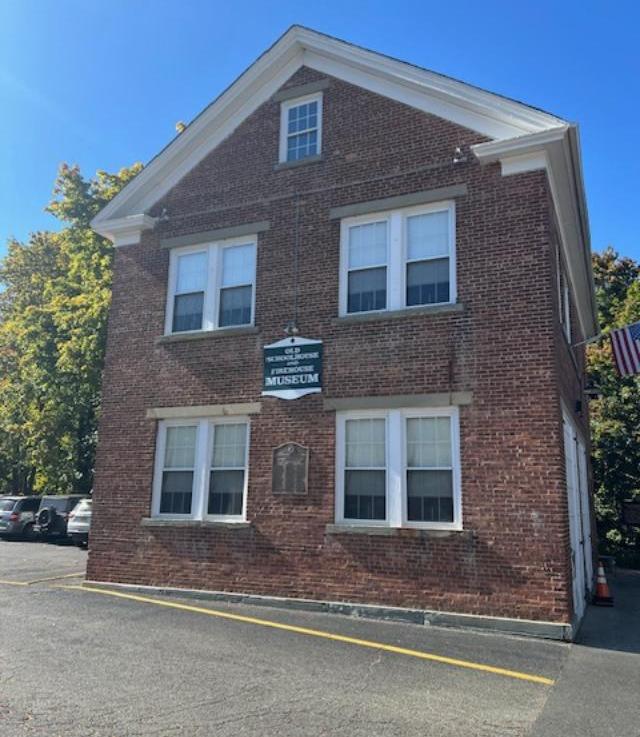
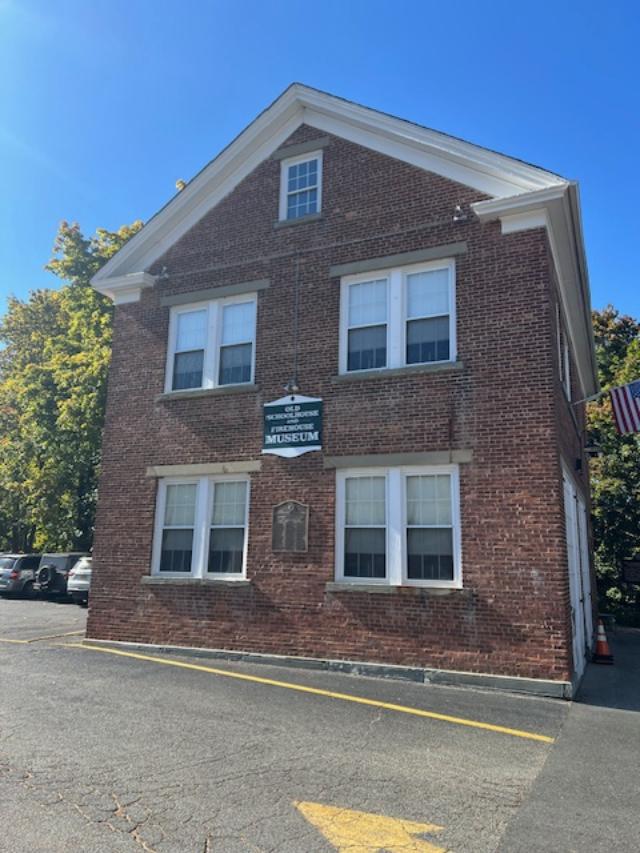
The front of the museum

I recently visited the Ogdensburg Old Schoolhouse and Firehouse Museum at 6 Passaic Avenue in Downtown Ogdensburg and discovered the community’s rich history of farming and mining in its past and its current destination as a weekend vacation spot and a up and coming bedroom community of New York City.

The County still has some farming and agriculture going on as the County continues to be built up with expats from the City, and Bergen and Morris Counties. The first floor is dedicated to the history of the Ogdensburg Fire Department with an old Engine and Ladders trucks, artifacts from the Sterling Mine just up the road and township property such as an old voting booth. You can read about the history of the Ogdensburg family as you head to the outside gallery.

The second floor has displays of various town departments including the Rescue, the Police Department and Fire Department. There are various displays of the town’s school system and various clubs in town. There are displays on the town’s mining and agricultural past with items such as farm advertising and mining equipment and minerals. Each display plays a role in the development of the community and how it progressed from farming to mining to manufacturing to the bedroom community it is today.

History of the Building:

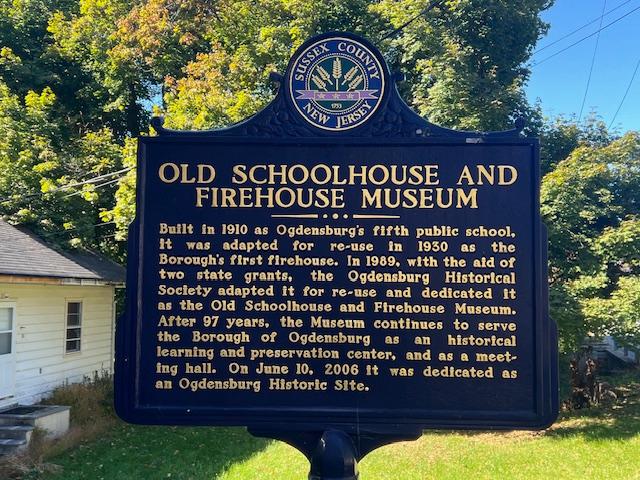
“Built in 1910 as Ogdensburg’s fifth public school, it was adapted for re-use in 1930 as the Borough’s first firehouse replacing the one built in 1872. In 1984, with the aid of two state grants, the Ogdensburg Historical Society adapted it for re-use and dedicated it as the Old Schoolhouse and Firehouse Museum in 1987.

After 97 years, the Museum continues to serve the Borough of Ogdensburg as an historical learning and preservation center, and as a meeting hall.  On June 10, 2006 it was dedicated as an Ogdensburg Historic Site.”

The historic sign of the museum

The Borough of Ogdensburg is the host of this marker commemorating the rich history provided by this building.  This building has been maintained with much thought and care and remains as a museum and meeting place for the residents of the town. The marker is located in front of the building on Passaic Avenue just off Main Street by the Ogdensburg Elementary School.  This marker was part of the 2008 placement (Museum website).

The outside of the museum which served as a school and a firehouse

The first floor of the building has the fire trucks, the history of the fire department and Ogdensburg’s 250th Anniversary of the United States on display.

The museum artifacts from the 250th celebration of the Country

The museum is on the heart of mining country of Sussex County, NJ and the museum has an interesting mineral collection along with their collection of mining artifacts.

The Mineral and Mining Collection

The museum being home to the Ogdensburg Fire Department contains the history of the local fire department along with vehicles and artifacts from the department.

https://www.facebook.com/oburgfd

The history of the Ogdensburg Fire Department

One of the early Ladder Trucks

The history of the department

One of the early Engine Trucks

The history of the department

One of the early pull hose beds pulled by men and then by horses

The first floor also contains the history of the Ogden family in the region.

The history of the Ogden family in the community

The town voting booth and a turn of the last century phone

The second floor gallery used to serve as offices and living space of the fire department.

The main gallery on the second floor

The gallery case lines are filled with memorabilia from different aspects of the community telling the story of the growth of the community that included Mining and Farming. It explains the growth into the modern suburbs of today. This includes the Fire and Police and Rescue Departments, the School System and cultural events in the community.

The main gallery on the second floor of the museum

The main gallery on the second floor

The display case of Ogdensburg departments including school, fire and police departments

The display of the Ogdensburg Police Department

https://www.facebook.com/people/Ogdensburg-NJ-Police-Department/61590226020577

The display of the Ogdensburg First Aid Squad

Blanket with historical sites and artifacts of the town of Ogdensburg, NJ

The businesses including schools and the domestic and farming industries

Each of the display cases represented different aspects of the town and has a variety of pictures and memorabilia from a variety of eras. The case lines show how the community changed over time from a mining community to the changes of a bedroom community of Newark and New York City.

The school system with classes and sports teams

https://www.obboe.org/apps/events

Household, town and business artifacts

Military and early Native American artifacts

The Glenbrook Farm Milk Bucket

The Domestic home display

The Entertainment display of recorders, phonographs, radios and early record players

The influence that Thomas Edison had on the community with new technology. Several pieces of Thomas A. Edison memorabilia are on exhibit to honor the ten years Edison spent mining iron ore at the old Edison Ore Milling Company on Sparta Mountain. Several of his phonographic inventions were created here (Ogdensburg Historical Society website).

Close up view of record players and Victrola’s

The Ogdensburg School system display

The Ogdensburg Presbyterian Church display of artifacts from inside the church

The NJ Zinc Mine display with minerals and equipment

The NJ Zinc Mine and Mineral display is a small s as molding of the museum down the street and the importance of the mining industry at the turn of the last century.

A closer look at the minerals display

A replica of a working mine operation. The machine shows how workers descending and brought up rock from the mines.

The Dedication to Mr. Waco Hadowantez, the town historian

The last display as you leave the museum is dedicated to the man who founded the historical society, Waco Hadowantez.

The museum tells an interesting story of the history of Ogdensburg and the surrounding area. It shows the importance of the Mining Community at the turn of the last century and how the community is pivoting towards tourism to tell its story.

Please contact the museum directly for seasonal hours and tours.