Tag: Exploring Historic Cemeteries and Graveyards in Bergen County

Westwood Cemetery                                                                                23 Kinderkamack Road                                                                Westwood, NJ 07675

Westwood Cemetery 23 Kinderkamack Road Westwood, NJ 07675

Westwood Cemetery

23 Kinderkamack Road

Westwood, NJ 07675

(201) 664-7161

https://westwoodcemetery.org

Open: 24 Hours

My review on TripAdvisor:

https://www.tripadvisor.com/Profile/R4960NKjustinw/mediabatch/14364553?m=19905

The Westwood Cemetery

The History of the Cemetery:

(From the Cemetery website)

Westwood Cemetery was established in 1861 as the Old Hook Cemetery. The earliest burial was in 1791. Westwood Cemetery is a non-sectarian cemetery and continues to offer final resting places that suit individual needs. Whether you are planning for the future or purchasing for an immediate need, we have a variety of options available within the 35 acre park.

The newest part of the Westwood Cemetery where the family burials start around 1840 to Present sits on the Kinderkamack Road side of the cemetery

The back of the cemetery sits on a buff overlooking the pond that is parallel to Old Hook Road

My International Marketing class at Bergen Community College recently did a complete study and marketing plan for the “Bergen250” on the Revolutionary War veterans buried at graveyards and cemeteries all over Bergen County, NJ:

The project:

For a Mapping of all the historic graveyards and cemeteries, I had the students visit all the sites that the Daughters of the American Revolution had researched and I had the students find all the locations, photo the tombstones and create a bio on each of the veterans. I enclosed a copy of their work above.

My blog on the historic graveyards and cemeteries of Bergen County:

https://visitingamuseum.com/tag/historic-cemeteries-of-bergen-county

The original family members were buried in this section of the cemetery while their grandchildren and great grandchildren are interned in the front section.

The oldest section of the cemetery which sits next to Old Hook Road is the Hopper Family plot which dates back to before the Revolutionary War

The Blauvelt Family plot sits next to the Hopper Family plot

The oldest section of the cemetery by Old Post Road home to family members of the Post, Blauvelt, Voorhis and Hopper members

The Demarest family plot overlooking the pond from the buff

The Blauvelt and Bogart family plot

The DeBaun family plot by Old Hook Road

One of the original Demarest family plots

The Haring family plot overlooking the pond

The Ackerman family plot

The Eckerson family plot with members of the Hopper and Demarest families

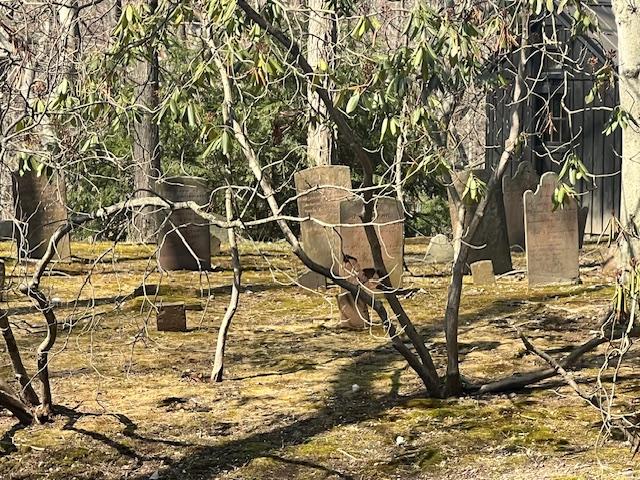
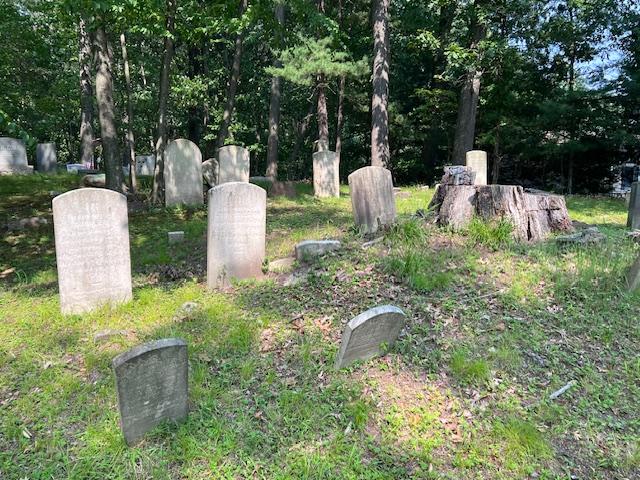
This section of the cemetery contains the oldest tombstones in the cemetery so many have broken or crumbled away. The lawn in this section of the cemetery is also not as well maintained so there are overgrown bushes and trees hiding the tombstones so you really have to look.

Then I worked my way back to the front of the cemetery finding the graves of these people’s children and grandchildren by following the names and dates of these people’s family members.

One branch of the Demarest family is front and center in the front of the cemetery

Next to them are the DeBaun and Vanderbeck families

Another branch of the Demarest family is a few rows behind

The Kipp family have a rather large family plot

The Hopper & Banta families share this large twin family plot

The Bogart family has this large family plot

The Westervelt family is near them with many of their members of the family

The Demarest family had two large family plots in the middle of the cemetery

The family plot of the Demarests and the Harings

The Demarest and Van Bushkirk family plot

The large Blauvelt family plot

The DeWolfe family plot

The Voorhis family plot

The Terhune Bogart family plot

What I found fascinating about this cemetery was to see the progression of each of these families from parent to child to grandchild just by walking through it. The families branch out in all sections intermarrying with similar families and the buried next to them. From back to front here they rest.
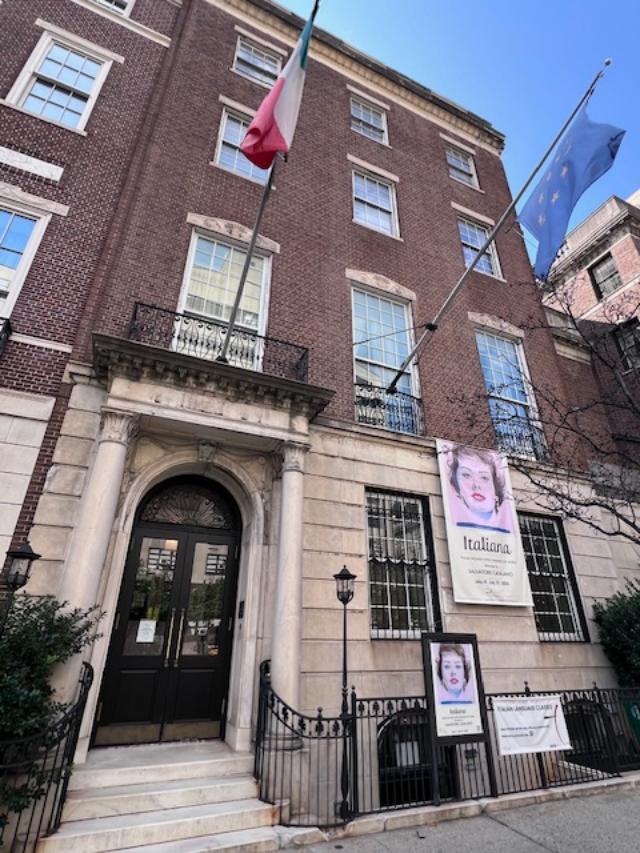
Instituto Italiano di Cultura (The Italian Cultural Institute of New York)                                                                                  686 Park Avenue                                                                                    New York City, NY 10065

Instituto Italiano di Cultura (The Italian Cultural Institute of New York) 686 Park Avenue New York City, NY 10065

Instituto Italiano de Cultura (The Italian Cultural Institute of New York)

686 Park Avenue

New York, NY 10065

(212) 879-4242

https://www.instagram.com/accounts/login/?next=https%3A%2F%2Fwww.instagram.com%2Fiicnewyork%2F&is_from_rle

My review on TripAdvisor:

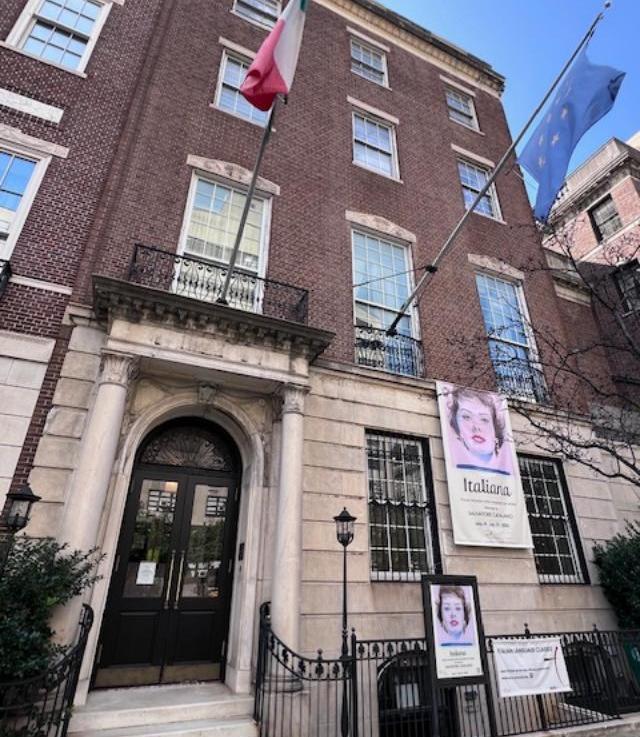
Instituto Italiano de Cultura at 686 Park Avenue

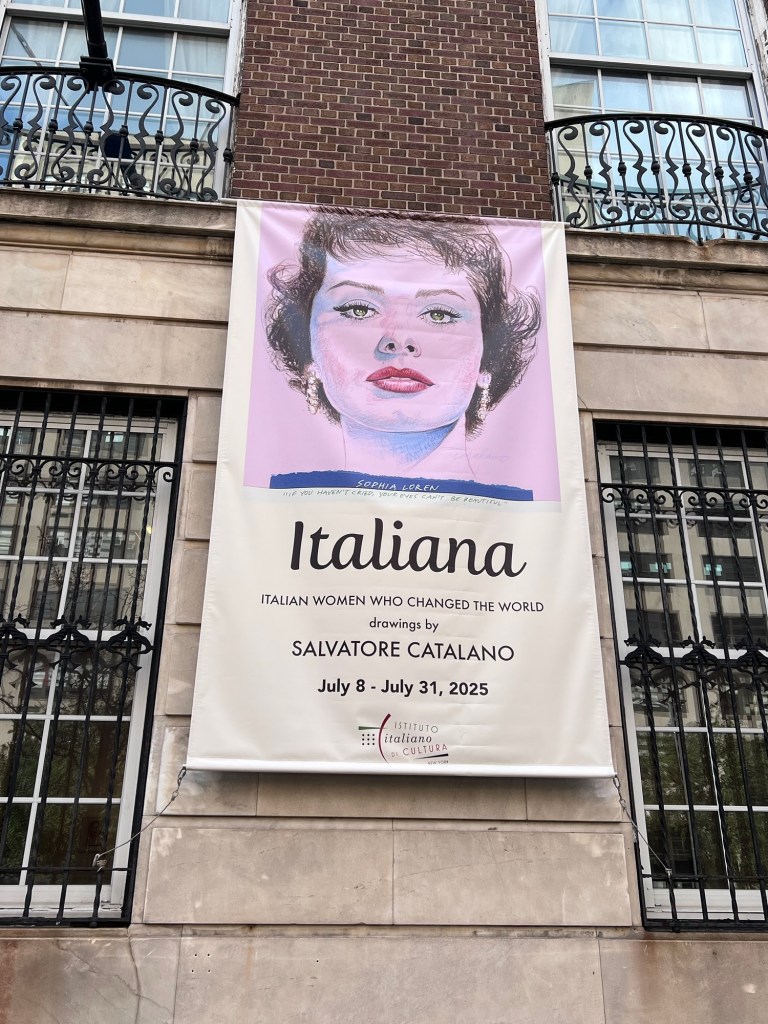
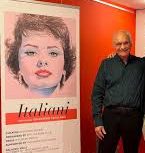
The Institute of Italian Culture has a small gallery in it that several times a year hosts small art gallery events that are open to the public. This one caught my eye when I saw the picture of Sophia Loren looking back at me when I passed.

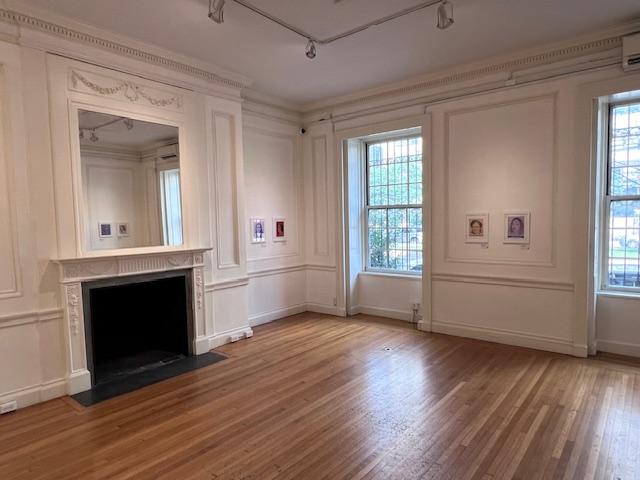
I thought it might be interesting and I stopped to see “Italians: Italian Women who changed the World” by artist Salvatore Catalano. The gallery held about fourth pictures of Italian women from all over the world and of different time periods who influenced art, fashion, politics and business.

There were many names I recognized and a few who I did not know. The works were very interesting and engaging.

The sign that welcomes you to the gallery

The main gallery at the Instituto Italiano di Cultura for the “Italiana: Italian Women Who Changed the World” exhibition

The exhibition Italiana: “Italian Women Who Changed the World” by artist Salvatore Catalono highlights the many impressive achievements by Italian women over the course of the last few centuries, until today.

(From the museum website):

These formidable women all greatly impacted the world in one way or another, often also against the odds imposed by a “male-ruled” society. The selection of 22 portraits includes scientists, politicians, entrepreneurs, artists, humanitarians and writers. These women all accomplished incredible feats and have contributed to the world in ways that still continue to resonate nowadays.

The Institute of Italian Culture exhibition sign:

The show Italiana: Italian Women Who Changed the World”

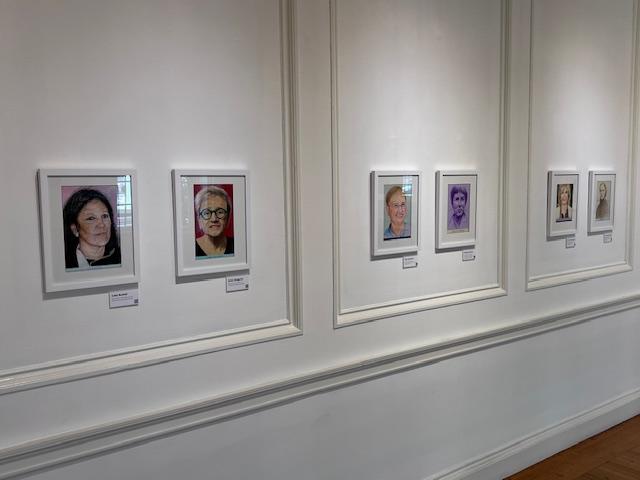
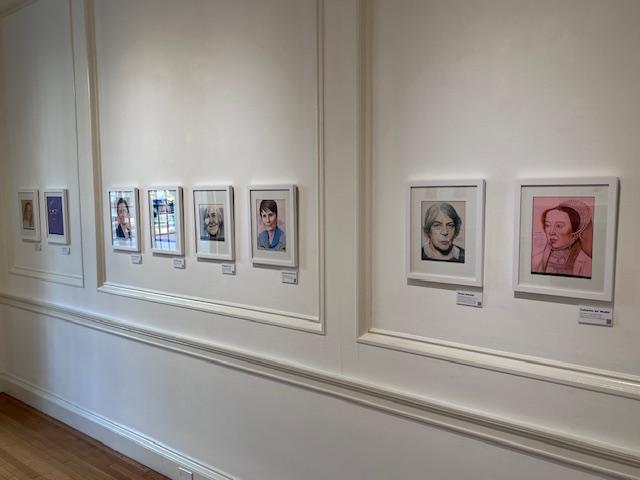
These were my favorite sketches from the show and women I most admired in the show.

Miuccia Prada, of the Prada fashion empire

Catherine de Medici, who revolutionized French Culture

Sophia Loren, the famous Italian actress

Lidia Bastianich, the Chef and restauranteur

The sketching’s represented different eras.

(From the museum website)

They are not all household names, but they are all at the top of their professions and exemplify the spirit of Italy. Salvatore Catalano uses his art as a vehicle to transmit these stories and to highlight the lives of these incredible Italian women.

Artist Salvatore Catalano

https://www.salvatorejcatalano.com/

https://www.instagram.com/catalano7127/

(from the Italian Cultural Institute of New York website)

Salvatore Catalano is an artist, illustrator, and educator. Catalano works in all forms of visual communication. His art has appeared on everything from postage stamps to billboards and his work is in many private and corporate collections. He is an educator at the college level, teaching in New York City and Florence, Italy.

Catalano has worked with The United Nations, U.S. Government, Department of The Interior, National Audubon Society, The New York Times, The New Yorker, ABC, CBS, NBC, American Museum of Natural History, Smithsonian Institution, N.Y. Zoological Society, Merck, Pfizer, Johnson & Johnson, Bayer, GlaxoSmithKline, Coca Cola, Pepsi Cola, Seagram’s, General Foods, Sony, Panasonic, Citibank, Scholastic, Harper-Collins, Bantam-Doubleday, Dell, MacMillan, DuPont, Exxon, State of New Jersey Children’s Television Workshop, McGraw-Hill, Ranger Rick, among others. He has also worked on more than thirty books for children.

The History of the Instituto Italiano di Cultura in New York City:

(from the Instituto Italiano di Cultura website)

The Italian Cultural Institute in New York was founded in 1961 by the Italian Government. Its mission is to promote Italian language and culture in the United States.

Under the guidance of its trustees at the Ministry of Foreign Affairs, its advisory board, and its staff, the Italian Cultural Institute in New York fosters cultural exchanges between Italy and the U.S. in a variety of areas, from the arts to the humanities, to science, and technology.

Central to the Italian Cultural Institute’s activity is its collaboration with the most prominent academic and cultural Institutions of the East Coast. The scientific exchanges, the organization of, and support to, visual arts exhibitions, the grants for translation and publication of Italian books, inspire and nourish the Institute’s initiatives.

In particular, we focus on the relationship between memory and innovation, and the multiplicity of identities in the Italian civilization. The Italian Cultural Institute in New York, therefore, provides an “open window” on main cultural and social aspects of past and current Italy.

Van Bushkirk Burial Ground                                                      45 East Saddle River Road                                                              Saddle River, NJ 07458

Van Bushkirk Burial Ground 45 East Saddle River Road Saddle River, NJ 07458

Van Bushkirk Burial Ground

45 East Saddle River Road

Saddle River, NJ 07458

https://www.findagrave.com/cemetery/2160733/edit

The Van Bushkirk Burial Ground behind the residence at 45 East Saddle River Road

The Van Bushkirk Burial Ground is part of the history of Saddle River, NJ’s early settlement period. The burial ground has about 40 tombstones that are arched and shaped. These are some of the first residents both of Saddle River and Bergen County, NJ.

The burial ground lies next to a creek off East Saddle River Road and can only be accessed by going through private property of the residents living at 45 East Saddle River Road. Please do not enter without permission of the owner of the home. These pictures were taken with a long distance camera from the street.

The Van Bushkirk Burial Ground at 45 East Saddle River Road

The History of Saddle River:

(from the Saddle River Town website):

In 1675, Lenni Lenape tribal leaders sold a large amount of land on the Eastern side of the Saddle River (known as Werimus) to Albert Zabriskie. In 1708, Zabriskie sold this tract of land to Thomas Van Buskirk. The first house in Saddle River was built by the Van Buskirk family in 1709. The original Van Buskirk homestead still stands at 164 East Saddle River Road across from Borough Hall.

In 1709, the Lenni Lenape sold the land on the west side of the Saddle River to the English as part of the Ramapo Tract. Property on the west side of the Saddle River was acquired from this Tract throughout the 1700’s. The Ackerman Family was the most prolific buyer of these early Saddle River parcels and first settled on the West side of the Saddle River in 1745 when Johannes Ackerman acquired 245 acres.

My International Marketing class at Bergen Community College recently did a complete study and marketing plan for the “Bergen250” on the Revolutionary War veterans buried at graveyards and cemeteries all over Bergen County, NJ:

The project:

For a Mapping of all the historic graveyards and cemeteries, I had the students visit all the sites that the Daughters of the American Revolution had researched and I had the students find all the locations, photo the tombstones and create a bio on each of the veterans. I enclosed a copy of their work above.

My blog on the historic graveyards and cemeteries of Bergen County:

https://visitingamuseum.com/tag/historic-cemeteries-of-bergen-county

The graves of George and Margaret Achenbach

Saddle River continued to grow and populate during the 18th century.  Families such as the Van Buskirk’s, the Ackerman’s, the Achenbach’s, the Hopper’s, the Zabriskie’s, the Stilwell’s and the Baldwin’s farmed and developed the area.

The grave of George Achenbach

The first of many Saddle River mills was built in 1714 and the first school was constructed in 1720. Another early 18th century business was the blacksmith shop operated by the Ackerman family. Over the years, these 1st families built the quintessential “Old Dutch Homesteads” from actual sandstone that was found in town.

The Revolutionary War era tombstones

The Revolutionary War was a horrendous time for the residents of Saddle River. The townsfolk had spent the entire 18th century developing the area into a well established community and all growth essentially stopped during the war. Since the Jersey Dutch initially considered the revolution to be an English issue, it was particularly shocking when the fighting came to their backyards. From December 1776 until the end of the war, both American and British forces traveled through Saddle River and many times set up camp in the center of town.

Residents were in constant fear of the British employed Hessian soldiers who would terrorize families by raiding the houses for food and then burning the fields before leaving. Although no major battles took place in Saddle River, there were small skirmishes to fend off raids and the Blue Mill on East Saddle River Road was destroyed. Even George Washington, the future father of our country, passed through Saddle River on multiple occasions and tradition has him staying overnight at the Ackerman Homestead on the East road.

When the Revolutionary War ended, Saddle River residents picked up right where they left off in terms of community and industry development. The Ackerman’s built a Foundry on what is now Waterford Gardens. Tice and Berdan both opened stores in town and the Bulls Head Tavern opened its doors to weary travelers in 1802. Old mills were re-opened and new ones such as Van Riper’s Saw Mill and Basket Factory were established. The post war growth continued for decades and culminated in the 1820s with the construction of the Zion Lutheran Church in 1821 and a new schoolhouse behind the church in 1825.

The worn tombstones in the cemetery

History of the Van Bushkirk family in Bergen County during the Revolutionary War:

(From the Bergen County Historical Society website):

Loyalists in Bergen County | Bergen County Historical Society

Loyalists in Bergen County came from all backgrounds, religions and economic classes. At the beginning of the war, a number were officers in the militia, the military force composed of all able-bodied males maintained by each province, and later the states. The lieutenant colonel of the militia was John Zabriskie of New Bridge. Zabriskie understood the sentiments of many of his neighbors, particularly those of Abraham Van Buskirk, whose property was directly across the bridge in Teaneck. Van Buskirk was a surgeon in the militia under Zabriskie, and with whom he served on Bergen County’s Committee of Correspondence, an entity established to keep in touch with other New Jersey counties and the events occurring there.

Demarest Family Cemetery                                                     239 Ramapo Valley Road                                                          Oakland, NJ 07436

Demarest Family Cemetery 239 Ramapo Valley Road Oakland, NJ 07436

Demarest Family Cemetery

239 Ramapo Valley Road

Oakland, NJ 07436

https://www.findagrave.com/cemetery/1617471/demarest-family-cemetery

https://sites.rootsweb.com/~njbergen/cemetery.html

Open: During the hours of the Nursery that surrounds it.

My review on TripAdvisor:

The Demarest Family Cemetery sits on a small embankment surrounded by trees and a cement island. You can only access it from one side and there is no stairs. Totally forgotten burial site.

The fencing and locked door with a rusty lock surrounds the cemetery. There is no way to access it. I was able to walk up the cement embankment and was able to walk around the fence. The trees have taken over the cemetery and have knocked over the tombstones.

My International Marketing class at Bergen Community College recently did a complete study and marketing plan for the “Bergen250” on the Revolutionary War veterans buried at graveyards and cemeteries all over Bergen County, NJ:

The project:

For a Mapping of all the historic graveyards and cemeteries, I had the students visit all the sites that the Daughters of the American Revolution had researched and I had the students find all the locations, photo the tombstones and create a bio on each of the veterans. I enclosed a copy of their work above.

My blog on the historic graveyards and cemeteries of Bergen County:

https://visitingamuseum.com/tag/historic-cemeteries-of-bergen-county

You can see some of the fallen tombstones from neglect at the fence

The growth surrounding the burial site

Some of the historic tombstones are still standing like this one of the burial sites of Lettya Ann Demarest who was born in 1830. She had inherited the house in 1863.

Most of the historic tombstones have fallen down

The fallen and forgotten tombstones have growth surrounding them.

The historic Demarest homestead was around the corner from the nursery. The house had been in the family for 194 years almost five generations.

The family homestead still exists up the road around the corner from the nursery. This is the historical sign outside the sign. The Demarest family home in Oakland:

The Demarest family home

A view from the front of the Demarest family home

This tiny historical and very forgotten and neglected cemetery was once part of this branch of the Demarest family. The small cemetery sits on a small hill not far from the house. Once the farm was sold off and the town grew around it, this small cemetery sits still in its original spot in the middle of nursery.

When I talked with one of the workers there, he said the owner was very careful to built around it and let it intact. He also said that no one seems to own it. It is the final resting place of James S. Demarest, who fought in the Revolutionary War.

With all the growth, I could not find it. It has been lost to time.