I have been visiting Carl Schurz Park many times while walking the neighborhood for my project, “MywalkinManhattan.com”. You can see the entries from Days One Hundred and Ten, Six, Four and Two. I also visited again when touring Gracie Mansion for this blog, “VisitingaMuseum” (see write up under Gracie Mansion).
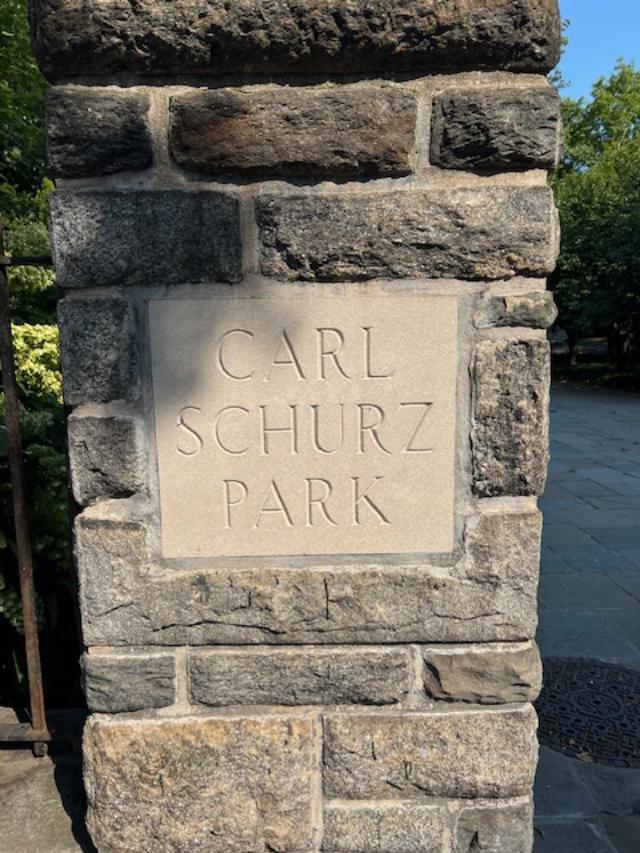
The entrance to Carl Schurz Park in the Summer of 2024
The park is such a nice place to relax in the warmer months. Being so close to the river in the winter months when the wind kicks in from the river can be brutal. In the Spring and Summer, it is one of the nicest parks to just sit and relax in. During the day, it is fun to watch the kids play in the large playground in the middle of the park. On the weekends the place is packed with kids, parents, and nannies all vying for space.
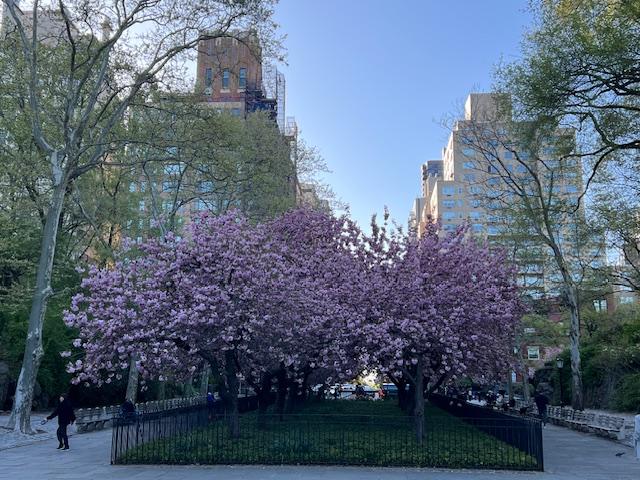
The Cherry Blossoms at the entrance of the park.
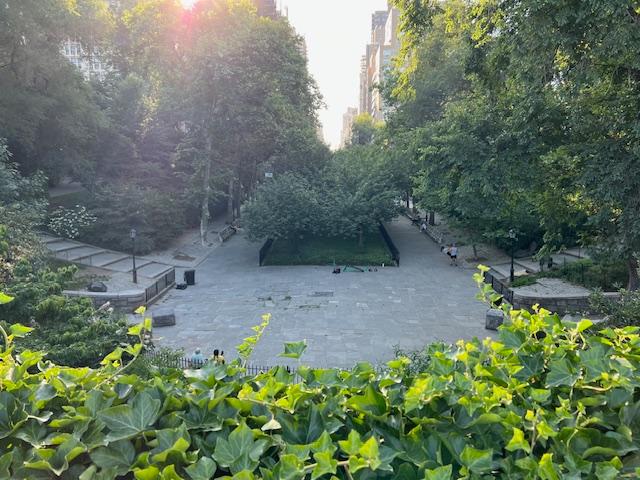
The same spot on the first day of Summer 2024
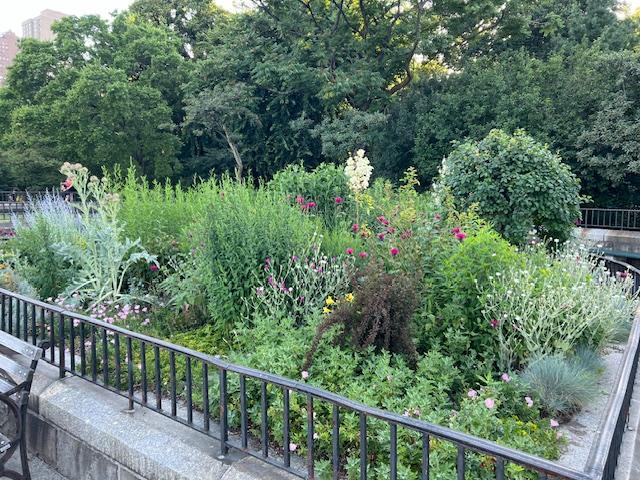
The gardens are beautiful and are very nicely maintained between the City and the Carl Schurz Park Association, who I have seen members weeding, landscaping and planting in the park during the times of my visits. It is relaxing to just sit by the river and watch the river go by and the boats sail by in the warmer months.
The entrance to the park.
The flowers return during each part of the season almost on cue and the park is awash with colors of daffodils, tulips, irises and tiger lilies. There are many flowering plants in the summer that add to the rainbow of colors that accent all the trees. It is a nice place to sit and read a book while watching people walk their dogs.
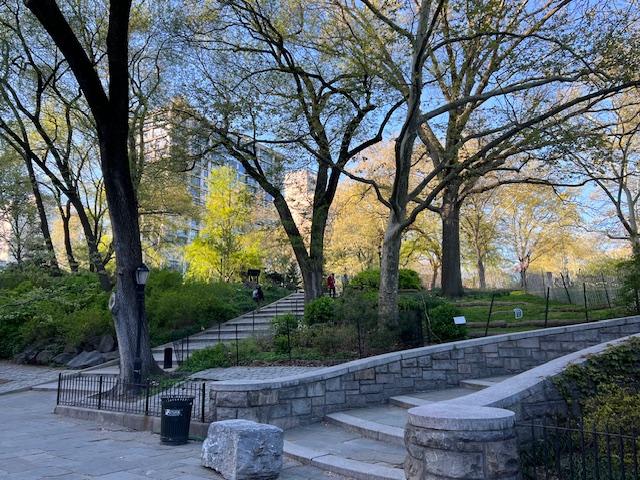
The back of the park in Spring 2024.
At twilight, it is fun to watch the lights go on in Queens across the river and the whole city come to life again in the evening. In the warm summer months, the kids are playing in the park, residents have their dogs running around the Dog Run and you can hear the activity at Gracie Mansion. Trust me, security is tight in that section of the park.
The Tulip Garden at the back of the park.
The same garden in the Summer of 2024
The pathways by the playground in the Summer of 2024
The paths that line East 84th Street to York Avenue
The Polly Gordon Walk sign in the front gardens
The Polly Gordon Walkway in the Summer of 2024
This is a nice residential park to relax in when you visiting the Upper East Side.
The walkways in Carl Schurz Park in the Summer of 2024
The History of Carl Schurz Park:
Carl Schurz Park, named by the Board of Alderman in 1910 for the soldier, statesman and journalist Carl Schurz (1829-1906), overlooks the turbulent waters of Hell Gate. The first known Dutch owner of the land was Sybout Claessen, who was granted the property in 1646 by the Dutch West India Company. Jacob Walton, a subsequent owner, built the first house on the site in 1770. During the Revolutionary War, the Continental Army built a fort surrounding the Walton residence to guard the strategic shipping passage of Hell Gate. After the British attack on September 8th, 1776, the house was destroyed and the Americans were forced to retreat from the fort, which the British retained until the end of the war in 1783.
Looking at the park from the East River walkway.
The land was purchased from Walton’s heirs in 1798 by Archibald Gracie, a Scottish shipping magnate. He built a mansion there in 1799, where his illustrious guests included future United States President, John Quincy Adams and future French King Louis Phillippe. The estate, sold by Gracie in 1819 was acquired by the City from the Wheaton family in 1891. The first home of the Museum of the City of New York from 1924-32, the mansion served as the official residence of New York’s mayor’s since Fiorello LaGuardia moved there in 1942.
Gracie Mansion during my tour of the mansion in 2025
The southern portion of the park was set aside by the City as East River Park in 1876. The former Gracie estate was added in 1891 and a new landscape design by Calvert Vaux and Samuel Parsons was completed in 1902. Maud Sargent re-landscaped the park in 1939 when the East River Drive underpass was under construction. Charles Haffen’s sculpture of Peter Pan, created in 1928 for a fountain in the lobby of the old Paramount Theater was installed in the park in 1975.
Carl Schurz Park in the Summer
The park name honors Schurz, a native of Cologne, Germany. It was strongly supported by the large German community of adjacent Yorkville. After emigrating to the United States in 1852, Schurz quickly made his reputation as a skilled orator and proved to be instrumental to Abraham Lincoln’s 1860 election campaign. His most significant political offices were that of United States Senator from Missouri (1869-1875) and Secretary of the Interior (1877-81) during the Hayes administration. In later years, Schurz was editor of the New York Tribune and an editorial writer for Harper’s Weekly. Schurz is also honored by Karl Bitter’s statue of 1913, located in Morningside Drive and 116th Street.
Recent improvements include rebuilding of the stairs, the complete restoration of the playground and the opening of Carl’s Dog Run. These and other projects, including the planting of flowers, have been accomplished through a partnership between the Parks and the Carl Schurz Park Association, which has demonstrated the community’s commitment to restoring, maintaining and preserving this park since it formed in 1974.
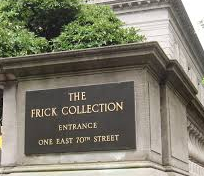
I visited The Frick Collection for the first time when I was walking the Upper East Side for my project, “MywalkinManhattan” Day One Hundred and Twelve-Walking the Upper East Side”. In all the years I had been coming into Manhattan I had never been inside. So I stopped for the afternoon to see what it was like inside the old Frick Mansion.
When you first walk into the museum, in the inside of the main foyer of the house there is fountain with a large indoor pool with benches, the perfect place to relax after the long walk outside. All around the pool are various doors and windows that lead to the rooms that house the collection.
The Fountain area
All around the house you will see famous Old Master’s paintings, statuary and porcelain figurines. While I was visiting there, I stopped in to see the new exhibition “George Washington Statuary Collection”.
The “George Washington” exhibition showed the creation of the statue for the Virginia State Capital that was destroyed by fire in the last century. All of the models and drawings were accompanying the display to see how the work was created.
After that, I just walked through the galleries to see all the paintings and sit by the fountain in the middle of the old house. Each of the rooms houses each part of the Mr. Frick’s Collection plus new pieces that continue to be added.
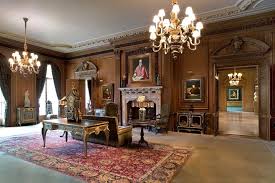
The inside galleries
Before you leave, remember to check out their gift shop which has interesting items for sale and copies of the art in various forms to take home. Also on a nice day take time to walk around the gardens. For a mansion on Fifth Avenue, it is cared for beautifully and is well cared for just as the Frick’s would have done.
History of The Frick Collection:
The Frick Collection is house in the former residence of Henry Clay Frick (1849-1919), which was designed by Thomas Hastings and constructed in 1913-14. After Mrs. Frick’s death in 1931, changes and additions to the building were by the architect John Russell Pope and in 1935 the Collection was opened to the public.
The Collection preserves the ambiance of Mr. Frick’s private house and visitors are therefore asked to observe regulations necessary for protecting the works of art and their domestic setting:
*Because few ropes or cases are used to guard fragile objects, children under ten are not admitted to the Collection.
Inside the Frick Collection
*Group visits are by appointment only and large groups must be divided into parties of no more than ten. Lecturing in the galleries is prohibited.
*Free checking is provided in the coat room. Coats (if not worn), packages, umbrellas and large handbags must be checked.
The Collection includes some of the best known paintings by the greatest European artists, major works of sculpture (among them one of the finest groups of small bronzes in the world), superb eighteenth-century French furniture and porcelains, Limoges enamels, Oriental rugs and other works of remarkable quality.
Inside the Frick Collection
Disclaimer: This information was taken directly from The Frick Collection Museum pamphlet and I give the museum full credit for this information. Please check out times and dates before you visit.
Ringwood Manor in Ringwood Park at Christmas time:
I have visited the Ringwood Manor during the Christmas holidays over the last four years and it keeps getting better. Each room in the house is tastefully decorated for the holidays. The West Milford Garden Club does an excellent job decorating every year and in the post-COVID environment, it is nice to see such a beautiful and well thought out display for Christmas.
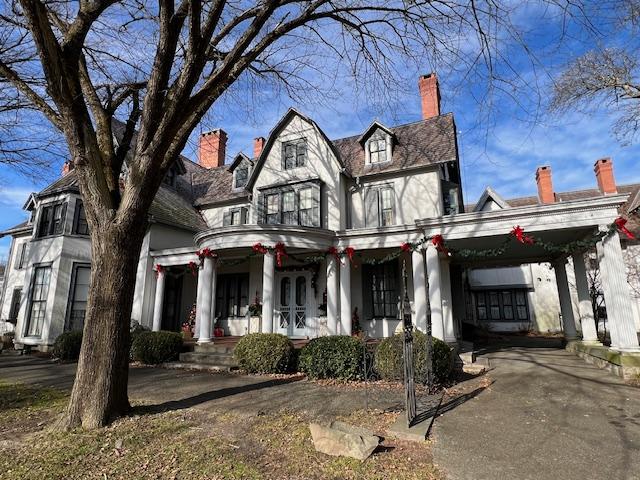
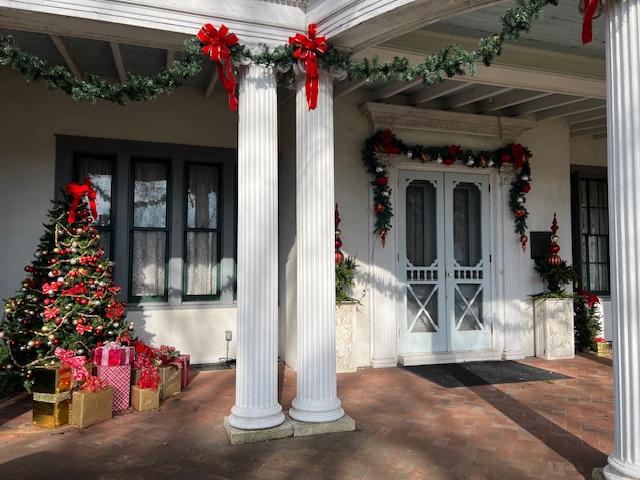
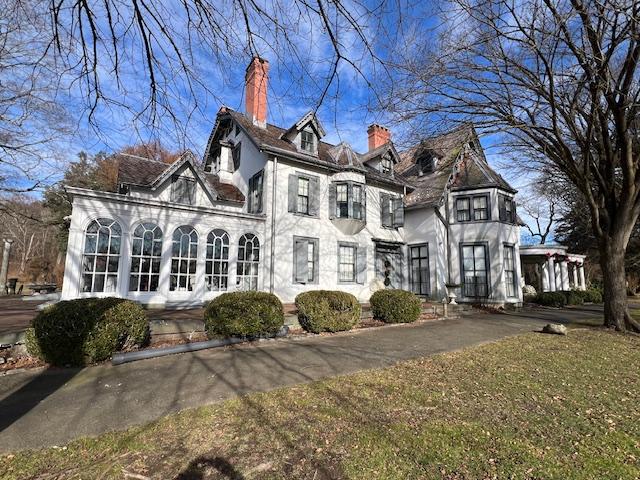
The outside of the house was decorated with garland and ribbons and welcomed visitors with Christmas cheer.
The entrance of Ringwood Manor.
The entrance to the estate.
The patio of Ringwood Manor.
The outside of the house was tastefully decorated in garland and bows.
The decorated front door on the Ryerson side of Ringwood Manor.
History of Ringwood, NJ:
Colonial Ringwood:
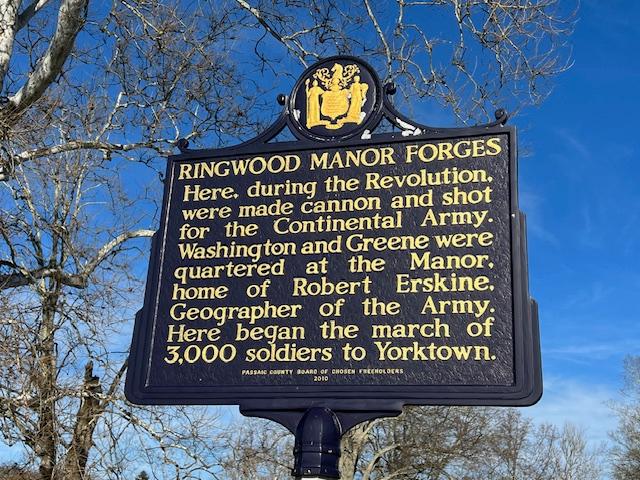
Long before the Forges & Manor of Ringwood existed this property was occupied by the Native American people. Prehistoric artifacts found on the grounds confirm their inhabitants back to the Archaic and Woodlands periods. Living in a hunting and farming paradise, these Munsee-speaking Lenape peoples dwelled at the head of the Topompock or Ringwood River Valley. This paradise attracted colonial prospectors, who by 1740, came for the iron ore found in the ground. Recognizing the rich magnetite ores, Cornelius Board settled here in 1739 and first utilized the property for iron mining. He was followed shortly thereafter by the Ogden family who established the Ringwood Company and built the first blast furnace here in 1742.
After twenty years of production, a German promoter, Peter Hasenclever, organized the American Iron Company to exploit the resources in colonial North America, purchasing the Ringwood area in 1764. He would also develop forges at Long Pond and Charlotteburg but made Ringwood the center of his iron empire. Hasenclever established iron plantations and developed the production of flax and timber across 50,00 acres of land stretching through New Jersey and New York, from present day Butler to New Foundland and Nova Scotia. The iron was said to have been “the best iron in the American colonies.” Robert Erskine, the last ironmaster of the American Iron Company, was sent from England in 1771 and would manage the company during the Revolutionary War.
(History of Ringwood, NJ)
The decorated carriage house.
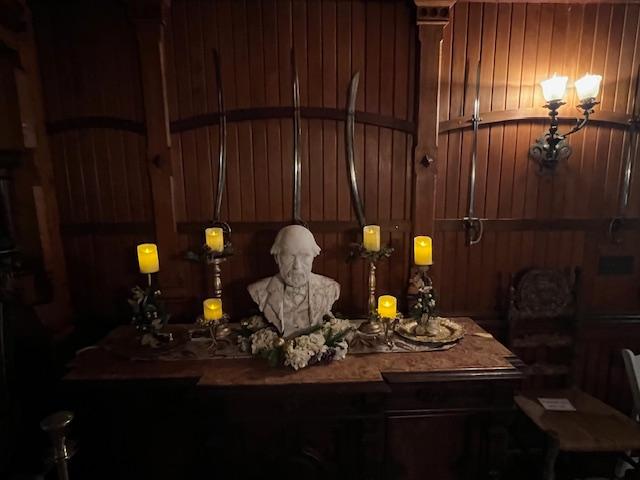
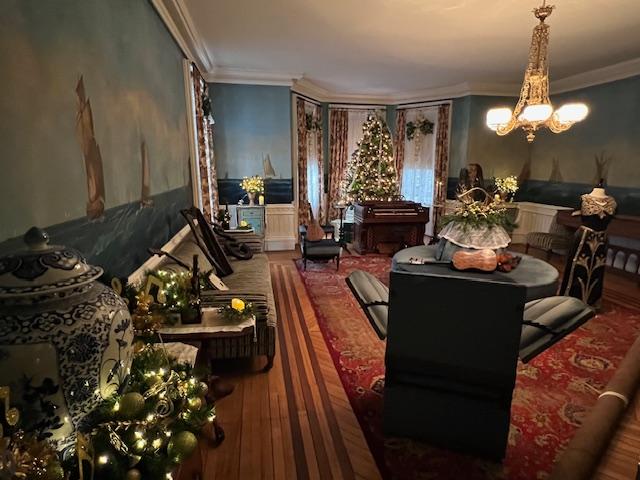
When you walk into the home, the first rooms is decorated tastefully around a collection of antique guns and hunting equipment. The Great Hall was decorated with garland and ornaments with a large tree in the corner.
The Great Hall of the Ringwood Manor when you enter for Christmas.
The Great Hall upon entering.
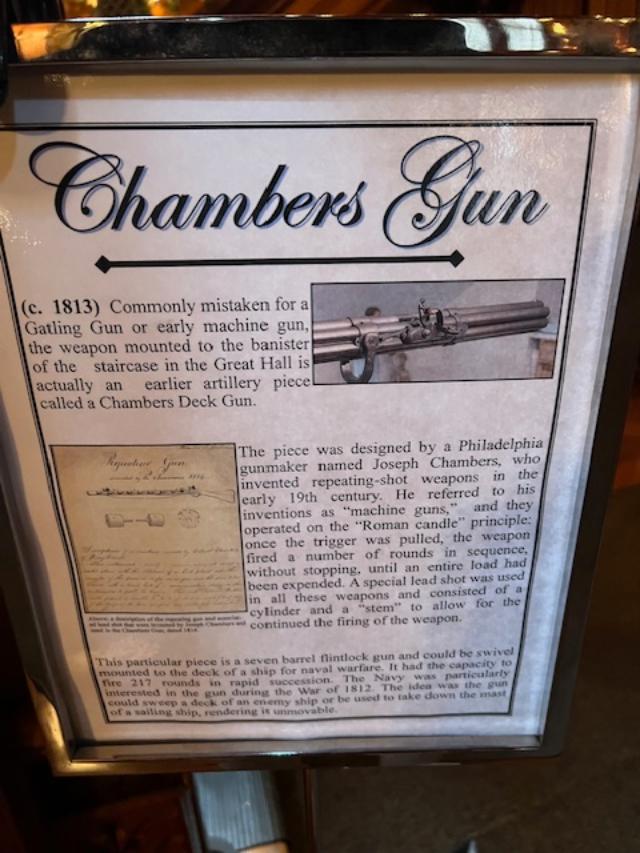
The Chamber Gun display.
The Chamber Gun display in the Great Hall of Ringwood Manor.
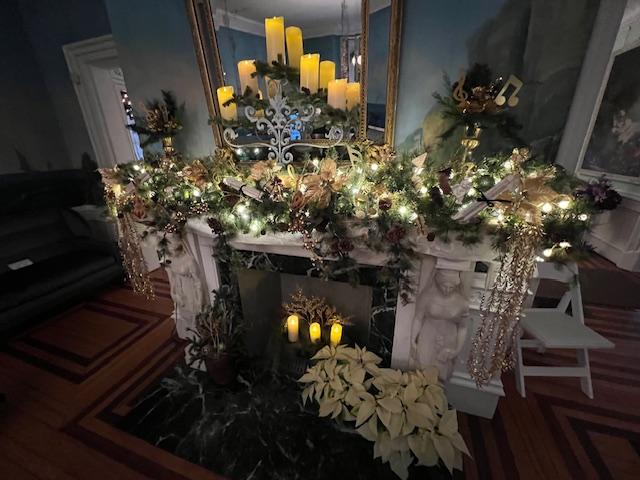
The Great Hall fireplace decorated for the holidays.
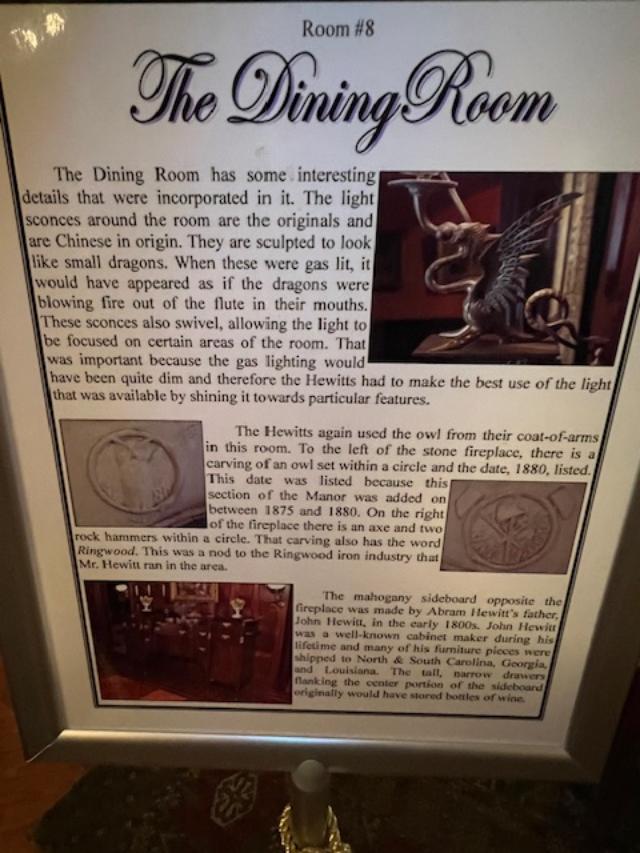
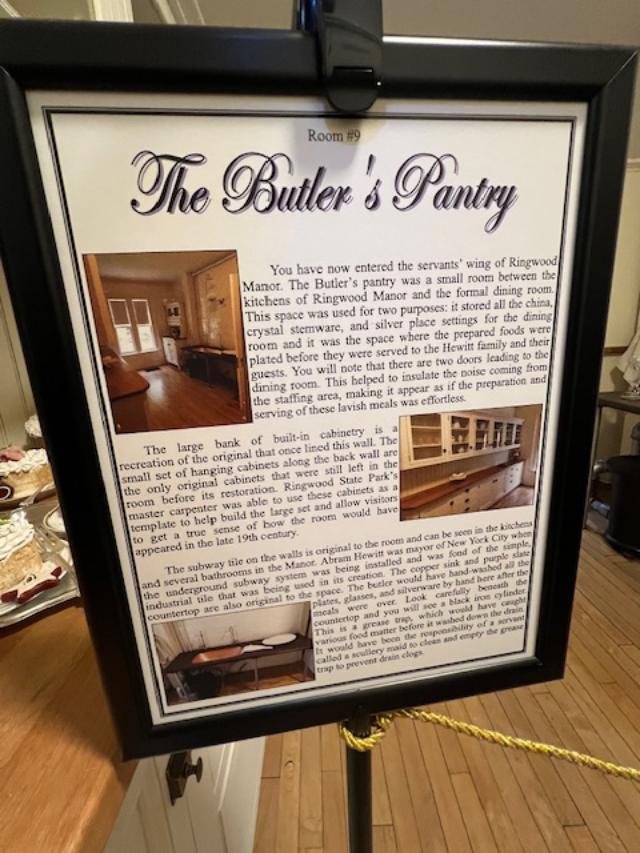
The formal dining room was set for Christmas dinner for the family after church. The elegant china was set on the table with poppers and small Christmas gifts for the guests. The side boards were set with the dinner entrees and sides for the family meal. There was a little discussion of how the Hewitt family would entertain during the holidays and in 2019 and in 2023, they opened up the kitchen and Butler’s pantry for touring.
The Hallway leading to the formal Dining Room.
The decorated staircase in the Great Hall
The Great Hall hallway
The Dining Room sign
The Dining Room at the Ringwood Manor.
The Dining Room set for Christmas dinner.
Dining Room set for Christmas dinner beautifully.
The details of the Dining Room
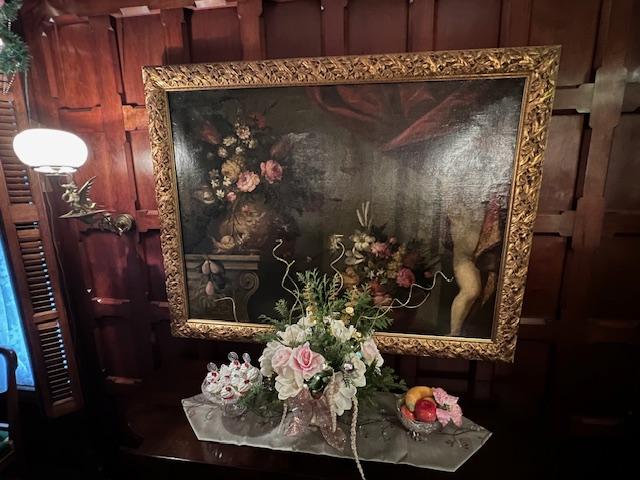
The Dining Room paintings and details.
Preparing for the holidays in the Dining Room
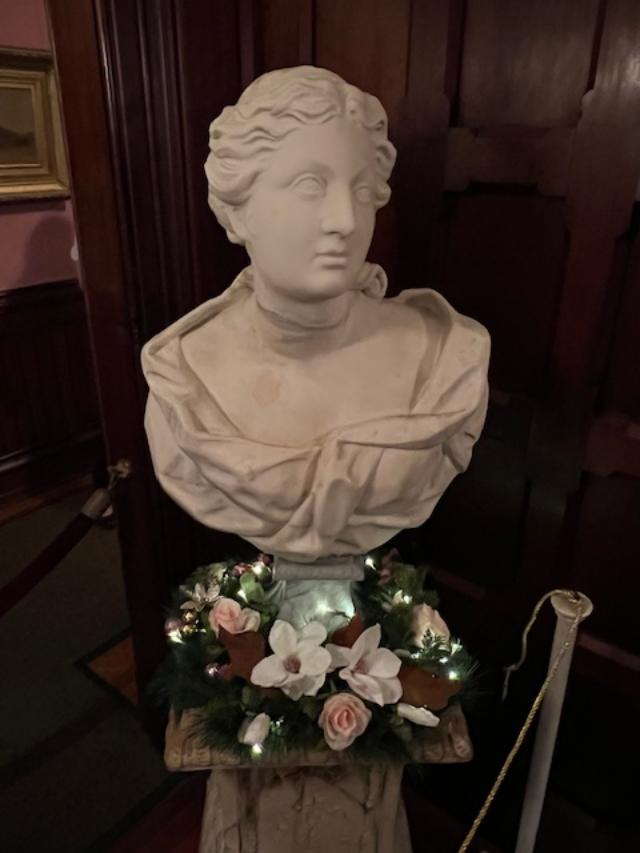
The statuary of the Dining Room
The lighting fixtures of the Dining Room.
Each room was set for the holidays with garlands, trees and decorations. As it was explained to me on another house tour during the holidays, the Victorians would normally only decorate one or two rooms for the holidays and not the whole house. The whole house might be decorated based on the wealth of the family and the amount of servants to take care of the home. Needles would have to cleaned up and the trees would have to be attended to on a daily basis.
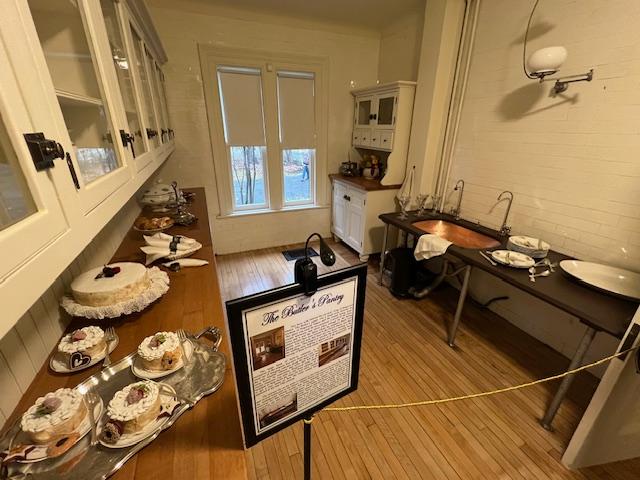
the Butler’s Pantry just off the Dining Room
The Butler’s Pantry in preparation for Christmas dinner
The Christmas treats in the Butler’s Pantry.
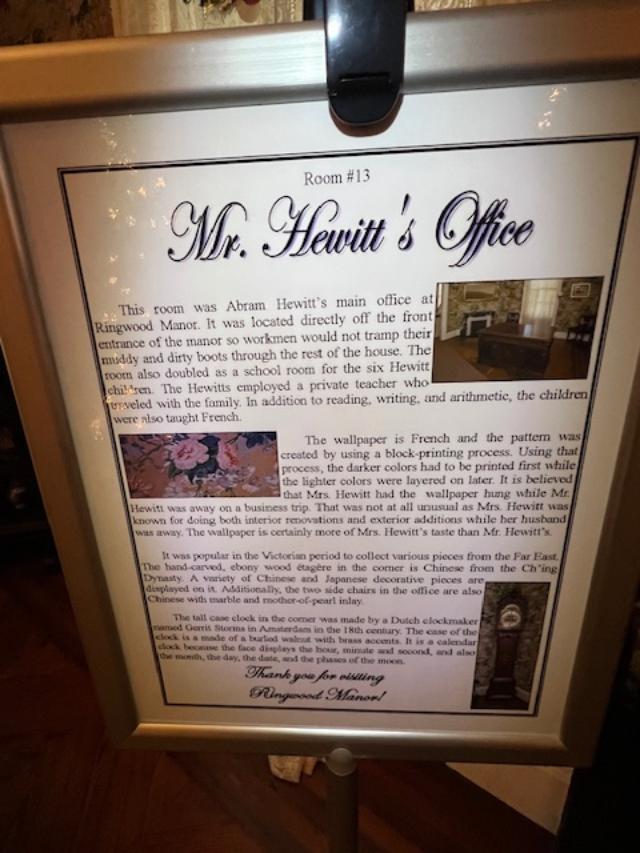
I then walked back through the house and passed by the Office on my way to the social rooms of the first floor. The office is where business was taken care by Mr. Hewitt when he was in residence.
Mr. Hewitt’s Office decorated for Christmas
Mr. Hewitt’s office at Christmas time.
The Christmas tree in Mr. Hewitt’s office.
Before I left this part of the house, I passed the Breakfast Room which is just off the Dining Room. It had beautifully decorated for a Christmas breakfast.
The Breakfast Room sign
The Breakfast Room was decorated with desserts and sweets for the Christmas holidays.
The Breakfast Room beautifully decorated for the holidays.
The Breakfast Room for a Christmas feast.
The Christmas tree in the Breakfast Room.
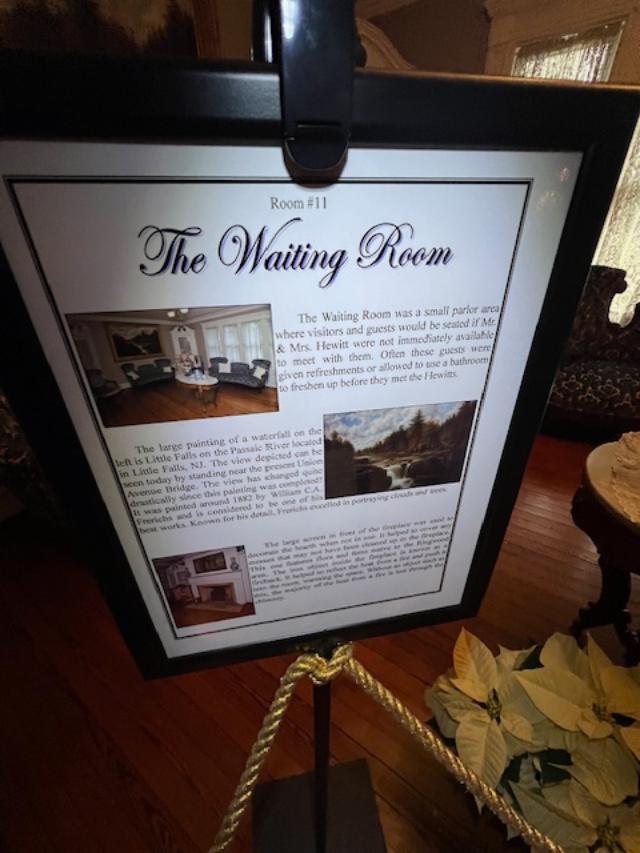
Before entering the Great Hall, I visited the Receiving Room, where guests waited until dinner was served.
The Waiting Room
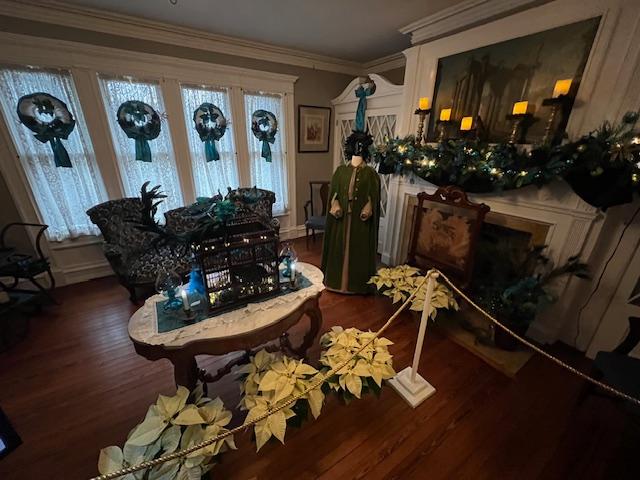
The Waiting Room was for guests to relax and wait for Mr. & Mrs. Hewitt.
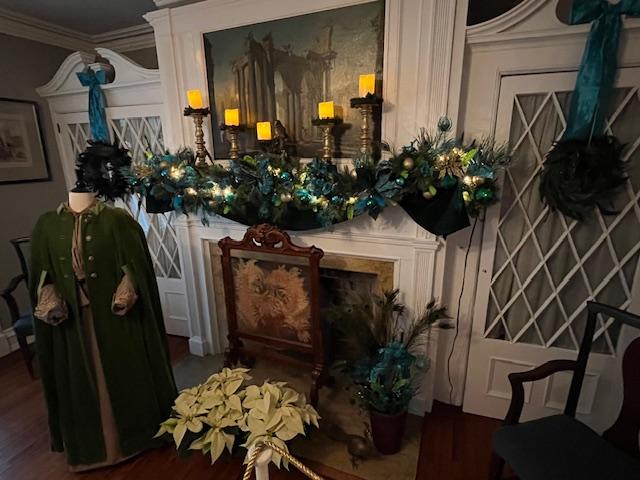
The Waiting Room fireplace is nicely decorated.
The ‘Birdcage’ in the Waiting Room
Passing through the Great Hall again, I entered what had once been the original Ryerson House built in the early 1800’s. The first room on the tour of this side of the house was the French Drawing Room decked out for the holidays. This room was used by the ladies after dinner was over to converse and get away from their husbands, who would have still been in the dining room.
French Drawing Room, the “Withdrawing” room.
The French Drawing Room
The French Drawing Room in all its Christmas glory.
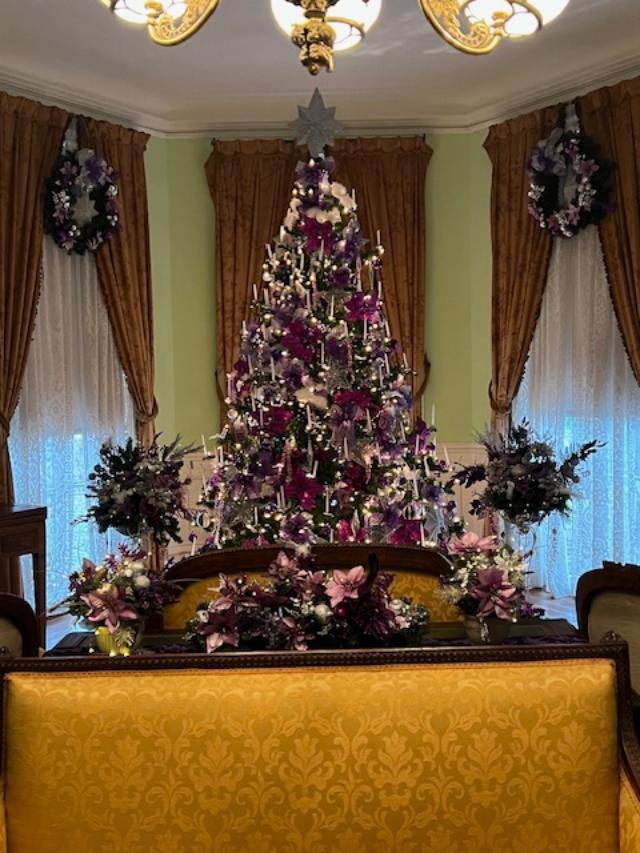
The Christmas tree in the French Drawing Room
The fireplace in the French Drawing Room.
On the other side of the house is the original Ryerson mansion that was added on by the Hewitt’s when they bought the house. The older house had the original moldings and windows from the early 1800’s and that side of the house had a different feel to it starting with the original entrance and staircase.
The Ryerson Staircase and foyer sign
The Ryerson Staircase and foyer
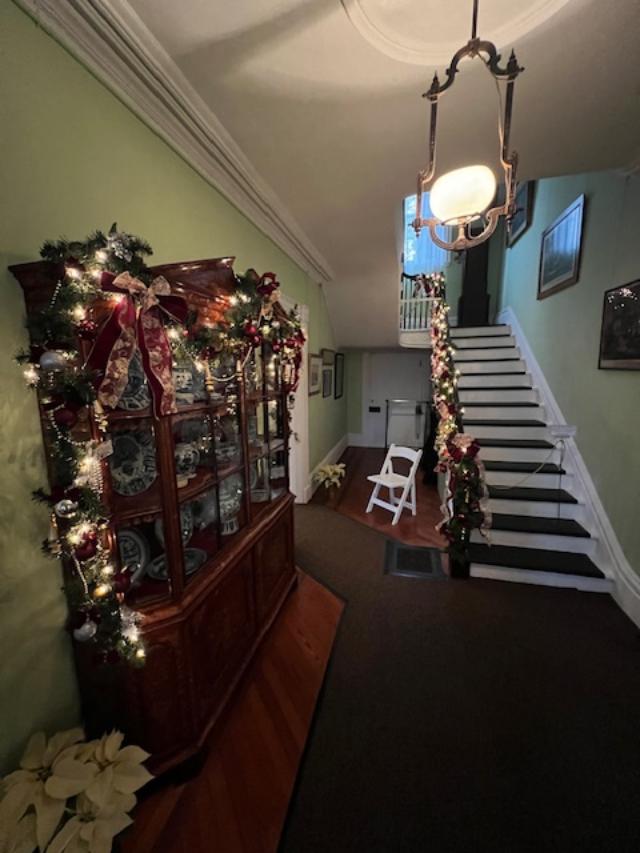
The decorated Ryerson staircase.
One of the nicest rooms that was decorated was the screened in porch. Here there was a tree set with presents, hot house flowers and garland lining the room. The sunlight shined throughout the room and the decorations sparkled.
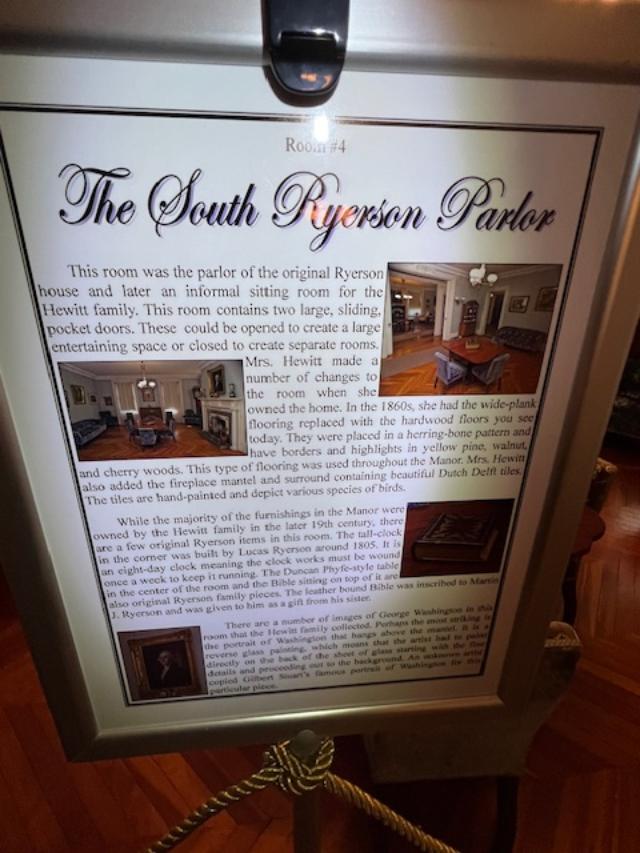
The South Ryerson Parlor
The South Ryerson South Parlor
The fireplace in the South Parlor.
The latest addition to the house was the screened in porch, The Glass Piazza, of the house which was used in the summer months for rest and relaxation. The screen in porch was beautifully decorated for the holidays with all sorts of Christmas trees and decorations.
The Glass Piazza, the screened in porch of the main house.
The Glass Piazza decked out at Christmas time.
The doll mini tea service in the Glass Piazza.
The Glass Piazza set for tea at the holidays.
The Glass Piazza at Christmas time.
The beautiful Christmas tree in the Glass Piazza in 2023.
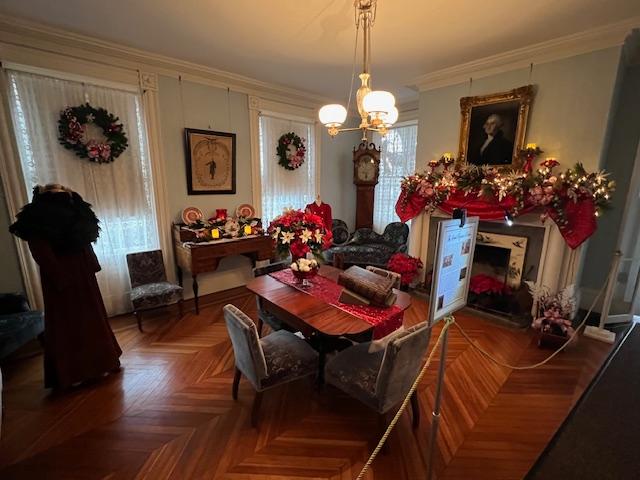
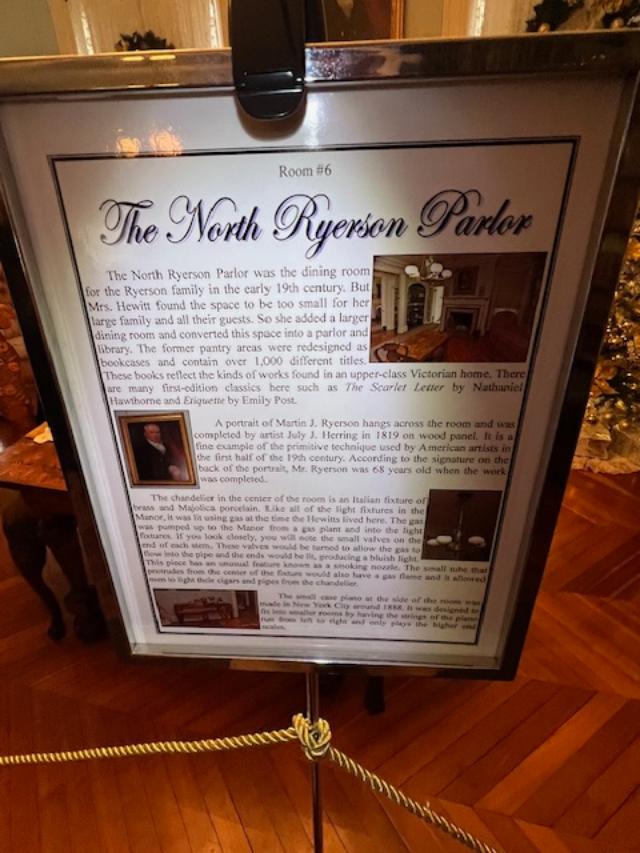
When you leave the Glass Piazza, you enter the original part of the house again with the North Ryerson Parlor. This room was used by the family for less formal affairs but it was still decked out of the holidays.
The North Ryerson Parlor
The Ryerson North Parlor decorated for tea.
The Ryerson North Parlor fireplace decorated for Christmas time.
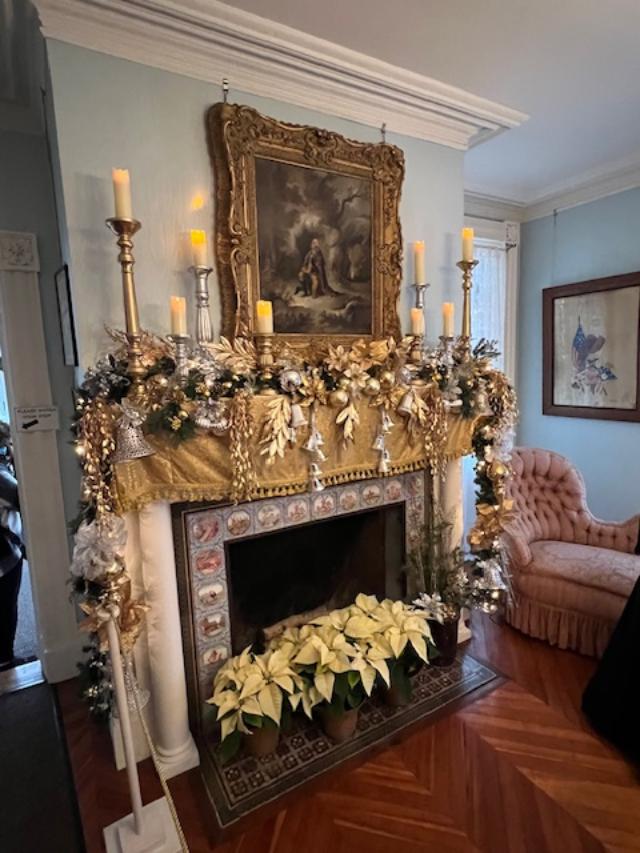
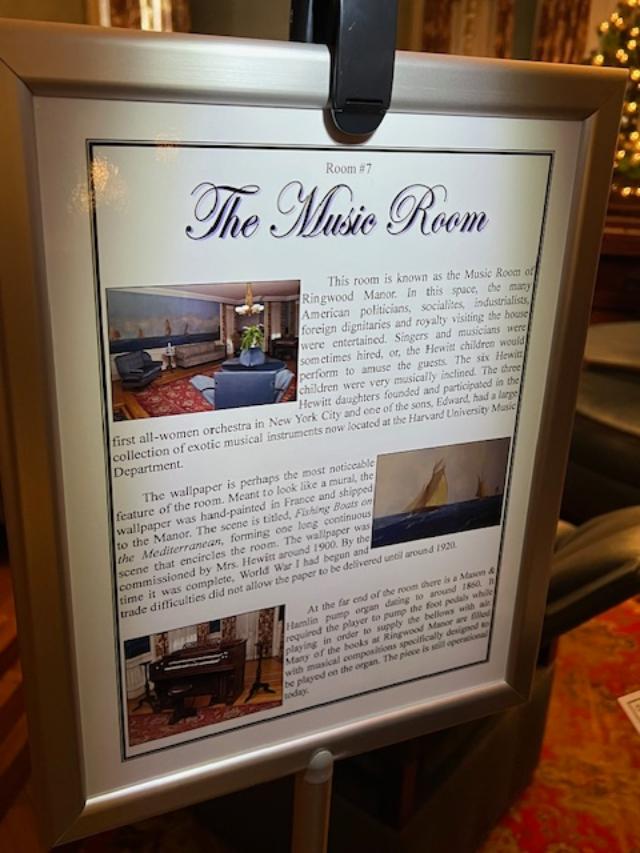
The last room I visited on the tour was the Music Room in the original Ryerson House. The room was used by both the Ryerson’s and the Hewitt’s for social occasions and the Hewitt’s were all musically inclined.
The Music Room at the Ringwood Manor
The Music Room at the Ringwood Manor.
The Music Room at the Ringwood Manor.
The fireplace in the Music Room decked out for the holidays.
The Music Room during Christmas time.
Each room had a docent to explain the decor or what the room’s use had been in the family’s time. A visitor can roam the house at their leisure and see the rooms as many times as they want. There is also a gift shop in a room off the formal dining room that contains some beautiful Christmas crafts for sale by the Women’s Club of New Milford. Some of these women are very creative and sell the most amazing Christmas ornaments made of glitter, wood, branches, walnuts and moss.
The decor of the home changes over time and there are different things to see every year. The barn also on the property as you drive in has more artwork and crafts. In the Gardener’s Shed next to the house, the Society has a small cafe with sandwiches, desserts and coffee/tea/hot chocolate.
The Carriage House was used as a gift shop and a place to get something to eat.
The tour of Ringwood Manor is wonderful during the holiday season and the rest of the house opens up during the warmer months of the year.
History of the House:
This 582 acre historic site is open to the public year round. The historic house museum, Ringwood Manor is open Wednesday to Sundays year round.
History of 19th Century Manor House and Landscape:
The present manor house was begun by Martin J. Ryerson in 1807. He and his sons controlled not only the iron mines and forges on the property but also operated productions at four other locations in the area. The Ryerson family resided in their 10 room Federal style home for almost 50 years.
The entrance to the historical home.
In 1853, the Ryerson’s house and property were purchased by business partners Peter Cooper and his son in law Abram S. Hewitt. The 22,000 acre ironworks and the Ryerson’s home were purchased for a sum of $100,000. Their company, Cooper-Hewitt & Company, grew to be the fifth largest corporation in the United States. The Hewitt’s, one of the most influential and wealthiest families of the 19th century, fell in love with the Ringwood estate.
The expanded Ringwood Manor estate in the winter months.
Ringwood manor at the holidays.
They decided to make this site of their summer home, naming it The Forges and Manor of Ringwood. They enlarged the home of the Ryerson’s, constructing major additions or renovations in 1864, 1875, 1900 and 1910. The completed 51 room house is 226.5 feet long and features 28 bedrooms, 24 fireplaces and 13 bathrooms and more than 250 windows. The house was built in an eclectic style, typical of the Victorian period. In 1875, the Manor House was an excellent example of the Gothic Revival style of architecture. By 1900, the Hewitt’s changed the exterior facade to its present appearance, adding the neo-classical portico and columns of the front porch and affixing white stucco to the exterior walls. The furnishings of the house reflect the varying tastes and styles of the family and time period.
Ringwood Manor during the holidays.
(From the Ringwood Manor website)
The formal gardens surrounding the Manor House were developed by Mrs. Hewitt and her daughter, Eleanor around 1900. Their design was influenced by the Hewitt’s many trips overseas. The gardens possess a mysterious old world charm that captivates visitors as they enjoy the serenity of reflecting pools and the progression of blooms from early spring to late fall. Placed throughout the garden are French and Italian statuary and garden ornaments as well many interesting architectural items from New York City acquired while Abram Hewitt served as Mayor and Congressman. Examples of these features include columns from the old New York Life building, gates from the Astor family’s home and gate posts from Columbia College. Relics from the iron company that are found on the grounds include a trip hammer and anvil, cog wheel and a Dictator-class mortar the base of which was created by the Hewitt’s company and used at the Battle of Vicksburg in Mississippi during the Civil War.
The Ringwood Manor in the Fall of 2026:
I visited the park again in October of 2026 after taking a tour of the NJ Botanical Gardens down the road at the Skylands Manor. The grounds were just changing colors during all the cool weather we were having and the grounds could not have been more picturesque.
The lawn of the estate in the early Fall in 2026
Walking through the walkways and driveway of the estate
Walking up to the Manor House at Ringwood Park
The pond by the house overlooking the barns
The marble walkway up to the house
The Manor House in the Fall of 2026
The estate lawn from the house
The gardens and landscaped gardens on the estate
In the barn which is used as a Art Gallery, hosts a Jazz Concert on some weekends during the Fall. We had a nice time listening the music.
The Jazz Concert in the afternoon
Video of Jazz in the Barn:
October 2026
The Jazz Concert at the barn
The grounds are so beautiful at any time of the year.
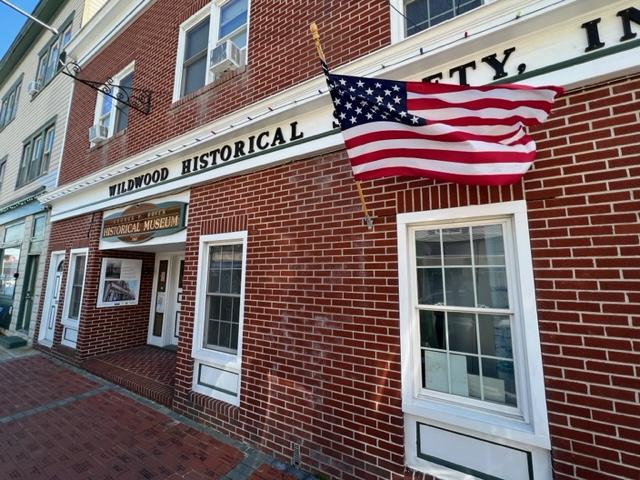
The Wildwood Historical Society at 3907 Pacific Avenue
I visited the Wildwood Historical Society George F. Boyer Museum (See review on TripAdvisor) when I was visiting Wildwood, NJ for a convention. It was a gloomy morning, and the museum is open from 9:00am-2:00pm. It is the perfect place to visit on a rainy day at the beach. When I revisited the museum in the summer of 2023, the museum was crowded with members of the fire service and their families visiting after the convention meetings.
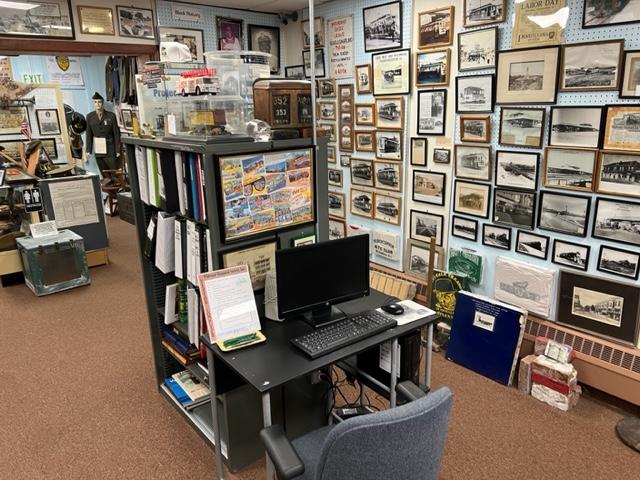
The Front Gallery
The central gallery on the Wildwood businesses.
The back gallery of the museum
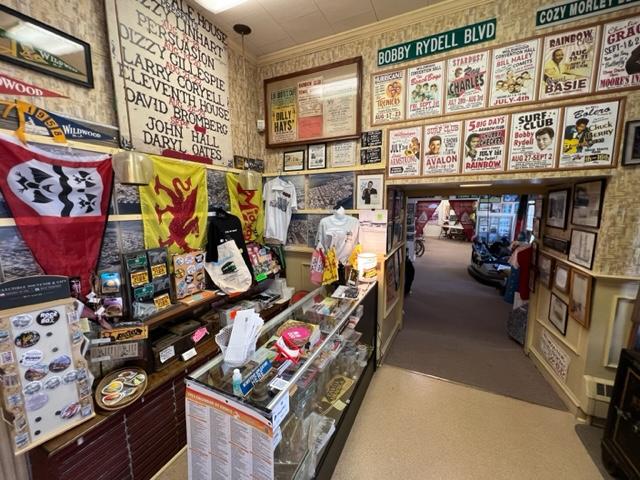
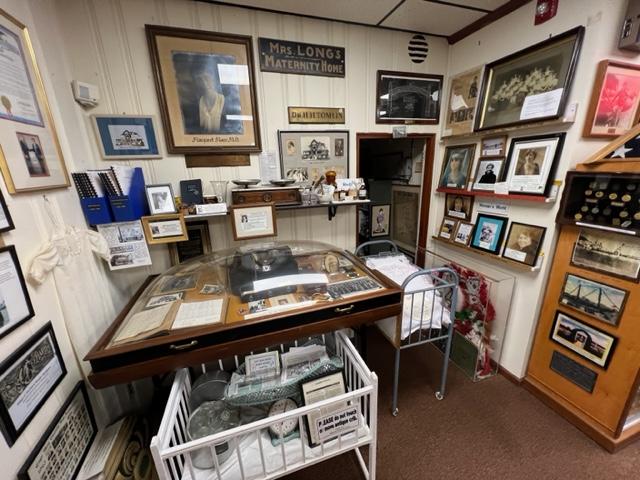
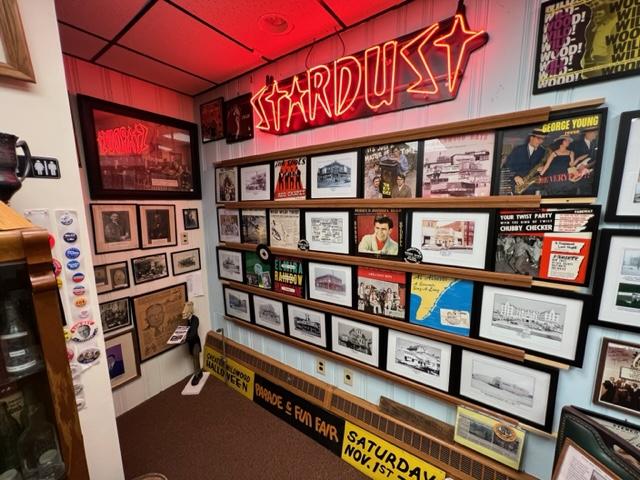
The museum is a treasure trove of artifacts of the history of the three towns, North Wildwood, Wildwood and Wildwood Crest. The history covers the original inhabitants when the Native Americans lived and fished in the area, the rise as a resort community especially its heyday in the 1950’s and 60’s as a solid middle class resort town and an extensive history of the police, fire department and schools as well as the town and its council people.
The Military display
The Fire display at the museum.
The fisherman’s display at the museum.
The doctor’s office display at the museum.
Each room of the museum is stacked with information, artifacts in case lines and the walls are lined with books, manuscripts and albums. The school history shows how integration worked even as far back as the turn of the last century and the development of the school system. There were books of graduation pictures, sporting events and band involvement.
The high school and public-school display.
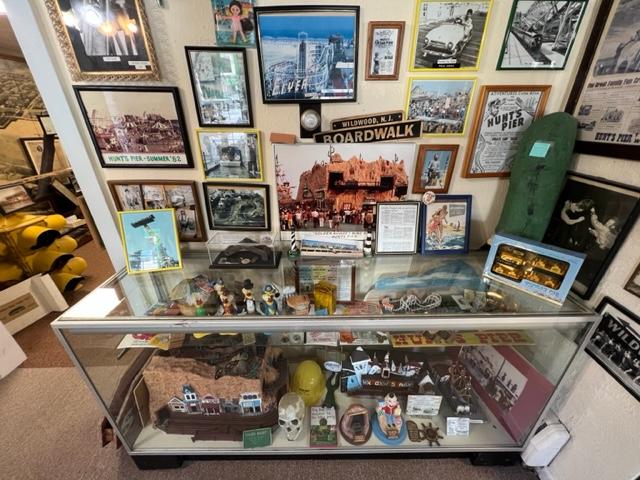
There is a very interesting display of firefighting pictures especially of the amusement fires of the past and the rebuilding of the parks and piers. Take time to look at the artifacts in the hallways and pictures of the development of the parks. There are interesting pieces saved from the old parks.
The Dracula’s Castle display before the big fire at the park.
The Dracula’s Castle display
The Amusement Park and Dracula’s Castle display at the museum.
The artifacts from Dracula’s Castle
The display by Dracula’s Castle
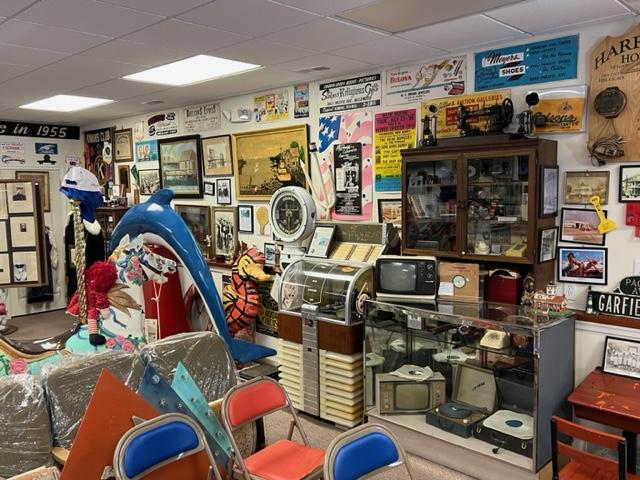
There is even a section of restaurant menus and dishware from the well-known establishments of the past and many pictures of the hotels and motels of the ages. It showed how it went from a Victorian resort to the modern times of the sixties theme motels with art deco architecture. There was a real change after the war to a more middle-class customer who was depending on the automobile instead of the train system.
Popular businesses of the past
The Wildwood businesses of the past.
Artifacts from businesses from Wildwood’s past from restaurants to hotels.
There is also a large section on the old amusement piers with pictures and artifacts from the old “Dracula’s Castle” park that burned down in the early 2000’s. There are signs, old tickets, small ride cars and prizes from the games from the piers. There is extensive detail to the display, and you have to look at all the pictures of the amusements at various points of history.
The Amusement gallery by Dracula’s Castle
The Amusement Park display of artifacts in fun and interesting. The museum admits they were lucky to save these items.
The “Dracula’s Castle Fire” was one of the biggest in Wildwood history.
Plan about two hours as you will lose track of time when looking at all the pictures and displays. It is a little packed in here but there is so much to see and take time to watch their videos which are fascinating and informative on the history of the town of Wildwood.
Artifacts and pictures from the old amusement parks that were once part of Wildwood’s glory.
Who was founder George F. Boyer:
George F. Boyer was born in Philadelphia in 1904. He came to Wildwood around 1932 and earned his living as a butcher, a merchant and a fireman. His real local fame, however, came from his role as the City of Wildwood’s first and only official historian. While serving with Wildwood fire department in 1959, he came across the stump of a tree (now known as the “W” tree) in the old city hall.
Running down the origin of the tree, sparked a tsunami of information as he talked to local residents and researched and collected old records. One thing led to another and in January of 1962, Boyer was appointed in the city’s newly established historical commission and became the first president of the Wildwood Historical Society.
The Wildwood music and ‘Doo Wop’ display.
The entertainer Mario Lanza exhibit when he used to visit here with his parents
Tireless in his efforts to collect and preserve local artifacts, Boyer spoke to school and church groups as well as civic organizations, urging them to “act now. To gather those irreplaceable links with the past and preserve them for generations to come.”
A model of Wildwood in the Business Gallery at the museum.
Founded by Boyer, Wildwood’s first historical museum opened in 1963, on the second floor of the Municipal Building in October 1976, the City of Wildwood honored Boyer for his “long and devoted service” by renaming the museum, the George F. Boyer Historical Museum.
The museum sits proudly in Downtown Wildwood.
He passed away a month later but his legacy lives on. The museum, now located at 3907 Pacific Avenue, continues to welcome visitors and locals alike, just as it did a half century ago under Boyer’s care.
Household items of the past.
The town bell
The non-profit museum is made possible thanks to volunteers who dedicate time to our cause. We always need volunteers. To learn about volunteering, drop in during our open hours, call us or fill the contact form on the website.
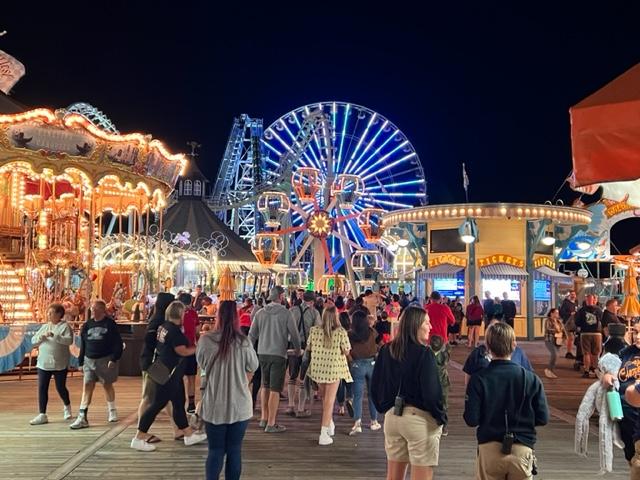
The Wildwood Boardwalk and amusements today.
Disclaimer: This information was taken directly from the History of the Wildwood Historical Museum website, and I give them full credit for the information. Remember that the museum has limited hours and the resort is seasonal so please call the above number for the times and dates when the museum is open.