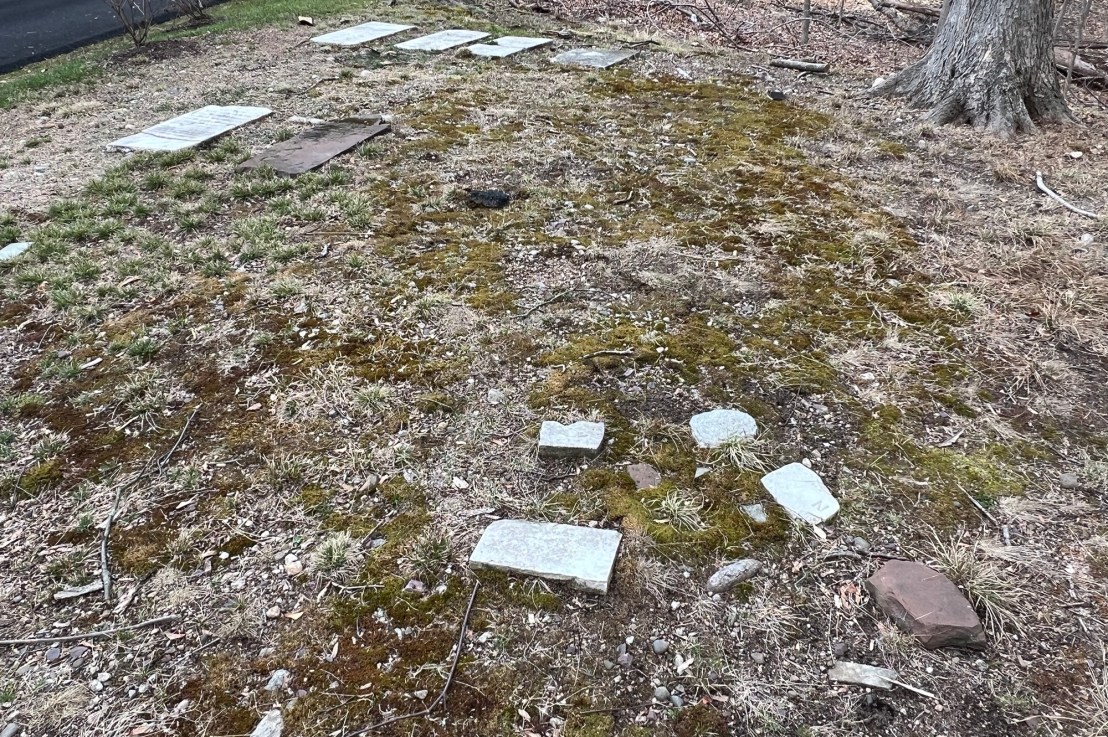
The Sturr Family Cemetery sits on a bend of the driveway of the Chabad Jewish Center of Northwest Bergen County and is a small cemetery that once sat on the edge of the J.H, Sturr farm.
The Sturr Family Cemetery
The farmhouse of the Sturr Family sits on the lot across the street from the cemetery property. This is located on a small buff on what was the edge of the farm.
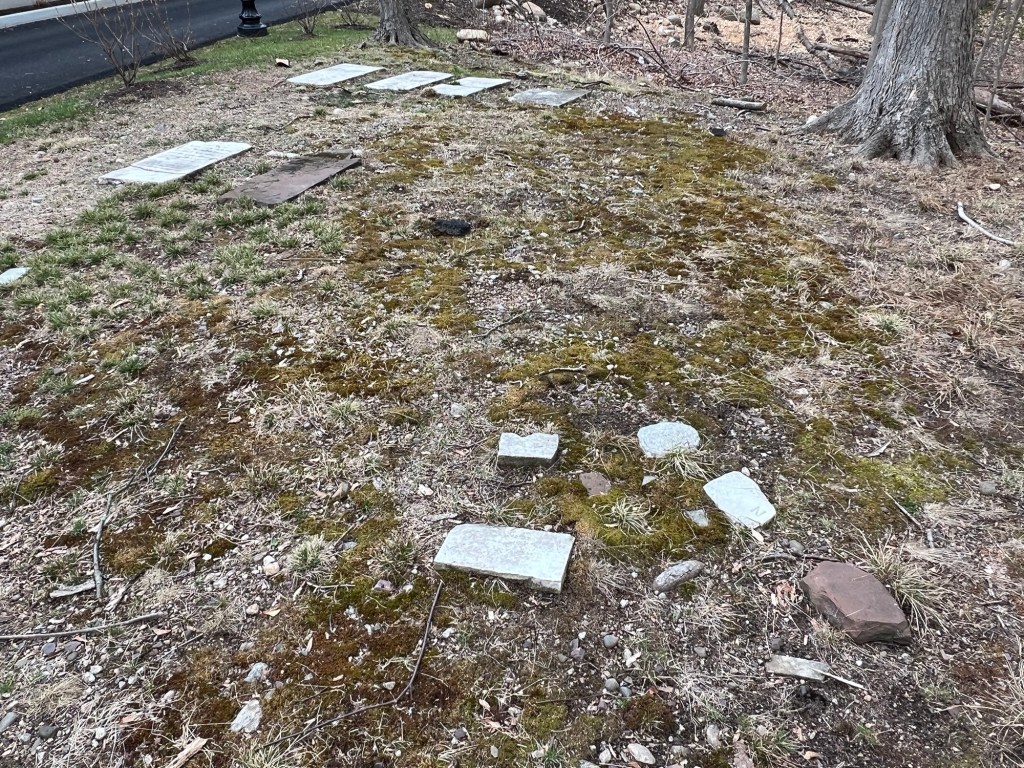
The Sturr Family cemetery tombstones
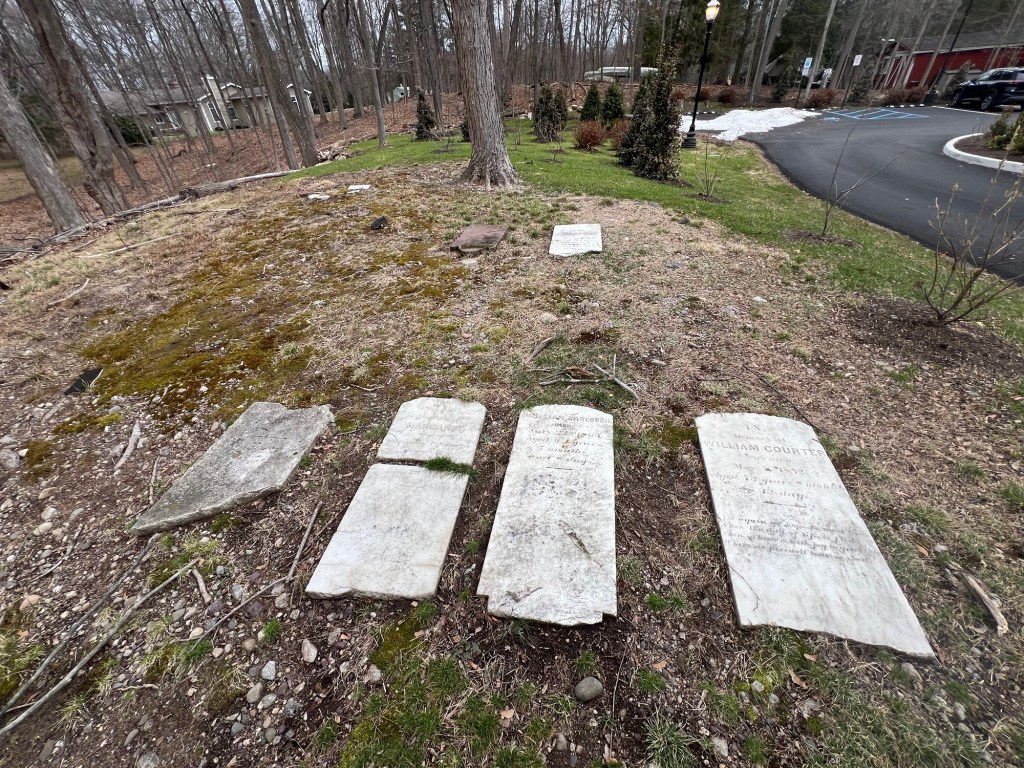
The tombstones of the Courter and Carlouch family members
The grave of William Courter
The only visible tombstones that are left in the cemetery are an Ackerman family member, Anny Ackerman and members of the Courter and the Carlouch family’s (who must have married into the family).
The Ackerman family tombstones (the one to the right was unreadable)
The other tombstones are broken and no one is sure who is buried where in the cemetery.
The History of the Cemetery:
(From Find a Grave website)
The cemetery is located in Franklin Township, Bergen County, New Jersey, on what was once the family farm of J.H. Sturr. As of October 1991 only 6 markers were still remaining.
The Sturr Family Cemetery in full view
History of the House:
(From the Franklin Lakes Municipal Website)
H. Sturr House or Blue Meadow Farm Built 1860 378 Pulis Avenue, Block 1510, Lot 8 Franklin Lakes, New Jersey 07417
The Sturr House – also known as Blue Meadow Farm -is a handsome and little altered example of mid 19th century vernacular architecture which incorporates several stylistic elements such as gable returns and frieze area of the early 19th century Greek Revival style. The Borough of Franklin Lakes lists the erection year of the house as 1860.
The façade of this 2 ½ story house consists of clapboard. The front porch has five bays with square posts and a rectangular entrance door with rectangular sidelights. Two tall 1st story windows are on one side of the porch. A single hitching post with iron rings sits in front of the porch stairs. The building has a frieze area with linear design. Semi-circular headed louvered vents are in all gable ends. The rear of the house has a one story wing. There is a detached garage to the west side of the house as well as a round frame well. Further west of the house is a stable which has been extensively remodeled and converted into a residence in recent times. The house combined with associated structures is a significant remnant of the large farmsteads which ones dotted the Borough’s landscape prior to the recent suburban housing boom.
History of the Family:
(From the Franklin Lakes Municipal website)
This Sturr house and the nearby more altered house at 402 Pulis Avenue were duplicate structures and were probably built around the same time by members of the Sturr family. The 19th century Sturr family was descended from Conraedt Sturr who purchased 190 acres of land in this area with John Coeter from Robert Livingston in 1793.
The non-extant homestead and mill was located at present-day 930 Old Mill Road. It is known that Henry Sturr, the son of Conraedt, had a fanning mill at this location in 1850. In a will dated 1852 he bequeathed his property and mill to his grandsons John, Henry, and Daniel (Maria Braun – 1976 page 26 & 27).
The property along Pulis Avenue upon which these houses are situated was probably included in this will since the homes were built around the mid-19th century. Future deed research is recommended to identify the original builder and the construction date of the house (1861: H. Sturr, 1876 Estate of H.M. Sturr). Presently the house is privately owned and occupied.
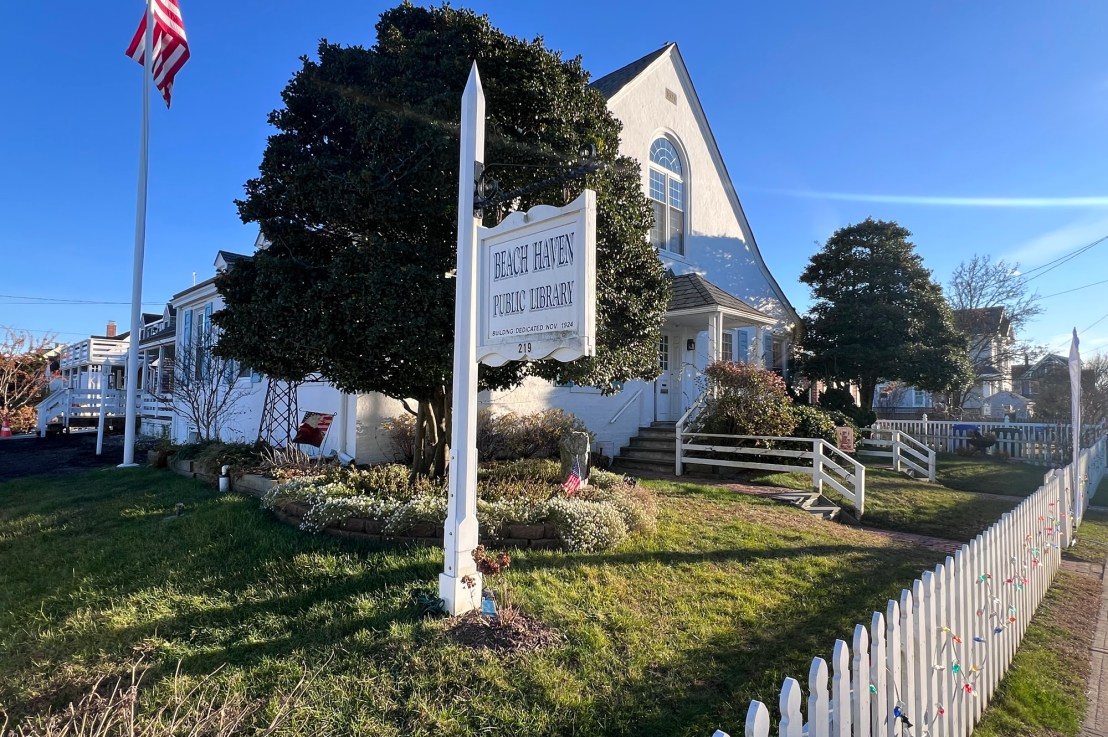
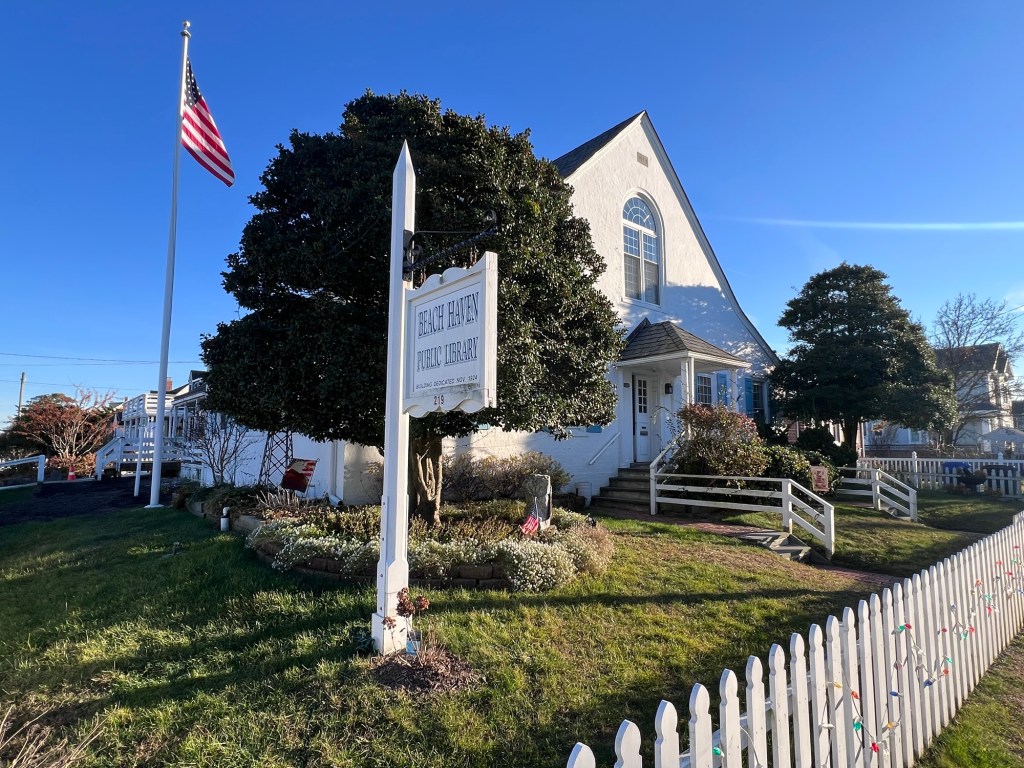
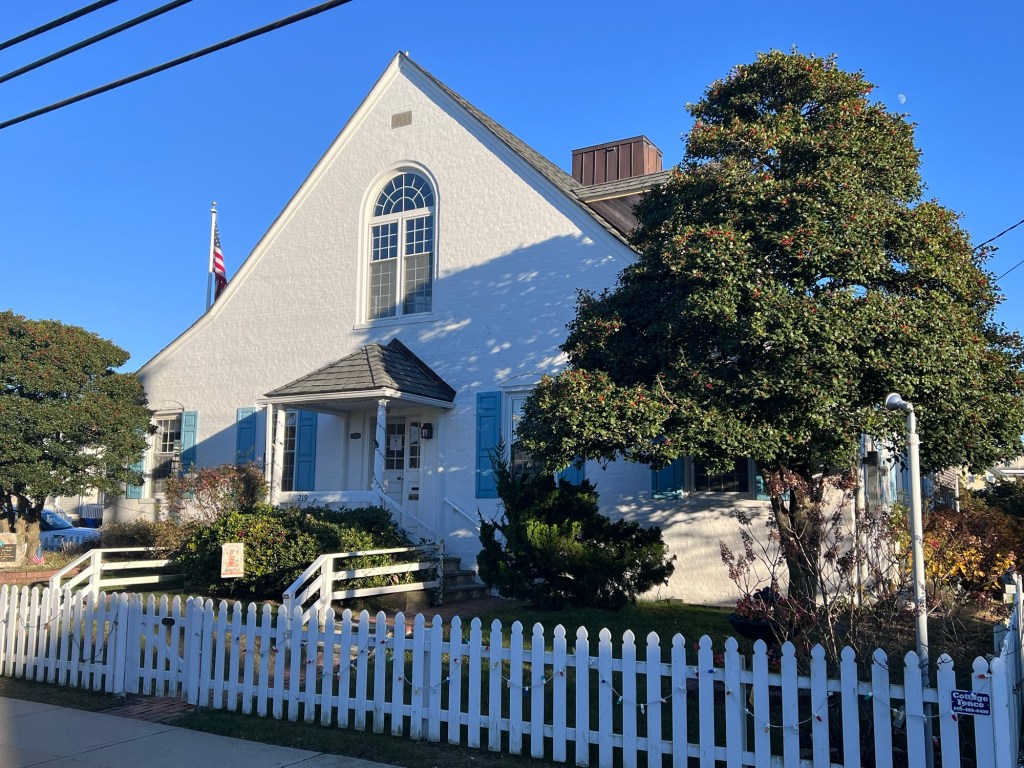
The front of the library and museum in the Fall of 2025
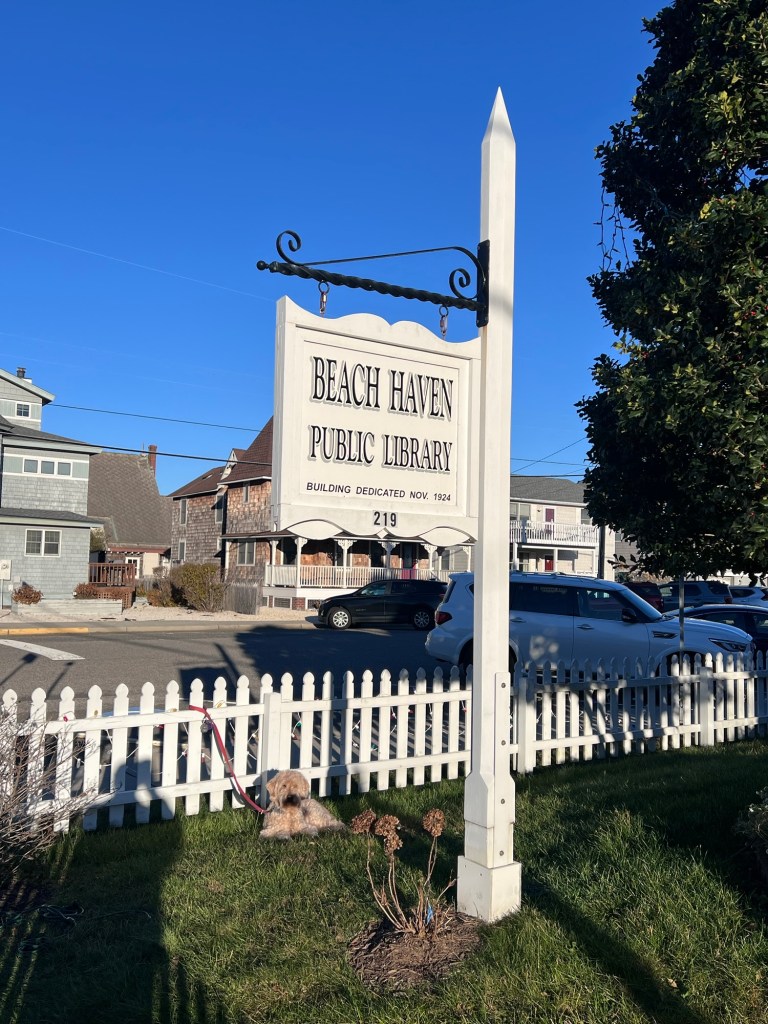
The historic sign
I recently visited the Beach Haven Library and Museum in Beach Haven during the holiday season and discovered a historical library with a rich history in both the community and on Long Beach Island.
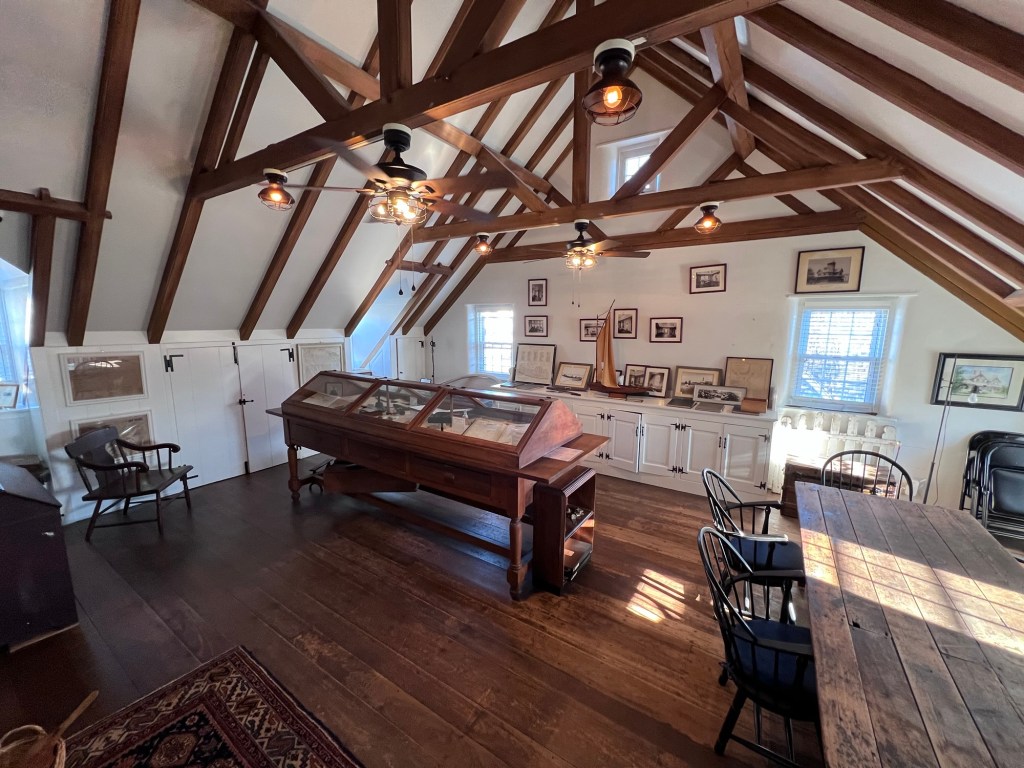
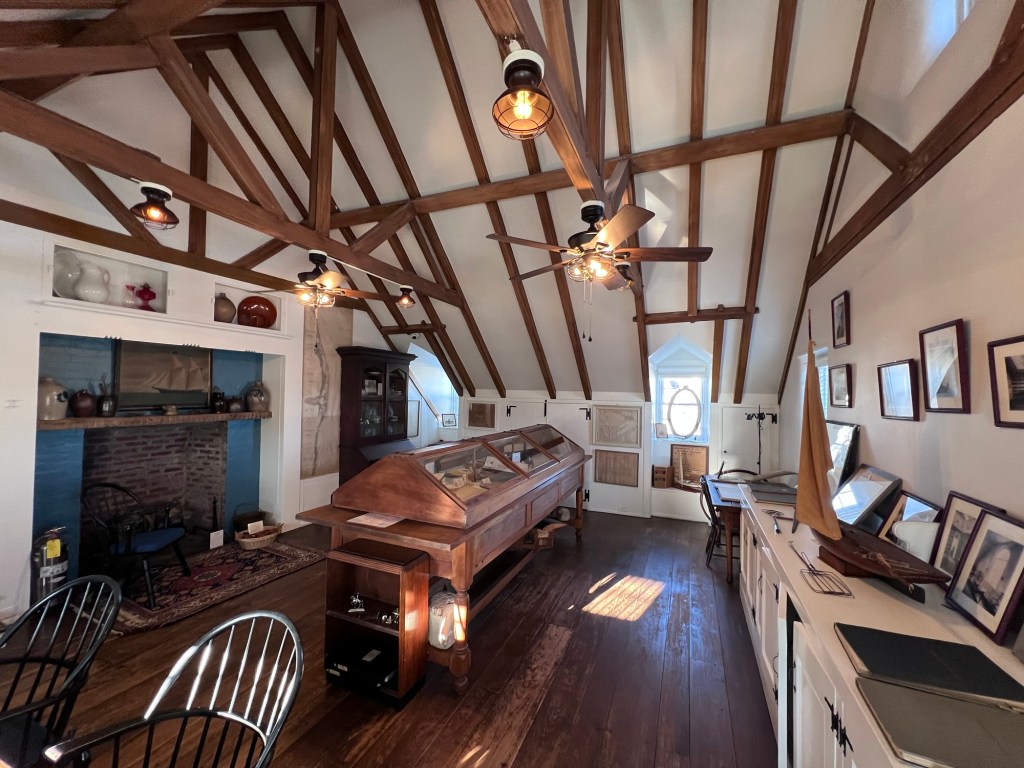
The museum on the second floor
On the second floor of the library is the history room of the Beach Haven Library that contains a collection of historic artifacts and ledgers from hotels and businesses on the island. Each of the case lines tells a different story of the community from the grand hotels that once lined the shore and have since disappeared to the lives of the families that once called the island home. When I talked with one of the librarians, she told me that estates from the area donate these items to the library and this has established their collection.
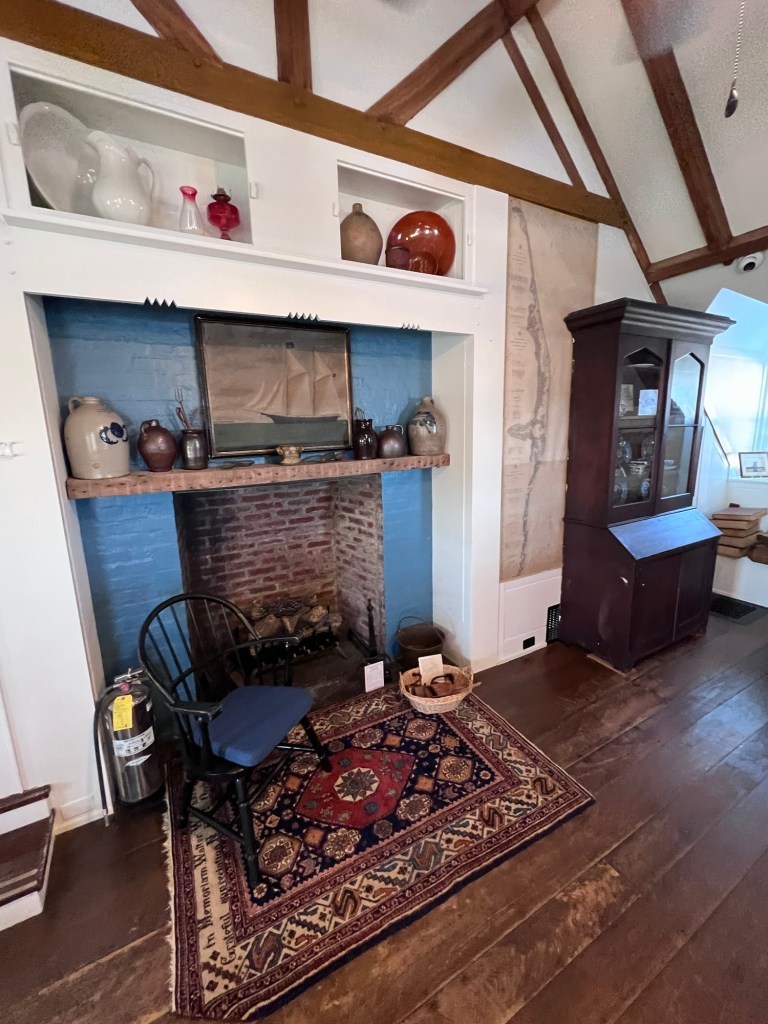
The second floor fireplace
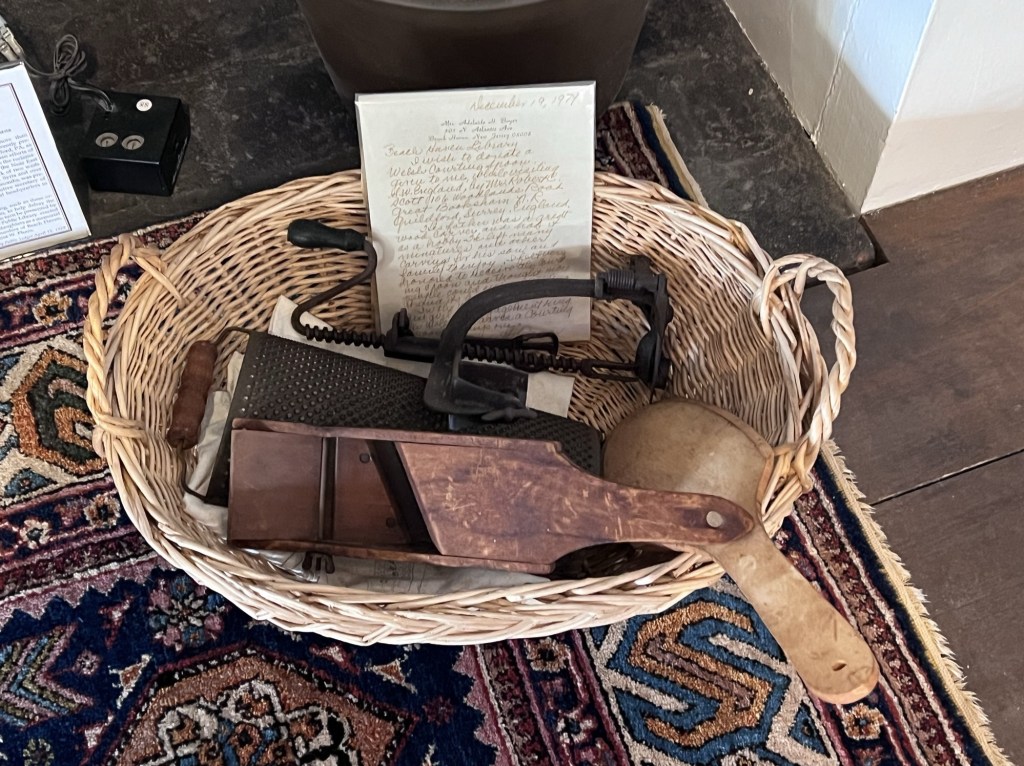
The antique kitchen equipment
The second floor of the library has another fireplace where vintage pottery and kitchen items are on display. There are also decorative pieces of pottery lining the shelves.
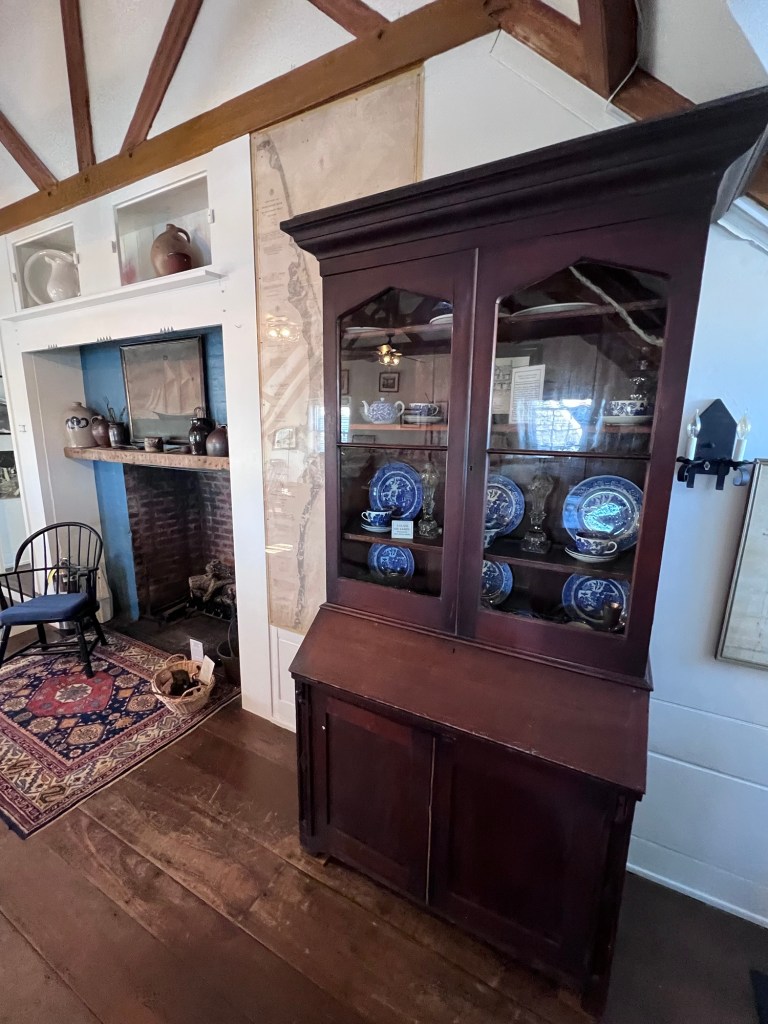
Historic China inside the Emily Lloyd Wilson Secretarial desk. Her father designed the Baldwin Hotel in Beach Haven.
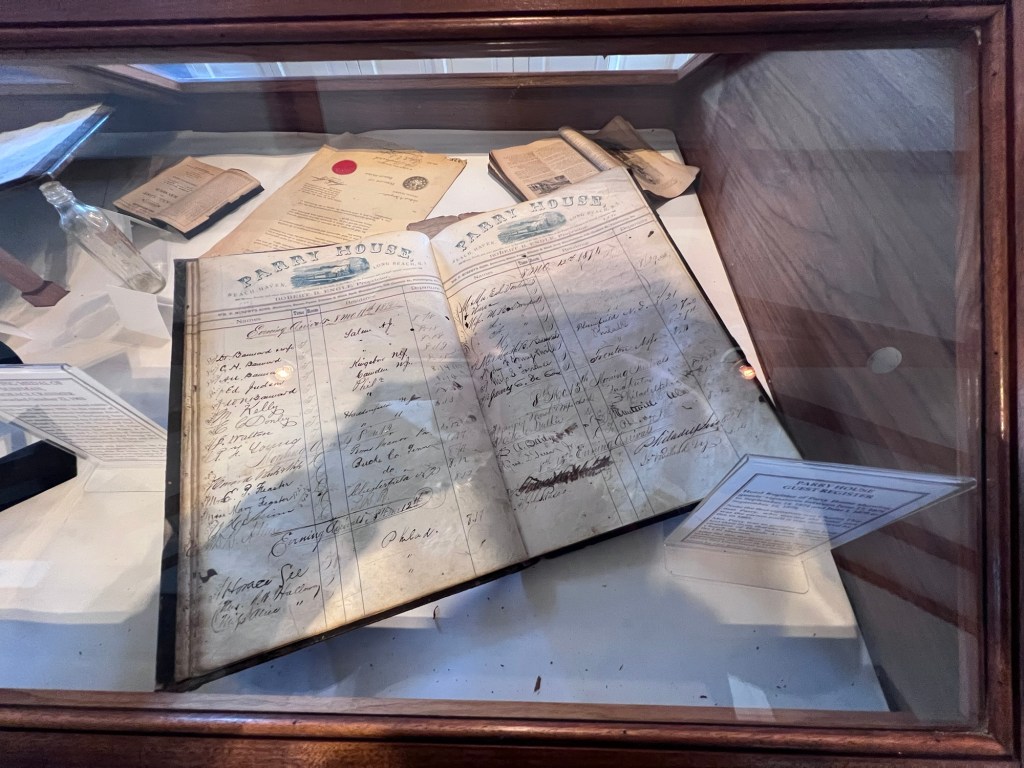
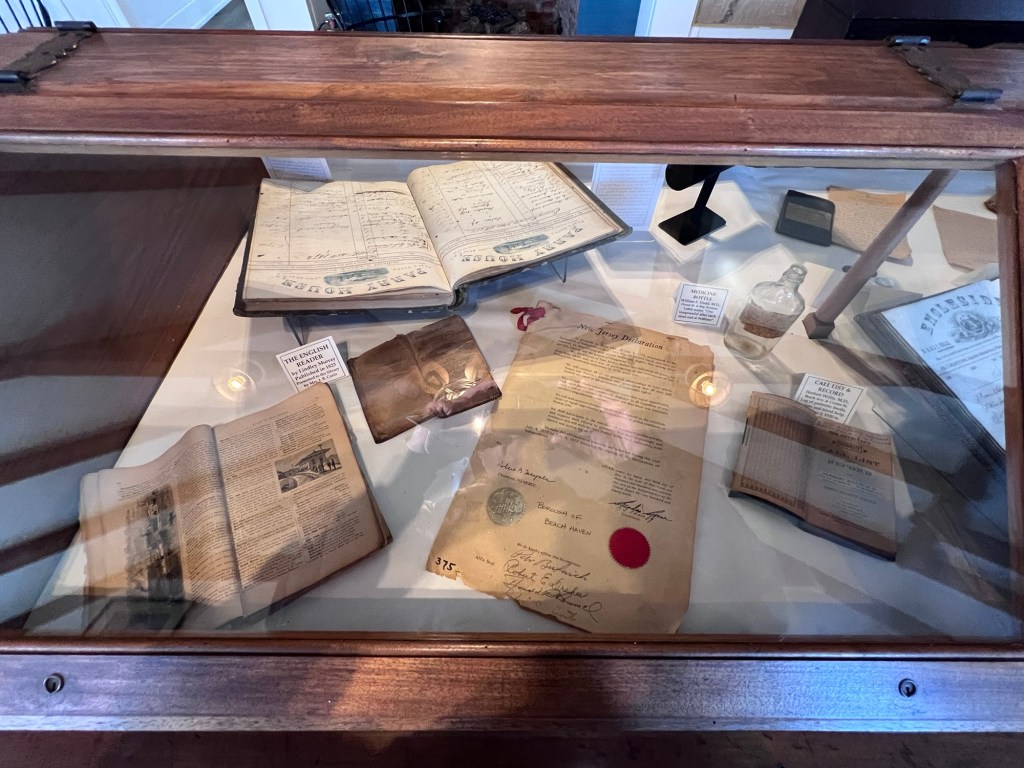
The historic ledger from the Parry Hotel
The library has another fireplace where extensive collection of hotel ledgers and artifacts.
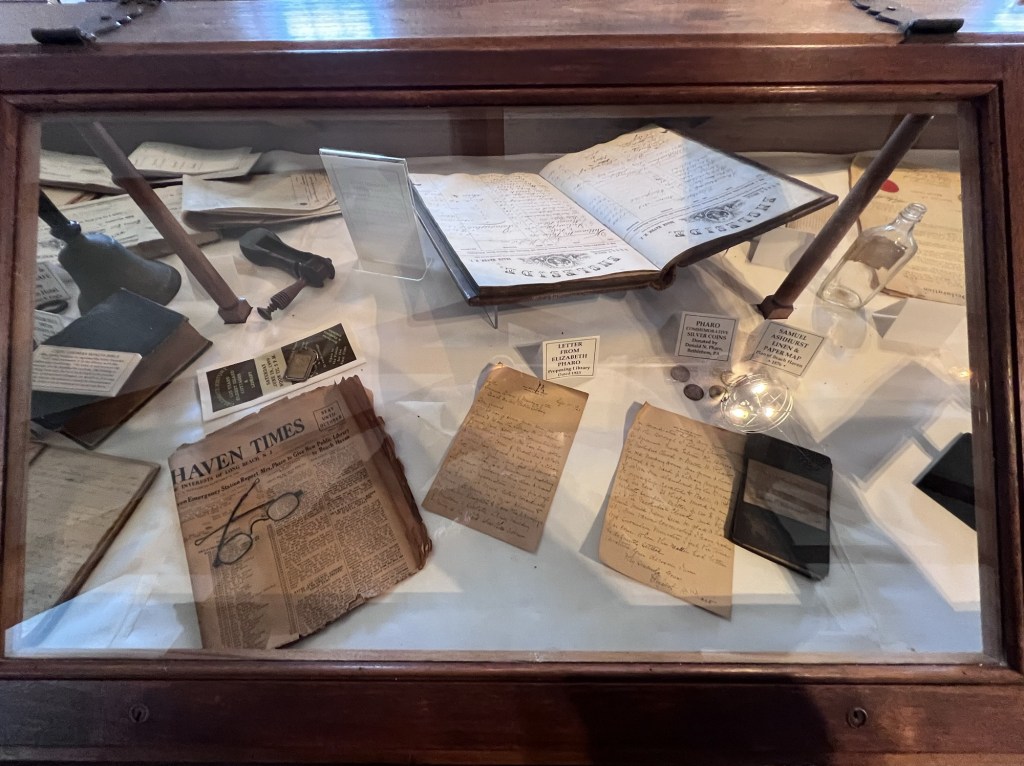
Letters from Elizabeth Pharo proposing the Library in 1923
Short History of the Library:
(From the library pamphlet)
Mrs. Pharo presented to the library board a proposal to build the library entirely at her own expense. She contacted Philadelphia architect, R. Brognard Okie to design the library. He chose the model of a Pennsylvania Farmhouse. The library was completed in the Fall of 1924. The museum is now over a hundred years old.
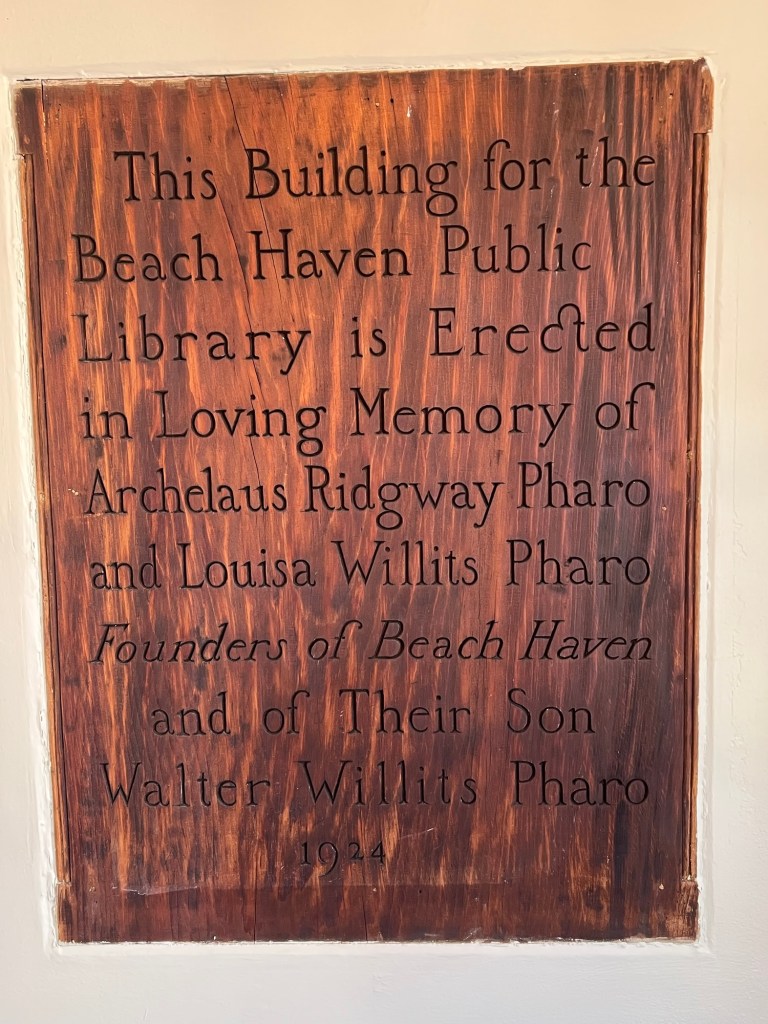
The dedication to Elizabeth Pharo, who dedicated the museum.
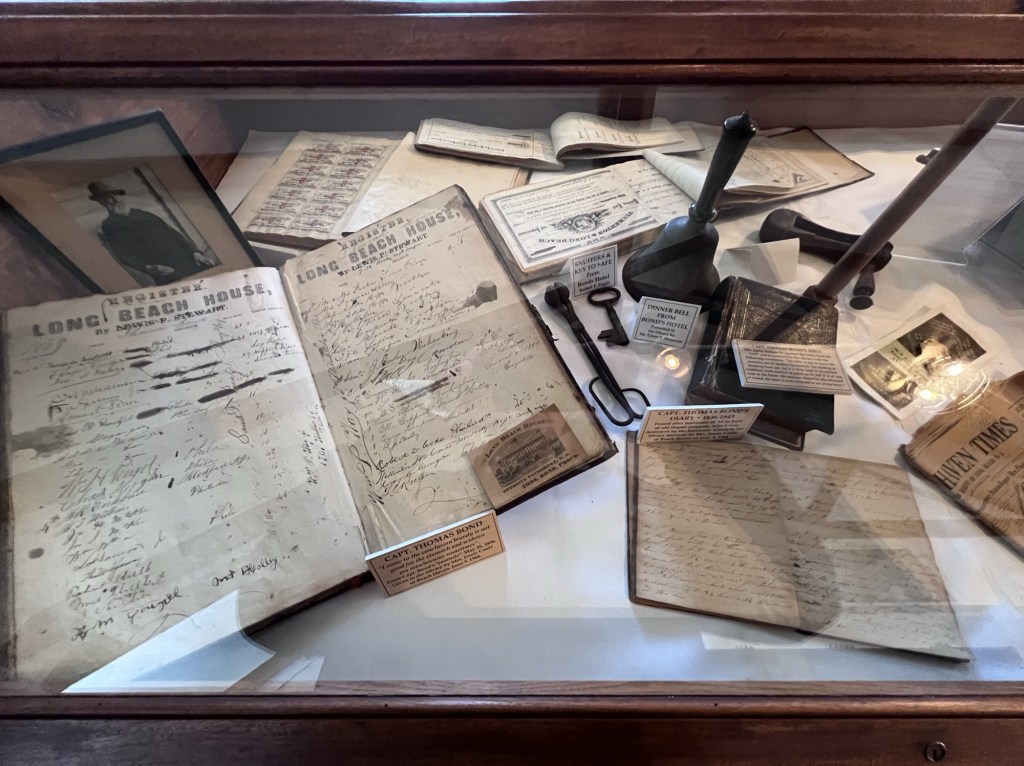
The Long Beach Island House Guest Ledger and historic items from the historic Bond Hotel
The records of the past resort town Long Beach Island used to be with guests coming from New York City, Philadelphia and beyond.
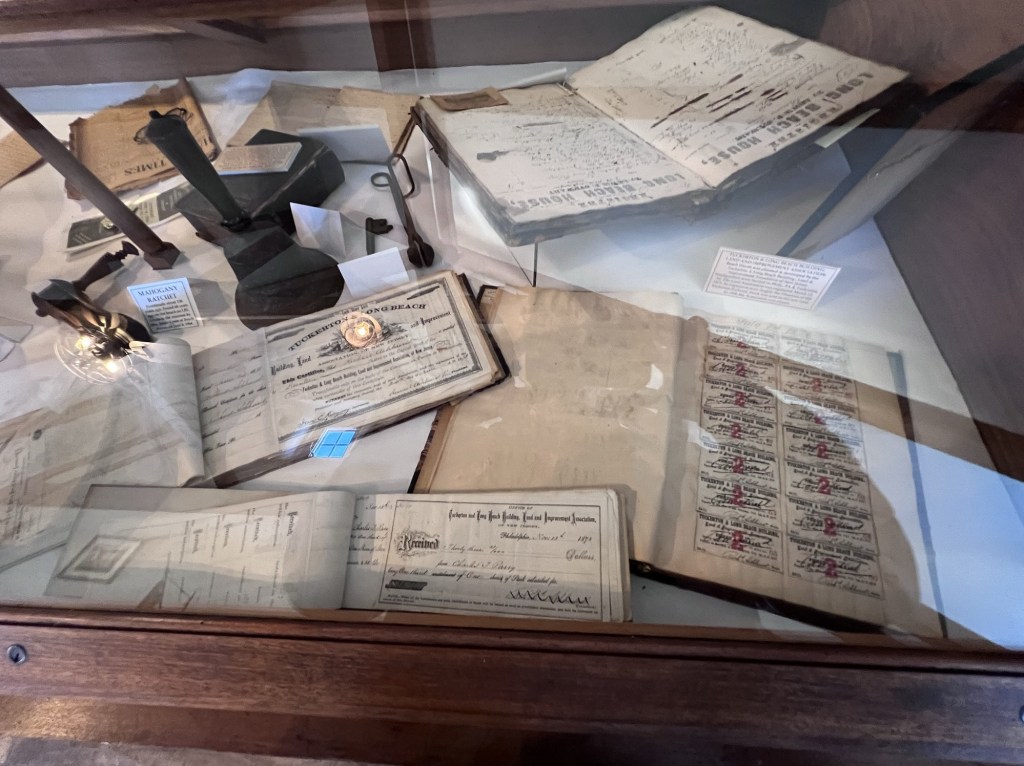
Historic items from the Tuckerton & Long Beach Building Land and Improvement Association
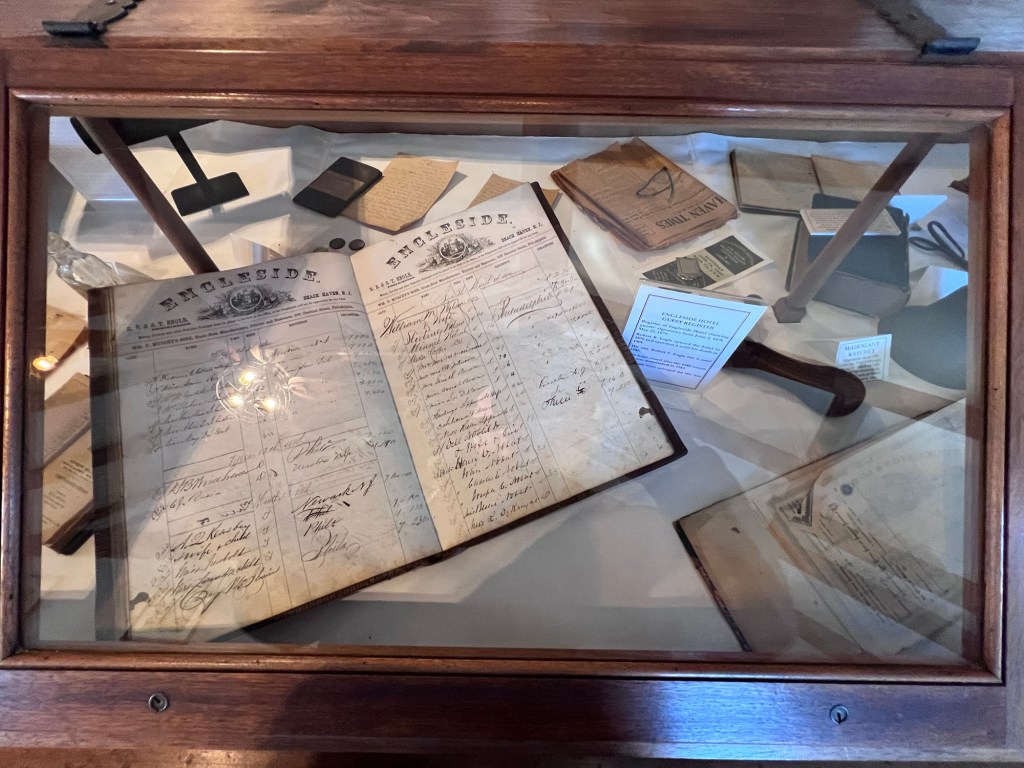
The Engleside Hotel ledger and items from the hotel
The New Jersey Declaration towards the Declaration of Independence
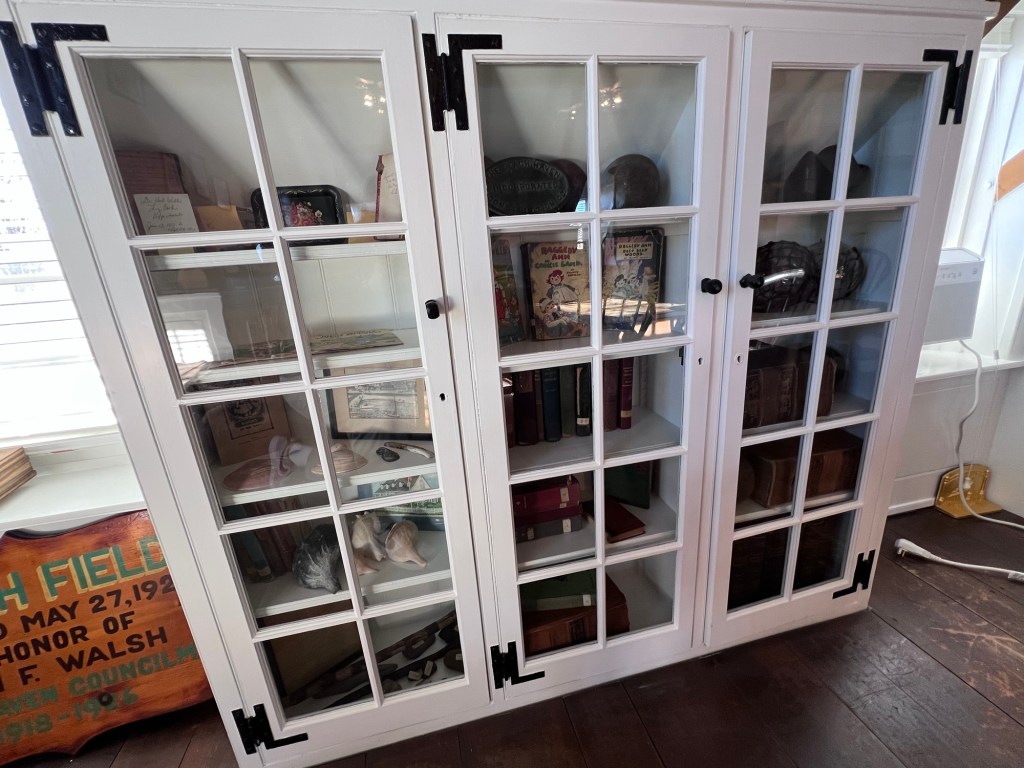
Historic books and periodicals
The library has an interesting collection of vintage and antique books that have been donated to the collection.
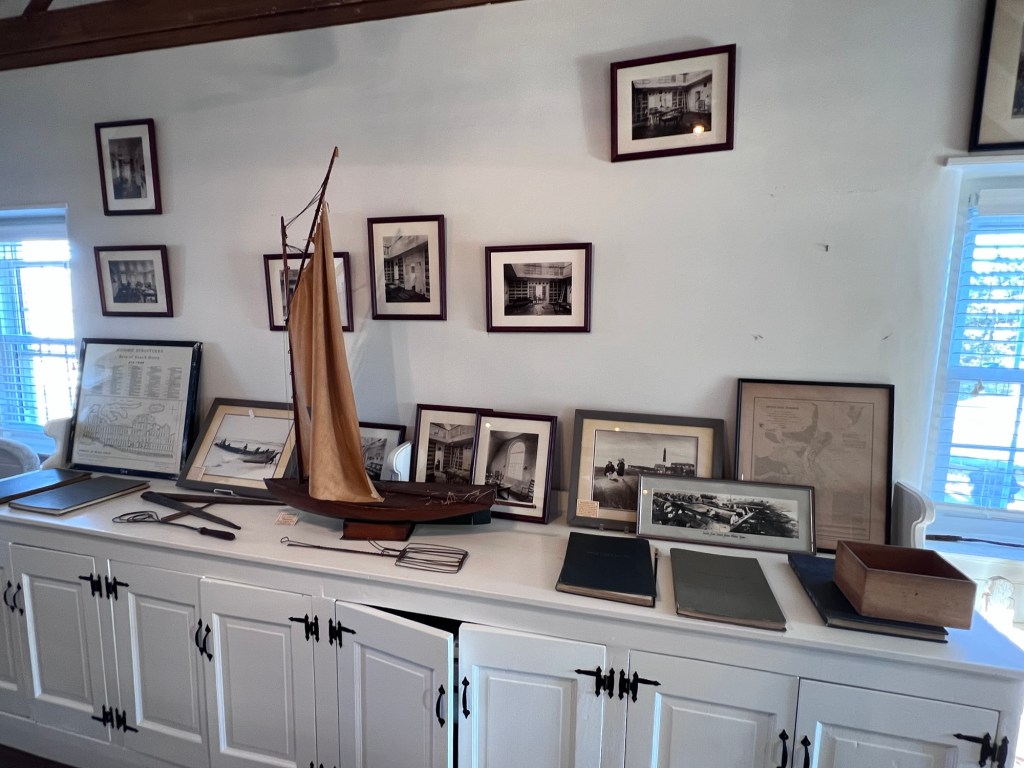
Photo display on historic sites in Beach Haven and pictures of the original library
Some of the pictures are from the old library and the artifacts come from ships ground ashore. The library has a diverse collection of items to view.
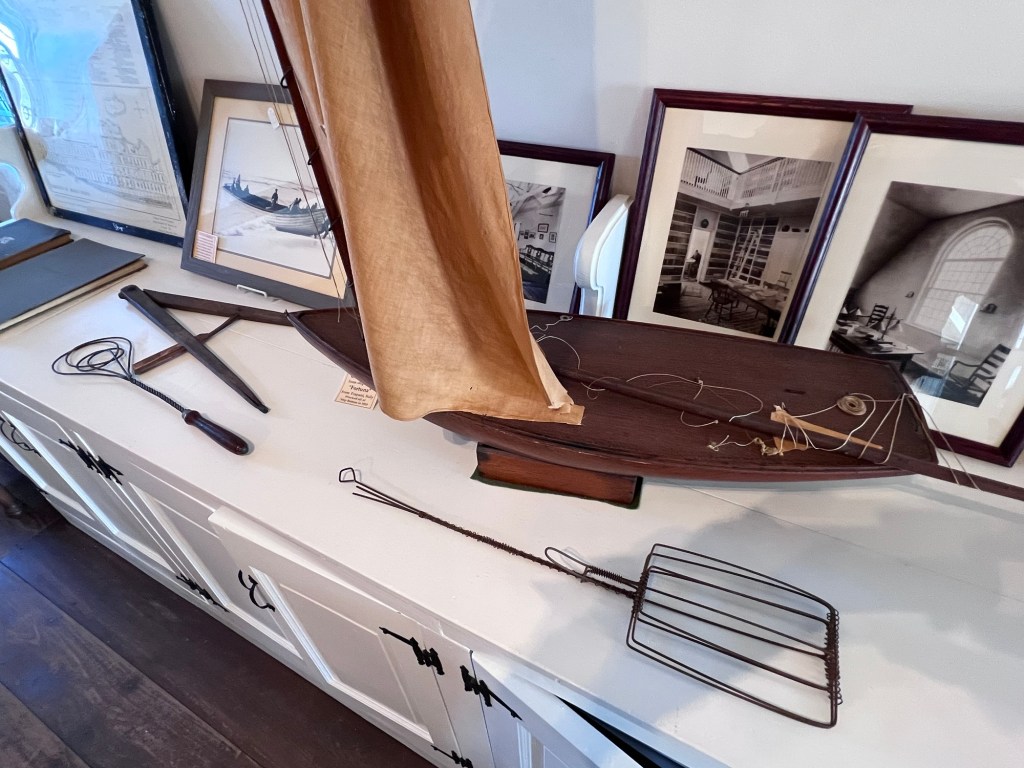
The Compass from the historic shipwreck ‘Fortuna’ that wrecked off Ship Bottom in 1910 and historic boat
The second floor museum gallery holds the diverse collection of artifacts
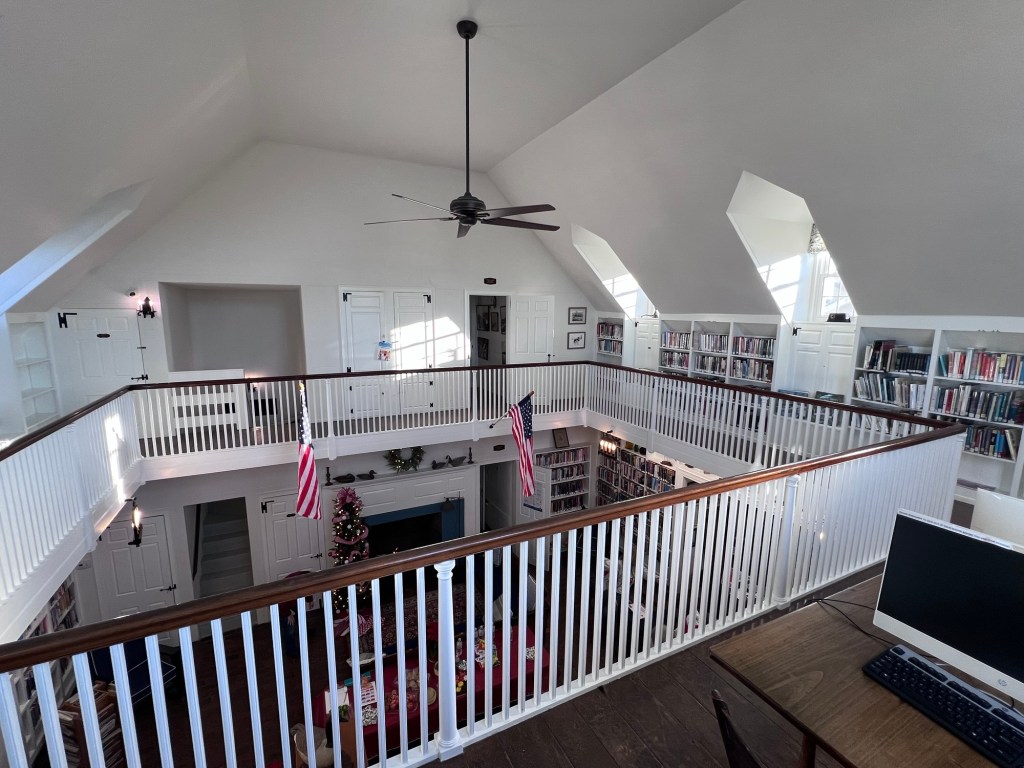
The second floor of the 1928 building
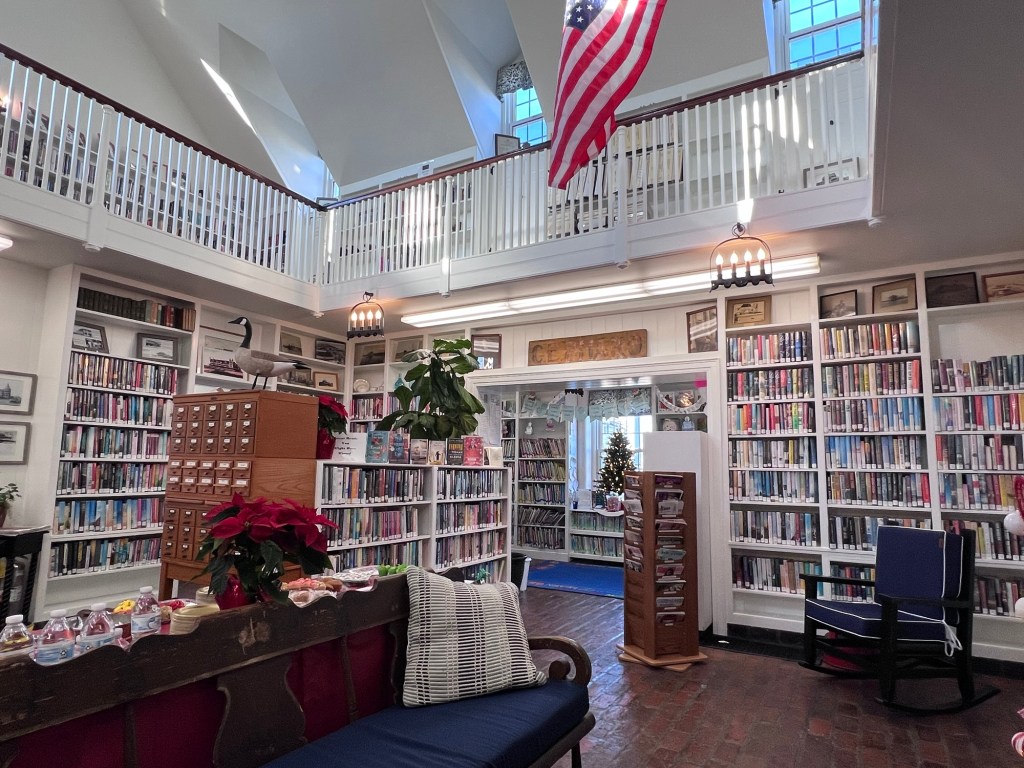
The first floor of the library has all sorts of historical artifacts along the walls
The Holiday Kickoff in 2025:
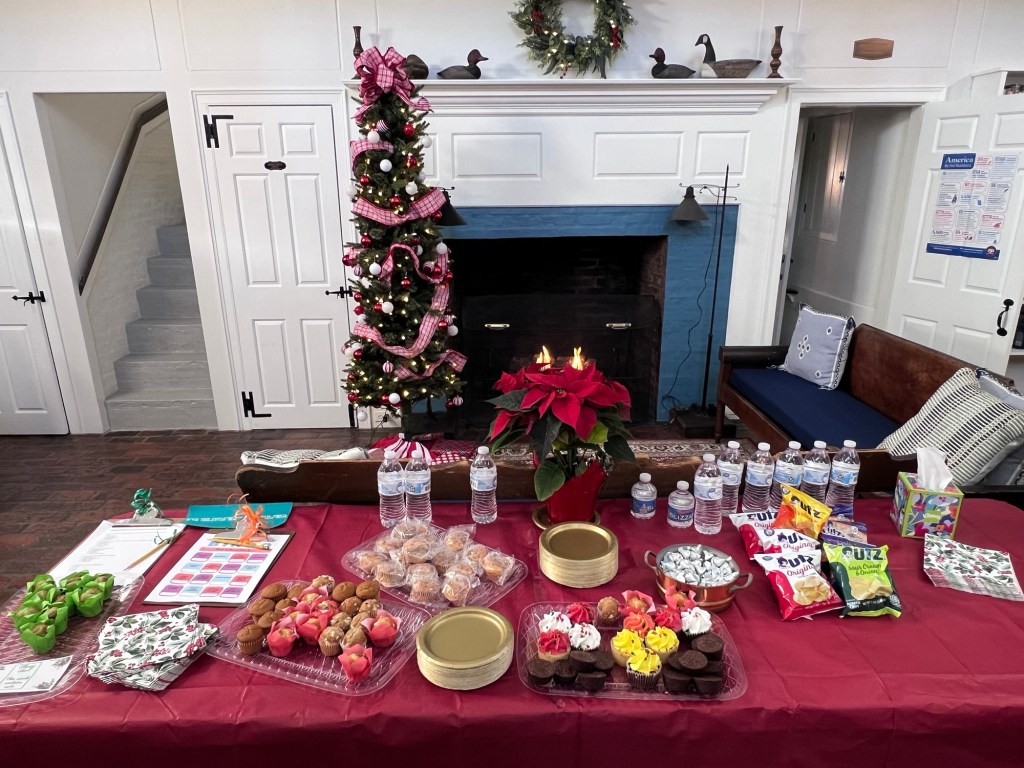
I visited during the library’s Holiday Open House with games, trivia and activities. There was also live music in the afternoon. It was a way that the library gives back to the community. It was a nice family event with good food and nice conversation with people from the community.
The Holiday Open House
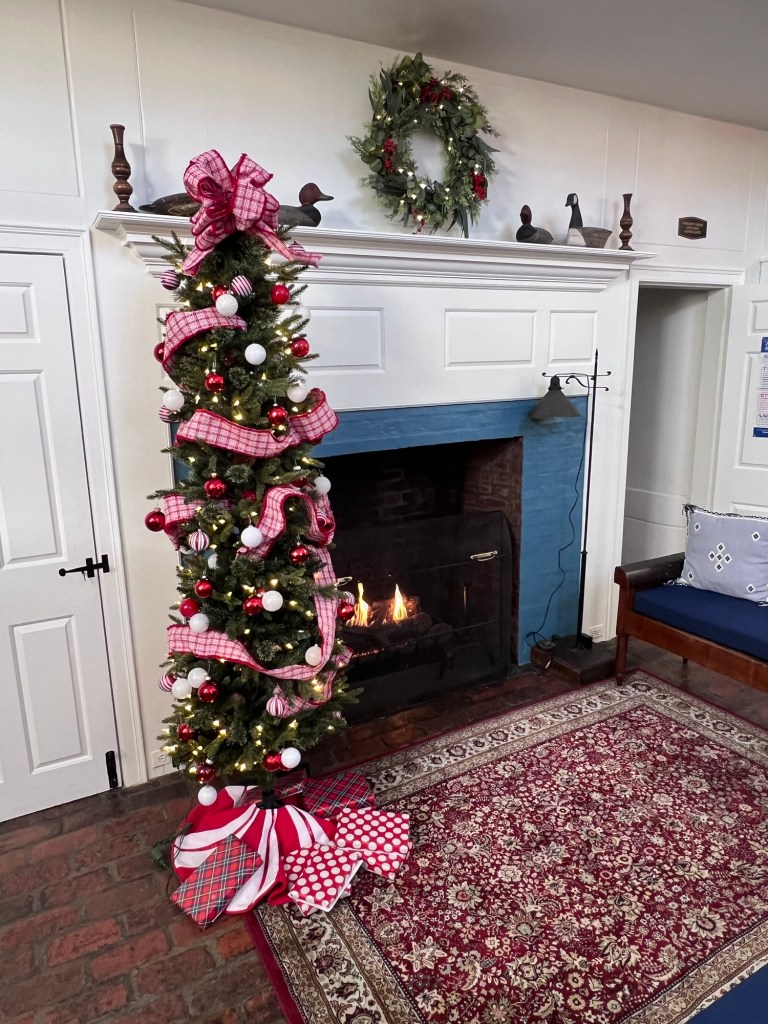
The fireplace was going when I was talking to the librarians
It was a very nice family event where patrons families could relax, have something to eat and play games with their children. The Liberians could not have been more friendly and engaging with the public.
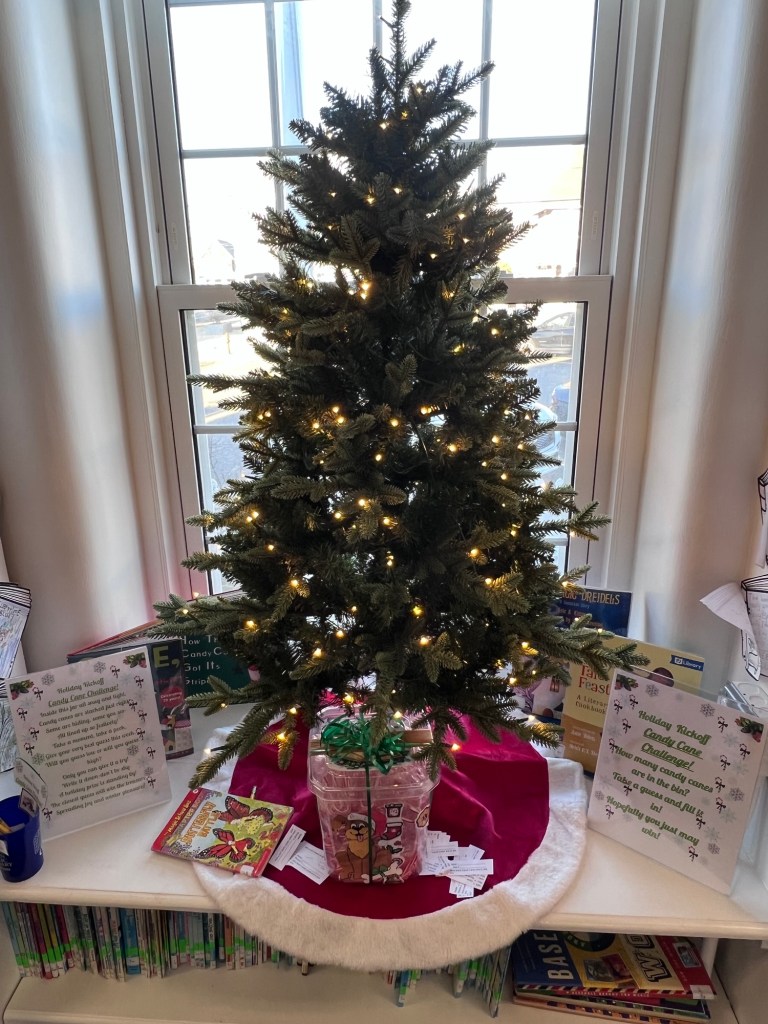
The Children’s Room had a holiday challenge
The museum is a rare gem tucked not just on the second floor but along the shelves and tables of the entire historic library giving visitors a chance to see all these historic artifacts mixed in with the library book collection.
The History of the Beach Haven Library:
(from the library website)
Attempts to establish a library in Beach Haven had begun as early as the 1880’s with a gift of books for the town’s children by Dr. Edward Williams. Williams, along with Charles Parry of the Parry House and the Baldwin Hotel, was a partner in the Baldwin Locomotive Works. The library collection was first housed in the home of Samuel Copperthwaite on Engleside Avenue. It was later moved into one of the Sunday School rooms of the Kynett Methodist Church, which had been built in 1890.
After the old Quaker Meeting House was donated to the town by Walter Pharo, the Reverend Alexander Corson of the Methodist Church began work, with the help of his wife, to turn the former Meeting House into a viable library. By the time they left in 1908, it was well on its way.
In 1923, Walter’s widow, Elizabeth Pharo, presented the library’s board of trustees with a proposal to build, entirely at her own expense, a new library for the town. It would be sited two blocks away from the Methodist church on a corner lot which she owned at Third Street and Beach Avenue. The library would be dedicated to the memory of her husband’s parents, Archelaus Ridgway Pharo and Louisa Willits Pharo–the founders of Beach Haven–as well as to her late husband Walter.
Mrs. Pharo contracted R. Brognard Okie, one of Philadelphia’s finest architects, to design the new library. He chose as his model a Pennsylvania farmhouse–not an early lifesaving station, as some believed. Unlike a traditional farmhouse, however, it would be constructed entirely of brick and steel and include several stunning features: three working fireplaces, a vaulted ceiling, and an interior balcony encircling the first floor.
Tons of concrete were poured and steel girders for the new, two-story structure were already up by the spring of 1924 on the southeast corner of Beach Avenue at Third Street. Okie moved to Beach Haven to supervise every step of the construction, which was all done by local builder Floyd Cranmer. Ten railcar loads of bricks were used to build the solid outer walls and it was soon evident that the town was to have the finest library on the New Jersey coast.
As the library neared completion in the late fall of 1924, its beauty was already drawing praise. Every window in the structure was framed with long shutters of pale green, which gleamed against the white brick exterior. A sweeping, multi-dormered black roof added a grace seldom seen in a public building. Surrounded by a low, white picket fence and later, a well-kept green lawn, it added an incomparable dignity to what, in that time period, was the town’s main street, Beach Avenue.
There are two large colonial-style working fireplaces on the first floor. One is in the main room and the other is behind it in the long back room on the ocean side of the library. Today this room houses the Mystery collection and its solid, ten-foot table makes it useful as a meeting room. In the early years, however, it served a different function–it was designated as the men’s reading room, and there male patrons could sit in large comfortable chairs to read magazines and newspapers. It was well lit by two tall French windows and it opened out onto the screened porch on the north side.
The main reading room with its vaulted ceiling is encircled with a balcony reached by a spiral stone staircase, its steps topped with thick slabs of slate. The balcony flooring is of oak, as are all of the spindles in the railings. The upstairs walls are lined with books. One great window on the west side rises ten feet to the ceiling. The rest are all set into dormers. On the east wall behind the upstairs balcony there is a door where one may step down into a well-furnished little museum with high, beamed ceilings and a huge stone fireplace. It is filled with old hotel registers, deeds, diaries, photographs and other mementos of Beach Haven’s vibrant history.
The Beach Haven Public Library is a prime architectural treasure on Long Beach Island and a direct link to a colorful past that is the town’s most precious heritage. Mrs. Elizabeth Pharo’s gift to the town, itself now almost 100 years old, is as stunning as the day it was built. The taxpayers who support it are proud of its status as the only independent library in Ocean County and have chosen to keep it that way.
There is always a lot of excitement when a new art exhibition is ready to open. It is even better when the museum opens it to its members first before the public gets a glimpse. It gives a chance to see the exhibitions before it opens to the public.
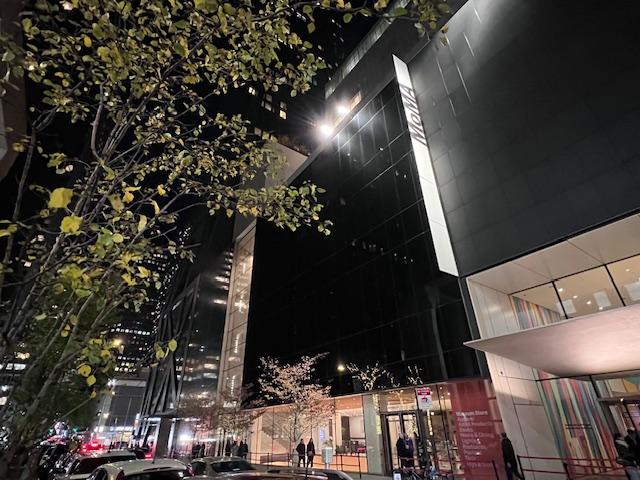
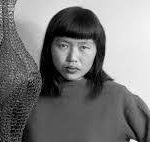
The long line of MoMA members waiting to get into the museum for the opening night of Artist Ruth Asawa’s exhibition
I noticed this year especially and right before Thanksgiving, all the museums are throwing open their doors for Member’s Nights. I have been invited to five Members Nights at museums all over the City. You can’t attend them all.
The excitement the museum creates for these evenings
Video of entering the museum at the start of the opening with 80’s Japanese Pop Music
I think in an economy like this, these Members Nights are one of the best ways to engage with the membership for both donations and renewals of memberships especially before the holiday season. Plus it gives the members a wonderful night out to see the exhibitions ahead of time and enjoy the evening after a long week at work.
Born on a farm in Southern California, Asawa began her arts education when she was a teenager and she and her family were among the thousands of persons of Japanese descent who were forcibly incarcerated by the US government during World War II. It was at the internment camp that Asawa began taking classes in painting and drawing. After her release, Asawa studied to be a teacher but was unable to get a license because of her Japanese heritage, so she enrolled at Black Mountain College, an experimental art school in North Carolina. Asawa took classes from and worked alongside fellow artists Josef Albers, Robert Rauschenberg, Merce Cunningham, and R. Buckminster Fuller. Black Mountain was also where she met her husband, the architect Albert Lanier.
I loved her wire woven sculptures.
The wire woven sculptures were the standouts of the exhibition
I thought these were a unique design
I liked here colorful paintings, these are of her child’s footprints. I loved the idea that her children were involved with the art
The patrons enjoying the art
The display of the wire art
The displays were impressive and graceful
The colorful faces looked tired
The look of nature in the wire art in the form of trees
I loved her works of food
At the end of the exhibition and the evening, I joined everyone on the main floor where the bar and gift shop were located. The main floor was the busiest part of the museum. I wondered if some of these people even went upstairs to see the exhibition or just stayed downstairs to socialize.
The main floor of the museum is always packed with people
Share in the excitement of the Membership opening
These evenings always get my mind off the stress of life. It is nice to just be in Midtown Manhattan and be in the moment. It is nice to see art, hear music and walk through the museum.
I love visiting the Old Dutch Reformed Church of Sleepy Hollow and its cemetery. The church itself is steeped in history but made famous by “The Legend of Sleepy Hollow” by Washington Erving, a local resident. The church was the inspiration for the book and to this day it is still celebrated during the Halloween season with Open Houses and storytelling. I have visited the church to hear storyteller Jonathan Kurk tell the story of Ichabod Crane and then at Christmas to hear “A Christmas Carol” by Charles Dickens. These are musts when you are visiting the church.
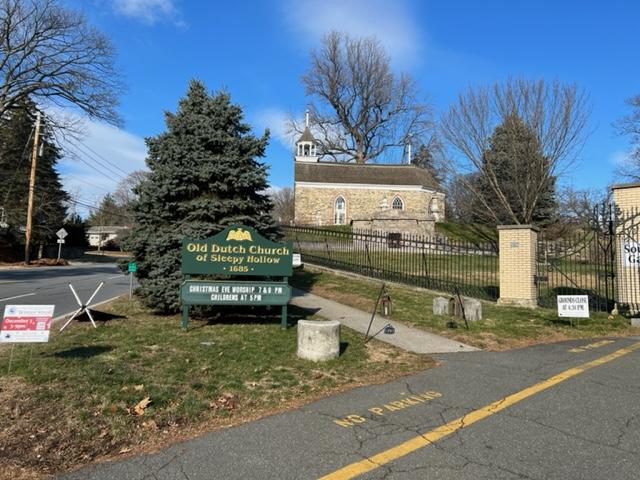
The Old Dutch Reformed Church of Sleepy Hollow
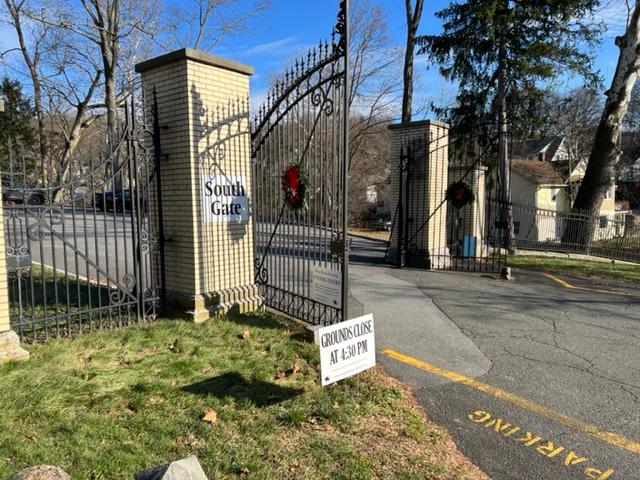
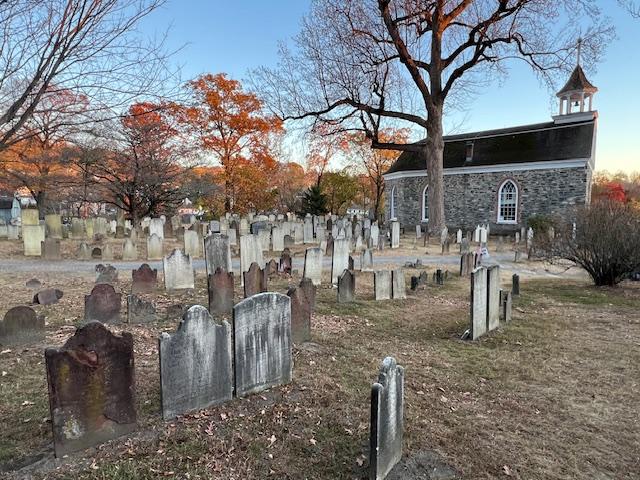
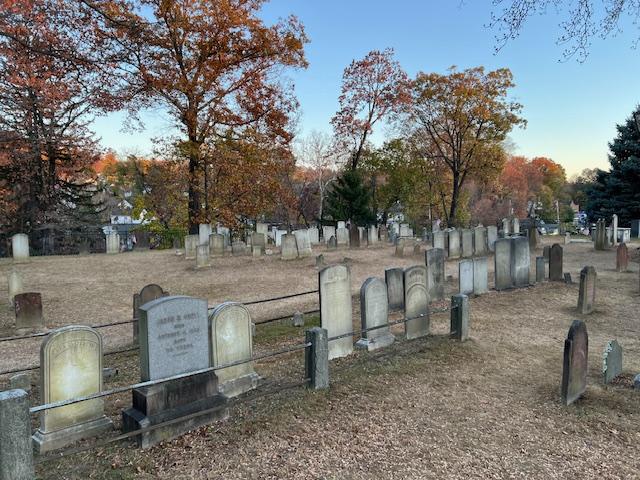
Though the cemetery stretches for miles it is the part by the church that is the most interesting. The tombstones are over 300 years old and some weather beaten to wear the tombstones are unknown. Still it has that classic look with faded cracked tombstones and large shade trees where you might think a ghost or ghoul would pop out. It is a classic Dutch Church cemetery of the Hudson Valley and I highly recommend the cemetery walking tour where you can visit the graves of many famous resident of the cemetery including Washington Irving. Whether the fall or the spring, it is fascinating to walking among the graves and just pay your respects to these people.
The gates leading to the cemetery
The Church that inspired a legend:
(From the Reformed Church website)
When Washington Irving set his ghost story about the Headless Horseman at the Old Dutch Church of Sleepy Hollow, he made the church world-famous. Ever since the publication of The Legend of Sleepy Hollow in 1819-20, visitors have come to see where Ichabod Crane led the choir and courted Katrina Van Tassel among the old gravestones in the churchyard and looked for the grave of the Headless Horseman in the Old Burying Ground.
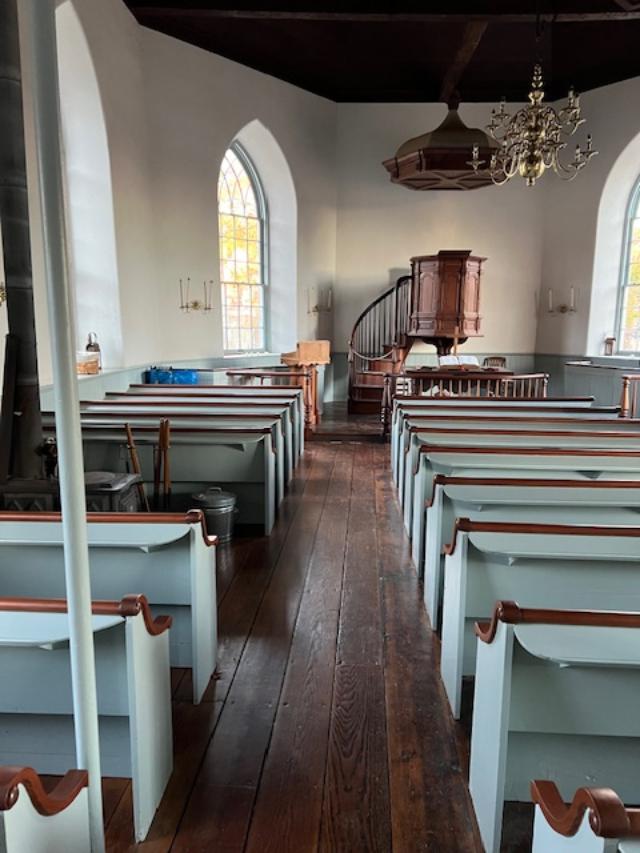
The inside pew of the church
The church was already old when Irving first saw it, when he was a teenager. It was built in 1685 and formally organized as Dutch Reformed in 1697. It served as the congregation’s home for more than 150 years, until a new building was constructed. Even then, it was retained for worship on summer Sundays and special holidays. This custom continues today.
The pews and pulpit inside the Old Dutch Reformed Church
This inscription on the bell that hangs in the belfry of the Old Dutch Church of Sleepy Hollow has been a comfort to the congregation through war and peace, personal joys and tragedies, since it was commissioned in Holland and installed in the belfry. Most historians date the church’s construction to 1685, the year engraved on the bell.
The back part of the pees
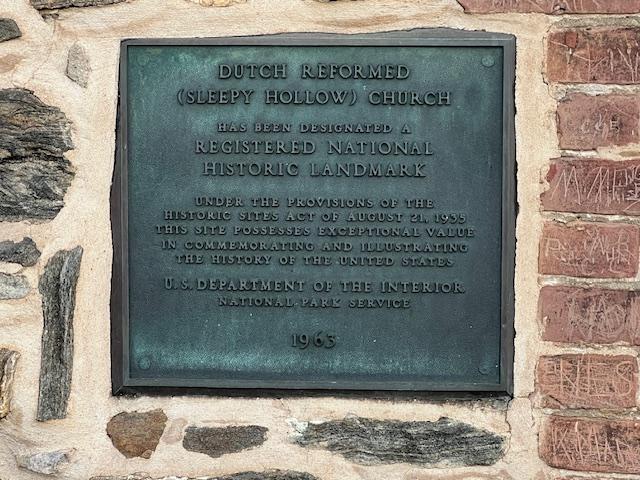
The church is recognized as the oldest extant church in New York and a National Historic Landmark. The Old Dutch Burying Ground, which surrounds it on three acres, is believed to predate the church. Washington Irving is buried just up the hill, in the Sleepy Hollow Cemetery adjacent.
The historic marker
During Holy Week and Easter, the Reformed Church holds Good Friday services and an Easter Sunrise service at the Old Dutch Church. Summer worship services at Old Dutch feature “Seven Sundays of Worship and Music,” with guest musicians each Sunday morning during the season.
The Church’s historic marker
The History of the Church:
(from the church website)
The Reformed Church of the Tarrytowns in Tarrytown. NY , serves both Tarrytown and Sleepy Hollow, NY. It was constructed in 1837 as an extension of the Old Dutch Church of Sleepy Hollow to serve the Tarrytown community.
The graveyard by the church in the Fall of 2024
The new community of Dutch Reformed would have had its own Elders and and Deacons shared a minister with the Old Dutch Church of Sleepy Hollow. That church has a similar arrangement with the Dutch Reformed at Cortlandt Manor dating from 1697 when the Sleepy Hollow community was first recorded as established, though the structure had been completed in 1685 and the community had been there for long before. The Cortlandt Manor community had its own Elders and Deacons but recognized the community at Sleepy Hollow as its head, and regularly went down to the village for services and to record their births and marriages.
The oldest part of the graveyard near the church
The community at Tarrytown became independent from Sleepy Hollow in the 1850s and soon after dropped the “Dutch” association from its name. As the Sleepy Hollow community diminished and the Old Dutch Church of Sleepy Hollow became less used, the Tarrytown community adopted the name for their landmark church the Reformed Church of the Tarrytowns, adding that it was a “continuation of the Old Dutch Church of Sleepy Hollow.”
The family plots in the oldest part of the graveyard
Presenting an impressive façade on North Broadway, the structure’s steeple remains the highest point on North Broadway and the tallest physical structure in Tarrytown, despite not being built on the heights of the city. The church’s porch of four columns supporting an extended pediment offers a refined architectural addition to the business district of historic Tarrytown.
The Historic church and cemetery
The Church’s cemetery
The tree is so old that the tombstone is inside of the trunk
During my many visits to the church, I have heard Master Storyteller Johnathan Kruk perform and tell his stories of “The Headless Horseman” during Halloween and of “Scrooge” during Christmas time. Here are some of his videos of his performances.
Storyteller Jonathan Kruk singing the story of the ‘Headless Horseman”
The Church Marker
The famous bridge was once here
Master Storyteller Jonathan Kurk telling the story of the ‘Headless Horseman”. He is excellent!












 Visiting a Museum: The Unique, Unusual, Obscure and Historical