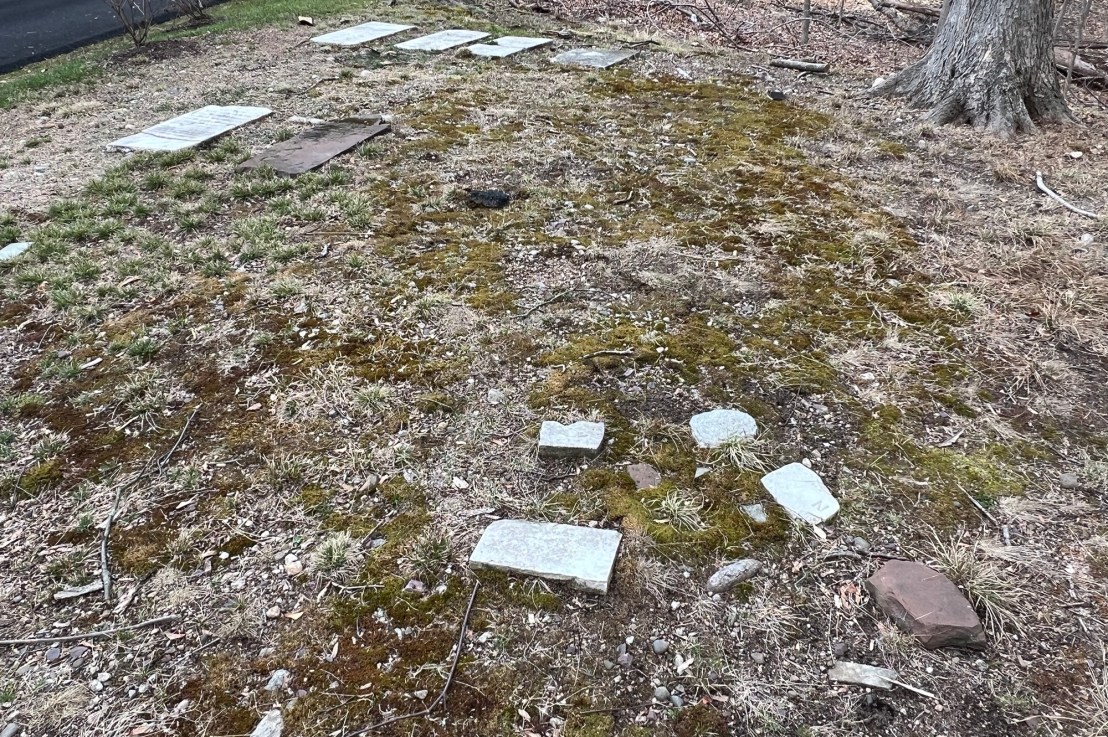
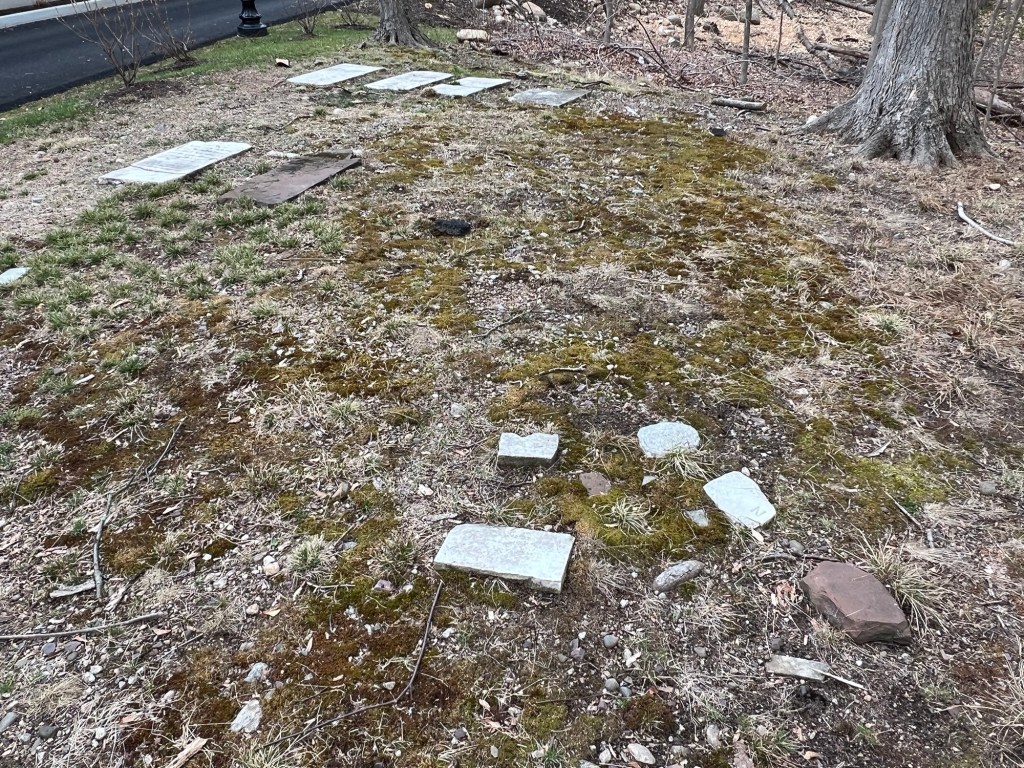
The Sturr Family Cemetery sits on a bend of the driveway of the Chabad Jewish Center of Northwest Bergen County and is a small cemetery that once sat on the edge of the J.H, Sturr farm.
The Sturr Family Cemetery
The farmhouse of the Sturr Family sits on the lot across the street from the cemetery property. This is located on a small buff on what was the edge of the farm.
The Sturr Family cemetery tombstones
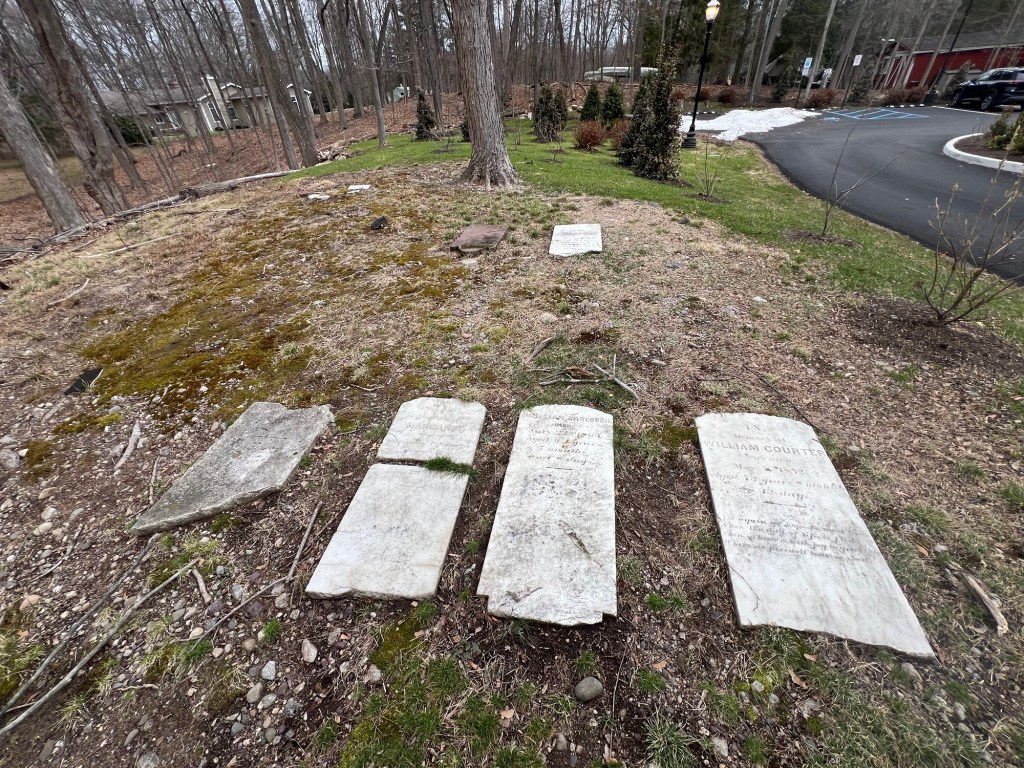
The tombstones of the Courter and Carlouch family members
The grave of William Courter
The only visible tombstones that are left in the cemetery are an Ackerman family member, Anny Ackerman and members of the Courter and the Carlouch family’s (who must have married into the family).
The Ackerman family tombstones (the one to the right was unreadable)
The other tombstones are broken and no one is sure who is buried where in the cemetery.
The History of the Cemetery:
(From Find a Grave website)
The cemetery is located in Franklin Township, Bergen County, New Jersey, on what was once the family farm of J.H. Sturr. As of October 1991 only 6 markers were still remaining.
The Sturr Family Cemetery in full view
History of the House:
(From the Franklin Lakes Municipal Website)
H. Sturr House or Blue Meadow Farm Built 1860 378 Pulis Avenue, Block 1510, Lot 8 Franklin Lakes, New Jersey 07417
The Sturr House – also known as Blue Meadow Farm -is a handsome and little altered example of mid 19th century vernacular architecture which incorporates several stylistic elements such as gable returns and frieze area of the early 19th century Greek Revival style. The Borough of Franklin Lakes lists the erection year of the house as 1860.
The façade of this 2 ½ story house consists of clapboard. The front porch has five bays with square posts and a rectangular entrance door with rectangular sidelights. Two tall 1st story windows are on one side of the porch. A single hitching post with iron rings sits in front of the porch stairs. The building has a frieze area with linear design. Semi-circular headed louvered vents are in all gable ends. The rear of the house has a one story wing. There is a detached garage to the west side of the house as well as a round frame well. Further west of the house is a stable which has been extensively remodeled and converted into a residence in recent times. The house combined with associated structures is a significant remnant of the large farmsteads which ones dotted the Borough’s landscape prior to the recent suburban housing boom.
History of the Family:
(From the Franklin Lakes Municipal website)
This Sturr house and the nearby more altered house at 402 Pulis Avenue were duplicate structures and were probably built around the same time by members of the Sturr family. The 19th century Sturr family was descended from Conraedt Sturr who purchased 190 acres of land in this area with John Coeter from Robert Livingston in 1793.
The non-extant homestead and mill was located at present-day 930 Old Mill Road. It is known that Henry Sturr, the son of Conraedt, had a fanning mill at this location in 1850. In a will dated 1852 he bequeathed his property and mill to his grandsons John, Henry, and Daniel (Maria Braun – 1976 page 26 & 27).
The property along Pulis Avenue upon which these houses are situated was probably included in this will since the homes were built around the mid-19th century. Future deed research is recommended to identify the original builder and the construction date of the house (1861: H. Sturr, 1876 Estate of H.M. Sturr). Presently the house is privately owned and occupied.
The Old Paramus Reformed Church at 660 East Glen Avenue
I have toured the Old Paramus Reformed Church at 660 East Glen Avenue in Ridgewood, NJ many times during the year. I have been on cemetery walks and talks during the summer. I have had Christmas services at the church during the Epiphany. I have also toured the grounds during Halloween when the Ridgewood Historical Society had lead tours at the church.
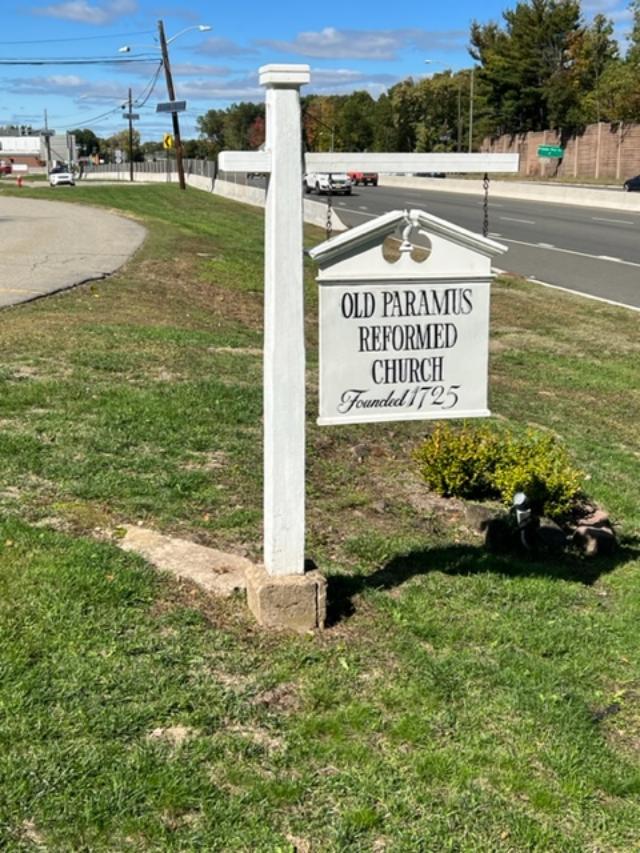
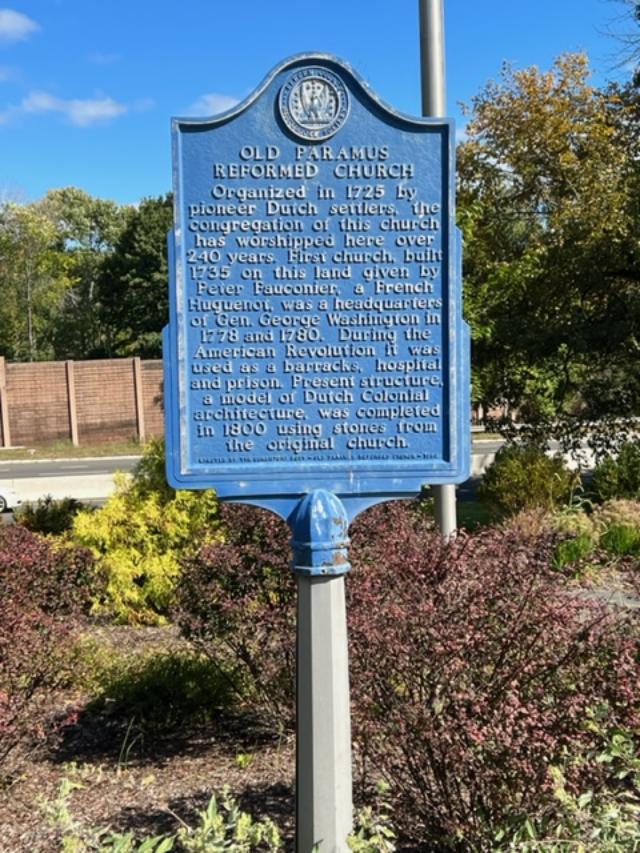
Signage from Route 17
During the Christmas holiday season I was so busy that I was not able to visit my local church. So when I was able to celebrate the Epiphany, I visited the Old Dutch Reformed Church in Ridgewood, NJ. The Church is one of the oldest in both Bergen County, NJ and the State of New Jersey. It is especially beautiful during the holidays. I love coming here because it just reminds you of Christmas and what a church should look like during the holidays. It looks like a Currier & Ives woodcut during the holiday season. The congregation does a nice job decorating it.
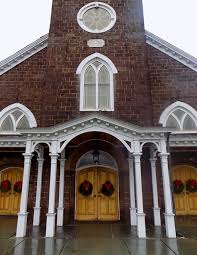
The entrance to the Old Paramus Reformed Church at Christmas time
It really was a nice service with music, the choir singing Christmas hymns and a bell service. It reminded me of my years at the Dutch Reformed Church in Woodstock, NY when I celebrated Christmas there. The whole church was decorated in holly and garland with Christmas trees in the corners and white candles lit in the corner.
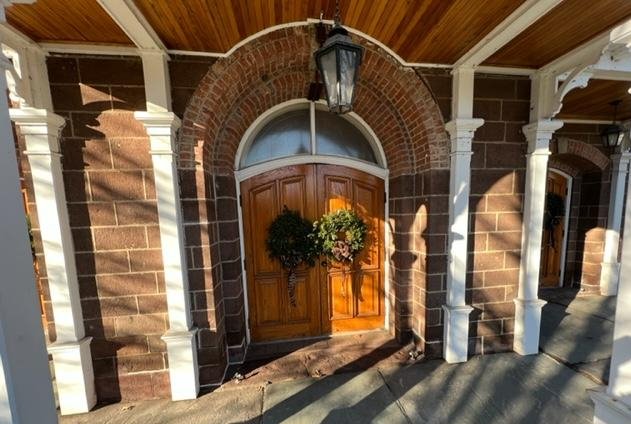
The entrance of the church in 2023 for Epiphany services.
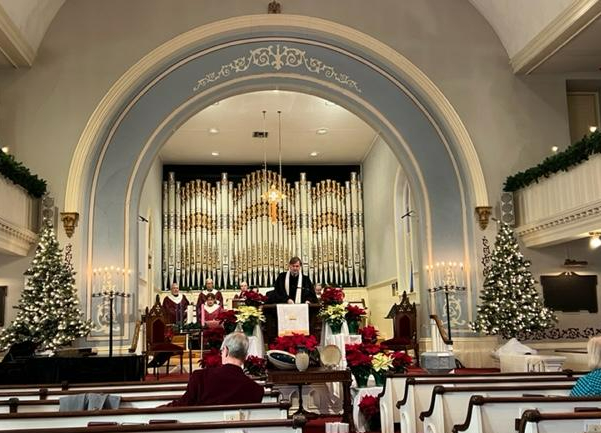
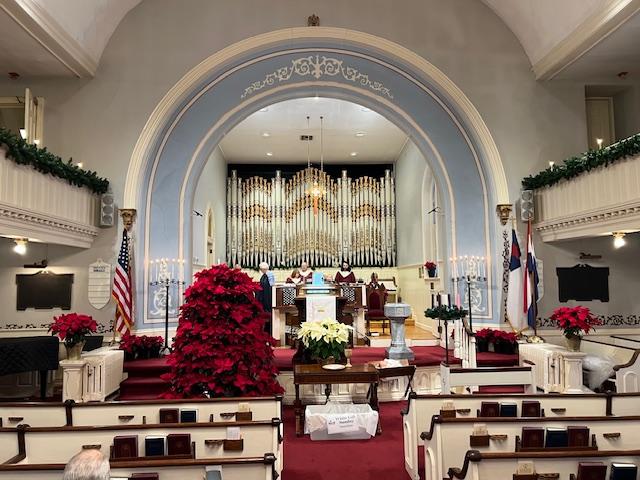
The Inside of the Old Paramus Reformed Church for the Epiphany holidays in 2023.
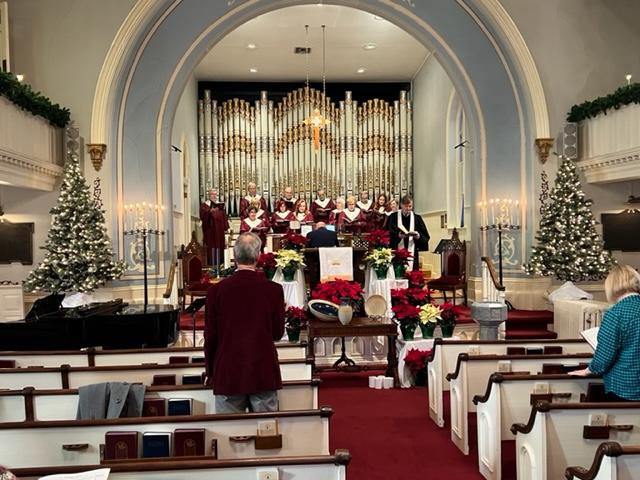
The interior of the church during Epiphany services 2022
The start of the Epiphany Services January 8th, 2022
The Choir singing during church services at the Epiphany services
The beautiful decorations at Christmas time at the Paramus Reformed Church
The Front Alter with the Poinsette tree.
The Poinsette tree at the Alter.
What I liked after the service was over was that everyone walked up to me to greet me. I was one of the younger people in the church and I guess that they were happy to see some young blood. The congregation is so welcoming as I think they want newer members to join and I have to say that the services there are very inspiring and though provoking.
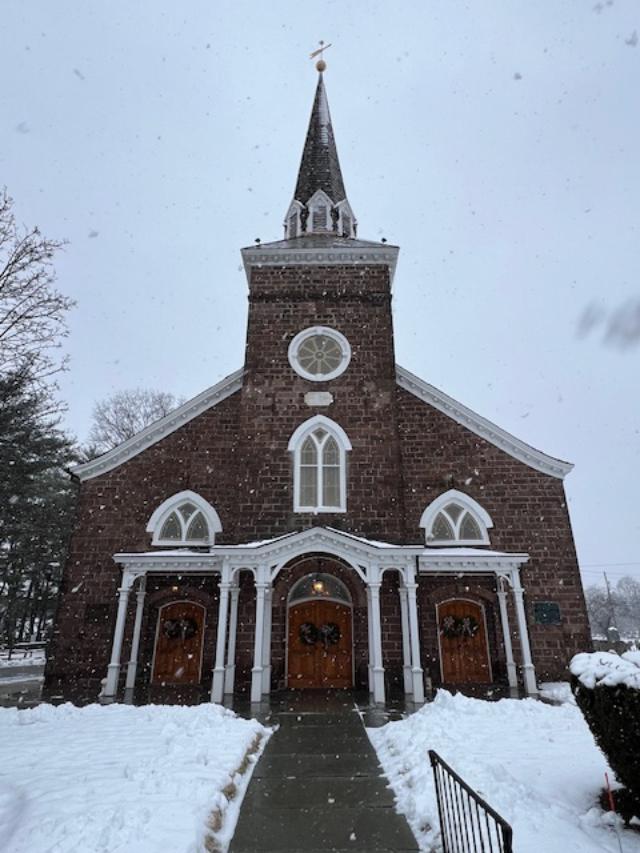
The outside of the church during the Epiphany in 2023. It looked like it was out of a Currier & Ives woodcut.
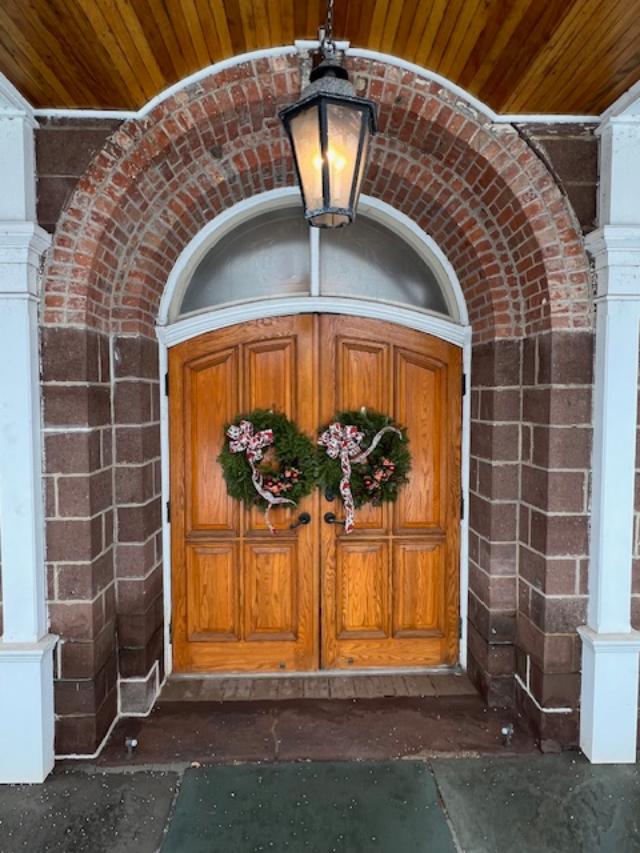
The doorway of the church at Christmas time.
I find that message very positive and very contemporary in an environment that may seem old-fashioned to some. It is called manners, curtesy and a sense of spiritualism that is lacking in the world today. They make the church so welcoming again.
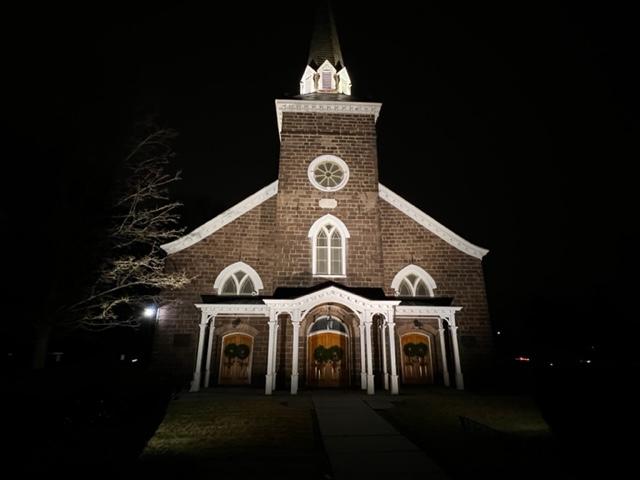
Paramus Reformed Church at nighttime during Christmas 2022
Paramus Reformed Church during night time Christmas services
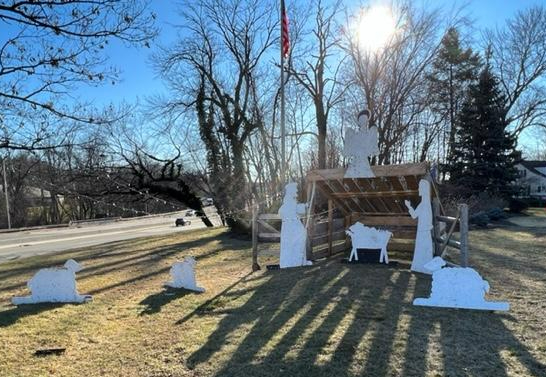
Nativity scene at the Paramus Reformed Church during Christmas 2022 at night
The Nativity scene during the day
The services there are very nice and I thought the church with its wooden benches and older architecture made the service even more special. It was a combination of the decoration, the music, the songs and the friendliness of the congregation that made the last day of the 12 Days of Christmas special for me.
This church makes a statement when passing it on Route 17 South.
I visited in 2024 the Easter service which was a nice change of pace. I really liked the service of the Reformists and the Reverend here is super nice and very inspirational.
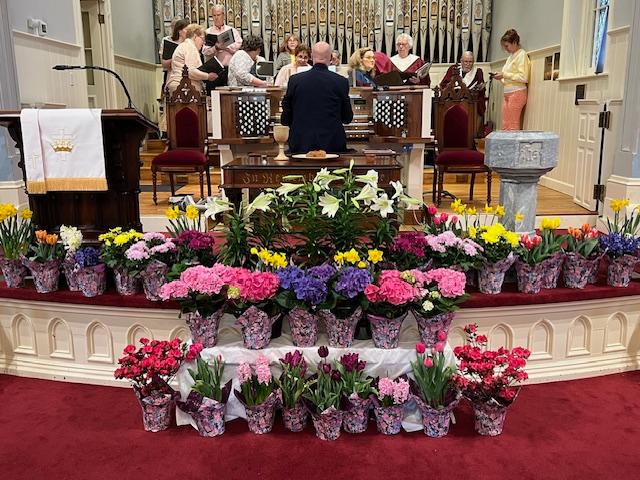
The Choir preparing for the Easter Mass in 2024.
The beautiful flower assortment at the church during the Easter service.
The floral cross on Easter 2024 during the church service.
I had also been to the church a few years prior for a private cemetery walk through the back part of the church looking at the old tombstones, The church is the burial place of many of Bergen County’s original settlers so the headstones are very old. Some of the tombstones were made of sandstone and the other of shale. Many had not survived the weather after all these years.
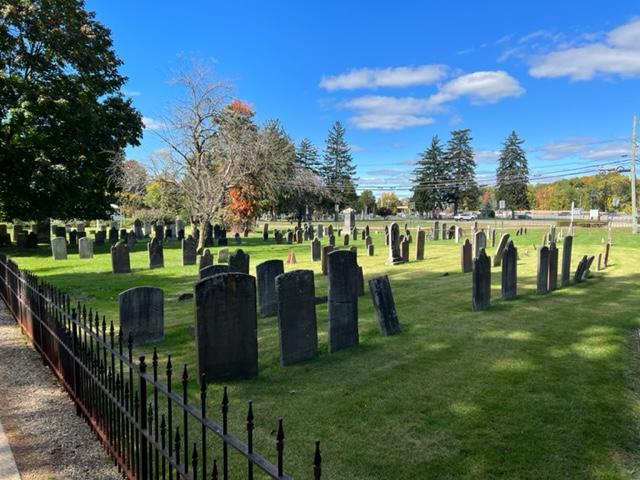
The cemetery at the Old Paramus Reformed Church is an interesting place
The interesting part of the pre-Halloween walk was that the tour guide from the Ridgewood Historical Society told us the reason the cemetery was shaped the way it was today. The cemetery was placed around the original church and when the new church was built in 1800, the newer part of the cemetery was created. It is interesting to walk amongst the graves and look at all the names of the original families of Bergen County that included the Haring’s, Zabriskie’s, Terhune’s, Blauvelt’s, Van Ripper’s and Demarest’s.
The cemetery at the Old Paramus Reformed Church
The cemetery guide at the Old Paramus Reformed Church
Touring through these historical graveyards is a step back in time. History was made by the people buried here who contributions in the shaping of the Revolution and Civil Wars shaped not just Bergen County and New Jersey but the whole country as well.
The Conklin Family
The Banta Family
The Snyder family
If you get a chance to tour the church or the grounds you will know the reason why this is such a special church. Maybe it was the church’s rich history in Bergen County. It is a really special place during all the holidays.
I returned to church services for the Epiphany in 2025 and I always enjoy the welcoming service and the choir at the church. It is also still decorated for the holidays. Some places do forget that there are Twelve Days of Christmas.
The church decorated for the Christmas holidays
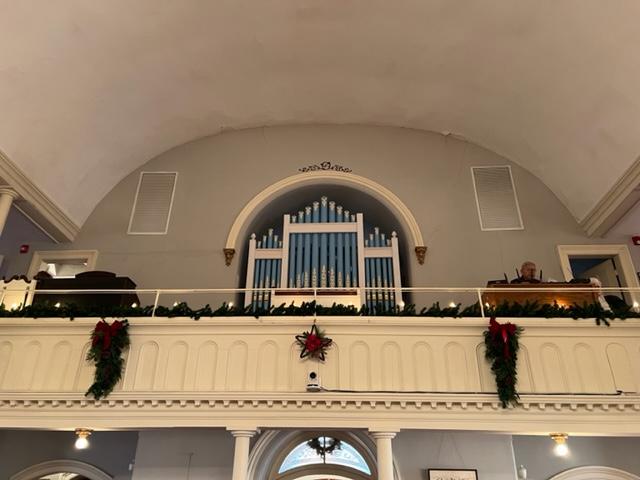
The organ area beautifully decorated
The choir practicing before the service
The History of the Old Paramus Reformed Church of Ridgewood, NJ:
(from the Church website)
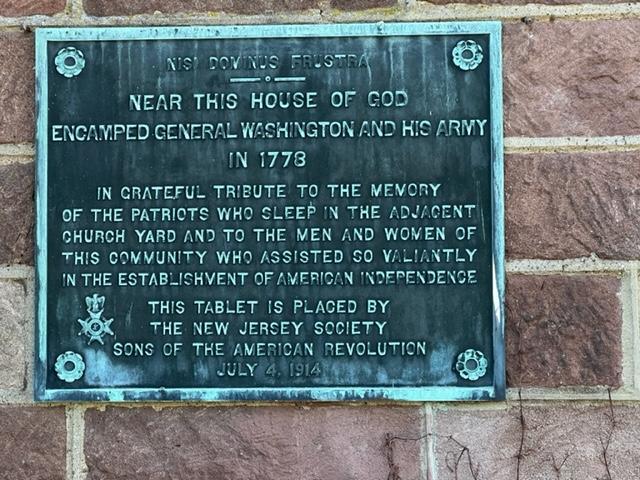
The Old Paramus Reformed Church has a rich past. The congregation was formed in the year 1725. During the American Revolution, the Paramus Church was the site of a Continental Army military post for four years during which clashes between American and British forces tool place. It was also in the original church building that General George Washington held a session of the court-martial of General Charles Lee who disobeyed order at the Battle of Monmouth in 1778. Washington had his headquarters here at the church a total of ten times during various days from 1778-1780.
Other noted Revolutionary War figures such as Alexander Hamilton, the Marquis de Lafayette, Anthony Wayne, Richard Henry Lee and Aaron Burr also were here from time to time during the war. From early colonial times, slaves were members of the church congregation, the upper galleries on both sides being designed for their use during services.
The present church building was built in 1800. An interesting feature is that the pews are numbered. The members of earlier days rented them on an annual basis. The most expensive were numbers 50-57 at $52.00 per year while the least expensive were numbers 38-100 at $4.00 per year> Needless to say, the less expensive pews are at the rear of the sanctuary.
On each side of the pulpit, there are three pews placed at right angles to the rest of the pews in the church. These were reserved for the Elders and Deacons (on the left and right respectively). These persons collectively are known as the Consistory, which is the governing board of the church. It was their duty to sit in these pews each Sabbath with their Bibles and copies of the day’s sermons to check on the “Domine” as to his conduct of the service as well as sticking to his sermon!
That tradition (as to seating) was kept alive for many years in Old Paramus by members of the Consistory who sat in the first pew facing the pulpit each Sunday. The only similar practice in use today is that the Elders serving Communion sit in the first rows on either side of the center aisle.
The decorated organ pipes in the rear of the chancel (choir loft) behind the pulpit date back to 1892. In that year, they were installed when the church received the gift of a new organ from a congregation member.
The inside of the Old Paramus Reformed Church
At the top of the arch the pulpit, there is a Dove of Peace. The dove is made of wood and is hand-carved. The exact date of origin of the dove is unknown. One authority claims that, “The bird is an eagle and was a donation by Dr. Garrett D. Banta in 1800.” Records from the Consistory minutes read: 1874, August 3rd: Resolved that the Consistory thankfully recognize the kindness of Mrs. Catherine Wessella for repairing and regilding the Dove, which has been a part of the decoration of the old church.
There are three flags on the pulpit-the American flag, the Christian flag and the flag of The Netherlands, the last representing our Dutch heritage. In a similar vein, for many years the Dutch flag was flown under the American flag on the staff in front of the church. Today only the American flag is flown on the flag pole.
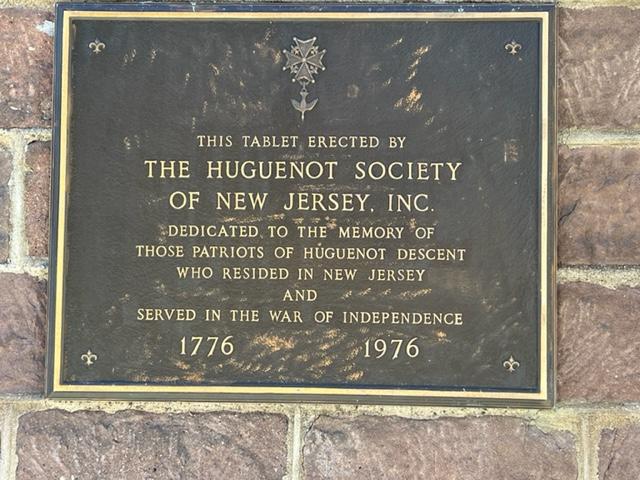
There are several plaques on the inside walls of the church. Some honor the ministers and others honor the various Consistories since 1725. Another just inside the front door notes that this church has been placed on the National Register of Historic Places. In display cases you will find various bits of memorabilia concerning our history.
When attending Old Paramus Reformed Church, you will have come to a warm and comfortable historic church to your whole being.
The Chandelier and the upper pews at the church during Epiphany services in 2024.
On the church campus, you will find modern Educational Building which houses the church offices and facilities need for Christian nurture. Another building is the one-room church like schoolhouse. This building houses the Ridgewood Historical and Preservation Society and is known as The Schoolhouse Museum. It was built in 1872 and was used as a school until 1905. It contains many items of historical note to this area. Make it a point to visit this museum during visiting hours. You should find it to be a very interesting and reward visit.
The signage of the historical landmark status
So what kind of church is Old Paramus Reformed Church? It is affiliated with the Reformed Church in America, the oldest Protestant denomination with a continuous ministry in America. The first church was established in New York City, then known as New Amsterdam in 1628. The Collegiate Churches presently represent the origins of that original Congregational. The best known is Marble Collegiate Church, which is where Dr. Norman Vincent Peale was the minister for fifty-two years. The Reformed Church in America (RCA) is an historic denomination coming out of the Reformation when the Church was “re-formed” and re-organized according to the teachings of the Word of God, the Bible. The Reformed Church of is Biblical in doctrine, semi-liturgical in worship. Presbyterian in government and evangelical in practice.
This year, Old Paramus Reformed Church celebrates 295 years of God’s Loving Spirit. Come join us next Sunday at 10:00am. We would be most happy to see you and you will surely feel rewarded for the experience.
(Disclaimer: This information was taken from the Church’s history and I give them full credit for the information).
Don’t miss this little hidden site in Old Tappan, NJ. The Baylor Massacre site holds a rich history in the county and in the country’s founding. It will make you realize what an important role that the State of New Jersey had in the Revolutionary War and the lives sacrificed to win the war. My hats off to these brave men and women who helped fight for our freedom.
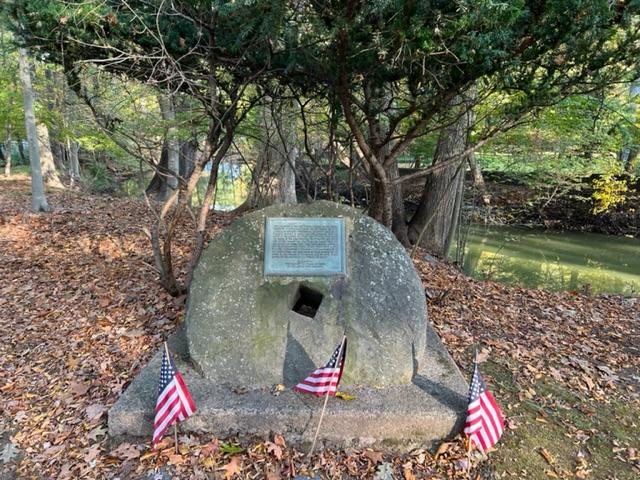
The Baylor Massacre site in the Fall
This quiet little park sits off to the side by the river and you will need to take time to walk the paths and enjoy the reading the signing. The sacrifice that these men made during the war effort and the way they were treated by the British in the act of war was deplorable. That and the fact that their own countrymen from Bergen County turned them into the British was unbelievable.
The Baylor Massacre history:
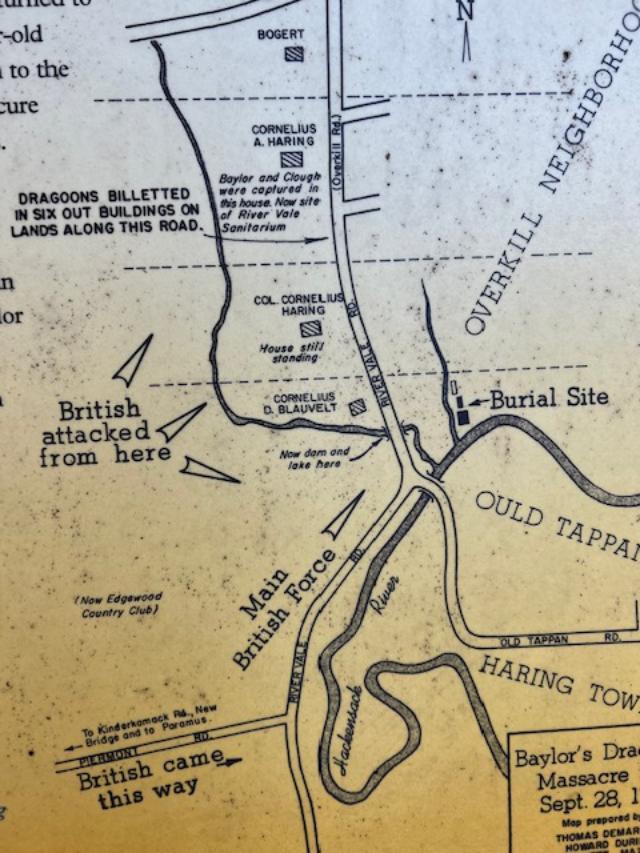
After midnight on September 28, 1778 during America’s Revolutionary War, the brutal surprise attack by the British forces on the sleeping men of the 3rd Continental Light Dragoons began. Today this is known as the Baylor Massacre. Nowa County-owned historic park and burial ground, the Baylor Massacre Site is located along the Hackensack River in River Vale in Northern Bergen County, New Jersey.
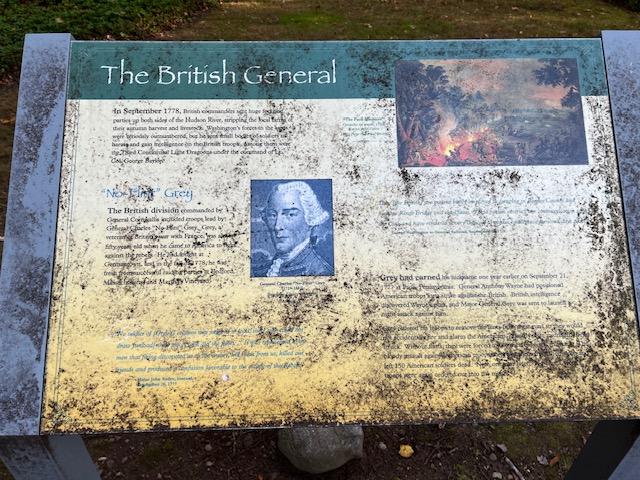
In the Autumn of 1778, British General Cornwallis occupied southern Bergen County with a force of 5000 soldiers. Their purpose was to gather and forage for food to feed the army that would be garrisoned in New York City during the upcoming winter. Bergen County, with its fertile land and industrious Jersey Dutch farms, was a major source for food for both armies during the Revolution.
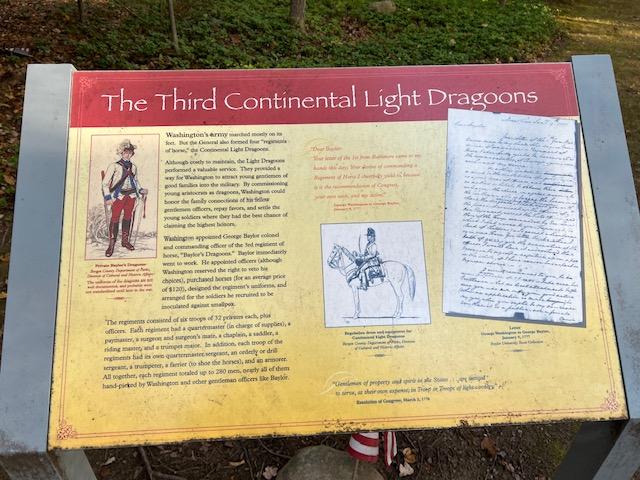
The Third Continental Light Dragoons, under the command by Lt. Colonel George Baylor, was one of four regiments of dragoons authorized by the Continental Congress. On the 27th of September, these 104 officers and men were dispatched to watch the bridge over the Hackensack River at the intersection of modern Rivervale and Old Tappan Roads to support General Wayne and his men in Tappan, New York.
The British forces were lead by General Charles “No Flint” Grey, who earned his nickname in the 1777 battle with General Wayne’s Pennsylvania troops when he ordered his men to remove the flints from their muskets to prevent an accidental gunshot and to use bayonets to insure the surprise of a nighttime attack. These tactics were used again in River Vale.
Grey’s men used their muskets to club and their bayonets to stab the sleeping dragoons. Eleven were killed immediately. Three more including 2nd in Command Major Alexander Clough (Washington’s Chief of Intelligence for the Hudson Valley), died of their wounds in Tappan the following day. Records indicate that as many as 22 men died some several weeks later. Two officers and 37 men, most of who were wounded, managed to escape into the night. One British soldier was killed when shot by a dragoon.
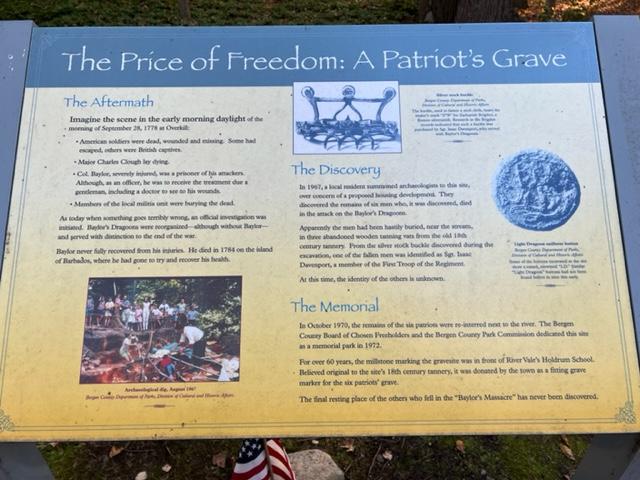
Grey’s men quickly gathered their prisoners and captured American equipment and continued up North. Fortunately General Wayne had been alerted of the movement of the British and had evacuated Tappan. The next day a detachment of the Bergen County Militia was dispatched to River Vale to locate any survivors. Finding six of the dead patriots at the bridge and fearing the possible return of British troops, they hurried to bury them in three abandoned leather tanning vats by the river.
The burial location was passed on by word of mouth for many generations. The only physical maker was the abandoned millstone from the tannery. Abram C. Holdrum removed the millstone from the site around 1900. For many years it was displayed in from of the local Holdrum School.
In 1967, a local resident became alarmed that a new housing development would destroy this historic burial site. Through careful research the approximate location of the burials was identified. County Freeholder D. Bennett Mazur was contacted and as a result, the County sponsored an archaeological dig that located six sets of remains. The County eventually acquired the site and dedicated it as a County Park. In 1974, the patriots’ remains were re-interred in the park and the original millstone was donated to serve as their gravestone.
In 2003, the County dedicated new interpretive panels and accessible pathways at the Baylor Massacre site. It is open year round during daylight hours.
WWW.BERGEN.NJ.US
Disclaimer: This information was taken from the County Pamphlet: 2015 Bergen County Division of Cultural and Historic Affairs. The Bergen County Division of Cultural & Historic Affairs received an operating support grant from the New Jersey Historical Commission, a division of the Department of State. I give them full credit for this information.
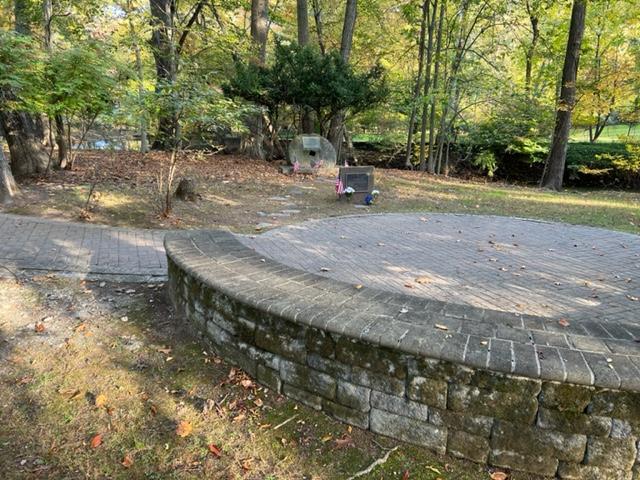
The Baylor Massacre site in the fall of 2022
The Park in the fall months
Note from the Blogger: it is easy to miss the site so watch for the markers. For those interesting in the historical background of the Revolutionary War and New Jersey’s role in the war, take the time to visit this and other sites around Bergen County, New Jersey. They may be small but very significant.
Watch this interesting video that someone posted on YouTube.com
The grounds of the park
The grounds of the park in the fall
The site in the early Spring of 2025
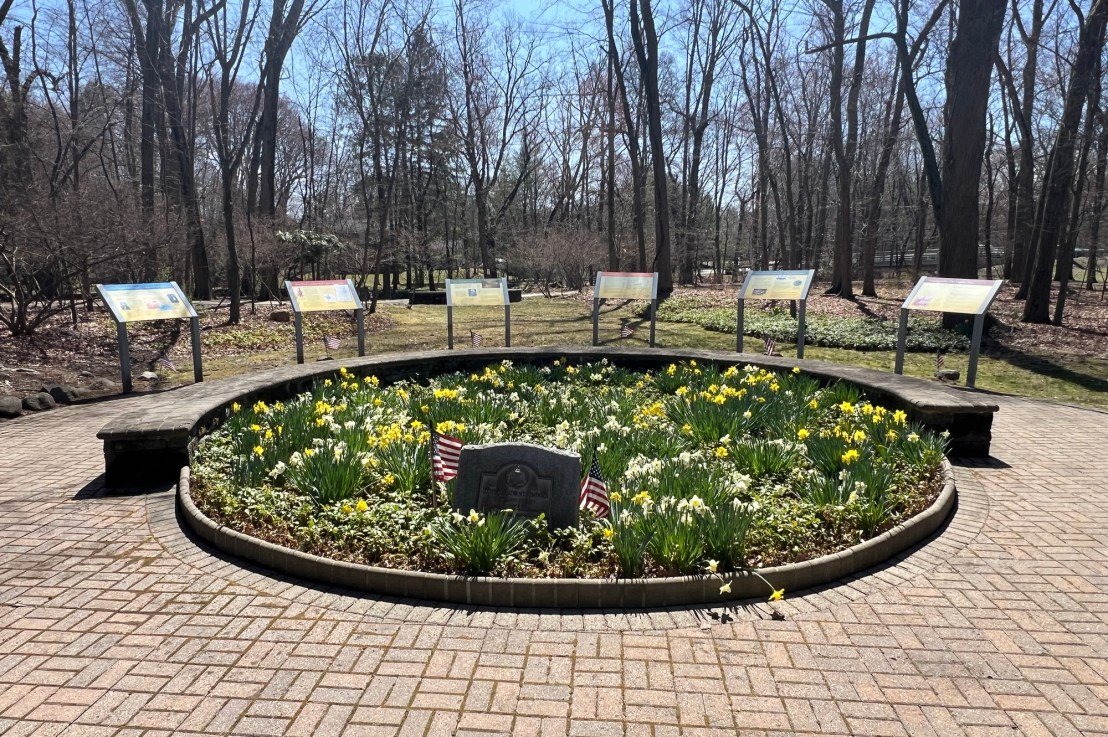
The information signs of the site
The pathways by the river
The gravesite and memorial
The pathways around the park
The pathways around the park
The historic marker in the early Spring
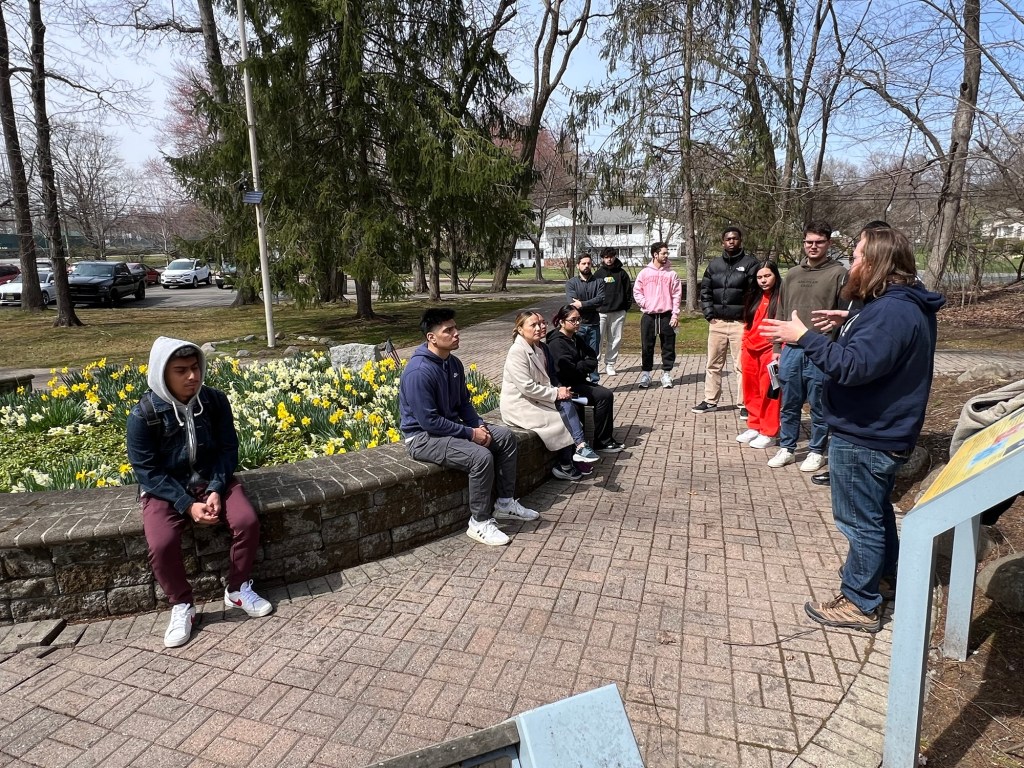
In April of 2025, I took my students from Bergen Community College to the site for a project that we were working on for the ‘Bergen 250’. Most of the students did not know this place existed.
A talk with Colin Knight from the County Historical Division with my students
Me with my students at the Baylor Massacre site
A group picture near the county marker and garden with my students



























 Visiting a Museum: The Unique, Unusual, Obscure and Historical