Category: Sussex County Heritage Weekend

Franklin Heritage Museum                                                                   95 Main Street                                                                               Franklin, NJ 07416

Franklin Heritage Museum 95 Main Street Franklin, NJ 07416

Franklin Heritage Museum

95 Main Street

Franklin, NJ 07416

(973) 827-3481

https://www.westmilfordmessenger.com/entertainment/new-exhibits-on-display-at-franklin-heritage-museum-YTWM20060518305189997

Open: Seasonal please check the website

Admission: Free but donations are appreciated

My review on TripAdvisor:

https://www.tripadvisor.com/ShowUserReviews-g46449-d34737427-r1081595818-Franklin_Heritage_Museum_Franklin_Historical_Society-Franklin_New_Jersey.html?m=19905

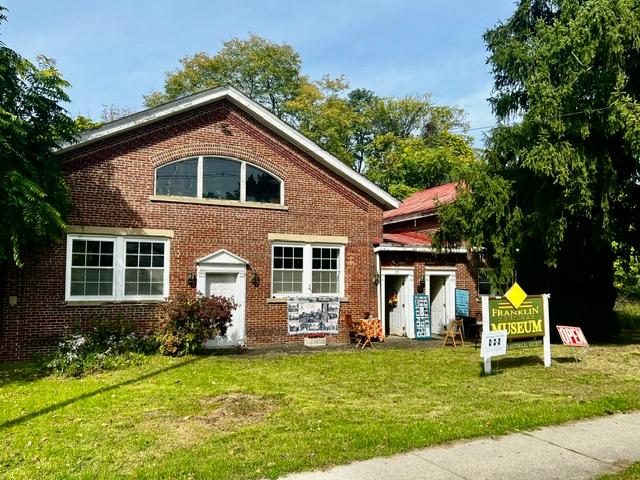
The Franklin Heritage Museum at 95 Main Street

During the Annual Sussex County Heritage Weekend, one of the first stops I made was to the Franklin Heritage Museum in Downtown Franklin, NJ. The museum was the house in one of the offices of the mining company. The museum was a glimpse into community’s mining past and how it shaped this area of the State of New Jersey.

The museum sign out front

The museum building was the old New Jersey Zinc Company ‘Time Office’. This meant that the miners had to punch into their shift at the mine through this building. The old turnstile is to the right of the building.

History of the Franklin Historical Society:

(From the museum pamphlet)

The Franklin Historical Society was organized and incorporated in September 1996 as a non-profit all volunteer education association. It was founded to preserve the heritage of the Franklin Borough to create awareness of both the County and Borough of Franklin and its rich history of culture and ethnic heritage.

The Historical Society’s Museum is located at 95 Main Street in the historic Franklin Mill complex of the former New Jersey Zinc Company.

The Heritage Museum was opened to the public in April 1997 and its displays include:

Iron and Zinc Mining

Railroads

Franklin’s Churches and Schools

Franklin’s Local History

The sign for the old New Jersey Zinc Company ‘Time Office’ historical sign

https://en.wikipedia.org/wiki/Horsehead_Corporation

https://digital.sciencehistory.org/works/joj5gje

The history of the Franklin Mine and its place in New Jersey history

The smaller gallery off to the side of the building concentrates on the history of the NJ Mining industry and the many mining areas in Sussex County.

The room contains all sorts of artifacts related to the industry including both pictures and everyday equipment.

The pictures of all the miners at the company

The Mining Gallery

The Mining Gallery with equipment and artifacts for a day of working in the mines

Artifacts from home and work

This gallery was in transition with the volunteers working on the displays. This side of the museum with be on the local NJ Zinc Mine Company and its history.

The main gallery in the old Main Office space

The main gallery of the museum has a mixture of more mining artifacts and town objects that cover the history of the town.

The ‘250th Anniversary exhibition of the town and its mining past

For the ‘250th Celebration’ of our country, the museum created an interesting display of the formation of the community around the mining industry to its growth today.

The Mining and Equipment display

Community artifacts

Pictures of the police and fire department’s in this small mining community

https://www.franklintwpnj.org/departments/police-department

https://www.facebook.com/FranklinBoroughPolice

https://www.franklinfd.org

https://www.franklinborough.org/index.php/public-safety/fire-department

The main gallery display

Mining equipment in the display

The museum’s main emphasis is on the development of the mining industry both its early development up until when the mines closed in the 1980’s. The display above is on the early mining tools used by the workers.

The Mineral display

What I found interesting was all the minerals that are on display and the glow in the dark components that make these rocks special. When the lights go out, the true magic begins.

The old turnstile to enter the mining compound before the start of the shift

The back of the museum behind the fencing and the weeds, is the entrance to the old mines. Both the entrance building and entrance to the mine has been closed off for years but you can still see behind the fencing. This is the old turnstile off to the side of the building where the miners entered the complex.

Across the street from the museum is the old Hungarian Reformed Church, which is planned to be renovated.

The sign for the church

The old Hungarian church

Down the road from the downtown area where the museum is located is the Franklin Furnace Park, which is a beautiful picturesque park situated around a lake.

The historic sign for the Franklin Furnace Park

https://www.franklintwpnj.org/Home/Components/FacilityDirectory/FacilityDirectory/60/2554

All along the highway facing the park and in the park itself was the most beautiful and colorful foliage. Plan to visit the park after the museum for a colorful and relaxing break.

The foliage around the park in early October

The lake view of the park from the highway

The views from every angle of the park are breathtaking.

The view from inside the park and the footbridge to the island

The view of the park from south of the park

A view of the islands in the park

A view of the islands and the foliage

The islands and the foliage in the beginning part of October

The small center pine island

Traveling back down the road back to Route 23 South to continue my tour of museums

The view of the islands to the north in the lake

The view of the lakes from the south

The view of the foliage from the south

For a small town, Franklin offered such an interesting look at this part of New Jersey’s mining past and its transition from a mining industry to tourism based around the mines. The series of museums and cultural sites offers so much for visitors to see and experience.

A start at the Franklin Heritage Museum offers a glimpse into that past and as the museum keeps developing their exhibits will tell that story to visitors.
Sparta Historical Society/Van Kirk Homestead                               336 Main Street                                                                              Sparta, NJ 07871

Sparta Historical Society/Van Kirk Homestead 336 Main Street Sparta, NJ 07871

Sparta Historical Society/Van Kirk Homestead

336 Main Street

Sparta, NJ 07871

(973) 726-0883

https://www.vankirkmuseum.org/gardens.htm

https://www.sussexskylands.com/listing/sparta-historical-society-van-kirk-homestead-museum/90

Admission: The admission is free except when there is a special event and price is determined by the event

Open: Sunday 1:00pm-4:00pm (Second & Forth of each month)/Monday-Saturday Closed

The Museum is open from April-December. Please check website for seasonality.

My review on TripAdvisor:

https://www.tripadvisor.com/ShowUserReviews-g46839-d10259673-r1074643204-Sparta_Historical_Society-Sparta_New_Jersey.html?m=19905

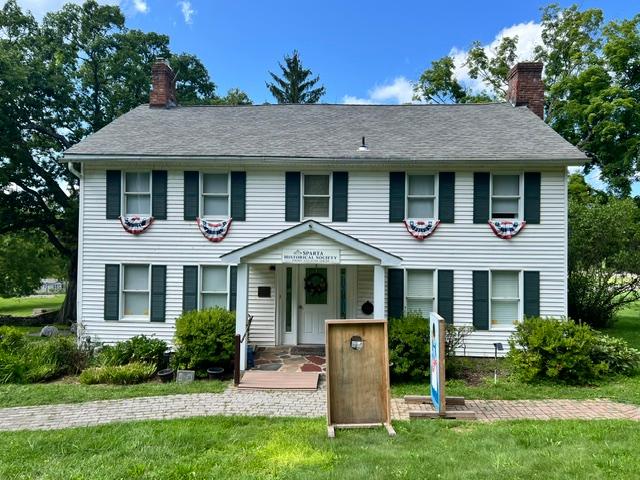
The front of the Van Kirk family home which serves as the headquarters of the Sparta Historical Society

The History of the Site:

(from the museum website)

The Van Kirk Homestead, as it stands today, is 3.5 acres. There is one outbuilding both dating from 1930s – the red carriage barn.  A detached garage, dating from the 1970s, is across from the carriage barn. The original log cabin is gone but its site is known (Sparta Historical Society website).

The house that exists today is from 1780s but because it was lived in by generational Van Kirks’ it has had a few expansions. It is this house which has been revamped into a museum.  The original part of the house has a stone basement that was opened in 2019 as two exhibit galleries.   The first floor has two original fireplaces comprised of four exhibit galleries.  The second floor has the original wide plank floors and has another three exhibit galleries (Sparta Historical Society website).

The sign in the Main Street

The historical description of the house

The main part of the house was closed due to a renovation and the members were going to be opening a new exhibition upstairs. So I toured the lower level kitchen area.

The lower level of the house which was used for the kitchen and storage areas

The history of the kitchen at the Van Kirk House:

(from the museum website)

A two-year major restoration of century comparison period kitchens with the addition of several new gifts and collection purchases.  This exhibit shows the original fireplace colonial kitchen, reopened after 100 years, and the numerous transitions experienced by American families during the Industrial Revolution and its effect on kitchen appliances (Sparta Historical Society website).

The kitchen and dining area with family China and cookware in the background

The prep area, washing equipment and summer storage area

The baking and prep area

The wash equipment and ice box and tongs in the back

The Mining Exhibition just off the kitchen:

(from the museum website)

Opened in October 2019, this permanent exhibit features original Edison artifacts, a scale model of Lime Crest Quarry, and a large fluorescent mineral display. Through these and other rare artifacts, the exhibit explores the town’s mines and the people who worked at them. Housed in the 1780 section of the Van Kirk Homestead Museum, expect insights into, and understanding of, the past which supplements our understanding of our once primary iron and lime industry in Sparta and elsewhere in Sussex County. It also provides a glimpse into the time-consuming, labor-intensive methods used in the 18th, 19th, and early 20th centuries to prepare, and ship minerals (Sparta Historical Society website).

The other side of the kitchen has an exhibition on the Mining Industry which is a big fabric of the community. The exhibition included a model of the Lime Crest Quarry and the Sterling Quarry.

The sign for the Lime Crest Quarry Model

The Mining exhibition-the Lime Crest Quarry model

The Men, Mines and Minerals exhibition with the lights off

The minerals and the clock from the mines

The Mineral exhibition with the lights off

The iron ore and the magnet exhibition

After touring the inside exhibition, I then explored the grounds which are still being used for gardens and vegetable beds for the society.

The back of the house grounds. They were setting up for an afternoon concert

The grounds of the house and the garage in the background

The family garage on the property exhibition:

(from the museum website)

Opened in August 2019, this permanent old fashioned transportation exhibit is located in the multi-year restoration project of the Nicholson Family Wagon House. On display at the Historic Transportation exhibit, you will discover a horse drawn carriage wagon, an old horse drawn sleigh, an old antique car Model T Ford and transportation artifacts. Learn how horse buggies, vintage carriages and old antique cars set the path for historic transportation to the present (Sparta Historical Society website).

The inside of the garage had a Model T car in perfect shape, a buggy and a sleigh.

The inside of the garage

The Model T car

The buggy and the sleigh in the back of the garage

The Studebaker Doctor’s buggy sign

The buggy

The Sturtevant-Larabee Sleigh sign

The sleigh

Also in the garage is various pieces of equipment and even an old gas pump

The sign for the Gilbert and Baker Self-Measuring Gas Pump

The old fashioned gas pump in the garage

Along all the walls were old pictures of the farm when it was still active and under family control

The gardens an grounds in the distance

One of the old sheds was converted into a school house and the room was set up as an old fashioned on room school house. Here kids of various ages were taught the fundamentals of Math, English and History.

The One Room Schoolhouse

The history of the Schoolhouse from the early 1900’s:

(from the museum website)

Step back in time to when classes consisted of all ages together!  Welcome to our One Room Schoolhouse exhibit which opened in 2023.  Sparta had four one room schoolhouses.   The first school was built at the Presbyterian Church in 1812 and was replaced in 1860 after a fire destroyed it. The one-room schoolhouses were established in New Jersey when a 1819 bill funded public education, and they remained active through the 1930’s, when regional schools were established. Students from grades one to eight attended these schools. Four of the structures that housed the one-room schoolhouse remain (Sparta Historical Society website).

Our schoolhouse replicates schools that were generally equipped with a teacher’s desk, student desks, a flag, a globe or map, books, a slate board, and a clock. Our schoolhouse has an 1860 map of Sussex County.  At the back of the room is an old stove similar to those used to heat the room (Sparta Historical Society website).

The inside of the One Room Schoolhouse

The Teacher’s desk

The Grounds and Gardens of the Museum:

(from the museum website)

Besides the two fenced Sparta Community Gardens, the homestead grounds have a fir pine grove, a New Jersey Champion Big Tree, a herb garden, and a continual seasonal flowering landscape (Sparta Historical Society website).

The last thing I toured at the museum was the open vegetable gardens which looked like they were getting ready to harvest.

The vegetable gardens in the back of the schoolhouse

The inside of one of the flower and vegetable gardens

The entire museum complex of the Van Kirk House, grounds with the sheds and garage and gardens on both sides.. The grounds are beautifully maintained.

Video on the site from the Sparta Historical Society:

The tour of the house:

Tour of the house and the grounds:

Historical Tour of Sparta, NJ:

The museum has interesting exhibitions and an array of special events through December 13th when the museum closes for the season. It reopens again in April with the warmer weather.

Take time to stroll the grounds and take a look at all the exhibits. It is an interesting look into New Jersey’s past.