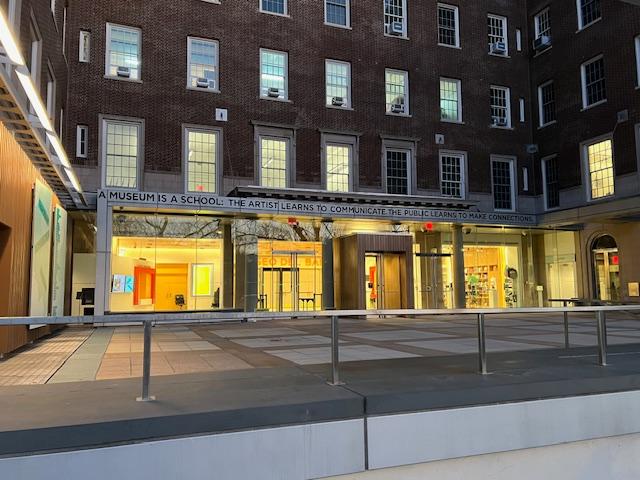
The mission of El Museo del Barrio is to present and preserve the art and culture of Puerto Ricans and all Latin Americans in the United States. Through its extensive collections, varied exhibitions and publications, bilingual public programs, educational activates, festivals and special events, El Museo educates its diverse public in the richness of Caribbean and Latin American arts and cultural history.
The sign in front of the building
By introducing young people to this cultural heritage, El Museo is creating the next generation of museum-goers while satisfying the growing interest in Caribbean and Latin American art of a broad national and international audience.
The History of the Museum:
El Museo was founded 45 years ago by artist and educator Raphael Montanez Ortiz and a coalition of parents, educators, artists and activists who not that mainstream museums largely ignored Latino artists. Since its inception, El Museo has been committed to celebrating and promoting Latino culture, thus becoming a cornerstone of El Barrio and a valuable resource for New York City.
The exhibitions in the Main Gallery
El Museo’s varied permanent collection of over 6,500 objects, spans more than 800 years of Latin American, Caribbean and Latino art, includes pre-Columbian Taino artifacts, traditional arts, twentieth-century drawings, painting, sculptures and installations as well as prints, photography, documentary films and video. For a brief overview of our history and to explore the institutional chronology and exhibition history year by year.
The Galleries of El Museo del Barrio
Our Purpose:
El Museo del Barrio’s purpose is to collect, preserve, exhibit and interpret the art and artifacts of Caribbean and Latin American cultures for posterity.
To enhance the sense of identify, self-esteem and self-knowledge of the Caribbean and Latin American peoples by educating them in their artistic heritage and bringing art and artists into their communities.
To provide an educational forum that promotes an appreciation and understanding of Caribbean and Latin American art and culture and its rich contribution to North America.
To offer Caribbean and Latin American artists greater access to institutional support in the national and international art world.
To convert young people of Caribbean and Latin American descent into the next generation of museum-goers, stakeholders in the institution created for them.
To fulfill our special responsibility as a center of learning and training ground for the growing numbers of artists, educators, art historians and museum professionals interested in Caribbean and Latin American Art.
The mission reaffirms the vision of Raphael Montanez Ortiz, who founded El Museo del Barrio in 1969 and of the Puerto Rican educators, artists and community activities who worked in support of this goal.
(El Museo del Barrio pamphlet online)
The Collection:
The museum features an extensive collection of around 8,500 pieces composed of pre-Columbian and traditional artifacts, particularly a large permanent Taino exhibit as well as 20th century arts and crafts, graphics and popular media, Mexican masks, textiles from Chile and photographs and traditional art from Puerto Rico. There are often temporary exhibits on Puerto Rican and Latino modern art. The museum also sponsors numerous festivals and educational programs throughout the year including the annual Three Kings Day parade. Due to a lack of space prior to their 2009-2010 expansion, the museum began to place some of their permanent collection online. This also served as a means of audience development. (Wikipedia)
Located in Inwood Hill Park and part of the NYC Parks System. The rock was dedicated on February 2, 1954 by the Peter Minuet Post #1247, American Legion.
I came across the Shorakkopoch Rock, the noted spot that Peter Minuet has been said to have bought the island of Manhattan from the Indians. No one is too sure where the spot of the ‘transaction’ took place as some feel it may have been closer to downtown by the Bowling Green, where the original Dutch settlement was located or maybe he traveled to them, we will never know. What we do know is that he said the transaction took place under a tulip tree and in this spot used to be a tulip tree that was over 220 years old before it died.
The Shorakkopoch Rock at the edge of the pathways leading into Inwood Park
The plaque on the the rock reads:
Shorakkopoch: According to legend, on this site of the rock, principal Manhattan Indian Village, Peter Minuet in 1626, purchased Manhattan Island for trinkets and beads them worth about 60 guilders. This boulder also marks the spot where a tulip tree (Liriodendron Tulipifera) grew to a height of 165 feet and a girth of 20 feet. It was until its death in 1932 at the age of 220 years old, the oldest living link with the Reckgawawang Indians, who lived here. Dedicated as part of New York City’s 300th Anniversary celebration by the Peter Minuet Post 1247 American Legion 1954.
As you stroll down the path from this spot in the park and continue along the path, you will come across Shorakkopoch Rock, a boulder marking the site where Peter Minuit bought the island of Manhattan from the native Reckgawawang Indians for about 60 guilders of trinkets and beads in 1626.
The boulder marks the spot of a giant 280-year-old 165-foot tulip tree once stood until it died in 1932. Legend has it that this is the spot of one of the greatest real estate investments took place. It is such an important part of Manhattan history that most tourists miss.
For more information on the rock, please contact the Art & Antiquities at (212) 360-8143.
Disclaimer: This information was taken form the NYC Parks Department website.
Please take time out when visiting Manhattan to see this important piece of the city’s history as the city itself was founded on this very site.
I came across the Muscota Marsh when I was walking the neighborhood of Inwood in 2015 and thought that this is a great site that tourists should see on top of a visit to Inwood Park and the Shorakkopoch Rock where Peter Minuet bought Manhattan from the Indians.
The Shorakkopoch Rock in Inwood Park
The historic Shorakkopoch rock. This is where Peter Minuet ‘bought’ Manhattan from the Native Americans
A closer view of the plaque
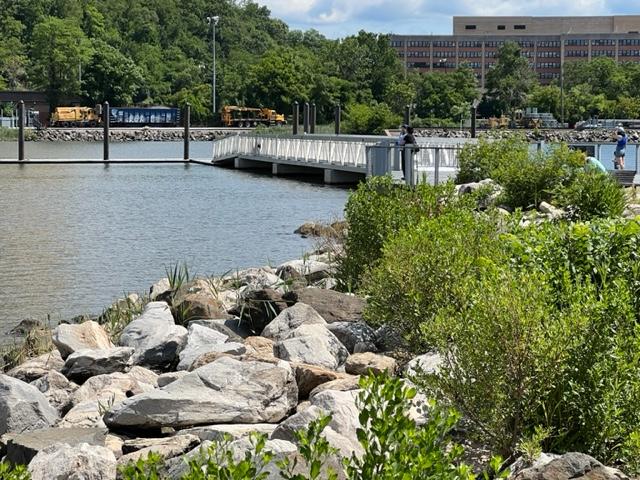
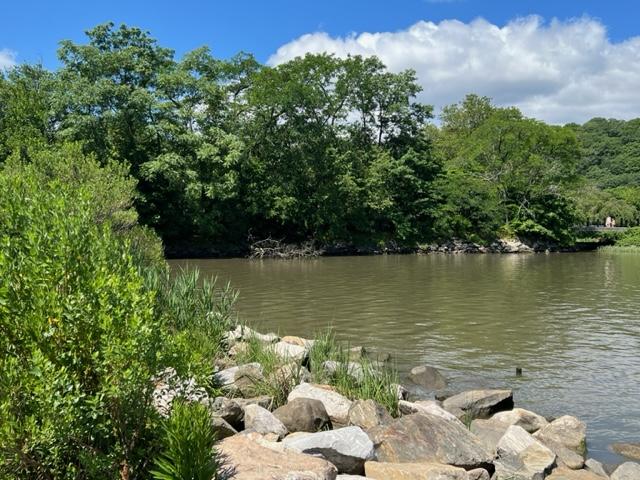
The Muscota Marsh is a one-acre public park in the Inwood section of the borough of Manhattan in New York City, on the shore of Spuyten Duyvil Creek, a section of the Harlem River. It is adjacent to the much larger Inwood Hill Park and Columbia University’s Baker Athletics Complex. The park is notable for its views and for its ecological conservation features.
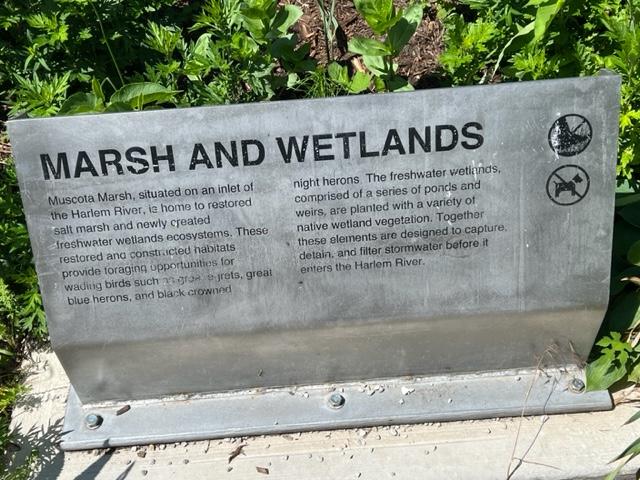
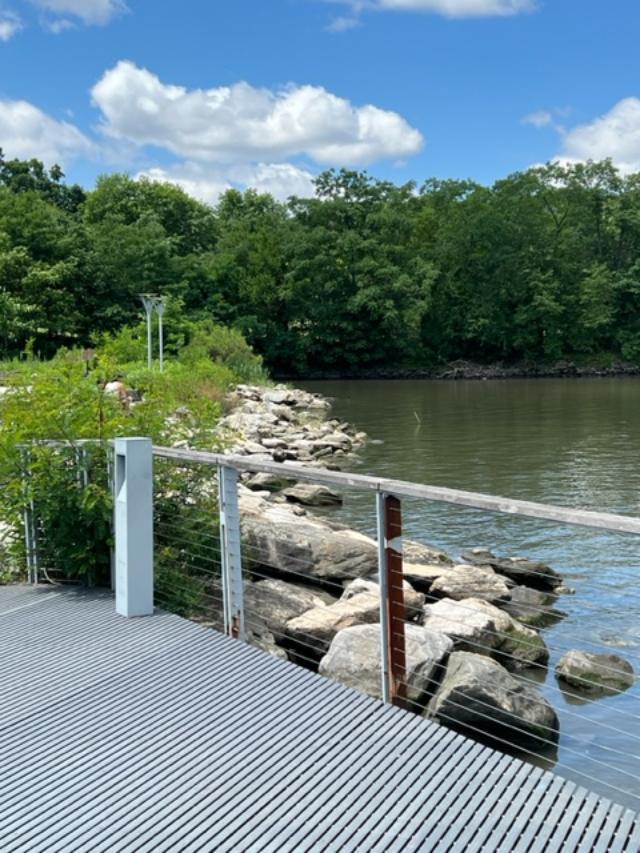
Muscota Marsh is unusual for having both a freshwater marsh and a salt marsh in such a tiny area. Besides attracting plant and animal life, these wetlands are intended to help filter rainwater runoff and thereby improve the water quality of the river. Other facilities include a dock for kayaks and canoes, benches and walking paths. A wooden deck overlooking the river provides views of Inwood Hill Park, the Henry Hudson Bridge and the New Jersey Palisades.
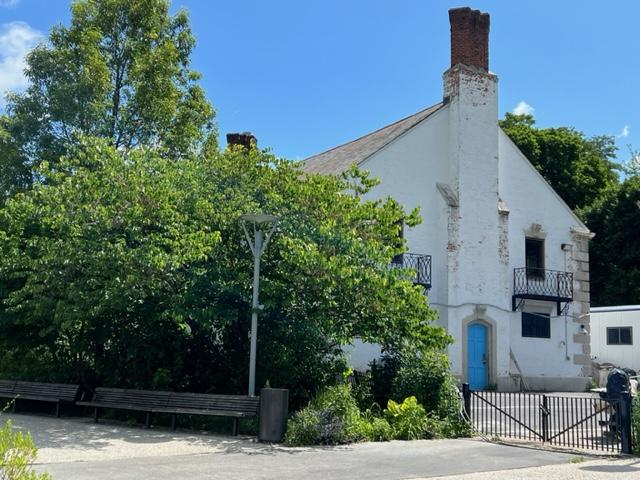
The Muscato Marsh is right next to the Columbia Boathouse
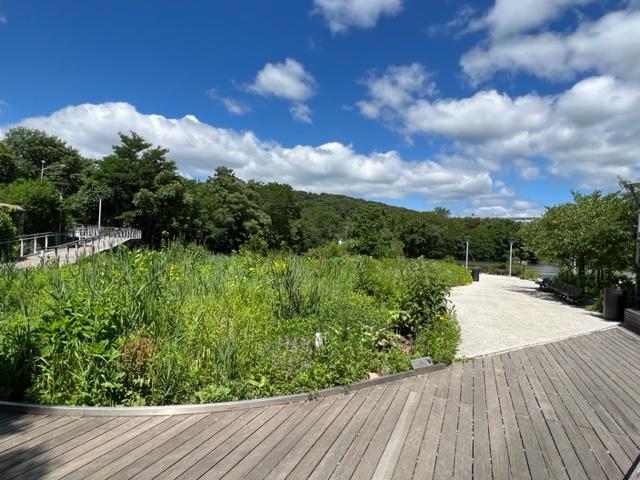
As this public green space, with a design inspired by tidal flats and mud ways, you can enjoy the educational richness of the marsh from the wildlife observation deck or venture out on to a wooden deck stretching out to the waterway through the native water gardens.
By the boathouse
Because of the close proximity of the salt marsh and the freshwater wetlands, you’ll be able to spot beautiful wading birds like the great blue heron and the snowy egret. You can also see leopard frogs and ribbed among the dramatic colors and textures of the marsh’s native plants.
The Wetlands
Opened to the public in January 2014, the park was constructed by Columbia University as part of a deal to construct the new Campbell Sports Center within its adjacent athletics complex. It was designed by James Corner Field Operations, which is best known for its work on Manhattan’s High Line. It is cooperatively administered by the New York City Department of Parks and Recreation and Columbia, with the university providing maintenance and security.
The wetlands
The park is open all year round and is free to enter. It is right next to the Columbia Stadium.
It is a nice part of the Inwood Park
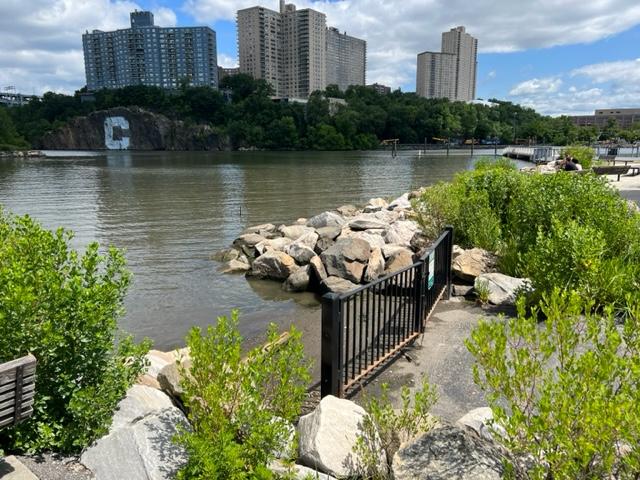
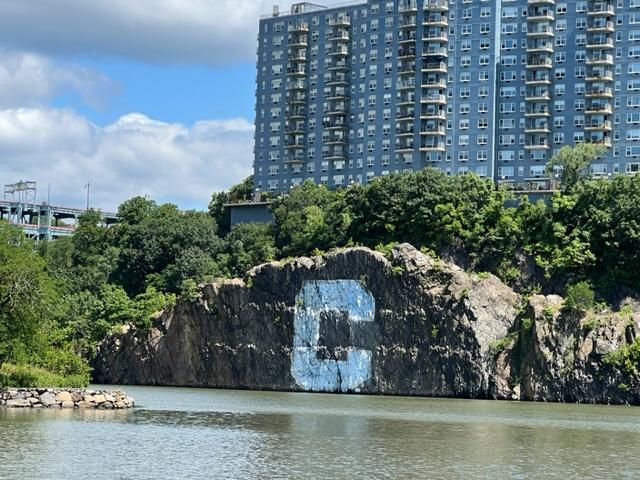
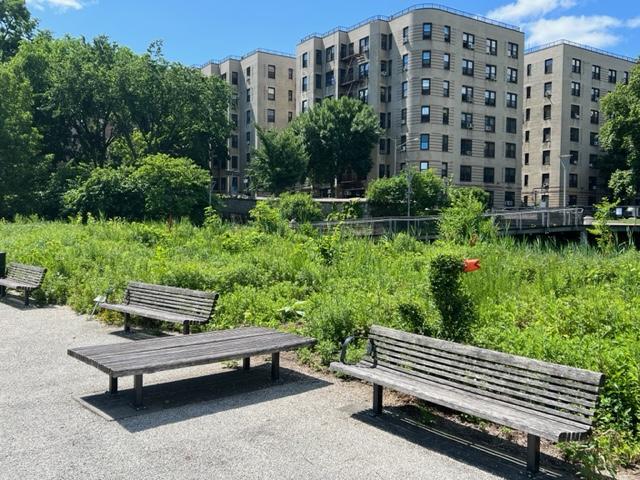
The Muscato Marsh facing Inwood Hill Park
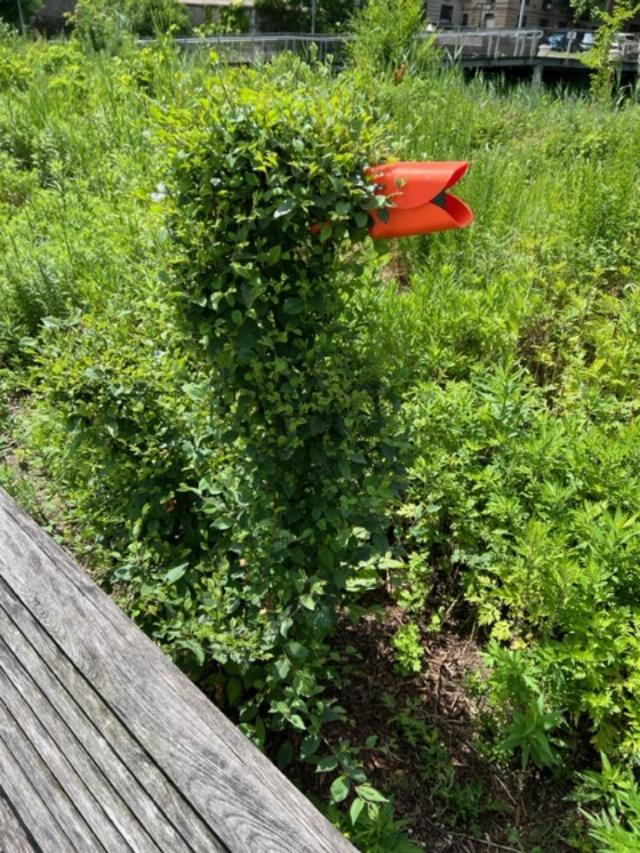
The clever duck
Disclaimer: This information was taken from the NYC Parks information guide and Wikipedia. Please check this small pocket park out for its beauty and for its importance in the environment.
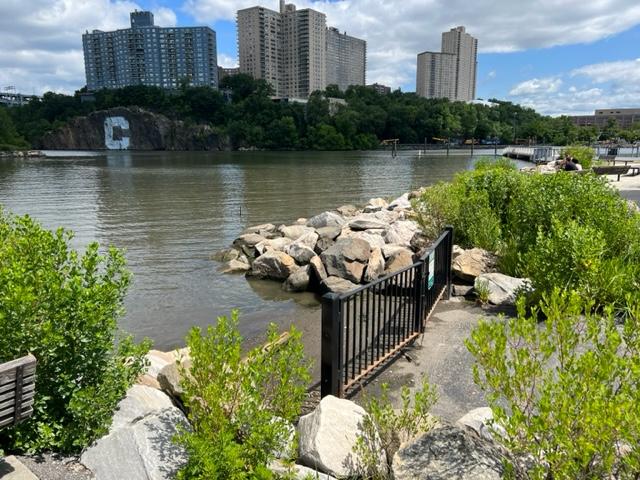
The marsh during the beginning of the summer of 2023
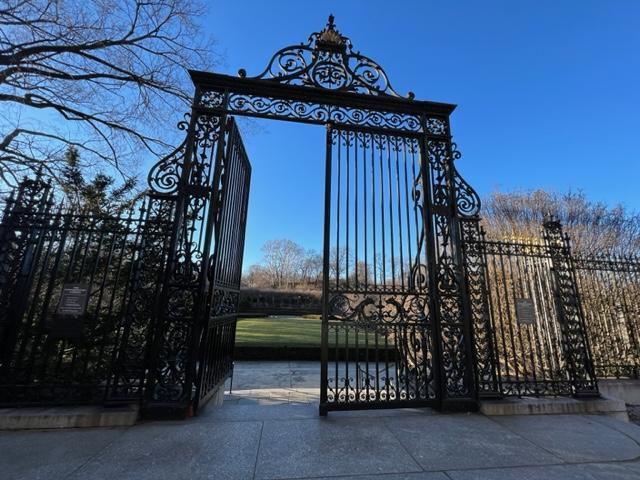
The entrance to the Central Park Conservatory Garden in Winter 2023 (The Vanderbilt Gates)
I love walking around the Central Park Conservatory at any time of the year especially in the early Spring when all the flowers are in bloom. It is a wonderful experience to go in the early morning when it is quiet and you have the park to yourself (which is very rare). The whole garden just went through a major restoration and it has really changed. The whole Conservatory is refreshed and in bloom. It is quite a site!
The sign at the entrance of the Gardens
The entrance to the gardens
This time of the year (Spring) the Central Park Conservatory is in full bloom and its magnificence is at its finest in the Spring and Summer months. In May, the tulips and daffodils are just finishing their flowering and the lilacs are just finishing their blooming and still fragrant the garden. The lawns are all a deep green and the dogwood trees are just starting to bloom around the rings of the gardens.
The newly renovated pathways
Don’t miss walking around the Gardens off to the side closest to the Harlem Meir as they are open through the renovation. You will see beds of flowers along the fountain’s edge and can admire all the sculpture. What is most impressive is that in-between the Gardens is a vast green lawn surrounded by trees. The lawn of the Conservatory is nice to just admire with the trees lining it on all sides.
Central Park Conservatory Garden Spring 2025
The best time to come to the Conservatory Gardens is in early to late Spring and the early Summer when everything is in full bloom. This is when Mother Nature shows us her great magic.
The beauty of the Central Park Conservatory is that it blooms all year around except the winter and even then, there is a quiet elegance to the garden.
The gardens in full bloom in Summer 2025
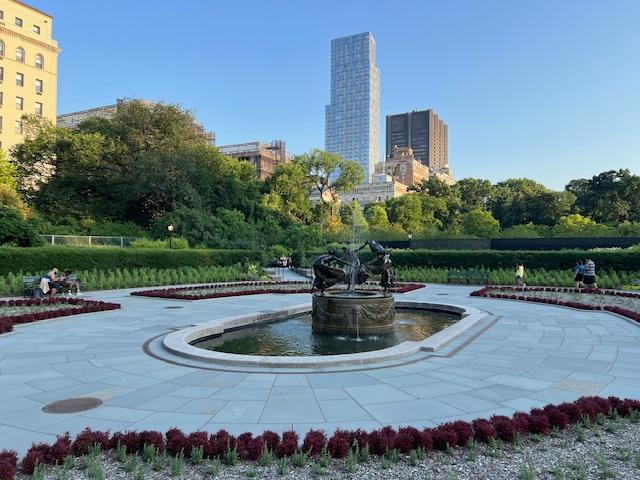
The restored fountain in all of its glory
History of The Central Park Conservatory:
The Central Park Conservatory Garden is the only formal garden in Central Park, New York City and is located approximately between 104th and 106th Street on Fifth Avenue in NYC. The Garden consists of about six acres of formal landscaping of trees, shrubs and flowers. The formal garden is divided into three smaller gardens each with a distinct style: Italian, French and English. The Central Conservatory Garden is an officially designated Quiet Zone and offers a calm and colorful setting for a leisurely stroll and intimate wedding.
The Central Park Conservatory in the Spring 2025
It takes its name from a conservatory that stood on the site from 1898 to 1934. The park’s head gardener used the glasshouses to harden hardwood cuttings for the park’s plantings. After the conservatory was torn down, the garden was designed by Gilmore D. Clarke, landscape architect for Robert Moses, with planting plans by M. Betty Sprout and constructed and planted by WPA workers, it was opened to the public in 1937.
The Garden is composed of three distinct parts, skillfully restored since the 1980’s and is accessible through the Vanderbilt Gate at Fifth Avenue and 105th Street, a quarter south of the park’s northeast corner.
The Vanderbilt Gate at the Central Park Conservatory
The Vanderbilt Gate once gave access to the forecourt of Cornelius Vanderbilt II’s chateau designed by George Browne Post, the grandest of the Fifth Avenue mansions of the Gilded Age, at 58th Street and Fifth Avenue, sharing the Plaza with Plaza Hotel. The wrought iron gates with cast iron and repousse details, were designed by Post and executed in an iron foundry in Paris.
The fountain at the Central Park Conservatory
To the left of the south side is the garden of mixed herbaceous borders in wide concentric bands around The Secret Garden water lily pool, dedicated in 1936 to the memory of Frances Hodgson Burnett with sculpture by Bessie Potter Vonnoh.
The Fountain in the Spring of 2025
Some large shrubs, like tree lilac, magnolias, buddleias and Cornus alba ‘elegantissima’ provide vertical structure and offer light shade to offset the sunny locations, planted by Lynden Miller with a wide range of hardy perennials and decorative grasses, intermixed with annuals planted to seem naturalized. This garden has seasonal features to draw visitors from April through October.
To the right of the central formal plat is a garden also in concentric circles, round the Untermyer Fountain, which was donated by the family of Samuel Untermyer in 1947. The bronze figures, Three Dancing Maidens by Walter Schott (1861-1938) were executed in Germany about 1910 and formed a fountain at Utermyer’s estate “Greystone” in Yonkers, New York.
This section of the Conservatory Garden has two dramatic seasons of massed display of tulips in the spring and Korean chrysanthemums in the fall. Beds of satolina clipped in knotted designs with contrasting bronze-leaved bedding begonias surround the fountain and four rose arbor gates are planted with reblooming ‘Silver Moon’ and ‘Betty Prior’ roses.
The French Gardens at the Central Park Conservatory in Summer 2025
After the Second World War the garden had become neglected and by the 1970’s became a wasteland. It was restored and partially replanted under the direction of horticulturist and urban landscape designer Lyden Miller to reopen in June 1987. The overgrown, top-heavy crabapples were freed of water shoots and pruned up to a higher scaffold for better form. The high-style mixed planting was the first to bring estate garden style to urban parks, part of the general of Central Park under Elizabeth Barlow Rogers of the Central Park Conservancy.
The Conservatory in the early Spring of 2025
This is the fountain up close
The Central Park Conservatory in the Summer of 2026 tour:
In the Summer of 2026, I was able to tour the Gardens and see how vibrant the flower beds were in the early July. I had never seen the gardens more vibrant or colorful. I walked along the paths admiring the flowers and crediting all the work that had been done in the garden’s last renovation. The money and time that was put into it was well worth it. The gardens are in pristine condition and are breathtaking when in full bloom.
The entrance of the Central Park Conservatory lawn and fountain
The fountain and the geometric garden
Central Park Conservatory gardens at the entrance
The entrance of the gardens from the Harlem Meer area
The entrance to the flower gardens from the Central Park Conservatory lawn
The Central Park Conservatory garden beds
The gardens in full bloom in the Summer of 2026
The flower beds in the central of the gardens
The Central Park Conservatory Fountain and Lotus pools
The Fountain statues
The flowers beds around the paths
The orange flowers that line the paths
The vibrant purple flowers
The gardens that line the paths
The flowers were so vibrant and beautiful that summer. Each of the beds had a different color flowers and the way they played off one another made a interesting effect. I was so impressed by the plants.
The beautiful flowers that line the paths
The flowers are lining the paths
The flowers lining the paths
The flowers were so vibrant in the Summer of 2026
(This information directly from Wikipedia and has many sources)