I recently visited the Steuben House for a Christmas concert which was an evening of Christmas songs, a talk on the history of Christmas before, during and after the Revolutionary War. It was a very lively evening of song and lecture and the ladies who entertained us sang beautifully.
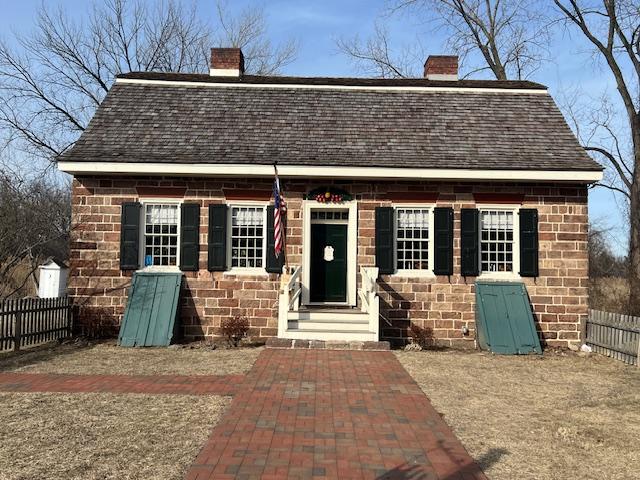
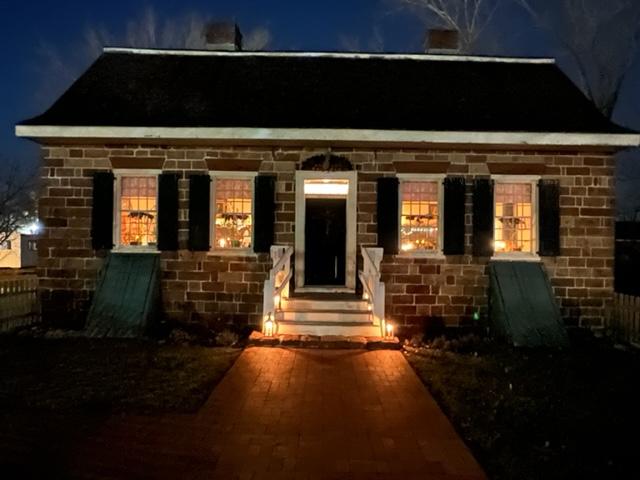
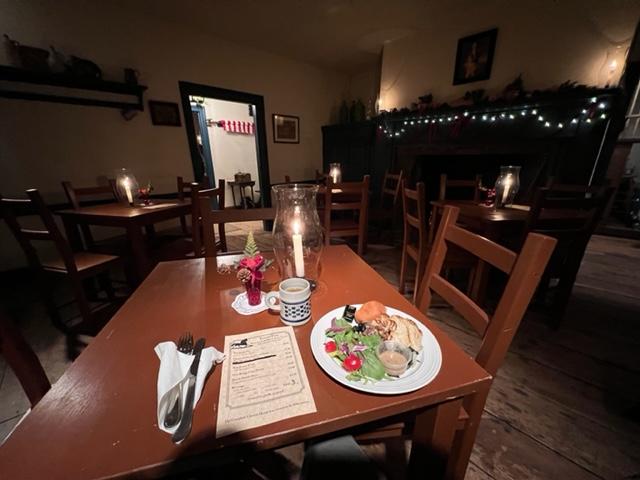
The Campbell-Christie House was used as the ‘pub’ for diners that night
Linda Russell & Company sang Christmas songs of the time and then talked in between about how Christmas was celebrated during the War years. She was a delight in her discussion and her and her daughter and their friend did a wonderful job.
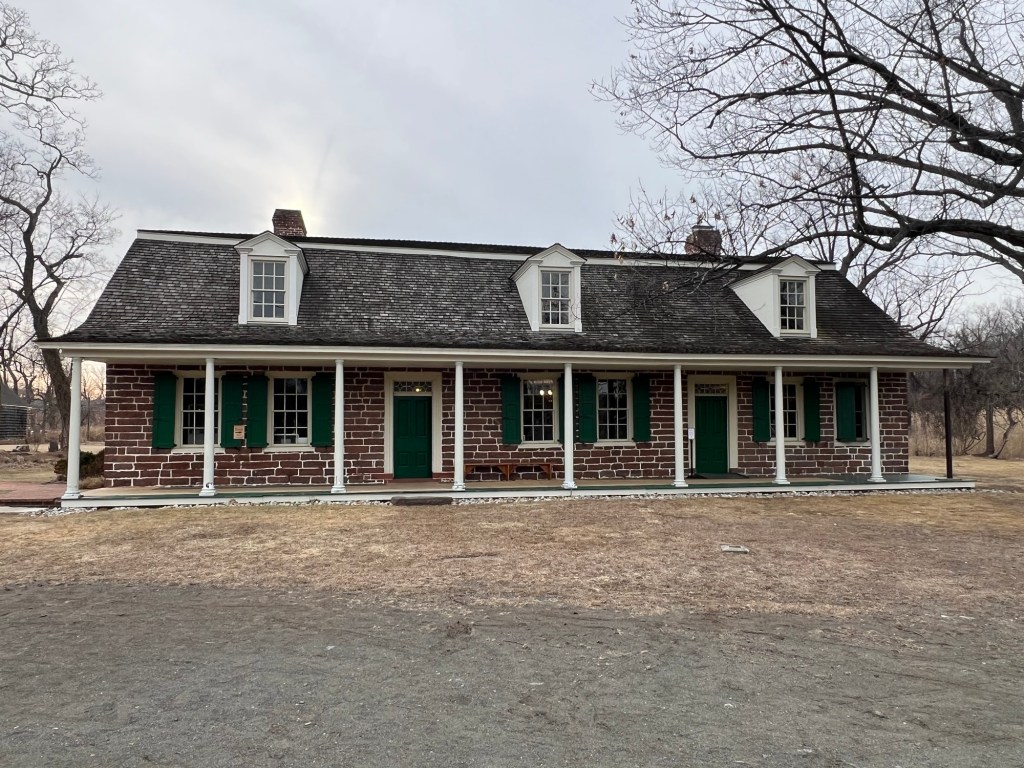
The concert was entertaining, and the talk was interesting in the Van Steuben House
A sample of Linda Russell’s music
It seemed that while the Puritans put a damper on the Christmas holidays in New England the Dutch New Jersey and New York thoroughly enjoyed the holiday season after all their hard work during the Fall harvest months.
What was really nice was the Campbell-Christie House was open as a pub for dinner and light snacks and you could order things like Shepard Pie, Cheese & Onion Pie and Cake doughnuts and gingerbread for dessert while enjoying conversation by candlelight. It was an interesting and engaging history.
The Van Steuben House for the holidays was where the entertainment was that day
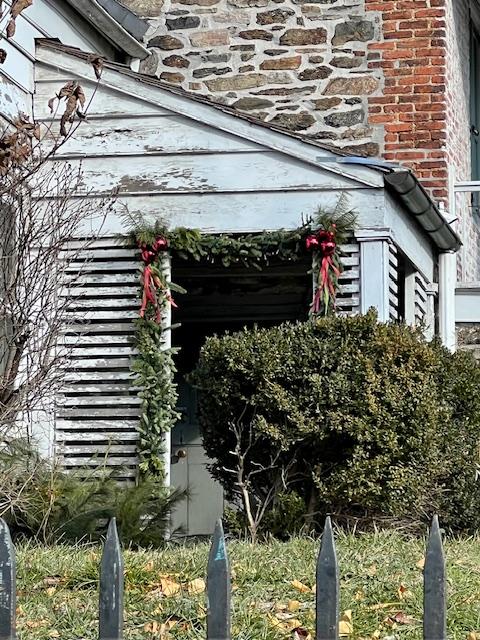
The house is nicely decorated for Christmas circa 1778
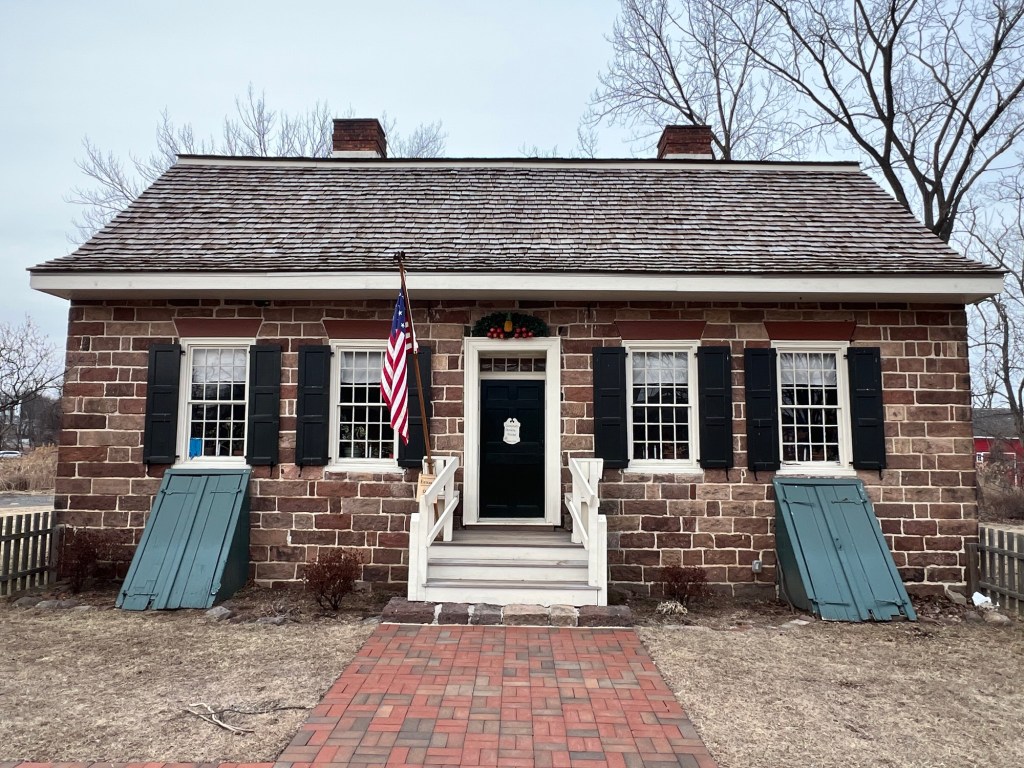
The Campbell-Christie House at Christmas 2020 Historical Event
Singer Linda Russell at the Christmas Tour Event at the BCHS 2020
Don’t miss their historic lectures and reenactments during the year. Check their website above for more activities.
The historic marker of the Campbell-Christie House
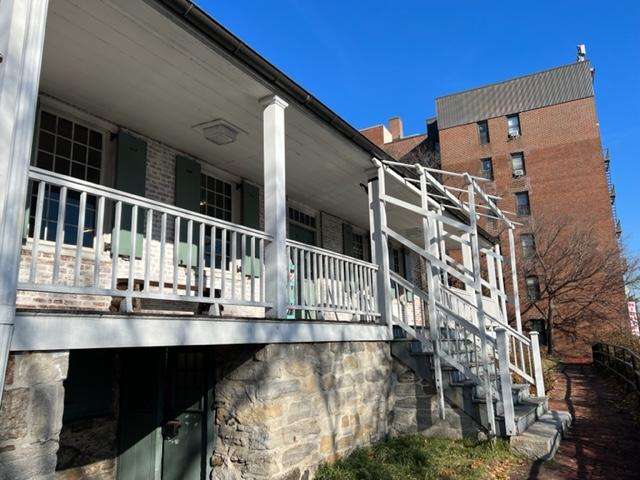
The Campbell-Christie House, an 18th century sandstone structure, is located in Historic New Bridge Landing State Park, River Edge. This historic building originally stood at the intersection of Henley Avenue & River Road, in New Milford, NJ. In 1977, in order to save it from demolition, Bergen County purchased and moved it south to this site next to the Hackensack River.
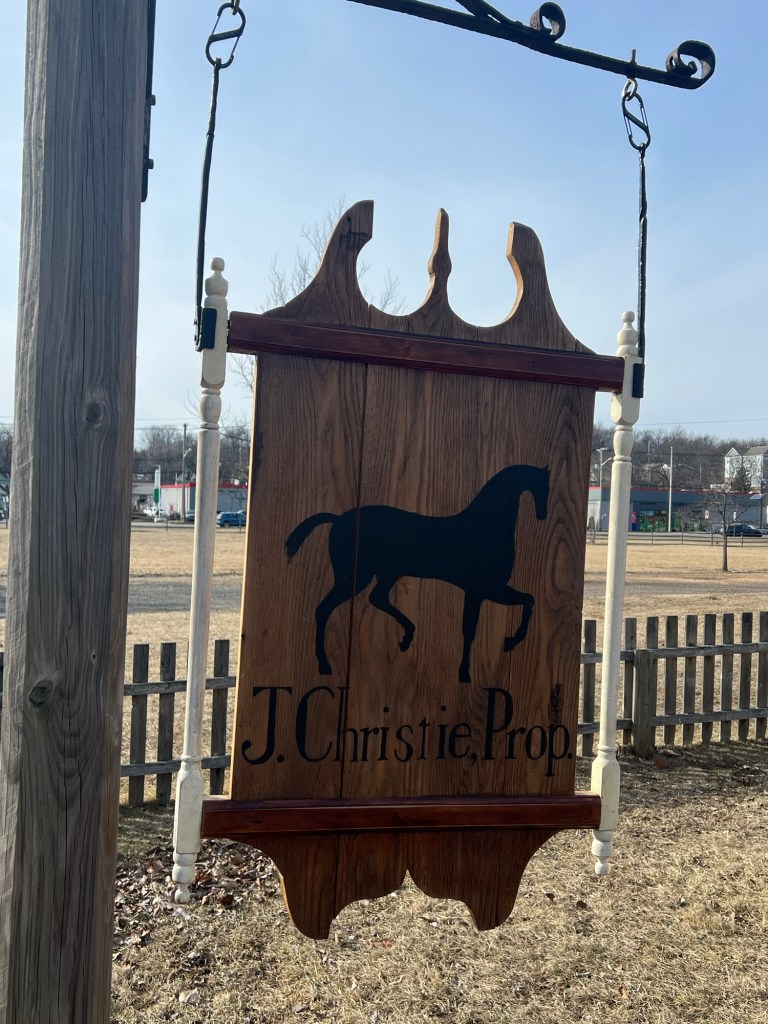
The Christie Family Pub sign
The house was used again for a pub for the Christmas concerts that returned to the site in December 2022. The house was set up as a restaurant with a limited menu before and after the concerts. The light fare was catered in and the menu was similar to what people would have eaten at that time but with a modern twist. The food was really good.
The house was used again for a pub on Christmas 2022 for the concert night
The Campbell-Christie House as the Blackhorse Pub for Christmas dinner
My Shepard’s Pie meal for the Christmas concert at the Blackhorse Pub
The Dutch Sweets dessert plate at the Blackhorse Pub in the Campbell-Christie House Christmas 2022
Sandstone houses were built continuously from the Dutch colonization of the 17th century through the founding of the Republic and the early years of the 19th century. The Campbell-Christie House, an outstanding example of this early regional architecture, is a 5 bay, 4 room center all building with two rooms to either side and two interior chimneys. This stone house form seems to have been built mainly after the Revolution and up to the turn of the century. The front wall is built out of well-dressed local sandstone with inset wooden trapezoidal lintels and side composed of roughly coursed sandstone.
The Campbell-Christie House during Washington’s Birthday Celebration
The Historic New Bridge Landing Site
Jacob Campbell, at the time of his marriage in 1774 built this house along the road (now Henley Avenue) that led from Old Bridge to the Schraalenburgh Church. Historical evidence records that Campbell, a mason by trade, also ran a tavern in his household. In 1795, the house was sold to John Christie, a blacksmith, who continued as a tavern keeper. Jacob Brinkerhoff-Christie, manager of the Comfort & Lumber Company, eventually inherited this large valuable homestead farm property along the Hackensack River. His son. John Walter, born in the house in 1865, was a famous inventor who built and raced cars (at one time holding the world’s speed record), invented the automotive front-wheel drive and is known as the “father of the modern tank”.
Historic New Bridge Landing Park is located at the narrows of the Hackensack River. Because of its strategic site along a tidal waterway it has been an active area of settlement, trade and commercial activities for thousands of years. The construction of the “New Bridge” in 1744 accelerated development of the area. Because of the nearness to Manhattan, New Bridge Landing was a principal base of operation during the Revolutionary War and considered an important strategic route, guarded by troops from both sides at different times. General George Washington, who made his headquarters in Zabriske’s house, led his soldiers in retreat across here on November 20, 1776, saving his troops from entrapment by advancing British troops.
On the Hackensack River’s west bank, near the bridge, is the Steuben House. Originally constructed by Jan Zabriskie in 1753 and doubled in size around 1765, it has been referred to as to as among the five “great houses” of Colonial Bergen County. The third stone house is the 18th century Demarest House, moved to this site in 1956 and owned by the Demarest-Blauvelt Foundation. The Historic New Bridge Landing Park Commission, a partnership of the Bergen County Historical Society, Blauvelt-Demarest Foundation, the County of Bergen, New Jersey Division of Parks & Forestry, New Milford Borough, River Edge Borough and Teaneck Township, operates the New Bridge Landing site.
This site also contains the County-owned 1888-89 Pratt-type, “pony” truss, iron swing bridge, the oldest highway swing bridge in New Jersey. The Campbell-Christie House, along with the other two houses and the bridge, is on the State & National Register of Historical Place. It is the headquarters of the Bergen County Historical Society and furnished with the furniture and collection owned by the Society. Open year round. For the FCHS calendar of event or go to http://www.bergencountyhistory.org.
(2015 Bergen County Division of Cultural & Historic Affairs)
The Bergen County Division of Cultural & Affairs received an operating support grant from the New Jersey Historical Commission, a division of the Department of the State.
Disclaimer: This information is taken directly form my pamphlet from the Bergen County Division of Cultural & Historic Affairs. The site holds it position in its participation in the Revolutionary War and should not missed. I give them full credit for this information. Please call them for more information.
The reenactment of the Historic Bridge attack during the American Revolution at the Bergen County Historical Society. I give the Historical Society full credit for this information.
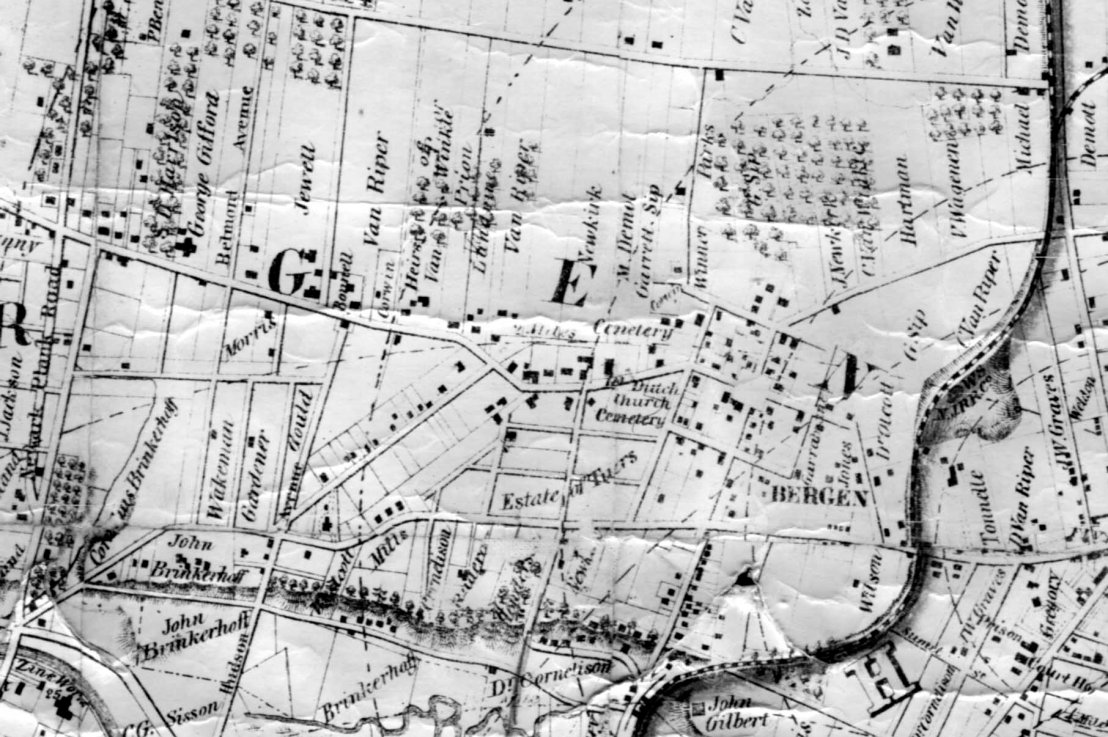
The name was originally applied to the village of Bergen, settled in 1660, which is not the area known as Jersey City Heights. Some earlier writers believed the name was derived from the City of Bergen, Norway. Others said it was named after the small town of Bergen in Northern Holland. Since Colonial New Jersey’s Bergen was a Dutch town founded and governed by a Dutch colony, the name was most likely derived from a town in Holland or a geographical description in the Dutch Language.
The name “Bergen”, originally derived from the word for “hill” in Norway, Belgium and the Netherlands, was applied to towns located in the hills. New Jersey’s Bergen, was originally a settlement on a hill. Therefore, the currently accepted theory is, that the geographical location of the original town is the most likely reason it was called Bergen The name “Bergen” was applied to the County, which was established in 1683.
Disclaimer: this information is taken directly to the pamphlet from the Bergen County Division of Cultural and Historic Affairs. It tells the story of the county we live in here in New Jersey
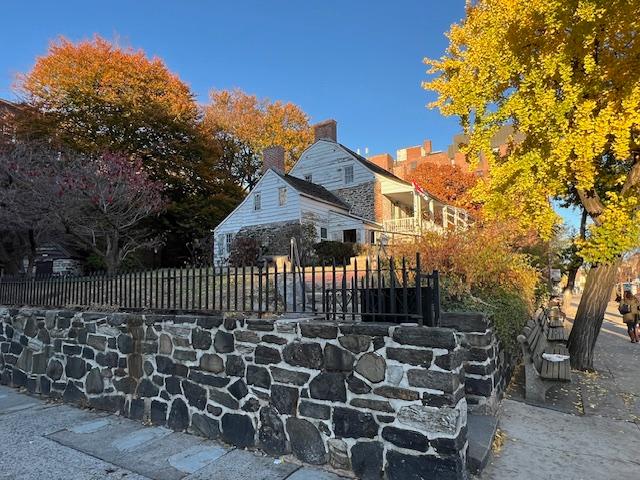
The Dyckman Farmhouse during the Christmas holidays
I visited the Dyckman Farmhouse on day during my walk around the Inwood section of Manhattan and came upon this old farmhouse in the middle of the commercial district by Columbia University’s football field. You have to take the A or the 1 Subway uptown to get there but it is one of the last vestiges of the farming community that once was Manhattan in the late 1700’s and early 1800’s.
It has been there since the family donated it to the city in 1916. It should not be missed when visiting Manhattan. I wrote more about my trip there in “MywalkinManhattan.com” blog site.
The Dyckman House in the Spring
The Dyckman House, now the Dyckman Farmhouse Museum in the oldest remaining farmhouse on Manhattan Island, a remainder of New York City’s rural past. The Dutch Colonial-style farmhouse was built by William Dyckman in 1785. It was originally part of over 250 acres of farmland owned by the family. It was once the center of a thriving farm with fields and orchards of cherry, pear and apple trees. It is now located in a small park at the corner of Broadway and 204th Street in the Inwood section neighborhood of the city.
The front of the Dyckman Farmhouse
Don’t miss the self-guided tours of the house. You can tour all three floors of the house to see the bedrooms on the second and third floors and the first-floor parlor and receiving areas. The basement area has the ‘winter kitchen’ where all the cooking of the house was done, and it was the room that kept the rest of the house warm during the winter months.
The Winter Kitchen hearth for cooking meals
The Winter Kitchen
The Winter kitchen at the Dyckman Farm
The house was slightly decorated for the Christmas holidays with garland and ivy and holly to make it look more festive. The Dyckman House was built at a time after the Revolution where the excesses of the Victorian era had not taken hold and the Christmas holidays were more subdued and concentrated on going to church and a light luncheon that afternoon. The decorations of the home reflect this.
The museum is decorated for Dutch Christmas with the bounty of the holiday season
The Farmhouse at Christmas time outside in 2025
The house decorated for the Dutch Christmas in 2025
Don’t miss the gardens in both the spring and summer to see everything in full bloom. Even in the winter it is interesting to watch the paths and see what needs to be accomplished for spring planning.
The Dyckman House in the Fall of 2025
It is an interesting look into how the Dutch farmers lived and worked.
History and Description
William Dyckman was the grandson of Jan Dyckman, who came to the area from Westphalia in 1661. Jan Dyckman, a shoemaker and another Dutch settler, Jan Nagel purchased much of the land between present 155th Street and the northern tip of the island. Members of the Dyckman and Nagel families lived on the land for three generations until the Revolutionary War broke out.
The house and front gardens during the summer months
During the Revolutionary War, the British occupation of Manhattan in 1776-83, the Dyckman’s, like many other patriots, fled the city and did not return until the British had been defeated. When the war ended and the Dyckman’s found their home and orchards had been destroyed, they built a new house on the Kingsbridge Road, now Broadway. They chose this location on a major thoroughfare in order to supplement their income by providing accommodations for travelers on their way to and from Manhattan.
William Dyckman, who inherited the family estate built the current house to replace the family house located on the Harlem River near the present West 210th Street, which he had build in 1748 and which was destroyed in the American Revolutionary War.
There was also 30 people living within three other houses scattered across the roughly 250 acre farm. The residents included laborers and other Dyckman family members. The main outbuildings for the farm were built close to the farmhouse including a cider mill, corn cribs, barns and stable (Dyckman Farmhouse Museum Alliance).
William died in 1787 and the property with its “commodious dwelling house,” and 250 acre farm was offered for sale. William’s son, Jacobus, took over the farmhouse and land and rebuilt the farm after the war. This took about five years. Jacobus altered and added to the house over the years. When Jacobus died in 1832, he left the bulk of the estate to his bachelor sons, Isaac and Michael and many members of the extended family moved in as well.
Following the death of Isaac in 1868, his nephew, James Frederick Smith, changed his name to Isaac Michael Dyckman and inherited much of the Dyckman property. When the subway lines reached the area in 1906, there was discussion about the impact on historic homes such as this.
In 1915, Mary Alice Dyckman Dean and Fannie Frederika Dyckman Welch, daughters of Isaac Michael Dyckman purchased the house with the plan of turning it into a museum. They fully restored it, furnished it and landscaped the grounds. They presented it to the City of New York in 1916 so that it could be used as a public park and museum (History of Dyckman Farm).
The house is designed with:
The Relic Room: Objects that are displayed were discovered from digs in the area.
The Relic Room at the Dyckman Farmhouse
The Second Floor Bedroom: Some of the rooms are decorated with furnishings dating from the 18th and 19th centuries and reflect colonial life around 1800.
The Second floor bedroom
The second floor bedroom during the second renovation of the home from a dormer to bedrooms
The second floor of the farmhouse had been a dormer when the home was at its height of the growing season and then later on in the house’s history was converted into regular bedrooms. The first floor bedroom was for the owner of the house for easier access to the farm and the outdoors during the growing season.
The First Floor Bedroom for the Master of the House:
The Bedrooms:
The downstairs bedroom
The Parlor Room:
The Parlor is where the family socialized and entertained their guests. The best pieces of furniture and family possessions would be shown off to visitors.
The Parlor:
The Dyckman Parlor:
Full view of the Parlor in the Dyckman Farmhouse
The Winter and Summer Kitchens: The farmhouse had two kitchen, the Winter and Summer kitchens, the Winter one would have kept the home warm in the cold months and would have been used as a non-cooking work space in the summer.
The Winter Kitchen:
The Summer kitchen is closed to the public has a small bedroom attached to it.
The back of the Dyckman Farmhouse with the grounds left and the old smokehouse in the distance
The Garden Area: On the half acre of family land left they have constructed a reproduction a smokehouse and outbuildings along with gardens planted with thousands of new plants that include things like bleeding hearts and foxglove.
The Hessian Military Hut recreation on the house’s property
The Hessian House recreation on the back part of the property
The gardens and smokehouse
(The Dyckman Farmhouse Museum Alliance)
The current two-story house is constructed of fieldstone, brick and white clapboard and features a gambrel roof and spring eaves. The porches typical of the Dutch Colonial style but were added in 1825. The house interior has parlors and an indoor (winter) kitchen, with floors of varying-width chestnut wood. The house outdoor smokehouse kitchen, in a small building to the south, may predate the house itself.
The Dyckman Farmhouse during the Christmas holiday season 2022
The house stayed in the family for several generations until it was sold in 1868, after which it served as a rental property for several decades. By the beginning of the 20th century, the house was in disrepair and in danger of being demolished. Two sisters of the original family and daughters of the last Dyckman child to grow up in the house, Mary Alice Dyckman Dean and Fannie Fredericka Dyckman Welch, began restoration of the farmhouse in 1915-16 under the supervision of architect Alexander M. Welch, the husband of Fannie.
They then transferred the ownership of the house to the City of New York in 1916, which opened it as a museum of Dutch and Colonial life, featuring original Dyckman family furnishings.
The Dyckman Farmhouse in Inwood during the Summer months
The farmhouse, which is not only the oldest remaining in Manhattan, but the only one in the Dutch Colonial style and the only 18th century farmhouse in the borough as well. It has New York City Landmark and a National Historic Landmark status since 1967. A major restoration of the house took place in 2003, after which it reopened to the public in the fall of 2005.
When I visited the homestead in January 2024 for the Epiphany, the house had an interesting children’s exhibition entitled “Beyond Play”, based on a child’s life on a farm back in the 1800’s. This would include simple games such as “Tag” and “Blind Man’s Bluff” and homemade wooden trucks, blocks and dolls.
The exhibition “Beyond Play”
The display of toys that child would play on the farm in the 1800’s.
The display of toys that children would play on the farm.
Walking around the Inwood neighborhood has changed a lot in a hundred years and is now home to a large Dominican population as well as the quickly gentrifying Inwood neighborhood and home to Columbia University sports.
Inwood at Broadway near the Dyckman Farmhouse
*Disclaimer: This information comes from the Historic House Trust and Wikipedia and the NYC Parks System. The site is free to visit and takes less than an hour to visit. During the summer months, it is nice to visit the gardens and property. It is a interesting property to visit and when you are through with your tour, there are many nice Spanish restaurants in the area on Broadway and along 207th Avenue corridor. It is a nice place to walk around and explore.
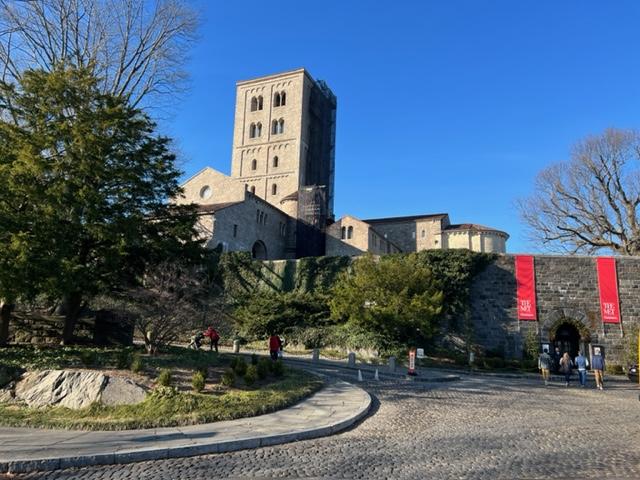
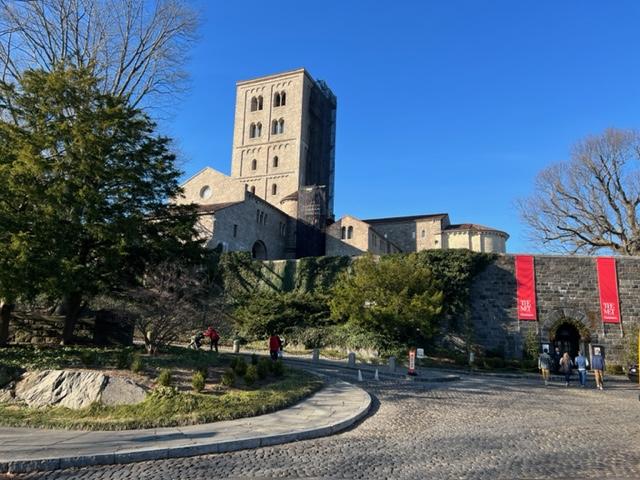
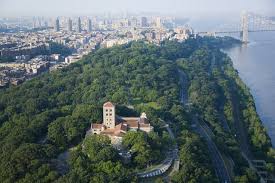
I go to The Cloisters on a pretty regular basis, and they have interesting walking tours and lectures especially in the warm months. If you like Medieval or religious art, this is a museum that is worth visiting. It is out of the way and be prepared to walk up a hill but in the summer months, the view of the Hudson River is spectacular, and the gardens are beautiful.
The Cloisters in Fort Tyron Park
Don’t miss the walking tours and gallery talks at the museum. I have recently been to a series of walking gallery talks dealing with the history of Medieval arts. There were discussions on Medieval art between Christian and Muslim religions, Traveling the Silk Road and its influences on art in the regions and the collection and how it has improved and grown over the years. It seems there has been a uptick in this type of art.
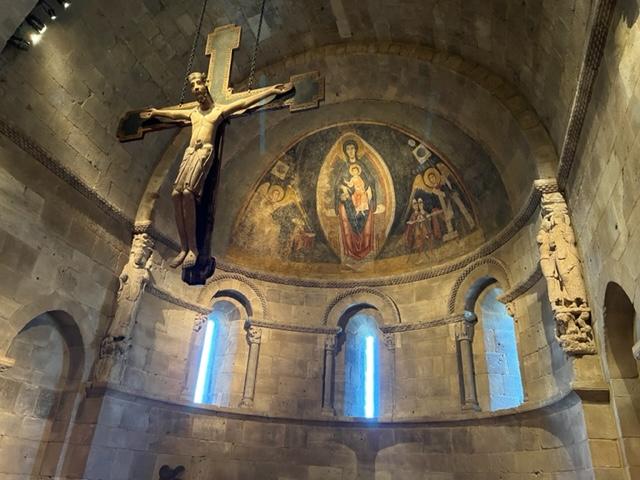
This section of the shine is on a permanent loan from Spain
The building is just beautiful as it was created from pieces of religious sites all over Europe. Many of the doorways, cloisters (archways), stone work and fountains and windows come from churches that had been destroyed by wars over the past 600 years. Bits and pieces of all of the these buildings are displayed in the architecture of the museum itself. Some are on permanent loan to the museum from foreign countries.
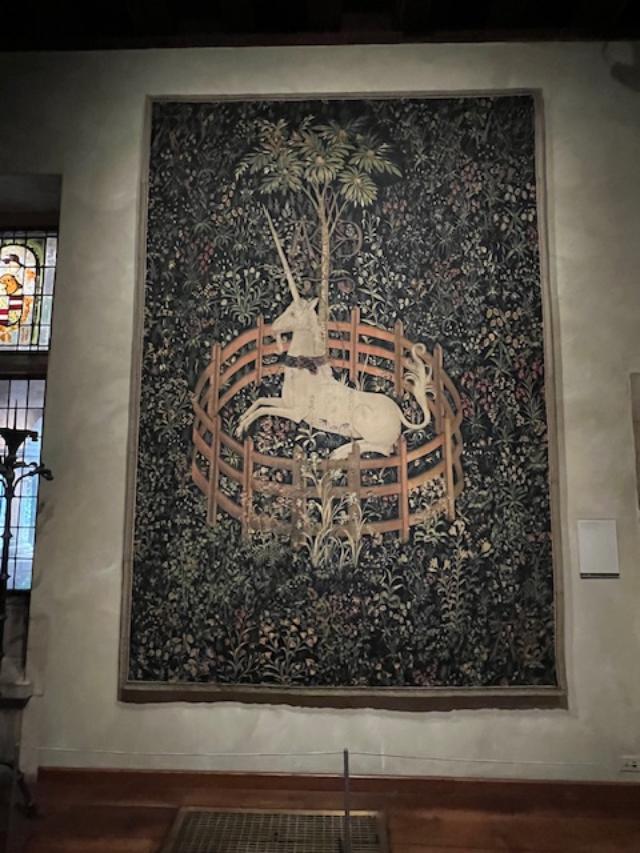
Don’t miss the famous “Hunt of the Unicorn” tapestries that are on display here. They are quite a spectacular exhibit.
The ‘Hunt of the Unicorn’ tapestries
Be sure to visit the outside terraces of the Cloisters to see the views of the Hudson River below and the beautiful gardens of Fort Tyron Park where the building is located. It is a sea of green lawns and woods and beautifully landscaped flowering paths.
The Cloisters Gardens in the winter of 2022
The Cloisters Gardens in the Spring of 2024
The view from the gardens of the Hudson River
The view of the Hudson River in Spring 2024:
There is a nice café on property but there is also a small restaurant row on Dyckman Avenue at the foot of the park right near the subway stop. There are also many terrific Spanish restaurants on Dyckman Street as you walk down the block towards Fort George Hill.
‘Christmastide’ at The Cloisters:
I recently went to the Cloisters for a very interesting walking tour called “Holly & Hawthorne: Decorating for a Medieval Christmas” in 2019 and a similar tour in 2022 entitled “Holiday Decorations at The Cloisters” the use of plants like holly, mistletoe, pine and ivy were used in the winter months to decorate the churches and homes of the people until the Puritan influences took over.
Sampling of the plants used at the holidays in Medieval times.
(Part of the description of the tour in the guidebook-credit to the Met Cloisters):
“The wreaths and garlands that deck The Cloisters from early December until early January are made from plant stuffs associated with the Medieval celebration of Christmastide. This great feast embraced the twelve days between the Nativity and the Epiphany, which commemorated the visit of the Three Kings to the infant Jesus.
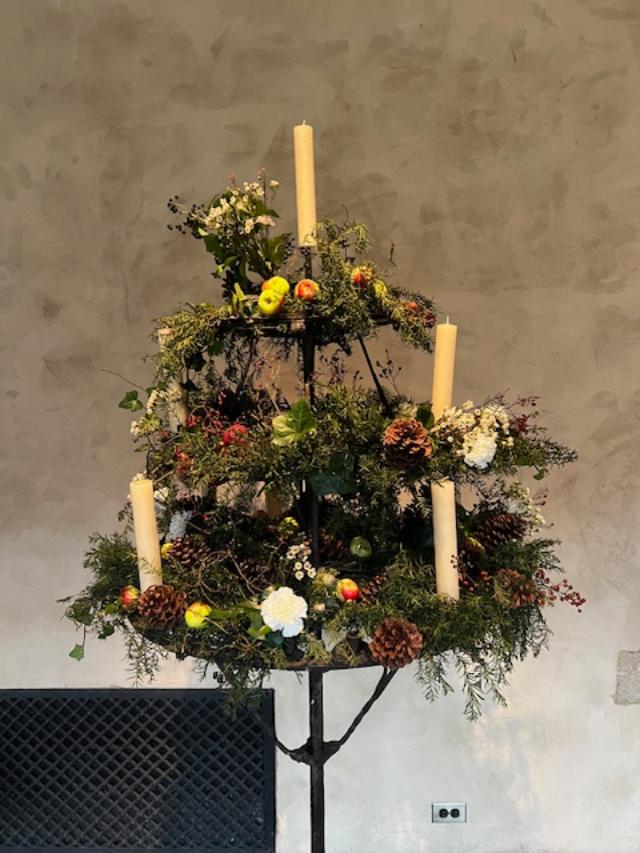
The Candelabras of the Cloisters.
Because pictorial representation of medieval Christmas decorations are rare, the Museum’s designs are based on evidence gleaned from carols, wassails, romances and artworks. Medieval churches and halls were decked for the season, a practice with roots in ancient custom. The early Church had banned the use of evergreens because of their ties with pagan winter festivals, such as the Roman Saturnalia. By the Middle Ages, these plants had been given Christian interpretations and were used to celebrate the feast days of the Church calendar. Bay Laurel, associated in ancient times with victory, became a symbol of the triumph of Christ and of eternal life.
By the Middle Ages, holly and ivy had been thoroughly Christianized, although mistletoe remained suspect. Ivy was identified with the Virgin and the red berries of the holly with the blood of Christ. The holly and ivy carols still sung today spell out these meanings older associations derived from pre-Christian winter festivals.
Apples and nuts, stored for winter consumption, were a conspicuous part of the Christmas feast, as they are today. It was also the custom in winter to wassail fruit and nut trees, to encourage them to bear plentiful crops in the coming year. Fruits and nuts were ancient symbols of fertility Christian meanings; in a medieval poem on the Nativity.
The Cloisters decorated for Medieval Christmas
The tour guide discussed by touring the paintings and tapestries where these symbolic plants took shape during this time. She even explained how ivy when it reaches sunlight that its shape goes from a three leaf shape to a heart shape which was symbolic during the Middle Ages. The gardens were a good source of inspiration for the holidays.
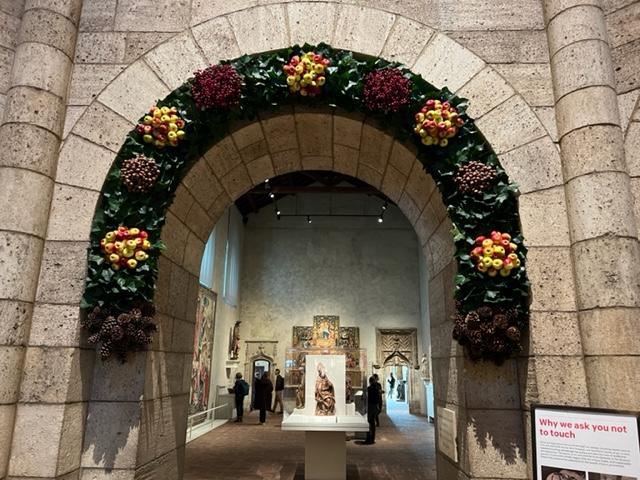
The stonework was decorated with garland and holly and flowering plants
The Cloisters decorated for Christmas
Don’t miss walking the halls and cloisters to look at all the decorations for the holidays. The museum keeps them simple and elegant but it really does put you in the holiday spirit. The use of flowering plants during the holiday season was not just related to the holiday season but they gave a nice smell to this musty churches and added a bit of cheer to the environment as well.
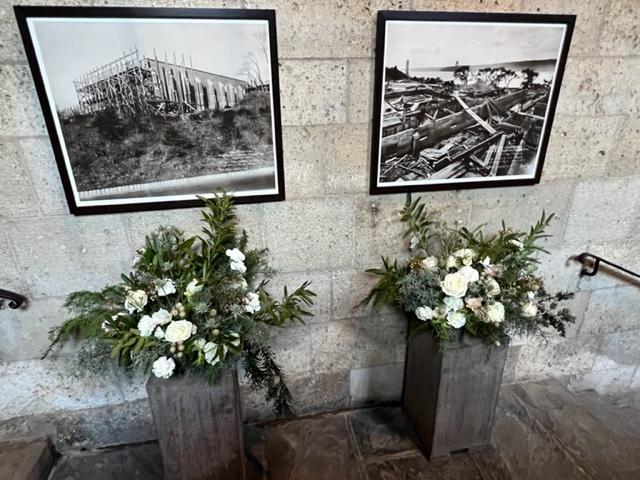
The flowers and pine when you enter The Cloisters
The “Holiday Decorations at The Cloisters” walking tour: December 2022:
The altar at The Cloisters
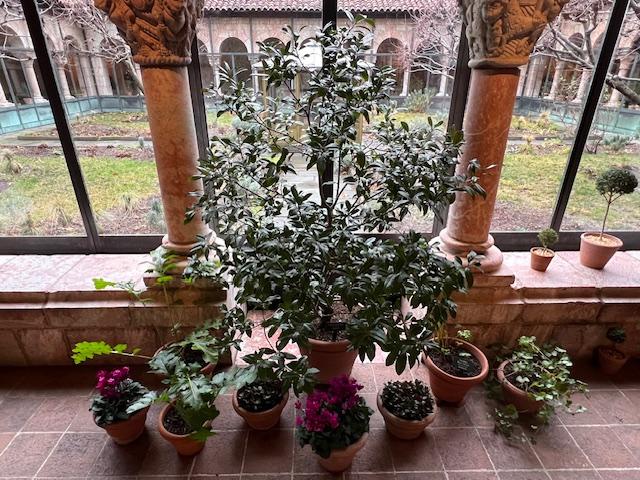
The Medieval plants for decorating the church including Bay Laurel, Myrtle, Rosemary and Cyclamen.
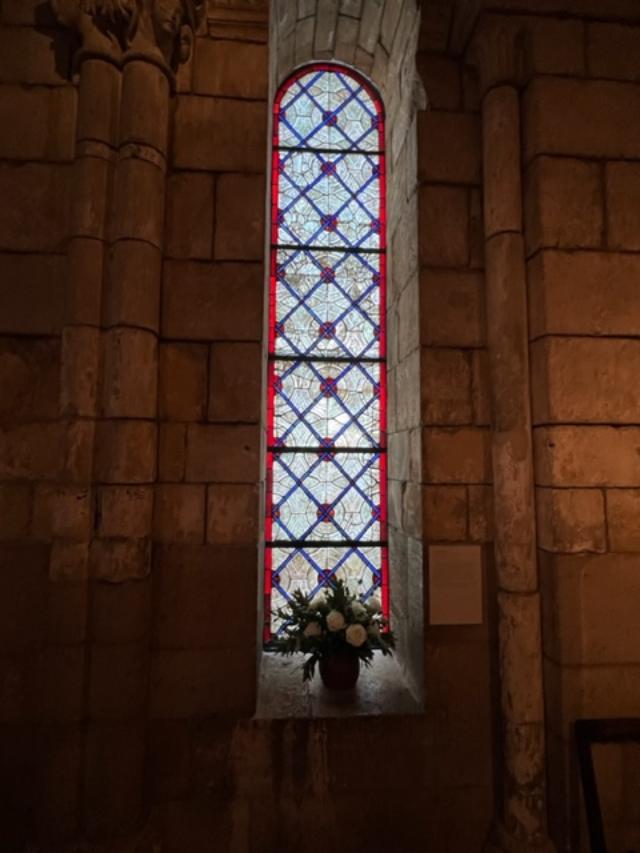
The flowers decorating the windows. Roses and pine.
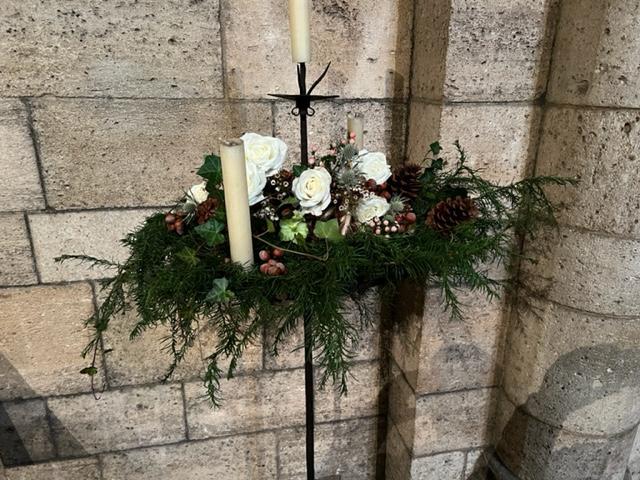
Decorated altar candles
Decorated Altar Candles
Decorated Altar Candles
The Fruits and Ivy that decorate the archways at The Cloisters is changed regularly. Each of the ivy vines was encased in small water tubes that had to be changed each week.
The Christmas wreaths were decorated with fruits, ivy and pinecones
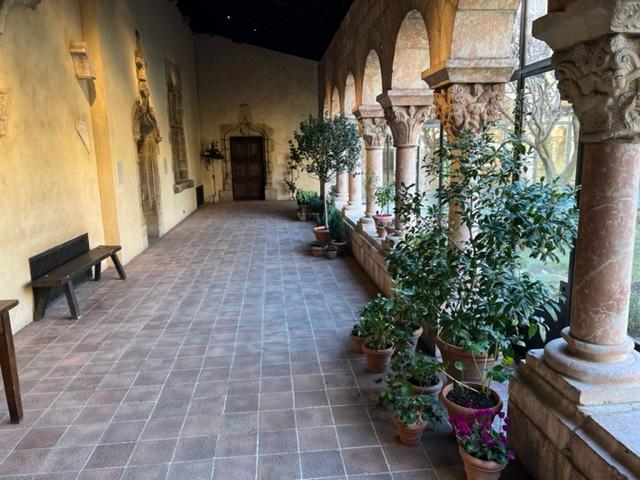
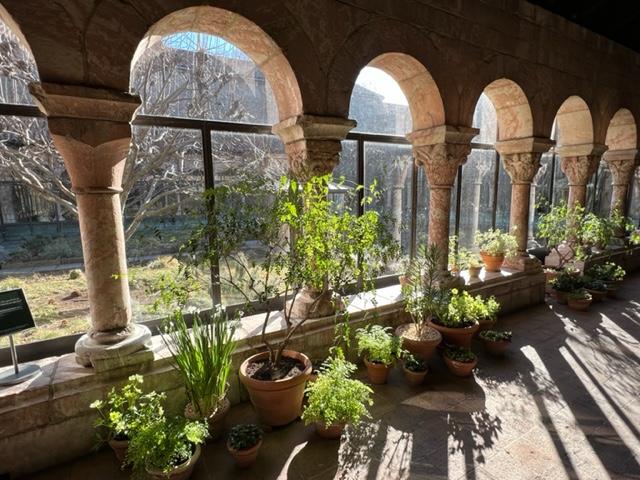
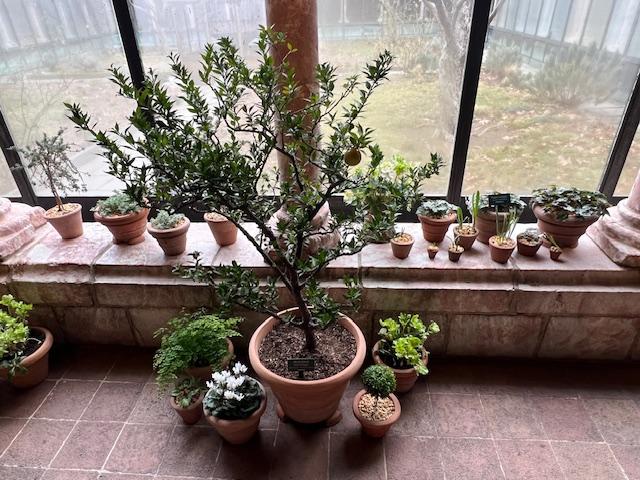
Along the walls and floors of The Cloisters were potted plants that would have been used to decorate churches during this time period. The flowering plants gave The Cloister such a nice smell and would have lighted up the inside rooms from the gloom of winter.
The hallways were lined with winter greens
The winter greens that lined the hallways of The Cloisters
The decorative winter greens lining the walls of The Cloisters
The orange tree was a symbol of gold and prosperity.
The Medieval door decorated for the holidays.
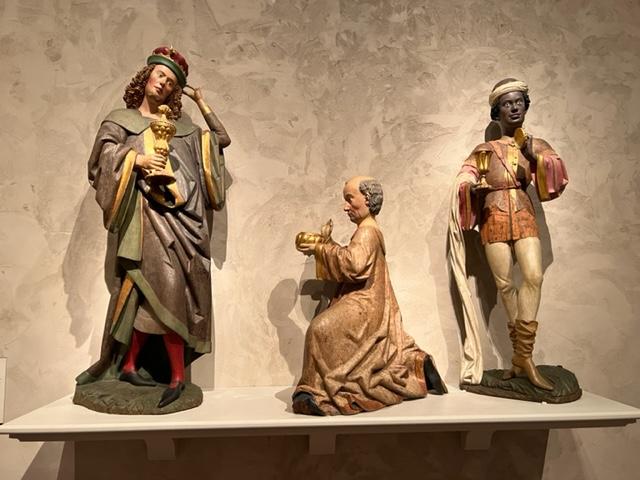
The tour guide also pointed out for the story of Christmas depictions of the three wise men in art all over the building and its importance in the holiday season. The story continued to develop on the three ‘kings’ who visited the holy child.
She explained that over the years it went from three ‘visitors’ wisemen’ that was loosely translated in older text to the modern development of ‘three kings’ from the continents of Asia, Africa and Europe. In 2024, I took a holiday tour on “Three Kings Day”, the celebrated the three kings and their visitation of the holy child.
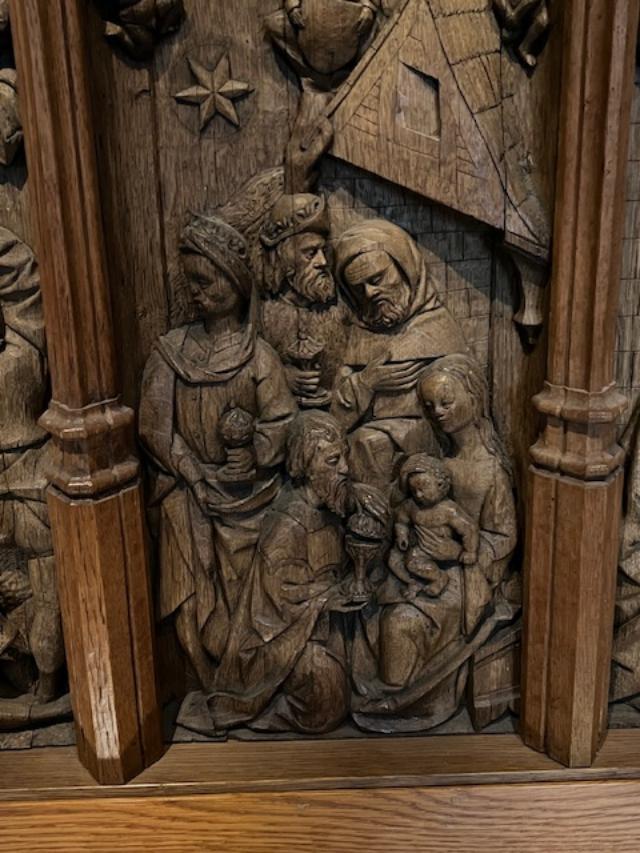
The three Wise Men and the Virgin Mary
The three Wise Men and the Virgin Mary and Child as depicted in the painting
The three Wise Men in a more modern depiction. It seemed that the story morphed over time from three Kings, one being older, one younger and one with a darker complexion became a King from each continent to represent the diversity in the church and the spread of Catholicism.
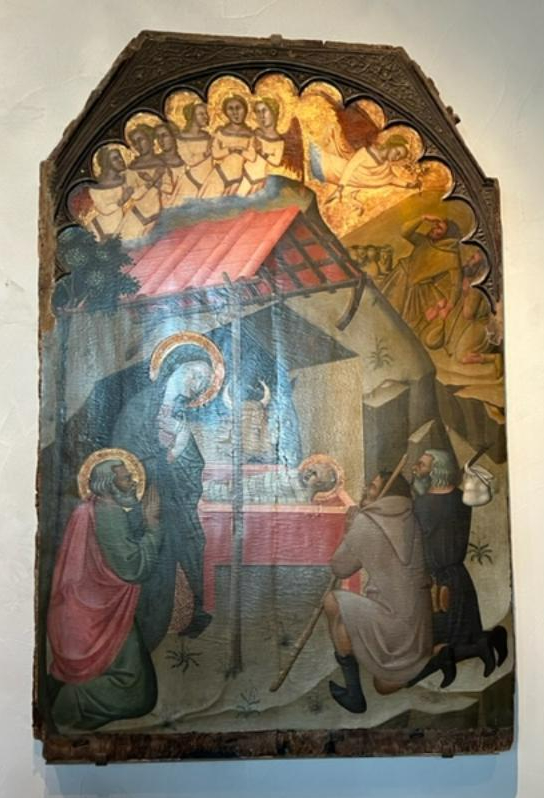
The “Adoration of the Shepherds”
The Virgin Mary with the Christ child and the three wise men in the “Adoration of the Shepard’s”.
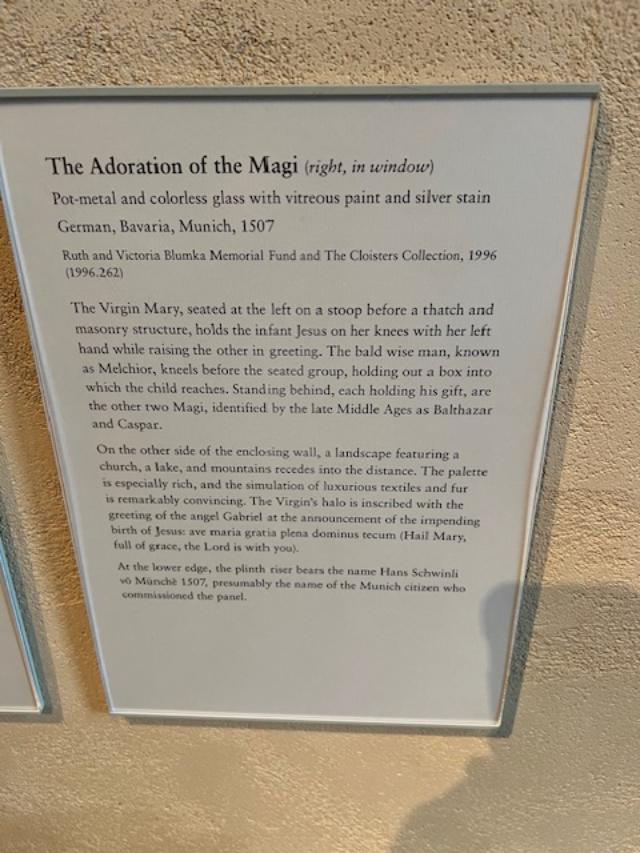
The “Adoration of the Magi”
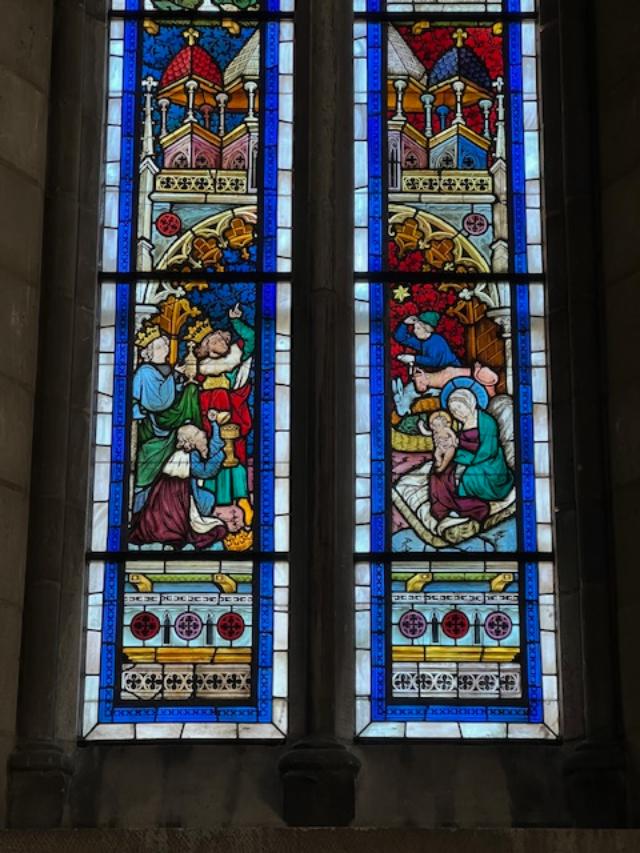
The stained glass window of the “Adoration of the Magi”.
The “Thirty-Five Panels” of the Three Wiseman”
The Three Wisemen from the “Thirty-Two Panels”
The stained glass window of the “Three Scenes of the Infancy of Christ”
The “Three Scenes of the Infancy of Christ”
The “Christ is born as Man’s Redeemer” Tapestry.
The small section of the tapestry with the Three Wisemen.
Walking through the Cloisters during the holiday season.
The tour guide went onto explain that in more elaborate feasts, the utensils and items used during ceremonies would have been of the most elaborate that the church could show.
Elaborate vessels. plates, challices and specters used in ceremonies
Elaborate drinking glasses
I toured the Cloisters again in 2023 and saw the same symbols of Christmastime in the halls with elaborate floral displays and beautiful potted floral arrangements all over the building.
The hallways of the Cloisters decked with flowering plants.
The “Winter Roses” with other flowering plants.
More flowering plants lining the walkways.
Flowering displays
The winter plants of the Cloisters.
The Candelabra’s were quite elaborate.
I thought this Dragon painting was very interesting.
The Dragon Sign.
The Dragon Painting.
Spain 1000-1200: Art at the Frontiers of Faith” tour in 2021:
I visited again this Christmas holiday season in 2021 to see “Spain 1000-1200: Art at the Frontiers of Faith”, where the Catholic and Muslim Kingdoms of Spain influenced each other in the manner of decoration and art borrowing from each other. It was interesting to see how the two communities used each other’s art over time to develop an interesting hybrid of design that was both colorful and intricate.
“Spain 1000-1200: Art at the Frontiers of Faith” artworks
Another tour of the Cloisters that I attended was on the ‘Four Medieval Flowers: The Lily, Iris, Violet and Rose’. It was interesting how society of this era used the former Pagan and Roman/Greek symbols in their Christian religious art.
You see the Rose in the stained glass to represent strength and honor
You will see the meanings in the tapestries, stained glass art and in the sculpture to represent purity, rebirth and sexual symbols of the time. It seemed that the artisans of the time used ancient meanings to convey something that they could not out and out talk about.
In the “Hunt of the Unicorn” Tapestries you can see flowers such as Lilly, Violet and Iris woven into the work which may have meant it was a wedding present to the new owner. The tour guide said there was meaning in lots of the works which may have had a different purpose originally. It was a tour steeped in symbolism.
The Spring and Summer Time visits to The Cloisters and the Gardens:
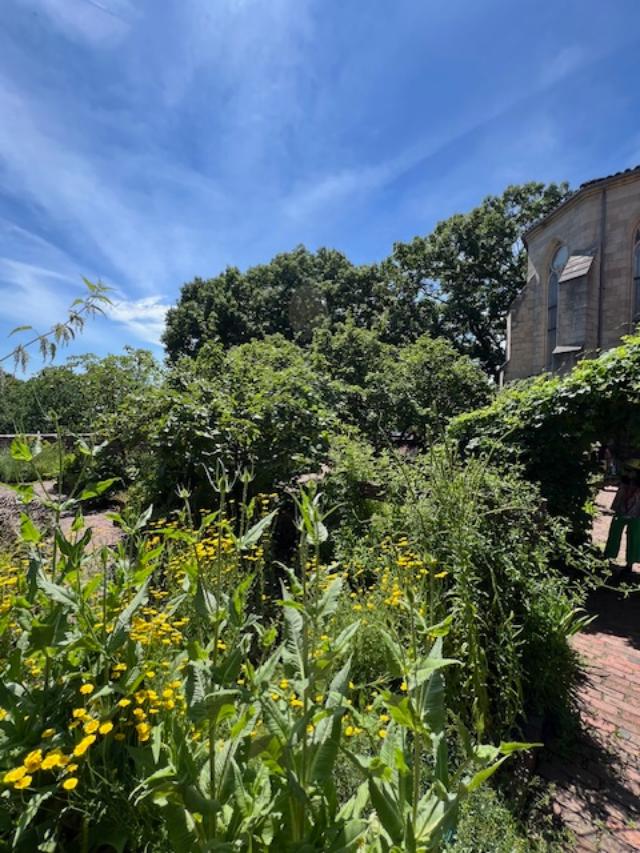
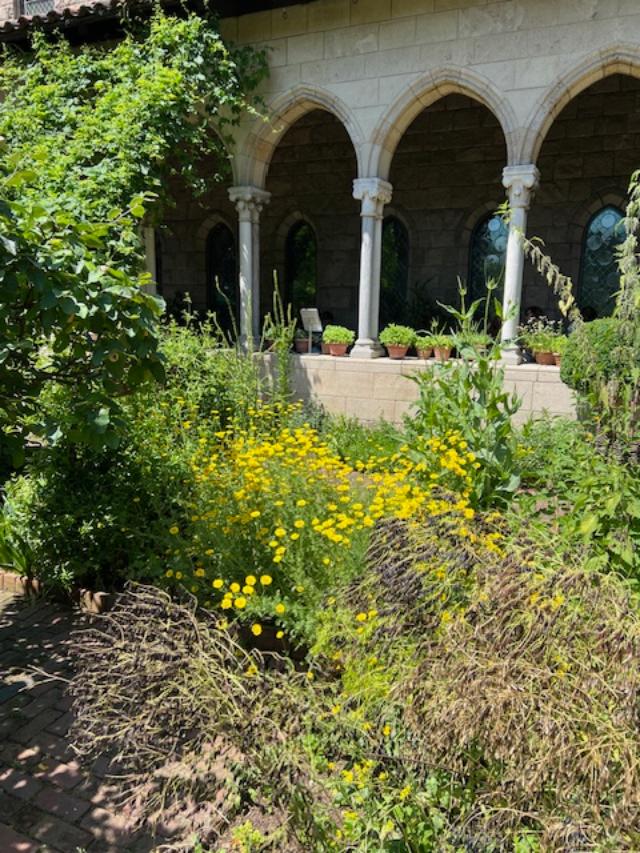
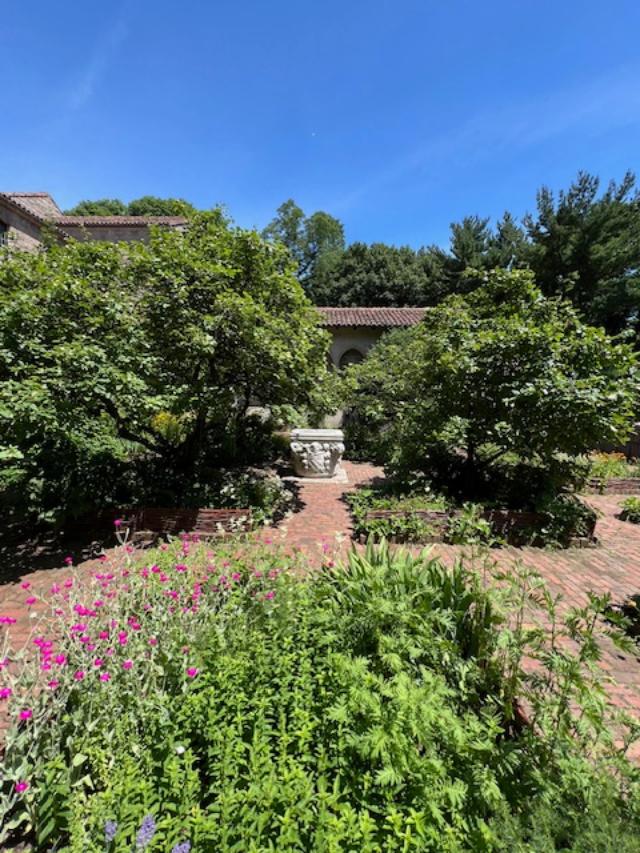
The Cloisters in the Spring and Summer months is very different. The Gardens are in full bloom, the views of the Hudson River are still amazing and the flowers look and smell so beautiful. There are three sets of gardens in the Cloisters, the potted plants on the deck facing the Hudson River and the two Cloisters on the first level and the one in the Trie Cloister where the cafe is located. Each has their unique plantings.
The potted plants on the deck of The Cloisters in the Spring of 2024
As pretty as some of these plants are some are poisonous so you have to watch out.
The view from the back decks of the museum of the Hudson River
The view of the Hudson River
The gardens in The Cloisters
On Sunday, August 10th, I took an extensive garden tour of the separate Cloisters in each parts of the museum. The tour talked about the use of the Cloisters gardens of the past and they were used for herbs, remedies and for the simple pleasure of beauty, color and relaxation.
The religious symbols in the gardens
The gardens have been planted with historical accuracy but as the tour guide explained, to keep the gardens in bloom from the early Spring to the late Fall, you have to add different plants for color.
The beauty of the gardens in bloom
The beauty of the gardens in the Spring of 2024
The gardens were very popular over the weekend
Some of the Cloisters gardens produce fruits, vegetables and herbs that the staff can take home. These gardens show not just how beautiful they look but how people used them for every day purposes.
The gardens were popular that day
The beauty of the gardens
The gardens in the Spring of 2024
These walking tours at the Cloisters happen at 12:00pm and 2:00pm on the weekends when in season.
The beauty of the Cloisters
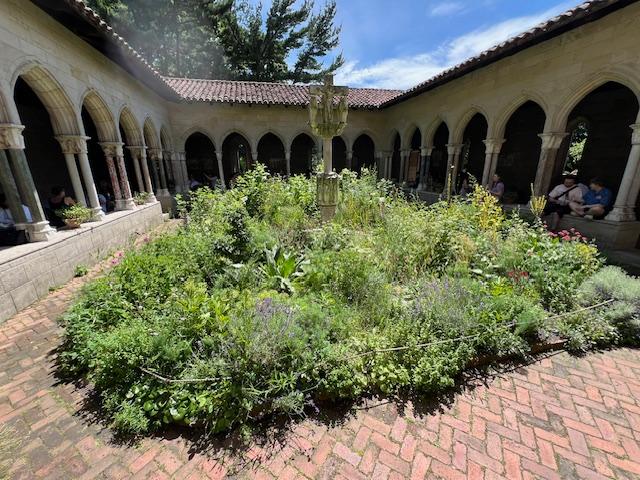
The herb gardens in the summer in 2025
The Cloisters Mission:
Welcome to The Cloisters, the branch of The Metropolitan Museum of Art devoted to the art and architecture of medieval Europe. Set on a hilltop with commanding views of the Hudson River. The Cloisters is designed in a style evocative of medieval architecture specifically for the display of masterpiece created during that era. Arranged roughly chronologically and featuring works primarily from Western Europe, the collection includes sculpture, stained glass, tapestries, painting, manuscript illumination and metalwork. The extensive gardens feature medieval plantings, enhancing the evocative environment.
The Gardens at the Cloisters in bloom
History of the Museum
John D. Rockefeller Jr. generously provided for the building, the setting in Fort Tryon Park and the acquisition of the notable George Grey Barnard Collection, the nucleus of The Cloisters collection. Barnard Collection, the nucleus of The Cloisters collection. Barnard, an American sculptor whose work can be seen in the American Wing of the Metropolitan, traveled extensively in France, where he purchased medieval sculpture and architectural elements often from descendants of citizens who had appropriated objects abandoned during the French Revolution. The architect Charles Collens incorporated these medieval elements into the fabric of The Cloisters, which opened to the public in 1938.
Romanesque Hall
Imposing stone portals from French churches of the twelfth and thirteenth centuries open onto a gallery that features rare Spanish frescoes and French sculpture.
Fuentiduena Chapel
The twelfth-century apse from the church of San Martin at Fuentiduena, Spain and the great contemporary fresco of Christ in Majesty from a church in the Pyrenees Mountains dominate the space. Sculpture from Italy and Spain enriches the chapel, which is the setting for a celebrated concert series.
Saint-Guilhem Cloister
The fine carving of this cloister from the monastery of Saint-Guilhem-le-Desert, near Montpellier, harmoniously and playfully adapts the forms of Roman sculpture in a medieval context. The plants depicted in the sculpture, acanthus and palm, are growing in pots near the small fountain. The gallery also features early sculpture from Italy, Islamic Spain and elsewhere in France.
Langon Chapel
Architectural elements from the twelfth-century church of Notre-Dame-du-Bourg at Langon near Bordeaux form the setting for the display of thirteenth-century French stained glass and important Burgundian sculpture in wood and stone.
Pontaut Chapter House
Monks from the Cistercian abbey at Pontaut in Aquitaine once gathered for daily meetings in this twelfth-century enclosure known as a chapter house. At the time of its purchase in the 1930’s by a Parisian dealer, the column supports were being used to tether farm animals.
The distinctive pink stone of this cloister, featuring capitals carved with wild and fanciful creatures, was quarried in the twelfth century near Canigou in the Pyrenees Mountains for the nearby Benedictine monastery of Saint-Michel-de-Cuxa. The typical cloister garden features crossed paths and a central fountain from the neighboring monastery of Saint-Genis-des-Fountaines. Both medieval and modern species of plants are grown in the garden. In winter, the arcades are enclosed and fragrant potted plants fill the walkways.
Early Gothic Hall
With thirteenth-century windows overlooking the Hudson River, the gallery features stained glass from France’s great churches, including Saint-Germain-des-Pres in Paris. Sculptures and paintings from France, Italy and Spain evoke the great age of cathedrals.
Nine Heroes Tapestries Room
From an original series of nine hangings created about 1400 for a member of the Valois court, the tapestries portray fabled heroes of ancient, Hebrew and Christian history, including the legendary King Arthur. It is among the earliest sets of surviving medieval tapestries.
Unicorn Tapestries Room
With brilliant colors, beautiful landscapes and precise depictions of flora and fauna, these renowned tapestries depicting the hunt and capture of the mythical unicorn are among the most studied and beloved objects at The Cloisters. Probably designed in Paris and woven in Brussels about 1500 for an unknown patron, these hangings blend the secular and sacred worlds of the Middle Ages.
Boppard Room
Stained glass from the fifteenth-century Camelite convent at Boppard-am-Rhein dominates one end of the room. Fifteenth-century panel paintings and sculpture from the Rhineland and northern Spain, a brass lectern, domestic furniture, Spanish lusterware, tapestries, metalwork and sculpture further evoke a sacred space.
Merode Room
One of the most celebrated early Netherlandish paintings in the world, the Merode Altarpiece, painted in Tournai about 1425-30, forms the centerpiece of this gallery. The altarpiece, intended for the private prayers of its owners, represents the Annunciation to the Virgin Mary taking place in a fifteenth-century household. Details of the scene are echoed in the late medieval furnishings of the room in which other works made for private devotion are also exhibited.
Late Gothic Hall
Large fifteenth-century limestone windows from the refectory of the former Dominican monastery in Sens, France, illuminate the hall, which showcases sculpture and altarpieces from Germany, Italy and Spain as well as a great tapestry from Burgos Cathedral.
Gothic Chapel
Beneath richly colored stained-glass windows from fourteenth-century Austria carved images from royal and noble tombs of France and Spain fill the chapel-like setting.
Glass Gallery
Silver-stained glass roundels decorate the windows of the Glass Gallery, complementing small works of art, many made for secular use, with their lively, sometimes worldly subjects. Carved woodwork from a house in Abbeville, in northern France, forms a backdrop for paintings and sculpture.
“Bonnefont” Cloister and Garden
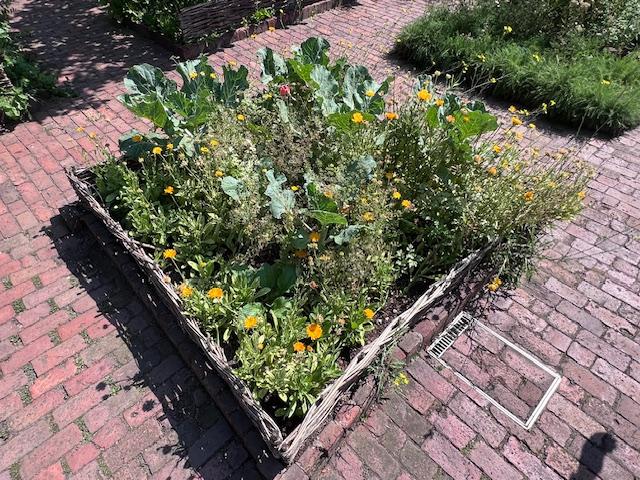
Long thought to be part of the abbey at Bonnefont-en-Comminges, the elements of this cloister come instead from other monasteries in the region including a destroyed monastery in Tarbes. The herb garden contains more than 250 species cultivated in the Middle Ages. Its raised beds, wattle fences and central wellhead are characteristic of a medieval monastic garden.
Trie Cloister and Garden
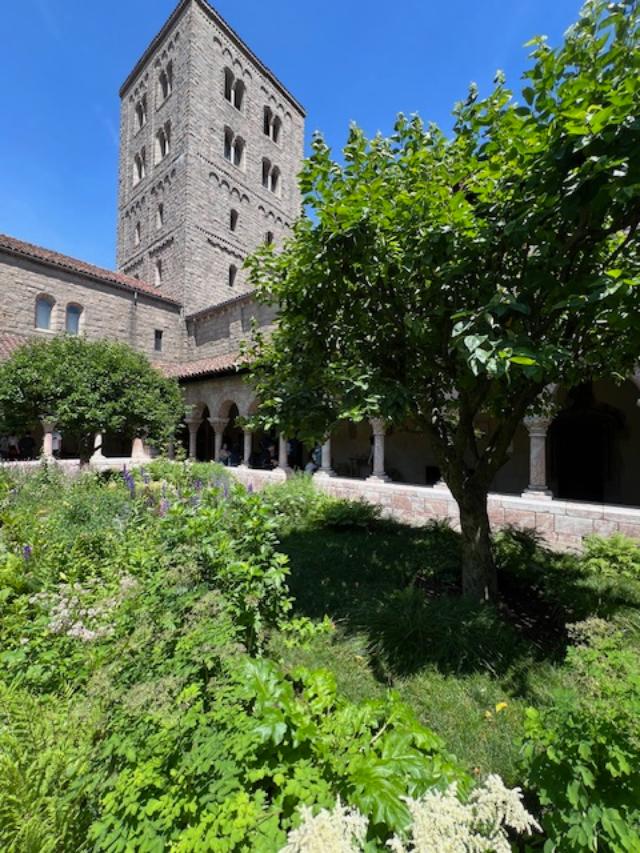
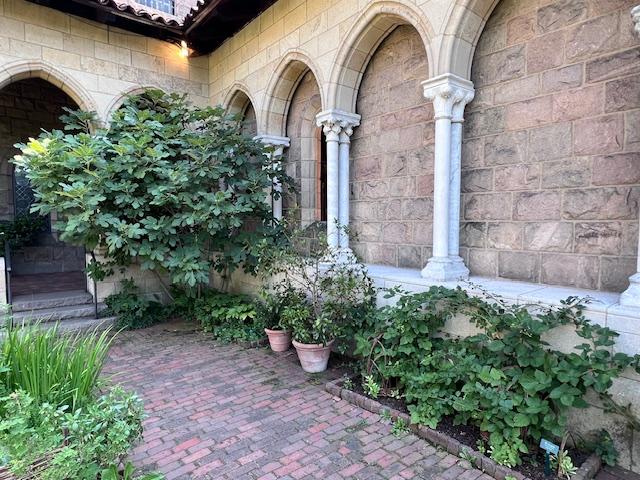
The gardens at the Trie Cloister
The stone cloister elements were created primarily for the Carmelite convert at Trie-sur-Baise in the Pyrenees. The garden is planted with medieval species to evoke the millefleurs background of medieval tapestries, such as the Unicorn series.
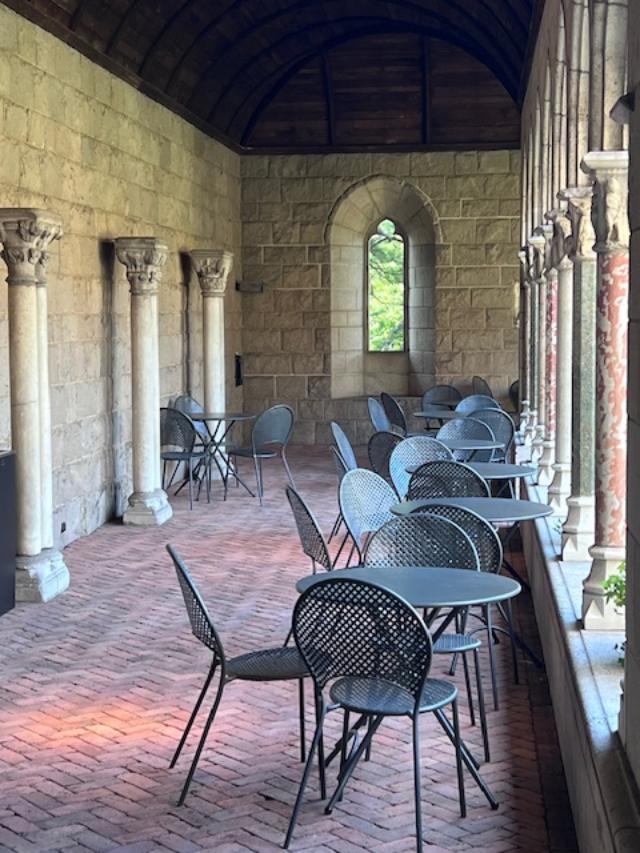
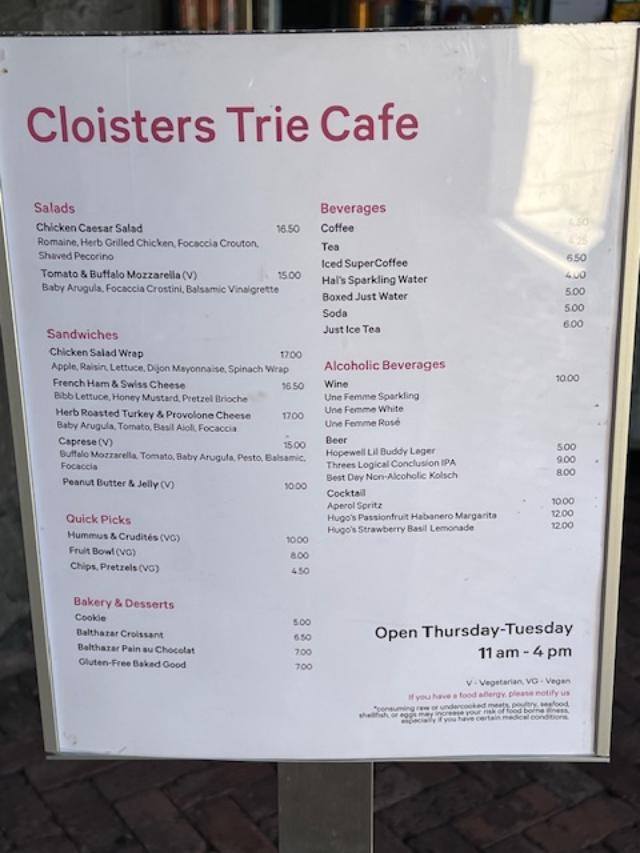
The Cloisters Trie Cafe is a seasonable restaurant that overlooks the Cloisters Gardens. This offers sandwiches , pastries and beverages and is a bit over-priced.
*Please note that the prices in the restaurant do go up every year so please look to the website for updated prices.
The Treasury
An array of precious objects in gold, silver, ivory and silk reflects the wealth of medieval churches. Illuminated manuscripts testify to the piety and taste of royal patrons such as Jeanne d’Evreux, Queen of France; jewelry and a complete set of fifteenth-century playing cards suggest more worldly pastimes.
The Gift Shop:
Even the gift shop was decked in the holiday spirit
The gift shop has all sorts of themed items from the Medieval era.
The gift shop at The Cloisters
*Disclaimer: This information is taken right from the Cloisters pamphlet from the Metropolitan Museum of Art. Please call the museum before visiting to see if anything has changed with the hours or days open. It is well worth the trip uptown to visit The Cloisters. Take the A subway up to 190th Street and take the elevator up to Fort Tryon Park and walk across the park.












































 Visiting a Museum: The Unique, Unusual, Obscure and Historical