Tag: Small Museums and Galleries

Meadowlands Museum                                                               91 Crane Avenue                                                         Rutherford, NJ 07070

Meadowlands Museum 91 Crane Avenue Rutherford, NJ 07070

Meadowlands Museum

91 Crane Avenue

Rutherford, NJ  07070

Phone: (201) 935-1175

Email: meadowlandsmuseum@verizon.net

https://www.meadowlandsmuseum.com/

https://www.facebook.com/MMusRutherford/

Open: Most Wednesdays and Saturdays from 10:00am-4:00pm

TripAdvisor Review:

https://www.tripadvisor.com/Attraction_Review-g46796-d2403380-Reviews-Meadowlands_Museum-Rutherford_New_Jersey.html?m=19905

Both Curator & Chronicler

The entrance of the museum

The Meadowlands Museum is the main steward of the history and culture of the Meadowlands region and one of its leading storyteller.

The sign welcoming you

Its mission and collection, which resides in the Yereance-Berry House in southern Bergen County in Rutherford, NJ are distinctive and unique. The house too is a historic treasure and landmark and was built in 1804 by the Berry family, who were among the county’s earliest European settlers.

The front of the museum in the Spring of 2026

Rooms in the three-level American Dutch farmhouse are alive with permanent and temporary exhibits and sometimes include loaned objects from other museums and private collections.  Historical artifacts like archives and photographs are mingled with textiles, furniture, housewares and artwork.

The display on the history of area

There is even correspondence by the daughters of John Rutherfurd, a close confidant of George Washington.

The display in the local artifacts

The gardens outside in the Spring of 2016

Grounds include the William Carlos Williams Poetry Garden, which acknowledges the legacy of Rutherford’s most famous native and the town’s history as a cultural center.

The everyday products of the Meadowlands Museum

Founder in 1961 as the Rutherford Junior Museum by parents of school age children to help connect them to their community, the museum is staffed by professionals assisted by dedicated volunteers and involved trustees. Interns add to the rich resource of individuals who contribute to its present and future.

A recent commercial developed by my Business 101 Class for the Meadowlands Museum for the project “Rocking it in Rutherford: Being a Tourist in your own Town”

The location of the Yereance-Berry House suggests a colonial farm dating to 1740. The oldest house in south Bergen County in close to original condition, it was part of the Historic American Building Survey project of the 1930’s. The building is also listed on the state and national registers of historic places and the Bergen County Stone House Survey.

The Yereance-Berry House is the now the Meadowlands Museum

Affiliated organization include the American Alliance of Museums, American Association for State and Local History, Meadowlands Regional Chamber of Commerce, New Jersey Association of Museums and The National Trust for Historic Preservation.

Programming & Community Service:

Free and reasonably priced services for individuals, community groups, businesses, government bodies and educational institutions are available.

*Educational programs, lectures and traveling exhibits.

The ‘Historic Rutherford Homes’ exhibition at the museum in 2026

The Historic Homes exhibition

The Historic Homes exhibition

*Customized on and off site programs.

*Collaborative ventures with a wide range of partners.

*Assistance with academic research and other archival support.

Special Events:

Special events, which often are made possible by partnerships with businesses and other organizations, are an additional way for visitors of all ages to enjoy the museum. Public and private events occur on a regular or one-time basis; many are fundraisers. Call or email for a current calendar and sponsorship possibilities. The house hosts both permanent and special exhibits.

Our permanent exhibits include:

*Yereance Berry House: During the Spring of 2026.

The outside of the museum

*Pre-electric kitchen: This unique kitchen in the basement shows off the collection of equipment that would be used in the kitchen from the Civil War to the 1950’s. There are coffee grinders, whisks, wash boards and such. It showed how much effort was put into preparing the family meal through the ages.

The Farm Kitchen of Bergen County

The Farm Kitchen at the Turn of the Century

*Meadowlands Geology: there are all sorts of rocks and gems not just from the area but all over the state. There are two different rooms one of the specimens locally and there is a separate room for glowing stones. It is very interesting to see when the lights are out.

The Mineral Collection at the Meadowlands Museum

The fluorescent Zinc display

The Mining Display

*Mining in South Bergen: This is how the county has changed when we mined ore.

The Mining Display at the Meadowlands Museum

The Mining Display

The Mining Display

*19th century Laundry Room: The Laundry room that is located in the basement has many of the things our grandparents would have used. The washboards,  scrub bushes, old washing machines and ringers. Washing clothes was much harder back then.

The Wash Room of the Turn of the Century

*The wonderful Toy Exhibition of turn of the last century toys and from the 1960’s 70’s and 80’s. This contains Dolls, Board Games, play things and instruments:

The Toy Collection fascinates kids of all ages

The Factory Toys display

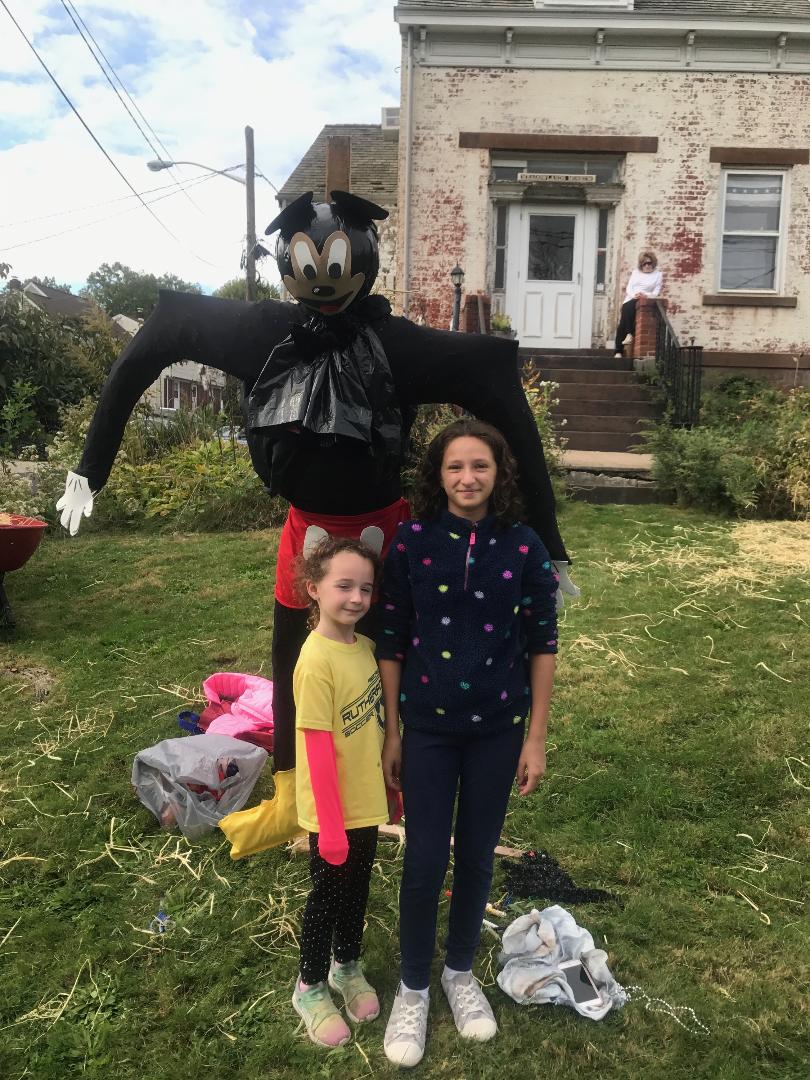
Meadowlands Museum Scarecrow Day III

The wonderful toy factory in Kearny, NJ that used to produce all these wonderful toys.

The Toy Display

The Toy Display

The Doll display

The Doll display

The ‘Brownies’ display in the Toy Room

*The Bergen County Farm display:

Farming in the County in the past

The Farm display

The home Spinning Wheel display

Spinning Wheel display

The new Turn of the Century Furnace display

*Horse elevator

Recent special exhibits have included:

*High school football

*Needlecraft

*Steampunk

*Medical Innovations

*Maps of the region

*Civil Rights

*Dr. Williams’ Babies

Dr. William’s display

Dr. Williams display

Dr. William’s display

Dr. William’s display

Dr. William’s display

*World War I

Special Events:

Scarecrow Day 2018:

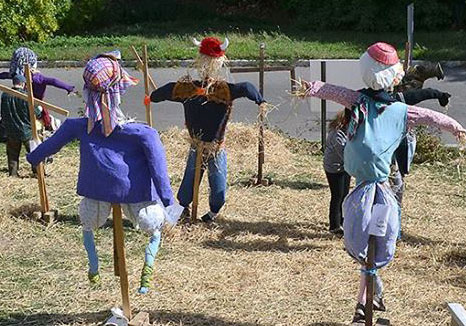
I went to the recent Scarecrow Day on October 20, 2018 where guests of the museum created their own scarecrows using their own creativity. All the scarecrows were lined up facing the street with their interesting clothes and accessories.

Each person got to use their own clothes and each one had its own style to it. It was fun watching the families show their creativity at this annual event.

Image result for scarecrow day at meadowland museum

Scarecrow Day at the museum in 2018

Meadowlands Museum Scarecrow Day

Scarecrow Day in 2021: the winners of the contest for best Scarecrow

I also stopped by for the Dutch Christmas decorations. The museum was decorated for the holidays with garland and trees. On December 1st, they had a Dutch Christmas festival (I could not attend) with food and entertainment.

Celebrating the Easter Holidays in 2026

Help tell the story…

(from the museum website)

Individuals who value the purpose and work of the Meadowlands Museum remain its inspiration and abiding spirit. Donations, memberships, sponsorship’s, grants and fundraisers are crucial elements of the museum’s financial well-being.

Admission to the museum is free but donations are greatly appreciated. Fees for events and other services vary. A personal letter to the appropriate person acknowledges a gift made in the name of an individual. Donations to provide for the buildings and grounds are valuable links to the future and a kind of giving that is among the museum’s top priorities.

Disclaimer: This information was taken directly from the Meadowlands Museum’s pamphlet. For information on the site, please call or email the museum for more information.

My Bergen Community College Team Project in 2022:

Bergecco-Parc Consulting Inc.-Rocking it in Rutherford:

My Business 101 class at Bergen Community College Lyndhurst branch visit in the Spring of 2022 for the project “Rocking it in Rutherford: Be a Tourist in your own Town”.

For Spring Semester in 2022, my Business 101-Introduction to Business class made a weekend visit to the Meadowlands Museum for the project “Rocking it in Rutherford-Be a Tourist in your own Town”. We were promoting the museum to increase tourism with a fundraiser and a barbecue. So on the weekend, I took my Team to the museum to tour it for extra credit. They ended up learning a lot about not just the museum but the history of Rutherford and Bergen County, NJ.

The project was promoting the Town of Rutherford for Domestic and Foreign Tourism and created a fundraiser and modernization of displays for the museum. This is a copy of the project, presentation and Commercials.

The Team Project “Rocking it in Rutherford: Be a Tourist in your own Town”:

Video’s of the Presentation:

The video presentation promoting the museum:

The Project showcased the museum in such a professional and creative way.

El Museo del Barrio                                                       1230 Fifth Avenue, Museum Mile                            New York, NY 10029

El Museo del Barrio 1230 Fifth Avenue, Museum Mile New York, NY 10029

El Museo del Barrio

1230 Fifth Avenue

Museum Mile,

New York, NY  10029

(212) 831-7272

info@elmuseo.org

Hours: Wednesday-Saturday 11:00am-6:00pm/Sunday-12:00pm-5:00pm/Closed: Tuesday

Fee: $9.00 for Adults/$5.00 Children & Seniors/Free: Members and children under 12/Seniors on Wednesdays

 TripAdvisor Review:

https://www.tripadvisor.com/Attraction_Review-g60763-d116228-Reviews-El_Museo_del_Barrio-New_York_City_New_York.html?m=1990

The El Museo del Barrio at 1239 Fifth Avenue

The Mission:

The mission of El Museo del Barrio is to present and preserve the art and culture of Puerto Ricans and all Latin Americans in the United States. Through its extensive collections, varied exhibitions and publications, bilingual public programs, educational activates, festivals and special events, El Museo educates its diverse public in the richness of Caribbean and Latin American arts and cultural history.

By introducing young people to this cultural heritage, El Museo is creating the next generation of museum-goers while satisfying the growing interest in Caribbean and Latin American art of a broad national and international audience.

The History of the Museum:

El Museo was founded 45 years ago by artist and educator Raphael Montanez Ortiz and a coalition of parents, educators, artists and activists who not that mainstream museums largely ignored Latino artists. Since its inception, El Museo has been committed to celebrating and promoting Latino culture, thus becoming a cornerstone of El Barrio and a valuable resource for New York City.

El Museo del Barrio

The exhibitions in the Main Gallery

El Museo’s varied permanent collection of over 6,500 objects, spans more than 800 years of Latin American, Caribbean and Latino art, includes pre-Columbian Taino artifacts, traditional arts, twentieth-century drawings, painting, sculptures and installations as well as prints, photography, documentary films and video. For a brief overview of our  history and to explore the institutional chronology and exhibition history year by year.

EL Museo del Barrio II

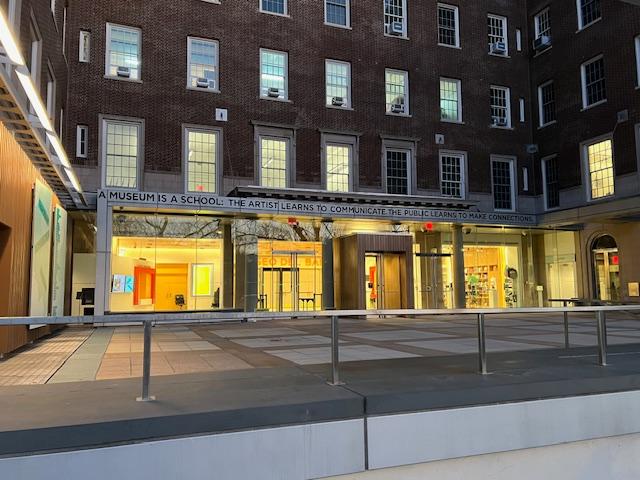
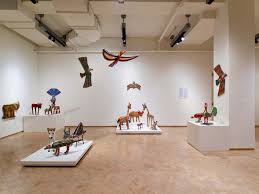
The Galleries of  El Museo del Barrio

Our Purpose:

El Museo del Barrio’s purpose is to collect, preserve, exhibit and interpret the art and artifacts of Caribbean and Latin American cultures for posterity.

To enhance the sense of identify, self-esteem and self-knowledge of the Caribbean and Latin American peoples by educating them in their artistic heritage and bringing art and artists into their communities.

To provide an educational forum that promotes an appreciation and understanding of Caribbean and Latin American art and culture and its rich contribution to North America.

To offer Caribbean and Latin American artists greater access to institutional support in the national and international art world.

To convert young people of Caribbean and Latin American descent into the next generation of museum-goers, stakeholders in the institution created for them.

To fulfill our special responsibility as a center of learning and training ground for the growing numbers of artists, educators, art historians and museum professionals interested in Caribbean and Latin American Art.

The mission reaffirms the vision of Raphael Montanez Ortiz, who founded El Museo del Barrio in 1969 and of the Puerto Rican educators, artists and community activities who worked in support of this goal.

(El Museo del Barrio pamphlet online)

The Collection:

The museum features an extensive collection of around 8,500 pieces composed of pre-Columbian and traditional artifacts, particularly a large permanent Taino exhibit as well as 20th century arts and crafts, graphics and popular media, Mexican masks, textiles from Chile and photographs and traditional art from Puerto Rico. There are often temporary exhibits on Puerto Rican and Latino modern art. The museum also sponsors numerous festivals and educational programs throughout the year including the annual Three Kings Day parade.  Due to a lack of space prior to their 2009-2010 expansion, the museum began to place some of their permanent collection online. This also served as a means of audience development. (Wikipedia)


The Studio Art Museum in Harlem         144 West 125th Street                                New York, NY 10027

The Studio Art Museum in Harlem 144 West 125th Street New York, NY 10027

The Studio Art Museum in Harlem

144 West 125th Street

New York, NY 10027

(212) 864-4500

https://studiomuseum.org/

http://www.studiomuseum.org

Hours: Thursday-Sunday: 12:00pm-5:00pm/Closed: Monday-Wednesday-Closed

Fee: Donation

TripAdvisor Review:

https://www.tripadvisor.com/Attraction_Review-g60763-d116230-Reviews-The_Studio_Museum_in_Harlem-New_York_City_New_York.html?m=19905

The Museum:

The Studio Museum in Harlem is the nexus for artists of African descent locally, nationally and internationally and for work that has been inspired and influenced by black culture. It is a site fro the dynamic exchange of ideas about art and society.

The Studio Museum of Harlem III

The Studio Museum of Harlem

History:

The Studio Museum in Harlem was founded in 1968 by a diverse group of artists, community activists and philanthropists, who envisioned a new kind  of museum that not only displays artwork but also supports artists and arts education. The Museum was originally located in a rented loft at 2033 Fifth Avenue, just north of 125th Street. Renowned architect J. Max Bond Jr. led a renovation that adapted the building into a two level exhibition space with offices and space for rental tenants.

The Studio Museum of Harlem II

The Galleries at The Studio Museum in Harlem

In 1985, the Museum began excavation of an adjacent vacant lot  at 142 West 125th Street, leased from the City of New York. Over the following two decades, the Museum, in partnership with the City, completed additional renovations to the building and lot and added additional gallery and lobby space, a theater and a flexible outdoor space. The Museum has been accredited by the American Alliance of Museums (AAM) since 1987, when it became the first black or Latino institution to gain this recognition.

The Studio Museum in Harlem is internationally known for its catalytic role in promoting the works of artists of African descent. The Artist-in-Residence program was one of the Museum’s founding initiatives, and gives the Museum the “Studio” in its name.  The program has supported more than one hundred emerging artists of African or Latino descent, many of whom who have gone on to establish highly regarded careers. Alumni include Chakia Booker, David Hammons, Kerry James Marshall, Julie Mehretu, Wangechi Mutu, Mickalene Thomas and Kehinde Wiley.

Studio Art Museum of Harlem

The Rico Gatson exhibition in 2018

The Studio Museum serves as a bridge between artists of African descent and a broad and diverse public. A wide variety of programs bring art alive for audiences of all ages-from toddlers to seniors-through talks, tours, art-making activities, performances and on and off-site educational programs. Museum exhibitions expand the personal, public and academic understanding of modern and contemporary art by artists of African descent. The Studio Museum is a leader in scholarship about artists of African descent, publishes Studio magazine twice yearly and regularity creates award-winning books, exhibition catalogs and brochures.

The Museum’s permanent collection includes nearly two thousand paintings, sculptures, watercolors, drawings, pastels, prints, photographs, mixed-media works and installations dating from the nineteenth century to the present. The Museum’s Acquisition Committee facilitates the growth of the collection through donations and purchases. Artists in the collection include Romare Bearden, Robert Colescott, Jacob Lawrence, Norman Lewis, Chris Ofili, Betye Saar, Lorna Simpson, Kara Walker and Hale Woodruff as well as many former artists in residence. The Museum also is the custodian of an extensive archive of the work of photographer James VanDerZee, the quintessential chronicler of the Harlem community from 1906 to 1983. The Museum does not have a permanent exhibition of work from its collection but frequency shows selections in temporary exhibitions.

Studio Art Museum of Harlem II

The current exhibitions are wonderful and include:

Regarding the Figure

Rico Gatson Icons 2007-2017

Jamel Shaazz Crossing 125th

All them are compact exhibitions and you will need about two hours to see everything at the museum (See TripAdvisior review).


Public transit access:

Subway: 2 & 3 to 125th Street

Bus: M7, M60, SBS, M100, M102, BX15 buses

Website: studiomuseum.org (http://studiomuseum.org)

Folks, please don’t miss this gem of a museum in your travels to NYC in a very quickly gentrifying Harlem (See ‘MywalkinManhattan’ site for more details).

MOCA: The Museum of Chinese in America                                                           215 Centre Street                                                New York, NY 10013

MOCA: The Museum of Chinese in America 215 Centre Street New York, NY 10013

MOCA: The Museum of Chinese in America

215 Centre Street

New York City, NY  10013

Telephone: (855) 955-4720

Fax: (212) 619-4720

Email: infor@mocany.org

Home

https://www.mocanyc.org/visit/

Hours: Tuesday-Wednesday-11:00am-6:00pm/Thursday-11:00am-9:00pm/Saturday & Sunday-11:00am-6:00pm

Fee: General Admission $10.00/Students/Seniors/Children/Military-$7.00/Free to members and people with disabilities

TripAdvisor Review:

https://www.tripadvisor.com/Attraction_Review-g60763-d136145-Reviews-Museum_of_Chinese_in_America-New_York_City_New_York.html?m=19905

The Museum of Chinese in America engages audiences in an ongoing dialogue, in which people of all backgrounds are able to see American history and society through a critical lens, to reflect on their own experiences and to make meaningful connections between the past and the present, the global and the local, themselves and others.

MOCA began in 1980 as the New York Chinatown History Project, a community-based organization founded by scholar John Kuo Wei Tchen and community activist Charles Lai to promote knowledge and understanding of the history and contributions of Chinese Americans. Today, the MOCA is a national cultural anchor and a global destination. It is located on the border of Chinatown and SoHo in New York City in its Maya Lin-designed home that was highlighted by Architectural Digest as one of Lin’s most memorable designs.

Museum of Chinese in America II

The entrance to the museum

Permanent Exhibition:

Our core exhibition, ‘With a Single Step: Stories in the Making of America’, traces more than 160 years of milestones in Chinese American History from the earliest Chinese Immigration to the struggle for citizenship to the development of our contemporary identity.

The core exhibit revolves around the Museum’s historic sky-lit courtyard, which renowned artist and designer Maya Lin has left deliberately raw and untouched as a reminder of the past and to evoke a classic Chinese courtyard house.

The permanent collection shows immigration from the earliest days during the early 1800’s with immigrants working in the mines and on the railroads doing the back-breaking work all while dealing with the problems with racism in the country at that time.

The timeline shows the development of the early Chinatowns in major cities and the growth of industries like restaurants and laundries where they could make a living. This is where the term ‘eight-pound package’ came from with a pile of clean laundry. Even in these industries, the exhibit shows the systematic racism in these fields as well.

It was not until WWII when you saw Chinese Americans fighting for their country did you see a change of attitude, but it never seemed to last long. This ongoing theme is seen throughout the exhibition up until today.

Special Exhibitions:

Our rotating galleries showcase a revolving series of MOCA-curated and visiting exhibitions featuring contemporary art, design and historical subjects.

The first time I visited the museum, I saw an exhibition of the modern twist to the ‘Chinese Restaurant’ where the foods we eat are really Chinese American cuisine that was created when immigrants came here and had to adapt to their new homeland. Items like Chop Suey and Chow Mein were inventions of new immigrants with the items they had in their pantries.

The exhibit showed how chefs of the third generation of Americans of Chinese Descent are changing these dishes by adding modern spins to the food. The exhibit featured the chefs, their restaurants and the dishes that they were creating. They were changing the cuisine again.

The current exhibition “Responses: Asian American Voices Resisting the Tides of Racism”, deals with the Xenophobia that came with COVID and the affects that the disease and its thought that it came from Wuhan, China has trickled down to a new hate for Americans of Asian descent. This has led to a series of assaults all over the country. The exhibition shows this type of racism throughout the history of this country and the response from the community itself.

MOCA III

“Responses: Asian American voices Resisting the Tides of Racism” exhibition

MOCA Shop:

The MOCA Shop features select items, including books, ceramics, designs by local artists and children’s gifts.

Education:

Using inquire-driven approaches, MOCA provides museum and in-school programs on Chinese American history and culture for K-12 and college students at all levels, as well as professional development workshops for teachers. These programs complement classroom learning and foster expansive opportunities for primary source-based learning and development of 21st Century skills such as critical thinking, visual media literacy and civic engagement. They present diverse layers of the Chinese American experience, using individual stories to highlight what it has meant to be Chinese in America at different moments in time, while also exanimating America’s journey as a nation of immigrants.

Family Programs:

MOCA’s family programs bring together parents, grandparents, children and grandchildren alike to participate in fun, hands on activities celebrating Chinese American heritage and history. From our annual holiday Family Festivals to our bi-monthly MOCACREATE workshops, enjoy storytelling, drop-in arts and crafts, teaching artist demonstrations, performances and more!

Public Programs:

Through its thought-provoking and multi-disciplinary programming, MOCA’s signature public programs series offers diverse perspectives on the living history of Chinese Americans and gives visitors opportunities to actively engage in shaping and influence the Chinese American cultural landscape.

Tours:

MOCA offer dynamic educator-led tours of our exhibitions and guided walking tours of New York Chinatown for all ages, designed to encourage meaningful ties between visitors’ lives and the history, culture and diverse experiences of people of Chinese descent in the United States.

Preserve your family Legacy:

As visitors enter the Museum, they are greeted with the Journey Wall, a custom art installation created fro the main lobby of MOCA’s space by Maya Lin.

The wall is composed of bronze tiles through which Chinese Americans can honor and remember their family roots. Each tile is inscribed with an individual’s or family’s name and place of origin with their home in America. The complete wall will highlight the expansiveness of the Chinese American diaspora.

To become a permanent part of the Museum epic narrative, your family can place a tile on the Journey Wall.

Museum of Chinese in America IV

For more information or to make a reservation for a tile, please contact the Development department at (855) 955-MOCA or email development@mocanyc.org. All gifts are tax-deductible to the full extent of the law.

Collections:

MOCA’s ever-expanding archives and permanent collections are comprised of more than 65,00 artifacts, letters, written records, oral histories, textiles, photographs and videos. The collections highlight the varied threads of the Chinese American diaspora, exploring how they intersect and diverge, illuminating the ways in which they are intimately interwoven within the broader multicultural fabric of the United States.

Museum of Chinese in America III

Galleries at the museum

Research services are available by appointment on weekdays at MOCA’s Collections & Research Center, located at MOCA’s original site at 70 Mulberry Street, which is housed in a historic public school building dating back to the 19th century. MOCA continues to make the museum’s resources available to researchers around the world through its Collections Online. Currently, researchers are able to search more than 10,000 item records and archival finding aids online via PastPerfect and Archives. Space.

Museum of Chinese in America

Galleries at the museum

MOCA’s Commitment:

*Presenting relevant historical and contemporary exhibitions.

*Collecting and preserving Chinese American history.

*Transforming how our audience learn, engage and use technology to explore history, identity, culture and community.

*Creating curricula and educational programs for students and teachers and offering resources for researchers.

*Cultivating community-based projects and collecting oral histories.

*Hosting films, festivals, performances, readings, workshops and conferences on topics relevant to MOCA’s mission.

Book your group visit today! (855) 955-6622.

Visit MOCA:

Our beautiful 16,000 square foot space at 215 Centre Street is designed by artist and designer Maya Lin. It is a national home for the precious narratives of diverse Chinese American communities and strives to be a model among interactive museums. MOCA brings to life the journeys, memories and contributions of the enduring Chinese American legacy.

Support MOCA:

MOCA relies on the generosity of private individuals, corporations and foundations to fulfill its mission to preserve and present Chinese American history and culture. Funding from donations and memberships provides critical support for our collections, exhibitions, educational initiatives, public programs and operations. To learn more about supporting MOCA or to make a specific gift, please visit https://secure.mocanyc.org/donation/or contact the Development department at development@mocanyc.org.

Membership Benefits:

MOCA members see it first! Enjoy exclusive benefits, including free gallery admission, invitations to exhibition openings, opportunities to meet curators, artists and performers and discounts at the MOCA Shop, as well as at select community partners. To join or renew your membership, please visit mocanyc.org/membership or call (855) 955-6622.

Interns & Volunteers:

MOCA is always seeking dedicated individuals to assist us in our work. Please visit our website for more information.

Transportation:

N,Q,R,J,Z and 6 trains to Canal Street, M9, M15, M103 buses. The nearest parking lot is located at Centre and Hester Streets. Citi Bike station on Howard and Hester Streets.

MOCA Free First Thursdays: Free gallery admission first Thursday of each month except on major holidays. Made possible through the generosity of the New York City Department of Cultural Affairs and J.T. Tai & Co. Foundation.

Access & Accessibility:

MOCA is committed to making its collection, buildings, programs and services accessible to visitors of all abilities. For more information, please visit mocanyc.org/visit/accessibility.

http://www.mocanyc.org

*Disclaimer: This information is taken directly from the MOCA pamphlet. Things are subject to change by the organization so please call-in advance for any special services.