Tag: Small Museums and Galleries

Montclair Art Museum                                            3 South Mountain Avenue                       Montclair, NJ 07042

Montclair Art Museum 3 South Mountain Avenue Montclair, NJ 07042

Montclair Art Museum

3 South Mountain Avenue

Montclair, NJ   07042

Phone: (973) 746-5555/Membership: (973) 259-5147

http://www.montclairartmuseum.org

https://www.montclairartmuseum.org/

Open Wednesday-Sunday 12:00pm-5:00pm/Monday & Tuesday Closed

Fee:  Non-Member Adults $12.00/Seniors (65+) and Students with ID $10.00/Members and Children under 12 Free


I have made many trips to the Montclair Art Museum over the years and have always found it to be a very interesting and engaging museum. The curators mount fascinating exhibitions sometimes from the permanent collection and sometimes from traveling shows.

The galleries are smaller and more compact so the exhibitions are not over-whelming like in the bigger museums. You can see each exhibition in about forty-five minutes to an hour and you will still see a lot. There are also smaller exhibition spaces which specialize in one artist and you might see about a dozen pieces.

There are two exhibitions going on currently in the museum. One is “Constructing Identity in American”, which is a permanent collection show of more than 80 paintings, sculptures and works on paper that will address a variety of characteristics that contribute to one’s sense of self, including civic, cultural, artistic, religious, professional and sociopolitical identities, sense of place and personal space and non-conformity. This exhibition goes far beyond portraits to explore other aspects of sense of self (Museum pamphlet).
Montclair Art Museum II

“Constructing Identity in America” exhibit

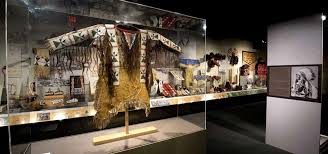
The other exhibition is called “Undaunted Spirit: Art of Native North America” which focuses on the Native American culture from Prehistoric times to the modern era. It , seems that by the end of the Civil War the Victorians were collecting art and objects of the Native Americans fearing that their cultural was disappearing. There is a lot of focus on pottery, both modern and pre-colonial, clothing construction, jewelry making with turquoise and silver and basket-making which was all the rage at the turn of last century. I like the modern aspects of the art as they are ushering a new era of artists of the southwest and giving them a voice. Take time to look at the detail work of the show.
Montclair Art Museum III.jpg

“Undaunted Spirit: Art of Native North America” exhibit


History of the Montclair Art Museum:

(This information was provided by the Montclair Art Museum)

Mission Statement: The Montclair Art Museum, together with its Vance Wall Art Education Center, engages our diverse community through distinctive exhibitions, educational programs and collection of American and Native American Art. Our mission is to inspire and engage people of all ages in their experience with art, including the rich inter-cultural and global connections throughout American history and the  continuing relevance of art to contemporary life.

Montclair Art Museum.jpg

The Montclair Art Museum

Vision, Values and Diversity Statement:

After 100 years of service, MAM is recognized as the leading American art museum and community art school in Northern New Jersey. As a organization, we value: artistic inspiration, diversity of voices, individual and group creativity and the importance of all arts to a civil, inclusive and forward-thinking society.

We respect and welcome individual differences and strive to maintain an environment that fosters productivity, creativity and individual satisfaction by celebrating the diversity of race, gender, nationality, age, religion, sexual orientation and physical abilities.

Montclair Art Museum VI

Native American Galleries

During our second century, we will invigorate our collections and curatorial presentations; expand our educational services audience; support artists, their work and connections; pursue productive institutional partnerships and embrace new media and technology. We will also secure MAM’s financial stability and preserve its facilities and other assets in a prudent and sustainable way.

A notable community institution with an international reputation, the Montclair Art Museum (MAM) is still located in the same-though now thrice expanded-building in which it opened in 1914. Situated amid a beautiful tree-lined residential area of Montclair New Jersey, just 12 miles west of New York City, the Museum is esteemed for its holdings of American and Native American Art, its exhibitions, its family and public programs and its art school. It welcomes more than 65,000 visitors annually.

Montclair Museum II

The entrance of the Montclair Museum

The Museum was a pioneer: one of the country’s first museums primarily engaged in collecting American Art (including the work of contemporary non academic artists) and among the first dedicated to the study and creation of a significant Native American art collection. This pioneering spirit still reverberates in the  Museum’s pursuit and presentation of high-quality art that characterize and celebrates American’s diversity, including the recent launch of its Contemporary Art Program, in 2010, providing MAM an opportunity to showcase dynamic contemporary work and expand the Museum’s contemporary art holdings. A main showcase dynamic contemporary work and expand the Museum’s Contemporary holdings.

A main feature of the MAM program is to explore the interplay between historical and contemporary art to our understanding of the larger historical context in which art is created, presenting work that is being challenging and accessible. A key component of the Contemporary Art Program is it New Direction exhibition series of solo artists, established in 2011. Artists featured in the series include Marina Zurch, Saya Woolfalk, Spencer Finch and Sanford Biggers. Most recently in Spring 2015, MAM presented its largest and most ambitious exhibition of contemporary art to date, “Come as You Are: Art of the 1990’s”.

From its founding, the Montclair Art Museum has maintained a vital presence in its surrounding community. The Museum’s collection began with gifts from prominent Montclair residents that included both American and Native American art, laying the foundation for the Museum’s holdings. MAM’s Inness Gallery is one of the only galleries in the world dedicated to the work of America’s greatest landscape painter, who spent the last nine years of his life in Montclair, from 1885 onward and who drew inspiration from the local landscape. Other well-known artists followed in his footsteps, cementing Montclair’s reputation as an intellectual center and artist’s colony, a reputation its retains to this day.

Mam’s collection has grown to over 12,000 works. The American collection, which started with a gift of 36 paintings from William T. Evan’s, comprises paintings, prints, drawings, photographs and sculpture dating from the 18th century to the present and features excellent works by Benjamin West, Asher B. Durand, John Singer Sargent, Edward Hooper, Georgia O’Keeffe, Andy Warhol and Roy Lichtenstein as well as younger and emerging artists such as Louise Lawler, Chakaia Booker, Whitfield Lovell and Willie Cole.

The museum’s superb holdings of traditional and contemporary American Indian art and artifacts, New Jersey’s largest, represent the cultural achievements in weaving, pottery, wood carving, jewelry and textiles of indigenous Americans. The collection was begun by Annie Valentine Rand and carried on by her philanthropic daughter Florence Rand Lang, one of the Museum’s founders and continues to grow with philanthropic daughter Florence Rand Lang, one of the Museum’s founders and continues to grow with commissioned works, gifts and purchases that celebrate the vitality and modernity of traditional forms and beliefs. Among the contemporary American Indian artists represented are Tony Abeyta, Dan Namingha, Jaune Quick-to-see Smith, Allan Houser , Bently Spang and Marie Watt.

Equally important for its community presence and its reputation are the Museum’s public and family programs and art school, serving everyone from toddlers to senior citizens. Collaborations with numerous cultural and community partners bring artists, performers and scholars to the Museum on a regular basis.Guests have included Holland Cotter, John Elderfield, Bill T. Jones, Jeff Koons, Faith Ringgold, Winfred Rembert, Kiki Smith, Philip Pearlstein, Shirin Neshat and Lorna Simpson. More than 10,000 K-12 students from 190 school districts visit the Museum every year. Free Family Days, a Family Lab, MAM Park Bench, Home School Days and Birthday Art Parties allow families to experience art in variety of different ways. As the New Jersey affiliate of the Scholastic Art & Writing Awards, MAM opens opportunities to creative teenagers to gain national recognition for their work. The Museum also provides programs for seniors and special needs individuals-such as the hearing impaired and people with Alzheimer’s as well as training for teachers in the arts.

MAM’s art school, now the Yard School of Art, has been an integral part of the Museum’s life nearly from the beginning. It was founded in 1924 just 10 years after the Museum itself and has operated continuously since then offering courses year-round to kids, teens, adults and seniors. Courses cross a broad range of the artistic spectrum, including drawing, painting, collage, pastel, printing making and illustration. In 2011, the school launched two new areas: a Ceramics Studio and a Digital Media Lab.

In 2014, MAM celebrated its Centennial with a yearlong program of activities, which included a Birthday Party on January 15, exactly 100 years from the day of its founding that attracted thousands of visitors. In honor of the Centennial the Museum also commissioned internationally renowned artist Spencer Finch to create a site-specific installation that has transformed the Museum’s facade, making it a more inviting point of entry.

The first institution in New Jersey designed as a museum and one of the first in the nation to be accredited by the American Association of Museums, the Montclair Art Museum as it marks its Centennial, continues to seek novel ways, through its exhibitions, educational programs and outreach efforts to inspire and inform its growing and ever more diverse audiences.

(This information on the history of the Montclair Art Museum was taken from their website and I give the Museum full credit for the history of the Montclair Art Museum).



Ukrainian Institute of America                                2 East 79th Street                                                New York, NY 10021

Ukrainian Institute of America 2 East 79th Street New York, NY 10021

Ukrainian Institute of America

2 East 79th Street

New York, NY  10021

(212) 288-8660

Open: Sunday 12:00pm-6:00pm/Monday Closed/ Tuesday-Saturday 12:00pm-6:00pm

Fee: Adults $8.00/ Seniors $6.00/ Students with current ID $4.00/Children under 12 Free/ Members Free

My review on TripAdvisor:

https://www.tripadvisor.com/Attraction_Review-g60763-d5953575-Reviews-Ukrainian_Institute_of_America-New_York_City_New_York.html?m=19905

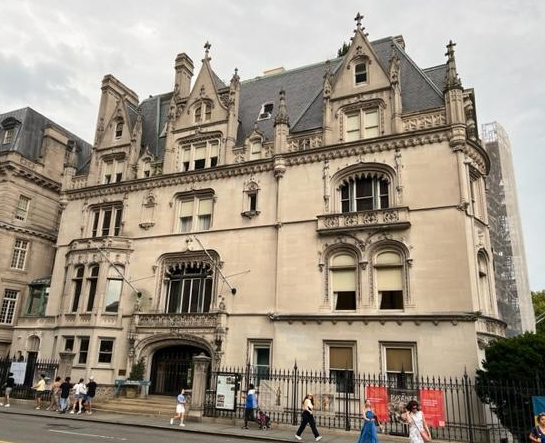
The Ukrainian Institute of America at 2 East 79th Street

I was really impressed by the Ukrainian Institute of America on a recent visit. I must have passed this building a hundred times on my way to the Metropolitan Museum of Art and never thought twice of it. I was sorry  I did as you will miss a lot by not walking in. The galleries are really impressive and the main gallery on the bottom gives you an interesting look at the history of the Ukrainian.

The first floor gallery discusses the formation of the country, a bit about its history and its ties to Europe and to Russia, its religious past and the current state of affairs of the country including its recent split of the eastern sections of the country and Crimea to Russia. Its a country in turmoil considering they want to join the European Union. It is a country in flux and on the cusp of entering the 21st Century with some of its past still tugging at it. Like all countries, it will prevail on the will of it’s people. There is a lot of solid history here and a country ready to enter its future.

Ukrainian Institute II

The artwork of artist Vasyl Diadyniuk

The second and third floor galleries are full of art work from Ukrainian artists that is on sale and each of the galleries is dedicated to certain artists selling their works at somewhat hefty prices. Still you get to see the developments of the artists both here and abroad.

The forth floor is dedicated to special exhibitions. There are two shows going on now. One is by artist Vasyl Diadyniuk and another show is by artist Alexander Archipenko.

Ukrainian Institute III

The artwork of artist Alexander Archipenko

The Museum has an interesting history.

Ukrainian Institute of America History:

The Ukrainian Institute of America Inc. is a non-profit organization whose primary mission is to showcase and support Ukrainian culture. To that end, the Institute affords the general public an opportunity to learn about Ukraine and how the Ukrainian spirit expresses itself, with special emphasis on the creative arts.

Founded more than fifty years ago by William Dzus, a prominent Ukrainian industrialist and philanthropist, the Institute sponsors:

*Art exhibitions

*Music concerts

*film screenings

*theater presentations

*Poetry readings

*Lectures and symposia

*Educational programs

*Children’s events

*Documentation center

The history of the building:

The building that is home to the Institute, the National Historic Landmark Harry F. Sinclair House is one of the few remaining examples of the splendid mansions that prominent citizens of New York City built in the 19th Century. The mansion was built in 1897 for Isaac D. Fletcher, a wealthy banker and broker, by the architect C.P.H. Gilbert. Executed in Gothic Revival style, the building is richly decorated with intricate crockets, carvings, moldings, pinnacles and other exquisite details. Six stories high, partly surrounded by a dry moat, the Institute features stately rooms that are magnificently proportioned and lavishly finished (Institute History).

Ukranian Institute of America

The C.P.H. Gilbert house

In 1887, manufacturer, Isaac D. Fletcher, commissioned famed Gilded Age architect, C.P.H. Gilbert to design the mansion. When Mr. Fletcher died,  left this mansion and his art collection to the Metropolitan Museum of Art, which sold it to Harry F. Sinclair, founder of Sinclair Oil Company and also famous for his involvement in the Teapot Dome affair. The last private owner was Augustus Van Horne Stuyvesant Jr., the last descendant of Peter Stuyvesant, who was the first governor of New Amsterdam, today’s New York City bought the house in 1930 and lived here with his sister, Anne. The house was sold as part of the estate when Mr. Stuyvesant died in 1953. The Ukrainian Institute of America acquired the mansion in 1955 (Institute History).

A key goal of the Institute is to continue to preserve this extraordinary fragment of the city’s history for the benefit of all citizens of New York. The house still retains its wooden moldings and the house looks as if its residents just moved out.

American Academy of Arts Letters                                     633 West 155th Street                                        New York, NY 10032

American Academy of Arts Letters 633 West 155th Street New York, NY 10032

American Academy of Arts & Letters

633 West 155th Street

New York, NY 10032

(212) 368-5900

Academy@Artsandletters.org

https://artsandletters.org/

Hours: Thursday-Sunday-1:00pm-4:00pm/Open During Exhibitions times only or by appointment (Mid-March-Mid-April; Mid-May-Mid-June)

Fee: Free

My review on TripAdvisor:

https://www.tripadvisor.com/ShowUserReviews-g60763-d548512-r682038708-American_Academy_of_Arts_and_Letters-New_York_City_New_York.html?m=19905

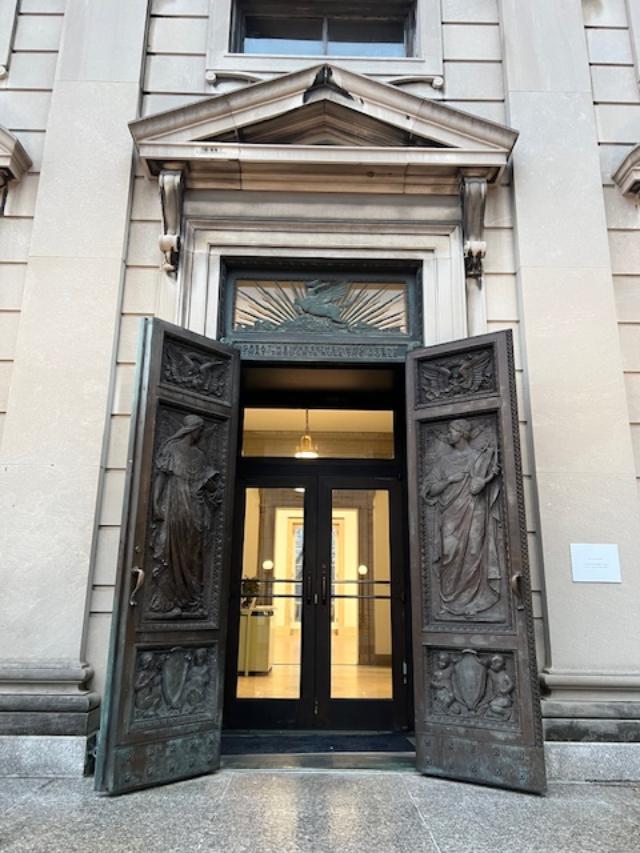
The front of the American Museum of Arts & Letters at 633 West 155th Street

I was finally able to visit the American Academy of Arts and Letters on the last day it was open for the year to the public. It was for the ‘Ceremonial Exhibition: Work by New Members and Recipients of Awards’, an exhibition on members art that was chosen specifically for the show. Most of the work was very contemporary and some a little political. It was interesting work by new artists that filled the small gallery rooms.

The front of the American Museum of Arts & Letters

One of the buildings was used for the contemporary art while the one across the courtyard was used for the more architectural pieces. The galleries are small but the art was impressive. What I liked when I talked with one of the women who worked there said to me that after the show, the pieces would be donated to galleries and museums all over the country. The galleries are only open four months out of the year and this was the last day of the exhibition so the work being shown will be gone.

I visited the museum in January 2025 and it had just reopened after a three year renovation after it had been closed since Pre-COVID and it is now fully open with a new exhibitions. All the galleries are brightly lit and displaying new exhibitions.

The entrance to the museum from the courtyard

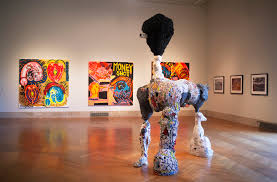
Some of the pieces that really stood out when I visited in 2019 were by Judith Bernstein, a contemporary painter who seems to not like the current administration too much. The themes were on power and money and corruption in the administration. Her work really shows what she personally thinks of  our President. Her ‘Trump Genie” was very clever and I can see this in a major museum in the future.

American Academy of Arts & Letters III

Judith Bernstein’s work

Other work in the main gallery in 2019 were by artists Stephen Westfall with ‘Solid Gone’, Hermine Ford with ‘Paris, France’ and Paul Mogensen with several ‘Untitled’ pieces. The contemporary works I was not sure what the meaning of them were but they were colorful.

American Academy of Arts & Letters V

The works of the artists of the front gallery

One of the pieces in the front gallery that really stood out was by artist Francesca Dimattio, ‘She-wolf’ which was a classic Greek character made of porcelain, enamel, paint and steel.

American Academy of Arts & Letters VI

‘She-wolf’ by Francesca Dimattio

There were light installations in 2019 that were very interesting by artist James O. Clark. He had one piece, ‘Wunnerful, Wunnerful’,  which is a work that just keeps being creating itself by bubbles and ink markers moving along a turntable that stops and starts.

There was a permanent exhibition of Charles Ives home in Connecticut that was transported and recreated here. His studio and works are featured here as well as his family life. There are copies of his works in the display cases and his career.

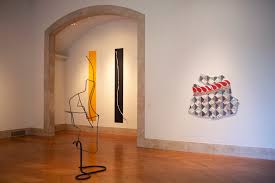
The museum in 2025 was fully open with the exhibition by artist Christine Kozlov, a contemporary Video artist whose works were being featured in the main gallery.

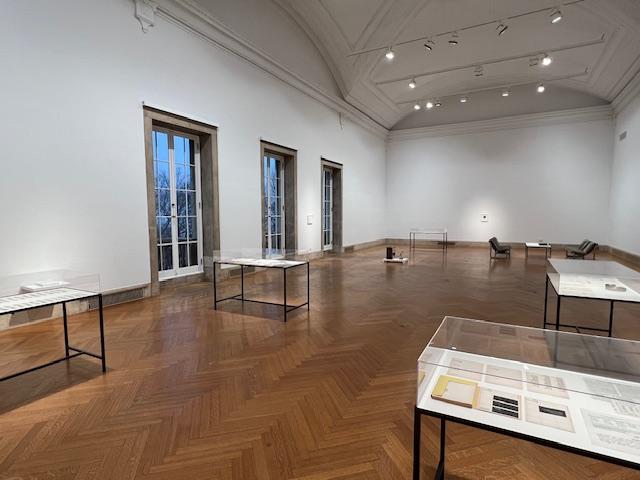
The main gallery of the Kristine Kozlov exhibition

In more than fifty artworks arrayed across four galleries at Arts and Letters, Christine Kozlov shows the breadth of Conceptual artist Christine Kozlov’s practice with a focus on works from the mid-1960s through the late 1970s. Nearly all of the works Kozlov contributed to public exhibitions during this period will be on view, many of which were created for landmark exhibitions of Conceptual art such as: One Month (1969), organized by Seth Siegelaub; Information (1970), curated by Kynaston McShine at the Museum of Modern Art, New York; Arte de Sistemas organized by Jorge Glusberg / CAYC—Centro de Arte y Comunicación at the Museo De Arte Moderno (1971); and the Number Shows, a series of exhibitions curated by Lucy Lippard between 1969 and 1974 (American Museum of Arts & Letters website).

Part of the Kristine Kostov exhibition

Works by artist Christine Kozlov

The next exhibition that I viewed was by artist Wadada Leo Smith, which consisted of an exhibition based on colors and sounds. You could take the headsets around the gallery and tour and admire the work with the sounds of the musical groups.

The gallery with works by artist Wadada Leo Smith

Wadada Leo Smith (b. 1941, Leland, MS) is a composer-performer and Arts and Letters member. Formerly an educator at CalArts, he has influenced decades of musicians and artists, including Raven Chacon. In Kosmic Music, Smith’s first solo exhibition in New York, he shares over fifty years of Ankhrasmation (Museum website).

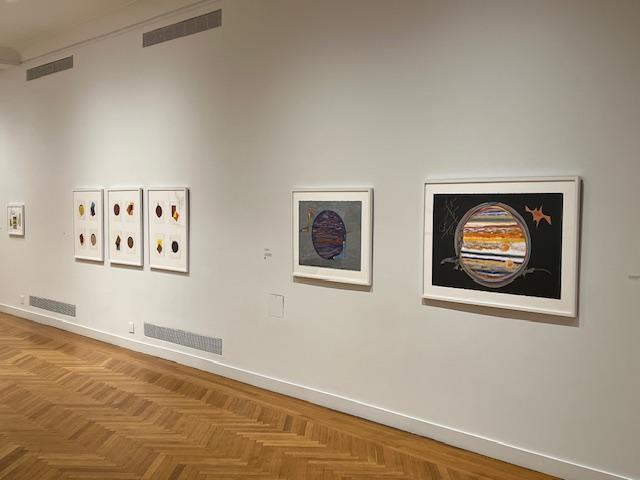
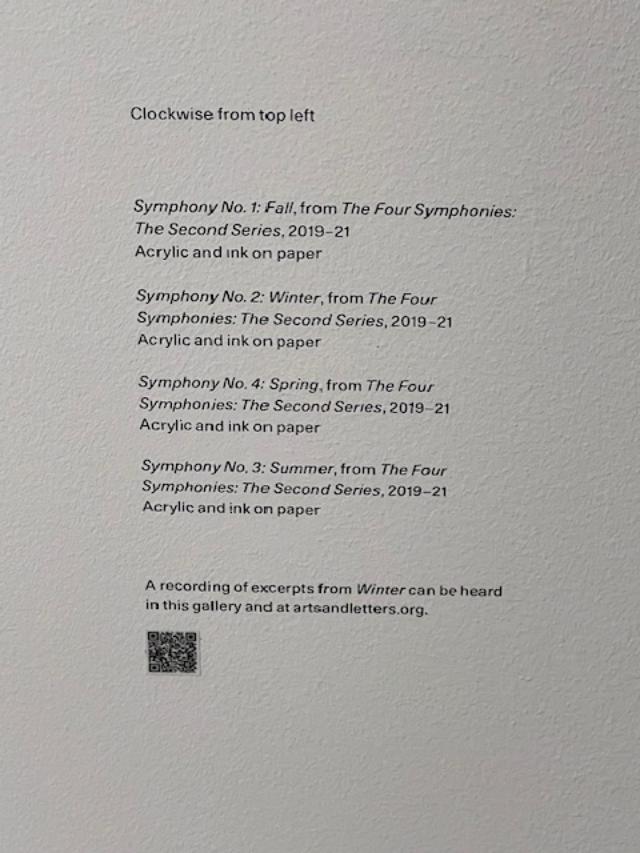
The “Sphere” works by artist Wadada Leo Smith

Ankhrasmation is a musical language Smith began exploring in 1965. Smith does not consider Ankhrasmation to be his creation but rather something he discovered. The name derives from Ankh, an ancient Egyptian symbol of life; Ras, an Ethiopian word for leader or father; and Ma, for mother. The distinctive language uses line, color, and shape to designate musical components such as tonal range and intensity of activity. For Smith, performing Ankhrasmation requires focused practice and “having that space in your heart and mind so that you can play from inspiration.” (Museum website).

The last exhibition I saw was in the gallery across the courtyard from the main museum was by artist Raven Chacon. You would walk in the main gallery to the sounds of birds both living and extinct. Just five minutes in the main gallery by myself and I felt like Tippi Hedren in the movie “The Birds”. There were all sorts of bird sounds with no birds around.

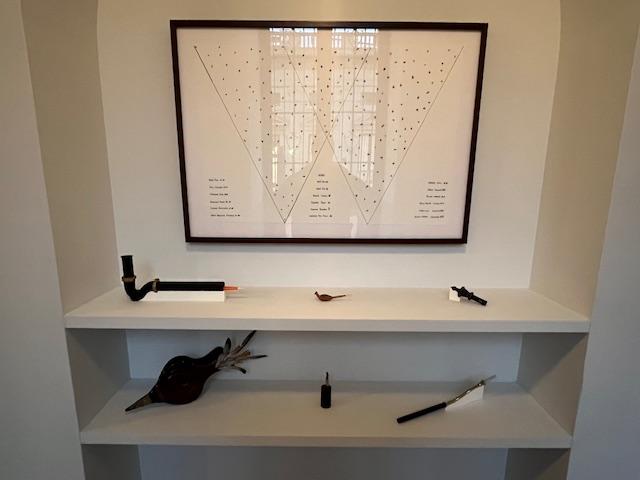
The instruments that the artist uses to achieve the sounds of the birds

When Raven Chacon (b. 1977, Fort Defiance, Navajo Nation) visited Arts and Letters for the first time, he paused in our North Gallery to clap his hands, then counted how long it took for the room to go silent. It took around six seconds—a long rate of decay. Standing in that echoing chamber, Chacon noted the building’s Beaux Arts design by Cass Gilbert, with its imported Spanish tile and cage-like glass ceiling that filters the sky. He became curious to learn the history of the land it sits on, once owned by John James Audubon, who purchased it in 1841 with funds from the sale of his illustrated Birds of America (Museum website).

Chacon is a composer and artist who frequently works with the materials and histories of a given site and who considers, as he puts it, “what has been silenced and what happens when it is not.” For the past year, he has worked on Aviary, his site-specific commission for the North Gallery, creating a soundscape that makes space and time for careful listening (Museum website).

Museum Mission:

(from the museum website)

The American Academy of Arts & Letters was founded in 1898 as an honor society of the country’s leading architects, artists, composers and writers. Charter members include William Merritt Chase, Kenyon Cox, Daniel Chester French, Childe Hassam, Henry James, Theodore Roosevelt, Elihu Vedder and Woodrow Wilson. The Academy’;’s 250 members are elected for life and pay no dues.

The main gallery of the museum

In addition to electing new members as vacancies occur, the Academy seeks to foster and sustain an interest in Literature, Music and the Fine Arts by administering over 70 awards and prizes, exhibiting art and manuscripts, funding performances of new works of musical theater and purchasing artwork for donation to museums across the country.

Collections:

(from the museum website)

The Academy’s collection, which are open to scholars by appointment, contain portraits and photographs of members, as well as paintings, sculptures, drawings, prints and decorative art objects. The library has more than 25,000 books by or about members. The archives house correspondence with past members, press clippings, institutional records and original manuscripts of musical and literary works.

History:

(from the museum website)

The National Institute of Arts & Letters, the parent body of the Academy, was founded in 1898 for “the advancement of art and literature”. The Institute met for the first time in New York City in February 1899 and began electing members that fall. Architects, artists, writers and composers of notable achievement were eligible and membership was soon capped at 250. In 1913, President Taft signed an act of Congress incorporating the organization in the District of Columbia.

American Academy of Arts & Letters at twilight

In 1904, The Institution created the American Academy of Arts & Letters, a prestigious inner body of its own members that modeled itself on the Academie francaise. The first seven members of the Academy were William Dean Howells, Augustus Saint-Gaudens, Edmund Clarence Stedman, John La Farge, Mark Twain, John Hay and Edward MacDowell. Those seven then chose eight more and so on, until the full complement of 30 and later 50 was reached. Only after being elected to the Institute, was a member eligible for elevation to the Academy. This bicameral system of membership continued until 1993, when the Institute dissolved itself and all 250 members were enrolled in the American Academy of Arts and Letters.

The Academy inaugurated its annual awards program in 1909 with the Gold Medal for Sculpture. Since then, over 70 awards and prizes have been endowed through gifts and bequests or established by the Academy’s board of directors in the fields of architecture, art, literature and music. There are conferred each year at the Ceremonial in May when new members are inducted and a distinguished speaker is invited to deliver the Blashfield Address.

In 2005, the Academy purchased the former headquarters of the American Numismatic Society, the neighboring building on Audubon Terrace. A Glass Link now connects the Academy’s existing galleries to newly renovated ones in the former Numismatic building. These new galleries house the permanently installed Charles Ives Studio.

(The Academy of Arts & Letters Website)

Rehoboth Beach Museum/Rehoboth Beach Historical Society                                                  511 Rehoboth Avenue                                                      Rehoboth Beach, DE 19971

Rehoboth Beach Museum/Rehoboth Beach Historical Society 511 Rehoboth Avenue Rehoboth Beach, DE 19971

Rehoboth Beach Museum/Rehoboth Beach Historical Society

511 Rehoboth Avenue

Rehoboth Beach, DE 19971

(302) 227-7310

info@rehobothbeachmuseum.org

http://www.rehobothbeachmuseum.org

http://www.rehobothbeachmuseum.org/

Open:

Memorial Day through October 31st: Monday-Friday-10:00am-4:00pm/Saturday and Sunday-11:00am-3:00pm

November 1st through Memorial Day: Friday-10:00am-4:00pm/Saturday & Sunday-11:00am-3:00pm

Closed: Christmas Eve through New Year’s Day

Fee: Please make a donation

TripAdvisor Review:

https://www.tripadvisor.com/Attraction_Review-g34048-d1488361-Reviews-Rehoboth_Beach_Museum-Rehoboth_Beach_Delaware.html?m=19905

Rehoboth Beach Museum IV

Don’t miss this recently reopened and renovated museum by the shore. The Rehoboth Beach Museum is a treasure trove of artifacts on the history of the resort from a Methodist camp to modern times.

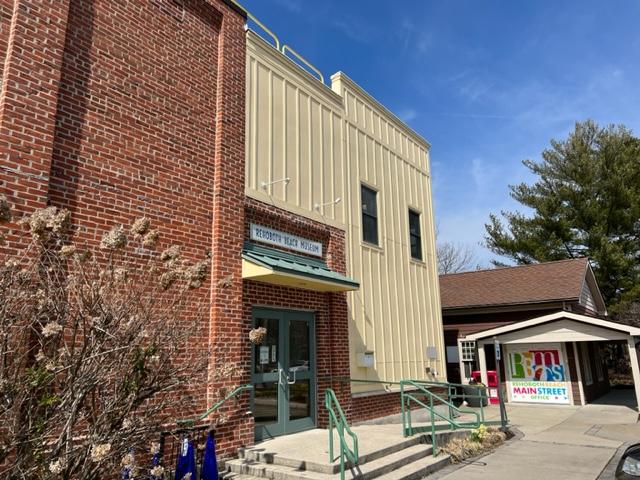
The Rehoboth Beach Museum 511 Rehoboth Avenue

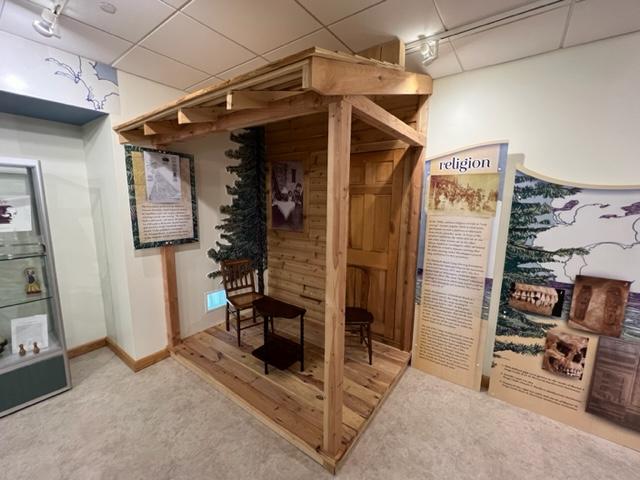
On the first floor, there are displays of early Native American artifacts with the history of the Native tribes that lived in the area. Take some time to look over how the tribes lived in the area and the influence they had before Rehoboth Beach became a Methodist Camp.

The entrance of the museum

There is the history of the Methodist camps and as an early Victorian resort. 

The front gallery of the Rehoboth Beach Museum and its various displays

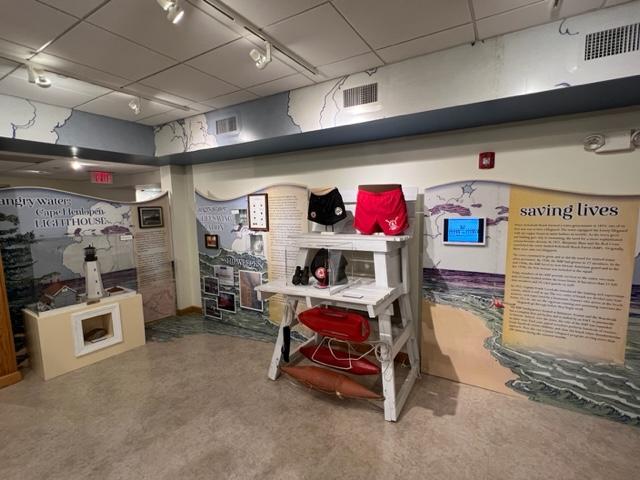
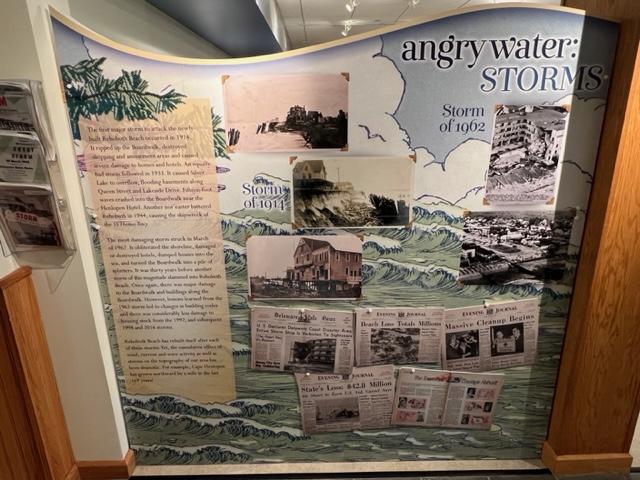
There are maps of the set up of the camps, how the resort developed from a Methodist Camp to the growth of the hotels and amusement areas. They also describe the growth of the Boardwalk and how storms over the years shaped the resort and rebuilding period.

Bathing Suits from the turn of the last century

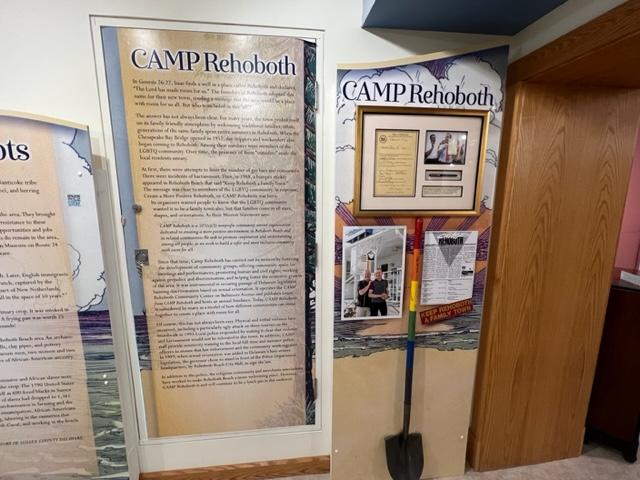
There are all sorts of items such as old post cards, bathing suits, beach items like shovels and pails, amusement items, historical items from all eras of the resorts including hotel and restaurant information and even the history of the LGBT community with the history of Camp Rehoboth.

Rehoboth Beach started as a Mormon Retreat

Camp Rehoboth has shown how much the resort has changed to include everyone

The museum also showcased the restaurants that once dotted the town, hotels that have since disappeared but left their dinnerware, menus and the events that once happened there. The development from a Methodist Camp to resort for the Philly and Washington DC crowd grew very quickly with the popularity of sunbathing and ocean swimming. As the hotels came, so did the restaurants and amusement areas. Rehoboth Beach morphed from a religious colony to one of family please and recreation.

Sand buckets at the Rehoboth Beach Museum

The growth of hotels in the area

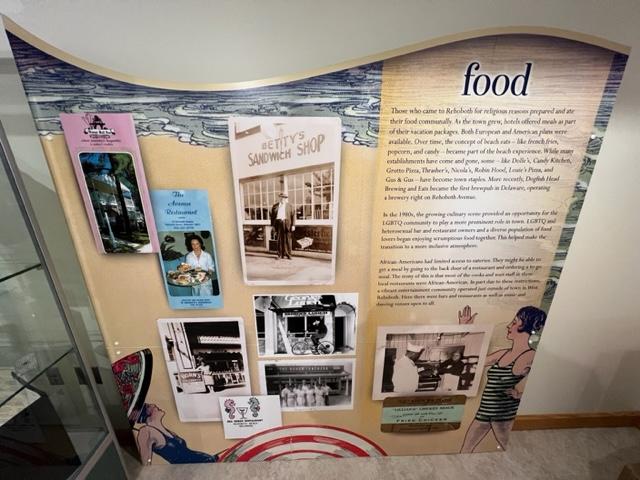
The restaurant and food service industry grew as well to cater to the hungry crowds

There was also a nice display and video on the Rehoboth Beach Rescue Squad and the development of the lifeguards that watch over the beaches. They showed the various squads over the last fifty years and it was interesting to see how many of them came back year after year.

The top floor is for special exhibits and when I was visiting there, the museum was displaying a needle point exhibition on early works and ‘starter kits’, which young girls would do to practice their needlepoint. There is a current exhibition on ‘Sea life by the Shore’.

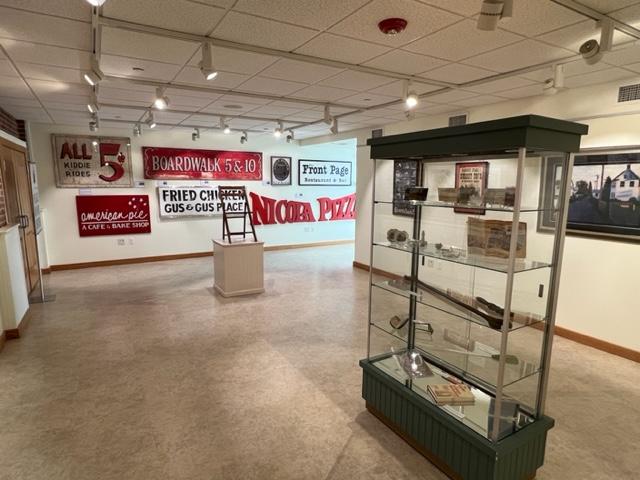
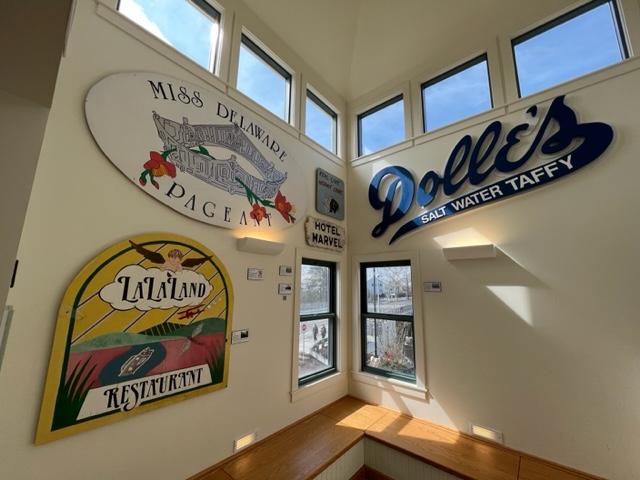
On recent visit, the museum displayed businesses of ‘Rehoboth Beach Past and Present’. It had a lot of old signs from businesses that have been in the resort for years.

The signs of the businesses in Rehoboth Beach DE

The second floor displays

A recent exhibition showed the disastrous “1962 Nor’easter” that destroyed most of the shoreline, all the boardwalk businesses including the Boardwalk and how the town rebuilt quickly to open by Memorial Day that year. Anything that had been along the coastline had been destroyed in this three day period in March of 1962. The Boardwalk looked like matchsticks.

The storms that have hit the resort

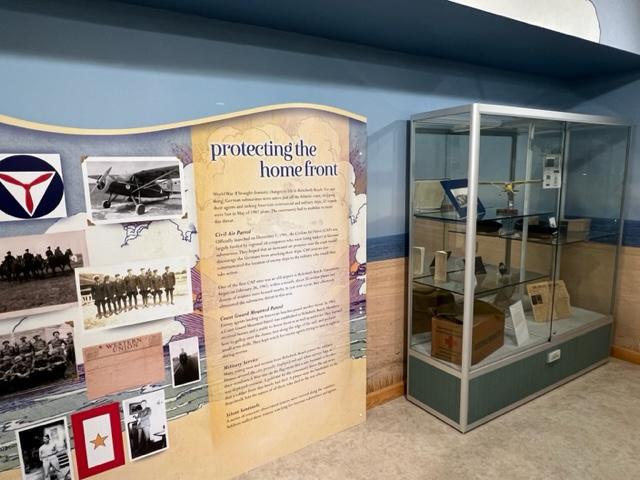
The museum also discusses the people who make Rehoboth Beach their home. This covers regular citizens who live here on a daily basis and tells their story. With the growth of the community so did civic minded people and people who represented the town during the wars. It has a nice display on the high school students and their participation in Rehoboth Beach.

The Military display

The High School display

They offer exhibits, walking and bus tours, programs for adults and children, membership benefits and a gift shop.

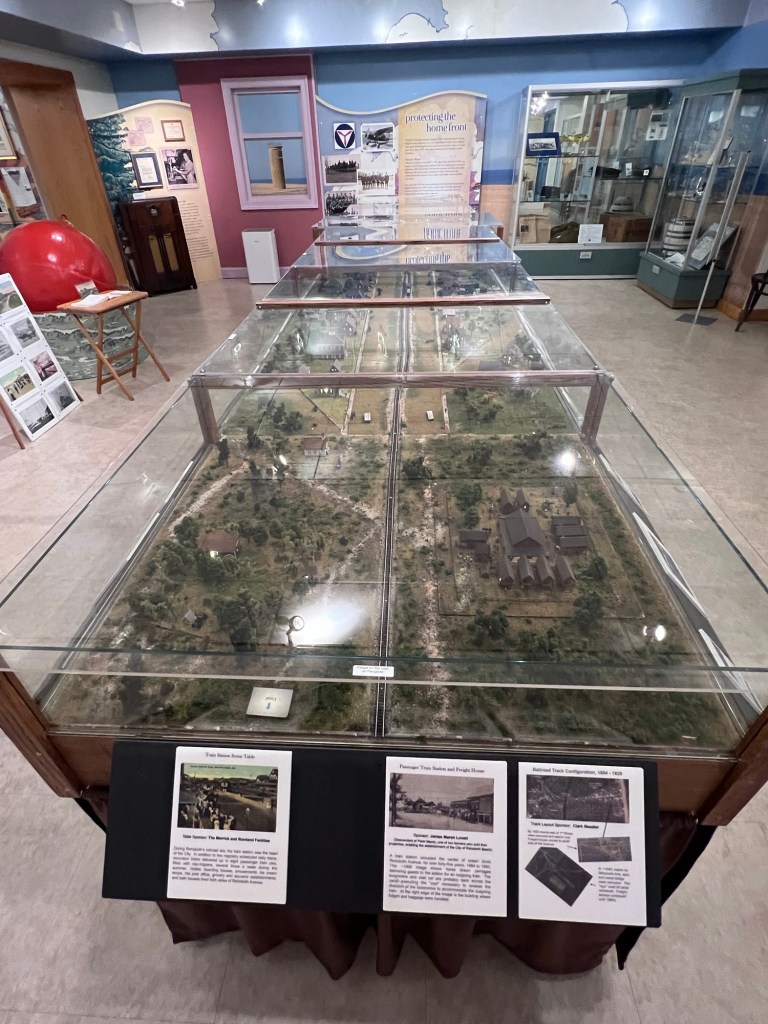
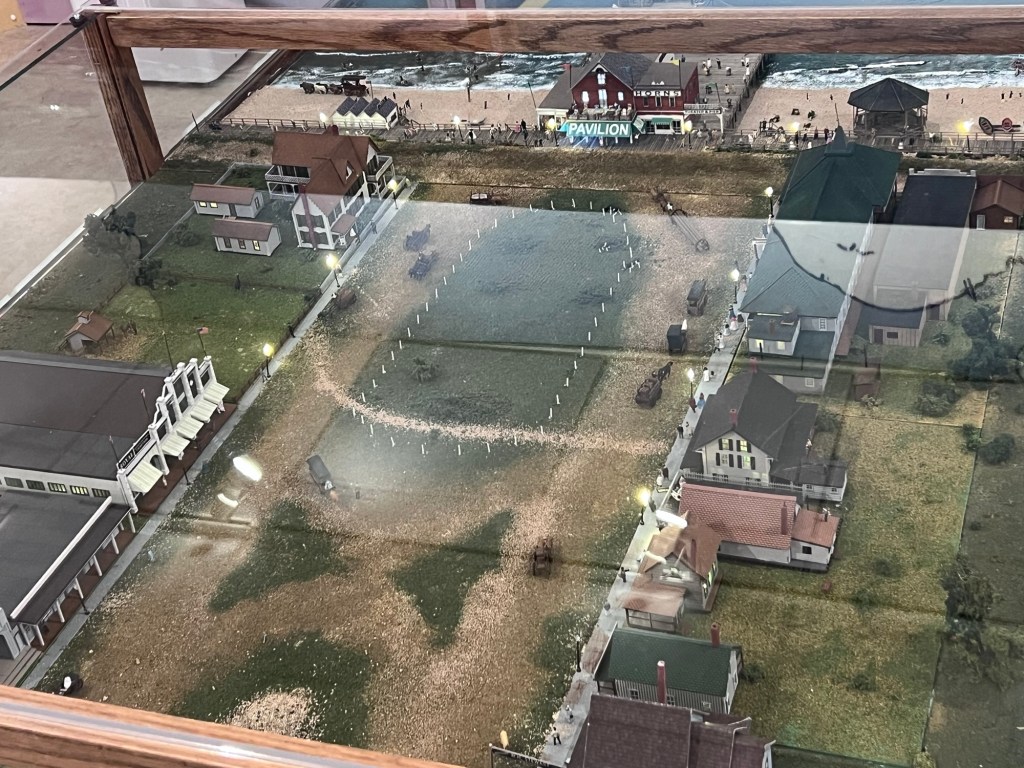
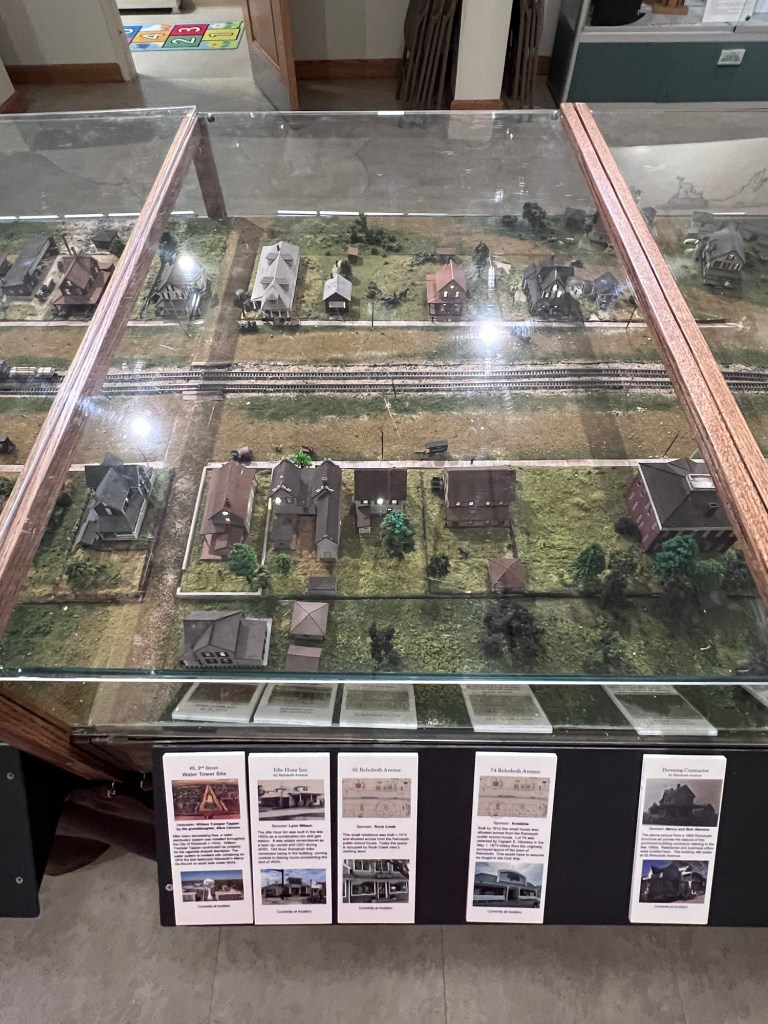
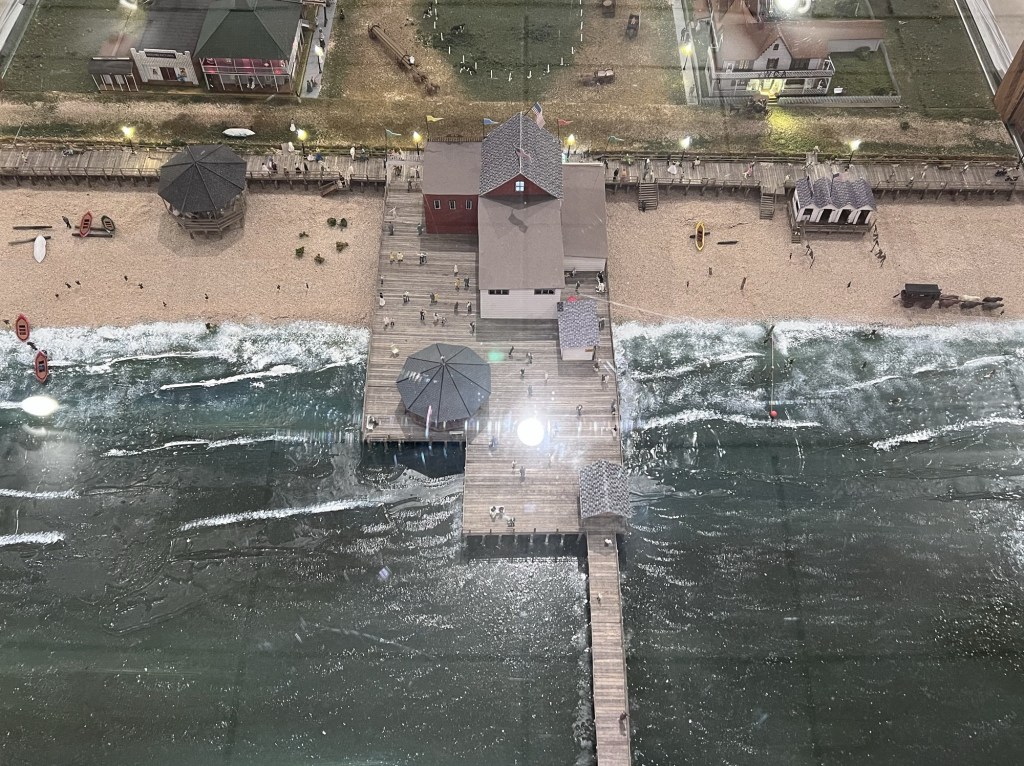
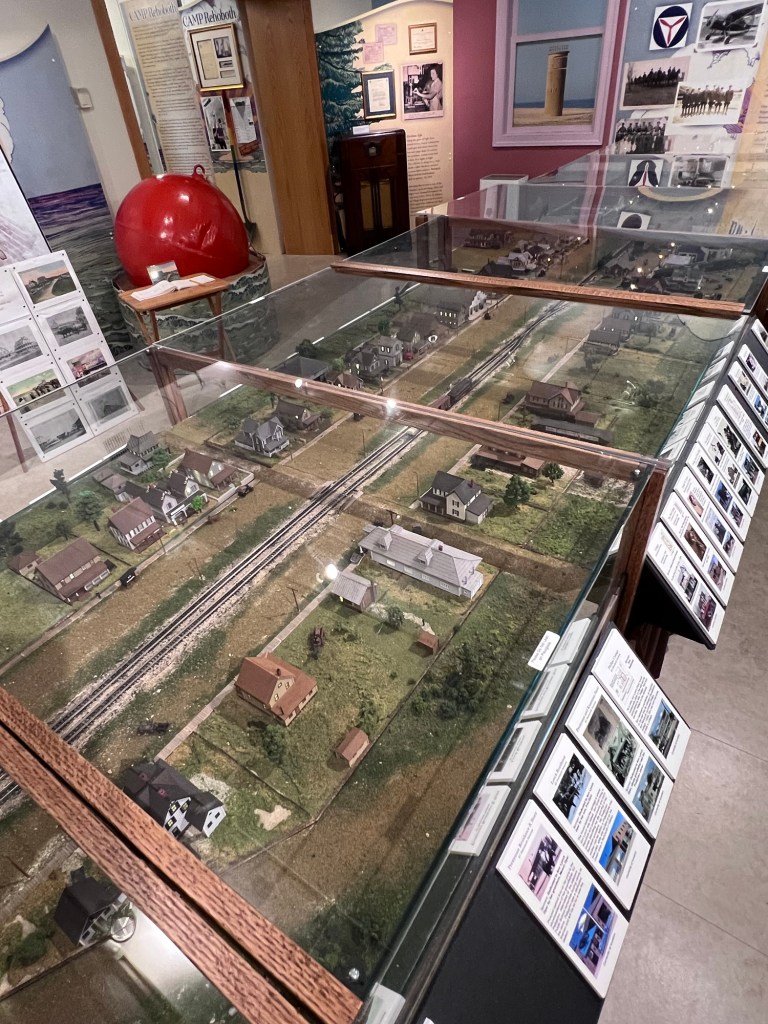
One of the newest displays that the museum is promoting is the diorama of Downtown Rehoboth Beach during the turn of the last century complete with lights and sounds and props moving.

The diorama at the Rehoboth Beach Historical Society

The details of the old beach community

The old homes that used to line the downtown

The very end of the road that faced the ocean

The diorama is a very nice addition to the museum collection

Several long time businesses closed in the downtown, Royal Treat Restaurant and Carlton Clothing and both businesses donated a lot of artifacts and family items from their establishments.

Royal Treatment Restaurant menu

Items from the now closed family restaurant

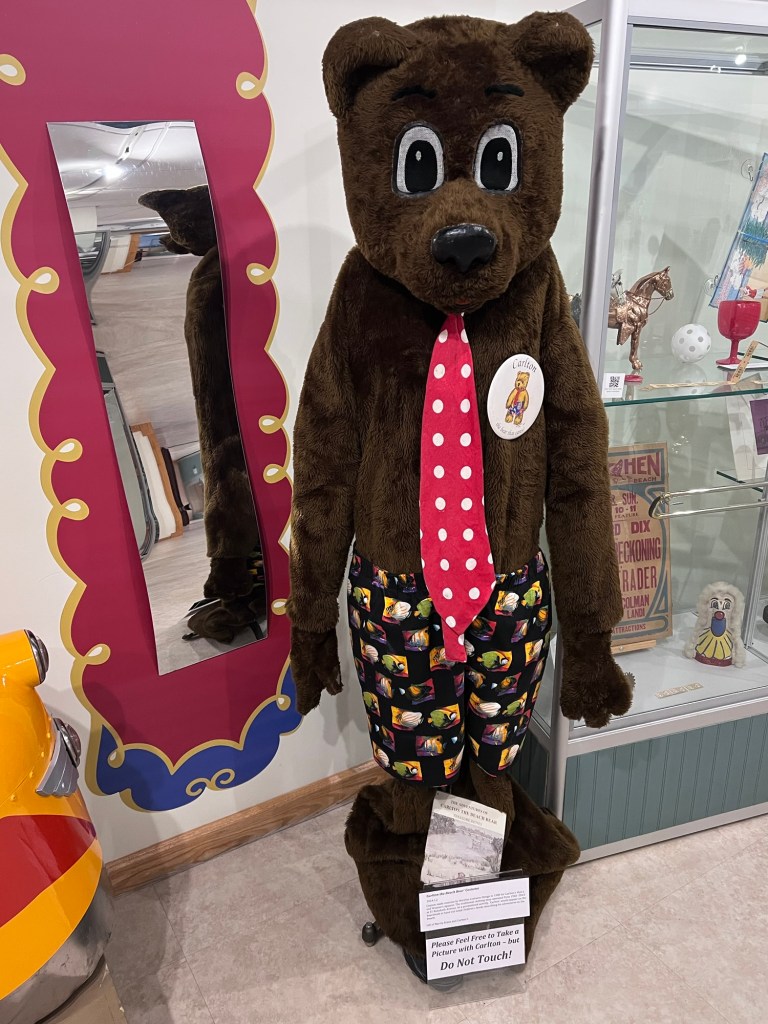
Carlton Clothing had been downtown since the 1960’s and they donated a lot of items to the collection. The bear costume was a promotional prop for the holiday season that Carlton’s used for families.

The Carlton Bear costume

The ‘Bear that Cares’ button on the bear

The sign for the display

Some new toys, games and prizes from the Boardwalk

There was also a lot of new family donations to the museum from families who lived in Rehoboth Beach. These items were part of local life in the area.

The new family donation display

The gift shop has a nice variety of items for sale that are beach themed. They sponsor the Annual Museum Beach Ball, a beach party on the first Saturday of August (Rehoboth Beach Museum).

The Gift Shop at the Rehoboth Beach Museum

The museum, founded in 1975,  collects, preserves and displays artifacts and memorabilia tracing the history of the town’s 19th century Camp Meeting origins through its development into today’s popular summer resort (Rehoboth Beach Museum).
The museum also has a nice gift shop to buy gifts from Rehoboth Beach as well as a selection of beach magazines and books. Check it out.
Think of becoming a Friend of the Rehoboth Beach Museum.

Outside the museum, there is an interesting park along the canal with walking paths and a small dock to walk down. On a nice to it is a great way to cool off.

Grove Park Dock

The path that leads to the dock

The view of the canal behind the museum

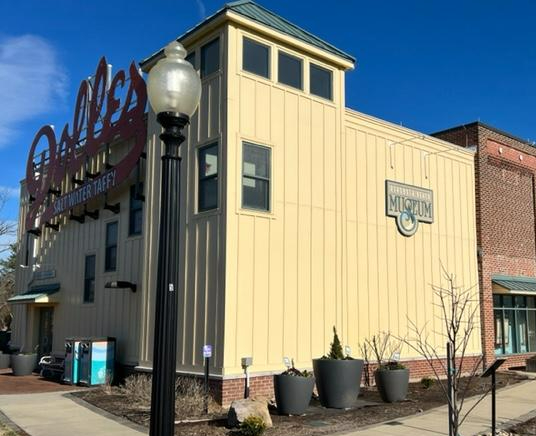
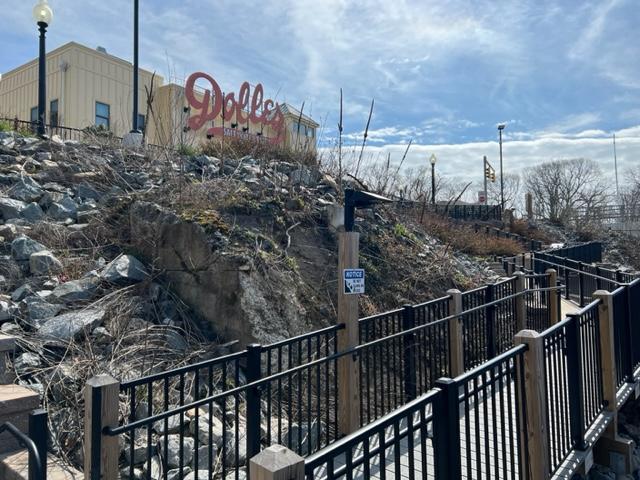
The iconic Dolles sign was moved here when the store closed on the Boardwalk