Tag: nyc museums

The Cloisters Museum & Gardens: The Branch of The Metropolitan Museum of Art devoted to Medieval Art                                                           99 Margaret Corbin Drive Fort Tryon                                 New York, NY 10040

The Cloisters Museum & Gardens: The Branch of The Metropolitan Museum of Art devoted to Medieval Art 99 Margaret Corbin Drive Fort Tryon New York, NY 10040

The Cloisters Museum & Gardens: A Branch of The Metropolitan Museum of Art

99 Margaret Corbin Drive

Fort Tryon Park

New York, NY  10040

(212) 923-3700

Open: March-October 10:00am-5:15pm/November-February-10:00am-4:45pm

http://www.metmuseum.org

https://www.metmuseum.org/visit/plan-your-visit/met-cloisters

Fee: Adults $30.00/Seniors $17.00/Children $12.00/Members & Patrons and Children under 12 are free (prices do fluctuate).

Museum Hours:

Hours: Open 7 days a week

March-October 10:00am-5:15pm

November-February 10:00am- 4:45pm

Closed Thanksgiving Day, December 25th and January 1st.

*Some galleries may be closed for construction or maintenance.

TripAdvisor Review:
https://www.tripadvisor.com/Attraction_Review-g60763-d106609-Reviews-The_Met_Cloisters-New_York_City_New_York.html?m=19905

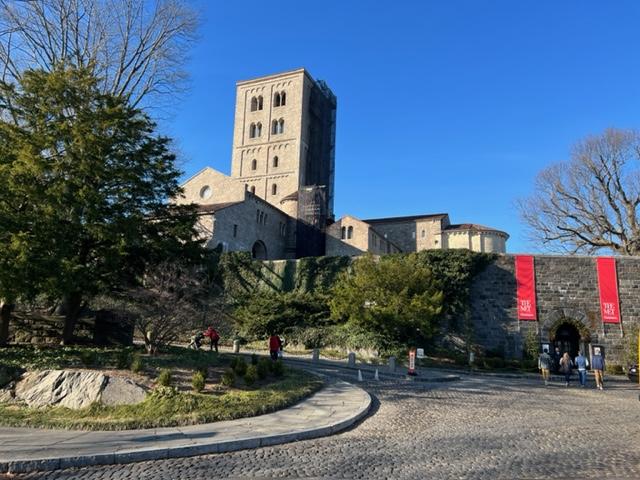
The Cloisters in December 2022

The entrance of the Cloisters for the “Holiday Decorating at The Cloisters” exhibition and talk

I go to The Cloisters on a pretty regular basis, and they have interesting walking tours and lectures especially in the warm months. If you like Medieval or religious art, this is a museum that is worth visiting. It is out of the way and be prepared to walk up a hill but in the summer months, the view of the Hudson River is spectacular, and the gardens are beautiful.
Cloisters III

The Cloisters in Fort Tyron Park

Don’t miss the walking tours and gallery talks at the museum. I have recently been to a series of walking gallery talks dealing with the history of Medieval arts. There were discussions on Medieval art between Christian and Muslim religions, Traveling the Silk Road and its influences on art in the regions and the collection and how it has improved and grown over the years. It seems there has been a uptick in this type of art.
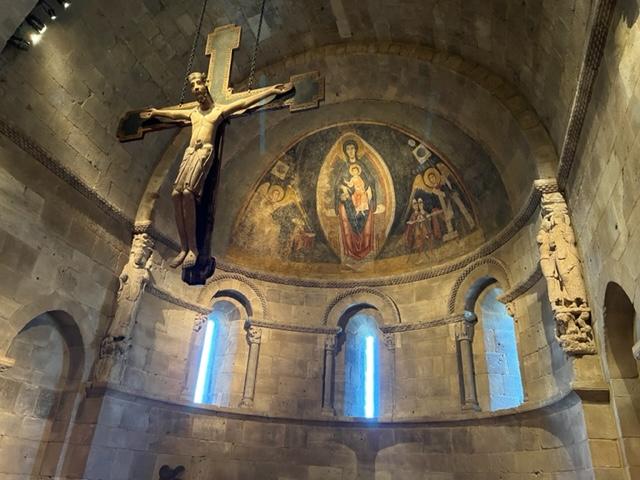
This section of the shine is on a permanent loan from Spain

The building is just beautiful as it was created from pieces of religious sites all over Europe. Many of the doorways, cloisters (archways), stone work and fountains and windows come from churches that had been destroyed by wars over the past 600 years. Bits and pieces of all of the these buildings are displayed in the architecture of the museum itself. Some are on permanent loan to the museum from foreign countries.

Don’t miss the famous “Hunt of the Unicorn” tapestries that are on display here. They are quite a spectacular exhibit.

The ‘Hunt of the Unicorn’ tapestries

Be sure to visit the outside terraces of the Cloisters to see the views of the Hudson River below and the beautiful gardens of Fort Tyron Park where the building is located. It is a sea of green lawns and woods and beautifully landscaped flowering paths.

The Cloisters Gardens in the winter of 2022

The Cloisters Gardens in the Spring of 2024

The view from the gardens of the Hudson River

The view of the Hudson River in Spring 2024:

There is a nice café on property but there is also a small restaurant row on Dyckman Avenue at the foot of the park right near the subway stop. There are also many terrific Spanish restaurants on Dyckman Street as you walk down the block towards Fort George Hill.

‘Christmastide’ at The Cloisters:

I recently went to the Cloisters for a very interesting walking tour called “Holly & Hawthorne: Decorating for a Medieval Christmas” in 2019 and a similar tour in 2022 entitled “Holiday Decorations at The Cloisters” the use of plants like holly, mistletoe, pine and ivy were used in the winter months to decorate the churches and homes of the people until the Puritan influences took over.

Sampling of the plants used at the holidays in Medieval times.

(Part of the description of the tour in the guidebook-credit to the Met Cloisters):

“The wreaths and garlands that deck The Cloisters from early December until early January are made from plant stuffs associated with the Medieval celebration of Christmastide. This great feast embraced the twelve days between the Nativity and the Epiphany, which commemorated the visit of the Three Kings to the infant Jesus.
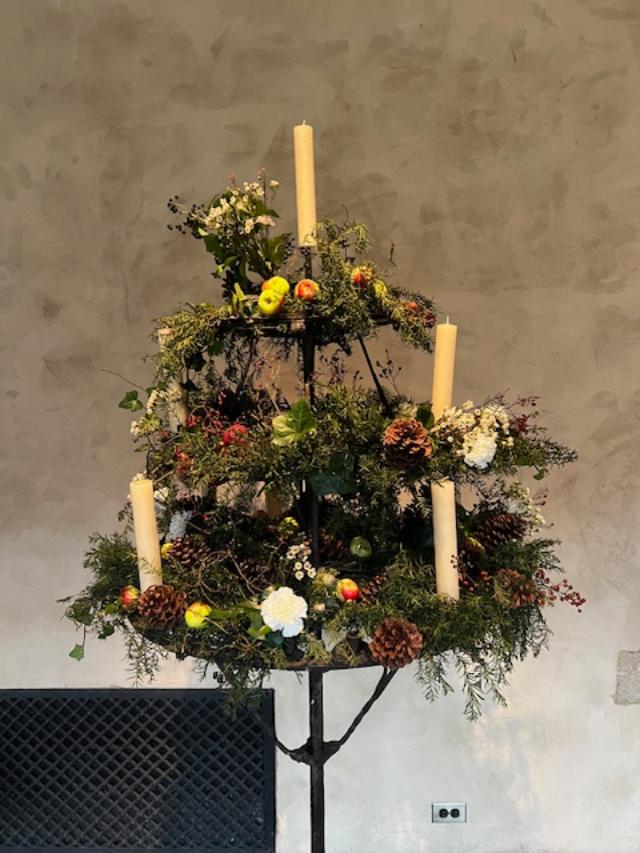
The Candelabras of the Cloisters.

Because pictorial representation of medieval Christmas decorations are rare, the Museum’s designs are based on evidence gleaned from carols, wassails, romances and artworks. Medieval churches and halls were decked for the season, a practice with roots in ancient custom. The early Church had banned the use of evergreens because of their ties with pagan winter festivals, such as the Roman Saturnalia. By the Middle Ages, these plants had been given Christian interpretations and were used to celebrate the feast days of the Church calendar. Bay Laurel, associated in ancient times with victory, became a symbol of the triumph of Christ and of eternal life.

By the Middle Ages, holly and ivy had been thoroughly Christianized, although mistletoe remained suspect. Ivy was identified with the Virgin and the red berries of the holly with the blood of Christ. The holly and ivy carols still sung today spell out these meanings older associations derived from pre-Christian winter festivals.

Apples and nuts, stored for winter consumption, were a conspicuous part of the Christmas feast, as they are today. It was also the custom in winter to wassail fruit and nut trees, to encourage them to bear plentiful crops in the coming year. Fruits and nuts were ancient symbols of fertility Christian meanings; in a medieval poem on the Nativity.

The Cloisters decorated for Medieval Christmas

The tour guide discussed by touring the paintings and tapestries where these symbolic plants took shape during this time. She even explained how ivy when it reaches sunlight that its shape goes from a  three leaf shape to a heart shape which was symbolic during the Middle Ages. The gardens were a good source of inspiration for the holidays.

The stonework was decorated with garland and holly and flowering plants

The Cloisters decorated for Christmas

Don’t miss walking the halls and cloisters to look at all the decorations for the holidays. The museum keeps them simple and elegant but it really does put you in the holiday spirit. The use of flowering plants during the holiday season was not just related to the holiday season but they gave a nice smell to this musty churches and added a bit of cheer to the environment as well.
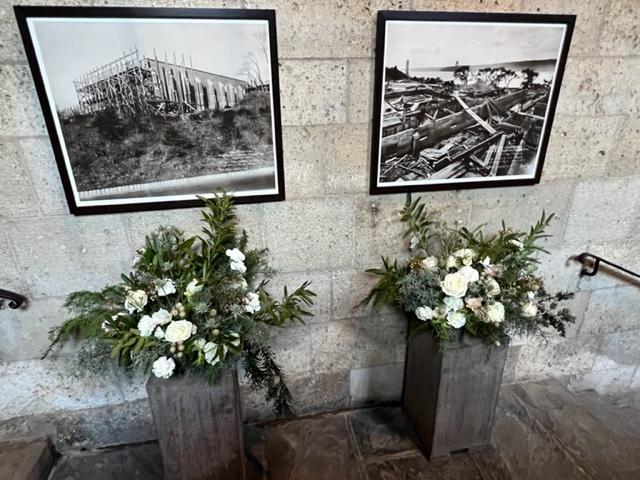
The flowers and pine when you enter The Cloisters

The “Holiday Decorations at The Cloisters” walking tour: December 2022:

The altar at The Cloisters

The Medieval plants for decorating the church including Bay Laurel, Myrtle, Rosemary and Cyclamen.
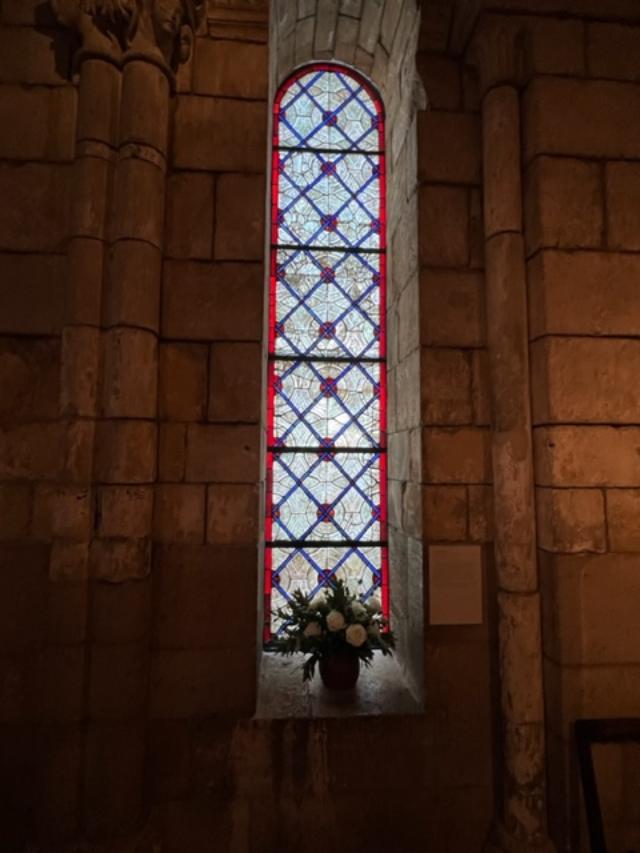
The flowers decorating the windows. Roses and pine.
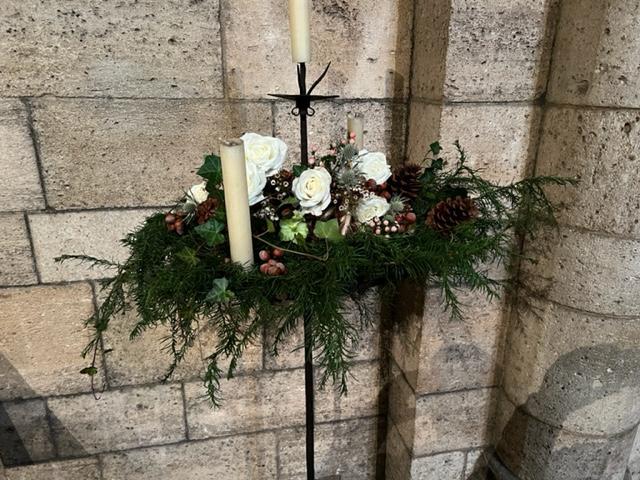
Decorated altar candles

Decorated Altar Candles

Decorated Altar Candles
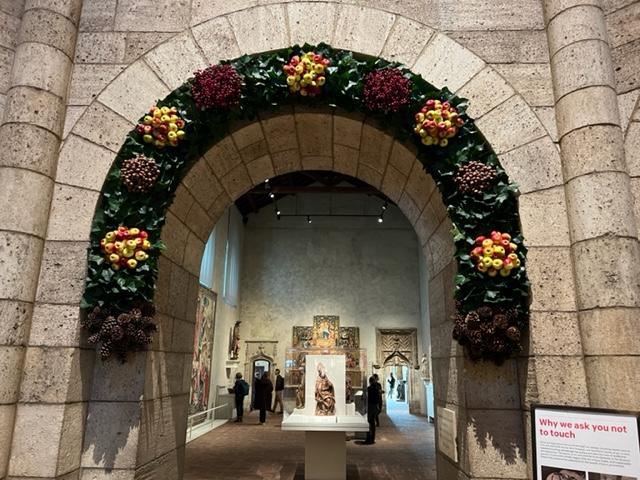
The Fruits and Ivy that decorate the archways at The Cloisters is changed regularly. Each of the ivy vines was encased in small water tubes that had to be changed each week.

The Christmas wreaths were decorated with fruits, ivy and pinecones

Along the walls and floors of The Cloisters were potted plants that would have been used to decorate churches during this time period. The flowering plants gave The Cloister such a nice smell and would have lighted up the inside rooms from the gloom of winter.

The hallways were lined with winter greens
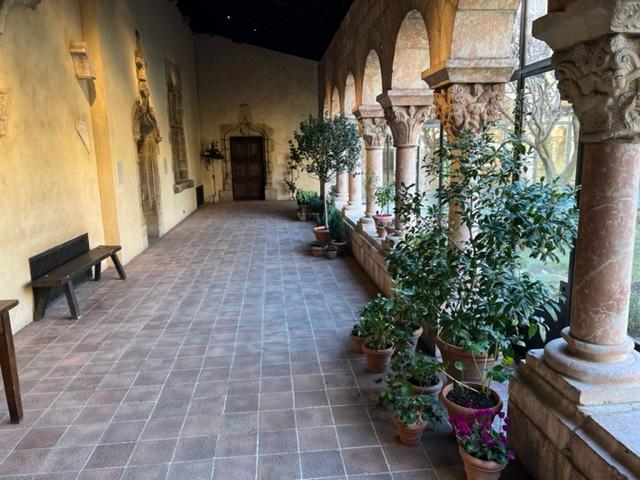
The winter greens that lined the hallways of The Cloisters
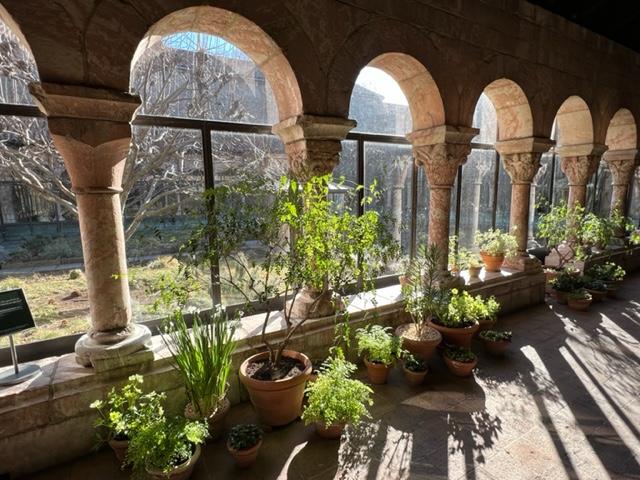
The decorative winter greens lining the walls of The Cloisters
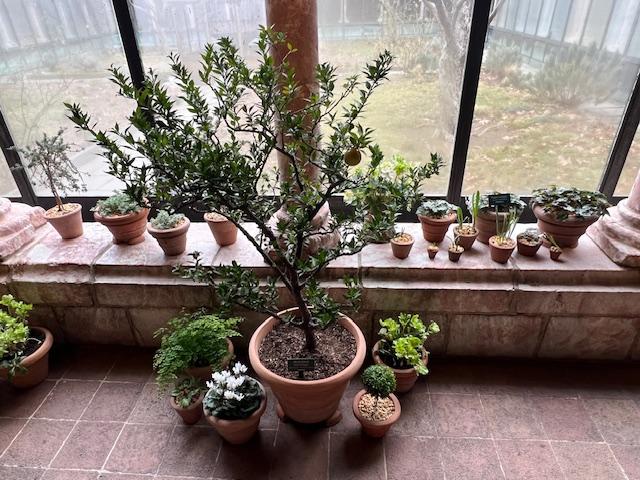
The orange tree was a symbol of gold and prosperity.

The Medieval door decorated for the holidays.

The tour guide also pointed out for the story of Christmas depictions of the three wise men in art all over the building and its importance in the holiday season. The story continued to develop on the three ‘kings’ who visited the holy child.

She explained that over the years it went from three ‘visitors’ wisemen’ that was loosely translated in older text to the modern development of ‘three kings’ from the continents of Asia, Africa and Europe. In 2024, I took a holiday tour on “Three Kings Day”, the celebrated the three kings and their visitation of the holy child.

The three Wise Men and the Virgin Mary

The three Wise Men and the Virgin Mary and Child as depicted in the painting
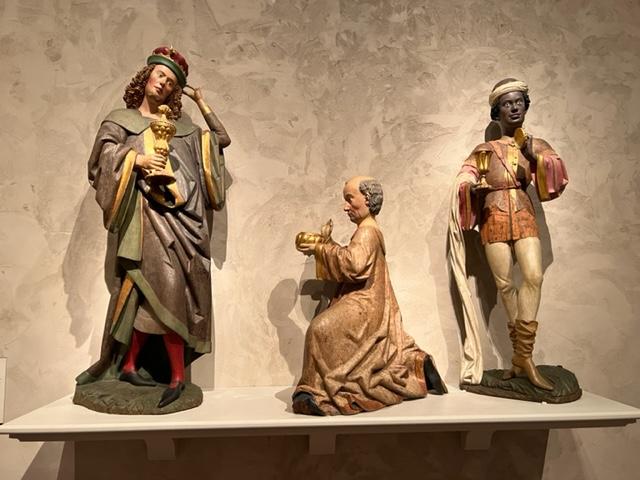
The three Wise Men in a more modern depiction. It seemed that the story morphed over time from three Kings, one being older, one younger and one with a darker complexion became a King from each continent to represent the diversity in the church and the spread of Catholicism.

The “Adoration of the Shepherds”
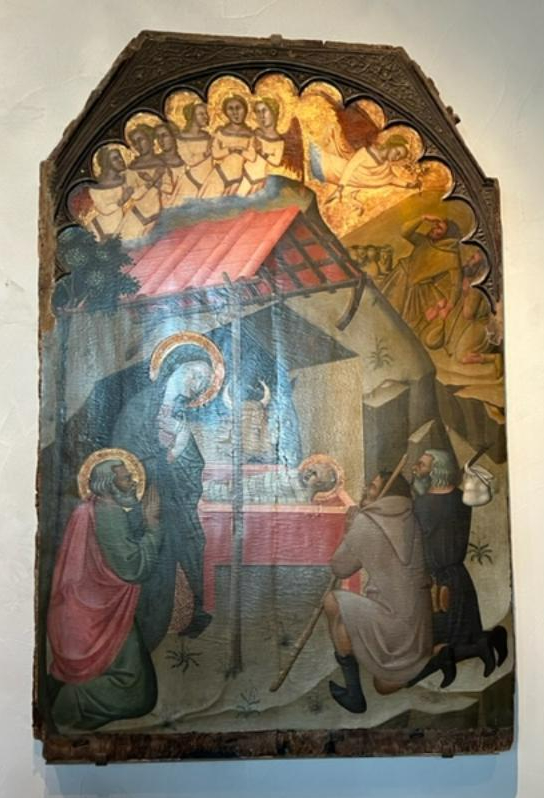
The Virgin Mary with the Christ child and the three wise men in the “Adoration of the Shepard’s”.
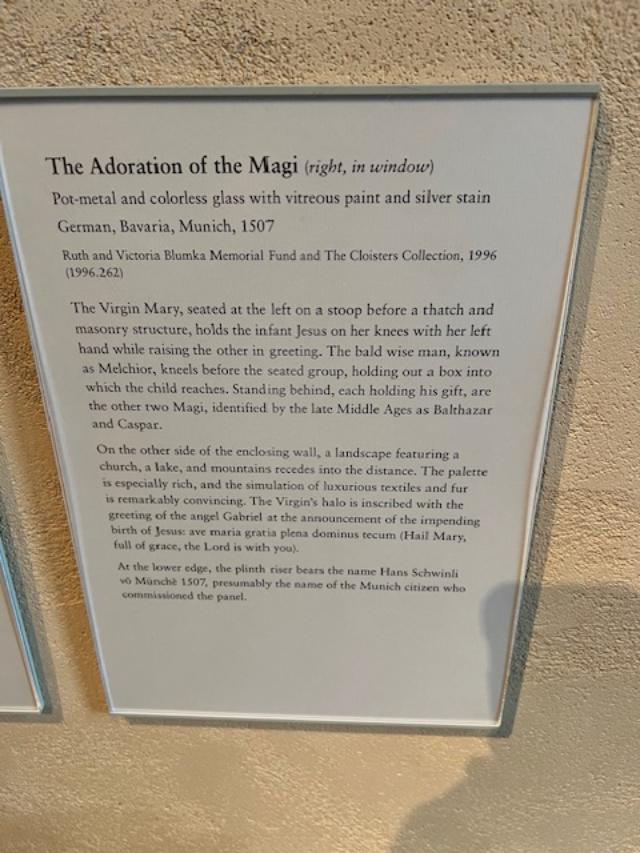
The “Adoration of the Magi”

The stained glass window of the “Adoration of the Magi”.

The “Thirty-Five Panels” of the Three Wiseman”
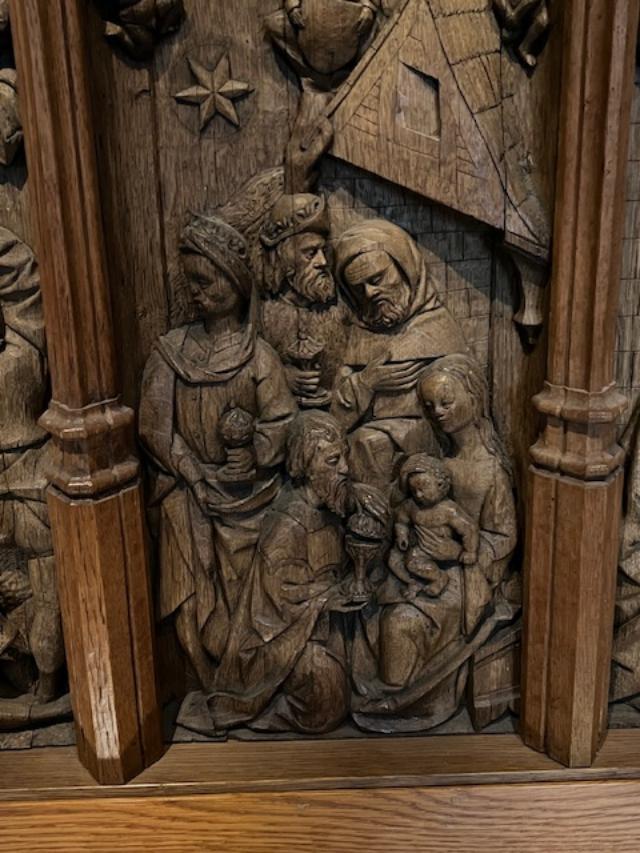
The Three Wisemen from the “Thirty-Two Panels”

The stained glass window of the “Three Scenes of the Infancy of Christ”

The “Three Scenes of the Infancy of Christ”

The “Christ is born as Man’s Redeemer” Tapestry.

The small section of the tapestry with the Three Wisemen.

Walking through the Cloisters during the holiday season.

The tour guide went onto explain that in more elaborate feasts, the utensils and items used during ceremonies would have been of the most elaborate that the church could show.

Elaborate vessels. plates, challices and specters used in ceremonies

Elaborate drinking glasses

I toured the Cloisters again in 2023 and saw the same symbols of Christmastime in the halls with elaborate floral displays and beautiful potted floral arrangements all over the building.

The hallways of the Cloisters decked with flowering plants.
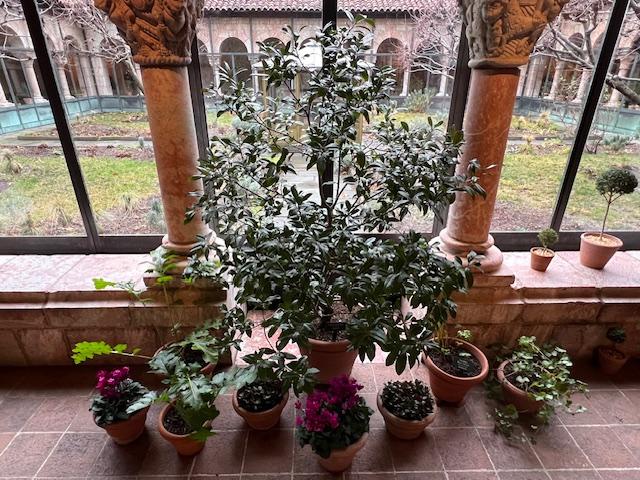
The “Winter Roses” with other flowering plants.

More flowering plants lining the walkways.

Flowering displays

The winter plants of the Cloisters.

The Candelabra’s were quite elaborate.

I thought this Dragon painting was very interesting.

The Dragon Sign.

The Dragon Painting.

Spain 1000-1200: Art at the Frontiers of Faith” tour in 2021:

I visited again this Christmas holiday season in 2021 to see “Spain 1000-1200: Art at the Frontiers of Faith”, where the Catholic and Muslim Kingdoms of Spain influenced each other in the manner of decoration and art borrowing from each other. It was interesting to see how the two communities used each other’s art over time to develop an interesting hybrid of design that was both colorful and intricate.

Met Cloisters Spain

“Spain 1000-1200: Art at the Frontiers of Faith” artworks

Another tour of the Cloisters that I attended was on the ‘Four Medieval Flowers: The Lily, Iris, Violet and Rose’. It was interesting how society of this era used the former Pagan and Roman/Greek symbols in their Christian religious art.
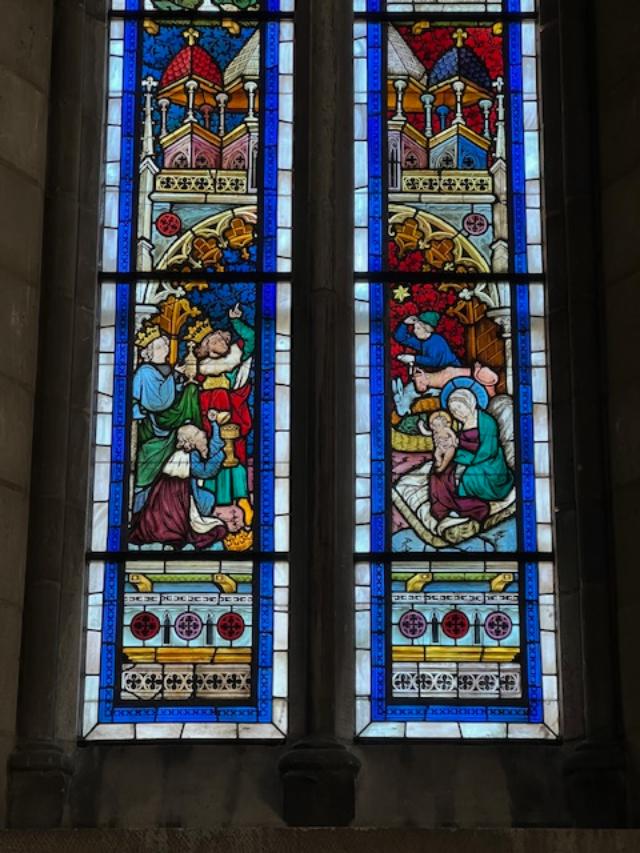
You see the Rose in the stained glass to represent strength and honor

You will see the meanings in the tapestries, stained glass art and in the sculpture to represent purity, rebirth and sexual symbols of the time. It seemed that the artisans of the time used ancient meanings to convey something that they could not out and out talk about.
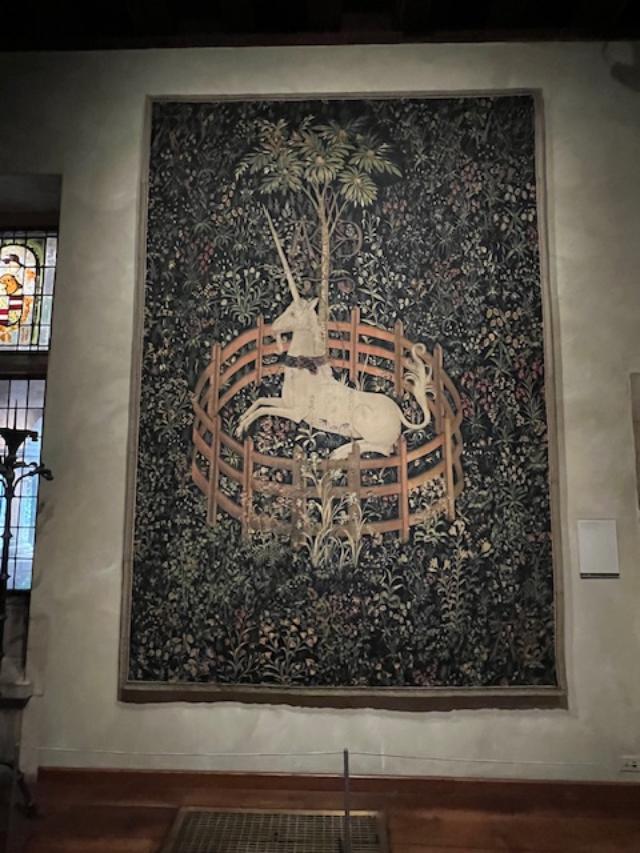
In the “Hunt of the Unicorn” Tapestries you can see flowers such as Lilly, Violet and Iris  woven into the work which may have meant it was a wedding present to the new owner. The tour guide said there was meaning in lots of the works which may have had a different purpose originally. It was a tour steeped in symbolism.

The Spring and Summer Time visits to The Cloisters and the Gardens:

The Cloisters in the Spring and Summer months is very different. The Gardens are in full bloom, the views of the Hudson River are still amazing and the flowers look and smell so beautiful. There are three sets of gardens in the Cloisters, the potted plants on the deck facing the Hudson River and the two Cloisters on the first level and the one in the Trie Cloister where the cafe is located. Each has their unique plantings.

The potted plants on the deck of The Cloisters in the Spring of 2024

As pretty as some of these plants are some are poisonous so you have to watch out.

The view from the back decks of the museum of the Hudson River

The view of the Hudson River
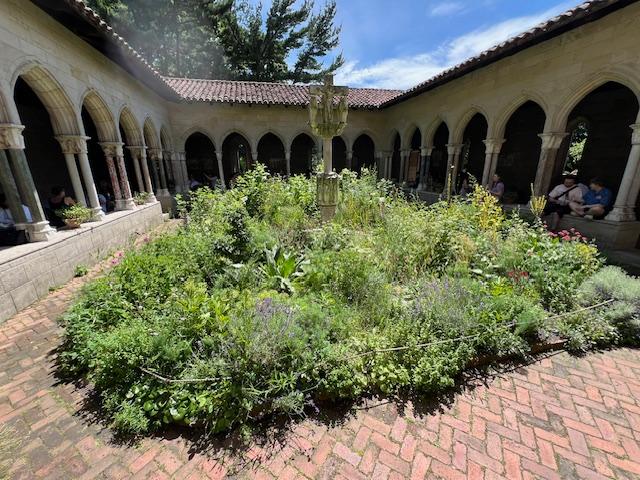
The gardens in The Cloisters

On Sunday, August 10th, I took an extensive garden tour of the separate Cloisters in each parts of the museum. The tour talked about the use of the Cloisters gardens of the past and they were used for herbs, remedies and for the simple pleasure of beauty, color and relaxation.

The religious symbols in the gardens

The gardens have been planted with historical accuracy but as the tour guide explained, to keep the gardens in bloom from the early Spring to the late Fall, you have to add different plants for color.
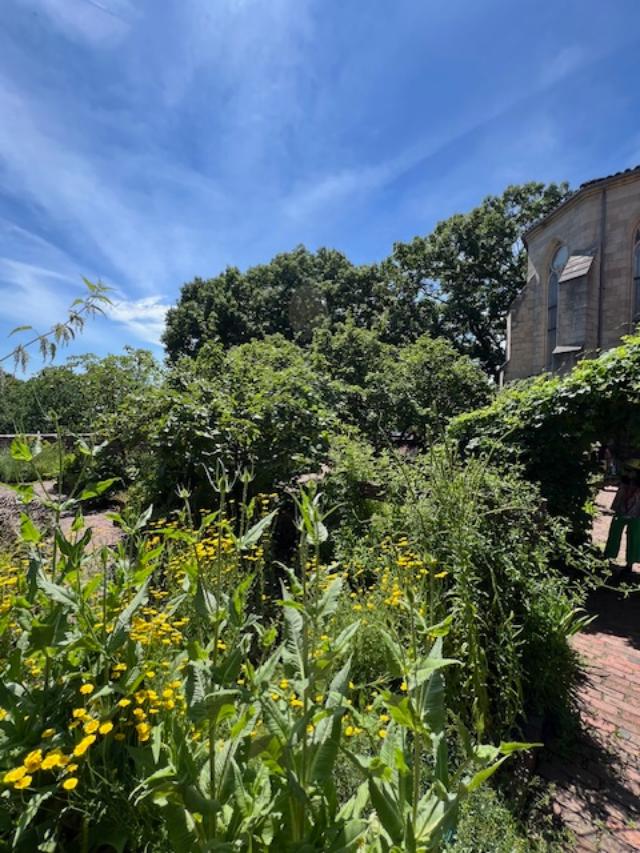
The beauty of the gardens in bloom
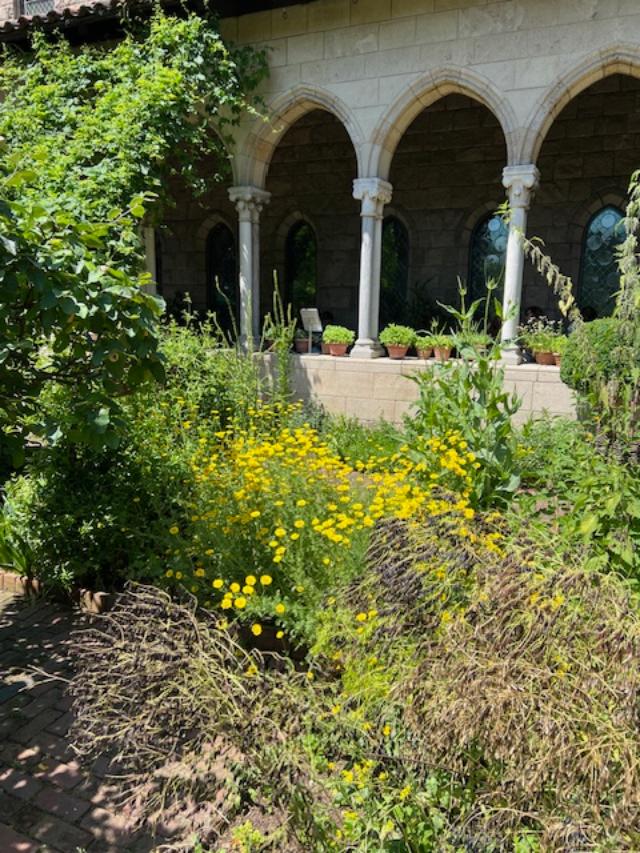
The beauty of the gardens in the Spring of 2024

The gardens were very popular over the weekend

Some of the Cloisters gardens produce fruits, vegetables and herbs that the staff can take home. These gardens show not just how beautiful they look but how people used them for every day purposes.
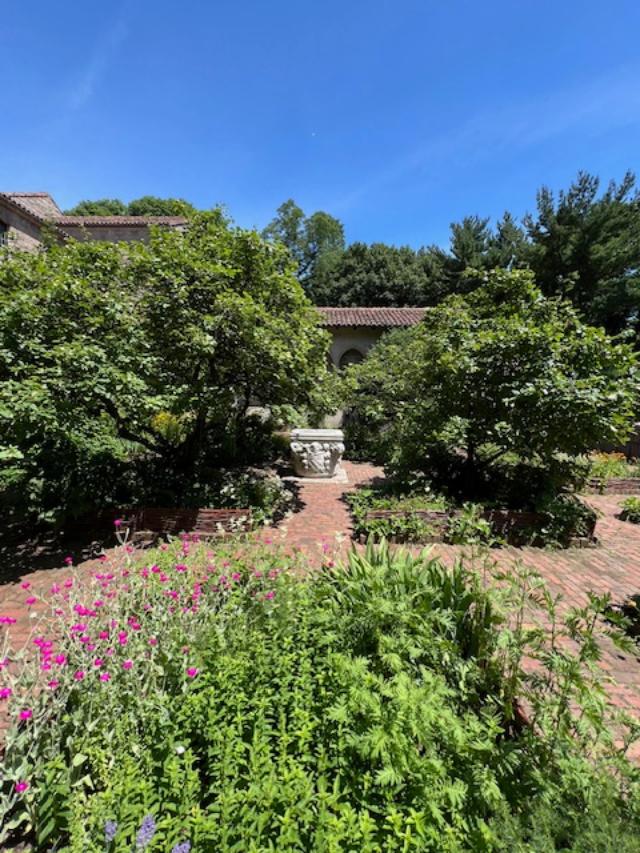
The gardens were popular that day

The beauty of the gardens

The gardens in the Spring of 2024

These walking tours at the Cloisters happen at 12:00pm and 2:00pm on the weekends when in season.
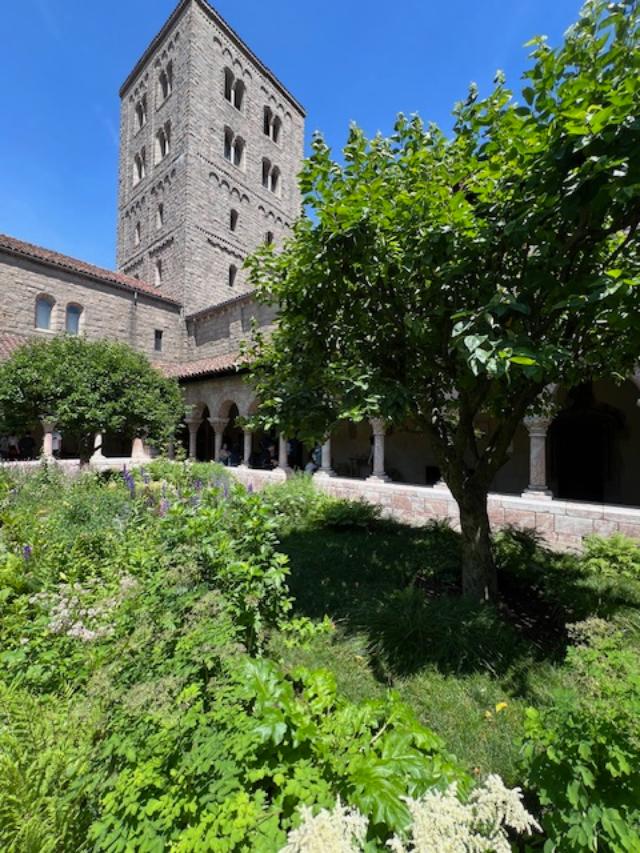
The beauty of the Cloisters
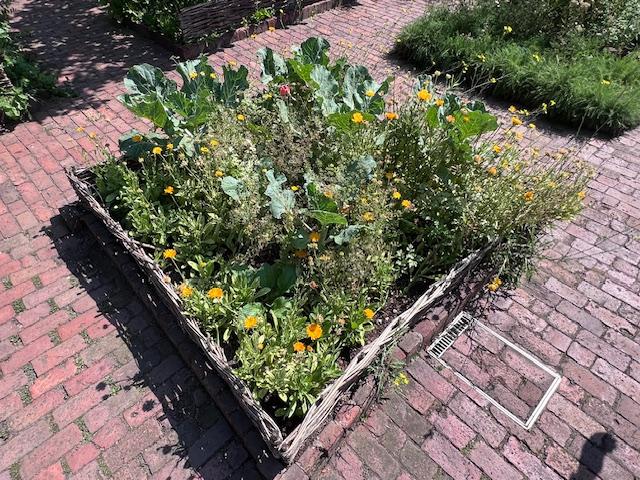
The herb gardens in the summer in 2025

The Cloisters Mission:

Welcome to The Cloisters, the branch of The Metropolitan Museum of Art devoted to the art and architecture of medieval Europe. Set on a hilltop with commanding views of the Hudson River. The Cloisters is designed in a style evocative of medieval architecture specifically for the display of masterpiece created during that era. Arranged roughly chronologically and featuring works primarily from Western Europe, the collection includes sculpture, stained glass, tapestries, painting, manuscript illumination and metalwork. The extensive gardens feature medieval plantings, enhancing the evocative environment.

The Gardens at the Cloisters in bloom

History of the Museum

John D. Rockefeller Jr. generously provided for the building, the setting in Fort Tryon Park and the acquisition of the notable George Grey Barnard Collection, the nucleus of The Cloisters collection. Barnard Collection, the nucleus of The Cloisters collection. Barnard, an American sculptor whose work can be seen in the American Wing of the Metropolitan, traveled extensively in France, where he purchased medieval sculpture and architectural elements often from descendants of citizens who had appropriated objects abandoned during the French Revolution. The architect Charles Collens incorporated these medieval elements into the fabric of The Cloisters, which opened to the public in 1938.

Romanesque Hall

Imposing stone portals from French churches of the twelfth and thirteenth centuries open onto a gallery that features rare Spanish frescoes and French sculpture.

Fuentiduena Chapel

The twelfth-century apse from the church of San Martin at Fuentiduena, Spain and the great contemporary fresco of Christ in Majesty from a church in the Pyrenees Mountains dominate the space. Sculpture from Italy and Spain enriches the chapel, which is the setting for a celebrated concert series.

Saint-Guilhem Cloister

The fine carving of this cloister from the monastery of Saint-Guilhem-le-Desert, near Montpellier, harmoniously and playfully adapts the forms of Roman sculpture in a medieval context. The plants depicted in the sculpture, acanthus and palm, are growing in pots near the small fountain. The gallery also features early sculpture from Italy, Islamic Spain and elsewhere in France.

Langon Chapel

Architectural elements from the twelfth-century church of Notre-Dame-du-Bourg at Langon near Bordeaux form the setting for the display of thirteenth-century French stained glass and important Burgundian sculpture in wood and stone.

Pontaut Chapter House

Monks from the Cistercian abbey at Pontaut in Aquitaine once gathered for daily meetings in this twelfth-century enclosure known as a chapter house. At the time of its purchase in the 1930’s by a Parisian dealer, the column supports were being used to tether farm animals.

The distinctive pink stone of this cloister, featuring capitals carved with wild and fanciful creatures, was quarried in the twelfth century near Canigou in the Pyrenees Mountains for the nearby Benedictine monastery of Saint-Michel-de-Cuxa. The typical cloister garden features crossed paths and a central fountain from the neighboring monastery of Saint-Genis-des-Fountaines. Both medieval and modern species of plants are grown in the garden. In winter, the arcades are enclosed and fragrant potted plants fill the walkways.

Early Gothic Hall

With thirteenth-century windows overlooking the Hudson River, the gallery features stained glass from France’s great churches, including Saint-Germain-des-Pres in Paris. Sculptures and paintings from France, Italy and Spain evoke the great age of cathedrals.

Nine Heroes Tapestries Room

From an original series of nine hangings created about 1400 for a member of the Valois court, the tapestries portray fabled heroes of ancient, Hebrew and Christian history, including the legendary King Arthur. It is among the earliest sets of surviving medieval tapestries.

Unicorn Tapestries Room

With brilliant colors, beautiful landscapes and precise depictions of flora and fauna, these renowned tapestries depicting the hunt and capture of the mythical unicorn are among the most studied and beloved objects at The Cloisters. Probably designed in Paris and woven in Brussels about 1500 for an unknown patron, these hangings blend the secular and sacred worlds of the Middle Ages.

Boppard Room

Stained glass from the fifteenth-century Camelite convent at Boppard-am-Rhein dominates one end of the room. Fifteenth-century panel paintings and sculpture from the Rhineland and northern Spain, a brass lectern, domestic furniture, Spanish lusterware, tapestries, metalwork and sculpture further evoke a sacred space.

Merode Room

One of the most celebrated early Netherlandish paintings in the world, the Merode Altarpiece, painted in Tournai about 1425-30, forms the centerpiece of this gallery. The altarpiece, intended for the private prayers of its owners, represents the Annunciation to the Virgin Mary taking place in a fifteenth-century household. Details of the scene are echoed in the late medieval furnishings of the room in which other works made for private devotion are also exhibited.

Late Gothic Hall

Large fifteenth-century limestone windows from the refectory of the former Dominican monastery in Sens, France, illuminate the hall, which showcases sculpture and altarpieces from Germany, Italy and Spain as well as a great tapestry from Burgos Cathedral.

Gothic Chapel

Beneath richly colored stained-glass windows from fourteenth-century Austria carved images from royal and noble tombs of France and Spain fill the chapel-like setting.

Glass Gallery

Silver-stained glass roundels decorate the windows of the Glass Gallery, complementing small works of art, many made for secular use, with their lively, sometimes worldly subjects. Carved woodwork from a house in Abbeville, in northern France, forms a backdrop for paintings and sculpture.

“Bonnefont” Cloister and Garden

Long thought to be part of the abbey at Bonnefont-en-Comminges, the elements of this cloister come instead from other monasteries in the region including a destroyed monastery in Tarbes. The herb garden contains more than 250 species cultivated in the Middle Ages. Its raised beds, wattle fences and central wellhead are characteristic of a medieval monastic garden.

Trie Cloister and Garden

The gardens at the Trie Cloister

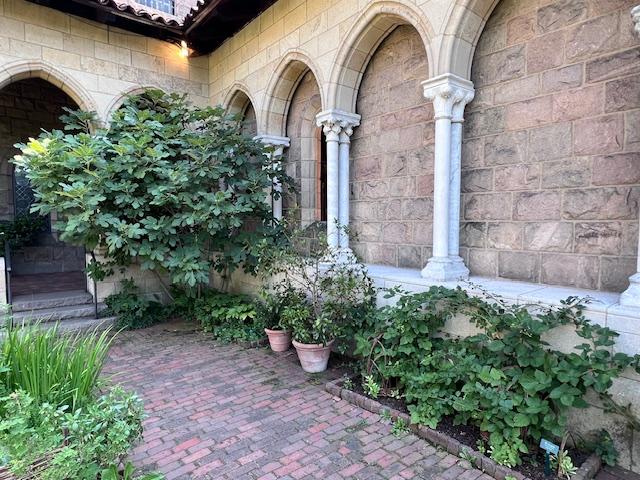
The stone cloister elements were created primarily for the Carmelite convert at Trie-sur-Baise in the Pyrenees. The garden is planted with medieval species to evoke the millefleurs background of medieval tapestries, such as the Unicorn series.

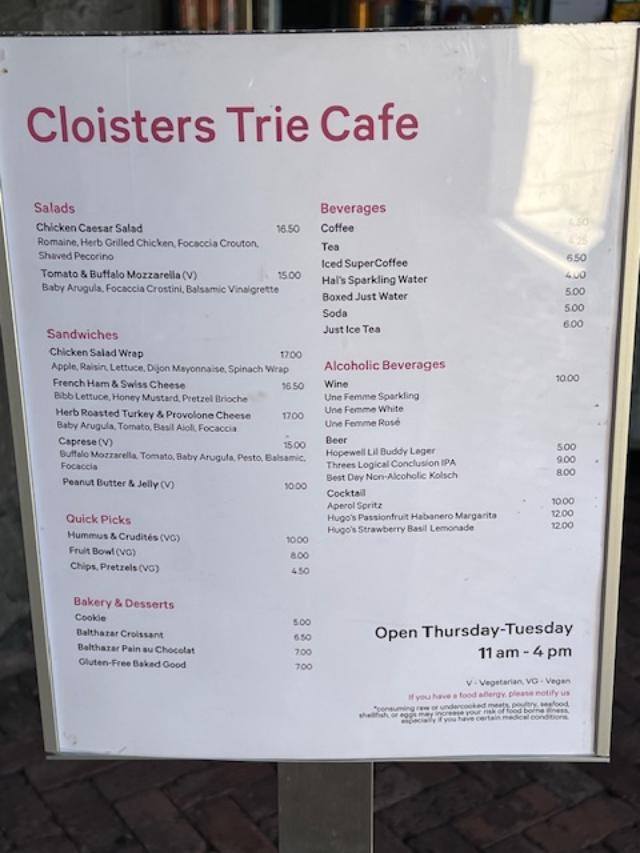
The Cloisters Trie Cafe is a seasonable restaurant that overlooks the Cloisters Gardens. This offers sandwiches , pastries and beverages and is a bit over-priced.
The Trie Cafe in the Cloister
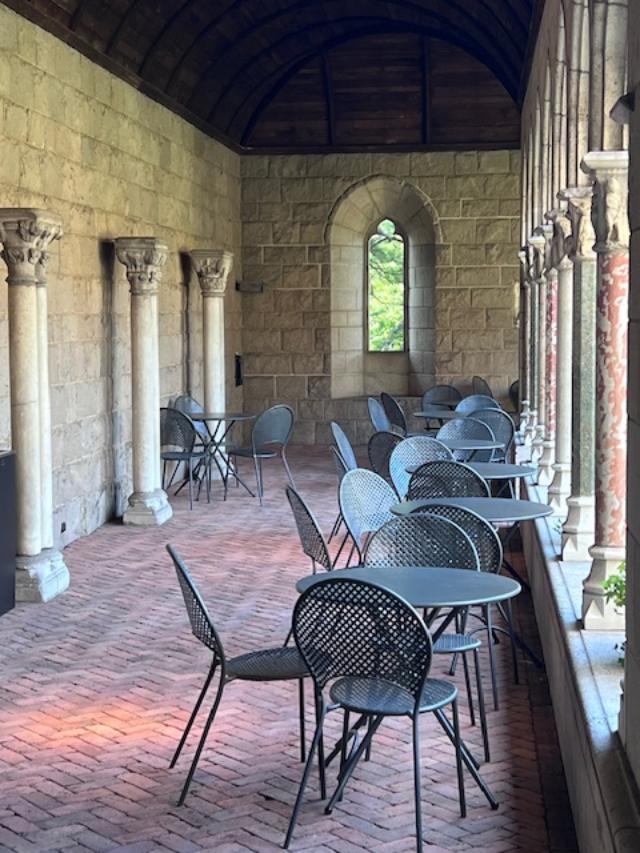
The Trie Cafe is inside the Cloister
https://www.metmuseum.org/plan-your-visit/dining

Review on TripAdvisor:

https://www.tripadvisor.com/Attraction_Review-g60763-d106609-Reviews-The_Met_Cloisters-New_York_City_New_York.html

*Please note that the prices in the restaurant do go up every year so please look to the website for updated prices.

The Treasury

An array of precious objects in gold, silver, ivory and silk reflects the wealth of medieval churches. Illuminated manuscripts testify to the piety and taste of royal patrons such as Jeanne d’Evreux, Queen of France; jewelry and a complete set of fifteenth-century playing cards suggest more worldly pastimes.

The Gift Shop:

Even the gift shop was decked in the holiday spirit

The gift shop has all sorts of themed items from the Medieval era.

The gift shop at The Cloisters

*Disclaimer: This information is taken right from the Cloisters pamphlet from the Metropolitan Museum of Art. Please call the museum before visiting to see if anything has changed with the hours or days open. It is well worth the trip uptown to visit The Cloisters. Take the A subway up to 190th Street and take the elevator up to Fort Tryon Park and walk across the park.

The Museum at FIT on the Fashion Institute of Technology Campus Seventh Avenue 227 West 27th Street New York, NY 10001-5992

The Museum at FIT on the Fashion Institute of Technology Campus

Seventh Avenue at 27th Street

New York, NY  10001-5992

(212) 217-4558

https://www.fitnyc.edu/museum/

Hours: Tuesday-Friday-12:00pm-8:00pm/Saturday-10:00am-5:00pm/Closed Sunday-Monday and all legal holidays

Fee: Free

TripAdvisor Review:

https://www.tripadvisor.com/Attraction_Review-g60763-d548861-Reviews-The_Museum_at_FIT-New_York_City_New_York.html?m=19905

This quirky little museum is located in the ‘A’ Building on the Fashion Institute of Technology campus and is a little ‘gem’ if there was ever one and I am not just saying that because I am a proud Alumnus of the college (Class of ’93). This museum is dedicated to the world of fashion and has had several revolving shows themed of fashion from the colleges extensive collection. The school really does know how to mount a show.

Please watch this video on the Museum at FIT.

About the Museum at FIT:

The Museum at FIT (MFIT) is the only museum in New York City dedicated solely to the art of fashion. Best known for its innovative and award-winning exhibitions, the museum has a permanent collection of more than 50,000 garments and accessories dating from the eighteenth century to the present, MFIT is a member of the American Alliance of Museums. Its mission is to educate and inspire diverse audiences with innovative exhibitions and programs that advance knowledge of fashion.

FIT Museum II

For more information about The Museum at FIT, please visit fitnyc.edu/museum.

The museum is part of the Fashion Institute of Technology (FIT), a college of art and design, business and technology. FIT is part of the State University of New York (SUNY) and offers nearly 50 programs leading to AAS, BFA, BS, MA, MFA, and MPS degrees.

I have been to many shows at the museum over the years and the curators do a nice job mounting show from the College’s collection and from items that they borrow from other museums.

“Paris Refashioned, 1957-1968” examined the combined influence haute couture, ready-to-wear and popular culture, highlighting how changes that took place during this time period helped to shape the fashion industry as we know it today. Exhibitions and books about this era tend to focus on London as the center of innovative, youth-oriented design but this perspective overlooks the significant role that Paris continued to play in the fashion industry.

Like England, France had a large population of young people-more than eleven million of its citizens in 1958 were under 15 years old. This generation came of age during the 1960’s, listening to their own music, watching films featuring their own movie stars and frequenting their own boutiques. Paris’s creative output was singularly dynamic, far-reaching and innovative.

FIT Museum III

“Paris Refashioned” exhibition

Although the French ready-to-wear revolution did not truly begin until the 1960’s, the concept of lively, youth-oriented design had been set in motion during the previous decade. By the late 1950’s, a few young, talented couturiers-including Pierre Cardin, Hubert de Givenchy and Yves Saint Laurent-had made names for themselves. In 1957, the House of Christian Dior promoted 21 year old Saint Laurent to creative director.

While fashion insiders questioned the decision to place an unknown, seemingly naïve designer at the helm of such a prestigious institution, Saint Laurent’s first solo collection for Dior quickly silenced his detractors. His line of short, swinging A-line dresses-known as “Trapeze” dresses-was a critical and commercial success, ushering in an unmistakable shift toward more relaxed and ultimately, more youthful designers.

Another exhibition that I had seen in the past was “Pink: The History of Punk, Pretty and Powerful Color” running until January 5, 2019 and “Fashion Unraveled”, a guideline to ‘Behind the Seams’, ‘Repurposed Clothes’ and ‘Distressed and Deconstructed’ that ran through November 17, 2018.

The History of Pink video

I recently visited the museum for the “Dior + Balenciaga: The Kings of Couture and their Legacies”  exhibition and it was an interesting approach to fashion after WWII. Both designers brought back a very feminine and wearable look to women that accented their bodies. What I thought was interesting is that the undergarment was stitched right into the garment and was a way to fit the garment to the woman.

Museum at FIT III

“Dior + Balenciaga: The kings of Couture and their Legacies”

The exhibit showed a comparison of both designers and how they approached items such as dresses, coats and evening wear. Each had a way to form fit a woman. What I thought was interesting is that Dior just designed his garments and never worked on the construction whereas Balenciaga do all the draping of garments himself.

The exhibition continued with the new designers that took up the mantles of the houses when the founders died. It was a different take on the founders ideas but with a more modern twist. I think the classics still were the best  and looked more professional on a woman.

Video on “Dior + Balenciaga” exhibition

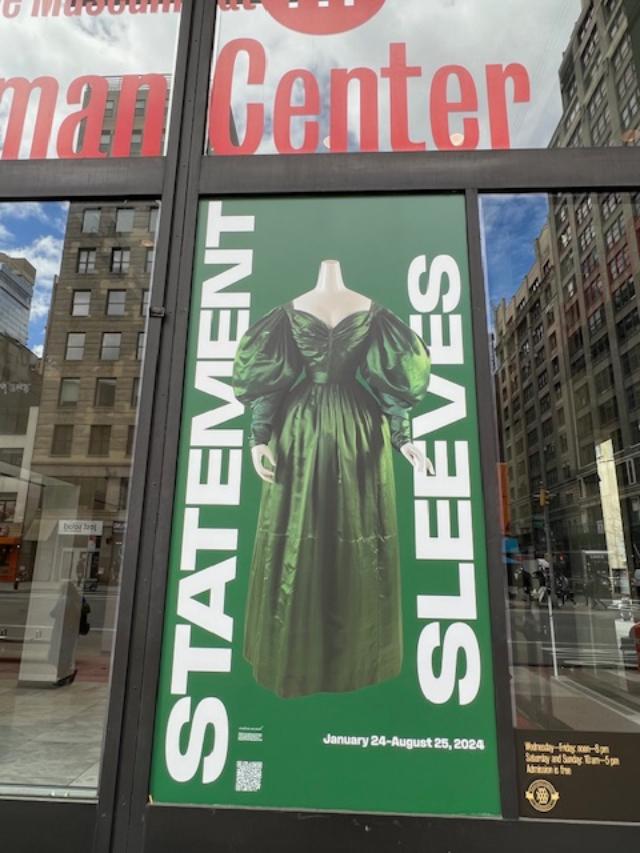
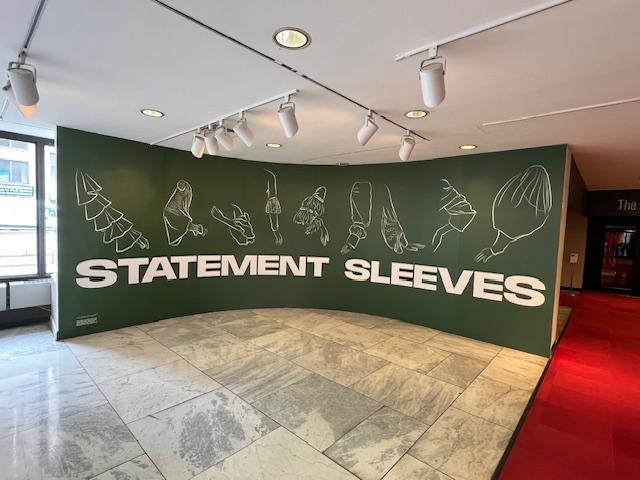
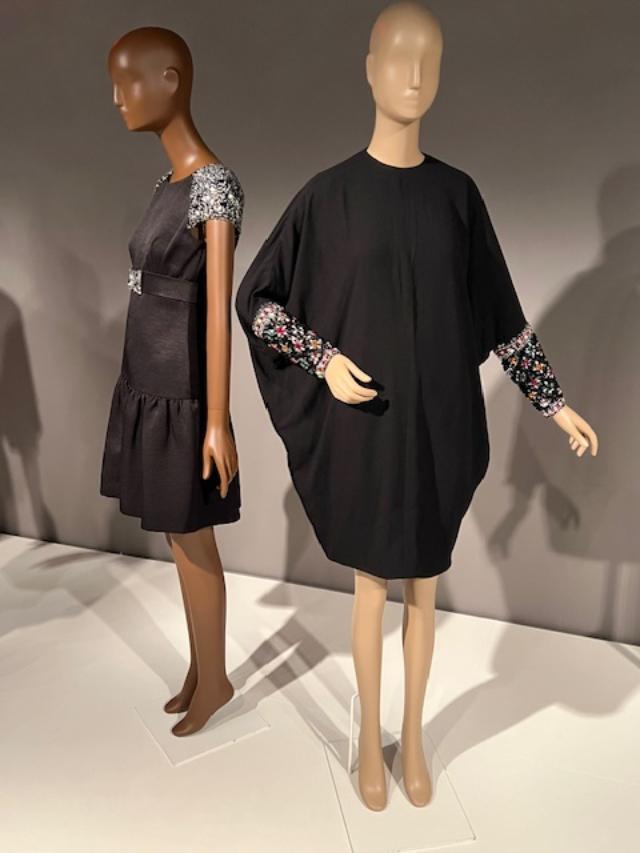
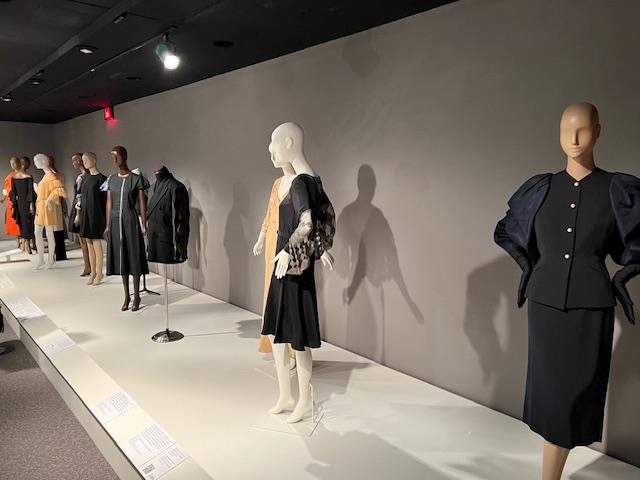
The recent exhibition “Statement Sleeves” is a retrospect on the evolution on the pattern of sleeves in a woman’s dress. These statements of fashion on the sleeve is “a sleeve, style that is exaggerated, embellished, elaborately constructed or otherwise eye-catching to the extent that it defines a garment.” (show description).

“Statement Sleeves” sign

The start of the exhibition.

The front of the gallery.

The diagram on the evolution of sleeves.

The changes in Sleeves design.

The changes in Sleeves design.

The different ways at looking at formal design.

The unique designs from the 1980’s and 1960’s.

The changes of Sleeve designs over the years.

The “Power Suit” of the 1980’s.

The colorful trends in women’s wear over the years with the changes in design of the sleeves.

The exhibition of “Statement Sleeves” runs through August of 2024.

Information and History of the Museum at FIT:

(From the Museum’s website):

For further information about the Fashion Institute of Technology, please visit fitnyc.edu.

Couture Council:

An elite membership group, the Couture Council helps to support the exhibitions and programs of The Museum at FIT. Members receive invitation to exclusive events and private viewings. Annual membership is $1,000 for an individual or couple and $350 for a young associate( under the age of 35).

For more information, write to couturecouncil@fitnyc.edu or call (212) 217-4532.

Tours and donations

Every six months, a changing selection of garments, accessories and textiles from the museum’s permanent collection is put on display in the Fashion and Textile History Gallery, on the museum’s ground floor. Tours of the Fashion and Textile History Gallery and of the Special Exhibition Gallery may be arranged for a sliding fee of approximately $350. Donations of museum quality fashions, accessories and textiles are welcome.

For more information about tours, call (212) 217-4550. For information about donations, call (212) 217-4570.

All MFIT exhibitions and public programs are supported bin part by the couture council of The Museum at FIT.

The shows are continuously changing so please check the website for more detail on the current show. Below is a sampling of one of the shows earlier last year when I visited the museum.

FIT Museum

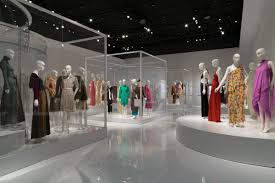
The FIT Museum has interesting exhibitions

The Hispanic Society of America                          613 West 155th Street                                        New York, NY 10032

The Hispanic Society of America 613 West 155th Street New York, NY 10032

The Hispanic Society of America

613 West 155th Street

New York, NY  10032

(212) 926-2234

Hours: Sunday 12:00pm-5:00pm/Monday-Wednesday Closed/Thursday-Saturday 12:00pm-5:00pm

museum@hispanicsociety.org

TripAdvisor Review:

https://www.tripadvisor.com/Attraction_Review-g60763-d110237-Reviews-Hispanic_Society_of_America-New_York_City_New_York.html?m=19905

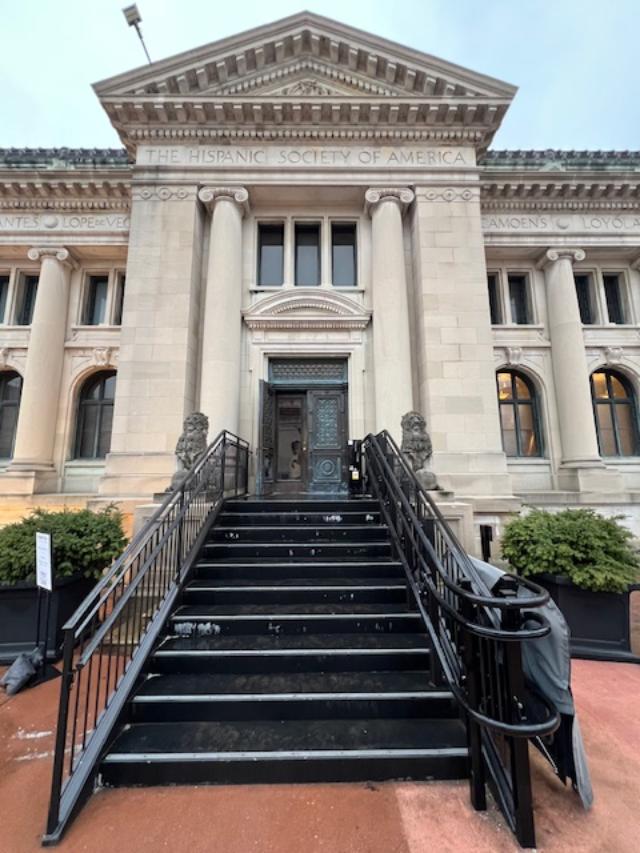
The front of the Hispanic Society of America at 613 West 155th Street

I visited the Hispanic Society of America in 2025 to see the new exhibition “A Room of Her Own”, where I saw where women made their homes their domain. In the exhibition, I saw how women made rooms in their homes their place of business, rest and socialization. They bought and designed these rooms with the most beautiful, tasteful and costly items that they could afford to show their taste and design. It showed how female Hispanic Society carved a place for themselves in a male dominated society. The elaborate objects showed the taste and the creativity of the artists themselves. It was a very unique exhibition.

The exhibition sign for “A Room of Her Own”

The exhibition explores the rich history of the estrado—a woman’s private drawing room found in early modern Spain and the Spanish Americas—and illuminates the estrado’s long-overlooked role in female agency, social practices, and intercultural exchange. A Room of Her Own features decorative objects, paintings, textiles, rare books, and engravings from the Hispanic Society’s unrivaled collection, with many works on view for the first time (museum website).

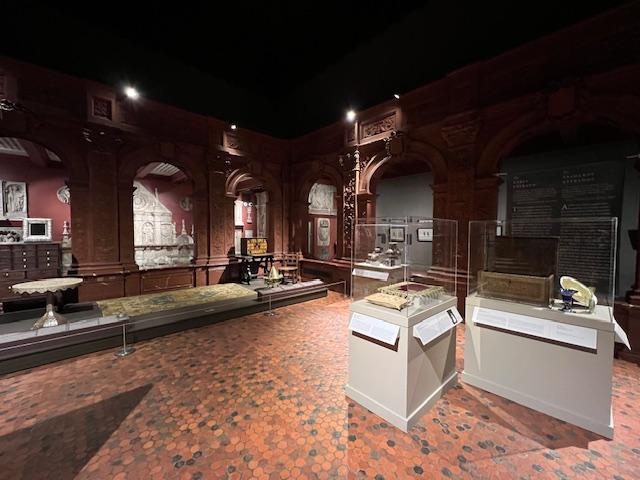
The items from “A Room of Her Own” that would have decorated their homes

This landmark exhibition traces the evolution of the sala de estrado from Islamic al-Andalus to the Americas, where it flourished until the collapse of the Spanish Empire. Described in the Diccionario de Autoridades (Madrid, 1732) as the “set of furniture used to cover and decorate the place or room where the ladies sit to receive visitors,” the estrado was a room or designated area where women engaged in elaborate social practices and displayed their collections of valuable objects from the Americas, Asia, and Europe (Museum website).

Some of the beautiful decorative items from the exhibition

The well-appointed estrado has long been a focal point of opulence and intrigue in traveler accounts, inventories, legal records and works of fiction. Designed for upper-class interiors and inhabited by elite women of European, Indigenous American and West African descent, the estrado paradoxically becomes a locus of female agency and subversion within a place of confinement. The exhibition engages a comprehensive array of archival sources and objects to question the values historically imposed on gender stereotypes and behaviors and highlights the estrado’s importance as a symbol of power, wealth, and virtue (Museum website).

The history of the Museum:

(From the Museum website)

The Hispanic Society of America was founded as a free museum and research library in 1904 by the American Scholar and philanthropist Archer Milton Huntington (1870-1955). Over the past century, the Hispanic Society has promoted the study of the rich artistic and cultural traditions of Spain and Portugal and their areas of influence in the Americas and throughout the world. The Museum and Library constitute the most extensive collection of Hispanic art and literature outside of Spain and Latin America.

The main gallery of the Hispanic Society of America

Archer Huntington’s fascination with Spanish culture started at the age of twelve; by fourteen he had begun to study the Spanish language and by nineteen he revealed his aspiration to found a “Spanish Museum”. As Huntington’s enthusiasm grew he became increasingly committed to the creation of an institution that would encompass all facets of Hispanic culture. Working toward this goal, Huntington began his collection with Spanish rare books and manuscripts; then decorative arts; followed by paintings and sculpture-all of which now fill the galleries of The Hispanic Society of America.

The Catholic symbols and artifacts and artwork of the Hispanic Society of America

Today the Hispanic Society Museum and Library builds upon the legacy of Huntington through an active acquisitions program as well as public programs that reach out to new audiences through collaborative exhibitions, educations, and publications.

Portrait of the Dutchess of Alba by Goya

The Hispanic Society is especially rich in paintings, drawings and prints by Francisco de Goya (1746-1828), one of the most inventive artists of his time. Goya’s iconic 1797 Portrait of the Duchess of Alba dressed in black as a Spanish maja, is the most renowned painting in the collection.

Paintings:

(from the Museum website)

The Museum offers a panoramic survey of Spanish painting and drawing dating from the Middle Ages up to the early 20th century with particular strengths in the Golden Age (1550-1700) and the 19th century. Notable among 16th century paintings are the Portrait of the Duke of Alba by Antonis Mor (1516/19-1576) and the Holy Family by El Greco (Domenikos Theotokopoulos, 1541-1614).

Three portraits by Spain’s preeminent  master, Diego Vaelazquez (1599-1660), represent the heights of Spanish painting in the 17th century: Gaspar de Guzman, Conde-Duque de Olivares; Portrait  of a Little Girl and Camillo Astalli, Cardinal Pamphili. The collection also includes works by other acknowledged masters of the period, such as Jusepe de Ribera (1591-1652), Francisco de Zurbaran (1598-1664) and Bartolome Esteban Murillo (1617-1682).

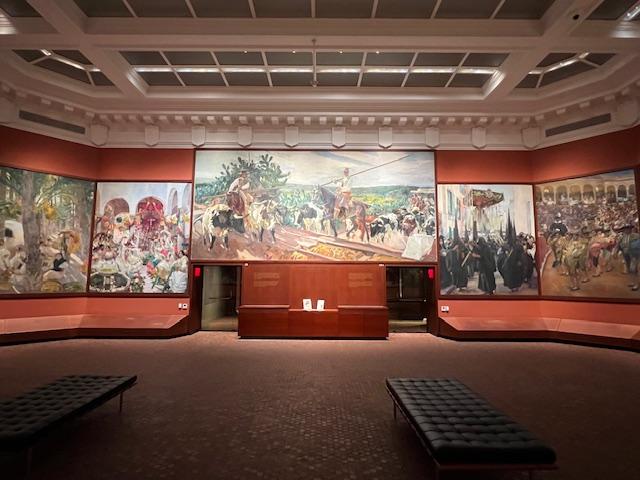
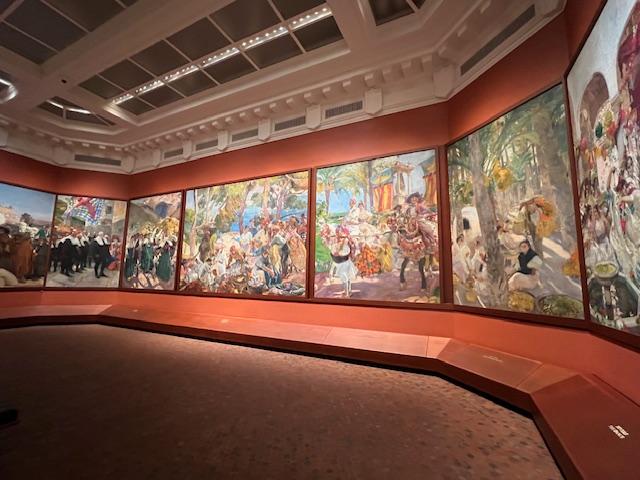
The gallery of Joaquin Sorolla y Bastida’s “Vision of Spain”

“The Vision of Spain” gallery painting

The “Vision of Spain” painting

The sign explaining the artwork

The “Festival of Bread” painting as part of the display

Among the most popular works at the Hispanic Society are those by Spain’s “painter of light” Joaquin Sorolla y Bastida (1863-1919), present a celebration of regional costumes and cultures that surround the visitor with the artist’s “vision of Spain”. The Museum also possesses an outstanding selection of works by late 19th and early 20th century artists.

The painting a “Day in Seville” as part of the display

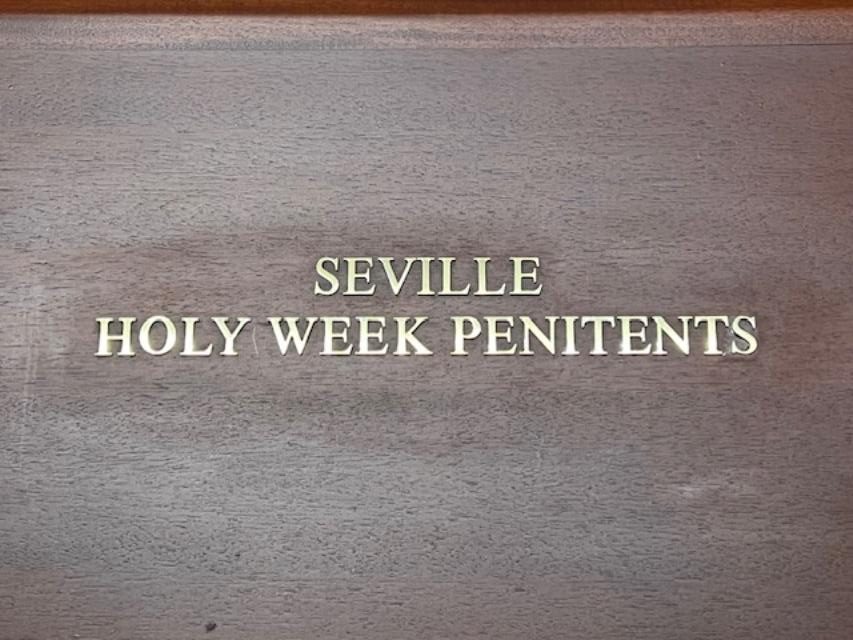
The “Holy Week Penitents” in the display

The sign for “Holy Week Penitents”, people who admit to their sins and wrongdoings

Decorative Arts:

(from the Museum website)

The Hispanic Society is renowned for its decorative arts from Spain, Portugal, Latin America, the Philippines and Portuguese India. Ceramics represent one of the most significant facets of the collection, ranging from  three-thousand-year old Bell-Beaker pottery to contemporary works. The collection of Spanish lusterware, numbering over 150 pieces, is considered the finest in the United States. This distinctly Spanish style of ceramics flourished between the 15th and 17th centuries as artisans combined Islamic and Western traditions to produce objects of incomparable beauty. Important examples of decorative and utilitarian earthenware and soft-paste porcelain from various workshops complete the collection-including works from Talavera de la Reina, Alcora and Buen Retiro in Spain and Puebla de lost Angeles and Tonala in Mexico.

The decorative items in the collection

Other decorative arts include silver, glassware, secular and ecclesiastical furniture, decorative ironwork and textiles dating from between the 15th and 19thy centuries. The processional custodia by Cristobal Beceril (1533-1585) is one of the highlights of the magnificent collection of Spanish and Latin American gold and silver ars sacra and jewelry. Textiles in the collection range from luxurious silks of medieval Islamic Spain to domestic needlework of the early 20th century. Hispano-Muslim textiles include fine gold, silk, and satin brocades from the 13th through the 15th century. An exquisite ‘Alhambra silk” (ca. 1400) from Granada recalls the repeating geometrical pattern and Kufic inscriptions which decorate the famous Alhambra palace.

Archaeology:

(from the Museum website)

Huntington’s fascination with the ancient past of the Hispanic world led him to sponsor significant archaeological expeditions and excavations in Spain and the Americas. He conducted excavations in 1898 near Seville at the site of the Roman City of Italica, birthplace of the emperors Hadrian and Trajan. Through these excavations and subsequent acquisitions, the Hispanic Society has been able to assemble the most important collection of Spanish antiquities outside Spain. This wealth of objects from Spain’s Bronze Age to the period of Roman rule features works from Ibero-Phoenician, Greek and Celtiberian cultures in addition to the extensive collection of Roman ceramics, glass, metalwork, mosaics and statuary.

Sculpture:

(from the Museum website)

In addition to Ancient and Classical sculpture, the Hispanic Society collection contains extraordinary Islamic and Christian works dating from the Middle Ages to the early 20th century. A cylindrical ivory box signed by the Islamic master Khalaf (ca. 966) at the Umayyad court at Madinat al-Zahra stands out for the beauty of its intricate carving. Supreme examples of the heights which Spanish sculpture reached in the 16th century are found in the Gothic and Renaissance tombs of the Bishop of Palencia and the Duchess of Albuquerque from the monastery of San Francisco de Cuellar, along with the two magnificent effigies of Suero de Quinones and Elvria de Zuniga by Leone and Pompeo Leoni.

The Hispanic Society of America has some interesting pieces of art

Pedro de Mena’s haunting representation of the young Saint Acisclus, patron saint of Cordoba, stands out as one of the finest examples of 17th century Spanish polychrome sculpture of her era, are rich in exquisite detail. An impressive ensemble of monumental sculpture also graces Audubon Terrace with the iconic equestrian statute of El Cid and limestone reliefs of Don Quixote and Boabdil, all by noted American sculptor, Anna Hyatt Huntington (1876-1973).

Library:

(from the Museum website)

With more than 600,000 books, manuscripts, documents and letters dating from the 10th century to the present day, the Library of the Hispanic Society offers unparalleled resources for researchers interested in the history and culture of the Spanish and Portuguese speaking worlds. The manuscripts and rare books section comprises over 15,000 books printed before 1701 including some 250 incunabula (books printed before 1500) as well as first editions of the most significant literary works in the Spanish language such as Tirant lo Blanc, Celestina and Don Quixote.

The collection of Hispanic manuscripts, extraordinary rich in material and scope is the most extensive outside Spain. It encompasses medieval charters, holograph royal letters, sailing charts, illuminated bibles and books of hours as well as historical and literary manuscripts from the 10th to the 20th century.

The library’s invaluable holdings from the America’s include some of the earliest  books printed in Mexico, Peru, Guatemala and Puerto Rico. First editions of works by many of Latin America’s greatest writers, such as Sor Juana Ines de la Cruz, form an integral part of the collection. The library also conserves one of the largest and most important collections in the United States of historical  manuscripts and documents pertaining to Latin America and the Philippines from the 16th through 19th century.

Prints & Photographs:

(from the Museum website)

Over 15,000 prints afford a unique glimpse of the graphic arts in Spain. The collection contains incomparable engravings by 17th-century artists such as Ribera, yet its greatest strengths are in the 18th and 19th centuries including almost all of Goya’s prints, many in multiple editions. The department also has an extraordinary assemblage of illustrations of Don Quixote, totaling more than 4000 engravings, etchings and lithographs.

The section of photographs holds over 176,000 black and white images documenting life and customs in the Hispanic world. Many of these images now preserve a way of life irrevocably lost. Among the most notable and rarest are those from the 19th century but the department also features more than 15,000 photographs made by Hispanic Society curators and staff who traveled throughout Spain and Latin America in the 1920’s.

Publications, Group Visits & Education:

(from the museum website)

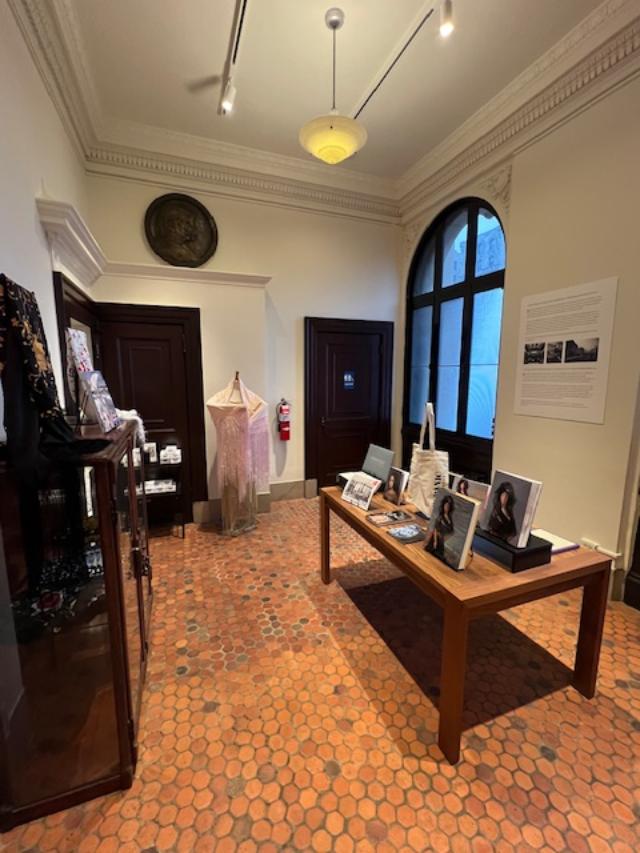
For over a century, the Hispanic Society has maintained an active publication program. Books and other publications relating to the collections as well as postcards, note cards and posters are available from the Museum bookstore.

The Hispanic Society is dedicated to educational programs for students of all ages. The education department provides gallery talks, group tours and activities and materials for educators.

The Hispanic Society gift shop

For further information on current programs, group tours, special events and on becoming a member of The Friends of the Hispanic Society visit our website, hispanicsociety.org or call (212) 926-2234.

(This information is taken from the Hispanic Society of America’ brochure) 

The Hamilton Grange National Memorial          414 West 141st Street                                         New York, NY 10031

The Hamilton Grange National Memorial 414 West 141st Street New York, NY 10031

The Hamilton Grange

414 West 141st Street

New York, NY  10031

(646) 548-2310

http://www.nps.gov/hagr

Hours: Wednesday-Sunday-9:00am-5:00pm/Closed Monday-Tuesday

Fee: Donation

TripAdvisor Review:

https://www.tripadvisor.com/Attraction_Review-g60763-d105813-Reviews-Hamilton_Grange_National_Memorial-New_York_City_New_York.html?m=19905

Alexander Hamilton’s Summer Home

In the late 1700’s, well-to-do dwellers moved to Harlem Heights in the summer, seeking its cool breezes. They also wanted to avoid yellow fever, a summer threat in lower Manhattan, Hamilton and his wife, Elizabeth  (of the influential Schuyler family) often visited friends here and decided to build their own retreat.

In 1802, they moved in and Hamilton began commuting to his downtown law office, a 90 minute carriage trip. He and Elizabeth also began to entertain friends, colleagues and leader in their elegant home and gardens. Little did Hamilton know that his time at The Grange would be brief.

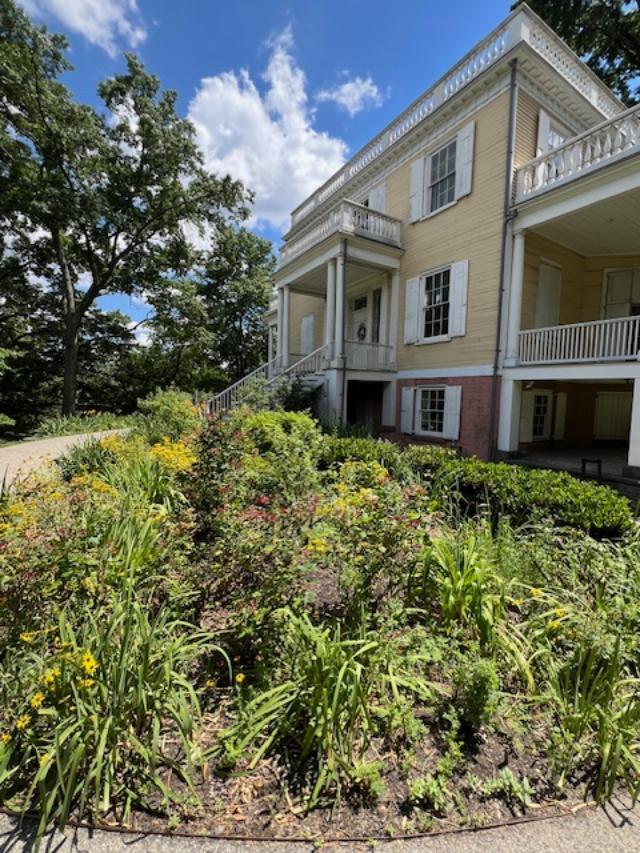
Hamilton Grange home

Witness to Slavery:

Alexander Hamilton (1755-1804) grew up on Nevis and St. Croix, islands in the Caribbean, where thousands of enslaved Africans labored in sugar cane fields. As a clerk for a shipping company, young Hamilton worked directly with ship captains bringing in their human cargo. This experience haunted him and lead to his lifelong opposition to slavery.

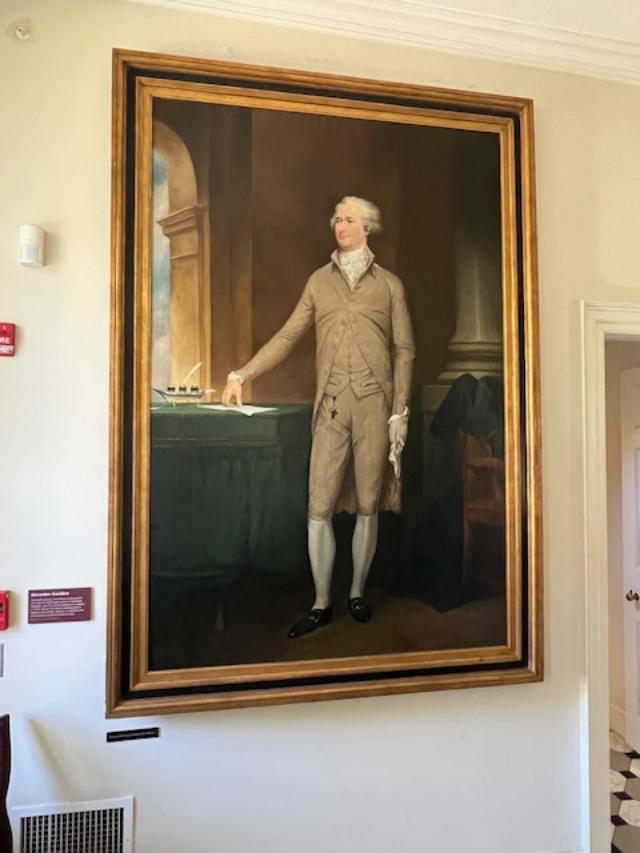
The portrait of Alexander Hamilton in the home

Saved by a Hurricane:

Hamilton’s mother, Rachel, raised him and his brother along. A shop owner, she died of yellow fever when Hamilton was in his early teens. That’s when he started working at the shipping company. He impressed his boss with his energy, ambition and intelligence. Then the local newspaper published his letter describing a devastating hurricane. Townspeople were so taken by his writing that hey helped pay his way to America to further his education. In the letter, he wrote: …’the ear-piercing shrieks of the distressed were sufficient to strike astonishment into Angels’.

The bust of Alexander Hamilton in the house’s Entrance Hall

In America:

Hamilton plunged into American life. He enrolled in King’s College (now Colombia University) in New York. He wrote passionately about the revolutionary ideas of American rebels. When the fighting began, young Hamilton joined them. By the time he married at 25, he was a published writer, seasoned military leader and a close friend of George Washington.
Alexander Hamilton.jpg

Alexander Hamilton

https://en.wikipedia.org/wiki/Alexander_Hamilton

Family Man:

Hamilton and Elizabeth loved children. They had eight of their own and took in others. Hamilton’s work as a lawyer helped pay bills while he served the county with little if any pay.

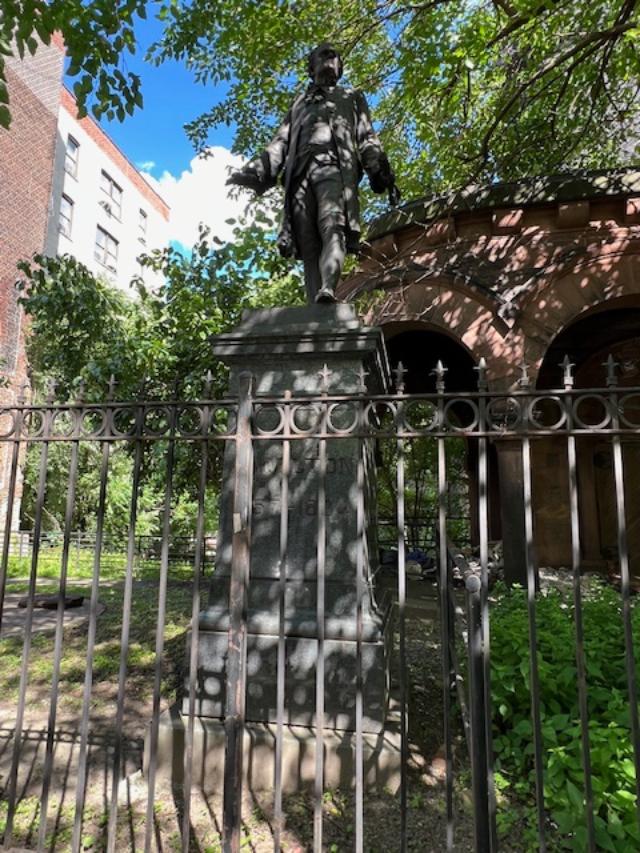
The Alexander Hamilton statue in the church yard.

The Duel:

After years of differences, Aaron Burr challenged Hamilton to a duel in 1804. Burr, now the country’s vice-president, felt he had to defend his honor. Friends tried to soothe both men but failed. Facing possible death, Hamilton wrote letters to his friends and family. After he died from Burr’s bullet, Elizabeth read his letter and these final words: ‘Adieu, best of wives and best of women. Embrace all my darling children for me’.

Hamilton’s study just off the Entrance Hall of the home

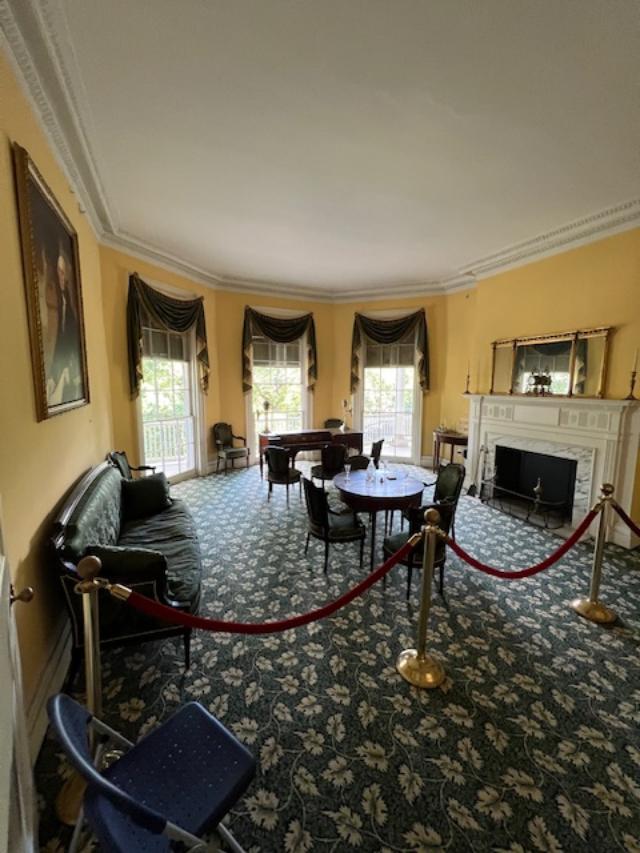
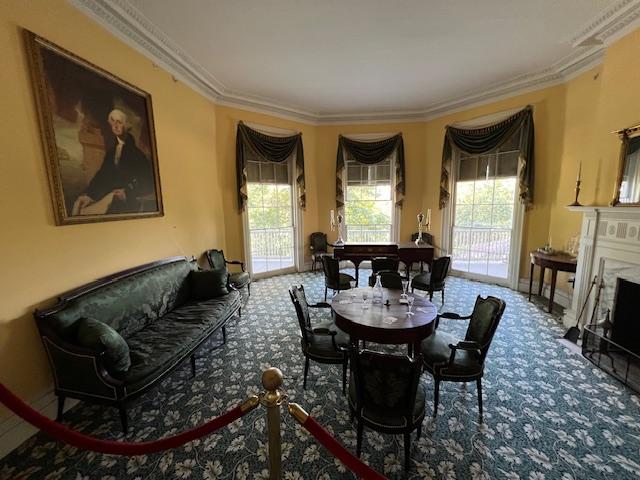
The Living Room

The Living Room

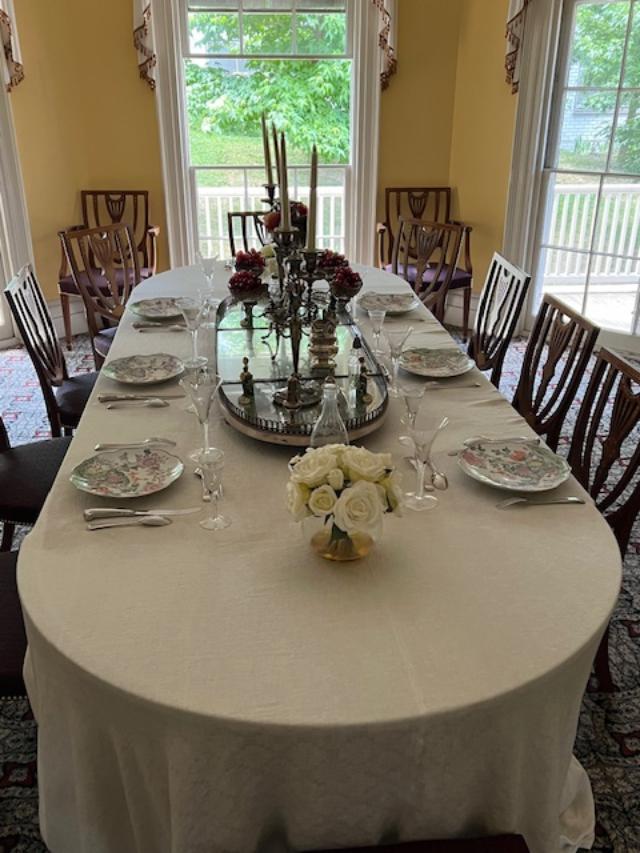
The Dining Room

The Dining Room

The Dining Room table

Elizabeth Carries On:

Family friends made sure Elizabeth had enough money to live with her children at The Grange. She preserved Hamilton’s thousands of letters, essays and other writings. She also started an orphanage and was its director into her 80’s. At age 91, she went to live with a daughter in Washington DC. She charmed presidents and other dignitaries until she died in 1854 at age 97.

Elizabeth Schuyler.jpg

Elizabeth Schuyler

https://en.wikipedia.org/wiki/Elizabeth_Schuyler_Hamilton

Alexander Hamilton: Soldier, Founder and Philosopher:

Revolutionary War Days:

By age 21, Alexander Hamilton identified  himself with the revolutionary cause. He organized an artillery unit that defended New York City and fought in New Jersey and Pennsylvania. George Washington noticed Hamilton’s daring and intelligence and appointed him as a personal aide.

Hamilton’s new job required him to be writer, diplomat and advisor to Washington. Even so, Hamilton ached to return to battle. Eventually, Washington appointed him Colonel of an infantry brigade. Hamilton led a major attack in the battle of Yorktown in 1781.

Bold Ideas for New Times:

As a lawyer after the war, Hamilton defended New York citizens who had been loyal to Britain. He argued the new treaties and laws protecting all citizens and that loyalists would help rebuild the city. He also led the New York Manumission Society, which protected and educated free and enslaved African-Americans.

At the 1787 Constitution Convention, Hamilton argued for a strong central government. With James Madison and John Jay, he wrote essays explaining the new Constitution and urging citizens to vote for its ratification. Politicians and judges still consult “The Federalist Papers” about the meaning of the US Constitution.

The Hamilton Study

In the New Government:

As first Secretary of the Treasury, Hamilton recommended the federal government pay off states debts, tax imported goods, establish a national bank and promote manufacturing. His ideas worried Sectary of State Thomas Jefferson, who believed the federal government did not have powers. Hamilton argued the Constitution supported flexible ‘implied powers.’ Congress and the Supreme Court agreed. By the end of Hamilton’s term, the country had excellent credit and a strong economy.

The Hamilton Grange Dining Room

A Controversial Citizen:

Hamilton resumed his law practice in 1795 after leaving federal service. His clients included free and enslaved African-Americans whom he helped for no pay. He also defended a newspaper editor sued for slander by Thomas Jefferson. Hamilton argued journalists had the same rights as citizens to freedom of speech. His victory strengthened United States citizens’ First Amendment rights.

Hamilton often criticized President Jefferson’s government and his vice-president, Aaron Burr. His harsh words about Burr lead to the duel that ended Hamilton’s life. Alexander Hamilton’s short and controversial life left the United States poised to become a powerful nation something he dreamed of but did not see.

The view of the house from St. Nicholas Park

Visiting the site:

The Hamilton Grange Gardens

Planning your visit:

Hamilton Grange is on West 141st Street between Convent and St. Nicholas Avenues, its third location. In 1889, the city began building new streets across the estate. A church bought The Grange and moved it to safety two blocks away. In 2008, the National Park Service moved it to its current location, still on the original estate.

Hamilton Grange is open year-round, 9:00am to 5:00pm, Wednesday through Sunday except Thanksgiving and Christmas. Exhibits and a film highlight Hamilton’s major achievements. Guided tours are first-come, first-serve and limited to 15 visitors. Enjoy quiet activities on the grounds.

Hamilton Grange Display Room

We strive to make our facilities, services and programs accessible to all. Call or visit our website.

Hamilton Grange is near bus routes and subway stations; see maps at right. Visit http://www.mta.info for routes and schedules. All applicable federal, state and city laws and regulations apply here.

The Hamilton Grange Information Room

Hamilton Grange National Memorial is one of over 390 parks in the National Park System. To learn more about national parks, visit http://www.rips.gov.

The Information Room

*This information was taken off the pamphlet available at the site put out by the National Park Service, U.S. Department of the Interior: National Memorial New York and I give them full credit for the information.

*Bloggers Note: Because of the Musical on Broadway presently, the site has gotten very busy during the summer months but don’t let that deter you from visiting. The house and the tour are very interesting.

I mentioned this on my blog “MywalkinManhattan” when visiting this part of Harlem. There are a lot of nice restaurants close by and the SUNY campus is right there to relax in. The neighborhood is save but still you have to watch yourself anytime you walk around NYC.