Tag: New York

MOCA: The Museum of Chinese in America                                                           215 Centre Street                                                New York, NY 10013

MOCA: The Museum of Chinese in America 215 Centre Street New York, NY 10013

MOCA: The Museum of Chinese in America

215 Centre Street

New York City, NY  10013

Telephone: (855) 955-4720

Fax: (212) 619-4720

Email: infor@mocany.org

Home

https://www.mocanyc.org/visit/

Hours: Tuesday-Wednesday-11:00am-6:00pm/Thursday-11:00am-9:00pm/Saturday & Sunday-11:00am-6:00pm

Fee: General Admission $10.00/Students/Seniors/Children/Military-$7.00/Free to members and people with disabilities

TripAdvisor Review:

https://www.tripadvisor.com/Attraction_Review-g60763-d136145-Reviews-Museum_of_Chinese_in_America-New_York_City_New_York.html?m=19905

The Museum of Chinese in America engages audiences in an ongoing dialogue, in which people of all backgrounds are able to see American history and society through a critical lens, to reflect on their own experiences and to make meaningful connections between the past and the present, the global and the local, themselves and others.

MOCA began in 1980 as the New York Chinatown History Project, a community-based organization founded by scholar John Kuo Wei Tchen and community activist Charles Lai to promote knowledge and understanding of the history and contributions of Chinese Americans. Today, the MOCA is a national cultural anchor and a global destination. It is located on the border of Chinatown and SoHo in New York City in its Maya Lin-designed home that was highlighted by Architectural Digest as one of Lin’s most memorable designs.

Museum of Chinese in America II

The entrance to the museum

Permanent Exhibition:

Our core exhibition, ‘With a Single Step: Stories in the Making of America’, traces more than 160 years of milestones in Chinese American History from the earliest Chinese Immigration to the struggle for citizenship to the development of our contemporary identity.

The core exhibit revolves around the Museum’s historic sky-lit courtyard, which renowned artist and designer Maya Lin has left deliberately raw and untouched as a reminder of the past and to evoke a classic Chinese courtyard house.

The permanent collection shows immigration from the earliest days during the early 1800’s with immigrants working in the mines and on the railroads doing the back-breaking work all while dealing with the problems with racism in the country at that time.

The timeline shows the development of the early Chinatowns in major cities and the growth of industries like restaurants and laundries where they could make a living. This is where the term ‘eight-pound package’ came from with a pile of clean laundry. Even in these industries, the exhibit shows the systematic racism in these fields as well.

It was not until WWII when you saw Chinese Americans fighting for their country did you see a change of attitude, but it never seemed to last long. This ongoing theme is seen throughout the exhibition up until today.

Special Exhibitions:

Our rotating galleries showcase a revolving series of MOCA-curated and visiting exhibitions featuring contemporary art, design and historical subjects.

The first time I visited the museum, I saw an exhibition of the modern twist to the ‘Chinese Restaurant’ where the foods we eat are really Chinese American cuisine that was created when immigrants came here and had to adapt to their new homeland. Items like Chop Suey and Chow Mein were inventions of new immigrants with the items they had in their pantries.

The exhibit showed how chefs of the third generation of Americans of Chinese Descent are changing these dishes by adding modern spins to the food. The exhibit featured the chefs, their restaurants and the dishes that they were creating. They were changing the cuisine again.

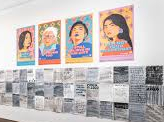
The current exhibition “Responses: Asian American Voices Resisting the Tides of Racism”, deals with the Xenophobia that came with COVID and the affects that the disease and its thought that it came from Wuhan, China has trickled down to a new hate for Americans of Asian descent. This has led to a series of assaults all over the country. The exhibition shows this type of racism throughout the history of this country and the response from the community itself.
MOCA III

“Responses: Asian American voices Resisting the Tides of Racism” exhibition

MOCA Shop:

The MOCA Shop features select items, including books, ceramics, designs by local artists and children’s gifts.

Education:

Using inquire-driven approaches, MOCA provides museum and in-school programs on Chinese American history and culture for K-12 and college students at all levels, as well as professional development workshops for teachers. These programs complement classroom learning and foster expansive opportunities for primary source-based learning and development of 21st Century skills such as critical thinking, visual media literacy and civic engagement. They present diverse layers of the Chinese American experience, using individual stories to highlight what it has meant to be Chinese in America at different moments in time, while also exanimating America’s journey as a nation of immigrants.

Family Programs:

MOCA’s family programs bring together parents, grandparents, children and grandchildren alike to participate in fun, hands on activities celebrating Chinese American heritage and history. From our annual holiday Family Festivals to our bi-monthly MOCACREATE workshops, enjoy storytelling, drop-in arts and crafts, teaching artist demonstrations, performances and more!

Public Programs:

Through its thought-provoking and multi-disciplinary programming, MOCA’s signature public programs series offers diverse perspectives on the living history of Chinese Americans and gives visitors opportunities to actively engage in shaping and influence the Chinese American cultural landscape.

Tours:

MOCA offer dynamic educator-led tours of our exhibitions and guided walking tours of New York Chinatown for all ages, designed to encourage meaningful ties between visitors’ lives and the history, culture and diverse experiences of people of Chinese descent in the United States.

Preserve your family Legacy:

As visitors enter the Museum, they are greeted with the Journey Wall, a custom art installation created fro the main lobby of MOCA’s space by Maya Lin.

The wall is composed of bronze tiles through which Chinese Americans can honor and remember their family roots. Each tile is inscribed with an individual’s or family’s name and place of origin with their home in America. The complete wall will highlight the expansiveness of the Chinese American diaspora.

To become a permanent part of the Museum epic narrative, your family can place a tile on the Journey Wall.

Museum of Chinese in America IV

For more information or to make a reservation for a tile, please contact the Development department at (855) 955-MOCA or email development@mocanyc.org. All gifts are tax-deductible to the full extent of the law.

Collections:

MOCA’s ever-expanding archives and permanent collections are comprised of more than 65,00 artifacts, letters, written records, oral histories, textiles, photographs and videos. The collections highlight the varied threads of the Chinese American diaspora, exploring how they intersect and diverge, illuminating the ways in which they are intimately interwoven within the broader multicultural fabric of the United States.

Museum of Chinese in America III

Galleries at the museum

Research services are available by appointment on weekdays at MOCA’s Collections & Research Center, located at MOCA’s original site at 70 Mulberry Street, which is housed in a historic public school building dating back to the 19th century. MOCA continues to make the museum’s resources available to researchers around the world through its Collections Online. Currently, researchers are able to search more than 10,000 item records and archival finding aids online via PastPerfect and Archives. Space.
Museum of Chinese in America

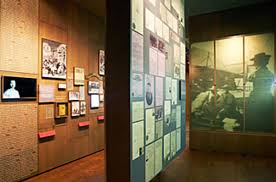
Galleries at the museum

MOCA’s Commitment:

*Presenting relevant historical and contemporary exhibitions.

*Collecting and preserving Chinese American history.

*Transforming how our audience learn, engage and use technology to explore history, identity, culture and community.

*Creating curricula and educational programs for students and teachers and offering resources for researchers.

*Cultivating community-based projects and collecting oral histories.

*Hosting films, festivals, performances, readings, workshops and conferences on topics relevant to MOCA’s mission.

Book your group visit today! (855) 955-6622.

Visit MOCA:

Our beautiful 16,000 square foot space at 215 Centre Street is designed by artist and designer Maya Lin. It is a national home for the precious narratives of diverse Chinese American communities and strives to be a model among interactive museums. MOCA brings to life the journeys, memories and contributions of the enduring Chinese American legacy.

Support MOCA:

MOCA relies on the generosity of private individuals, corporations and foundations to fulfill its mission to preserve and present Chinese American history and culture. Funding from donations and memberships provides critical support for our collections, exhibitions, educational initiatives, public programs and operations. To learn more about supporting MOCA or to make a specific gift, please visit https://secure.mocanyc.org/donation/or contact the Development department at development@mocanyc.org.

Membership Benefits:

MOCA members see it first! Enjoy exclusive benefits, including free gallery admission, invitations to exhibition openings, opportunities to meet curators, artists and performers and discounts at the MOCA Shop, as well as at select community partners. To join or renew your membership, please visit mocanyc.org/membership or call (855) 955-6622.

Interns & Volunteers:

MOCA is always seeking dedicated individuals to assist us in our work. Please visit our website for more information.

Transportation:

N,Q,R,J,Z and 6 trains to Canal Street, M9, M15, M103 buses. The nearest parking lot is located at Centre and Hester Streets. Citi Bike station on Howard and Hester Streets.

MOCA Free First Thursdays: Free gallery admission first Thursday of each month except on major holidays. Made possible through the generosity of the New York City Department of Cultural Affairs and J.T. Tai & Co. Foundation.

Access & Accessibility:

MOCA is committed to making its collection, buildings, programs and services accessible to visitors of all abilities. For more information, please visit mocanyc.org/visit/accessibility.

http://www.mocanyc.org

*Disclaimer: This information is taken directly from the MOCA pamphlet. Things are subject to change by the organization so please call-in advance for any special services.

Shorakkopoch Rock Inwood Hill Park New York, NY 10034

Shorakkopoch Rock

Inwood Hill Park

New York, NY  10034

(212) 639-9675

https://www.nycgovparks.org/parks/inwoodhillpark

https://www.nycgovparks.org/parks/inwood-hill-park/monuments

https://www.atlasobscura.com/places/shorakkopoch

Open: Sunday-Saturday 6:00am-1:00pm

My review on TripAdvisor:

https://www.tripadvisor.com/Attraction_Review-g60763-d21055143-Reviews-Shorakkopoch_Rock-New_York_City_New_York.html?m=19905

Located in Inwood Hill Park and part of the NYC Parks System. The rock was dedicated on February 2, 1954 by the Peter Minuet Post #1247, American Legion.

I came across the Shorakkopoch Rock, the noted spot that Peter Minuet has been said to have bought the island of Manhattan from the Indians. No one is too sure where the spot of the ‘transaction’ took place as some feel it may have been closer to downtown by the Bowling Green, where the original Dutch settlement was located or maybe he traveled to them, we will never know. What we do know is that he said the transaction took place under a tulip tree and in this spot used to be a tulip tree that was over 220 years old before it died.

The Shorakkopoch Rock at the edge of the pathways leading into Inwood Park

The plaque on the the rock reads:

Shorakkopoch: According to legend, on this site of the rock, principal Manhattan Indian Village, Peter Minuet in 1626, purchased Manhattan Island for trinkets and beads them worth about 60 guilders. This boulder also marks the spot where a tulip tree (Liriodendron Tulipifera)  grew to a height of 165 feet and a girth of 20 feet. It was until its death in 1932 at the age of 220 years old, the oldest living link with the Reckgawawang Indians, who lived here. Dedicated as part of New York City’s 300th Anniversary celebration by the Peter Minuet Post 1247 American Legion 1954.

As you stroll down the path from this spot in the park and continue along the path, you will come across Shorakkopoch Rock, a boulder marking the site where Peter Minuit bought the island of Manhattan from the native Reckgawawang Indians for about 60 guilders of trinkets and beads in 1626.

Peter Minuit

Peter Minuit buying the Island of Manhattan

https://www.thirteen.org/dutchny/interactives/manhattan-island

Peter Minuit III

Peter Minuit

https://www.britannica.com/biography/Peter-Minuit

The boulder marks the spot of a giant 280-year-old 165-foot tulip tree once stood until it died in 1932. Legend has it that this is the spot of one of the greatest real estate investments took place. It is such an important part of Manhattan history that most tourists miss.

For more information on the rock, please contact the Art & Antiquities  at (212) 360-8143.

Disclaimer: This information was taken form the NYC Parks Department website.

Please take time out when visiting Manhattan to see this important piece of the city’s history as the city itself was founded on this very site.

Central Park Conservatory Garden Located between 104th and 106th Streets by Fifth Avenue                                            New York, NY 10029

Central Park Conservatory Garden Located between 104th and 106th Streets by Fifth Avenue New York, NY 10029

The Central Park Conservatory Garden

Located between 104th and 106th Streets off Fifth Avenue

New York, NY 10029

https://www.centralparknyc.org/

https://www.centralpark.com/visitor-info/central-park-conservancy/

Hours: Depends on the season and the Dawn to Dusk rule

Hours of Operation:

November-February (8:00am-5:00pm)

March (8:00am-6:00pm)

April (8:00am-7:00pm)

May (August 14th 8:00am-8:00pm)

August 15-31 (8:00am-7:30pm)

September (8:00am-7:30pm)

http://www.centralparknyc.org/things-to-see-and-do/#what_lawns-and-landscapes

Fee: Free

TripAdvisor Review:

https://www.tripadvisor.com/Attraction_Review-g60763-d272517-Reviews-Conservatory_Garden-New_York_City_New_York.html?m=19905

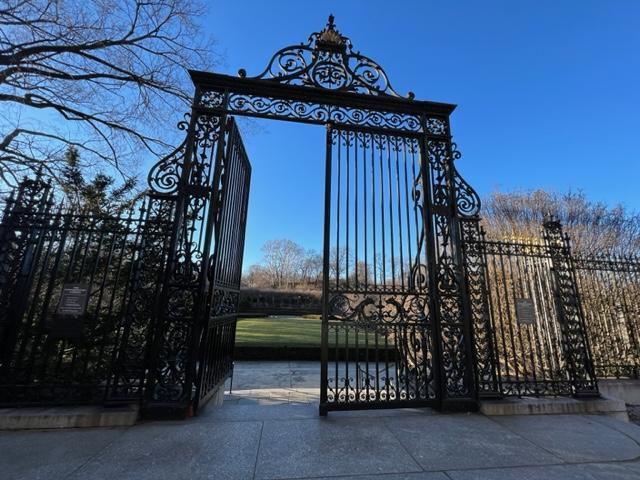
The entrance to the Central Park Conservatory Garden in Winter 2023 (The Vanderbilt Gates)

I love walking around the Central Park Conservatory at any time of the year especially in the early Spring when all the flowers are in bloom. It is a wonderful experience to go in the early morning when it is quiet and you have the park to yourself (which is very rare). The whole garden just went through a major restoration and it has really changed. The whole Conservatory is refreshed and in bloom. It is quite a site!

The sign at the entrance of the Gardens

The entrance to the gardens

This time of the year (Spring) the Central Park Conservatory is in full bloom and its magnificence is at its finest in the Spring and Summer months. In May, the tulips and daffodils are just finishing their flowering and the lilacs are just finishing their blooming and still fragrant the garden. The lawns are all a deep green and the dogwood trees are just starting to bloom around the rings of the gardens.

The newly renovated pathways

Don’t miss walking around the Gardens off to the side closest to the Harlem Meir as they are open through the renovation. You will see beds of flowers along the fountain’s edge and can admire all the sculpture. What is most impressive is that in-between the Gardens is a vast green lawn surrounded by trees. The lawn of the Conservatory is nice to just admire with the trees lining it on all sides.

Central Park Conservatory Garden Spring 2025

The best time to come to the Conservatory Gardens is in early to late Spring and the early Summer when everything is in full bloom. This is when Mother Nature shows us her great magic.

The beauty of the Central Park Conservatory is that it blooms all year around except the winter and even then, there is a quiet elegance to the garden.

The gardens in full bloom in Summer 2025

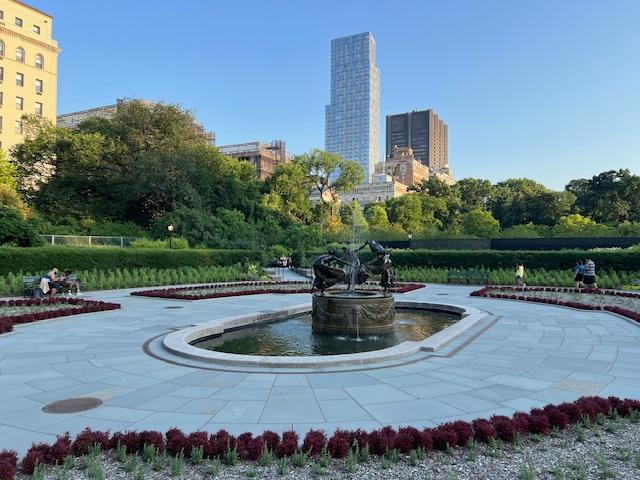
The restored fountain in all of its glory

History of The Central Park Conservatory:

The Central Park Conservatory Garden is the only formal garden in Central Park, New York City and is located approximately between 104th and 106th Street on Fifth Avenue in NYC. The Garden consists of about six acres of formal landscaping of trees, shrubs and flowers. The formal garden is divided into three smaller gardens each with a distinct style: Italian, French and English. The Central Conservatory Garden is an officially designated Quiet Zone and offers a calm and colorful setting for a leisurely stroll and intimate wedding.

The Central Park Conservatory in the Spring 2025

It takes its name from a conservatory that stood  on the site from 1898 to 1934. The park’s head gardener used the glasshouses to harden hardwood cuttings for the park’s plantings. After the conservatory was torn down, the garden was designed by Gilmore D. Clarke, landscape architect for Robert Moses, with planting plans by M. Betty Sprout and constructed and planted by WPA workers, it was opened to the public in 1937.

The Garden is composed of three distinct parts, skillfully restored since the 1980’s and is accessible through the Vanderbilt Gate at Fifth Avenue and 105th Street, a quarter south of the park’s northeast corner.

The Vanderbilt Gate at the Central Park Conservatory

The Vanderbilt Gate once gave access to the forecourt of Cornelius Vanderbilt II’s chateau designed by George Browne Post, the grandest of the Fifth Avenue mansions of the Gilded Age, at 58th Street and Fifth Avenue, sharing the Plaza with Plaza Hotel. The wrought iron gates with cast iron and repousse details, were designed by Post and executed in an iron foundry in Paris.

The fountain at the Central Park Conservatory

To the left of the south side is the garden of mixed herbaceous borders in wide concentric bands around The Secret Garden water lily pool, dedicated in 1936 to the memory of Frances Hodgson Burnett with sculpture by Bessie Potter Vonnoh.

The Fountain in the Spring of 2025

Some large shrubs, like tree lilac, magnolias, buddleias and Cornus alba ‘elegantissima’ provide vertical structure and offer light shade to offset the sunny locations, planted by Lynden Miller with a wide range of hardy perennials and decorative grasses, intermixed with annuals planted to seem naturalized. This  garden has seasonal features to draw visitors from April through October.

To the right of the central formal plat is a garden also in concentric circles, round the Untermyer Fountain, which was donated by the family of Samuel Untermyer in 1947. The bronze figures, Three Dancing Maidens by Walter Schott (1861-1938) were executed in Germany about 1910 and formed a fountain at Utermyer’s estate “Greystone” in Yonkers, New York.

The Untermyer Fountain

https://www.centralparknyc.org/locations/untermyer-fountain

https://en.wikipedia.org/wiki/Untermyer_Fountain

This section of the Conservatory Garden has two dramatic seasons of massed display of tulips in the spring and Korean chrysanthemums in the fall. Beds of satolina clipped in knotted designs with contrasting bronze-leaved bedding begonias surround the fountain and four rose arbor gates are planted with reblooming ‘Silver Moon’ and ‘Betty Prior’ roses.

The French Gardens at the Central Park Conservatory in Summer 2025

After the Second World War the garden had become neglected and by the 1970’s became a wasteland. It was restored and partially replanted under the direction of horticulturist and urban landscape designer Lyden Miller to reopen in June 1987. The overgrown, top-heavy crabapples were freed of water shoots and pruned up to a higher scaffold for better form. The high-style mixed planting was the first to bring estate garden style to urban parks, part of the general of Central Park under Elizabeth Barlow Rogers of the Central Park Conservancy.

The Conservatory in the early Spring of 2025

This is the fountain up close

(This information directly from Wikipedia and has many sources)

Easton Tower                                                        Red Mill Road Route 4 & Saddle River Road                           Paramus, NJ 07652

Easton Tower Red Mill Road Route 4 & Saddle River Road Paramus, NJ 07652

The Easton Tower

Red Mill Road

Route 4 & Saddle River Road

Paramus, NJ  07652

http://www.co.bergen.nj.us

http://bergencountyhistory.org/Pages/redmill.html

Open: Dawn to Dusk

Fee: Free

TripAdvisor Review:

https://www.tripadvisor.com/Attraction_Review-g46712-d12591227-Reviews-Easton_Tower-Paramus_New_Jersey.html?m=19905

The back of the Easton Tower

The historic marker on the back of the tower

I recently visited the Easton Tower on a beautiful sunny day and it really is a treat to see. It is located on the Saddle River Bike Path, so you can access it from the other side of the park and park on that side of the road for easy access. After seeing the tower, take a walk up and down the Saddle River Bike Path. It is really beautiful to follow the river on a nice day. It is really picturesque and a wonderful place to take pictures and enjoy nature.

The historic Red Mill Marker

This information is provided by the Bergen County Division of Cultural and Historic Affairs:

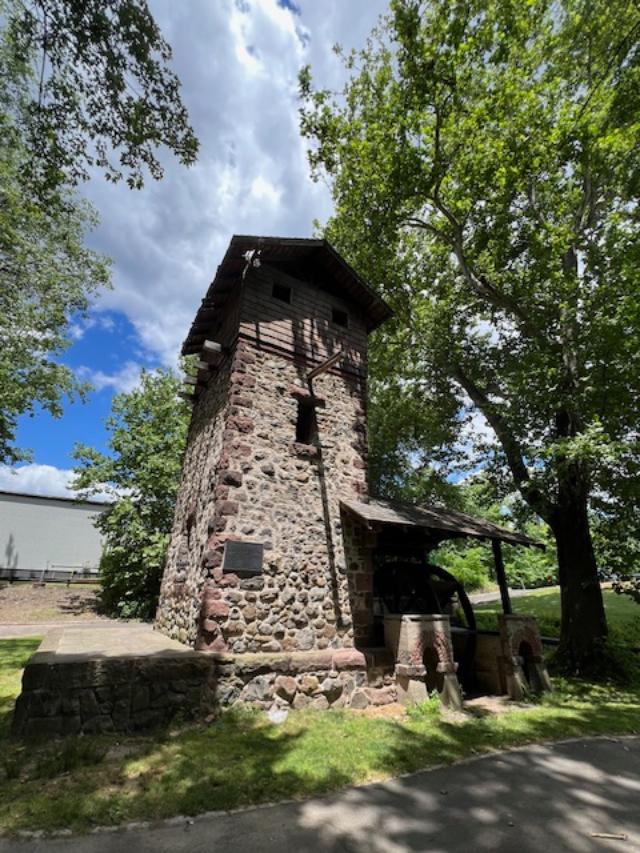
The Easton Tower is a unique historic site in Bergen County, NJ. This stone and wood frame structure was built along the Saddle River in 1900 as part of a private landscaped park in the Arcola area Paramus. Surrounded by busy NJ roadways, it is now adjacent to the County’s Saddle River Bikeway.

The front of the tower on the bike path

The tower sits near the Saddle River in the Saddle River Park

Once used to pump water to irrigate and provide a scenic setting for the estate of Edward Easton, it is a 20 foot rectangular, stone-masonry tower topped with a wood-frame structure and a wood-shingle, gabled roof. On the side is a large wood water wheel, which is under a wood-shingle roof.  The architect Henry Ihnen designed it.

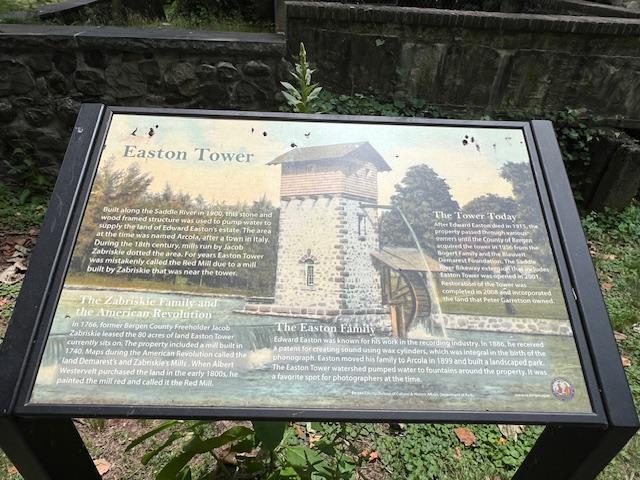
Easton Tower historical information sign

In the 18th century, this area along the Saddle River and near the heavily used Albany Post Road, was the location of many mills. Jacob Zabriskie, a Bergen County Freeholder during the Revolutionary War had leased the 80 acre mill site around 1766 and in 1771 acquired the mill that had been built in the 1740’s. Revolutionary maps identify it as “Demarest’s and Zabriskie’s Mills.”

The Easton Tower in Saddle River Park

Over time it was rebuilt or expanded and in the early 1800’s painted red by its owner Albert Westervelt. It is at this time it  acquired the “Red Mill” name often mistakenly applied to Easton Tower. By the 1800’s, the mill had fallen into disrepair and was demolished circa 1894.

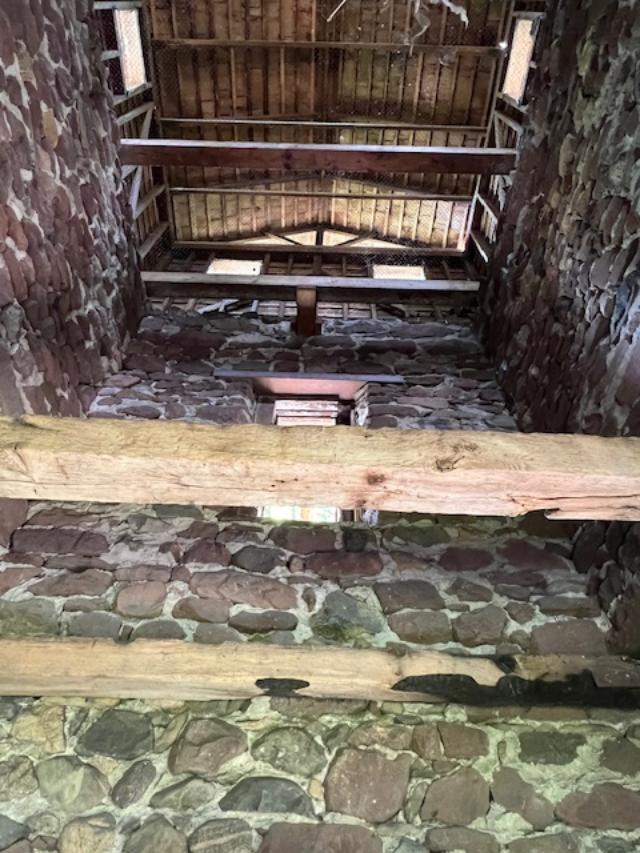
The inside of the tower

The Easton Tower inside

In 1899, Edward D. Easton (1856-1915), bought this almost 48 acre site, which included the mill pond and dam. The area was called “Arcola”. Easton’s father, a teacher, had originally brought his young  family to this area and suggested the name for the new settlement after a town in Italy. Edward Easton was a notable figure in American technological history. He started out as a stenographer, reporter and then a court stenographer In Washington DC, covering many famous trials in the 1880’s. After the 1886 patent was granted for the method of engraving sound by incising wax cylinders, Easton went on to make his fortune in the recording industry. He was a founder and eventually president of the Columbia Phonograph Company, which became one of the three major recording companies at the turn of the twentieth century.

The Easton Tower from the back

After opening an office in New York City, Eaton relocated his family from Washington DC to Arcola. He had a large house built on his property and commissioned the design of a landscaped park. The tower, to be built neat the site of the old Red Mill was a functioning structure pumping water to several fountains. There were also rustic bridges, lakes and expansive lawns. The tower was a favorite of photographers and appears in many contemporary postcards. People came from miles around to this beautiful spot to take boat rides and walks and in the winter, ice skate near the tower. Sources list the Easton home and park as having been used in early silent films.

After Easton’s death in 1915, the property went through various owners. In 1931,  construction of the Route 208 connection with Route 4 at “the Old Mill at Arcola” provided access to the recently opened George Washington Bridge. This destroyed sections of the landscaped park and isolated the tower. In 1940, the 1.26 acres site was sold at a sheriff’s sale to Clyde A. Bogert. The County acquired the tower from the Bogerts and the Blauvelt-Demarest Foundation in 1956. In 1967, the Bergen County Park Commission dedicated the tower. Easton Tower was placed on the State and National Register of Historic Places and in 2008 was completely restored by the County. It can be viewed from the Saddle River Bikeway and visited year round.

Disclaimer: This information is taken from the Bergen County Division of Cultural and Historic Affairs (C) 2015 pamphlet. The Bergen County Division of Cultural & Historic Affairs received an operating support grant from the New Jersey Historical Commission, a division of the Department of State.

Special Note: I visited the site recently and it is hard to get to by car. It is located right off Saddle River Road and it is off on a odd bend in the road. It is a quick turn to the right so pay attention to the directions.