The Ridgewood Arts Council recently came to talk to my Support Group that is based in Ridgewood, NJ and went over the different programs that they sponsor. This is more information on the organization.
The mission of The Ridgewood Arts Council (RAC) is to support and promote the vital role all arts play in our lives, the lives of our children and in our community at large.
Accomplishments: In its first year as a volunteer organization formed by the Village Council, the RAC has established a website, an online interactive community arts calendar and a permanent art installation entitled Ridgewood Art at Village Hall.
Future Goals: Endeavors of the RAC for the future include supporting existing arts organizations and events throughout Ridgewood, hosting our own unique arts-related programs and instituting an ongoing scholarship program for Ridgewood students involved with the arts.
Support Needed: No organization such as the RAC can be sustained without the hard work of volunteers and we welcome your involvement. The Ridgewood Arts Foundation, an independent New Jersey Nonprofit Corporation with 501 (c) (3) tax status, has been formed to assist in the promotion of the arts in Ridgewood through the use of private donations. To join the Ridgewood Arts Council (program arm) or to become a trustee of the Ridgewood Arts Foundation (fund-raising arm), please email rac@ridgewoodnj.net.
Disclaimer: This information was take directly from the Ridgewood Arts Council handout and for more information on the organization, please check their email site or Google the organization.
I took some time out from “MywalkinManhattan” project to visit the Bard Gallery for the afternoon and was pleasantly surprised by this little ‘gem’ located on the Upper West Side of Manhattan. This Graduate Center focuses on small exhibitions with interesting themes and not so over-whelming shows that tax your brain like some of the bigger museums in New York City.
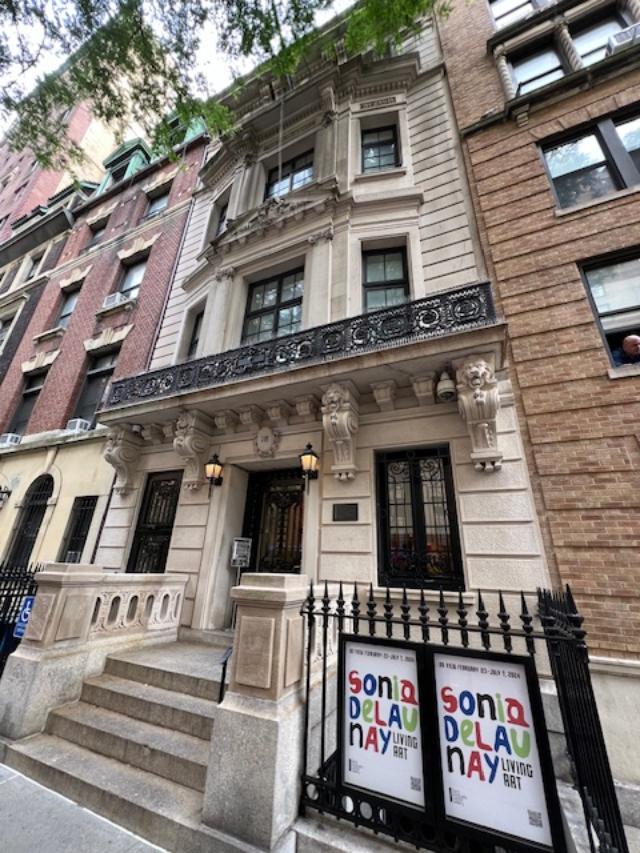
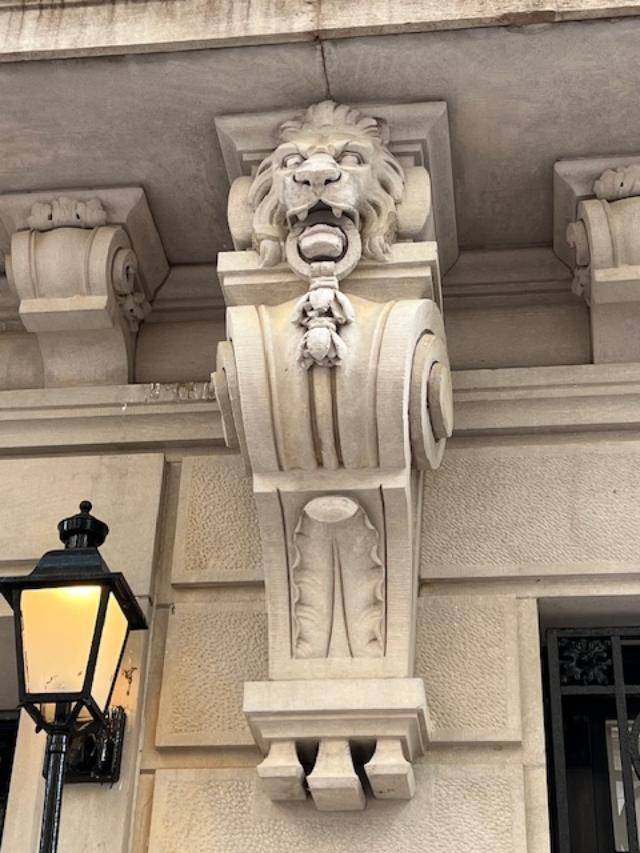
The embellishments at the entrance to the Bard Art Galley
Their exhibitions are compact and detailed on the subject matter and the objects they have on display are interesting. They also have lectures and gallery talks for more detail on their displays. The Bard Graduate Center Gallery, founded in 1993, occupies a six story townhouse near Central Park West and houses not just the gallery but the academic programs, lecture hall and library.
The center has pioneering exhibitions on decorative arts, design history and material culture. The research driven exhibitions are organized with leading scholars, curators and institutions worldwide and showcase a rich array of objects comprised of loans from public and private collections, many never before on view in New York City.
Walking the permanent collection
With a commitment to investigating under-recognized topics in the history of design, the exhibitions provide a critical framework for understanding the context in which historical and contemporary objects were made, used, collected and displayed. These lead to a fuller understanding of the present through the lens of the past (Bard College website).
Displays in the permanent galleries
A full slate of public and research programs, public tours and opportunities for school groups and educators compliment each exhibition. Video and new media interactives enrich the visitor experience in educators compliment each exhibition (Museum website).
Items in the permanent collections
The Bard Graduate Center: Decorative Arts, Design History, Material Culture is a graduate research institute and gallery located on the Upper West Side of Manhattan. It is affiliated with Bard College, located in Annadale-on-Hudson, NY. The gallery occupies a six story townhouse at the 18 West 86th Street location while the academic building and library are located at 38 West 86th Street.
Students at Bard Graduate Center focus on the study of the cultural history of the material world. The institution is committed to the encyclopedic study of things, drawing on methodologies and approaches from art and design history, economic and cultural history and history of technology, philosophy, anthropology and archaeology.
Students enrolled in the M.A. and PhD. programs work closely with a distinguished faculty of active scholars in exploring the interrelationships between works of art and craft, design, places, ideas and social and cultural practice in courses ranging from antiquity to the 21st century (Wiki Bard College site).
I recently revisited the African Museum of Art on the SMA Father’s and on this trip really took my time to learn about the Mission and study the art in the various displays. Each country that the Mission is involved with is represented here with detailed information on the meaning of the art and its purpose. It is an interesting approach to understanding the culture of each of these countries.
The beautiful stained glass windows line the ceiling and walls and has a beautiful effect in the room on a sunny day.
The sculpture in the middle of the main hall
The History of the Museum:
(From the museum website)
This museum was established in 1980 and is one of the only rare few in the United States dedicated solely to the arts of Africa. Its permanent collections, exhibited on a rotating basis, offer a unique advantage in the study and research of sub-Saharan sculpture and painting, costumes, textiles and decorative arts, religion and folklore.
The main hall of the museum
The history of the Mission
The history of the Mission
The history of the Mission
The African Art Museum of the SMA Fathers is one of five museums around the world founded and maintained by the Society of African Missions, an International Roman Catholic missionary organization that serves the people of Africa.
The display case that line the main hall
The display case that line the main hall
The art works up close
The descriptions of the works
The display case that line the main hall
Some of the works up close
The description of the masks
The display case that line the main hall
The museum is the continued vision of SMA’s founder, Bishop Melchior de Marion Bresillac (1813-1859). The French-born clergyman urged his Society to respect and preserve the culture of the peoples they serve, the unique among the missionaries of his time. (This information is provided by the museum).
Some of the works being featured in the exhibition
Their current exhibitions is on the “Africanizing of Christian Art” which shows the 20th Century encounter between Catholic Christianity and the visual culture of the Yoruba, a prominent west African people of southwest Nigeria under the conditions of late colonization (This information provided by the museum).
The hallway off the main room
Linking the walls of the main room are wooden carved doors from a palace in Africa. The interesting detail work tells it own story.
The description of one of the doors
Panel One
Panel Two
Panel Three
Panel Four
The collection contains many works in the form of masks, textile work, religious figurines and decorative arts. Each display case shows a different theme in the art.
The works of art in the cases
The puppets in the case
The works of art lining the cases
The engaging Mask collection
The museum is the main hallway of the church. I found it a quiet place where you could really concentrate on the beauty of the art. It grounds are also nice to walk around in in the nice weather.
The Chapel just off the museum is interesting to visit. I wondered how many people came to serve here and how the service was performed.
The main chapel of the mission
The beautiful stained glass windows in the chapel
The museum is a true hidden gem of wonderful and interesting testimonial and contemporary art. An inspiring museum if you take the time to really enjoy it.
The Carlstadt Historical Firehouse Museum at Division & Sixth Street
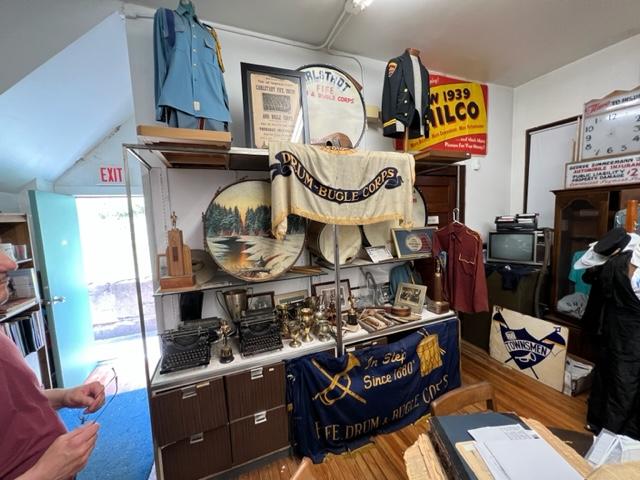
The Carlstadt Historical Firehouse Museum is run by the Carlstadt Historical Society houses a remarkable collection that includes archival photographs, written documents, new articles, clothing and other items that bring the borough’s colorful history to life. You can find everything from 1930’s era school pennants to early 20th Century fife and drum corps uniforms to a vintage breathalyzer used by the police department. The collection is housed on two floors of the town’s old firehouse from 1919.
The museum’s Pipe & Drum Corps display on the Second Floor Gallery
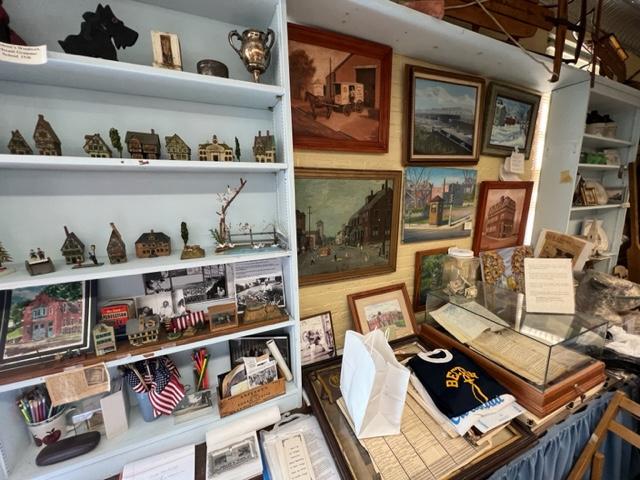
The first floor of the museum is dedicated to the War effort with memorabilia from residents who fought in WWI and WWII, articles from both the Carlstadt Police and Fire Department, pieces of artwork from buildings around the town and mementos from residents of the town. It also houses a series of collectables that are displayed on the shelves.
The First Floor Gallery with Police, Fire and Military displays
First Floor Collectables display and artwork
The First Floor Gallery with Military displays and collectibles
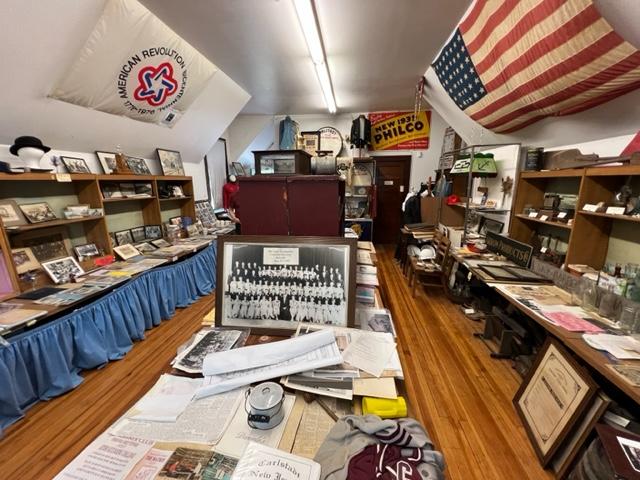
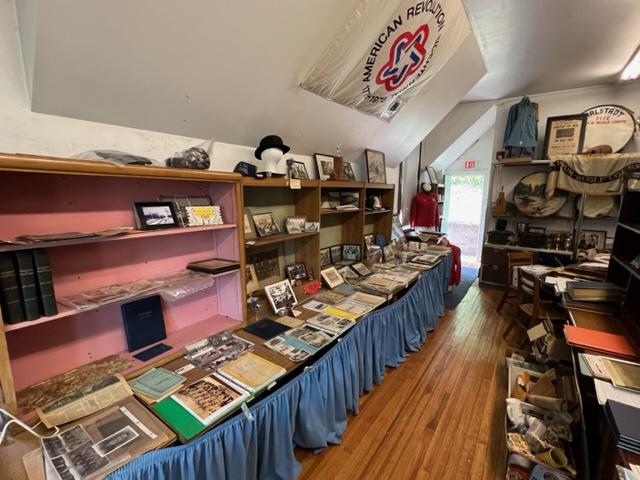
The second floor is dedicated to the school district with pennants from school graduations and parties (Carlstadt is home to the oldest continuing school picnic in the county), pictures of classes of the schools (I even found my aunt and uncle’s pictures from when they attended school here) and high school yearbooks.
It also displays items from old businesses that were in town and a series of hometown items such as awards and plaques that have been donated to the collection by people in town. There are still boxes of items that have not gotten out on display yet.
The Second Floor Gallery with the schools, businesses and special events of Carlstadt, NJ.
Second Floor Gallery of Fire Department Memorabilia
If you are an alumnus of the school system, you will get a kick out of the second floor of the museum. Not only does it have the school archives but lots of pictures that were donated by alumni of the schools of their experiences. Years of school pennants line the ceiling from the annual picnic that is the oldest continuous school picnic in the United States.
Carlstadt School Exhibit
The museum can be seen in one afternoon but you will spend more time just looking at all the pictures and getting lost in the experience. Don’t miss the displays from the Carlstadt Fire and Police Departments.
Carlstadt Pipe & Drum history
History of Carlstadt, NJ hometown businesses
The Carlstadt Glass Industry display that was once in town.
The Business display has a collection of glass bottles that were once manufactured in the town for local businesses. One of the curators told me that people find them buried in their yards and donate them to the museum. There are also signs, menus and display items from old restaurants and stores that once dotted the town.
There is a vast array of items that cover every aspect of the community of Carlstadt, NJ on the walls and tables of the museum.
Disclaimer: Some of the information was taken from the Bergen County Historical Society and some from my recent trip to the museum. The museum is open only on the 4th Sunday of each month and by appointment only so you need to plan accordingly.










 Visiting a Museum: The Unique, Unusual, Obscure and Historical