The Dyckman Farmhouse during the Christmas holidays
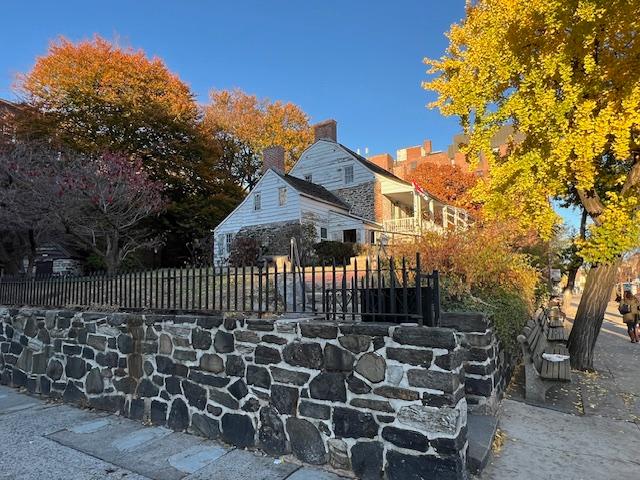
I visited the Dyckman Farmhouse on day during my walk around the Inwood section of Manhattan and came upon this old farmhouse in the middle of the commercial district by Columbia University’s football field. You have to take the A or the 1 Subway uptown to get there but it is one of the last vestiges of the farming community that once was Manhattan in the late 1700’s and early 1800’s.
It has been there since the family donated it to the city in 1916. It should not be missed when visiting Manhattan. I wrote more about my trip there in “MywalkinManhattan.com” blog site.
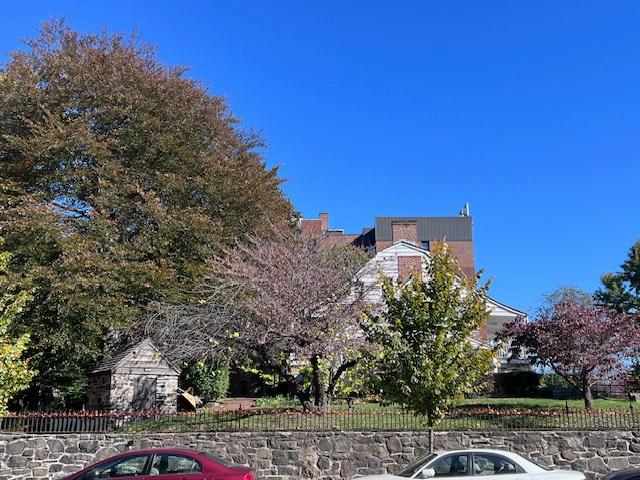
The Dyckman House in the Spring
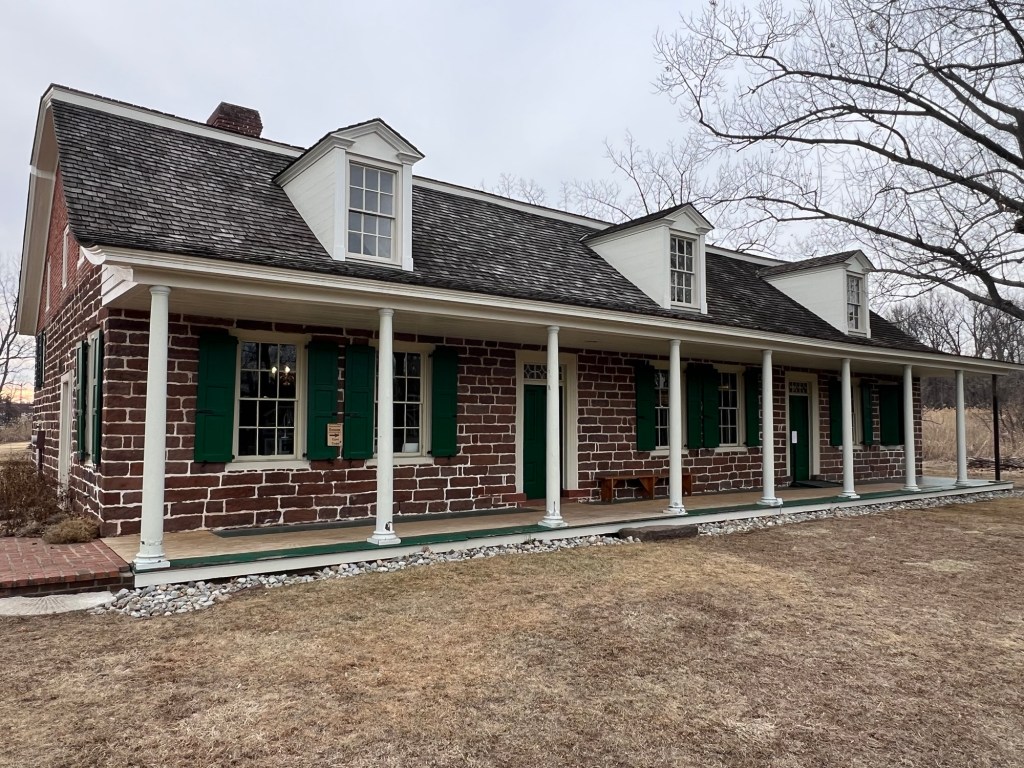
The Dyckman House, now the Dyckman Farmhouse Museum in the oldest remaining farmhouse on Manhattan Island, a remainder of New York City’s rural past. The Dutch Colonial-style farmhouse was built by William Dyckman in 1785. It was originally part of over 250 acres of farmland owned by the family. It was once the center of a thriving farm with fields and orchards of cherry, pear and apple trees. It is now located in a small park at the corner of Broadway and 204th Street in the Inwood section neighborhood of the city.
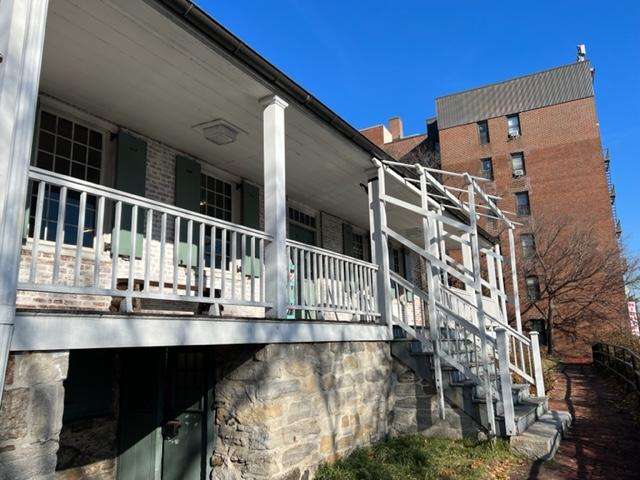
The front of the Dyckman Farmhouse
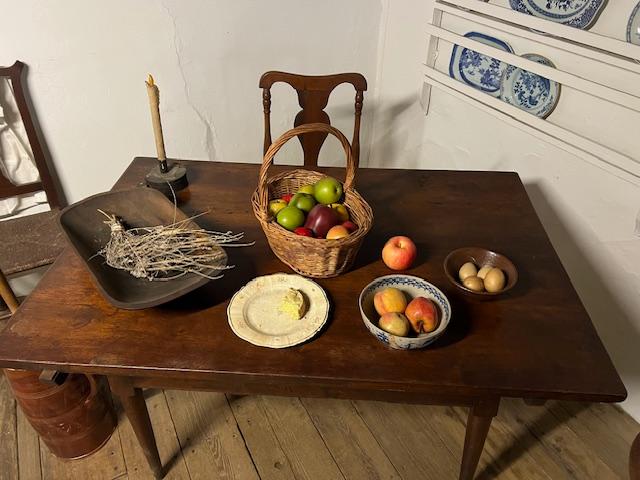
Don’t miss the self-guided tours of the house. You can tour all three floors of the house to see the bedrooms on the second and third floors and the first-floor parlor and receiving areas. The basement area has the ‘winter kitchen’ where all the cooking of the house was done, and it was the room that kept the rest of the house warm during the winter months.
The Winter Kitchen hearth for cooking meals
The Winter Kitchen
The Winter kitchen at the Dyckman Farm
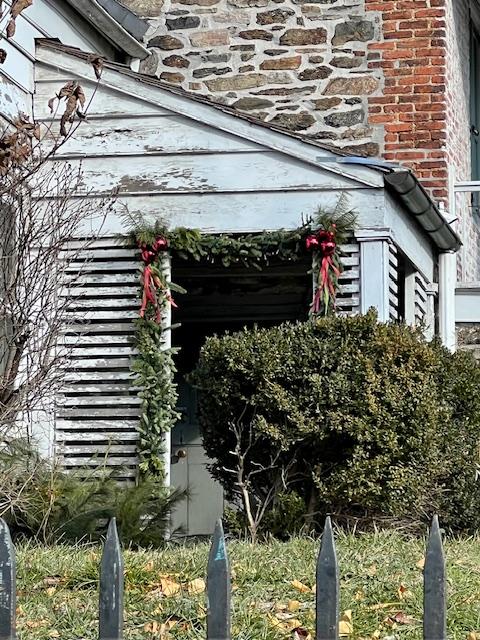
The house was slightly decorated for the Christmas holidays with garland and ivy and holly to make it look more festive. The Dyckman House was built at a time after the Revolution where the excesses of the Victorian era had not taken hold and the Christmas holidays were more subdued and concentrated on going to church and a light luncheon that afternoon. The decorations of the home reflect this.
The museum is decorated for Dutch Christmas with the bounty of the holiday season
The Farmhouse at Christmas time outside in 2025
The house decorated for the Dutch Christmas in 2025
Don’t miss the gardens in both the spring and summer to see everything in full bloom. Even in the winter it is interesting to watch the paths and see what needs to be accomplished for spring planning.
The Dyckman House in the Fall of 2025
It is an interesting look into how the Dutch farmers lived and worked.
History and Description
William Dyckman was the grandson of Jan Dyckman, who came to the area from Westphalia in 1661. Jan Dyckman, a shoemaker and another Dutch settler, Jan Nagel purchased much of the land between present 155th Street and the northern tip of the island. Members of the Dyckman and Nagel families lived on the land for three generations until the Revolutionary War broke out.
The house and front gardens during the summer months
During the Revolutionary War, the British occupation of Manhattan in 1776-83, the Dyckman’s, like many other patriots, fled the city and did not return until the British had been defeated. When the war ended and the Dyckman’s found their home and orchards had been destroyed, they built a new house on the Kingsbridge Road, now Broadway. They chose this location on a major thoroughfare in order to supplement their income by providing accommodations for travelers on their way to and from Manhattan.
William Dyckman, who inherited the family estate built the current house to replace the family house located on the Harlem River near the present West 210th Street, which he had build in 1748 and which was destroyed in the American Revolutionary War.
There was also 30 people living within three other houses scattered across the roughly 250 acre farm. The residents included laborers and other Dyckman family members. The main outbuildings for the farm were built close to the farmhouse including a cider mill, corn cribs, barns and stable (Dyckman Farmhouse Museum Alliance).
William died in 1787 and the property with its “commodious dwelling house,” and 250 acre farm was offered for sale. William’s son, Jacobus, took over the farmhouse and land and rebuilt the farm after the war. This took about five years. Jacobus altered and added to the house over the years. When Jacobus died in 1832, he left the bulk of the estate to his bachelor sons, Isaac and Michael and many members of the extended family moved in as well.
Following the death of Isaac in 1868, his nephew, James Frederick Smith, changed his name to Isaac Michael Dyckman and inherited much of the Dyckman property. When the subway lines reached the area in 1906, there was discussion about the impact on historic homes such as this.
In 1915, Mary Alice Dyckman Dean and Fannie Frederika Dyckman Welch, daughters of Isaac Michael Dyckman purchased the house with the plan of turning it into a museum. They fully restored it, furnished it and landscaped the grounds. They presented it to the City of New York in 1916 so that it could be used as a public park and museum (History of Dyckman Farm).
The house is designed with:
The Relic Room: Objects that are displayed were discovered from digs in the area.
The Relic Room at the Dyckman Farmhouse
The Second Floor Bedroom: Some of the rooms are decorated with furnishings dating from the 18th and 19th centuries and reflect colonial life around 1800.
The Second floor bedroom
The second floor bedroom during the second renovation of the home from a dormer to bedrooms
The second floor of the farmhouse had been a dormer when the home was at its height of the growing season and then later on in the house’s history was converted into regular bedrooms. The first floor bedroom was for the owner of the house for easier access to the farm and the outdoors during the growing season.
The First Floor Bedroom for the Master of the House:
The Bedrooms:
The downstairs bedroom
The Parlor Room:
The Parlor is where the family socialized and entertained their guests. The best pieces of furniture and family possessions would be shown off to visitors.
The Parlor:
The Dyckman Parlor:
Full view of the Parlor in the Dyckman Farmhouse
The Winter and Summer Kitchens: The farmhouse had two kitchen, the Winter and Summer kitchens, the Winter one would have kept the home warm in the cold months and would have been used as a non-cooking work space in the summer.
The Winter Kitchen:
The Summer kitchen is closed to the public has a small bedroom attached to it.
The back of the Dyckman Farmhouse with the grounds left and the old smokehouse in the distance
The Garden Area: On the half acre of family land left they have constructed a reproduction a smokehouse and outbuildings along with gardens planted with thousands of new plants that include things like bleeding hearts and foxglove.
The Hessian Military Hut recreation on the house’s property
The Hessian House recreation on the back part of the property
The gardens and smokehouse
(The Dyckman Farmhouse Museum Alliance)
The current two-story house is constructed of fieldstone, brick and white clapboard and features a gambrel roof and spring eaves. The porches typical of the Dutch Colonial style but were added in 1825. The house interior has parlors and an indoor (winter) kitchen, with floors of varying-width chestnut wood. The house outdoor smokehouse kitchen, in a small building to the south, may predate the house itself.
The Dyckman Farmhouse during the Christmas holiday season 2022
The house stayed in the family for several generations until it was sold in 1868, after which it served as a rental property for several decades. By the beginning of the 20th century, the house was in disrepair and in danger of being demolished. Two sisters of the original family and daughters of the last Dyckman child to grow up in the house, Mary Alice Dyckman Dean and Fannie Fredericka Dyckman Welch, began restoration of the farmhouse in 1915-16 under the supervision of architect Alexander M. Welch, the husband of Fannie.
They then transferred the ownership of the house to the City of New York in 1916, which opened it as a museum of Dutch and Colonial life, featuring original Dyckman family furnishings.
The Dyckman Farmhouse in Inwood during the Summer months
The farmhouse, which is not only the oldest remaining in Manhattan, but the only one in the Dutch Colonial style and the only 18th century farmhouse in the borough as well. It has New York City Landmark and a National Historic Landmark status since 1967. A major restoration of the house took place in 2003, after which it reopened to the public in the fall of 2005.
When I visited the homestead in January 2024 for the Epiphany, the house had an interesting children’s exhibition entitled “Beyond Play”, based on a child’s life on a farm back in the 1800’s. This would include simple games such as “Tag” and “Blind Man’s Bluff” and homemade wooden trucks, blocks and dolls.
The exhibition “Beyond Play”
The display of toys that child would play on the farm in the 1800’s.
The display of toys that children would play on the farm.
Walking around the Inwood neighborhood has changed a lot in a hundred years and is now home to a large Dominican population as well as the quickly gentrifying Inwood neighborhood and home to Columbia University sports.
Inwood at Broadway near the Dyckman Farmhouse
*Disclaimer: This information comes from the Historic House Trust and Wikipedia and the NYC Parks System. The site is free to visit and takes less than an hour to visit. During the summer months, it is nice to visit the gardens and property. It is a interesting property to visit and when you are through with your tour, there are many nice Spanish restaurants in the area on Broadway and along 207th Avenue corridor. It is a nice place to walk around and explore.
I visited the Fort Lee Museum at the Judge Moor House today to see the exhibition on Palisades Park Amusement Park and to see the history of the early film industry. Silent films started in Fort Lee long before they moved Los Angeles.
It was interesting to see how many silent screen stars started in Fort Lee including Mae Marsh, Lillian and Dorothy Gish and Mabel Normad and where the movies were shot. The museum shows how the industry grew and the studios that were created in town.
Exhibitions at the museum
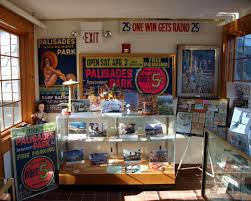
The Palisade Park exhibition was on the progression of the growth of the amusement industry in North Jersey and exhibited many artifacts from the old park. There were many pictures of the park in many different eras.
The Palisade Park exhibition
From the museum:
The Fort Lee Museum is a historic museum in Fort Lee, New Jersey on Palisade Avenue within Monument Park. The museum opened in April 1999 and is operated by the Fort Lee Historical Society.
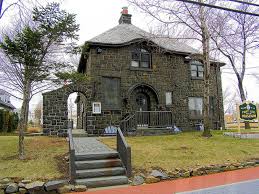
The museum building is also known as the Judge Moore House. It was built in 1922 with an exterior of bluestone quarried from the Hudson Palisades atop which Fort Lee is situated. The building was slated for demolition in 1989 but community intervention prevented its destruction and the borough purchased it.
The Judge Moore house
The museum has a collections which speak the long history of Fort Lee and surrounding communities such as the Battle of Fort Lee. America’s first motion picture, the George Washington Bridge and Palisades Amusement Park.
Monument Park was built by the Daughters of the American Revolution and dedicated in 1908 at a ceremony attended by General “Black Jack” Pershing. The park was part of the original Fort Constitution of the Continental Army under the leadership of General George Washington. Over 2,600 troops were stationed in and around the Monument Park area. In 2004, the park was reconstructed for the Fort Lee Centennial. A time capsule was placed at the foot of the monument to be opened at the Bicentennial Celebration in the year 2104. Monument Park and Continental Army Park in Williamsburg, Brooklyn are the only parks in the US to be dedicated to soldiers of the American Revolution.
*Note from the editor: The Fort Lee Museum is in a very unusual location right off the Main Street of Fort Lee and tucked off to the side. It only takes about an hour to see the whole museum.
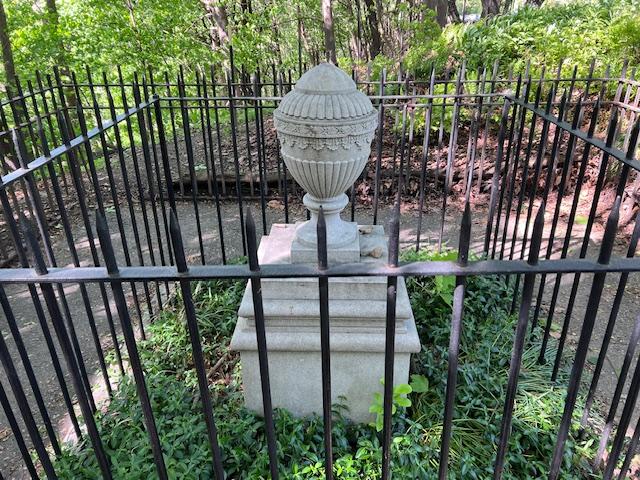
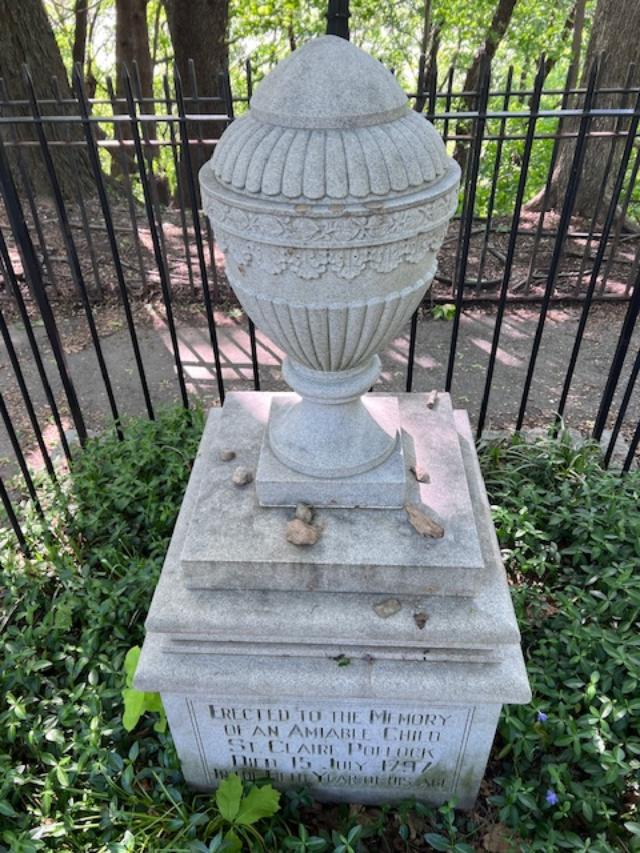
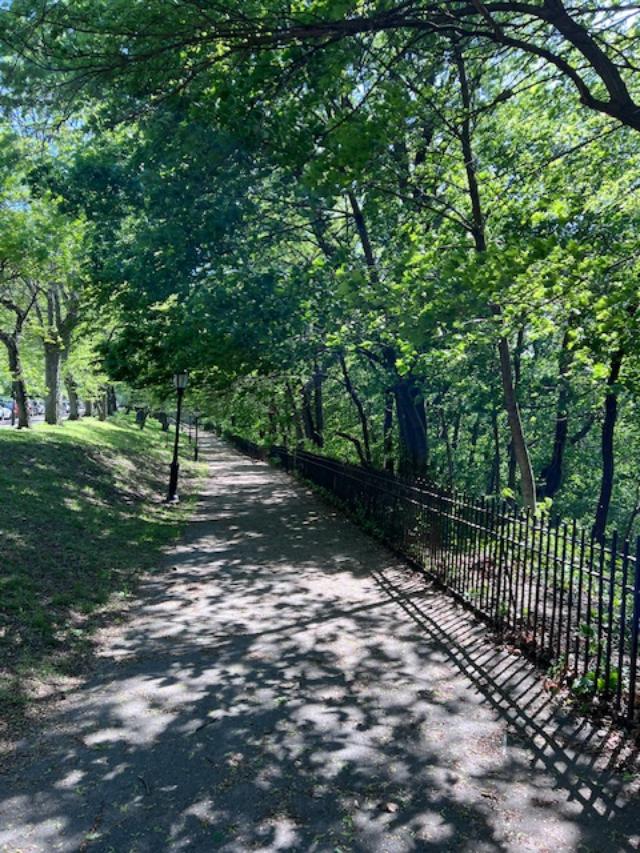
I stumbled across the Amiable Child Memorial over the summer when I was walking Riverside Drive for “MywalkinManhattan” project (see walking 155th Street) and came across this small memorial when I was passing Grant’s Tomb. It is off to the side on the path by the woods. It is a small monument and very humbling in its look. It is a small urn on a pedestal marking a grave of a small child surrounded by a fence. I got the following information from the NYC Parks Department website when I wanted to know more about the site:
The historic sign for the Tomb
This unique New York City monument marks the site of one of the few private graves on public land within the five boroughs. It belongs to St. Claire Pollock (the namesake of nearby St. Claire Place), a child who died on July 15, 1797 in the fifth year of his life, probably from a fall from the cliffs of the parkland onto the rocks near the Hudson River.
The tomb up close
In the two centuries that have passed since the tragedy of the “Amiable Child” as he was described on his headstone-different accounts of St. Claire origins and family have persisted. George Pollock, the owner of the property on which the boy was buried, was either his father or his uncle. He was a linen merchant of Scots-Irish or possibly English descent, who lived in a mansion on Strawberry Hill (later called Claremont) in the 1790’s. He had sold his property to Mrs. Cornelia Verplanck, his former neighbor, by January 18, 1800 when he wrote as follows:
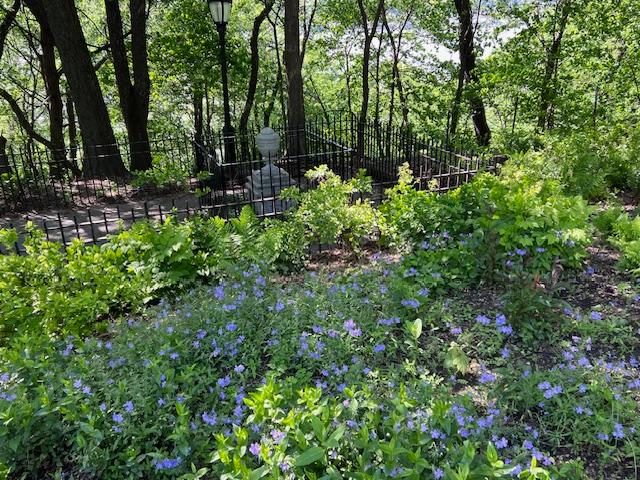
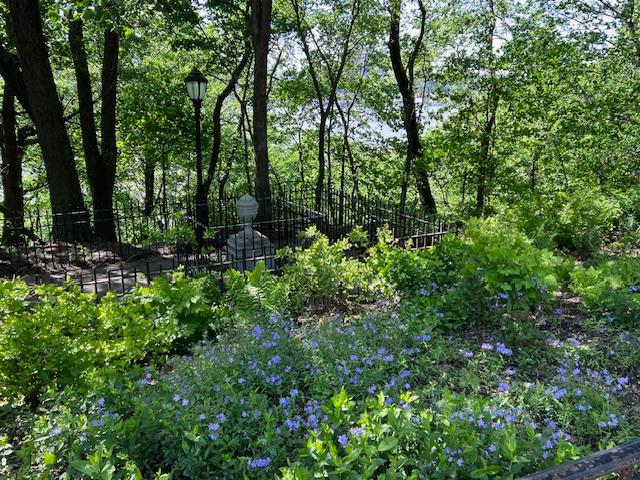
The Tomb of the Amiable Child park and flowers
“There is a small enclosure near your boundary fence within which lie the remains of a favorite child, covered by a marble monument. You will confer a peculiar and interesting favor upon me by allowing me to convey the enclosure to you so that you will consider its part of your own estate, keeping it however always enclosed and sacred.”
The park in the Spring of 2025
Claremont Hill was the site of the Battle of Harlem Heights, fought during the Revolutionary War on September 16, 1776. By 1806, it had been acquired by Michael Hogan, a former British Consul in Havana, who built Claremont Mansion (for which Claremont Avenue was named). Possible sources for the name are Hogan’s birthplace of County Clare, Ireland and his friend Prince William, Duke of Clarence, who would ascend the English throne as King William IV in 1830. Known as the site of a popular roadside inn by 1860, Claremont was acquired by the City from the heirs of Joel Post in 1873 for the development of Riverside Park.
The Park and the Tomb in the Spring 2025
In the 1890’s, Claremont Inn was host to numerous politicians, socialites and entertainers including the Morgan’s, Vanderbilt’s and Whitney’s, Lillian Russell and Admiral George Dewey. By 1907, the Inn had been transformed into a restaurant, serving the likes of Cole Porter and James J. Walker. It was destroyed by fire in 1950. The playground which now stands on the site was built shortly afterwards.
A century after the Tomb of the Amiable Child was laid, New York’s most famous monumental grave-Grant’s Tomb-was completed. The domed structure across Riverside Drive, designed by architect John Duncan and sculptor John Massey Rhind, was dedicated on April 27, 1897. The later structure is as grand a testimony to the accomplishments of national leader as the monument to the amiable child is a modest and touching tribute to a young boy who never had the opportunity to grow into adulthood. This monument was dedicated on May 3, 1967 (www.nycgovparks.org/parks/riverside-park/mounments/1206).
*You really have to look off the beaten path to see this unique little memorial but it is very touching and soulful. Take the time when visiting the neighborhood to visit this very touching site. You will find it by the path behind Grant’s Tomb.
Recently my class at Bergen Community College for ‘Tourism at Bergen County Historical Society’ project for my simulated project through my company Bergecco-Parc Consulting Inc.:
I visited the Historic New Bridge Landing in River Edge, New Jersey this afternoon for the “Under the Sad Moon Chwame Gischuch Lenape New Year”. I had wanted to see what a member of one of the New Jersey tribes had to say and thought it would be interesting to see. Unfortunately the Chief cancelled at the last minute so there was no lecture or song.
The rest of the afternoon I heard a lecture on the African Burial Grounds that are located in lower Manhattan and toured the historical homes on the property. It was a very interesting and informative afternoon. Some of the volunteers were in costume selling fresh doughnuts and hot cider, making Indian fry bread and making cornhusk dolls.
In 2022, I visited the Historical Society again for the “Chwame Gischuch: Under the Shad Moon” event and it was relatively quiet (things have recently reopened without masks). Still, you could tour all the homes and listen to a lecture the early use of plant fibers and demo flint-knapping. There were talks in all the buildings and refreshments in the Campbell-Christie House.
“Chwame Gischuch: Under the Shad Moon”
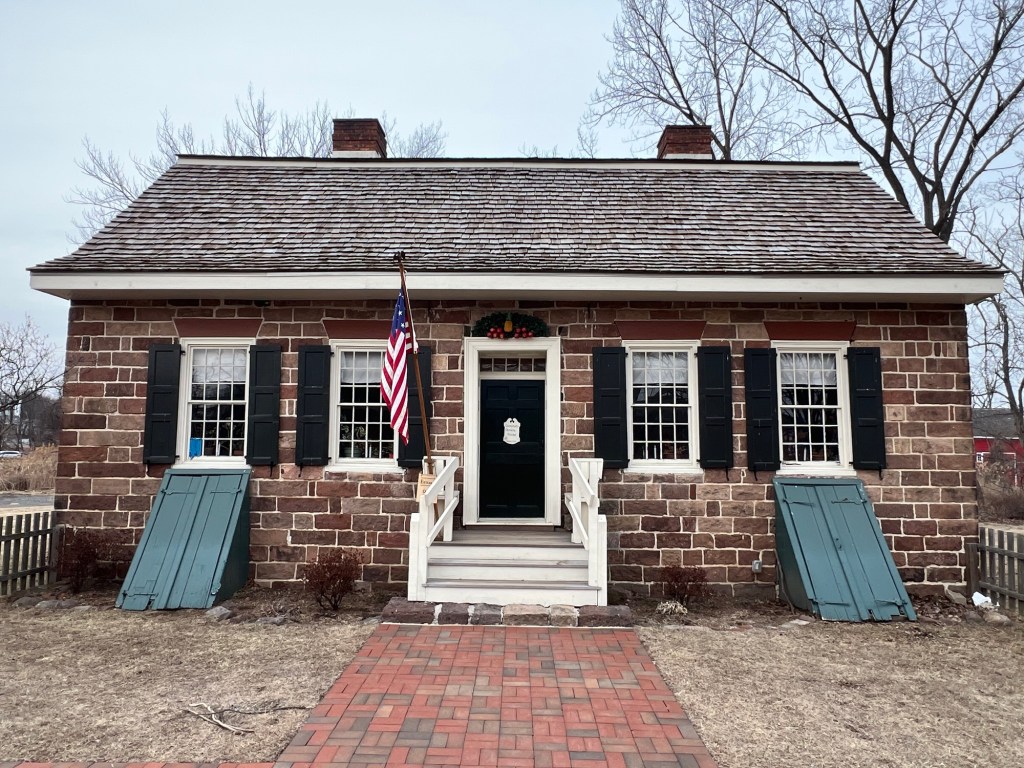
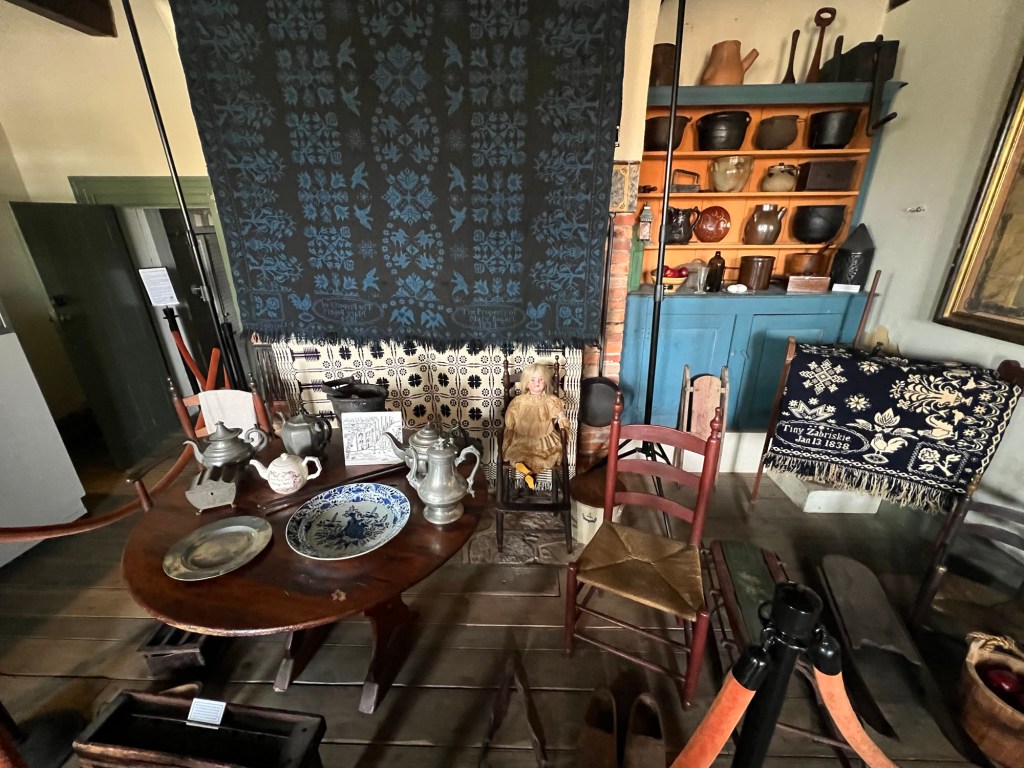
I then toured the historical homes on the property. The Steuben House is the main historical home on the site’s property which was built in 1752 which is by the Hackensack River and was used as a home and business in milling and shipping. Most of the Society’s artifacts are housed here. There are some interesting displays of Indian artifacts and a home doll display along with historical furniture.
The Van Steuben House at Christmas
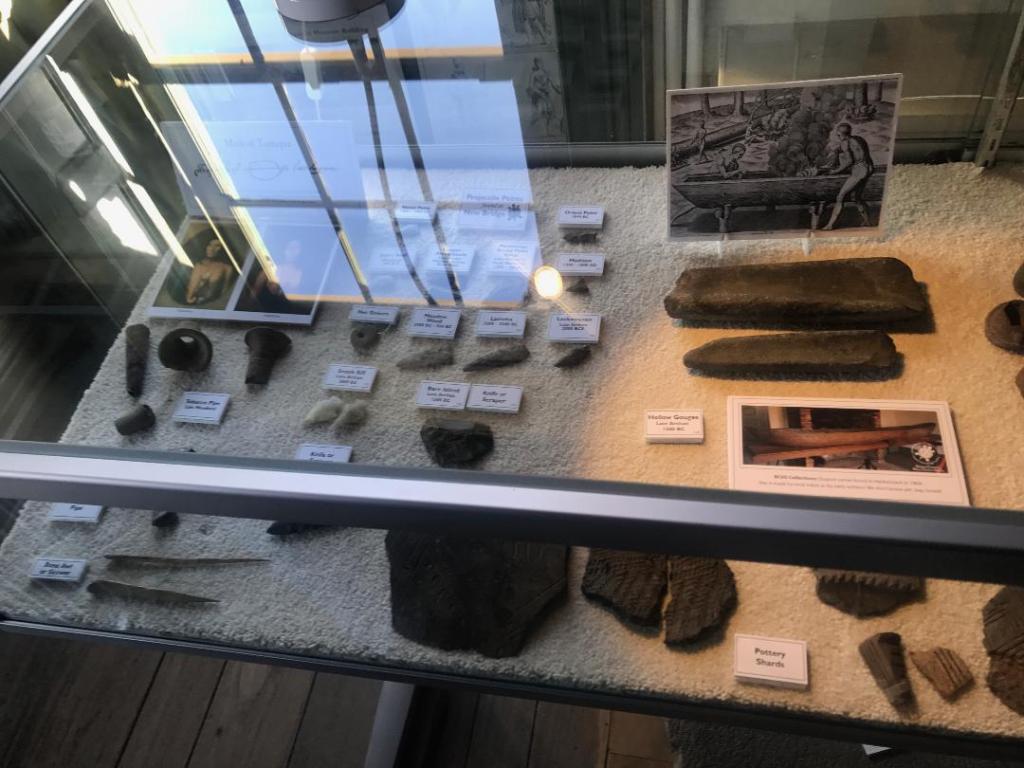
The collection of historical items includes Native American household and hunting items, colonial items for the home and cooking. There are items used in battle like swords, muskets and cannon balls.
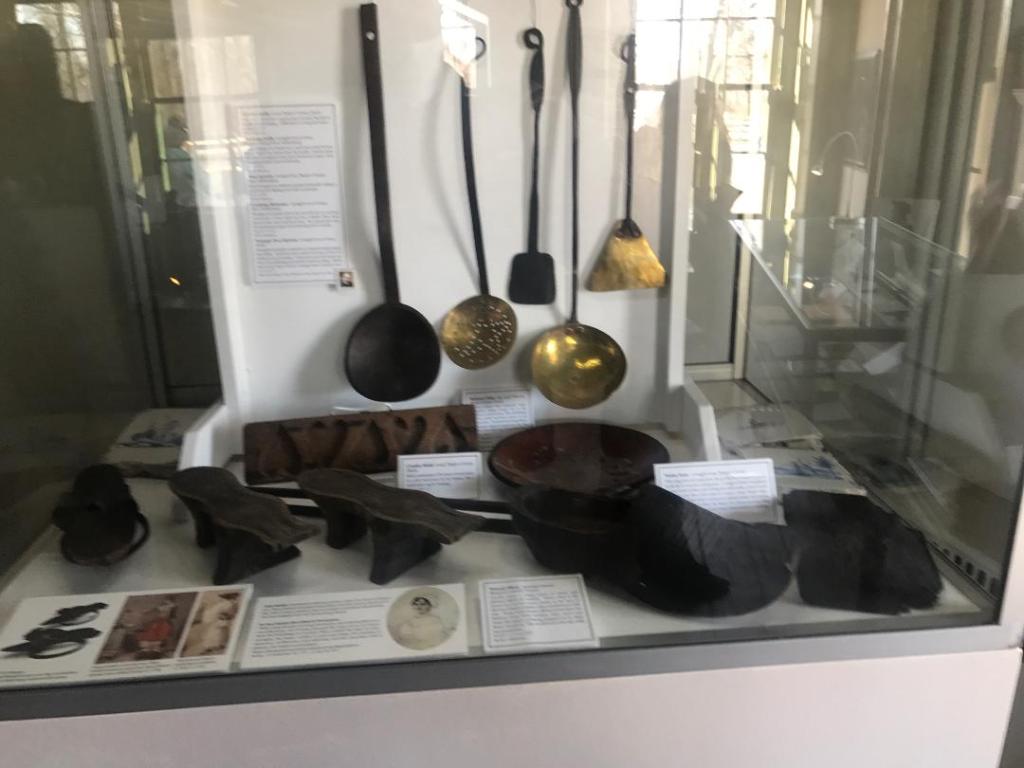
Colonial artifacts at the Steuben House
Colonial Cooking and Wardrobe items
Colonial Household items in the collection
Native American items in the collection
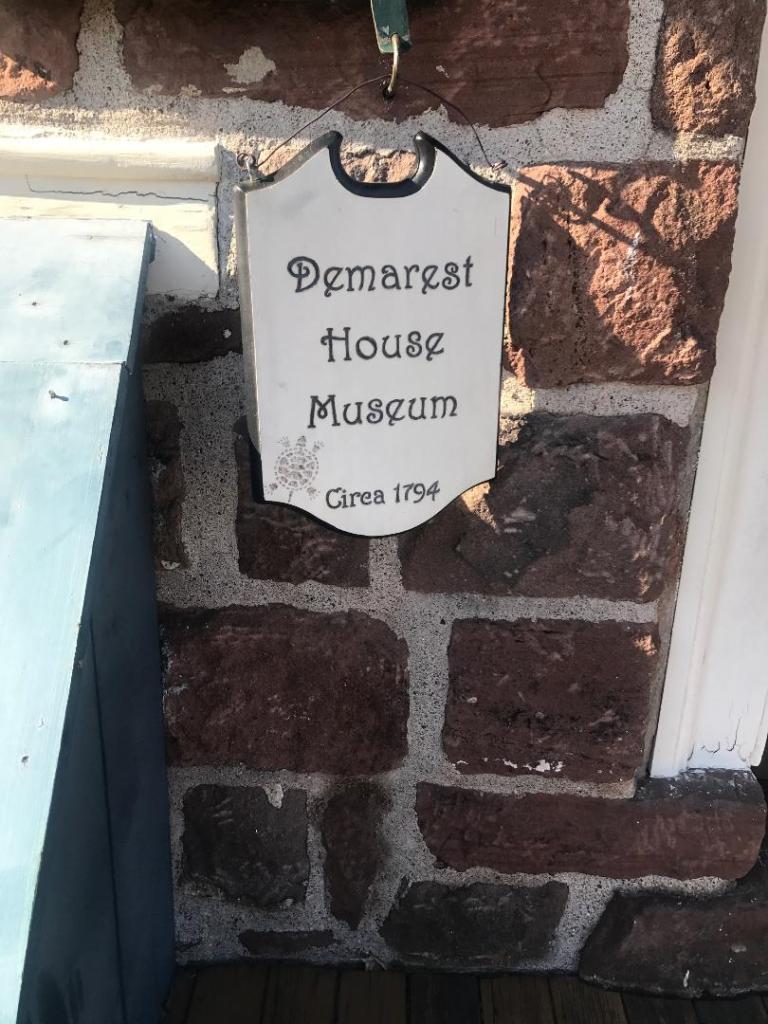
The Demarest House is a two-room home with period furniture and was considered in its day a large home.
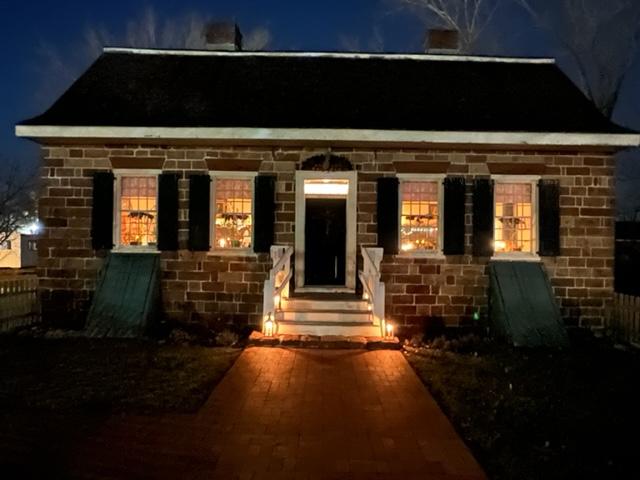
The Demarest House on the Bergen County Historical Site
The Demarest House marker
The Campbell-Christie House where most of the action was going on as costume volunteers were cooking and serving food, making dolls and explaining the home’s use as both a private home and a tavern. In the out kitchen behind the home, a roaring fire was going while the costume volunteer was explaining how to make fry bread and a type of homemade pancake. It was an interesting afternoon.
The Campbell-Christi House
The Campbell-Christie House marker
I have also visited the Historical Society for the Dutch Christmas Holidays:
The Society held Christmas concerts as entertainment during the Revolutionary War era. They also had tours of the houses that evening, the engaging concerts and history of the holidays at that time and a pub opened for dinner during the event at the Campell-Christi House.
The Christmas music of Linda Russell
Christmas events at the Historical Society are a lot of fun.
A recent fundraiser in December 2020 for Christmas, the Historical Society could not hold their usual fundraiser for the holidays so what they did and I thought this was original, they held an outdoor Christmas tour and sing along with singer/performer Linda Russell.
In December of 2022, the Historical Society brought back their indoor concerts for Christmas including opening the Blackhorse Pub (The Campbell-Christie House) for dinner before and after the concerts. It was so nice to come to this again. The crowds were a little light at the second concert at 7:45pm on a Sunday night but it made it more fun that we could still socially distance from each other and there was plenty of space to spread out.
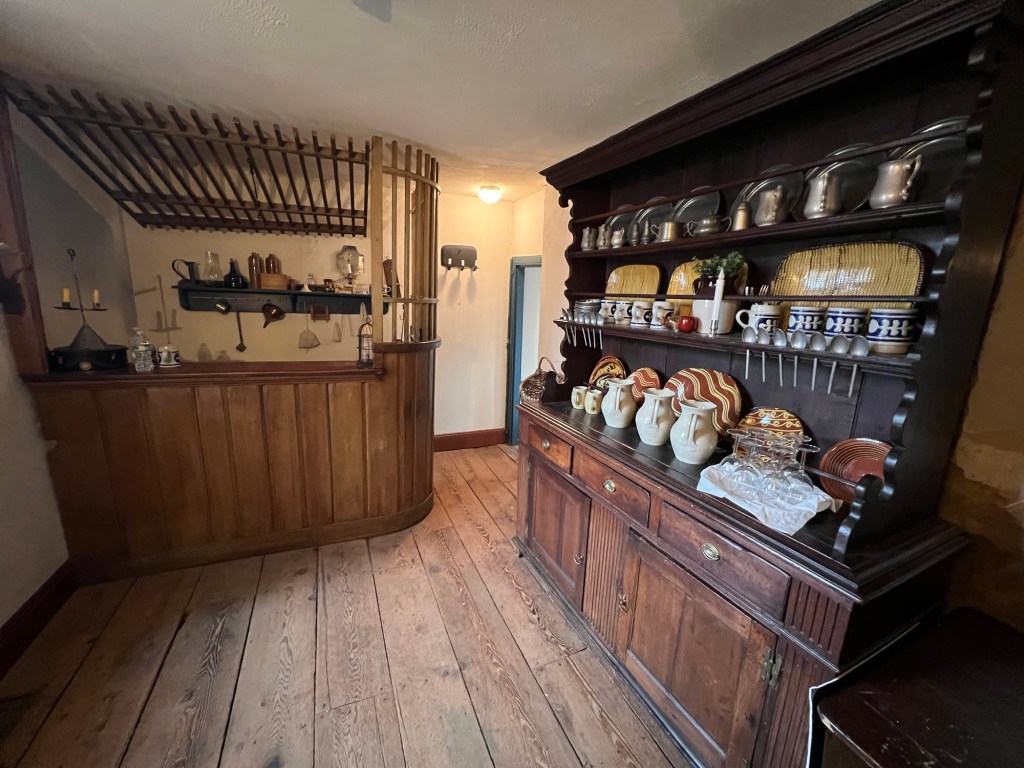
I started the evening early at the pub eating my dinner before the concert. The pub had a limited but very nice menu based on what foods that may have been served at the time period (with a modern twist of course). There was Shepard’s Pie, a Ploughman’s Plate, Onion Pie, Trifle and Dutch Cookies and desserts on the menu.
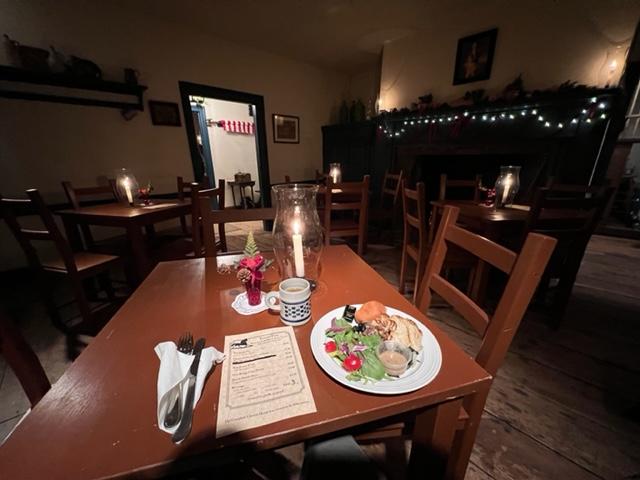
The Campbell-Christie House was used as the “Blackhorse Tavern” for the evening where pub food could be ordered for dinner. It was really beautiful that night with all the tables a glow from the candles and the room decorated with holly, garland and wreaths for the holidays.
The “Blackhorse Tavern” for Christmas dinner
The menu at the pub that evening
I thought the menu was very reasonable for the amount of food that you got that evening. The portion sizes were very fair and the food, which had been catered in, was delicious. I chose the Shepard’s Pie with a salad on the recommendation of my waitress. When I came here back in 2019, you could not move in the pub and everything was sold out immediately. This time, I had the whole pub to myself while most other people were at the 6:00pm concert. A couple people came in for light refreshments and drinks. It was nice to just relax and enjoy my dinner before the concert.
My dinner: The Shepards Pie with a salad, roll and a glass of Apple Cider
Dining in the pub for dinner before the concert
Dessert was a Dutch “Sweet Plate” with all sorts of traditional cookies of the season
The “Dutch Cookie Plate” was the perfect way to end the meal
After dinner was over, I had plenty of time to explore the gift shop and wonder around the property to see the other decorations. The other buildings on the property were closed that evening but still decorated so I followed the lantern filled pathway and looked at the decorations.
The Gift Shop at the back of the Campbell-Christie House
I wondered through the dark path on my way to the Steuben House where that evening’s concert would be held. Since I got there a little early before my concert time, I was able to visit the museum. There are all sorts of things to see and buy to support the Historical Society so when you finish your meal you can wonder over.
The Demarest House was decorated for Christmas but closed that evening
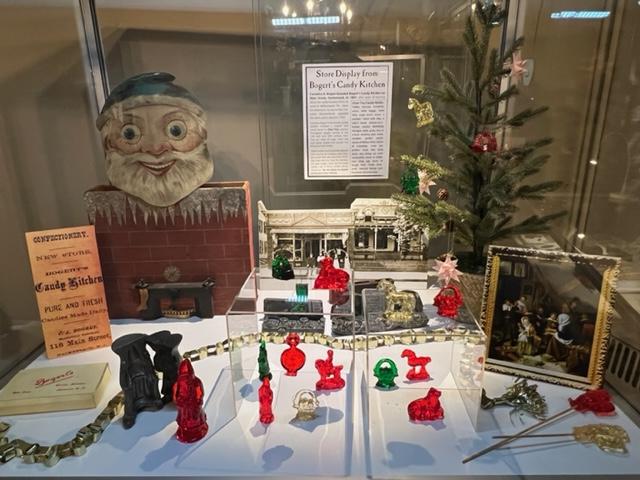
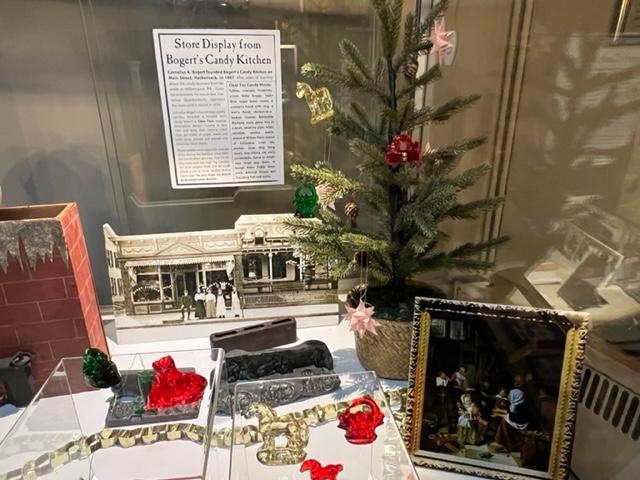
Before the second concert that evening that I would be attending at 7:45pm I wondered around the museum part of the Steuben House where the concerts were taking place. The exhibits were set up with a holiday/Christmas theme in mind. One display was on a candy maker who once had a store in Downtown Hackensack.
Bogert’s Candy Shop in Downtown Hackensack closed in 1934
Bogart’s specialized in Rock candy
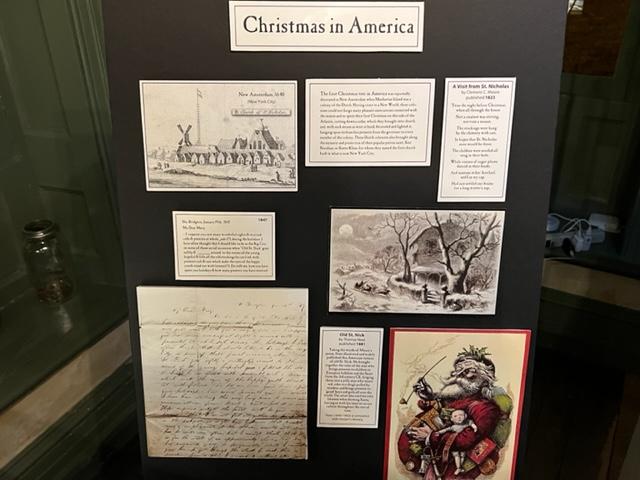
Another was a display on the “Twas the Night before Christmas”.
Christmas started to change in the Victorian era
The ‘History of Christmas’ at the Bergen County Historical Society
There was a display on Dutch baking during the Christmas holidays. There were all sorts of traditional treats for the holidays including breads and chocolate numbers and letters.
Dutch Baking during the holidays was very extensive and time consuming
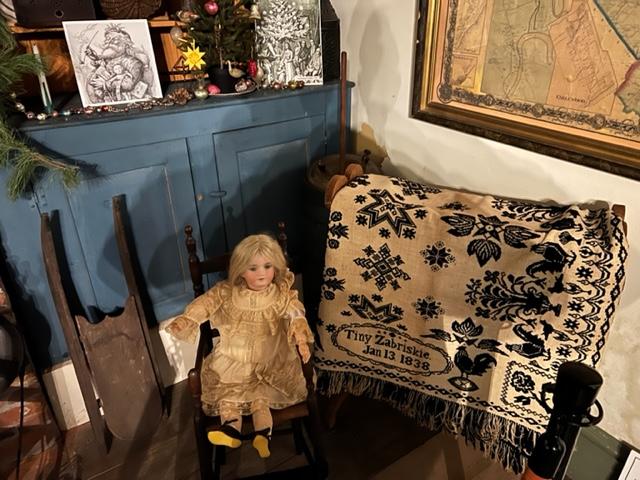
There was a display of toys that lucky children would have received during the holidays.
Decorating the house both during the Revolutionary War and during the Victorian Age was a very extensive affair of preparing the house for entertainment. Garland, holly and pine would have been important to decorate with but it was the Christmas ornaments of the Victorian age and trimming trees with ornaments that would have made the tree very festive.
There were also displays on entertaining during that time period and soldiers lives while the war was going on and what would be needed. It could be lonely at the holidays.
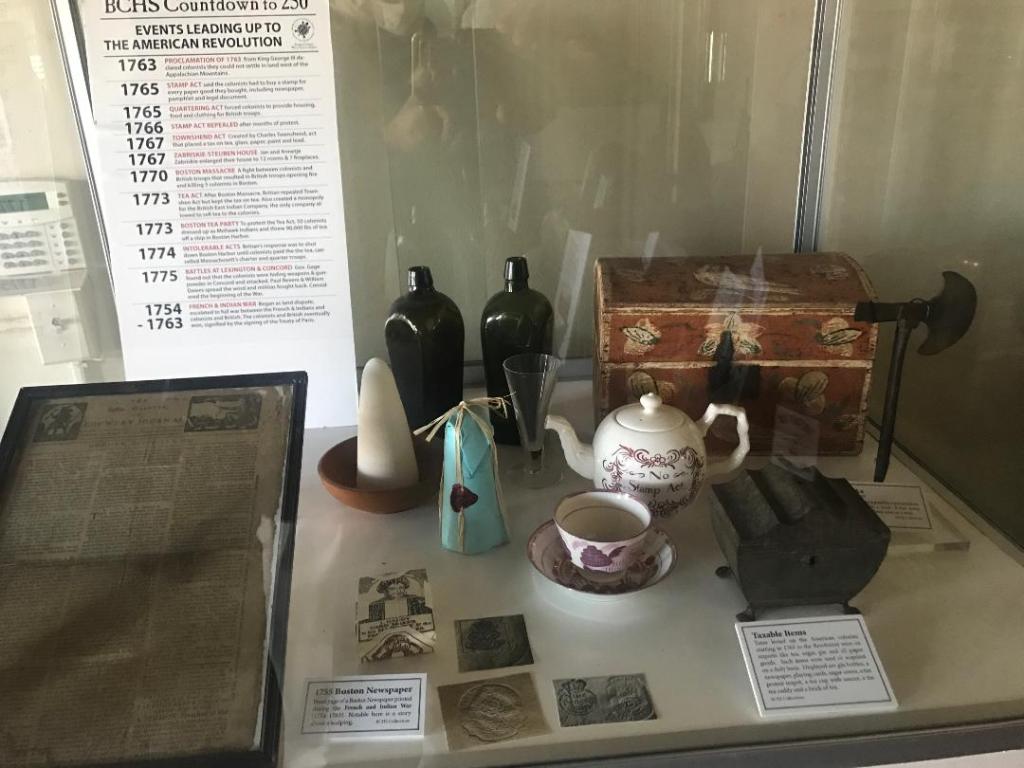
Entertaining and Tea Time
Items during the Revolution
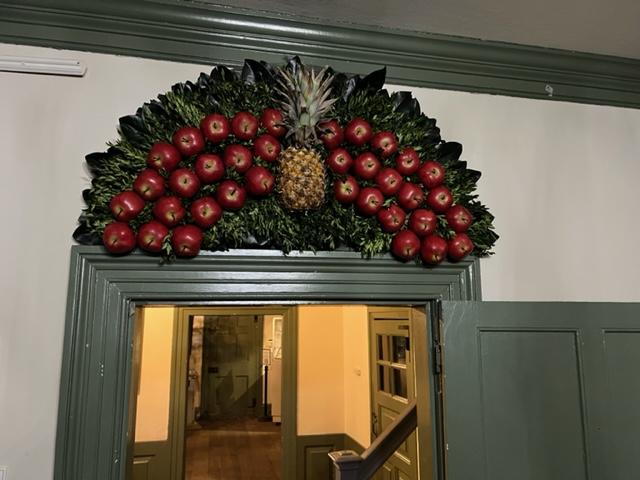
Decorating took a turn after the war with more entertaining and merriment so people would decorate with garlands, fruits and things from nature like pinecones. Mistletoe had become part of the tradition and was the decorations. Both rooms were decorated for the holidays.
Decorating the Entertainment Room of what was once the house’s ballroom
The doorways were adorned with fruit
Mistletoe, fruit and pine give the rooms a wonderful smell as they still do today
We started to settle in as the second concert was about to start. The room was decorated for the holidays with a combination of Victorian and Revolutionary decorations.
The ballroom at the Steuben House
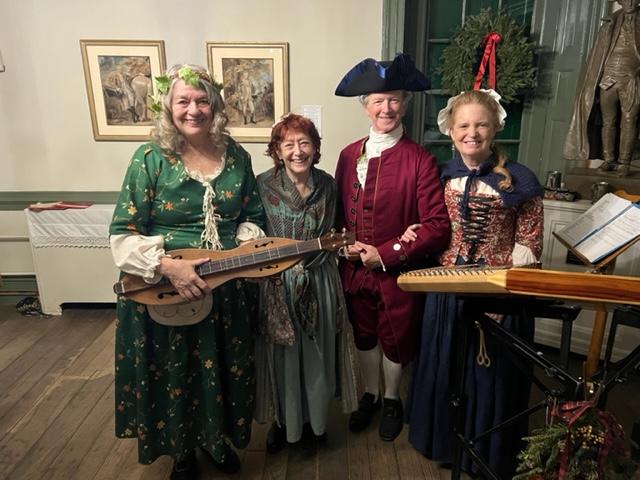
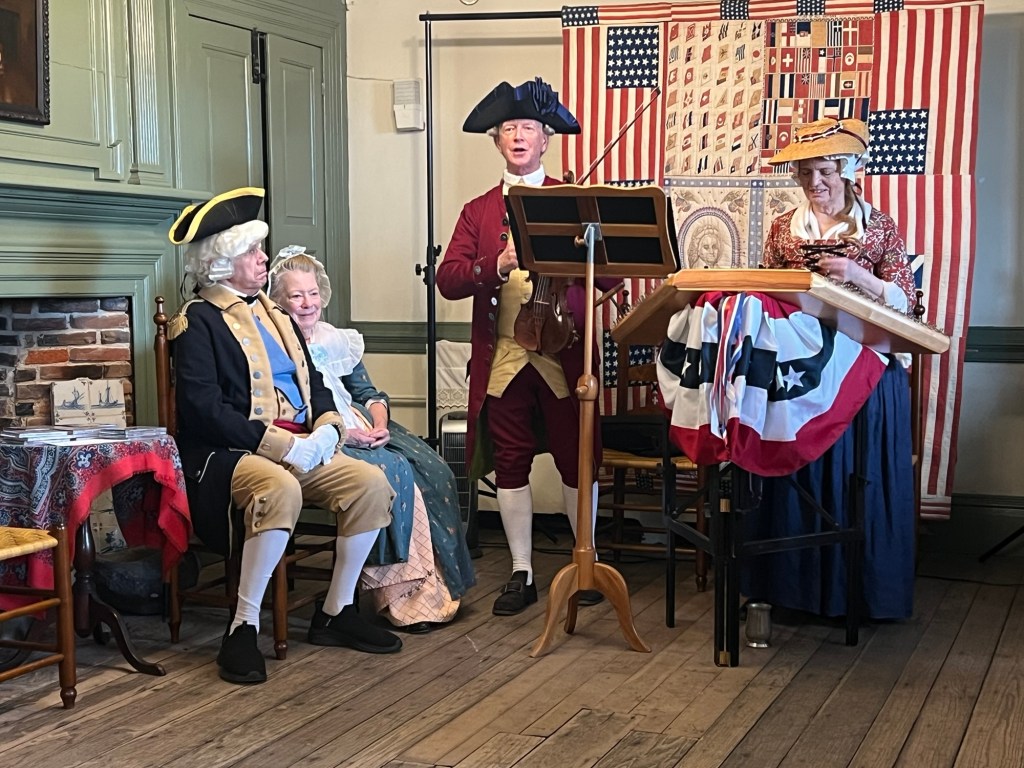
We were then treated to a concert by the great Linda Russell whose interpretations of Revolutionary Christmas songs is well known. We had a hour long concert of favorite songs, talks about the times and a history of the music itself. She shared with us her insights towards the holidays of New Jersey versus New England and their Puritan ways. Thank God we knew how to party then too.
Linda Russell (to the far left) and her group entertained us for the evening with songs, talks, a few jokes and a wonderful night of excellent music.
“I saw Three Ships Sail In” my favorite song from Linda Russell
We were entertained for about an hour and got time during the intermission to talk with the musicians who shared their experiences with us and about the musical equipment that they were using that evening. It was an interesting talk and a wonderful concert. I highly recommend visiting the Bergen County Historical Society during this time of the year. They do a nice job with this concert and the site is so beautifully decorated for the Christmas holiday season.
Linda Russell and Company during the Christmas holidays at the Bergen County Historical Society
The Revolutionary War Reenactments:
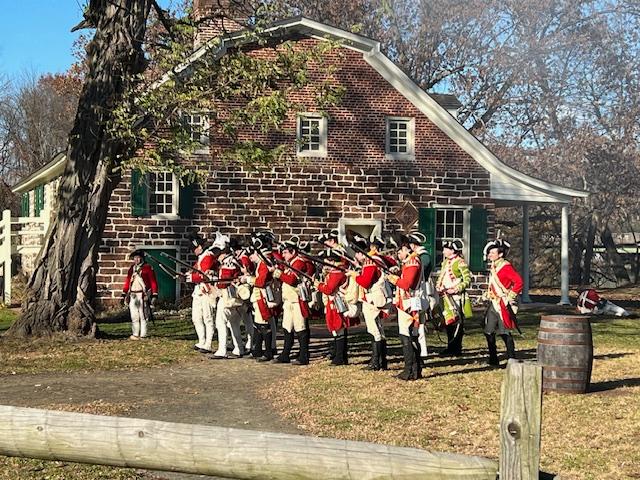
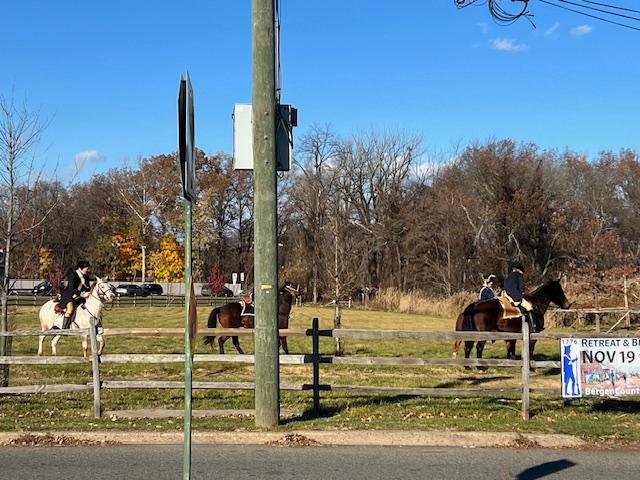
I recently went to the “Retreat to Victory” event at the Bergen County Historical Society on November 19th, 2023. The site was reenacting the “Battle of New Bridge Landing” when we turned the British back. There were soldiers shooting guns to show how the battle was fought and how patroons were formed by the troops. There was large crowd watching the demonstration that day.
The battle outside the Christie House.
The Red Coats firing at the Patriots near the Steuben House.
The second wave of troops crossing the bridge.
General Washington and his officers on the property near the Christie house.
I recently went on an architectural tour of the homes on the property, and it was interesting to see how the homes were built, how they were designed with a certain Bergen County Dutch design to them with the tilted roofs and unique stonework. Some of these homes (and the barn) were moved from their original locations and placed here at the site. It was a testament to their construction.
There is a distinct design to “New Jersey Dutch” architecture: The Demarest House.
The tour also talked about the strategic location of the property during the war and how the bridge was one of the only ways to cross the river at that point of the war. Its destruction was one of the turning points of the war.
Singer Linda Russell lead the Historical Walking Tour in 2020
We started at the Steuben House with a discussion on the progression of Christmas in American first under the Dutch, then under the suppression of the Puritans denouncing the holiday and then the build up of the current way we celebrate the holiday under the Victorians.
The Steuben House decorated for the Christmas Celebration
They had actors singing and dancing during the early Dutch times and the house decorated for the holidays in that period. It was fun to see the actors in period dress and dancing to the music of that time period.
The Steuben House decorated for the Christmas Holidays circa 1780 in 2020
We next moved to the Demerest House and discussed the Dutch tradition of Sinterklaas. Another actor discussed the night before the holiday as she put her children to bed and finished her cooking for the next day’s dinner. She discussed the wooden shoes outside the home as the children readied for St Nichols’s visit and wanted to feed the horses.
The Demerest House decorated for the Dutch Christmas Festival 2020
When we got to the Campbell-Christie House, we discussed the modern Christmas with Caroling through the ages and songs from different time periods and who wrote them. We then discussed the progression of the Christmas tree. I never realized that Christmas lights were created in New Jersey. Thomas Edison’s factory created and produced the first ones after the creation of the light bulb.
Singer Linda Russell leading the Historic Christmas Tour and singing and flute playing in 2020
Also through modern story telling and poems, the first stories of St. Nichols to the modern day Santa Claus was founded by writers and poets in New York and New Jersey. I never knew how much of the modern day Christmas was created in our two states.
The Campbell-Christie House decorated for the Dutch Christmas Festival & Tree Lighting 2020
We then sang many of the carols with Linda leading the way by flute and guitar and then we had the lighting of the tree outside the home and hot chocolate on the lawn (which by that point was almost cold). Still it was an interesting night of lecture, song and history as we walked the grounds of the Historical Society at New Bridge Landing.
The Bergen County Historical Society at New Bridge Landing
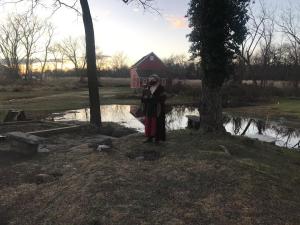
The Hackensack River Bend where the houses are located and was a major travel route during Colonial times.
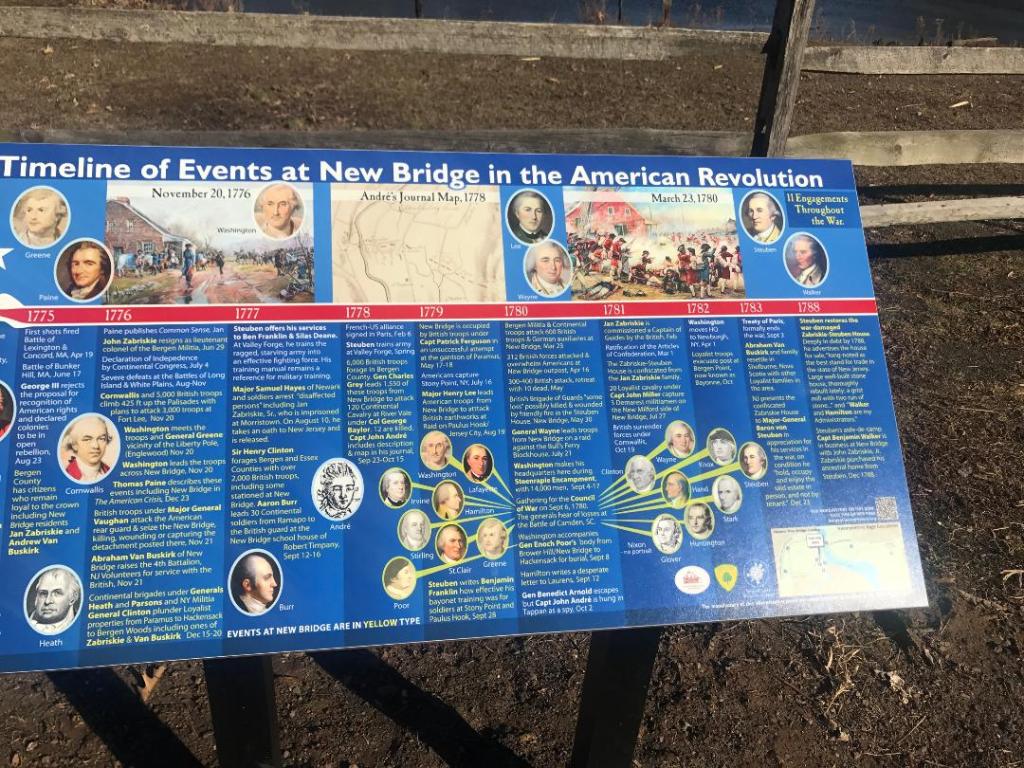
The directory and timeline of the site
The only thing I would have changed that night was adding a fire pit. It went down to 39 degrees that night. Still, it was a nice way to celebrate Sinterklaas and Christmas in the COVID era.
In May 2021, I attended the “Pinkster Celebration” event for the Dutch holidays. It was a nice little event with an explanation and demonstration of the May Pole Dance. The ladies danced in a group to show how the May Pole was used. It was interesting how the event developed from dancing around a tree to the use of the pole.
The May Pole Dance at “Pinkster”
The rest of the afternoon they had tours of the house, cooking and workmanship demonstrations and Colonial games.
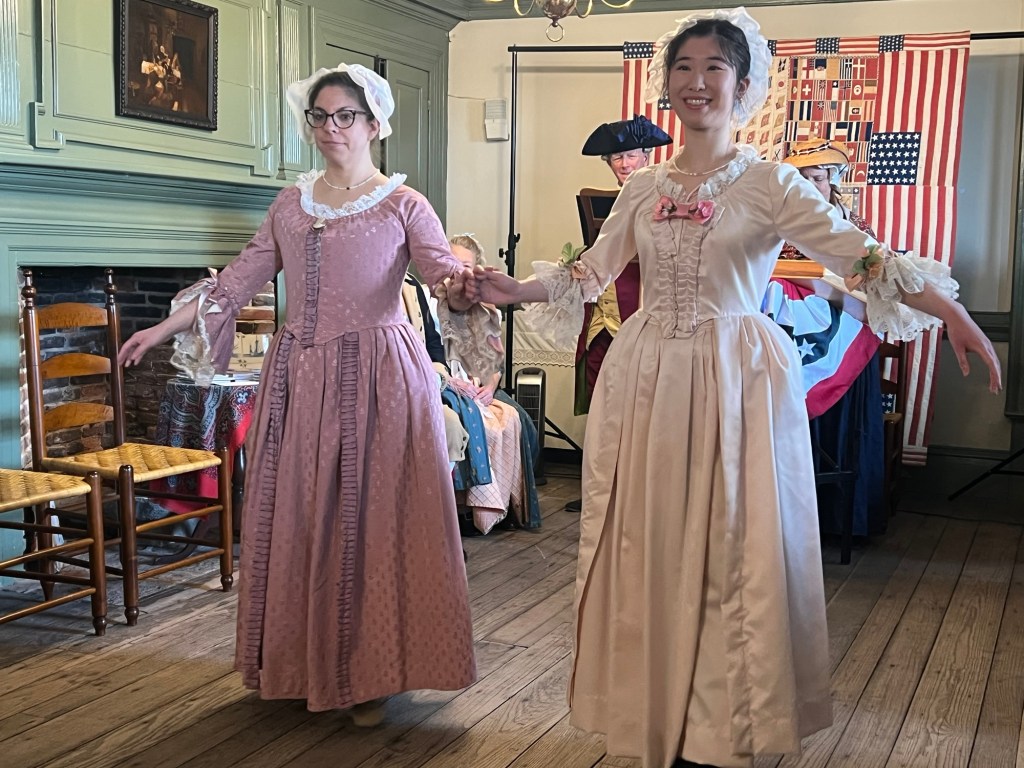
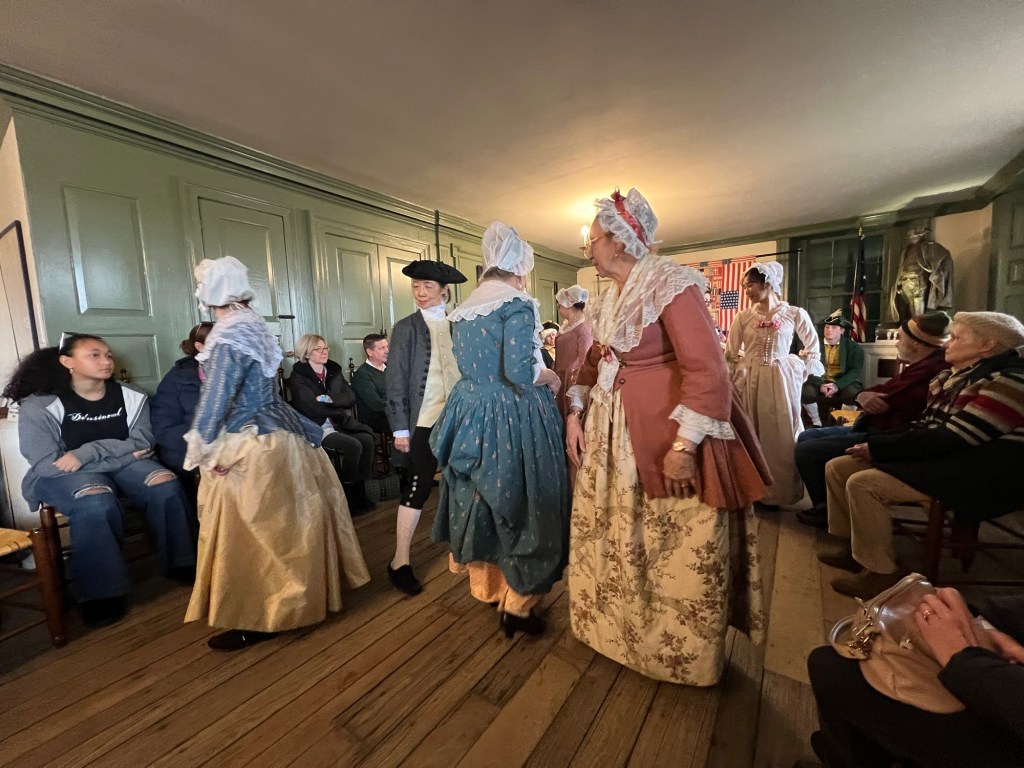
In 2022, we celebrated Washington’s Birthday with a traditional colonial ball with period music and dress and the dancers performed various dance routines of the time. There was music and merriment that the people enjoyed and a sense of comradery after a long war.
The colonial dance numbers
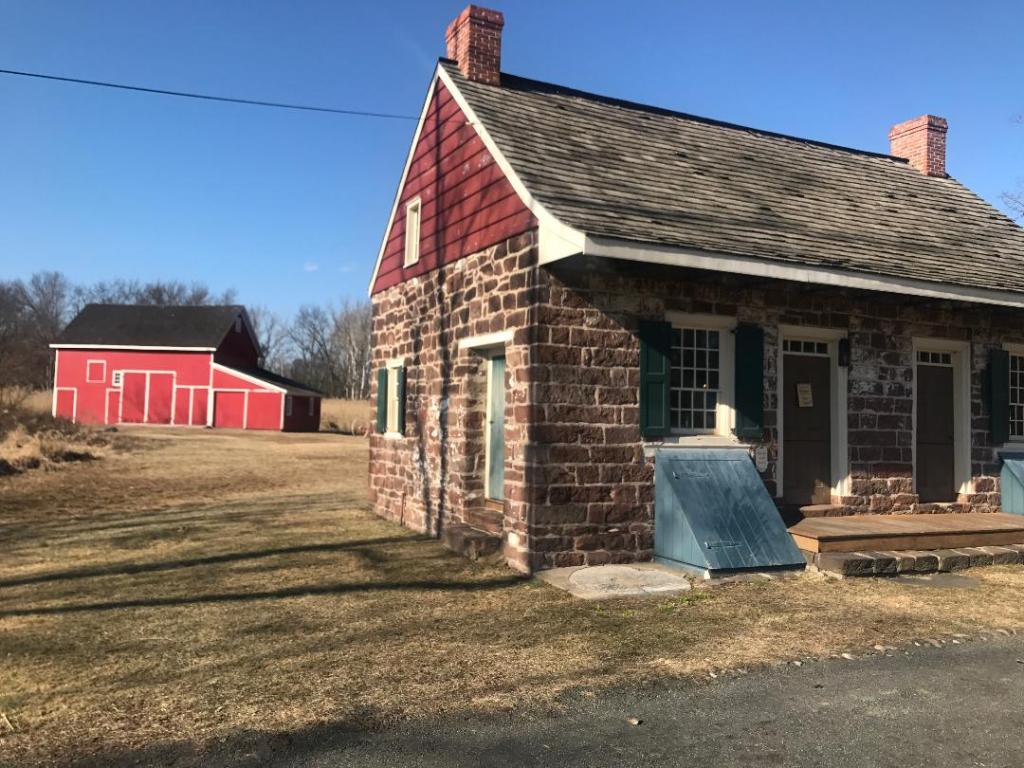
The Westervelt-Thomas Barn
In 2022, I went to visit the Westervelt-Thomas Barn again for the “Chwame Gischuch: under the Shad Moon” and listened to a talk on the barn. It is interesting how the barn was built with two entrances so that when the hay was unloaded, it was placed in the ceiling above and then the cart could go out the other entrance without having to back up. Not only that but since the animal pens were on both sides of the barn, you did not disturb the animals as well.
The barn also has a couple of different carriages (that need some repair) and all sorts of farm equipment on display. They were demonstrating how to make straw brooms and wedel wood for farm use.
The Demarest House and Westervelt-Thomas Barn on the site
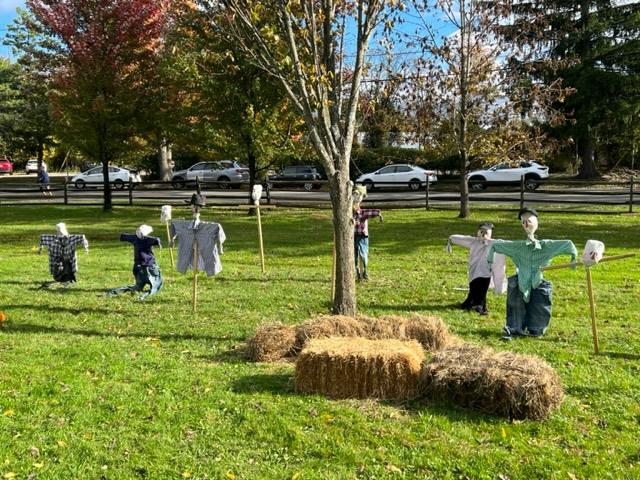
In 2023, I visited the Bergen County Historical Society for Harvest Festival and what a beautiful day it was that afternoon.
It was beautiful that afternoon.
The Scarecrow display that the kids created.
It was rather quiet that afternoon but the kids looked like they were having fun creating scarecrows in the field while parents looked on.
Washington’s Birthday Party in 2025:
In 2025, I returned post-COVID for the Washington’s Birthday celebration where the music and dancing was not done behind masks. The music was once again provided by Mr. & Mrs. Enslow, who did a wonderful job not just explaining the music but the dances and the rituals of the dances as well.
Video on the Drinking Song:
The Enslows performing that afternoon s famous drinking song
The Enslows introducing the dancers
Each dance had its own protocol and traditions. Partners needed to introduce each other creating the expression of ‘My dance card is full’. With each dance number, the dance instructor explained what was being performed.
Traditional dance moves
The dancers performing
The dancers performing
The dancers performing
The video on traditional dance numbers of the time:
Seeing the dance routines performed. The act of protocol and traditions were steeped into these dances
As the Dance Master explained to us there were specific rules of etiquette for both men and women that needed to be followed. The member of dances that were determined by the events. You started the dances with the more formal quadrilles and then you would move to the less formal country dances.
The Enslows performed both times I was at the Historical Society
The ladies leading one of the formal dance routines
Then the formal dance was explained
Then the gentlemen entered the dance
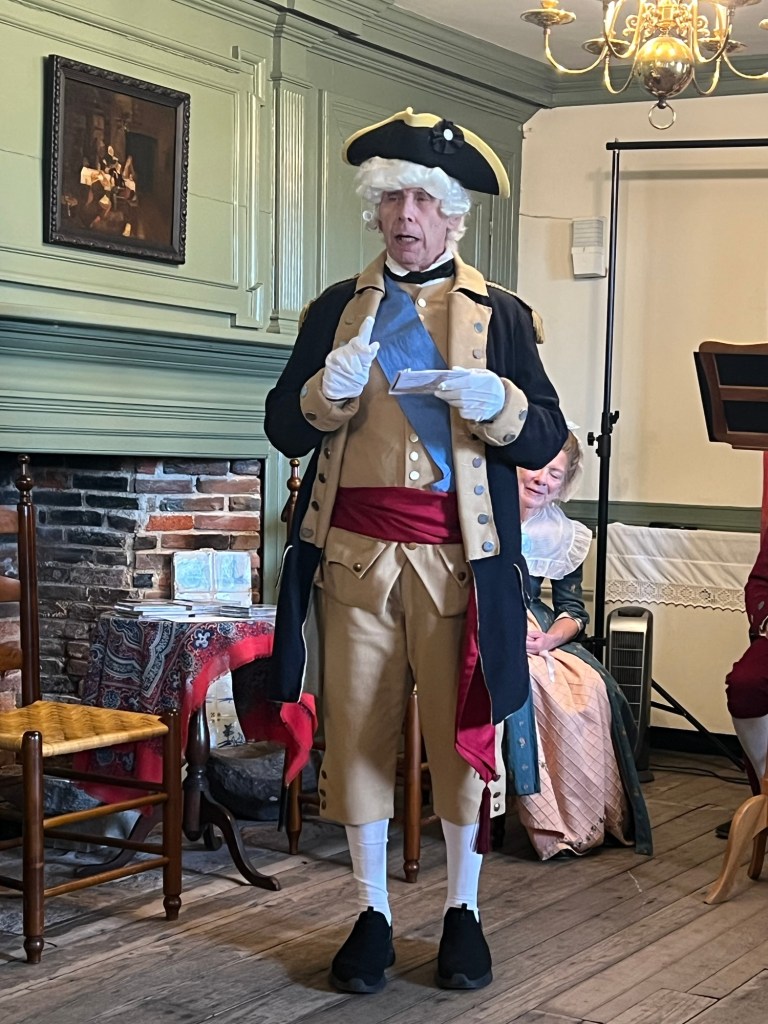
Then General George Washington got up to talk
The General gave a very touching speech about his time in service and his life afterwards
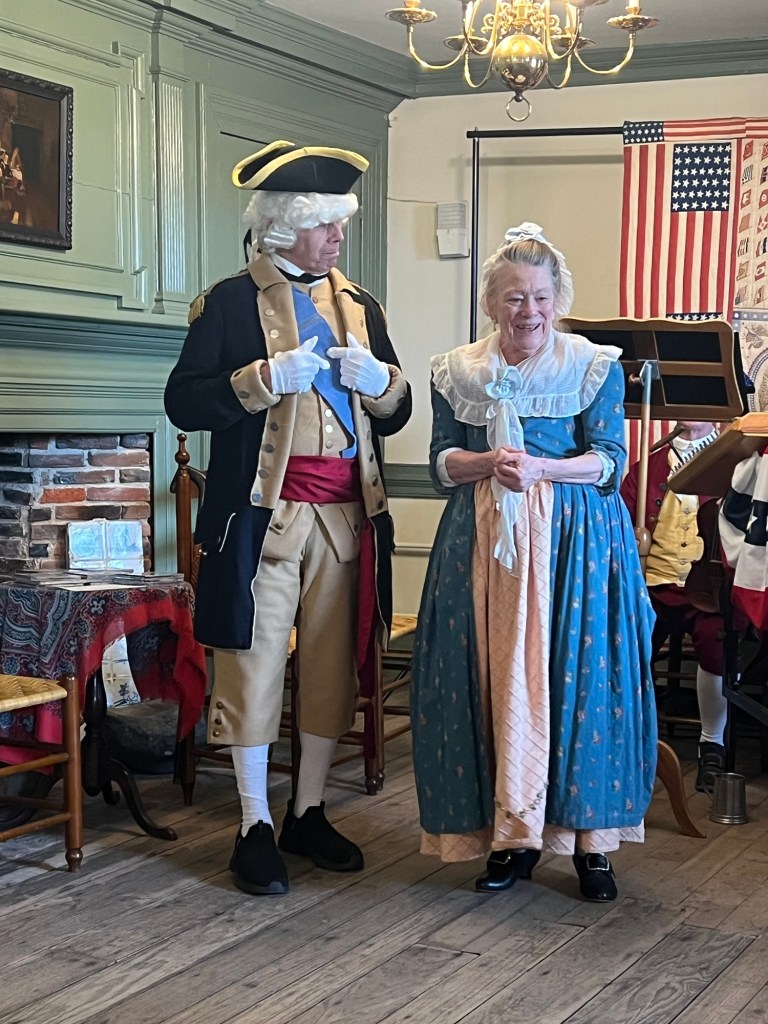
Then he and Mrs. Washington talked about their courting days and their married life at Mount Vernon
The afternoon was very interesting listening to period music and explanations of the dance routines.
Afterwards, I looked over the exhibitions at the Von Steuben House. There were some interesting artifacts on display.
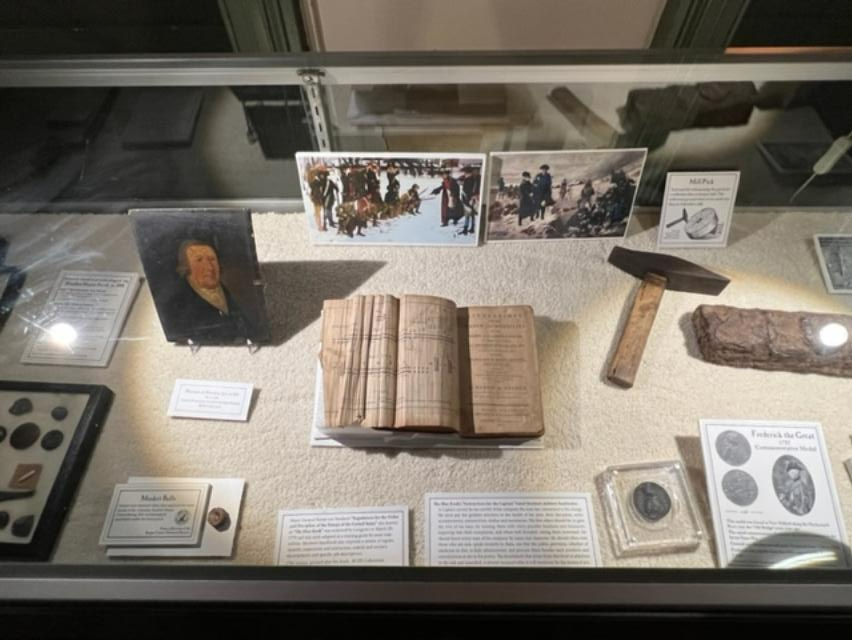
The Soldier display at the Von Steuben House
The displays at the Von Steuben House
The artifacts in the Von Steuben House
After touring the Von Steuben House, I walked over to the Campbell-Christie House to see what type of food was on sale. Not much was left. So I looked around the house and admired the old tavern that I had seen at Christmas several years ago.
The Tavern at the Campbell-Christie House
The Washington Birthday Celebration was a very interesting afternoon learning about the entertainment rituals and traditions of that time.
History of Bergen County:
This is the information from the Bergen County Historical Society:
Historic New Bridge Landing: Bergen County, where America begins…
Experience history in on the storied places where it was made…
*Battleground in the American Revolution
*The Steuben House survived more of the American Revolution than any other home in America
*Washington’s headquarters for 16 days in 1780
*Distinctive Bergen County artifacts & architecture including 3 sandstone houses
*One of the last unspoiled vistas in the central valley of the Hackensack River
*Seven miles from the George Washington Bridge
*Two blocks from the New Bridge Landing Train Station on the Pascack Valley Line to Secaucus
Walking Tour:
Historic Buildings are open for special events: Check the website for the schedule.
The Historic New Bridge Landing is the Headquarters of the Bergen County Historical Society Walking Tour that contains:
The Steuben House: Jan and Annetjie (Ackerman) Zabriskie prospered as a miller and merchant at this site. They built a five-room stone cottage in 1752 and enlarged the house to the present size in 1767 by adding a second story along the rear and the entire north block with its paneled parlor and bed chamber. During the Revolutionary War, the Zabriskie’s sided with the Crown and fled to British held Manhattan. Washington made the house his headquarters for 16 days in 1780. The State of New Jersey presented the confiscated house to Major-General Baron von Steuben in 1783. It is the only extant as a “Large Mansion House containing twelve rooms built with stone with out-houses consisting of a Bake House, Smoke House, Coach House and two large barns, and a garden, forty acres of land consisting of Meadow land and two orchards.” Steuben’s aid-de-camp, Captain Benjamin Walker resided here, while Steuben made regular visits and summer retreats from his Manhattan lodgings. Steuben restored the war damaged home and this is largely the house that you see today. He sold it back to the Zabriskies in 1788. The house and one acre were purchased by the State of New Jersey in 1928. In 1939, BCHS was invited to display its collections at the museum. BCHS purchased the adjacent eight acres in 1944 thus preserving a fragment of Bergen Dutch countryside.
2. New Bridge:
A “New Bridge” with sliding draw was built here in 1745. Describing the American retreat from Fort Lee on November 20, 1776, eyewitness Thomas Paine wrote, “Our first object was to secure the bridge over the Hackensack…” memorializing the darkest hour in the hopes for American independence as the “times that try men’s souls.” This strategic crossing was in constant conflict during the war because it was the first bridge above Newark Bay. The present Pratt-type low-truss swing bridge opened February 2, 1889. One person alone could rotate the bridge to let the ships pass. Closed to auto traffic in 1956. Listed on NJ and National Registers by BCHS as the oldest highway swing-bridge in NJ.
The Bridge in New Bridge Landing
3. New Bridge Landing: A narrow mill landing built of log cribbing in 1744 could accommodate sloops of 40-ton burden. Local products were shipped south including iron which was brought overland from Ringwood and Long Pond Ironworks. Merchandise brought back from the city markets was in the Zabriskie store.
The New Bridge Landing site
4. Zabriskie’s Mills:
Johannes Ackerman resided near the present intersection of Main Street and Elizabeth Court. He built a gristmill, 40×20 feet containing two pairs of grinding stones in 1714 at the outlet of Cole’s Brook. High tide was trapped behind the dam creating an artificial pond twice daily to run the waterwheel during ebb tide. Area farmers brought grain to be ground into flour for a more valuable commodity. Jan Zabriskie purchased the tide mill in 1745. The date stone lozenge set in the south end of the Zabriskie-Steuben House depicts the tide driven waterwheel. Jan’s grandson, John J. Zabriskie aged 25 died trying to free the waterwheel in 1793. The mill burned in 1852.
5. Demarest House Museum:
The two-room sandstone cottage was built in 1794 for miller John Paulson at the time of his marriage to Altie Ely. The stove chimney in the east room is a technological advance over fireplaces. The house moved from its original site beside the French Burial Ground in New Milford in 1955-56. Demarest family and Bergen Dutch artifacts on display. Owned by the Blauvelt-Demarest Foundation it was restored in 2009.
The Demarest House
6. The Campbell-Christie House:
Jacob Campbell, a mason, erected this gambrel-roofed, center hall, sandstone dwelling at River Road & Henley Avenue in New Milford in 1744 at the time of his marriage to Altche Westervelt. Jacob was a private in the Bergen Militia and the house was damaged in the Revolutionary War. John Christie a blacksmith purchased the house in 1795 and continued its operation as a tavern. J. Walter Christie, born in the house in 1865, is considered the ‘father of the modern tank’ and best known for developing the Christie Suspension System used in World War II. Threatened with demolition, the house was moved here onto BCHS land in 1977 by the County of Bergen. Operated & funded by BCHS and interpreted as a 18th century tavern. Refreshments, gift shop & rest room (when open).
The Campbell-Christie House
7. Westervelt-Thomas Barn:
Built in 1889 by Peter J. Westervelt on his farm on Ridgewood Avenue in the Township of Washington. Henry Thomas purchased farm in 1906. Donated to BCHS and relocated in 1955.
The Westervelt-Thomas Barn
8. Out Kitchen: Authentic out-kitchen replicating the John R. Demarest out kitchen in Demarest. Built by BCHS in 1990 using antique materials, it includes a working beehive oven and smoke room. These separate kitchen structures kept the heat of cooking out of the main dwelling during summer and prevented oven fires consuming the home. Located nearby is an outhouse circa 1930 from Closter.
9. Brett Park: Part of the New Bridge Battleground during the American Revolution. Later site of Rekow’s Farm and Bensen’s Campgrounds. Named after the former Teaneck Mayor Clarence Brett in 1971. The Friends of the Hackensack Greenway through Teaneck maintain a southbound 3.5 mile pathway with access in Brett Park.
10. The Meadow: The auto-parts yard, completely remediated by 2010 is now an open meadow in HNBL.
11. The Site of the future BCHS Museum & Library Building: Elevated building planned to allow for exhibits and safe storage of the BCHS collections.
Prehistory: The clay flat on the west bank of the river was known as Tantaqua’s Plain, inhabited by Tantaqua, a Hackensack sachem and his kin (Steuben House location). Artifacts as old as 5,000 years been found here and may be on exhibit.
New Bridge served as a battleground, fort, encampment ground, military headquarters and intelligence-gathering post in every year of the American Revolutionary War.
The American Battleground: While a constant arena for conflict, the following significant Revolutionary War events are associated with New Bridge:
*British troops under Major General Vaughan attacked the American rear guard on November 21, 1776 and seized the New Bridge which American engineers were dismantling.
*British and Loyalist troops under command of Captain Patrick Fergusen attacked about 40 Bergen militiamen at New Bridge on May 18, 1779.
*Major Henry Lee led American troops from New Bridge on August 18, 1779.
*A force of Bergen Militia and Continental troops attacked 600 British troops and German auxiliaries at New Bridge on their retreat from Hackensack and Paramus on March 23, 1780, during the two hours it took for the British to repair and cross the New Bridge.
*A body of 312 British, Loyalist and German infantry attacked and overwhelmed an American outpost at new Bridge commanded by Lieutenant Bryson on April 15, 1780.
*Eight British soldiers were killed and several wounded by friendly fire when British troops attempted to attack a body of Bergen Militia in the Zabriskie-Steuben House at New Bridge on May 30, 1780.
*Brigadier General Anthony Wayne led American troops from New Bridge on a raid against the Bull’s Ferry Blackhouse on July 20, 1780.
*General Washington made his headquarters in the Zabriskie-Steuben House during the Steenrapie Encampment (along Kinderkamack Road) of the Continental Army encompassing 14,000 men on September 4-20, 1780.
There are also artifacts that were all made in Bergen County on display as well.
*Van Saun and Wolfkiel slip-decorated red ware and salt glazed pottery
*Quilts, 3 dozen, including the exceptional Betsey Haring applique quilt.
*Bergen Dutch ladder-back chairs
*English bacon settle dating to 1767
These are just some of the items featured in the collection.
The Bergen County Historical Society is a non-profit 501 (c) (3) all-volunteer organization founded in 1902. We are not a government agency. We do not seek public operating grants instead we rely on private donations and membership. We are raising funds to build a museum for extensive collections of artifacts and archives. BCHS is proud to be the lead member of the Historic new Bridge Landing Park Commission. 100% if your donation goes to our mission BergenCountyHistory.org.
*All of this information is taken from the Bergen County Historical Society’s pamphlet. Please check out their website for more information on events on the property. This is a must see for those of you interested in Revolutionary War history.
Historic Marker for mileage to Hoboken
The gallery of historic items at the Von Steuben House














































 Visiting a Museum: The Unique, Unusual, Obscure and Historical