The Studio Museum in Harlem is the nexus for artists of African descent locally, nationally and internationally and for work that has been inspired and influenced by black culture. It is a site fro the dynamic exchange of ideas about art and society.
The Studio Museum of Harlem
History:
The Studio Museum in Harlem was founded in 1968 by a diverse group of artists, community activists and philanthropists, who envisioned a new kind of museum that not only displays artwork but also supports artists and arts education. The Museum was originally located in a rented loft at 2033 Fifth Avenue, just north of 125th Street. Renowned architect J. Max Bond Jr. led a renovation that adapted the building into a two level exhibition space with offices and space for rental tenants.
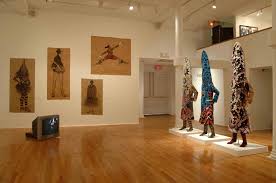
The Galleries at The Studio Museum in Harlem
In 1985, the Museum began excavation of an adjacent vacant lot at 142 West 125th Street, leased from the City of New York. Over the following two decades, the Museum, in partnership with the City, completed additional renovations to the building and lot and added additional gallery and lobby space, a theater and a flexible outdoor space. The Museum has been accredited by the American Alliance of Museums (AAM) since 1987, when it became the first black or Latino institution to gain this recognition.
The Studio Museum in Harlem is internationally known for its catalytic role in promoting the works of artists of African descent. The Artist-in-Residence program was one of the Museum’s founding initiatives, and gives the Museum the “Studio” in its name. The program has supported more than one hundred emerging artists of African or Latino descent, many of whom who have gone on to establish highly regarded careers. Alumni include Chakia Booker, David Hammons, Kerry James Marshall, Julie Mehretu, Wangechi Mutu, Mickalene Thomas and Kehinde Wiley.
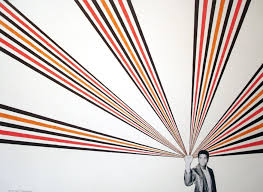
The Rico Gatson exhibition in 2018
The Studio Museum serves as a bridge between artists of African descent and a broad and diverse public. A wide variety of programs bring art alive for audiences of all ages-from toddlers to seniors-through talks, tours, art-making activities, performances and on and off-site educational programs. Museum exhibitions expand the personal, public and academic understanding of modern and contemporary art by artists of African descent. The Studio Museum is a leader in scholarship about artists of African descent, publishes Studio magazine twice yearly and regularity creates award-winning books, exhibition catalogs and brochures.
The Museum’s permanent collection includes nearly two thousand paintings, sculptures, watercolors, drawings, pastels, prints, photographs, mixed-media works and installations dating from the nineteenth century to the present. The Museum’s Acquisition Committee facilitates the growth of the collection through donations and purchases. Artists in the collection include Romare Bearden, Robert Colescott, Jacob Lawrence, Norman Lewis, Chris Ofili, Betye Saar, Lorna Simpson, Kara Walker and Hale Woodruff as well as many former artists in residence. The Museum also is the custodian of an extensive archive of the work of photographer James VanDerZee, the quintessential chronicler of the Harlem community from 1906 to 1983. The Museum does not have a permanent exhibition of work from its collection but frequency shows selections in temporary exhibitions.
The current exhibitions are wonderful and include:
Regarding the Figure
Rico Gatson Icons 2007-2017
Jamel Shaazz Crossing 125th
All them are compact exhibitions and you will need about two hours to see everything at the museum (See TripAdvisior review).
Folks, please don’t miss this gem of a museum in your travels to NYC in a very quickly gentrifying Harlem (See ‘MywalkinManhattan’ site for more details).
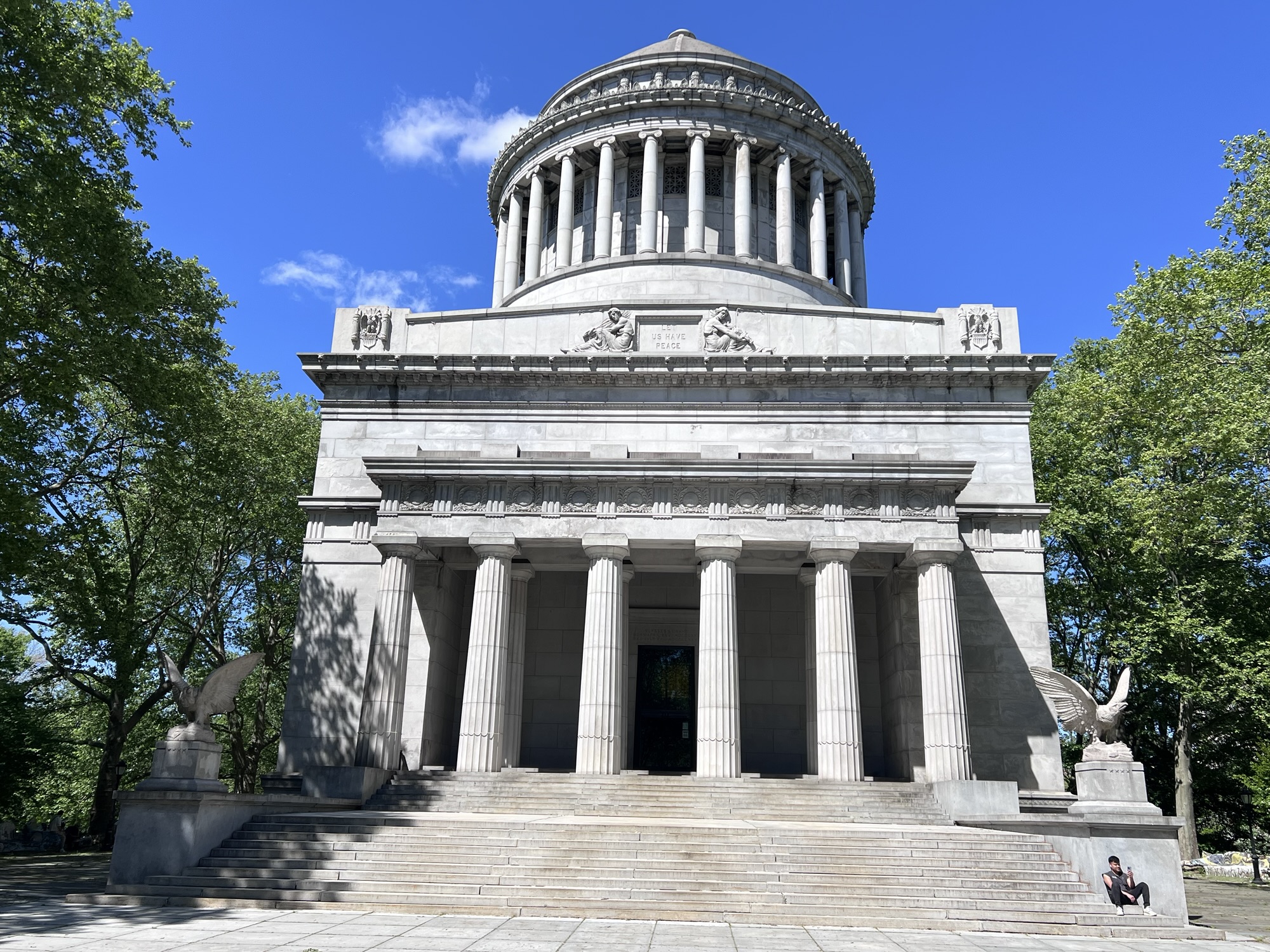
The Grant Memorial was designed by architect John Duncan. Rising to an imposing 150 feet from the bluff overlooking the Hudson River, it took 12 years to build and remains the largest mausoleum in North America. Its great size was meant to express the profound admiration Americans felt for the Civil War commander and was propelled to the forefront of America’s pantheon of heroes and declared the equal of George Washington and Abraham Lincoln.
Spearheaded by the Grant Monument Association, some 90,000 people from around the United States and the world donated over $600,000 to construct the memorial, the largest public fundraising effort up to that time.
The statuary in front of the building
Initial fundraising was led by Richard T. Greener, first black graduate of Harvard and a Grant supporter who credited the general with his advancement. Many African Americans contributed to the building fund.
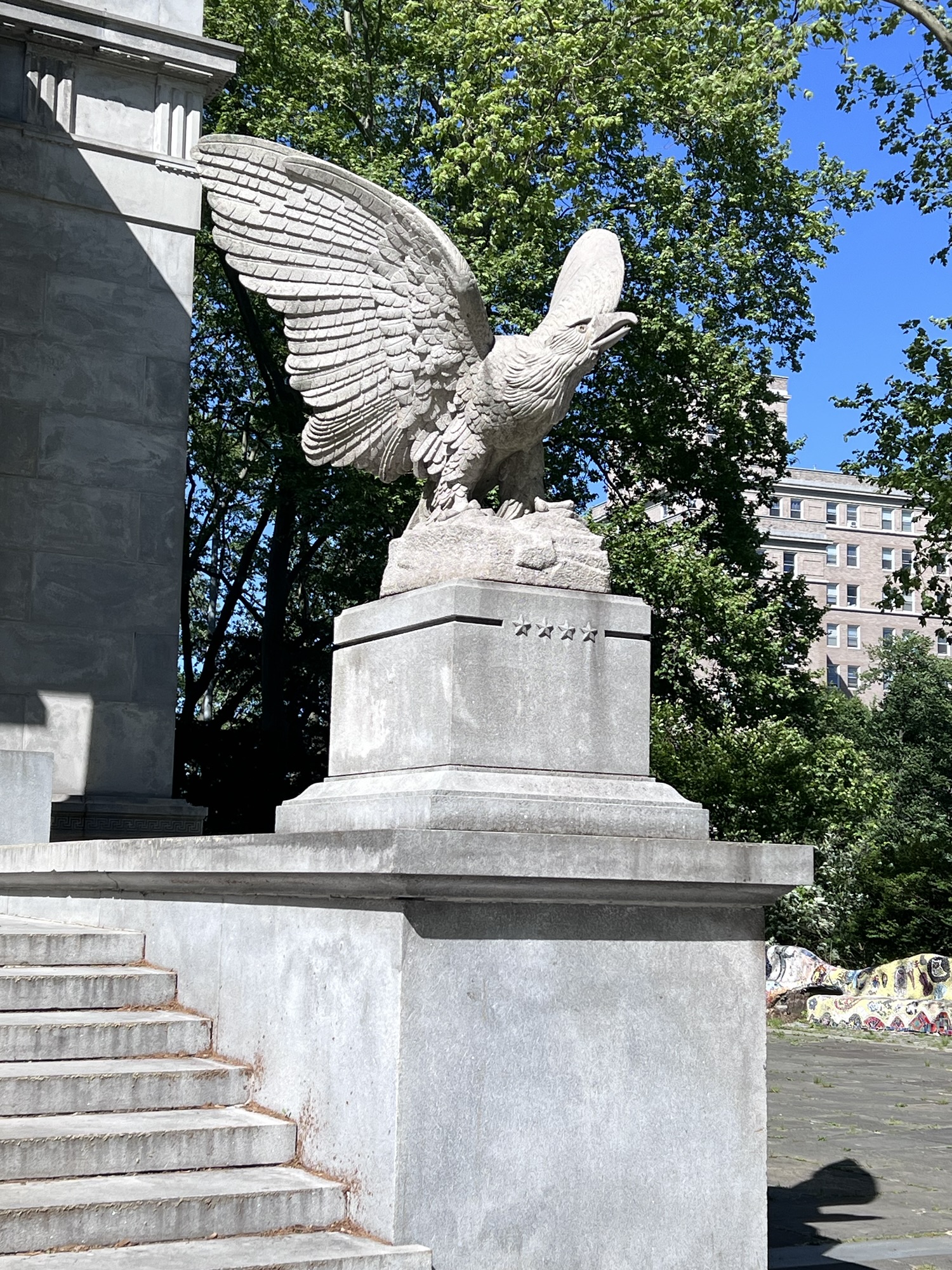
The eagles that flank the front of the tomb
The memorial is open from 9:00am-5:00pm daily. For information or to arrange for group visits call (212) 666-1640.
The entrance to the Mausoleum
Among the most Revered of Men:
This large classically proportioned mausoleum honors the Civil War general who saved the nation from dissolution and the president who worked to usher in a new era of peace and equality for all Americans.
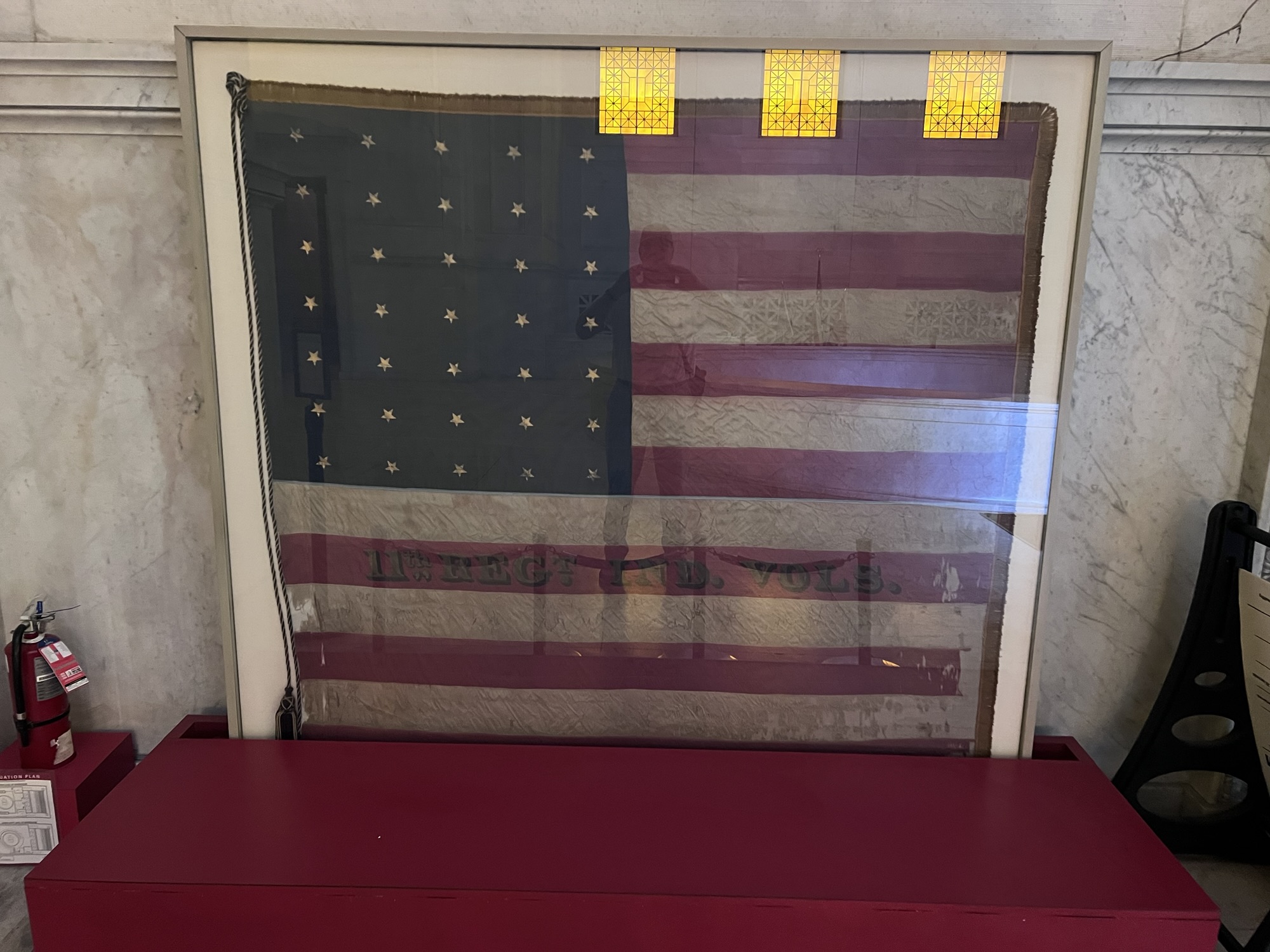
The Civil War era flag being displayed inside
Sign for the flag display in the Western trophy case
The flags in the Western trophy case
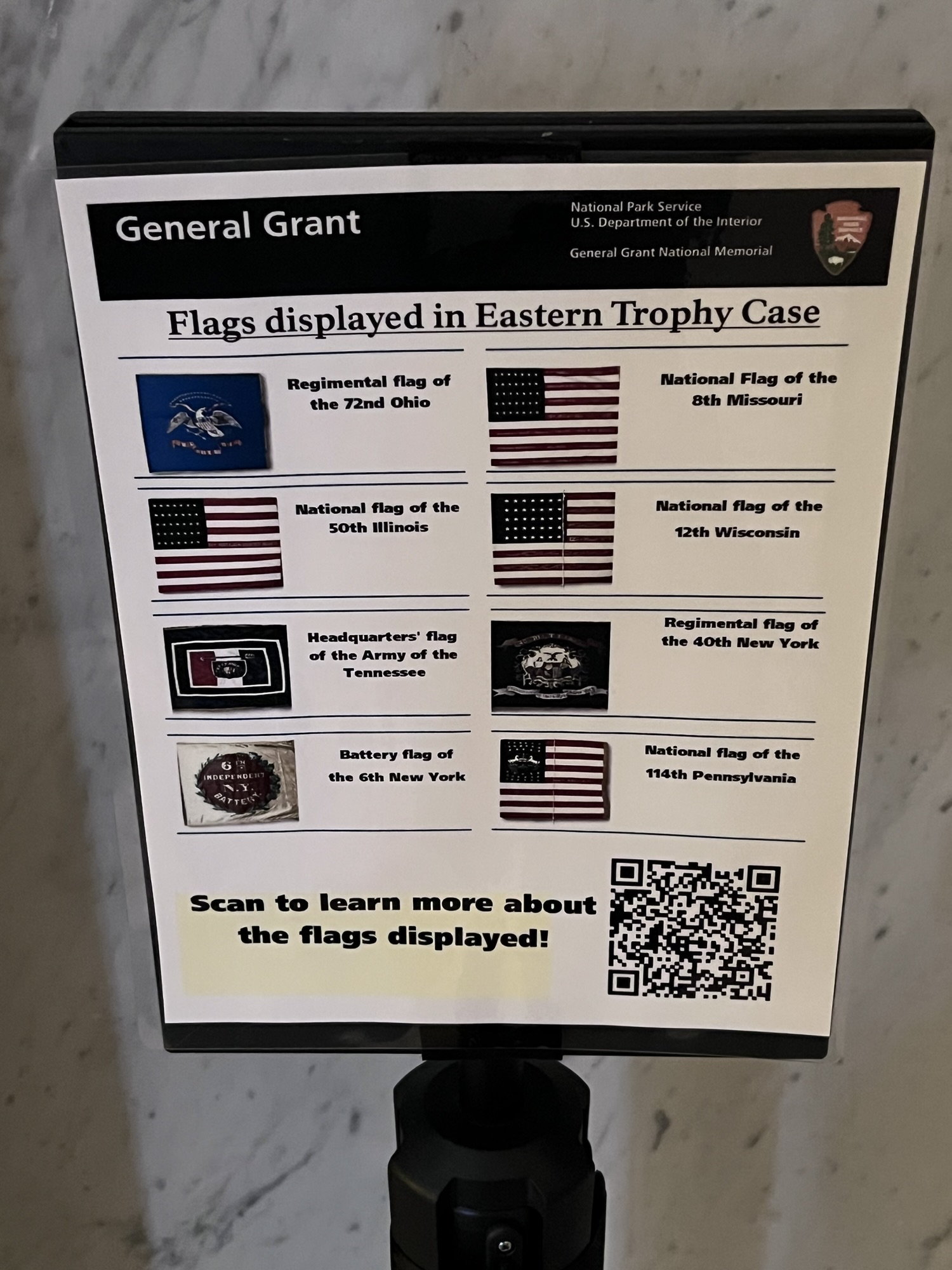
The sign for the flags in the Eastern Case
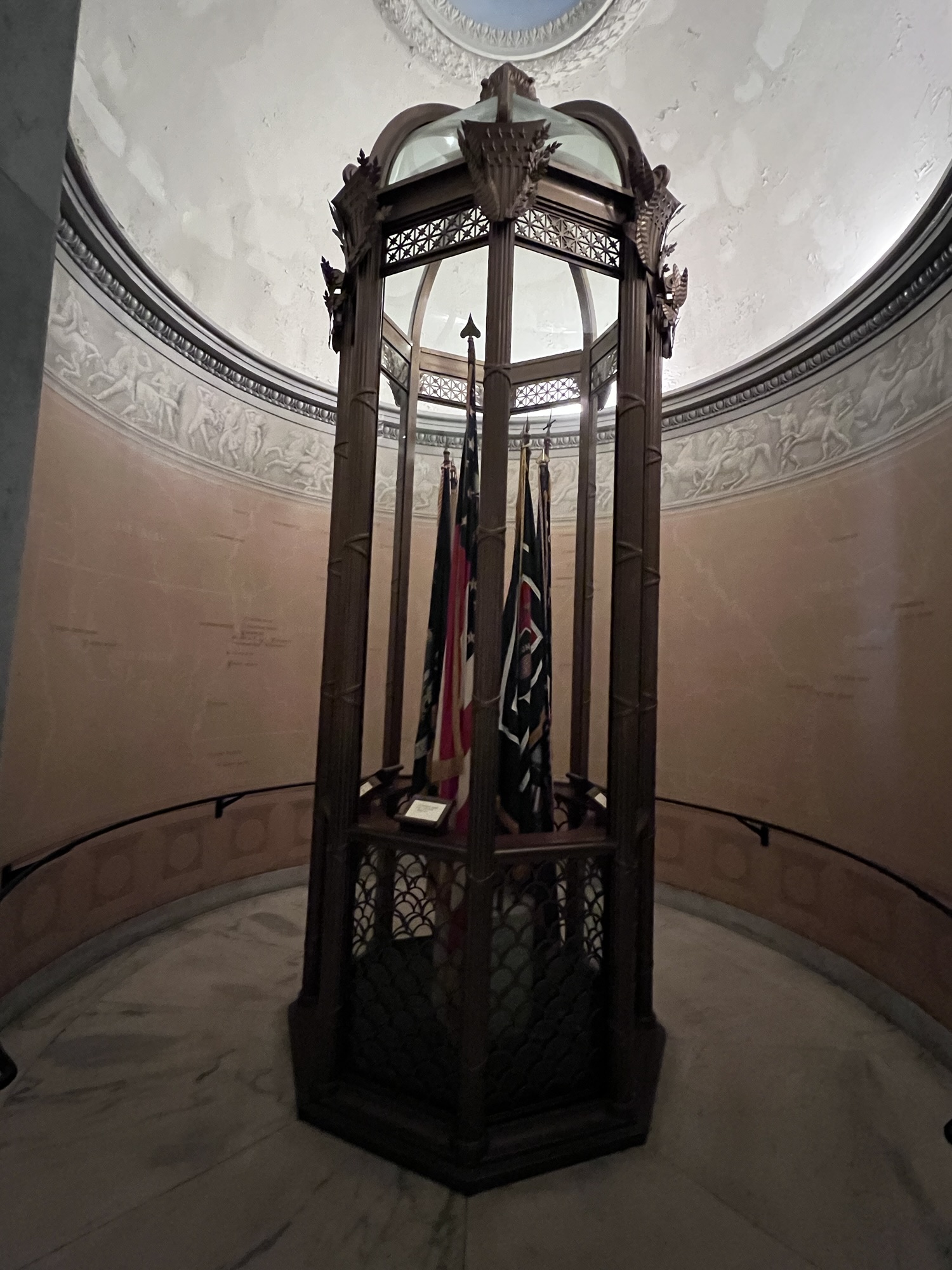
The flags in the Eastern case display
Ulysses S. Grant, a plain-spoken unassuming man who studiously avoided pomp and ceremony had volunteered his services for the Union effort when the Civil War erupted in 1861.
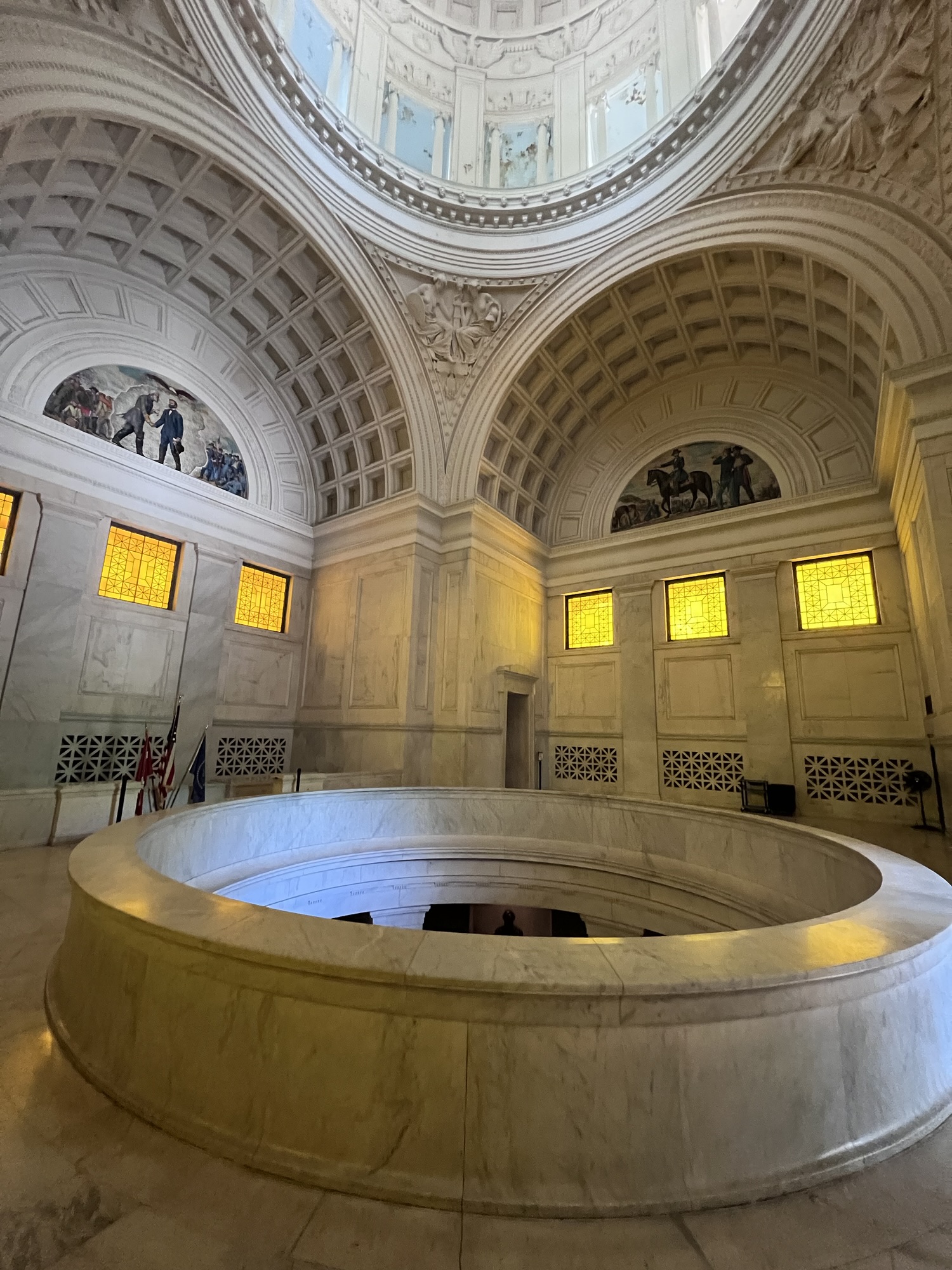
The details inside the rotunda
In doing what he considered simply his duty, he emerged after four years of fighting as one of the great military leaders in history. Aggressiveness, speed, tenacity and the ability to adjust his plans in the face of unexpected impediments all helped to bring him victory.
General Ulysses S. Grant
As great as he was in war, Grant showed magnanimity and compassion in peace. He granted humane and generous terms when General Robert E. Lee surrendered to him on April 9, 1865 at Appomattox Court House. As president he pardoned many former Confederate leaders at the same time insisting on protecting the full political equality of former slaves.
The friezes of General Grant with General Lee
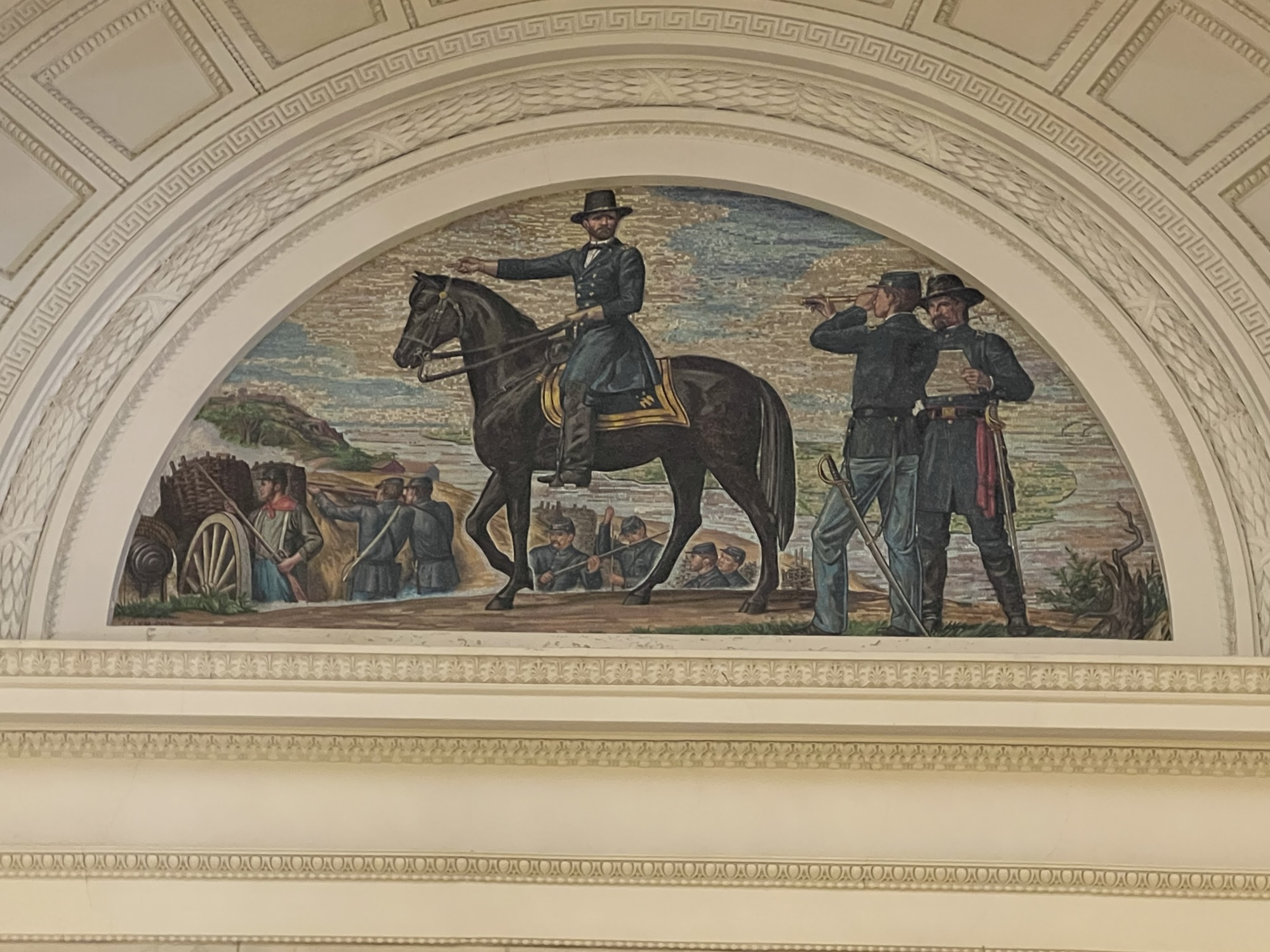
The General leading his troops
The General leading his troops
He was also concerned that American Indian tribes be treated with dignity and respect. His fundamental desire for peace was reflected in his efforts to solve international disputes by arbitration rather than by threat of war. At the time of his death in 1885. Grant was universally respected by northerners and southerners alike.
The main floor of the tomb
The main floor of the tomb
Because of Grant’s status as a national hero, most Americans assumed he would be buried in Washington DC but his family preferred New York City. Grant himself had no strong preference; his only desire was for his wife, Julia to be buried next to him.
The funeral on August 8, 1885 was one of the most spectacular events New York had ever seen. Buildings all over the city were draped in black. An estimated one million people crowded sidewalks, filled windows, stood on rooftops and climbed trees and telephone poles for a view of the procession, which stretched seven miles and took five hours to pass.
The resting place for General Grant and his wife
Grant’s remains were placed in a temporary vault until an appropriate memorial could be funded and built. On April 27, 1897, the 75th anniversary of Grant’s birth, thousands of people, including diplomats from 26 countries, attended the dedication ceremony for the completed memorial.
The President’s tomb is surrounded by the busts of his contemporaries:
The bust of General Sheridan
The bust of General McPherson
The bust of General Sherman
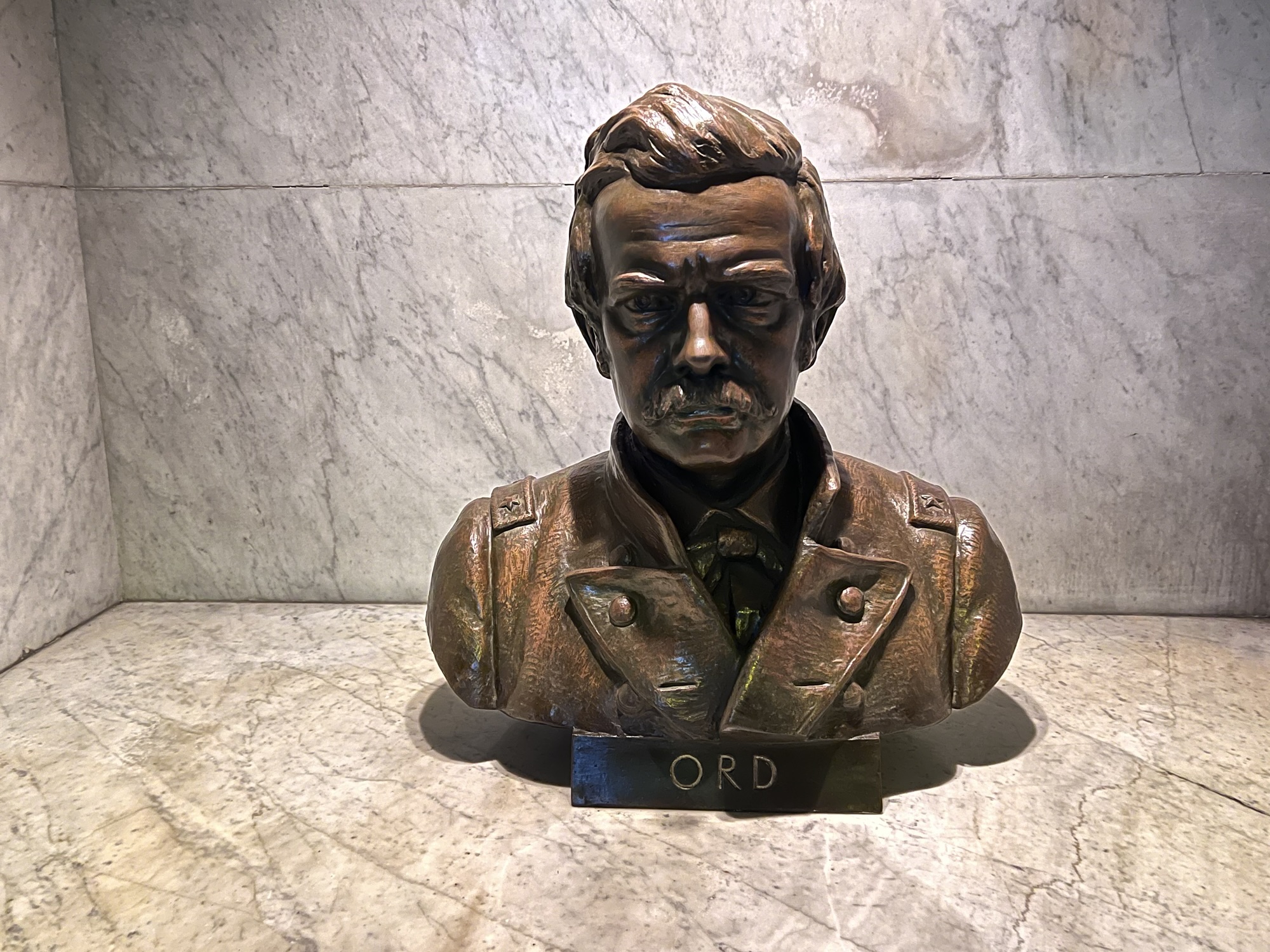
The bust of General Ord
The bust of General Thomas
The dedication parade, led by President William McKinley, was almost as large as Grant’s funeral parade. Julia Grant reviewed the ceremony sitting next to President McKinley. She was laid by her husband’s side after her death in 1902.
The Tomb of General Grant and his wife
The tomb is located in Riverside Park near Columbia University and across the street from Sakura Park, where Japanese Cherry trees are in bloom every Spring.
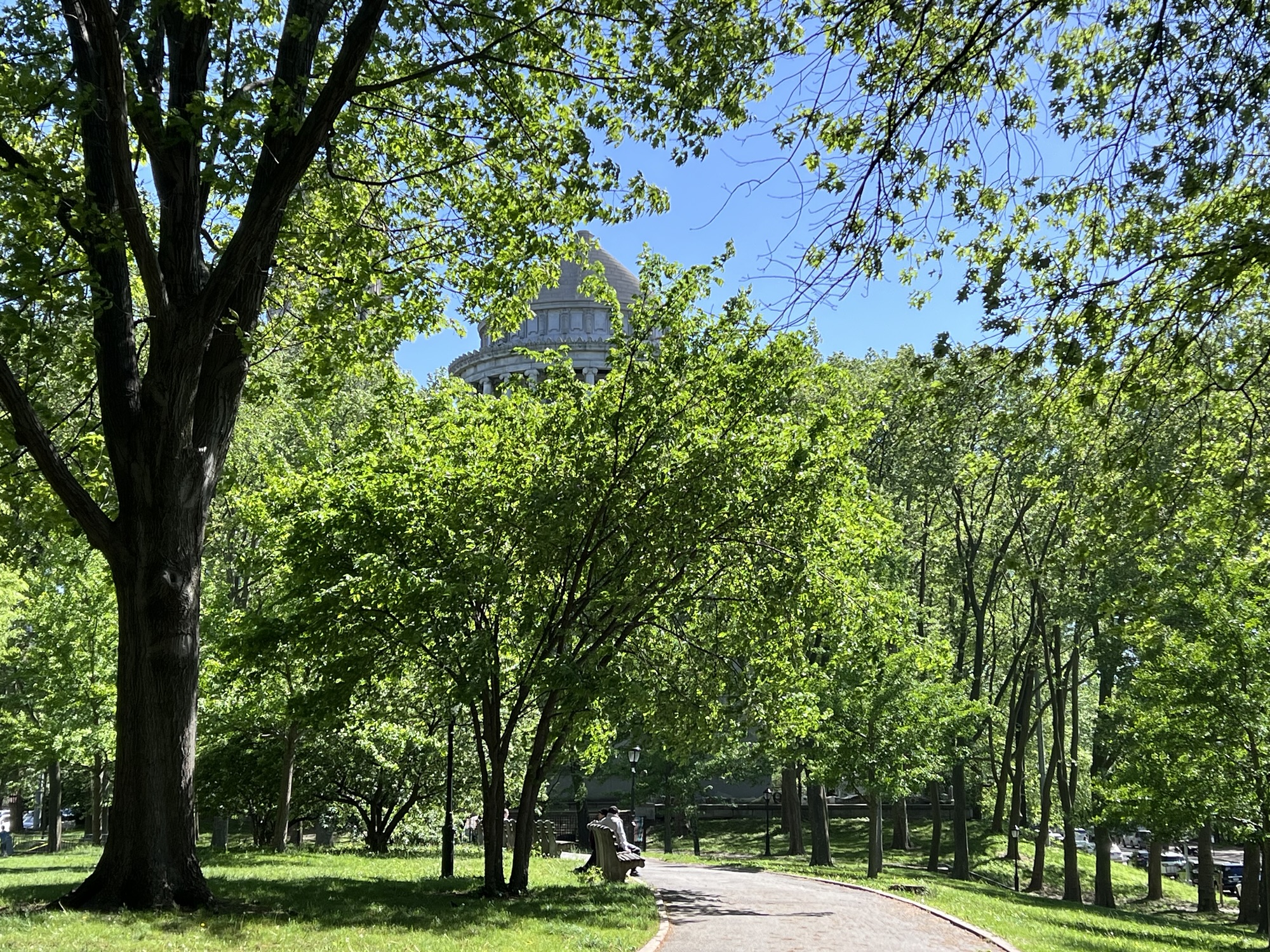
The park outside the Memorial
The Memorial with a park view
The Memorial from the park
The Memorial from Claremont Park
Claremont Park behind the tomb is beautiful in the Spring
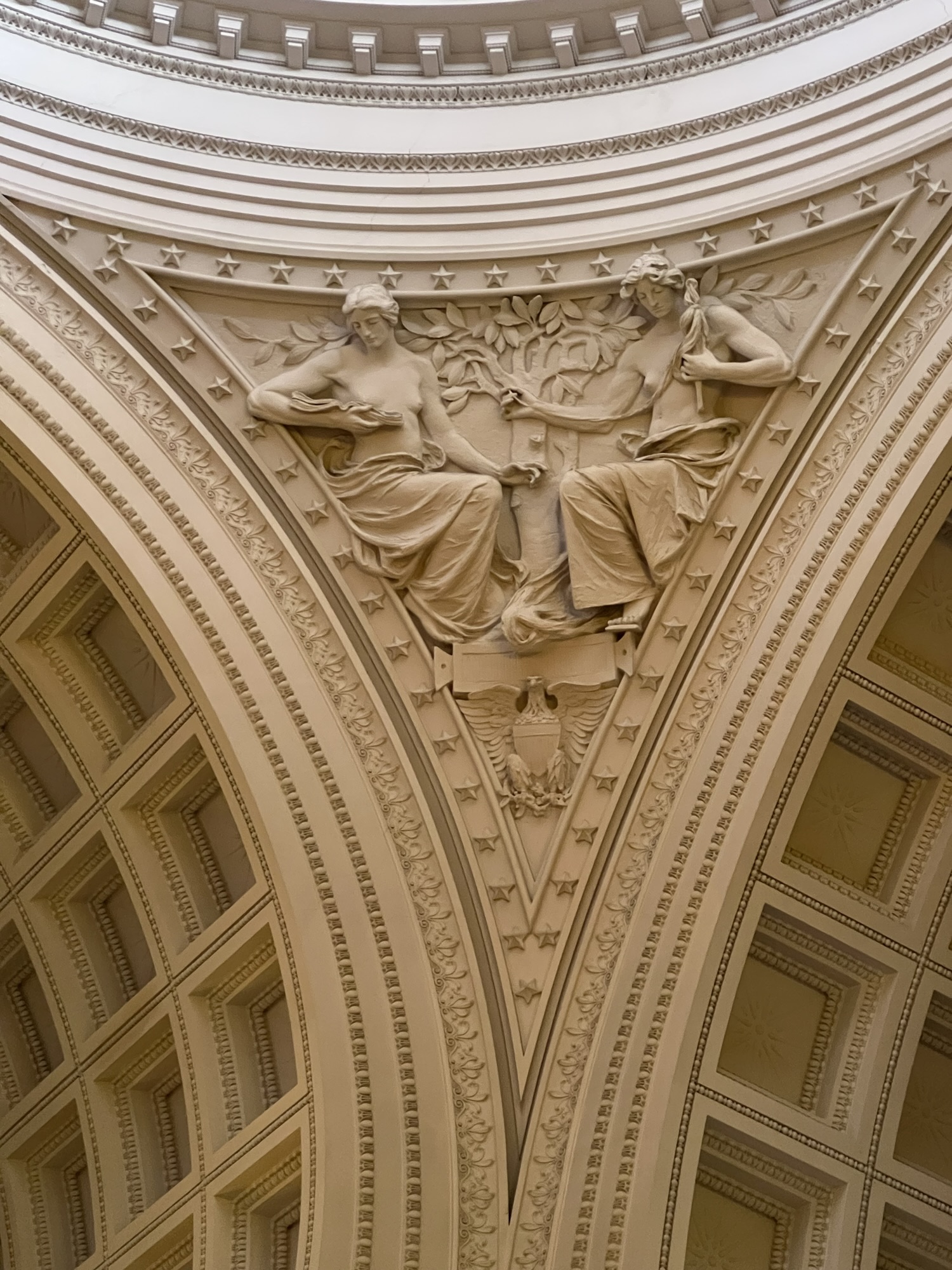
The artwork surrounding the tomb
The artwork surrounding the tomb
The artwork surrounding the tomb
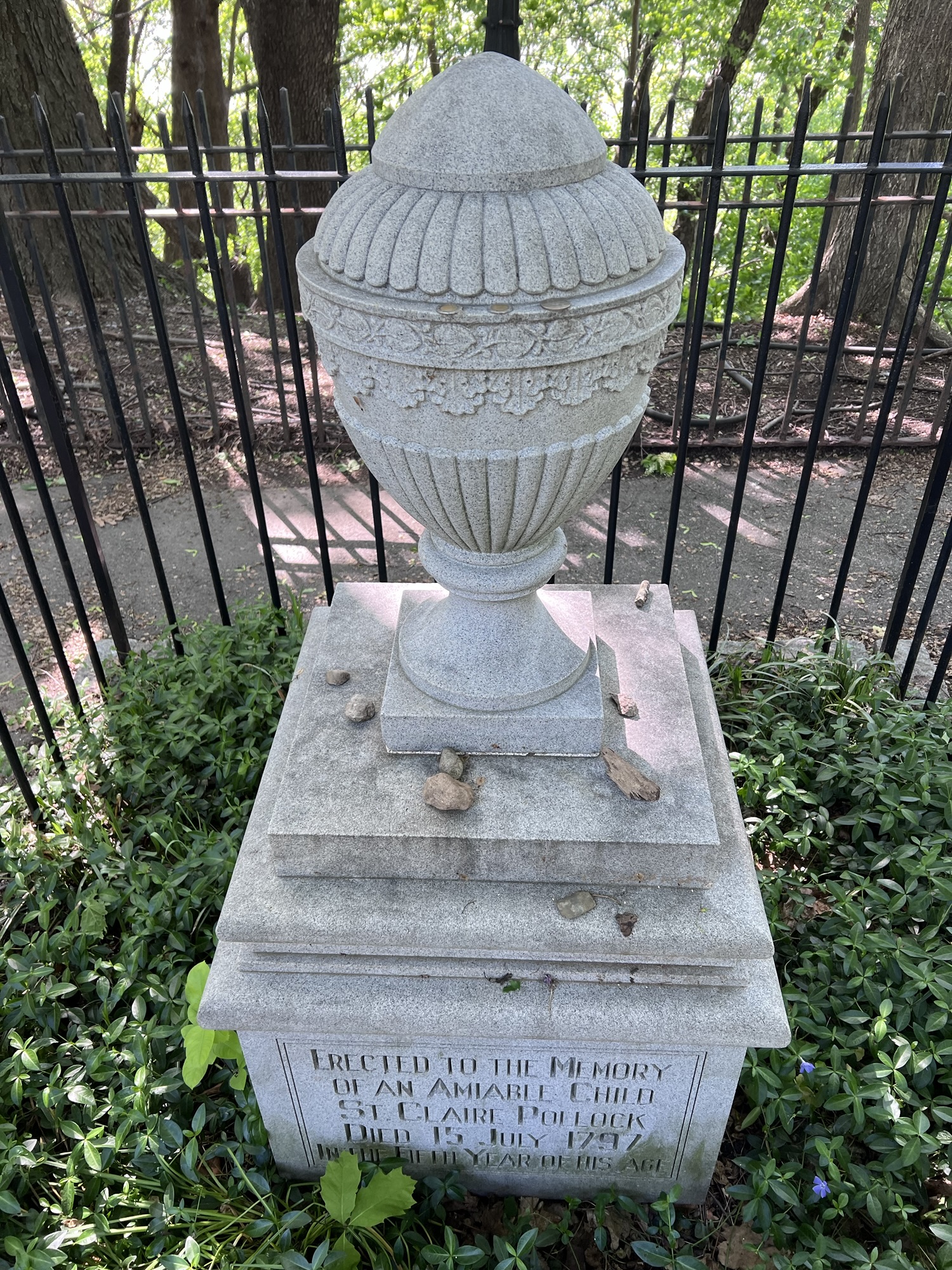
Near the tomb is the memorial to the ‘Amicable Child’ and that should not be missed as well.
The Tomb of the Amiable Child right down the path
The little park the tomb sits in
Disclaimer: This information was taken directly from the National Park Service pamphlet. This is a very interesting National Memorial and should not be missed.
The gift shop is across the street
The theater is in the next room where you can watch the film
It is opened at certain times of the week, so please look for the posted hours. (The memorial is open from 9:00am to 5:00pm daily. For more information or to arrange for groups visits, please call (212) 666-1640).
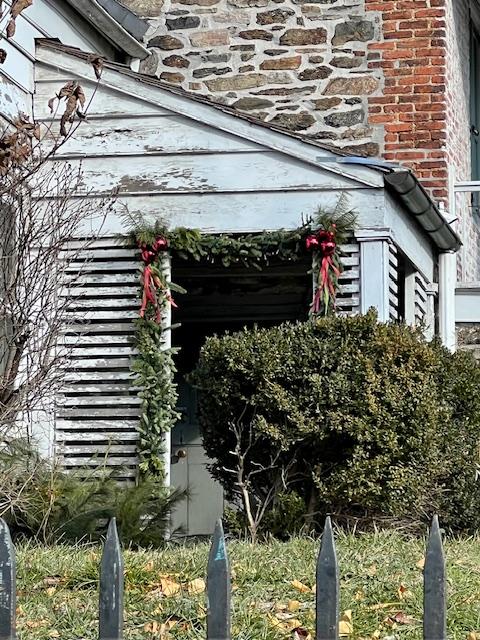
The Dyckman Farmhouse during the Christmas holidays
I visited the Dyckman Farmhouse on day during my walk around the Inwood section of Manhattan and came upon this old farmhouse in the middle of the commercial district by Columbia University’s football field. You have to take the A or the 1 Subway uptown to get there but it is one of the last vestiges of the farming community that once was Manhattan in the late 1700’s and early 1800’s.
It has been there since the family donated it to the city in 1916. It should not be missed when visiting Manhattan. I wrote more about my trip there in “MywalkinManhattan.com” blog site.
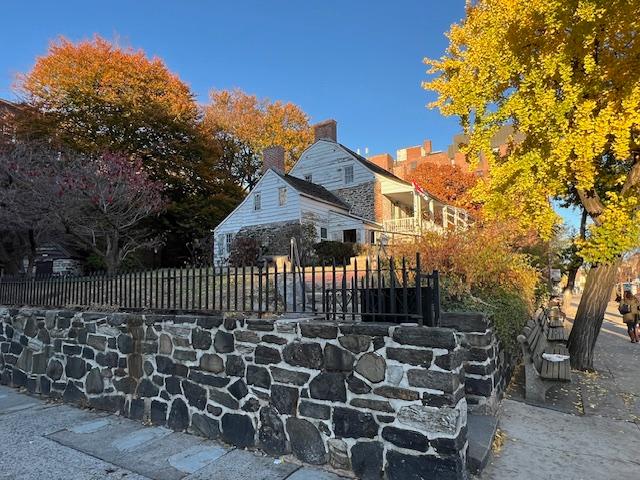
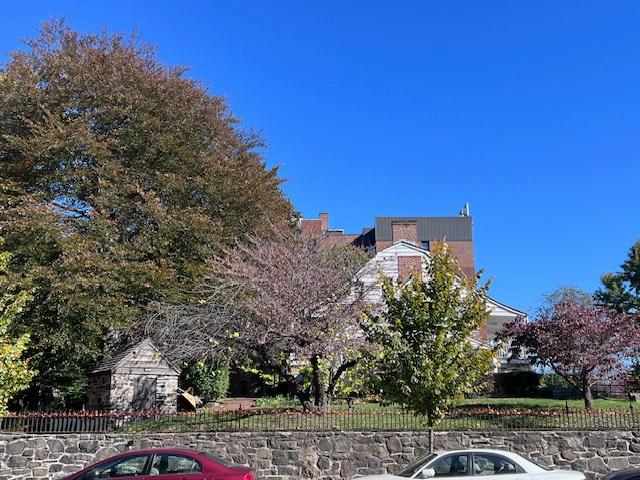
The Dyckman House in the Spring
The Dyckman House, now the Dyckman Farmhouse Museum in the oldest remaining farmhouse on Manhattan Island, a remainder of New York City’s rural past. The Dutch Colonial-style farmhouse was built by William Dyckman in 1785. It was originally part of over 250 acres of farmland owned by the family. It was once the center of a thriving farm with fields and orchards of cherry, pear and apple trees. It is now located in a small park at the corner of Broadway and 204th Street in the Inwood section neighborhood of the city.
The front of the Dyckman Farmhouse
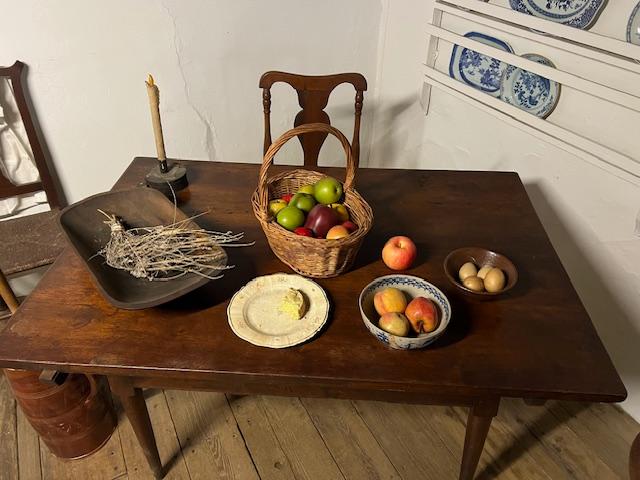
Don’t miss the self-guided tours of the house. You can tour all three floors of the house to see the bedrooms on the second and third floors and the first-floor parlor and receiving areas. The basement area has the ‘winter kitchen’ where all the cooking of the house was done, and it was the room that kept the rest of the house warm during the winter months.
The Winter Kitchen hearth for cooking meals
The Winter Kitchen
The Winter kitchen at the Dyckman Farm
The house was slightly decorated for the Christmas holidays with garland and ivy and holly to make it look more festive. The Dyckman House was built at a time after the Revolution where the excesses of the Victorian era had not taken hold and the Christmas holidays were more subdued and concentrated on going to church and a light luncheon that afternoon. The decorations of the home reflect this.
The museum is decorated for Dutch Christmas with the bounty of the holiday season
The Farmhouse at Christmas time outside in 2025
The house decorated for the Dutch Christmas in 2025
Don’t miss the gardens in both the spring and summer to see everything in full bloom. Even in the winter it is interesting to watch the paths and see what needs to be accomplished for spring planning.
The Dyckman House in the Fall of 2025
It is an interesting look into how the Dutch farmers lived and worked.
History and Description
William Dyckman was the grandson of Jan Dyckman, who came to the area from Westphalia in 1661. Jan Dyckman, a shoemaker and another Dutch settler, Jan Nagel purchased much of the land between present 155th Street and the northern tip of the island. Members of the Dyckman and Nagel families lived on the land for three generations until the Revolutionary War broke out.
The house and front gardens during the summer months
During the Revolutionary War, the British occupation of Manhattan in 1776-83, the Dyckman’s, like many other patriots, fled the city and did not return until the British had been defeated. When the war ended and the Dyckman’s found their home and orchards had been destroyed, they built a new house on the Kingsbridge Road, now Broadway. They chose this location on a major thoroughfare in order to supplement their income by providing accommodations for travelers on their way to and from Manhattan.
William Dyckman, who inherited the family estate built the current house to replace the family house located on the Harlem River near the present West 210th Street, which he had build in 1748 and which was destroyed in the American Revolutionary War.
There was also 30 people living within three other houses scattered across the roughly 250 acre farm. The residents included laborers and other Dyckman family members. The main outbuildings for the farm were built close to the farmhouse including a cider mill, corn cribs, barns and stable (Dyckman Farmhouse Museum Alliance).
William died in 1787 and the property with its “commodious dwelling house,” and 250 acre farm was offered for sale. William’s son, Jacobus, took over the farmhouse and land and rebuilt the farm after the war. This took about five years. Jacobus altered and added to the house over the years. When Jacobus died in 1832, he left the bulk of the estate to his bachelor sons, Isaac and Michael and many members of the extended family moved in as well.
Following the death of Isaac in 1868, his nephew, James Frederick Smith, changed his name to Isaac Michael Dyckman and inherited much of the Dyckman property. When the subway lines reached the area in 1906, there was discussion about the impact on historic homes such as this.
In 1915, Mary Alice Dyckman Dean and Fannie Frederika Dyckman Welch, daughters of Isaac Michael Dyckman purchased the house with the plan of turning it into a museum. They fully restored it, furnished it and landscaped the grounds. They presented it to the City of New York in 1916 so that it could be used as a public park and museum (History of Dyckman Farm).
The house is designed with:
The Relic Room: Objects that are displayed were discovered from digs in the area.
The Relic Room at the Dyckman Farmhouse
The Second Floor Bedroom: Some of the rooms are decorated with furnishings dating from the 18th and 19th centuries and reflect colonial life around 1800.
The Second floor bedroom
The second floor bedroom during the second renovation of the home from a dormer to bedrooms
The second floor of the farmhouse had been a dormer when the home was at its height of the growing season and then later on in the house’s history was converted into regular bedrooms. The first floor bedroom was for the owner of the house for easier access to the farm and the outdoors during the growing season.
The First Floor Bedroom for the Master of the House:
The Bedrooms:
The downstairs bedroom
The Parlor Room:
The Parlor is where the family socialized and entertained their guests. The best pieces of furniture and family possessions would be shown off to visitors.
The Parlor:
The Dyckman Parlor:
Full view of the Parlor in the Dyckman Farmhouse
The Winter and Summer Kitchens: The farmhouse had two kitchen, the Winter and Summer kitchens, the Winter one would have kept the home warm in the cold months and would have been used as a non-cooking work space in the summer.
The Winter Kitchen:
The Summer kitchen is closed to the public has a small bedroom attached to it.
The back of the Dyckman Farmhouse with the grounds left and the old smokehouse in the distance
The Garden Area: On the half acre of family land left they have constructed a reproduction a smokehouse and outbuildings along with gardens planted with thousands of new plants that include things like bleeding hearts and foxglove.
The Hessian Military Hut recreation on the house’s property
The Hessian House recreation on the back part of the property
The gardens and smokehouse
(The Dyckman Farmhouse Museum Alliance)
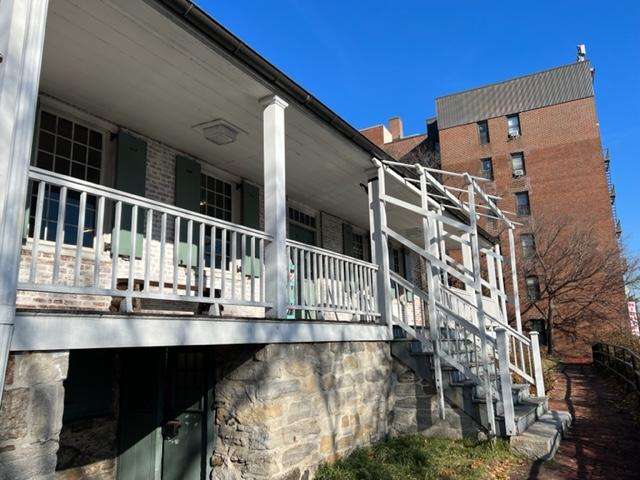
The current two-story house is constructed of fieldstone, brick and white clapboard and features a gambrel roof and spring eaves. The porches typical of the Dutch Colonial style but were added in 1825. The house interior has parlors and an indoor (winter) kitchen, with floors of varying-width chestnut wood. The house outdoor smokehouse kitchen, in a small building to the south, may predate the house itself.
The Dyckman Farmhouse during the Christmas holiday season 2022
The house stayed in the family for several generations until it was sold in 1868, after which it served as a rental property for several decades. By the beginning of the 20th century, the house was in disrepair and in danger of being demolished. Two sisters of the original family and daughters of the last Dyckman child to grow up in the house, Mary Alice Dyckman Dean and Fannie Fredericka Dyckman Welch, began restoration of the farmhouse in 1915-16 under the supervision of architect Alexander M. Welch, the husband of Fannie.
They then transferred the ownership of the house to the City of New York in 1916, which opened it as a museum of Dutch and Colonial life, featuring original Dyckman family furnishings.
The Dyckman Farmhouse in Inwood during the Summer months
The farmhouse, which is not only the oldest remaining in Manhattan, but the only one in the Dutch Colonial style and the only 18th century farmhouse in the borough as well. It has New York City Landmark and a National Historic Landmark status since 1967. A major restoration of the house took place in 2003, after which it reopened to the public in the fall of 2005.
When I visited the homestead in January 2024 for the Epiphany, the house had an interesting children’s exhibition entitled “Beyond Play”, based on a child’s life on a farm back in the 1800’s. This would include simple games such as “Tag” and “Blind Man’s Bluff” and homemade wooden trucks, blocks and dolls.
The exhibition “Beyond Play”
The display of toys that child would play on the farm in the 1800’s.
The display of toys that children would play on the farm.
Walking around the Inwood neighborhood has changed a lot in a hundred years and is now home to a large Dominican population as well as the quickly gentrifying Inwood neighborhood and home to Columbia University sports.
Inwood at Broadway near the Dyckman Farmhouse
*Disclaimer: This information comes from the Historic House Trust and Wikipedia and the NYC Parks System. The site is free to visit and takes less than an hour to visit. During the summer months, it is nice to visit the gardens and property. It is a interesting property to visit and when you are through with your tour, there are many nice Spanish restaurants in the area on Broadway and along 207th Avenue corridor. It is a nice place to walk around and explore.
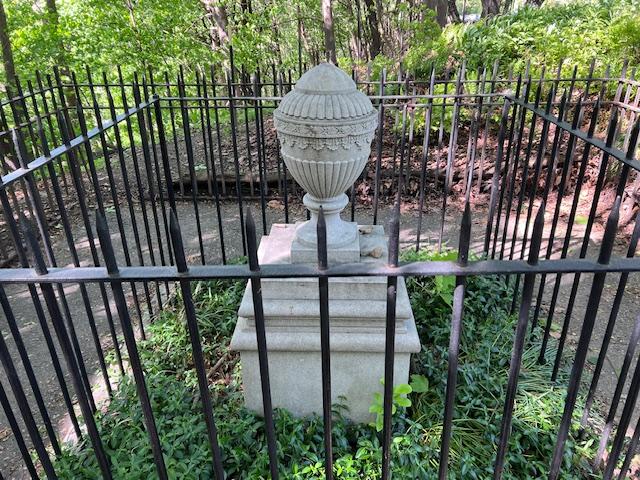
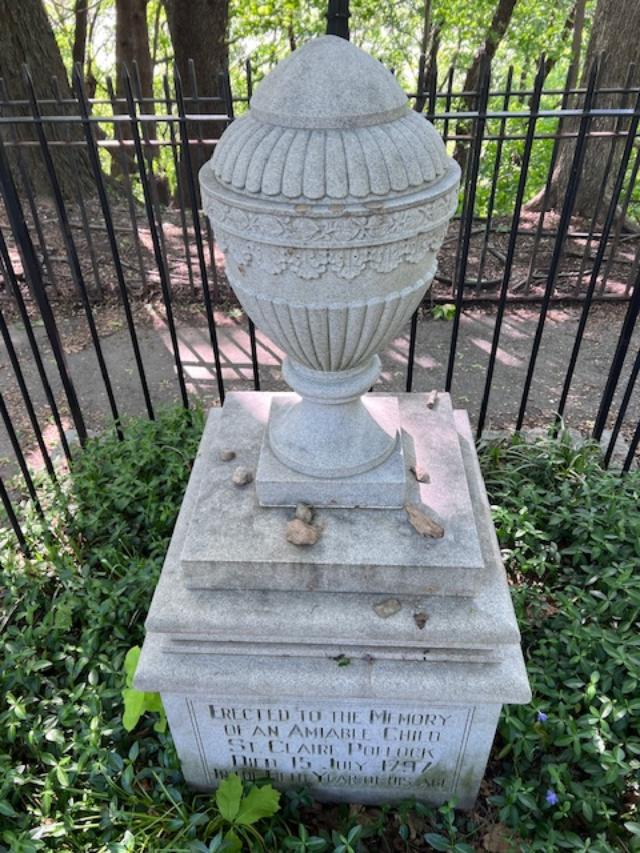
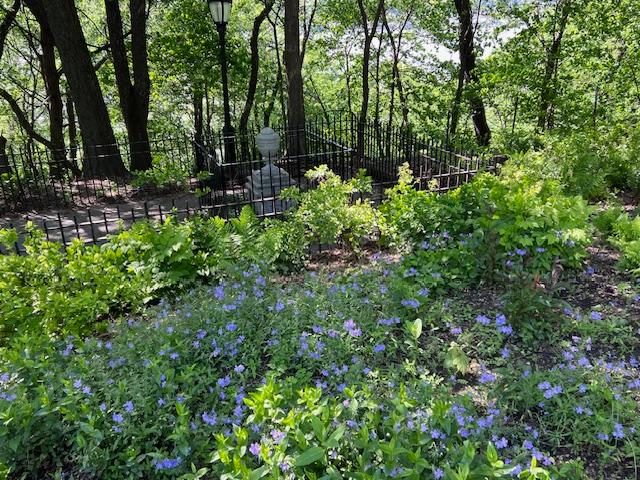
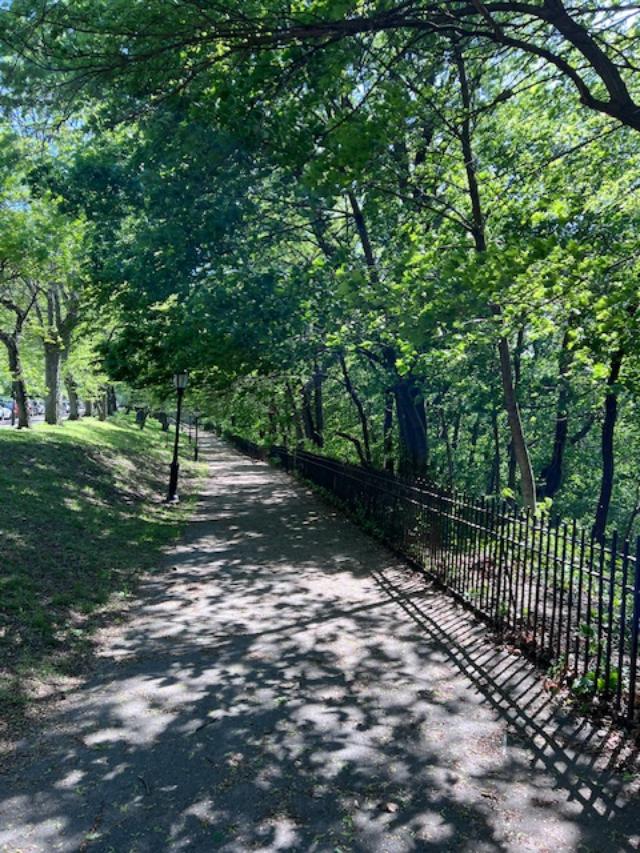
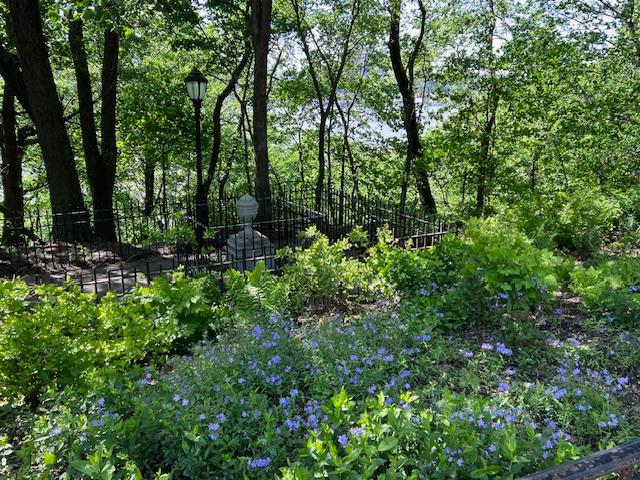
I stumbled across the Amiable Child Memorial over the summer when I was walking Riverside Drive for “MywalkinManhattan” project (see walking 155th Street) and came across this small memorial when I was passing Grant’s Tomb. It is off to the side on the path by the woods. It is a small monument and very humbling in its look. It is a small urn on a pedestal marking a grave of a small child surrounded by a fence. I got the following information from the NYC Parks Department website when I wanted to know more about the site:
The historic sign for the Tomb
This unique New York City monument marks the site of one of the few private graves on public land within the five boroughs. It belongs to St. Claire Pollock (the namesake of nearby St. Claire Place), a child who died on July 15, 1797 in the fifth year of his life, probably from a fall from the cliffs of the parkland onto the rocks near the Hudson River.
The tomb up close
In the two centuries that have passed since the tragedy of the “Amiable Child” as he was described on his headstone-different accounts of St. Claire origins and family have persisted. George Pollock, the owner of the property on which the boy was buried, was either his father or his uncle. He was a linen merchant of Scots-Irish or possibly English descent, who lived in a mansion on Strawberry Hill (later called Claremont) in the 1790’s. He had sold his property to Mrs. Cornelia Verplanck, his former neighbor, by January 18, 1800 when he wrote as follows:
The Tomb of the Amiable Child park and flowers
“There is a small enclosure near your boundary fence within which lie the remains of a favorite child, covered by a marble monument. You will confer a peculiar and interesting favor upon me by allowing me to convey the enclosure to you so that you will consider its part of your own estate, keeping it however always enclosed and sacred.”
The park in the Spring of 2025
Claremont Hill was the site of the Battle of Harlem Heights, fought during the Revolutionary War on September 16, 1776. By 1806, it had been acquired by Michael Hogan, a former British Consul in Havana, who built Claremont Mansion (for which Claremont Avenue was named). Possible sources for the name are Hogan’s birthplace of County Clare, Ireland and his friend Prince William, Duke of Clarence, who would ascend the English throne as King William IV in 1830. Known as the site of a popular roadside inn by 1860, Claremont was acquired by the City from the heirs of Joel Post in 1873 for the development of Riverside Park.
The Park and the Tomb in the Spring 2025
In the 1890’s, Claremont Inn was host to numerous politicians, socialites and entertainers including the Morgan’s, Vanderbilt’s and Whitney’s, Lillian Russell and Admiral George Dewey. By 1907, the Inn had been transformed into a restaurant, serving the likes of Cole Porter and James J. Walker. It was destroyed by fire in 1950. The playground which now stands on the site was built shortly afterwards.
A century after the Tomb of the Amiable Child was laid, New York’s most famous monumental grave-Grant’s Tomb-was completed. The domed structure across Riverside Drive, designed by architect John Duncan and sculptor John Massey Rhind, was dedicated on April 27, 1897. The later structure is as grand a testimony to the accomplishments of national leader as the monument to the amiable child is a modest and touching tribute to a young boy who never had the opportunity to grow into adulthood. This monument was dedicated on May 3, 1967 (www.nycgovparks.org/parks/riverside-park/mounments/1206).
*You really have to look off the beaten path to see this unique little memorial but it is very touching and soulful. Take the time when visiting the neighborhood to visit this very touching site. You will find it by the path behind Grant’s Tomb.

























 Visiting a Museum: The Unique, Unusual, Obscure and Historical