I visited the “Little Red Schoolhouse” Museum in Florham Park as part of the Morris County’s “Pathways to History” event that is held every May. This interesting little museum showcases the town’s historical collection of items from the 1800’s and 1900’s dealing with all aspects of town life.
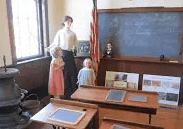
In the back there is a small classroom set up keeping with the theme of the building. This lets students who are visiting the building of their counterpart’s early education with desks, ink wells and chalk boards that have not changed that much over the years.
Not much has changed in the modern classroom over the years
There is early century clothing, farming equipment from the town’s farming past and event Native American objects found in the town and in private collections. Other items included decorative items from the home including dishware, home products and furnishings. Each section of the museum is divided up by lifestyle.
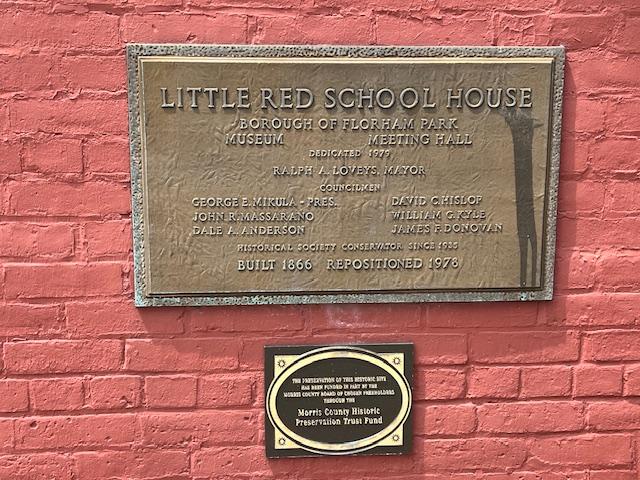
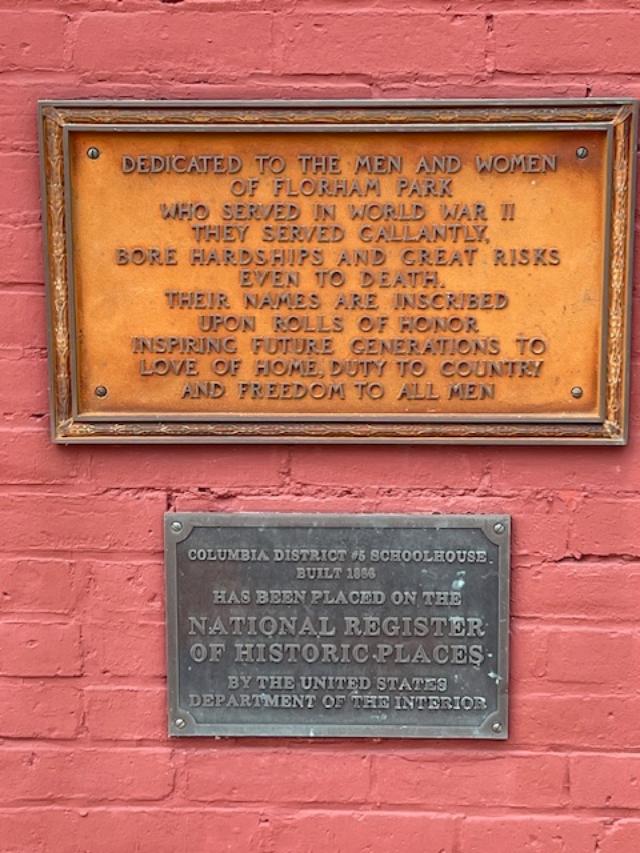
The museum’s historic plaque
The docents that day explained that the items were reflect the town’s past and some came from families that have been in town for years. The museum reflects the community spirit of town’s past. It explains that times have progressed but not changed too much over the years.
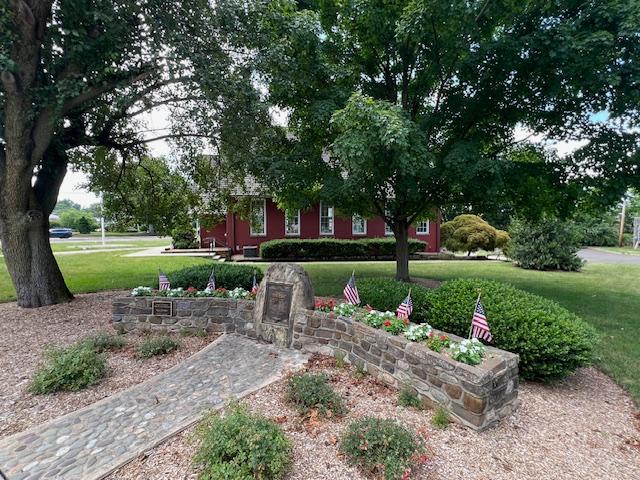
The Veteran’s Monument outside the museum
History of the Little Red Schoolhouse Museum:
(From the Museum Website)
By Kat Kurylko, Research Assistant
In 1830, the residents of Columbia, now Florham Park, sought to improve their thriving farming and broom-making community by establishing a public school for the local children. Therefore, a small schoolhouse, Columbia School #5, was built on the corner of Columbia Turnpike and Ridgedale Avenue and dedicated it on February 17th, 1831. Schooling at the “little red frame building” prospered and so by the 1850’s, the building was “in condition of dilapidation rendering it unfit to be occupied” due to overcrowding.
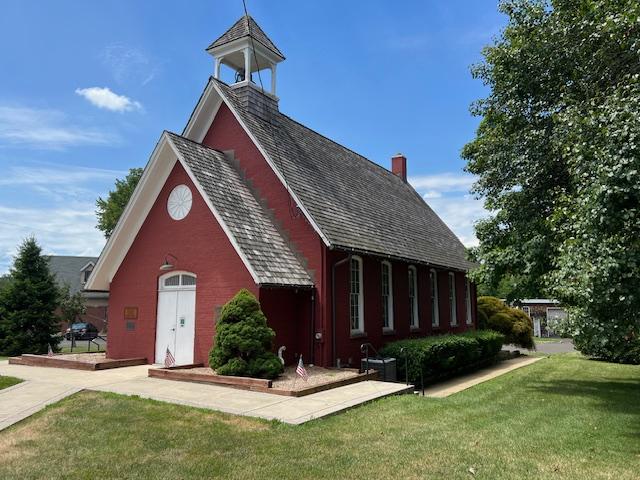
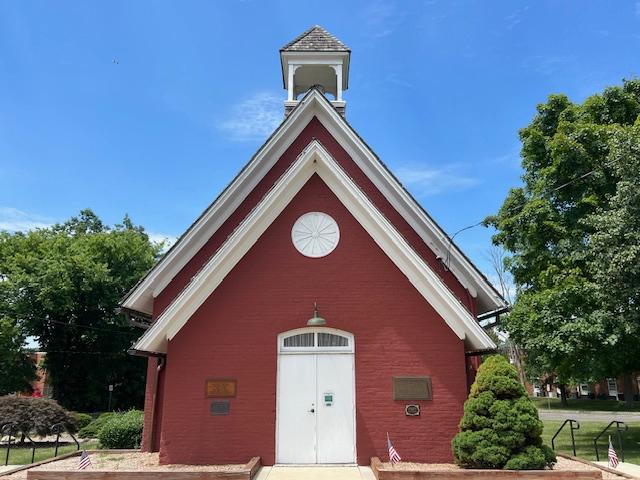
The schoolhouse from the front
On March 1st, 1867, nearly 50 children attended their first class in a new one-room brick schoolhouse. The use of brick added prestige but great expense to the project, accounting for nearly half of the budget. The new building was designed based on principles found in Henry Barnard’s book, “School House Architecture. Much like Thomas Kirkbride’s progressive hospital designs (illustrated locally at Greystone Park Psychiatric Hospital), Barnard’s method School attendance continued to grow and by 1914, a four-room annex building, which could accommodate 78 students was built on the school’s property and the earlier brick building served as an auditorium. Eventually, the community outgrew both buildings and in 1934, the borough’s current middle school was constructed.
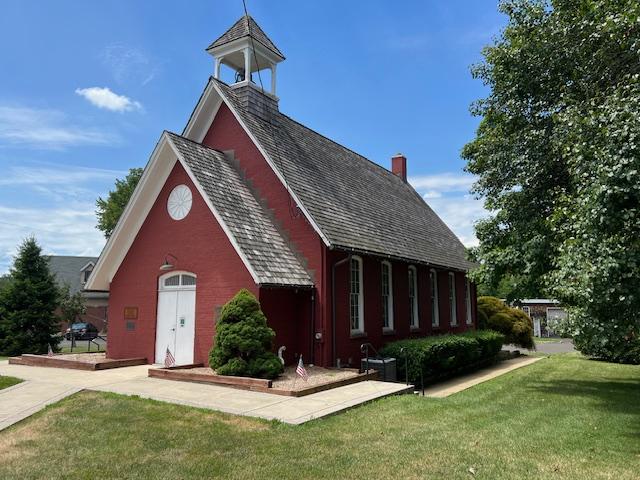
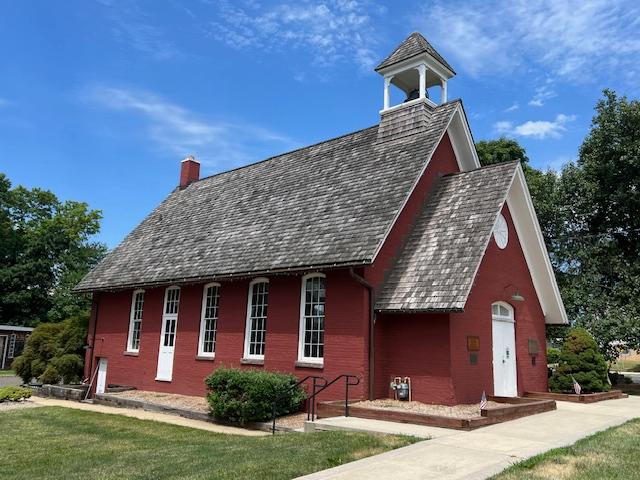
The schoolhouse from the side view
Founded in the 1930’s to preserve the “Little Red Schoolhouse”, the Historical Society of Florham Park now operates the building as a museum. A source of great pride for the local community, the building stands in nearly the same location on the corner of Columbia Turnpike and Ridgedale Avenue, although moved back to accommodate the expansion of Columbia Turnpike. Listed on the NJ and National Registers of Historic Places since the early 1970’s, today the building serves as a reminder of the community’s rural roots.
The “Little Red Schoolhouse” Museum historic plaques
(From the Morris County site):
The Little Red Schoolhouse & Museum:
Florham’s Park’s iconic Little Red Schoolhouse was built in 1866 at a cost $2,250. Its open belfry and gable-end entrance instantly identify it as a typical 19th century one-room schoolhouse. The Italianate one-story narrow red brick masonry building is an architectural marvel with its steep roof, tall windows and elaborate arches.
Inside, part of the museum is set up as a 19th century classroom, where small groups can enjoy a lecture. The museum has a variety of artifacts from the 1800’s and 1900’s, vintage school desks and broom-making equipment. Its location at the historic crossroads of Florham Park has remained a key reminder of the borough’s rural origins. The schoolhouse is a stop each fall on the free “Pathways of History” event (which I was on that day I visited).
Of Special Note:
*In 1978, the schoolhouse was moved back several yards to accommodate the expanded Columbia Turnpike.
*The schoolhouse is also known as Columbia School District Number 5 Schoolhouse.
*The schoolhouse is the borough’s icon, appearing on the town flag, letter head, website and public works and first responder vehicles.
The Boonton Historical Society at 210 Main Street.
I recently visited the Boonton Historical Society on the Main Street of downtown Boonton, NJ in a quickly changing new Arts Community. Up the hill, several galleries have found a home, and the downtown is filling up with cottage industries catering to both locals and artists.
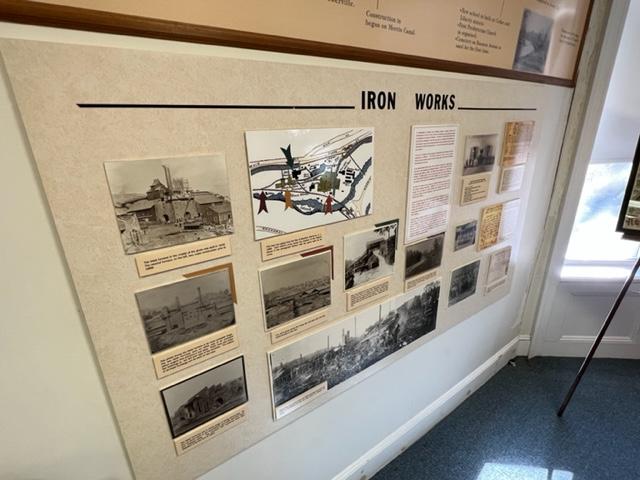
The Historical Society covers the history of Boonton and its role in New Jersey history especially with the creation of the Morris Canal and the Iron works that once dominated the area until about WWI.
The munitions of the town’s foundries
The town saw much prosperity during the Civil War, providing ammunition and supplies to the Union Army. Many of the nails used during this period came their foundries. They also supplied munitions, pails, building materials and the transportation of raw iron out of the town. When technology and the way we build changed, the businesses here started to dry up. The use of the Train system and major highways also changed the transportation, it affected the town’s businesses.
Still the Boonton area is home to many historic homes, a section of the Morris Canal and the remains of the iron works that burnt to the ground decades ago. There is an interesting exhibition of the town’s Police Department in the lower level and now as part of the changing gallery space an extensive exhibition on the NJ Trolley system that once dominated the state.
The Boonton Historical Society and Museum at Christmas 2022
The Permanent Collection:
The permanent exhibition space studies the history of the town, telling the story of the town’s beginnings as a manufacturing town, growth of the canals and shipping and agriculture to its current destination as a Arts Community. The museum is small and can be seen in about an hour to two hours if you like to read.
Don’t miss the room to the right of the museum which covers the timeline of the town and its prominent residents. It tells the story of how the growth of the iron works, the building of the dam and the coming of the railroads and the trolley system changed the town and the growth of its population. There was the history of the Boonton Fire Department.
Take time to read the displays and look at the exhibitions behind the case lines.
The Old Boonton Downtown and homes
The permanent collection of the town’s history
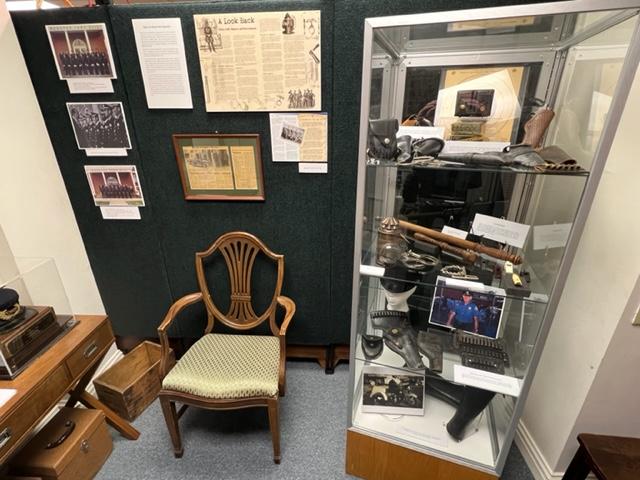
Downstairs is another gift shop with many unique items at extremely reasonable prices and in the room next to it was a display on the history of the Boonton Police Department over the years.
Police Chief’s Desk
Display of Police memorabilia
Special Events:
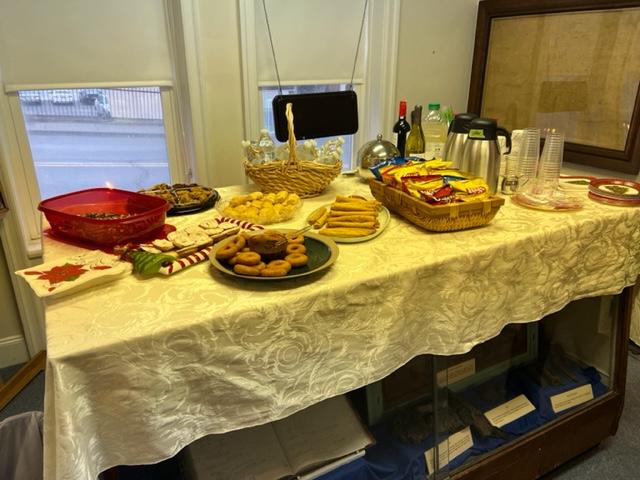
I recently went to the Boonton Historical Society for the December 2019 Holiday open House and it was a very nice afternoon. They some local students playing the guitar, keyboards and the flute with engaging music and holiday songs. The Open House did not return again until 2022 in the post-COVID era and it was a very festive afternoon even if the weather did not want to cooperate. There was wonderful music, delicious food and warm conversation. I got to talk with many of the Board Members on events going on at the museum.
There were some light refreshments with hot and cold appetizers and Christmas cookies.
They had specials in their gift shops and featured ornaments, books and stuffed animals at a reasonable price and had 1960’s and 70’s Christmas albums playing on the lower level of the museum. In 2022, one of the Trustees played the piano for the entertainment that was very nice. It was a nice mini concert.
It was a nice afternoon treat and the society did a nice job welcoming people. There was food and entertainment and even a visit from Santa Claus.
Santa visited the Boonton Historical Society at the Christmas Open House in 2022
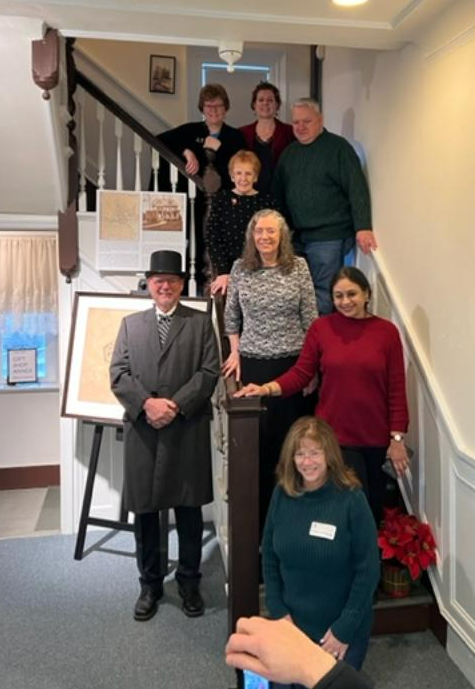
The members of the Boonton Historical Society Board of Directors at the Christmas Open House in 2022 could not have been better hosts
The gift shop is pretty extensive and offers lots of good deals on merchandise
Walking Tours:
The Historical Society also has some interesting walking tours of Boonton. In May 2021, I visited Boonton for a walking tour in conjunction with the Boonton Trail Committee of the Boonton Iron Works and the Morris Canal starting with a tour of Grace Lord Park and the falls. It was interesting how the town developed around the Iron Works and why they were created there.
Boonton Iron Works Site in Boonton, NJ
We toured the back trails of the park along the Rockaway River to the site of the former Iron Works which are in the process of being torn down for development. The tour guide gave us the history of the Iron Works and their role in pig iron development and how the canal played a role in the transport of the finished product to markets all over the country. These famous ruins are under threat of being torn down for development which would be a shame.
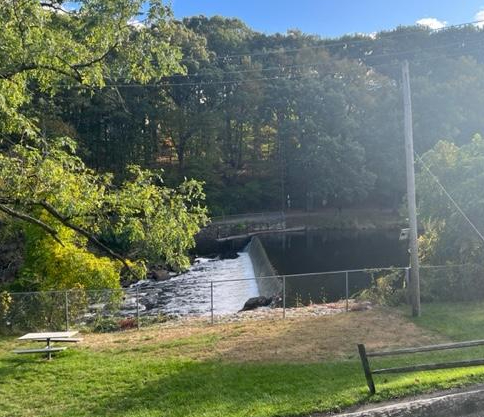
The Grace Lord Park Falls
The Grace Lord Park where the tour took place at the very edge of Downtown Boonton, NJ is an amazing little park at Essex Avenue and Main Street is an amazing little park. On a recent trip to Boonton for a walking tour of the Downtown architecture and history of the downtown I stopped in the park again that was decorated for a Halloween event for the community. It looks like it will be a lot of fun.
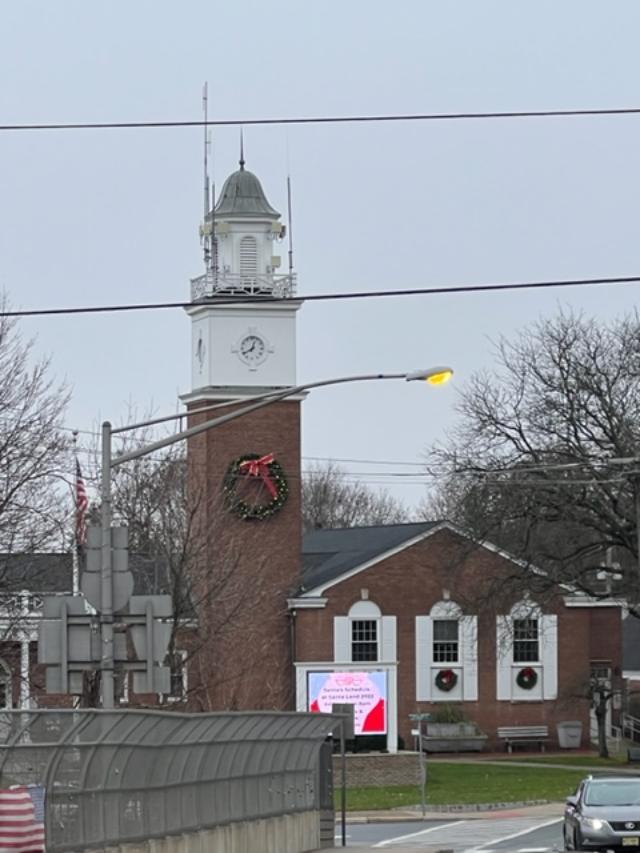
City Hall decked out for the holidays
In October of 2022, I went on a interesting walking tour lead by museum member and long time resident of Boonton, NJ Nancy Charlton Questa, who took us through the downtown and discussing the history and current use of many of the unique and detailed buildings of Downtown Boonton. For such a small town, it at one time had been a major mining and steel town with access to the canal system of New Jersey. It had a Opera House and a theater which is amazing for a downtown this size.
Downtown Boonton, NJ has many historical buildings
Many of the buildings in the downtown are currently going through a renovation and will reopen as new restaurants, theaters and retail shops as the town is becoming more “hipster” and ‘artist’ driven with new galleries opening up. There are now three coffee shops and three bakeries in the downtown area.
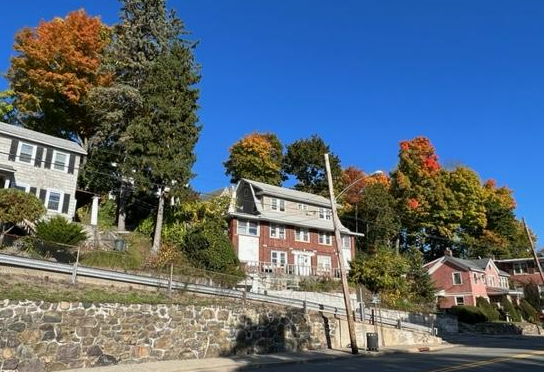
The top of the Downtown Boonton, NJ in the fall
Ms. Charlton Questa knowledge of the town as a life long member of the community brought a lot of insights to the walking tour of what was there when she was growing up until today. It blended very nicely with the current exhibition at the museum “Small Businesses of the Past”. This is on the history of the town’s business district businesses. I highly recommend this walking tour when it is offered again in the Spring.
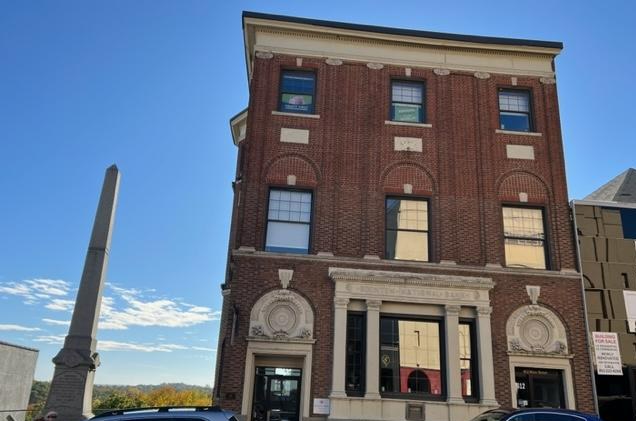
The Civil War Monument next to a historical bank
The museum is only open once a week on Sundays from 1:00pm-4:00pm and is run by volunteers. If you want to see how the State of New Jersey grew from a series of small towns to bustling industrial areas to sleepy back towns and back, visiting the Boonton Historical Society and Museum is a must visit.
The Boonton Library next to Darress Theater in Downtown Boonton, NJ
The Boonton Opera House next to the old Boonton Firehouse
The top of Downtown Boonton, NJ in the fall
Gaylord Park at the edge of Downtown Boonton, NJ where we toured both the Downtown and the Ironworks
New Exhibitions:
The Boonton Historical Society in conjunction with the North Jersey Electric Railway Historical Society and Liberty Historic Railway present this exhibition on the Trolley era. This display will include scale models of various types of trolley cars which operated in New Jersey, along with streetcar memorabilia and artifacts such as operator’s uniform jacket/hats, badges, books, publications, post cards, photos, videos, lithographs, signs, posters, tickets, lanterns, hardware and more (Boonton Historical Society).
The History of Boonton, NJ in the early years
In the Winter of 2021, the Boonton Historical Society opened a new exhibition entitled “Small Businesses of the Past”, which was an interesting look at the way downtowns evolve with the times.
“The Small Businesses of the Past” exhibition
It showed the role that immigrants played in building the downtown merchants’ shops and how they catered to fellow immigrants who worked at the iron plant and on the canal. It also explained how families passed these businesses down from generation to generation over time.
The Bakeries in town
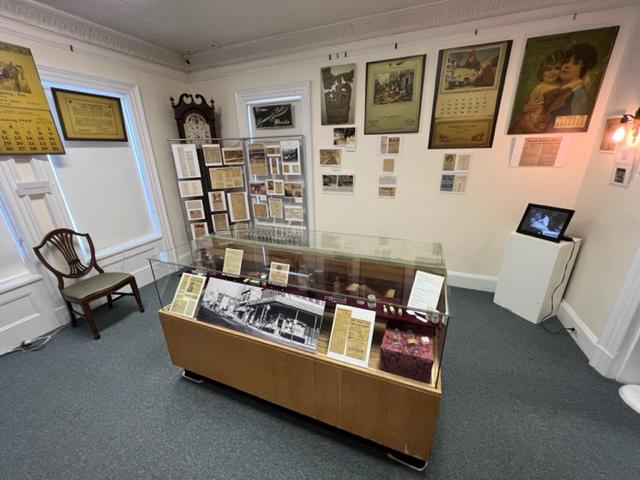
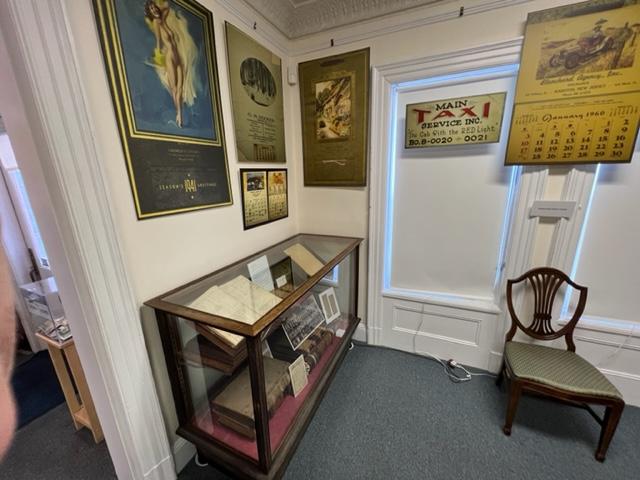
The exhibition showed the bakeries, banks, taxi services and pharmacies that make up any downtown in the State of New Jersey. It is interesting to see things old Christmas club accounts, prescription bottles and promotional items that are given out when you open a new account.
Things that might not be part of the shopping experience today.
The mustache cups of the barbers in the area.
The businesses of Downtown Boonton over the years
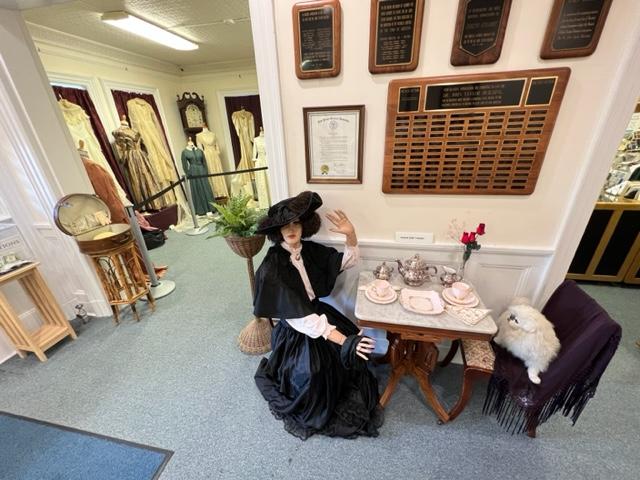
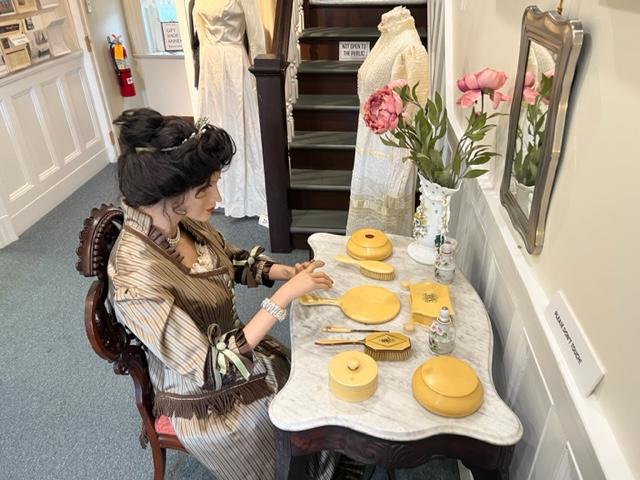
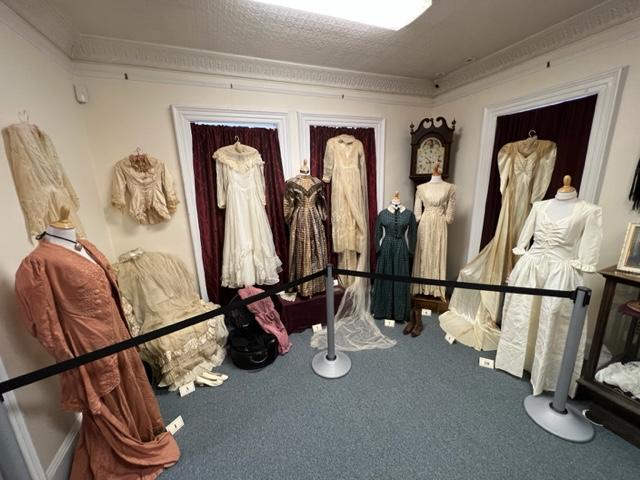
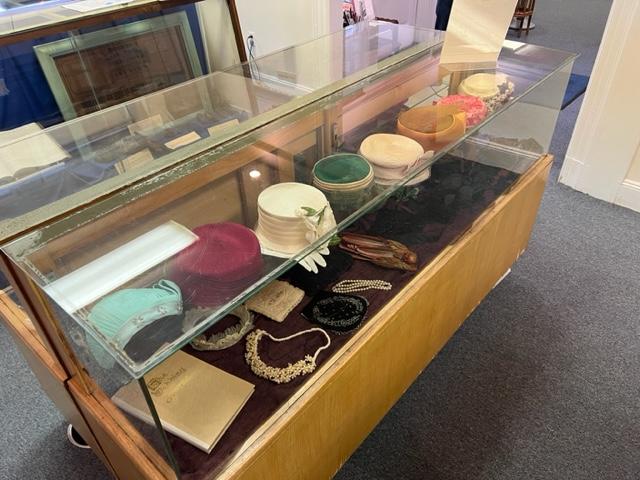
In 2023, the exhibition is entitled: “Say Yes To The Dress”: Ladies dress through the decades. A reflection of ladies’ dress through pieces of the permanent collection and the collection of members. The exhibit features wedding, party and day dresses worn by women from the 1880’s to the 1930’s. Also displayed was a assortment of accessories including hats, gloves and novelties.
The exhibit: “Say Yes To The Dress.”
The exhibit showcases ladies dress through the ages and a reflection on how things have changed over the years.
A close up at the dress collection.
Lady preparing herself for a night out.
Lady enjoying tea with favorite friend.
This dress was worn by Mrs. Ethella Salmon and donated by Lloyd Charlton. Ethella was the daughter in law of Congressman Joshua Salmon and had worn this dress to President McKinley’s inaugural ball in 1901.
The display to the right
The display to the left.
Wedding dresses through the ages.
The accessories in the show.
It really shows how Boonton, NJ has changed over the years and a new wave of immigration with Jamaican and Latino businesses opening up are again changing the make-up of the downtown today. Downtown Boonton is going through another resurgence with new art galleries, restaurants and stores opening up where these businesses of the past once stood.
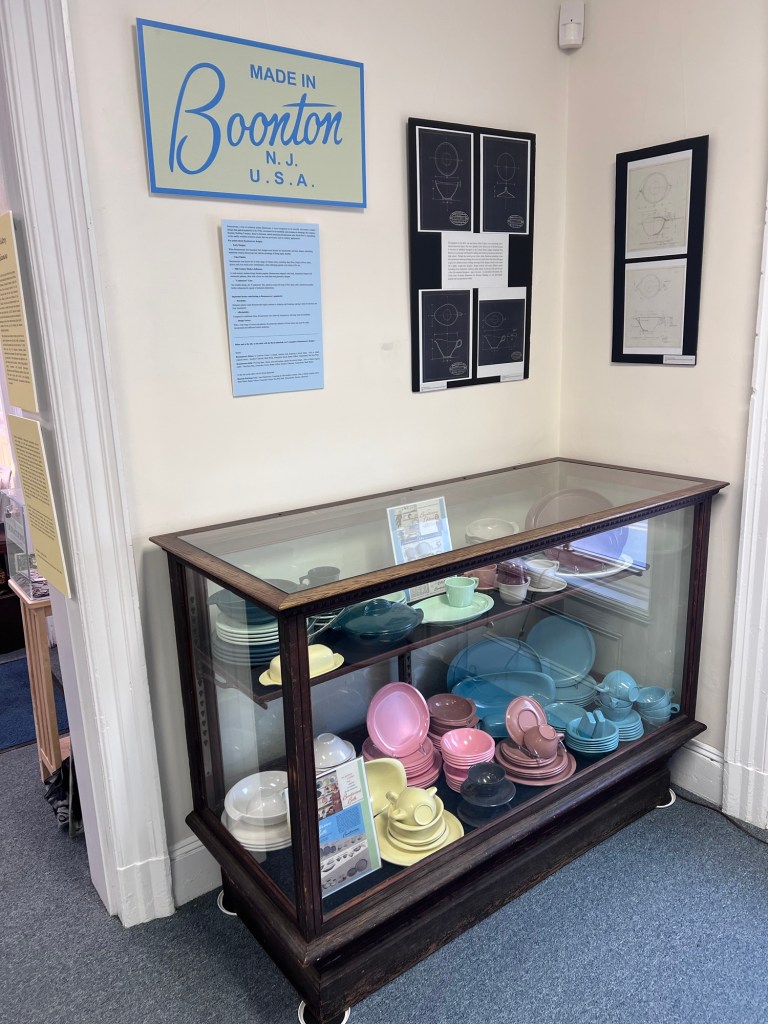
The latest exhibition was on Boontonware, dish ware that was created and manufactured in Boonton until 1980. These colorful dishes which graced many New Jersey and beyond dinner tables were once manufactured in town. I remember these dishes from the early 1970’s when our family had a set of red flowered dishes that we ate all our meals on.
The Boontonware display of dish ware
The display of Children’s dishes
More items from the Children’s line of Boontonware
The colorful dishware made in Boonton, NJ
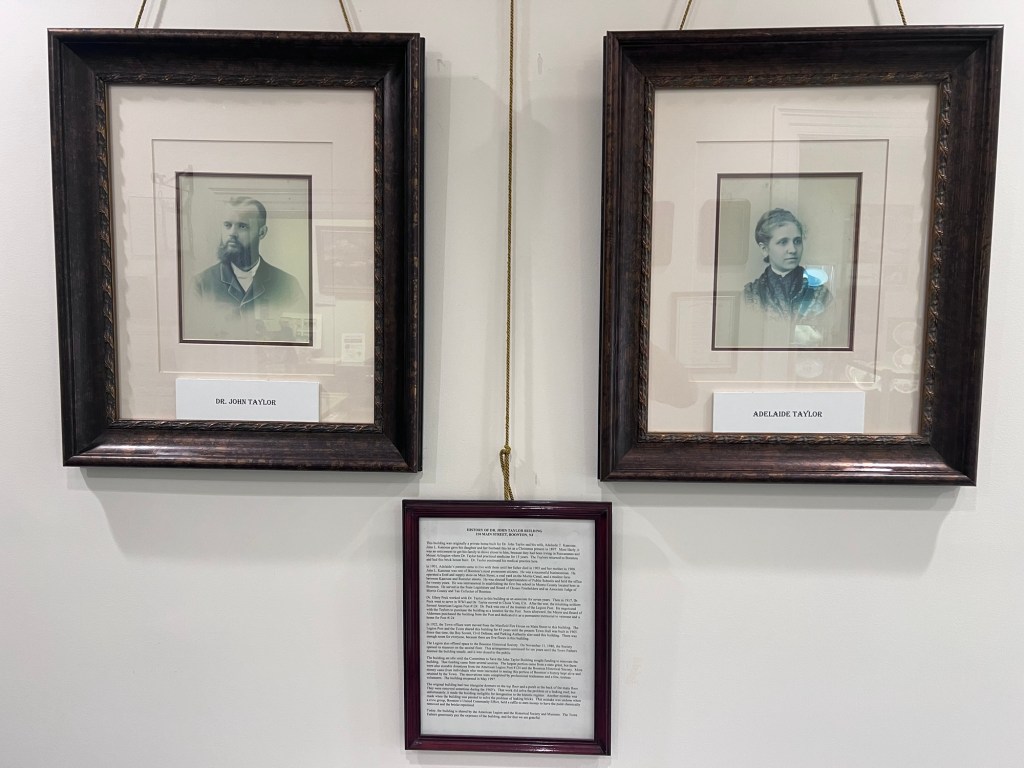
The portraits of the former owners of the home where the museum is located, Dr. & Mrs. John Taylor
A trip to Downtown Boonton, NJ:
Downtown Boonton, NJ
The Mission Statement of the Boonton Historical Society & Museum:
The Boonton Historical Society and Museum is a non-profit organization incorporation in 1959 located in the town of Boonton, New Jersey. Its mission is to:
*Preserved and protect the town of Boonton’s unique cultural, architectural and industrial history.
*Preserved and share the area’s rich history, folklore, arts and humanities of the past and present.
*Encourage preservation and restoration of historic landmarks in the town.
*Protect and display the museum’s collections.
*Provide educational programs, guided historical tours and exhibitions to a diverse population.
The History of Dr. John Taylor House 210 Main Street Boonton, NJ (Home of the Museum):
The building was originally a private home built for Dr. John Taylor and his wife, Adelaide T. Kanouse. John L. Kanouse gave his daughter and her husband this lot as a Christmas present in 1897. Most likely, it was an enticement to get his family to move closer to him because they had been living in Succasunna and Mount Arlington where Dr. Taylor had practiced medicine for 15 years. The Taylor’s returned to Boonton and had the brick house built. Dr. Taylor continued his medical practice there.
In 1901, Adelaide’s parents came to live with them until her father died in 1905 and her mother in 1908. John L. Kanouse was one of Boonton’s most prominent citizens and was a successful businessman. He operated a food and supply store on Main Street, a coal yard on the Morris Canal and a modest farm between Kanouse and Roessler streets. He was elected Superintendent of Public Schools and held the office for twenty years. He served in the State Legislature and Board of Chosen Freeholder and as Associate Judge of Morris County and Tax Collector of Boonton.
Dr. Ellery Peck worked with Dr. Taylor in the building as an associate for seven years. Then in 1917, Dr. Peck went to serve in WWI and Dr. Taylor moved to Chula Vista, CA. After the war, the returning soldiers formed American Legion Post #124. Dr. Peck was one of the trustees of the Legion Post. He negotiated with the Taylor’s to purchase the building from the Post and dedicated it as a permanent memorial to veterans and a home for Post #124.
In 1922, the Town offices were moved from the Maxfield Fire House on Main Street to the John Taylor house. The Legion Post and the Town shared this building for 43 years until the present Town Hall was built in 1965. Since that time, the Boy Scouts, Civil Defense and Parking Authority have also used the building, having five floors there was enough room for everyone.
The Legion also offered space to the Boonton Historical Society. On November 11, 1980, the Society opened its museum on the second floor. This arrangement continued for ten years until Town Fathers deemed the building unsafe and it was closed to the public.
The building sat idle until the Committee to Save the John Taylor Building sought funding to renovate the building. That funding came from several sources. The largest portion came from a state grant but there were also sizable donations from the American Legion Post #124 and the Boonton Historical Society. More money came from individuals who were interested in seeing this portion of Boonton’s history kept alive and retained by the Town. The renovations were completed by professional tradesman and a few tireless volunteers. The building reopened in May 1997.
The original building had two triangle dormers on the top floor and a porch at the back of the main floor. They were removed sometime during the 1960’s. That work did solve the problem of a leaking roof but unfortunately, it made the building ineligible for designation to the historic register. Another mistake was made when the building was painted to solve the problem of leaking bricks. That mistake was undone when a civic group, Boonton’s United Community Effort, held a raffle to earn money to have the paint chemically removed and the bricks repointed.
The John Taylor House
Today, the building is shared by the American Legion and the Historical Society and Museum. The Town Fathers generously pay the expenses of the building and for that were are grateful (Boonton Historical Society).
Disclaimer: This information was taken from the Boonton Historical Society pamphlet and I give them full credit for the information.
This was the second time I visited the Morris Museum and on every trip I learn something new. The first time I had visited the museum it was right after the movie ‘Hugo’ had opened which was a story that involved the automata (moveable animals and people mechanical objects) so my dad and I toured the permanent exhibit and then toured the rest of the museum.
The Guinness Galleries of Automata
The gallery of Automata
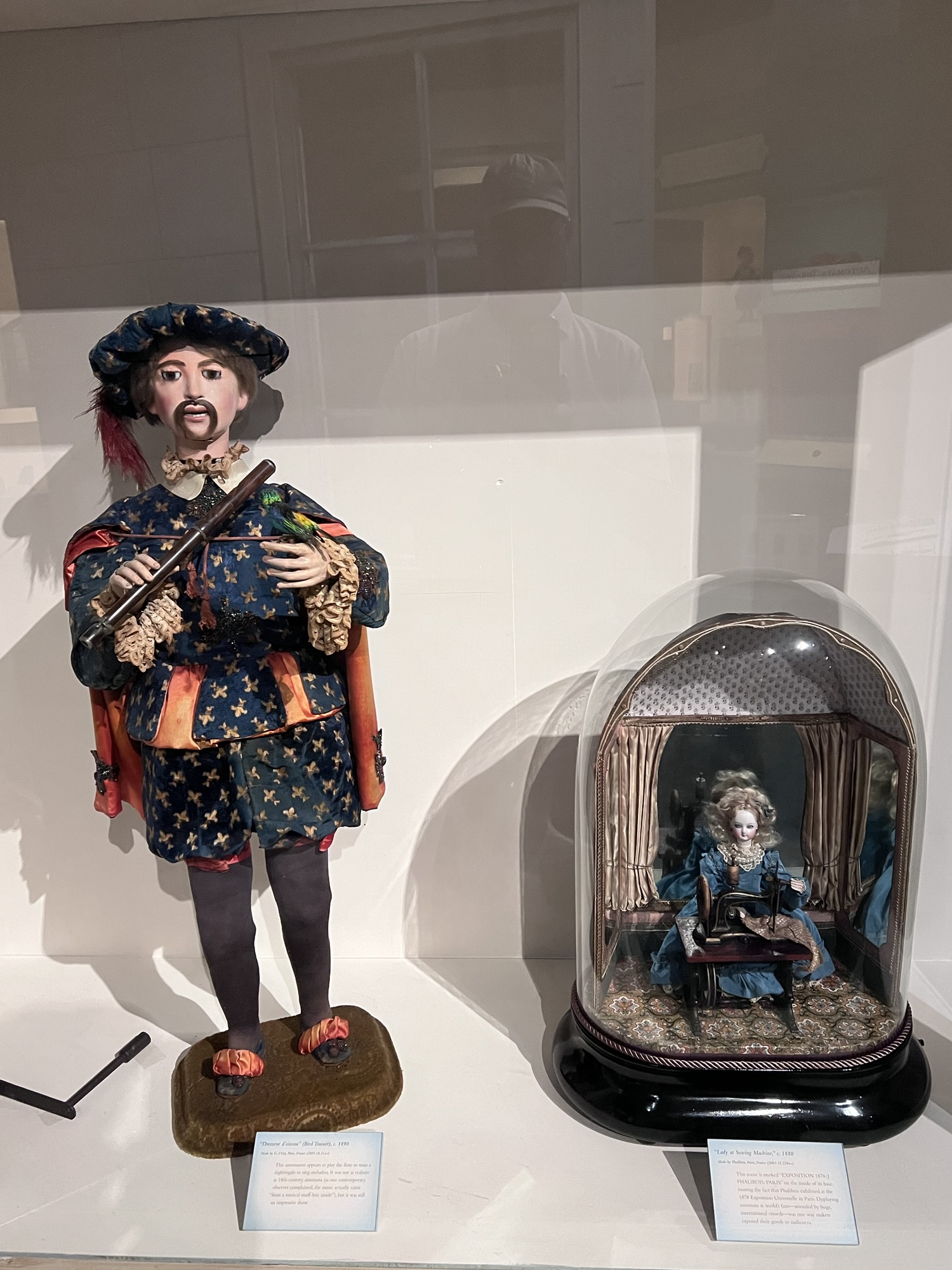
When I arrived at the museum at 2:00pm recently, the museum was having a talk and a demonstration on the automata and musical boxes and that was very interesting. These mechanical wonders have been around since the 1300’s being perfected in the Arabic countries by clockmakers and craftsmen at the time.
The exhibition galleries
The movie “Hugo”
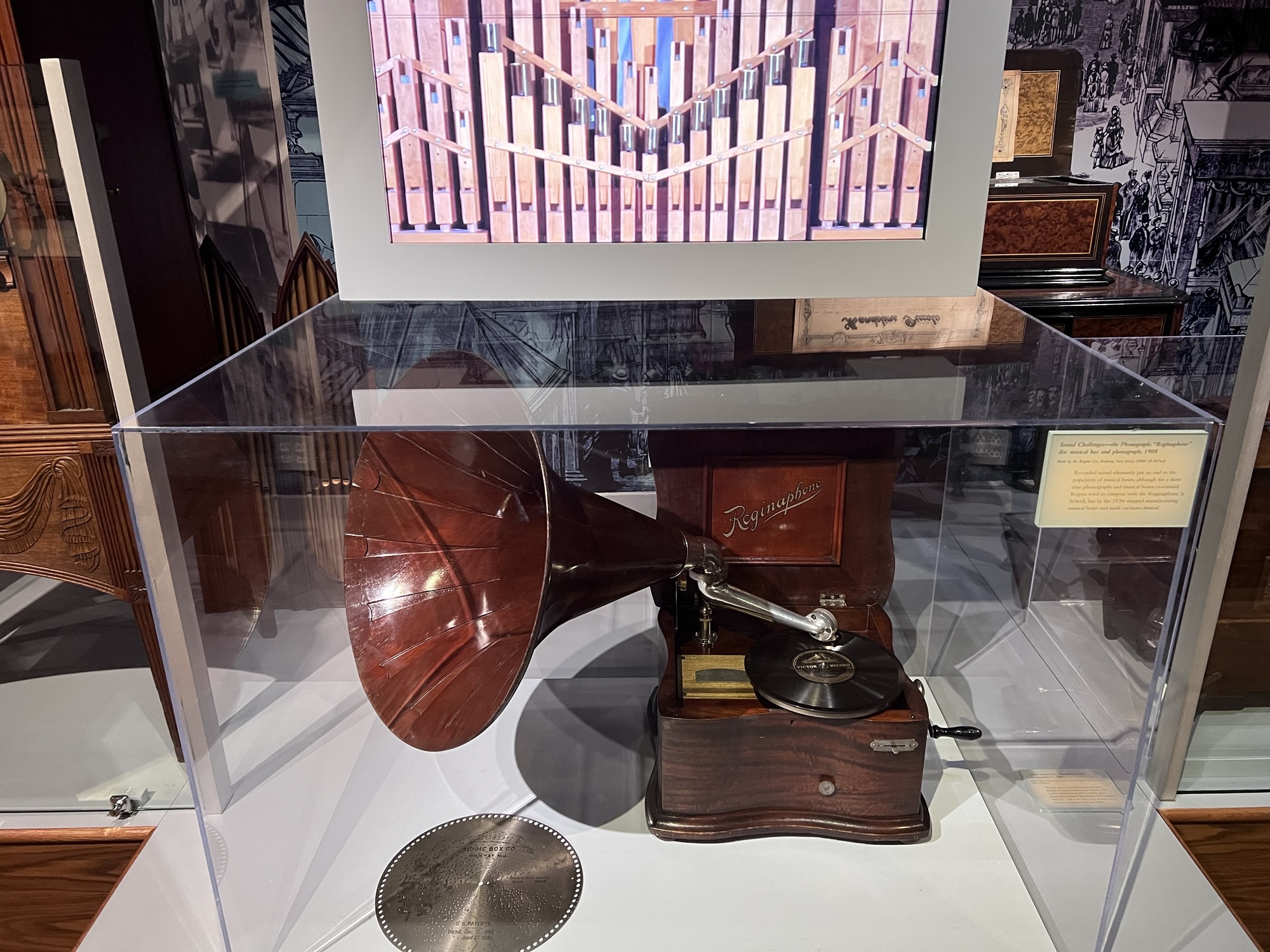
The lecture was on how they were constructed and perfected over time to make them more reasonable to a growing market and how they were replaced when phonographs, radios, record players and tapes gradually progressed to change the market and make them obsolete.
A old Victrola record player
We got to hear an example of each of the objects and it was fascinating that during the Industrial Revolution how paper rolls changed the cost of these objects making them available to all classes. Today’s talking dolls and music boxes are descended from these innovative items.
The Automata at the Morris Museum
The fancy music boxes
Amusing children’s toys
The beautiful French workmanship
The beautiful pieces from the 1800’s
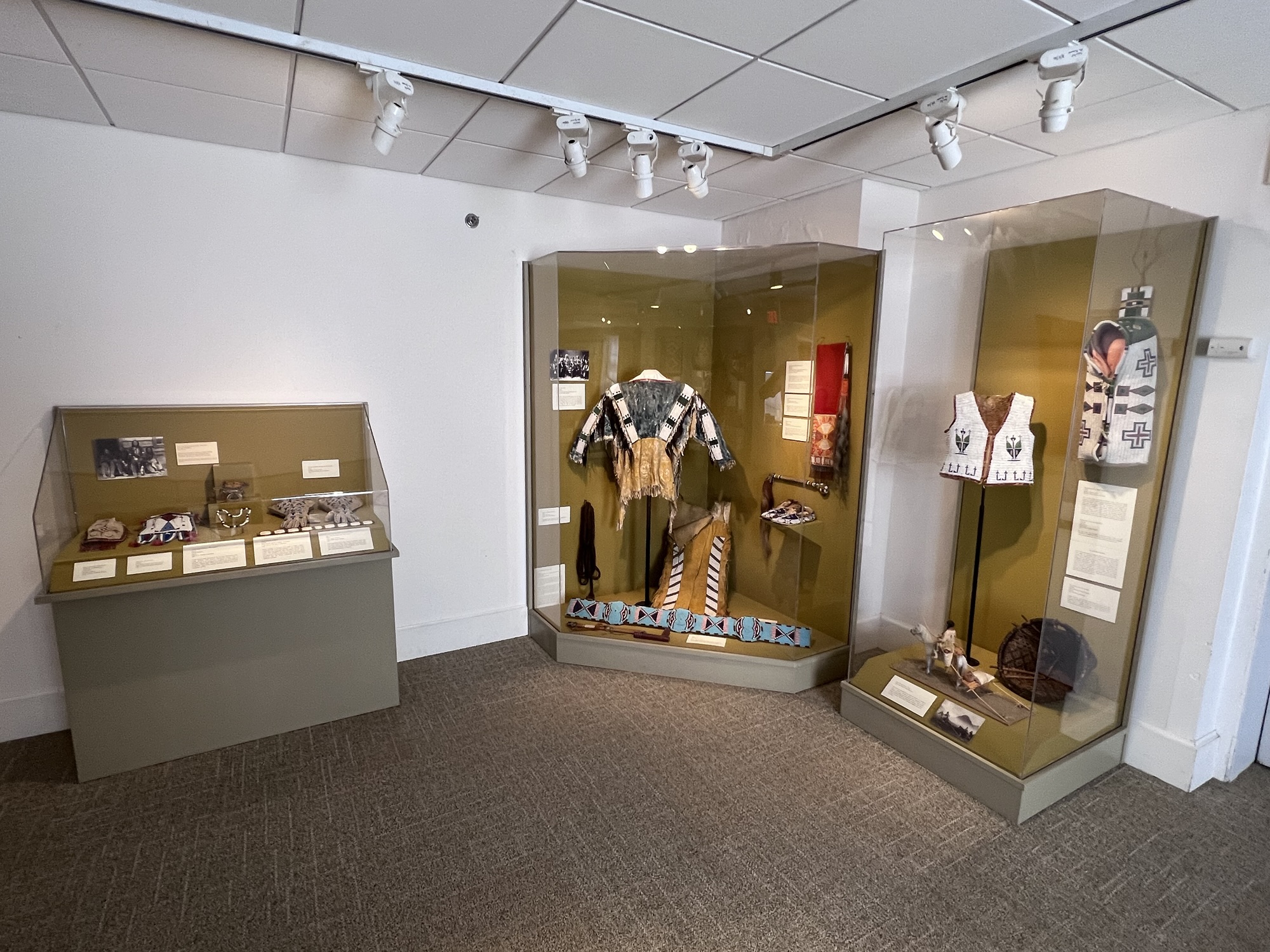
After the talk, I walked around the Museum to see parts of it that I had not visited on my last trip. For a small suburban museum, the museum is packed with all sorts of artifacts from Native American art to dinosaur relics and fossils found in the State of New Jersey.
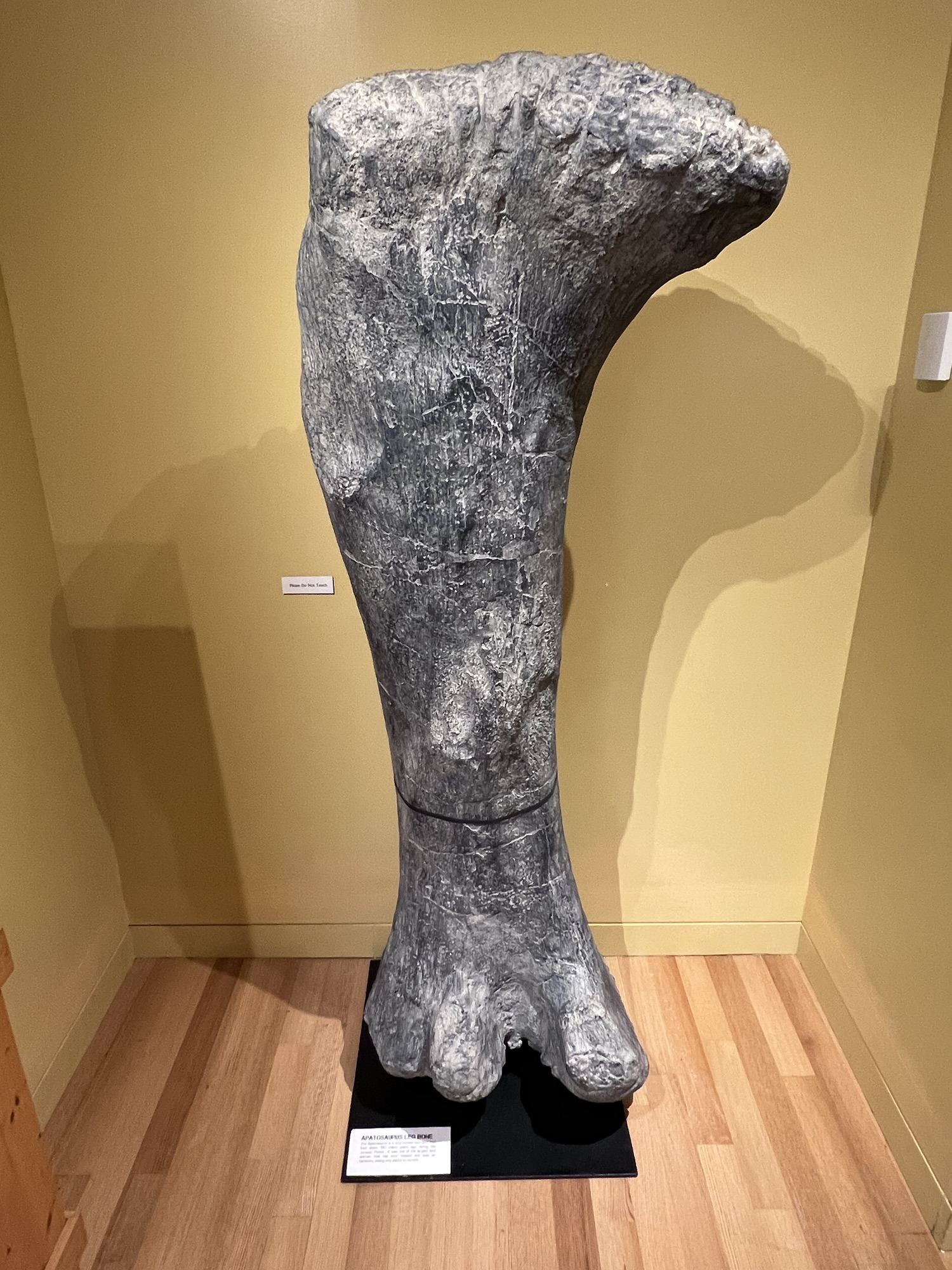
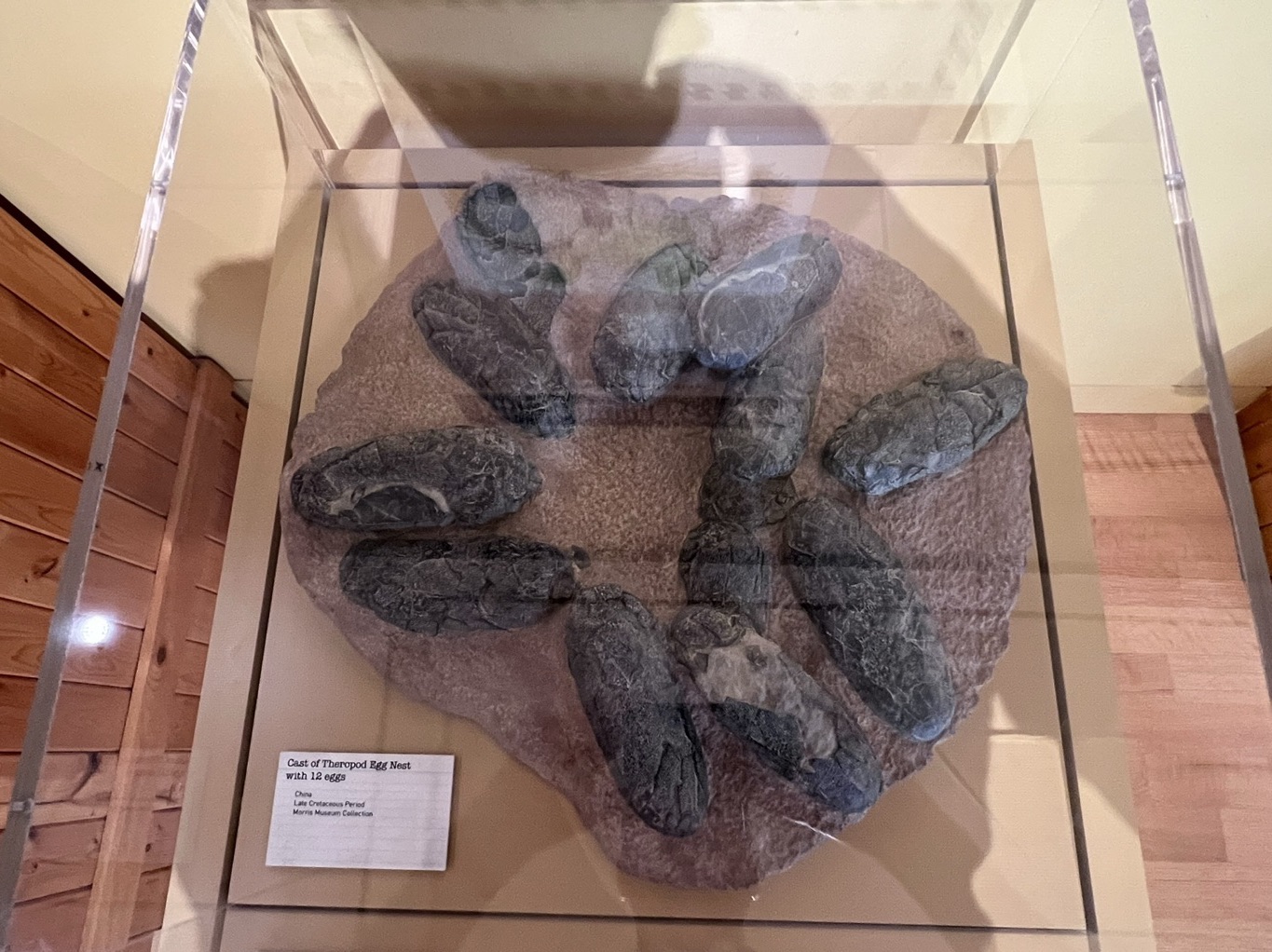
The Dinosaur Room
Dinosaur femur
Dinosaur eggs
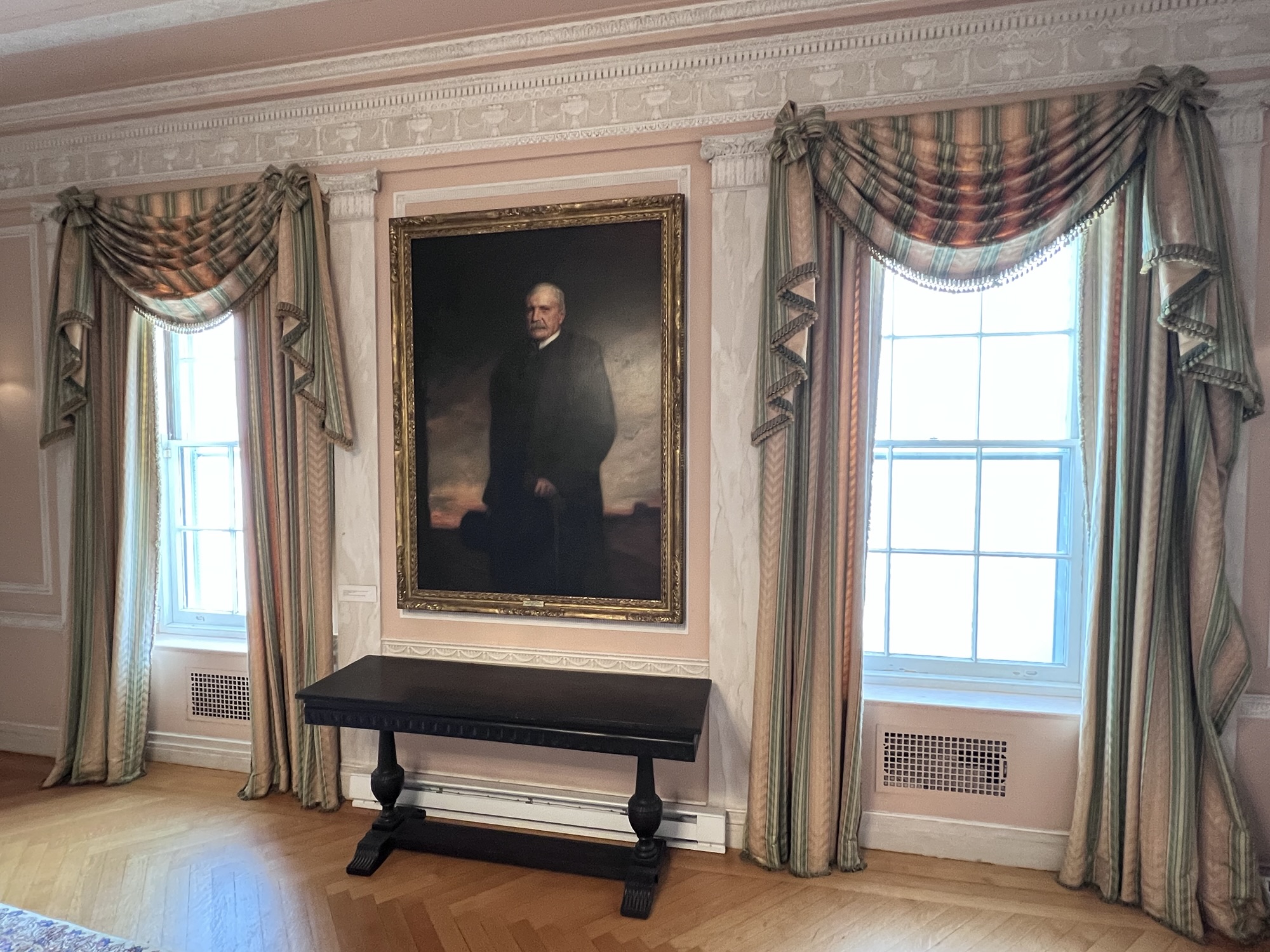
In the original Frelinghuysen Mansion section of the museum, you can visit the Dodge Room which was dedicated to Geraldine Rockefeller Dodge, a great patron of the Arts. The room contains vintage furniture and paintings and shows what the room may have looked like when the Frelinghuysen’s lived here.
The Dodge Room at the Morris Museum
The portrait of William Rockefeller
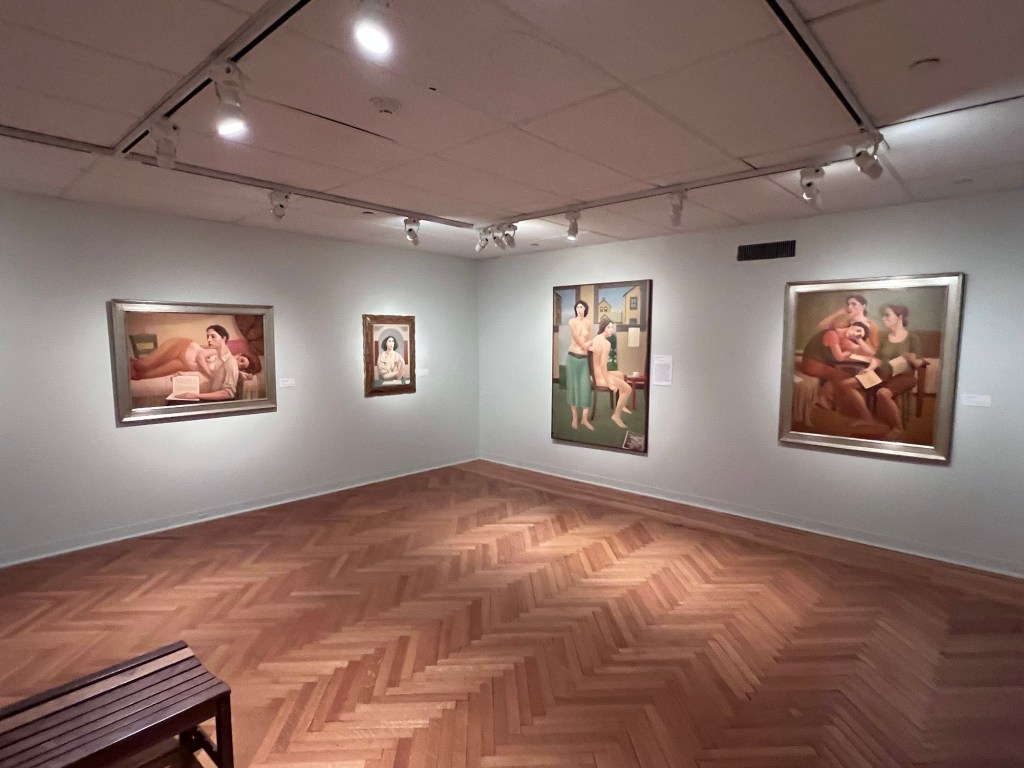
The museum also had really interesting exhibits from travelling shows including the Artist Alan Feltus exhibition of paintings
Artist Alan Feltus is an American figurative painter whose paintings present a series of contrived interior vignettes that simultaneously use a casual familiarity of contemporary life while arranging the figures and their surroundings with a precision and order from a bygone artistic tradition (Morris Museum website).
The Feltus exhibition in May 2025
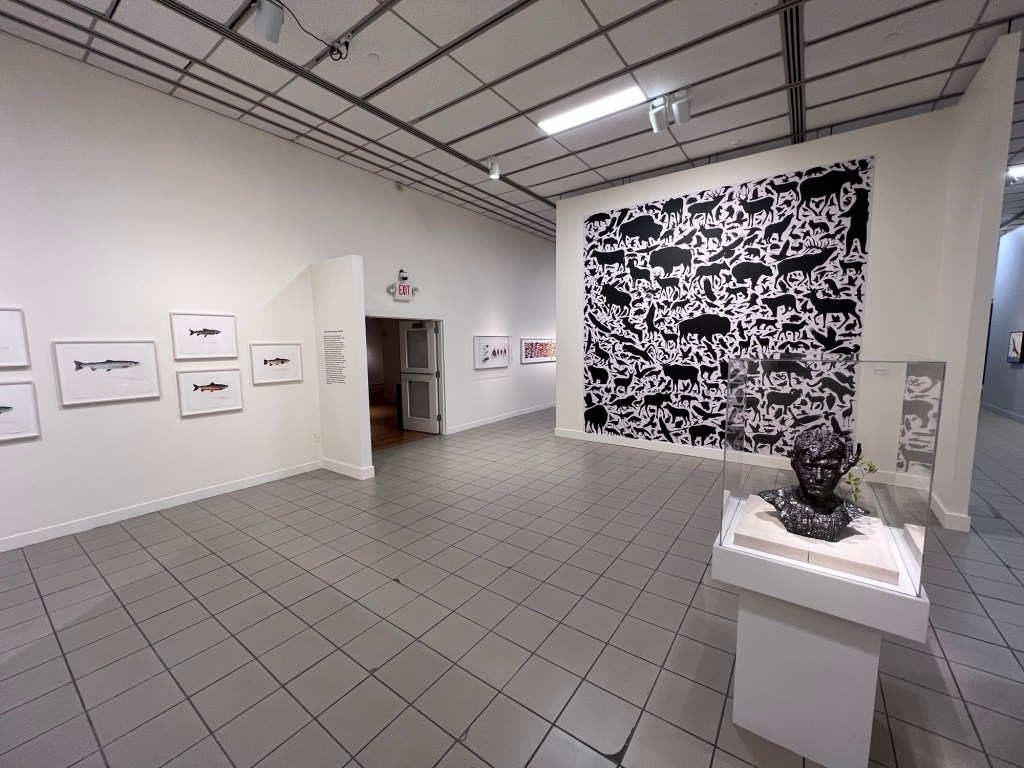
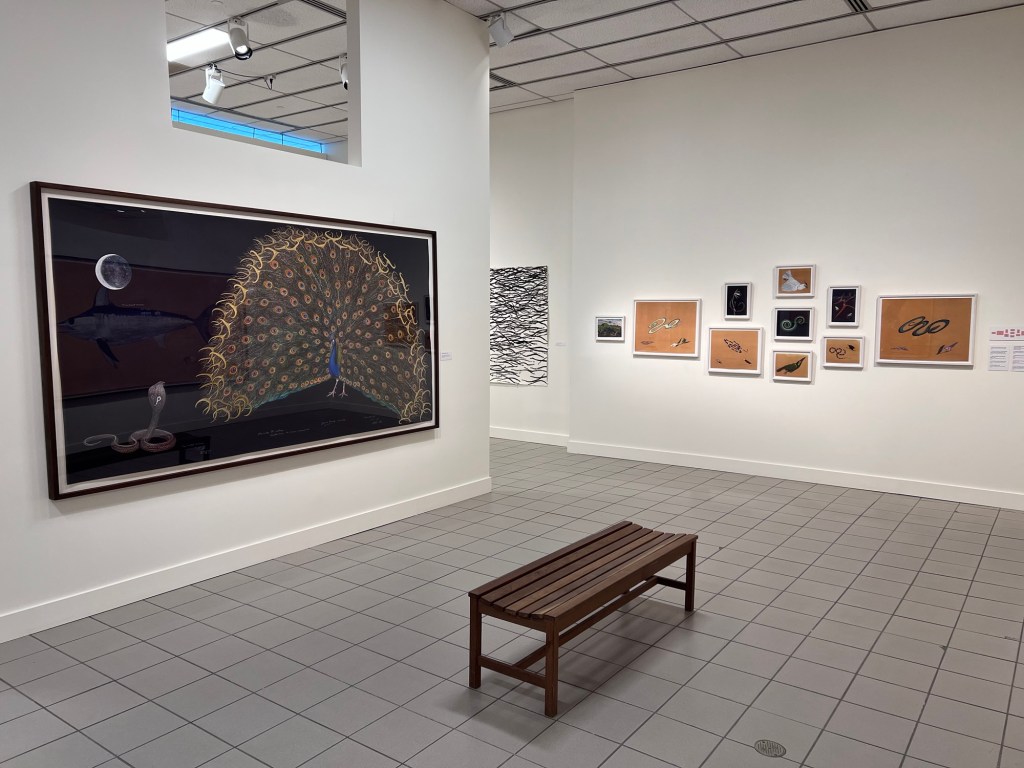
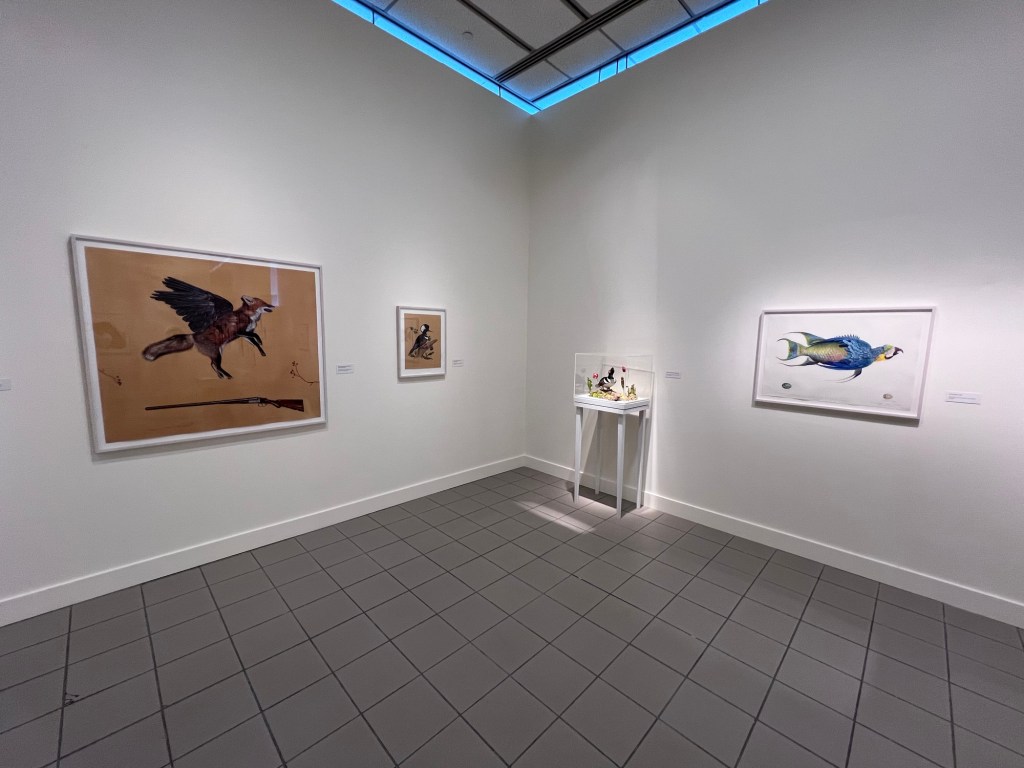
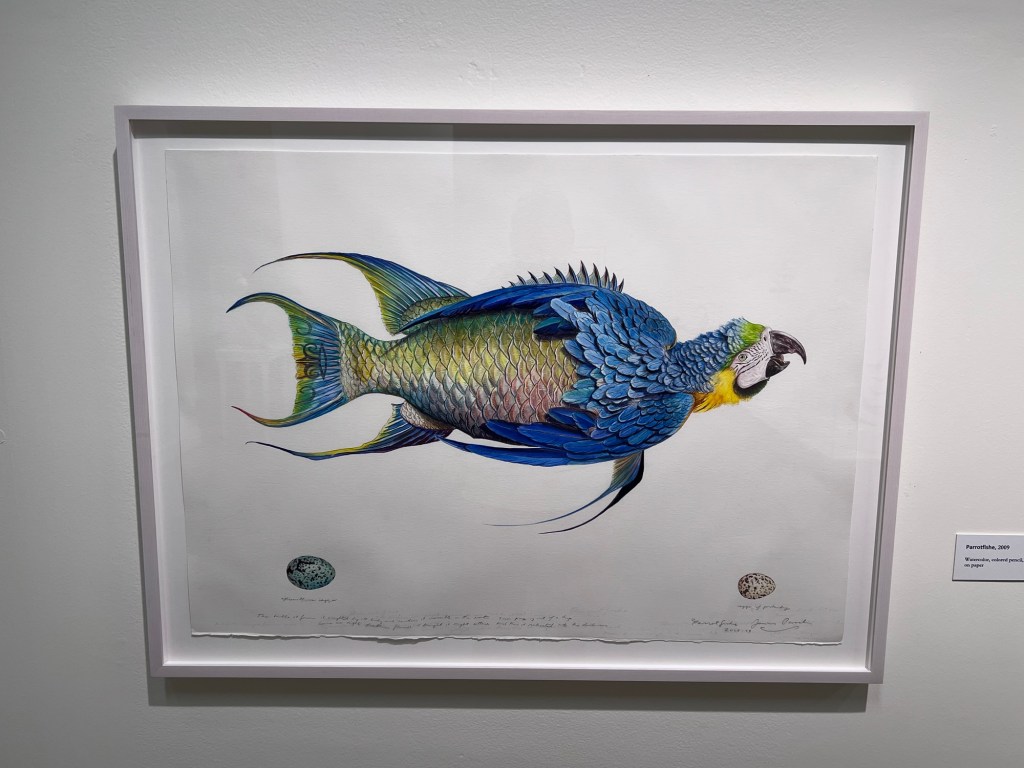
There was another exhibition that I visited that afternoon by the Artist James Prosek “At Work”.
Some of the sculpture pieces from the Prosek exhibition
There is a lot to see and do at the museum for all ages and if none of these appeal to you there is also the theater. The Morris Museum has a lot to offer everyone.
The Museum Mission:
The Morris Museum celebrates art, science, history and the performing arts by providing engaging exhibitions and programs, all of which are designed to excite the mind and promote cultural interests. The Museum strives to educate, entertain and inspire diverse audiences of all ages, abilities and backgrounds (Museum site)
History of the Museum:
(from the Museum website)
In 1913, objects collected for display in a curio cabinet at the Morristown Neighborhood House formed the beginning of the Morris Museum Collection. Originally known as the Morristown Children’s Museum, education has been an intrinsic part of the Museum’s mission from the start. Mrs. Aldus Pierson, the Museum’s first head worker, introduced children to world cultures through the exploration of cultural artifacts. Generous donors began giving Mrs. Pierson interesting objects that they had acquired in their travels around the world. By 1927, the collection had expanded to seven rooms encompassing the first floor of the Neighborhood House’s annex. Displays included the world and children’s toys.
In 1938, the Museum moved to the Maple Avenue School building and shared space with the Morristown Board of Education and the Morris Junior Colleges until 1956. This enabled the Museum to enhance its programs for children and establish a link between its offerings and the curricula of area schools. This strong educational focus developed and continues to the present. The museum was incorporated in 1946, and its collections and services continued to expand. During this time, the Museum was at the forefront of presenting new trends in museum education through the modern use of dioramas, panels and niches. The outreach education program began in 1950 with in-school presentations to eight Morris County school including talks about American Indian culture.
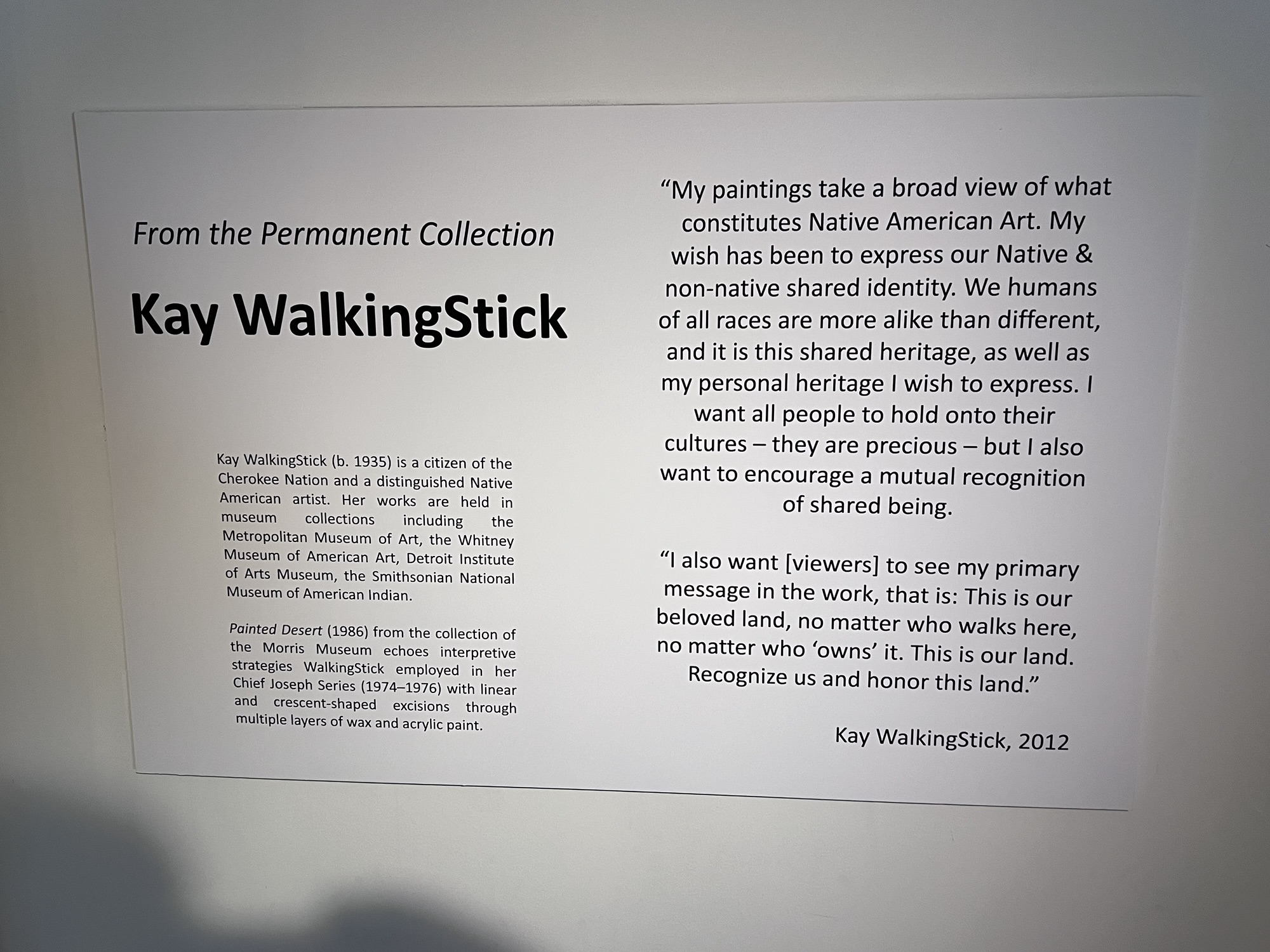
The Kay WalkingStick Collection
The Museum’s first Director, Mr. Chester H. Newkirk made a significant impact on the development of the Museum’s programs, collections and services. During his 25 years of leadership (1956-1981), the collections of fine and decorative arts, toys and American Indian artifacts were greatly enhanced. In 1964, having outgrown its fourth location, the Museum purchased Twin Oaks, the former Frelinghuysen estate.
The Kay WalkingStick Collection
The Kay WalkingStick Collection
The Kay WalkingStick Collection
The Kay WalkingStick Collection
Today, the Georgian-style mansion functions as the heart of the Morris Museum’s operations. In 1969, the institution was renamed the Morris Museum of Arts and Sciences, reflecting it growing emphasis on visual art and the expansion of its offerings for all ages. In response to the Museum’s increasing activities, successful capital campaigns enabled additions to the facility to be built.
Art of the Sublime in the lower level of the mansion
In 1970, gallery space was expanded and a 312 seat theater was added, which was later named the Bickford Theater. In 1973, the Morris Museum became the first museum in New Jersey to be accredited by the American Association of Museums. In 1985, its name was changed to the Morris Museum. In 1990, the Museum complex was further expanded to 75,524 sq. ft.
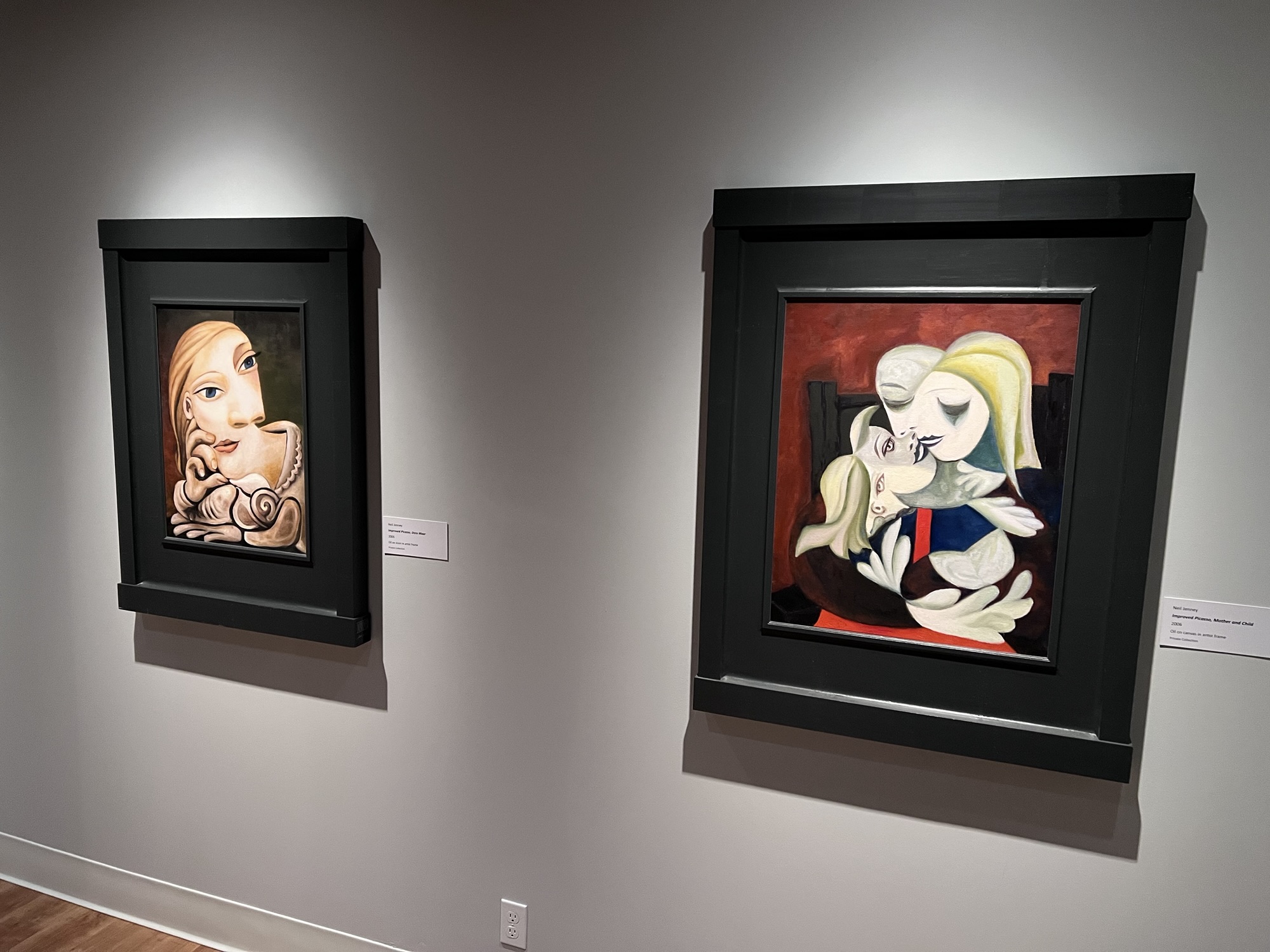
Artist Neil Jenney pursues realism as a style and a philosophy. Mostly self-taught, he attended the Massachusetts College of Art in 1964 and moved to New York in 1966, where he has lived and worked since (Morris Museum website).
The Morris Museum’s Bickford Theater is a cultural hub for the very best of the performing arts in Morristown and beyond. Approaching its 50th anniversary, it will shine with even more dynamic, multifaceted and relevant programming, including a partnership with London-based National Theater Live; two film series and unique film festivals; traveling professional productions, a new lecture series, story-telling workshops, jazz, classical and community concerts children’s theater and more.
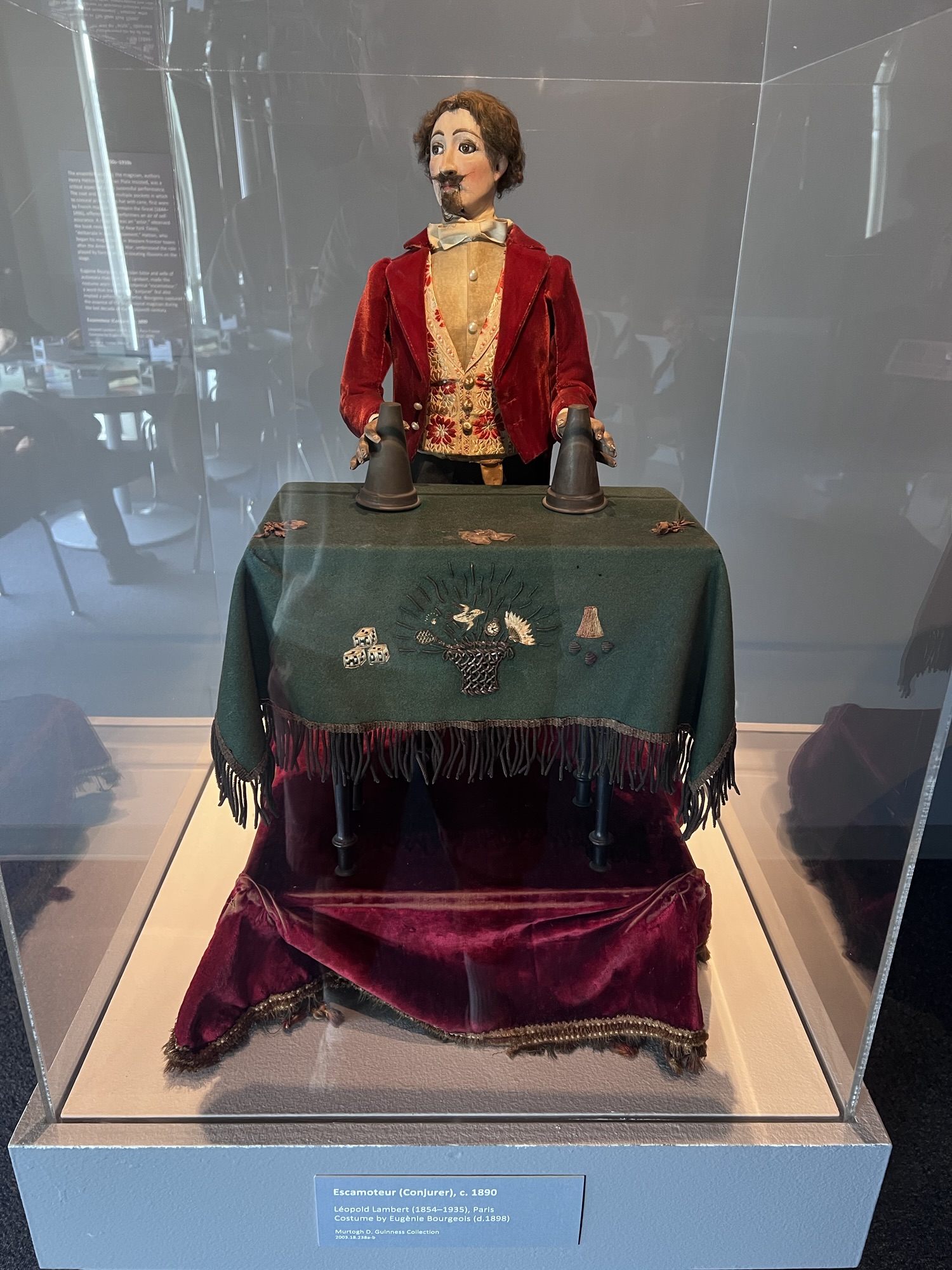
In 2003, the Museum was awarded the Murtough D. Guinness Collection, one of the world’s most important collections of mechanical musical instruments and automata (robotic figures of animals and people).
The beautiful pieces in the automata collection
This collection further enhances the Morris Museum’s role as a major cultural center and travel destination for the arts, sciences and humanities. This 750 object collection reflects innovative technology, exquisite craftsmanship, compelling sound and important cultural heritage.
This is one of the extensive collections in the country
In recognition of what is the Museum’s most renowned collection, the Museum launched a major capital expansion project that resulted in a 5000 square foot gallery devoted to showcasing the history of mechanical music and automata, a grand Entrance Pavilion and a sky-lighted Court and expanded upper galleries.
Today, the Morris Museum is the only accredited museum in the United States with a theater and one of New Jersey’s most dynamic cultural institutions, serving more than 300,000 persons each year, two thirds of whom are children. Audiences are drawn from all twenty-one counties throughout the state and reflect the social-economic and ethnic spectrum that define northern and central New Jersey.
In 2008, the Museum was named Outstanding Arts Organization by the Arts Council of Morris area, in recognition of its exceptional accomplishments and commitment to improving the quality of life in the community through the arts. The Morris Museum has been recognized as a Major Arts institution by the New Jersey Council on the Arts/Department of State (2006-2017 eleven consecutive years) in recognition of the Museum’s solid history of artistic excellence, substantial programming and board public service. The New Jersey State Council on the Arts further distinguished the Morris Museum by bestowing the Council’s Citation of Excellence (2007-2013 seven consecutive years). The Morris Museum is a leading cultural institution in the state, upholding the highest standards of artistic excellence, educational innovation, fiscal responsibility, community engagement, audience impact and leadership in the arts community (Museum website).
(This information comes from the Morris Museum website on their history and I give them full credit for the information)
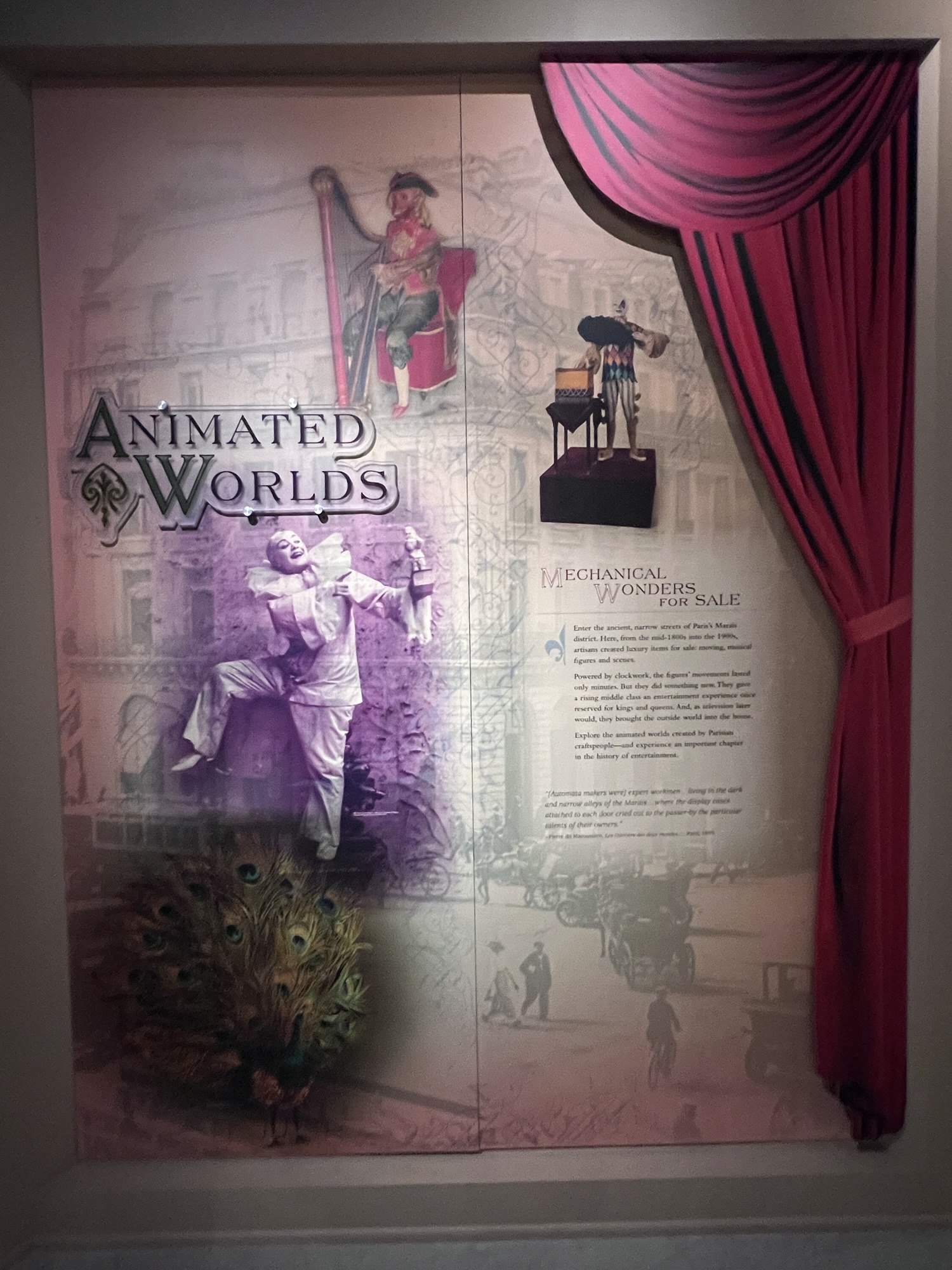
Automata Gallery
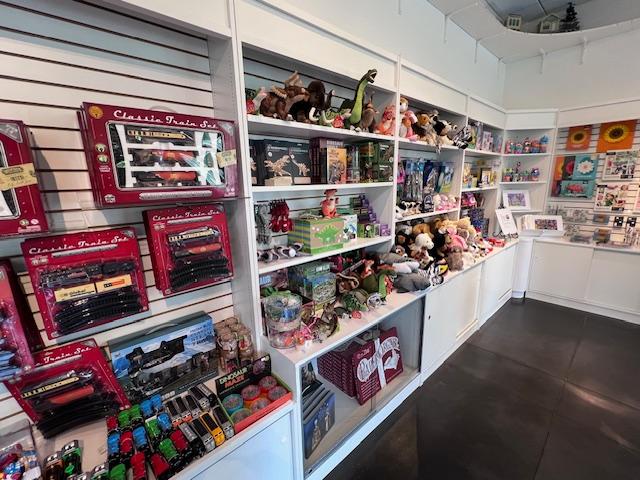
Don’t forget to visit the Gift Shop on the way out. There are all sorts of interesting items to choose from including stuffed animals and books.
*Bloggers Note: because of the size, location and time of year these sites are open, the hours and cost to get in can change since the blog was written. Please check with the site’s website or call the site before you visit. Things change over time.
My name is Justin Watrel and welcome to ‘VisitingaMuseum.com’, a trip through cultural sites, small unique museums, historic mansions and homes and pocket parks & community gardens in New York City and beyond its borders. I created this blog site to cross reference all the cultural sites that I came across when I was traveling through Manhattan for my walking blog, “MywalkinManhattan.com”.
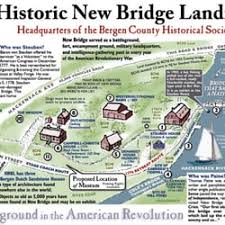
Historic New Bridge Landing
I was inspired by all these sites that I had missed over the years and never knew existed in New York City and its suburbs. Many of these being in Bergen County, NJ where I live. I found that most people feel the same way. The only way you would know that these sites existed is by walking past them.
School House Museum in Ridgewood, New Jersey
So I created this site to showcase all these smaller, largely unexplored ‘gems’ in Manhattan, the rest of New York City and places outside the greater New York City area. I concentrate on smaller, more off beat cultural sites that you might miss in the tour books or may just find by passing them on the street. This has lead me to becoming a member of the Bergen County Historical Society in Riveredge, NJ as well as other cultural sites in the area.
The Aviation Museum in Teterboro, New Jersey
There is so many interesting historical sites, parks, gardens and homes to explore that I want to share it with all of you. They are tucked behind buildings and walls, locked behind gates or hidden behind trees only for you to want to discover them.
Ringwood Manor in Ringwood, New Jersey at Christmas
I want to give these smaller and unique ‘gems’ more exposure and ‘sing their praises’ to an audience (namely out of town tourists) who might overlook them. It is hard for a lot of these cultural site because of the lack of volunteers or volunteers getting older or the absence of money to properly advertise these sites.
Juan Leon’s work at Gallery Bergen on the Bergen Community College campus in Paramus, NJ
So join me in the extension of “MywalkinManhattan.com” with my new site “VisitingaMuseum.com” and share the adventure with me. Join me also on my sister blog sites, “DiningonaShoeStringinNYC@Wordpress.com” and ‘LittleShoponMainStreet@Wordpress.com’ for restaurants and small shops.
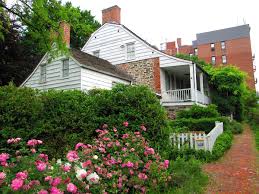
The Dyckman Farm in Washington Heights in Manhattan
These sites featuring all sorts of small restaurants, bodegas and bakeries, where a quality meal can be had for $10.00 and under and unusual stores with unique merchandise that just stand out in their respective neighborhoods. It is important to support small business owners especially in this economy.
Lucy the Elephant in Margate, NJ
So, join me here as I take “MywalkinManhattan” to some unique and special historical sites and open spaces the New York Metropolitan area and beyond.












































 Visiting a Museum: The Unique, Unusual, Obscure and Historical