Category: Exploring Manhattan

The Hewitt Gallery of Art                       Department of Art & Art History/                        Marymount College Manhattan                                221 East 71st Street                                            New York, NY 10021

The Hewitt Gallery of Art Department of Art & Art History/ Marymount College Manhattan 221 East 71st Street New York, NY 10021

The Hewitt Galley of Art

Department of Art & Art History

Marymount College Manhattan

221 East 71st Street

New York, NY 10021

(212) 517-0400

http://www.mmm.edu/departments/art/the-hewitt-gallery-of-art.php

Admission: Free

Hours: Open when the building is open

My review on TripAdvisor:

https://www.tripadvisor.com/ShowUserReviews-g60763-d32972661-r994090482-The_Hewitt_Gallery_of_Art-New_York_City_New_York.html?m=19905

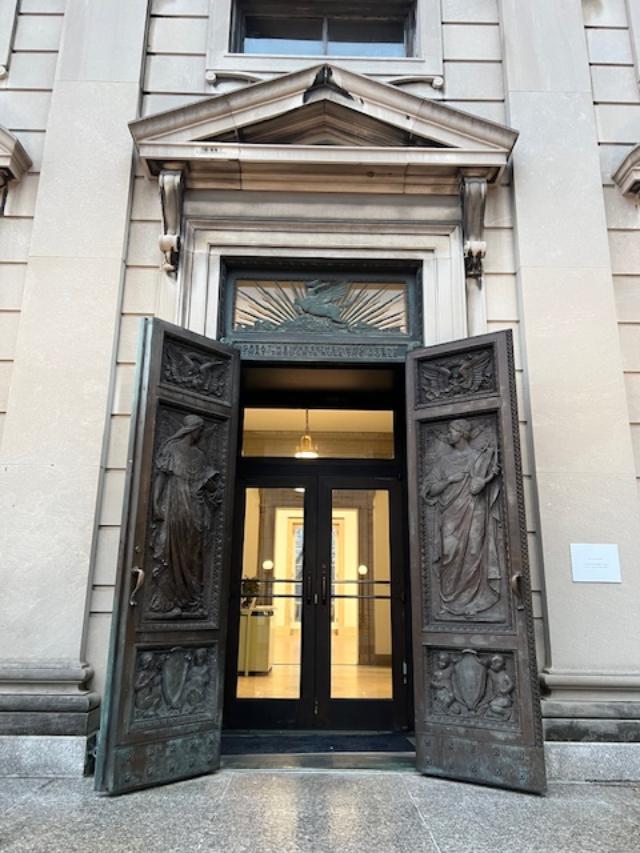
The entrance to Marymount College’s Carson Hall where the gallery is located.

I came across The Hewitt Gallery of Art when I was exploring the Upper East Side for my project, ‘MywalkinManhattan.com’ and found myself walking into the Department of Art & Art History on the Marymount Manhattan College campus.

The Hewitt Gallery on the Marymount Campus

The Hewitt Art Gallery:

The Hewitt Gallery of Art

In conjunction with the exhibitions, gallery receptions give students the opportunity to engage with professional artists, critics, collectors and curators. Many of the exhibiting artists are also guest presenters in our Art and Art History classes.

This small but unique gallery was showing the Senior Class’s Thesis Show where several members of the Senior Class were showing their final projects in the three hallways of the gallery. The students did a good job mounting their works and each was different in their own way, some pictures, some video, some painting. You got to walk through the first floor to admire the work and the best part was that the gallery was free.

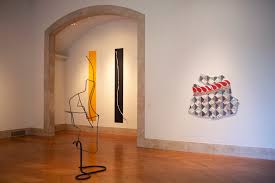
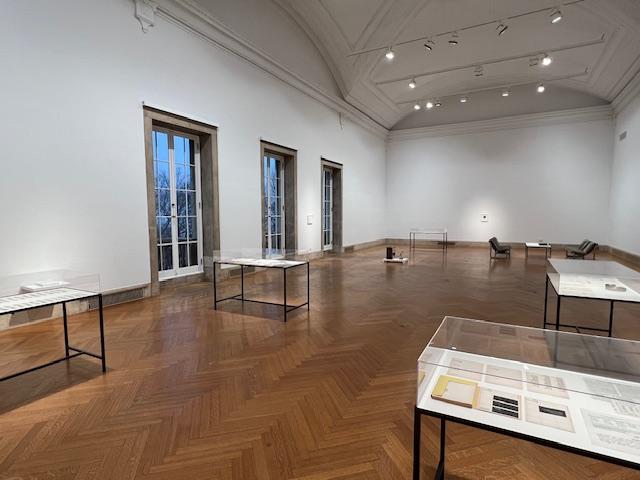
The main gallery on the first floor

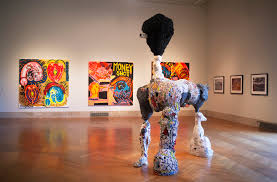
The student artwork in the back gallery

The Hewitt Gallery of Art, comprised of the Esplanade and the adjacent Black and White Galleries in Nugent Hall and Carson Hall, offers the Marymount Manhattan community exposure to professional artists and to the larger art world.

The Gallery is known in the New York art community as an alternative exhibition space showcasing contemporary art of emerging and mid-career artists. Innovative and challenging works of art reflecting a wide range of concerns and styles are presented in changing thematic exhibitions. Recent professional exhibitions have been ‘Altered States’, ‘Art & Politics: See it Now!’, ‘The Selfie & Others’, ‘Self-similarity in Math’, Nature and Art’ and ‘The Mind’s Eye: Sight & Insight’. The current exhibition that I visited in 2025 was “Echoing Identities” Light & Form”.

The Black and White Galleries

The Echoing Identities: Light & Sound exhibition

When I visited the Gallery in 2025, the Graduate students were exhibiting their Senior project and the show was entitled ‘Echoing Identities: Light & Form’. Each student explored their work with their own original pieces.

The entrance of the Gallery to the ‘Echoing Identities

The exhibition had many different mediums from cloth and textiles to sculpture and print. There was also a mixture of video and printed media.

The Mexican inspired works

The sign for Gray Laxton’s work

The works by artist Gray Laxton

The sign for artist Alyssa Rodriguez

The piece by artist Alyssa Rodriguez

The sign for Alice Linkh’s work and my favorite in the show ‘Alice and Compony’ based on a story that she created and a book her grandmother created for her based on the story she told her after a dream she had. I loved both the book and the art that was related to it.

The original artwork for ‘Alice and Company’:

The book Alice Linkh’s grandmother created

The book and artwork for ‘Alice and Company

I thought it was a cute story of a little girl who worked with animals to repair the moon when it was damaged. I thought it was a clever children’s dream that made an interesting story.

The room off to the side of the Gallery, the Black and White Gallery offers more contemporary works of the students.

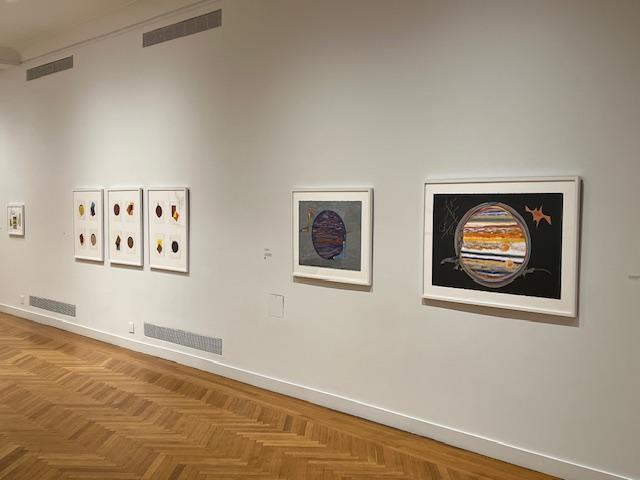
The Black and White Gallery

The works of some of the graduating students

The sign for ‘Finding the Sun’ by artist Ethan Foley

The work ‘Finding the Sun’

One of the clothing art sculpture

The students did a great job on their final projects. Each student gave their perspective in a very original way.

History of the Museum:

The Hewitt Gallery of Art is a laboratory for and an extension of the pedagogy of the Art Department programs.

The Hewitt Gallery provides opportunities for art majors to gain first-hand experience in exhibiting their Senior Thesis projects, as well as having solo exhibitions in their spring semester. Juniors also exhibit in an annual group exhibition and students are able to curate and organize shows in conjunction with their mentors and the Gallery Director.

Americas Society Museum                                   680 Park Avenue                                                 New York, NY 10021

Americas Society Museum 680 Park Avenue New York, NY 10021

Americas Society Museum

680 Park Avenue

New York, NY 10021

(212)628-3200

https://www.as-coa.org/visual-arts/arts_americas_circle

https://www.as-coa.org/arts-culture-americas-society

Open: Wednesday-Saturday: 12:00pm-6:00pm/Closed Sunday-Tuesday
Varies with exhibitions

Admission: Free

http://www.as-coa.org/visual arts

My review on TripAdvisor:

https://www.tripadvisor.com/Attraction_Review-g60763-d548518-Reviews-Americas_Society-New_York_City_New_York.html

 The Americas Society Museum at 680 Park Avenue

I came across the Americas Society Museum when walking on Park Avenue on the Upper East Side for my walking project, “MywalkinManhattan.com”. I noticed the sign for the exhibition, “The Metropolis in Latin America 1830-1930”. The exhibition was on the transformation of cities in Latin America from their traditional path starting with Spanish colonization to a more European layout that was developed between the Revolutionary and Civil Wars with the ‘Gilded Age’ thrown in as the third generation of settlers became long time citizens and became more wealthy.

They wanted to live like they were still in Europe. It showed how the cities developed over time with planning and then with extended, unintended growth that lead to the outlaying slums. Very interesting exhibition (now closed).

Americas Society Museum II

A exhibition at the Americas Society Museum

In the summer of 2024, the museum had an interesting exhibition on artist Alejandra Seeber. Her colorful interactive works had some of the patrons playing golf inside of the galleries. I thought her work was vibrant and exciting. She draws you in with the bright invigorating colors and on the floor pieces of carpet whose colors lead your golf balls from hole to hole as you travel the exhibition.

The museum press release on the Alejandra Seeber exhibition:

The description of the show:

(from the museum’s website):

Americas Society presents the first solo exhibition and career survey of the Argentine artist Alejandra Seeber in New York, starting June 5. Seeber (b. 1969, Buenos Aires, Argentina) is a painter who centers representations of various spaces to explore the tension between representation and abstraction in painting. Seeber utilizes bold color and gesture to examine liminal spaces within built and domestic environments. Later work veers further into abstraction, implementing visual devices like Rorschach drawings or knit grids to structure the composition. 

My favorite painting in the show by Alejandra Seeber “La Bourgeoisie”

The sign of the painting

The exhibition  pairs these paintings with Seeber’s contemporary explorations of the built landscape with an installation. This survey of her work is organized around a playable golf course installed inside the gallery space in which visitors will be invited to play golf as they walk through the show. The golf obstacles become active sculptures in the exhibition, creating porous boundaries between artwork and audience. This playful environment manifests the explorations of edges, doorways, windows, and borders in the artist’s painting. As they play, visitors will be able to trace Seeber’s artistic trajectory and see how her interventions in the form and practice of painting continue to this day. 

The vibrance of the art with its colorful details

The interactive art in the gallery

The art golf course

History:

The Americas Society is an organization dedicated to education, debate and dialogue on the Americas and is located at 680 Park Avenue on the Upper East Side of Manhattan. The Americas Society was established by David Rockefeller in 1965. The Americas Society promotes the understanding of the economic, political and social issues confronting Latin America, the Caribbean and Canada; its mission is “to increase public awareness and appreciation of the diverse cultural heritage of the Americas and the importance of the inter-American relationship.

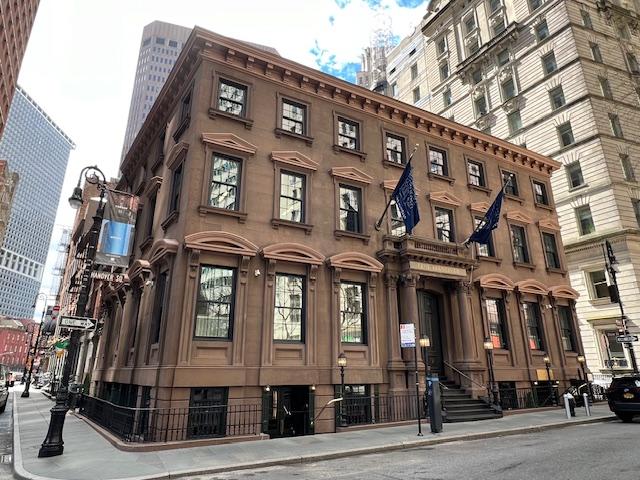
The buildings historical past as the Percy Rivington Pyne House

https://en.wikipedia.org/wiki/Percy_Rivington_Pyne_I

The Americas Society Building is listed in the National Register of Historic Places. The building was previously the Percy Rivington Pyne House before serving as the Soviet Mission to the United Nations until its current usage. along with the neighboring buildings of the Queen Sofia Spanish Institute and the Italian Consulate General, the house constitutes one of the few remaining unified architectural ensembles on Park Avenue. The Center for Inter-American Relations was later to be absorbed into Americas Society 1985.

Activities:

The Americas Society organizes interviews, speeches, podcasts, exhibitions, readings and musical performances at its headquarters and reports on Congressional updates and local events. Many events are held at the Salon Simon Bolivar, an expansive room in the building’s Neo-Federal style with wide windows, a 15 foot ceiling and wood-paneled and silk fabric walls.

Americas Society Museum III

An Exhibition at the museum:

The Americas Society produces the MetLife Music of the Americas (concert series) to showcase the diversity of styles and genres of music in the Americas. The concert series is held at the Society’s headquarters.

The Americas Society, together with Council of the Americas, produces the publication ‘Americas Quarterly’, a policy journal for the Western Hemisphere. The Americas Society also publishes ‘Review Magazine’, which was first founded in 1968. ‘Review Magazine’ is an English language journal for literature from Latin America, the Caribbean and Canada. ‘Review Magazine’ also helped support the first English translation of “One Hundred Years of Solitude” by Gabriel Garcia Marquez as well as other translations.

The Americas Society has also organized working groups on the topics of women’s empowerment and leadership. Cuba, energy policy, immigration, trade facilitation and Venezuela.

Americas Society Museum

Council of the Americas (COA)

Is the premier international business organization whose members share a common commitment to economic and social development, open markets, the rule of law and democracy throughout the Western Hemisphere. The Council’s membership consists of leading international companies representing a broad spectrum of sectors, including banking and finance, consulting services, consumer products, energy and mining, manufacturing, media, technology and transportation.

(This information was taken directly from Wiki and Americas Society publications)

Asia Society and Museum                                    725 Park Avenue at 70th Street                         New York, NY 10021

Asia Society and Museum 725 Park Avenue at 70th Street New York, NY 10021

Asia Society & Museum

725 Park Avenue At 70th Street

New York, NY 10021

(212) 288-6400

AsiaSociety.org/NY

https://asiasociety.org/new-york

Open:

Museum: Tuesday-Sunday-11:00am-6:00pm, Friday-11:00am-9:00pm

Asia Store: Monday-Sunday-11:00am-6:00pm, Friday-11:00am-9:00pm

Garden Court Cafe: Tuesday-Sunday, 11:30am-3:00pm; Reservations: (212) 570-5202

Asia Society is closed on major holidays. Please check AsiaSociety.org/NY for updates on museum, store and cafe hours.

Fee: $12.00 Adults/$10.00 Seniors/$7.00 Students with ID/Free to members and children under 16/Free Admission Fridays, 6:00pm-9:00pm

Adult, Student and Teacher tours:

For information or to schedule a tour, call (212) 327-9237

*Wheelchair accessible/available for use during visits/Complimentary cell phone audio tour available/Assistive listening devices and headsets available for many programs. 

TripAdvisor Review:

https://www.tripadvisor.com/Restaurant_Review-g60763-d531995-Reviews-Asia_Society_and_Museum_Garden_Court_Cafe-New_York_City_New_York.html?m=19905


History of the Museum:

Asia Society II

The entrance to the Asian Society Museum

John D. Rockefeller 3rd (1906-1978) , who established Asia Society in 1956, firmly believed that art was an indispensable tool for understanding societies. From 1963 to 1978, he and his wife, Blanchette Hooker Rockefeller (1909-1992), worked with art historian Sherman E. Lee (1918-2008) as an advisor to build the Mr. and Mrs. John D. Rockefeller 3rd Collection, which was later bequeathed to Asia Society.

Asian Society Museum

The Rockefeller Collection

The group of spectacular historical objects they assembled-including sculpture, painting and decorative arts-became the core of the Asia Society Museum Collection and is world renowned. The Collection, now consisting of approximately 300 pieces, is distinguished by the high proportion of acclaimed masterpieces, to which additional high-quality gifts and acquisitions have been added since the original bequest to Asia Society. The Collection has particular strengths in Chinese ceramics of the Song and Ming periods, Chola-period Indian bronzes and Southeast Asian sculptures.

Extraordinary examples of decorative art in the acclaimed Asia Society Museum collection include a number of superior East Asian ceramics, which make up more than one-third of the Collection. A luminous pair of twelfth-century Korean bowl and saucer sets, covered with the celebrated celadon glaze of the Goryeo period and an extraordinary tea leaf jar, decorated with mynah birds and accented with silver by Japanese ceramic artist Nonomura Ninsei (active ca. 1646-1677) are among the ceramic highlights.

Asia Society III

Walking around the museum

An exquisite solid silver Chinese stem up that dates to the late seventh or early eighth century also stands out as an exceptional masterpiece of decorative art within the Collection. The skill of the craftsman is evident in the fine embossing, chasing and engraving of the birds, flowers and scrolling vines on the exterior of the cup.

Two other great strengths of the Collection are Hindu and Buddhist sculpture from South and Southeast Asia. An eleventh-century processional sculpture of the elephant-headed Hindu deity Ganesha is an endearing example produced by the South Indian master bronze casters at that time and one of the fifteen important Chola-period bronzes in the Collection.

Another great treasure is a rare eighth-century inscribed and dated inlaid-brass crowned Buddha seated on a lotus rising from water inhabited by serpent deities (nagas) from Kashmir or northern Pakistan. A sculpture of the serene and slender Buddhist Bodhisattva Maitrya stands just over an impressive three-feet tall and represents the pinnacle of Thai metal casting during the eighth-century.

These objects and the Asia Society Museum Collection as a whole continue to be an important means for sharing the talent, imagination, and deep history of the peoples of Asia with audiences all over the world.

(From: Masterpieces from the Asia Society Museum Collection)

We are …Policy

With top-level experts and advisors-including former heads of state and cabinet officials, CEOs, civil society leaders and scholars-the Asia Society Policy Institute creates solutions that advance Asia’s prosperity, security and sustainability. Its projects include working to strengthen regional security institutions and mechanisms in Asia, assessing the impact of China’s rise and tracking its economic reform program, recommending pathways to an inclusive and high-standard Asian trade architecture, charting a path for India’s admission to APEC and designing strategies for Northeast Asian economics to link carbon markets and reduce greenhouse gas emissions.

The Asia Society Center on U.S. China Relations seeks to build mutual understanding between the two countries through projects and events on policy, culture, business, media, economics, energy and the environment.

We are…Arts

Transforming Americans understanding of Asia through exhibitions and performing arts was at the heart of our founder’s vision. The bequest of the Mr. & Mrs. John D. Rockefeller 3rd Collection of traditional Asian art in 1979 spurred the building of our New York headquarters. Today, our ground-breaking exhibitions of traditional, modern and contemporary art-as well as performing arts, film and author programs-are presented to the highest acclaim at our centers in New York, Hong Kong and Houston and at venues all over the world. Global initiatives such as the Arts & Museum Summit bring together museum and cultural leaders from across Asia, the United States and Europe further appreciation of Asian arts.

Asia Society I

The gift shop at the Asia Society

We are …Education

A rising Asia requires a rising generation of students to understand its cultures and complexities. The Center for Global Education at Asia Society has developed an internationally recognized approach to foster the global competence of students, aiming to improve the capacity of 100,000 educators to instill global competence in 4 million youth by 2030. We partner with leaders and institutions from around the world to transform teaching and develop global-ready students. We also lead a major effort to bring Mandarin language instruction and the study of China and Chinese culture to children in the United States and to bring global learning to American after school programs, in pursuit of best practices in global education.

(From Asia Society pamphlet)

Asia Society is a non-profit, nonpartisan organization offering dynamic public programming at our cultural centers in New York, Hong Kong and Houston and at our other global locations in the United States, Asia and Europe.

Asia Society appreciates the support of its members, who aid our vital mission of preparing Asians and Americans for a shared future. For more information, AsiaSociety.org.

Disclaimer: This information was taken directly from the pamphlets from the Asia Society in New York City. I give them full credit for all the information. Please see the above hours and programs and call the above numbers for more information.

Nicholas Roerich Museum                                                                       319 West 107th Street                                                                                  New York, NY 10025

Nicholas Roerich Museum 319 West 107th Street New York, NY 10025

Nicholas Roerich Museum

319 West 107th Street

New York, NY  10025

(212) 864-7752

Open: Monday: Closed/Tuesday-Friday: 12:00pm-4:00pm/Saturday-Sunday: 2:00pm-5:00pm

Closed: Major holidays

Admission: Admission is free, though donations are welcome.

http://www.roerich.org

http://www.roerich.org/

TripAdvisor Review:

https://www.tripadvisor.com/Attraction_Review-g60763-d136141-Reviews-Nicholas_Roerich_Museum-New_York_City_New_York.html?m=19905

The front of the museum

This small museum in the Upper West Side neighborhood of Manhattanville is easy to miss. It is in a small brownstone on West 107th Street right near Riverside Drive. You can see the plaque for the museum to the right of the building and there is a side door to get in. The admission is free but they do ask for a donation if you can do it.

The gallery on the second floor

The museum is a specialty collection of the works of artist Nicholas Roerich. They are mostly landscapes and religious themed that cover three floors of the museum.

The is a beauty to all his works especially the ones concentrated in the Himalayas with their colorful and spiritual themes.

The artist’s portrait of his mother on the third floor

It takes about an hour to an hour and a half  to see all the floors. A nice touch they had in the afternoon that I was there was a piano player whom you could hear play throughout the brownstone. When you go, it will be a pleasant afternoon where you are not fighting the crowds of the larger museums.

The art pieces enlighten you and I felt gave you a sense of hope.

(The following information is from the museum website)
Artist Nicholas Roerich

(From the museum website)

The Nicholas Roerich Museum was founded in 1949 to house a permanent collection of over two hundred paintings by the Russian-born artist, poet, philosopher and humanitarian, Nicholas Roerich. The museum also houses a library of books and maintains an archive and a collection of artifacts relating to the areas of Roerich’s interests (Museum guide).

The Mission of the Museum:

The mission of the Nicholas Roerich Museum is essentially a narrow one: to make available to the public the full range of Roerich’s accomplishments. These, however, are not narrow; they cover the realms of art, science, spirituality, peacemaking and more. Because Roerich’s  activities ranged widely, so do the museum’s.

The second floor galleries

The Museum Collection:

Nicholas Roerich is known first and foremost as a Russian-born artist. His paintings, of which there are thousands around the world, explore the mythic origins, the natural beauty and the spiritual strivings of humanity and of the world.

One of the more spiritual paintings in the collection

The museum houses approximately two hundred of these works and keeps most of them permanently on display for visitors who come from around the world. Indeed, for many of these visitors, the museum is a destination of great importance; the paintings speak to them of their own inner yearnings and possible fulfillment. For them, Roerich’s paintings are a kind of teaching-about spiritual development about culture and its role in human life and about opportunities for the achievement of peace in a fractious world.

The second floor galleries

The beautiful landscapes on the second floor

Publications & Booklist:

The museum also keeps in print a number of books by and about Roerich and his life and work and a substantial stock of postcards and reproductions of his paintings. These too are seen by many as more than just prints; they are hung in homes with a degree of appreciation that is not often given to such things.

The gallery on the first floor with some of the more religious works

Cultural Events:

In addition to these functions, the museum also maintains an active schedule of cultural activities. 

The second floor galleries

It was Roerich’s fervent belief that the role of cultural development in the peace and evolution of the world is fundamental and that it is therefore the responsibility of those who work in creative and cultural fields to strive always for that peace and evolution and for those goals to be the chief impulses guiding their creative work. Information about these ideas is always available.

The second floor gallery with Asian themed art

The Roerich Pact & the Banner of Peace:

The museum sustains an ongoing effort to spread public awareness of the intermingled roles of peace and culture and the ways in which each sustains the other. Information and materials about The Roerich Pact and the Banner of Peace are always available.

The patronage of the museum through the Katherine Campbell-Stibbe Foundation

Throughout this century of wars and national struggles, the yearning of the public for ways of achieving peace has been great; the ideas of the Pact and the Banner provide a welcome answer to those yearnings.

The history of the museum through the years

As Roerich’s ideas become better known around the world, attendance at the Museum grows and requests for information and materials about him and his art and social achievements increase.

The gift shop on the first floor. The director of the museum even sells honey from the beehives on top of his building.

*This information is from the Museum’s website.

Disclaimer: This information was taken from a combination of the museum’s website and from the biography of the artist.

The first floor galleries