Category: Exploring Chinatown NYC

Titanic Memorial Lighthouse                            Pearl Street/South Street Seaport                     New York, NY 10038

Titanic Memorial Lighthouse Pearl Street/South Street Seaport New York, NY 10038

Titanic Memorial Lighthouse

Pearl Street/South Street Seaport

New York, NY 10038

(212) 830-7700

https://www.lighthousefriends.com/light.asp?ID=585

https://en.wikipedia.org/wiki/Titanic_Memorial_(New_York_City)

Open: Sunday-Saturday 24 Hours

My review on TripAdvisor:

https://www.tripadvisor.com/Attraction_Review-g60763-d7738946-Reviews-Titanic_Memorial_Park-New_York_City_New_York.html

The Titanic Memorial Lighthouse

I have been to the South Street Seaport dozens of times over the years and can’t believe that I never noticed this memorial dedicated to those lost in the Titanic disaster. I was visiting the Seaport recently after finishing another walk down the length of Broadway for my blog, “MywalkinManhattan.com” and was walking past the Seaport on my way to Chinatown. Something about it this time caught my attention and I stopped to look at the dedication of this small lighthouse.

It was really touching to see that the people from the 1912 disaster were not forgotten in New York City, its ultimate destination. This was the work of Molly Brown, the ‘Unsinkable Molly Brown’ from the movie. She wanted to be sure that the people who survived were never forgotten. The small lighthouse structure sits at the entrance to the main part of the seaport on an island just off the cobblestone walkway into the complex.

The Memorial plaque on the lighthouse

The tower that it was originally placed a top of the Seamen’s Church Institute Building and it was put up for sale and demolished in 1965 and the small lighthouse memorial was donated to the South Street Seaport Museum. It was placed in its current location in 1976 (Friends of the Lighthouse).

The little lighthouse is a touching reminder of Manhattan’s connection to the event over 100 years ago. Try not to miss it when you are visiting the Seaport.

The history of the Titanic Memorial Lighthouse:

(This is from the Friends of the Titanic Memorial Lighthouse website)

On April 15th, 1913, one year after the sinking of the Titanic, the Titanic Memorial Lighthouse and Time Ball, mounted atop the Seamen’s Church Institute, were dedicated to honor the passengers, officers and crew who perished in the tragedy. The dedicatory service opened with a hymn and prayer and then Rt. Rev. David h Greer, Bishop of New York, read the following lines of dedication:

“To the glory of Almighty God and in loving memory of those passengers, officers and crew who lost their lives in the foundering of the steamship, Titanic, on April 15, 1912, I, David Hummell Greer, Bishop of New York and president of the Seamen’s Church Institute of New York, do solemnly dedicate the Titanic Memorial Lighthouse Tower. As its light by night shall guide pilgrims and seafaring men from every clime into this port, so may they follow Him who is the Light of Life across the waves of this troublesome world to everlasting life and looking at noon toward this place to note the time of day, may they remember that our days pass as the swift ships and in view of the shortness and uncertainty of human life, strive to fulfill their duty well as the beat preparation for Eternity. Amen.”

The Titanic Memorial Lighthouse exhibited a fixed green light that could be seen throughout New York harbor and down as far as Sandy Hook. Five minutes before noon each day, a time ball would be hoisted to the top of a steel rod mounted atop the lighthouse and dropped at the stroke of twelve as indicated over the wires from Washington DC. According to The Lookout, the magazine of the Seamen’s Church Institute, the Titanic Memorial Lighthouse would be a much needed daily reminder for ‘in a busy, carless city the average person so soon forgets’.

The Seamen’s Church Institute was established in 1834 and had announced plans for its new twelve story headquarters at South Street and Coenties Slip in Lower Manhattan several years before the loss of the Titanic. The Flemish style building was meant to reflect new York’s Dutch origins and was to be crowned by a tower whose beacon would welcome incoming seamen. The cornerstone for the building was laid one day after the sinking of the Titanic and a week later the institute announced the lighthouse atop their building would be a memorial to the victims of the tragedy.

First Shearith Israel Graveyard/Chatham Square Cemetery                                            55-57 St. James Place                                                             New York, 10038

First Shearith Israel Graveyard/Chatham Square Cemetery 55-57 St. James Place New York, 10038

First Shearith Israel Graveyard/Chatham Square Cemetery

55-57 St. James Place

New York, NY 10038

(212) 873-0300

https://shearithisrael.org/content/chatham-square-cemetery

Open: 24 Hours

Fee: Free

My review on TripAdvisor:

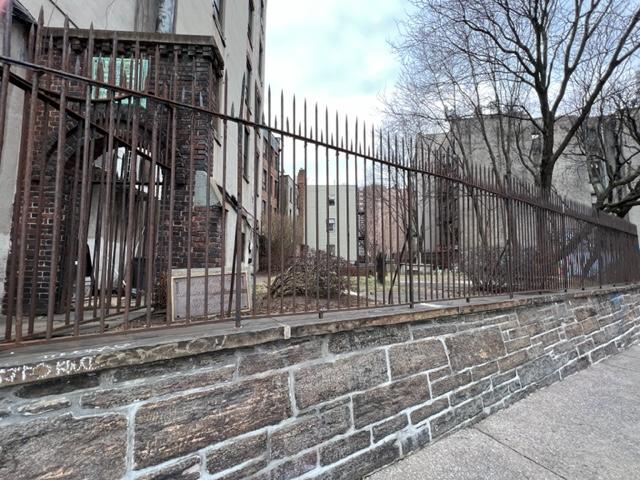
The entrance to the Cemetery

There are times that I walk around Manhattan and things just pop out at you. Tucked inside small pockets of the City are small community gardens, detailed statues, street art and sometimes a small cemetery. I had passed the First Shearith Israel Graveyard or also known as the Chatham Square Cemetery many times when visiting Chinatown since I was a kid. This tiny elevated pocket square of land is located next to a building and locked behind a gate just off St. James Place right at the end of Mott Street strip of Chinatown.

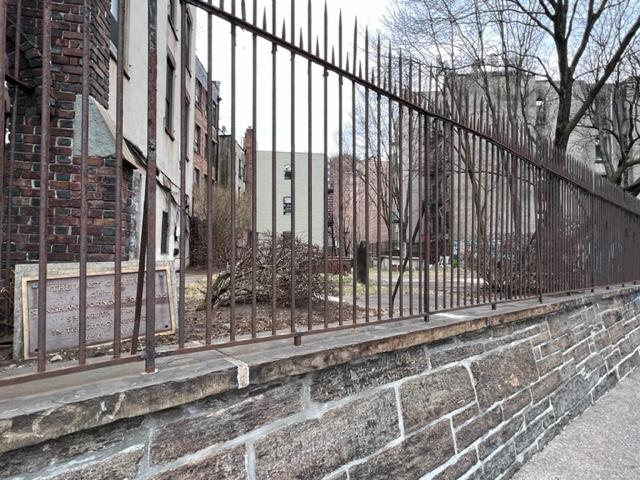
You really have to look for this at the side of 55-57 St. James Place

This is the oldest Jewish Cemetery in Manhattan that was in use from 1683 to 1833. The site of the cemetery was originally on a hill overlooking the East River in an open area at the northern periphery of the British-Dutch colonial settlement. The plot was purchased in 1682 by Joseph Bueno de Mesquita and the cemetery’s first interment was for his relative, Benjamin Bueno de Mesquita. The cemetery expanded in the 1700’s from Chatham Square to the upper part of Oliver Street to Madison Avenue (Wiki).

The original map of the Dutch Colony (New York Historical Society)

In 1823, a City ordinance prohibited burials south of Canal Street and the congregation opened a second burial spot at West 11th Street. A third cemetery was opened at 21st Street west of Sixth Avenue. The size of the cemetery has been reduced over the years because of development and most of the bodies were removed and moved to the other cemeteries. In 1851, the City again prohibited burials below 86th Street and the congregations again opened a fourth cemetery in Ridgewood, Queens. In 1855, with more development changing the area again and over two hundred graves were removed from the site. Only about hundred remain (Wiki).

The inside of the cemetery

Two of the most notable people buried here are Reverend Gershom Mendes Seixas (1745-1816), the first American born Jewish spiritual leader and Dr. Walter Jonas Judah, the second person of the Jewish faith to attend an American Medical School (now Columbia University) and the first native born one. (Wiki). There are also 18 Jewish Revolutionary War era veterans and patriots buried here.

History of the Jewish Settlement in Dutch New York:

In September of 1654, just after the Jewish New Year, twenty-three Jews, mostly of Spanish and Portuguese origin arrived in Manhattan. These people had been living in Recife, the former capital of the 17th Century Dutch Brazil. When the Portuguese defeated the Dutch for control of Recife and brought with them the Inquisition, the Jews of that area left. Some returned to Amsterdam, where they had originated and others moved around the Caribbean to other islands. These twenty-three arrived in New York due a series of unseen events (Big Apple Secrets).

Governor Peter Stuyvesant did not want to permit them to stay but these settlers fought for their rights and won permission to remain. In 1655, the Jewish settlers applied to the Dutch authorities for permission to purchase a parcel of land as an exclusive place to bury their dead. In February of 1656, appealed “that consent may be given” for the purchase. In 1644, the British took New Amsterdam and renamed it New York and the Jews were granted more civil rights. In 1706, they had organized their own congregation, Shearith Israel (Big Apple Secrets).

The cemetery for the most part is pad locked but you can view the outside from the street level. The cemetery is open on Memorial Day for services to the members of the armed services but for the most part you have to view the cemetery from the street level.

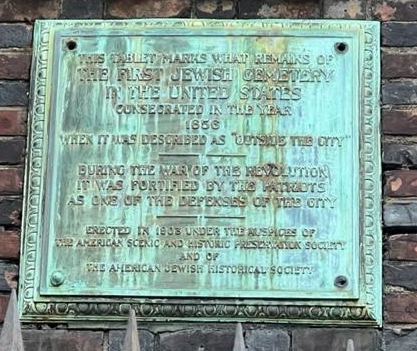
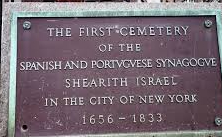
Chatham Square Cemetery

The plaque that you can see at eye level just inside the cemetery.

This unique plot of land is easy to miss so look for the plaque at eye level as you pass it.

MOCA: The Museum of Chinese in America                                                           215 Centre Street                                                New York, NY 10013

MOCA: The Museum of Chinese in America 215 Centre Street New York, NY 10013

MOCA: The Museum of Chinese in America

215 Centre Street

New York City, NY  10013

Telephone: (855) 955-4720

Fax: (212) 619-4720

Email: infor@mocany.org

Home

https://www.mocanyc.org/visit/

Hours: Tuesday-Wednesday-11:00am-6:00pm/Thursday-11:00am-9:00pm/Saturday & Sunday-11:00am-6:00pm

Fee: General Admission $10.00/Students/Seniors/Children/Military-$7.00/Free to members and people with disabilities

TripAdvisor Review:

https://www.tripadvisor.com/Attraction_Review-g60763-d136145-Reviews-Museum_of_Chinese_in_America-New_York_City_New_York.html?m=19905

The Museum of Chinese in America engages audiences in an ongoing dialogue, in which people of all backgrounds are able to see American history and society through a critical lens, to reflect on their own experiences and to make meaningful connections between the past and the present, the global and the local, themselves and others.

MOCA began in 1980 as the New York Chinatown History Project, a community-based organization founded by scholar John Kuo Wei Tchen and community activist Charles Lai to promote knowledge and understanding of the history and contributions of Chinese Americans. Today, the MOCA is a national cultural anchor and a global destination. It is located on the border of Chinatown and SoHo in New York City in its Maya Lin-designed home that was highlighted by Architectural Digest as one of Lin’s most memorable designs.

Museum of Chinese in America II

The entrance to the museum

Permanent Exhibition:

Our core exhibition, ‘With a Single Step: Stories in the Making of America’, traces more than 160 years of milestones in Chinese American History from the earliest Chinese Immigration to the struggle for citizenship to the development of our contemporary identity.

The core exhibit revolves around the Museum’s historic sky-lit courtyard, which renowned artist and designer Maya Lin has left deliberately raw and untouched as a reminder of the past and to evoke a classic Chinese courtyard house.

The permanent collection shows immigration from the earliest days during the early 1800’s with immigrants working in the mines and on the railroads doing the back-breaking work all while dealing with the problems with racism in the country at that time.

The timeline shows the development of the early Chinatowns in major cities and the growth of industries like restaurants and laundries where they could make a living. This is where the term ‘eight-pound package’ came from with a pile of clean laundry. Even in these industries, the exhibit shows the systematic racism in these fields as well.

It was not until WWII when you saw Chinese Americans fighting for their country did you see a change of attitude, but it never seemed to last long. This ongoing theme is seen throughout the exhibition up until today.

Special Exhibitions:

Our rotating galleries showcase a revolving series of MOCA-curated and visiting exhibitions featuring contemporary art, design and historical subjects.

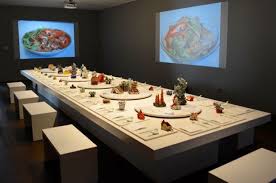
The first time I visited the museum, I saw an exhibition of the modern twist to the ‘Chinese Restaurant’ where the foods we eat are really Chinese American cuisine that was created when immigrants came here and had to adapt to their new homeland. Items like Chop Suey and Chow Mein were inventions of new immigrants with the items they had in their pantries.

The exhibit showed how chefs of the third generation of Americans of Chinese Descent are changing these dishes by adding modern spins to the food. The exhibit featured the chefs, their restaurants and the dishes that they were creating. They were changing the cuisine again.

The current exhibition “Responses: Asian American Voices Resisting the Tides of Racism”, deals with the Xenophobia that came with COVID and the affects that the disease and its thought that it came from Wuhan, China has trickled down to a new hate for Americans of Asian descent. This has led to a series of assaults all over the country. The exhibition shows this type of racism throughout the history of this country and the response from the community itself.
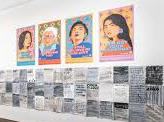
MOCA III

“Responses: Asian American voices Resisting the Tides of Racism” exhibition

MOCA Shop:

The MOCA Shop features select items, including books, ceramics, designs by local artists and children’s gifts.

Education:

Using inquire-driven approaches, MOCA provides museum and in-school programs on Chinese American history and culture for K-12 and college students at all levels, as well as professional development workshops for teachers. These programs complement classroom learning and foster expansive opportunities for primary source-based learning and development of 21st Century skills such as critical thinking, visual media literacy and civic engagement. They present diverse layers of the Chinese American experience, using individual stories to highlight what it has meant to be Chinese in America at different moments in time, while also exanimating America’s journey as a nation of immigrants.

Family Programs:

MOCA’s family programs bring together parents, grandparents, children and grandchildren alike to participate in fun, hands on activities celebrating Chinese American heritage and history. From our annual holiday Family Festivals to our bi-monthly MOCACREATE workshops, enjoy storytelling, drop-in arts and crafts, teaching artist demonstrations, performances and more!

Public Programs:

Through its thought-provoking and multi-disciplinary programming, MOCA’s signature public programs series offers diverse perspectives on the living history of Chinese Americans and gives visitors opportunities to actively engage in shaping and influence the Chinese American cultural landscape.

Tours:

MOCA offer dynamic educator-led tours of our exhibitions and guided walking tours of New York Chinatown for all ages, designed to encourage meaningful ties between visitors’ lives and the history, culture and diverse experiences of people of Chinese descent in the United States.

Preserve your family Legacy:

As visitors enter the Museum, they are greeted with the Journey Wall, a custom art installation created fro the main lobby of MOCA’s space by Maya Lin.

The wall is composed of bronze tiles through which Chinese Americans can honor and remember their family roots. Each tile is inscribed with an individual’s or family’s name and place of origin with their home in America. The complete wall will highlight the expansiveness of the Chinese American diaspora.

To become a permanent part of the Museum epic narrative, your family can place a tile on the Journey Wall.
Museum of Chinese in America IV

For more information or to make a reservation for a tile, please contact the Development department at (855) 955-MOCA or email development@mocanyc.org. All gifts are tax-deductible to the full extent of the law.

Collections:

MOCA’s ever-expanding archives and permanent collections are comprised of more than 65,00 artifacts, letters, written records, oral histories, textiles, photographs and videos. The collections highlight the varied threads of the Chinese American diaspora, exploring how they intersect and diverge, illuminating the ways in which they are intimately interwoven within the broader multicultural fabric of the United States.

Museum of Chinese in America III

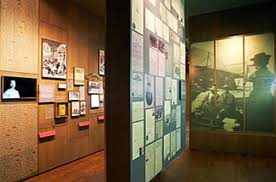
Galleries at the museum

Research services are available by appointment on weekdays at MOCA’s Collections & Research Center, located at MOCA’s original site at 70 Mulberry Street, which is housed in a historic public school building dating back to the 19th century. MOCA continues to make the museum’s resources available to researchers around the world through its Collections Online. Currently, researchers are able to search more than 10,000 item records and archival finding aids online via PastPerfect and Archives. Space.
Museum of Chinese in America

Galleries at the museum

MOCA’s Commitment:

*Presenting relevant historical and contemporary exhibitions.

*Collecting and preserving Chinese American history.

*Transforming how our audience learn, engage and use technology to explore history, identity, culture and community.

*Creating curricula and educational programs for students and teachers and offering resources for researchers.

*Cultivating community-based projects and collecting oral histories.

*Hosting films, festivals, performances, readings, workshops and conferences on topics relevant to MOCA’s mission.

Book your group visit today! (855) 955-6622.

Visit MOCA:

Our beautiful 16,000 square foot space at 215 Centre Street is designed by artist and designer Maya Lin. It is a national home for the precious narratives of diverse Chinese American communities and strives to be a model among interactive museums. MOCA brings to life the journeys, memories and contributions of the enduring Chinese American legacy.

Support MOCA:

MOCA relies on the generosity of private individuals, corporations and foundations to fulfill its mission to preserve and present Chinese American history and culture. Funding from donations and memberships provides critical support for our collections, exhibitions, educational initiatives, public programs and operations. To learn more about supporting MOCA or to make a specific gift, please visit https://secure.mocanyc.org/donation/or contact the Development department at development@mocanyc.org.

Membership Benefits:

MOCA members see it first! Enjoy exclusive benefits, including free gallery admission, invitations to exhibition openings, opportunities to meet curators, artists and performers and discounts at the MOCA Shop, as well as at select community partners. To join or renew your membership, please visit mocanyc.org/membership or call (855) 955-6622.

Interns & Volunteers:

MOCA is always seeking dedicated individuals to assist us in our work. Please visit our website for more information.

Transportation:

N,Q,R,J,Z and 6 trains to Canal Street, M9, M15, M103 buses. The nearest parking lot is located at Centre and Hester Streets. Citi Bike station on Howard and Hester Streets.

MOCA Free First Thursdays: Free gallery admission first Thursday of each month except on major holidays. Made possible through the generosity of the New York City Department of Cultural Affairs and J.T. Tai & Co. Foundation.

Access & Accessibility:

MOCA is committed to making its collection, buildings, programs and services accessible to visitors of all abilities. For more information, please visit mocanyc.org/visit/accessibility.

http://www.mocanyc.org

*Disclaimer: This information is taken directly from the MOCA pamphlet. Things are subject to change by the organization so please call-in advance for any special services.

Welcome to ‘VisitingaMuseum.com’, a trip through unique small museums, cultural sites and parks & gardens in NYC and beyond.

Welcome to ‘VisitingaMuseum.com’, a trip through unique small museums, cultural sites and parks & gardens in NYC and beyond.

*Bloggers Note: because of the size, location and time of year these sites are open, the hours and cost to get in can change since the blog was written. Please check with the site’s website or call the site before you visit. Things change over time.

My name is Justin Watrel and welcome to ‘VisitingaMuseum.com’, a trip through cultural sites, small unique museums, historic mansions and homes and pocket parks & community gardens in New York City and beyond its borders. I created this blog site to cross reference all the cultural sites that I came across when I was traveling through Manhattan for my walking blog, “MywalkinManhattan.com”.

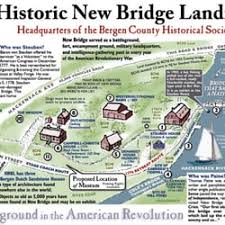
Bergen County Historical Society III

Historic New Bridge Landing

I was inspired by all these sites that I had missed over the years and never knew existed in New York City and its suburbs.  Many of these being in Bergen County, NJ where I live. I found that most people feel the same way. The only way you would know that these sites existed is by walking past them.

Schoolhouse Museum Ridgewood.png

School House Museum in Ridgewood, New Jersey

So I created this site to showcase all these smaller, largely unexplored ‘gems’ in Manhattan, the rest of New York City and places outside the greater New York City area. I concentrate on smaller, more off beat cultural sites that you might miss in the tour books or may just find by passing them on the street. This has lead me to  becoming a member of the Bergen County Historical Society in Riveredge, NJ as well as other cultural sites in the area.

Aviation Hall of Fame.jpg

The Aviation Museum in Teterboro, New Jersey

There is so many interesting historical sites, parks, gardens and homes to explore that I want to share it with all of you. They are tucked behind buildings and walls, locked behind gates or hidden behind trees only for you to want to discover them.

Ringwood Manor Christmas 2019

Ringwood Manor in Ringwood, New Jersey at Christmas

I want to give these smaller and unique ‘gems’ more exposure and ‘sing their praises’  to an audience (namely out of town tourists) who might overlook them. It is hard for a lot of these cultural site because of the lack of volunteers or volunteers getting older or the absence of money to properly advertise these sites.

Gallery Bergen Professor Show III

Juan Leon’s work at Gallery Bergen on the Bergen Community College campus in Paramus, NJ

So join me in the extension of “MywalkinManhattan.com” with my new site “VisitingaMuseum.com” and share the adventure with me. Join me also on my sister blog sites, “DiningonaShoeStringinNYC@Wordpress.com” and ‘LittleShoponMainStreet@Wordpress.com’ for restaurants and small shops.

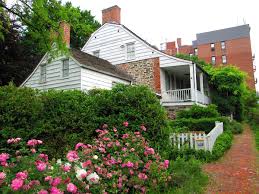
Dyckman Farm House II.jpg

The Dyckman Farm in Washington Heights in Manhattan

These sites featuring all sorts of small restaurants, bodegas and bakeries, where a quality meal can be had for $10.00 and under and unusual stores with unique merchandise that just stand out in their respective neighborhoods. It is important to support small business owners especially in this economy.

Lucy the Elephant

Lucy the Elephant in Margate, NJ

So, join me here as I take “MywalkinManhattan” to some unique and special historical sites and open spaces the New York Metropolitan area and beyond.