Tag: warren george watrel

Asia Society and Museum                                    725 Park Avenue at 70th Street                         New York, NY 10021

Asia Society and Museum 725 Park Avenue at 70th Street New York, NY 10021

Asia Society & Museum

725 Park Avenue At 70th Street

New York, NY 10021

(212) 288-6400

AsiaSociety.org/NY

https://asiasociety.org/new-york

Open:

Museum: Tuesday-Sunday-11:00am-6:00pm, Friday-11:00am-9:00pm

Asia Store: Monday-Sunday-11:00am-6:00pm, Friday-11:00am-9:00pm

Garden Court Cafe: Tuesday-Sunday, 11:30am-3:00pm; Reservations: (212) 570-5202

Asia Society is closed on major holidays. Please check AsiaSociety.org/NY for updates on museum, store and cafe hours.

Fee: $12.00 Adults/$10.00 Seniors/$7.00 Students with ID/Free to members and children under 16/Free Admission Fridays, 6:00pm-9:00pm

Adult, Student and Teacher tours:

For information or to schedule a tour, call (212) 327-9237

*Wheelchair accessible/available for use during visits/Complimentary cell phone audio tour available/Assistive listening devices and headsets available for many programs. 

TripAdvisor Review:

https://www.tripadvisor.com/Restaurant_Review-g60763-d531995-Reviews-Asia_Society_and_Museum_Garden_Court_Cafe-New_York_City_New_York.html?m=19905


History of the Museum:

Asia Society II

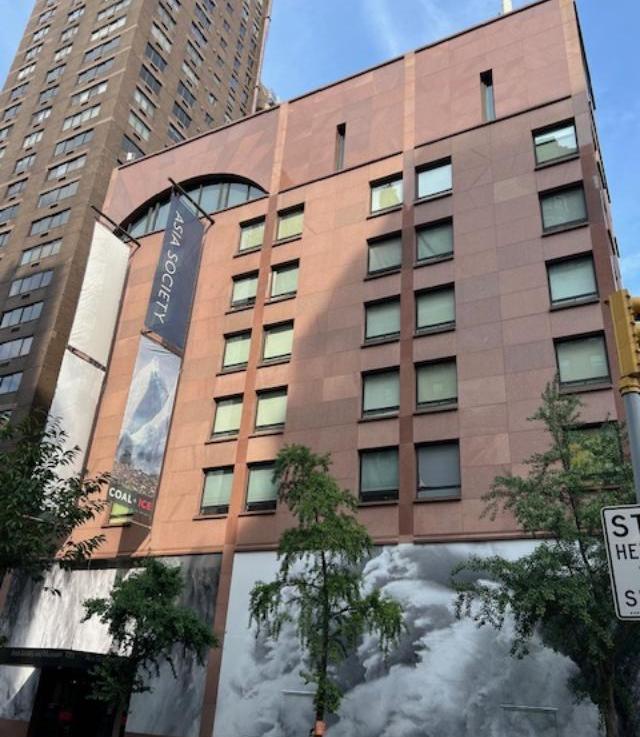
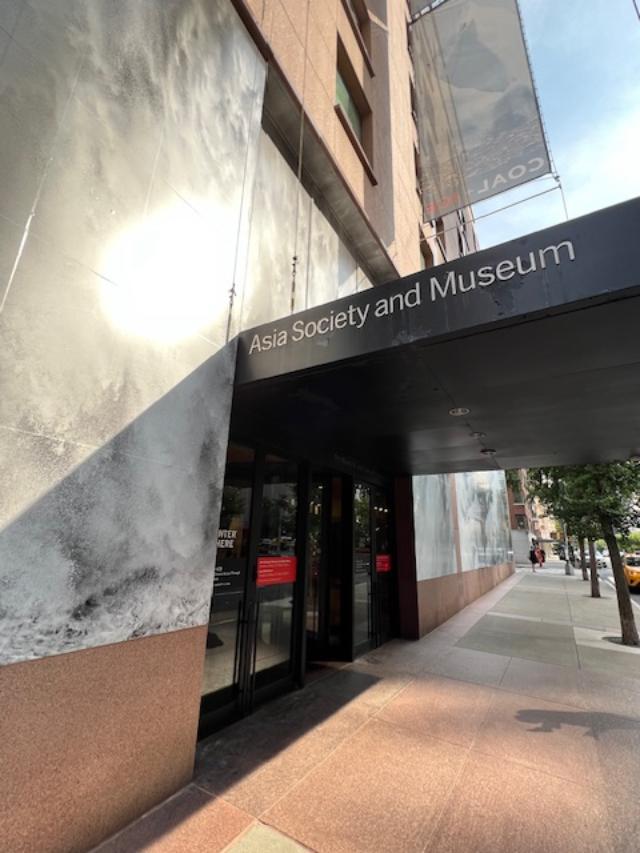
The entrance to the Asian Society Museum
John D. Rockefeller 3rd (1906-1978) , who established Asia Society in 1956, firmly believed that art was an indispensable tool for understanding societies. From 1963 to 1978, he and his wife, Blanchette Hooker Rockefeller (1909-1992), worked with art historian Sherman E. Lee (1918-2008) as an advisor to build the Mr. and Mrs. John D. Rockefeller 3rd Collection, which was later bequeathed to Asia Society.

Asian Society Museum

The Rockefeller Collection

The group of spectacular historical objects they assembled-including sculpture, painting and decorative arts-became the core of the Asia Society Museum Collection and is world renowned. The Collection, now consisting of approximately 300 pieces, is distinguished by the high proportion of acclaimed masterpieces, to which additional high-quality gifts and acquisitions have been added since the original bequest to Asia Society. The Collection has particular strengths in Chinese ceramics of the Song and Ming periods, Chola-period Indian bronzes and Southeast Asian sculptures.

Extraordinary examples of decorative art in the acclaimed Asia Society Museum collection include a number of superior East Asian ceramics, which make up more than one-third of the Collection. A luminous pair of twelfth-century Korean bowl and saucer sets, covered with the celebrated celadon glaze of the Goryeo period and an extraordinary tea leaf jar, decorated with mynah birds and accented with silver by Japanese ceramic artist Nonomura Ninsei (active ca. 1646-1677) are among the ceramic highlights.

Asia Society III

Walking around the museum

An exquisite solid silver Chinese stem up that dates to the late seventh or early eighth century also stands out as an exceptional masterpiece of decorative art within the Collection. The skill of the craftsman is evident in the fine embossing, chasing and engraving of the birds, flowers and scrolling vines on the exterior of the cup.

Two other great strengths of the Collection are Hindu and Buddhist sculpture from South and Southeast Asia. An eleventh-century processional sculpture of the elephant-headed Hindu deity Ganesha is an endearing example produced by the South Indian master bronze casters at that time and one of the fifteen important Chola-period bronzes in the Collection.

Another great treasure is a rare eighth-century inscribed and dated inlaid-brass crowned Buddha seated on a lotus rising from water inhabited by serpent deities (nagas) from Kashmir or northern Pakistan. A sculpture of the serene and slender Buddhist Bodhisattva Maitrya stands just over an impressive three-feet tall and represents the pinnacle of Thai metal casting during the eighth-century.

These objects and the Asia Society Museum Collection as a whole continue to be an important means for sharing the talent, imagination, and deep history of the peoples of Asia with audiences all over the world.

(From: Masterpieces from the Asia Society Museum Collection)

We are …Policy

With top-level experts and advisors-including former heads of state and cabinet officials, CEOs, civil society leaders and scholars-the Asia Society Policy Institute creates solutions that advance Asia’s prosperity, security and sustainability. Its projects include working to strengthen regional security institutions and mechanisms in Asia, assessing the impact of China’s rise and tracking its economic reform program, recommending pathways to an inclusive and high-standard Asian trade architecture, charting a path for India’s admission to APEC and designing strategies for Northeast Asian economics to link carbon markets and reduce greenhouse gas emissions.

The Asia Society Center on U.S. China Relations seeks to build mutual understanding between the two countries through projects and events on policy, culture, business, media, economics, energy and the environment.

We are…Arts

Transforming Americans understanding of Asia through exhibitions and performing arts was at the heart of our founder’s vision. The bequest of the Mr. & Mrs. John D. Rockefeller 3rd Collection of traditional Asian art in 1979 spurred the building of our New York headquarters. Today, our ground-breaking exhibitions of traditional, modern and contemporary art-as well as performing arts, film and author programs-are presented to the highest acclaim at our centers in New York, Hong Kong and Houston and at venues all over the world. Global initiatives such as the Arts & Museum Summit bring together museum and cultural leaders from across Asia, the United States and Europe further appreciation of Asian arts.

Asia Society I

The gift shop at the Asia Society

We are …Education

A rising Asia requires a rising generation of students to understand its cultures and complexities. The Center for Global Education at Asia Society has developed an internationally recognized approach to foster the global competence of students, aiming to improve the capacity of 100,000 educators to instill global competence in 4 million youth by 2030. We partner with leaders and institutions from around the world to transform teaching and develop global-ready students. We also lead a major effort to bring Mandarin language instruction and the study of China and Chinese culture to children in the United States and to bring global learning to American after school programs, in pursuit of best practices in global education.

(From Asia Society pamphlet)

Asia Society is a non-profit, nonpartisan organization offering dynamic public programming at our cultural centers in New York, Hong Kong and Houston and at our other global locations in the United States, Asia and Europe.

Asia Society appreciates the support of its members, who aid our vital mission of preparing Asians and Americans for a shared future. For more information, AsiaSociety.org.

Disclaimer: This information was taken directly from the pamphlets from the Asia Society in New York City. I give them full credit for all the information. Please see the above hours and programs and call the above numbers for more information.
Gethsemane Cemetery                                 Between Summit Place & Liberty Street north of Route 46                                                             Little Ferry, NJ 07643

Gethsemane Cemetery Between Summit Place & Liberty Street north of Route 46 Little Ferry, NJ 07643

Gethsemane Cemetery

Between Summit Place & Liberty Street

(with entrance on Summit Place north of Route 46)

Little Ferry, NJ  07643

Hours: Secured historic site: Open by appointment only.

Contact: (201) 336-7267

Call for accessibility information.

http://www.co.bergen.nj.us/parks

Free admission

My review on TripAdvisor:

The three times I have visited the Gethsemane Cemetery, it was a very quiet place to reflect on the people who are buried here. Located by a stretch of Route 46 West, you would hardly notice it was there. Sitting on a small hill above the highway lies some of our Counties most prominent Black citizens as well as just ordinary people and freed slaves who were denied entry into other church cemeteries. They were interned here in their own cemetery.

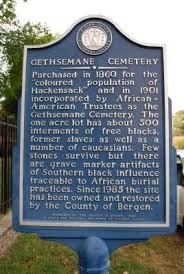
Gethsemane Cemetery is located west of the Hackensack River in southwest Bergen County on a one acre sandy hill located in Little Ferry, NJ. The 1860 deed of sale identifies it as a “burial ground for the colored population of the Village of Hackensack.” In 1901, it was turned over to seven African-American trustees and incorporated as Gethsemane Cemetery.

Gethsemane Cemetery IV

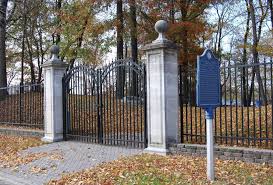
The entrance to the Gethsemane Cemetery in Little Ferry, NJ

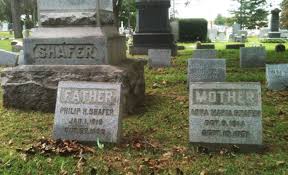
Although there are only 50 graves stones, the graves of over 500 people have been documented, including that of Elizabeth Dulfer, who was born a slave (c 1790), freed in 1822 and died in 1880. She became one of the wealthiest business owners and landholders in Bergen County. Three Civil War veterans, Peter Billings, Silas M. Carpenter and William Robinson are also buried here.

Gethsemane Cemetery II

Gethsemane Cemetery figured the center of controversy surrounding the burial of Samuel Bass, sexton of Hackensack’s First Baptist Church. When he died on January 22, 1884, his family wanted to bury him in the Hackensack Cemetery but was refused due to his race. Mr. Bass was then buried in Gethsemane Cemetery.

New Jersey Governor, Leon Abbett, protested the denial: “The Legislator should see that the civil and political rights of all men, whether white or black are protected…It ought not be tolerated in this State that a corporation whose existence depends on the Legislature’s will…should be permitted to make a distinction between a white man and a black man.” Two months later in March 1884, New Jersey’s “Negro Burial Bill” was passed desegregating cemeteries in New Jersey.

In 1985, Bergen County acquired the neglected cemetery and dedicated it as a County Historic Site. It was entered into the New Jersey and National Registers of Historic Places in 1994 for the historical significance it played in the enactment of N.J.’s early Civil Rights legislation and for containing evidence of West African burial customs.

Gethsemane Cemetery

The County of Bergen marker

In 2003, the county celebrated the dedication of new meditation areas and historic interpretive panels that tell Gethsemane’s story and lists the names of 515 people known to be buried here.

Gethsemane Cemetery III

The cemetery markers

New mediation areas and historic panels tell the story of the cemetery and list the names of 515 people who were buried here.

The cemetery is open only a few times a year to the public for special holidays and events. I came for the Juneteenth Celebration of the emancipation of slavery from the Union on June 19th. There was an independent tour on your own of the cemetery and the panels. If you had any questions, there are County representatives to guide you through.

The Gethsemane Cemetery in the Fall

(Information taken from the Bergen County Parks System guide).

Disclaimer: This information was taken directly from the Bergen County Parks Directory. Please call or email the above information for more details on visiting the cemetery. It can be opened for private tours.

Zabriskie-Quackenbush House                                                421 Franklin Avenue                                                       Wyckoff, NJ 07481

Zabriskie-Quackenbush House 421 Franklin Avenue Wyckoff, NJ 07481

Zabriskie-Quackenbush House

421 Franklin Avenue

Wyckoff, NJ  07481

http://www.zabriskiehousewyckoffnj.org

https://www.wyckoff-nj.com/zabriskie-house-board-trustees

https://www.facebook.com/wyckoffzabriskiehouse

Open: Please check out their website for the dates when the house is open to the public.

TripAdvisor Review:

https://www.tripadvisor.com/Attraction_Review-g46945-d10359429-Reviews-The_Zabriskie_House-Wyckoff_New_Jersey.html?m=19905

I visited the Zabriskie House in May 2016 and 2019 for the Northwest Bergen History Coalition 6th Annual History Day. The house is left the way the last owner. Grace Zabriskie,  willed it to the town with all the original furnishings.

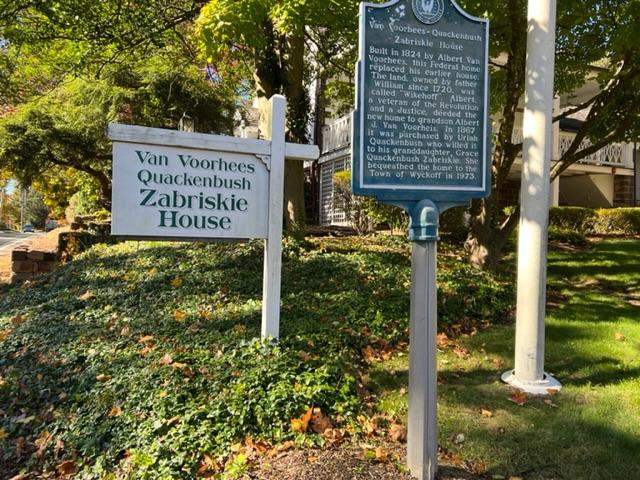
The historic signage

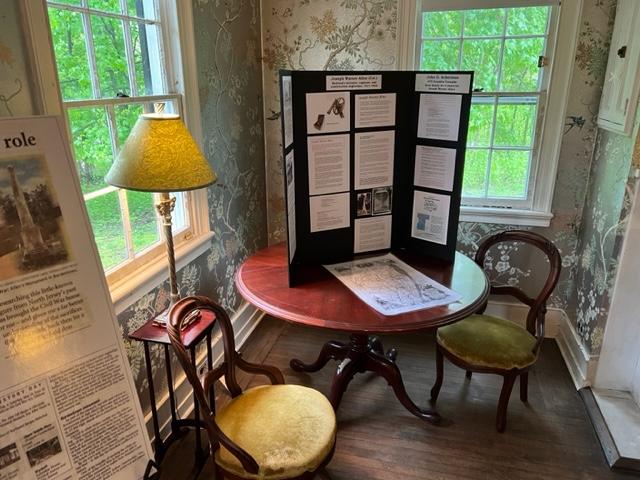
It has period furnishes, family heirlooms and antiques. The docents will take you on a tour of the house and show you where all the later additions were added and how they make up the whole house. As you walk through the house, you can see the difference in structure of the home plus how the last owner lived.

Zabriske House I

The Zabriske House in Wyckoff, NJ

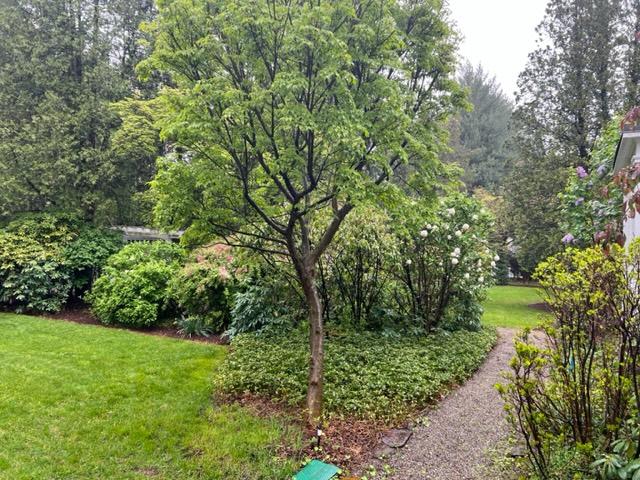
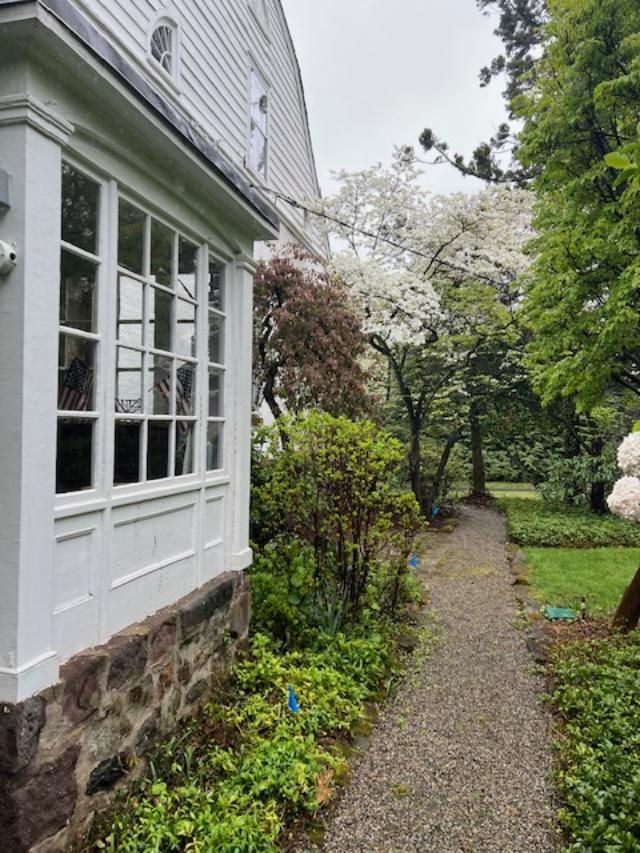
Don’t miss touring the gardens in the Spring as Mrs. Zabriskie worked with a Botanist to plant the gardens to bloom at different times. She planted it in stages so that she could entertain in them but still treated the gardens similar to the house as if you had to walk into a room. It is very nice and colorful in the Spring.

I have visited the house during the Northwest Bergen History Day and I was able to take a lot of pictures of the gardens next to the house on a rather gloomy day. The gardens were in full bloom in the middle of spring and the rain added a layer of beauty to the flowers and flowering bushes that lined the paths. They did a nice job maintaining the house.

On the terrace there are people to guide you through the house and docents to take tours. The ladies had a nice reception laid out for all of the people who came to visit.

The Van Voorhees-Quackenbush-Zabriskie House in the Fall of 2022

The original stone structure of the Van Voorhees-Quackenbush-Zabriskie House was built in 1730 by William Van Voorhees. It is believed to be the oldest house in Wyckoff, NJ. In 1824, William’s son, Albert, completed a major addition to the house in the classically Dutch colonial style. The original structure then became the dining room (NWBHC).

The historic part of the house from the 1700’s

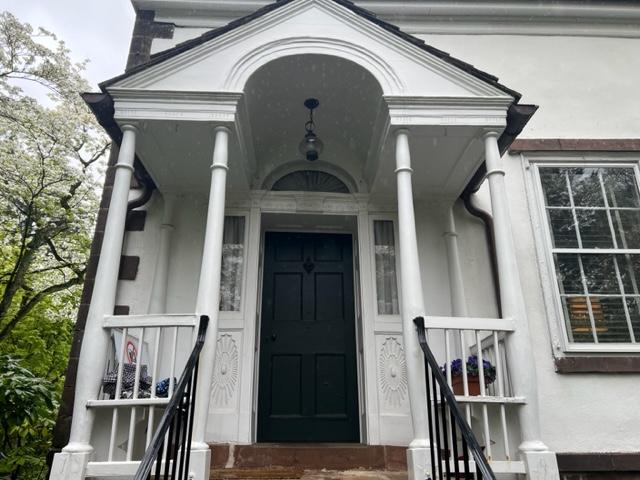
The entrance of the Zabriskie House

History of the House: (Taken from the Wyckoff History Page)

The Van Voorhees-Quackenbush-Zabriskie House has been a local landmark for over 275 years and is believed to be the oldest structure in the Town of Wyckoff, NJ. In 1720, William and John Van Voor Haze, yeoman of Bergen County, purchases 550 acres of land in what is now Wyckoff. The brothers were descended from Dutch settlers who emigrated from Holland in 1660 (Wyckoff History).

The historic part of the house

The first stone house was built circa 1730 by William. The land was cleared and the family farmed, raising table crops and staples such as grain, corn, potatoes and grapes. Over time, apple orchards and dairy farming became main occupations in the area. The Jersey Dutch were especially skilled at animal husbandry. They were considered the best farmers and gardeners in the American Colonies (Wyckoff History).

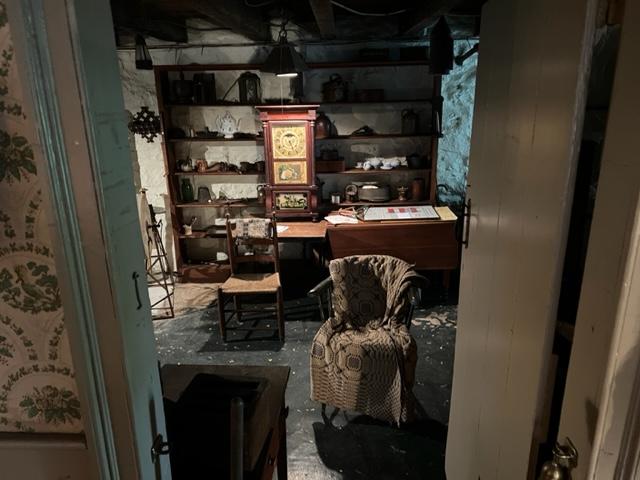
The historic kitchen in the original part of the house

There were only about 20 families in the area in 1775, when the house served as the village store and tavern. William’s son, Albert, served in the Militia in the Revolutionary War. The original stone structure later became the dining room of the house, when a large addition was added in 1824 by William’s son, Albert when he was 86 years old. He had just one son, John, but likely expanded the house for his nine grandchildren and their wives and children. Over the years, in addition to serving as a home, the house served as a not only home, tavern and store but also as a hotel and ballroom for area parties (Wyckoff History).

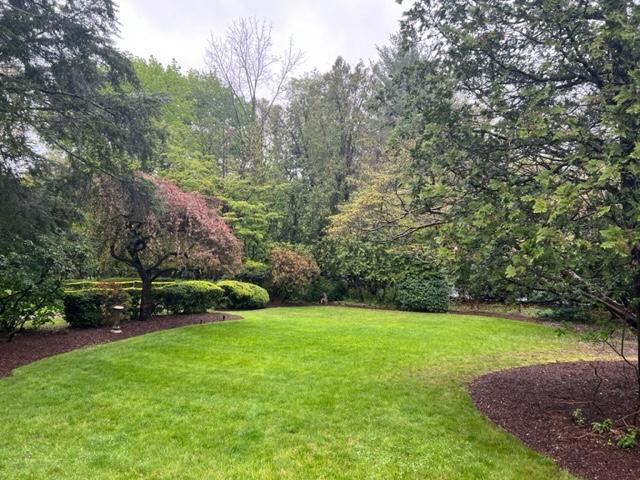
The gardens on the side of the house

The gardens in April 2023 on a gloomy day

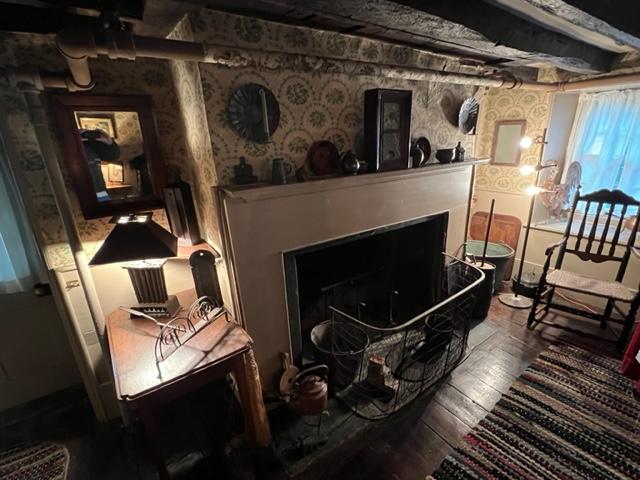
The original 1730 house has a steeply pitched roof and overhanging eaves designed to protect the building and foundation from rain. It has a two piece “Dutch” door to allow ventilation while keeping animals outside. Inside is a five foot high fireplace which originally was the sole source of heat and was used for all cooking (Wyckoff History).

The pathways to the gardens to the side of the house

The lawn next to the house

The pathways next to the house

The pathway to the gardens

The much larger 1824 structure is three stories originally tall with a sub-basement. It contains four fire places, again for heat. It has two half and four quarter moon windows and two oval windows. There are four bedroom with pegs to hand clothes on (no closets then). Its exterior demonstrates the classic Dutch Gambrel roof with an upper 23 degree roof line and then a lower 45 degrees roof line. This beautiful design was developed by the Dutch in northern New Jersey and up the Hudson River and is found nowhere else in the world. The typical Dutch front porch has two benches on either side of the entrance (Wyckoff History).

The house in the Fall

The property left the Van Voorhees family in the mid-1800’s. In 1867, it was purchased by Uriah Quackenbush. Uriah and Keziah Quackenbush had one son, John, who died as a young adult. Grace Quackenbush was his only child and was two years old when he died. She was raised in the house by her grandparents, who left the property to her when they passed on, after Grace had married John Zabriskie (Wyckoff History).

The Zabriskie Pond across the street

During her lifetime, Grace modernized the house (including adding an indoor bathroom) and restored the appearance of the home using authentic period antique furniture and furnishings. She also created three beautiful formal gardens on the landscaped property with her friend, Mrs. Elizabeth Spencer, a botany major (Wyckoff History).

The house is considered one of the finest examples of American architecture in northern New Jersey. The current House Museum has been called one of the finest in New Jersey. In 1973, Mrs. Grace Q. Zabriskie, who was the last resident, willed the house and its antique furnishings to the Township of Wyckoff, when she died that year. The “Zabriskie” house belongs to everyone in Wyckoff to enjoy (Wyckoff History).

The Zabriskie Pond in the Fall of 2022

Please check out their website for when the house is open to the public.

John Fell House                                                                         475 Franklin Turnpike                                                           Allendale, NJ 07401

John Fell House 475 Franklin Turnpike Allendale, NJ 07401

John Fell House

475 Franklin Turnpike

Allendale, NJ  07401

(201) 783-8754

http://www.johnfellhouse.org

http://www.johnfellhouse.org/

http://www.johnfellhouse.org/history/

http://www.johnfellhouse.org/events/

Open: For special events and for corporate events. Please check their website for details.

TripAdvisor Review:

https://www.tripadvisor.com/Attraction_Review-g29737-d10356749-Reviews-The_John_Fell_House-Allendale_New_Jersey.html?m=19905

The John Fell House in April 2023 for the Northwest Bergen Historical Coalition event

I visited the John Fell House in May 2016 for the Northwest Bergen History Coalition 6th Annual History Day on “Day Forty-Three” of “MywalkinManhattan.com” blog site. The house is a stately home that sits at a busy point of the Franklin Turnpike, once the main artery of this part of Bergen County.

I was not too sure what this was as it was at the back of the house. I thought it might be a food cellar.

The only problem I found about visiting the John Fell home is that it is barely furnished. Most of these homes in Bergen County have furniture or heirlooms left by the family and this house is more used for entertaining. There are displays all over the house.

The backyard of the John Fell House in Allendale, NJ

The house is operated by the Concerned Citizens of Allendale and sits on 2.8 acres of land which includes the stately home, the Gothic Revival Barn, wetlands and old-growth trees. The house is across from the Celery Farm Bird Sanctuary, which was once part of the estate and is open to walkers year round (BCHS).

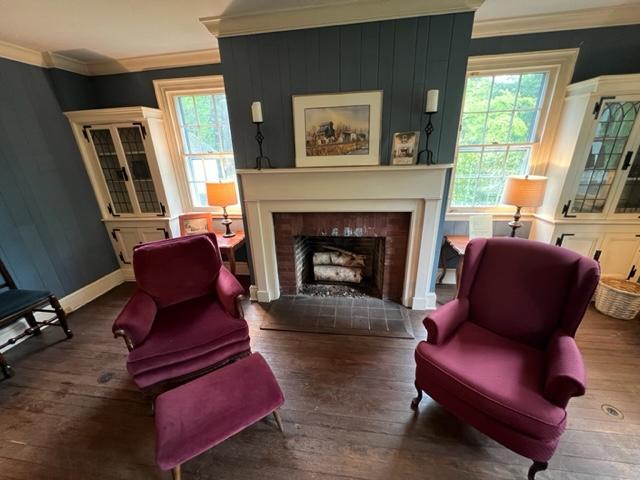
The front room of the John Fell Houser

The historic John Fell House is named in recognition of Founding Father, John Fell, a revolutionary war patriot, who purchased the property in 1766.

The Living Room at the Fell House in the late 1800’s addition

The house is located on the march route of Rochambeau’s army, on its way in 1781 to Yorktown, Virginia and the Seige of Yorktown that would decide the American Revolutionary War (Wiki).

The Music Room at the Fell House

The Living Room in the new addition of the house

The history of the Strawberry industry

The inside of the Fell House:

https://history.house.gov/People/Listing/F/FELL,-John-(F000065)/

John Fell (1721-1798) was an American merchant and jurist. He was born in New York City in 1721, he was engaged in overseas trade and has acquired a small fleet of ships by the time he moved to Bergen County, NJ in the 1760’s and lived at ‘Peterfield’, a home in present day Allendale, NJ (that is now known as the ‘John Fell House’) (Wiki).

The original part of the house from the 1700’s

The main room of the original 1700’s part of the house

The Living and Dining Room of the original house

The original fireplace in the older part of the house

The inside of the Fell House

He served as judge of the court of common please in Bergen County from 1766 to 1774. With the coming of the American Revolutionary War, he became chairman of Bergen County’s committee of correspondence and the committee of safety. He was Bergen County’s leading delegate to the Provincial Congress of New Jersey in 1775. In 1776, Fell was elected to a one-year term in the New Jersey Legislative Council representing Bergen County.

The antique dishware and tea pots in the kitchen at the John Fell House

The house is open for all sorts of special events and can be rented out. Please check out their website above for more details.