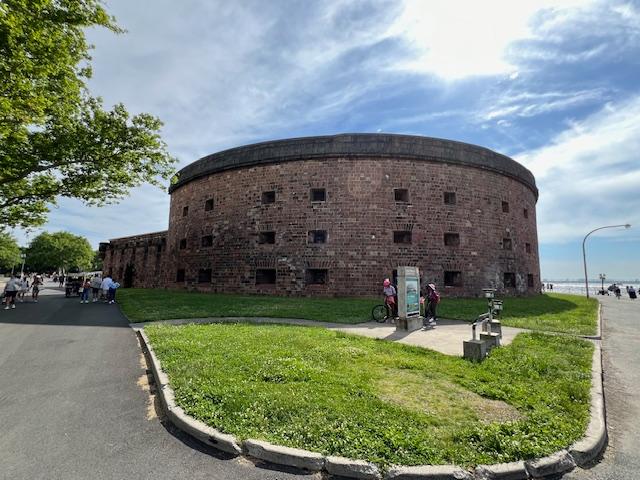
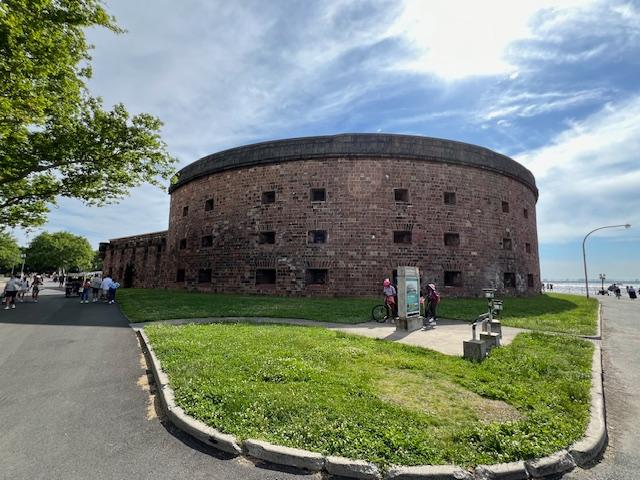
Castle Williams Fort as you enter from the main walkway
I have toured Castle Williams several times when visiting Governors Island over the last two years. The fort sits at a strategic site on the island facing Manhattan. The fort was originally built to protect New York City from the British during the War of 1812. The British knowing that the City had been fortified for battle never attacked New York.
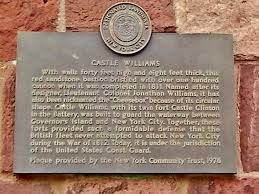
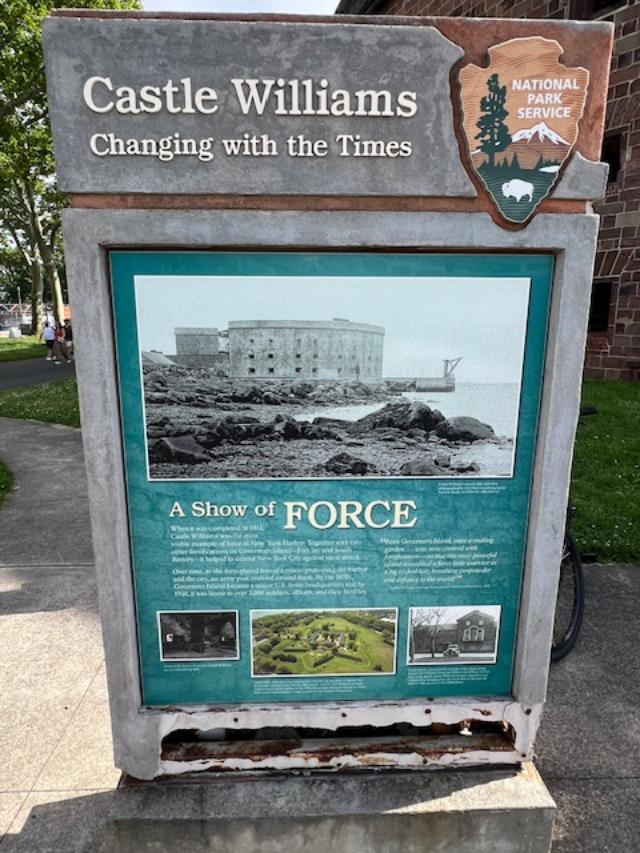
The historic plaque
The tour takes place twice a day for about an hour and you tour the first two levels of the fort. There are all sorts of signs around to show the history of the fort and its uses over the years. The one thing they don’t like is you touching the walls as the fort is still pretty fragile.
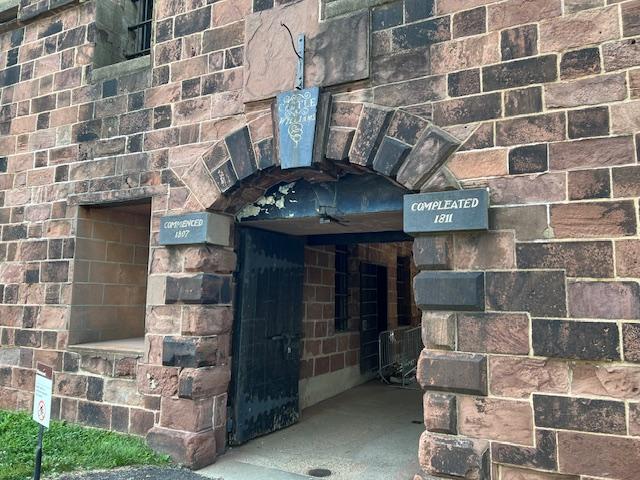
The entrance to this historic fort.
The nicest part of the tour is the observation deck at the top of the fort and the views of the Lower Manhattan skyline. It is a spectacular view of the harbor. You can see by the view why the fort was built where it was built and for its purpose before the War of 1812.
The sign welcoming you to the fort.
It really is a treat to see how fortifications mattered for cities in this time of history in this country.
The History of Castle Williams:
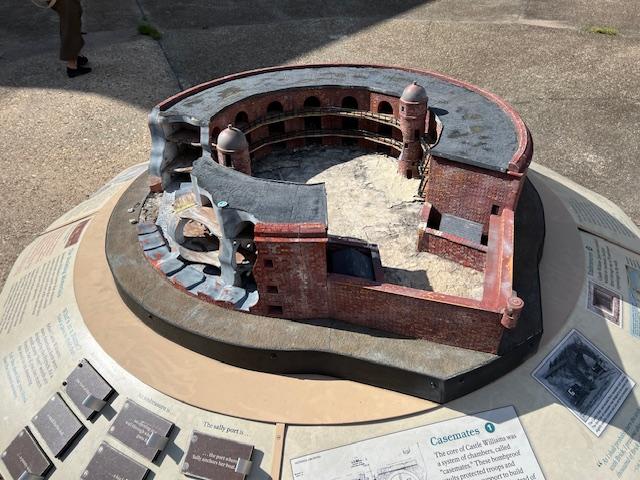
The model of Castle Williams inside the fort.
Castle Williams is a circular defensive work of red sandstone on the west point of Governors Island in New York Harbor. It was designed and erected between 1807 and 1811. It was designed by the Chief Engineer of the U.S. Army Corps of Engineers, Lieutenant Colonial Jonathan Williams for whom the fort was named after. It was considered a prototype for new forms of coastal fortification.
The fort from the outside
The castle was one component of a larger defensive system for the inner harbor that included Fort Jay and the South Battery on Governors Island, Castle Clinton at the tip of Manhattan, Fort Gibson at Ellis Island and Fort Wood, which is now the base of the Statue of Liberty on Liberty Island. This system of forts came to be known as the Second American System of coastal defense and existed to protect harbors like the one in New York from British interference with American Shipping.
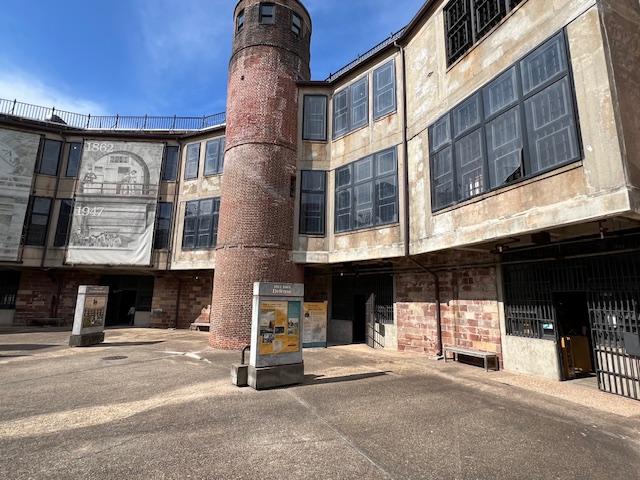
The inside courtyard of the fort.
Its usefulness as a fort began to end in the 1830’s, so Castle Williams subsequently served as barracks for the island’s garrison and new and transient troops. The castle was then remodeled by the U.S. Army for use as a prison in various forms during the Civil War and through the first half of the 20th Century.
In 1901, Secretary of War Elihu Root, who worked hard to modernize the Army, made a commitment to preserve the castle and overruled army leaders who wanted to demolish both it and Fort Jay. By 1903, the castle was fitted up as a model, state of art prison facility. In 1947, extensive renovations were carried out with the wooden catwalks replaced by concrete enclosed walk ways, hiding the beautiful stone arches on the third level and resulting in the industrial appearance of the courtyard today. Castle Williams ceased operations as a military prison in 1965 just before the U.S. Army left Governors Island.
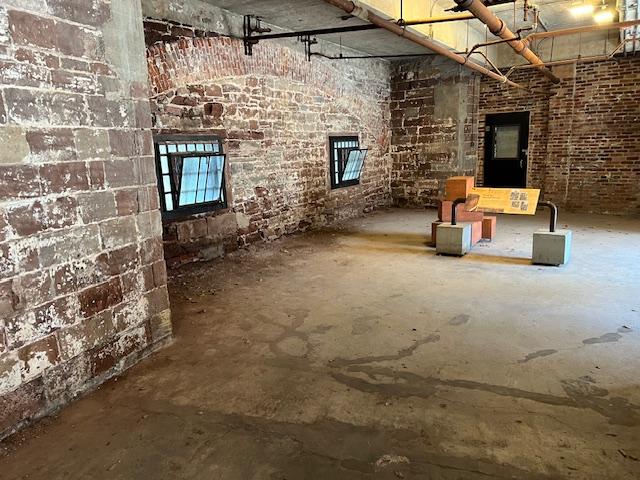
The inside of the prison cell.
The Castle again faced a demolition challenge as Coast Guard officials in Washington DC, who took control of Governors Island in 1966, wanted to demolish it. Instead, the castle was remodeled as a youth community center with a nursery, meeting rooms for Scouts and clubs, a woodworking shop, art studios, a photography laboratory and a museum. By the late 1970’s, the community center moved to another location and the fort became the grounds-keeping shop for the Coast Guard base.
Over time, the roof failed and broken windows allowed serious water damage to occur inside the castle. In the mid-1990s, the roof was replaced and new windows stopped further water damage to the structure but the interior remains closed until it can be made safe for public access. The National Park Service proposes to stabilize and restore the castle and eventually provide access to the roof, allowing the public to admire the harbor and the modern skyline of the great city (this has since opened on my last visit).
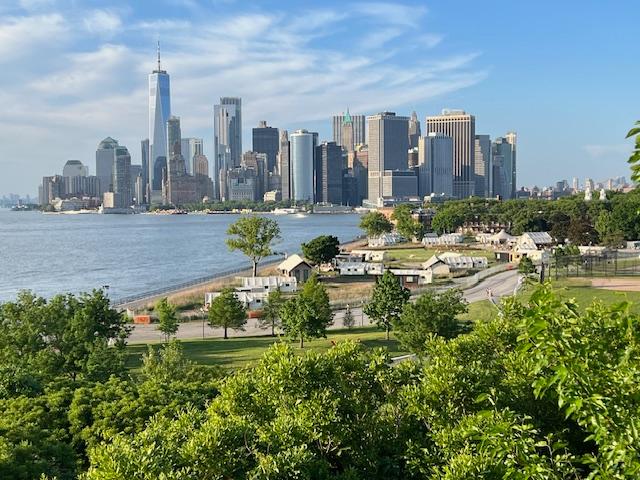
The view from the top of the hill on Governor’s Island.
Castle Williams was individually listed in the National Register of Historic Placed on July 31, 1972. It was recorded by the Historical American Buildings Survey in 1983. It was designated a National Historic Landmark in 1985 and the New York City Landmarks Historic District in 1996. It has been part of the Governors Island National Monument by Presidential Proclamations signed in 2001 and 2003.
(This information was provided by the National Park System Division of Cultural Affairs).
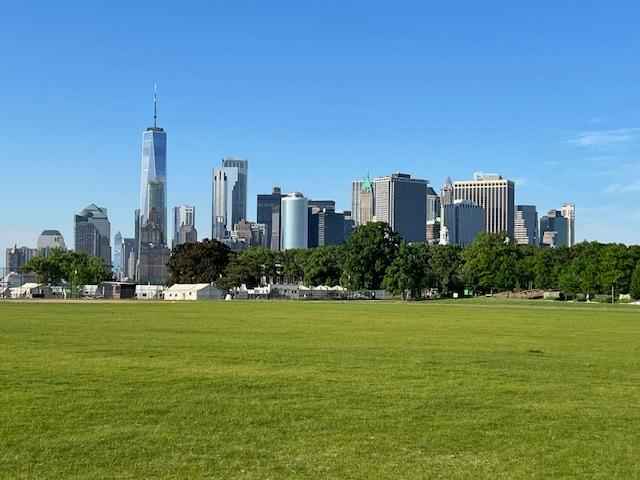
The lawn of Governor’s Island overlooking Lower Manhattan.
Bergen County Department of Parks, Division of Cultural and Historic Affairs
Court Plaza South
21 Main Street, Room 203 W
Hackensack, N.J. 07601-7000
Survey of the Early Stone Houses of Bergen County:
One of the most important early American building types is that of the pre-1840 stone house built in areas with Dutch Cultural affiliation. Bergen County is unique in the abundance, variety and architectural quality of these early stone houses, although adjacent areas of New Jersey and New York have some of the type.
Materials and methods remained constant but the house which were built from the time of Dutch colonization in the 17th century vary in size, plan and stylistic detail. Bergen County’s surviving early stone houses many located along major thoroughfares, provide county residents with tangible links to the formation years of the County, State and Nation.
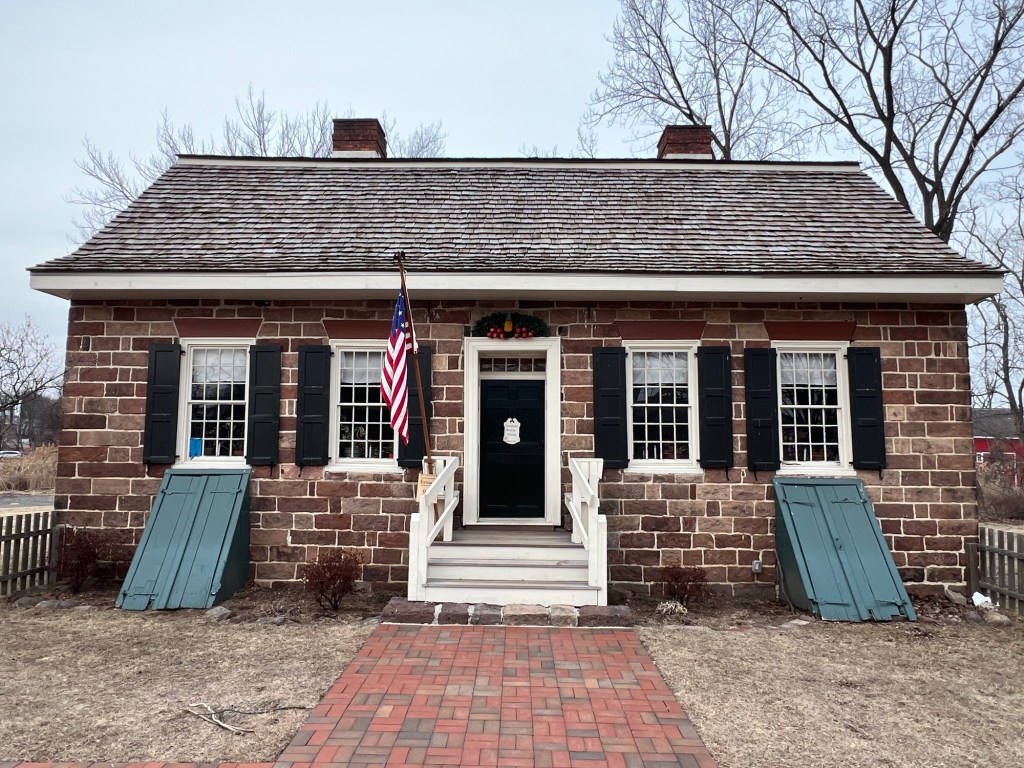
The Campbell-Christi House at New Bridge Landing/Bergen County Historical Society
The Survey of Early Stone Houses of Bergen County conducted in 1978-79 identified and recorded 230 of these early houses. Of these, 208 retained sufficient architectural integrity to be placed as a thematic group on the New Jersey Register of Historic Places in 1983, 1984 and 1985. A clear recognition of the houses importance is given by inclusion on these Registers, which are the State’s and Nation’s official lists of cultural resources worthy of preservation.
For inclusion in the Stone House Survey a building has to have at least two first story walls of pre-1840 stonework. The stone used in constructing the houses varies according to what as locally available. Many of the houses have reddish-brown sandstone walls but in the north-western section of the county rougher local fieldstone was utilized. Some houses have exterior walls of various types of stone and in some brick or frame exterior walls appear with stone ones. Frequently front facades display finer masonry work than do sides and rear. Usually the houses are 1 1/2 stories in height and have gable or gambrel roofs, sometimes with sweeping overhangs. Often there are side wings.
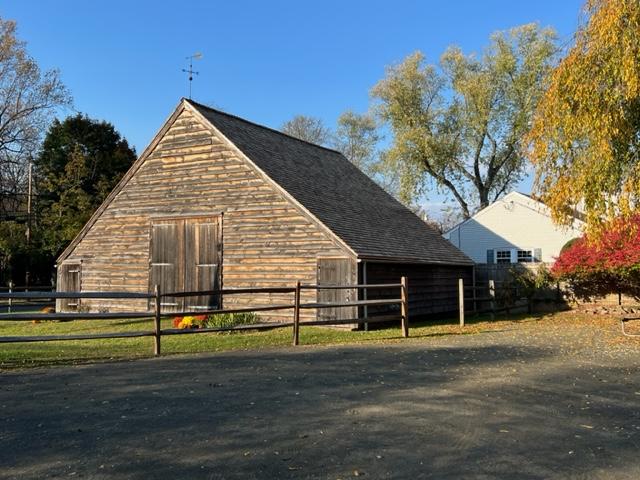
Wortendyke Barn in Oakland, NJ
The Wortendyke Homestead across the street from the barn.
Examples of the house-type are commonly called “Dutch Colonial.” This name most frequently applied to gambrel-roofed houses is a misnomer. Most of the houses were erected in the early 19th century, long after New Jersey passed from Dutch control in 1664. They date to a time when Anglo-American culture was being assimilated into Bergen’s Dutch cultural base. The typical stone house of the Colonial Period in Bergen County is a simple gable-roofed building.
Because they have been continuous use since they were constructed, many early stone houses have been modified and embellished. Often these changes in themselves have architectural distinction and are important to Bergen’s 19th and 20th century architectural history. Even when altered, the basic form and fabric of the original stone dwellings are usually recognizable and the houses are part of the county’s earliest architectural heritage.
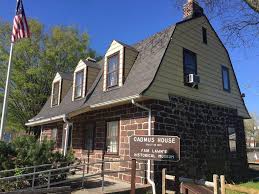
Cadmus House in Fairlawn, NJ
The Stone House survey was sponsored by the Bergen County Board of Chosen Freeholders, the Bergen County Historic Sites Advisory Board and the Division of Cultural and Historic Affairs. It was prepared by the Office of Albin H. Rothe, A.I.A. Claire K. Tholl did the field survey. The survey was made possible by a grant-in-aid from the Office of New Jersey Heritage, Division of Parks and Forestry, N.J. Department of Environmental Protection and matched by funds from the Bergen County Board of Chosen Freeholders.
The report for the Survey of the Early Stone Houses, with background text and inventory forms for houses, may be consulted at the Division of Cultural and Historic Affairs between 9:00am and 4:30pm weekdays.
Hopper House in Upper Saddle River, NJ
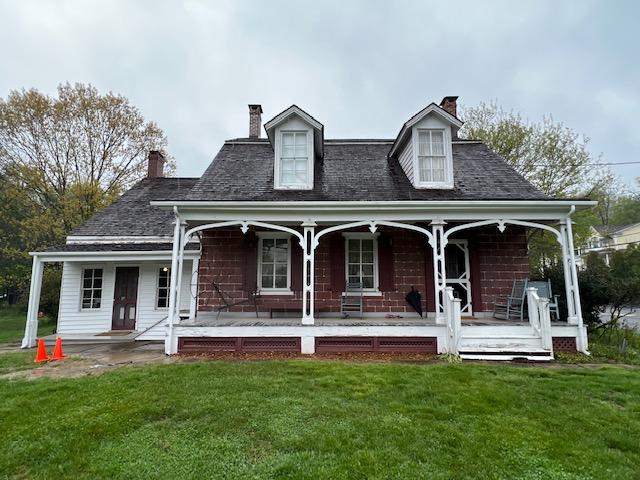
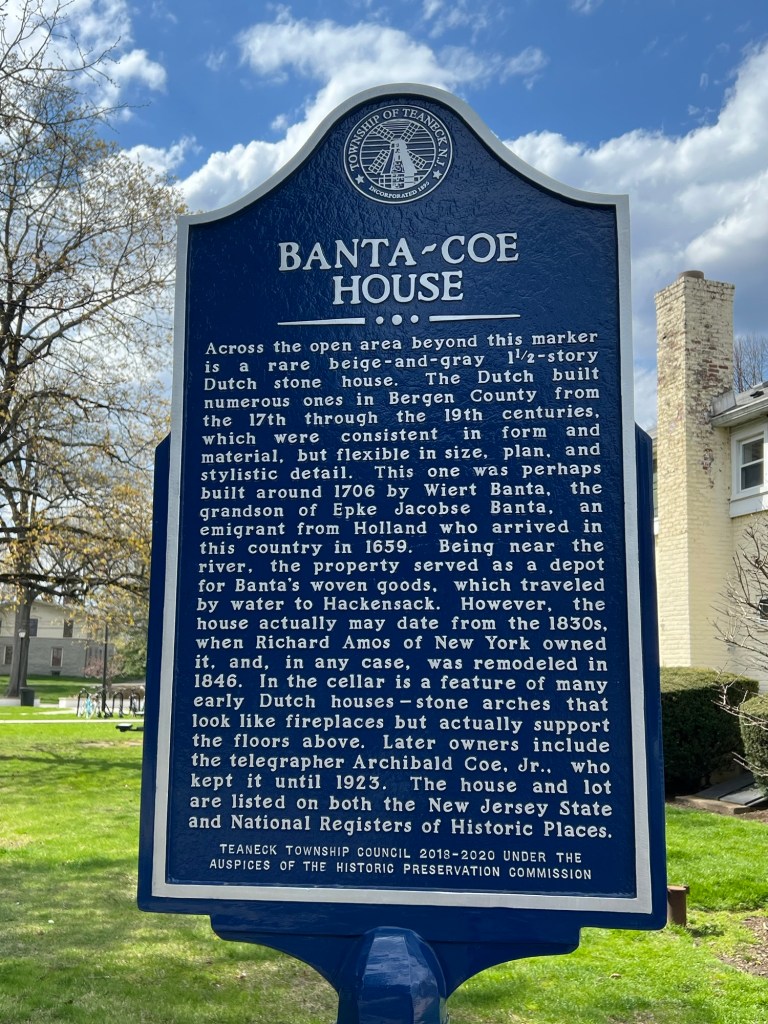
The Banta-Coe House on the Fairleigh Dickinson University campus
The Banta-Coe House prominently faces the Hackensack River
Disclaimer: This information was taken directly from the Bergen County Department of Parks, Division of Cultural and Historic Affairs pamphlet and I give them full credit for this information. Please contact the Department for more information on the subject.
The Boonton Historical Society at 210 Main Street.
I recently visited the Boonton Historical Society on the Main Street of downtown Boonton, NJ in a quickly changing new Arts Community. Up the hill, several galleries have found a home, and the downtown is filling up with cottage industries catering to both locals and artists.
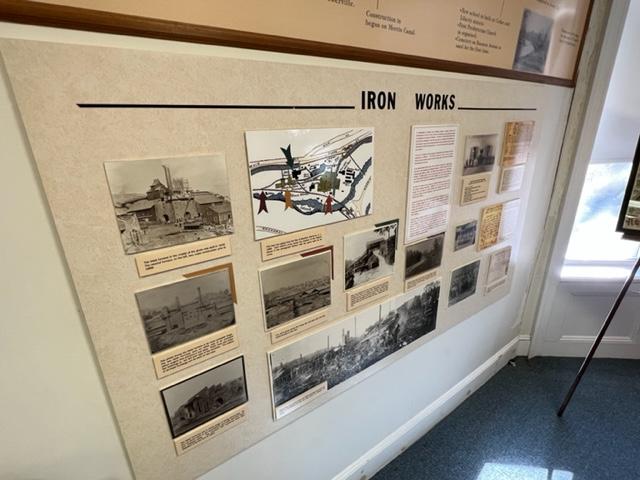
The Historical Society covers the history of Boonton and its role in New Jersey history especially with the creation of the Morris Canal and the Iron works that once dominated the area until about WWI.
The munitions of the town’s foundries
The town saw much prosperity during the Civil War, providing ammunition and supplies to the Union Army. Many of the nails used during this period came their foundries. They also supplied munitions, pails, building materials and the transportation of raw iron out of the town. When technology and the way we build changed, the businesses here started to dry up. The use of the Train system and major highways also changed the transportation, it affected the town’s businesses.
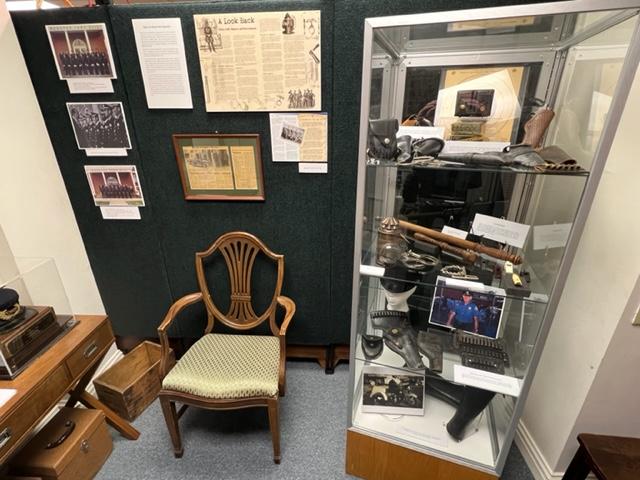
Still the Boonton area is home to many historic homes, a section of the Morris Canal and the remains of the iron works that burnt to the ground decades ago. There is an interesting exhibition of the town’s Police Department in the lower level and now as part of the changing gallery space an extensive exhibition on the NJ Trolley system that once dominated the state.
The Boonton Historical Society and Museum at Christmas 2022
The Permanent Collection:
The permanent exhibition space studies the history of the town, telling the story of the town’s beginnings as a manufacturing town, growth of the canals and shipping and agriculture to its current destination as a Arts Community. The museum is small and can be seen in about an hour to two hours if you like to read.
Don’t miss the room to the right of the museum which covers the timeline of the town and its prominent residents. It tells the story of how the growth of the iron works, the building of the dam and the coming of the railroads and the trolley system changed the town and the growth of its population. There was the history of the Boonton Fire Department.
Take time to read the displays and look at the exhibitions behind the case lines.
The Old Boonton Downtown and homes
The permanent collection of the town’s history
Downstairs is another gift shop with many unique items at extremely reasonable prices and in the room next to it was a display on the history of the Boonton Police Department over the years.
Police Chief’s Desk
Display of Police memorabilia
Special Events:
I recently went to the Boonton Historical Society for the December 2019 Holiday open House and it was a very nice afternoon. They some local students playing the guitar, keyboards and the flute with engaging music and holiday songs. The Open House did not return again until 2022 in the post-COVID era and it was a very festive afternoon even if the weather did not want to cooperate. There was wonderful music, delicious food and warm conversation. I got to talk with many of the Board Members on events going on at the museum.
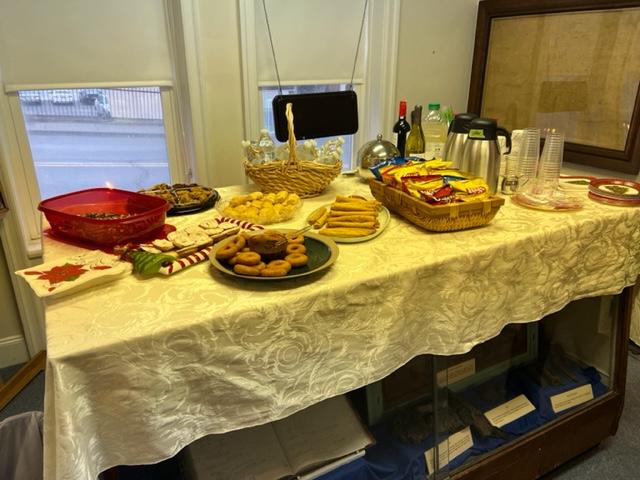
There were some light refreshments with hot and cold appetizers and Christmas cookies.
They had specials in their gift shops and featured ornaments, books and stuffed animals at a reasonable price and had 1960’s and 70’s Christmas albums playing on the lower level of the museum. In 2022, one of the Trustees played the piano for the entertainment that was very nice. It was a nice mini concert.
It was a nice afternoon treat and the society did a nice job welcoming people. There was food and entertainment and even a visit from Santa Claus.
Santa visited the Boonton Historical Society at the Christmas Open House in 2022
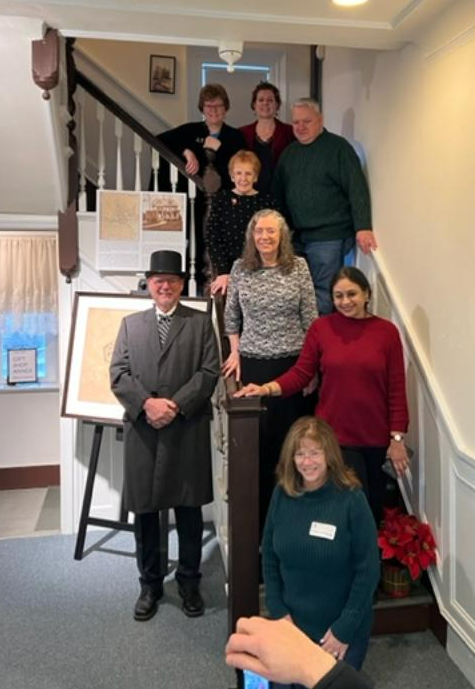
The members of the Boonton Historical Society Board of Directors at the Christmas Open House in 2022 could not have been better hosts
The gift shop is pretty extensive and offers lots of good deals on merchandise
Walking Tours:
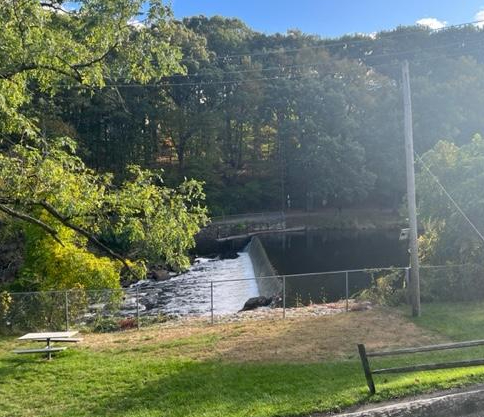
The Historical Society also has some interesting walking tours of Boonton. In May 2021, I visited Boonton for a walking tour in conjunction with the Boonton Trail Committee of the Boonton Iron Works and the Morris Canal starting with a tour of Grace Lord Park and the falls. It was interesting how the town developed around the Iron Works and why they were created there.
Boonton Iron Works Site in Boonton, NJ
We toured the back trails of the park along the Rockaway River to the site of the former Iron Works which are in the process of being torn down for development. The tour guide gave us the history of the Iron Works and their role in pig iron development and how the canal played a role in the transport of the finished product to markets all over the country. These famous ruins are under threat of being torn down for development which would be a shame.
The Grace Lord Park Falls
The Grace Lord Park where the tour took place at the very edge of Downtown Boonton, NJ is an amazing little park at Essex Avenue and Main Street is an amazing little park. On a recent trip to Boonton for a walking tour of the Downtown architecture and history of the downtown I stopped in the park again that was decorated for a Halloween event for the community. It looks like it will be a lot of fun.
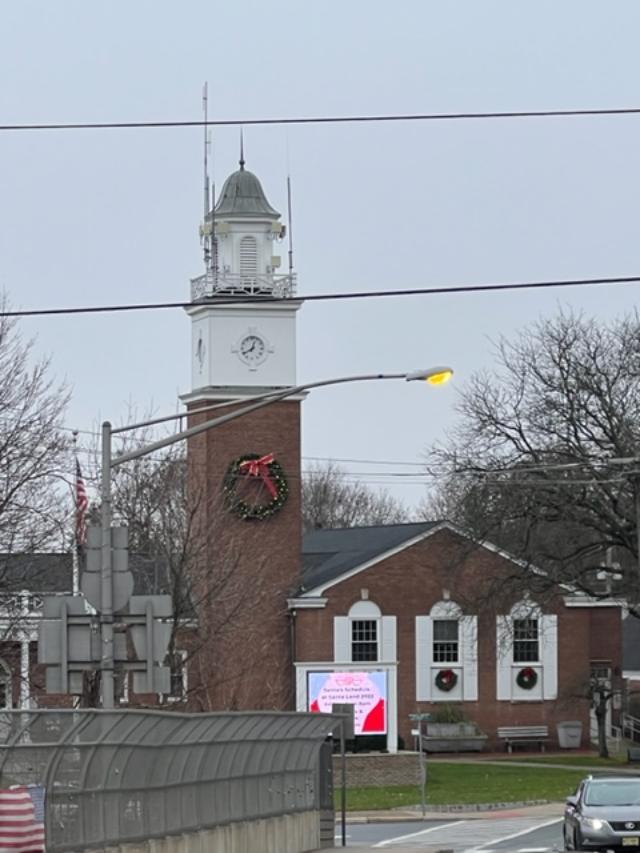
City Hall decked out for the holidays
In October of 2022, I went on a interesting walking tour lead by museum member and long time resident of Boonton, NJ Nancy Charlton Questa, who took us through the downtown and discussing the history and current use of many of the unique and detailed buildings of Downtown Boonton. For such a small town, it at one time had been a major mining and steel town with access to the canal system of New Jersey. It had a Opera House and a theater which is amazing for a downtown this size.
Downtown Boonton, NJ has many historical buildings
Many of the buildings in the downtown are currently going through a renovation and will reopen as new restaurants, theaters and retail shops as the town is becoming more “hipster” and ‘artist’ driven with new galleries opening up. There are now three coffee shops and three bakeries in the downtown area.
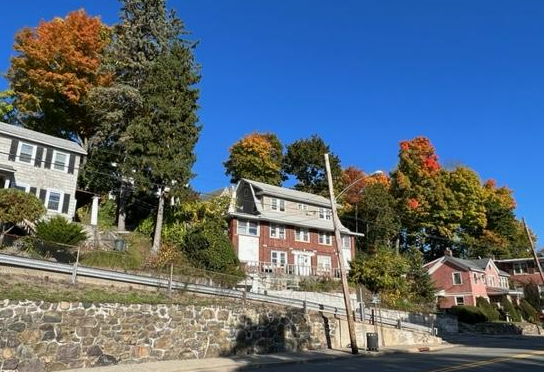
The top of the Downtown Boonton, NJ in the fall
Ms. Charlton Questa knowledge of the town as a life long member of the community brought a lot of insights to the walking tour of what was there when she was growing up until today. It blended very nicely with the current exhibition at the museum “Small Businesses of the Past”. This is on the history of the town’s business district businesses. I highly recommend this walking tour when it is offered again in the Spring.
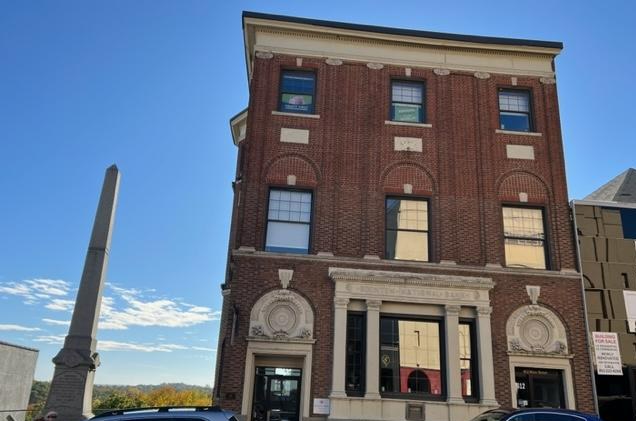
The Civil War Monument next to a historical bank
The museum is only open once a week on Sundays from 1:00pm-4:00pm and is run by volunteers. If you want to see how the State of New Jersey grew from a series of small towns to bustling industrial areas to sleepy back towns and back, visiting the Boonton Historical Society and Museum is a must visit.
The Boonton Library next to Darress Theater in Downtown Boonton, NJ
The Boonton Opera House next to the old Boonton Firehouse
The top of Downtown Boonton, NJ in the fall
Gaylord Park at the edge of Downtown Boonton, NJ where we toured both the Downtown and the Ironworks
New Exhibitions:
The Boonton Historical Society in conjunction with the North Jersey Electric Railway Historical Society and Liberty Historic Railway present this exhibition on the Trolley era. This display will include scale models of various types of trolley cars which operated in New Jersey, along with streetcar memorabilia and artifacts such as operator’s uniform jacket/hats, badges, books, publications, post cards, photos, videos, lithographs, signs, posters, tickets, lanterns, hardware and more (Boonton Historical Society).
The History of Boonton, NJ in the early years
In the Winter of 2021, the Boonton Historical Society opened a new exhibition entitled “Small Businesses of the Past”, which was an interesting look at the way downtowns evolve with the times.
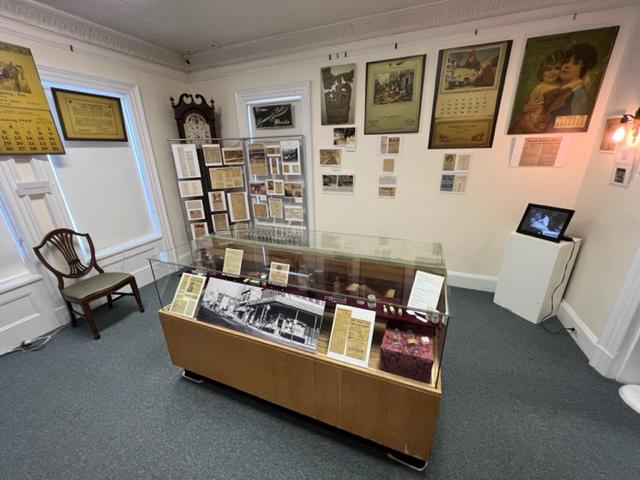
“The Small Businesses of the Past” exhibition
It showed the role that immigrants played in building the downtown merchants’ shops and how they catered to fellow immigrants who worked at the iron plant and on the canal. It also explained how families passed these businesses down from generation to generation over time.
The Bakeries in town
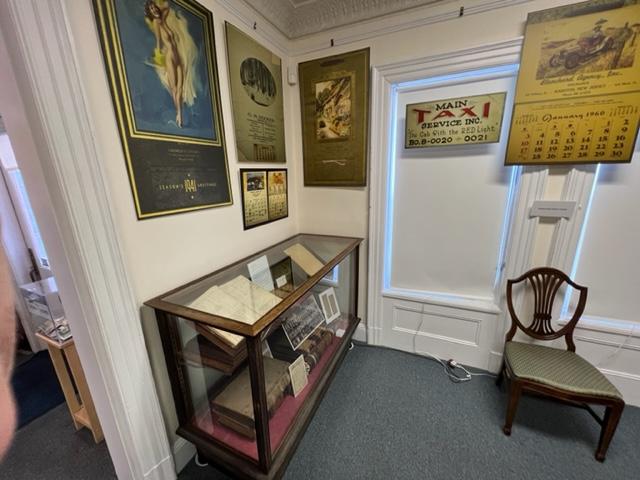
The exhibition showed the bakeries, banks, taxi services and pharmacies that make up any downtown in the State of New Jersey. It is interesting to see things old Christmas club accounts, prescription bottles and promotional items that are given out when you open a new account.
Things that might not be part of the shopping experience today.
The mustache cups of the barbers in the area.
The businesses of Downtown Boonton over the years
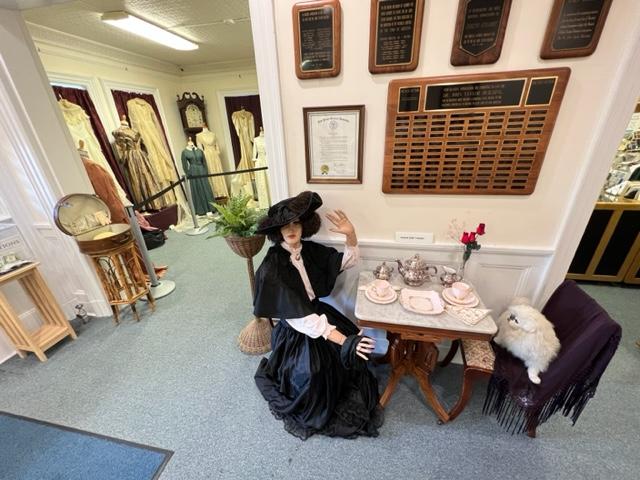
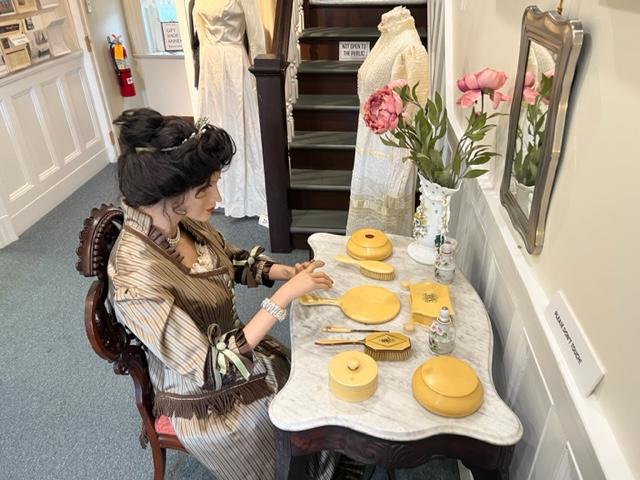
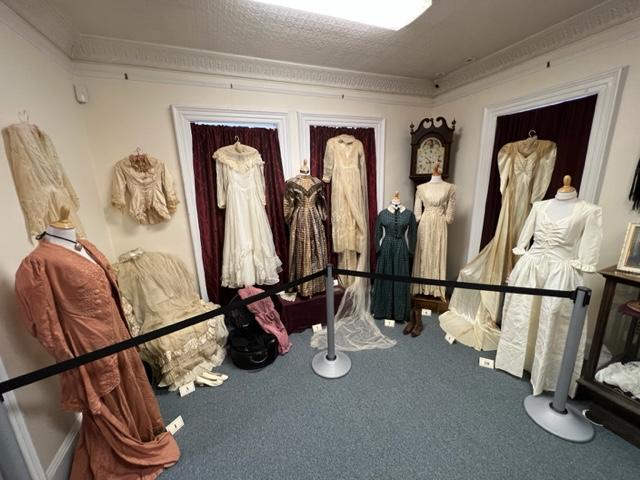
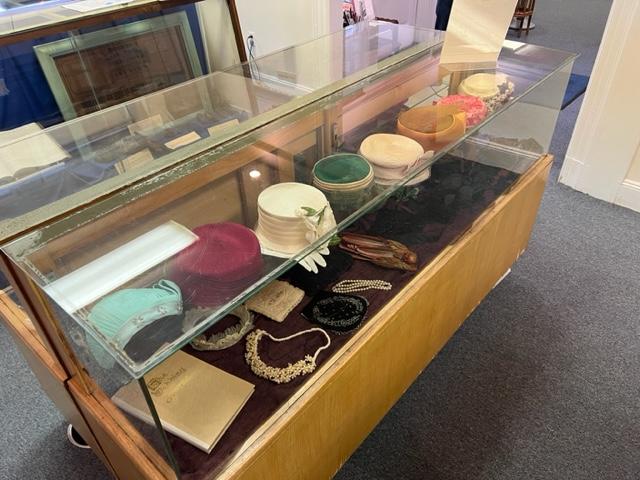
In 2023, the exhibition is entitled: “Say Yes To The Dress”: Ladies dress through the decades. A reflection of ladies’ dress through pieces of the permanent collection and the collection of members. The exhibit features wedding, party and day dresses worn by women from the 1880’s to the 1930’s. Also displayed was a assortment of accessories including hats, gloves and novelties.
The exhibit: “Say Yes To The Dress.”
The exhibit showcases ladies dress through the ages and a reflection on how things have changed over the years.
A close up at the dress collection.
Lady preparing herself for a night out.
Lady enjoying tea with favorite friend.
This dress was worn by Mrs. Ethella Salmon and donated by Lloyd Charlton. Ethella was the daughter in law of Congressman Joshua Salmon and had worn this dress to President McKinley’s inaugural ball in 1901.
The display to the right
The display to the left.
Wedding dresses through the ages.
The accessories in the show.
It really shows how Boonton, NJ has changed over the years and a new wave of immigration with Jamaican and Latino businesses opening up are again changing the make-up of the downtown today. Downtown Boonton is going through another resurgence with new art galleries, restaurants and stores opening up where these businesses of the past once stood.
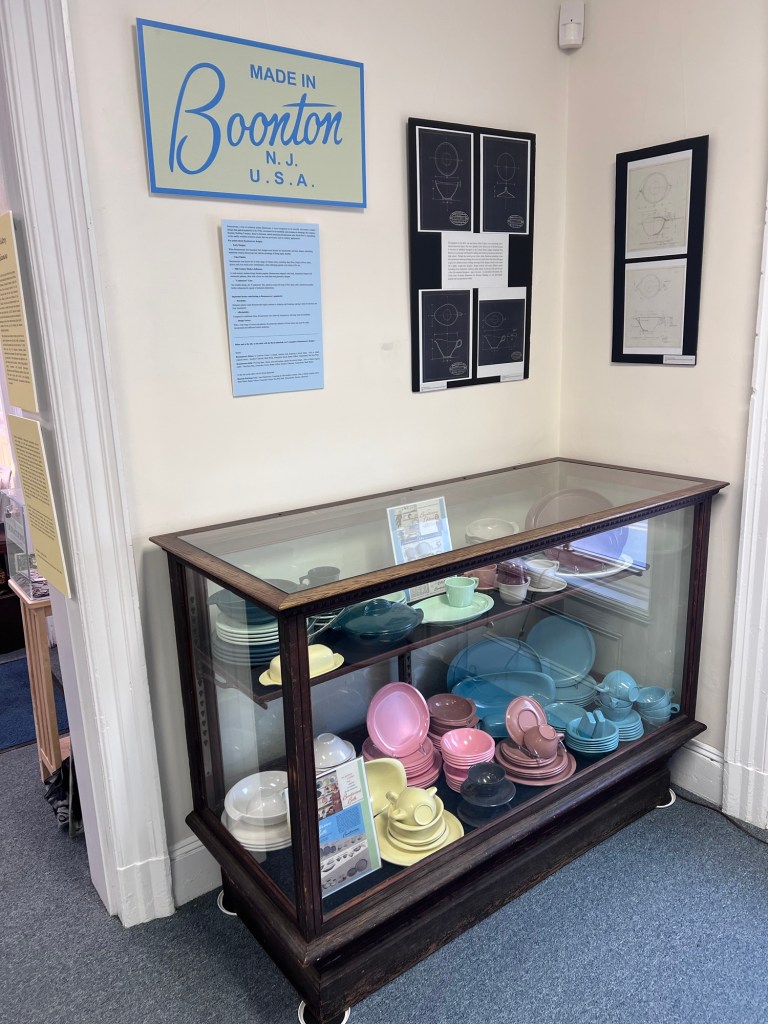
The latest exhibition was on Boontonware, dish ware that was created and manufactured in Boonton until 1980. These colorful dishes which graced many New Jersey and beyond dinner tables were once manufactured in town. I remember these dishes from the early 1970’s when our family had a set of red flowered dishes that we ate all our meals on.
The Boontonware display of dish ware
The display of Children’s dishes
More items from the Children’s line of Boontonware
The colorful dishware made in Boonton, NJ
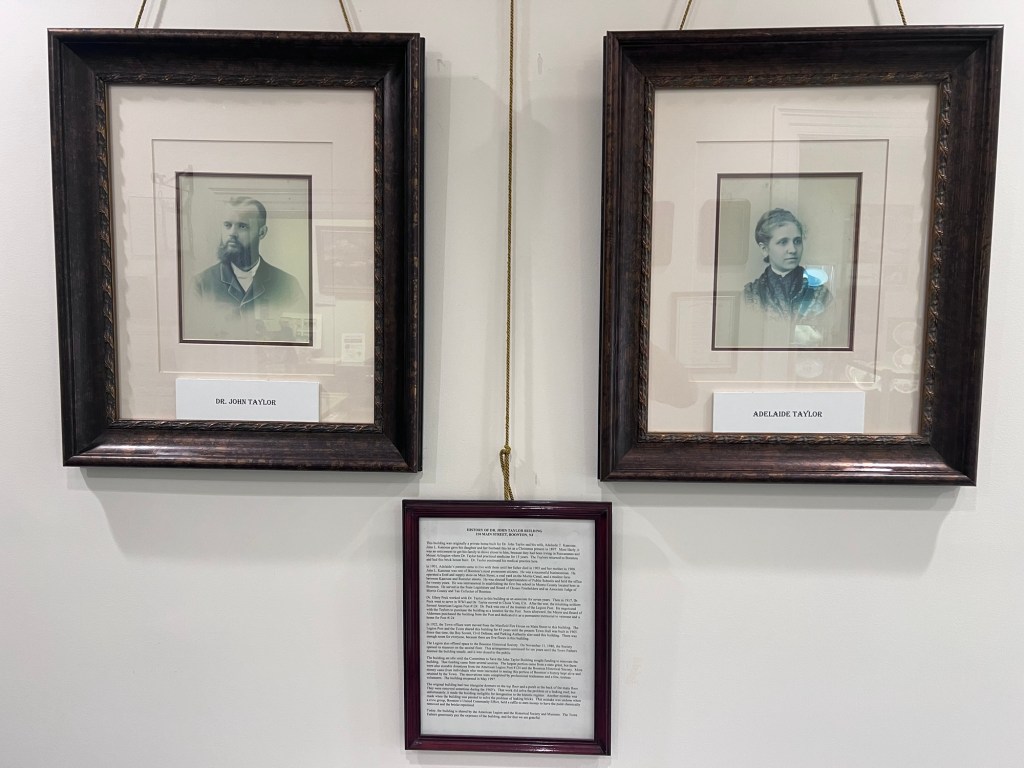
The portraits of the former owners of the home where the museum is located, Dr. & Mrs. John Taylor
A trip to Downtown Boonton, NJ:
Downtown Boonton, NJ
The Mission Statement of the Boonton Historical Society & Museum:
The Boonton Historical Society and Museum is a non-profit organization incorporation in 1959 located in the town of Boonton, New Jersey. Its mission is to:
*Preserved and protect the town of Boonton’s unique cultural, architectural and industrial history.
*Preserved and share the area’s rich history, folklore, arts and humanities of the past and present.
*Encourage preservation and restoration of historic landmarks in the town.
*Protect and display the museum’s collections.
*Provide educational programs, guided historical tours and exhibitions to a diverse population.
The History of Dr. John Taylor House 210 Main Street Boonton, NJ (Home of the Museum):
The building was originally a private home built for Dr. John Taylor and his wife, Adelaide T. Kanouse. John L. Kanouse gave his daughter and her husband this lot as a Christmas present in 1897. Most likely, it was an enticement to get his family to move closer to him because they had been living in Succasunna and Mount Arlington where Dr. Taylor had practiced medicine for 15 years. The Taylor’s returned to Boonton and had the brick house built. Dr. Taylor continued his medical practice there.
In 1901, Adelaide’s parents came to live with them until her father died in 1905 and her mother in 1908. John L. Kanouse was one of Boonton’s most prominent citizens and was a successful businessman. He operated a food and supply store on Main Street, a coal yard on the Morris Canal and a modest farm between Kanouse and Roessler streets. He was elected Superintendent of Public Schools and held the office for twenty years. He served in the State Legislature and Board of Chosen Freeholder and as Associate Judge of Morris County and Tax Collector of Boonton.
Dr. Ellery Peck worked with Dr. Taylor in the building as an associate for seven years. Then in 1917, Dr. Peck went to serve in WWI and Dr. Taylor moved to Chula Vista, CA. After the war, the returning soldiers formed American Legion Post #124. Dr. Peck was one of the trustees of the Legion Post. He negotiated with the Taylor’s to purchase the building from the Post and dedicated it as a permanent memorial to veterans and a home for Post #124.
In 1922, the Town offices were moved from the Maxfield Fire House on Main Street to the John Taylor house. The Legion Post and the Town shared this building for 43 years until the present Town Hall was built in 1965. Since that time, the Boy Scouts, Civil Defense and Parking Authority have also used the building, having five floors there was enough room for everyone.
The Legion also offered space to the Boonton Historical Society. On November 11, 1980, the Society opened its museum on the second floor. This arrangement continued for ten years until Town Fathers deemed the building unsafe and it was closed to the public.
The building sat idle until the Committee to Save the John Taylor Building sought funding to renovate the building. That funding came from several sources. The largest portion came from a state grant but there were also sizable donations from the American Legion Post #124 and the Boonton Historical Society. More money came from individuals who were interested in seeing this portion of Boonton’s history kept alive and retained by the Town. The renovations were completed by professional tradesman and a few tireless volunteers. The building reopened in May 1997.
The original building had two triangle dormers on the top floor and a porch at the back of the main floor. They were removed sometime during the 1960’s. That work did solve the problem of a leaking roof but unfortunately, it made the building ineligible for designation to the historic register. Another mistake was made when the building was painted to solve the problem of leaking bricks. That mistake was undone when a civic group, Boonton’s United Community Effort, held a raffle to earn money to have the paint chemically removed and the bricks repointed.
The John Taylor House
Today, the building is shared by the American Legion and the Historical Society and Museum. The Town Fathers generously pay the expenses of the building and for that were are grateful (Boonton Historical Society).
Disclaimer: This information was taken from the Boonton Historical Society pamphlet and I give them full credit for the information.
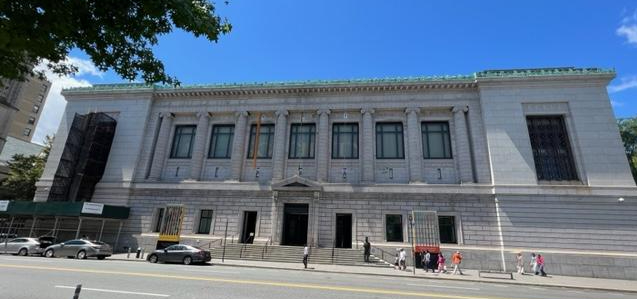
The New York Historical Society at 170 Central Park West
I have visited the New York Historical Society several times over the years and I have to say that make quite a statement on the history of New York City and the State of New York City. It has a interesting permanent collection of paintings and statuary. There are a lot of things that First Families of New York City have donated to the museum that tell the story of families born and raised here.
I was honored here years ago when a picture I took for the 9/11 Photo Album Book came out in 2002. All the photographers that contributed to it were in attendance. Another time I was here for a private event on John Adams back in the early 2000’s that was injunction with the American Museum of Natural History. Over the years, the Historical Society has brought in more interesting exhibitions. The current exhibition “Hudson Rising” on the history and ecological changes due to humans along the Hudson River. It was an interesting look of the natural changes to the river from manufacturing times today as the river is being reclaimed for recreational uses.
‘Hudson Rising’ Exhibition
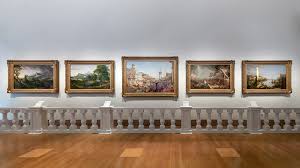
The whole museum is a retrospect on the timeline of the New York City with an array of art out any one time. There are Masters from the Hudson River School, statues from all eras and special exhibitions that tell an interesting story of some part of the City’s past.
Hudson River School Paintings for ‘Hudson Rising’
History of the NY Historical Society:
The Historical Society was founded on November 20, 1804 largely through the efforts of John Pintard. He was for some years secretary of the American Academy of Fine Arts as well as the founder of New York’s First Savings Bank. With a group of prominent group of New Yorkers on the founding board including then Mayor DeWitt Clinton, the organization was established on December 10, 1804 (Wiki).
The Collections of the NY Historical Society
The NY Historical Society had its share of growing pains over the years in that it had been in heavy debt during its first couple of decades. It also moved several times over the years as well. It moved from the Government House, which it had been housed in since 1809 to the New York Institution, the formerly the city almshouse on City Hall Park in 1816. In 1857, it moved into the first building constructed specifically for its collection at Second Avenue and 11th Street. The collection moved to its final home to Central Park West in 1908 (Wiki).
The current Society building was designed by architects York & Sawyer, who were known for bank designs. The second part of the building was designed by architects Walker and Gillette. The building has just finished a $65 million dollar renovation in 2011 and all the galleries have been refreshed. The new director of the Society, Louise Mirrer is leading the establishment into the 21st Century.
On Friday night’s from 6:00pm-8:00pm it is ‘pay as you wish’ to enter the museum.
































 Visiting a Museum: The Unique, Unusual, Obscure and Historical