Tag: historic parks

Franklin D. Roosevelt Four Freedoms Park             1 Four Freedoms Park                                Roosevelt Island, NYC 10044

Franklin D. Roosevelt Four Freedoms Park 1 Four Freedoms Park Roosevelt Island, NYC 10044

Franklin D. Roosevelt  Four Freedoms Park

1 Four Freedoms Park

Roosevelt Island, NYC, NY 10044

(212) 204-8831

Open: Sunday-Monday 9:00am-5:00pm/Tuesday Closed/Wednesday-Saturday 9:00am-5:00pm

Fee: Free

TripAdvisor Review:

https://www.tripadvisor.com/Attraction_Review-g60763-d3595273-Reviews-Franklin_D_Roosevelt_Four_Freedoms_Park-New_York_City_New_York.html?m=19905

The park on a sunny July day

Franklin D. Roosevelt Four Freedoms Park is the first memorial dedicated to the president in his home state of New York. Located on the southern tip of Roosevelt Island in New York City, it is the last work of Louis I. Kahn, an iconic architect of the 20th Century.

The interior of the park facing Roosevelt Island

The memorial, which opened to the public in October 2012, celebrates the four freedoms, as pronounced in President Roosevelt’s famous January 6, 1941 State of the Union address: freedom of speech and expression, freedom of worship, freedom of want and freedom from fear. This has been prominently etched on the memorial.

FDR Four Freedoms Park

FDR Four Freedoms Park from a view

Our Mission:

As steward of this civic space, Four Freedoms Park Conservancy advances President Roosevelt’s legacy and inspires; educates and engages the public in the ideals of the four freedoms. The Conservancy does this by:

*Safeguarding the memorial as a space for inspired use.

*Fostering community and understanding.

*Igniting conversation about human rights and freedoms today.
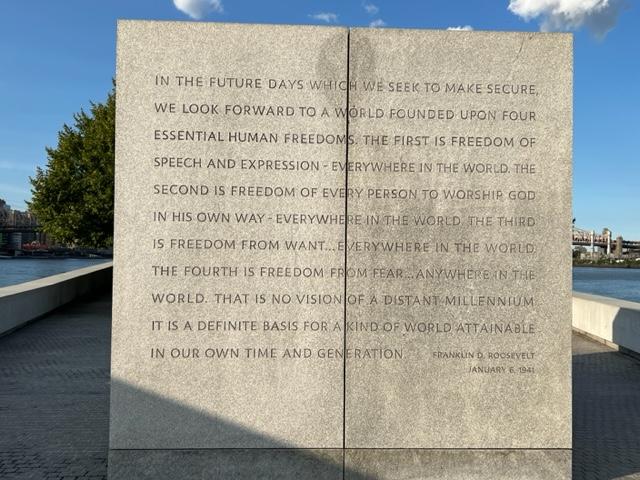
The Four Freedoms that were the goals of the President

On January 6, 1941, President Franklin D. Roosevelt delivered his eighth State of the Union address, now known as the Four Freedoms speech. In his address, Roosevelt presented his vision for the world, “a world attainable in our own time and generation,” and founded upon four essential human freedoms: freedom of speech and expression, freedom of worship, freedom from want and freedom from fear.

Roosevelt’s call for human rights has created a lasting legacy worldwide, forming the basis for the Universal Declaration of Human Rights adopted by the United Nations in 1948.

For a richer of FDR, his legacy and the four freedoms, visit fdr4freedoms.org.

The view from Roosevelt Island of the Upper East Side

Franklin D. Roosevelt Island: A History

Originally called Minnahannock by Native Americans and Varkins Island  by the Dutch settlers, the island was acquired by the Blackwell family in the 1600’s, who renamed the land Blackwell Island. The Blackwells lived on and farmed it before selling it to the City of New York in 1828 for $30,000.

In the 19th Century, the island was used by the City for institutional facilities, including the Workhouse, Penitentiary, Lunatic Asylum, City Hospital and City Home and given the name Welfare Island in 1921. These institutions served the City until the 1930’s., before gradually being relocated to areas more easily accessible to public transportation.
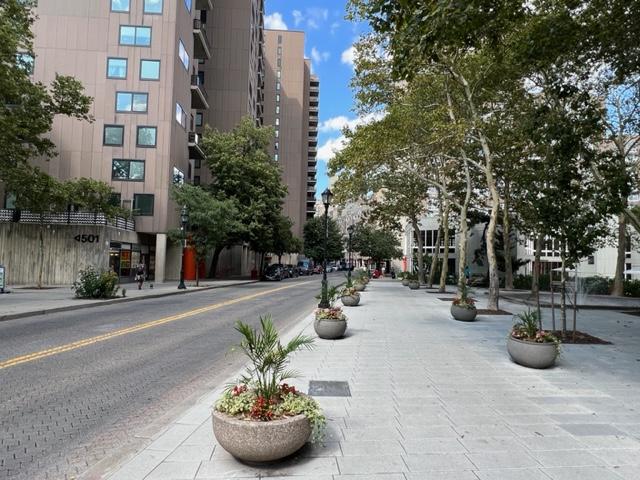
The Roosevelt Island Main Street

In 1969, this two-mile island was lease to the State of New York for 99 years. Under New York State’s Urban Development Corporation, Welfare Island  became a beacon for the affordable housing movement within the City. Construction of the Island community was completed in 1975 with four housing developments. In 1973, the island was renamed Franklin D. Roosevelt Island.
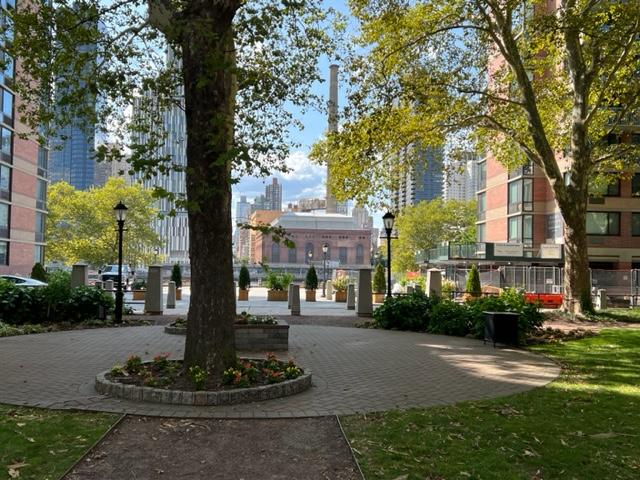
The Gardens in the Main Street of Roosevelt Island

Today, Roosevelt Island has a small town feel with approximately 20 buildings and 14,00 residents. The island is home to six landmarked structures and proudly houses Four Freedoms Park, one of the original visions for the Island. To learn more, visit the Roosevelt Island Visitor Center at the Tram Plaza.
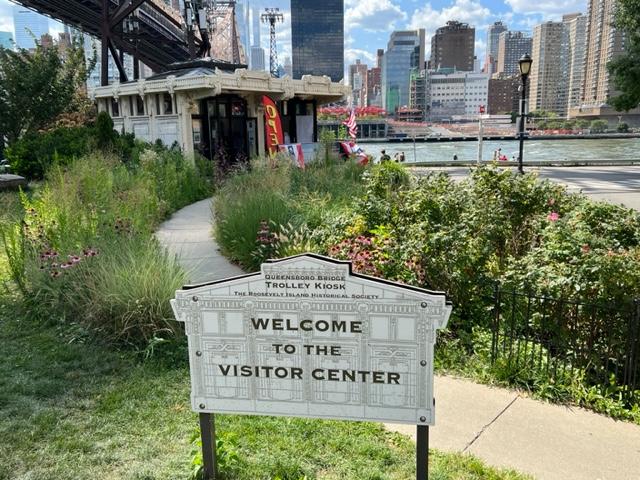
The Visitors Center at Roosevelt Island

(Judith Berdy, President, The Roosevelt Island Visitor Center)

A Memorial to Franklin D. Roosevelt

Nearly 40 years before the Park opened its gates to the public, Louis I. Kahn presented his vision for what would become Franklin D. Roosevelt Four Freedoms Park. It was a simple idea. “I had this thought,” Kahn said. “that a memorial should be a room and a garden.”

The FDR Hope Memorial

This was 1973. Less than a year later, Khan had died; Governor Nelson Rockefeller, who had announced the project with Mayor John  Lindsay, became Vice President of the country and the City of New York neared bankruptcy.
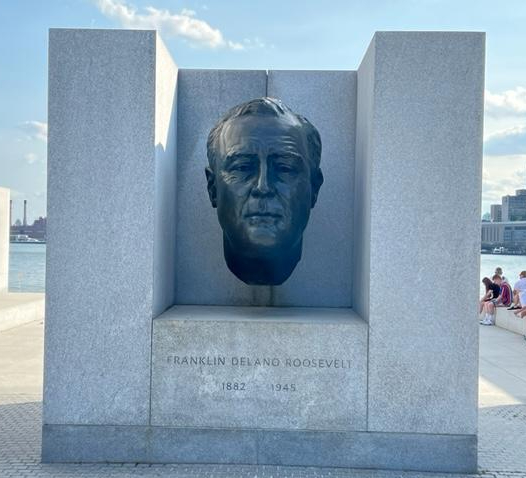
The bust of President Roosevelt

The future of the memorial seemed a fragile and tenuous dream. Yet, through the power and determination of a small but dedicated group, nearly four decades after Kahn completed his architectural design, Four Freedoms Park became the place he envisioned. In 2012, following 30 months of construction, the Park opened to the public. The Park is operated and maintained by Four Freedoms Park Conservancy in partnership with New York State Parks.

(Part of the New York State of Opportunity: Parks, Recreation and Historic Preservation)

I admired the FDR Hope Memorial in which the statue of the President reaches to a young girl with a disability herself. The statue offers encouragement to those with a disability and the power to persevere.

http://www.fdrhopememorial.org/

FDR faces the young girl

the young girl facing FDR

The statue was designed by artist and sculptor Meredith Bergmann, who herself was inspired by the photos and stories of the President (FDR Hope Memorial).

Artist Meredith Bergmann (Cooper Union Alumni Picture)

https://meredithbergmann.com/

Ms. Bergmann is an American born artist with BFA from The Cooper Union School of Art and attended Parsons School of Design and Wesleyan University. Her public works explore history, social justice, human rights and disabilities (Author’s bio).

Franklin D. Roosevelt Four Points Freedom Park is the first memorial dedicated to the president in his home state of New York. Located at the southern tip of Roosevelt Island in New York City. It is the last work of Louis I. Kahn, an iconic architect of the 20th century.

FDR Four Freedoms Park

The memorial, which opened to the public in October 2012, celebrates the four freedoms, as pronounced in President Roosevelt’s famous January 6, 1941, State of the Union address: freedom of speech and expression, freedom of worship, freedom from want and freedom from fear.
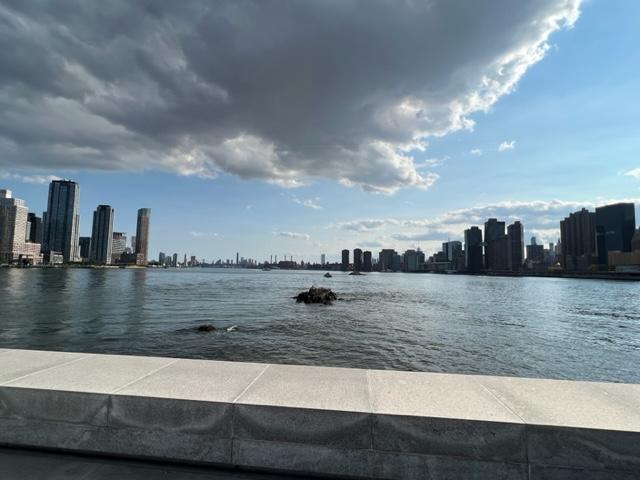
The skyline from the southern part of the park.

Disclaimer: this information was taken from the NYS Parks, Recreation and Historic Preservation pamphlet. Please call the park or email to check on opening times when in season.
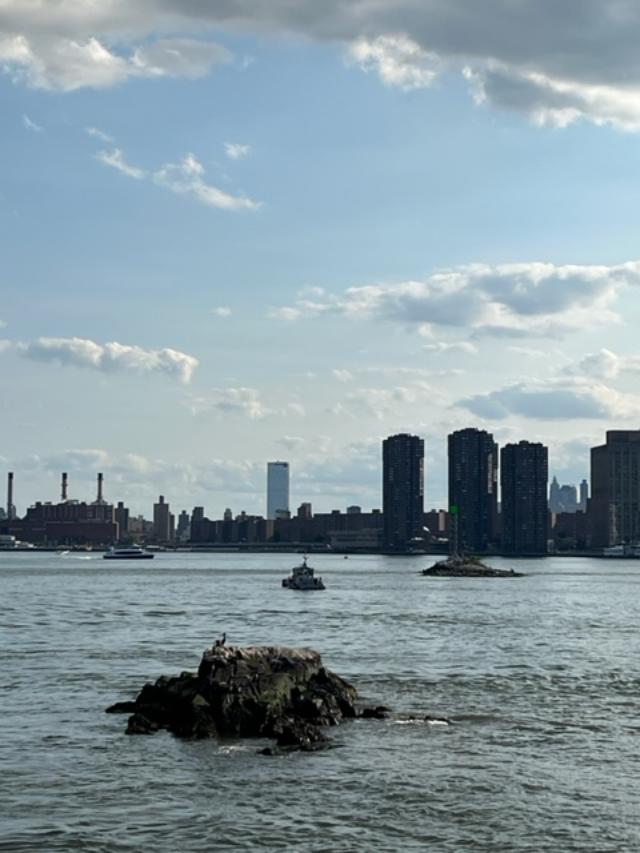
The islands just south of the park.
Baylor Massacre Burial Site                                           Rivervale Road & Red Oak Drive                                      River Vale, NJ 07675

Baylor Massacre Burial Site Rivervale Road & Red Oak Drive River Vale, NJ 07675

The Baylor Massacre Burial Site

486 Rivervale Drive

Rivervale Road and Red Oak Drive

River Vale, NJ  07675

http://www.bergencountyhistory.org/Pages/baylormassacre.html

Open: Dawn to Dusk

My review on TripAdvisor:

https://www.tripadvisor.com/Attraction_Review-g46777-d12277914-Reviews-Baylor_Massacre_Burial_Site-River_Vale_New_Jersey.html?m=19905

Don’t miss this little hidden site in Old Tappan, NJ. The Baylor Massacre site holds a rich history in the county and in the country’s founding. It will make you realize what an important role that the State of New Jersey had in the Revolutionary War and the lives sacrificed to win the war.  My hats off to these brave men and women who helped fight for our freedom.

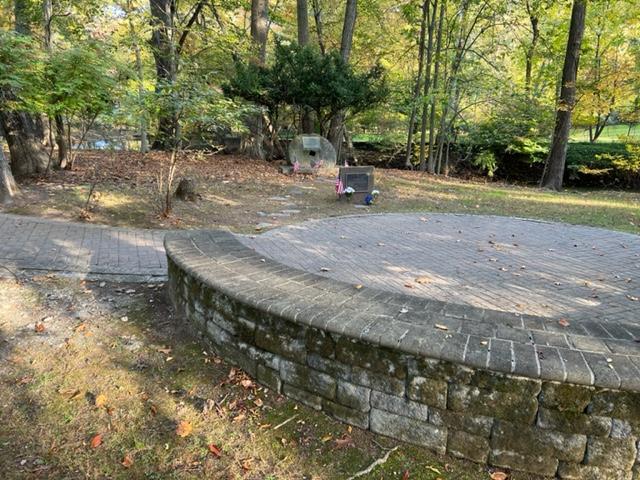
The Baylor Massacre site in the Fall

This quiet little park sits off to the side by the river and you will need to take time to walk the paths and enjoy the reading the signing. The sacrifice that these men made during the war effort and the way they were treated by the British in the act of war was deplorable. That and the fact that their own countrymen from Bergen County turned them into the British was unbelievable.

The Baylor Massacre history:

After midnight on September 28, 1778 during America’s Revolutionary War, the brutal surprise attack by the British forces on the sleeping men of the 3rd Continental Light Dragoons began. Today this is known as the Baylor Massacre. Nowa County-owned historic park and burial ground, the Baylor Massacre Site is located along the Hackensack River in River Vale in Northern Bergen County, New Jersey.

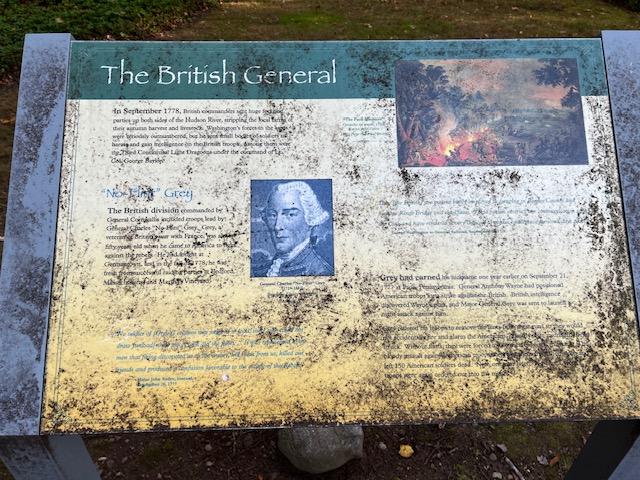
In the Autumn of 1778, British General Cornwallis occupied southern Bergen County with a force of 5000 soldiers. Their purpose was to gather and forage for food to feed the army that would be garrisoned in New York City during the upcoming winter.  Bergen County, with its fertile land and industrious Jersey Dutch farms, was a major source for food for both armies during the Revolution.

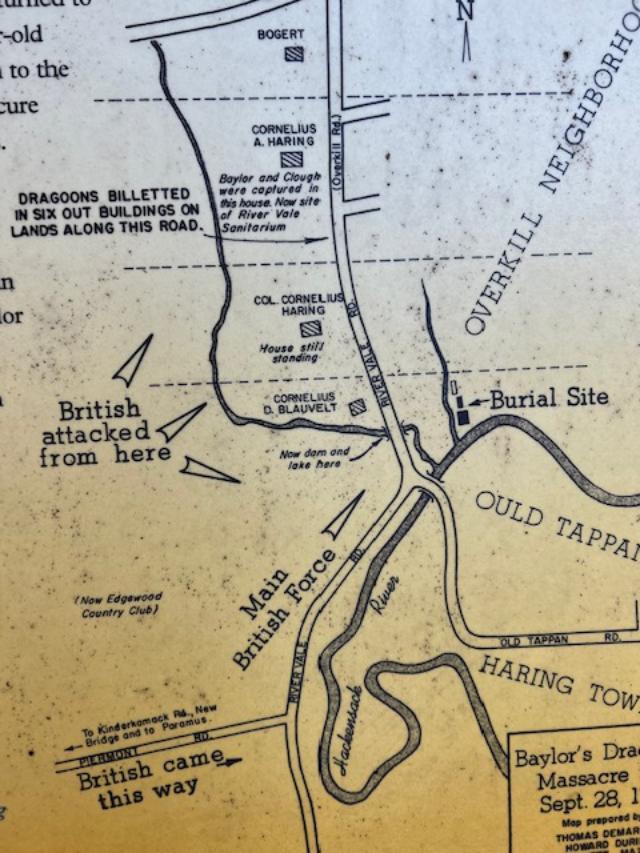
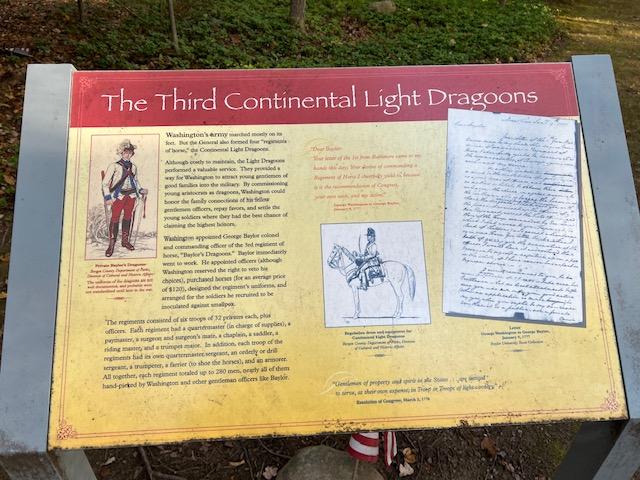
The Third Continental Light Dragoons, under the command by Lt. Colonel George Baylor, was one of four regiments of dragoons authorized by the Continental Congress. On the 27th of September, these 104 officers and men were dispatched to watch the bridge over the Hackensack River at the intersection of modern Rivervale and Old Tappan Roads to support General Wayne and his men in Tappan, New York.

The British forces were lead by General Charles “No Flint” Grey, who earned his nickname in the 1777 battle with General Wayne’s Pennsylvania troops when he ordered his men to remove the flints from their muskets to prevent an accidental gunshot and to use bayonets to insure the surprise of a nighttime attack. These tactics were used again in River Vale.

Grey’s men used their muskets to club and their bayonets to stab the sleeping dragoons. Eleven were killed immediately. Three more including 2nd in Command Major Alexander Clough (Washington’s Chief of Intelligence for the Hudson Valley), died of their wounds in Tappan the following day.  Records indicate that as many as 22 men died some several weeks later. Two officers and 37 men, most of who were wounded, managed to escape into the night. One British soldier was killed when shot by a dragoon.

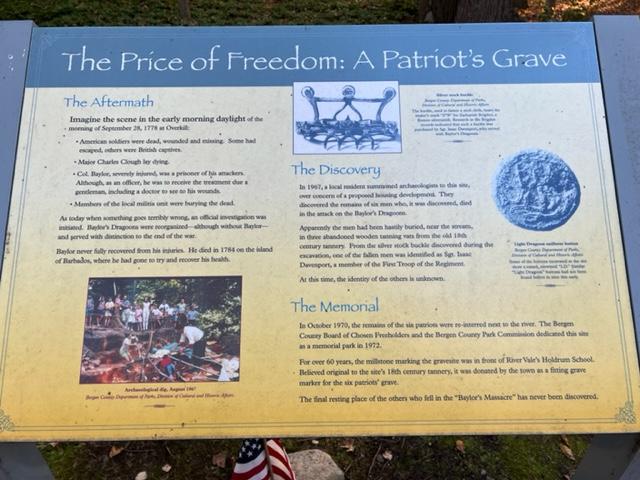
Grey’s men quickly gathered their prisoners and captured American equipment and continued up North. Fortunately General Wayne had been alerted of the movement of the British and had evacuated Tappan. The next day a detachment of the Bergen County Militia was dispatched to River Vale to locate any survivors. Finding six of the dead patriots at the bridge and fearing the possible return of British troops, they hurried to bury them in three abandoned leather tanning vats by the river.

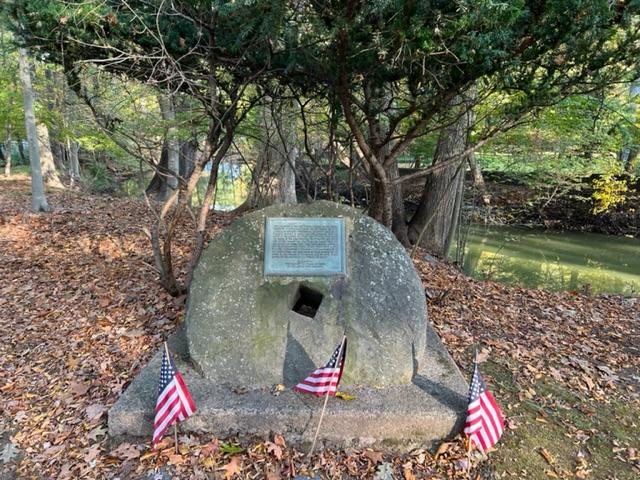
The burial location was passed on by word of mouth for many generations. The only physical maker was the abandoned millstone from the tannery. Abram C. Holdrum removed the millstone from the site around 1900. For many years it was displayed in from of the local Holdrum School.

In 1967, a local resident became alarmed that a new housing development would destroy this historic burial site. Through careful research the approximate location of the burials was identified. County Freeholder D. Bennett Mazur was contacted and as a result, the County sponsored an archaeological dig that located six sets of remains. The County eventually acquired the site and dedicated it as a County Park. In 1974, the patriots’ remains were re-interred in the park and the original millstone was donated to serve as their gravestone.

In 2003, the County dedicated new interpretive panels and accessible pathways at the Baylor Massacre site. It is open year round during daylight hours.

WWW.BERGEN.NJ.US

Disclaimer: This information was taken from the County Pamphlet: 2015 Bergen County Division of Cultural and Historic Affairs. The Bergen County Division of Cultural & Historic Affairs received an operating support grant from the New Jersey Historical Commission, a division of the Department of State. I give them full credit for this information.

The Baylor Massacre site in the fall of 2022

The Park in the fall months

Note from the Blogger: it is easy to miss the site so watch for the markers. For those interesting in the historical background of the Revolutionary War and New Jersey’s role in the war, take the time to visit this and other sites around Bergen County, New Jersey. They may be small but very significant.

Watch this interesting video that someone posted on YouTube.com

The grounds of the park

The grounds of the park in the fall

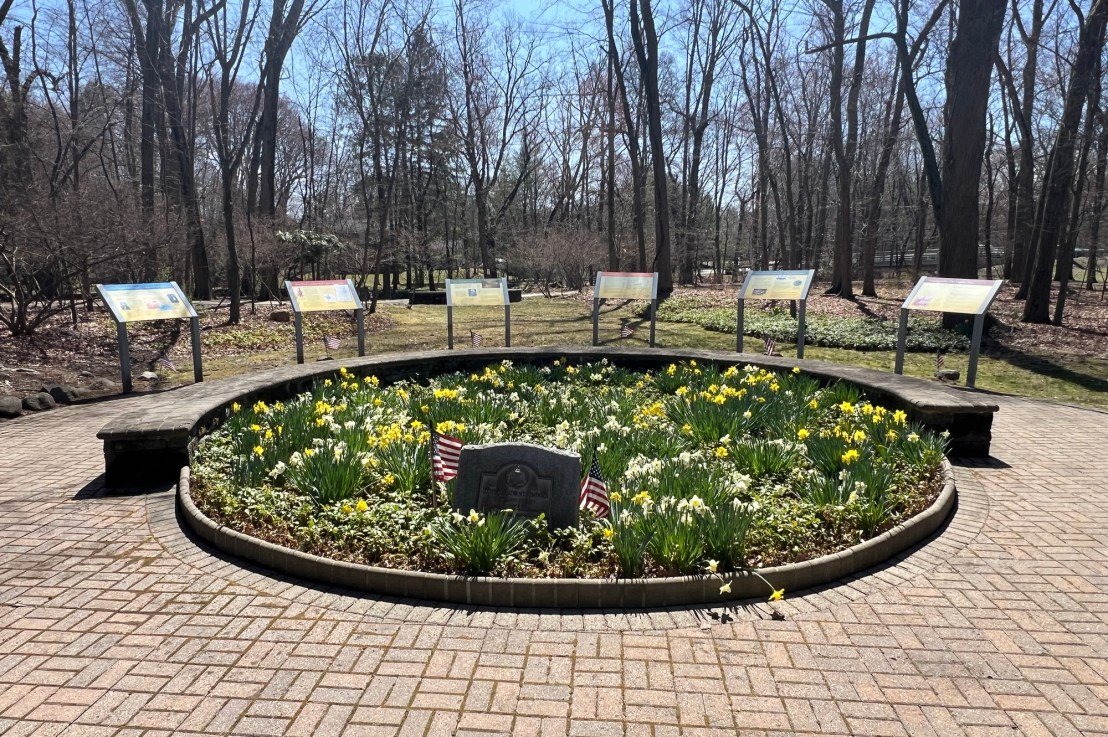
The site in the early Spring of 2025

The information signs of the site

The pathways by the river

The gravesite and memorial

The pathways around the park

The pathways around the park

The historic marker in the early Spring

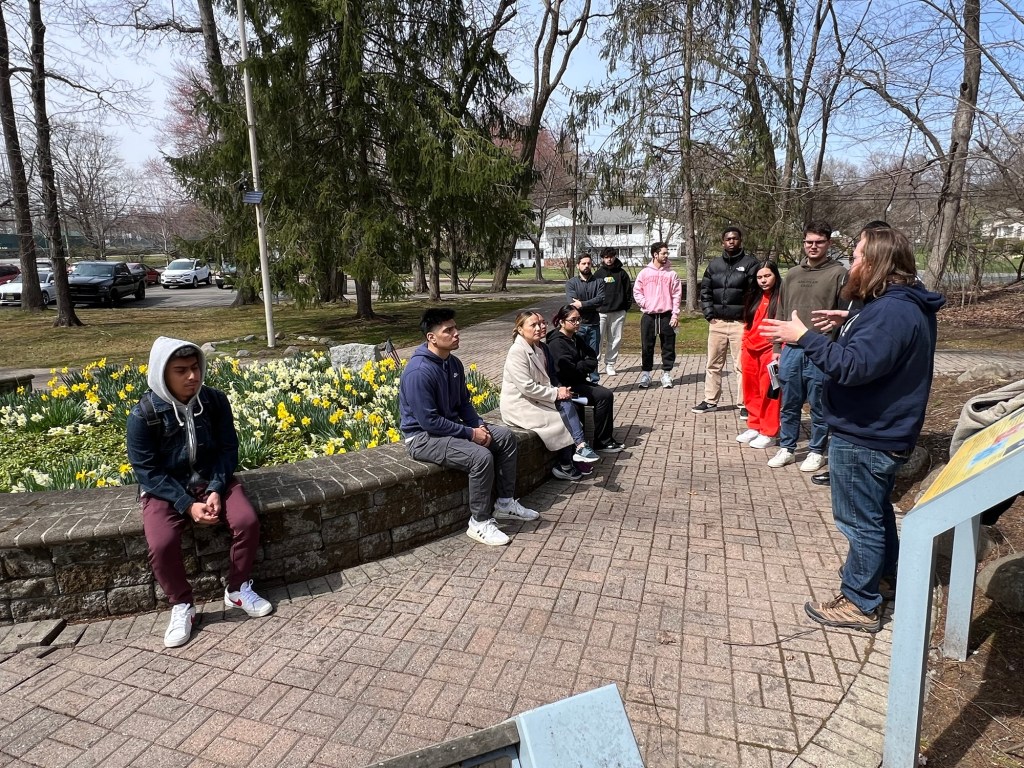
In April of 2025, I took my students from Bergen Community College to the site for a project that we were working on for the ‘Bergen 250’. Most of the students did not know this place existed.

A talk with Colin Knight from the County Historical Division with my students

Me with my students at the Baylor Massacre site

A group picture near the county marker and garden with my students