Tag: Historic Museum

Mount Vernon Hotel Museum & Garden           421 East 61st Street                                            New York, NY 10065

Mount Vernon Hotel Museum & Garden 421 East 61st Street New York, NY 10065

Mount Vernon Hotel Museum & Garden

421 East 61st Street

New York, NY  10065

(212) 838-6878

http://www.mvhm.org

Open: Tuesday-Sunday-11:00am-4:00pm (check the website during each season)

Fee: Adults $15.00/Seniors & Students $12.00/Children 16-12 $5.00/Children under 12 Free

TripAdvisor Review:

https://www.tripadvisor.com/Attraction_Review-g60763-d309468-Reviews-Mount_Vernon_Hotel_Museum_Garden-New_York_City_New_York.html?m=19905

The Mount Vernon Hotel Museum at 421 East 61st Street
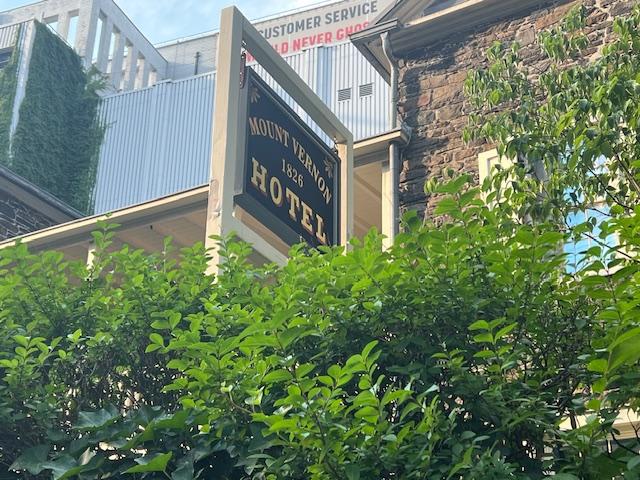
Mount Vernon historical sign during the summer months

The history of the building

The model of the building

I had come across the Mount Vernon Hotel Museum when I was walking on East 61st Street for my blog and went to take the tour of the building. It is a one hour (or more as I there for almost two hours but I was by myself) tour of both floors. You start with a film and a quick talk about the history of the building. The hotel building has had several owners and uses over its over hundred years.

I visited the museum during the holiday season in 2025 and I got to see all the decorations around the hotel. There was elegant decorations in most of the rooms and got to see how people ate during the holiday season as well as with visits guests would have indulged in when they came for the day.

Then you start the tour of the upper room where the ladies would gather and talk. This is where they might have tea, musical recitals and read and sew. They would gather with other women for conversation and debate.

The Upstairs foyer gallery

The foyer landing decorated for the holidays with the former traveler, James Taylor, who discussed in his memoir about visiting the hotel

The Ladies Parlor

The upstairs is where the sleeping rooms and the ladies parlors are located, where female guests would enjoy tea, games, music and reading. The main landing was for dancing and for gatherings.

The Ladies Palour with the Chinese writing desk and festive decorations.

The room set for tea with Englishware

The holiday set up afternoon service

The sleeping rooms were kept simple and functional

The Men’s game room

The main floor was the Men’s gaming rooms, where there is a bar and two rooms for male activities such as cards, gambling and reading. Here the men would discuss politics and business over a drink and games of chance.

The main games room

The main entrance was used as the dining room for dinner (our lunch), which was the biggest meal of the day served around 2:00pm.

The bar area where spirits are sold

The afternoon supper was part of the package and couples would join one another for a several course meal, which would serve as the main meal of the day.

Dinner time at the Mount Vernon Hotel Museum

The tour guide went over what would have been served, menu’s and meal times. Dinner would have been served at 2:00pm, tea time would have been around 4:00pm-6:00pm and Supper around 8:00pm.

The multi course meal for everyday on display

The meal would include popular dishes such as turkey and oysters and a specialty, Turtle soup. Fresh vegetables and fancy desserts would be part of the package.

The tour of the kitchen show preparation of foods, recipe books and all kitchen equipment including the stoves and baking materials.

The kitchen for both the hotel and house

The kitchen used to cook afternoon meals

The area used for baking and roasting

If you like the history of “Old New York” and like old homes, hotels and buildings, this is a very interesting tour that deals with the City’s growing middle-class and the new ‘leisure time’ that was coming with the changes in the work week. There are many pieces of period furniture all over the building that show the growth of affluence of the time.

The side board set with holiday desserts

The side board ladened with holiday treats

Don’t miss the formal walled in garden in the back. It is a place of relaxation from the rest of the city. There are stone walk ways and landscaped gardens as well as an herb garden. The building is owned and maintained by the Colonial Dames of America.

The walled gardens during the winter

The walled garden in the winter

I revisited the museum for the holidays and the hotel was decked out in garland and holy based on the decor traditional for the Revolutionary War era Christmas. The archways and tables were lined with greenery and the tables were loaded with oranges plunged with cloves to give the homes at that time a rich citrus smell.

The downstairs dining table was set for a Christmas meal of wild turkey, mock turtle soup, and apple and pumpkin pies. This would have been served in the afternoon as the main meal while it was still light out.

Holiday goodies at the Mount Vernon Hotel Museum getting ready for the holidays

There had been a light snow while we were touring the hotel so when we visited the gardens, it really did have that Christmas feel to it with that light snow all over the pine and the bushes.

How the neighborhood has changed

The old stable area

During the time of the Revolutionary War and afterwards, homes were not as elaborately decorated as they would have been during Victorian times after the Civil War. Homes were lined with greenery that would have given the home the fragrant smell of pine and strings of cranberries and popcorn would have been used to decorate mantles.

The hotel decorated for the holidays

The hotel was getting ready for one of its many special events during the holidays so there was a lot of commotion going on downstairs. It is a very festive looking place for the holidays so try to tour it when it is open in the month of December.

The museum in the 2025 holiday season  

What is the Museum:

Constructed in 1799 as a carriage house and converted into a ‘day hotel’ in 1826, the Museum transports visitors back to Mount Vernon Hotel, a 19th Century country resort for New Yorkers escaping the crowded city below 14th Street.

The model of the original house layout

Recognizing the building as one of the few remaining 18th century sites and the only surviving day hotel in New York City Historic Landmark in 1967, added to the National Register of Historic Places in 1973 and accredited by the American Association of Museums in 1983.

History of the House:

The Mount Vernon Hotel Museum & Garden presents the period of the Mount Vernon Hotel which operated from 1826 until 1833.

Constructed in 1799 as a carriage house for a 23 acre estate and converted into the Mount Vernon in 1826, this stone building sits on land originally owned by Colonel William Stephens Smith and his wife, Abigail Adams Smith, the daughter of John Adams.

This fashionable country resort was popular among New Yorkers who wished to escape the hustle among the bustle of the city, which at that time extended only as far north 14th Street. The Hotel advertised “free from the noise and dust of the public roads and fitted up and intended for only the most gentle respectable” clientele. In those days, one could take the stagecoach or steamboat up to 61st Street spend the day at the hotel sipping lemonade in the ladies parlor or playing cards in the gentlemen’s.

In 1833, the house became the home for three generations of a New York City family. In 1905, as the area became more industrialized, the building was purchased by Standard Gas Light Company (today’s Con-Edison). The Colonial Dames of America, a woman’s patriotic society purchased the building in 1924 and did an extensive restoration to the structure, the Colonial Dames opened the site to the public in 1939. The building endures as a rare reminder of an important era in New York City’s history.

What the organization does:

*Welcome 5000 school children annually in grades-pre-K through high school for field trips.

*Summer History Weeks for children ages 6-12

*A Summer High School Internship for 15 students to support college readiness skills and career exploration.

*Two summer Hearst Fellowships for undergraduates or graduate students.

*40+public programs each year, including:

-monthly free Story time

-monthly Lunchtimes lectures

-holiday programs, garden concerts, hands on craft and cooking workshops.

*Temporary exhibitions on facets of life in early 19th century NYC, some promoting local contemporary artists.

*Special programs for individuals with Alzheimer’s and their caregivers.

*Outreach programs to schools, senior centers and homeless shelters.

*Themed group tours focused on 19th century food, decorative arts or literature.

*Three options for team building events.

*Two free admission days: Smithsonian Museum Day and Open House New York.

Programs are made possible in part by the support of the New York City Department of Cultural Affairs in partnership with the City Council and Council Member Ben Kallos, the New York State Council on the Arts with the support of Governor Andrew Cuomo and the New York State Legislature, the Manhattan Borough President Gale Brewer, the Institute of Museum and Library Services, the Rosenthal Foundation and the Michael Tuch Foundation.

(Mount Vernon Hotel Pamphlet)

The Colonial Dames of America:

With these words, spoken in April 1890, Maria Denning “May” Van Rensselaer imitated what was to become the oldest colonial lineage society for women in the United States. The Colonial Dames of America. Its mission is to preserve historic sites and objects, award scholarships, educate the public about American history, inspire patriotism and promote fellowship among its members.

(The Colonial Dames of America information).

The backyard gardens in the Winter time

Video on the museum
Asia Society and Museum                                    725 Park Avenue at 70th Street                         New York, NY 10021

Asia Society and Museum 725 Park Avenue at 70th Street New York, NY 10021

Asia Society & Museum

725 Park Avenue At 70th Street

New York, NY 10021

(212) 288-6400

AsiaSociety.org/NY

https://asiasociety.org/new-york

Open:

Museum: Tuesday-Sunday-11:00am-6:00pm, Friday-11:00am-9:00pm

Asia Store: Monday-Sunday-11:00am-6:00pm, Friday-11:00am-9:00pm

Garden Court Cafe: Tuesday-Sunday, 11:30am-3:00pm; Reservations: (212) 570-5202

Asia Society is closed on major holidays. Please check AsiaSociety.org/NY for updates on museum, store and cafe hours.

Fee: $12.00 Adults/$10.00 Seniors/$7.00 Students with ID/Free to members and children under 16/Free Admission Fridays, 6:00pm-9:00pm

Adult, Student and Teacher tours:

For information or to schedule a tour, call (212) 327-9237

*Wheelchair accessible/available for use during visits/Complimentary cell phone audio tour available/Assistive listening devices and headsets available for many programs. 

TripAdvisor Review:

https://www.tripadvisor.com/Restaurant_Review-g60763-d531995-Reviews-Asia_Society_and_Museum_Garden_Court_Cafe-New_York_City_New_York.html?m=19905


History of the Museum:

Asia Society II

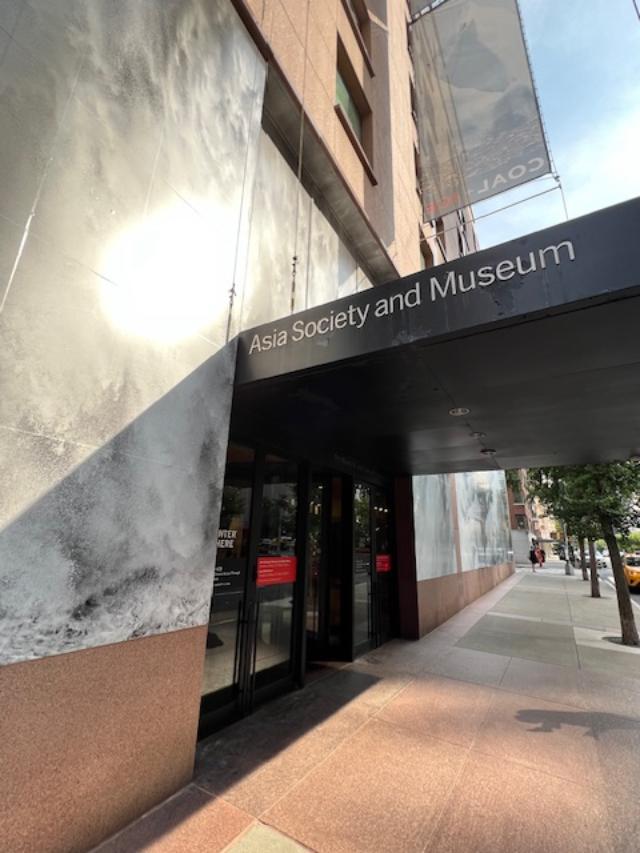
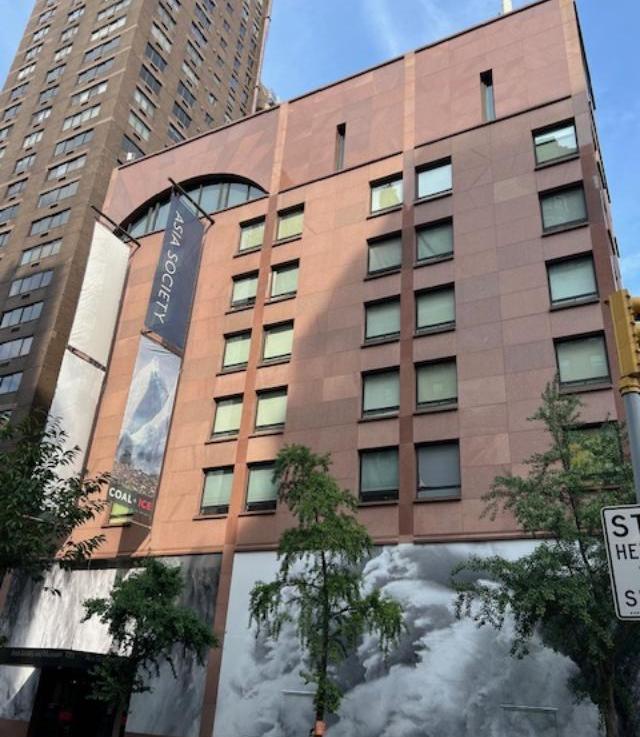
The entrance to the Asian Society Museum

John D. Rockefeller 3rd (1906-1978) , who established Asia Society in 1956, firmly believed that art was an indispensable tool for understanding societies. From 1963 to 1978, he and his wife, Blanchette Hooker Rockefeller (1909-1992), worked with art historian Sherman E. Lee (1918-2008) as an advisor to build the Mr. and Mrs. John D. Rockefeller 3rd Collection, which was later bequeathed to Asia Society.

Asian Society Museum

The Rockefeller Collection

The group of spectacular historical objects they assembled-including sculpture, painting and decorative arts-became the core of the Asia Society Museum Collection and is world renowned. The Collection, now consisting of approximately 300 pieces, is distinguished by the high proportion of acclaimed masterpieces, to which additional high-quality gifts and acquisitions have been added since the original bequest to Asia Society. The Collection has particular strengths in Chinese ceramics of the Song and Ming periods, Chola-period Indian bronzes and Southeast Asian sculptures.

Extraordinary examples of decorative art in the acclaimed Asia Society Museum collection include a number of superior East Asian ceramics, which make up more than one-third of the Collection. A luminous pair of twelfth-century Korean bowl and saucer sets, covered with the celebrated celadon glaze of the Goryeo period and an extraordinary tea leaf jar, decorated with mynah birds and accented with silver by Japanese ceramic artist Nonomura Ninsei (active ca. 1646-1677) are among the ceramic highlights.

Asia Society III

Walking around the museum

An exquisite solid silver Chinese stem up that dates to the late seventh or early eighth century also stands out as an exceptional masterpiece of decorative art within the Collection. The skill of the craftsman is evident in the fine embossing, chasing and engraving of the birds, flowers and scrolling vines on the exterior of the cup.

Two other great strengths of the Collection are Hindu and Buddhist sculpture from South and Southeast Asia. An eleventh-century processional sculpture of the elephant-headed Hindu deity Ganesha is an endearing example produced by the South Indian master bronze casters at that time and one of the fifteen important Chola-period bronzes in the Collection.

Another great treasure is a rare eighth-century inscribed and dated inlaid-brass crowned Buddha seated on a lotus rising from water inhabited by serpent deities (nagas) from Kashmir or northern Pakistan. A sculpture of the serene and slender Buddhist Bodhisattva Maitrya stands just over an impressive three-feet tall and represents the pinnacle of Thai metal casting during the eighth-century.

These objects and the Asia Society Museum Collection as a whole continue to be an important means for sharing the talent, imagination, and deep history of the peoples of Asia with audiences all over the world.

(From: Masterpieces from the Asia Society Museum Collection)

We are …Policy

With top-level experts and advisors-including former heads of state and cabinet officials, CEOs, civil society leaders and scholars-the Asia Society Policy Institute creates solutions that advance Asia’s prosperity, security and sustainability. Its projects include working to strengthen regional security institutions and mechanisms in Asia, assessing the impact of China’s rise and tracking its economic reform program, recommending pathways to an inclusive and high-standard Asian trade architecture, charting a path for India’s admission to APEC and designing strategies for Northeast Asian economics to link carbon markets and reduce greenhouse gas emissions.

The Asia Society Center on U.S. China Relations seeks to build mutual understanding between the two countries through projects and events on policy, culture, business, media, economics, energy and the environment.

We are…Arts

Transforming Americans understanding of Asia through exhibitions and performing arts was at the heart of our founder’s vision. The bequest of the Mr. & Mrs. John D. Rockefeller 3rd Collection of traditional Asian art in 1979 spurred the building of our New York headquarters. Today, our ground-breaking exhibitions of traditional, modern and contemporary art-as well as performing arts, film and author programs-are presented to the highest acclaim at our centers in New York, Hong Kong and Houston and at venues all over the world. Global initiatives such as the Arts & Museum Summit bring together museum and cultural leaders from across Asia, the United States and Europe further appreciation of Asian arts.

Asia Society I

The gift shop at the Asia Society

We are …Education

A rising Asia requires a rising generation of students to understand its cultures and complexities. The Center for Global Education at Asia Society has developed an internationally recognized approach to foster the global competence of students, aiming to improve the capacity of 100,000 educators to instill global competence in 4 million youth by 2030. We partner with leaders and institutions from around the world to transform teaching and develop global-ready students. We also lead a major effort to bring Mandarin language instruction and the study of China and Chinese culture to children in the United States and to bring global learning to American after school programs, in pursuit of best practices in global education.

(From Asia Society pamphlet)

Asia Society is a non-profit, nonpartisan organization offering dynamic public programming at our cultural centers in New York, Hong Kong and Houston and at our other global locations in the United States, Asia and Europe.

Asia Society appreciates the support of its members, who aid our vital mission of preparing Asians and Americans for a shared future. For more information, AsiaSociety.org.

Disclaimer: This information was taken directly from the pamphlets from the Asia Society in New York City. I give them full credit for all the information. Please see the above hours and programs and call the above numbers for more information.

The Museum at the Station                                                      176 Rock Road                                                                        Glen Rock, NJ 07452

The Museum at the Station 176 Rock Road Glen Rock, NJ 07452

The Museum at the Station

The Glen Rock Main Line Station

178 Rock Road

Glen Rock, NJ  07452

(201) 342-3268

http://www.glenrockhistory.org

http://glenrockhistory.wix.com/grhs

email: GRHistoricalsociety@gmail.com

Open: The last Sunday of each month from 1:00pm-3:00pm

There is no admission fee although donations are gratefully accepted.

TripAdvisor Review:

https://www.tripadvisor.com/Attraction_Review-g46608-d2661796-Reviews-Maywood_Station_Museum-Maywood_New_Jersey.html?m=19905

The Museum was featured in the project by Bergecco-Parc Consulting Inc. “I’m Glad I’m in Glen Rock, NJ: Be a Tourist in your own Town”:

https://mywalkinmanhattan.com/category/exploring-glen-rock-nj

The Video’s of the Presentation in Glen Rock City Hall.

Video One

City Hall Presentation December 2023

Video Two

Glen Rock City Hall Presentation December 2024

Video Three

Glen Rock City Hall Presentation of “I’m Glad I’m in Glen Rock, NJ” December 2023

The museum was given a Digital Marketing Campaign in the videos.

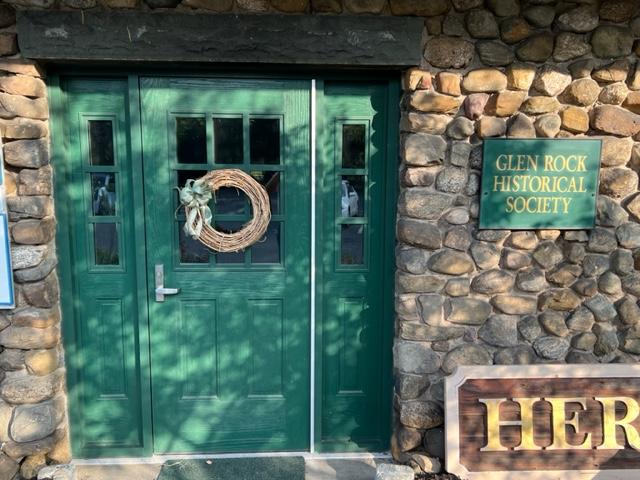
The Glen Rock Historical Society at the old train station.

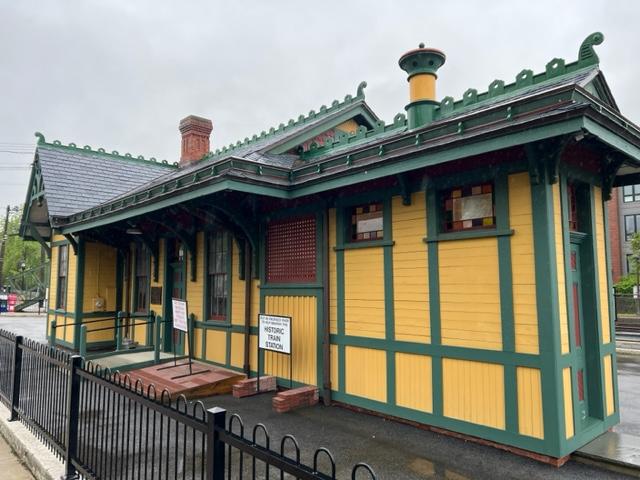
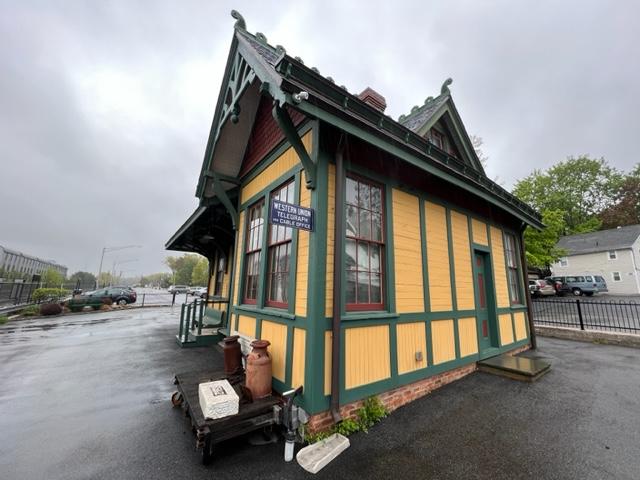
I visited the Museum at the Station as my last stop on the Northwest Bergen History Coalition 8th Annual History Day tour. The station is managed by the Glen Rock Historical & Preservation Society and is housed inside the original 1905 Erie Main Line Train Station on Rock Road at the tip of downtown Glen Rock.

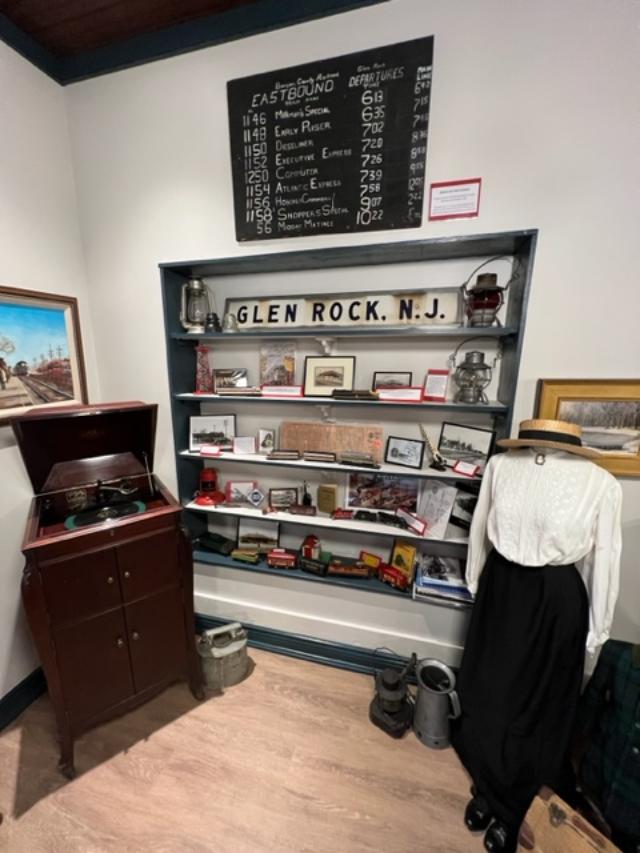
The Dispatch area of the Museum at the Station in Glen Rock, NJ

The station was at one time a destination and departure point for families and farmers, commuters and immigrants. There are permanent exhibits  on the Erie Railroad’s past and artifacts from Glen Rock’s past including clothing, furniture, toys and farm equipment.

Some of the items they have on display are an interesting toy train collection by a local resident, an old Victrola with the accompanying records, period clothing donated from local residents and local artifacts from local residents.

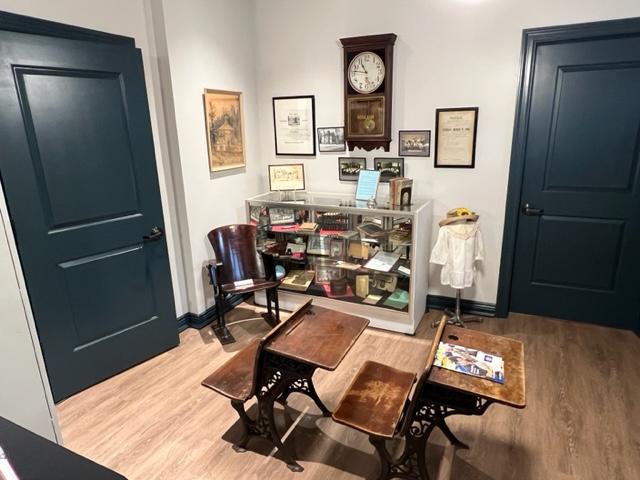
Toys and school set up at the Museum at the Station

They had a small display for the day on how immigration shaped the town of Glen Rock and it grew on the transportation that was brought to this small town. The volunteer docents who operate the museum do a nice job with the tours and in describing all the artifacts on display.
The Museum at the Station in full view

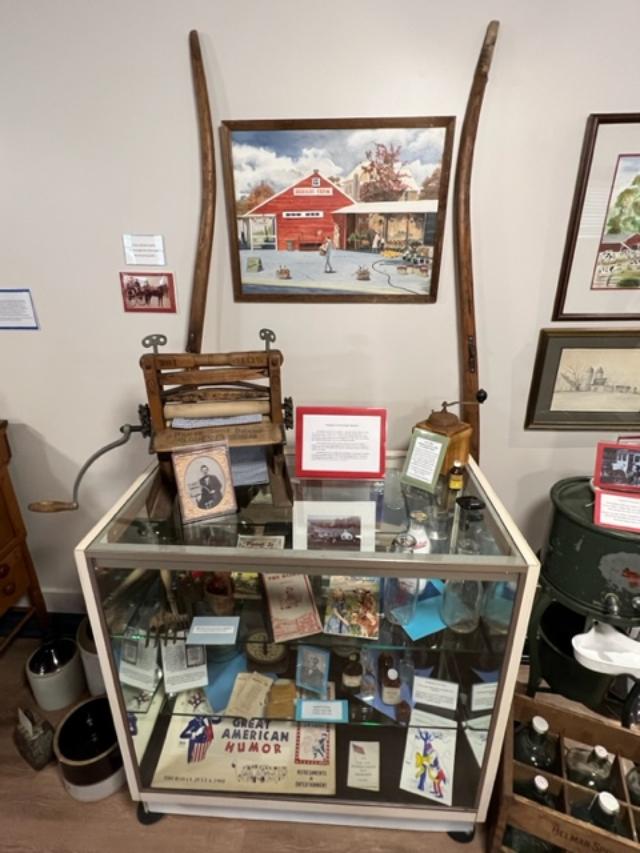
Local historical items at the museum

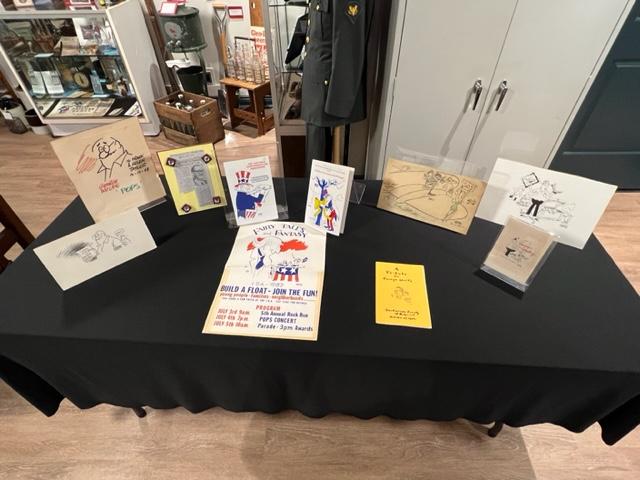
The museum was hosting an exhibition on the work of artist and cartoonist George Wolfe, who is best known for his jumbles cartoons. The artist had lived in New York City and then moved to Glen Rock in the 1970’s. His works were displayed all over the museum.

The sign for the “George Wolfe” exhibition

The work of artist and cartoonist George Wolfe at the Museum at the Station.

The original artwork of artist George Wolfe;

What is nice is that right down the road is the historic ‘Rock’ that Glen Rock is named for is a block down the road at the corner of Rock Road and Doremus Avenue. This historic landmark is a product of the its movement here in the last Ice Age. During the time of the Lenape Indian living in the area, it was considered sacred and used as a historic marker. During the Colonial era of the town, it was used as a gathering place.

The Rock at downtown Glen Rock, NJ

My blog on the Rock:

https://wordpress.com/post/visitingamuseum.com/1593

The museum is open limited times of the month so please call in advance.

The history of Glen Rock at the Museum at the Station

History of the Museum:

The Museum at the Station is housed in the 1905 Glen Rock Main Line train station. The Erie Main Line was originally part of the Paterson-Ramapo Railroad that was one of the earliest railroads in New Jersey, coming through this area in 1842. The building now houses the Glen Rock Historical and Preservation Society.

Artifacts at the museum

The Borough was incorporated in 1894 and the Museum’s collection contains many artifacts, documents and photographs illustrating  the history, growth and development of Glen Rock, NJ.

(From the Northwest Bergen History Coalition)

Disclaimer: This information was take directly from the Northwest Bergen History Coalition pamphlet and I give them full credit for the information. Please call or email the above numbers for more information.

(Please see my blogs under my site, “MywalkinManhattan.com”, ‘Days One Hundred & Nine’ and ‘Day Forty-Three’ for description of my touring days of the sites of Bergen County)

The artifacts in the museum.

Waldwick Museum of Local History                                           4 Hewson Avenue                                                                 Waldwick, NJ 07463

Waldwick Museum of Local History 4 Hewson Avenue Waldwick, NJ 07463

Waldwick Museum of Local History
4 Hewson Avenue

Waldwick, NJ  07463

(201) 873-8913

http://www.WaldwickMuseum.org

https://www.facebook.com/waldwick.MLH/

The Museum is open one Sunday afternoon a month and for special events only.

TripAdvisor Review:

https://www.tripadvisor.com/Attraction_Review-g46892-d14049026-Reviews-Waldwick_Museum_of_Local_History-Waldwick_New_Jersey.html?m=19905

The Waldwick Museum of Local History

The Museum sign

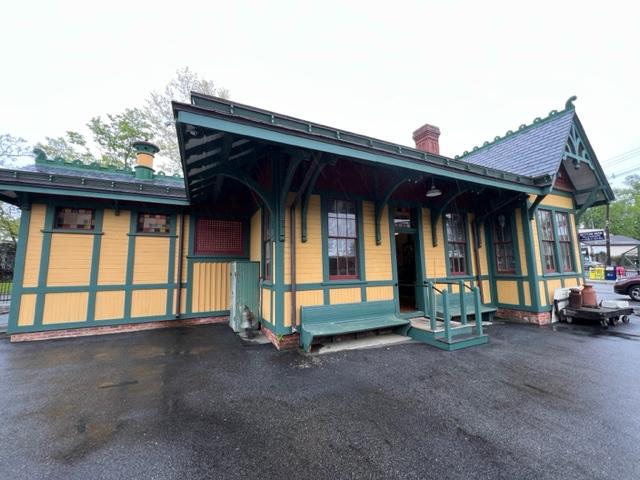
I visited the Waldwick Museum of Local History during the Northwest Bergen History Coalition 8th Annual History Day for their exhibition, “How Immigration & the Railroad Shaped our Towns”. They currently have an exhibition on the “100th Anniversary of Waldwick”. The Waldwick Museum is in the restored 1887 Railroad Station, which has served the town of Waldwick and the surrounding towns.

The back of the museum

The Museum is having been planned for years and the restoration was spearheaded by Doug Cowie, the Vice-President of the Waldwick Community Alliance, who at the ribbon cutting ceremony at the opening on May 22nd, 2016, thanked resident, Kay Williams. Ms. Williams formed the Waldwick Historical Society in 1977.

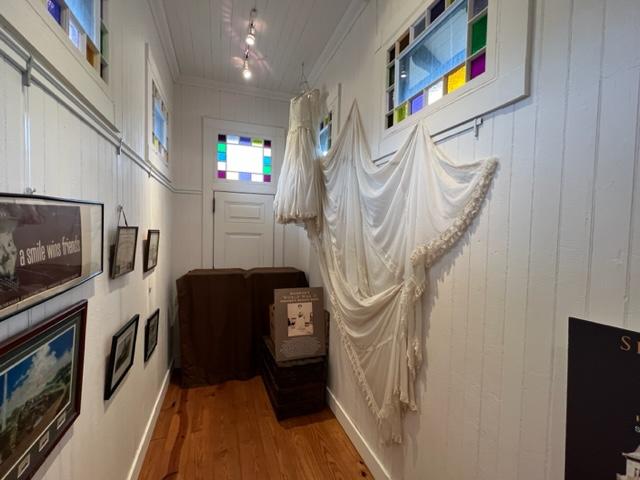
The Wedding Dress display

The town is celebrating their 100 Anniversary and the new exhibition at the museum reflects it with exhibitions and memorabilia from the town of Waldwick. The currently exhibition is broken down into sections.

The Train Booth Display

The conductor’s Office right next to the Ticket Booth

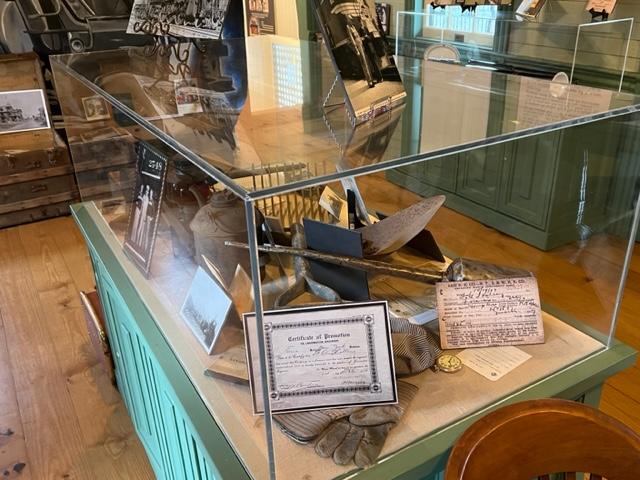
The Conductor’s collection of artifacts

The main part of the museum has the history of the town displayed including the schools, police and fire departments and town organizations. The history of the railroad service in town is displayed of how it developed and the how the town grew around the station. Since the town is celebrating its ‘100th Birthday’, there are all sorts of pictures of the town at various stages.

The Railroad display

The inside displays

The museum is only open once a month so please check their website.

In a ‘Brief History of the Borough of Waldwick’, the timeline for the town is:

Pre-1700: Lenni-Lenape Indians inhabited the land.

1600’s: European farmers settled the land.

Late 1700’s: Franklin Turnpike is a toll road.

1840’s: The Railroad connecting Jersey City with Suffern is built and ran through Waldwick, then named New Prospect.

1852: Erie Railroad Company takes over the railroad.

1880: New Prospect becomes a depot.

1886: An architectural Queen Anne Style depot is built. The depot is called ‘Waldwick’ meaning “Light in the Woods”. The depot brings more commerce to the area also called Orville Township.

1890: The Railroad Signal Tower is erected in a similar style as the Depot.

1919: The small railroad hamlet is incorporated as the Borough of Waldwick.

When I visited the museum that day, the theme of the day was how immigration had changed the suburbs and how the Town of Waldwick had a increase of Italian immigrants move into the town bringing their traditions with them and how it shaped the town.

The Railroad Display

The Railroad Display

The Museum Displays

They also had an extensive exhibition of the town’s railroad past with maps and pictures of the old railroads. The pictures are accompanied with memorabilia from the railroad era. There is also artifacts from the town in different eras on display.

The museum has limited hours and is run by volunteers. It is open one afternoon a month and for special events.

History of the Waldwick Train Station:

The Waldwick Railroad Station is one of the few extant frame terminal predating 1900 on the Erie Railroad line in New Jersey. Planned and built in 1887, the structure’s Queen Anne style is representative of the small suburban railroad depots erected throughout the United States in the last quarter of the 19th century. In 1996, the Station was named to the National Registry of Historic Places as well as the New Jersey Registry of Historic Places.

The Waldwick Town History Displays

It also serves as home to the Waldwick Museum of Local History where exhibits commemorate life in the late 19th and the early 20th centuries and the impact that the railroad has had on the Borough of Waldwick and the surrounding area. The Waldwick Community Alliance (WCA) has complied a collection of hundreds of historical photographs and documents as well as artifacts from that time that are or will be on display. The WCA exhibits these historic artifacts along with others that are donated and collected.

The Waldwick Town History Displays

(The Waldwick Historical Society)

Disclaimer: This information was from the Waldwick Historical Society and I give them full credit for this information.