Tag: Exploring New York City by Foot

Lighthouse Park Roosevelt Island                        900 Main Street                                                   New York, NY 10044

Lighthouse Park Roosevelt Island 900 Main Street New York, NY 10044

Lighthouse Park

Roosevelt Island

900 Main Street

New York, NY  10044

(212) 832-4540

https://rioc.ny.gov/179/The-Lighthouse

https://www.nycgo.com/venues/roosevelt-island-lighthouse-park

Open: Sunday-Saturday 7:00am-9:00pm

My review on TripAdvisor:

https://www.tripadvisor.com/Attraction_Review-g60763-d565031-Reviews-Roosevelt_Island-New_York_City_New_York.html

Lighthouse Park on Roosevelt Island

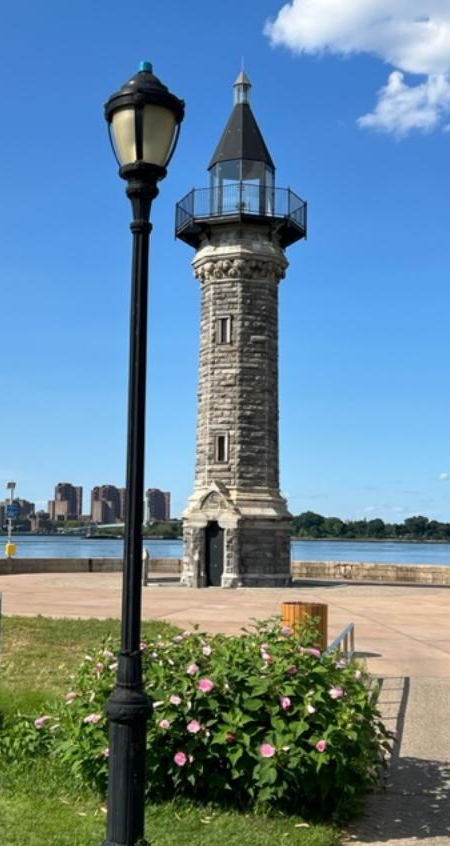
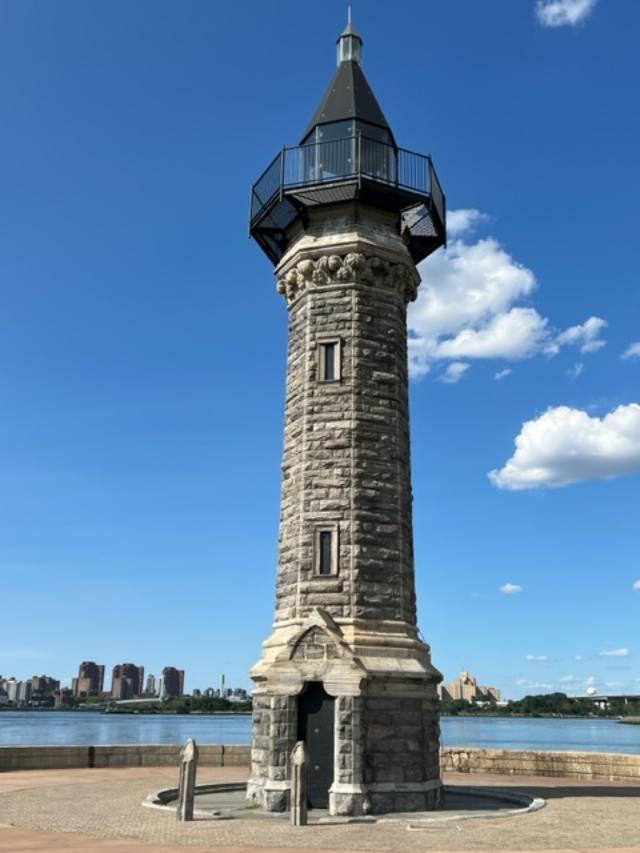
The Roosevelt Island Lighthouse is a stone lighthouse built by New York City in 1872. It is at the northeast tip of Roosevelt Island in the East River in Lighthouse Park. It was named to the National Register of Historic Places on March 16th, 1972, and was designated a New York City Landmark on March 23rd, 1976 (Wiki).

Blackwell Island, which was called Welfare Island from 1921 to 1973 and is now known as Roosevelt Island was purchased by New York City in 1828. Various facilities on the island were built including a penitentiary, almshouse, city hospital, the New York Lunatic Asylum and the Smallpox Hospital (some of these buildings still exist).

In 1872, the City of New York built a lighthouse. The supervising architect was James Renwick Jr., who also designed several other buildings on the island for the Charities and Correction Board as well as more famous works such has St. Patrick’s Cathedral. (Wiki)

Legends abound about the construction of the lighthouse. Two names, John McCarthy and Thomas Maxey, are associated with the various legends. The 1870 report of the warden of the lunatic asylum that an industrious patient had built a seawall near the asylum that had reclaimed the land. The legends indicate that he had incorporated Civil War cannons.

The park in the distance on Roosevelt Island

The legend indicates that the builder was bribed with bogus money to demolish the fort for the construction of the lighthouse. For many years, a saying was inscribed on a stone near the lighthouse:

This is the work

Was done by

John McCarthy

Who built the Light

House from the bottom to the

Top All ye who do pass by may

Pray for his soul when he dies.

Lighthouse Park from Carl Schulz Park on Manhattan Island

The lighthouse was operated by the City instead of the U.S. Lighthouse Board. In its 1893 annual report, the Lighthouse Board generally praised the operations of Blackwell Island Lighthouse but indicated that the Board has unfairly criticized because of the City’s occasional failure to keep the light in operation. The Board advocated banning private lights. The 1917 U.S. Coast Pilot indicated that there was a private light at the north end of the island. (Wiki)

The light was operated until about 1940. In the 1970’s, the lighthouse was partially restored. The restoration was completed in 1998. (Wiki)

The lighthouse is approximately 50 feet (15m) tall. It is constructed of gray gneiss, rough ashlar that was quarried on the island by inmates from the penitentiary. It has an octagonal base and an octagonal shaft. There is an entrance on the south side under a projecting gable and a pointed Gothic arch. Two south-facing slit windows in the shaft light the interior. At the top of the shaft there is a band of ornamented corbels below the gallery, which is surrounded by an iron railing. The lantern is octagonal with a shallow conical roof. An 1893 photograph and a 1903 movie show that it probably had a much taller, steeper conical cap when it was built. The optics were provided by the U.S. Lighthouse Board (Wiki).

Lighthouse Park in the winter months

Lighthouse Park is located on the northernmost section of Roosevelt Island and can be seen from Carl Schurz Park. On a beautiful sunny day, it is a very picturesque view from the park.

Lighthouse Park from Carl Schulz Park

The sculpture “The Girl Puzzle”:

Next to the lighthouse is a monument of faces dedicated to Nellie Bly and to women who have faced hardship entitled “The Girl Puzzle”. The sculpture was dedicated to journalist Elizabeth Cochrane Seaman, pen name Nellie Bly, who wrote about the abuses in the mental asylum on what was known as Mental Island at the time. She wrote the full report “Ten Days in the Mad House” on the abuses of patients.

“Girl Puzzle” by artist Amanda Matthews (Artist Bio)

https://en.wikipedia.org/wiki/The_Girl_Puzzle

https://www.thegirlpuzzle.com/

Artist Amanda Matthews (Artist Bio)

https://en.wikipedia.org/wiki/Amanda_Matthews

https://www.prometheusart.com/

The piece was created by American born artist Amanda Matthews. Ms. Matthews graduated with a BA in Studio Art from the University of Louisville and had studied abroad in Europe. She is known for her work that honors women and celebrates diversity and inclusion (Wiki).

The history sign on Nellie Bly

Each sculpture is a interpretation on Nellie Bly. It really is an interesting sculpture.

The Girl Puzzle One:

The Girl Puzzle Two:

The Girl Puzzle Three:

The Girl Puzzle Four:

The Girl Puzzle Five:

Disclaimer: this information was taken from Wikipedia site and the Roosevelt Island Historical Society. This little ‘gem’ of a park can be seen by walking to the most northern part of Roosevelt Island by way of the Main Street which runs through the island.

Cleopatra’s Needle                                                                           Central Park @ East 81st Street                                                                  New York, NY 10028

Cleopatra’s Needle Central Park @ East 81st Street New York, NY 10028

Cleopatra’s Needle

Central Park at East 81st Street (behind the Metropolitan Museum of Art)

New York, NY  10028

https://www.centralparknyc.org/attractions/obelisk

https://en.wikipedia.org/wiki/Cleopatra%27s_Needle_(New_York_City)

Open: When Central Park is open from dawn to dusk depending on the season

TripAdvisor Review:

https://www.tripadvisor.com/Attraction_Review-g60763-d1959031-Reviews-Cleopatra_s_Needle-New_York_City_New_York.html?m=1990

Cleopatra’s Needle

https://www.centralparknyc.org/locations/obelisk

https://en.wikipedia.org/wiki/Cleopatra%27s_Needle_(New_York_City)

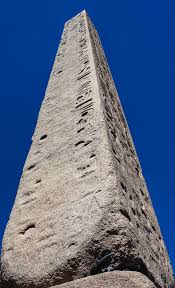
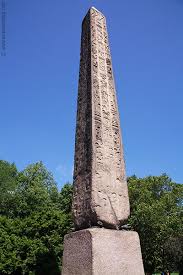
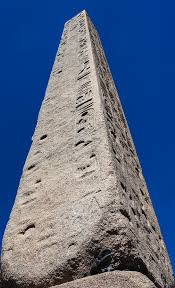
I always admire Cleopatra’s Needle whenever I am touring Central Park West after an afternoon at the Metropolitan Museum of Art. The obelisk sits in back of the Metropolitan Museum of Art on Fifth Avenue and the pathways behind the museum lead to the site.

It is one of the few place where you can see hieroglyphics up close unless you are in Egypt and the sad part is that the natural surroundings are wearing them out. Still it is one of the most interesting outside artifacts that Manhattan and New York City has on display. Take time to observe all four sides of the obelisk and observe the writings.

Sometimes I think the tourists miss this interesting artifact and how it got here from Egypt.

The History of Cleopatra’s Needle:

(From Wiki)

Cleopatra’s Needle (obelisk) was erected in Central Park, just west of the Metropolitan Museum of Art on February 22, 1881. It was secured in May 1877 by Judge Elbert E. Farnam, the then United State Consul General of Cairo as a gift from the Khedive for the United States remaining friendly neutral as the European powers, France and Britain, maneuvered to secure political control of the Egyptian government.

The obelisk is a twin of the obelisk given to London at the same time and come from the ancient city of Alexandria. The name is a misnomer as they have no relationship with the Ptolemaic Queen Cleopatra VII of Egypt and were already over a thousand years old in her lifetime (please see the Wiki link attached to the blog for more information on the obelisk).

The obelisk is free to the public and can be seen by taking the path behind the Metropolitan Museum of Art. It is open all day.

The Studio Art Museum in Harlem         144 West 125th Street                                New York, NY 10027

The Studio Art Museum in Harlem 144 West 125th Street New York, NY 10027

The Studio Art Museum in Harlem

144 West 125th Street

New York, NY 10027

(212) 864-4500

https://studiomuseum.org/

http://www.studiomuseum.org

Hours: Thursday-Sunday: 12:00pm-5:00pm/Closed: Monday-Wednesday-Closed

Fee: Donation

TripAdvisor Review:

https://www.tripadvisor.com/Attraction_Review-g60763-d116230-Reviews-The_Studio_Museum_in_Harlem-New_York_City_New_York.html?m=19905

The Museum:

The Studio Museum in Harlem is the nexus for artists of African descent locally, nationally and internationally and for work that has been inspired and influenced by black culture. It is a site fro the dynamic exchange of ideas about art and society.

The Studio Museum of Harlem III

The Studio Museum of Harlem

History:

The Studio Museum in Harlem was founded in 1968 by a diverse group of artists, community activists and philanthropists, who envisioned a new kind  of museum that not only displays artwork but also supports artists and arts education. The Museum was originally located in a rented loft at 2033 Fifth Avenue, just north of 125th Street. Renowned architect J. Max Bond Jr. led a renovation that adapted the building into a two level exhibition space with offices and space for rental tenants.

The Studio Museum of Harlem II

The Galleries at The Studio Museum in Harlem

In 1985, the Museum began excavation of an adjacent vacant lot  at 142 West 125th Street, leased from the City of New York. Over the following two decades, the Museum, in partnership with the City, completed additional renovations to the building and lot and added additional gallery and lobby space, a theater and a flexible outdoor space. The Museum has been accredited by the American Alliance of Museums (AAM) since 1987, when it became the first black or Latino institution to gain this recognition.

The Studio Museum in Harlem is internationally known for its catalytic role in promoting the works of artists of African descent. The Artist-in-Residence program was one of the Museum’s founding initiatives, and gives the Museum the “Studio” in its name.  The program has supported more than one hundred emerging artists of African or Latino descent, many of whom who have gone on to establish highly regarded careers. Alumni include Chakia Booker, David Hammons, Kerry James Marshall, Julie Mehretu, Wangechi Mutu, Mickalene Thomas and Kehinde Wiley.

Studio Art Museum of Harlem

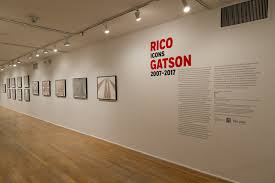
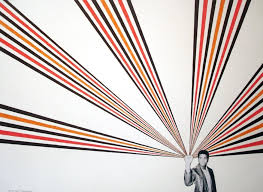
The Rico Gatson exhibition in 2018

The Studio Museum serves as a bridge between artists of African descent and a broad and diverse public. A wide variety of programs bring art alive for audiences of all ages-from toddlers to seniors-through talks, tours, art-making activities, performances and on and off-site educational programs. Museum exhibitions expand the personal, public and academic understanding of modern and contemporary art by artists of African descent. The Studio Museum is a leader in scholarship about artists of African descent, publishes Studio magazine twice yearly and regularity creates award-winning books, exhibition catalogs and brochures.

The Museum’s permanent collection includes nearly two thousand paintings, sculptures, watercolors, drawings, pastels, prints, photographs, mixed-media works and installations dating from the nineteenth century to the present. The Museum’s Acquisition Committee facilitates the growth of the collection through donations and purchases. Artists in the collection include Romare Bearden, Robert Colescott, Jacob Lawrence, Norman Lewis, Chris Ofili, Betye Saar, Lorna Simpson, Kara Walker and Hale Woodruff as well as many former artists in residence. The Museum also is the custodian of an extensive archive of the work of photographer James VanDerZee, the quintessential chronicler of the Harlem community from 1906 to 1983. The Museum does not have a permanent exhibition of work from its collection but frequency shows selections in temporary exhibitions.

Studio Art Museum of Harlem II

The current exhibitions are wonderful and include:

Regarding the Figure

Rico Gatson Icons 2007-2017

Jamel Shaazz Crossing 125th

All them are compact exhibitions and you will need about two hours to see everything at the museum (See TripAdvisior review).


Public transit access:

Subway: 2 & 3 to 125th Street

Bus: M7, M60, SBS, M100, M102, BX15 buses

Website: studiomuseum.org (http://studiomuseum.org)

Folks, please don’t miss this gem of a museum in your travels to NYC in a very quickly gentrifying Harlem (See ‘MywalkinManhattan’ site for more details).

General Grant National Memorial 122nd Street and Riverside Drive New York, NY 10027

The General Grant National Memorial

122nd Street and Riverside Drive

New York, NY 10027

(212) 666-1640

https://www.nps.gov/gegr/index.htm

http://www.nps.gov/gegr

Hours: Wednesday-Sunday: 9:00am-5:00pm/Closed Monday-Tuesday/Check for tour times on site.

Admission: Free but donations accepted

TripAdvisor Review:

https://www.tripadvisor.com/Attraction_Review-g60763-d105812-Reviews-General_Grant_National_Memorial-New_York_City_New_York.html?m=19905

A Grateful Nation:

The Grant Memorial was designed by architect John Duncan. Rising to an imposing 150 feet from the bluff overlooking the Hudson River, it took 12 years to build and remains the largest mausoleum in North America. Its  great size was meant to express the profound admiration Americans felt for the Civil War commander and was propelled to the forefront of America’s pantheon of heroes and declared the equal of George Washington and Abraham Lincoln.

Spearheaded by the Grant Monument Association, some 90,000 people from around the United States and the world donated over $600,000 to construct the memorial, the largest public fundraising effort up to that time.

The statuary in front of the building

Initial fundraising was led by Richard T. Greener, first black graduate of Harvard and a Grant supporter who credited the general with his advancement. Many African Americans contributed to the building fund.

The eagles that flank the front of the tomb

The memorial is open from 9:00am-5:00pm daily. For information or to arrange for group visits call (212) 666-1640.

The entrance to the Mausoleum

Among the most Revered of Men:

This large classically proportioned mausoleum honors the Civil War general who saved the nation from dissolution and the president who worked to usher in a new era of peace and equality for all Americans.

The Civil War era flag being displayed inside

Sign for the flag display in the Western trophy case

The flags in the Western trophy case

The sign for the flags in the Eastern Case

The flags in the Eastern case display

Ulysses S. Grant, a plain-spoken unassuming man who studiously avoided pomp and ceremony had volunteered his services for the Union effort when the Civil War erupted in 1861.

The details inside the rotunda

In doing what he considered simply his duty, he emerged after four years of fighting as one of the great military leaders in history. Aggressiveness, speed, tenacity and the ability to adjust his plans in the face of unexpected impediments all helped to bring him victory.

General Ulysses S. Grant

General U. Grant

As great as he was in war, Grant showed magnanimity and compassion in peace. He granted humane and generous terms when General Robert E. Lee surrendered to him on April 9, 1865 at Appomattox Court House. As president he pardoned many former Confederate leaders at the same time insisting on protecting the full political equality of former slaves.

The friezes of General Grant with General Lee

The General leading his troops

The General leading his troops

He was also concerned that American Indian tribes be treated with dignity  and respect. His fundamental desire for peace was reflected in his efforts to solve international disputes by arbitration rather than by threat of war. At the time of his death in 1885. Grant was universally respected by northerners and southerners alike.

The main floor of the tomb

The main floor of the tomb

Because of Grant’s status as a national hero, most Americans assumed he would be buried in Washington DC but his family preferred New York City. Grant himself had no strong preference; his only desire was for his wife, Julia to be buried next to him.

The funeral on August 8, 1885 was one of the most spectacular events New York had ever seen. Buildings all over the city were draped in black. An estimated one million people crowded sidewalks, filled windows, stood on rooftops and climbed trees and telephone poles for a view of the procession, which stretched seven miles and took  five hours to pass.

The resting place for General Grant and his wife

Grant’s remains were placed in a temporary vault until an appropriate memorial could be funded and built. On April 27, 1897, the 75th anniversary of Grant’s birth, thousands of people, including diplomats from 26 countries, attended the dedication ceremony for the completed memorial.

The President’s tomb is surrounded by the busts of his contemporaries:

The bust of General Sheridan

The bust of General McPherson

The bust of General Sherman

The bust of General Ord

The bust of General Thomas

The dedication parade, led by President William McKinley, was almost as large as Grant’s funeral parade. Julia Grant reviewed the ceremony sitting next to President McKinley. She was laid by her husband’s side after her death in 1902.

The Tomb of General Grant and his wife

The tomb is located in Riverside Park near Columbia University and across the street from Sakura Park, where Japanese Cherry trees are in bloom every Spring.

The park outside the Memorial

The Memorial with a park view

The Memorial from the park

The Memorial from Claremont Park

Claremont Park behind the tomb is beautiful in the Spring

The artwork surrounding the tomb

The artwork surrounding the tomb

The artwork surrounding the tomb

Near the tomb is the memorial to the ‘Amicable Child’ and that should not be missed as well.

The Tomb of the Amiable Child right down the path

The little park the tomb sits in

Disclaimer: This information was taken directly from the National Park Service pamphlet. This is a very interesting National Memorial and should not be missed.

The gift shop is across the street

The theater is in the next room where you can watch the film

It is opened at certain times of the week, so please look for the posted hours. (The memorial is open from 9:00am to 5:00pm daily. For more information or to arrange for groups visits, please call (212) 666-1640).