Tag: diningonashoestringinnyc.com

Ford Foundation Gallery at the Ford Foundation Center for Social Justice                                      320 East 43rd Street                                           New York, NY 10017

Ford Foundation Gallery at the Ford Foundation Center for Social Justice 320 East 43rd Street New York, NY 10017

Ford Foundation Gallery at the Ford Foundation Center for Social Justice

320 East 43rd Street

New York, NY  10017

(212) 573-5000

https://www.fordfoundation.org/about/the-ford-foundation-center-for-social-justice/ford-foundation-gallery/

Open:  Sunday Closed/Monday-Saturday 11:00am-6:00pm

Fee: Free to the public

My review on TripAdvisor:

https://www.tripadvisor.com/Attraction_Review-g60763-d615514-Reviews-Ford_Foundation_Building-New_York_City_New_York.html

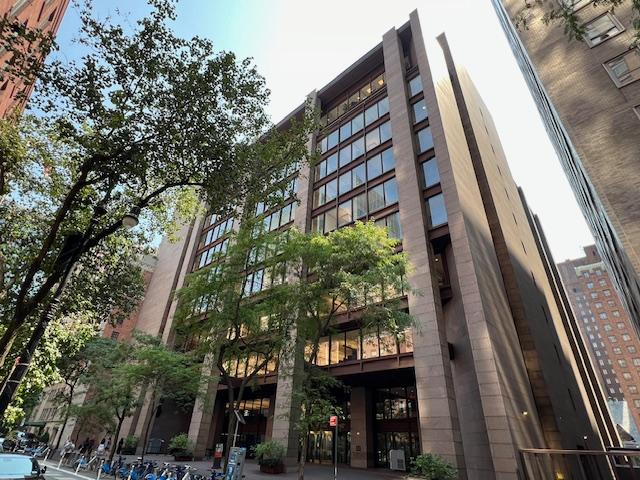
The Ford Foundation at 320 East 43rd Street

https://www.fordfoundation.org/about/the-ford-foundation-center-for-social-justice/visitor-information/

The Ford Foundation Building

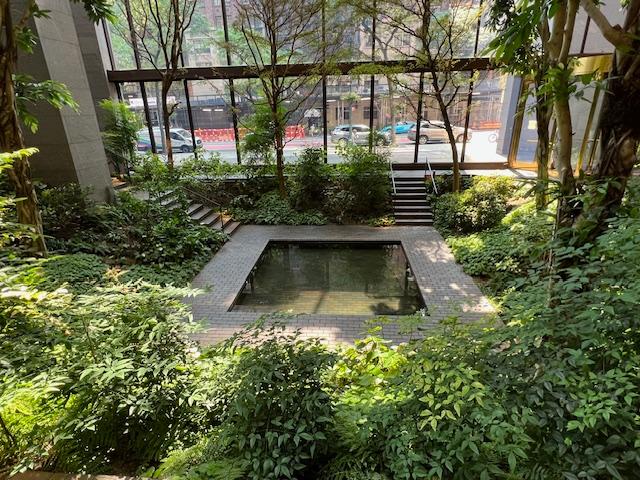
The Ford Foundation Building at 320 East 43rd Street in the Turtle Bay neighborhood. Take time after visiting the gallery to tour the gardens in the lobby.

When I was touring the Turtle Bay neighborhood for my blog, “MywalkinManhattan.com”, I toured the Ford Foundation Building on East 43rd Street and wondered through the lobby area gardens I came across the Ford Foundation Gallery, which is just off the main lobby. The small gallery delves into some deep material on social commentaries about life and the artists featured have some pretty interesting perspectives on their work.

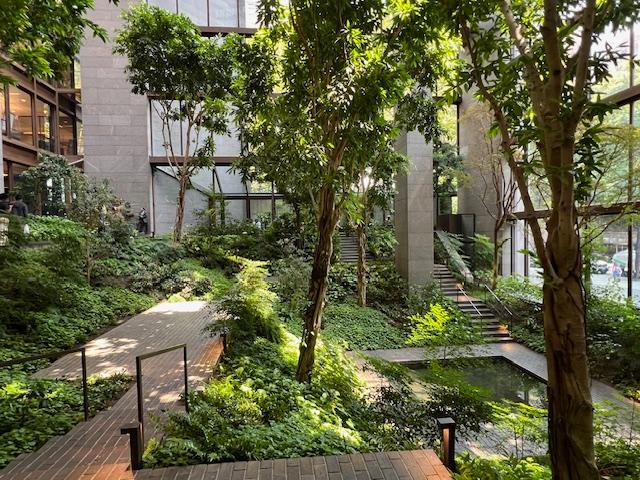
The Ford Gallery gardens inside the building

The pool of the Ford Foundation Garden

The beauty of the Ford Foundation gardens

The Ford Foundation Gallery entrance

The first exhibition I saw there was “Radical Love”, a theme is dealing with ‘love as the answer to a world in peril’. This interesting exhibition offers multidisciplinary art dealing with human nature and society. How different cultures show their respect and love to one another. It is an interesting mix of paintings, photos and video art from all over the world with each other showing their interpretation of dealing with the issues in life. You really have to read between the lines with this exhibition.

Ford Foundation Gallery II

The ‘Radical Love’ exhibition at the new Ford Foundation Gallery

(from the museum website on the exhibition)

Through the theme of Utopian Imagination, the trilogy of exhibitions in the gallery’s inaugural year create a trajectory toward a more just future. The first exhibition, Perilous Bodies (March 4 – May 11, 2019), examined injustice through the intersecting lens of violence, race, gender, ethnicity, and class. Radical Love responds to the first show by offering love as the answer to a world in peril.

Love, in the context of this exhibition, is defined by a commitment to the spiritual growth and interconnectedness of the individual, their community, and stewardship of the planet. Guided by the powerful words of bell hooks, “Were we all seeing more images of loving human interaction, it would undoubtedly have a positive impact on our lives.” The works in Radical Love are grounded in ideas of devotion, abundance, and beauty; here, otherness and marginality is celebrated, adorned, and revered. The Utopian Imagination exhibition trilogy concept was developed by Jaishri Abichandani.

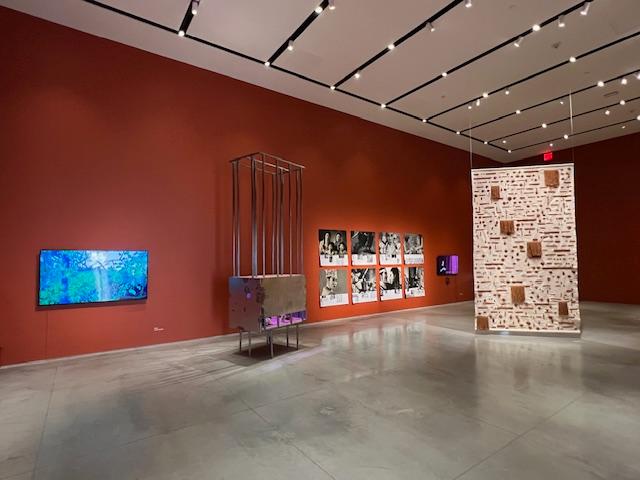
In 2024, I saw the new show “Cantando Bajito Incantations“:

The sign from the exhibition:

(from the website)

The Gallery

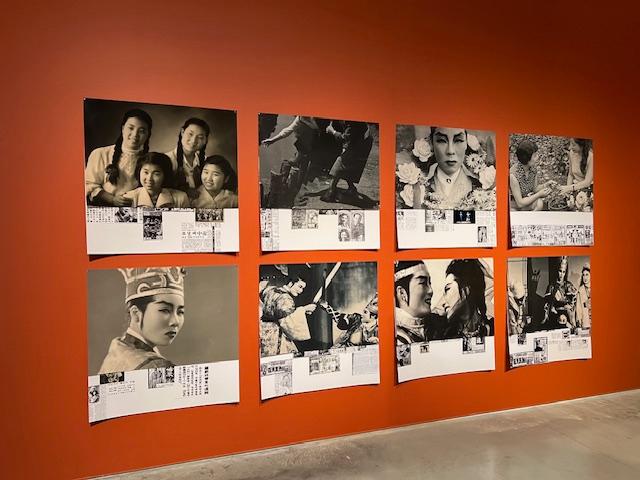
Work from the exhibition

Translated into English as “singing softly,” the exhibition series title is drawn from a phrase used by Dora María Téllez Argüello, a now-liberated Nicaraguan political prisoner, to describe the singing exercises she did while she was incarcerated in isolation. Helping her to conserve her voice and defeat the political terror she endured, Téllez’s quiet singing became a powerful strategy for survival and resistance. Conceived in three movements, Cantando Bajito features artists who explore similar forms of creative resistance in the wake of widespread gender-based violence. The second chapter, Cantando Bajito: Incantations, brings together artists who consider ancestral, contemporary, and future-facing networks of support and care that safeguard feminized bodies through forms of knowledge transmission. 

Work from the exhibition

Such networks—symbolic systems, subversive spaces, or covert forms of language—are as varied as the communities that develop them. They include Nüshu, a form of script passed from mother to daughter in China; the use of henna as an agent of protection; and forms of therapeutic communication that have been deemed “gossip.” All have long existed, whether in the shadows or in plain sight. Preserved not in written history but in the body, these channels prepare feminized bodies for potential violence while giving them tools to resist it. 

Works from the show

Works from the show

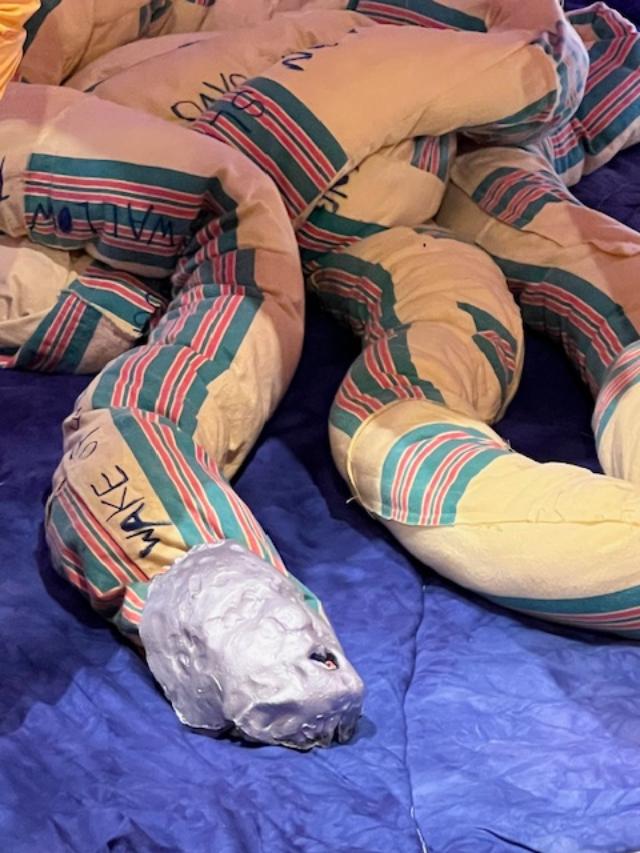
From inside the tent

The History of the Ford Foundation Gallery and it’s recent opening:

(From the museum website)

This new 1,900 square foot gallery space opened in February of 2019 after a two-year renovation of the Ford Foundation Building. The Ford Foundation Gallery will be an innovative exhibition space dedicated to presenting multidisciplinary art, performance and public programming by artists committed to exploring issues of justice and injustice. In creating a space for artists whose work addresses pressing social issues, the foundation continues its decades long history of investing in the arts to advance human welfare (Ford Foundation Press Release).

Ford FOundation Gallery V

Athi-Patra Ruga’s ‘Umesiyakazi in Waiting’

With a mission focused on addressing inequality in all its forms and providing more than $600 million annually in grant support to organizations on four continents, the Ford Foundation is a natural home for art that challenges viewers to grapple with fundamental questions of fairness and dignity. Three exhibitions in this inaugural year offer varied interpretations on the theme of Utopian Imagination (Ford Foundation Press Release).

The gallery is small and you can see these exhibitions in under an hour.

New York Historical Society Museum & Library 170 Central Park West                                        New York, NY 10024

New York Historical Society Museum & Library 170 Central Park West New York, NY 10024

New York Historical Society Museum & Library

170 Central Park West

New York, NY   10024

(212) 873-3400

http://www.nyhistory.org

@nyhistory

https://www.nyhistory.org/

Open: Sunday 11:00am-5:00pm/Monday Closed/Tuesday-Thursday 10:00am-6:00pm/Friday 10:00am-8:00pm/Saturday 10:00am-6:00pm

Fee: Adults $21.00/Seniors & Educators $16.00/Students $13.00/Children (5-13) $6.00/Children (4 and under) Free

On Fridays from 6:00pm-8:00pm are pay as you wish for Museum Admission

My review on TripAdvisor:

https://www.tripadvisor.com/Attraction_Review-g60763-d136143-Reviews-New_York_Historical_Society_Museum_Library-New_York_City_New_York.html?m=19905

The New York Historical Society at 170 Central Park West

I have visited the New York Historical Society several times over the years and I have to say that make quite a statement on the history of New York City and the State of New York City. It has a interesting permanent collection of paintings and statuary. There are a lot of things that First Families of New York City have donated to the museum that tell the story of families born and raised here.

I was honored here years ago when a picture I took for the 9/11 Photo Album Book came out in 2002. All the photographers that contributed to it were in attendance. Another time I was here for a private event on John Adams back in the early 2000’s that was injunction with the American Museum of Natural History. Over the years, the Historical Society has brought in more interesting exhibitions. The current exhibition “Hudson Rising” on the history and ecological changes due to humans along the Hudson River. It was an interesting look of the natural changes to the river from manufacturing times today as the river is being reclaimed for recreational uses.

Hudson Rising Exhibition

‘Hudson Rising’ Exhibition

The whole museum is a retrospect on the timeline of the New York City with an array of art out any one time. There are Masters from the Hudson River School, statues from all eras and special exhibitions that tell an interesting story of some part of the City’s past.

NY Historical Society

Hudson River School Paintings for ‘Hudson Rising’

History of the NY Historical Society:

The Historical Society was founded on November 20, 1804 largely through the efforts of John Pintard. He was for some years secretary of the American Academy of Fine Arts as well as the founder of New York’s First Savings Bank. With a group of prominent group of New Yorkers on the founding board including then Mayor DeWitt Clinton, the organization was established on December 10, 1804 (Wiki).

New York Historical Society II

The Collections of the NY Historical Society

The NY Historical Society had its share of growing pains over the years in that it had been in heavy debt during its first couple of decades. It also moved several times over the years as well. It moved from the Government House, which it had been housed in since 1809 to the New York Institution, the formerly the city almshouse on City Hall Park in 1816. In 1857, it moved into the first building constructed specifically for its collection at Second Avenue and 11th Street. The collection moved to its final home to Central Park West in 1908 (Wiki).

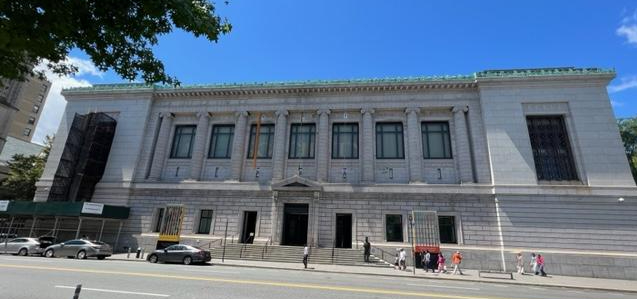
The current Society building was designed by architects York & Sawyer, who were known for bank designs. The second part of the building was designed by architects Walker and Gillette. The building has just finished a $65 million dollar renovation in 2011 and all the galleries have been refreshed. The new director of the Society, Louise Mirrer is leading the establishment into the 21st Century.

On Friday night’s from 6:00pm-8:00pm it is ‘pay as you wish’ to enter the museum.

Grover Cleveland Birthplace                                 207 Bloomfield Avenue                              Caldwell, NJ 07006

Grover Cleveland Birthplace 207 Bloomfield Avenue Caldwell, NJ 07006

Grover Cleveland Birthplace

207 Bloomfield Avenue

Caldwell, NJ   07006

(973) 226-0001

https://www.nps.gov/nr/travel/presidents/grover_cleveland_birthplace.html

Open:  Sunday 1:00pm-4:00pm/Monday & Tuesday Closed/Wednesday-Saturday 10:00am-12:00pm-1:00pm-4:00pm. Closed on all major holidays.

Fee: Free New Jersey State Park System/Free Parking on premise

My review on TripAdvisor:

https://www.tripadvisor.com/Attraction_Review-g46338-d2661291-Reviews-The_Grover_Cleveland_Birthplace-Caldwell_New_Jersey.html?m=19905

I recently visited the birthplace of of our 22nd and 24th President of the United States of America and it is an interesting look into one man’s past. The Grover Cleveland Birthplace Museum was originally the pastor’s residence for the First Presbyterian Church in Caldwell, NJ.

Grover Cleveland

President Grover Cleveland

https://www.whitehouse.gov/about-the-white-house/presidents/grover-cleveland/

https://en.wikipedia.org/wiki/Grover_Cleveland

What I found interesting about this historical home is that the President’s sister, Susan, saved everything of the family’s past. Things like furniture, home furnishings, cooking utensils, paintings and photos of the family plus personal items of the President such as his clothes, pipes, shaving kits and traveling cases so there is a lot of interesting items to see and well thought up display cases.

The house is broken up into the kitchen area, the living chambers, the former living room area which has most of the displays and then the front hallway where more family displays are located.

Grover Cleveland Birthplace IV

President  Cleveland and Mrs. Cleveland’s personal clothes

Try to take a tour with the tour guide, Paula, who knows the house backwards and forwards and gives you an interesting take on the family. She will be able to point out all the family objects and personal items that have been donated by family members. Things from formal clothes to a piece of the President’s wedding cake.

Grover Cleveland Birthplace III

A piece of the President’s wedding cake

The whole tour takes about an hour and you will find yourself memorized  by the displays and the family history of the children and grandchildren. It is interesting to see how the family grew when they were living in Caldwell, NJ.

History of the Cleveland Birthplace Museum:

Grover Cleveland’s birthplace was built in 1832 as the Manse or pastor’s residence for the First Presbyterian Church of Caldwell. Cleveland’s father, the Reverend Richard Fally Cleveland was the minister here from 1834-1841.

Originally this frame home had a two-story main section with a one-story kitchen to the east and a one-story lean-to at the rear. It was enlarged several times between 1848-1870 to meet the growing needs of the Presbyterian clergy. The house is a good example of local vernacular architecture.

Grover Cleveland Birthplace

The Birthplace house

The historical significance of the Manse was first noted in 1881 when Cleveland was running for Governor of New York. As his political star  ascended, so did the interest in preserving his birthplace as a museum. A group of Cleveland’s friends and admirers began negotiations to purchase the Manse in 1907. Their efforts culminated in the opening of the house to the public on March 18, 1913.

Most of the first floor rooms portray the Manse as it was in 1837, the year Grover Cleveland was born. The decidedly middle-class character of the rooms reflect the day to day life of the Reverend Richard Cleveland and his family. Among the artifacts on display from Cleveland’s early years are his cradle and original family portraits.

Grover Cleveland Birthplace II

Grover Cleveland’s crib where he was born

Contrasting sharply with the humble beginnings portrayed in these rooms, the exhibit gallery features a striking display of artifacts that reflect the financial and political success Cleveland achieved during the last quarter of the 19th Century. Here, the mud-slinging campaign of 1884, the public’s intense interest in his wife and children and America’s political climate throughout his split terms of office are explored.

The Grover Cleveland Birthplace State Historic Site is the only house museum in the country dedicated to the interpretation of President Cleveland’s life. It is the nation’s leading repository of Cleveland artifacts and political memorabilia. The Grover Cleveland Birthplace is listed on the New Jersey and National Registers of Historic Places.

The President’s time in New Jersey:

Stephen Grover Cleveland was born on March 18, 1837 to the Reverend Richard Cleveland and his wife, Ann. Named for the first ordained pastor of the First Presbyterian Church at Caldwell, he would in time become known by his middle name, Grover.

Cleveland was raised in a strict, modest home. As the son of a minister and the fifth of nine children, he had a religious and principled upbringing with few luxuries. When Grover was four, Reverend Cleveland moved his family to Fayetteville, NY.

(The Grover Cleveland Birthplace Museum pamphlet)

The Cadmus House: Fair Lawn Museum                               14-01 Politt Drive                                                                     Fair Lawn, NJ 07410

The Cadmus House: Fair Lawn Museum 14-01 Politt Drive Fair Lawn, NJ 07410

The Cadmus House: The Fair Lawn Museum

14-01 Politt Drive

Fair Lawn, NJ  07410

(201) 796-7692

http://www.cadmushouse.org

https://www.facebook.com/profile.php?id=133299403367223

http://www.fairlawn.org/content/203/267/521.aspx

https://www.co.bergen.nj.us/discovering-history/cultural-historic-sites

Open: Check the Fair Lawn Town Website

Fee: Free to the public

My review on TripAdvisor:

https://www.tripadvisor.com/Attraction_Review-g46430-d17707566-Reviews-Cadmus_House-Fair_Lawn_New_Jersey.html?m=19905

I visited the Cadmus House today and it is a very interesting look back on the history of Dutch Bergen County and the town of Fair Lawn, NJ.

The Marker

The Cadmus House Museum

Jacob Haring: Bergen County resident

https://www.wikitree.com/wiki/Haring-684

http://trees.wmgs.org/getperson.php?personID=I108461&tree=Schirado

The Cadmus House was built in 1808 by landowner Jacob Haring and his wife, Margarat. It was originally a two room farmhouse when it was built on their extensive farm land. The Harings’ sold the house to Abraham and Harmones Van Derbeek in 1815 and they turned around and sold the house to Thomas Cadmus and his  wife, Margaret in 1816 and the name stuck from there.

Cadmus House

The Haring house originally and then it had a gable and second floor built in the late 19th century

More information on the Haring Family from the novel “A Dutch Family for the Middle Colonies” by author Firth Haring:

https://books.google.com/books/about/A_Dutch_Family_in_the_Middle_Colonies_16.html?id=hAZ5AAAAMAAJ

Over the years, the house had had many owners and many uses. Before the house was moved in 1985 to its current location, it served as a real estate office at that time. When they were building new construction on the spot, the house was saved by a group of concerned Fair Lawn residents to preserved the town’s past and it was turned into the Cadmus House-Fair Lawn Museum.

The house is broken down into different themed rooms. The downstairs rooms are devoted to the Fair Lawn’s past with pictures of old homes that used to line the streets of the neighborhood. There are pictures of old farms and farm houses, relics from town such as arrowheads, farming equipment and old farm house decor such as ice boxes and apple presses for cider.

Cadmus House II

Pictures of Fair Lawn’s past

In the room that once served as a dining room, there are period Dutch items that would be needed to run a household or a business.

Cadmus House Cider Press.jpg

The apple press which was a big part of the farming community in Bergen County

The upstairs rooms have different displays. One room is devoted to Victorian living with furniture and bedroom decors along with dolls and cribs. The other room is dedicated to the history of the Fair Lawn Fire and Police Departments as well as memorabilia from Fair Lawn High School such as trophies, yearbooks and old films of football games.

There is plenty of parking in the front of the house and the parking lot is shared with the railroad station next door. The house is only open the third Sunday of each month and it is closed for the months of July and August.

If you want to take a glimpse of Bergen County’s past Colonial, Victorian, Motor Age or current, the Cadmus House will give you a perspective on living in Bergen County in the past into current times.

The house now sits by the train station in Fairlawn, NJ