Tag: diningonashoestringinnyc.com

The Greater Cape May Historical Society                         6531/2 Washington Street                                                      Cape May, NJ 08204

The Greater Cape May Historical Society 6531/2 Washington Street Cape May, NJ 08204

The Greater Cape May Historical Society

6531/2 Washington Street

Cape May, NJ  08204

(609) 884-9100

http://www.capemayhistory.org/

http://www.capemayhistory.org/about-us.html

Open: Colonial House Museum hours:

Wednesday-Saturday, 1:00pm-4:00pm June 15th-September 15th

Open during Victorian Weekend in October. Special exhibits at Halloween and Christmas.

My review on TripAdvisor:
https://www.tripadvisor.com/Attraction_Review-g46341-d286395-Reviews-The_Colonial_House-Cape_May_Cape_May_County_New_Jersey.html?m=19905

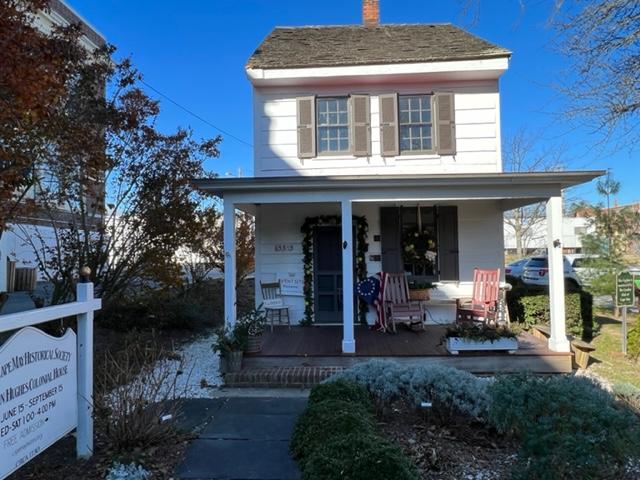
The Historical Society at Christmas time.

The Cape May Historical Society in the summer of 2023.

What an interesting visit I had to the Cape May Historical Society’s Memucan Hughes Colonial House. This tiny museum is only open between June 15th-September 15th and after that only for special events.

It is an fascinating little home that was built somewhere between 1730 to 1760. The original house no one is too sure if it had been built for the original owner or had been there and added on to as the records for the age of the house are unclear.
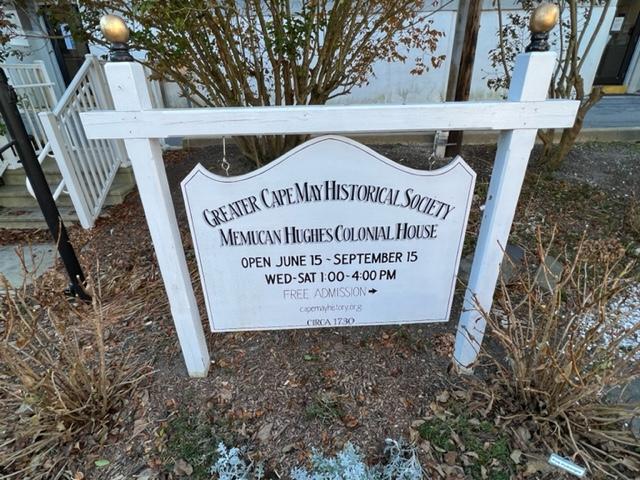
The welcoming sign at Christmas
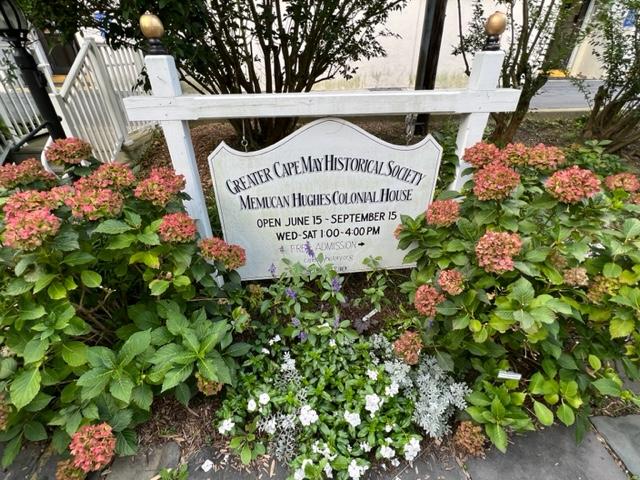
The sign in the summer of 2023.

The home consists of two small downstairs room filled with period furniture and decorations and there is an upstairs with three small rooms that have just opened up to the public. The front room Mr. Hughes used as a tavern that he kept open until almost the 1800’s. He had catered to a growing whaling industry that needed some form of entertainment in this quiet town that was isolated from the rest of the state.
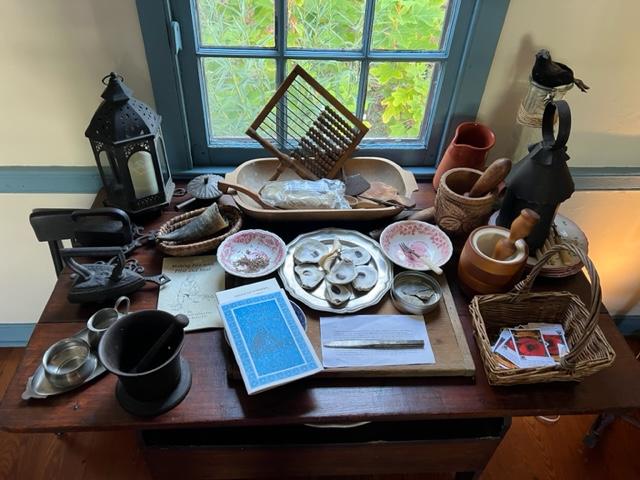
The Pub in the front room of the house for meals and conversation.

The Front Room of the house served as a pub for visiting travelers.

The room was set up for dining and amusements. The Lincoln Crib is in the background.
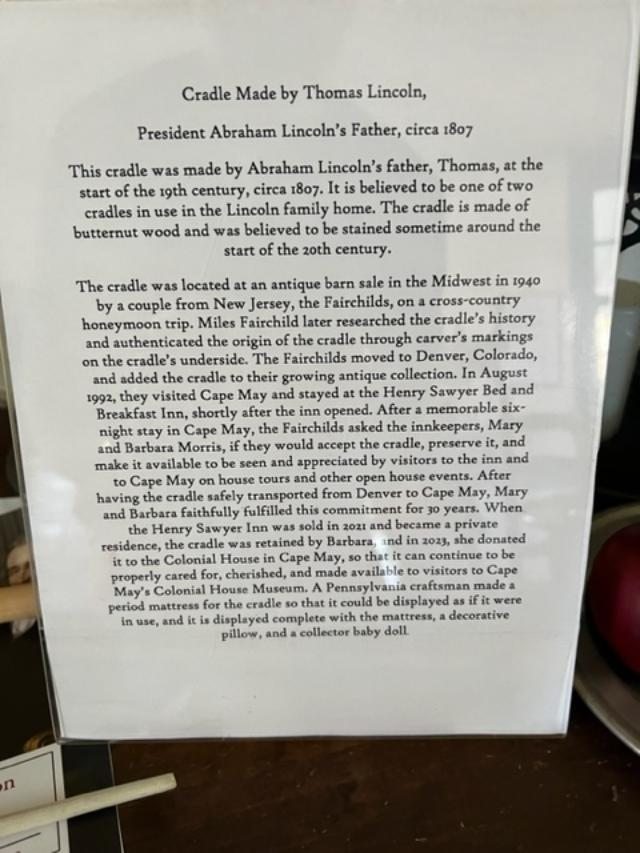
The Lincoln crib was built by Abraham Lincoln’s father.
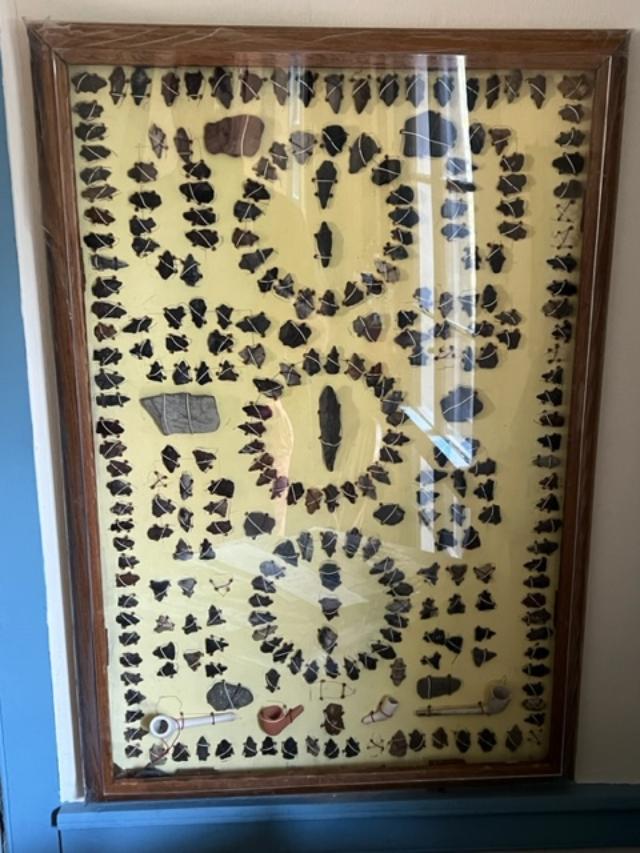
The Arrowhead and Pipe collection in the Pub Room.

The front of the house is decorated as tavern to greet guests. There were tables filled with games and items that would have catered to the trade but still you knew you were in someone’s home. There are vintage card tables, board games and some household items.

The Living room at the Cape May Historical Society

The back room is a closed off kitchen with a fireplace and spinning wheels and wash tubs, all the things to run a household. There were also children’s toys, kitchen and garden gadgets and family items to personalize the house.
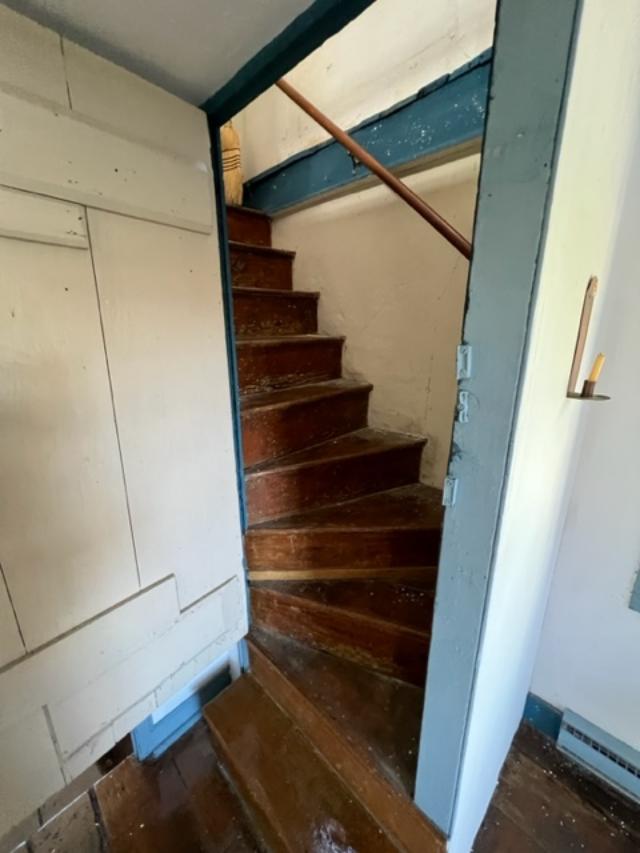
The narrow stairs lead to the upper bedrooms and the attic loft.

The upstairs bedrooms and the attic room were open in the summer of 2023, and I got to see the whole house. The upstairs is supposedly haunted, but I did not see anything. What I did see was how large the house really was and why the family of eight were able to live in this small house.

The upstairs bedroom
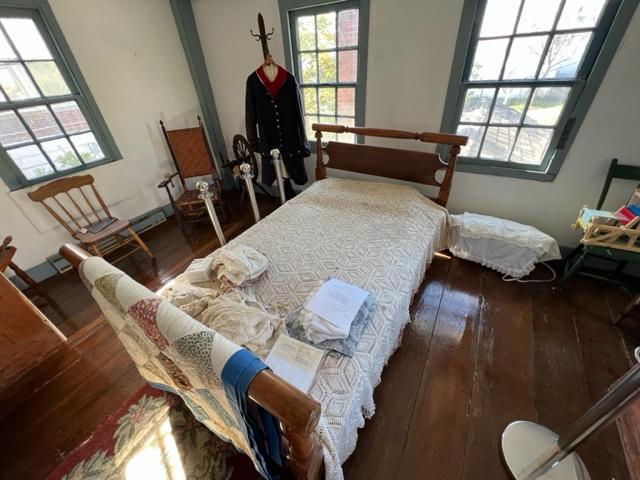
The upstairs bedroom
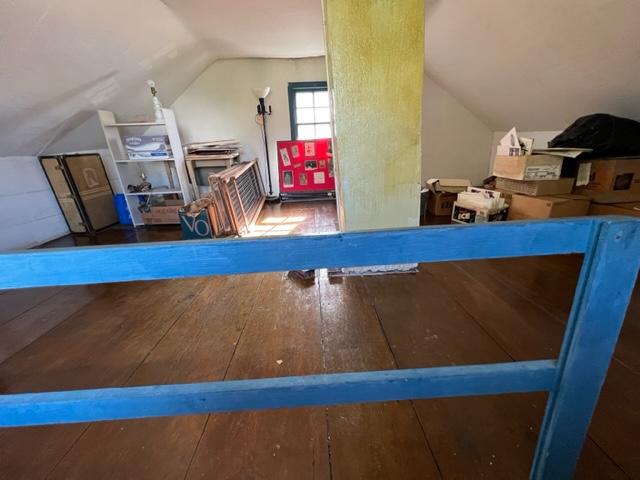
The attic loft room was supposed to be haunted but I saw nothing.

During the Victorian Age, the family came into a more prosperous life and built the big house in the front of the home.

The Hughes mansion in the Victorian times sits right in front of the old house and is now a B & B

The Hughes family lived in the house until the Victorian age and then they built the house on the front of the property and moved the smaller house to the back of the grounds. The house had been moved three times since its original location on the main road a few blocks away.

The tour itself is only about a half hour long and the guides do a nice job explaining the history of the house. On the gloomy day I visited, the museum was very busy with people visiting the house and with its connection to colonial history and the popularity of the musical, “Hamilton”, it is making it a popular destination when visiting Cape May.

History of the Museum:

The sign outside the house

The mission of the Greater Cape May Historical Society is to collect, preserve, document, interpret and share the history of Greater Cape May and to enhance the appreciation of that history through the Society’s historic site, The Colonial House Museum, collections, research, exhibitions, educational programs and publications.
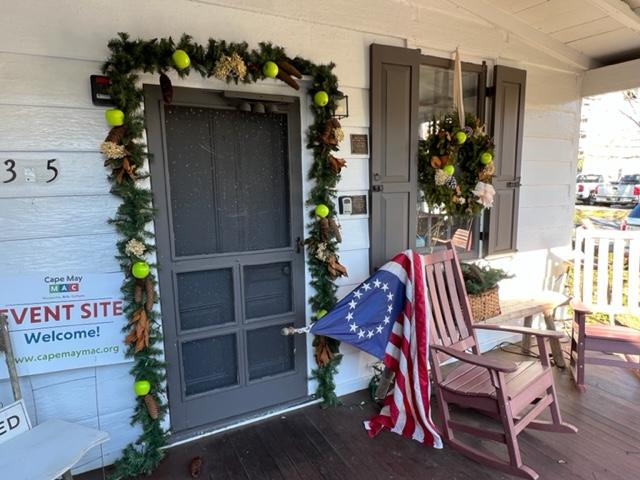
The Hughes family home during the Christmas Holiday season 2022

All are invited to visit the Colonial House Museum, a 1700’s era house. The house was moved to its present site next to City Hall when the Hughes Family built the grand Victorian that is now a Bed & Breakfast.

The Hughes family home of the 1700’s at Christmas time.
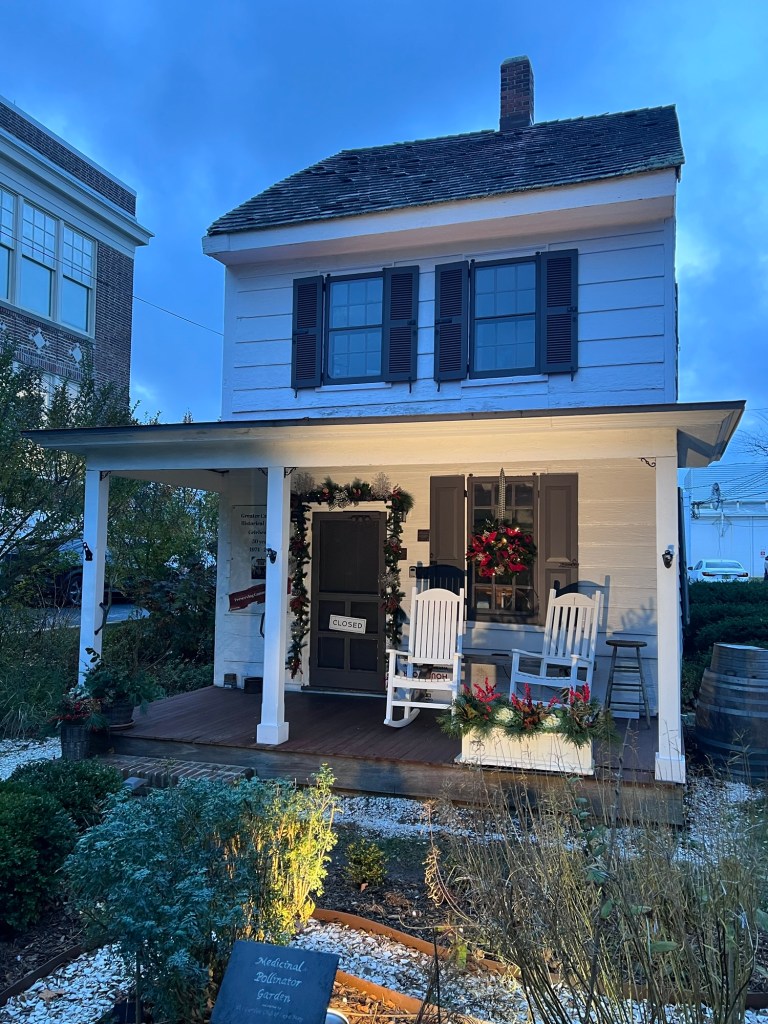
The house decorated for the holidays in 2025

Th Ed front of the house decorated for the holidays

Come visit us and see the House as it was with a Tavern Room and a Common Room when it was owned by Memucan Hughes. On display are period furnishings and other period household items.

The Hughes family home of the late 1800’s

The Society presents an annual exhibit dedicated to an unique chapter of Greater Cape May History along with special events for Halloween and Christmas.

Disclaimer: This information was taken directly from the Greater Cape May Historical Society’s pamphlet, and I give them full credit for it. Please call the above number for more information and selected openings.

The Cape May Historical Society in the summer of 2023.

Hamilton-Van Wagoner House Museum                     971 Valley Road                                              Clifton, NJ 07013

Hamilton-Van Wagoner House Museum 971 Valley Road Clifton, NJ 07013

Hamilton-Van Wagoner House Museum

971 Valley Road

Clifton, NJ  07013

(973) 744-5707

https://www.cliftonnj.org/256/Hamilton-House-Museum

Open: Sunday 9:00am-5:00pm/Monday & Tuesday Closed/Wednesday-Saturday 9:00am-5:00pm

Fee: Suggested Donation $5.00

My review on TripAdvisor:

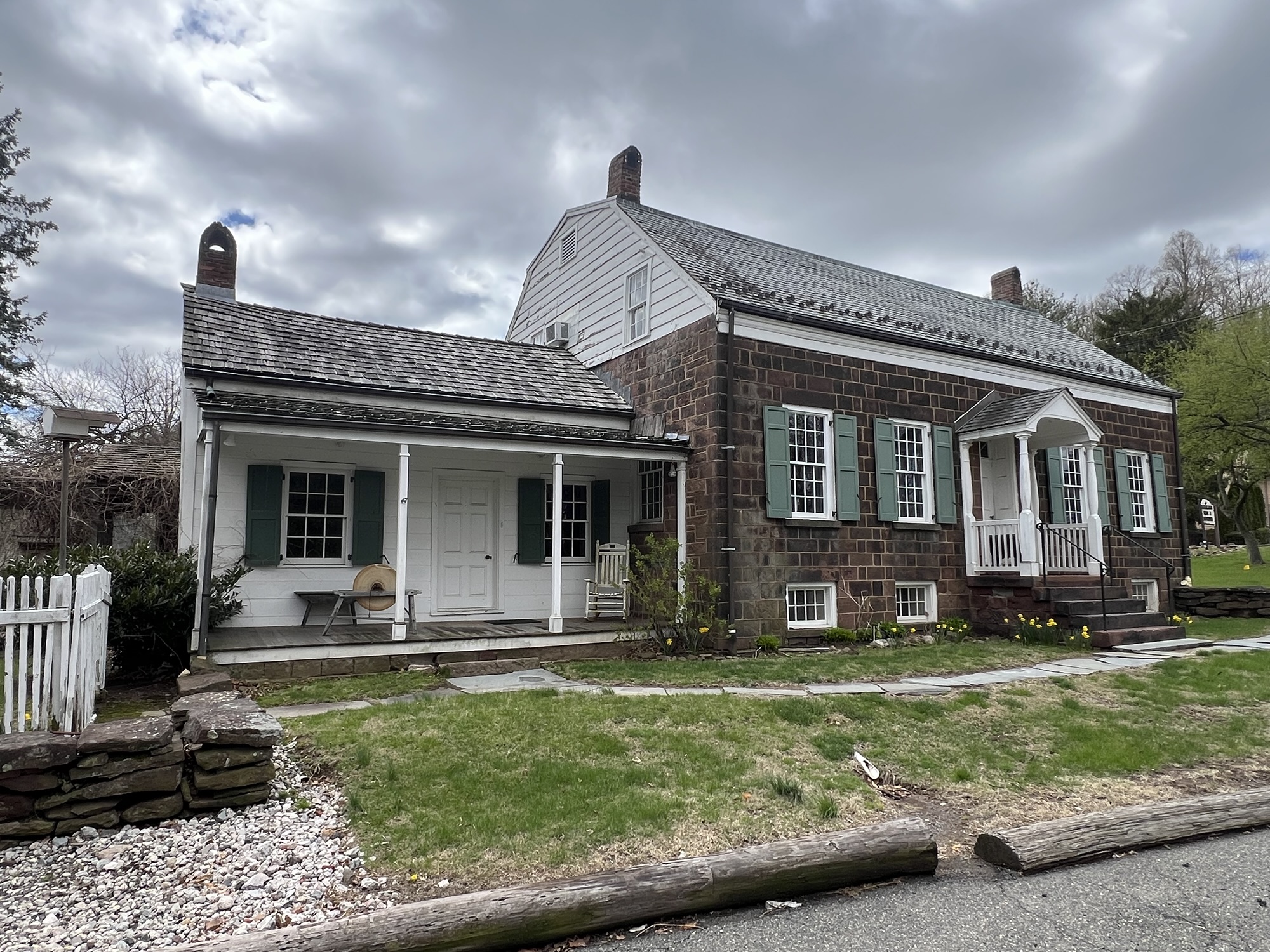
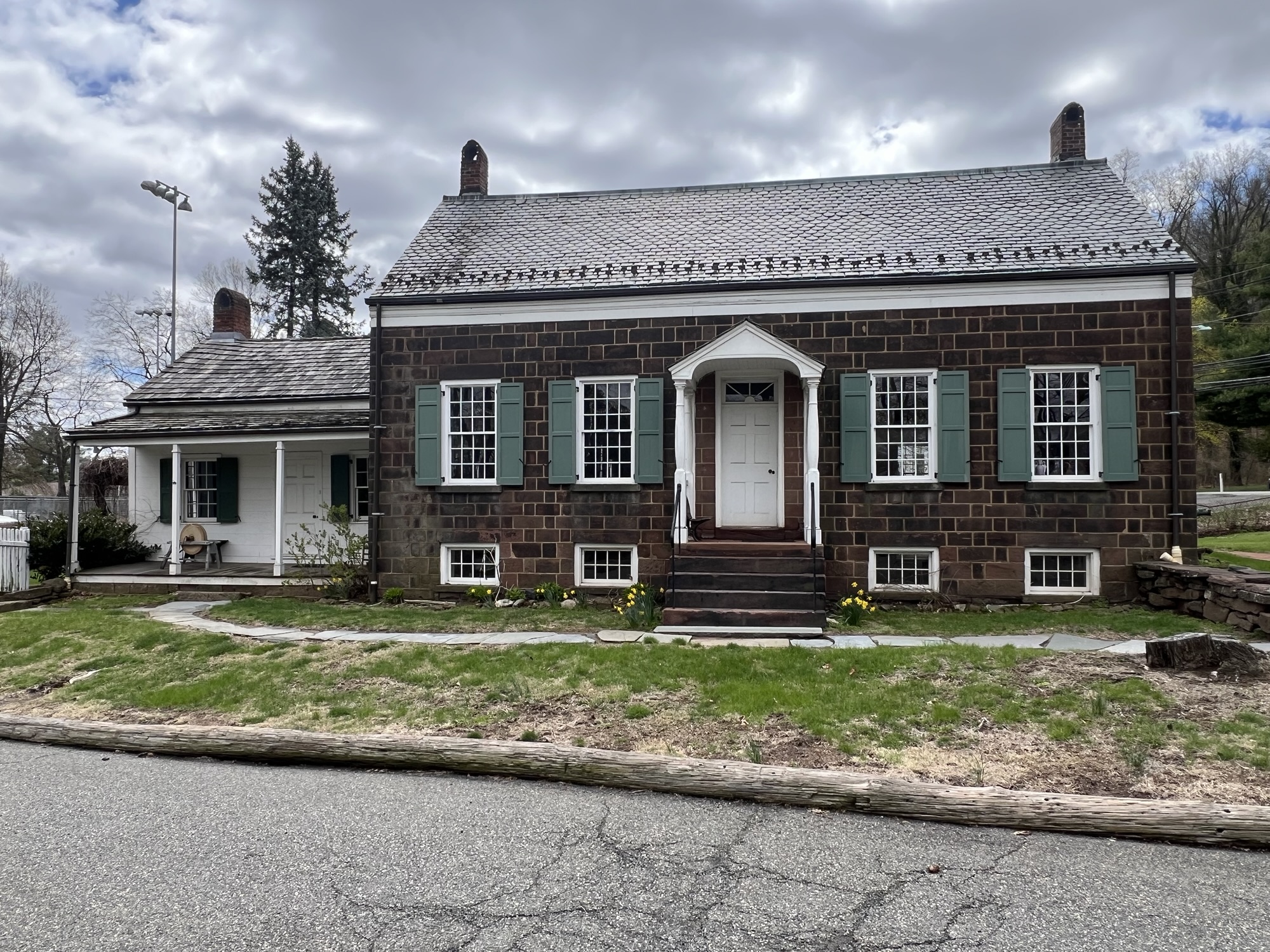
 The front of the Hamilton House in the early Spring

I visited the Hamilton House Museum this afternoon which is right down the road from Montclair State College and sits at the border of the Clifton-Montclair border. The interesting part of the house location is that it still sits the farm land of the Van Wagoner Family but the house was moved from its location to the current one because of the building of Route 46 in 1973.

The front of the house in the Spring

When talking with curator, the house is going through a transition from the City of Clifton ownership to the County of Passaic Historical Society’s site. They are currently cataloging every piece in the house and putting it online. They want to view the collection to see what they can work with within the home.

Each room represents a different time in the history of the house. There is a living room from the Victorian age, the kitchen is from the late 1700’s to the early 1800’s and the dining room is from the mid-1800’s. These rooms are furnished to represent a certain time in the house.

There will be many revisions in the future for the house so there are some changes on the way. The upstairs is currently being used for storage and there will be revision there as well. I got a quick tour of the rooms with the curator and he said there will be more changes in the future as they catalog each piece. The grounds are currently being replanted.

The Hamilton House Museum sits at the Clifton and Montclair border

The house is one of the last examples of early 19th century stone houses in Passaic County. The house was built in 1817 by John and Ann Vreeland and then passed to the Van Wagoner family. It changed hands a few times until 1856 when the Hamilton Family bought the house (no relationship to Alexander Hamilton). The house remained in the Hamilton Family until 1972 when the last living relative died and no one in the family wanted possession of the house (Tour Guide & Wiki).

The oldest section of the house

That’s when the City of Clifton bought the house from the family of its historic value. The house was added to the National Register of Historic Places on May 13th, 1982 (Wiki).

The outside grounds of The Hamilton House Museum

The Grape Arbor on the grounds of the Hamilton House

History of the Hamilton House:

(taken from the City of Clifton website)

This 18th Century Dutch gambrel-roofed homestead was once the home of the Van Wagoner and Hamilton families. This basic of the house does not greatly differ from its Dutch antecedents.

The sturdy one and one half story cut sandstone structure, flanked by a grainery, spring-house and gardens reflects almost two hundred years of American history. It brings back memories of an uncluttered horizon with farms, orchards, fresh brooks, forest full of game and filled with scent of wildflowers.

Hamilton House & the Clifton Community:

Although the City of Clifton was incorporated in 1917, a community had existed since 1679. Prior to 1917, the area was known as Acquackanonk Township and included parts of : Little Falls, Passaic, Paterson and West Paterson.

The Indian Chief Captahem deeded 11,000 acres to the early Dutch settlers on the shores of the Passaic River. Predominately rural, this sparsely populated village thrived and grew.

The farmhouse was presented to the City of Clifton by the developers of the late Henry Hamilton. The Hamilton family had bought the 96 acre property in 1856 and for over 100 years until the death of Mr. Hamilton in 1970, it had been the family home.

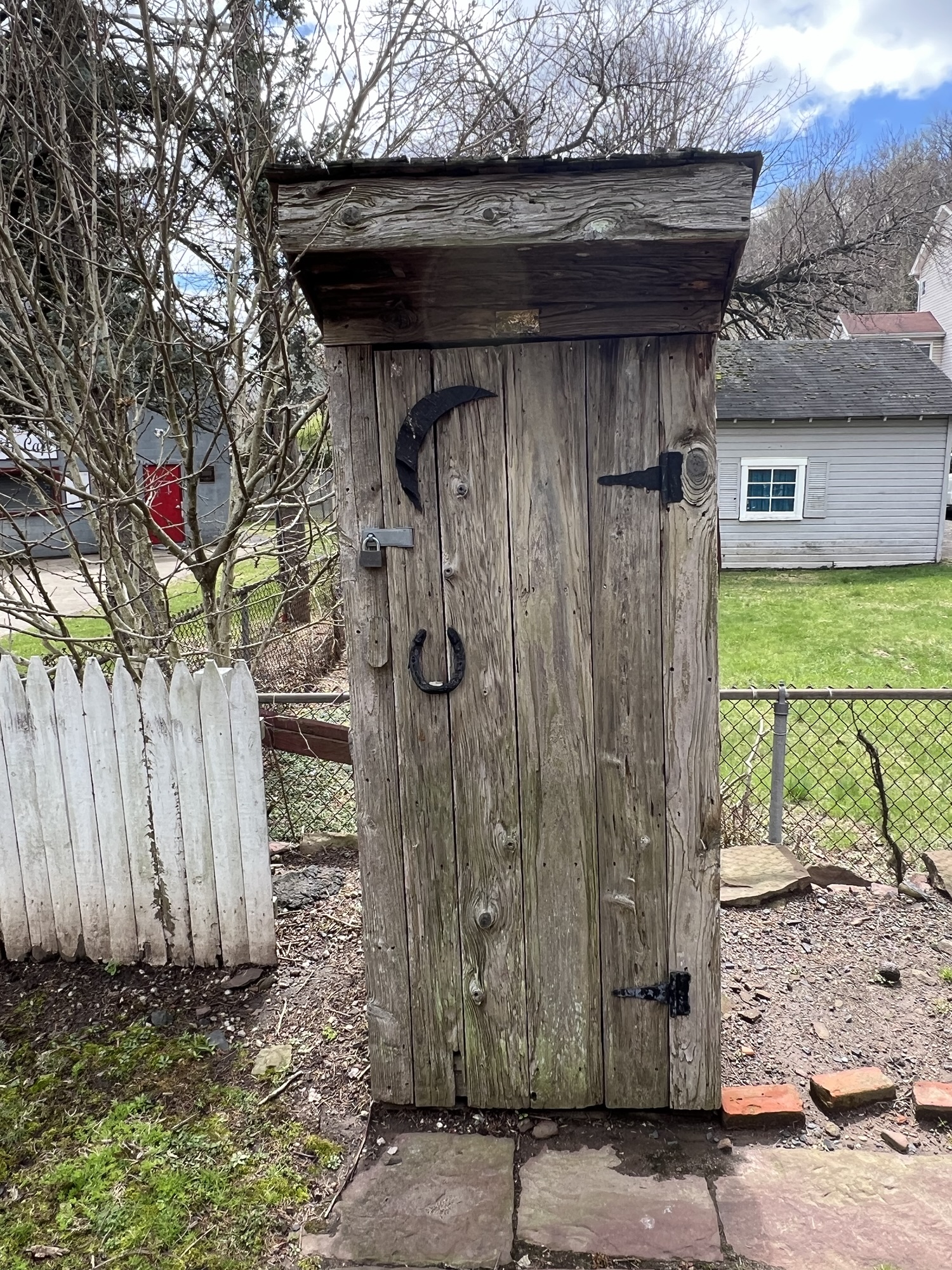
The old outhouse in the back of the property

Current Location and Future Plans:

The house was moved to its present location in Surgent Park in 1973. Infinite plans have been taken with examination and documentation of the building’s structural elements. Extensive research has been conducted including the records and treasured memories of Miss Caroline Hamilton as well as: Artifacts, Deeds, Manuscripts, Maps, Photographs and Wills.

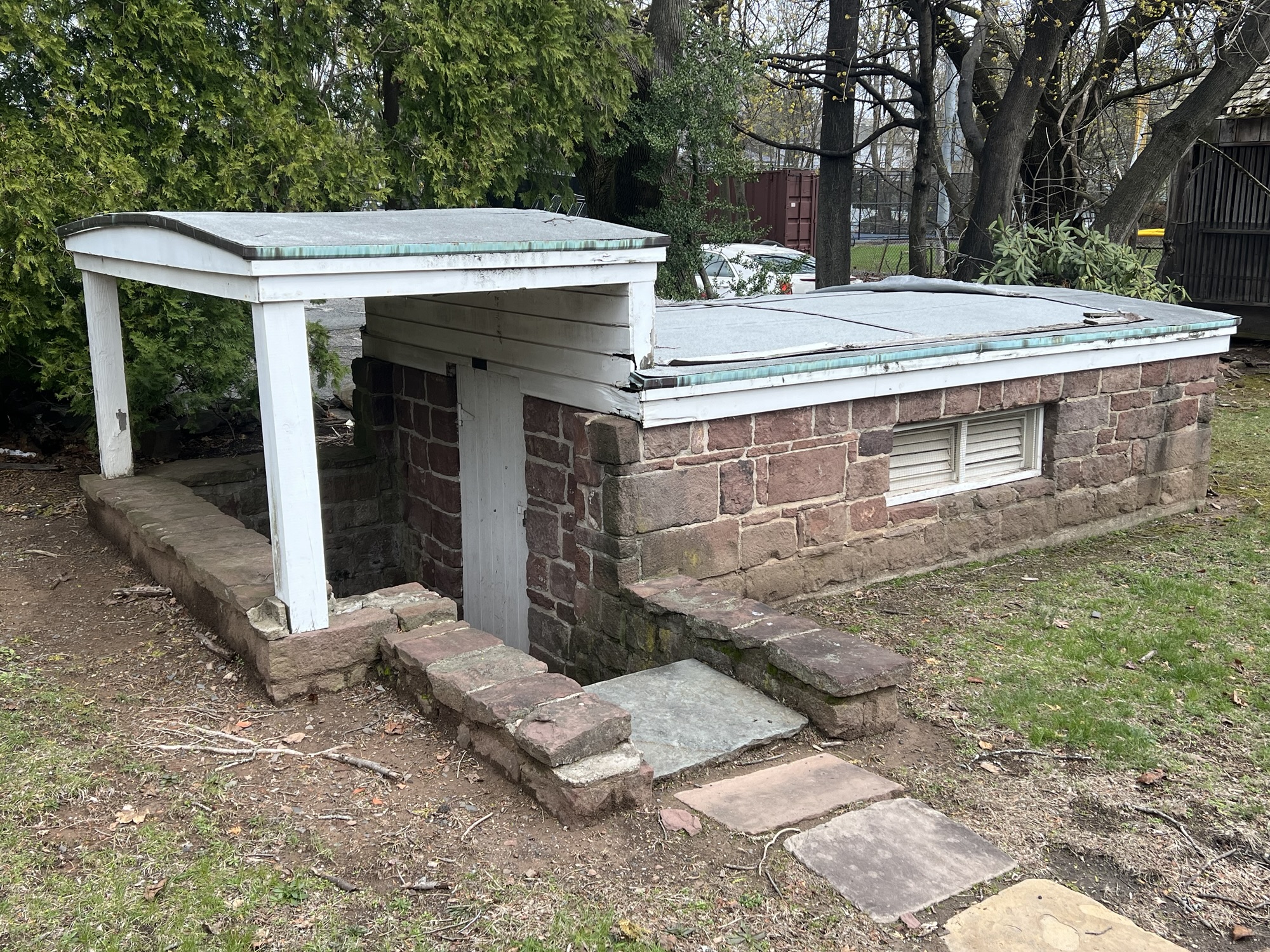
The old Ice House on the property

Scheduling Tours:

The museum is opened for tours on Sunday from 2:00pm-4:00pm (except on holidays). The house is going through a transition right now with the change over.


Neue Galerie New York                                      1048 Fifth Avenue                                               New York, NY 10028

Neue Galerie New York 1048 Fifth Avenue New York, NY 10028

Neue Galerie New York

1048 Fifth Avenue

New York, NY  10028

(212) 628-6200

neuegalerie.org

@neugalerieny

Open: Sunday 11:00am-5:00pm/Monday 11:00am-6:00pm/ Tuesday and Wednesday Closed/Thursday-Saturday 11:00am-6:00pm

Café and Shops have various hours. Please check the website for these.

Fee: General $22.00/Seniors (65 and Older) $16.00/Students and Educators $12.00/Children under 12 are not admitted and Children under 16 years old must be accompanied by an adult. The museum is open on First Fridays from 6:00pm-9:00pm. Please visit the website for more information.

My review on TripAdvisor:

https://www.tripadvisor.com/Attraction_Review-g60763-d258699-Reviews-Neue_Galerie-New_York_City_New_York.html?m=19905


I visited the Neue Galerie for the first time after passing the building on the way to the Metropolitan Museum of Art. This interesting little gallery space has some interesting pieces to see and many decorative objects in the cases.

The gallery space for special exhibitions on the third floor was closed when I visited and being an educator, I got a half price discount off the educator rate was a nice deal.

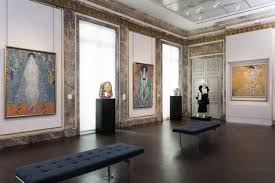
It was a thrill to finally see the famous Gustav Klimt painting of the “Woman in Gold” that had been such a controversial piece during the Nazi occupation in Germany. It’s beautiful detail work was very innovative then. After all the fighting over the painting it is nice to see that the family sold it to the museum to share it with the world. The gallery where the painting hangs has more works by Gustav Klimt and you can see the extent of his work along the walls of the gallery.

Neue Gallery II

The ‘Woman in Gold’

The side galleries are full of all sorts of objects of art for the home such as chairs, silverware, dishware, clocks and decorative objects. There was a lot of items that still are contemporary in their fashion. The back gallery on the second floor is full of paintings by various German artists.

neue Gallery IV.jpg

The Decorative Objects Gallery

The whole museum you can see in about an hour when the special galleries are closed. There is also Cafe Sabarsky on the main floor, a Viennese cafe the serves German food like sausages, salads and pastries. The restaurant is a little over-priced for what it is.


History of the Neue Galerie New York:

Neue Galerie New York is a museum devoted to early twentieth-century German and Austrian art and design. Located in a landmark mansion built in 1914 by the architectural firm of Carrere & Hastings, the museum offers a diverse program of exhibitions, lectures, films, concerts and other events. The second floor galleries are dedicated to a rotating selection of fine and decorative art from Vienna circa 1900, including work by fine artists Gustav Klimt, Egon Schiele and Oskar Kokoschka and decorative artists Josef Hoffmann, Koloman Moser and Adolf Loos. The third-floor galleries present German fine and decorative art of early twentieth century, including work by Max Beckmann, Ernest Ludwig Kirchner, Paul Klee and Marcel Breuer. The third floor is also the site for special exhibitions that focus on key individuals and movements, articulating a more complete vision of twentieth-century German and Austrian art (Neue Galerie New York History).

The Gustav Klimt Gallery

Neue Gallery III


Neue Galerie New York was conceived by two men who enjoyed a close friendship over a period of nearly thirty years: art dealer and museum exhibition organizer Sege Sabarsky and businessman, philanthropist and art collector Ronald S. Lauder. Sabarsky and Lauder shared a passionate commitment to Modern German and Austrian art and dreamed of opening a museum to showcase the finest examples of this work. After Sabarsky died in 1996, Lauder carried on the vision of creating Neue Galerie New York as a tribute to his friend (Neue Galerie New York History).

The German art collection represents various movements of the early twentieth century: the Blaue Reiter and its circle (Vasily Kandinsky, Paul Klee, August Macke, Franz Marc, Gabriele Munter) the Brucke (Erich Heckel, Ernest Ludwig Kirchner, Hermann Max Pechstein, Karl Schmidt-Rottluff), the Bauhaus (Lyonel Feininger, Paul Klee, Laszio Moholy-Nagy, Oskar Schlemmer), the Neue Schlichkeit (Otto Dix, George Grosz, Christian Schad) as well as applied arts from the German Werkbund (Peter Behrens) and the Bauhaus (Marianne Brandt, Marcel Breuer, Ludwig Mies van der Rohe, Wilheim Wagenfeld) (Neue Galerie New York History).

Cafe Sabarsky located in a spectacular wood-paneled room on the ground floor has become a favorite spot for New Yorkers. Operated by acclaimed chef Kurt Gutenbrunner, it evokes the great fin-de-siecle cafes of Vienna. The Book Store fills the former library of the mansion and specializes in publications on fine art and architecture from Germany and Austria. The Design Store features objects based on original works by Marianne Brandt, Josef Hoffman, Adolf Loos and other major designers of the era (Neue Galerie New York).


The Leslie-Lohman Museum of Gay and Lesbian Art                                                                             26 Wooster Street                                               New York, NY 10013

The Leslie-Lohman Museum of Gay and Lesbian Art 26 Wooster Street New York, NY 10013

The Leslie-Lohman Museum of Gay and Lesbian Art

26 Wooster Street

New York, NY  10013

(212) 431-2609

LeslieLohman.org

https://www.leslielohman.org/

Open: Sunday 12:00pm-6:00pm/Monday & Tuesday Closed/Wednesday 12:00pm-6:00pm/Thursday 12:00pm-8:00pm/Friday & Saturday 12:00pm-6:00pm

Fee: Suggested donation of $10.00

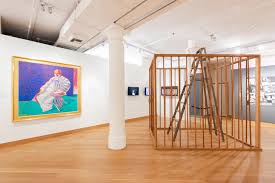
I recently visited the Leslie-Lohman Museum to see the second half of the “Art After Stonewall” exhibition that I saw at the Grey Gallery at New York University. The art is from just before the Gay Rights Movement just before the Stonewall Uprising and into the depths of the AIDS crisis of the early to mid-80’s.

It was interesting to see the perspective of people ‘coming out’ after the suppression of the 50’s and early 60’s and the wanting to conform to societies standards. People gravitated to the cities to find themselves and found an embracing community that was not always accepted by the status quo of the City. It was that suppression building up on conformity to be a certain type person that lead to riots, that being tired of being harassed all the time.

Leslie-Lohman Museum III

‘Art After Stonewall’ (picture of Devine)

There was a lot of lesbian art and the changes women felt at the time. Some was the changes in attitude and some of it was militant to the way the outside community treated these women. It was interesting to see the changes in less than a decade of how people saw themselves and the changes that people were capable of making.

Leslie-Lohman Museum II.jpg

‘Art After Stonewall’

The show closed on July 21st, 2019 but there are more shows in the future. The best part of the museum is that they have a suggested donation so if you do not have a lot of money it is a nice way to spend the afternoon and then explore SoHo and Chinatown.


History of the Leslie-Lohman Museum:

We can trace the origins of the Leslie-Lohman Museum back to the civil rights movement of the late 1960’s. In the moment of the Woodstock Music and Art Fair and the Stonewall Inn Uprising, gay art collectors Charles Leslie and Fritz Lohman presented their first exhibition in their SoHo loft in the summer of 1969. This weekend show featured downtown gay artists and was a complete success in attracting over 300 visitors-it because a seminal moment in the history of the Leslie-Lohman Museum and LGBTQ arts and culture.

In the midst of the 70’s gay liberation movement, our founders continued to collect and display the work of gay artists in various storefronts in SoHo while advocating for the preservation of the neighborhood, its unique architecture and the nascent community of artists living and working in its spacious lofts. Finally, settling in a basement gallery at 127-B Prince Street, this space became host to many art exhibitions and various cultural programs.

During the AIDS pandemic of the 80’s, Charles and Fritz created a refuge for ailing artists and their work. Along with providing care and lodging for them, they rescued the work of dying artists from families who, out of shame ignorance, wanted to destroy it. This led to the creation of the Leslie-Lohman Art Foundation in 1987 and to its ever-expanding collection of art. Through perseverance against the federal government, averse to approving a “gay art” organization, the foundation was finally granted tax-exempt in 1990.

Today, thanks to the hard work of generations of activities and artists, our community has gained greater visibility. However, the fight for our rights is not over. The foundation has transitioned into a museum that aims to preserve LGBTQ cultural identity and build community, reclaim scholarship from a queer artists and cultural workers. As we continue to stand at the intersection of art and social justice, we act as a cultural hub for LGBTQ individuals and their communities.

(Leslie-Lohman Museum pamphlet)

The Museum is a non-profit, exempt 501C3.