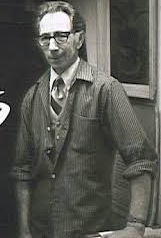
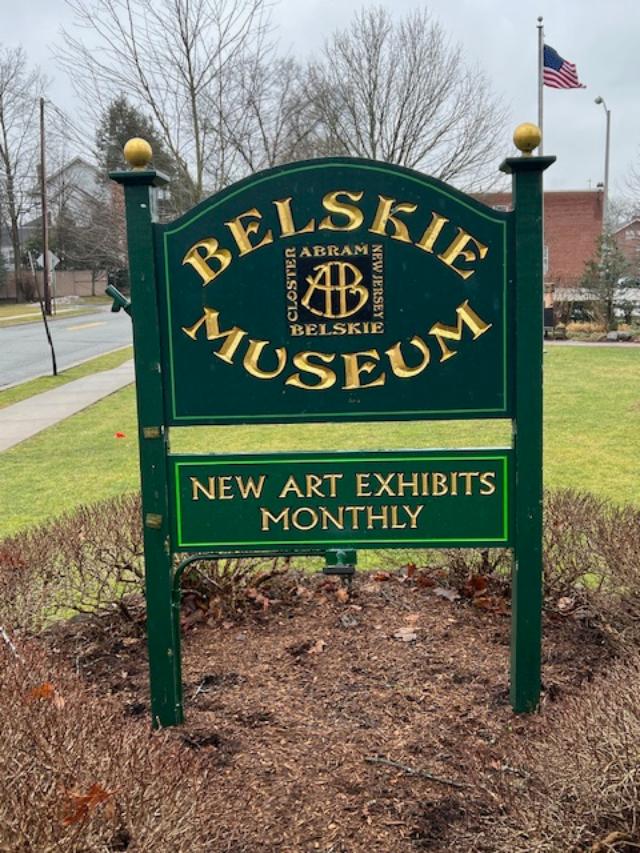
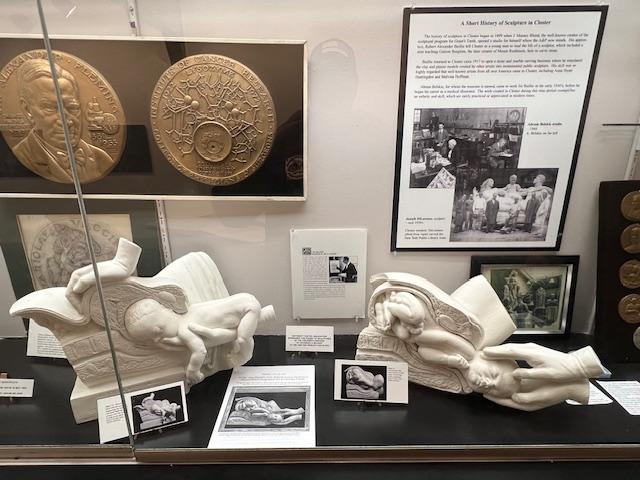
The Belskie Museum, a tax exempt non-profit corporation, was founded in Closter, New Jersey in 1993 to save, restore and exhibit the works of Abram Belskie (1907-1988), one of our country’s most accomplished sculptors and one of the most eminent medical of times.
Mr. Belskie was a resident of Closter his entire adult life.
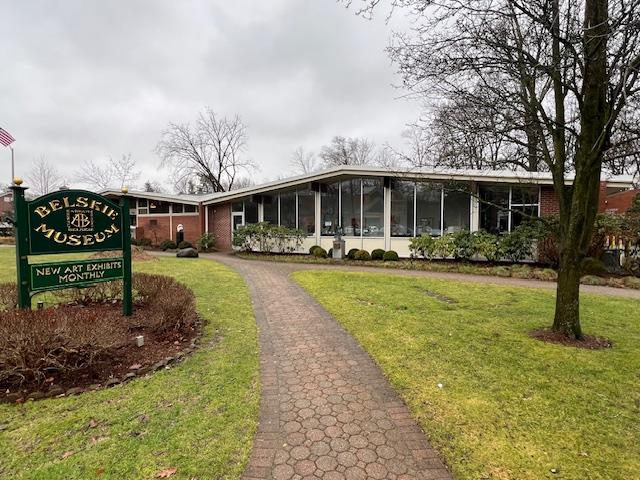
The museum’s 3,900 square feet modern building was built entirely by the Closter Lions Club and donated to the Borough of Closter upon its completion in 1994.
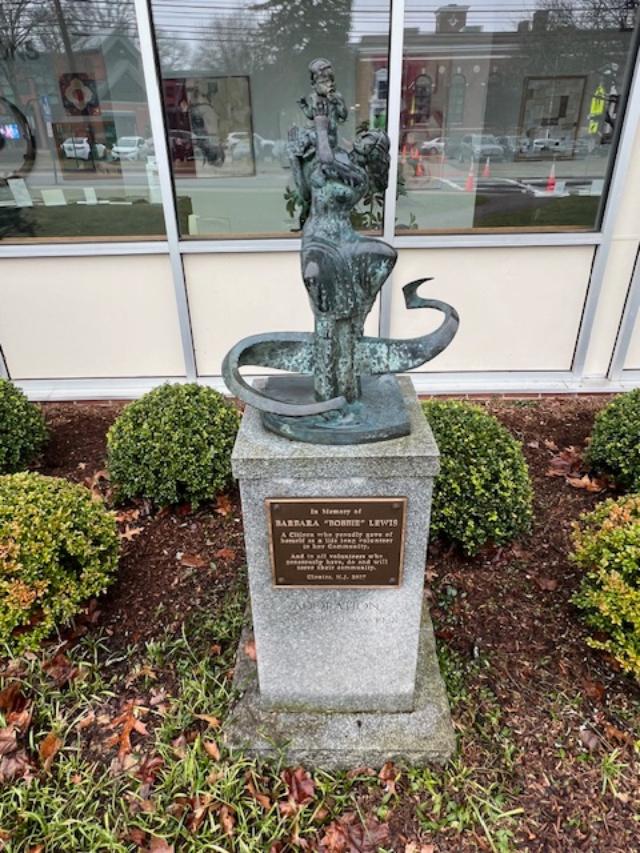
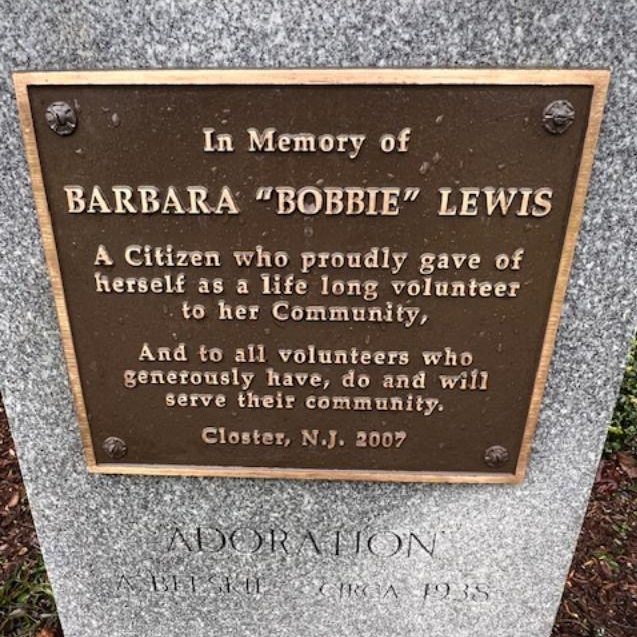
The Memorial Statue “Adoration” outside the museum.
In addition to housing the many works of Abram Belskie, the museum also hosts monthly art exhibits by local, national and international artists and as a result, has become one of Bergen County’s leading forum for the arts.
The Belskie Collection of Art:
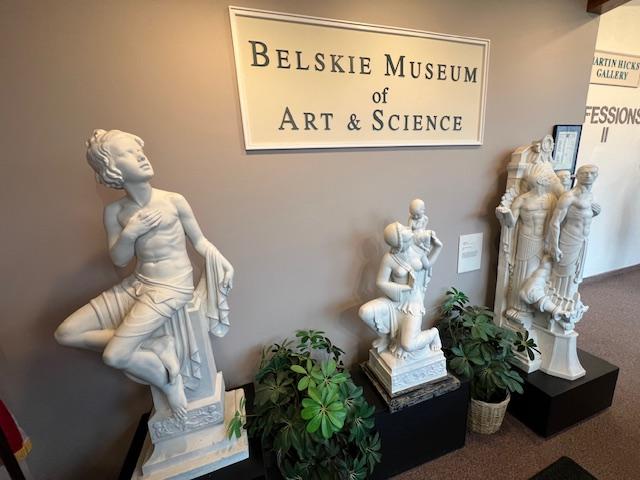
The entrance of the Belskie Museum with the works of Mr. Belskie
Past exhibitors include the estate of world famous photographer Andre Kertesz and Italian painter/sculptors Emilio & Ugo Baracco. A featured exhibit of photography in March 2003 was by Academy Award and Tony Award winning actress Ellen Burstyn. The museum also hosts exhibits from the local schools and colleges and many local artists.
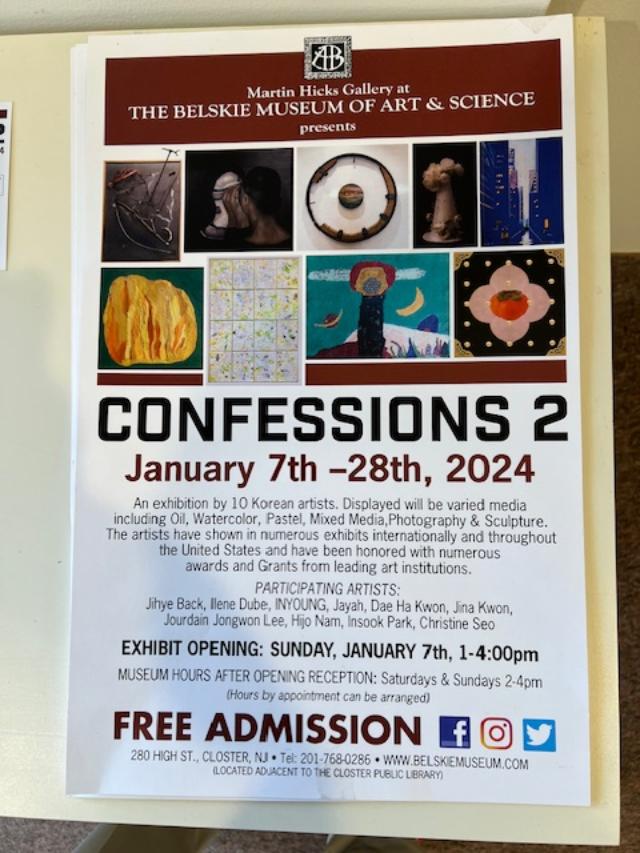
In January of 2024, the museum hosted the exhibition ‘Confessions Two’, featuring the works ten Korean artists displaying varied media including oil, watercolor, pastels, mixed media, photography and sculpture.
The “Confessions Two” Exhibition of Korean art.
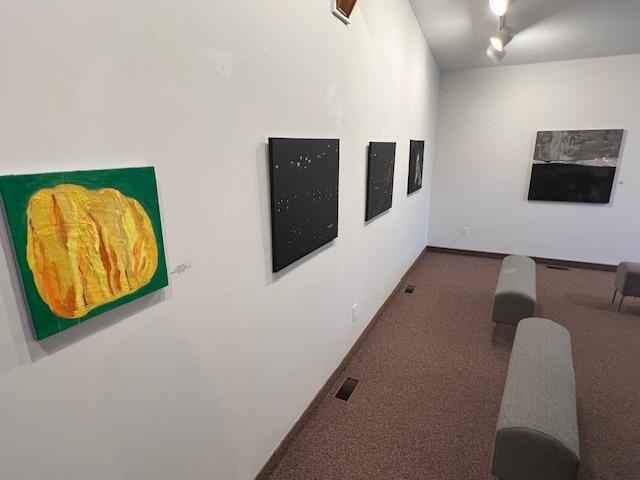
The Gallery featuring the exhibition “Confessions Two”
The museum is operated entirely by volunteers under the direction of a six-member Board of Directors (also entirely volunteer) appointed by the Borough of Closter, The Closter Lions Club and the Closter Public Library Trustees. Funding is from grants, memberships, fundraising exhibitions and donors. The museum has new art, history and science exhibits throughout the year. Open on Saturdays, Sundays and by appointment.
The works of Abram Belskie are in the back gallery.
Disclaimer: This information was taken directly from The Belskie Museum of Art & Science Inc. pamphlet. Please call the above number or email them for more information of hours of operation. The museum does change their exhibitions almost every month.
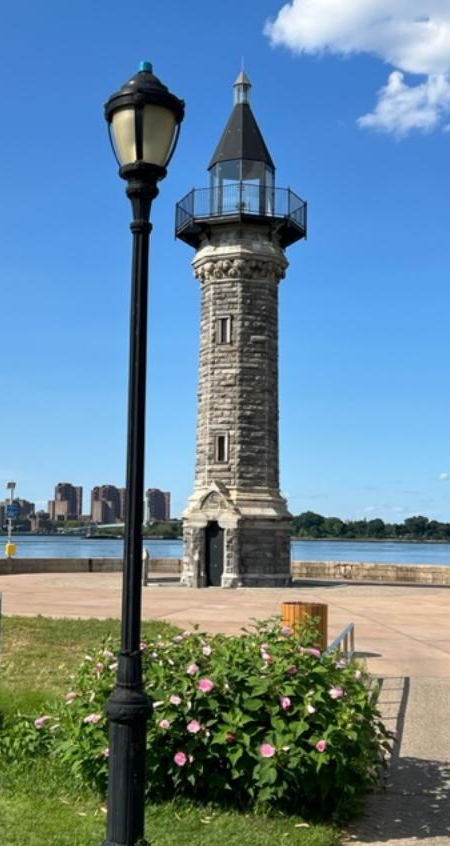
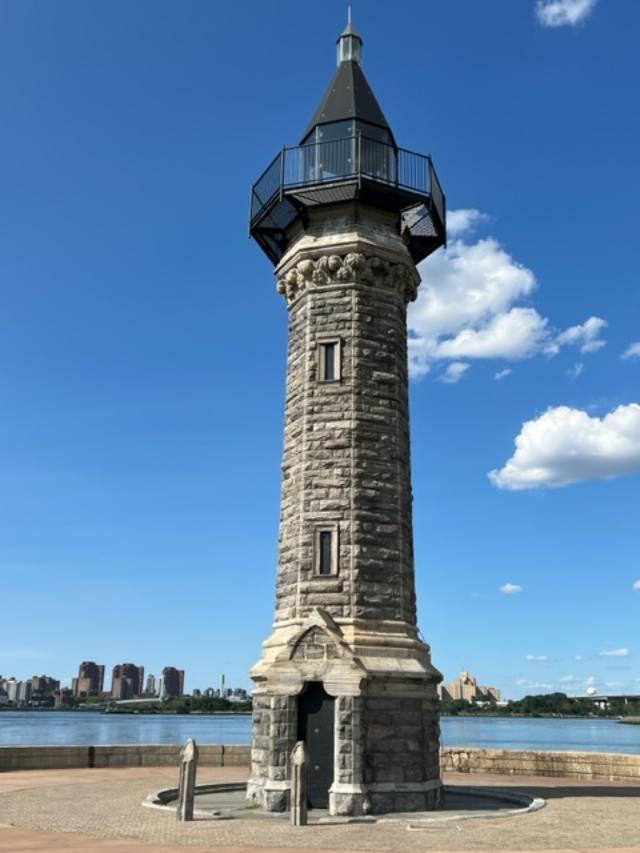
The Roosevelt Island Lighthouse is a stone lighthouse built by New York City in 1872. It is at the northeast tip of Roosevelt Island in the East River in Lighthouse Park. It was named to the National Register of Historic Places on March 16th, 1972, and was designated a New York City Landmark on March 23rd, 1976 (Wiki).
Blackwell Island, which was called Welfare Island from 1921 to 1973 and is now known as Roosevelt Island was purchased by New York City in 1828. Various facilities on the island were built including a penitentiary, almshouse, city hospital, the New York Lunatic Asylum and the Smallpox Hospital (some of these buildings still exist).
In 1872, the City of New York built a lighthouse. The supervising architect was James Renwick Jr., who also designed several other buildings on the island for the Charities and Correction Board as well as more famous works such has St. Patrick’s Cathedral. (Wiki)
Legends abound about the construction of the lighthouse. Two names, John McCarthy and Thomas Maxey, are associated with the various legends. The 1870 report of the warden of the lunatic asylum that an industrious patient had built a seawall near the asylum that had reclaimed the land. The legends indicate that he had incorporated Civil War cannons.
The park in the distance on Roosevelt Island
The legend indicates that the builder was bribed with bogus money to demolish the fort for the construction of the lighthouse. For many years, a saying was inscribed on a stone near the lighthouse:
This is the work
Was done by
John McCarthy
Who built the Light
House from the bottom to the
Top All ye who do pass by may
Pray for his soul when he dies.
Lighthouse Park from Carl Schulz Park on Manhattan Island
The lighthouse was operated by the City instead of the U.S. Lighthouse Board. In its 1893 annual report, the Lighthouse Board generally praised the operations of Blackwell Island Lighthouse but indicated that the Board has unfairly criticized because of the City’s occasional failure to keep the light in operation. The Board advocated banning private lights. The 1917 U.S. Coast Pilot indicated that there was a private light at the north end of the island. (Wiki)
The light was operated until about 1940. In the 1970’s, the lighthouse was partially restored. The restoration was completed in 1998. (Wiki)
The lighthouse is approximately 50 feet (15m) tall. It is constructed of gray gneiss, rough ashlar that was quarried on the island by inmates from the penitentiary. It has an octagonal base and an octagonal shaft. There is an entrance on the south side under a projecting gable and a pointed Gothic arch. Two south-facing slit windows in the shaft light the interior. At the top of the shaft there is a band of ornamented corbels below the gallery, which is surrounded by an iron railing. The lantern is octagonal with a shallow conical roof. An 1893 photograph and a 1903 movie show that it probably had a much taller, steeper conical cap when it was built. The optics were provided by the U.S. Lighthouse Board (Wiki).
Lighthouse Park in the winter months
Lighthouse Park is located on the northernmost section of Roosevelt Island and can be seen from Carl Schurz Park. On a beautiful sunny day, it is a very picturesque view from the park.
Lighthouse Park from Carl Schulz Park
The sculpture “The Girl Puzzle”:
Next to the lighthouse is a monument of faces dedicated to Nellie Bly and to women who have faced hardship entitled “The Girl Puzzle”. The sculpture was dedicated to journalist Elizabeth Cochrane Seaman, pen name Nellie Bly, who wrote about the abuses in the mental asylum on what was known as Mental Island at the time. She wrote the full report “Ten Days in the Mad House” on the abuses of patients.
“Girl Puzzle” by artist Amanda Matthews (Artist Bio)
The piece was created by American born artist Amanda Matthews. Ms. Matthews graduated with a BA in Studio Art from the University of Louisville and had studied abroad in Europe. She is known for her work that honors women and celebrates diversity and inclusion (Wiki).
The history sign on Nellie Bly
Each sculpture is a interpretation on Nellie Bly. It really is an interesting sculpture.
The Girl Puzzle One:
The Girl Puzzle Two:
The Girl Puzzle Three:
The Girl Puzzle Four:
The Girl Puzzle Five:
Disclaimer: this information was taken from Wikipedia site and the Roosevelt Island Historical Society. This little ‘gem’ of a park can be seen by walking to the most northern part of Roosevelt Island by way of the Main Street which runs through the island.
The Greater Newark Conservatory has been credited for much of the improvement in the City of Newark.
Having three farms, it has given new life to empty lots, given school children a chance to experience urban farming and given suburbanites a taste of country life in the city all while improving the lives of its residents. Having attended the recent “Beds & Breakfast” gardening program put on every year, I can see the outreach that the Conservatory is trying to have on people outside the city.
The Beds & Breakfast Seminar is an annual event that covers things like sustainable farming, trips for growing and pruning plants and trees and cooking classes. In the era of COVID, we had the 2021 “Beds & Breakfast” virtually this year and it was really nice because we could attend the meetings via Zoom. It was very engaging and you could ask questions online.
In the warmer months, it is nice to walk along the gardens and admire all the fruits, vegetables and plants being grown here. They have other events as well like Summer Cocktail parties and Pot Lucks.
The gardens and the new Demo building
Another event I recently attending was the Conservatory’s October Fest, which was a small festival where the gardens on Prince Street were open to the public and local vendors were selling their wares at tables surrounding the main walk way of the garden. The Conservatory was also running their Youth Farm Stand as well with fresh vegetables from their ‘farm’. In 2021, they had a smaller event with vendor booths and music. It was funny to see so many people with masks in the cool weather.
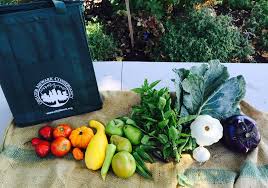
Try to support the Youth Farm Stand at the Greater Newark Conservatory
In the future, there will be Pumpkin Patches by the farm and a small event for Halloween.
The History and Purpose of The Greater Newark Conservatory:
The Greater Newark Conservatory (GNC) is a non-profit organization headquartered in Newark, NJ with the state goal of promoting ‘environmental stewardship to improve the quality of life in New Jersey’s urban communities’. It offers programs for youth education, community greening and gardening, nutritional health, job training and prisoner re-entry (Wiki).
Founded in 1987, the Greater Newark’s Conservatory’s mission is to promote environmental stewardship to improve the quality of life in New Jersey’s urban communities. The 3.7 million Prudential Outdoor Learning Center, named in honor of a $750,000 grant from the Prudential Foundation, was completed in 2004 and has hosted more than 16,000 at risk inner city children for environmental education field trips since that time (Vince Baglivo, Star-Ledger 2010).
The Conservatory grounds
The first step toward making the new Center a reality was the purchase of the historic former synagogue/church building at 32-34 Prince Street in downtown Newark. Acquired by the City of Newark, the property included the building and the land that it occupies (Vince Baglivo, Star-Ledger 2010).
Educational Programs:
The Conservatory provides programs on youth education and nutritional health and cooking. In the Demonstration Kitchen program, participants are provided instruction on cooking with recipes having high nutritional value. The Newark Youth Leadership Program (NYLP) provides training to high school students in Newark through a year-round program on horticulture. The program also includes a summer internship program where high school students are assigned to various department in the Conservatory in order to gain experience with career-related skills. The summer interns also receive training on finance, public speaking and nutrition (Wiki).
Urban Farming:
One Conservatory initiative is to bolster and support urban farms in the City of Newark. The urban farms were created with the purpose of offering low-cost and healthy foods in Newark. Participants also have the option of growing their food in one of 360 private plots. In 2011, the urban farms administered by the Conservatory generated 5,000 pounds of produce. The produce is sold in local farmers’ markets. Crops raised include arugula, beets and corn. Other related programs include raising chickens and maintaining a honey apiary (Wiki).
The gardens and grounds
Job Training:
The Conservatory is community partner for the City of Newark’s prisoner re-entry programs where job training is provided to ex-offenders through its ‘Clean and Green’ program. They include vacant lots in Newark, labor in maintaining urban farms and offering instruction to school groups on the basics of farming (Wiki).
Urban Environmental Center:
The Conservatory conducts its activities primarily at the Judith L. Shipley Urban Environmental Center, the Prudential Outdoor Learning Center and at its main education building. Many educational programs take place there as well. The center was named after Judith and Walter Shipley, who were major donors of the Conservatory. The Prudential Outdoor Learning Center is 1.5 acre site located on Prince Street in Newark and contains a series of outdoor exhibits and thematic gardens (Wiki).
Programming:
Four program areas: environmental education, community greening and gardening, advocacy for environmental justice and job training, are the focus of activities involving everyone from students to seniors (Vince Baglivo Star-Ledger 2010).
Community Greening:
The Community Greening Program addresses Newark’s deficit of quality preserved open space by enhancing existing community parks, creating new pocket parks, establishing greenways and improving neighborhoods with street trees, street side planted flower barrels and community gardens. The program works with Newark residents to transform neighborhoods with curbside flower barrels and lush community gardens on former vacant lots. These urban farms increase accessibility to food sources for urban residents by providing high quality, locally grown healthy food using natural pest control methods (Vince Baglivo Star-Ledger 2010).
Disclaimer: I want to credit writer Vince Baglivo from the Star-Ledger “Greater Newark Conservatory: City’s best kept Secret” 2010 and Wikipedia (current) as well as the Greater Newark Conservatory for information on the site. Please call the above number for more information on upcoming programs.
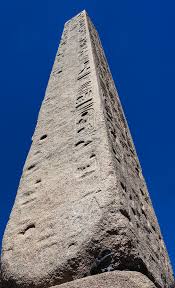
I always admire Cleopatra’s Needle whenever I am touring Central Park West after an afternoon at the Metropolitan Museum of Art. The obelisk sits in back of the Metropolitan Museum of Art on Fifth Avenue and the pathways behind the museum lead to the site.
It is one of the few place where you can see hieroglyphics up close unless you are in Egypt and the sad part is that the natural surroundings are wearing them out. Still it is one of the most interesting outside artifacts that Manhattan and New York City has on display. Take time to observe all four sides of the obelisk and observe the writings.
Sometimes I think the tourists miss this interesting artifact and how it got here from Egypt.
The History of Cleopatra’s Needle:
(From Wiki)
Cleopatra’s Needle (obelisk) was erected in Central Park, just west of the Metropolitan Museum of Art on February 22, 1881. It was secured in May 1877 by Judge Elbert E. Farnam, the then United State Consul General of Cairo as a gift from the Khedive for the United States remaining friendly neutral as the European powers, France and Britain, maneuvered to secure political control of the Egyptian government.
The obelisk is a twin of the obelisk given to London at the same time and come from the ancient city of Alexandria. The name is a misnomer as they have no relationship with the Ptolemaic Queen Cleopatra VII of Egypt and were already over a thousand years old in her lifetime (please see the Wiki link attached to the blog for more information on the obelisk).
The obelisk is free to the public and can be seen by taking the path behind the Metropolitan Museum of Art. It is open all day.









 Visiting a Museum: The Unique, Unusual, Obscure and Historical