Category: Walking Around Manhattan

Day Three Hundred and Sixty-Five Artist Party-Ruth Asawa-Member’s Night at the MoMA November 22nd, 2025

Day Three Hundred and Sixty-Five Artist Party-Ruth Asawa-Member’s Night at the MoMA November 22nd, 2025

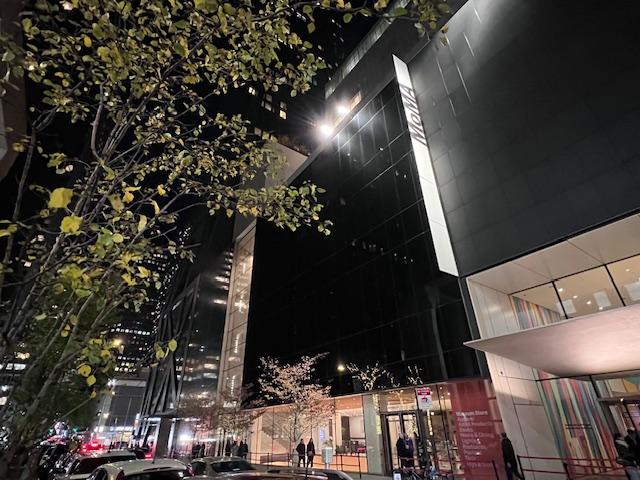
The front of the Museum of Modern Art on 11West 53rd Street

https://www.moma.org/

My review on TripAdvisor:

https://www.tripadvisor.com/ShowUserReviews-g60763-d105126-r1040038069-The_Museum_of_Modern_Art_MoMA-New_York_City_New_York.html?m=19905

There is always a lot of excitement when a new art exhibition is ready to open. It is even better when the museum opens it to its members first before the public gets a glimpse. It gives a chance to see the exhibitions before it opens to the public.

The long line of MoMA members waiting to get into the museum for the opening night of Artist Ruth Asawa’s exhibition

I noticed this year especially and right before Thanksgiving, all the museums are throwing open their doors for Member’s Nights. I have been invited to five Members Nights at museums all over the City. You can’t attend them all.

The excitement the museum creates for these evenings

Video of entering the museum at the start of the opening with 80’s Japanese Pop Music

I think in an economy like this, these Members Nights are one of the best ways to engage with the membership for both donations and renewals of memberships especially before the holiday season. Plus it gives the members a wonderful night out to see the exhibitions ahead of time and enjoy the evening after a long week at work.

The opening of the Ruth Asawa Retrospect

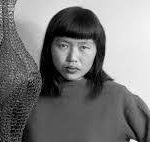
Artist Ruth Asawa

https://en.wikipedia.org/wiki/Ruth_Asawa

The biography of the artist and her works

https://www.moma.org/artists/21-ruth-asawa

Biography of Artist Ruth Asawa:

(from the Museum of Modern Art website)

Born on a farm in Southern California, Asawa began her arts education when she was a teenager and she and her family were among the thousands of persons of Japanese descent who were forcibly incarcerated by the US government during World War II. It was at the internment camp that Asawa began taking classes in painting and drawing. After her release, Asawa studied to be a teacher but was unable to get a license because of her Japanese heritage, so she enrolled at Black Mountain College, an experimental art school in North Carolina. Asawa took classes from and worked alongside fellow artists Josef AlbersRobert RauschenbergMerce Cunningham, and R. Buckminster Fuller. Black Mountain was also where she met her husband, the architect Albert Lanier.

I loved her wire woven sculptures.

The wire woven sculptures were the standouts of the exhibition

I thought these were a unique design

I liked here colorful paintings, these are of her child’s footprints. I loved the idea that her children were involved with the art

The patrons enjoying the art

The display of the wire art

The displays were impressive and graceful

The colorful faces looked tired

The look of nature in the wire art in the form of trees

I loved her works of food

At the end of the exhibition and the evening, I joined everyone on the main floor where the bar and gift shop were located. The main floor was the busiest part of the museum. I wondered if some of these people even went upstairs to see the exhibition or just stayed downstairs to socialize.

The main floor of the museum is always packed with people

Share in the excitement of the Membership opening

These evenings always get my mind off the stress of life. It is nice to just be in Midtown Manhattan and be in the moment. It is nice to see art, hear music and walk through the museum.

The Museum of Reclaimed Urbanspace                       155 Loisadia Avenue (Avenue C)                                New York, NY 10009

The Museum of Reclaimed Urbanspace 155 Loisadia Avenue (Avenue C) New York, NY 10009

The Museum of Reclaimed Urbanspace

155 Loisaida Avenue (Avenue C)

New York, NY 10009

(917) 577-5621

https://morusnyc.org/

Open: Sunday 12:00pm-5:00pm/Monday-Tuesday Closed/Wednesday-Saturday 12:00pm-5:00pm

Admission: Suggested donation $5.00

My review on TripAdvisor:

https://www.tripadvisor.com/ShowUserReviews-g60763-d4459121-r1027918582-Museum_of_Reclaimed_Urban_Space_MoRUS-New_York_City_New_York.html?m=19905

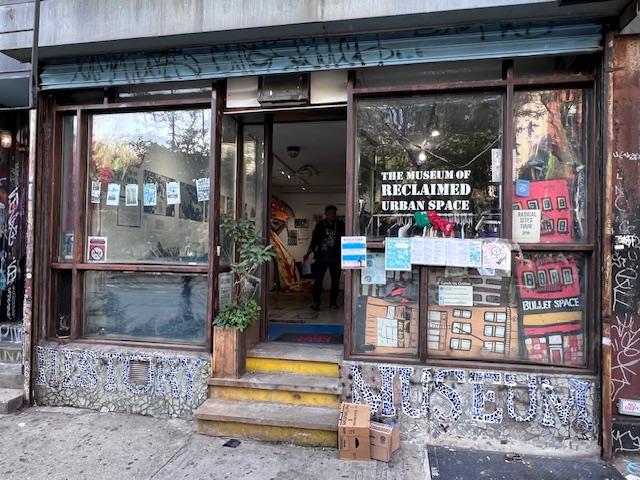
The Museum of Reclaimed Urbsn Space at 155 Loisaida Avenue (Avenue C)

The Mission of the museum:

(from the museum website)

The Museum of Reclaimed Urban Space preserves the history of the Lower East Side’s grassroots activism and promotes environmentally-sound, community-based urban ecologies.

We do this by:

*Archiving and documenting the history of the Lower East Side’s activism.

* Educating visitors with exhibitions and guided tours of the neighborhood.

*Empowering individuals to participate in the drive for sustainable change with workshops and events.

Information of the museum

While walking around Alphabet City for my blog, MywalkinManhattan.com, I came across the Museum of Reclaimed Urban Space on the fast gentrifying Avenue C. Alphabet City, technically part of the East Village, has been going through mass gentrification since the early 2000’s. One of the reasons why the neighborhood has not been fully gentrified as been the Public Housing in the upper parts of the neighborhood and lining Avenue D.

The predicament though is even the public housing is going through a renewal with the renovation of the grounds and the buildings with new lighting, landscaping and sidewalks. Hurricane Sandy had really damaged the infrastructure of the complex and the City has been working on this for a few years (Hurricane Sandy was in 2012).

What has been happening in the lower parts of Manhattan as well as parts of Harlem, East Harlem and Washington Heights is that these have become the ‘last frontiers’ for gentrification as New York City keeps getting more expensive. The museum captures the transition of the neighborhood from a burnt out section of the Lower East Side with the bankruptcy of the City to show the grit of the neighborhood not to let their neighborhood decline.

What I enjoyed seeing is how the neighborhood residents banded together to take empty lots and turn them into community gardens, many of them still exist today. These tiny pockets of green have made the neighborhood more desirable to live in. With the expansion of NYU and Pace into the neighborhood and boom of college students moving into the neighborhood made safer by these long term residents have been changing the makeup of Alphabet City. The museum did a wonderful job showing how they banded together and fought the City as it improved in the 1990’s and tried to ‘plow over’ these gardens. There presence today is what gives the neighborhood its character.

The founding of the museum

The history of the neighborhood

The History of the Museum:

(from the museum website)

he Museum of Reclaimed Urban Space (MoRUS) was founded in 2012 by members of Times Up! environmental organization and based in C-Squat. As a living history of urban activism, MoRUS chronicles the LES community’s history of grassroots action. It celebrates the local activists who transformed abandoned spaces and vacant lots into vibrant community spaces and gardens. Many of these innovative, sustainable concepts and designs have since spread out to the rest of the city and beyond.

The museum showcases an often untold version of New York City history through photography, videography, authentic artifacts, and documents. MoRUS is a 100% volunteer-run organization committed to open, community-based action. With this space, we invite visitors to learn, engage, and participate in grassroots activism of the past, present, and future.

One of the interesting masks that dot the corners of the museum

A view of the inside of the museum

The Collection and Purpose of the Museum:

(from the museum website)

MoRUS was born in the East Village out of the observation that the neighborhood and its inhabitants, undergoing rapid transformations, are beginning to forget about their own history. When New York City almost went bankrupt in the seventies, community members struggled to preserve and restore their neighborhood. These activists have become fewer, and the new residents, who reap the benefits of their predecessors’ efforts, are left unaware.

Noticing it, Bill DiPaola and Laurie Mittelmann, both long-term residents of the East Village and members of Time’s Up! Environmental Organization, were determined to provide new opportunities for long-term activists to share their story and to pass on their experience and knowledge firsthand to new generations.

Located in the historic building C-Squat, MoRUS officially opened its doors in 2012 as a non-profit organization. The museum’s storefront was renovated almost entirely by volunteers. They did electrical work and plumbing, built walls, ceilings, and floors, and constructed furnishings such as a reception desk and an elaborate mosaic sign. This process took eight months, and involved other volunteers simultaneously sourcing funds and exhibitions, designing tours, and creating structure for the volunteer collective that runs the museum, such as guidelines, by-laws and committees.

Decisions are reached, events are planned, and new volunteers are plugged in through weekly general meetings and committee meetings. Committees include marketing, fundraising, administrative, merchandise, programming, tours, and exhibition/graphic design.

The Museum has become an important fixture in the neighborhood, not only to preserve the untold story of the East Village, but also to encourage community activism and sustainable development.

Third Shearith Israel Cemetery                                             98-110 West 21st Street                                            New York, NY 10011

Third Shearith Israel Cemetery 98-110 West 21st Street New York, NY 10011

Third Shearith Israel Cemetery

98-110 West 21st Street

New York, NY 10011

https://www.findagrave.com/cemetery/2260432/third-cemetery-of-congregation-shearith-israel

Open: Closed to the Public but you can see it from outside the fence.

My review on TripAdvisor:

Closed to the public

The cemetery sits behind the former ‘Ladies Shopping District’ department stores

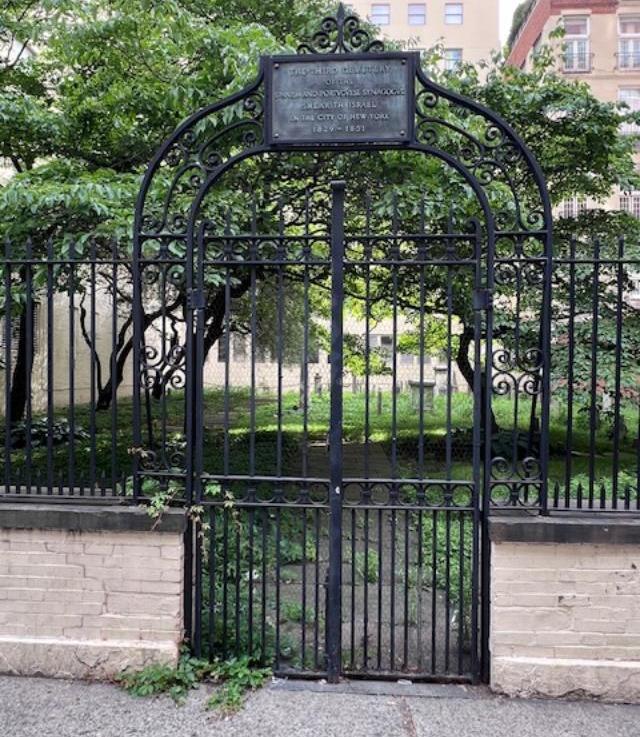
The front of the cemetery

When I was finishing my walk of the streets of Lower Chelsea, I came across this quiet and respectful cemetery in the middle of a busy neighborhood. This small graveyard was the third of series of moves that Shearith Israel made to bury their dead since the original cemetery open on the edge of what is today Chinatown.

Like its earlier counterparts, the cemetery is locked to visitors. So you can only admire it from a far. The graves date back to the early 1800’s.

The History of the cemetery:

(From the New York City Cemetery Project and Find a Grave)

This cemetery is located on 21st Street between 6th and 7th Avenues, in use 1829-1851. Shearith Israel, the first Jewish congregation in North America, was formed in 1654 by Spanish and Portuguese Jews who journeyed from Recife, Brazil, seeking refuge from the Inquisition.

The entrance to the cemetery is always locked

The sign for the cemetery

While New Amsterdam’s city fathers did not recognize freedom of worship, they respected the Jews’ right to their own consecrated burial ground. Shearith Israel purchased the cemetery plot on West 21st Street in 1829 for $2,750. It, too, was on the outskirts of the expanding city, which for sanitary reasons had prohibited interment below Grand Street after the yellow fever epidemic of 1822.

The view of the cemetery from the fence

In 1832 the congregation bought land extending the cemetery east to Sixth Avenue and south to 20th Street. Fifty years later the land was sold to Hugh O’Neal, who built a dry goods store there. Shearith Israel used the cemetery for burials until 1851.

The graves are from the early 1800’s

That year, New York City prohibited burials south of 86th Street and the establishment of any new cemeteries within city limits (Find a grave.com).

The side section of the cemetery and pathway

The view of the cemetery and its quiet respect to those buried there

The history of the Cemetery from the Congregation of Shearith Israel The Spanish & Portuguese Synagoge website:

According to rules of ritual purity, Cohanim are prohibited from coming into contact with the deceased (except for their immediate family.)  This means that ordinarily Cohanim cannot participate in any of the mitzvoth related to burial.  One particularly commendable priest, Mr. Lewis I. Cohen, realized that the consecration of a new and unused cemetery afforded him an opportunity to participate in a mitzvah usually off limits to Cohanim.  So it was Mr. Cohen who volunteered to dig the first grave for the first burial of the new cemetery in November 1829.

Some of the notable persons laid to rest in the 21st Street cemetery were Moses Levy Maduro Peixoto and Isaac Seixas, ministers of our congregation, and Harmon Hendricks, founder of one of America’s first great industrial companies and whose descendants are still members of our congregation today. Perhaps the most influential person to be buried in the 21st Street cemetery was the great Jewish diplomat and proto-Zionist, Mordecai Manual Noah.

In 1851, the city prohibited burial in Manhattan below 86th Street.  Rather than continue to look north (as Trinity Church did), the Congregation searched outside of Manhattan for its next burial ground.  Together with Bnai Jeshurun and Shaarei Tefila, the congregation purchased a large plot of land in Ridgewood, Queens.

Day Three Hundred and Fifty-Five Private Members Morning ‘Oasis in the City’ tour at the MoMA                                                                          August 9th, 2025

Day Three Hundred and Fifty-Five Private Members Morning ‘Oasis in the City’ tour at the MoMA August 9th, 2025

The entrance to the Museum of Modern Art 11West 53rd Street in New York City

https://www.moma.org/

My review on TripAdvisor:

https://www.tripadvisor.com/Attraction_Review-g60763-d105126-Reviews-The_Museum_of_Modern_Art_MoMA-New_York_City_New_York.html

The sign for the gardens

What I love about being a member of the museums in New York City is that there is an opportunity to see the museum in the early hours for private events. This morning I got up early to experience Manhattan on a spectacular sunny morning for the event ‘Oasis in the Garden’, a talk on the design, purpose and art in the MoMA outdoor garden.

We met inside the museum before the tour

Since the museum opened at 9:30am and there was no one at the museum at that hour, we had the outdoor garden to ourselves for almost an hour and a half.

The outdoor garden at the MoMA at 10:00am in the morning

Our tour guide led about fifteen of us through a history of the creation of the gardens, the purpose in the museum, its renovation in 2004 when I joined and the sculpture in the garden.

She also talked about taking her students here and that some of them wanted specific answers to what the art meant rather than forming their own opinion. It is funny how I see this in my own students.

What I liked about our tour group was that it was an older, very educated crowd of people who brought different opinions on how the art we were seeing should be thought about. From the time the artist created it to it modern interpretation by the ‘politically correct police’, I was amazed by the other members take on each piece of art.

The gardens are a refuge from the noise and crowds of the museum and the City

Video of the fountain

The Albert Giacometti ‘Talk Figure III’

Each piece of sculpture we touch upon was chosen specifically for the gardens and we talked about its place from when it was made to the modern interpretation and how they differ. Our first discussion was about the Albert Giacometti sculpture ‘Tall Figure III’. Some people talked about hunger and the stance on poverty. I asked if her students had different thoughts of the statue when it was made versus today.

She explained everything is seen differently through the artist’s eyes versus the modern I perception. It was hard to compare the two opinions without a debate. I thought today’s students needed to lighten up a little and stop taking art at face value and just enjoy it. The context of work over a hundred years ago is very different from how it can be looked at today.

We had time to talk and relax between art pieces and I swear the sound of the fountains relaxed me so much I almost feel asleep.

The fountains were so calming that morning

Video of the Japanese fountain

The August’s Rodin ‘St. John the Baptist Preaching’

We talked about the religious standpoint of the sculpture versus its place in modern society. I thought it was a naked guy hitchhiking. It’s funny how you see art.

The Jacques Lipchitz ‘Figure 1926-30’

With the ‘Figure’ many of the member talked about their interpretation of the modern take of Cubism and some members asked about whether these were arms and legs or something else.

The back of the gardens

The back of the gardens were so peaceful. I stood back from the tour so I could just hear the water rumble.

The Henry Moore sculpture ‘ The Family Group 1948-49

We discussed the modern family unit of today versus when the sculpture was created.

The back of the gardens

The Henri Matisse ‘The Back (III) 1913-16

The Aristide Maillol ‘The River’

We talked about the fall from God. One person said it looked like someone was tripping into the fountain. I thought that was clever.

The Jean Dubuffet ‘Study for Tower with Figures’

This was the last figure we discussed and we were asked as a group what was the first thing that came to our minds when we saw this. I said ‘Juxtaposed’. So much going on and a lot being said. We talked about children and their make up in the family unit. How they change things.

I have to say that I saw the art in a different light this morning. It was interesting to hear the artist’s interpretation versus what members thoughts were on what the art meant. I thought it was a good take away when we finished the tour. There were so many interesting opinions on the art. What I liked was the weather was so amazing, and it was so nice to be outside.

The garden as the public entered later that morning

I know I got a lot out of the tour. It’s always nice to see different points of view of what the art means and how we interpret it. This is why it is fun to be a member of the MoMA. It’s nice to see the museum when it is quiet and you can just take your time.

The gardens really are an “Oasis in the City”.