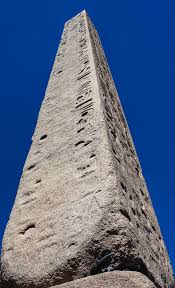
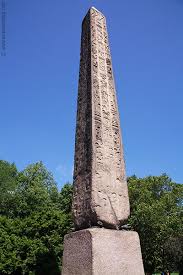
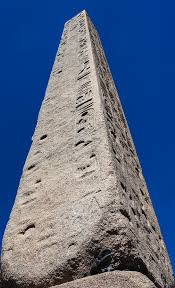
I always admire Cleopatra’s Needle whenever I am touring Central Park West after an afternoon at the Metropolitan Museum of Art. The obelisk sits in back of the Metropolitan Museum of Art on Fifth Avenue and the pathways behind the museum lead to the site.
It is one of the few place where you can see hieroglyphics up close unless you are in Egypt and the sad part is that the natural surroundings are wearing them out. Still it is one of the most interesting outside artifacts that Manhattan and New York City has on display. Take time to observe all four sides of the obelisk and observe the writings.
Sometimes I think the tourists miss this interesting artifact and how it got here from Egypt.
The History of Cleopatra’s Needle:
(From Wiki)
Cleopatra’s Needle (obelisk) was erected in Central Park, just west of the Metropolitan Museum of Art on February 22, 1881. It was secured in May 1877 by Judge Elbert E. Farnam, the then United State Consul General of Cairo as a gift from the Khedive for the United States remaining friendly neutral as the European powers, France and Britain, maneuvered to secure political control of the Egyptian government.
The obelisk is a twin of the obelisk given to London at the same time and come from the ancient city of Alexandria. The name is a misnomer as they have no relationship with the Ptolemaic Queen Cleopatra VII of Egypt and were already over a thousand years old in her lifetime (please see the Wiki link attached to the blog for more information on the obelisk).
The obelisk is free to the public and can be seen by taking the path behind the Metropolitan Museum of Art. It is open all day.
Franklin D. Roosevelt Four Freedoms Park is the first memorial dedicated to the president in his home state of New York. Located on the southern tip of Roosevelt Island in New York City, it is the last work of Louis I. Kahn, an iconic architect of the 20th Century.
The interior of the park facing Roosevelt Island
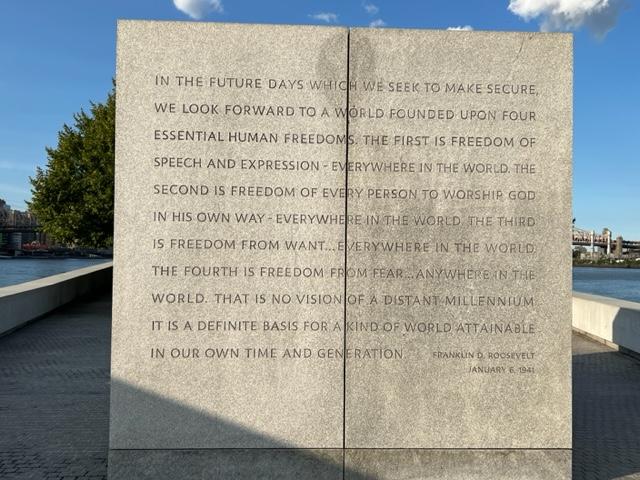
The memorial, which opened to the public in October 2012, celebrates the four freedoms, as pronounced in President Roosevelt’s famous January 6, 1941 State of the Union address: freedom of speech and expression, freedom of worship, freedom of want and freedom from fear. This has been prominently etched on the memorial.
FDR Four Freedoms Park from a view
Our Mission:
As steward of this civic space, Four Freedoms Park Conservancy advances President Roosevelt’s legacy and inspires; educates and engages the public in the ideals of the four freedoms. The Conservancy does this by:
*Safeguarding the memorial as a space for inspired use.
*Fostering community and understanding.
*Igniting conversation about human rights and freedoms today.
The Four Freedoms that were the goals of the President
On January 6, 1941, President Franklin D. Roosevelt delivered his eighth State of the Union address, now known as the Four Freedoms speech. In his address, Roosevelt presented his vision for the world, “a world attainable in our own time and generation,” and founded upon four essential human freedoms: freedom of speech and expression, freedom of worship, freedom from want and freedom from fear.
Roosevelt’s call for human rights has created a lasting legacy worldwide, forming the basis for the Universal Declaration of Human Rights adopted by the United Nations in 1948.
For a richer of FDR, his legacy and the four freedoms, visit fdr4freedoms.org.
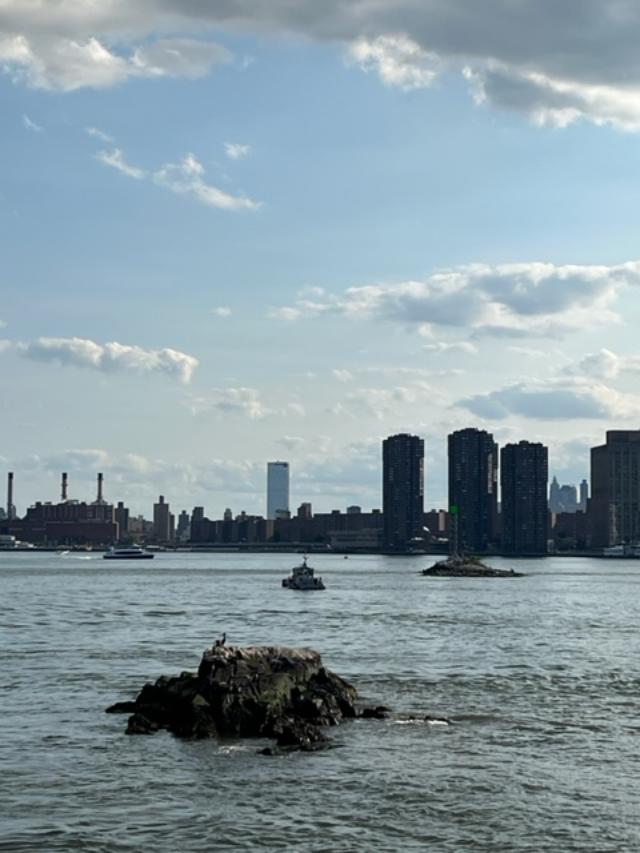
The view from Roosevelt Island of the Upper East Side
Franklin D. Roosevelt Island: A History
Originally called Minnahannock by Native Americans and Varkins Island by the Dutch settlers, the island was acquired by the Blackwell family in the 1600’s, who renamed the land Blackwell Island. The Blackwells lived on and farmed it before selling it to the City of New York in 1828 for $30,000.
In the 19th Century, the island was used by the City for institutional facilities, including the Workhouse, Penitentiary, Lunatic Asylum, City Hospital and City Home and given the name Welfare Island in 1921. These institutions served the City until the 1930’s., before gradually being relocated to areas more easily accessible to public transportation.
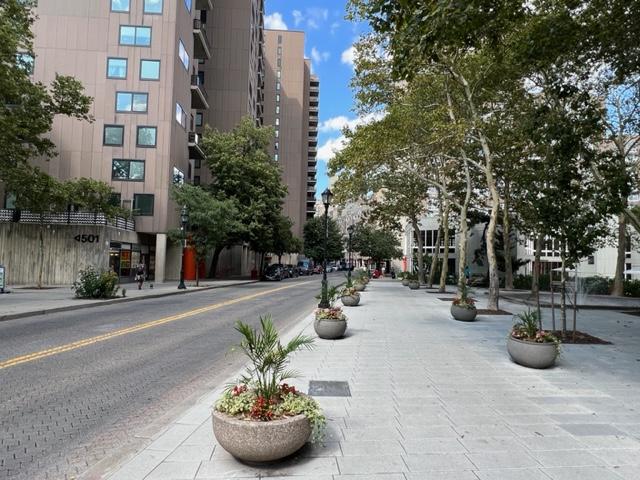
The Roosevelt Island Main Street
In 1969, this two-mile island was lease to the State of New York for 99 years. Under New York State’s Urban Development Corporation, Welfare Island became a beacon for the affordable housing movement within the City. Construction of the Island community was completed in 1975 with four housing developments. In 1973, the island was renamed Franklin D. Roosevelt Island.
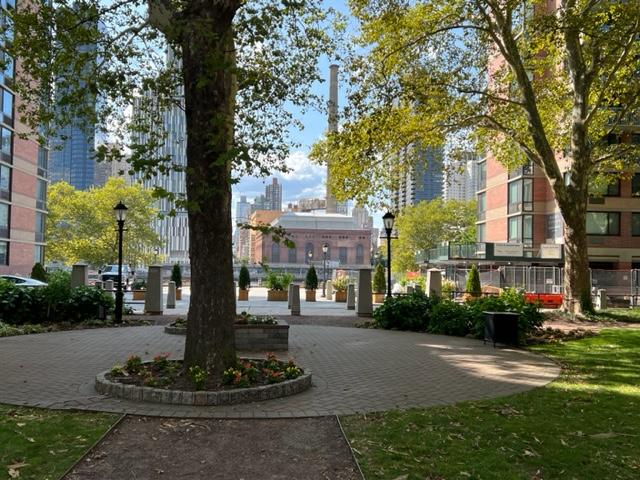
The Gardens in the Main Street of Roosevelt Island
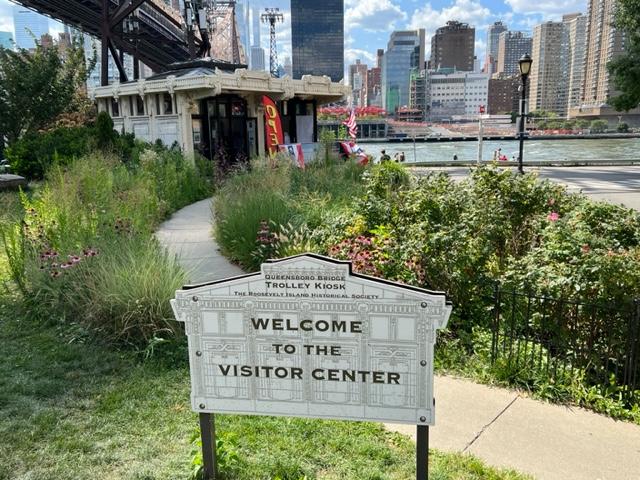
Today, Roosevelt Island has a small town feel with approximately 20 buildings and 14,00 residents. The island is home to six landmarked structures and proudly houses Four Freedoms Park, one of the original visions for the Island. To learn more, visit the Roosevelt Island Visitor Center at the Tram Plaza.
The Visitors Center at Roosevelt Island
(Judith Berdy, President, The Roosevelt Island Visitor Center)
A Memorial to Franklin D. Roosevelt
Nearly 40 years before the Park opened its gates to the public, Louis I. Kahn presented his vision for what would become Franklin D. Roosevelt Four Freedoms Park. It was a simple idea. “I had this thought,” Kahn said. “that a memorial should be a room and a garden.”
The FDR Hope Memorial
This was 1973. Less than a year later, Khan had died; Governor Nelson Rockefeller, who had announced the project with Mayor John Lindsay, became Vice President of the country and the City of New York neared bankruptcy.
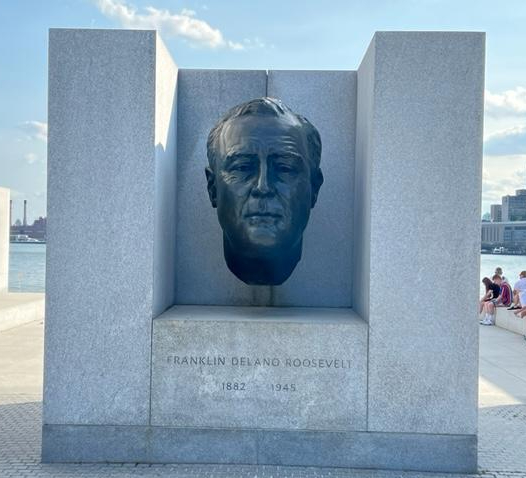
The bust of President Roosevelt
The future of the memorial seemed a fragile and tenuous dream. Yet, through the power and determination of a small but dedicated group, nearly four decades after Kahn completed his architectural design, Four Freedoms Park became the place he envisioned. In 2012, following 30 months of construction, the Park opened to the public. The Park is operated and maintained by Four Freedoms Park Conservancy in partnership with New York State Parks.
(Part of the New York State of Opportunity: Parks, Recreation and Historic Preservation)
I admired the FDR Hope Memorial in which the statue of the President reaches to a young girl with a disability herself. The statue offers encouragement to those with a disability and the power to persevere.
The statue was designed by artist and sculptor Meredith Bergmann, who herself was inspired by the photos and stories of the President (FDR Hope Memorial).
Artist Meredith Bergmann (Cooper Union Alumni Picture)
Ms. Bergmann is an American born artist with BFA from The Cooper Union School of Art and attended Parsons School of Design and Wesleyan University. Her public works explore history, social justice, human rights and disabilities (Author’s bio).
Franklin D. Roosevelt Four Points Freedom Park is the first memorial dedicated to the president in his home state of New York. Located at the southern tip of Roosevelt Island in New York City. It is the last work of Louis I. Kahn, an iconic architect of the 20th century.
FDR Four Freedoms Park
The memorial, which opened to the public in October 2012, celebrates the four freedoms, as pronounced in President Roosevelt’s famous January 6, 1941, State of the Union address: freedom of speech and expression, freedom of worship, freedom from want and freedom from fear.
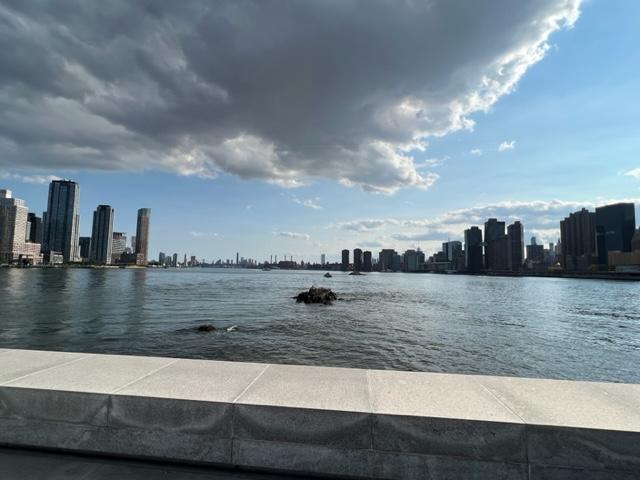
The skyline from the southern part of the park.
Disclaimer: this information was taken from the NYS Parks, Recreation and Historic Preservation pamphlet. Please call the park or email to check on opening times when in season.
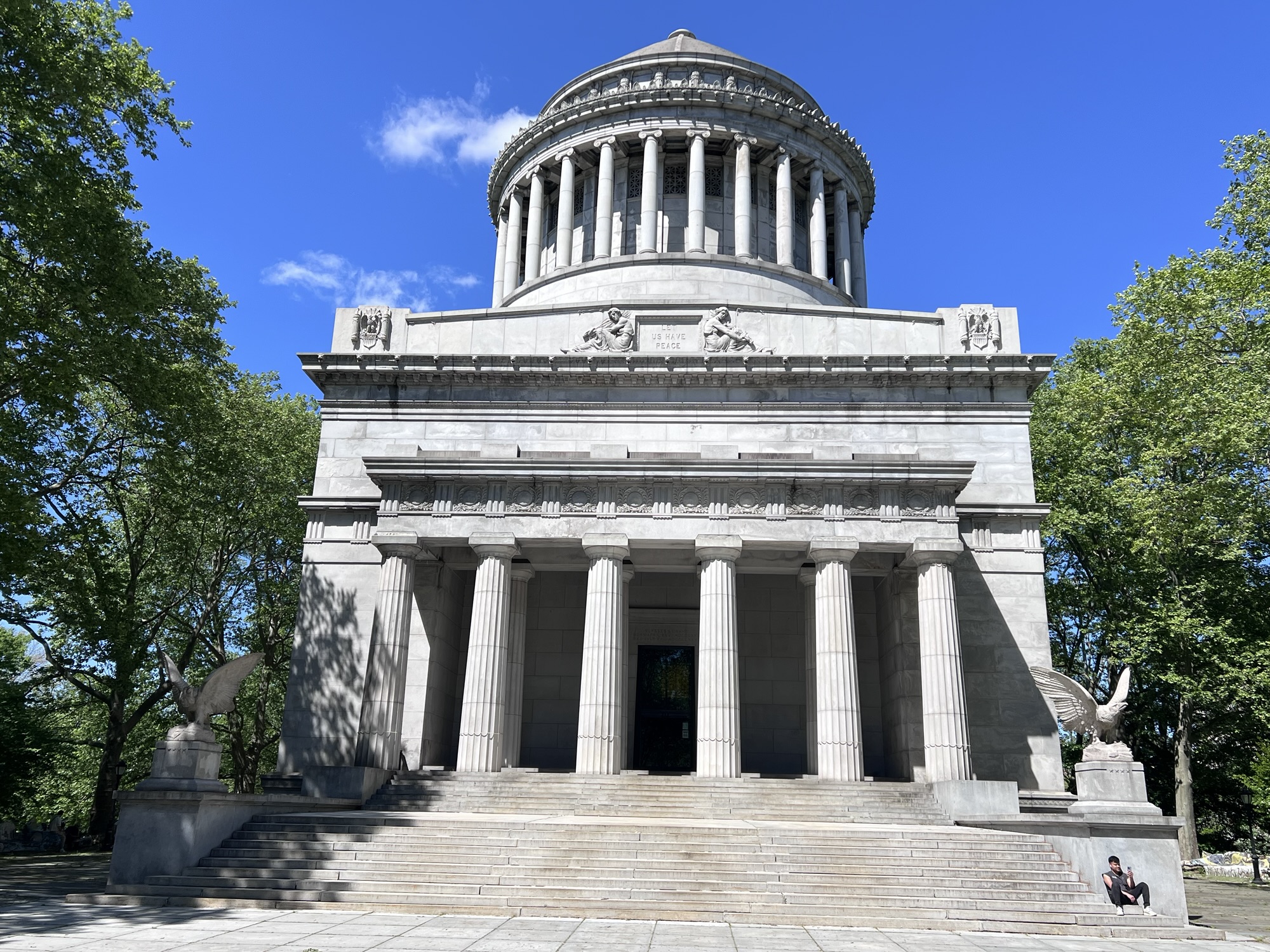
The Grant Memorial was designed by architect John Duncan. Rising to an imposing 150 feet from the bluff overlooking the Hudson River, it took 12 years to build and remains the largest mausoleum in North America. Its great size was meant to express the profound admiration Americans felt for the Civil War commander and was propelled to the forefront of America’s pantheon of heroes and declared the equal of George Washington and Abraham Lincoln.
Spearheaded by the Grant Monument Association, some 90,000 people from around the United States and the world donated over $600,000 to construct the memorial, the largest public fundraising effort up to that time.
The statuary in front of the building
Initial fundraising was led by Richard T. Greener, first black graduate of Harvard and a Grant supporter who credited the general with his advancement. Many African Americans contributed to the building fund.
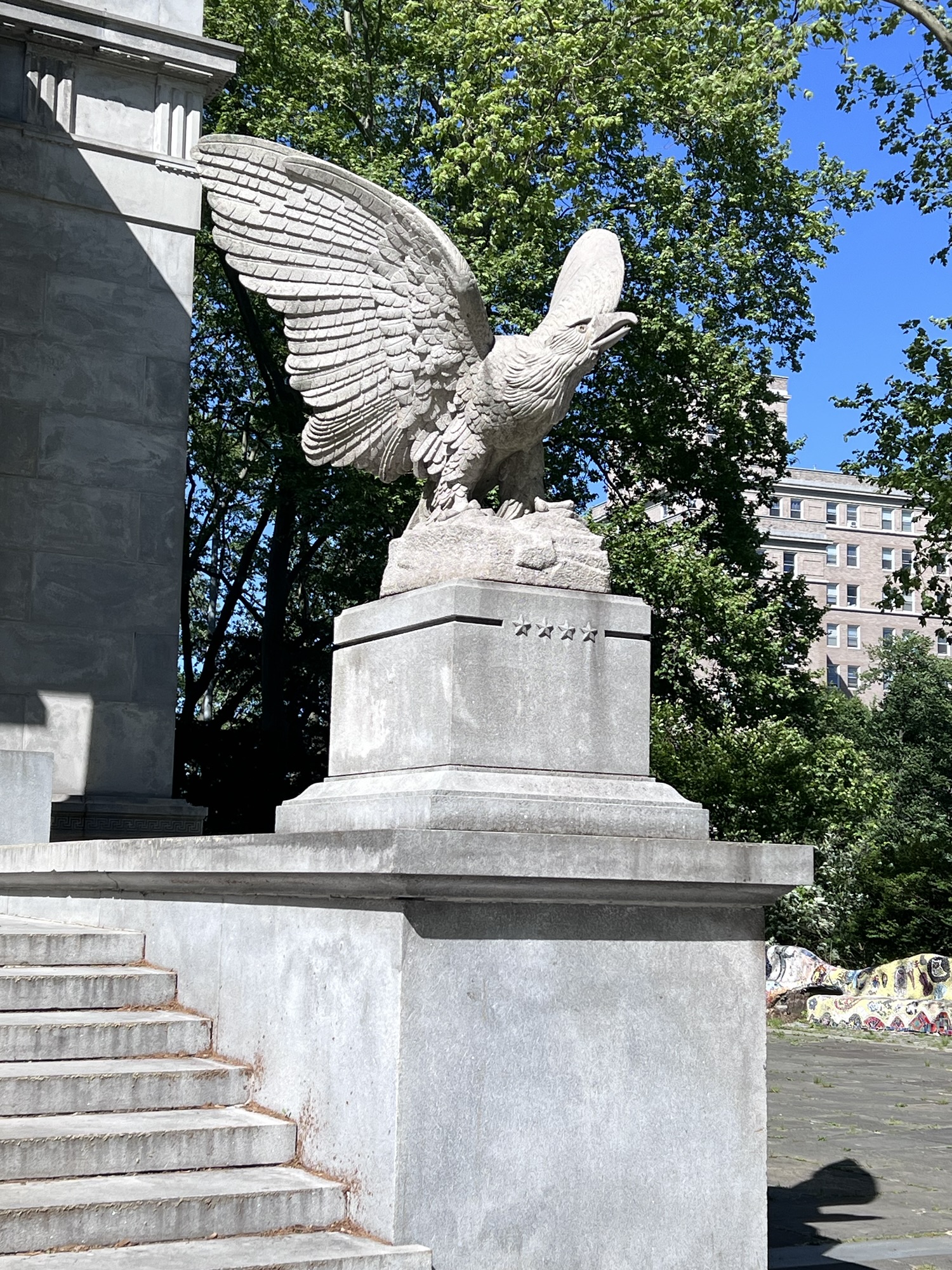
The eagles that flank the front of the tomb
The memorial is open from 9:00am-5:00pm daily. For information or to arrange for group visits call (212) 666-1640.
The entrance to the Mausoleum
Among the most Revered of Men:
This large classically proportioned mausoleum honors the Civil War general who saved the nation from dissolution and the president who worked to usher in a new era of peace and equality for all Americans.
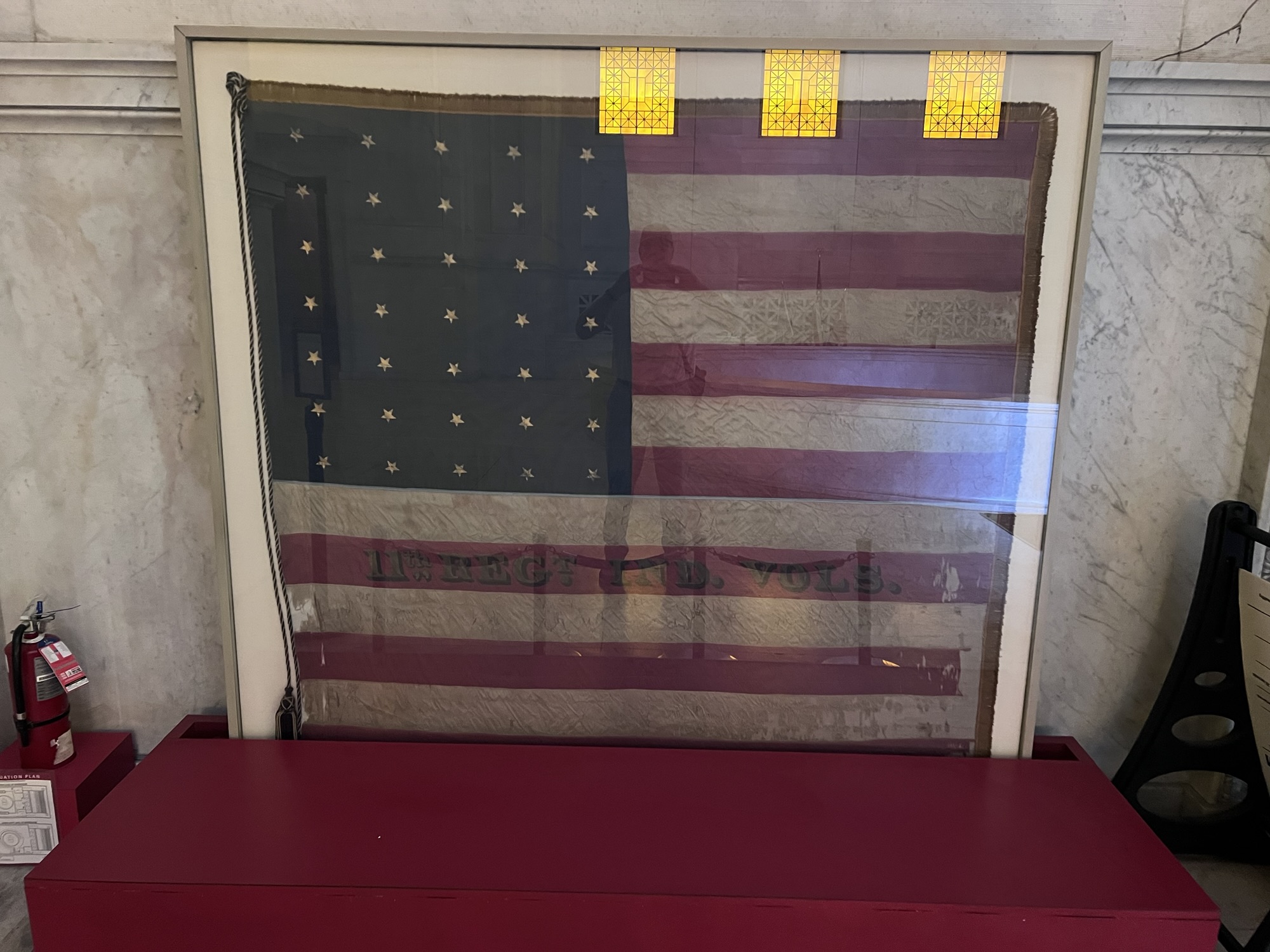
The Civil War era flag being displayed inside
Sign for the flag display in the Western trophy case
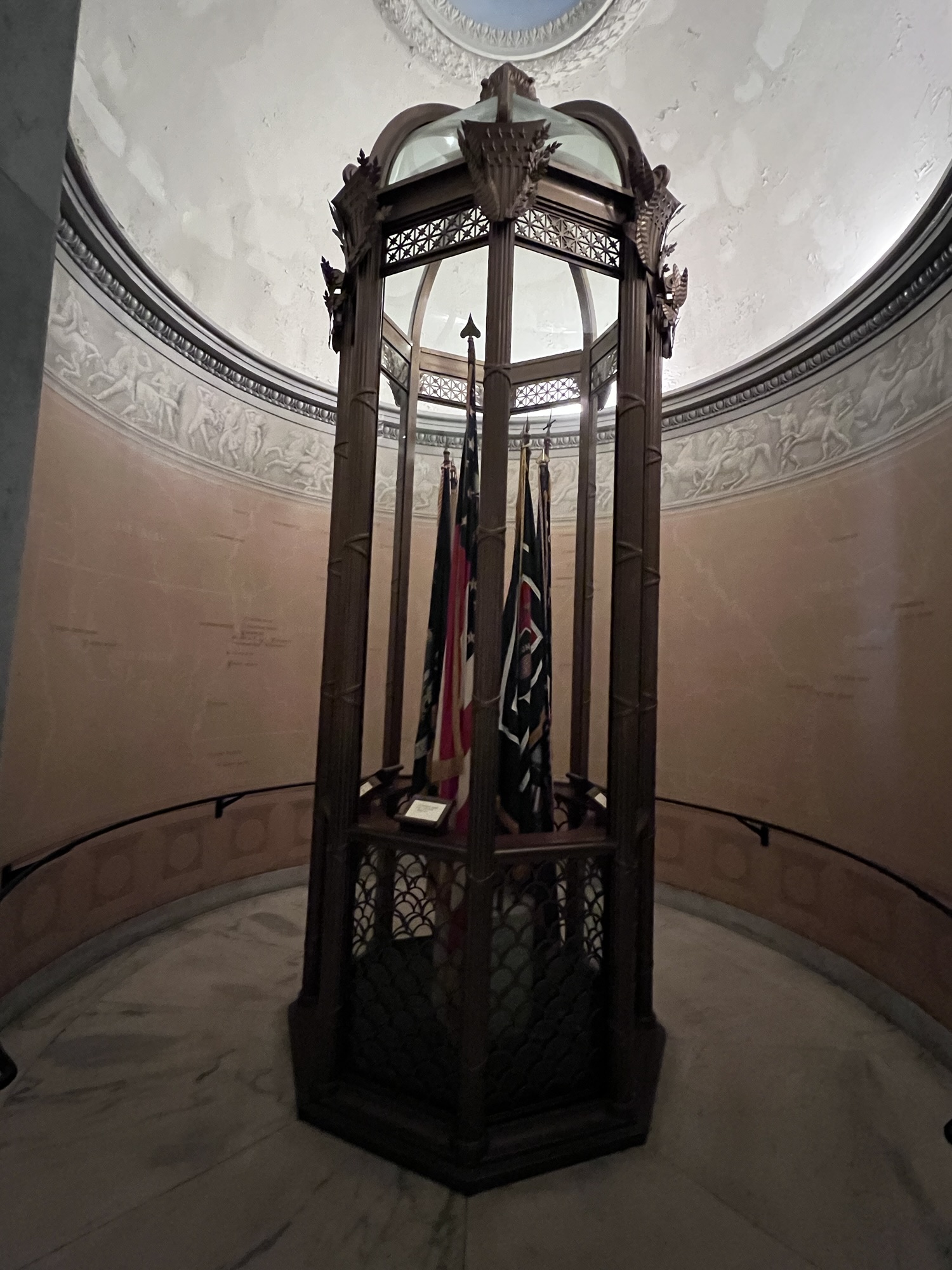
The flags in the Western trophy case
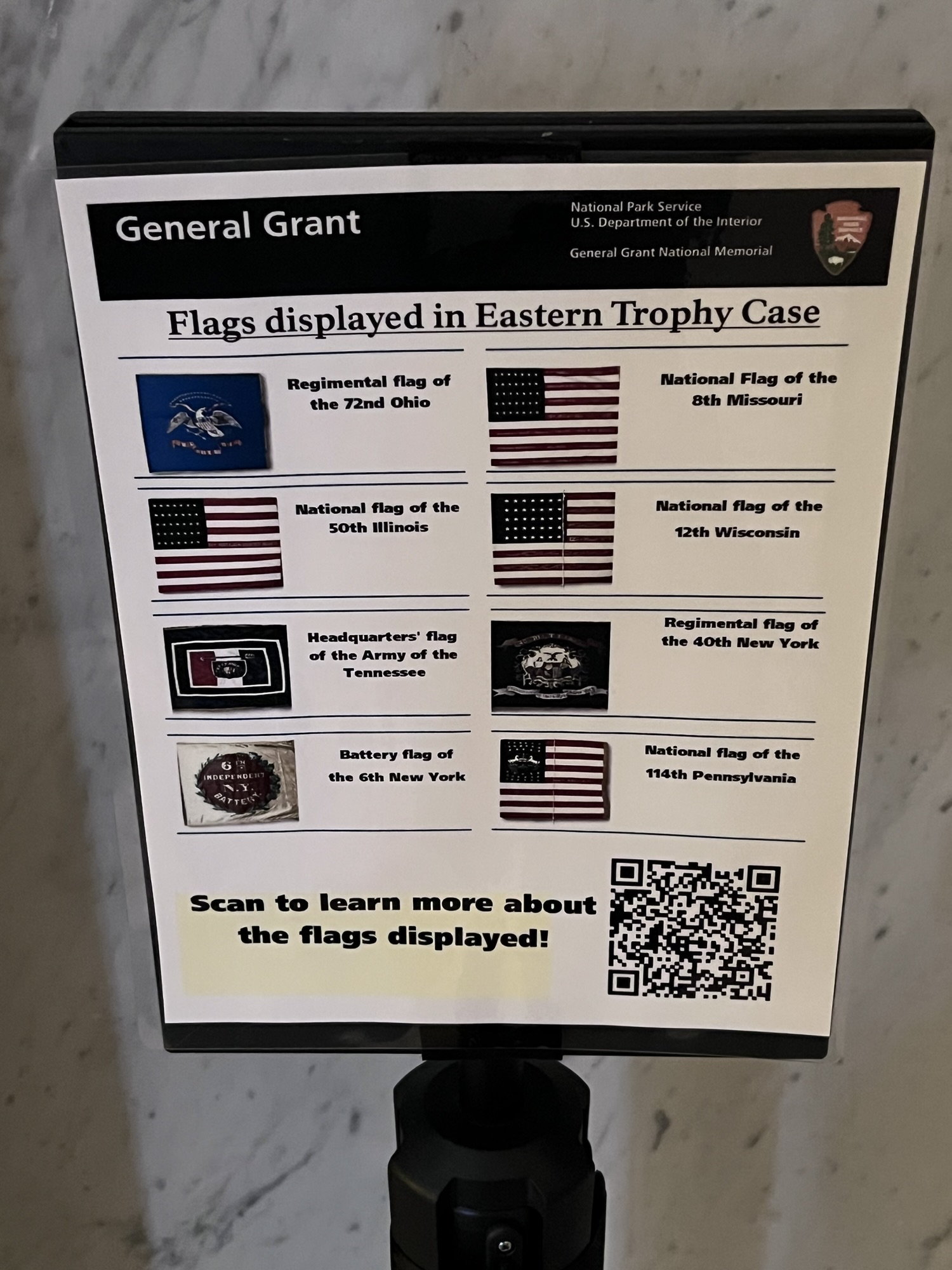
The sign for the flags in the Eastern Case
The flags in the Eastern case display
Ulysses S. Grant, a plain-spoken unassuming man who studiously avoided pomp and ceremony had volunteered his services for the Union effort when the Civil War erupted in 1861.
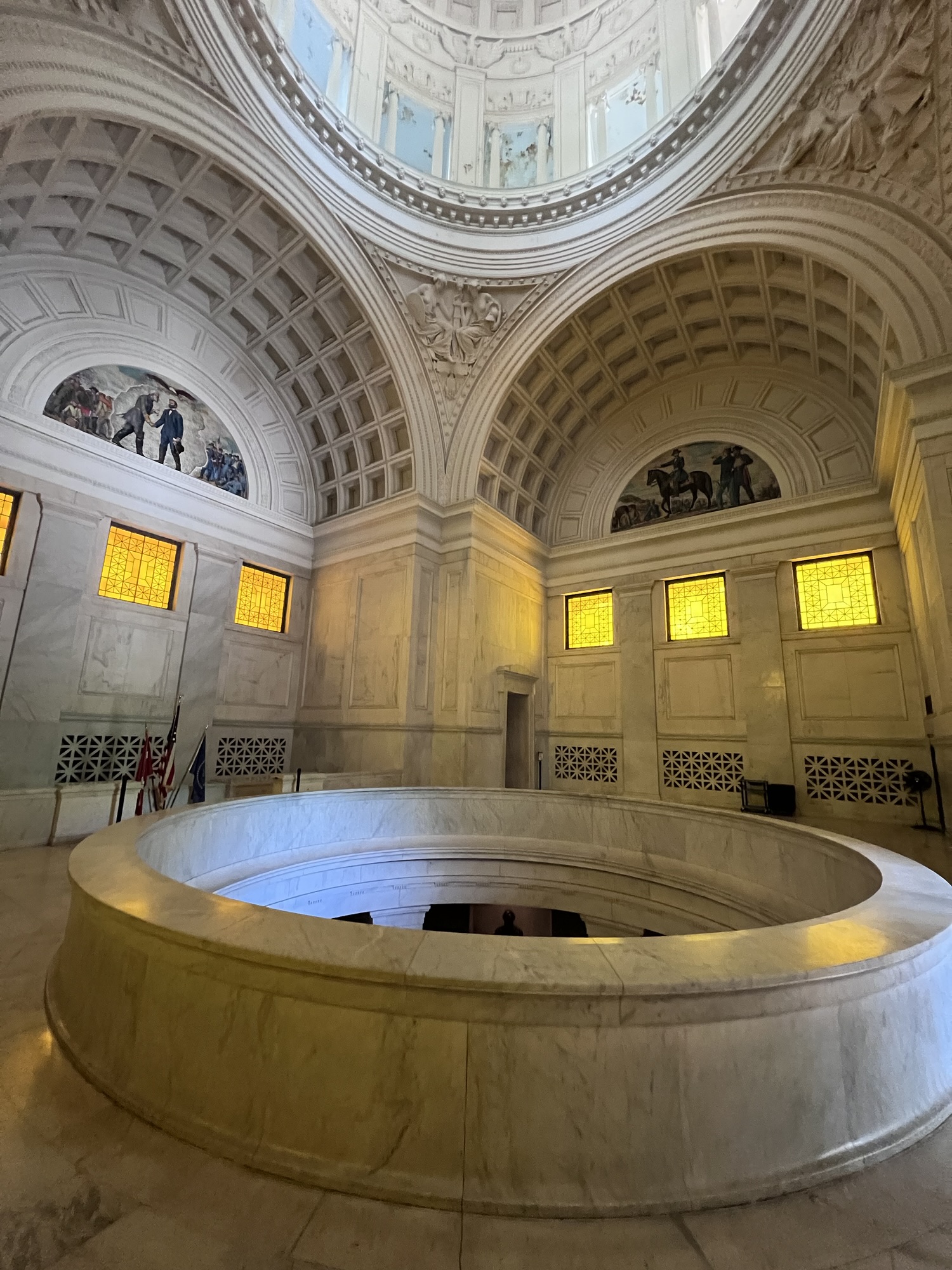
The details inside the rotunda
In doing what he considered simply his duty, he emerged after four years of fighting as one of the great military leaders in history. Aggressiveness, speed, tenacity and the ability to adjust his plans in the face of unexpected impediments all helped to bring him victory.
General Ulysses S. Grant
As great as he was in war, Grant showed magnanimity and compassion in peace. He granted humane and generous terms when General Robert E. Lee surrendered to him on April 9, 1865 at Appomattox Court House. As president he pardoned many former Confederate leaders at the same time insisting on protecting the full political equality of former slaves.
The friezes of General Grant with General Lee
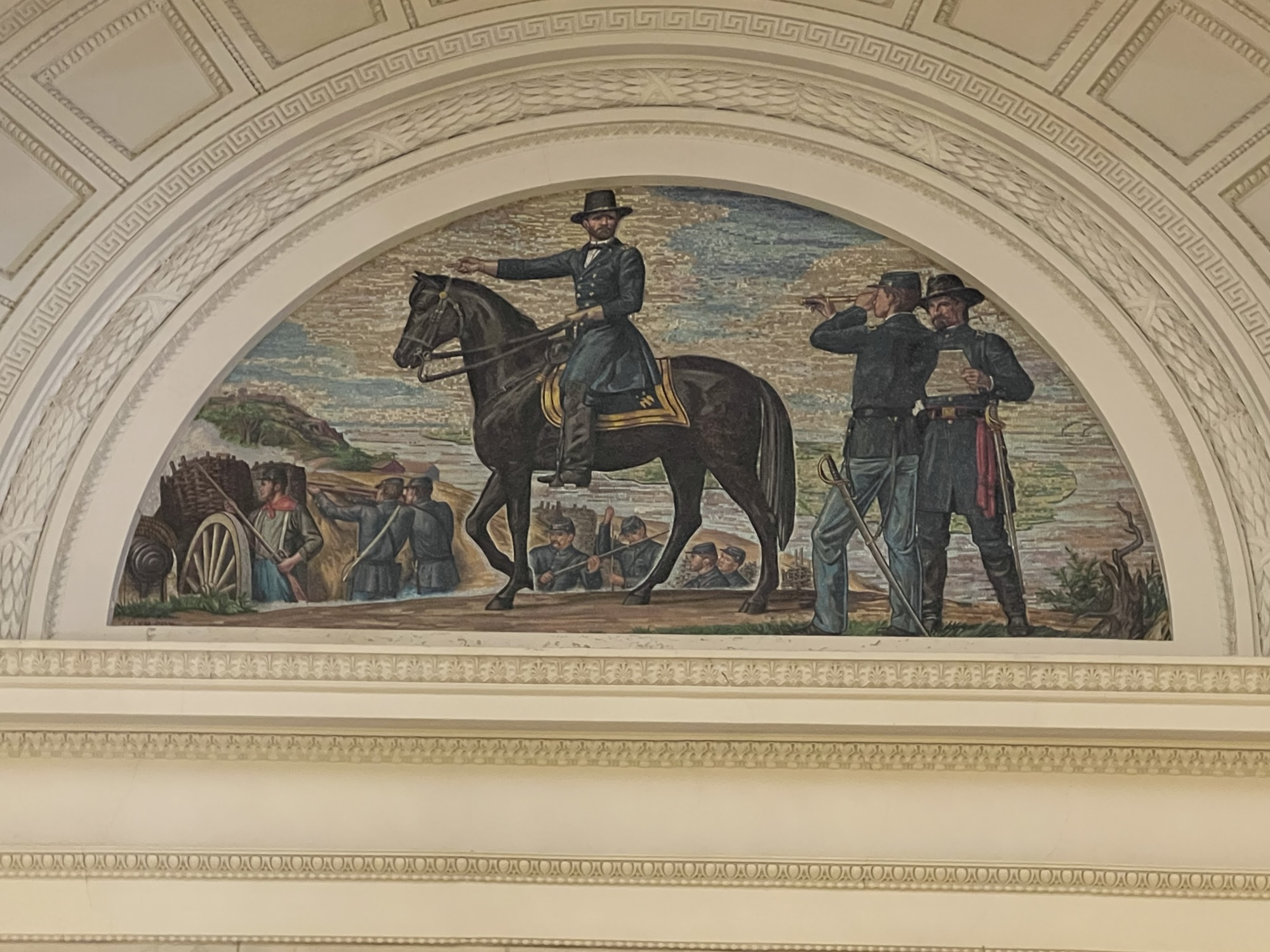
The General leading his troops
The General leading his troops
He was also concerned that American Indian tribes be treated with dignity and respect. His fundamental desire for peace was reflected in his efforts to solve international disputes by arbitration rather than by threat of war. At the time of his death in 1885. Grant was universally respected by northerners and southerners alike.
The main floor of the tomb
The main floor of the tomb
Because of Grant’s status as a national hero, most Americans assumed he would be buried in Washington DC but his family preferred New York City. Grant himself had no strong preference; his only desire was for his wife, Julia to be buried next to him.
The funeral on August 8, 1885 was one of the most spectacular events New York had ever seen. Buildings all over the city were draped in black. An estimated one million people crowded sidewalks, filled windows, stood on rooftops and climbed trees and telephone poles for a view of the procession, which stretched seven miles and took five hours to pass.
The resting place for General Grant and his wife
Grant’s remains were placed in a temporary vault until an appropriate memorial could be funded and built. On April 27, 1897, the 75th anniversary of Grant’s birth, thousands of people, including diplomats from 26 countries, attended the dedication ceremony for the completed memorial.
The President’s tomb is surrounded by the busts of his contemporaries:
The bust of General Sheridan
The bust of General McPherson
The bust of General Sherman
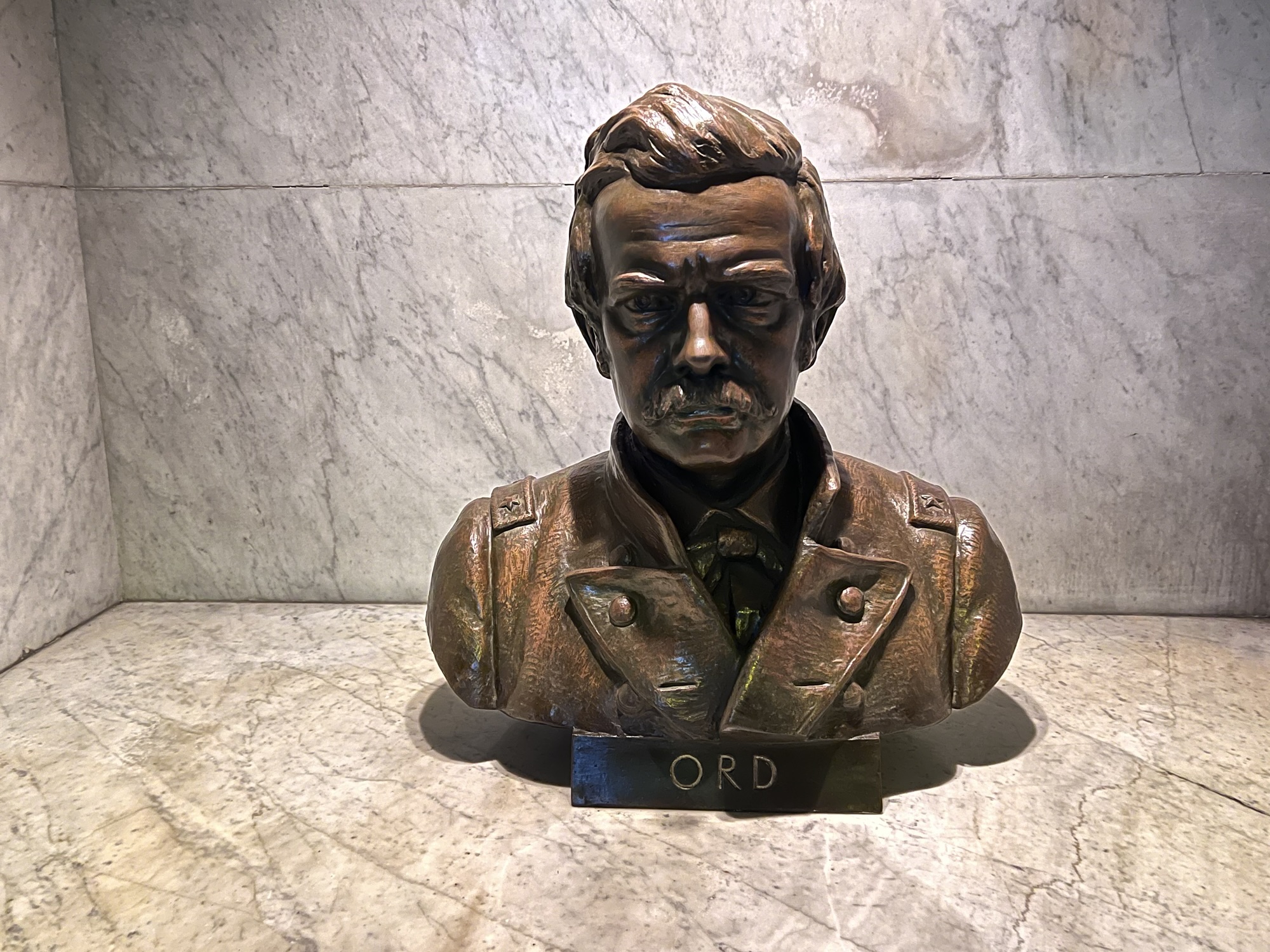
The bust of General Ord
The bust of General Thomas
The dedication parade, led by President William McKinley, was almost as large as Grant’s funeral parade. Julia Grant reviewed the ceremony sitting next to President McKinley. She was laid by her husband’s side after her death in 1902.
The Tomb of General Grant and his wife
The tomb is located in Riverside Park near Columbia University and across the street from Sakura Park, where Japanese Cherry trees are in bloom every Spring.
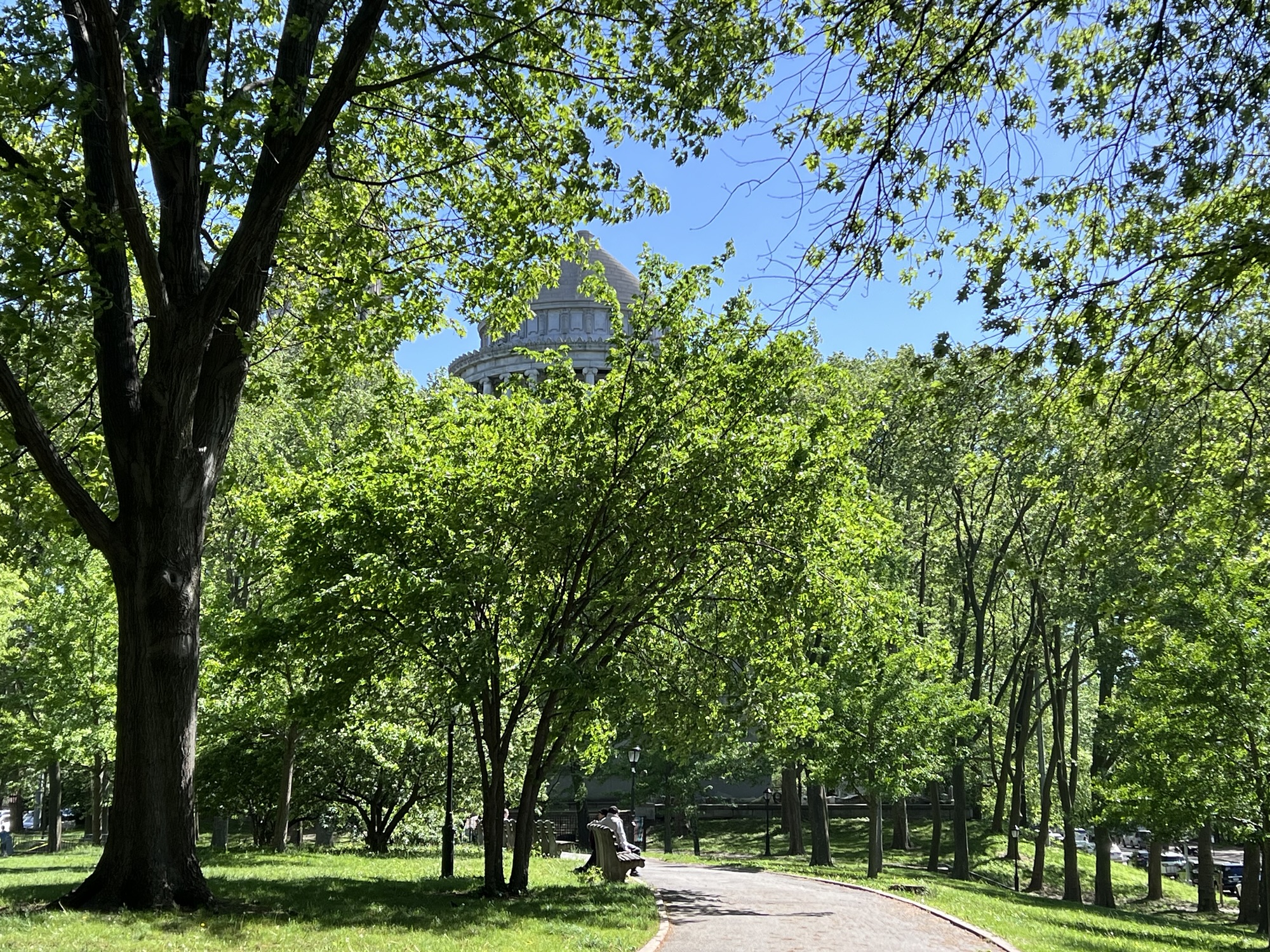
The park outside the Memorial
The Memorial with a park view
The Memorial from the park
The Memorial from Claremont Park
Claremont Park behind the tomb is beautiful in the Spring
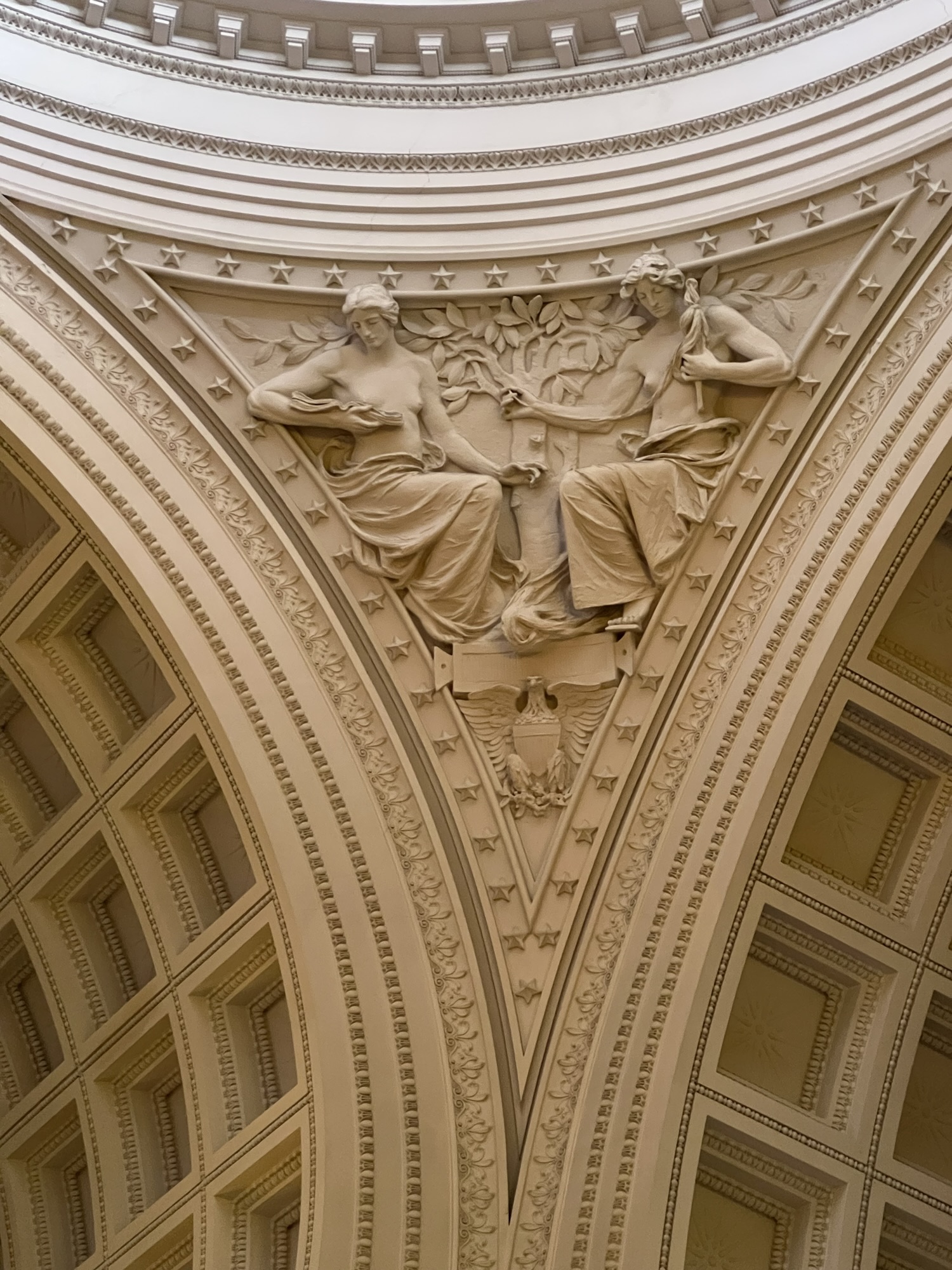
The artwork surrounding the tomb
The artwork surrounding the tomb
The artwork surrounding the tomb
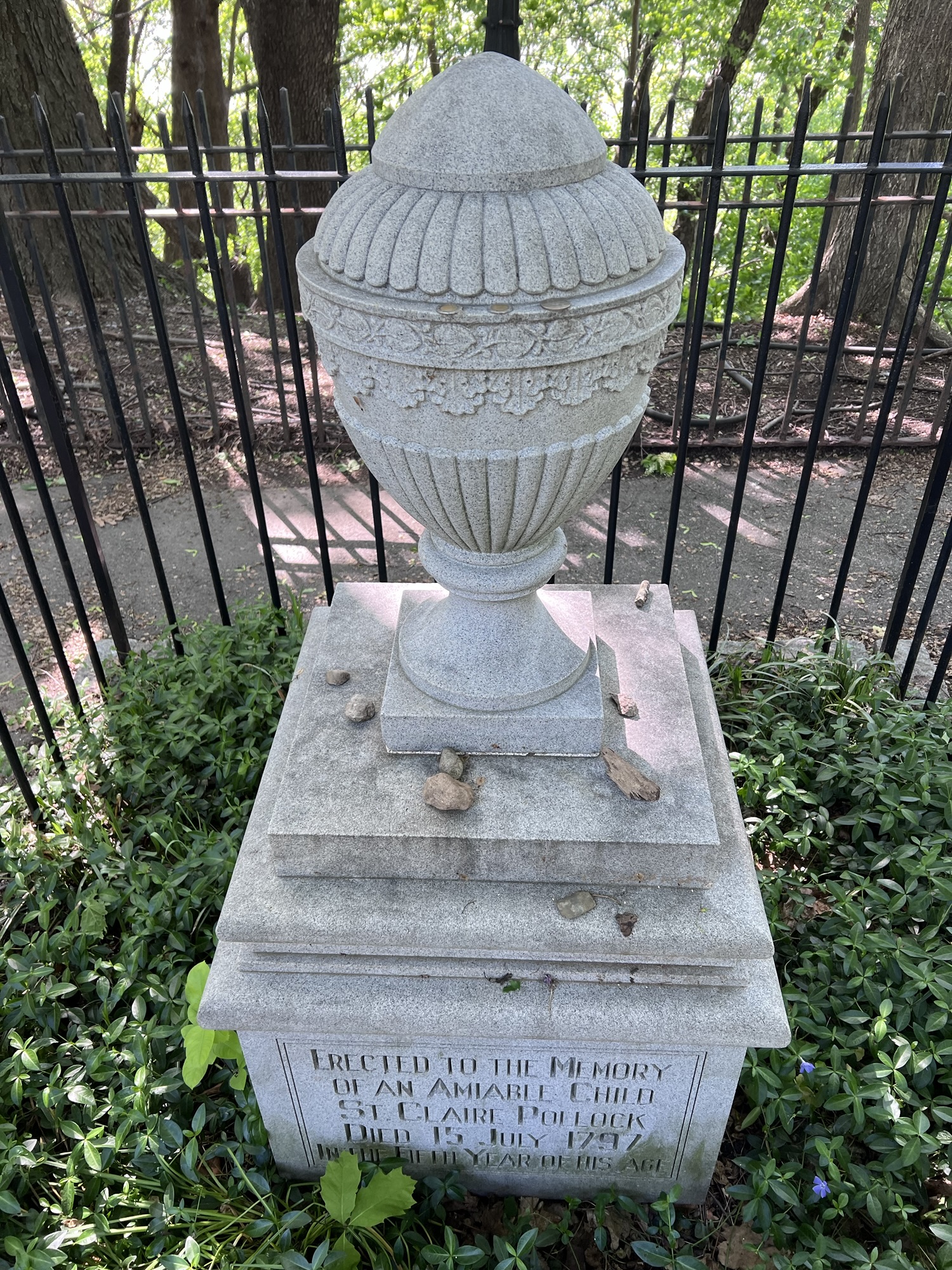
Near the tomb is the memorial to the ‘Amicable Child’ and that should not be missed as well.
The Tomb of the Amiable Child right down the path
The little park the tomb sits in
Disclaimer: This information was taken directly from the National Park Service pamphlet. This is a very interesting National Memorial and should not be missed.
The gift shop is across the street
The theater is in the next room where you can watch the film
It is opened at certain times of the week, so please look for the posted hours. (The memorial is open from 9:00am to 5:00pm daily. For more information or to arrange for groups visits, please call (212) 666-1640).
Located in Inwood Hill Park and part of the NYC Parks System. The rock was dedicated on February 2, 1954 by the Peter Minuet Post #1247, American Legion.
I came across the Shorakkopoch Rock, the noted spot that Peter Minuet has been said to have bought the island of Manhattan from the Indians. No one is too sure where the spot of the ‘transaction’ took place as some feel it may have been closer to downtown by the Bowling Green, where the original Dutch settlement was located or maybe he traveled to them, we will never know. What we do know is that he said the transaction took place under a tulip tree and in this spot used to be a tulip tree that was over 220 years old before it died.
The Shorakkopoch Rock at the edge of the pathways leading into Inwood Park
The plaque on the the rock reads:
Shorakkopoch: According to legend, on this site of the rock, principal Manhattan Indian Village, Peter Minuet in 1626, purchased Manhattan Island for trinkets and beads them worth about 60 guilders. This boulder also marks the spot where a tulip tree (Liriodendron Tulipifera) grew to a height of 165 feet and a girth of 20 feet. It was until its death in 1932 at the age of 220 years old, the oldest living link with the Reckgawawang Indians, who lived here. Dedicated as part of New York City’s 300th Anniversary celebration by the Peter Minuet Post 1247 American Legion 1954.
As you stroll down the path from this spot in the park and continue along the path, you will come across Shorakkopoch Rock, a boulder marking the site where Peter Minuit bought the island of Manhattan from the native Reckgawawang Indians for about 60 guilders of trinkets and beads in 1626.
The boulder marks the spot of a giant 280-year-old 165-foot tulip tree once stood until it died in 1932. Legend has it that this is the spot of one of the greatest real estate investments took place. It is such an important part of Manhattan history that most tourists miss.
For more information on the rock, please contact the Art & Antiquities at (212) 360-8143.
Disclaimer: This information was taken form the NYC Parks Department website.
Please take time out when visiting Manhattan to see this important piece of the city’s history as the city itself was founded on this very site.