Category: Historic Sites of New York State

The Coney Island Museum                                 1208 Surf Avenue                                       Brooklyn, NY 11224

The Coney Island Museum 1208 Surf Avenue Brooklyn, NY 11224

The Coney Island Museum

1208 Surf Avenue

Brooklyn, NY  11224

(718) 372-5159

Open:

Summer: (June-Labor Day Weekend) Monday- Saturday 12:00pm-6:00pm/ Sunday 2:00pm-6:00pm

Fall/Winter/Spring: (September-May) Monday-Saturday 12:00pm-6:00pm/Sunday 2:00pm-6:00pm

Admission: $5.00 Adults/Members Free/Residents, Seniors & Children under 12 $3.00

http://www.coneyisland.com

https://www.coneyisland.com/event/coney-island-museum

TripAdvisor Review:

https://www.tripadvisor.com/Attraction_Review-g60827-d555621-Reviews-The_Coney_Island_Museum-Brooklyn_New_York.html?m=19905

The Coney Island Museum at 1208 Surf Avenue

The Coney Island Museum is an interesting place specializing in the history of Coney Island from the time of the Native American settlement to modern history. The history covers from the Dutch visiting the island for pleasure to the mid-1800’s and after the Civil War when time off and weekend pleasures became the rage.

The stretch of Surf Avenue where the museum is located.

The museum covers the history of the three great amusement parks, Steeplechase, Luna and Dreamland when they were all in their heyday until they all burned down or closed. This history includes the rise of Astroland and the current Luna Park.

The History of the Luxury Hotels of Coney Island

The History of the Amusement Parks:

Three great amusement parks dominated Coney Island in the early part of the last century with roots in the old Sea Lion Park and with the innovations and hope of Astroland and the rise of Luna Park again.

Sea Lion Park

Steeplechase Park

Luna Park

Dreamland Park

The rise of Astroland and the new Luna Park are showing signs of the rebirth of Coney Island.

The Astroland Exhibit at the museum

There is loads of memorabilia from all ages and all sorts of novelties from the rides such as the hall of mirrors, bumper cars and old cars and carts. Postcards from different eras also give an interesting look of the past so take time to look at each one.

The back galleries on the old amusement parks.

The history of some of the famous restaurants such as Child’s, Nathan’s and Feldman’s are discussed and their impact on the cuisine of Coney Island from the days of the clams to the revolution of the current hot dog.

The Child’s Restaurant artwork from the building.

The Feldman doors from the original restaurant

Some of the exhibitions cover the development of the area as a pleasure seeking attraction and as a luxury resort for wearied New Yorkers. What started as hotel resort and racing capital developed into an amusement area for the thrill seeking and for those who were looking for an escape for fun. It shows the growth and enhancement of the City reflected into the development of Coney Island itself mirroring what is happening in the City currently.

The amusements and bumper cars in the main gallery

The Bumper Car exhibit

Coney Island amusements

If you are interested in the history of Coney Island, then the Coney Island Museum is a nice was to spend the afternoon. There are tours daily and don’t forget to visit the Sideshow downstairs, which shows on the hour. The fee is $5.00.

The Mission of Coney Island USA:

Coney Island USA exists to defend the honor of America popular culture through innovative exhibitions and performances. Presenting and producing exciting new works, our approach is rooted in mass culture and the traditions of P.T. Barnum, dime museums, burlesque, circus sideshows, vaudeville and Coney Island itself. Preserving and championing a set of uniquely American visual and performing art  forms, we seek to create an international forum for cultural preservation and discourse and where Coney Island represents these impulses, we strive to make it once again a center for live art and entrepreneurial spirit (CIUSA).

The ‘Reinventing Coney Island’ exhibit

Coney Island USA operates a multi-arts center in a landmark building in the heart of Coney Island. We produce and present programming in three unique venues: the Coney Island Museum, Sideshows by the Seashore and the Shooting Gallery/Arts Annex. Serving both New York City and an international community that includes visitors to Coney Island and enthusiasts of various cultural forms, our signature activities include the Mermaid Parade, the Coney Island Circus Sideshow, the Coney Island Museum, Coney Island Film Festival and new theatrical work (CIUSA).

The Coney Island Wax Museum exhibit

The Wax Museum exhibit

In existence since 1980, Coney Island USA has developed and produces a number of different programs including some of New York City’s best loved summer programming, such as the Mermaid Parade and the Coney Island Circus Sideshow. Coney Island USA also operates the Coney Island Museum and produces Ask the Experts, Burlesque at the Beach, the Coney Island Hot Rod Festival, Congress of Curious Peoples, Funhouse Philosophers, Magic at Coney, The Mermaid Ball and the Coney Island Sideshow School. Coney Island USA also produces the Coney Island Film Festival in association with indiefilmpage.com (CIUSA).

The Mangel’s family history in the amusement industry.

The display of amusement offerings from the Mangel’s family company.

The Museum’s video:

Video on the Coney Island Museum

Disclaimer: This information on Coney Island USA was taken directly from their website. Don’t miss this wonderful piece of Coney Island history in one building and plan this as part of your trip to Coney Island along with the Cyclone, Nathan’s, the Wonder Wheel and the beach.

Also part of the museum is the Coney island Pinball Museum with classic pinball games to play and the Coney Island Museum bar, a great place to relax and have a drink. There is also the Coney Island Freak Show that is part of the museum and has several shows a day.

The Coney Island Pinball Museum

The Coney Island Pinball Museum is part of the Coney Island Museum

Some of the pinball machines in the museum.

The Coney Island Museum bar-the perfect place for a drink.
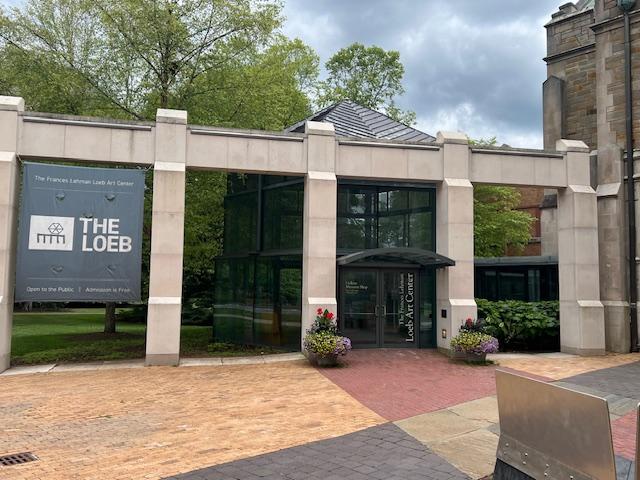
The Frances Lehman Loeb Art Center/Vassar College                                                                  124 Raymond Avenue                                             Poughkeepsie, NY 12604

The Frances Lehman Loeb Art Center/Vassar College 124 Raymond Avenue Poughkeepsie, NY 12604

The Frances Lehman Loeb Art Center/Vassar College

124 Raymond Avenue

Poughkeepsie, NY  12604

(845) 437-5632

fllac.vassar.edu

https://fllac.vassar.edu/

blogs.vassar.edu/fllaceducation

Open: Sunday 1:00pm-5:00pm/Monday Closed/Tuesday-Saturday 10:00am-5:00pm

TripAdvisor Review:

https://www.tripadvisor.com/Attraction_Review-g48443-d2419076-Reviews-Frances_Lehman_Loeb_Art_Center_at_Vassar_College-Poughkeepsie_New_York.html?m=19905

The Loeb Museum at Vassar College

Visiting The Frances Lehman Loeb Art Center is a wonderful afternoon out. Its best to park in the North Campus parking lot. You can walk the campus on a nice day down to the museum and enjoy the campus architecture. The campus is straight out of an Ivy League handbook. The museum is located by the front gate of the campus, and you can tour the whole museum in about two hours comfortably.

Take time to walk the Art Garden next to it and they have a really nice little downtown off North Campus to wonder around the restaurants and shops. See my review of Pizzeria Bacio Ristorante at 7 Collegeview Avenue near North Campus. The food is excellent!

The Art Sculpture Garden at the Loeb Museum

The Frances Lehman Loeb Art Center opened in 1864 as the Vassar College Art Gallery. The founding members of the college’s Board of Trustees understand art to be an integral part of the academic experience. Vassar therefor became the first college or university in the United States to include an art museum as part of its original plan. Since its inception, the museum has remained a significant part of the Vassar experience.

The Contemporary Galleries at the Loeb Museum

The Frances Lehman Loeb Art Center is a cultural destination both for the Vassar College community and for visitors from the region and around the world who are attracted by the breadth and quality of the art on view. It is unique to the region in its combination of stellar temporary exhibitions and an ongoing installation of the permanent collection that features art through the ages, from ancient Egypt to the present.

Ancient Art gallery with items from Egypt, Greece and Rome.

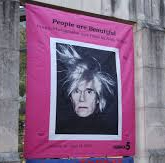
The collection began with an initial gift from Matthew Vassar of 3,800 works of art, including an important group of Hudson River School paintings and British watercolors. Today, the Art Center’s collection has grown to over 18,000 works of art that span antiquity to the present. Notable holdings include the Warburg Collection of Old Master prints and a wide range of works by major European and American twentieth-century painters, including Georgia O’Keeffe, Pablo Picasso, Jackson Pollock, Joan Miro, Mark Rothko and Andy Warhol.

The Andy Warhol exhibition was being shown on my first trip to the museum

https://www.vassar.edu/theloeb/publications/people-are-beautiful-prints-photographs-and-films-andy-warhol

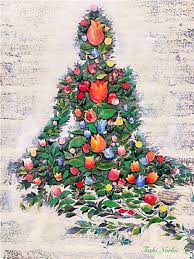
I went to the museum recently before the closing of the “Beyond the Threshold: Tibetan Contemporary Art” and “Mastery and Merit: Art from the Jack Shear Collection” and got to view the galleries before they closed for the evening. Admittingly I am no expert of Buddhist art, but the Jack Shear collection gave you a perspective on the religion.  The art portrayed Buddha in many forms as Divine. The contemporary works were very interesting as it delved into what modern Tibetans all over the world see in the form of current happenings, playing off other famous works of art (such as the modern version of the Mona Lisa) and a contemporary take on the Buddha. 

The modern take on Buddha from a contemporary perspective

https://www.vassar.edu/theloeb/exhibitions/beyond-threshold-tibetan-contemporary-art

The shows revolve on a continual basis and there are shows being mounted at various times of the year.

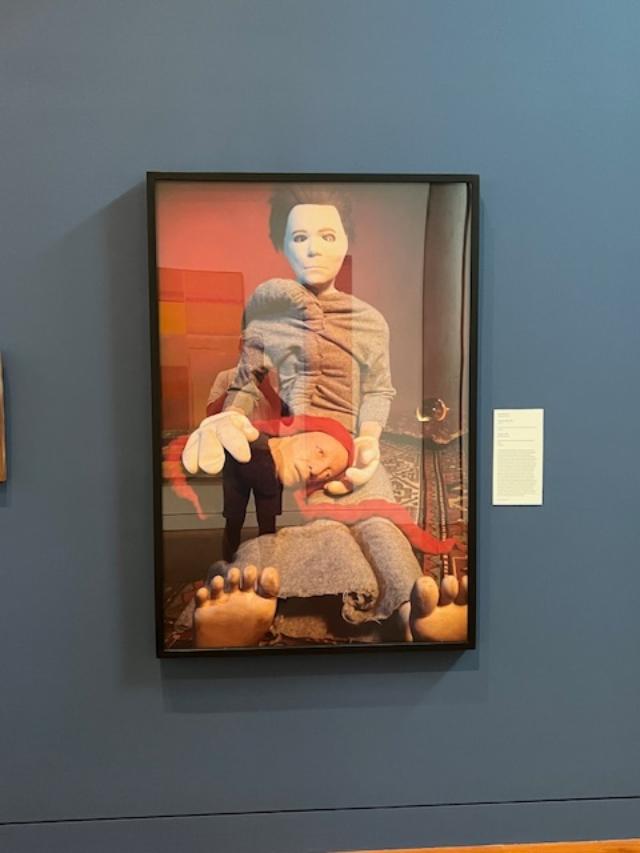
Cindy Sherman Art in the collection

The Art Center is housed in a building designed by Cesar Pelli and completed in 1993. The Hildegarde Krause Baker, class of 1911, Sculpture Garden includes works by Frank Stella, Gaston Lachaise and Anthony Caro, among others.

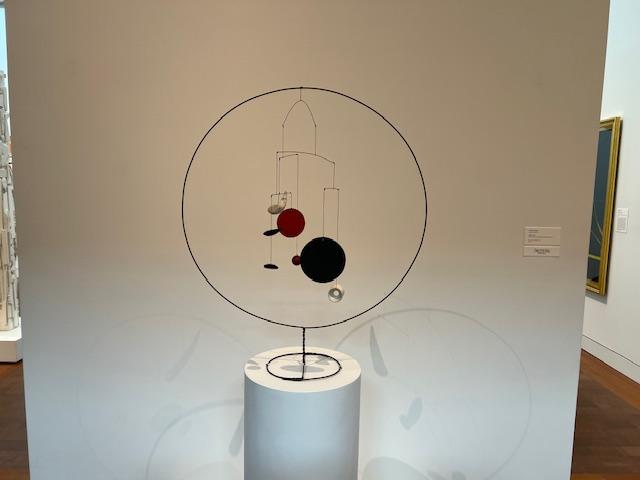
The Alexander Calder work “Mobile” in the collection

Tourism information on the museum:

There are tours for School Groups, Adult Groups, Individuals and Self-Guided for individuals. Please call the museum for more information on this. A centerpiece of the Loeb’s programming is Late Night at the Loeb, held weekly on Thursday evenings. Programming for Late Night is spearheaded by the Loeb Student Committee who organize activities and offerings for students and the general public.

There are creative happens every week. You can also join as a member and there are opportunities to volunteer at the museum.  To learn more about both of these, please call (845) 437-5237.

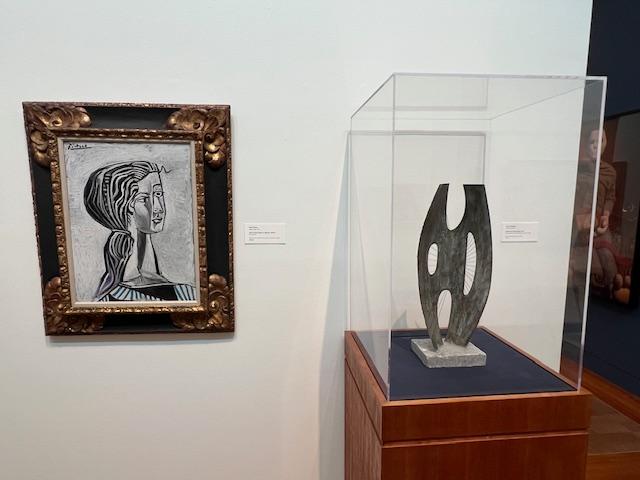
The famous Picasso is to the left

Disclaimer: This information about the museum came from the museum pamphlets. Please call the above numbers for more information or email them. It is a great afternoon out to just tour the museum and then walk around the campus on a nice day.

The “Stokers of the Earth” painting by Roberto Matta

“Stokers of the Earth” sign

Lighthouse Park Roosevelt Island                        900 Main Street                                                   New York, NY 10044

Lighthouse Park Roosevelt Island 900 Main Street New York, NY 10044

Lighthouse Park

Roosevelt Island

900 Main Street

New York, NY  10044

(212) 832-4540

https://rioc.ny.gov/179/The-Lighthouse

https://www.nycgo.com/venues/roosevelt-island-lighthouse-park

Open: Sunday-Saturday 7:00am-9:00pm

My review on TripAdvisor:

https://www.tripadvisor.com/Attraction_Review-g60763-d565031-Reviews-Roosevelt_Island-New_York_City_New_York.html

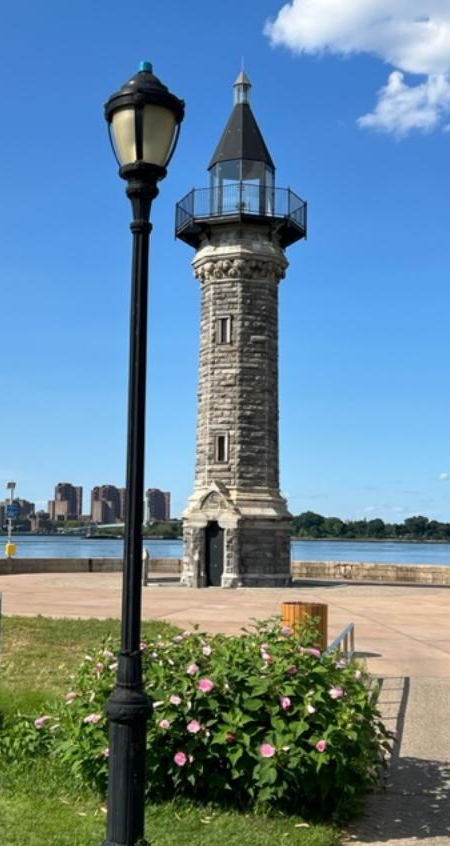
Lighthouse Park on Roosevelt Island

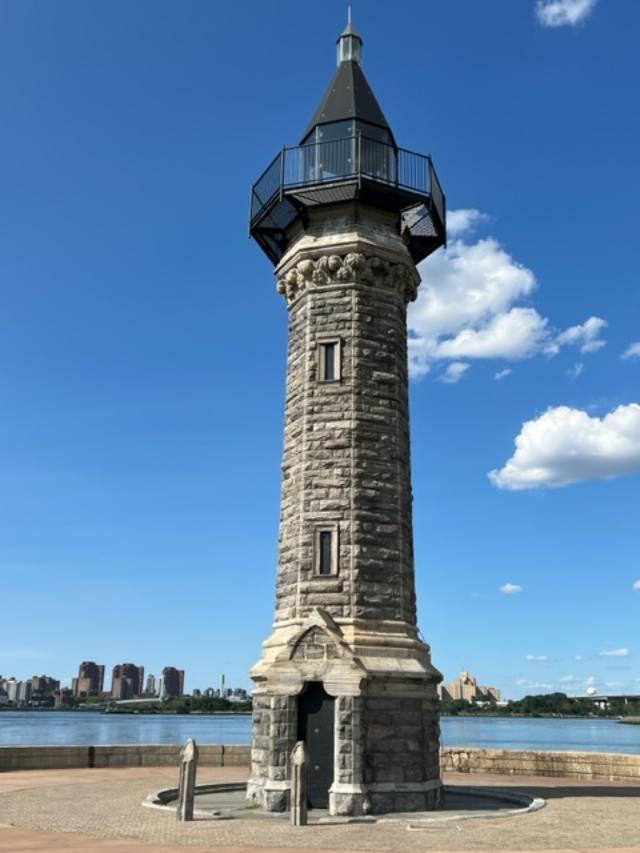
The Roosevelt Island Lighthouse is a stone lighthouse built by New York City in 1872. It is at the northeast tip of Roosevelt Island in the East River in Lighthouse Park. It was named to the National Register of Historic Places on March 16th, 1972, and was designated a New York City Landmark on March 23rd, 1976 (Wiki).

Blackwell Island, which was called Welfare Island from 1921 to 1973 and is now known as Roosevelt Island was purchased by New York City in 1828. Various facilities on the island were built including a penitentiary, almshouse, city hospital, the New York Lunatic Asylum and the Smallpox Hospital (some of these buildings still exist).

In 1872, the City of New York built a lighthouse. The supervising architect was James Renwick Jr., who also designed several other buildings on the island for the Charities and Correction Board as well as more famous works such has St. Patrick’s Cathedral. (Wiki)

Legends abound about the construction of the lighthouse. Two names, John McCarthy and Thomas Maxey, are associated with the various legends. The 1870 report of the warden of the lunatic asylum that an industrious patient had built a seawall near the asylum that had reclaimed the land. The legends indicate that he had incorporated Civil War cannons.

The park in the distance on Roosevelt Island

The legend indicates that the builder was bribed with bogus money to demolish the fort for the construction of the lighthouse. For many years, a saying was inscribed on a stone near the lighthouse:

This is the work

Was done by

John McCarthy

Who built the Light

House from the bottom to the

Top All ye who do pass by may

Pray for his soul when he dies.

Lighthouse Park from Carl Schulz Park on Manhattan Island

The lighthouse was operated by the City instead of the U.S. Lighthouse Board. In its 1893 annual report, the Lighthouse Board generally praised the operations of Blackwell Island Lighthouse but indicated that the Board has unfairly criticized because of the City’s occasional failure to keep the light in operation. The Board advocated banning private lights. The 1917 U.S. Coast Pilot indicated that there was a private light at the north end of the island. (Wiki)

The light was operated until about 1940. In the 1970’s, the lighthouse was partially restored. The restoration was completed in 1998. (Wiki)

The lighthouse is approximately 50 feet (15m) tall. It is constructed of gray gneiss, rough ashlar that was quarried on the island by inmates from the penitentiary. It has an octagonal base and an octagonal shaft. There is an entrance on the south side under a projecting gable and a pointed Gothic arch. Two south-facing slit windows in the shaft light the interior. At the top of the shaft there is a band of ornamented corbels below the gallery, which is surrounded by an iron railing. The lantern is octagonal with a shallow conical roof. An 1893 photograph and a 1903 movie show that it probably had a much taller, steeper conical cap when it was built. The optics were provided by the U.S. Lighthouse Board (Wiki).

Lighthouse Park in the winter months

Lighthouse Park is located on the northernmost section of Roosevelt Island and can be seen from Carl Schurz Park. On a beautiful sunny day, it is a very picturesque view from the park.

Lighthouse Park from Carl Schulz Park

The sculpture “The Girl Puzzle”:

Next to the lighthouse is a monument of faces dedicated to Nellie Bly and to women who have faced hardship entitled “The Girl Puzzle”. The sculpture was dedicated to journalist Elizabeth Cochrane Seaman, pen name Nellie Bly, who wrote about the abuses in the mental asylum on what was known as Mental Island at the time. She wrote the full report “Ten Days in the Mad House” on the abuses of patients.

“Girl Puzzle” by artist Amanda Matthews (Artist Bio)

https://en.wikipedia.org/wiki/The_Girl_Puzzle

https://www.thegirlpuzzle.com/

Artist Amanda Matthews (Artist Bio)

https://en.wikipedia.org/wiki/Amanda_Matthews

https://www.prometheusart.com/

The piece was created by American born artist Amanda Matthews. Ms. Matthews graduated with a BA in Studio Art from the University of Louisville and had studied abroad in Europe. She is known for her work that honors women and celebrates diversity and inclusion (Wiki).

The history sign on Nellie Bly

Each sculpture is a interpretation on Nellie Bly. It really is an interesting sculpture.

The Girl Puzzle One:

The Girl Puzzle Two:

The Girl Puzzle Three:

The Girl Puzzle Four:

The Girl Puzzle Five:

Disclaimer: this information was taken from Wikipedia site and the Roosevelt Island Historical Society. This little ‘gem’ of a park can be seen by walking to the most northern part of Roosevelt Island by way of the Main Street which runs through the island.

Cleopatra’s Needle Central Park @ East 81st Street New York, NY 10028

Cleopatra’s Needle

Central Park at East 81st Street (behind the Metropolitan Museum of Art)

New York, NY  10028

https://www.centralparknyc.org/attractions/obelisk

https://en.wikipedia.org/wiki/Cleopatra%27s_Needle_(New_York_City)

Open: When Central Park is open from dawn to dusk depending on the season

TripAdvisor Review:

https://www.tripadvisor.com/Attraction_Review-g60763-d1959031-Reviews-Cleopatra_s_Needle-New_York_City_New_York.html?m=1990

Cleopatra's Needle III

Cleopatra’s Needle

https://www.centralparknyc.org/locations/obelisk

https://en.wikipedia.org/wiki/Cleopatra%27s_Needle_(New_York_City)

I always admire Cleopatra’s Needle whenever I am touring Central Park West after an afternoon at the Metropolitan Museum of Art. The obelisk sits in back of the Metropolitan Museum of Art on Fifth Avenue and the pathways behind the museum lead to the site.

It is one of the few place where you can see hieroglyphics up close unless you are in Egypt and the sad part is that the natural surroundings are wearing them out. Still it is one of the most interesting outside artifacts that Manhattan and New York City has on display. Take time to observe all four sides of the obelisk and observe the writings.

Sometimes I think the tourists miss this interesting artifact and how it got here from Egypt.

The History of Cleopatra’s Needle:

(From Wiki)

Cleopatra’s Needle (obelisk) was erected in Central Park, just west of the Metropolitan Museum of Art on February 22, 1881. It was secured in May 1877 by Judge Elbert E. Farnam, the then United State Consul General of Cairo as a gift from the Khedive for the United States remaining friendly neutral as the European powers, France and Britain, maneuvered to secure political control of the Egyptian government.

The obelisk is a twin of the obelisk given to London at the same time and come from the ancient city of Alexandria. The name is a misnomer as they have no relationship with the Ptolemaic Queen Cleopatra VII of Egypt and were already over a thousand years old in her lifetime (please see the Wiki link attached to the blog for more information on the obelisk).

Cleopatra's Needle II

The obelisk is free to the public and can be seen by taking the path behind the Metropolitan Museum of Art. It is open all day.