Category: Exploring Saugerties NY

Saugerties Historical Society                                119 Main Street                                        Saugerties, NY 12477

Saugerties Historical Society 119 Main Street Saugerties, NY 12477

Saugerties Historical Society

119 Main Street

Saugerties, NY 12477

(845) 246-9529

https://www.saugertieshistoricalsociety.com/

Open: (May – October) Sundays 1:00pm – 4:00pm/Monday-Friday Closed/Saturdays 11:00am – 2:00pm,

Admission: Free

My review on TripAdvisor:

https://www.tripadvisor.com/ShowUserReviews-g48564-d27065896-r960657174-Saugerties_Historical_Society-Saugerties_Catskill_Region_New_York.html?m=19905

I finally got a chance to visit the Saugerties Historical Society and see the inside of this historical home. The Society has done a nice job displaying their historical artifacts and carefully decorating the house to reflex the period.
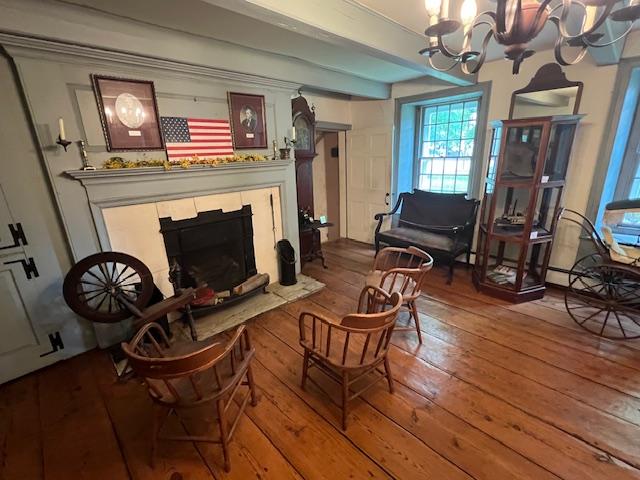
The Living Room of the Kierstad Homestead

In the first room in the main part of the house, there is a display of family China from descendants of the original family who owned the house, local business artifacts and family heirlooms. In the original sections of the house, summer kitchen had has been displayed. This is a depiction of how a Dutch farming family may live in the 1700’s.

In the other room in the main part of the house was an exhibition of local hero, Captain Roger Donlon, who was a decorated officer in the Vietnam War. The exhibition had all the news clipping from the award ceremony and his hometown welcome. One of the volunteers told me that this exhibition will be taken down soon so that they can mount the thirtieth anniversary of Woodstock.

The rest of the house is used for archives space. The house is in two sections, the original section which contains the Summer Kitchen and loft space above (that is closed to the public) and the addition to the house in the late 1700’s. Descendants of the home lived in the house until the 1950’s. The grounds are nice to walk around on and take in the cool shade on a hot day.

The museum is an interesting look at early life in Saugerties, NY.

The Mission Statement:

The mission of the Saugerties Historical Society shall be to provide coordination of all things historical in Saugerties; to be involved in the research, collection, preservation, dissemination of information about, and productive re-use of the historical archives and material culture of the community; to make the historical resources of the community available to the public through education, exhibition and interpretation; and to secure the safe management and protection of such resources that may come under its jurisdiction.

The welcome sign in front of the house.

History of the Society:

(from the Historical Society website/pamphlet)

The Saugerties Historical Society is a source of local information, art, and memorabilia. Exhibitions of colonial and recent history include Saugerties themes as well as those of regional interest such as History Day each October and authentic Hudson Valley colonial militia reenactment.

The Saugerties Historical Society partners with local schools in the education of American and local history. Hands-on activities such as scrubbing clothes on a washboard, spinning wool and writing with a quill pen encourage students to experience colonial life. The Saugerties Historical Society aims to bring pride and knowledge of community through education and preservation.

The earliest recorded owner of the stone house was Hiskia Dubois (c 1727) and Dr. Kiersted purchased the house from Hiskia’s son, Daniel. The Kiersted House was saved from demolition in 1955 by Charles and Inez Steele. Through the generous efforts of volunteers in cooperation with the Town and Village of Saugerties the Saugerties Historical Society acquired the house in 1998.

The Kiersted House is a community center. Each summer, concerts, such as those with the Saugerties Community Band are presented on the beautiful lawn and gardens of the house. The Saugerties Historical Society regularly hosts various community clubs and organizations. The Kiersted House and grounds are available to suitable organizations for special events. The Saugerties Historical Society welcomes all to experience history while visiting the Kiersted House. The Kiersted-DuBois House is listed on the National and New York State Register of Historic Places.
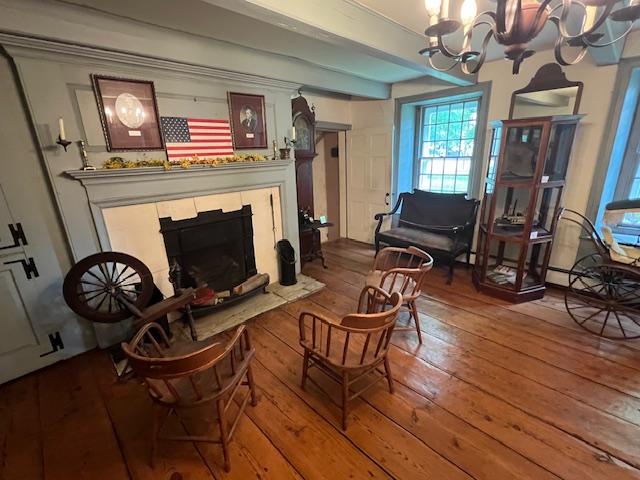
The inside of the Historical Society

History of the Building:

(from the Historical Society website)

The Kiersted House was saved from demolition in 1955 by Charles and Inez Steele. Through the generous efforts of volunteers in cooperation with the Town and Village of Saugerties, the Saugerties Historical Society acquired the house in 1998.

The Historical Marker

The earliest recorded owner of the stone house was Hiskia DuBois, c. 1727. The home which was originally located on  approximately 40 acres was sold upon his death by his son David DuBois to Dr. Christopher Kiersted who was married to Leah DuBois.

The stone house was built in sections with the east wing being the earliest, c. 1727. Subsequent additions to the west end included the parlor and the joining of a stone outbuilding to the main house in 1800. Preservation of the interior of the Kiersted House is evident in the original wide plank floors, 18th century glass-paned windows (some bearing family inscriptions), much original iron hardware and century old concrete floors with inlaid design. 
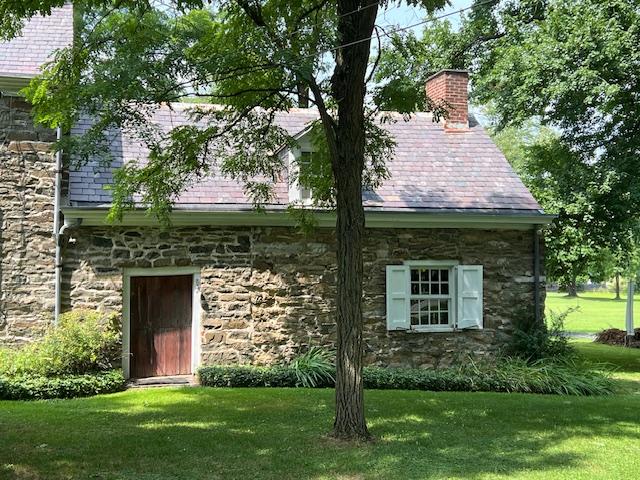
The original section of the home from the early 1700’s with the Summer kitchen

The later addition to the house

In early 2003, during a planned restoration the house was spruced up with great care to respect the historic elements. The wooden doors and frames were carefully cleaned to expose their original grain and features. The floor planks were also cleaned and patched aesthetically. The stone work in the fireplace required additional care and some of the original stones had to be replaced. An antique pro carpet cleaning NYC service was enlisted to clean and restore the rugs and carpets, many of which were the originals and some of the more worn items were moved away from highly trafficked areas. The drapery and linen items were also restored or replaced with replicas.

The Saugerties Historical Society in the summer of 2023.

The Society has given visitors a chance to see what life was like for early Dutch and English settlers from a prestigious family from the area. It shows that life was understated and productive. It was not an idle existence but one from hard work and determination to build on something. The house is a window for us to look at the families who lived here and how their families grew and progressed.
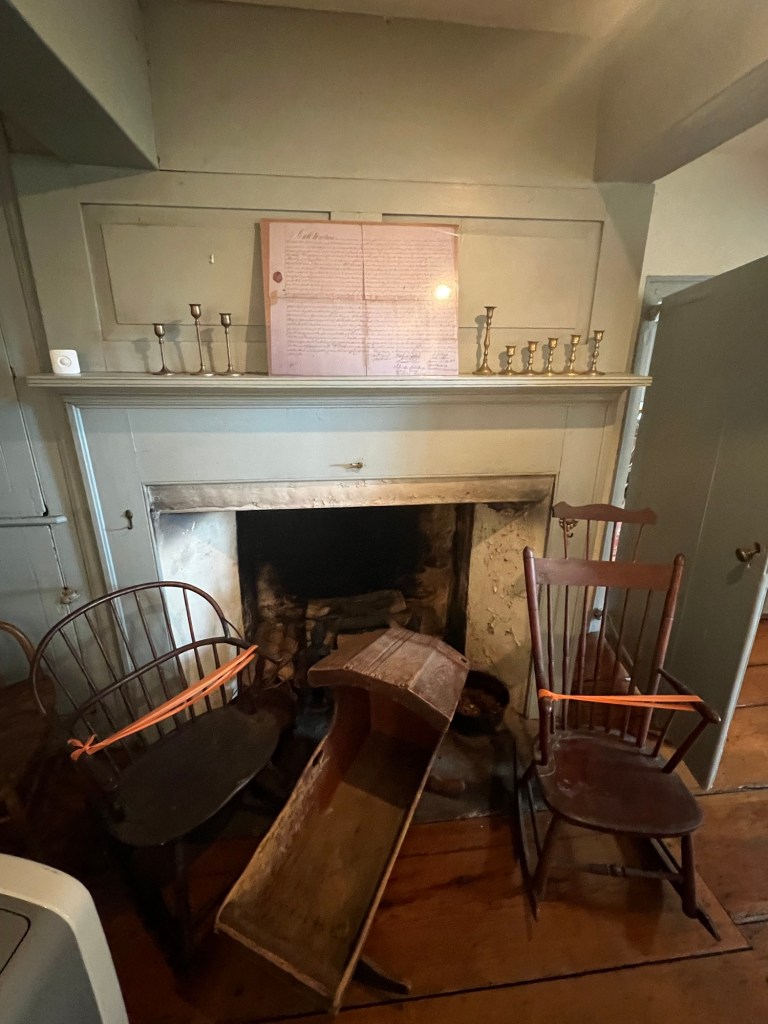
The fireplace and family crib of the Kiersten’s family
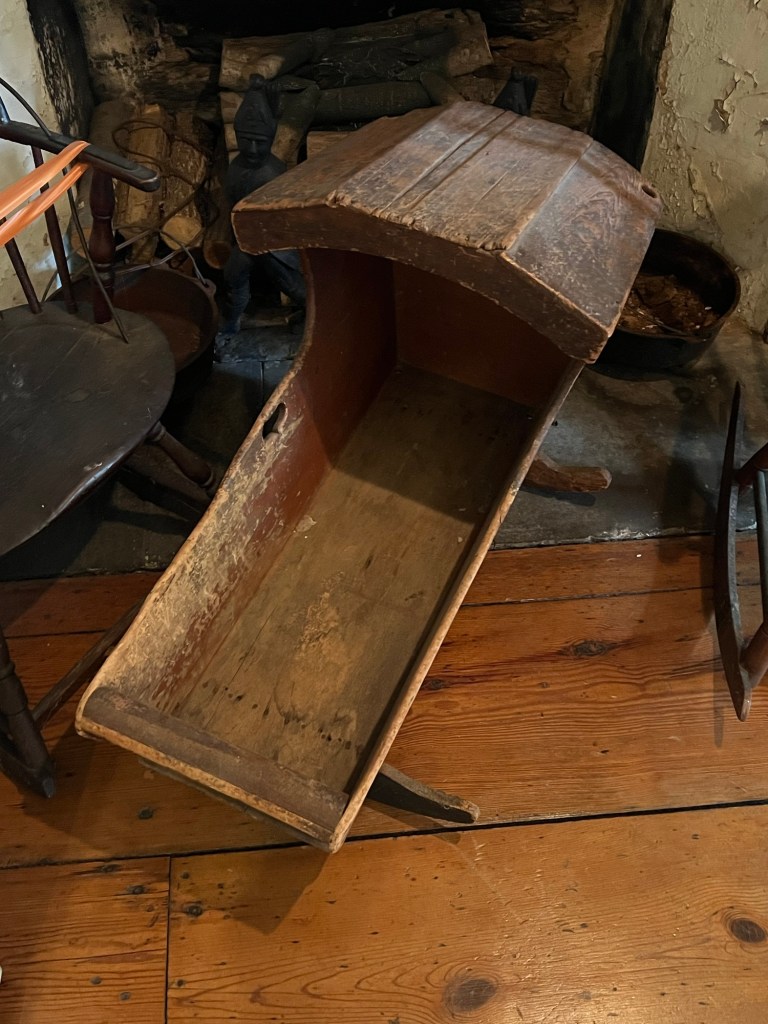
The Kierstad family crib from Dutch times

The Living Room set up
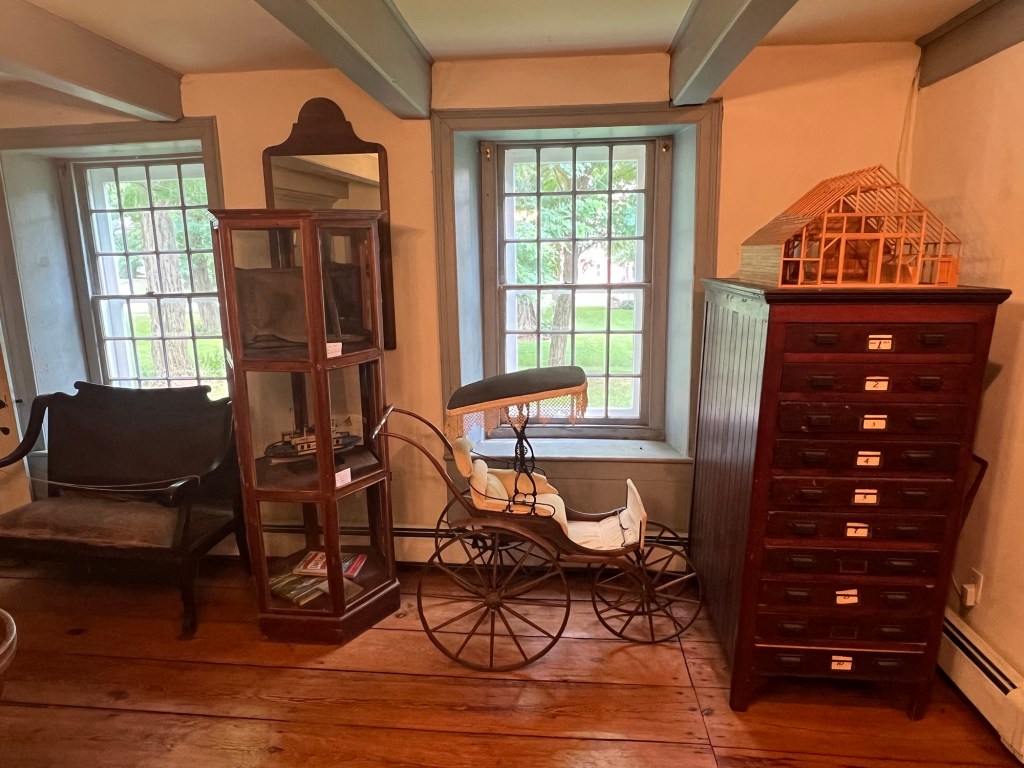
Artifacts in the Living Room including antique furniture and a stroller from the Civil War

The ‘Old Summer Kitchen’

The Summer Kitchen was the original part of the house

The table lined with items from harvest and for cooking the main meal

The kitchen being the focal point of the house was always warm so children and babies could be watched

In the main room were many of the artifacts in the collection:
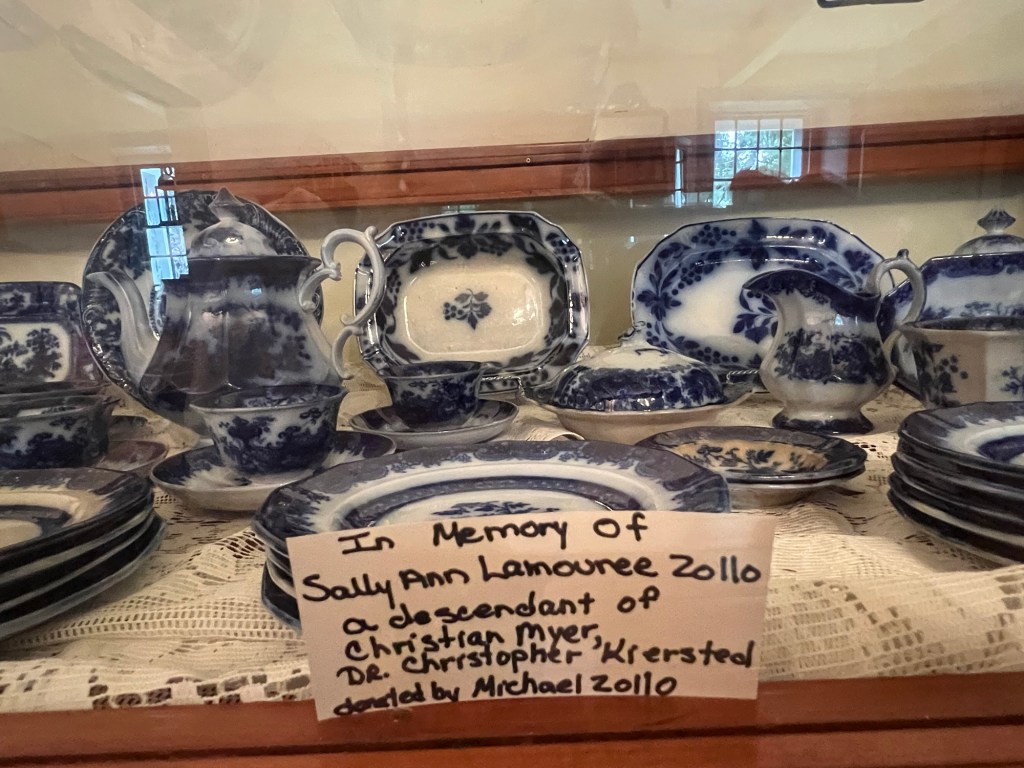
The family China of Sally Ann Lamouree Zillow, a descendent of the Kierstad family

From the Town of Saugerties, the award of a commode

The Captain Roger Dobson exhibition:

In the other part of the house was exhibit of Captain Roger Dobson, a local hero of the Vietnam War. The decorated Captain’s store was a local boy makes good. The exhibition contains all sorts of clippings and articles from the event and of the Captain’s accomplishments.

The entrance to the Roger Donlon exhibition
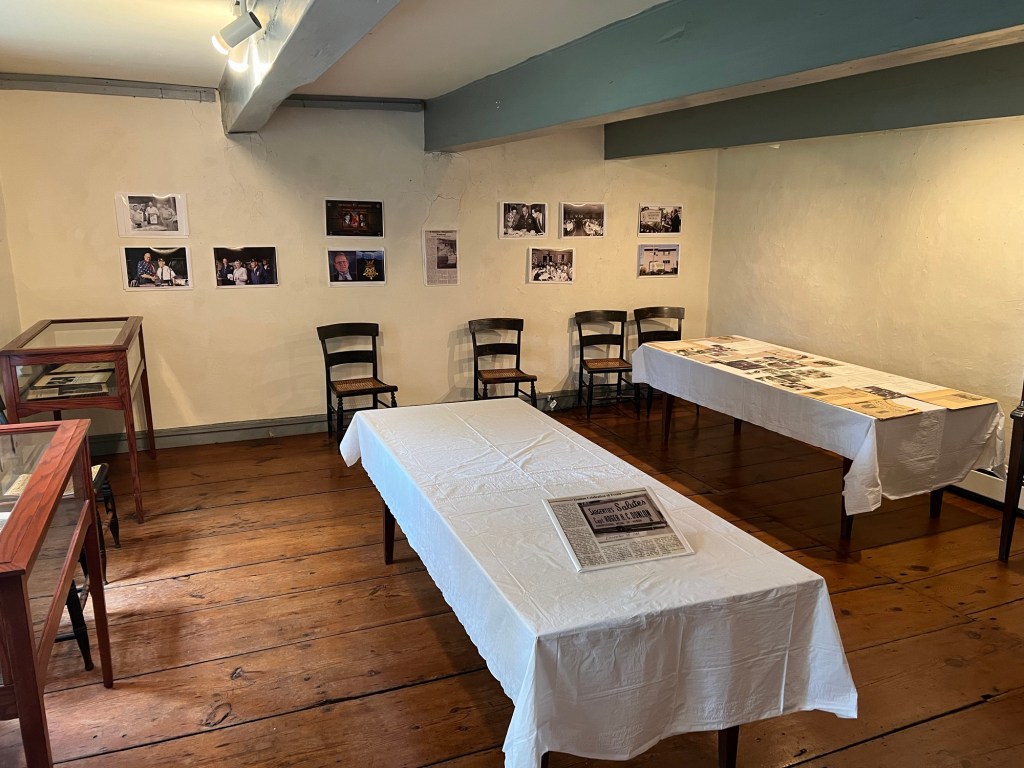
The Roger Donlon exhibition on his career in the armed forces during the Vietnam War
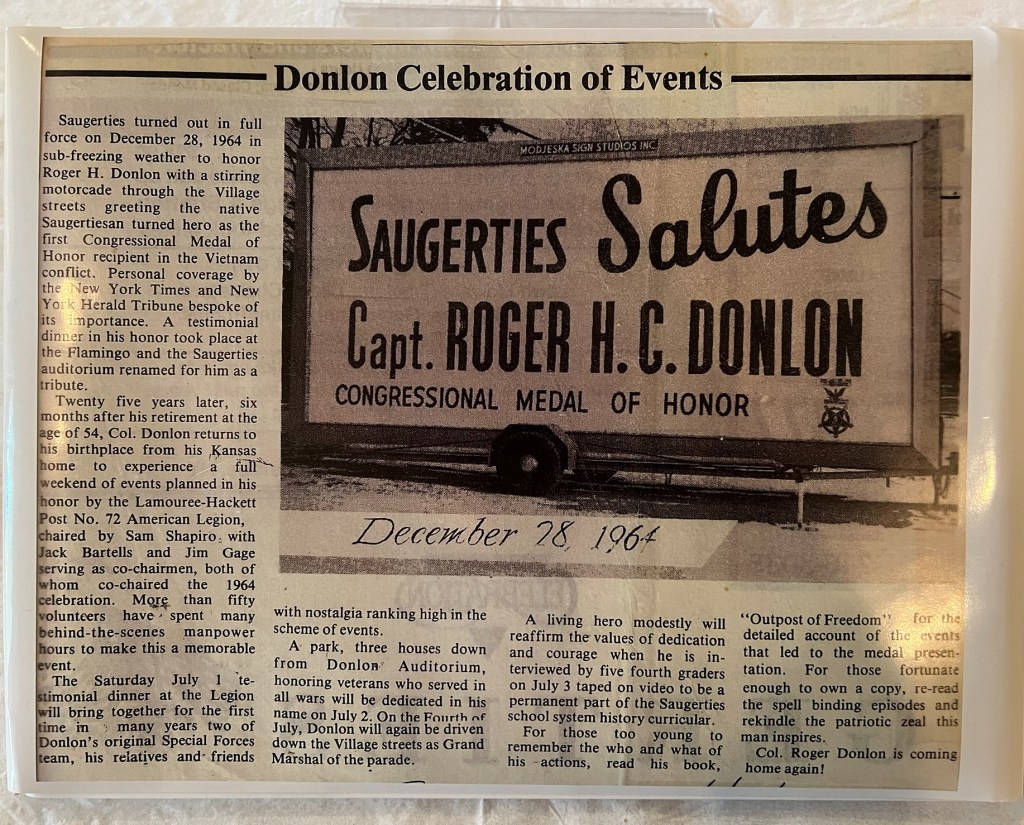
The display of Captain Donlon’s accomplishment

The last artifact I saw at the museum was a replica of the original map of Saugerties. This map shows the farms and estates of the original families of the Town of Saugerties.

The replica of the map of Saugerties, NY

The Outside Gardens:

After my tour of the museum, I walked around the grounds of the property and enjoyed the sunny day.

The gardens outside the entrance to the Kierstad Homestead and Gardens

The lawn outside the museum

Montgomery Place-Bard College                                                26 Gardener Way & River Road                                            Red Hook, NY 12571

Montgomery Place-Bard College 26 Gardener Way & River Road Red Hook, NY 12571

Montgomery Place-Bard College

26 Gardener Way & River Road

Red Hook, NY 12571

https://www.bard.edu/montgomeryplace/

Open: Sunday-Saturday From Dawn to Dusk/Mansion is closed

My review on TripAdvisor:

https://www.tripadvisor.com/Attraction_Review-g29820-d209648-Reviews-Montgomery_Place-Annandale_on_Hudson_New_York.html

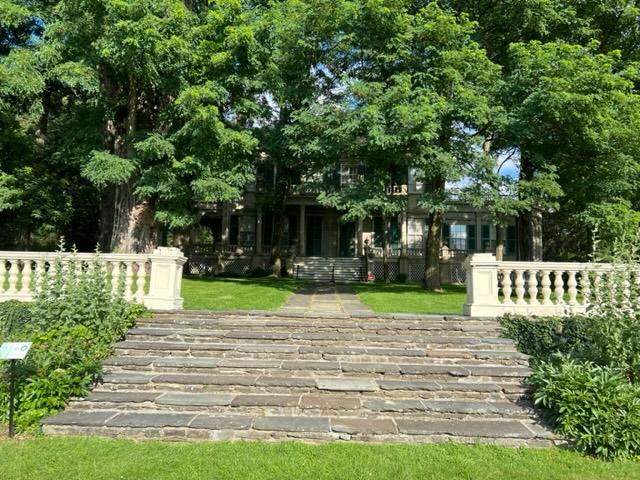
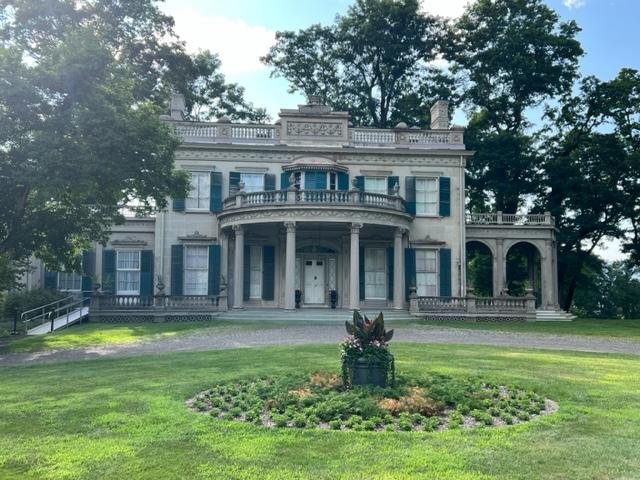
The front of Montgomery Place in the summer of 2023

On a recent trip to the Hudson River Valley for Fall events I took a tour of Bard Campus to visit their campus and tour Montgomery Place which the college bought from the Hudson River Historical Society in 2016. It is now part of the campus and you can tour the grounds but not the inside of the house.

The back of Montgomery Place

Montgomery Place on the Bard College Campus

Before 2016 when the house was owned by the Historic Hudson Valley Society, who used to have tours of the mansion. When the family sold the mansion and all its contents to the Society, they left the house untouched when they moved out you got to see how the Livingston family lived not just in current times but with all the historical furniture that came with the house.

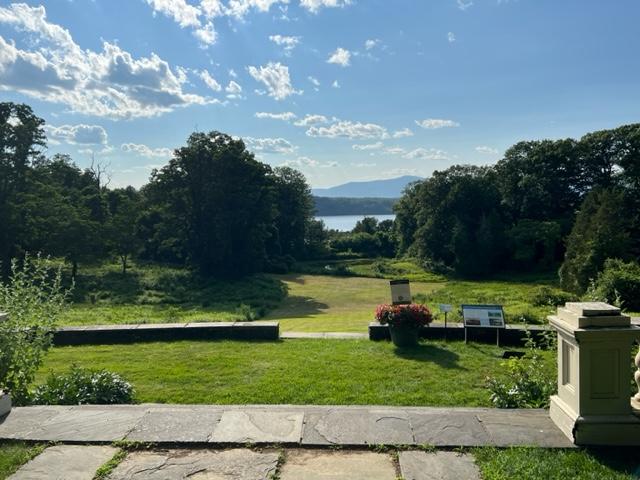
The view from the house to the Hudson River

The gardens from the back of the house

The former tour used to take you through each room that had antique furniture and decorations but much of the house had been modernized over the years. Older furnishings had either been conserved or slipcovered because of age. Since the house has been sold to Bard College, you can only tour the house by appointment only through the college.

The mansion’s portico overlooking the Hudson River

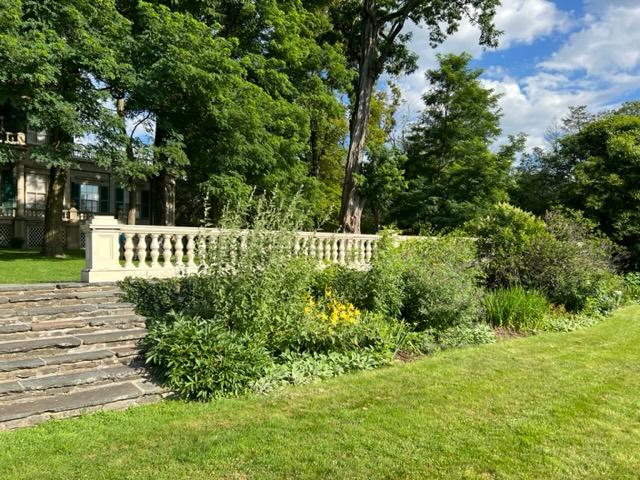
The grounds are still impressive. During the Spring, the formal gardens next to the house are in full bloom and the last time I had taken a tour there, the gardens were being maintained by a local garden club.

The entrance to the Montgomery Place gardens

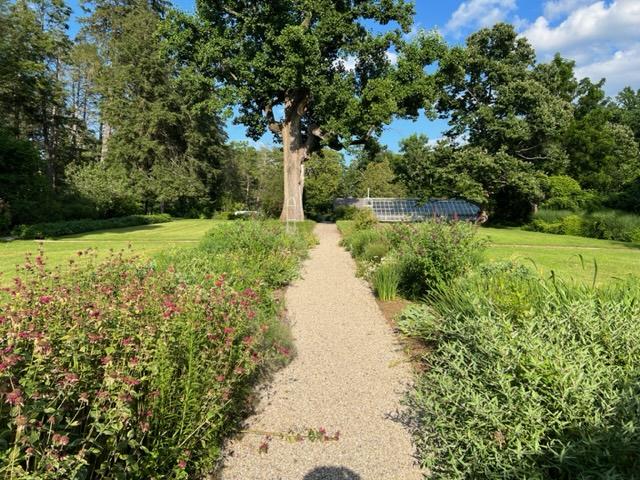
There were flower beds, herb gardens and cutting gardens on top of the flowing lawns from the house to the river. The gardens are broken into three different sections: the Eclipse Gardens, the Wilderness Gardens and the Walled Gardens. Each of them connects to the other and some have returned to their natural state over time and care of them.

The Montgomery Place Gardens are changing from Summer to Fall

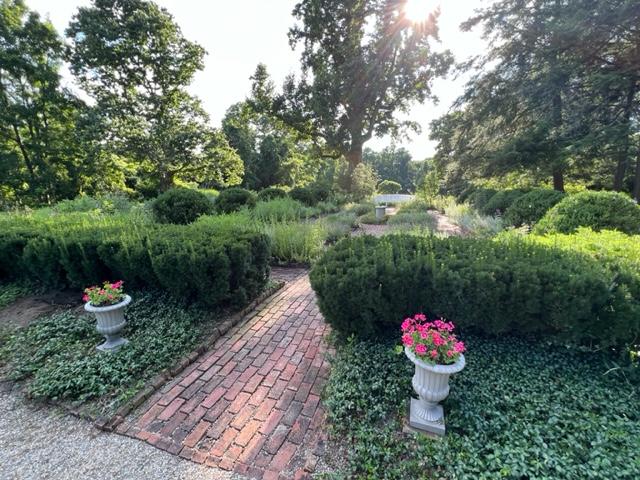
Pathways through the gardens

The gardens were developed over time from Louise Livingston’s day to her daughter, Clara Livingston Barton and her husband building on them the to Delafield family, who were the last owners of the house maintaining and adding to them.

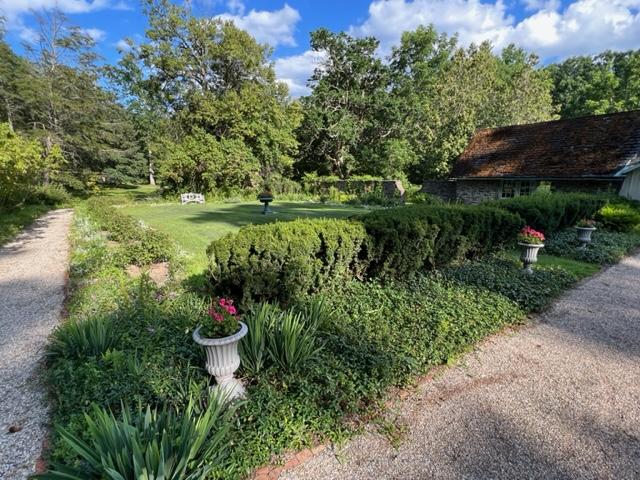
The formal gardens

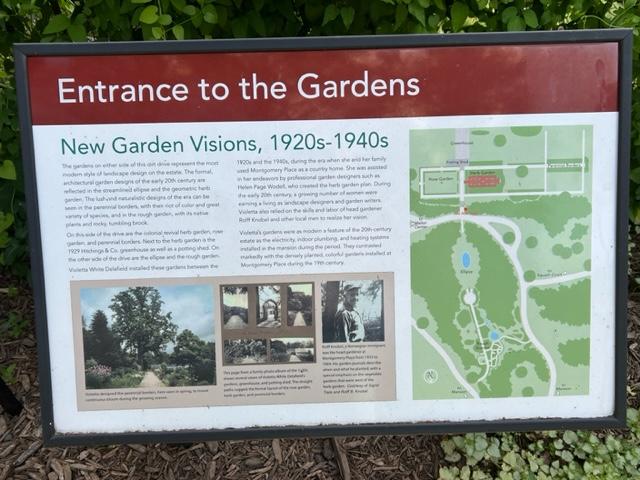
The Garden Sign of the Ellipse and Rough Gardens

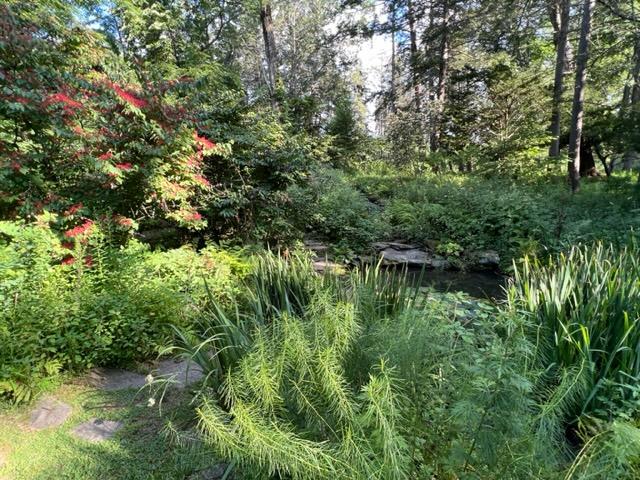
The Rough Garden

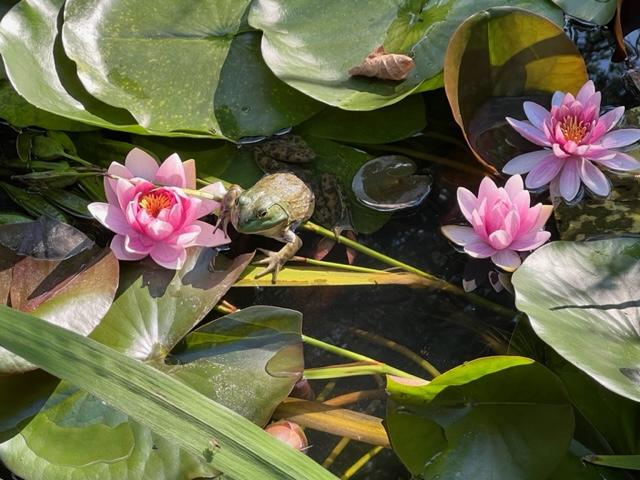
The Rough Garden was in full bloom with lotus and frogs all over the pond

The Ecllipse Garden has gone back to nature in comparison to the garden’s original plans

In the Fall on a recent visit, most of the gardens had been cut back with a few seasonal flowering bushes still showing color. The trees surrounding the house were turning a gold hue while the lawn that had been freshly cut was still emerald green. The house while a little worn from the outside still looked like it was ready to receive guests for the Fall season in the Hudson River Valley. The views from the back of the house are breathtaking from the window views of the Hudson River and the paths leading to it.

The Garden sign

In the Summer of 2023, the mansion grounds are open until dusk for people to walk around the estate and visit the gardens. The gardens were in bloom with summer flowers and plantings. The Rough Garden with it ponds were full of frogs who were making all sorts of noise. I had not seen a frog in the wild in many years and you just don’t see those and turtles anymore in the woods. The mansion is still not open except by appointment through the college.

The formal gardens in the summer of 2023

The grounds are well maintained but there is more detail in the maintenance of the gardens that are needed. They could use some weeding with all the crabgrass coming into the beds. Still the gardens are breathtaking on a warm sunny day and make quite an impression. They must have been something when the family maintained them with their gardeners.

the beauty of the formal gardens

There are all sorts of hiking trails to the Sawkill River and through the forests, a trail down to the Hudson River and tours of the property. The grounds are open from dawn to dusk and there is plenty of parking by the Visitor’s Center along with a history of the estate.

The History of the Estate:

(Taken from Wiki)

https://en.wikipedia.org/wiki/Montgomery_Place

The property had been home Native Americans for at least 5,000 years as a seasonal hunting ground. The Dutch settled in the area in the late 18th century using the Saw Kill River for various mills.

In the late 1770’s, Janet Livingston Montgomery purchased from Abraham Van Benthuysen 242 acres of land on the Hudson River after the death of her husband General Richard Montgomery at the Battle of Quebec. She moved into the home they built after the Revolutionary War. She later had plans made for a Federal style mansion on the riverfront property she bought and moved into her new home, Chateau de Montgomery, in 1805. She established a working farm with the help of friends who gave her tree samples (Wiki).

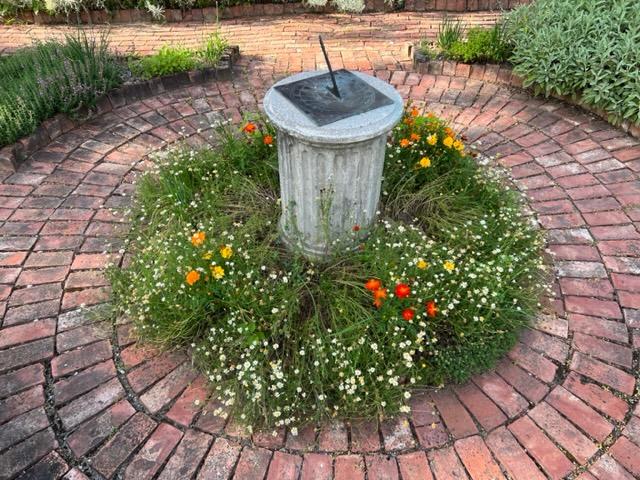
The Sun Dial in the Walled Garden during the summer of 2023.

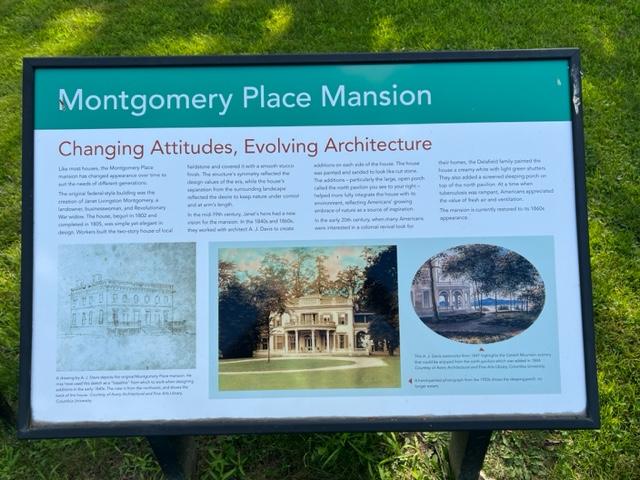
Upon her death in 1828, the mansion was inherited by her brother, Edward Livingston. He had spent his summers vacationing here with his wife, Louise. They renamed the estate ‘Montgomery Place’. He died the next year and his wife, Louise hired Alexander Jackson Davis to convert the mansion into a more ornate villa. Two wings and exterior decoration were added at this time of the renovation. With the help of Andrew Jackson Downing, a friend of Louise’s and mentor to Davis, she developing the landscapes. Her daughter, Cora Barton worked with the architect on designing garden and conservatory (Wiki).

The front of the mansion

The back of the mansion from the grassy gardens facing the Hudson River

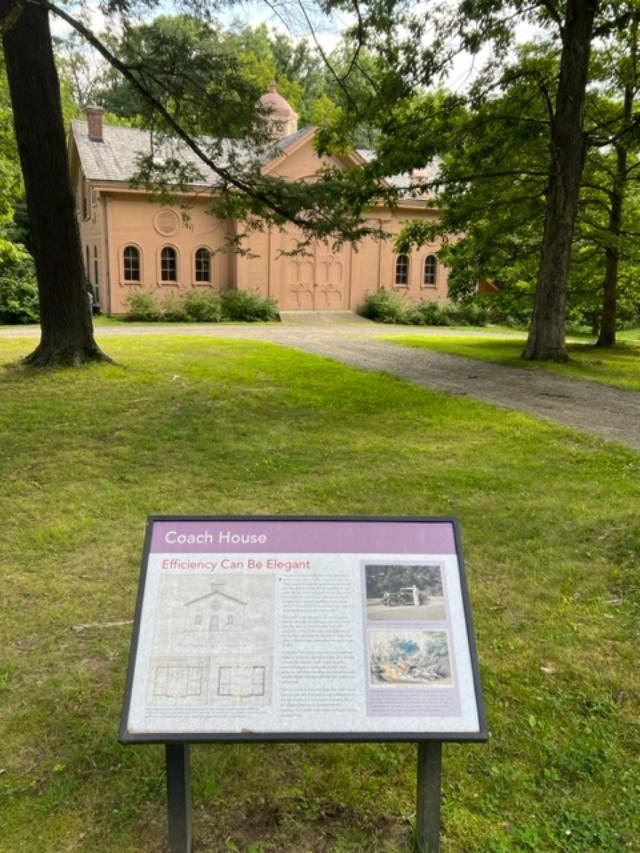
Upon Louise’s death in 1860, Cora and her husband hired Davis again to build some the earlier outbuildings including Coach House, Swiss Cottage and farmhouse and then extended the landscaping to turn the estate into more ‘pleasure grounds’ and have a separation from the farming operations.

The Coach House for Carriages and then cars

The house then passed on to another relative in 1921, John Ross Delafield who added heating and modern plumbing to the house. He and his wife also extended the gardens on the estate as well (Wiki). The gardens had more ornate features to them.

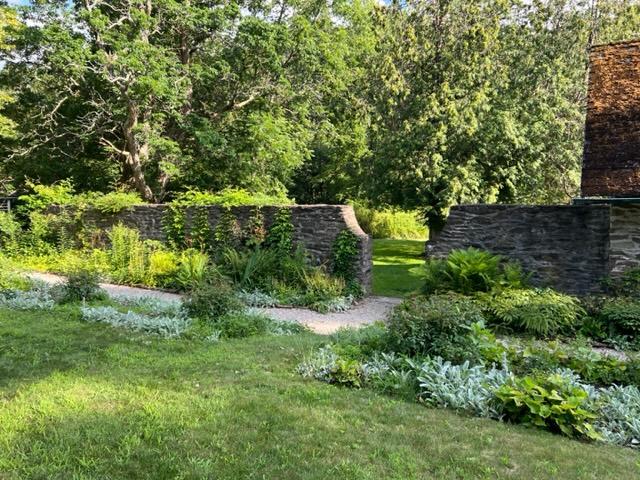
The “Walled Gardens” to the right of the mansion

Upon his death, his son John White Delafield inherited the house and they opened two corporations to own and operate the property.

The expansion of the gardens

In 1981, the estate was sold to the Historic Hudson Valley, the historical society. After an extensive renovation, the house was designated a National Historic Landmark in 1992 and it was bought by Bard College in 2016 who is its current owner (Wiki).

The Montgomery Place Mansion sign and the evolution of the home.

Saugerties Lighthouse                                         168 Lighthouse Drive                               Saugerties, NY 12477

Saugerties Lighthouse 168 Lighthouse Drive Saugerties, NY 12477

Saugerties Lighthouse

168 Lighthouse Drive

Saugerties, NY 12477

(845) 247-0656

https://www.facebook.com/SaugertiesLighthouse/

Open: Please check the website for hours/Seasonal

Admission: Free for the Grounds/Check the website for the B & B availability

https://www.saugertieslighthouse.com/

https://www.lighthousefriends.com/light.asp?ID=678

My review on TripAdvisor:

https://www.tripadvisor.com/Attraction_Review-g48564-d4214114-Reviews-Lighthouse-Saugerties_Catskill_Region_New_York.html

I was recently travelling through Saugerties, New York recently and saw the small sign for the historical Saugerties Lighthouse and decided to take the road path down to the river. This interesting little site is hidden behind a wetlands area and neighborhood of homes and a Coast Guard station.

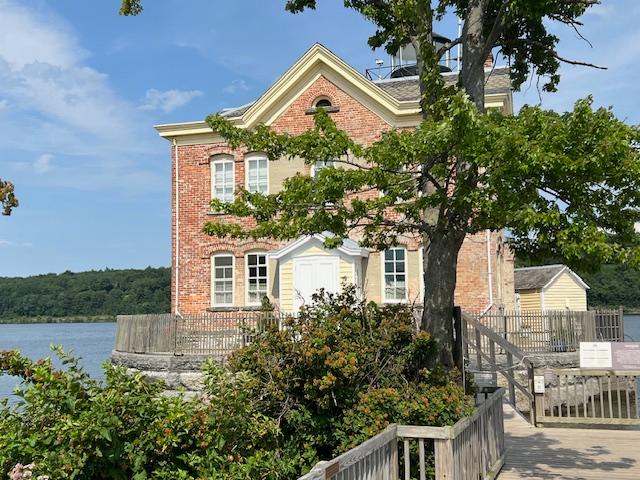
The Historical Saugerties Lighthouse in Saugerties, NY

I walked through the wetlands park through a pathway of bridges and paths and suggest by the walk do not go after it has just rained. Also do not go after dark as the path is not lite. Still it is fascinating walk through the wetlands passing streams and patches of beautiful flowers and trees.

In the summer the path is full of wildflowers, birds, dragonfly’s and the sounds of the Hudson River swaying across the shore. The views are just beautiful.

Take your time to admire the flowers and plants along the paths and look at the views of the river as you exit the paths.

The pathway to the lighthouse

The lighthouse itself needs some work but it is elegant old building that sits stately against the mountain views. In the middle of the summer, all the colors are bright and vibrant. You can walk around most of the building but the walkway in the front offers a nice view of the whole structure.

Pathway to the lighthouse

The pathway to the lighthouse

The only way to go inside is to book a room at the B & B so check the website out.

https://www.saugertieslighthouse.com/availability

The wildflowers on the pathway to the lighthouse

The views of the Hudson River from the pathway

The beautiful views of the Hudson River along the pathway and the tiny beaches

The History of the Saugerties Lighthouse:

(From the Friends of the Saugerties Lighthouse)

The Saugerties Lighthouse on a sunny afternoon in July

Looking down the Hudson River

The lighthouse was practically a pile of crumbling bricks poised to tumble into the Hudson River, the Saugerties Lighthouse barely escaped the demolition ball in the 1960’s. Today, completely renovated and delighting B & B guests, it stands as a testament to the perseverance and hard work of many dedicated individuals.

The historic sign for the 1896 Lighthouse

The name Saugerties is derived from the Dutch “Zager’s Killetje”, meaning a sawmill on a creek and in fact, there was a mill built on Esopus Creek to harness the creek’s waterpower. The mill formed the cornerstone of a thriving paper industry, which produced as much as eight tons of paper daily, making it one of the leading producers of paper in the 1800’s.

The walkway to the lighthouse from the road near the Hudson River

On June 30, 1834, Congress appropriated $5000 for the construction of a lighthouse at the mouth of the creek to guide mariners past the nearby shallows and into Esopus Creek and the busy port of Saugerties. Charles Hooster built the lighthouse on a forty by fifty foot timber-framed pier and its light, produced by five whale oil lamps set in parabolic reflectors, commenced operation in 1835 with Abraham Persons as its first keeper.

The historic sign at the lighthouse

A fire in 1848 destroyed the original lighthouse but it was rebuilt on the old site by 1850 at which time four lamps were being displayed from atop the two-story structure. Light lists described the second lighthouse as a “light on keeper’s house.” A sixth-order Fresnel lens replaced the array of lamps and reflectors in the lantern room in 1854.

Ice floes and tidal currents took their toll on the foundation pier and on March 2, 1867, Congress appropriated $25,000 to build a replacement lighthouse just a few yards closer to the shore. This structure, still standing today, was built on a circular granite crib, with a depth of twelve foot and a diameter of sixty feet that rests on fifty-six pilings sunk into the riverbed and topped with three layers of six-inch timbers. The two story lighthouse has twenty-inch thick natural colored brick cavity walls and a sixth-order Fresnel lens cast its beacon from the lantern room. No longer needed, the old wooden lighthouse was sold.

Saugerties Lighthouse was considered a plum assignment due to its proximity to town. In 1888, Saugtegies Harbor was enlarged through the construction of jetties and the keeper’s jaunt to town was made easier when a small road was built along the north jetty to the lighthouse.

The lightkeepers were friendly with their neighbors and even enlisted their help. A neighbor downriver would hand a bed sheet out their window whenever they saw the lighthouse tender coming upriver, giving the lightkeeper about a half-hour notice before the inspector arrived.

Daniel Crowley was serving as keeper of the light when the current brick lighthouse was built. He had been placed in charge of the light in 1865, replacing his father Dennis, who was removed from service after just three months. Daniel’s sister, Katie, grew up at the lighthouse and seemed to be amphibious. She would often venture out into the river along in a skiff and when her little craft was upset, there were no worries as she could swim like a duck. Katie was made the official keeper of the light in 1873 and her lack of fear of the water lead to some remarkable rescues.

Around the turn of the century, the boathouse, located atop the foundation of the first lighthouse, a small island east of the current lighthouse was moved to the circular lighthouse pier. In 1910, a wooden platform was extended from the top of the tower to support a fog bell and an enclosed shaft was mounted below the platform to protect the suspended weights that powered the bell striking mechanism.

Conrad Hawk’s twenty-six year stint as keeper, lasting from 1914 to 1940 was far longer than that of any other keeper of Saugerties Lighthouse. In 1916, his son Earl and daughter Ilal were playing with a small battery and brought it into contact with the large battery used for the station’s fog bell. The resulting short-circuit caused an explosion that blew the battery to pieces, cutting Ilal’s face and produced a current that burned Earl’s arms. Earl nearly lost a big toe in 1922 when his foot came into contact with a boat’s propeller as he tried to climb aboard while swimming near the lighthouse.

Through they both had a few scars, Earl and Ilah survived at Saugerties Lighthouse. Earl Hawk graduated from the Navy’s school at Annapolis and entered the submarine service, while Ilal attended Cortland State teacher’s College and became a physical education instructor. Just before Christmas in 1939, Keeper Hawk’s went to the hospital to receive treatment for stomach ulcers but the treatments failed and he passed away on January 8th, 1940.

When electricity was extended to the lighthouse in the 1940’s, the dwelling was “modernized” with steam heat, plumbing and a telephone. In February 1954, Keeper Ed Pastorini was informed his light would be automated come spring. Wanting to leave the station in tip-top shape, he lovingly painted the three large upstairs bedrooms. Tears flooded his eyes when he closed the door and left the lighthouse for the last time.

The Historic Saugerties Lighthouse in all its beauty

The lighthouse tender soon arrived and its crew tore out the plumbing, furnace and fixtures. In stark contrast to Keeper Pastorini’s care, gallons of water were drained out on the floors and left to soak through the floorboards. The building was sealed up and left to deteriorate which it did quickly.

A decade later, the Coast Guard planned to demolish the vandalized and dilapidated lighthouse, when it stepped Ruth Reynolds Glunt, wife of Chester B. Glunt, a former Coast Guard light attendant stationed at Turkey Point near Saugerties. Mrs. Glunt a longtime friend of many lighthouse keepers along the Hudson River, carried a passion for saving lighthouse and mounted a campaign to halt the demolition. Through her efforts and those of architect Elise Barry, the structure was placed on the National Register of Historic Places in 1978.

The Saugerties Lighthouse Conservancy was established in 1985 with the mission to restore and maintain the lighthouse and the following year the conservancy was able to purchase the lighthouse and surrounding wetlands for $1.00. The conservancy received a building on the verge of tumbling down but managed in just a few years to turn it into a beautifully restored lighthouse.

Roughly 10,000 old bricks, which had crumbling after being penetrated by moisture, were replaced. The lantern room was removed and refurbished. Stairs, handrails, floors and walls were completely reconstructed. To top of the transformation, a solar powered light installed in the lantern room by the Coast Guard was activated on August 4th, 1990.

Saugerties Lighthouse furnished in 1920’s decor is now open to the public and welcomes overnight guests as a bed and breakfast. Visitors can walk to the lighthouse along a one half mile long through the Ruth Reynolds Glunt Nature Preserve, where they will be greeted by a modern day resident keeper who runs the bed and breakfast and maintains the lighthouse.

The pathway to the lighthouse

A big thank you to the Friends of the Saugerties Lighthouse for their dedication in this important site

*This is just a portion of the blog from the Friends of Saugerties Lighthouse. Please see the attached website for more information.

Welcome to ‘VisitingaMuseum.com’, a trip through unique small museums, cultural sites and parks & gardens in NYC and beyond.

Welcome to ‘VisitingaMuseum.com’, a trip through unique small museums, cultural sites and parks & gardens in NYC and beyond.

*Bloggers Note: because of the size, location and time of year these sites are open, the hours and cost to get in can change since the blog was written. Please check with the site’s website or call the site before you visit. Things change over time.

My name is Justin Watrel and welcome to ‘VisitingaMuseum.com’, a trip through cultural sites, small unique museums, historic mansions and homes and pocket parks & community gardens in New York City and beyond its borders. I created this blog site to cross reference all the cultural sites that I came across when I was traveling through Manhattan for my walking blog, “MywalkinManhattan.com”.

Bergen County Historical Society III

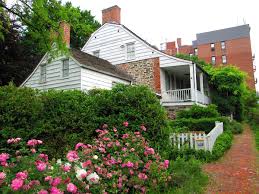
Historic New Bridge Landing

I was inspired by all these sites that I had missed over the years and never knew existed in New York City and its suburbs.  Many of these being in Bergen County, NJ where I live. I found that most people feel the same way. The only way you would know that these sites existed is by walking past them.

Schoolhouse Museum Ridgewood.png

School House Museum in Ridgewood, New Jersey
So I created this site to showcase all these smaller, largely unexplored ‘gems’ in Manhattan, the rest of New York City and places outside the greater New York City area. I concentrate on smaller, more off beat cultural sites that you might miss in the tour books or may just find by passing them on the street. This has lead me to  becoming a member of the Bergen County Historical Society in Riveredge, NJ as well as other cultural sites in the area.

Aviation Hall of Fame.jpg

The Aviation Museum in Teterboro, New Jersey

There is so many interesting historical sites, parks, gardens and homes to explore that I want to share it with all of you. They are tucked behind buildings and walls, locked behind gates or hidden behind trees only for you to want to discover them.

Ringwood Manor Christmas 2019

Ringwood Manor in Ringwood, New Jersey at Christmas

I want to give these smaller and unique ‘gems’ more exposure and ‘sing their praises’  to an audience (namely out of town tourists) who might overlook them. It is hard for a lot of these cultural site because of the lack of volunteers or volunteers getting older or the absence of money to properly advertise these sites.

Gallery Bergen Professor Show III

Juan Leon’s work at Gallery Bergen on the Bergen Community College campus in Paramus, NJ

So join me in the extension of “MywalkinManhattan.com” with my new site “VisitingaMuseum.com” and share the adventure with me. Join me also on my sister blog sites, “DiningonaShoeStringinNYC@Wordpress.com” and ‘LittleShoponMainStreet@Wordpress.com’ for restaurants and small shops.

Dyckman Farm House II.jpg

The Dyckman Farm in Washington Heights in Manhattan

These sites featuring all sorts of small restaurants, bodegas and bakeries, where a quality meal can be had for $10.00 and under and unusual stores with unique merchandise that just stand out in their respective neighborhoods. It is important to support small business owners especially in this economy.

Lucy the Elephant

Lucy the Elephant in Margate, NJ

So, join me here as I take “MywalkinManhattan” to some unique and special historical sites and open spaces the New York Metropolitan area and beyond.