Category: Dedicated to Warren Watrel

American Folk Art Museum 2 Lincoln Square (Columbus Avenue between 65th and 66th Streets) New York, NY 10023

American Folk Art Museum

2 Lincoln Square (Columbus Avenue between 65th and 66th Streets)

New York, NY 10023

(212) 595-9533

https://folkartmuseum.org

Open: Sunday 11:30am-6:00pm/Monday & Tuesday Closed/Wednesday-Friday 11:30am-6:00pm

Admission: Free

My review on TripAdvisor:

https://www.tripadvisor.com/Attraction_Review-g60763-d266582-Reviews-American_Folk_Art_Museum-New_York_City_New_York.html?m=19905

I recently visited the American Folk Art Museum in New York City for the “Made in New York City” exhibition and it is a very interesting and engaging museum. The artwork for the museum was a combination of painting, sculpture, pottery and metal work created at different periods of the City’s history. It really showed the extent of manufacturing in New York City and the craftsmanship that was once here.

The entrance to the museum

I recently visited the American Folk Art Museum in New York City for the “Nation”exhibition and it is a very interesting and engaging museum.

The main gallery of the museum with early American art

The main gallery with one of the revolving shows

The artwork for the museum was a combination of painting, sculpture, pottery and metal work created at different periods of the City’s and the Country’s history.

Some of the permanent works were made in the Tri-state area. It really showed the extent of manufacturing in New York City and the craftsmanship that was once here.

The ‘Folk Nation’: Crafting Patriotism in the United States’ exhibition

https://folkartmuseum.org/exhibitions/folk-nation

(from the Museum website)

Patriotism in the United States draws from the American Folk Art Museum’s rich collections to explore links between vernacular art and the construction of an American sense of self. Introducing visitors to the concept of “folk” as a category developed in conjunction with the art and antiques markets, this exhibition positions works as multilayered in their meanings, imbued with cultural significance by not only their creators, but also their collectors and subsequent owners. Americans have long preserved objects as a way of telling stories about themselves. Beginning after the Revolutionary War and gathering momentum in the late nineteenth and early twentieth centuries, people turned to early American things to construct a national history and sense of collective identity—an impulse often driven by lingering insecurity about the young nation’s perceived cultural provinciality compared to Europe (Folk Art Museum.com).

One of the painting’s that stood out to me was more contemporary approach to the Statue of Liberty, entitled ‘Miss Liberty reaches out to the persecuted’. A different approach to folk art.

The painting ‘Miss Liberty reaches out to the persecuted’ by Reverend Benjamin Franklin Perkins

The description of the painting

Some of the interesting things you will see are the paintings by artists in both Colonial New York and from the Hudson River School of prominent New Yorkers through its first 200 years of history. You will see how the styles of art have changed over the years.

Also there is a lot of metal work in the ways of signs and rods for the front of doors and for the roofs. The woodwork carvings that once graced the front doors of merchants all over the City is now a lost art. Here you could see the works of German and Russian carvers and the craftsmanship that was put into every piece. It was interesting too to see the racial themes and stereotypes that were used in the art.

Several revolving shows were being featured on a recent trip to the museum such as ‘Nation’ and ‘Self Made’, themed shows for the 250th Anniversary of the Country.

The show ‘Self Made’ A century of inventing artists’

https://folkartmuseum.org/exhibitions/self-made

(From the museum website)

Self-Made: A Century of Inventing Artists takes a critical look at the historical definition of the “self-taught artist” in the United States from the early twentieth century to today. The exhibition examines how artists without academic training have depicted, conceptualized, and identified themselves on their own terms. In doing so, it aims at challenging reductive, long-standing narratives that have cast these artmakers as amateurs or isolated geniuses working out of time, without lineage, influence, or artistic networks (Folk Art Museum.com).

The sixty artists featured here largely worked outside conventional art-school, gallery, museum, and peer-exchange systems. Their practices are rooted in diverse sites of learning, from professional expertise to community-based traditions. Drawn primarily from the American Folk Art Museum’s collection, this selection of artworks brings together outstanding examples of paintings, sculptures, photographs, videos, and artists’ notebooks by key national and international figures—many of them recent or rarely seen acquisitions (Folk Art Museum.com).

The exhibition is organized around three methods of artistic “self-making” and self-fashioning: self-portraits, alter egos, and autobiographies. Each gallery unfolds chronologically, providing grounding for the artists’ intentions. The works function as primary documents: firsthand accounts of the self, authored by the self. Akin to diaries or other personal statements, they call for close attention, asking viewers to “look at me, in this way, that I have chosen.” By centering the makers’ perspectives and aesthetic choices, Self-Made shifts the focus away from the viewer’s role in completing the creative act and places it squarely on the artist’s agency (Folk Art Museum.com).

Some of the paintings that stood out seemed to be self-portraits.

The painting ‘Untitled’

The painting ‘Untitled’

The museum takes different approaches to the way art is portrayed.

Another program that the museum does well is they have afternoon Jazz Wednesdays and Free Concerts on Friday nights.

There are family programs, walking tours, curator talks and lectures as part of the museum programming so there is something for everyone.

The American Folk Art Mission:

(From the Museum website)

Since 1961, the American Folk Art Museum has been shaping the understanding of art by the self-taught through its exhibitions, publications and educational programs. As a center of scholarship and by showcasing the creativity of individuals whose singular talents have been refined through experience rather than formal artistic training, the museum considers the historical, social and artistic context of American culture. Its collection includes more than seven thousand artworks dating from the eighteenth century to the present, from compelling portraits and dazzling quilts to powerful works by living self-taught artists in a variety of mediums (Museum bio).

Self-Taught art, past and present, tells empowering stories of everyday life. The field of American folk art was first defined at the turn of the twentieth century by collectors, professional artists, critics, dealers and curators whose search for an authentic American Art seemed to be finally answered in works that presented a nuanced  of national identity, faith, progress, ingenuity, community and individuality. Under the umbrella of “folk art” expanded to also include artists working in the present. For the last twenty years, the term self-taught has more regularly come to address these artists, whose inspiration emerges from unsuspected paths and unconventional places, giving voice to individuals who may be situated outside the social mainstream. Those individuals have been active participants in the shaping of American visual culture, influencing generations  of artists and establishing lively artistic traditions (Museum History).

American Folk Art Museum History:

(From the Museum website)

The museum of Early American Folk Arts as it was known initially held its first exhibition in a rented space on 49 West 53rd Street in 1961. The museum’s collection was launched in 1962 with the gift of a gate in the form of an American flag, celebrating the nation’s centennial. The gift reflected the museum’s early focus on eighteenth and nineteenth century vernacular arts from the northeast America.

In 1966, after receiving a permanent charter, the museum expanded its name and mission. As the Museum of American Folk Arts, it looked beyond the traditional definitions of American folk art. Its exhibitions and collection began to reflect “every aspect of the folk arts in America-north, south, east and west.” Founding curator Herbert W. Hemphill Jr. “expanded the notion of folk art beyond traditional, utilitarian and communal expressions.” Under his direction, the museum began to champion idiosyncratic and individualistic artwork from the fields of traditional and contemporary folk art. In doing so, the museum ushered in a new era in the field of twentieth-century folk art (Museum History).

The 1990’s brought new focus to the diversity and multiculturalism of American Folk Art. Offering a more inclusive vision. the museum began to present African American and Latino artworks in their exhibitions and permanent collections. Director Gerard C. Wertikin announced American folk art’s common heritage as “promoting an appreciation of diversity in a way that does not foster ethnic chauvinism or racial division.” (Museum History).

The museum further established  its broadened outlook with the 1998 formation of the Contemporary  Center, a division of the museum devoted to the work of 20th and 21st century self-taught artists as well as non-American artworks in the tradition of European art brut. In 2001, the museum opened the Henry Darger Center to house 24 self-taught artist’s works as well as a collection of his books, tracings, drawing and source materials (Museum History).

The gift shop

In 2001, the museum chose its current name, American Folk Art Museum. Recognizing that American Fold Art could be fully understood in an international context, the word American functions as an indication of the museum’s location, emphasis and principal patronage rather than as a limitation on  the kind of art it collects, interprets or presents. The museum’s current programming reflects this shift in focus. Past exhibits have included folk arts of Latin America, England, Norway, among other countries and continents (Museum history).

Don’t miss this amazing little museum on the Upper West Side of Manhattan.


Ford Foundation Gallery at the Ford Foundation Center for Social Justice                                      320 East 43rd Street                                           New York, NY 10017

Ford Foundation Gallery at the Ford Foundation Center for Social Justice 320 East 43rd Street New York, NY 10017

Ford Foundation Gallery at the Ford Foundation Center for Social Justice

320 East 43rd Street

New York, NY  10017

(212) 573-5000

https://www.fordfoundation.org/about/the-ford-foundation-center-for-social-justice/ford-foundation-gallery/

Open:  Sunday Closed/Monday-Saturday 11:00am-6:00pm

Fee: Free to the public

My review on TripAdvisor:

https://www.tripadvisor.com/Attraction_Review-g60763-d615514-Reviews-Ford_Foundation_Building-New_York_City_New_York.html

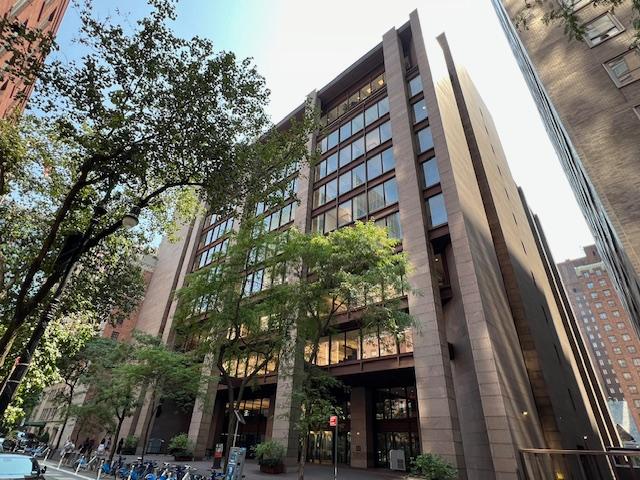
The Ford Foundation at 320 East 43rd Street

https://www.fordfoundation.org/about/the-ford-foundation-center-for-social-justice/visitor-information/

The Ford Foundation Building

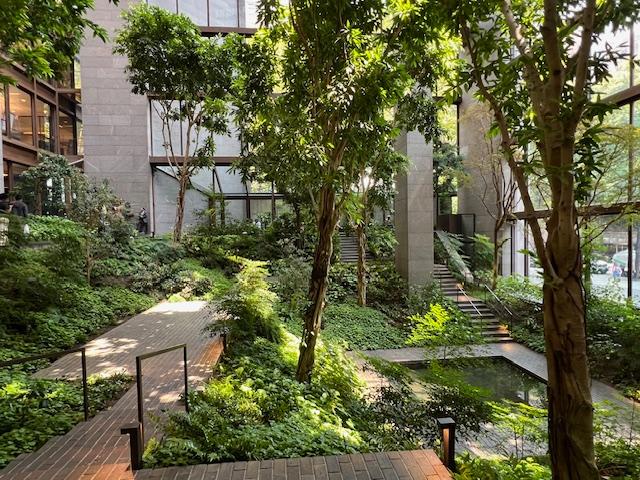
The Ford Foundation Building at 320 East 43rd Street in the Turtle Bay neighborhood. Take time after visiting the gallery to tour the gardens in the lobby.

When I was touring the Turtle Bay neighborhood for my blog, “MywalkinManhattan.com”, I toured the Ford Foundation Building on East 43rd Street and wondered through the lobby area gardens I came across the Ford Foundation Gallery, which is just off the main lobby. The small gallery delves into some deep material on social commentaries about life and the artists featured have some pretty interesting perspectives on their work.

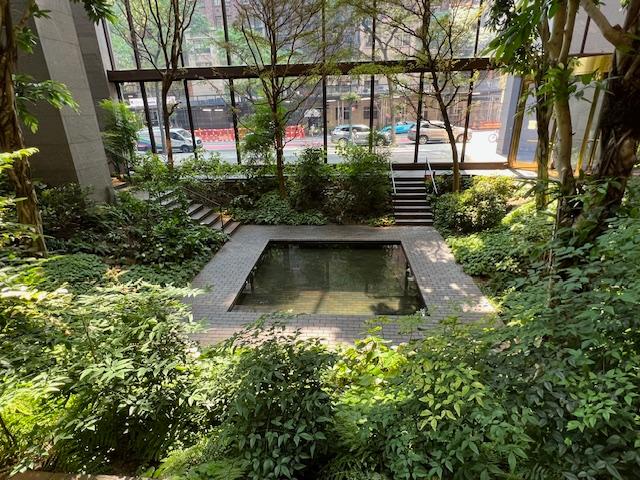
The Ford Gallery gardens inside the building

The pool of the Ford Foundation Garden

The beauty of the Ford Foundation gardens

The Ford Foundation Gallery entrance

The first exhibition I saw there was “Radical Love”, a theme is dealing with ‘love as the answer to a world in peril’. This interesting exhibition offers multidisciplinary art dealing with human nature and society. How different cultures show their respect and love to one another. It is an interesting mix of paintings, photos and video art from all over the world with each other showing their interpretation of dealing with the issues in life. You really have to read between the lines with this exhibition.

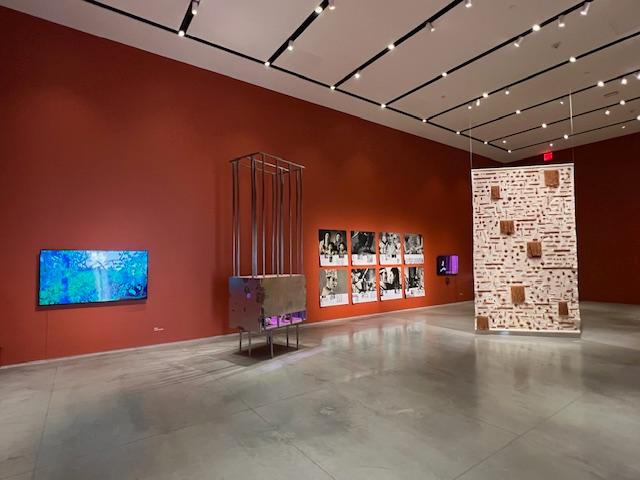
Ford Foundation Gallery II

The ‘Radical Love’ exhibition at the new Ford Foundation Gallery

(from the museum website on the exhibition)

Through the theme of Utopian Imagination, the trilogy of exhibitions in the gallery’s inaugural year create a trajectory toward a more just future. The first exhibition, Perilous Bodies (March 4 – May 11, 2019), examined injustice through the intersecting lens of violence, race, gender, ethnicity, and class. Radical Love responds to the first show by offering love as the answer to a world in peril.

Love, in the context of this exhibition, is defined by a commitment to the spiritual growth and interconnectedness of the individual, their community, and stewardship of the planet. Guided by the powerful words of bell hooks, “Were we all seeing more images of loving human interaction, it would undoubtedly have a positive impact on our lives.” The works in Radical Love are grounded in ideas of devotion, abundance, and beauty; here, otherness and marginality is celebrated, adorned, and revered. The Utopian Imagination exhibition trilogy concept was developed by Jaishri Abichandani.

In 2024, I saw the new show “Cantando Bajito Incantations“:

The sign from the exhibition:

(from the website)

The Gallery

Work from the exhibition

Translated into English as “singing softly,” the exhibition series title is drawn from a phrase used by Dora María Téllez Argüello, a now-liberated Nicaraguan political prisoner, to describe the singing exercises she did while she was incarcerated in isolation. Helping her to conserve her voice and defeat the political terror she endured, Téllez’s quiet singing became a powerful strategy for survival and resistance. Conceived in three movements, Cantando Bajito features artists who explore similar forms of creative resistance in the wake of widespread gender-based violence. The second chapter, Cantando Bajito: Incantations, brings together artists who consider ancestral, contemporary, and future-facing networks of support and care that safeguard feminized bodies through forms of knowledge transmission. 

Work from the exhibition

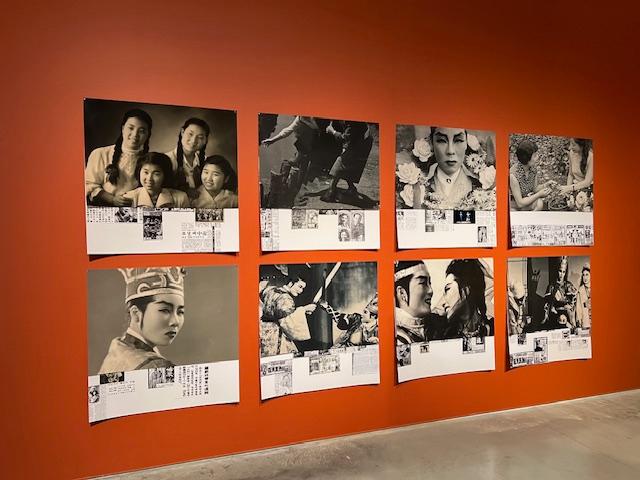
Such networks—symbolic systems, subversive spaces, or covert forms of language—are as varied as the communities that develop them. They include Nüshu, a form of script passed from mother to daughter in China; the use of henna as an agent of protection; and forms of therapeutic communication that have been deemed “gossip.” All have long existed, whether in the shadows or in plain sight. Preserved not in written history but in the body, these channels prepare feminized bodies for potential violence while giving them tools to resist it. 

Works from the show

Works from the show

From inside the tent

The History of the Ford Foundation Gallery and it’s recent opening:

(From the museum website)

This new 1,900 square foot gallery space opened in February of 2019 after a two-year renovation of the Ford Foundation Building. The Ford Foundation Gallery will be an innovative exhibition space dedicated to presenting multidisciplinary art, performance and public programming by artists committed to exploring issues of justice and injustice. In creating a space for artists whose work addresses pressing social issues, the foundation continues its decades long history of investing in the arts to advance human welfare (Ford Foundation Press Release).

Ford FOundation Gallery V

Athi-Patra Ruga’s ‘Umesiyakazi in Waiting’

With a mission focused on addressing inequality in all its forms and providing more than $600 million annually in grant support to organizations on four continents, the Ford Foundation is a natural home for art that challenges viewers to grapple with fundamental questions of fairness and dignity. Three exhibitions in this inaugural year offer varied interpretations on the theme of Utopian Imagination (Ford Foundation Press Release).

The gallery is small and you can see these exhibitions in under an hour.

Grover Cleveland Birthplace                                                                   207 Bloomfield Avenue                                                                            Caldwell, NJ 07006

Grover Cleveland Birthplace 207 Bloomfield Avenue Caldwell, NJ 07006

Grover Cleveland Birthplace

207 Bloomfield Avenue

Caldwell, NJ   07006

(973) 226-0001

https://www.nps.gov/nr/travel/presidents/grover_cleveland_birthplace.html

Open:  Sunday 1:00pm-4:00pm/Monday & Tuesday Closed/Wednesday 1:00pm-4:00pm/Thursday-Saturday Closed. Closed on all major holidays.

Fee: Free New Jersey State Park System/Free Parking on premise

My review on TripAdvisor:

https://www.tripadvisor.com/Attraction_Review-g46338-d2661291-Reviews-The_Grover_Cleveland_Birthplace-Caldwell_New_Jersey.html?m=19905

The back of the property in the Fall of 2026

I recently visited the birthplace of of our 22nd and 24th President of the United States of America and it is an interesting look into one man’s past. The Grover Cleveland Birthplace Museum was originally the pastor’s residence for the First Presbyterian Church in Caldwell, NJ.

Grover Cleveland

President Grover Cleveland

https://www.whitehouse.gov/about-the-white-house/presidents/grover-cleveland

https://en.wikipedia.org/wiki/Grover_Cleveland

The historic sign on the President

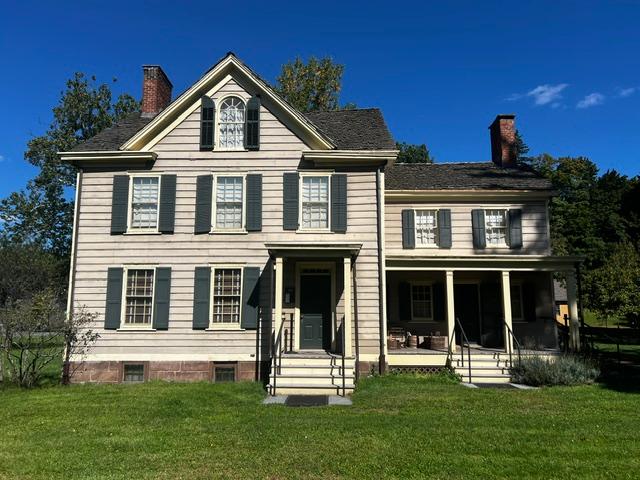
The front of the house in the early Fall

What I found interesting about this historical home is that the President’s sister, Susan, saved everything of the family’s past. Things like furniture, home furnishings, cooking utensils, paintings and photos of the family plus personal items of the President such as his clothes, pipes, shaving kits and traveling cases so there is a lot of interesting items to see and well thought up display cases.

The house is broken up into the kitchen area, the living chambers, the former living room area which has most of the displays and then the front hallway where more family displays are located.

Grover Cleveland Birthplace IV

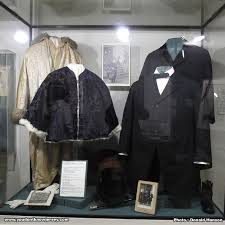
President  Cleveland and Mrs. Cleveland’s personal clothes

Try to take a tour with the tour guide, Paula, who knows the house backwards and forwards and gives you an interesting take on the family. She will be able to point out all the family objects and personal items that have been donated by family members. Things from formal clothes to a piece of the President’s wedding cake.

Grover Cleveland Birthplace III

A piece of the President’s wedding cake

The whole tour takes about an hour and you will find yourself memorized  by the displays and the family history of the children and grandchildren. It is interesting to see how the family grew when they were living in Caldwell, NJ.

History of the Cleveland Birthplace Museum:

Grover Cleveland’s birthplace was built in 1832 as the Manse or pastor’s residence for the First Presbyterian Church of Caldwell. Cleveland’s father, the Reverend Richard Fally Cleveland was the minister here from 1834-1841.

Grover Cleveland’s early childhood

Originally this frame home had a two-story main section with a one-story kitchen to the east and a one-story lean-to at the rear. It was enlarged several times between 1848-1870 to meet the growing needs of the Presbyterian clergy. The house is a good example of local vernacular architecture.

The front Birthplace house and the church off to the side

The historical significance of the Manse was first noted in 1881 when Cleveland was running for Governor of New York. As his political star  ascended, so did the interest in preserving his birthplace as a museum. A group of Cleveland’s friends and admirers began negotiations to purchase the Manse in 1907. Their efforts culminated in the opening of the house to the public on March 18, 1913.

Most of the first floor rooms portray the Manse as it was in 1837, the year Grover Cleveland was born. The decidedly middle-class character of the rooms reflect the day to day life of the Reverend Richard Cleveland and his family. Among the artifacts on display from Cleveland’s early years are his cradle and original family portraits.

Grover Cleveland Birthplace II

Grover Cleveland’s crib where he was born

Contrasting sharply with the humble beginnings portrayed in these rooms, the exhibit gallery features a striking display of artifacts that reflect the financial and political success Cleveland achieved during the last quarter of the 19th Century. Here, the mud-slinging campaign of 1884, the public’s intense interest in his wife and children and America’s political climate throughout his split terms of office are explored.

The Grover Cleveland Birthplace State Historic Site is the only house museum in the country dedicated to the interpretation of President Cleveland’s life. It is the nation’s leading repository of Cleveland artifacts and political memorabilia. The Grover Cleveland Birthplace is listed on the New Jersey and National Registers of Historic Places.

The President’s time in New Jersey:

Stephen Grover Cleveland was born on March 18, 1837 to the Reverend Richard Cleveland and his wife, Ann. Named for the first ordained pastor of the First Presbyterian Church at Caldwell, he would in time become known by his middle name, Grover.

Cleveland was raised in a strict, modest home. As the son of a minister and the fifth of nine children, he had a religious and principled upbringing with few luxuries. When Grover was four, Reverend Cleveland moved his family to Fayetteville, NY.

(The Grover Cleveland Birthplace Museum pamphlet)

Dia: Beacon                                                               3 Beekman Street                                           Beacon, NY 12508

Dia: Beacon 3 Beekman Street Beacon, NY 12508

Dia: Beacon

3 Beekman Street

Beacon, NY  12508

(845) 440-0100

https://www.diaart.org/visit/visit/diabeacon-beacon-united-states

https://www.diaart.org/visit/visit

Open: Sunday & Monday 11:00am-6:00pm/ Closed Tuesday & Wednesday/Thursday-Saturday 11:00am-6:00pm

Fee: General Admission $20.00/Seniors $18.00/Students $12.00/Children 11-5 $5.00/Free to Children under 12

My review on TripAdvisor:

https://www.tripadvisor.com/Attraction_Review-g47291-d273538-Reviews-Dia_Beacon-Beacon_New_York.html?m=19905

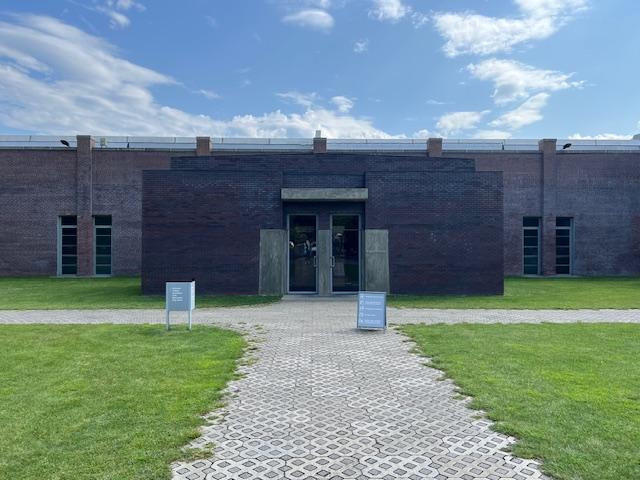
 The front of the Dia: Beacon

I visited the Dia: Beacon in Beacon, NY many times and I have to say that is an interesting space to display art and the pieces themselves make a statement. The museum is sited on thirty-one acres on the banks of the Hudson River and is adjacent to ninety acres of riverfront parkland. The museum is located in a former printing plant built in 1929 by Nabisco (National Biscuit Company) (Wiki). The space square footage gives the museum the opportunity to display larger statement pieces of well known artists.

The history of the Dia: Beacon:

(from the museum website)

The Dia: Beacon presents Dia Art Foundation’s collection of art from the 1960’s to the present as well as special exhibitions, performances and public programs. The Dia invited artist Robert Irwin to conceive the master plan for a twenty-century museum that retained the original character of the factory’s interior spaces, Irwin also designed seasonally changing garden throughout the surrounding landscape. Following the renovation, the Dia: Beacon was added to the National Register of Historic Places (Dia: Beacon Museum).

Dia Art Foundation:

(from the museum website)

Founded in 1974, Dia Art Foundation is committed to advancing, realizing and preserving the vision of artists. In addition to Dia: Beacon, Dia maintains a constellation of iconic, permanent artworks and installations in New York City, the American West and Germany (Dia Museum). 

Each of the galleries are devoted one artist’s work and these galleries make their own statements. There is also a really nice bookstore and gift shop on the extension of the museum and small restaurant.

It is nice to just walk around in your own time and visit each of the galleries. Plan about two hours to see the whole museum. It is an interesting place to see contemporary art in a gallery that is devoted to one artist at a time. The outside grounds of the museum and the parking lot makes it own statement. There is not much parking so plan on getting there early or later in the afternoon.

The museum has clean lines and big halls and a minimalist landscaping

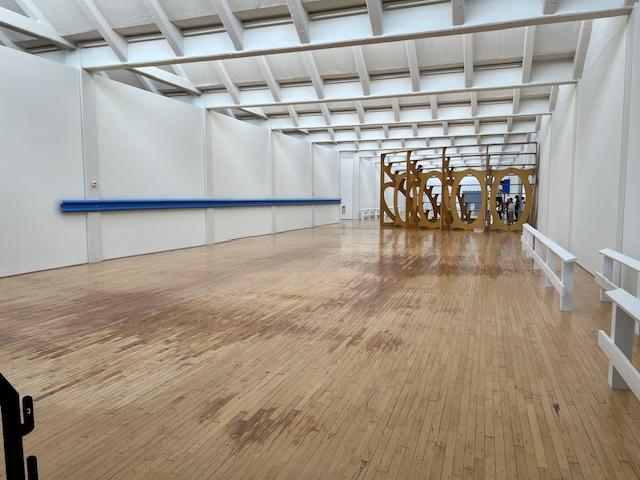
The one thing about the Dia is that the works are quite large and pack a bold statement.  The museum uses a combination of both American and Foreign artists and their works make a bold statement. The museums galleries are large and airy and can show larger works of art. The museum shows many of the artists largest pieces of work.

The inside of the Dia: Beacon’s large galleries

These larger pieces were interactive

Inside the museum, many contemporary artists are featured each season. Many of their larger works were featured in their galleries. While the shows rotate collections of many artists, these were the pieces that stood out to me on my visits to the museum over the years.

The Artists I most admired and their works that most stood out to me:

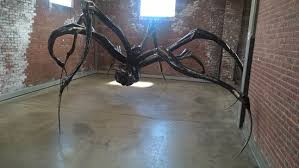
Artist Louise Bourgeois has displayed some interesting sculptures that dominate the upper floors. One of the most fascinating pieces was that of a large spider that dominates the corner of the floor.

Dia Beacon II

This Louise Bourgeois work is a rather creepy piece of art like something out of the movie “It”.

https://en.wikipedia.org/wiki/Louise_Bourgeois

https://diaart.org/collection/collection/bourgeois-louise-crouching-spider-2003-l-2007-012

In Bourgeois’s works on view in these galleries, organic formations fuse with the inorganic materiality of the media in which they are rendered, be it marble, wood, or bronze. The artist’s repertoire of materials spans traditional media and new textures, such as latex and synthetic resin. In her work, representation often entails the creation of a surrogate for the body and its suffering organs (Dia: Beacon museum website).

Artist Dan Flavin has some interesting light sculptures on display along the walls and floors of the gallery. Things are made of long fluorescent lights of various colors.

Dia IV

Artist Dan Flavin’s light sculptures

https://en.wikipedia.org/wiki/Dan_Flavin

After 1963 Flavin’s work was composed almost entirely of light, in the form of commercially available fluorescent tubes in ten colors (blue, green, pink, red, yellow, ultraviolet, and four whites) and five shapes (one circular and four straight fixtures of different lengths). Initially arranging these fixtures in varying autonomous configurations, Flavin increasingly made work in relation to architecture, such as his monumental barriers that physically block a passageway or segment of a space with light (The Dia: Beacon museum website).

In the main gallery as you walk in are the large geometric shapes of artist Charlotte Posenenske who created these pieces in various colors and shapes. These pieces line the floors and walls.

Dia III

The geometric shapes of Artist Charlotte Posenenske

https://en.wikipedia.org/wiki/Charlotte_Posenenske

https://www.diaart.org/exhibition/exhibitions-projects/charlotte-posenenske-exhibition

Embracing reductive geometry, repetition, and industrial fabrication, she developed a form of mass-produced sculptural Minimalism that addressed the pressing socioeconomic concerns of the decade by circumventing the art market and rejecting established formal and cultural hierarchies. Posenenske employed playful conceptual devices to oppose compositional hierarchy and invite the collaborative engagement of the public in the continual reconfiguration of her variable sculptures (The Dia: Beacon website).

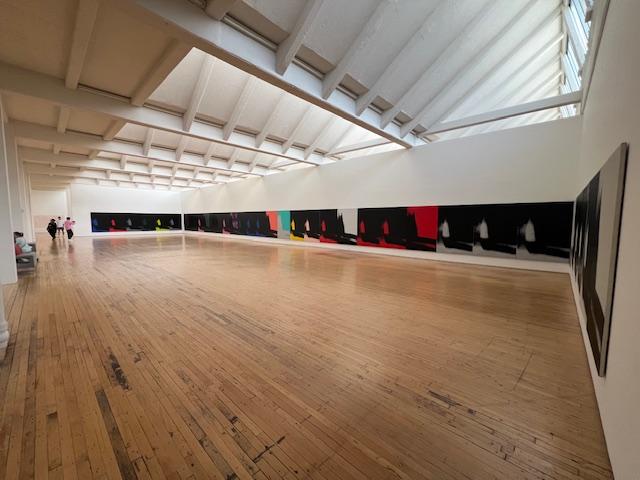
Artist Andy Warhol has one of his largest works displayed in the main gallery on the first floor.

The artist Andy Warhol gallery

https://en.wikipedia.org/wiki/Andy_Warhol

The large Andy Warhol piece

What I loved about the work by Warhol was the continuous colorful pattern of the work and the way it wrapped around the room. The pattern took form in many colors and showed consistency and balance.

A single painting in multiple parts, Shadows is one of Warhol’s most abstract works, yet one that cohesively synthesizes key elements of his practice, including film, painting, photography, and screen-printing. Originally commissioned by Dia and acquired in 1979 for a solo exhibition at 393 West Broadway in New York, Shadows includes a total of 102 canvases; the final number of canvases on view in each installation is determined by the dimensions of an existing exhibition space (The Dia: Beacon museum website).

Artist Senga Nengudi Gallery

https://www.sengasenga.com/

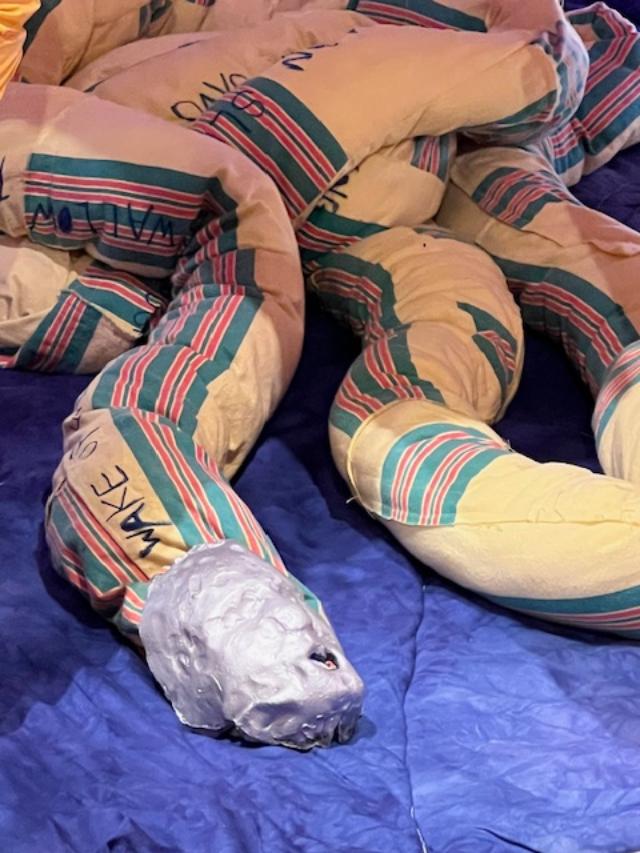
American artist Senga Nengudi had a some interesting works on display, one resembling melted ‘freeze pops’, which I thought was rather clever. Her large works took liquid forms and were colorful and spontaneous. These large works had lots of color and looked whimsical and fun.

One of Artist Senga Nengudi works

I thought this was a large ‘freeze pop’

One of her non-liquid works

Made of everyday materials such as vinyl, water, nylon, sand, dry-cleaning bags, lint, paper, and tape, Nengudi’s installations are at once proxies for bodies and sites for performance. The works accommodate a variety of cultural references from African, Japanese, and South Asian rites to Western avant-garde art. Characteristic of her openness to multiplicity, the artist, born Sue Ellen Irons, has assumed pseudonyms that inflect her creative identities as sculptor (Senga Nengudi), painter (Harriet Chin), photographer (Propecia Leigh), and writer (Lily Bea Moor) (The Dia: Beacon museum website).

Some of the other works that I liked as I walked around the museum:

Displayed on the first floor of the Dia: Beacon

Another interesting work on the first floor

The large galleries and open air space give patrons a chance to walk around the works and really get a feel for what the artists are trying to express. You really get to see the art up close and that is why I like the way they display their art. We can engage with each piece and develop our own meaning from it.

The grounds and the proximity to the river gives the museum a picturesque spot. It is nice to walk around the lawn on a warm day and enjoy the paths around the museum. The museum also has a very interesting gift shop featuring many books and gifts. The small restaurant can be pricey but offers a place for a light lunch or a quick snack.