

Waldwick Signal Tower
1 Bohnert Place
Waldwick, NJ 07463
http://www.wctower@optimum.net
http://www.allaboardwaldwick.org/
https://www.facebook.com/pages/Erie-Railroad-Signal-Tower-Waldwick-Yard/135792839782599
Open: Please note the website for when the two buildings, the tower and the railroad station museum are open.
TripAdvisor Review:
This was the second time I visited the Waldwick Signal Tower, one of the last surviving of its kind on the railroad line. The architectural Queen Anne Style depot was built in 1886. The depot was called ‘Waldwick’ meaning “Light in the Woods”. The railroad signal tower was erected in 1890 in a similar style as the depot (Waldwick Historical Society).

The Signal Tower sign welcomes you.

The history of the Signal Tower as it was once one of six towers between New York and New Jersey.
The tower is a two story museum right next to the tracks in a rather obscure location in the back which you have to reach coming off Hopper Road to 1 Bohnert Place and the parking lot is off to the side.

The Signal Tower still sits on the Pascack Line that leads into New York City.
There is some walking here and not ADA accessible as the building was built so long ago but you can see it from a car from the parking lot and get a feel for its look and purpose at an earlier time in history. The main room downstairs had an interesting exhibition of railroad deeds from the various railroads that used to be part of the system of Bergen County whereas the upstairs which can be reached from the outside.
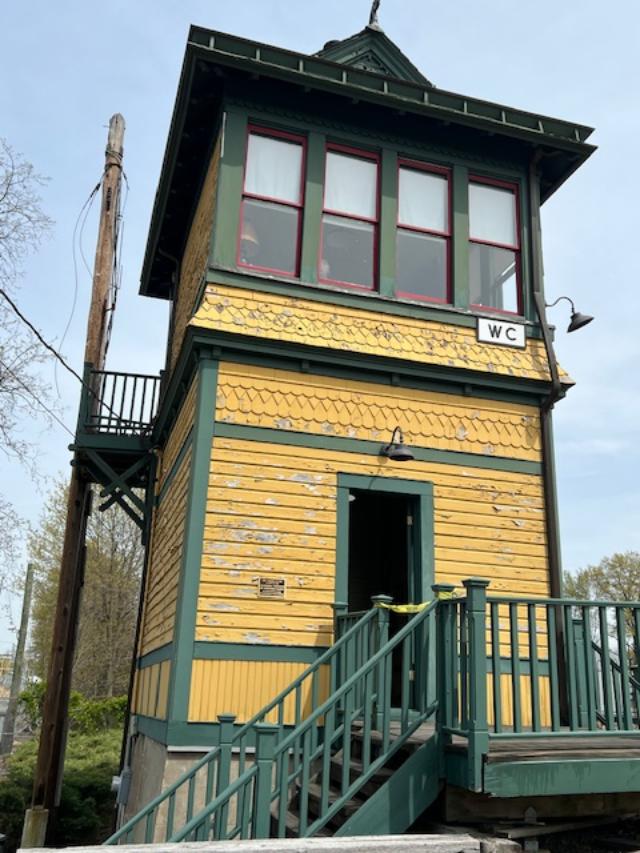
The outside of the Waldwick Signal Tower.
On the lower level of the Signal Tower has the exhibitions on the artifacts of the train station that includes the signal lightening, telephone pole protectors and items used at the station.

The downstairs gallery at the Waldwick Signal Tower.

The schedules and signal lights of the tower.

The map of the railroad into New York City and out into the suburbs.

The exhibition on the signal lights used by the conductors on the rail line.
Upstairs you get a better view of the tracks and the surrounding area. There was a train video going the first time I was there and there are members of the Waldwick Historical Society on hand to answer any questions.

The upstairs Conductor’s office is set up as it would have during the time of the tower in service.

The tower’s signal board on the second floor.
The tower is well organized with exhibitions on both floors and in a very interesting way. The displays are interactive and very detailed and the volunteers were there to talk to visitors about the site.
Waldwick Signal Tower History:
Waldwick’s Train Signal Tower is both historically and architecturally significant. It is a rare historical treasure for its residents and railroad enthusiasts from far and wide. Before the turn of the 20th Century, the Waldwick rail yard was an active repair depot and turn station for the Erie Main Line from Jersey City, NJ to Port Jervis, NY and was a major employer in Waldwick thus contributing to the borough’s residential and commercial growth.
The ornate Queen Anne style building was built in 1890 and housed the mechanism connecting switches and signals allowing trains to safely move from one track to another. The tower men who operated the switches by hand had great power indeed in their time.
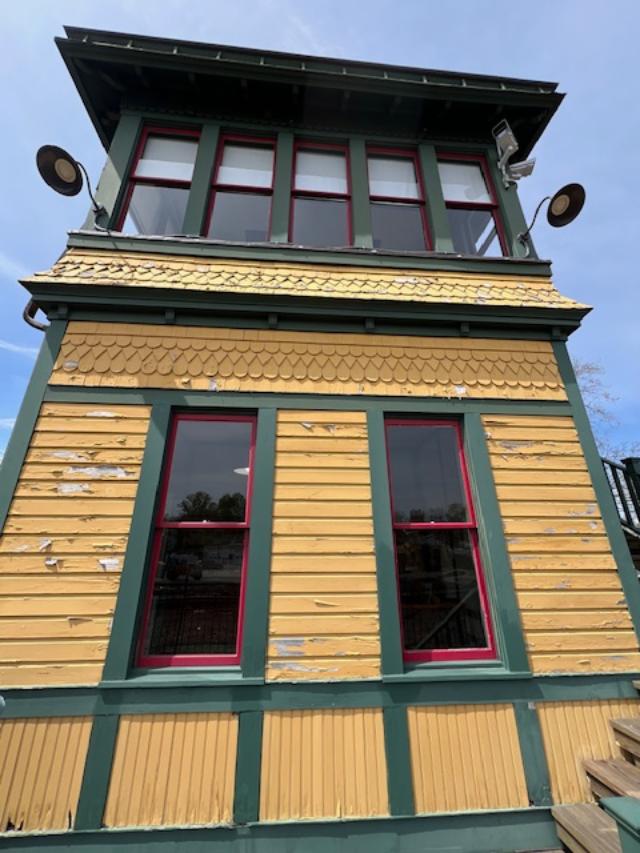
Another view of the signal tower.
By the mid-1980’s, upgrades in computerized signal equipment warranted the elimination of the tower. The tower was slated for demolition in June 1987. The Waldwick Historical Society members led by Kay Williams campaigned to place the tower on The National Registry of Historical Places. This accomplishment allowed the tower to at least stay dormant till the next wave of enthusiasts came along in 1999.

The tower before the renovation
Michael Brunkhorst and Glenn Corbet banded together a group of citizens to form the All Aboard committee of Waldwick’s Historical Society. Curtis Springfield of Wanaque, who is the great-grandson of the renowned locomotive engineer, Harvey Springfield, got wind of the tower’s trials. He stepped up to the plate and purchased the tower for $6,000 then gave the Tower to the Borough of Waldwick as a gift to preserve for future generations in honor of the trainman’s family name.
The small All Aboard group set out to create awareness of the tower’s existence and it’s plight. Before long, fund drives were organized grant applications were filed. The response of a number of supporters including Mr. Robert Keeble, have given this project a solid start.
Meticulous measures are currently being made and can now be witnessed at the track end of Bohnert Place, to maintain the tower’s historical authenticity. Attention is being given to the placement of exact shaped decorative shingles and the repair and replacement of the original slate roof are among the initial stages of it’s restoration.

The Waldwick Signal Tower in the Spring 2024.
The Mission Statement:
The All Aboard continues seeking membership and financial support to complete the tower with the vision of becoming “The Harvey Springfield Memorial Tower at Waldwick” for generations of Waldwick citizens and for rail enthusiasts everywhere. If funding continues the tower is sure to be the pride of Waldwick with time and care.
This information comes from the Waldwick Historical Society’s pamphlet.
All Aboard Waldwick
Bless this tower, standing tall,
With Memories we share with all;
Bless the levers standing there,
Their work now finished,
with a prayer;
Bless this time in history now,
Remembering its always, this we vow;
Bless the ones who share this song,
And keep us all in health and strong.
Words by Helen Taylor.
A Brief History of the Borough of Waldwick
Pre-1700: Lenni-Lepane Indians inhabited the land.
1600’s: European farmers settled the land.
Late 1700’s: Franklin Turnpike is a toll road.
1840’s: The railroad connecting Jersey City with Suffern is built and ran through Waldwick, then named New Prospect.
1852: Erie Railroad Company takes over the railroad.
1880: New Prospect becomes a depot.
1886: An architectural Queen Anne Style depot is built. The Depot is called ‘Waldwick’ meaning “Light in the Woods”. The depot brings more commerce to the area also called ‘Orville Township’.
1890: The Railroad Signal Tower is erected in a similar style as the Depot.
1919: The small railroad hamlet is incorporated as the Borough of Waldwick.
The history of the tower.
Disclaimer: This information is taken directly from the Waldwick Historical Society pamphlet and I give them full credit for the information. Try to take time to see both the tower and the museum by the train station. The Whistle Stop Restaurant is around the corner and has a reputation for excellent sandwiches and ice cream.

The Waldwick Whistle Stop Restaurant at 27 Fredrick Street.
https://www.facebook.com/waldwickwhistlestop
My review on TripAdvisor:
My review on DiningonaShoeStringinNYC@Wordpress.com:
The burgers here are really good as are the chicken fingers.

The Cheeseburgers and fries are excellent and very reasonable at the Waldwick Whistle Stop Restaurant.






 Visiting a Museum: The Unique, Unusual, Obscure and Historical