Tag: Smile! Your Visiting New Jersey!

Union Cemetery                                                                                    316 Darlington Avenue                                                              Ramsey, NJ 07446

Union Cemetery 316 Darlington Avenue Ramsey, NJ 07446

Union Cemetery

316 Darlington Avenue

Ramsey, NJ 07446

(291) 327-3879

https://www.findagrave.com/cemetery/1680177/union-cemetery

https://www.countyoffice.org/ramsey-union-cemetery-ramsey-nj-4cf/

Open: Sunday-Saturday Dusk to Dawn

My review on TripAdvisor:

The Union Cemetery of The First Presbyterian Church of Ramsey, NJ

History of the Cemetery:

(from the church website)

Union Cemetery is a religious cemetery located at 316 Darlington Ave. in Ramsey, NJ. The cemetery is owned and managed by the First Presbyterian Church in Ramsey. As a religious cemetery, the cemetery is restricted under New Jersey state law and is not open to the general public. Only members of a Christian church and their immediate relatives may be interred at the cemetery.

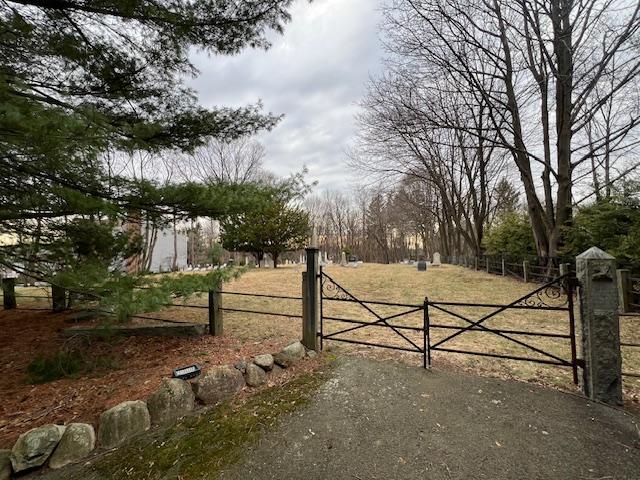
The historic cemetery from the road. To the left is the oldest part of the cemetery

Entering the cemetery from Darlington Avenue

The newer part of the cemetery is to the right of the driveway

I was visiting the Union Cemetery in search of veterans of the Revolutionary War and found an interesting cemetery with a deep history in Bergen County. Many first families of Bergen County are buried here and veterans not just from the Revolutionary War but the Civil War all the way up to today are buried in this active town cemetery.

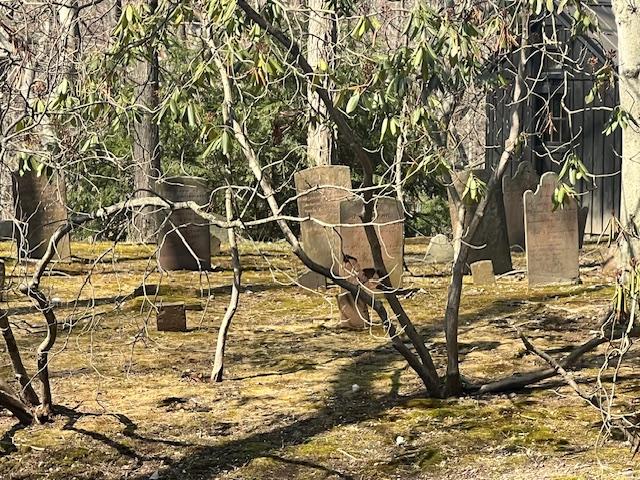
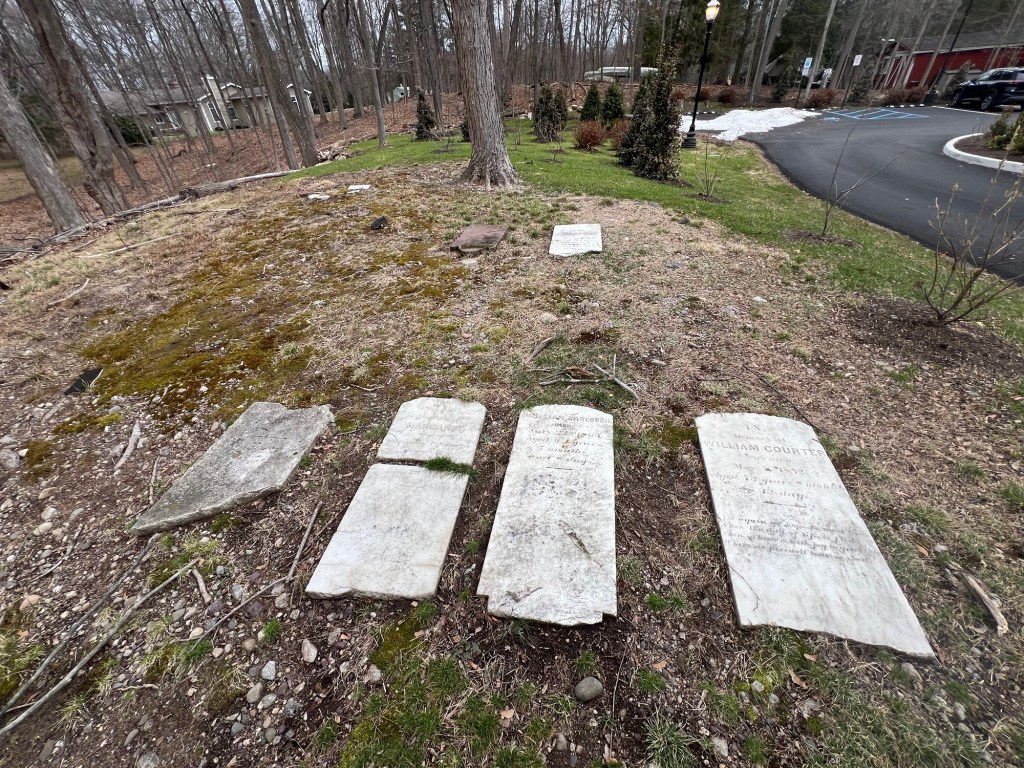
The older part of the cemetery is to the left of the driveway. These tombstones are from the early 1800’s.

The older part of the cemetery dates back to before the Revolutionary War

Many of the early family plots are located here with well known names like Hopper, Christie, Ackerman and the town’s namesake, the Ramsey family, whose family plot is in the oldest section of the cemetery.

The grave of Hannah Jane Ramsey in the Ramsey family plot

Part of the Ramsey family plot

The Ramsey family plot

The Union Cemetery to find the graves of Revolutionary War veterans and found some but not all of them. The tombstones are so worn after over two hundred years that they either had disappeared or were so worn you could not read them.

The oldest section of the cemetery where many veterans both from the Revolutionary and Civil War are buried. It was hard to read many of the tombstones. Some the veterans were buried in their family plots, others with their spouses separately. The burials were concentrated in the oldest part of the cemetery. Most of the veterans have been honored with American flags.

The first tombstones I found were from Ackerman family members

https://www.njgsbc.org/files/familyfiles/g0/p10.htm

The grave of veteran John Ackerman

The grave of veteran James Ackerman

I could not make out the name of this Ackerman member but I figured it was one of the brothers wife

The grave of veteran John P. Post

The Post family history:

(from the Saddle River Historical Society website)

The Post family was of Dutch descent. The first Post was a soldier, who came here to protect the new settlements along the Hudson. They soon turned to milling; the name Post is attached to several mills in Bergen and Rockland Counties. Joseph Post, born in 1775, built a mill on the west branch of the Saddle River about 1800. He also opened a tavern and store on what is now West Saddle River Road, just north of Parker Place, across from the entrance to the mill.

The graves of members of the community at that time including the grave of John P. Post

The grave of veteran William Vanderbeck

The grave of a member of the Van Brock family, who was married to James Ramsey

I was not too sure who this was but by the veteran’s flower I am assuming the grave of veteran John Van Blarcom

The grave of Hannah (I believe Ackerman)

The Christie family plot

The Hopper family plot

The Hopper Family history:

(from the Saddle River Historical Society website)

The Hopper family is one of the oldest of European descent in Bergen County. Andries Hopper came from the Netherlands to New Amsterdam in the 1640’s. His widow and her son Hendrick were in the Polifly area (Hackensack) by the late 1600s. There was land to be had in the unsettled areas of what became Bergen County. Hendrick’s two oldest sons, Andries and Jan settled in the HoHoKus area (part of Paramus) around 1712. The Hopper name appears on many old homes and mills on early maps of the area. It was two of Andries’ children, Abram and Jan, who settled sometime around 1730 along the Saddle River in what is now Upper Saddle River.

Stone Harbor Bird Sanctuary                                         11400 3rd Avenue                                                                Stone Harbor, NJ 08247

Stone Harbor Bird Sanctuary 11400 3rd Avenue Stone Harbor, NJ 08247

Stone Harbor Bird Sanctuary

11400 3rd Avenue

Stone Harbor, NJ 08247

(609) 368-5102

https://www.facebook.com/p/Stone-Harbor-Bird-Sanctuary-100064916130839/

Open:Sunday-Saturday 24 Hours

Admission: Free

My review on TripAdvisor:

The sign welcoming you

The History of the Stone Harbor Bird Sanctuary:

(from the park’s website)

The Stone Harbor Bird Sanctuary is a wonderfully preserved microcosm of what the barrier islands of New Jersey looked like hundreds of years ago.  As you walk along Sanctuary paths, it is easy to imagine the Lenni-Lenape Indians wandering through the maritime forest, crossing wind swept sand dunes, past groves of white cedar, birch, pine, holly and sassafras trees, taking time to drink water from a spring fed freshwater pond and then, fishing in the salt water meadows surrounded by herons and songbirds.

As early as the 1870’s and 1880’s, the Sanctuary area was recognized as a “veritable paradise of birds” for ornithologists.  The primary attractions were Little Blue Herons, Black-crowned Night Herons, Green Herons and egrets.  Once the 96th Street Bridge opened in 1911, those who wanted to study, hunt or collect the eggs of birds no longer had to walk across four miles of marsh.  Easy access to the heronry was a boon to birders but also a threat to birds whose plumes and eggs were valued.

In 1941, the Stone Harbor Bird Club was organized in the home of Lillian R. Leuallen.  The Bird Club was renamed in 1946 as the Witmer Stone Club to honor Witmer Stone, one of the first ornithologists to document birds in the Sanctuary area.  With considerable foresight, the Witmer Stone Club proposed early in 1947 that the Borough of Stone Harbor establish a “sanctuary”.  In October of 1947, the Borough Council passed Ordinance #208 which preserved 31 acres of land as a wildlife sanctuary.  Subsequent to expert study in 1961 which demonstrated that no birds were nesting on the beach side sanctuary acreage, the Stone Harbor Borough Council sold ten acres to the east of Second Avenue.  The remaining 21 acres bounded by Second Avenue to the East, Third Avenue to the West, 111th Street to the North and area between 116th and 117th on the South represents the Sanctuary as we know it today.  The Sanctuary remains one of the few bird sanctuaries in the world that are completely within municipal boundaries.

One can’t overstate the foresight and commitment of the residents and Borough officials to conservation as well as the preservation of open space and wildlife in 1947, 1961 and every year since.  This commitment was reinforced by the United States Park Service in 1965 when it designated the Sanctuary as a National Natural Landmark.

Over the years, the Sanctuary has been home to thousands of birds and visited by more than a million people representing all fifty states and most countries in the world.  It has been estimated that Sanctuary visitors spend more than $5 million each year, locally. Although some like the New York Times in 1960 glorify the Sanctuary, referring to it as “The Everglades of New Jersey”, Stone Harbor residents think of the Sanctuary as a symbol of the character of this quiet, single family town which respects the nature and wildlife that surrounds them while placing a premium on livability, aesthetics and serenity.

The front of the sanctuary from 3rd Avenue

I took a walk when I was in Stone Harbor through the town’s Bird Sanctuary to hopefully view some rare birds. While I did not see much, I heard a lot of singing and scrawling as I walked the path through the trees.

The front gardens in the sanctuary

The gardens were still in bloom in the late Summer and many colorful wildflowers attracted all sorts of butterflies and other insects.

The sign greeting you about the experience

The front path of the sanctuary

You head over the bridge to the paths that take you into the woods

Walking down the pathways through the woods

The path takes you into a deep wooded area in the middle of the town and by the time you get to the middle of the path, you can hear the mating calls of many birds. It’s funny to note that we are a couple of blocks from the shore.

Walking through the pathways

Reaching the middle of the beach woods

The middle of the bird sanctuary noisy with bird calls

Walking back through the pathways through the roads

Touring through the Bird Sanctuary does not take a long time, but offers relief from a busy shore town.

Video on the park:

The Sam Azeez Museum of Woodbine Heritage 610 Washington Avenue Woodbine, NJ 08270

The Sam Azeez Museum of Woodbine Heritage

610 Washington Avenue

Woodbine, NJ 08270

(629) 626-3831

https://woodbinemuseum.org/

https://visitnj.org/sam-azeez-museum-woodbine-heritage

https://www.facebook.com/p/The-Sam-Azeez-Museum-of-Woodbine-Heritage-of-Stockton-University-100085580916230/

Open: Sunday-Tuesday Closed/Wednesday-Saturday 10:00am-4:00pm/Saturday Closed

My review on TripAdvisor:

https://www.tripadvisor.com/Attraction_Review-g46938-d3915473-Reviews-The_Sam_Azeez_Museum_of_Woodbine_Heritage-Woodbine_Cape_May_County_New_Jersey.html

The front of the Sam Azeez Museum of Woodbine Heritage

The entrance sign that welcomes you

The History of the Sam Azzez Woodbine Museum:

(from the museum’s website):

The Sam Azeez Museum of Woodbine Heritage is an independent non-profit charitable organization preserving the unique history of Woodbine, NJ.

Established in the 1890’s through Baron de Hirsch’s philanthropy, Woodbine began as an agricultural colony for Russian Jewish immigrants seeking freedom denied in their homeland. As poor soil conditions limited farming, Woodbine evolved into Cape May County’s manufacturing center while maintaining founding values of education, religion and inclusion.

The museum occupies the historic Woodbine Brotherhood Synagogue, listed on the Natural Register of Historic Places. The restored sanctuary hosts special services, while the Brotherhood Hall houses exhibitions including the community-contributed Collective Memory Wall.

The historical significance of of the Town of Woodbine

The entrance to the museum

The museum is another interesting look at New Jersey history and the development of the immigrant story of assimilation into American society.

I was given a personal tour by the Assistant Curator and she explained the resettlement of Russian Jewish immigrants by a wealthy patron into this South Jersey community.

The main gallery of the museum

The panels tell the story of how these community came into being and how these people built a community through agricultural and eventually manufacturing and small businesses that supported the community around it. It established a town that was self sustaining and grew to the community center.

The panels show the growth of Woodbine as a community

The residents established their own sports teams, community organizations and civic groups like the councils and fire and police departments.

The records of the many town organizations of Woodbine

Display of one of the first families to settle in Woodbine

Display of the religious faith of the community

One of the most touching displays is of survivors of the concentration camps during the holocaust. These pictures represent these women as children and them today.

The display of the women who survived the camps

The history of the community and the growth of diverse businesses in Woodbine

Creating and building the Synagogue in the community

On the second floor of the building is the old synagogue of the community which is only used during the high holidays. This is used by descendants of the community and family members of theirs.

The inside of the synagogue on the second floor of the building

The front of the temple

The chandelier is original to the temple

The space was being prepared for the Jewish New Year and the crowd of people who would be attending.

The Memorial Wall

The traditions of the religion being practiced in the community

The self-government of the community

Still the younger generation was all American and wanted to assimilate into society with an all American past time of things like baseball.

The Woodbine youth baseball team

The uniform of the old baseball team for youths in the town

The last display is of the famous alumni who once lived in the community. These are the men and women who once lived here and went on after all odds to do great things and make our country better.

The Hall of Fame

The museum I thought had a bit of an identity crisis as I really did not know what the museum was about.

I was pleasantly surprised to find an interesting part of New Jersey history I had never known. It just goes to show you how a museum can educate you with just one visit. The Assistant curator said there will be more to come in the future.

Saddle River Reformed Church                                              481 East Saddle River Road                                               Saddle River, NJ 07458

Saddle River Reformed Church 481 East Saddle River Road Saddle River, NJ 07458

Saddle River Reformed Church and Cemetery

481 East River Road

Saddle River, NJ 07458

(201) 327-5242

https://oldstonechurchonline.org/about-us/

Open: Sunday 9:00am-12:00pm/Monday-Saturday Be Appointment

My review on TripAdvisor:

The Saddle River Reformed Church at 481 East Saddle River Road in Saddle River, NJ is also known as the “Old Stone Church”

The Saddle River Reformed Church in Saddle River, NJ is one of the nicest church’s in Bergen County for Sunday services. The Pastor is very inspirational in her speaking, the service is well planned out and enjoyable to follow, the congregation is very nice and very welcoming to new people attending church and they have nice refreshments in which they ask you to enjoy after service is over. I found the whole experience very engaging and enjoyable.

Inside the Old Stone Church during Sunday service there is still a sense that you are revisiting the time of the Revolutionary War and the period around it. The pews still have the same details they have had for three hundred years. You are no just going for Sunday service you are experiencing part of history.

The inside of the Old Stone Church

The inside of the Old Stone Church for Sunday Mass

The podium at the Old Stone Church

The Chandelier inside the Old Stone Church

The refreshment table after mass. It is a nice way to gather with other parishioners.

I thought it was very nice of the congregation to invite me to join them for pastries after the service was over. I had a nice time talking to everyone.

The historic marker of the church

I visited the ‘Old Stone Church’ in Saddle River, one of the oldest churches in the state and was taken not just by the beauty of the church but by the respect the church has for the people who are buried here. There is much recognition for the contributions of the soldiers and the armed forces not just for the Revolutionary War soldiers but current ones as well.

The oldest part of the cemetery is the closest to the church

The oldest part of the cemetery contains names like Demarest, Haring, Hopper, DeBraun, Eckerson, Terhune and Zabriskie. These are the first settlers of the area whose families owned farms in Saddle River. Many of the families have family plots in the cemetery.

The Hopper family plot

The Hopper family plot

The Hopper family plot

The Zabriskie family plot

The Gilderston family plot

The DeBaum family plot

The DeBaun family plot

The DeBaun family plot

The Hopper family plot

The Hopper family plot

The oldest part of the cemetery holds so much history of the founding members of the Saddle River and Bergen County community.

The History of the Church:

(from the Saddle River Reformed Church website)

Our church, known to many as the Old Stone Church, was organized in 1784 as a daughter church of the Old Paramus Church. It is a part of the Reformed Church in America, a denomination which traces its roots to the Dutch colonists.

While there is evidence that the original church building was erected in 1789, our present sanctuary was built in 1819. An extensive renovation in 1971 – 1972 recreated the appearance of the original structure.

The Old Stone Church and the historic Revolutionary War Cemetery that is located behind it.

The History of the Cemetery:

(From the Saddle River Reformed Church website):

Our cemetery is the resting place of numerous American Revolution and Civil War Veterans. Church records indicate that the following veterans have been buried at our historic site.

The Saddle River Reformed Church Cemetery is one of the most historic in this part of the country. Our cemetery is over 230 years old and is the burial ground of nine known Veterans of the American Revolution. Tracing back to the founding of this nation, these resting places designate the cemetery as an historic spot of great significance, with a special interest to historians and antiquarians. Surrounded by mature and lush foliage, its peaceful setting by the banks of the Saddle River make for an esteemed and hallowed resting place for your loved ones.

Some of the most fascinating part of the cemetery is its historical section

With the Bergen 250-The 250th Anniversary of the Revolutionary War next year, I wanted to point out the veterans buried here from the war.

Jacob David DeBraun

(from the church website)

David DeBaun was born in Schraalenburg (Bergenfield) in 1759 to Abraham DeBaun and Bridget Ackerman. About 1770 the family moved to Hempstead in New York. David served as a private in the Second Regiment of Hay’s Militia, Captain Garret Ackerson’s Company. He married Hannah Forshay, b. 1868, d. 1836. David died in New Hempstead, NY in 1820. He was tax officer of Hempstead in 1811 and 1812; supervisor of Haverstraw 1811-1814. An enclosed plot in the Upper Saddle River Cemetery is the resting place of his entire family.

John Tallman

(from the church website)

John Tallman was a Sergeant in Hays Regiment of Militia, Orange County, NY Militia, Company of Captain Hogenkamp, William Sickles, and Aurie Smith, and is listed on the Revolutionary War pension records. He was born in Tappan, the son of Jan Tallman and Helena Gerritse Blauvelt. He married Margrietje Forseur (Forshay). He died in New Hempstead, NY in 1839.

David Eckerson

(from the church website)

David Thomas Eckerson, was born in Schraalenburgh (Bergenfield) in 1738. He married Angenetye Vanderbeek and they had a sons Thomas, Paul, Jon, David and Aurie and daughters Hannah, Mary and Angenetye. He is on the Revolutionary War rolls in Rockland County. Revolutionary War veteran Peter van Orden was an executor to his will.

Thomas Eckerson

(from the church website)

Thomas Eckerson, 1745-1818, was married to Cornelia Eckerson. They had children, Thomas Eckerson, Edward T. Eckerson, Maria Eckerson Crouter, and Jacob Eckerson. He is listed as a Private, New Jersey Regiment. He also served in the War of 1812.

Abraham Haring

(from the church website)

Abraham G. Haring was born in 1755 in Tappan, Orange, NY to Garret J. Haring and Cornelia Lent. He married Elizabeth Blauvelt. He died in 1832 in Hempstead, Rockland, NY. He served in the Revolutionary War 1775-1783, Coopers Regiment, NY Militia.

John Terhune

(from the church website)

John A. Terhune, 1753-1805, was the son of Albert A. Terhune and Elizabeth Doremus. He inherited the stone house on the sw corner of Lake Street and West Saddle River Road, known as the Terhune-Hopper house. He married Catherine Lutkins, daughter of Harman Lutkins of Paramus. He is on the SAR list.

Jacob Zabriskie

In the modern day, I wanted to point out a hero to the Bergen Country Firefighting Community and former Saddle River Fire Chief Larry Rauch and his wife, Sherry who both contributed so much to the firefighting community.

Chief Larry Rauch

https://www.northjersey.com/obituaries/ber091143

Many members of the Revolutionary, Civil, war of 1812 to WWI and II to Desert Storm are buried here. These church treats our veterans with great respect.

The cemetery sign

Bergecco-Parc Consulting Inc. Team Project Spring Semester 2026:

As part of our historic cemeteries and graveyard project we are working on for the Bergen 250 project for the 250th Anniversary of the Revolutionary War, my class and I toured the historic graveyard and the family plots. This is one of the oldest churches in Bergen County and in New Jersey. We came to

The Old Stone Church at 481 East Saddle River Road in Saddle River

Touring the oldest part of the graveyard

This church has the most complete set of tombstones of Revolutionary War veterans and the church website has some of the most complete information on their veterans.

Our group picture at the Old Stone Church

My class and I toured the Old Stone Church first through some of the family plots that the students were writing about and then I took them on a tour of the section of the graveyard that held most of the veterans noted above. I walked them through the many family plots around this section of the church through the class period.