Tag: Exploring Ogdensburg NJ

Old Schoolhouse and Firehouse Museum                                    6 Passaic Avenue                                                                   Ogdensburg, NJ 07439

Old Schoolhouse and Firehouse Museum 6 Passaic Avenue Ogdensburg, NJ 07439

Old Schoolhouse and Firehouse Museum

6 Passaic Avenue

Ogdensburg, NJ 07439

https://www.sussex.nj.us/561/Old-Schoolhouse-Fire-Museum

https://www.facebook.com/oburghistoricalsocietypage

Open: Sunday 1:00pm-4:00pm (Only on the forth Sunday of the Month) Monday-Saturday Closed-Check the website for seasonality.

Admission: Free but a donation is appreciated

My review on TripAdvisor:

https://www.tripadvisor.com/Profile/R4960NKjustinw/mediabatch/14495681?m=19905
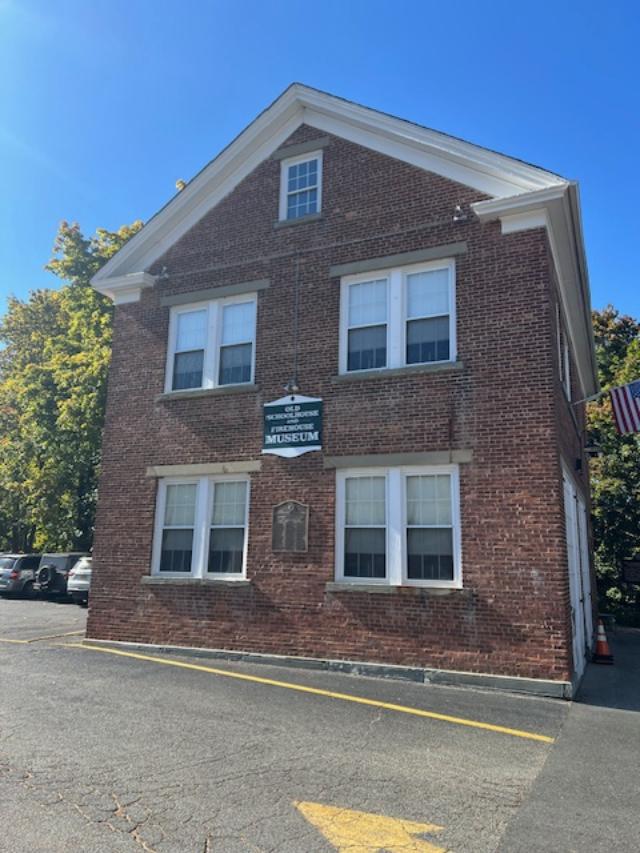
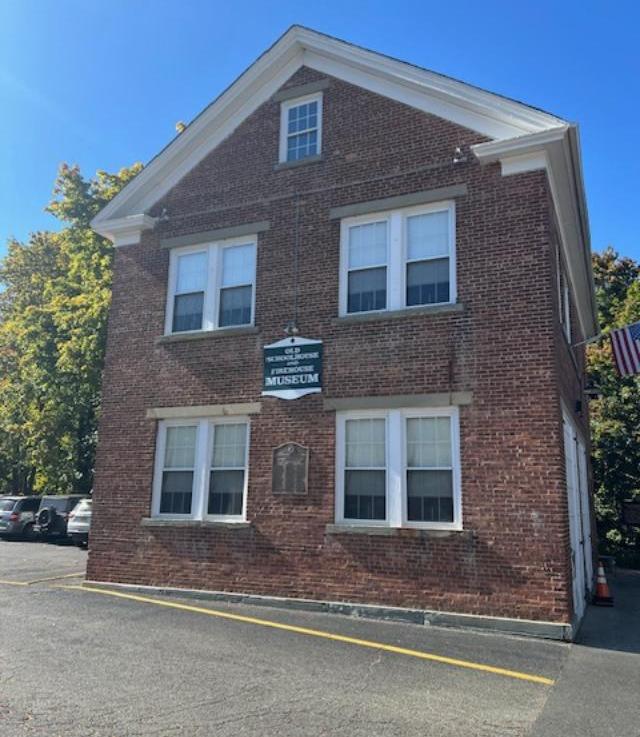
The front of the museum

I recently visited the Ogdensburg Old Schoolhouse and Firehouse Museum at 6 Passaic Avenue in Downtown Ogdensburg and discovered the community’s rich history of farming and mining in its past and its current destination as a weekend vacation spot and a up and coming bedroom community of New York City.

The County still has some farming and agriculture going on as the County continues to be built up with expats from the City, and Bergen and Morris Counties. The first floor is dedicated to the history of the Ogdensburg Fire Department with an old Engine and Ladders trucks, artifacts from the Sterling Mine just up the road and township property such as an old voting booth. You can read about the history of the Ogdensburg family as you head to the outside gallery.

The second floor has displays of various town departments including the Rescue, the Police Department and Fire Department. There are various displays of the town’s school system and various clubs in town. There are displays on the town’s mining and agricultural past with items such as farm advertising and mining equipment and minerals. Each display plays a role in the development of the community and how it progressed from farming to mining to manufacturing to the bedroom community it is today.

History of the Building:

“Built in 1910 as Ogdensburg’s fifth public school, it was adapted for re-use in 1930 as the Borough’s first firehouse replacing the one built in 1872. In 1984, with the aid of two state grants, the Ogdensburg Historical Society adapted it for re-use and dedicated it as the Old Schoolhouse and Firehouse Museum in 1987.

After 97 years, the Museum continues to serve the Borough of Ogdensburg as an historical learning and preservation center, and as a meeting hall.  On June 10, 2006 it was dedicated as an Ogdensburg Historic Site.”
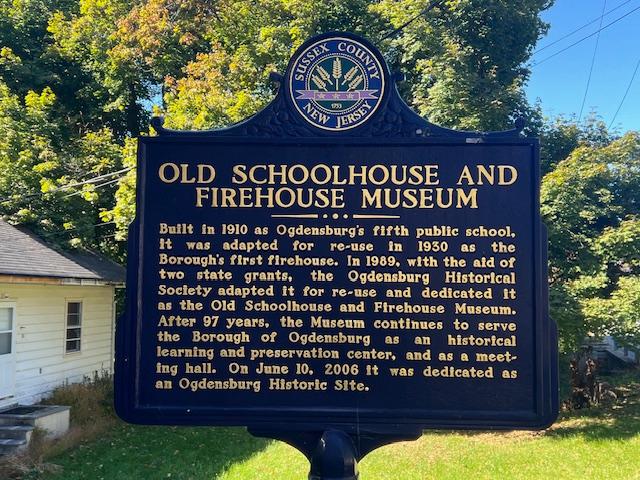
The historic sign of the museum

The Borough of Ogdensburg is the host of this marker commemorating the rich history provided by this building.  This building has been maintained with much thought and care and remains as a museum and meeting place for the residents of the town. The marker is located in front of the building on Passaic Avenue just off Main Street by the Ogdensburg Elementary School.  This marker was part of the 2008 placement (Museum website).

The outside of the museum which served as a school and a firehouse

The first floor of the building has the fire trucks, the history of the fire department and Ogdensburg’s 250th Anniversary of the United States on display.

The museum artifacts from the 250th celebration of the Country

The museum is on the heart of mining country of Sussex County, NJ and the museum has an interesting mineral collection along with their collection of mining artifacts.

The Mineral and Mining Collection

The museum being home to the Ogdensburg Fire Department contains the history of the local fire department along with vehicles and artifacts from the department.

https://www.facebook.com/oburgfd

The history of the Ogdensburg Fire Department

One of the early Ladder Trucks

The history of the department

One of the early Engine Trucks

The history of the department

One of the early pull hose beds pulled by men and then by horses

The first floor also contains the history of the Ogden family in the region.

The history of the Ogden family in the community

The town voting booth and a turn of the last century phone

The second floor gallery used to serve as offices and living space of the fire department.

The main gallery on the second floor

The gallery case lines are filled with memorabilia from different aspects of the community telling the story of the growth of the community that included Mining and Farming. It explains the growth into the modern suburbs of today. This includes the Fire and Police and Rescue Departments, the School System and cultural events in the community.

The main gallery on the second floor of the museum

The main gallery on the second floor

The display case of Ogdensburg departments including school, fire and police departments

The display of the Ogdensburg Police Department

https://www.facebook.com/people/Ogdensburg-NJ-Police-Department/61590226020577

The display of the Ogdensburg First Aid Squad

Blanket with historical sites and artifacts of the town of Ogdensburg, NJ

The businesses including schools and the domestic and farming industries

Each of the display cases represented different aspects of the town and has a variety of pictures and memorabilia from a variety of eras. The case lines show how the community changed over time from a mining community to the changes of a bedroom community of Newark and New York City.

The school system with classes and sports teams

https://www.obboe.org/apps/events

Household, town and business artifacts

Military and early Native American artifacts

The Glenbrook Farm Milk Bucket

The Domestic home display

The Entertainment display of recorders, phonographs, radios and early record players

The influence that Thomas Edison had on the community with new technology. Several pieces of Thomas A. Edison memorabilia are on exhibit to honor the ten years Edison spent mining iron ore at the old Edison Ore Milling Company on Sparta Mountain. Several of his phonographic inventions were created here (Ogdensburg Historical Society website).

Close up view of record players and Victrola’s

The Ogdensburg School system display

The Ogdensburg Presbyterian Church display of artifacts from inside the church

The NJ Zinc Mine display with minerals and equipment

The NJ Zinc Mine and Mineral display is a small s as molding of the museum down the street and the importance of the mining industry at the turn of the last century.

A closer look at the minerals display

A replica of a working mine operation. The machine shows how workers descending and brought up rock from the mines.

The Dedication to Mr. Waco Hadowantez, the town historian

The last display as you leave the museum is dedicated to the man who founded the historical society, Waco Hadowantez.

The museum tells an interesting story of the history of Ogdensburg and the surrounding area. It shows the importance of the Mining Community at the turn of the last century and how the community is pivoting towards tourism to tell its story.

Please contact the museum directly for seasonal hours and tours.
Sterling Hill Mine Museum                                    30 Plant Road                                        Ogdensburg, NJ 07439

Sterling Hill Mine Museum 30 Plant Road Ogdensburg, NJ 07439

Sterling Hill Mine Museum

30 Plant Road

Ogdensburg, New Jersey  07439

(973) 209-7212

https://www.sterlinghillminingmuseum.org/

https://www.sterlinghillminingmuseum.org/take-a-tour

Open: Sunday 9:30am-3:30pm/Monday-Friday  9:00am-3:30pm/Saturday 9:30am-3:30pm/Check the schedule on their website outside of July and August. The tour is usually 1:00pm.

Tours: 10:00am & 1:00pm

Fee: Adults $20.00/Seniors (65+) $14.00/Children 4-12 $13.00/Children under 4 Free

My TripAdvisor Review:

https://www.tripadvisor.com/Attraction_Review-g46702-d584517-Reviews-Sterling_Hill_Mining_Museum-Ogdensburg_New_Jersey.html?m=19905

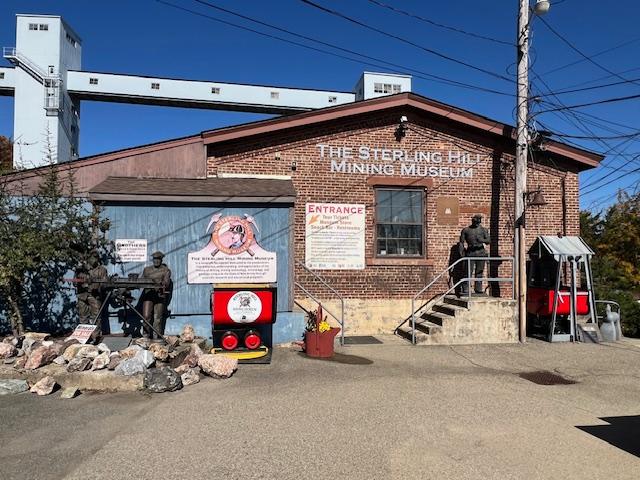
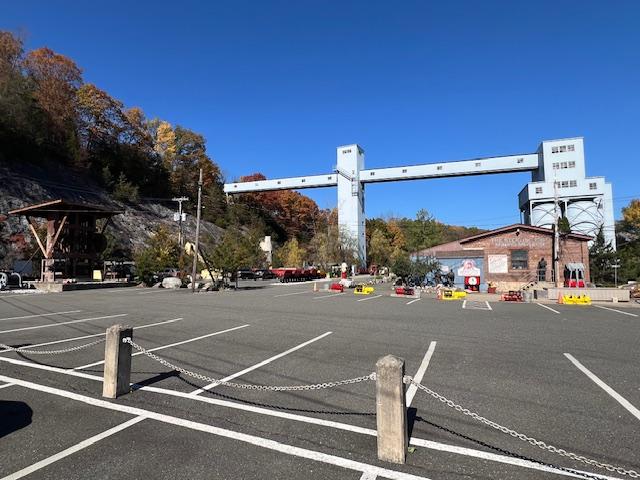
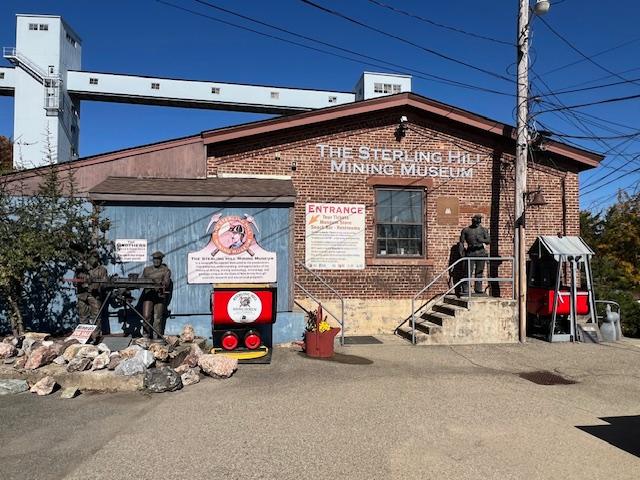
 The front of the museum

 The front of the museum 

The front of the museum

I visited the Sterling Mining Museum when visiting Sussex County to learn more about New Jersey’s Mining past. The Sterling Mine was once a big source of zinc in the United States until it became cheaper to mine it elsewhere. There is still zinc in the mines. The mining stopped in 1985 and the mine was closed in 1986.
The statues of the miners greet you at the beginning of the tour

Statues of the miners at work

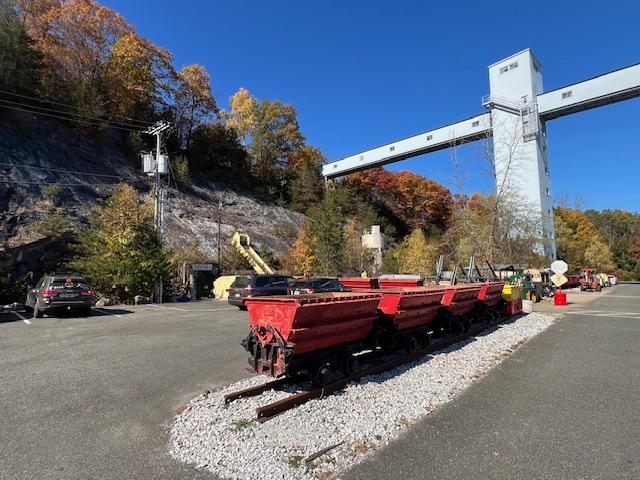
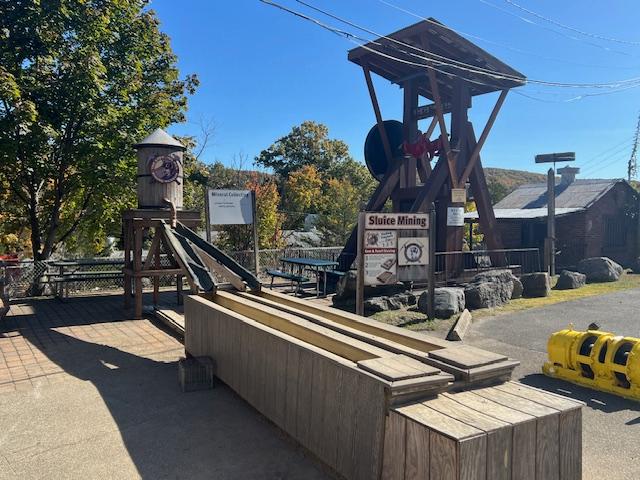
Mining equipment outside the museum

Tours at the museum vary by the time of the year and during the summer months there are two tours, one at 10:00am and one at 1:00pm and the tours take two hours with time to visit the gift shop and the restaurant at the beginning and end of each tour. Everything shuts down after the last tour around 3:15pm so plan your visit accordingly. Take some time though to visit the Gift Shop and have a snack at the Snack Bar, which was open until 3:30pm when I visited in October 2024.

The Zobel Hall Museum part of the tour:

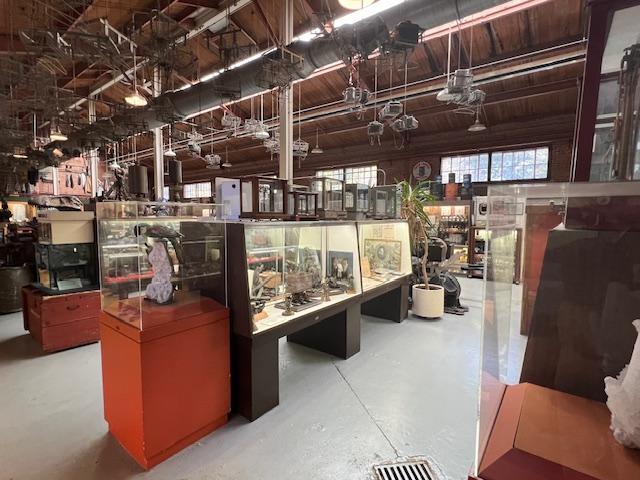
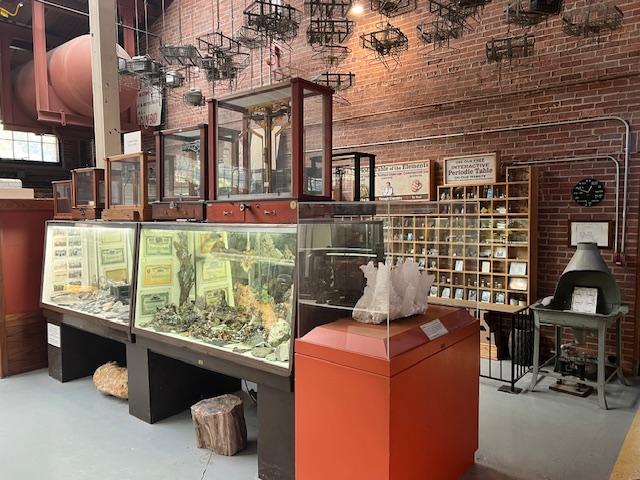
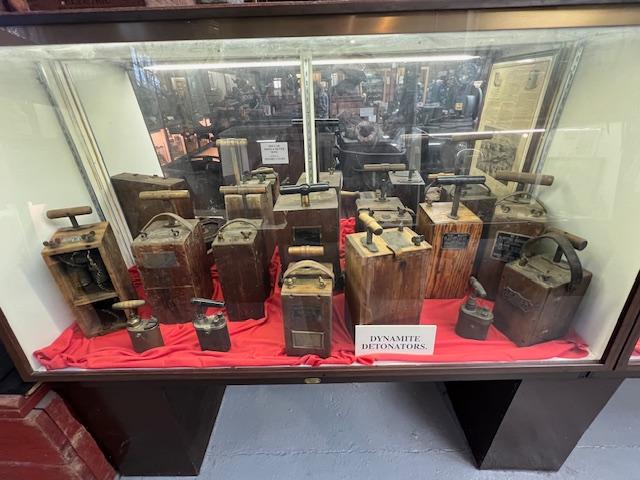
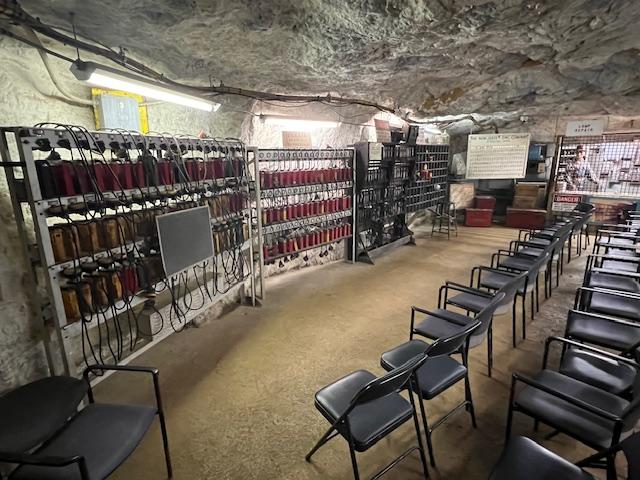
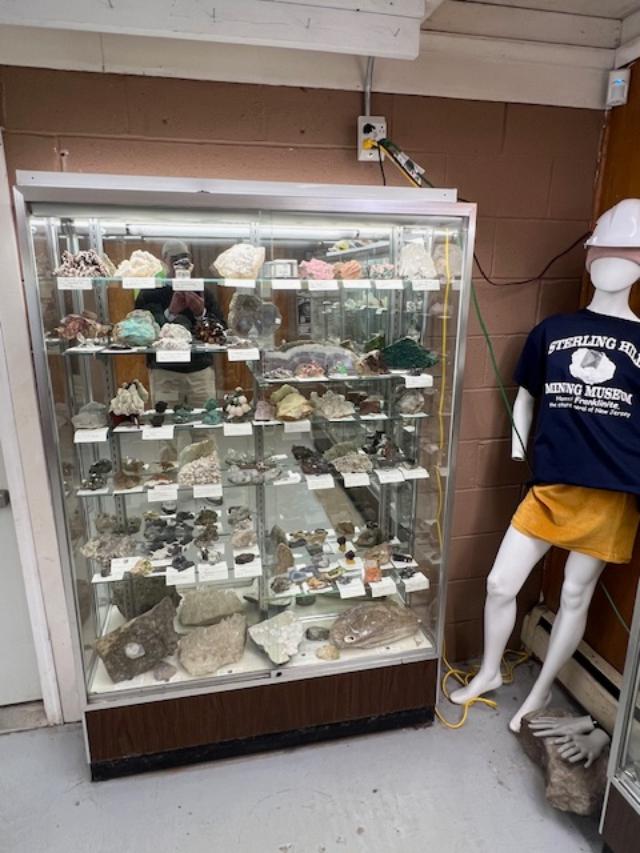
Arriving late for the tour, I started in the downstairs museum section which has the original lockers for the miners and their daily equipment, specimens of minerals and ores that have been found in the mine and elsewhere in the country. There are Native American artifacts and fossils of dinosaur tracks, bones and fragments of sea life. There are also many antiques from the Victorian age to the 1960’s to look at and items like detonators to show the items used to do the mining.

The museum main gallery

The museum’s main gallery

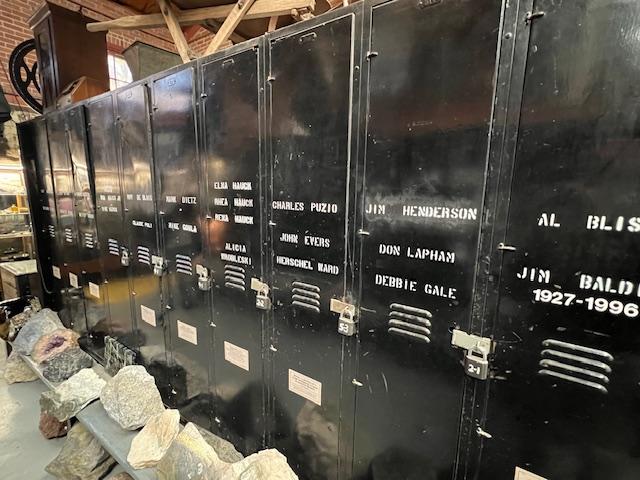
The museum used to be the workers changing room and this locker display is homage to the working days of the mines

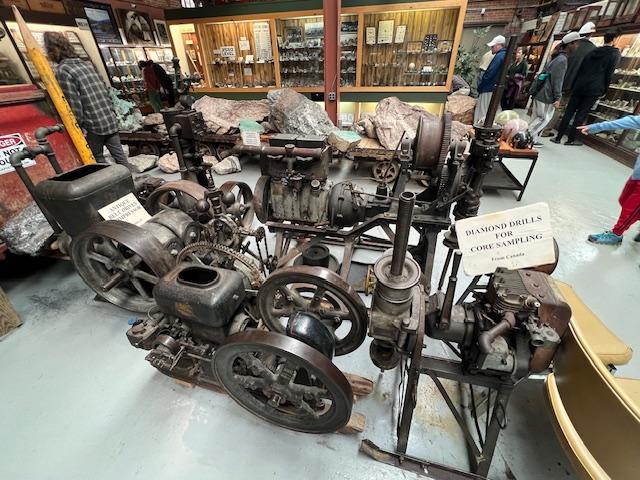
Mining equipment displayed at the museum

Mining equipment on display at the museum

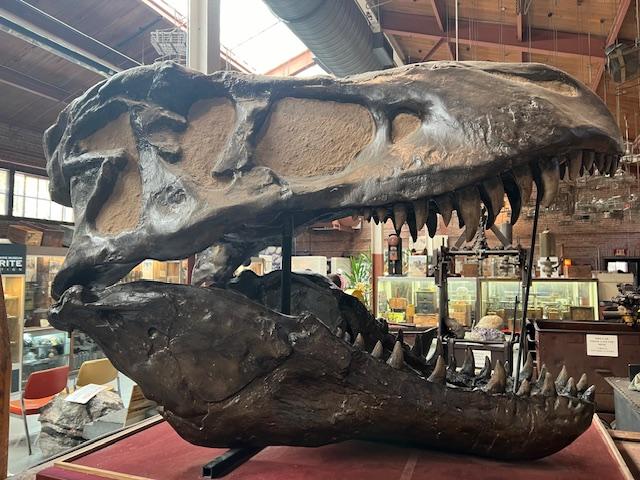
A dinosaur head at the museum

Various fossils at the museum

Detonators on display at the museum

Gold and Fools Gold on display at the museum in a large safe

The Meteorite display with pieces from all over the country

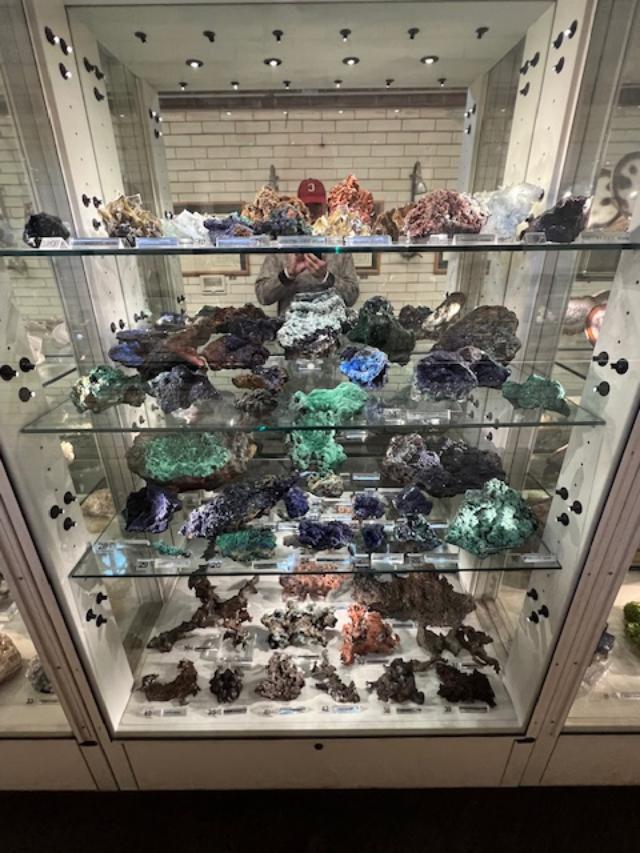
The Minerals display is a big part of the back part of the museum

The Minerals display

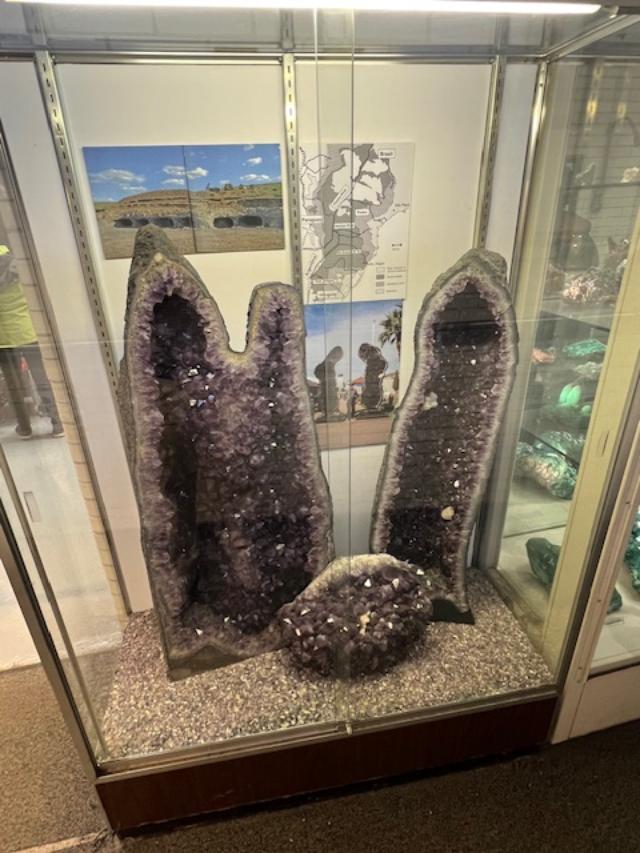
The Amethyst Display

The Mine sample display

The Miner Supervisor’s office in the museum

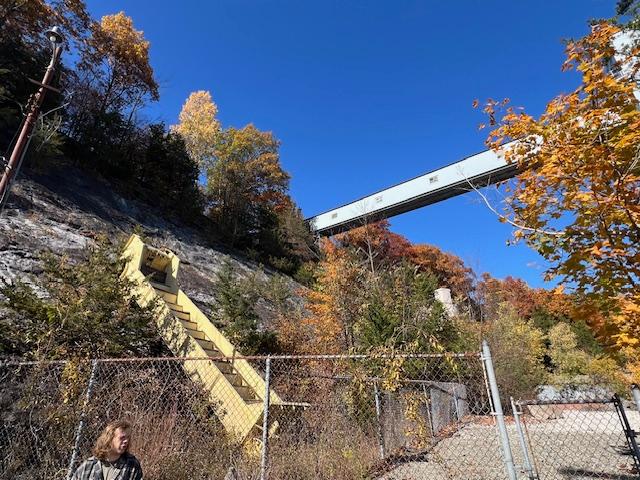
The second part of the tour will take you outside to see the outer workings of the mine and how things moved around. There are mining carts and transports, equipment to more the ore for washing and to market. There is a silent eeriness about the mine like someone just shut off the power and then walked away.

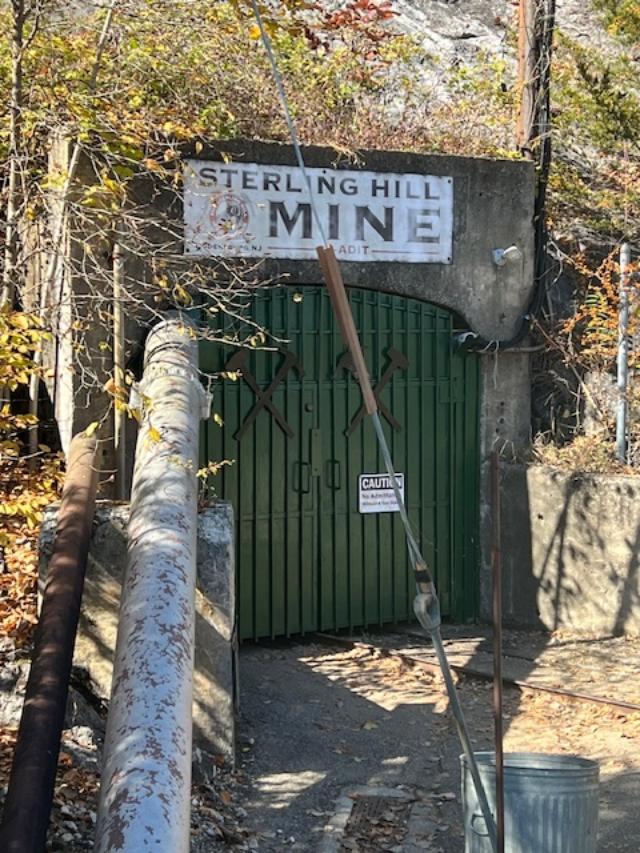
The entrance to the mine before you start the tour

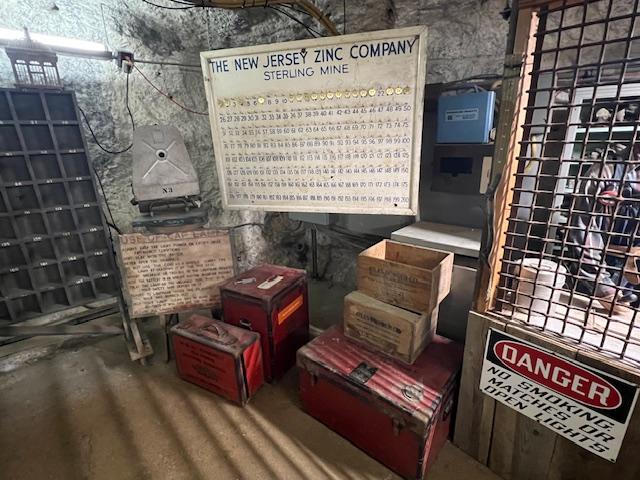
The best part of the tour is of the mine itself. You will tour the tunnels where the miners worked, see in the tunnels when mining was done by hand instead of machine. where the mining cars moved and how the miners got from one level to another to work and the dangerous conditions of the work as a miner. You will travel down tunnels and see the inner workers of a foreman’s office down in the mines and how the system of ‘tag out’ works for accountability.

The mine tour as you enter the beginning of the mine

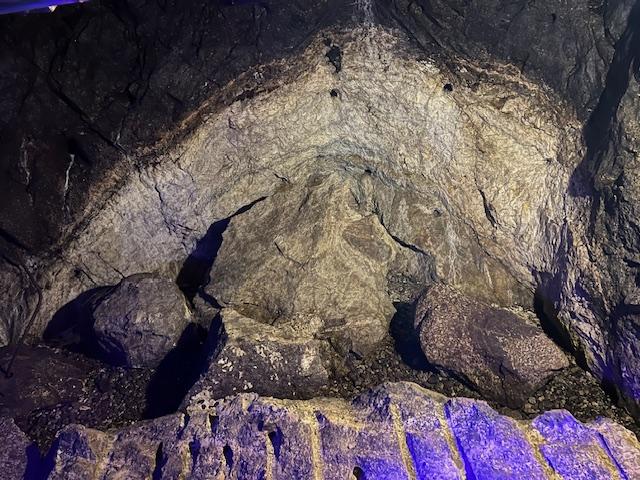
At the end of the tour you will be taken to the tunnel of illumination and when the tour guide dims the lights, you will see the tunnel come to life in color as the minerals radiate with color.

The Rainbow Tunnel before it gets lit

The magic begins when the room goes dark

In another cave the ceiling lightshow is amazing

I would not recommend this tour to anyone with a walking disability or who has to use a stroller with children. It is a lot of walking and very difficult to maneuver around the tunnels. I know they say it is accessible but I saw so many couples struggling through the tunnel you have to do it at your own discretion.

The mining movement from tunnel to tunnel

The ‘Tag Out’ system inside the mine

The “Tag Out” room inside the mine

Mining equipment inside the mines

You end the tour with a view of the indoor lake inside the mine shaft.

 The indoor lake inside the mine

Mission Statement of the Museum:

(From the Museum Pamphlet)

Our mission is to tell  the story of the Sterling Mine and to inspire lifelong learning  about earth sciences, engineering and the responsible use of the earth’s nonrenewable resources.

The outside of the mine

Additional information on the Mission Statement:

(From the Museum Pamphlet)

Since the crafting of this mission statement the museum has broadened its focus considerably. We are concerned not just with the metallic resources that most people think of when they hear the word “mining” but with commodities taken from the Earth-bulk rock taken from our quarries, sand and clay excavated from surface pits and oil and  gas obtained by drilling. These commodities constitute the raw materials from which almost everything else, our house, cars, highways and bridges, computers, on and on are made.

Slush Machine outside the entrance to the museum

As an institution we are neither pro-mining nor anti-mining. Instead, we are a museum about mining, again with that word used in its broadest possible context. We teach not only how mined materials are produced but also the many uses to which mined materials are put and we place special emphasis on the environmental and societal consequences of resource extraction.  Alternatives to mining such as recycling and the use of alternative materials are highlighted as well.

Mine lockers in the museum

The Snack Shop and Gift Shop:

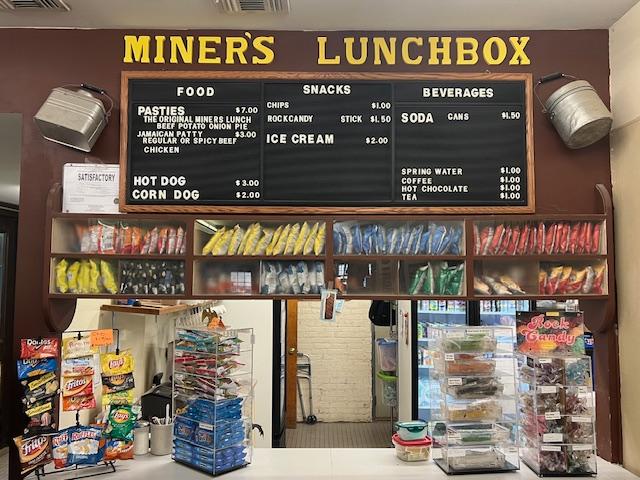
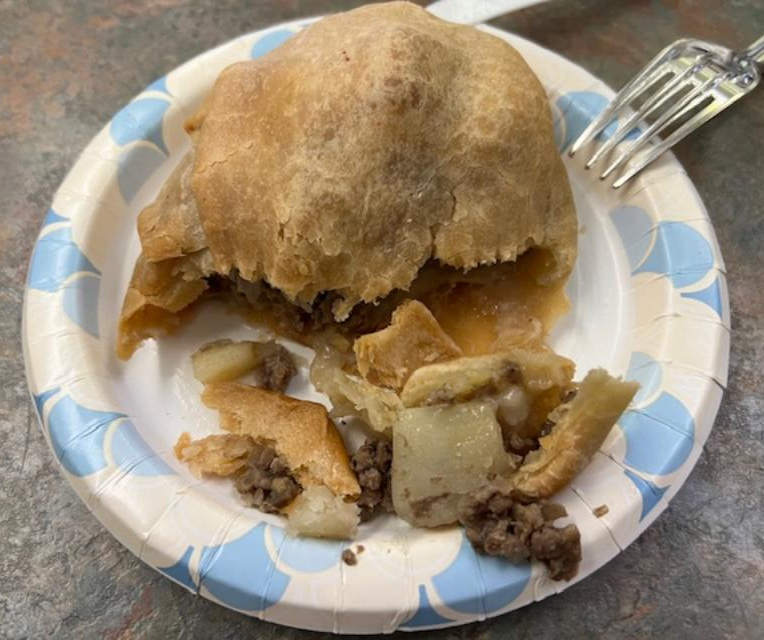
At the end of the tour, be sure to visit the gift shop and the snack shop for a quick meal and to look at the gifts and minerals on display and for sale. Make sure to try one of the Pasties, a meat pie that the miners used to have for lunch, at the snack shop. They are really good.

The Miner’s Lunchbox Snack Shop at the museum

The Meat ‘Pastie’, which is filled with ground beef, potatoes and onions

The inside of this delicious snack! It was really good

The gift shop has an array of tee shirts, books and gifts for sales. The walls are lined with minerals for sale.

The Gift Shop

Minerals on sale at the gift shop

What the organization does:

*We inspire students to pursue careers in science and engineering.

*We inspire people to be thoughtful and responsible stewards of our environment.

*We are committed to preserved our historic facility, rock and mineral samples, artifacts and records to support research and foster understanding of this unique geologic area.

*We promote an understanding of human involvement in our environment and how science and technology relate to that connection.

The outside of the museum at the Mine site

The Sterling Hill Mine History:

The Sterling Hill Mine is a former iron and zinc mine that was last working underground mine in New Jersey when it closed in 1986. It became a museum in 1989.

Mining began at the site in the 1630’s, when it was mistakenly thought to be a copper deposit. George III of the United Kingdom granted the property to William Alexander, titled Lord Stirling. Stirling sold it to Robert Ogden in 1765. It went through several owners until the various mines were combined into the New Jersey Zinc Company in 1897. The mine closed in 1986 due to a tax dispute with the town, which foreclosed for back taxes in 1989 and auctioned the property to Richard and Robert Hauck for $750,000. It opened as a museum in August 1990.

The ore bodies at the Sterling Hill Mine lie within a formation called the Reading Prong massif; the ores are contained with the Franklin Marble. This was deposited as limestone in a Precambrian oceanic rift trough. It subsequently underwent extensive metamorphosis during the Grenville orogeny, approximately 1.15 billion years ago. In the area of the Franklin and Sterling Hill mines, 357 types of minerals are known to occur; these make up approximately 10% of the minerals known to science. Thirty five of these minerals have not been found anywhere else. Ninety one of the minerals are fluoresce.

There are 35 miles of tunnels in the mine going down 2,065 feet below the surface on the main shaft and 2,675 feet of the lower shaft. As of 2017, other than the very top of the mine the entire lower section has been flooded due to underground water table and hence longer accessible. The mine remains at 56 degrees F constantly (Wiki).

The inner workings of the mine on display

(This information on the mine was taken from both Museum brochure and Wiki and I give each full credit both the information on the mine and the museum). 


The Sterling Hill Mining Museum Promotional Video:


 Promotional Video

 The History of the Mining in New Jersey


I want to thank YouTube and The Sterling Hill Mining Museum for these videos on the museum.