Tag: Small Historical Societies of New York State

The Senate House                                                                      296 Fair Street                                                                Kingston, NY 12401

The Senate House 296 Fair Street Kingston, NY 12401

The Senate House

296 Fair Street

Kingston, NY  12401

(845) 338-2786

http://www.palisadeparksconservancy.org

http://senatehousekingston.org/

Open: Sunday 1:00pm-5:00pm/Wednesday-Saturday 10:00am-5:00pm (April 15-October 31). Open by Appointment only (November 1-April 14)

Fee: Adults $4.00/Seniors (62+) $3.00/Children under 12 and under Free

My review on TripAdvisor:

https://www.tripadvisor.com/Attraction_Review-g48003-d3225491-Reviews-Senate_House_State_Historic_Site-Kingston_Catskill_Region_New_York.html

The recently reopened Senate House in 2023

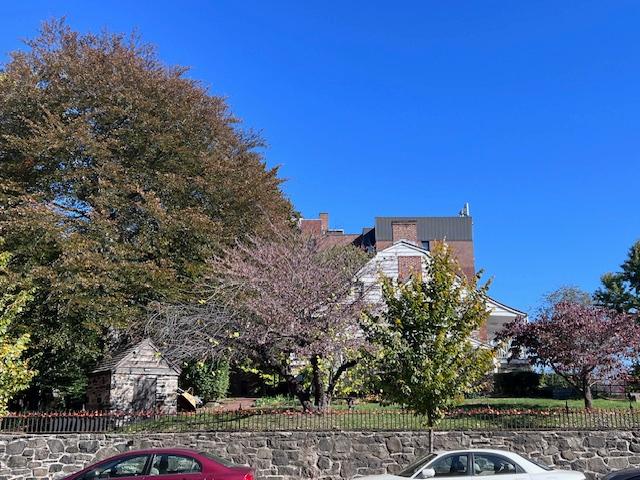
I recently spent my afternoon at the Senate House and Museum in Kingston, NY taking a tour of the museum and the House next door. The Senate House itself had just finished its renovation and the gardens were in full bloom in 2023. It was a quiet afternoon, and I was the only patron for most of the afternoon. The grounds were full of beautiful foliage and flowers, so it was nice to walk around the grounds.

The Senate House story board

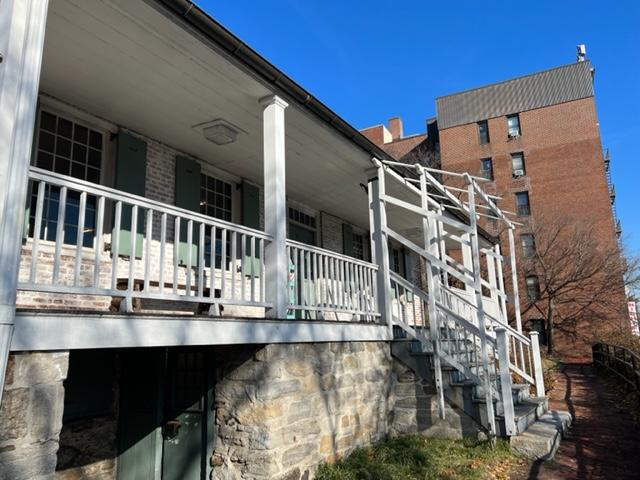
The Senate House had just reopened in 2023 after almost a four year renovation and because of the closure during COVID. The grounds are very pretty and well-landscaped and the outside has had a lot done to the gardens. The house was built for merchant Abraham Van Gaasbeek and his family. It stayed in the family for generations.

The Senate House at 296 Fair Street

We were able to tour the inside of the house and see the renovations that the State of New York made on this important structure. The home has been renovated by the state but the tour guide told us not with the historical integrity it should have had. It was not to the total interpretation of the life in the house. Still, it told the story about the people that lived there.
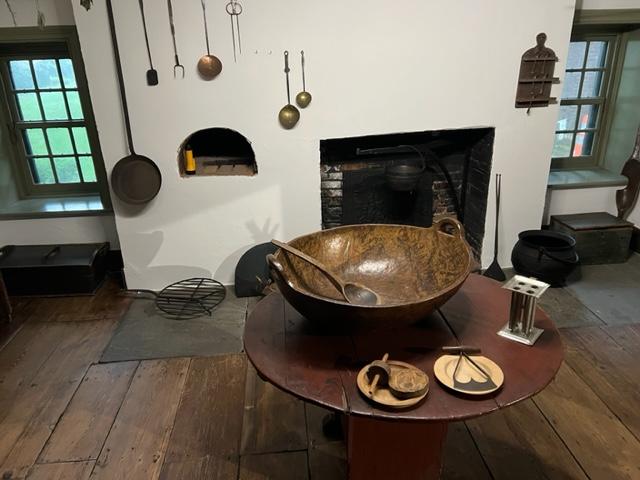
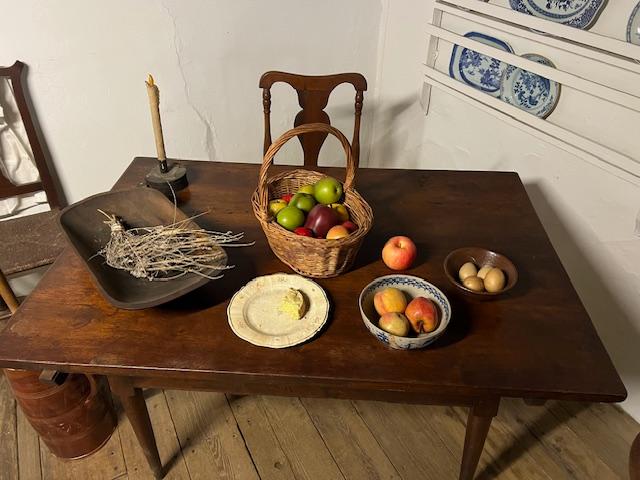
The Senate House Kitchen

Here you see the beehive oven, the working fireplace and many household items including waffle makers, cookie molds and candle making tools. The daily household tasks would be time consuming.
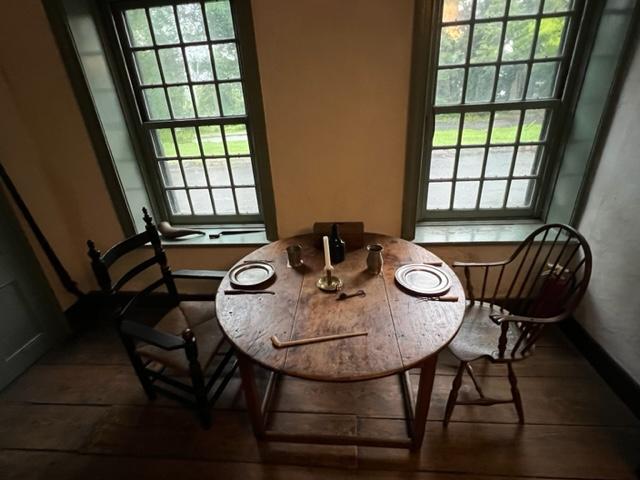
The Dining Space

The bedroom

In the original part of the house, the dining space and bedroom would be in a one room section of the home and as the family got larger, the house was added on to on both sides.

The Parlor

The Parlor was the fanciest room in the house with the best furnishings, decorations and a place of social interactions with guests. This rooms was for adult use at that time.

The Meeting Room for the leaders in change.

This was the room where plans by the patriots were made that changed the course of New York and the rest of the country. Now that the Senate House home is open again, you get a feel for what these people must have went through in developing the country during the Revolutionary War years.

When I visited the Senate House at the holidays for the “Snowflake Festival”, it was still closed for renovation but the grounds were open for touring, music and for a visit with Santa. It was a magical night on the grounds of the historical site and people had a nice time that evening. The grounds and the other buildings were decked out for the holidays.
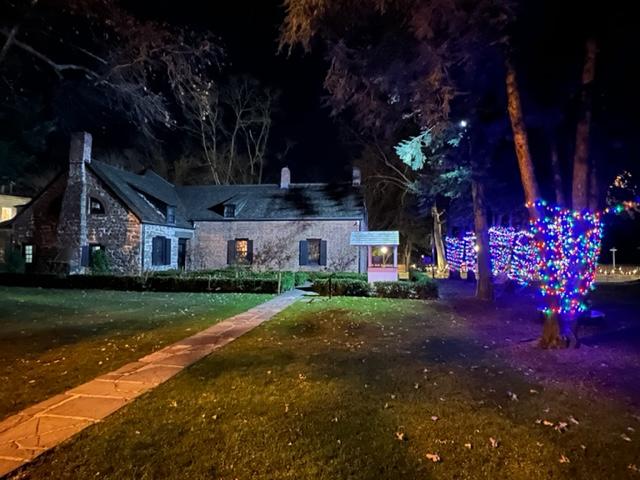
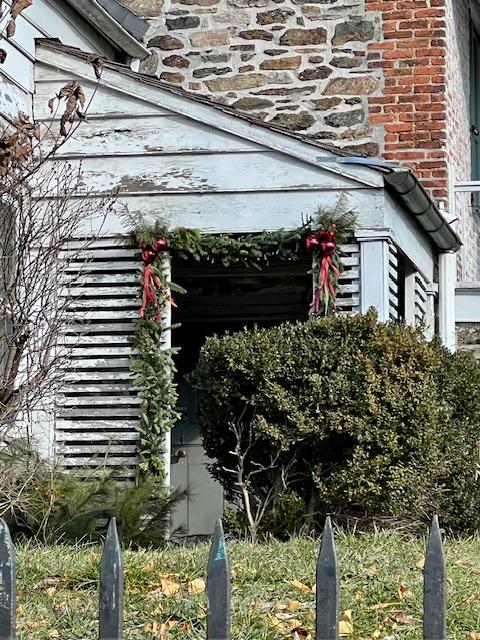
The Senate House decked out for the Christmas holidays at the “Kingston Snowflake Festival” in 2022

The Senate House property decorated for the Kingston Snowflake Festival in 2022
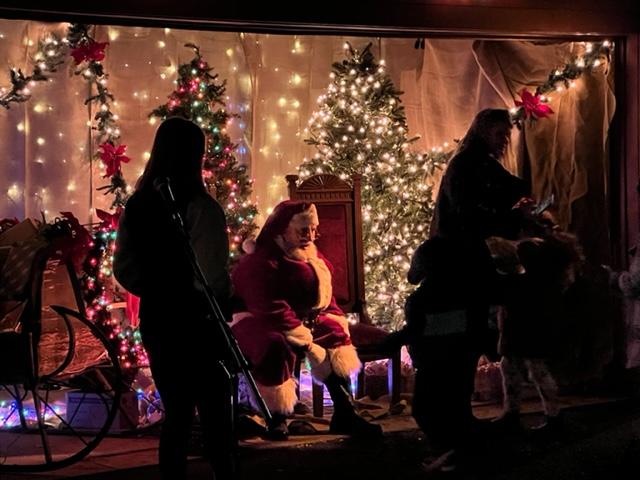
Santa’s visit at the Senate House property in 2022

The history of the Kingston Stockade section of the city.

The main part of the park is the Senate House Museum, which is broken into three sections. The right side of the museum is the history of the City of Kingston and the matching artifacts. There is a description of manufacturing, merchant class and its military prominence. Here I learned about the growth of Kingston and its founding, its strategic spot on the Hudson River in the early colony, its role as diplomats to the Native Americans, which was not so pleasant and its growth after the war.
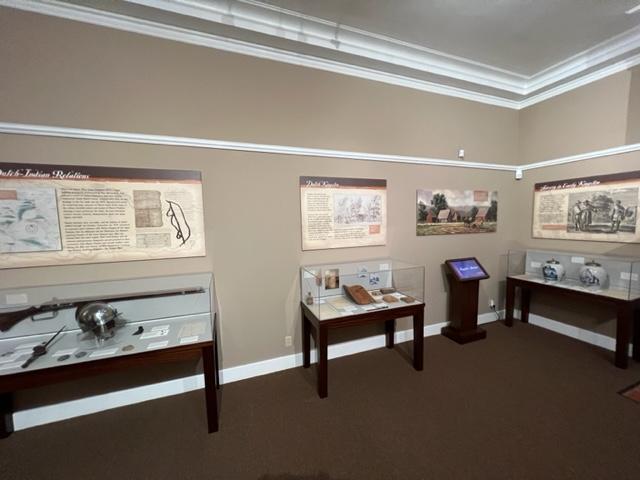
The first floor exhibitions on early life in Kingston

The history of the City of Kingston is described with the Native American settlements and the trade with the Dutch, the unsettling relationships that the two groups had with each other, the War years, the growth of industry and trade in early New York and manufacturing in the area.

The Native American exhibition

Early manufacturing and life in Kingston

The Artist’s sign

The Vanderlyn Exhibition of artist John Vanderlyn’s art

Artist John Vanderlyn’s works are featured on this part of the museum.

The left side of the museum is dedicated to the locally born artist, John Vanderlyn. His paintings line the walls of the museum of the artist at different stages of his career. His work was ahead of its time for the area, and it was noted in the collection that he forced himself to commission portraits to survive. His works advanced for the time because of his studying abroad now line the walls of the best museums in the country.

The exhibition of John Vanderlyn’s portraits

Artist John Vanderlyn’s bio in the museum

Members of the extended Vanderlyn family portraits

The second floor holds the furniture that is not historically correct with the Senate House and comes from different time periods. There is furniture, beds and chairs, spinning wheels, chamber pots and all sorts of accessories for the home and their uses in everyday life. Vintage furnishings with explanations on their use are a big part of the exhibit.
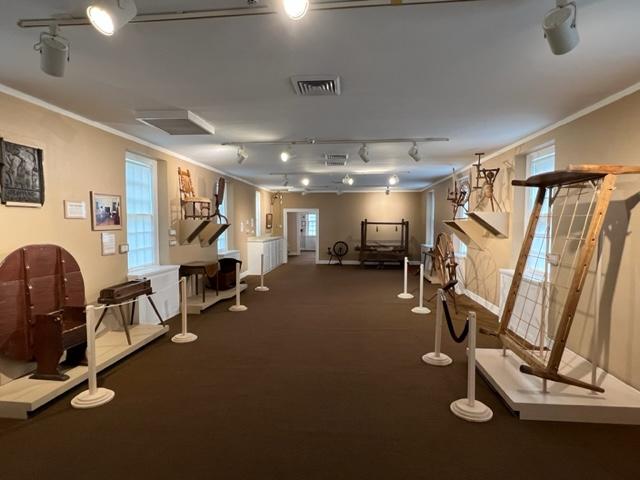
Artifacts from the past are displayed here

The everyday items used to spin material and create clothing

The Loughran House next door houses more of the furniture of the house and has a new exhibition “Back to the Future: The Evolution of Senate House”. This houses artifacts from the house.
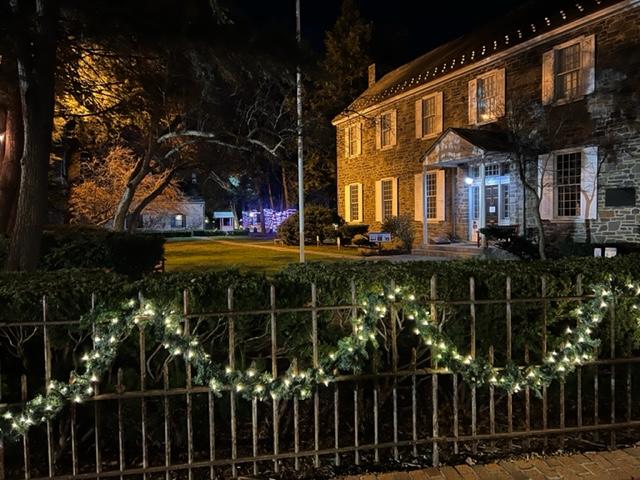
The Senate House property during the “Kingston Snowflake Festival” in 2022

The Senate House property during Christmas 2024
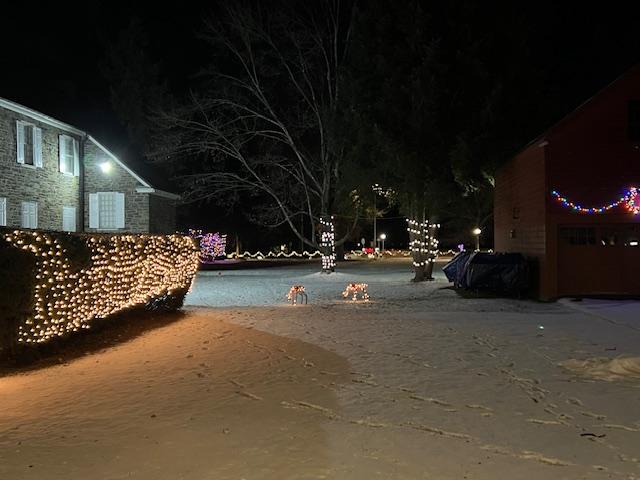
The Senate House property during Christmas 2024

History of the Senate House:

(From Wiki/Office of Parks, Recreation and Historic Preservation pamphlet)

Amidst the turmoil of a British military invasion in the fall of 1777, the elected representations of rebellious New Yorkers met in Kingston to form a new state government. While convened in Kingston in September and October, New York’s first Senate met in the simple stone house of merchant Abraham Van Gaasbeek.

Here they adopted a system comprising of a senate, assembly, governor and judiciary that still exists today. Every one of the assembled delegates risked his life and property by being so openly disloyal to the Crown. Indeed, all were forced to flee for their lives when the British attacked and burned Kingston on October 16th.

While convened in Kingston in September and October, New York’s first Senate met in the simple stone house of Abraham Van Gaasbeek, a prosperous merchant trader who had suffered financial losses as a result of the war and personal losses in the recent deaths of his wife, Sara, his daughter and infant granddaughter. It was Sara’s grandfather, Wessel Ten Broeck, who built the original section of the house in 1676.

At first called Wiltwyck, Kingston was the third “city” established in the Dutch Colony of New Netherland. Planned and developed by the Dutch Governor Peter Stuyvesant in 1656, the town was renamed Kingston after the colony was seized by the English in 1664.

Wessel Ten Broeck’s one room Dutch style house was enlarged by succeeding owners in the 18th century. Each change reflected the increasing fortunes of the Ten Broeck/Van Gaasbeek family and demonstrated a gradual acceptance of English styles and customs over the persistent influence of the early Dutch. Kingston at the time of the American Revolution was still a noticeably “Dutch” town and most of its citizens supported the American cause. British Major General John Vaughan justified his destruction of the city because it was a “nursery for almost every villain in the country.”

In 1887, to recognize Senate House’s role in the formation of New York State, New York State acquired the property, which quickly became a vital community museum. A two-story Museum Building was constructed in 1927 to house and display the site’s burgeoning collection. Among its treasures are: major works by John Vanderlyn and other members of the Vanderlyn family of Kingston. The museum also includes the site’s popular new exhibit: “Kingston Stockage: New Netherlands’ Third City,” discussing Kingston’s early history.

(New York State Park History)

Senate House V

The Kingston Stockade: The City’s formation from the beginning
Dyckman Farmhouse Museum                                              4881 Broadway at 204th Street                                              New York, New York 10034

Dyckman Farmhouse Museum 4881 Broadway at 204th Street New York, New York 10034

The Dyckman Farmhouse

4881 Broadway at 204th Street

New York, NY  10034

(212) 304-9422

dyckmanfarmhouse.org

for front page

Hours:

Winter Schedule: November-April Friday and Saturday 11:00am-4:00pm

Monday-Wednesday: Groups by Appointment Only; Groups of 10 or more by appointment

Thursday-Saturday: 11:00am-4:00pm

Sunday: 11:00am-3:00pm

Fee: Donation Based

My TripAdvisor Review:

https://www.tripadvisor.com/Attraction_Review-g60763-d108018-Reviews-Dyckman_Farmhouse_Museum-New_York_City_New_York.html?m=19905

The Dyckman Farmhouse during the Christmas holidays

I visited the Dyckman Farmhouse on day during my walk around the Inwood section of Manhattan and came upon this old farmhouse in the middle of the commercial district by Columbia University’s football field. You have to take the A or the 1 Subway uptown to get there but it is one of the last vestiges of the farming community that once was Manhattan in the late 1700’s and early 1800’s.

It has been there since the family donated it to the city in 1916. It should not be missed when visiting Manhattan. I wrote more about my trip there in “MywalkinManhattan.com” blog site.

Dyckman Farm House II

The Dyckman House in the Spring

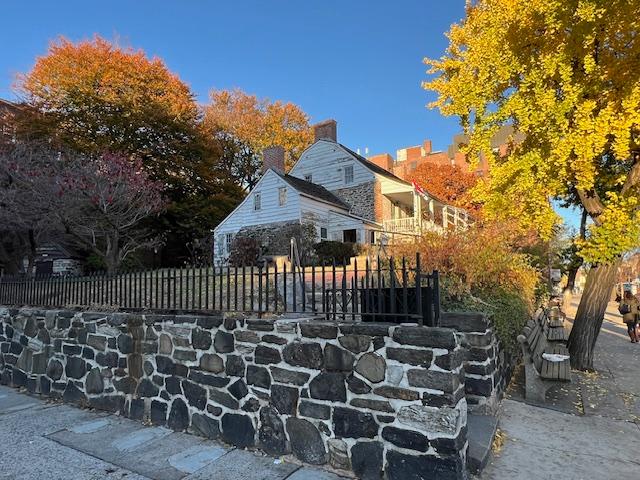
The Dyckman House, now the Dyckman Farmhouse Museum in the oldest remaining farmhouse on Manhattan Island, a remainder of New York City’s rural past. The Dutch Colonial-style farmhouse was built by William Dyckman in 1785. It was originally part of over 250 acres of farmland owned by the family. It was once the center of a thriving farm with fields and orchards of cherry, pear and apple trees. It is now located in a small park at the corner of Broadway and 204th Street in the Inwood section neighborhood of the city.

The front of the Dyckman Farmhouse

Don’t miss the self-guided tours of the house. You can tour all three floors of the house to see the bedrooms on the second and third floors and the first-floor parlor and receiving areas. The basement area has the ‘winter kitchen’ where all the cooking of the house was done, and it was the room that kept the rest of the house warm during the winter months.

The Winter Kitchen hearth for cooking meals

The Winter Kitchen

The Winter kitchen at the Dyckman Farm

The house was slightly decorated for the Christmas holidays with garland and ivy and holly to make it look more festive. The Dyckman House was built at a time after the Revolution where the excesses of the Victorian era had not taken hold and the Christmas holidays were more subdued and concentrated on going to church and a light luncheon that afternoon. The decorations of the home reflect this.

The museum is decorated for Dutch Christmas with the bounty of the holiday season

The Farmhouse at Christmas time outside in 2025

The house decorated for the Dutch Christmas in 2025

Don’t miss the gardens in both the spring and summer to see everything in full bloom. Even in the winter it is interesting to watch the paths and see what needs to be accomplished for spring planning.

The Dyckman House in the Fall of 2025

It is an interesting look into how the Dutch farmers lived and worked.

History and Description

William Dyckman was the grandson of Jan Dyckman, who came to the area from Westphalia in 1661. Jan Dyckman, a shoemaker and another Dutch settler, Jan Nagel purchased much of the land between present 155th Street and the northern tip of the island. Members of the Dyckman and Nagel families lived on the land for three generations until the Revolutionary War broke out.

dyckman farm house III

The house and front gardens during the summer months

During the Revolutionary War, the British occupation of Manhattan in 1776-83, the Dyckman’s, like many other patriots, fled the city and did not return until the British had been defeated. When the war ended and the Dyckman’s found their home and orchards had been destroyed, they built a new house on the Kingsbridge Road, now Broadway. They chose this location on a major thoroughfare in order to supplement their income by providing accommodations for travelers on their way to and from Manhattan.

William Dyckman, who inherited the family estate built the current house to replace the family house located on the Harlem River near the present West 210th Street, which he had build in 1748 and which was destroyed in the American Revolutionary War.

There was also 30 people living within three other houses scattered across the roughly 250 acre farm. The residents included laborers and other Dyckman family members. The main outbuildings for the farm were built close to the farmhouse including a cider mill, corn cribs, barns and stable (Dyckman Farmhouse Museum Alliance).

William died in 1787 and the property with its “commodious dwelling house,” and 250 acre farm was offered for sale. William’s son, Jacobus, took over the farmhouse and land and rebuilt the farm after the war. This took about five years. Jacobus altered and added to the house over the years. When Jacobus died in 1832, he left the bulk of the estate to his bachelor sons, Isaac and Michael and many members of the extended family moved in as well.

Following the death of Isaac in 1868, his nephew, James Frederick Smith, changed his name to Isaac Michael Dyckman and inherited much of the Dyckman property. When the subway lines reached the area in 1906, there was discussion about the impact on historic homes such as this.

In 1915, Mary Alice Dyckman Dean and Fannie Frederika Dyckman Welch, daughters of Isaac Michael Dyckman purchased the house with the plan of turning it into a museum. They fully restored it, furnished it and landscaped the grounds. They presented it to the City of New York in 1916 so that it could be used as a public park and museum (History of Dyckman Farm).

The house is designed with:

The Relic Room: Objects that are displayed were discovered from digs in the area.

The Relic Room at the Dyckman Farmhouse

The Second Floor Bedroom: Some of the rooms are decorated with furnishings dating from the 18th and 19th centuries and reflect colonial life around 1800.

The Second floor bedroom

The second floor bedroom during the second renovation of the home from a dormer to bedrooms

The second floor of the farmhouse had been a dormer when the home was at its height of the growing season and then later on in the house’s history was converted into regular bedrooms. The first floor bedroom was for the owner of the house for easier access to the farm and the outdoors during the growing season.

The First Floor Bedroom for the Master of the House:

The Bedrooms:

The downstairs bedroom

The Parlor Room:

The Parlor is where the family socialized and entertained their guests. The best pieces of furniture and family possessions would be shown off to visitors.

The Parlor:

The Dyckman Parlor:

Full view of the Parlor in the Dyckman Farmhouse

The Winter and Summer Kitchens: The farmhouse had two kitchen, the Winter and Summer kitchens, the Winter one would have kept the home warm in the cold months and would have been used  as a non-cooking work space in the summer.

The Winter Kitchen:

The Summer kitchen is closed to the public has a small bedroom attached to it.

The back of the Dyckman Farmhouse with the grounds left and the old smokehouse in the distance

The Garden Area: On the half acre of family land left they have constructed a reproduction a smokehouse and outbuildings along with gardens planted with thousands of new plants that include things like bleeding hearts and foxglove.

The Hessian Military Hut recreation on the house’s property

The Hessian House recreation on the back part of the property

The gardens and smokehouse

(The Dyckman Farmhouse Museum Alliance)

The current two-story house is constructed of fieldstone, brick and white clapboard and features a gambrel roof and spring eaves. The porches typical of the Dutch Colonial style but were added in 1825. The house interior has parlors and an indoor (winter) kitchen, with floors of varying-width chestnut wood. The house outdoor smokehouse kitchen, in a small building to the south, may predate the house itself.

The Dyckman Farmhouse during the Christmas holiday season 2022

The house stayed in the family for several generations until it was sold in 1868, after which it served as a rental property for several decades. By the beginning of the 20th century, the house was in disrepair and in danger of being demolished. Two sisters of the original family and daughters of the last Dyckman child to grow up in the house, Mary Alice Dyckman Dean and Fannie Fredericka Dyckman Welch, began restoration of the farmhouse in 1915-16 under the supervision of architect Alexander M. Welch, the husband of Fannie.

They then transferred the ownership of the house to the City of New York in 1916, which opened it as a museum of Dutch and Colonial life, featuring original Dyckman family furnishings.

The Dyckman Farmhouse in Inwood during the Summer months

The farmhouse, which is not only the oldest remaining in Manhattan, but the only one in the Dutch Colonial style and the only 18th century farmhouse in the borough as well. It has New York City Landmark and a National Historic Landmark status since 1967. A major restoration of the house took place in 2003, after which it reopened to the public in the fall of 2005.

When I visited the homestead in January 2024 for the Epiphany, the house had an interesting children’s exhibition entitled “Beyond Play”, based on a child’s life on a farm back in the 1800’s. This would include simple games such as “Tag” and “Blind Man’s Bluff” and homemade wooden trucks, blocks and dolls.

The exhibition “Beyond Play”

The display of toys that child would play on the farm in the 1800’s.

The display of toys that children would play on the farm.

Walking around the Inwood neighborhood has changed a lot in a hundred years and is now home to a large Dominican population as well as the quickly gentrifying Inwood neighborhood and home to Columbia University sports.

Inwood at Broadway near the Dyckman Farmhouse

*Disclaimer: This information comes from the Historic House Trust and Wikipedia and the NYC Parks System. The site is free to visit and takes less than an hour to visit. During the summer months, it is nice to visit the gardens and property. It is a interesting property to visit and when you are through with your tour, there are many nice Spanish restaurants in the area on Broadway and along 207th Avenue corridor. It is a nice place to walk around and explore.