Tag: NYCParks.com

General Grant National Memorial                            122nd Street and Riverside Drive                                      New York, NY 10027

General Grant National Memorial 122nd Street and Riverside Drive New York, NY 10027

The General Grant National Memorial

122nd Street and Riverside Drive

New York, NY 10027

(212) 666-1640

https://www.nps.gov/gegr/index.htm

http://www.nps.gov/gegr

Hours: Wednesday-Sunday: 9:00am-5:00pm/Closed Monday-Tuesday/Check for tour times on site.

Admission: Free but donations accepted

TripAdvisor Review:

https://www.tripadvisor.com/Attraction_Review-g60763-d105812-Reviews-General_Grant_National_Memorial-New_York_City_New_York.html?m=19905

A Grateful Nation:

The Grant Memorial was designed by architect John Duncan. Rising to an imposing 150 feet from the bluff overlooking the Hudson River, it took 12 years to build and remains the largest mausoleum in North America. Its  great size was meant to express the profound admiration Americans felt for the Civil War commander and was propelled to the forefront of America’s pantheon of heroes and declared the equal of George Washington and Abraham Lincoln.
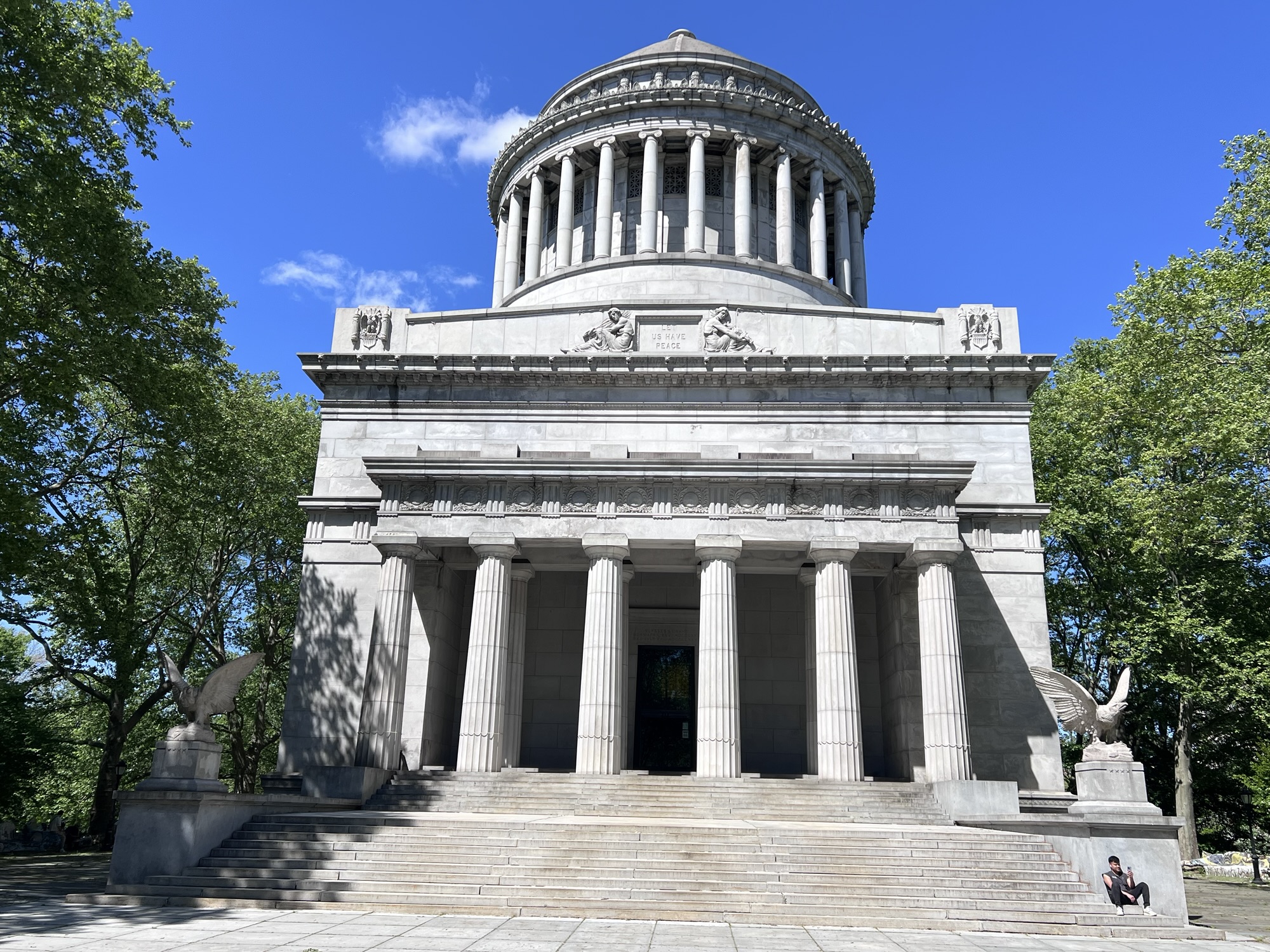
Spearheaded by the Grant Monument Association, some 90,000 people from around the United States and the world donated over $600,000 to construct the memorial, the largest public fundraising effort up to that time.

The statuary in front of the building

Initial fundraising was led by Richard T. Greener, first black graduate of Harvard and a Grant supporter who credited the general with his advancement. Many African Americans contributed to the building fund.
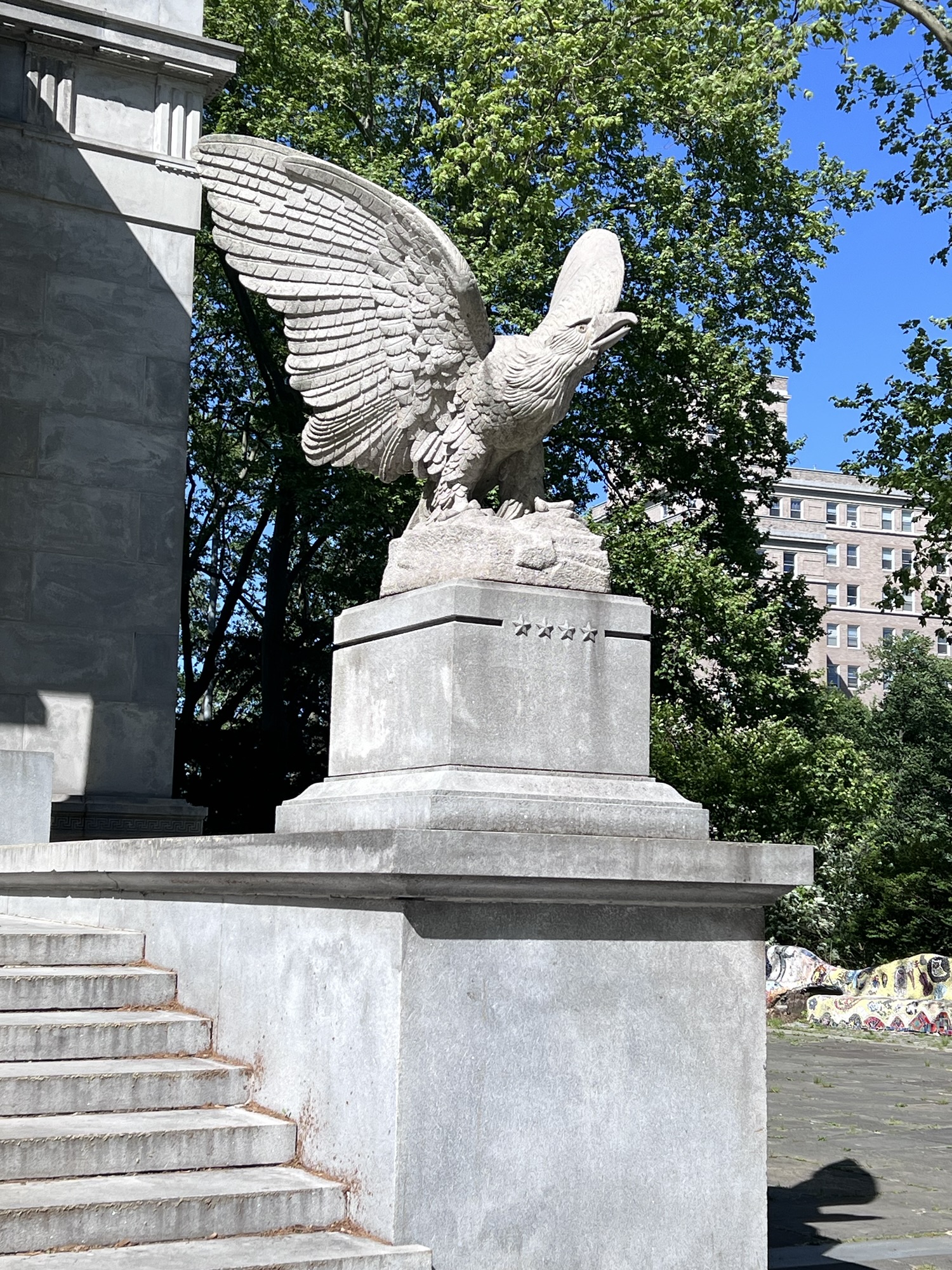
The eagles that flank the front of the tomb

The memorial is open from 9:00am-5:00pm daily. For information or to arrange for group visits call (212) 666-1640.
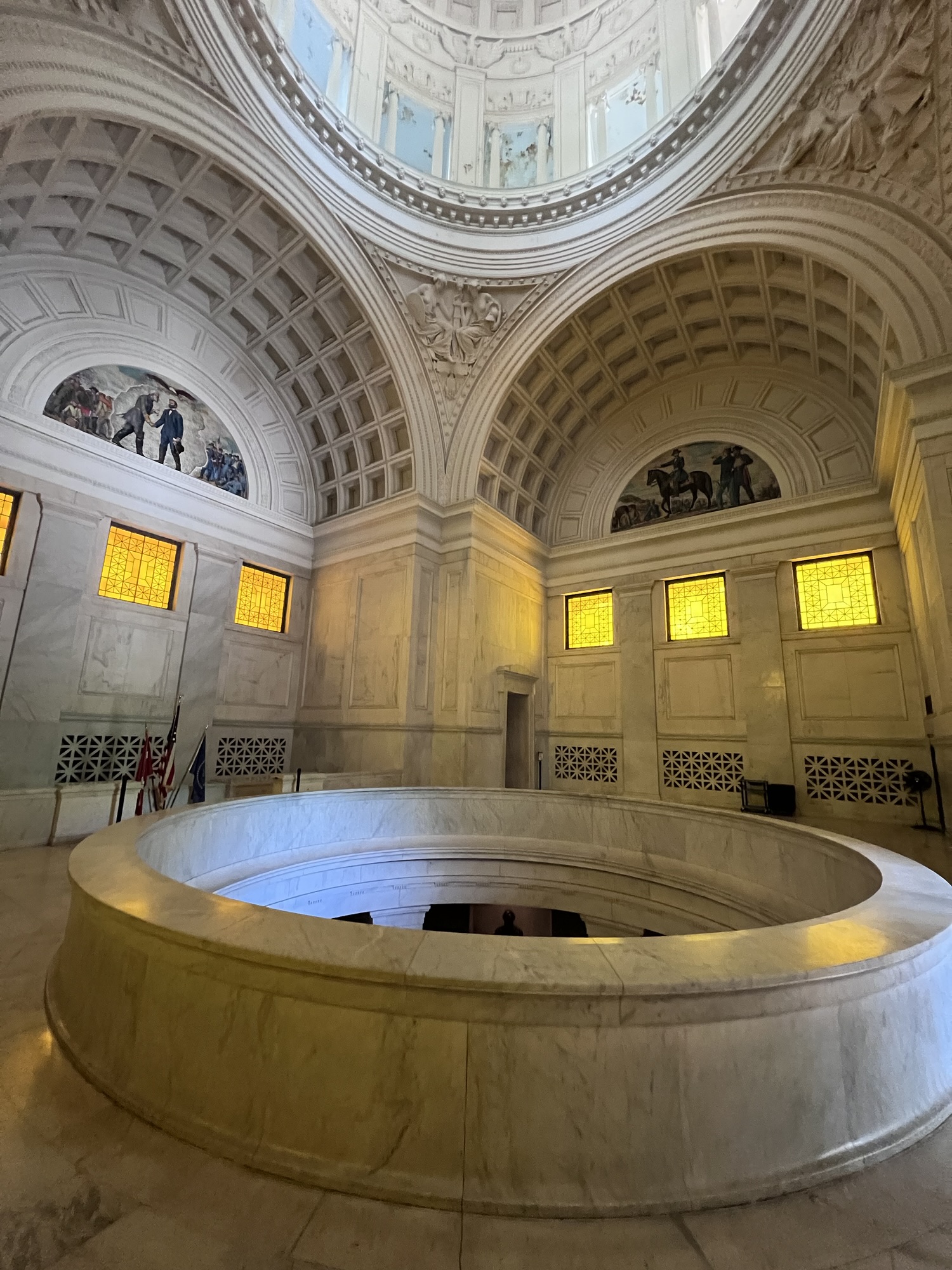
The entrance to the Mausoleum

Among the most Revered of Men:

This large classically proportioned mausoleum honors the Civil War general who saved the nation from dissolution and the president who worked to usher in a new era of peace and equality for all Americans.
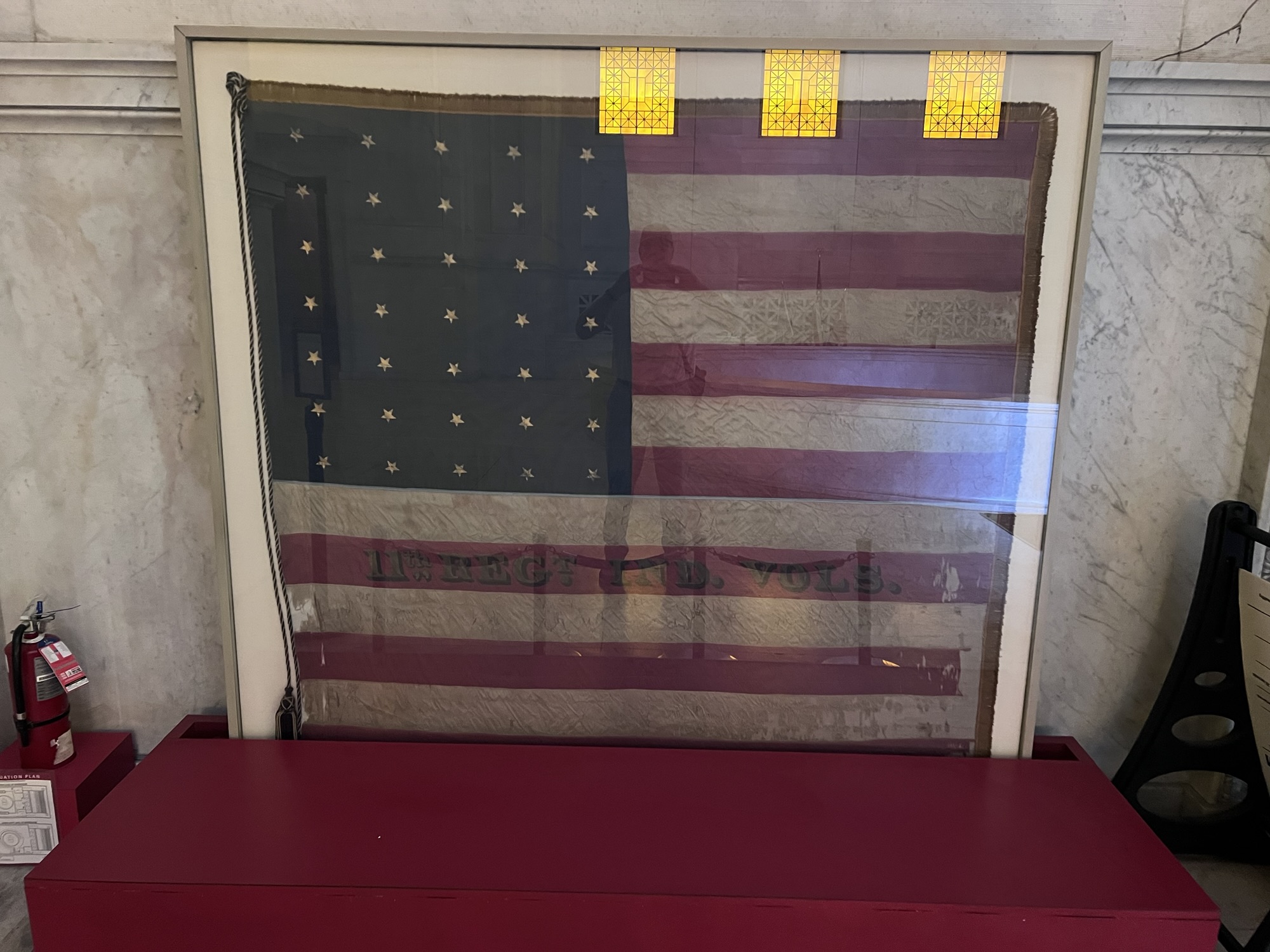
The Civil War era flag being displayed inside

Sign for the flag display in the Western trophy case

The flags in the Western trophy case
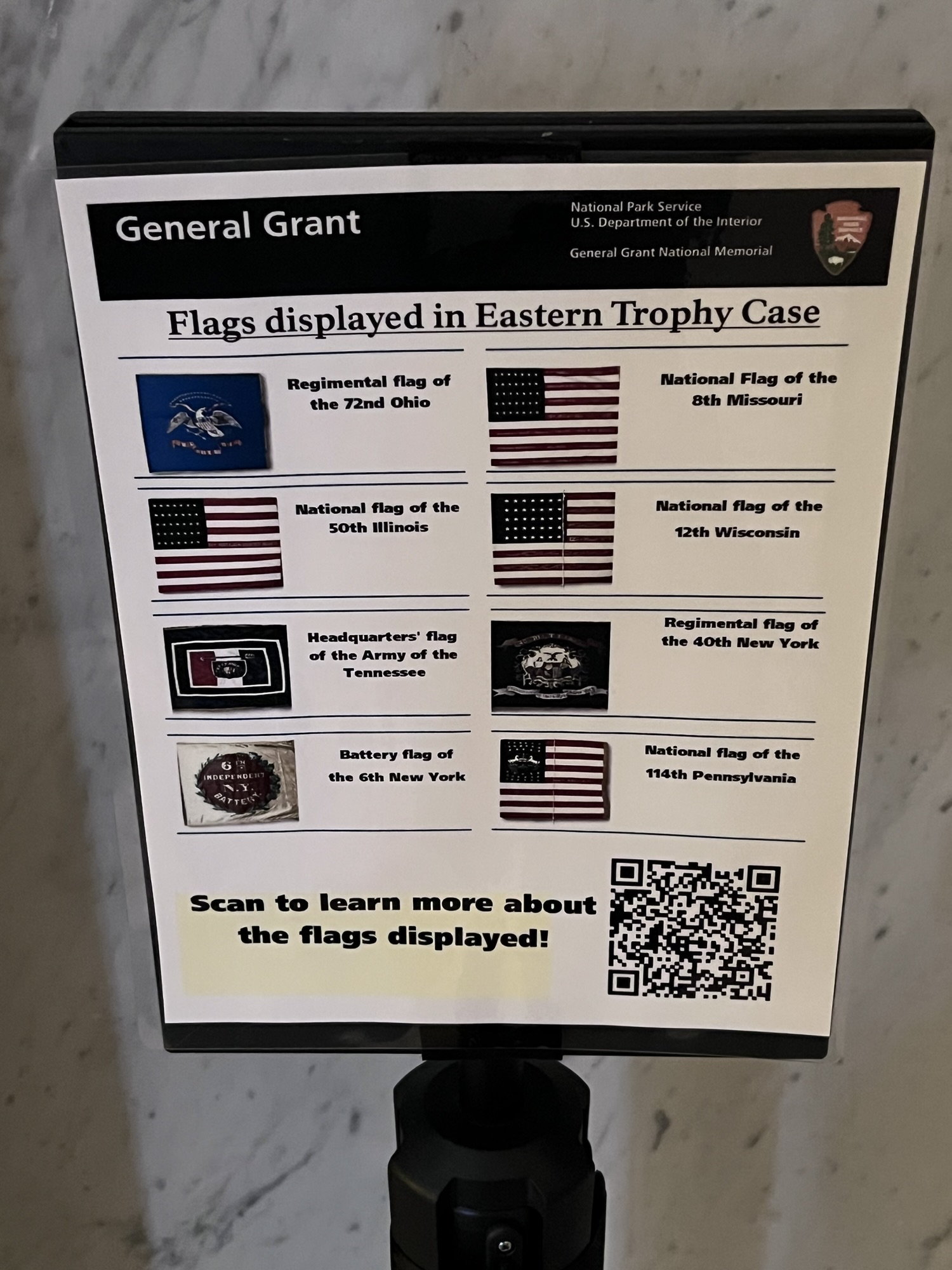
The sign for the flags in the Eastern Case
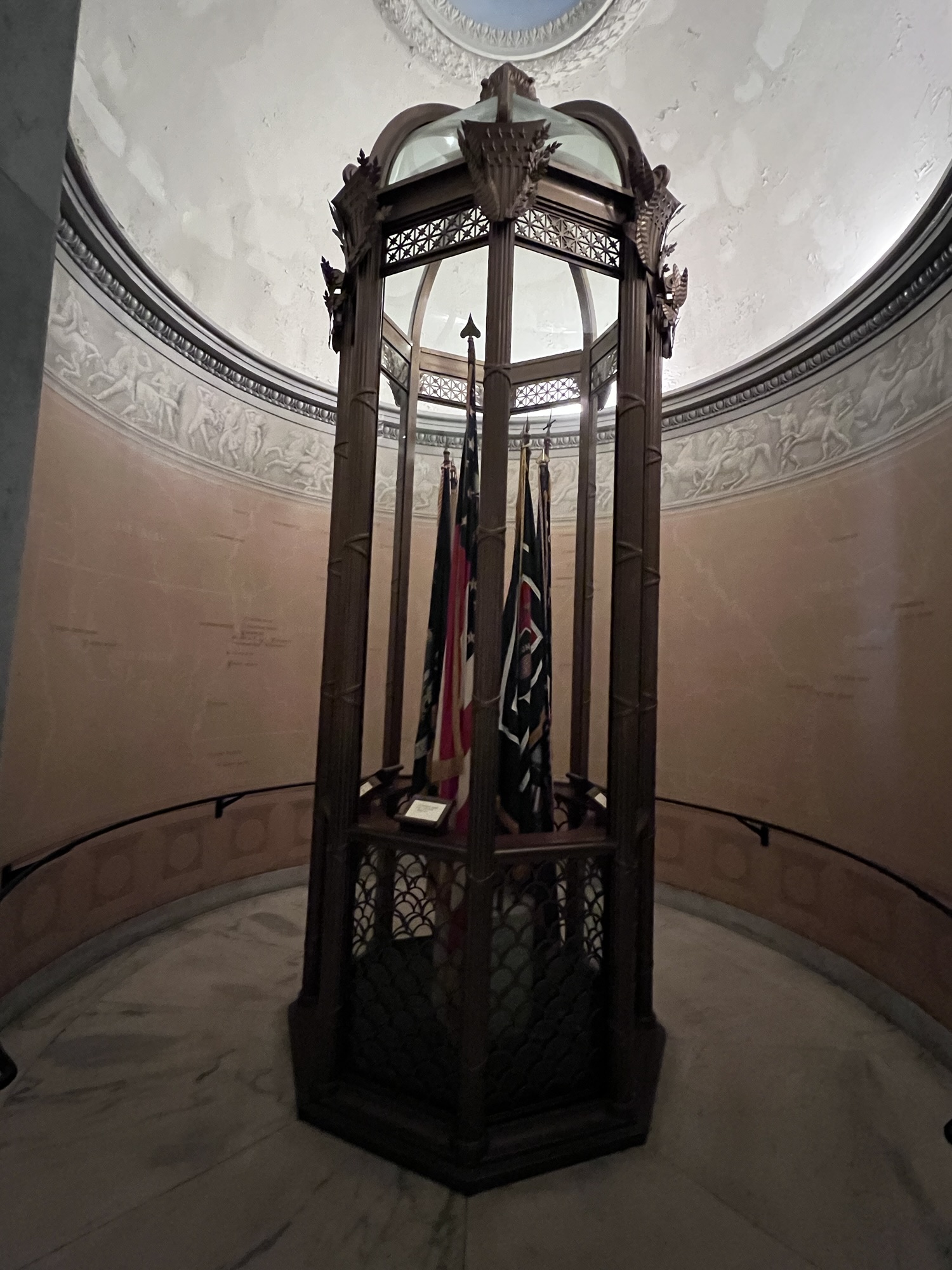
The flags in the Eastern case display

Ulysses S. Grant, a plain-spoken unassuming man who studiously avoided pomp and ceremony had volunteered his services for the Union effort when the Civil War erupted in 1861.
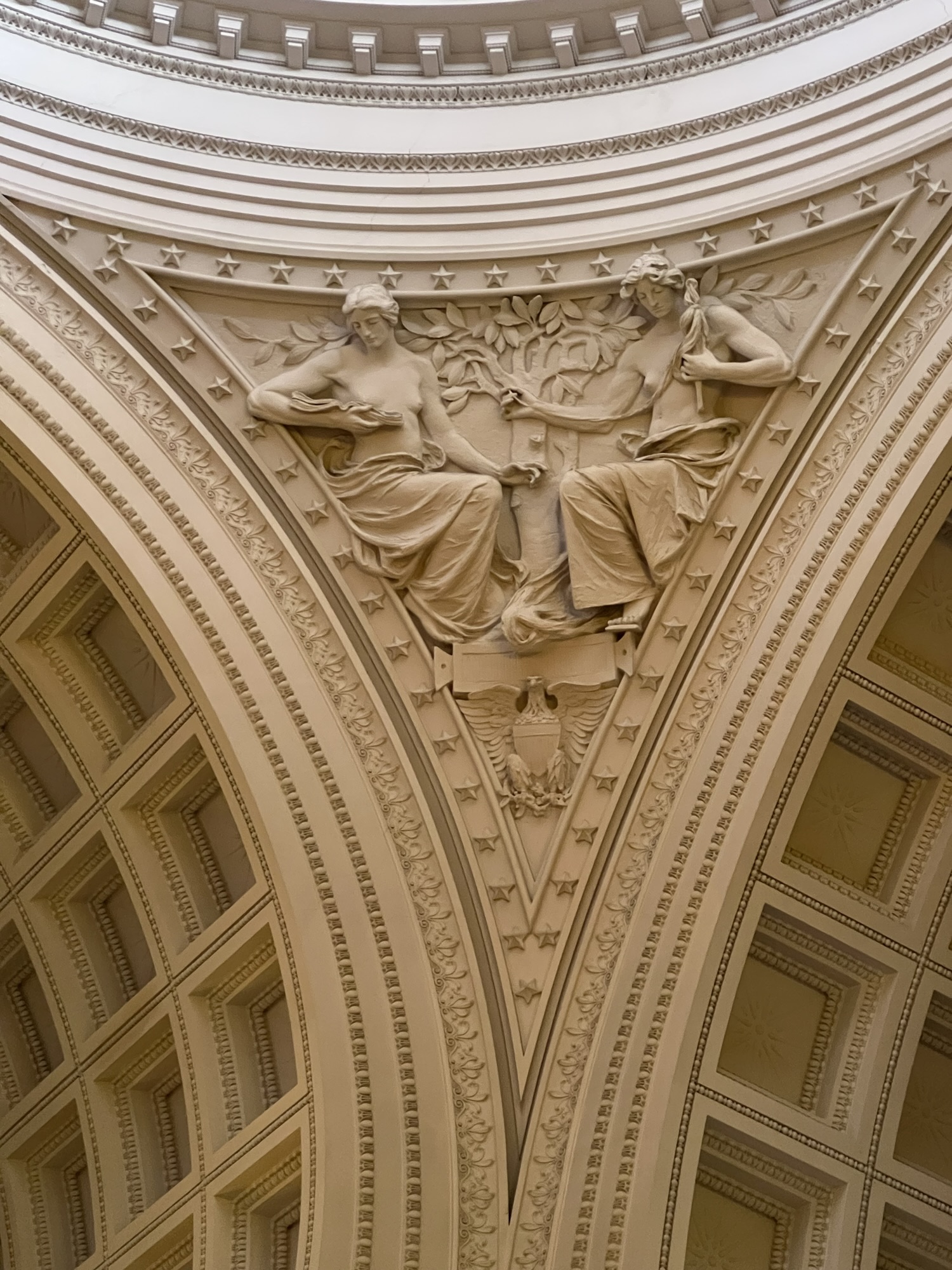
The details inside the rotunda

In doing what he considered simply his duty, he emerged after four years of fighting as one of the great military leaders in history. Aggressiveness, speed, tenacity and the ability to adjust his plans in the face of unexpected impediments all helped to bring him victory.

General Ulysses S. Grant

General U. Grant

As great as he was in war, Grant showed magnanimity and compassion in peace. He granted humane and generous terms when General Robert E. Lee surrendered to him on April 9, 1865 at Appomattox Court House. As president he pardoned many former Confederate leaders at the same time insisting on protecting the full political equality of former slaves.

The friezes of General Grant with General Lee

The General leading his troops
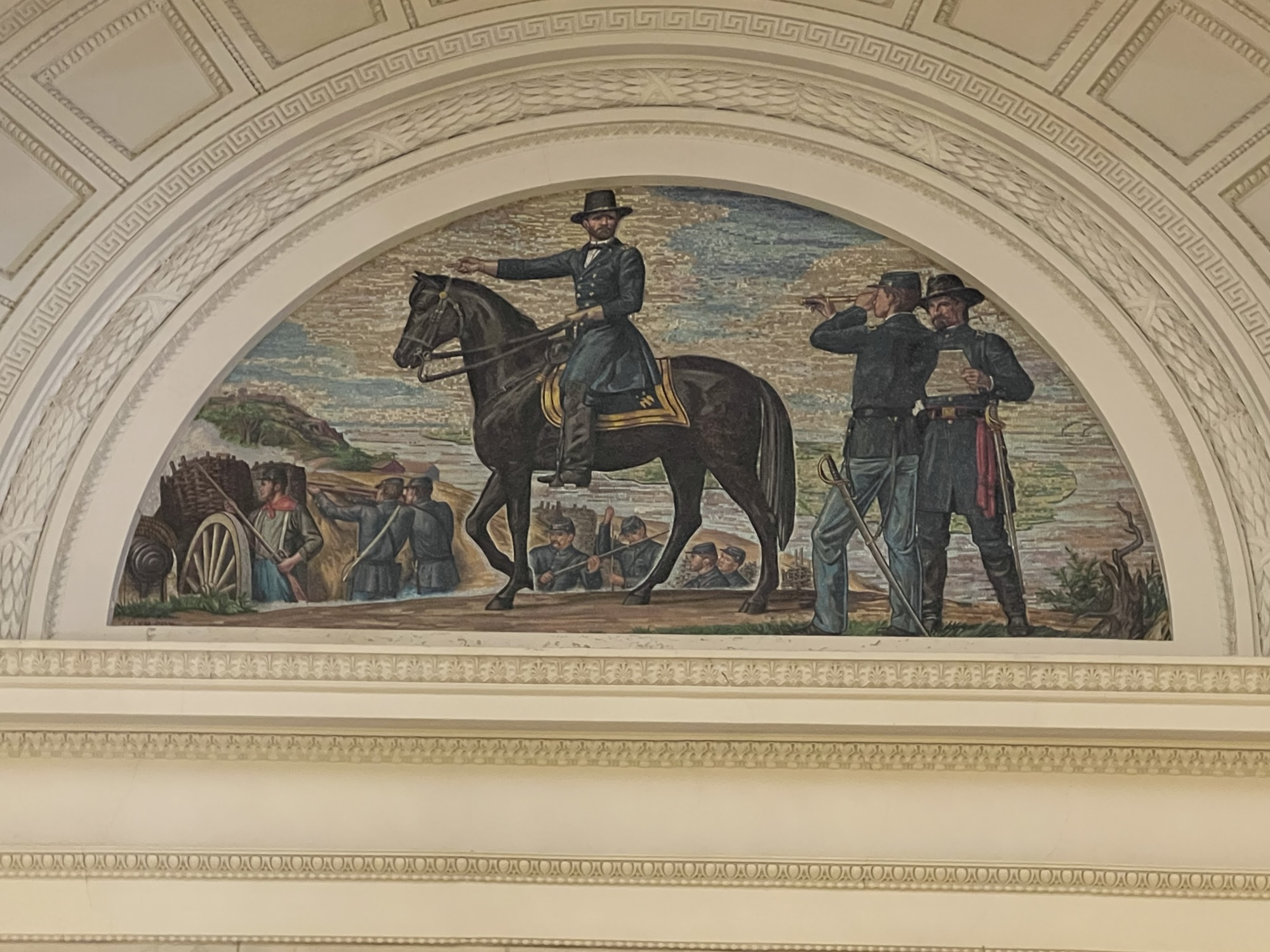
The General leading his troops

He was also concerned that American Indian tribes be treated with dignity  and respect. His fundamental desire for peace was reflected in his efforts to solve international disputes by arbitration rather than by threat of war. At the time of his death in 1885. Grant was universally respected by northerners and southerners alike.

The main floor of the tomb

The main floor of the tomb

Because of Grant’s status as a national hero, most Americans assumed he would be buried in Washington DC but his family preferred New York City. Grant himself had no strong preference; his only desire was for his wife, Julia to be buried next to him.

The funeral on August 8, 1885 was one of the most spectacular events New York had ever seen. Buildings all over the city were draped in black. An estimated one million people crowded sidewalks, filled windows, stood on rooftops and climbed trees and telephone poles for a view of the procession, which stretched seven miles and took  five hours to pass.

The resting place for General Grant and his wife

Grant’s remains were placed in a temporary vault until an appropriate memorial could be funded and built. On April 27, 1897, the 75th anniversary of Grant’s birth, thousands of people, including diplomats from 26 countries, attended the dedication ceremony for the completed memorial.

The President’s tomb is surrounded by the busts of his contemporaries:

The bust of General Sheridan

The bust of General McPherson

The bust of General Sherman
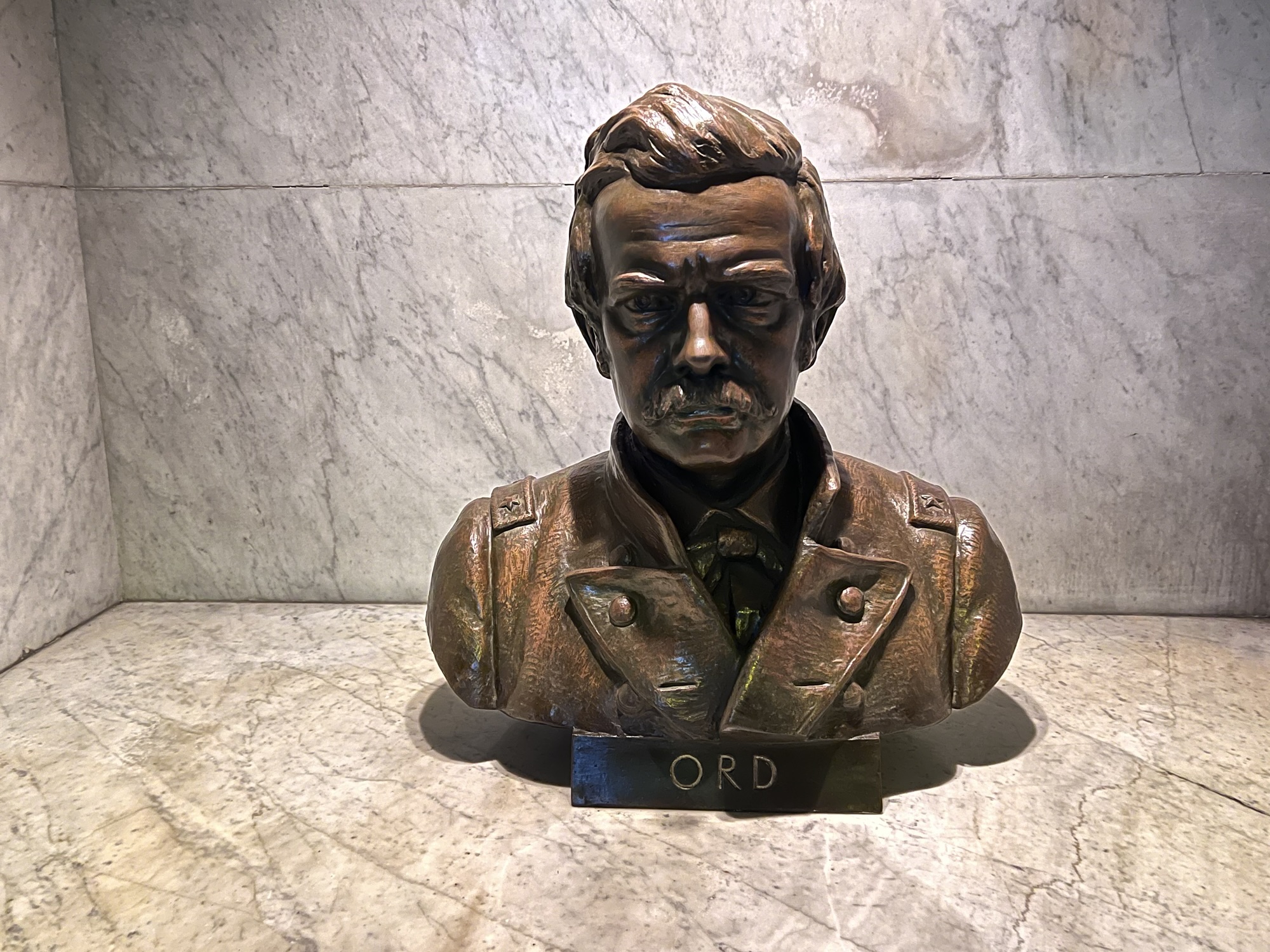
The bust of General Ord

The bust of General Thomas

The dedication parade, led by President William McKinley, was almost as large as Grant’s funeral parade. Julia Grant reviewed the ceremony sitting next to President McKinley. She was laid by her husband’s side after her death in 1902.

The Tomb of General Grant and his wife

The tomb is located in Riverside Park near Columbia University and across the street from Sakura Park, where Japanese Cherry trees are in bloom every Spring.

The park outside the Memorial

The Memorial with a park view

The Memorial from the park

The Memorial from Claremont Park
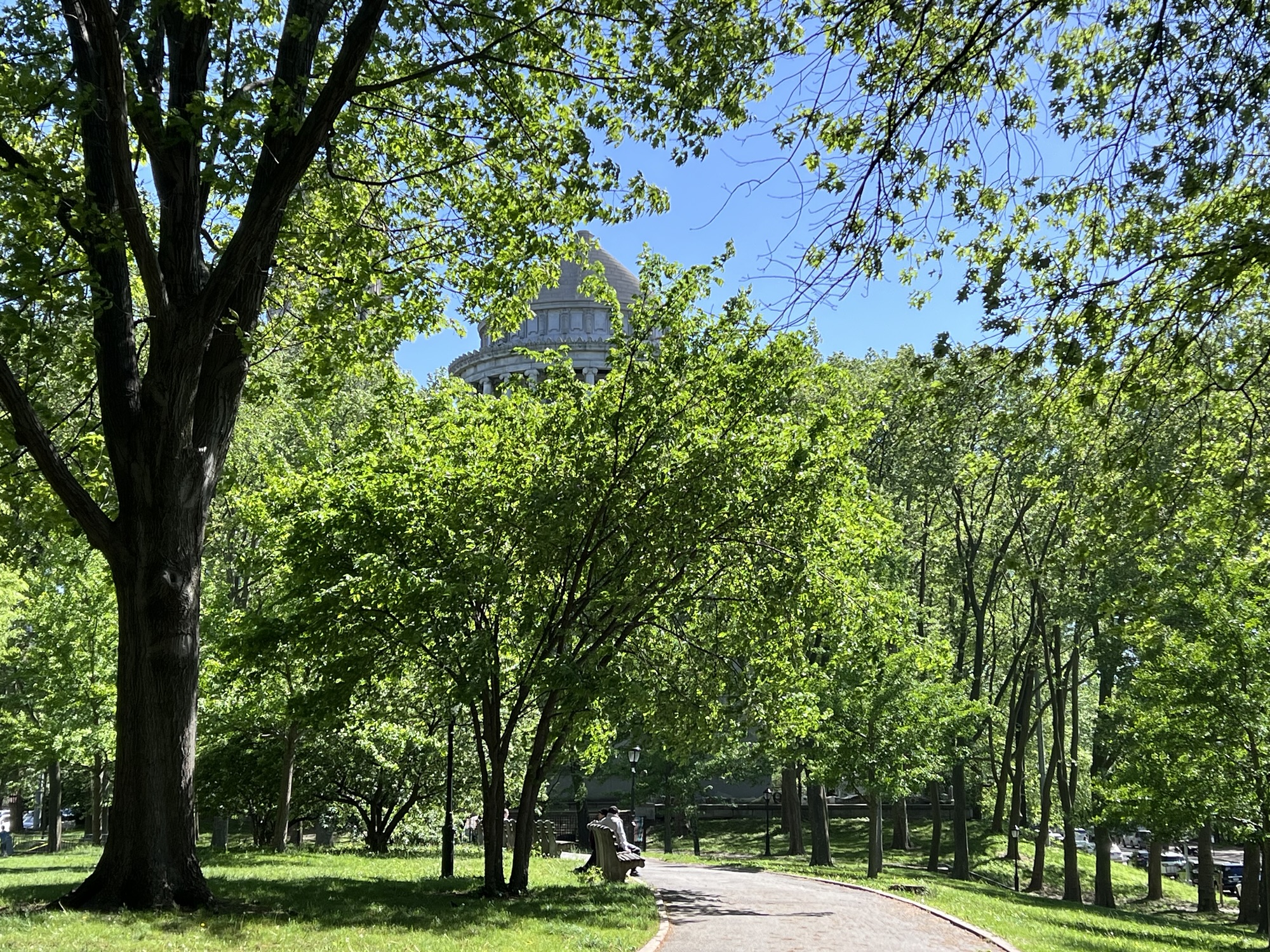
Claremont Park behind the tomb is beautiful in the Spring

The artwork surrounding the tomb

The artwork surrounding the tomb

The artwork surrounding the tomb

Near the tomb is the memorial to the ‘Amicable Child’ and that should not be missed as well.
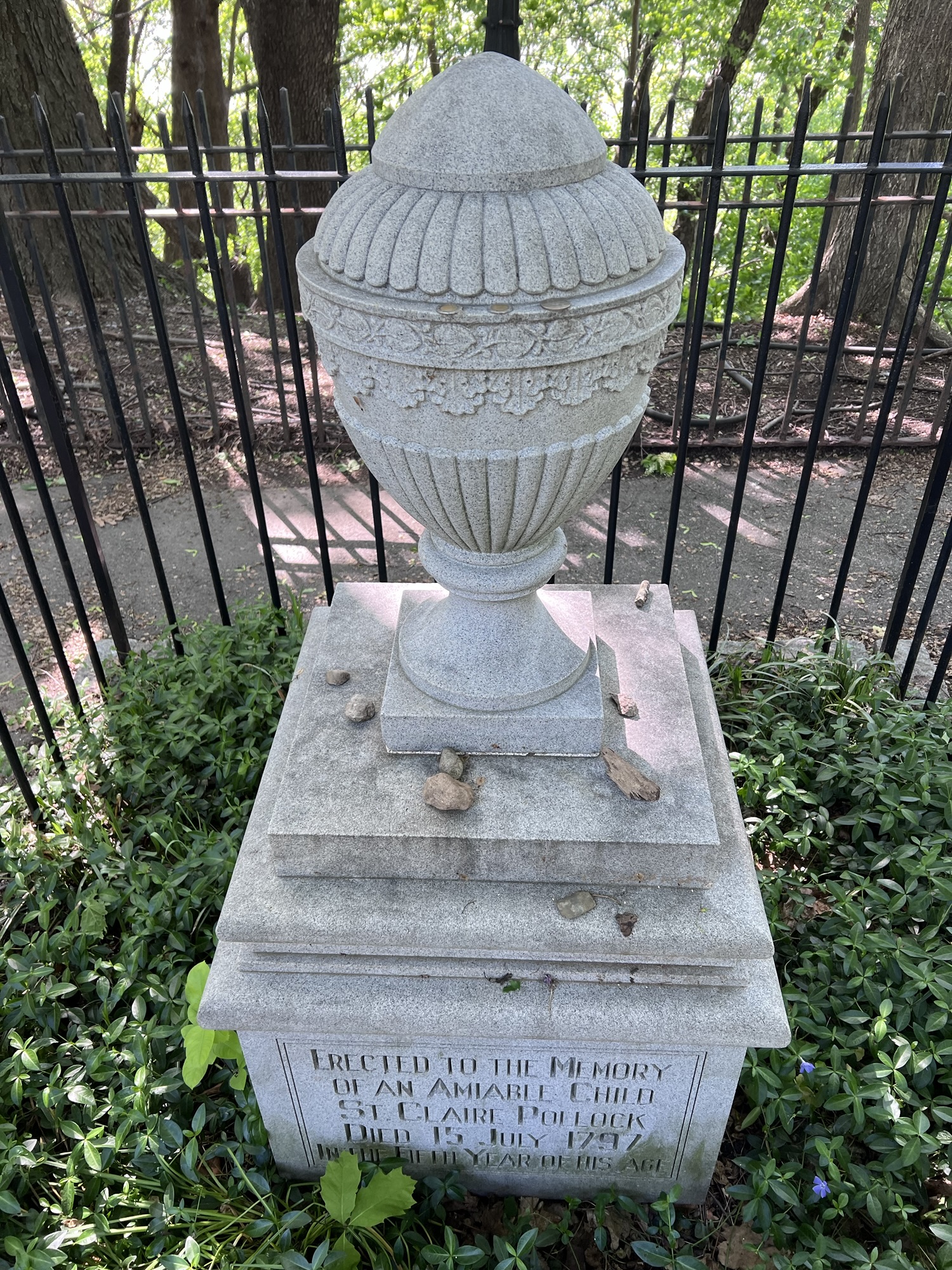
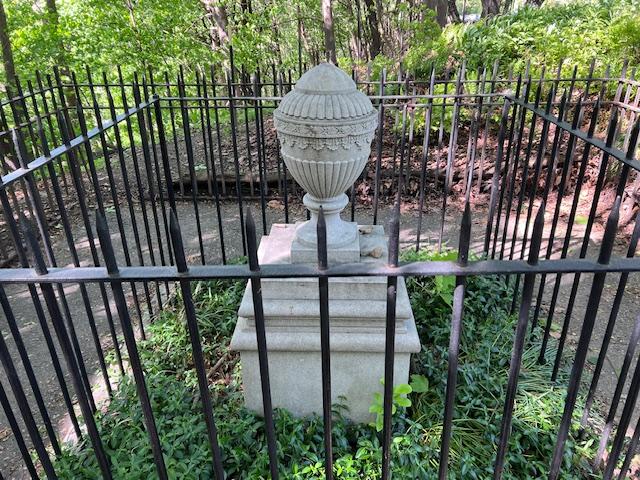
The Tomb of the Amiable Child right down the path

The little park the tomb sits in

Disclaimer: This information was taken directly from the National Park Service pamphlet. This is a very interesting National Memorial and should not be missed.

The gift shop is across the street

The theater is in the next room where you can watch the film

It is opened at certain times of the week, so please look for the posted hours. (The memorial is open from 9:00am to 5:00pm daily. For more information or to arrange for groups visits, please call (212) 666-1640).

Central Park Conservatory Garden Located between 104th and 106th Streets by Fifth Avenue                                            New York, NY 10029

Central Park Conservatory Garden Located between 104th and 106th Streets by Fifth Avenue New York, NY 10029

The Central Park Conservatory Garden

Located between 104th and 106th Streets off Fifth Avenue

New York, NY 10029

https://www.centralparknyc.org/

https://www.centralpark.com/visitor-info/central-park-conservancy/

Hours: Depends on the season and the Dawn to Dusk rule

Hours of Operation:

November-February (8:00am-5:00pm)

March (8:00am-6:00pm)

April (8:00am-7:00pm)

May (August 14th 8:00am-8:00pm)

August 15-31 (8:00am-7:30pm)

September (8:00am-7:30pm)

http://www.centralparknyc.org/things-to-see-and-do/#what_lawns-and-landscapes

Fee: Free

TripAdvisor Review:

https://www.tripadvisor.com/Attraction_Review-g60763-d272517-Reviews-Conservatory_Garden-New_York_City_New_York.html?m=19905

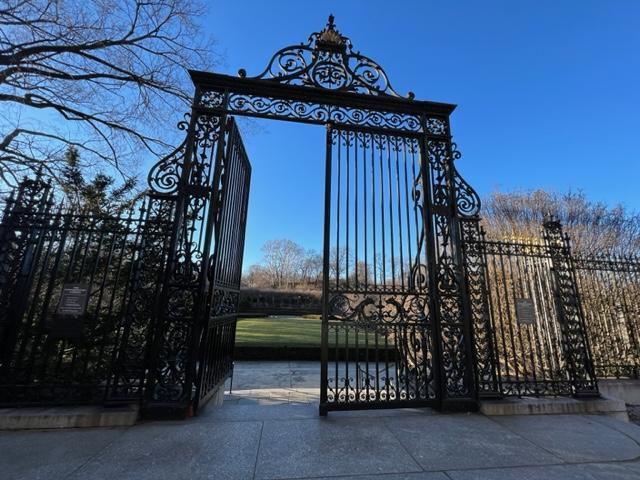
The entrance to the Central Park Conservatory Garden in Winter 2023 (The Vanderbilt Gates)

The map of the gardens

This time of the year (Spring) the Central Park Conservatory is in full bloom and its magnificence is at its finest in the Spring and Summer months. In May, the tulips and daffodils are just finishing their flowering and the lilacs are just finishing their blooming and still fragrant the garden. The lawns are all a deep green and the dogwood trees are just starting to bloom around the rings of the gardens.

The newly renovated pathways

Don’t miss walking around the Gardens off to the side closest to the Harlem Meir as they are open through the renovation. You will see beds of flowers along the fountain’s edge and can admire all the sculpture. What is most impressive is that in-between the Gardens is a vast green lawn surrounded by trees. The lawn of the Conservatory is nice to just admire with the trees lining it on all sides.

Central Park Conservatory Garden Spring 2025

The best time to come to the Conservatory Gardens is in early to late Spring and the early Summer when everything is in full bloom. This is when Mother Nature shows us her great magic.

The Central Park Conservatory in the Spring of 2025

The beauty of the Central Park Conservatory is that it blooms all year around except the winter and even then, there is a quiet elegance to the garden.

The gardens in full bloom in Summer 2025

History of The Central Park Conservatory:

The Central Park Conservatory Garden is the only formal garden in Central Park, New York City and is located approximately between 104th and 106th Street on Fifth Avenue in NYC. The Garden consists of about six acres of formal landscaping of trees, shrubs and flowers. The formal garden is divided into three smaller gardens each with a distinct style: Italian, French and English. The Central Conservatory Garden is an officially designated Quiet Zone and offers a calm and colorful setting for a leisurely stroll and intimate wedding.

The Central Park Conservatory in the Spring 2025

It takes its name from a conservatory that stood  on the site from 1898 to 1934. The park’s head gardener used the glasshouses to harden hardwood cuttings for the park’s plantings. After the conservatory was torn down, the garden was designed by Gilmore D. Clarke, landscape architect for Robert Moses, with planting plans by M. Betty Sprout and constructed and planted by WPA workers, it was opened to the public in 1937.

The Garden is composed of three distinct parts, skillfully restored since the 1980’s and is accessible through the Vanderbilt Gate at Fifth Avenue and 105th Street, a quarter south of the park’s northeast corner.

The Vanderbilt Gate at the Central Park Conservatory

The Vanderbilt Gate once gave access to the forecourt of Cornelius Vanderbilt II’s chateau designed by George Browne Post, the grandest of the Fifth Avenue mansions of the Gilded Age, at 58th Street and Fifth Avenue, sharing the Plaza with Plaza Hotel. The wrought iron gates with cast iron and repousse details, were designed by Post and executed in an iron foundry in Paris.

The fountain at the Central Park Conservatory


The fountain statuary in the main gardens.

Below the steps flanked by Cornelian cherry, the central section of the Conservatory Garden is a symmetrical lawn outlined in clipped yew, with a single central fountain jet at the rear. It is flanked by twin aisles of crabapples and backed by a curved wisteria pergola against the steep natural slope, that is dominated at its skyline by a giant American Sycamore.

Otherwise there is no flower color; instead on any fine Saturday afternoon in June, it is a scene of photography sessions for colorful wedding parties for which limousines pull up in rows on Fifth Avenue.

The Cherry Trees at the gardens in 2019

To the left of the south side is the garden of mixed herbaceous borders in wide concentric bands around The Secret Garden water lily pool, dedicated in 1936 to the memory of Frances Hodgson Burnett with sculpture by Bessie Potter Vonnoh.

Some large shrubs, like tree lilac, magnolias, buddleias and Cornus alba ‘elegantissima’ provide vertical structure and offer light shade to offset the sunny locations, planted by Lynden Miller with a wide range of hardy perennials and decorative grasses, intermixed with annuals planted to seem naturalized. This  garden has seasonal features to draw visitors from April through October.

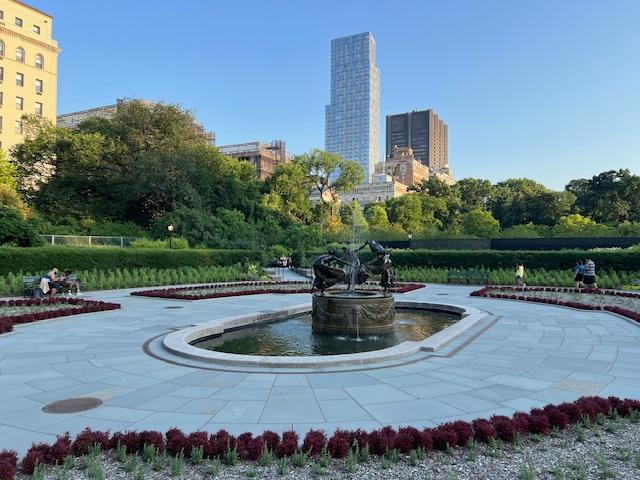
To the right of the central formal plat is a garden also in concentric circles, round the Untermyer Fountain, which was donated by the family of Samuel Untermyer in 1947. The bronze figures, Three Dancing Maidens by Walter Schott (1861-1938) were executed in Germany about 1910 and formed a fountain at Utermyer’s estate “Greystone” in Yonkers, New York.

The Untermyer Fountain

https://www.centralparknyc.org/locations/untermyer-fountain

https://en.wikipedia.org/wiki/Untermyer_Fountain

This section of the Conservatory Garden has two dramatic seasons of massed display of tulips in the spring and Korean chrysanthemums in the fall. Beds of satolina clipped in knotted designs with contrasting bronze-leaved bedding begonias surround the fountain and four rose arbor gates are planted with reblooming ‘Silver Moon’ and ‘Betty Prior’ roses.

The French Gardens at the Central Park Conservatory in Summer 2025

After the Second World War the garden had become neglected and by the 1970’s became a wasteland. It was restored and partially replanted under the direction of horticulturist and urban landscape designer Lyden Miller to reopen in June 1987. The overgrown, top-heavy crabapples were freed of water shoots and pruned up to a higher scaffold for better form. The high-style mixed planting was the first to bring estate garden style to urban parks, part of the general of Central Park under Elizabeth Barlow Rogers of the Central Park Conservancy.

The Conservatory in the early Spring of 2025

(This information directly from Wikipedia and has many sources)

The Amiable Child Memorial                                554 Riverside Drive at West 124th Street          New York, NY 10027

The Amiable Child Memorial 554 Riverside Drive at West 124th Street New York, NY 10027

The Amiable Child Memorial

554 Riverside Drive at West 124th Street

New York, NY 10027

Open: 6:00am-1:00am

https://www.nycgovparks.org/parks/riversidepark/monuments/1206

https://riversideparknyc.org/places/amiable-child-monument

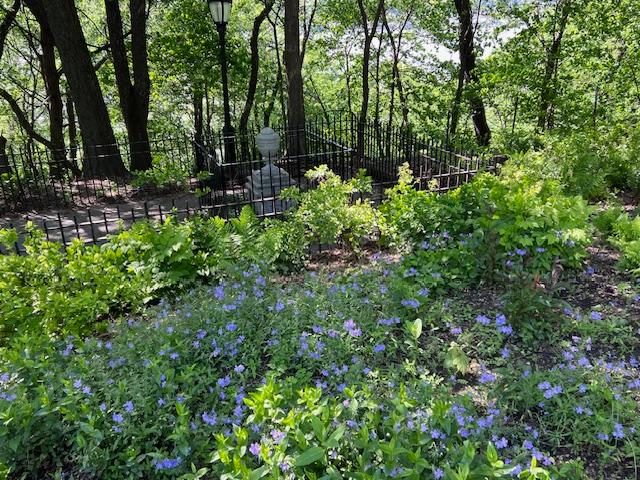
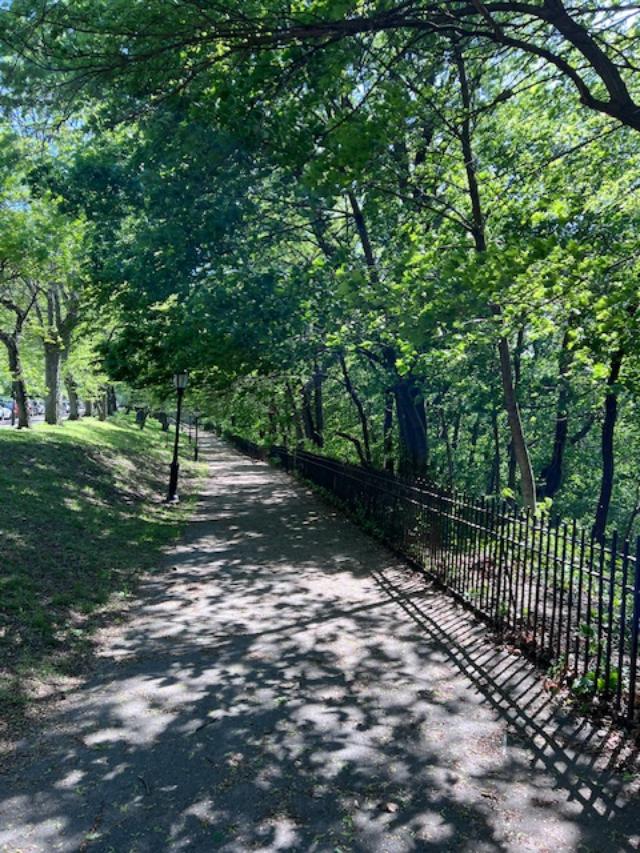
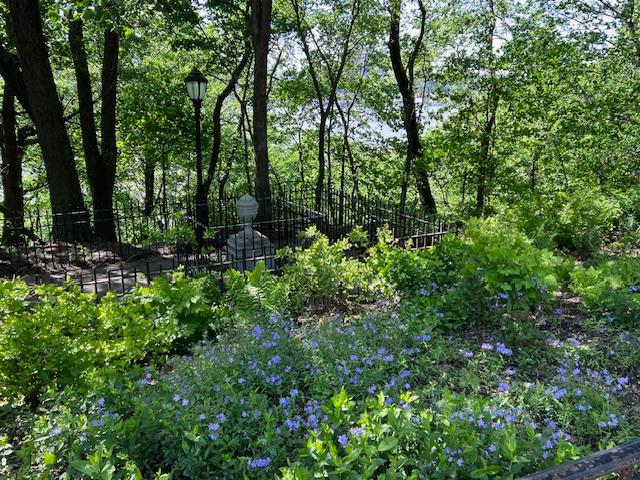
I stumbled across the Amiable Child Memorial over the summer when I was walking Riverside Drive for “MywalkinManhattan” project (see walking 155th Street) and came across this small memorial when I was passing Grant’s Tomb. It is off to the side on the path by the woods. It is a small monument and very humbling in its look. It is a small urn on a pedestal marking a grave of a small child surrounded by a fence. I got the following information from the NYC Parks Department website when I wanted to know more about the site:

The historic sign for the Tomb

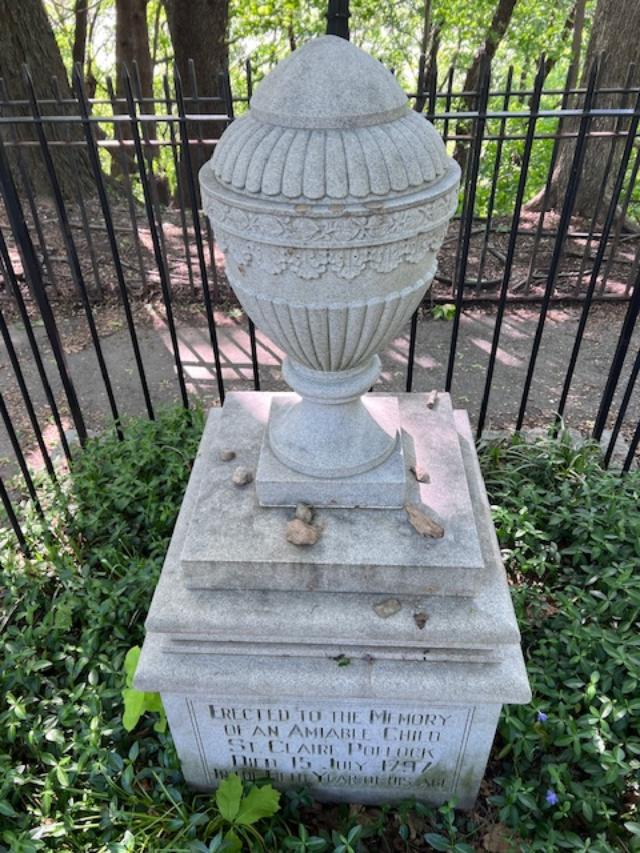
This unique New York City monument marks the site of one of the few private graves on public land within the five boroughs. It belongs to St. Claire Pollock (the namesake of nearby St. Claire Place), a child who died on July 15, 1797 in the fifth year of his life, probably from a fall from the cliffs of the parkland onto the rocks near the Hudson River.

The tomb up close 

In the two centuries that have passed since the tragedy of the “Amiable Child” as he was described on his headstone-different accounts of St. Claire origins and family have persisted. George Pollock, the owner of the property on which the boy was buried, was either his father or his uncle. He was a linen merchant of Scots-Irish or possibly English descent, who lived in a mansion on Strawberry Hill (later called Claremont) in the 1790’s. He  had sold his property to Mrs. Cornelia Verplanck, his former neighbor, by January 18, 1800 when he wrote as follows:

The Tomb of the Amiable Child park and flowers

“There is a small enclosure near your boundary fence within which lie the remains of a favorite child, covered by a marble monument. You will confer a peculiar and interesting favor upon me by allowing me to convey the enclosure to you so that you will consider its part of your own estate, keeping it however always enclosed and sacred.”

The park in the Spring of 2025

Claremont Hill was the site of the Battle of Harlem Heights, fought during the Revolutionary War on September 16, 1776. By 1806, it had been acquired by Michael Hogan, a former British Consul in Havana, who built Claremont Mansion (for which Claremont Avenue was named). Possible sources for the name are Hogan’s birthplace of County Clare, Ireland and his friend Prince William, Duke of Clarence, who would ascend the English throne as King William IV in 1830. Known as the site of a popular roadside inn by 1860, Claremont was acquired by the City from the heirs of Joel Post in 1873 for the development of Riverside Park.

The Park and the Tomb in the Spring 2025

In the 1890’s, Claremont Inn was host to numerous politicians, socialites and entertainers including the Morgan’s, Vanderbilt’s and Whitney’s, Lillian Russell and Admiral George Dewey. By 1907, the Inn had been transformed into a restaurant, serving the likes of Cole Porter and James J. Walker. It was destroyed by fire in 1950. The playground which now stands on the site was built shortly afterwards.

A century after the Tomb of the Amiable Child was laid, New York’s most famous monumental grave-Grant’s Tomb-was completed. The domed structure across Riverside Drive, designed by architect John Duncan and sculptor John Massey Rhind, was dedicated on April 27, 1897. The later structure is as grand a testimony to the accomplishments of national leader as the monument to the amiable child is a modest and touching tribute to a young boy who never had the opportunity to grow into adulthood. This monument was dedicated on May 3, 1967 (www.nycgovparks.org/parks/riverside-park/mounments/1206).

*You really have to look off the beaten path to see this unique little memorial but it is very touching and soulful. Take the time when visiting the neighborhood to visit this very touching site. You will find it by the path behind Grant’s Tomb.

Look for more sculptures  by looking at the Parks website http://www.nycgovparks.org.