Tag: Exploring the Island of Manhattan

Nicholas Roerich Museum                                    319 West 107th Street                                        New York, NY 10025

Nicholas Roerich Museum 319 West 107th Street New York, NY 10025

Nicholas Roerich Museum

319 West 107th Street

New York, NY  10025

(212) 864-7752

Open: Monday: Closed/Tuesday-Friday: 12:00pm-4:00pm/Saturday-Sunday: 2:00pm-5:00pm

Closed: Major holidays

Admission: Admission is free, though donations are welcome.

http://www.roerich.org

http://www.roerich.org/

TripAdvisor Review:

https://www.tripadvisor.com/Attraction_Review-g60763-d136141-Reviews-Nicholas_Roerich_Museum-New_York_City_New_York.html?m=19905

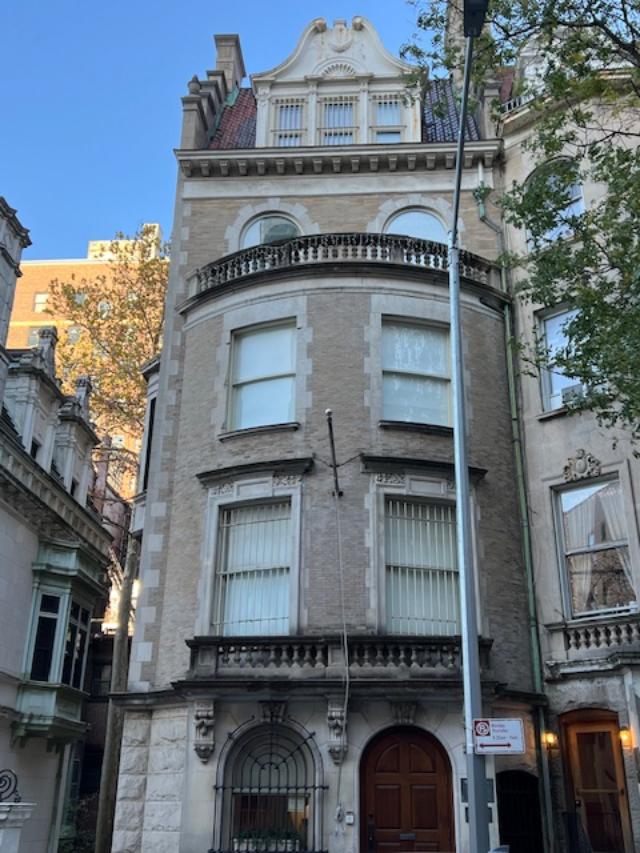
The front of the museum

This small museum in the Upper West Side neighborhood of Manhattanville is easy to miss. It is in a small brownstone on West 107th Street right near Riverside Drive. You can see the plaque for the museum to the right of the building and there is a side door to get in. The admission is free but they do ask for a donation if you can do it.

The museum is a specialty collection of the works of the former owner of the house and artist Nicholas Roerich. They are mostly landscapes and religious themed that cover three floors of the museum. It takes about an hour to an hour and a half  to see all the floors. A nice touch they had in the afternoon that I was there was a piano player whom you could hear play throughout the brownstone. When you go, it will be a pleasant afternoon where you are not fighting the crowds of the larger museums.

Nicholas Roerich

Artist Nicholas Roerich

The Nicholas Roerich Museum was founded in 1949 to house a permanent collection of over two hundred paintings by the Russian-born artist, poet, philosopher and humanitarian, Nicholas Roerich. The museum also houses a library of books and maintains an archive and a collection of artifacts relating to the areas of Roerich’s interests (Museum guide).

The Mission of the Museum:

The mission of the Nicholas Roerich Museum is essentially a narrow one: to make available to the public the full range of Roerich’s accomplishments. These, however, are not narrow; they cover the realms of art, science, spirituality, peacemaking and more. Because Roerich’s  activities ranged widely, so do the museum’s.

Nicholas Roerich Museum I

The Museum Collection:

Nicholas Roerich is known first and foremost as a Russian-born artist. His paintings, of which there are thousands around the world, explore the mythic origins, the natural beauty and the spiritual strivings of humanity and of the world. The museum houses approximately two hundred of these works and keeps most of them permanently on display for visitors who come from around the world. Indeed, for many of these visitors, the museum is a destination of great importance; the paintings speak to them of their own inner yearnings and possible fulfillment. For them, Roerich’s paintings are a kind of teaching-about spiritual development about culture and its role in human life and about opportunities for the achievement of peace in a fractious world.

Nicholas Roerich Museum II

Publications & Booklist:

The museum also keeps in print a number of books by and about Roerich and his life and work and a substantial stock of postcards and reproductions of his paintings. These too are seen by many as more than just prints; they are hung in homes with a degree of appreciation that is not often given to such things.

Cultural Events:

In addition to these functions, the museum also maintains an active schedule of cultural activities.  It was Roerich’s fervent belief that the role of cultural development in the peace and evolution of the world is fundamental and that it is therefore the responsibility of those who work in creative and cultural fields to strive always for that peace and evolution and for those goals to be the chief impulses guiding their creative work. Information about these ideas is always available.

The Roerich Pact & the Banner of Peace:

The museum sustains an ongoing effort to spread public awareness of the intermingled roles of peace and culture and the ways in which each sustains the other. Information and materials about The Roerich Pact and the Banner of Peace are always available. Throughout this century of wars and national struggles, the yearning of the public for ways of achieving peace has been great; the ideas of the Pact and the Banner provide a welcome answer to those yearnings.

As Roerich’s ideas become better known around the world, attendance at the Museum grows and requests for information and materials about him and his art and social achievements increase.

*This information is from the Museum’s website.

Disclaimer: This information was taken from a combination of the museum’s website and from the biography of the artist.


Bard Graduate Center Gallery                               18 West 86th Street                                             New York, NY 10024

Bard Graduate Center Gallery 18 West 86th Street New York, NY 10024

Bard Graduate Center Gallery

18 West 86th Street

New York, NY  10024

(212) 501-3023

gallery@bgc.bard.edu

https://www.bgc.bard.edu/gallery/27/exhibitions

https://www.bgc.bard.edu/gallery/

Open: Tuesday, Friday-Sunday: 11:00am-5:00pm/Wednesday-Thursday: 11:00am-8:00pm/Closed on major holidays

Fee: Free Admission Hours on all Wednesdays and Thursday evenings from 5:00pm-8:00pm.

December 26th (Boxing Day) : Free

General Admission: $7.00 and Students & Seniors (65+): $5.00

Subway: B, C, and 1 to West 86th Street

TripAdvisor Review:

https://www.tripadvisor.com/Attraction_Review-g60763-d309306-Reviews-The_Bard_Graduate_Center-New_York_City_New_York.html?m=19905

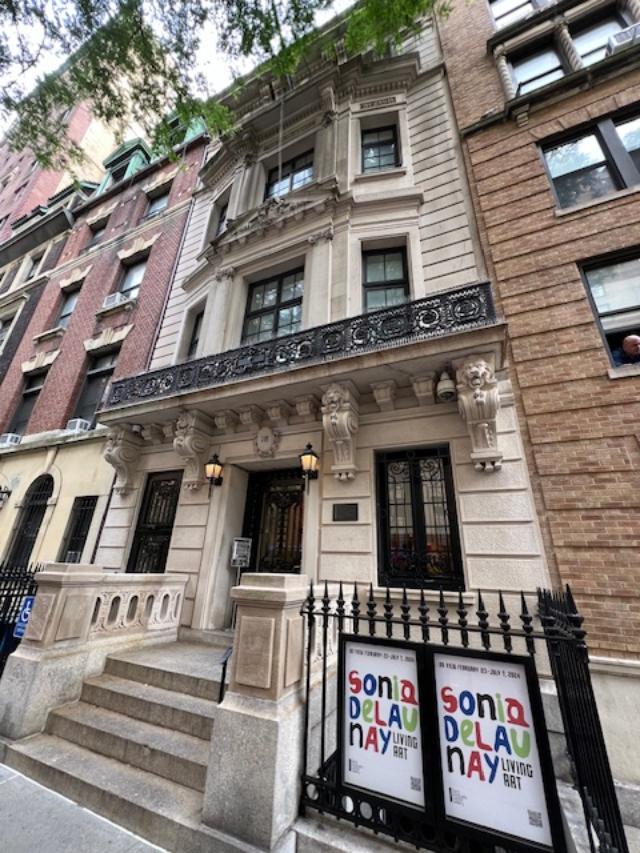
The Bard Gallery at 18 West 86th Street

I took some time out from “MywalkinManhattan” project to visit the Bard Gallery for the afternoon and was pleasantly surprised by this little ‘gem’ located on the Upper West Side of Manhattan. This Graduate Center focuses on small exhibitions with interesting themes and not so over-whelming shows that tax your brain like some of the bigger museums in New York City.

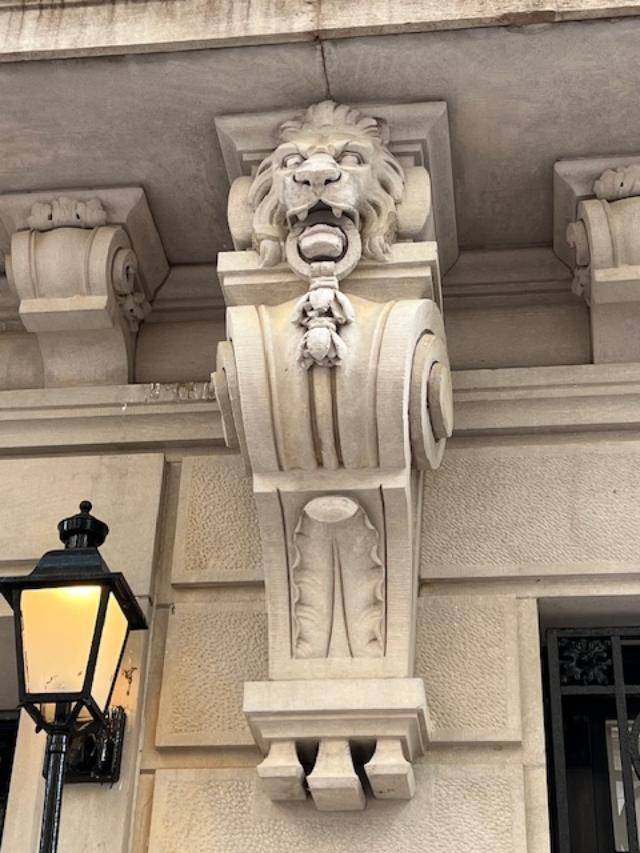
The embellishments at the entrance to the Bard Art Galley

Their exhibitions are compact and detailed on the subject matter and the objects they have on display are interesting. They also have lectures and gallery talks for more detail on their displays. The Bard Graduate Center Gallery, founded in 1993, occupies a six story townhouse near Central Park West and houses not just the gallery but the academic programs, lecture hall and library.

The center has pioneering exhibitions on decorative arts, design history and material culture. The research driven exhibitions are organized with leading scholars, curators and institutions worldwide and showcase a rich array of objects comprised of loans from public and private collections, many never before on view in New York City.

Bard Art Gallery

Walking the permanent collection

With a commitment to investigating under-recognized topics in the history of design, the exhibitions provide a critical framework for understanding the context in which historical and contemporary objects were made, used, collected and displayed. These lead to a fuller understanding of the present through the lens of the past (Bard College website).

Bard Art Gallery III

Displays in the permanent galleries

A full slate of public and research programs, public tours and opportunities for school groups and educators compliment each exhibition. Video and new media interactives enrich the visitor experience in educators compliment each exhibition (Museum website).

Bard Art Gallery II

Items in the permanent collections

The Bard Graduate Center: Decorative Arts, Design History, Material Culture is a graduate research institute and gallery located on the Upper West Side of Manhattan. It is affiliated with Bard College, located in Annadale-on-Hudson, NY. The gallery occupies a six story townhouse  at the 18 West 86th Street location while the academic building and library are located at 38 West 86th Street.

Students at Bard Graduate Center focus on the study of the cultural history of the material world. The institution is committed to the encyclopedic study of things, drawing on methodologies and approaches from art and design history, economic and cultural history and history of technology, philosophy, anthropology and archaeology.

Students enrolled in the M.A. and PhD. programs work closely with a distinguished faculty of active scholars in exploring the interrelationships between works of art and craft, design, places, ideas and social and cultural practice in courses ranging from antiquity to the 21st century (Wiki Bard College site).


Lighthouse Park Roosevelt Island                        900 Main Street                                                   New York, NY 10044

Lighthouse Park Roosevelt Island 900 Main Street New York, NY 10044

Lighthouse Park

Roosevelt Island

900 Main Street

New York, NY  10044

(212) 832-4540

https://rioc.ny.gov/179/The-Lighthouse

https://www.nycgo.com/venues/roosevelt-island-lighthouse-park

Open: Sunday-Saturday 7:00am-9:00pm

My review on TripAdvisor:

https://www.tripadvisor.com/Attraction_Review-g60763-d565031-Reviews-Roosevelt_Island-New_York_City_New_York.html

Lighthouse Park on Roosevelt Island

The Roosevelt Island Lighthouse is a stone lighthouse built by New York City in 1872. It is at the northeast tip of Roosevelt Island in the East River in Lighthouse Park. It was named to the National Register of Historic Places on March 16th, 1972, and was designated a New York City Landmark on March 23rd, 1976 (Wiki).

Blackwell Island, which was called Welfare Island from 1921 to 1973 and is now known as Roosevelt Island was purchased by New York City in 1828. Various facilities on the island were built including a penitentiary, almshouse, city hospital, the New York Lunatic Asylum and the Smallpox Hospital (some of these buildings still exist).

In 1872, the City of New York built a lighthouse. The supervising architect was James Renwick Jr., who also designed several other buildings on the island for the Charities and Correction Board as well as more famous works such has St. Patrick’s Cathedral. (Wiki)

Legends abound about the construction of the lighthouse. Two names, John McCarthy and Thomas Maxey, are associated with the various legends. The 1870 report of the warden of the lunatic asylum that an industrious patient had built a seawall near the asylum that had reclaimed the land. The legends indicate that he had incorporated Civil War cannons.

The park in the distance on Roosevelt Island

The legend indicates that the builder was bribed with bogus money to demolish the fort for the construction of the lighthouse. For many years, a saying was inscribed on a stone near the lighthouse:

This is the work

Was done by

John McCarthy

Who built the Light

House from the bottom to the

Top All ye who do pass by may

Pray for his soul when he dies.

Lighthouse Park from Carl Schulz Park on Manhattan Island

The lighthouse was operated by the City instead of the U.S. Lighthouse Board. In its 1893 annual report, the Lighthouse Board generally praised the operations of Blackwell Island Lighthouse but indicated that the Board has unfairly criticized because of the City’s occasional failure to keep the light in operation. The Board advocated banning private lights. The 1917 U.S. Coast Pilot indicated that there was a private light at the north end of the island. (Wiki)

The light was operated until about 1940. In the 1970’s, the lighthouse was partially restored. The restoration was completed in 1998. (Wiki)

The lighthouse is approximately 50 feet (15m) tall. It is constructed of gray gneiss, rough ashlar that was quarried on the island by inmates from the penitentiary. It has an octagonal base and an octagonal shaft. There is an entrance on the south side under a projecting gable and a pointed Gothic arch. Two south-facing slit windows in the shaft light the interior. At the top of the shaft there is a band of ornamented corbels below the gallery, which is surrounded by an iron railing. The lantern is octagonal with a shallow conical roof. An 1893 photograph and a 1903 movie show that it probably had a much taller, steeper conical cap when it was built. The optics were provided by the U.S. Lighthouse Board (Wiki).

Lighthouse Park in the winter months

Lighthouse Park is located on the northernmost section of Roosevelt Island and can be seen from Carl Schurz Park. On a beautiful sunny day, it is a very picturesque view from the park.

Lighthouse Park from Carl Schulz Park

The sculpture “The Girl Puzzle”:

Next to the lighthouse is a monument of faces dedicated to Nellie Bly and to women who have faced hardship entitled “The Girl Puzzle”. The sculpture was dedicated to journalist Elizabeth Cochrane Seaman, pen name Nellie Bly, who wrote about the abuses in the mental asylum on what was known as Mental Island at the time. She wrote the full report “Ten Days in the Mad House” on the abuses of patients.

“Girl Puzzle” by artist Amanda Matthews (Artist Bio)

https://en.wikipedia.org/wiki/The_Girl_Puzzle

https://www.thegirlpuzzle.com/

Artist Amanda Matthews (Artist Bio)

https://en.wikipedia.org/wiki/Amanda_Matthews

https://www.prometheusart.com/

The piece was created by American born artist Amanda Matthews. Ms. Matthews graduated with a BA in Studio Art from the University of Louisville and had studied abroad in Europe. She is known for her work that honors women and celebrates diversity and inclusion (Wiki).

The history sign on Nellie Bly

Each sculpture is a interpretation on Nellie Bly. It really is an interesting sculpture.

The Girl Puzzle One:

The Girl Puzzle Two:

The Girl Puzzle Three:

The Girl Puzzle Four:

The Girl Puzzle Five:

Disclaimer: this information was taken from Wikipedia site and the Roosevelt Island Historical Society. This little ‘gem’ of a park can be seen by walking to the most northern part of Roosevelt Island by way of the Main Street which runs through the island.

Cleopatra’s Needle Central Park @ East 81st Street New York, NY 10028

Cleopatra’s Needle

Central Park at East 81st Street (behind the Metropolitan Museum of Art)

New York, NY  10028

https://www.centralparknyc.org/attractions/obelisk

https://en.wikipedia.org/wiki/Cleopatra%27s_Needle_(New_York_City)

Open: When Central Park is open from dawn to dusk depending on the season

TripAdvisor Review:

https://www.tripadvisor.com/Attraction_Review-g60763-d1959031-Reviews-Cleopatra_s_Needle-New_York_City_New_York.html?m=1990

Cleopatra's Needle III

Cleopatra’s Needle

https://www.centralparknyc.org/locations/obelisk

https://en.wikipedia.org/wiki/Cleopatra%27s_Needle_(New_York_City)

I always admire Cleopatra’s Needle whenever I am touring Central Park West after an afternoon at the Metropolitan Museum of Art. The obelisk sits in back of the Metropolitan Museum of Art on Fifth Avenue and the pathways behind the museum lead to the site.

It is one of the few place where you can see hieroglyphics up close unless you are in Egypt and the sad part is that the natural surroundings are wearing them out. Still it is one of the most interesting outside artifacts that Manhattan and New York City has on display. Take time to observe all four sides of the obelisk and observe the writings.

Sometimes I think the tourists miss this interesting artifact and how it got here from Egypt.

The History of Cleopatra’s Needle:

(From Wiki)

Cleopatra’s Needle (obelisk) was erected in Central Park, just west of the Metropolitan Museum of Art on February 22, 1881. It was secured in May 1877 by Judge Elbert E. Farnam, the then United State Consul General of Cairo as a gift from the Khedive for the United States remaining friendly neutral as the European powers, France and Britain, maneuvered to secure political control of the Egyptian government.

The obelisk is a twin of the obelisk given to London at the same time and come from the ancient city of Alexandria. The name is a misnomer as they have no relationship with the Ptolemaic Queen Cleopatra VII of Egypt and were already over a thousand years old in her lifetime (please see the Wiki link attached to the blog for more information on the obelisk).

Cleopatra's Needle II

The obelisk is free to the public and can be seen by taking the path behind the Metropolitan Museum of Art. It is open all day.