Category: Exploring New York City

Day Three Hundred and Seventy-Six Touring the Met-Cloisters at Christmas time ‘The Yule Tide Tour’-The Walking tour of the Museum                                          January 4th, 2026

Day Three Hundred and Seventy-Six Touring the Met-Cloisters at Christmas time ‘The Yule Tide Tour’-The Walking tour of the Museum January 4th, 2026

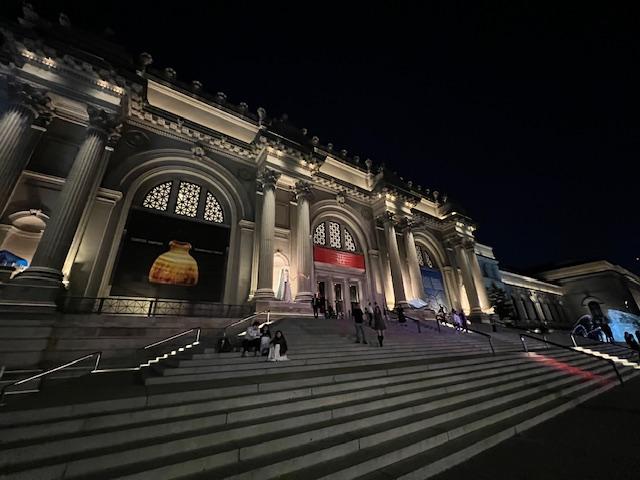
I love the holidays in New York City. There are so many Christmas themed events to go to and decorated homes to visit. One of my favorite tours is at the Met Cloisters for their Christmas themed walking tours that take place from December through early January.

The Cloisters Museum & Gardens: A Branch of The Metropolitan Museum of Art

99 Margaret Corbin Drive

Fort Tryon Park

New York, NY  10040

(212) 923-3700

Open: March-October 10:00am-5:15pm/November-February-10:00am-4:45pm

http://www.metmuseum.org

https://www.metmuseum.org/visit/plan-your-visit/met-cloisters

Fee: Adults $30.00/Seniors $17.00/Children $12.00/Members & Patrons and Children under 12 are free (prices do fluctuate).

Museum Hours:

Hours: Open 7 days a week

March-October 10:00am-5:15pm

November-February 10:00am- 4:45pm

Closed Thanksgiving Day, December 25th and January 1st.

*Some galleries may be closed for construction or maintenance.

TripAdvisor Review:

https://www.tripadvisor.com/Attraction_Review-g60763-d106609-Reviews-The_Met_Cloisters-New_York_City_New_York.html?m=19905

My review on VisitingaMuseum.com:

To finish my weekend of holiday festivities before the Epiphany, I took the annual Christmas walking tour of the Met Cloisters. The museum hosts an interesting walking tour of the history of the holidays during the Medieval era. Each tour has a different theme to it. There is the history of Christmas in that era, the use of plants and flowers in the decorating of the religious sites and the historic significance of the visit of the Three Kings.

Each tour guide incorporates the artwork, architecture and plants into the discussion. On average you will have about forty people on the tour.

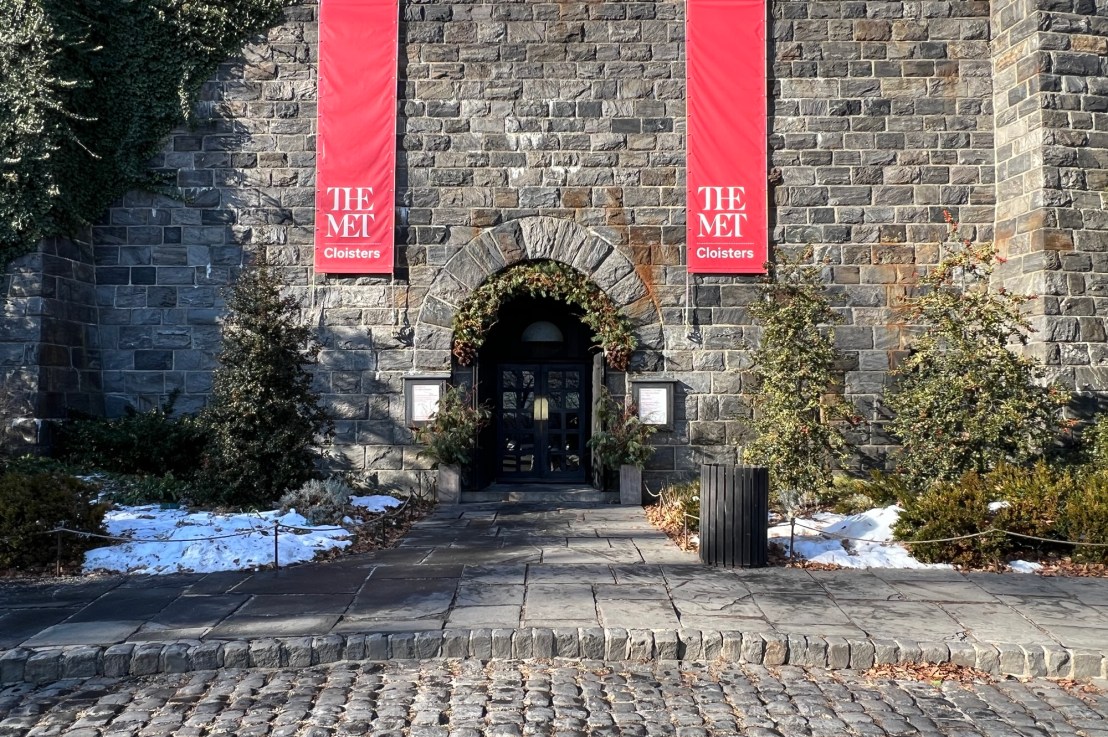
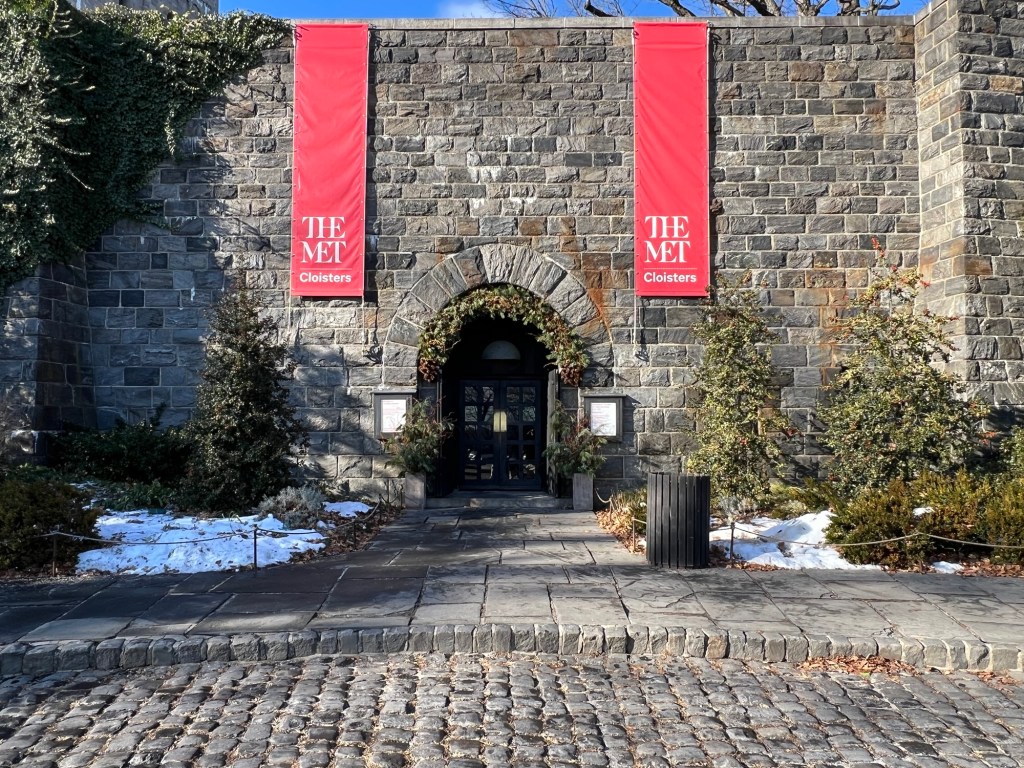
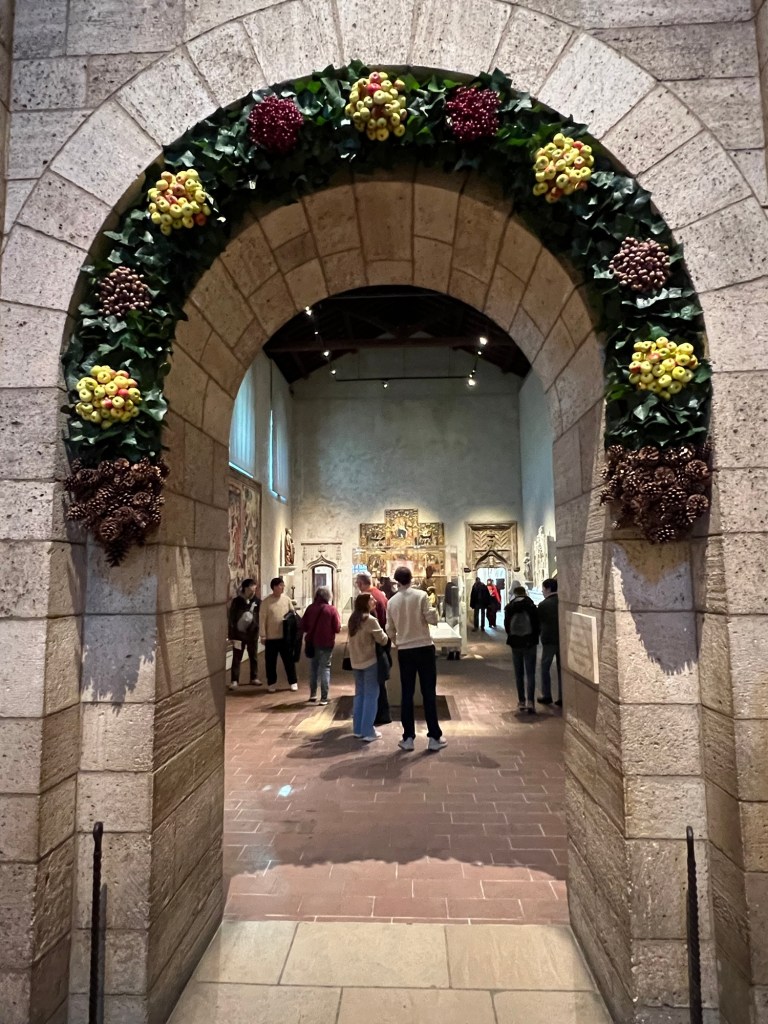
The entrance of the Cloisters decorated for the holidays

The Christmas Tide Tour:

https://www.metmuseum.org/perspectives/christmastide-deck-the-halls

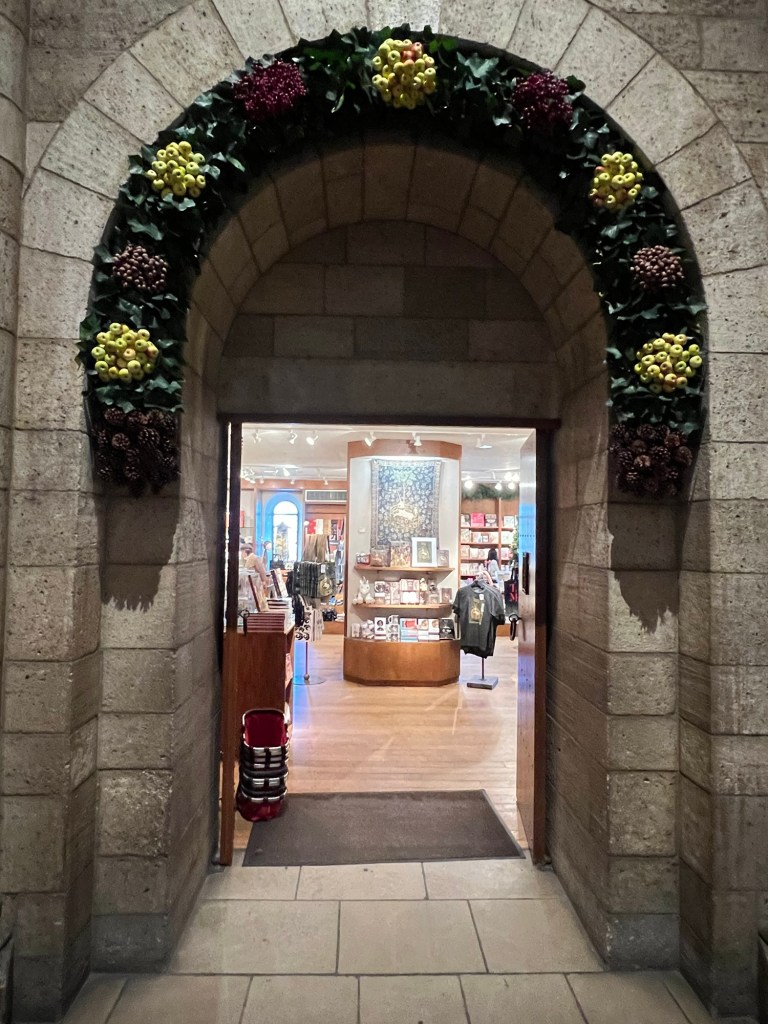
The entrance of the gift shop decorated for the holidays

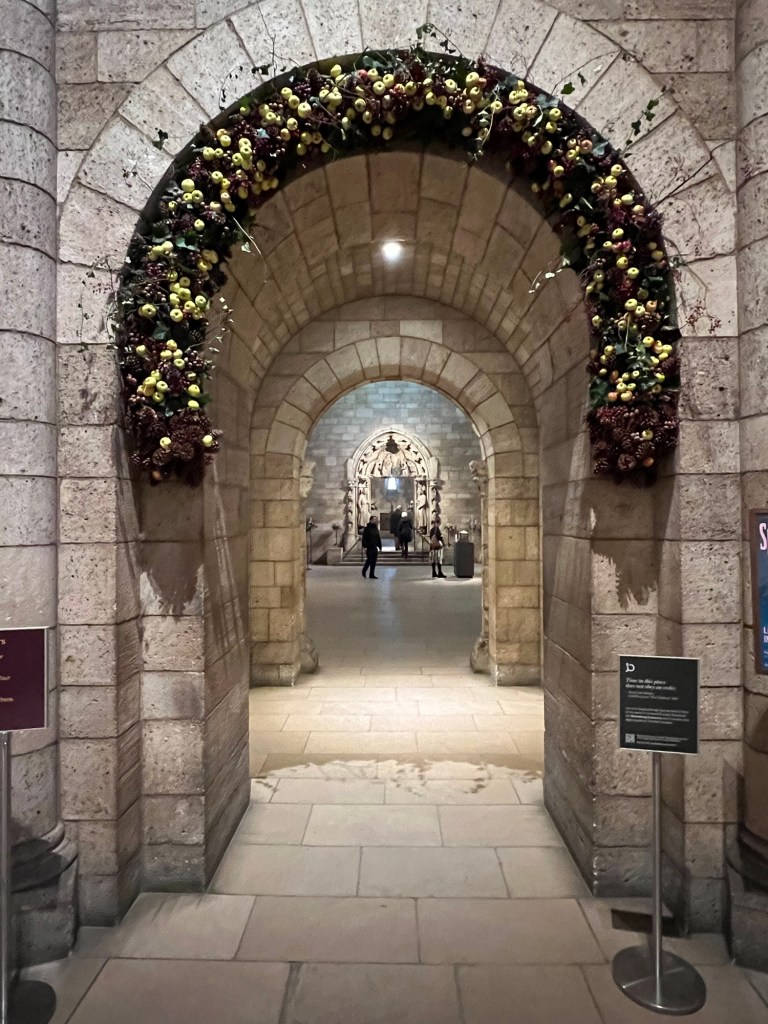
The archways were decorated with seasonal plants and fruits. I read online that the volunteers went into Fort Tyron Park and collected ivy from the wild to decorate the museum. Every day the museum is open during the holidays these are replaced on a daily basis.

The entrance to the galleries decorated for the holidays

We started the tour with a discussion of plants that once decorated churches and ministries

With the change in attitude towards the Christmas holidays during the Middle Ages and its incorporation into church traditions, decorating for the holidays came back into style. The use of holly, evergreen and mistletoe became part of the Christmas tradition and to justify the decorating, they were related to Christian symbols.

The beauty of the life plants in winter

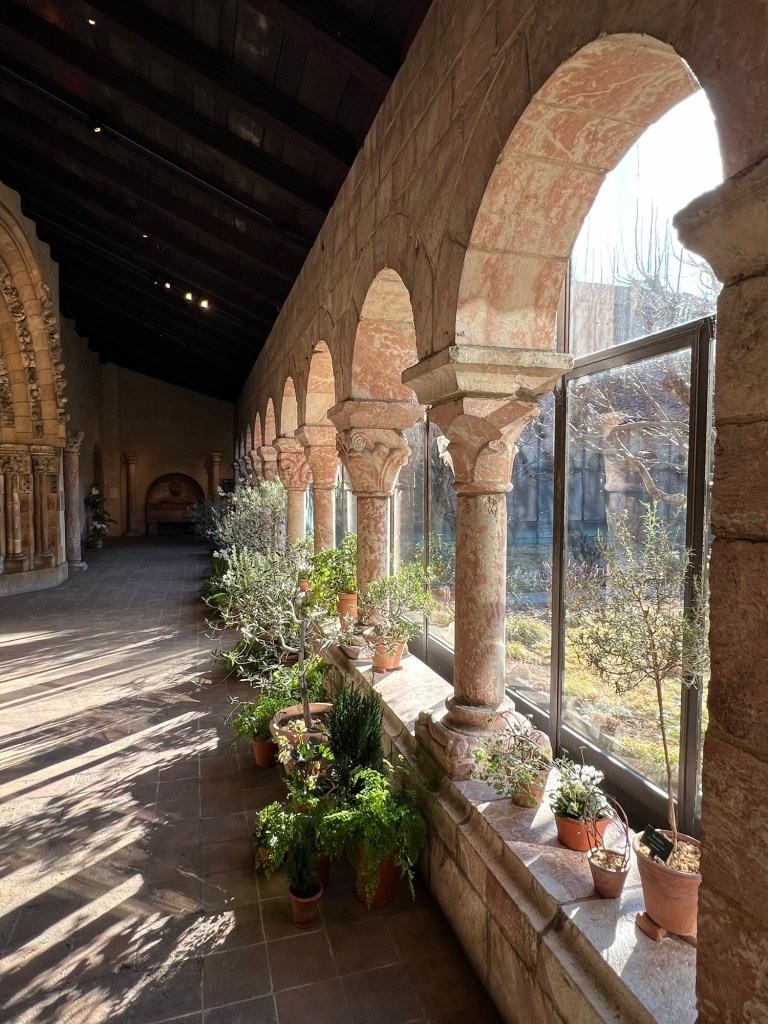
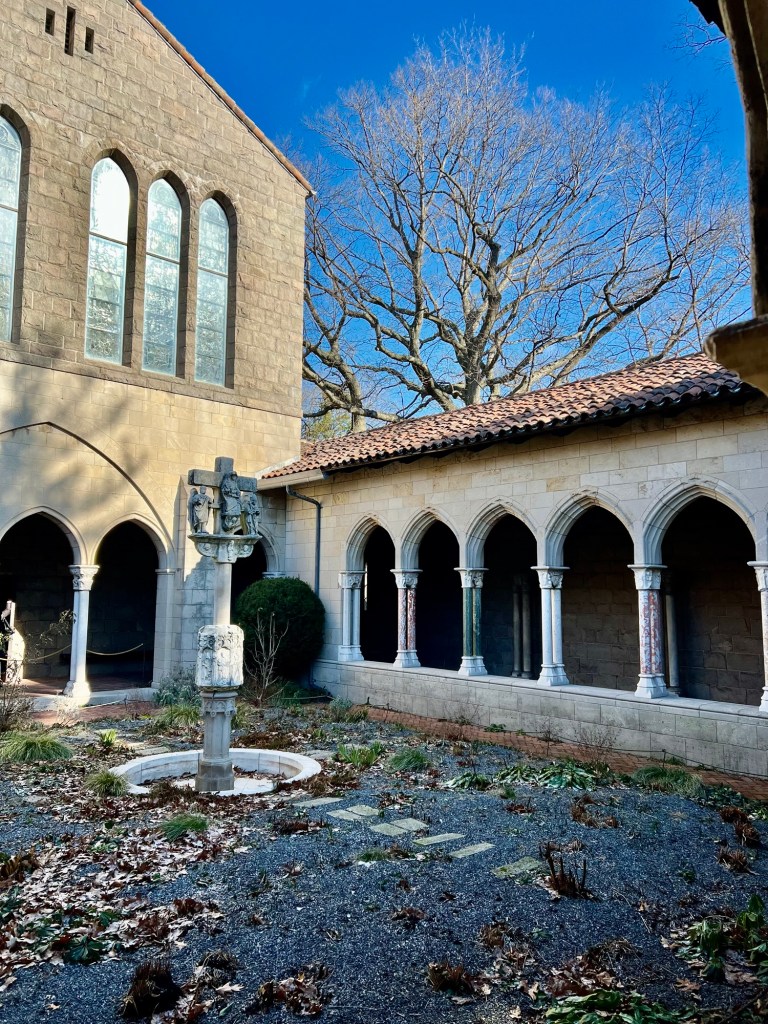
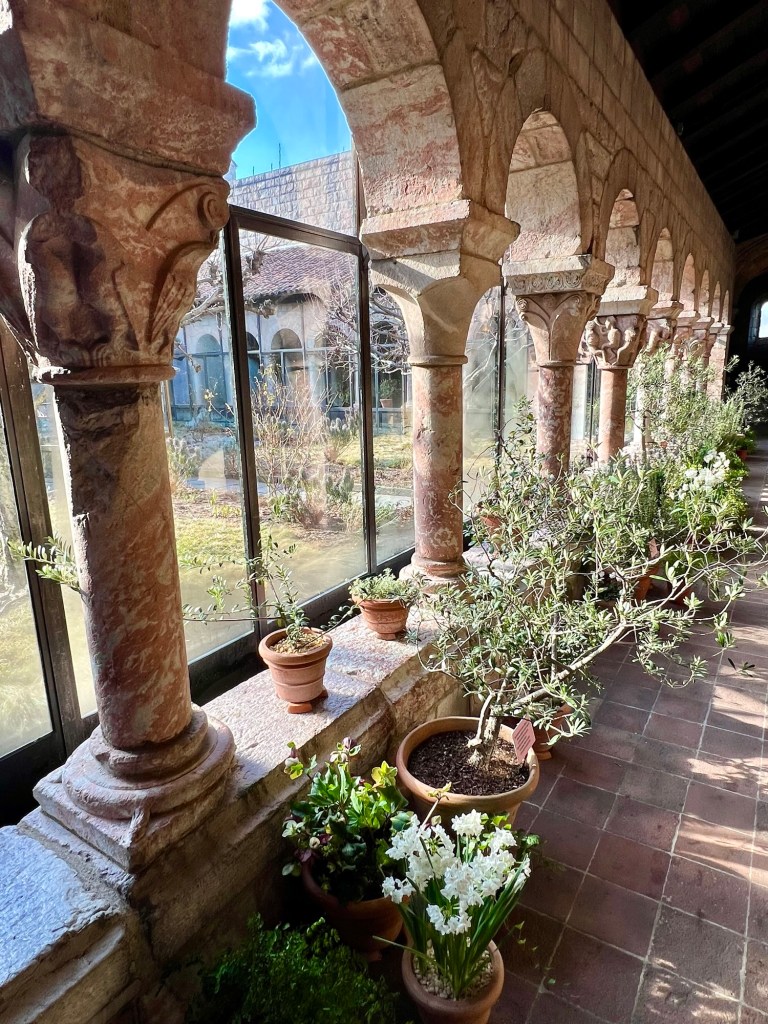
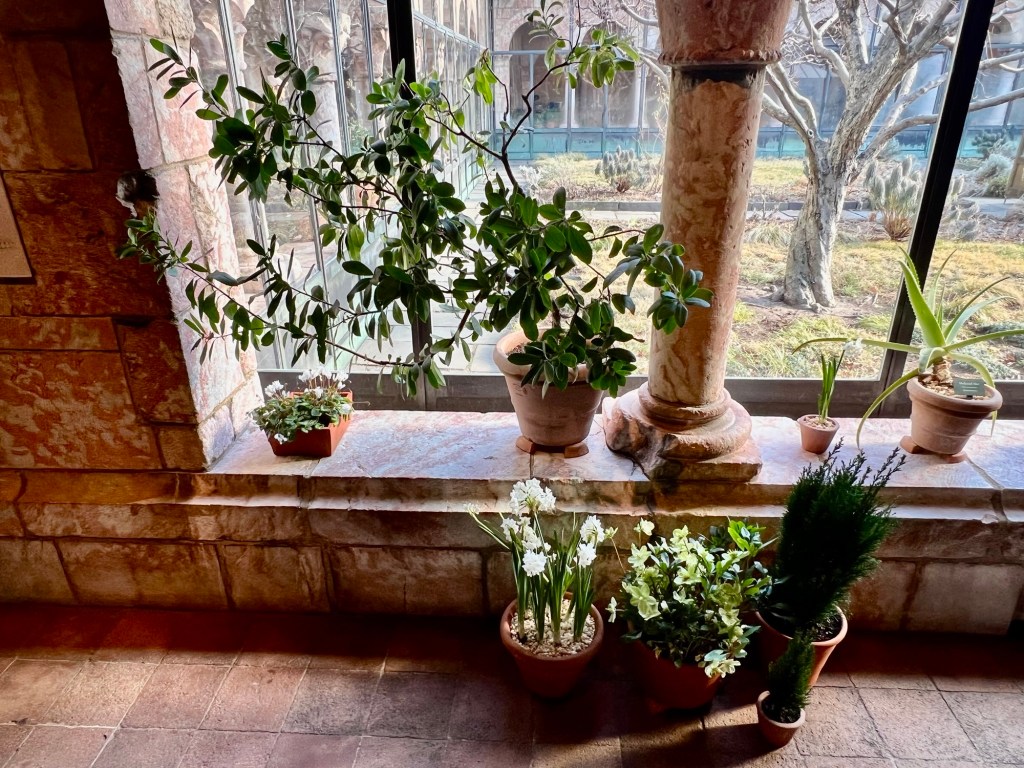
Each of the Cloisters were lined with fresh greens and potted plants giving each of the Cloisters its own special mood.

One of the Cloisters bright with plants

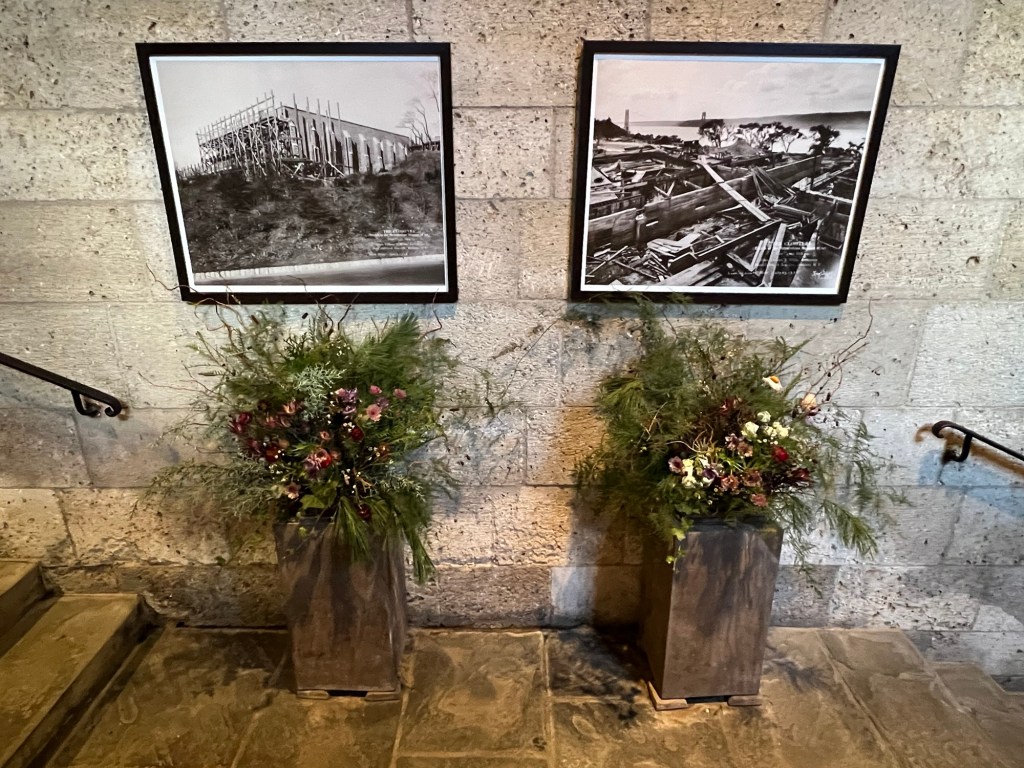
The stairs leading into the chapel decorated for the holidays

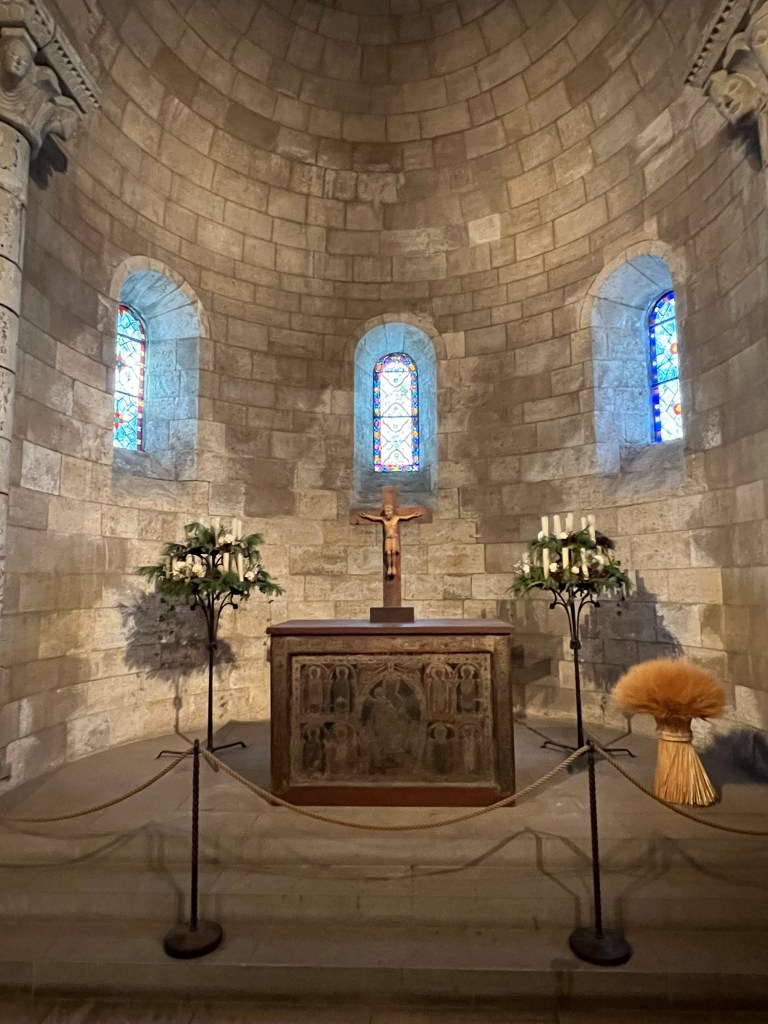
The chapel on the main floor decorated for the holidays

The colorful floral displays lining the window sills of the chapel

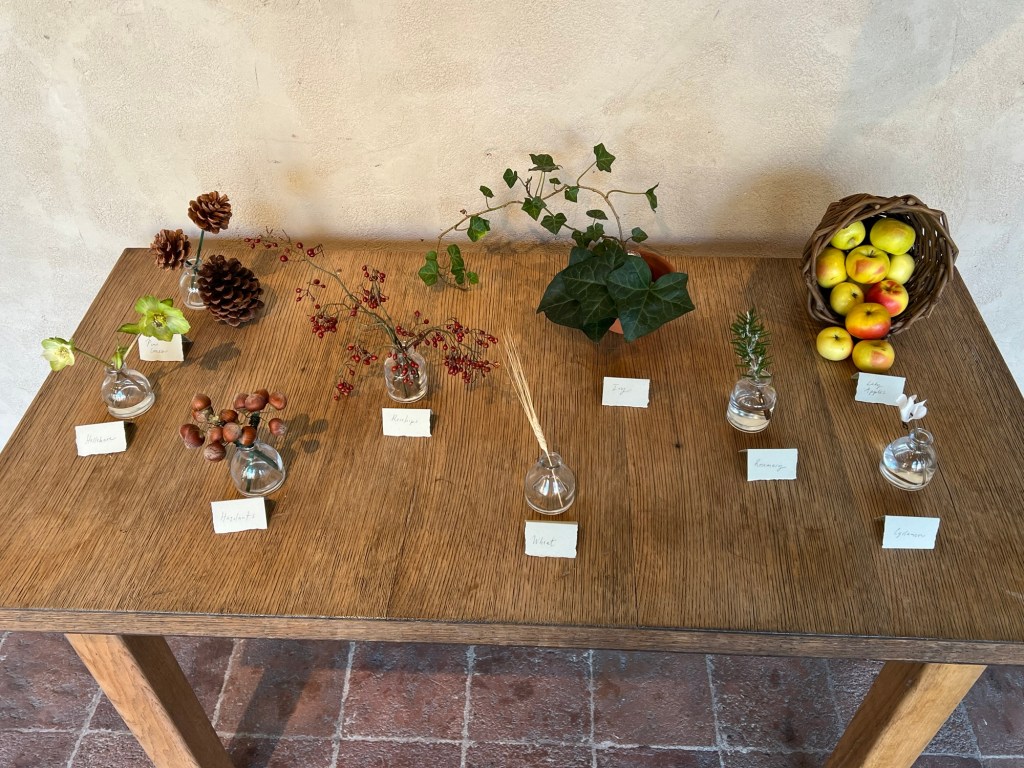
This led to a discussion about what each plant, flower and fruit meant in the Christian tradition, a clever way to justify decorating and celebrating during the holidays. Ivies, pine, winter flowers and even late season apples not only lined places of worship but gave a festive look and district smell to these buildings. A symbol of life in the cold winter months while they waited for the arrival of Spring.

The plant types that decorated the houses of worship

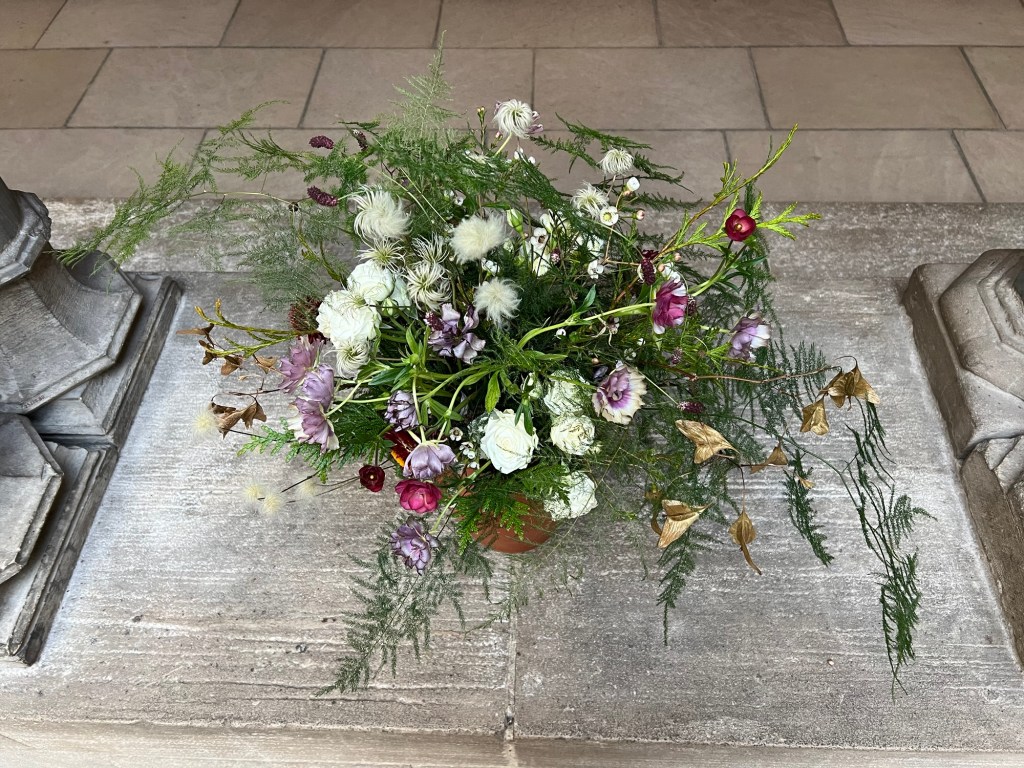
The flowers and plants lining the chapel

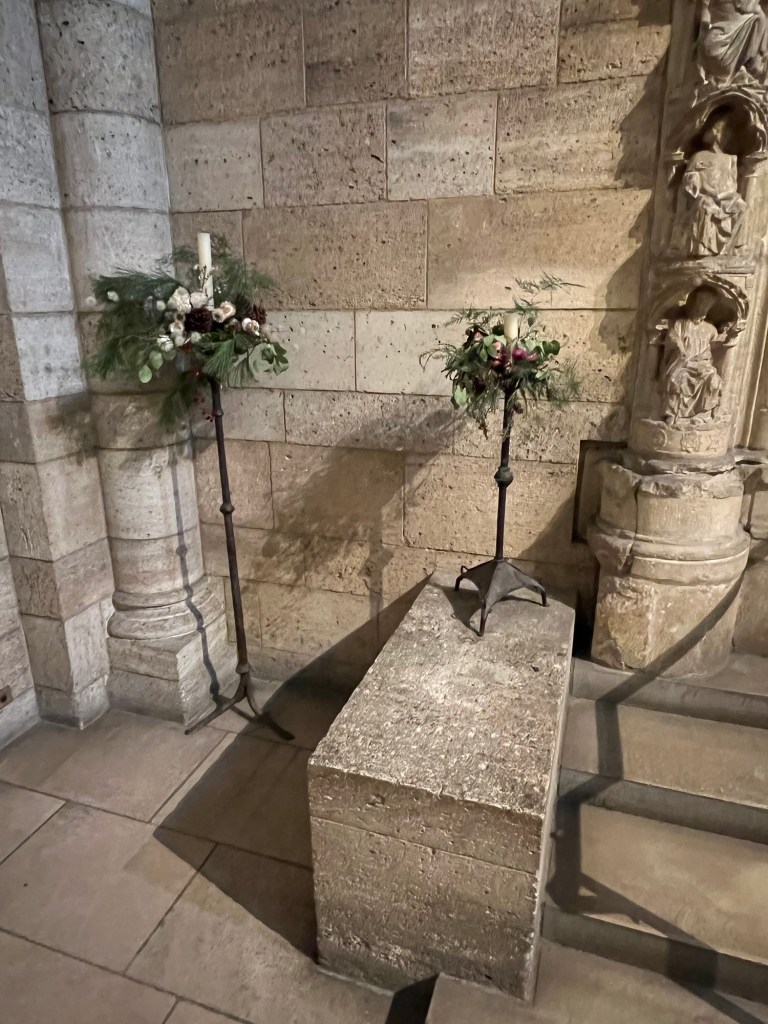
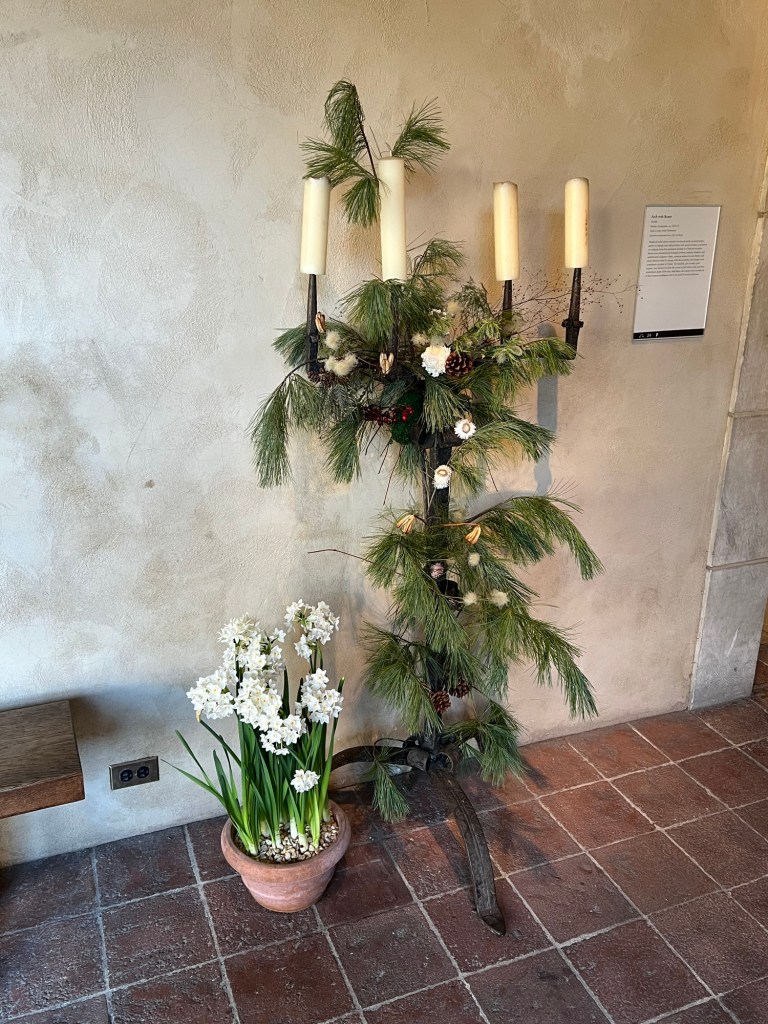
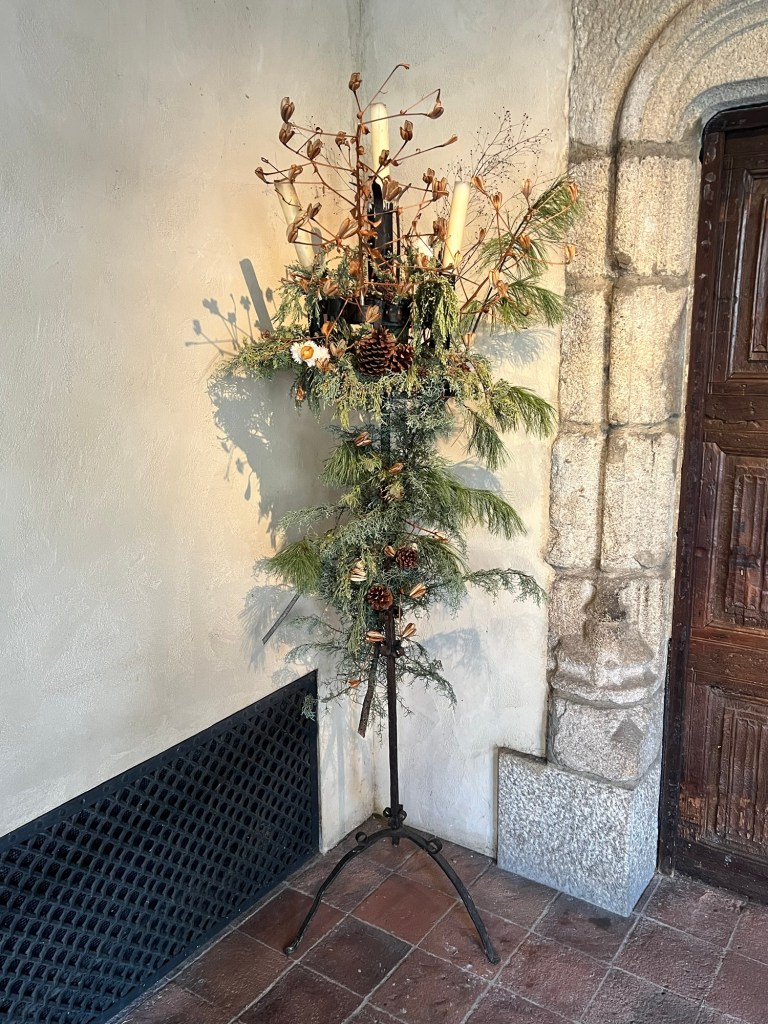
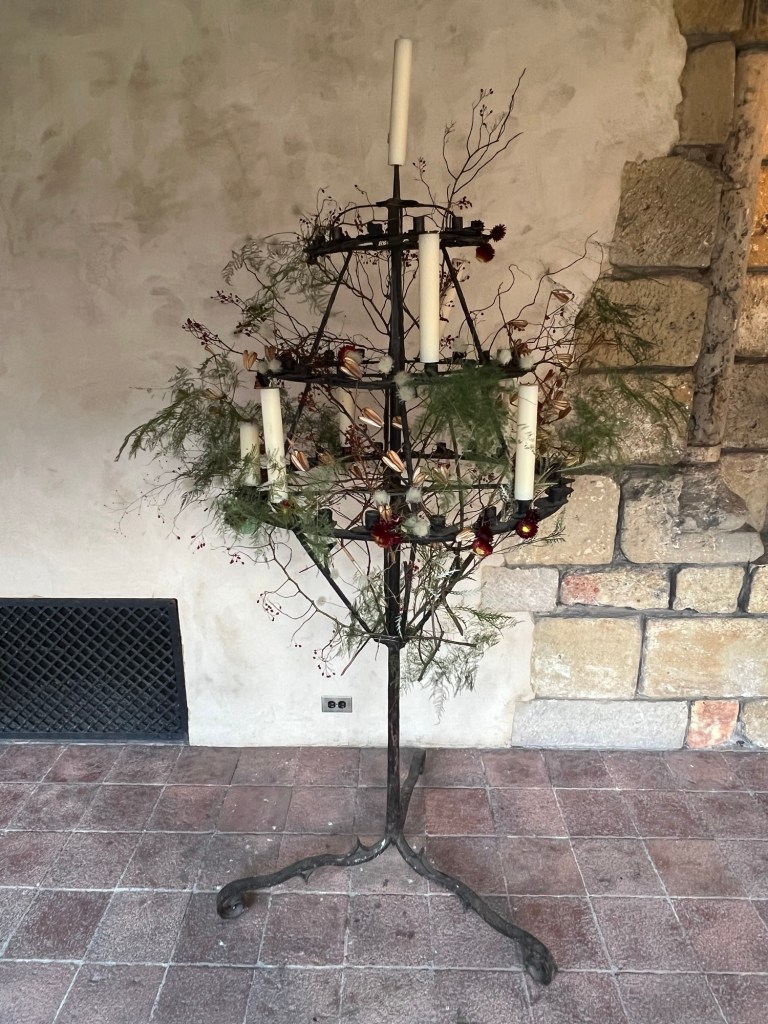
The decorative candle stands lining the walls of the chapel

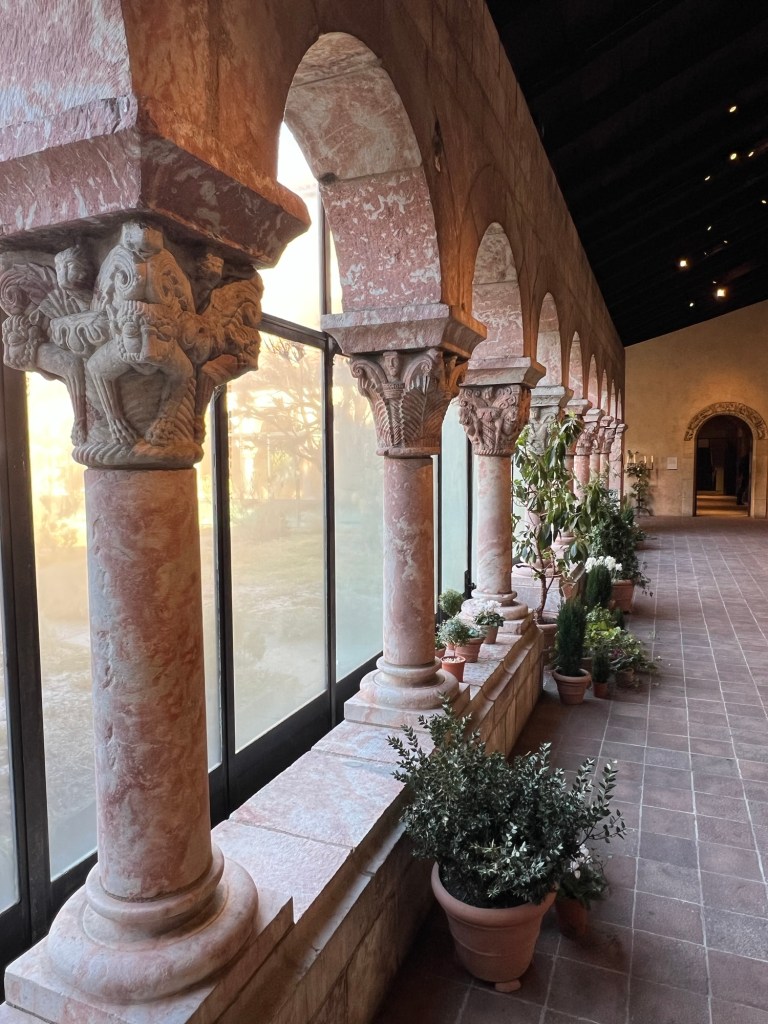
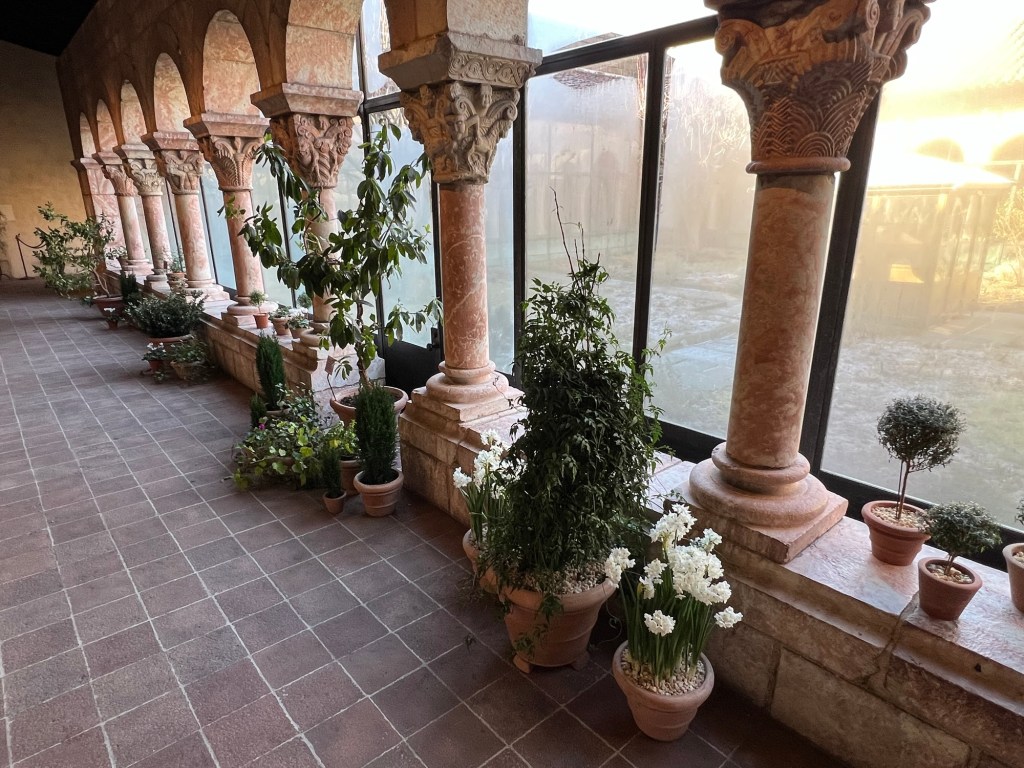
We then toured the main Cloister, closed for the Winter but was lined with plants, flowers and greens brighting every corner of the building. These were examples of plants and flowers that would have decorated these halls at the holidays.

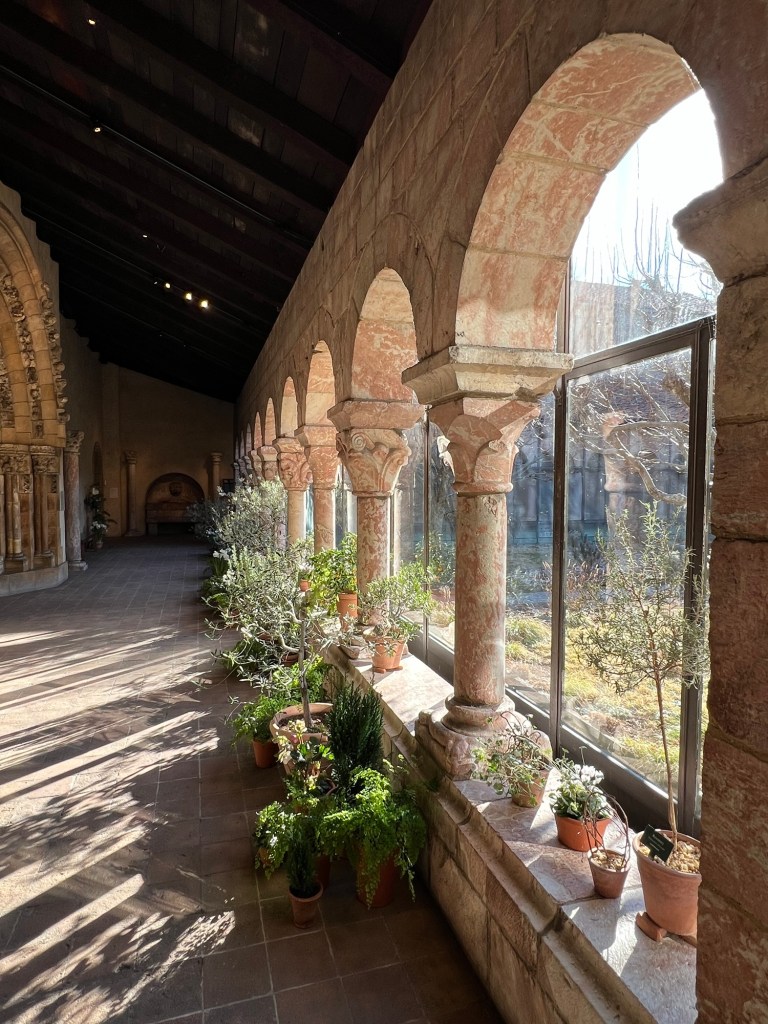
Walking the halls of the Cloisters

Touring the halls of the Cloisters with flowers and plants to celebrate the season

Walking the halls of the Cloisters

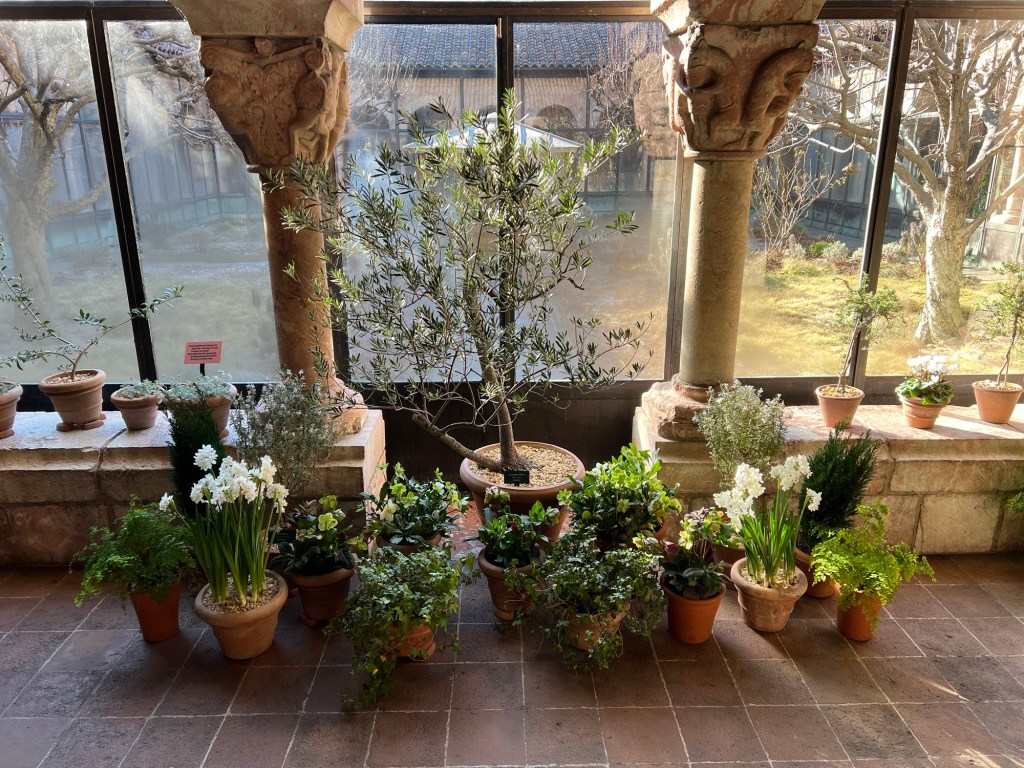
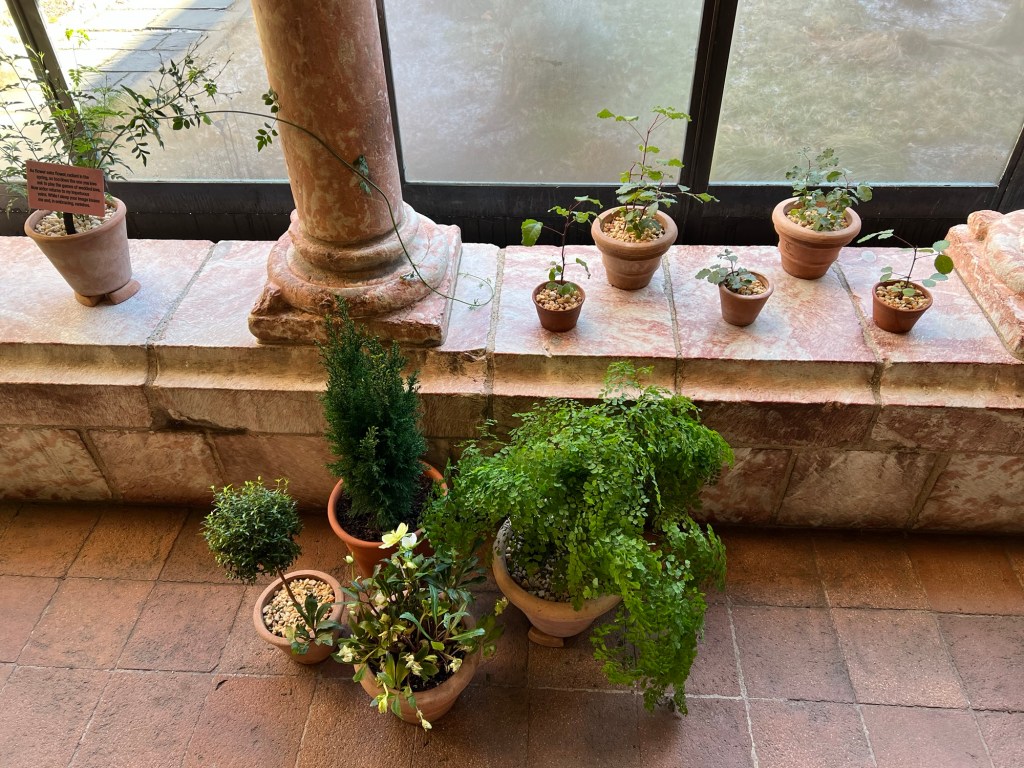
The flowering plants of the Cloisters

The flowering plants and vines that would have decorated churches in Medieval times

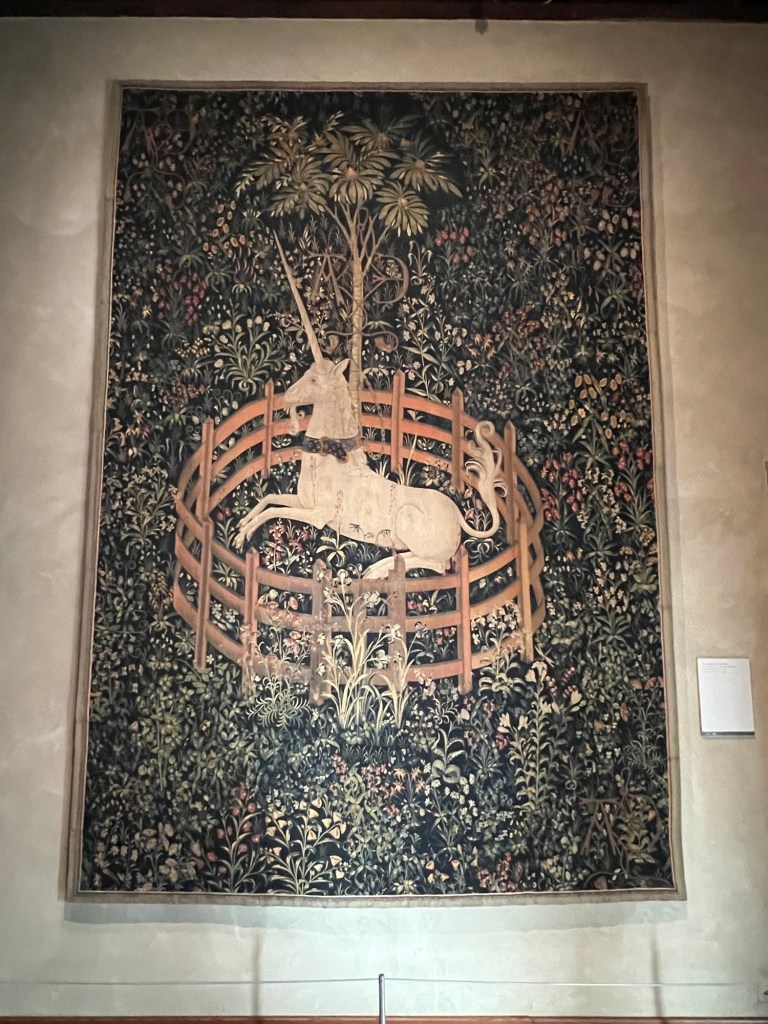
We then toured the Tapestry Room and discussed the use of plants in art form and the use of the detail as symbolism in art. These tapestries were meant to cover the drafty walls of palaces and bring in color and decoration to the stone walls.

The famous ‘Hunt of the Unicorn’ tapestry

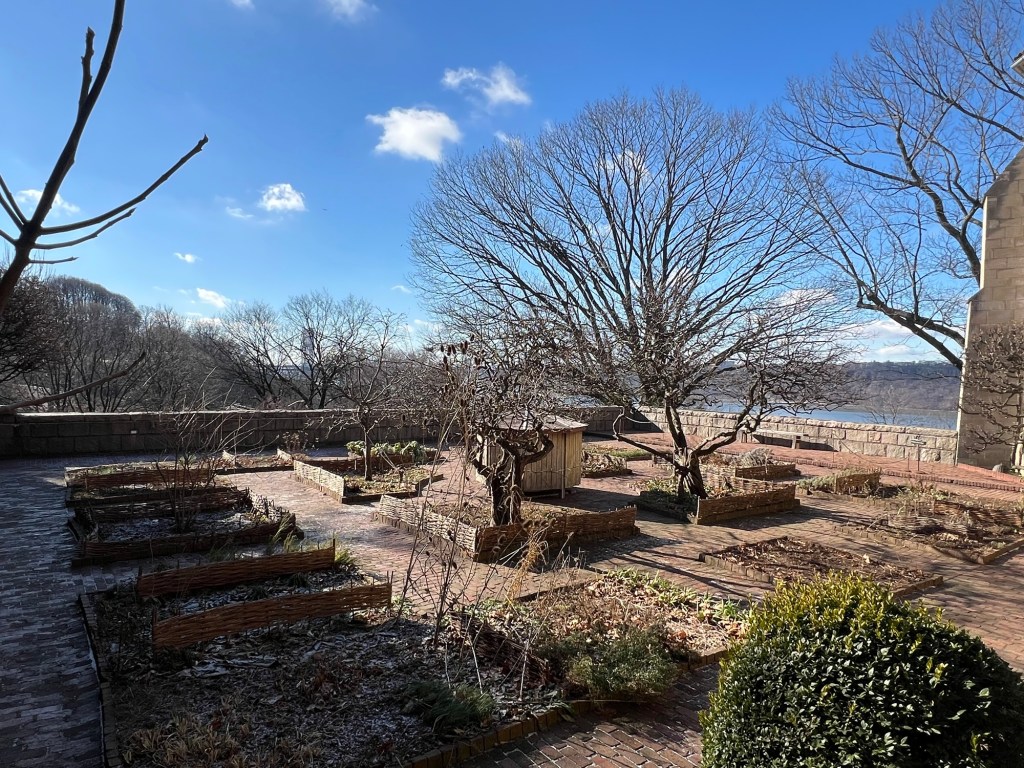
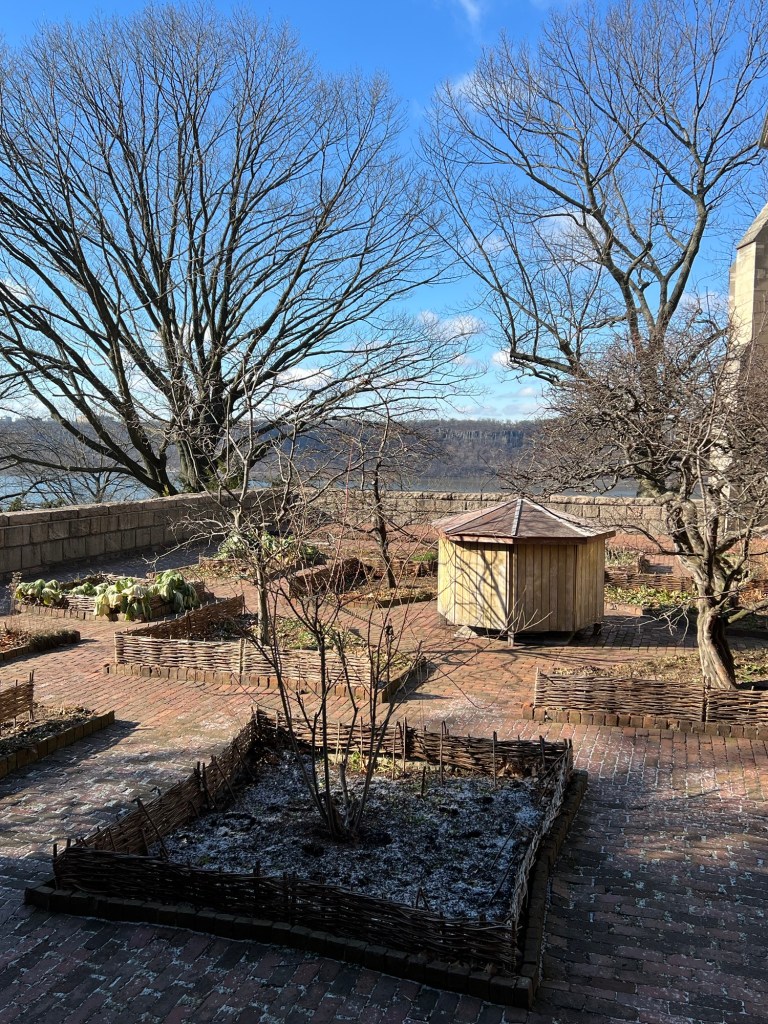
We then took a detour to the outside gardens that are enjoying their winter slumber. These gardens were used by the cloisters for food, medicines and decorative use. They will start coming to life in a few months.

The Cloisters Gardens

The garden terrace over looking the Hudson River

The terrace gardens in the winter waiting to come to life

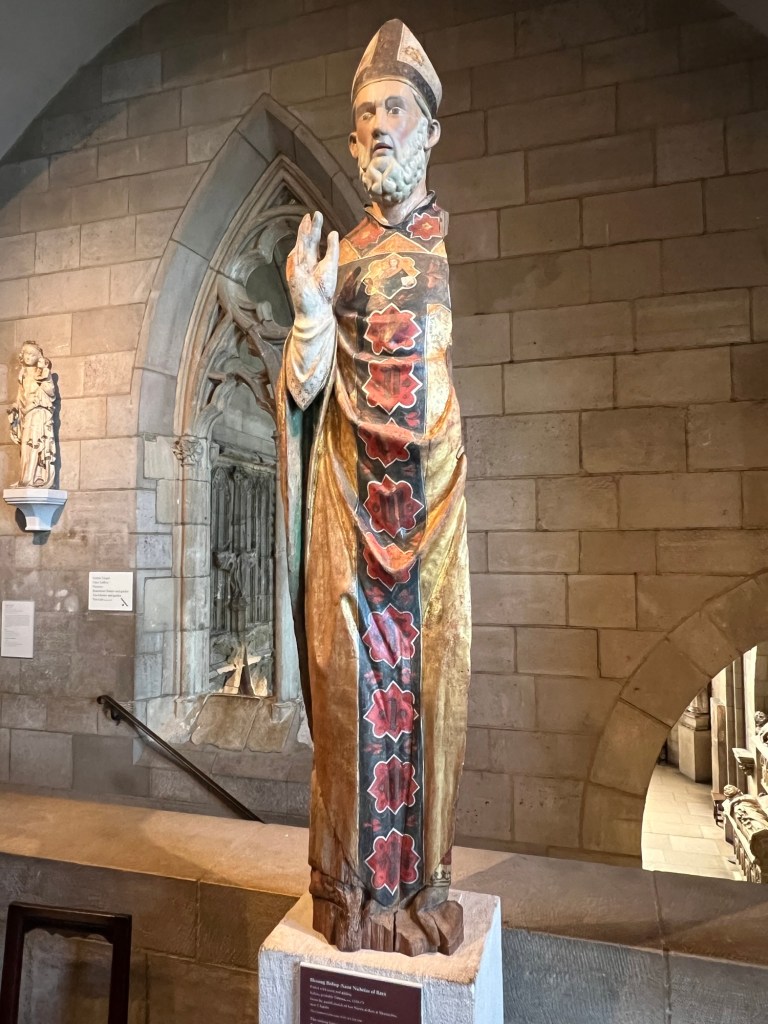
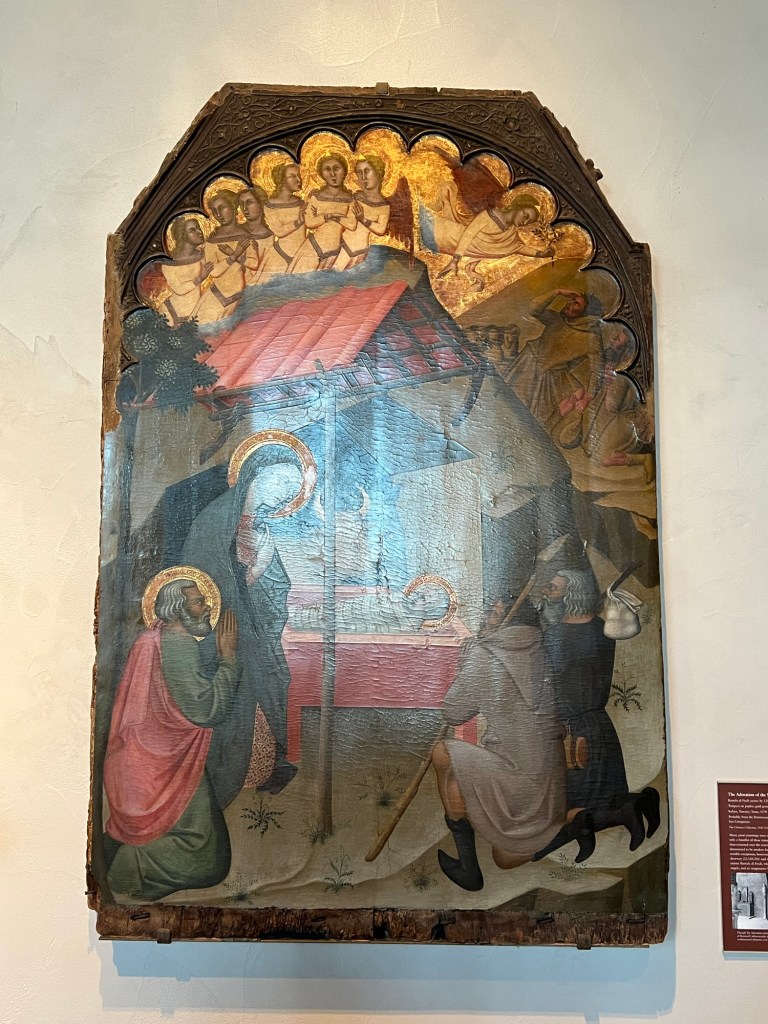
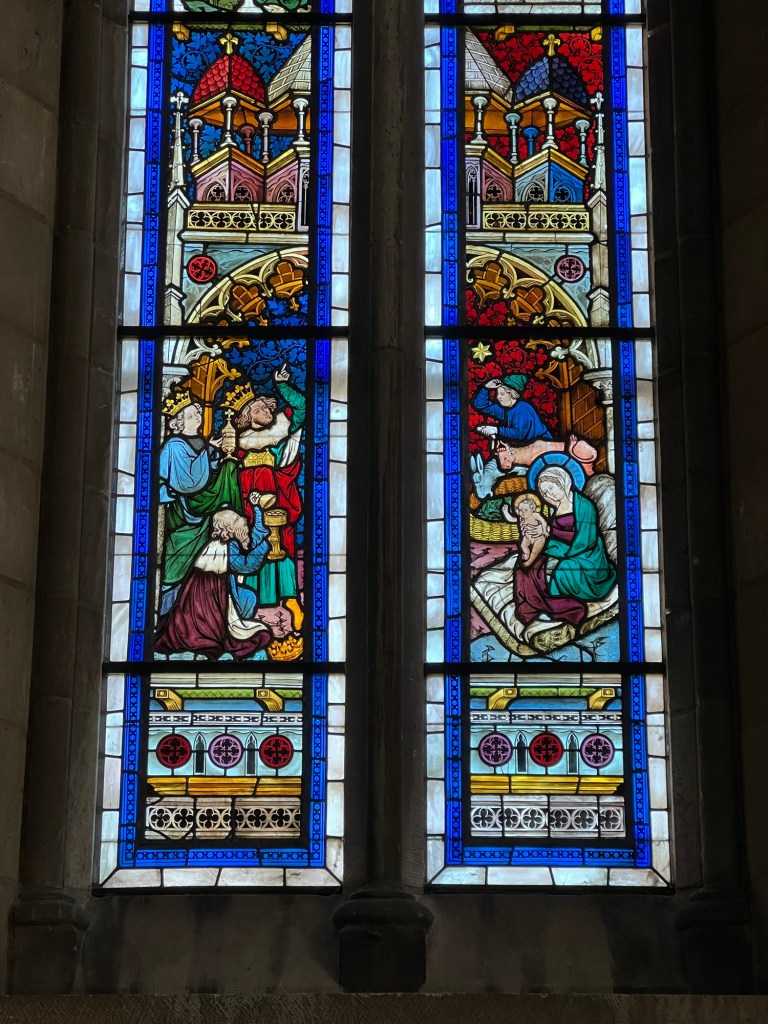
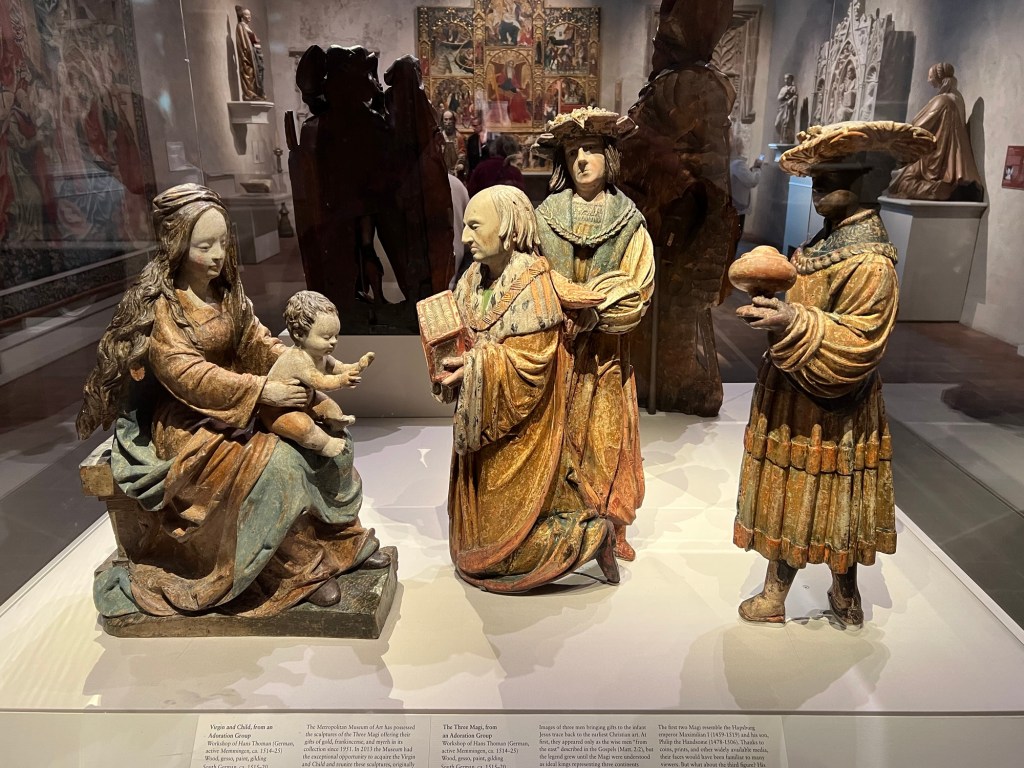
Then we went back inside for a discussion of the Three Kings and the Epiphany and its symbolism in art at the Cloisters. These are some of the works featured on the ‘Christmas Tide’ tour to symbolize that visit.

Some of the woodwork from that era

The Visitation of the Three Kings

The Visitation of the Three Kings depicted in stained glass

The Visitation of the Three Kings depicted in statuary

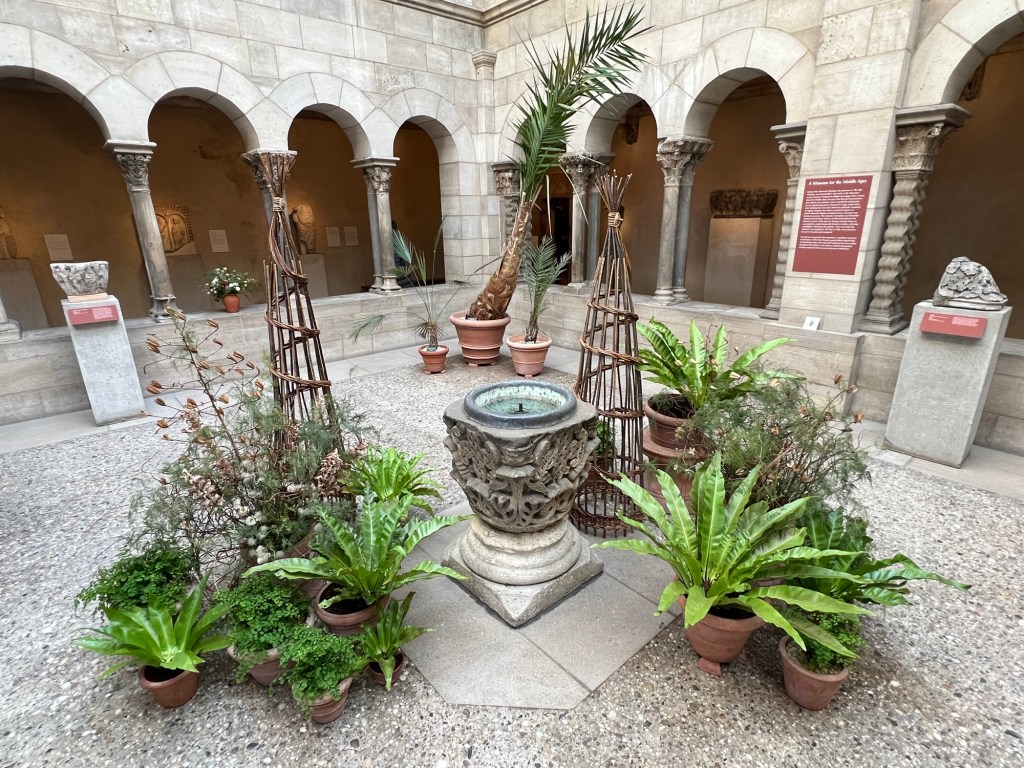
We visited the last of the Cloisters and discussed some of the plants in the collection

We were admiring the plants and flowers

A candelabra in the hallway of the Cloisters

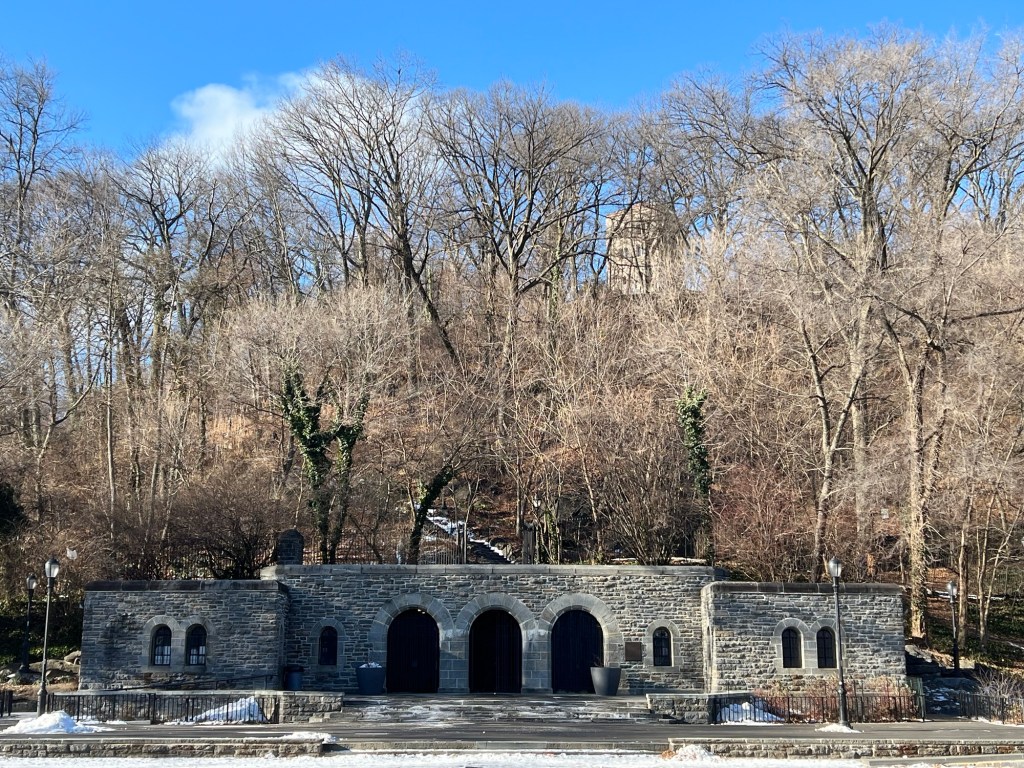
As I exited the building that afternoon, there were potted plants at the entrance of the Cloisters. It was a real treat to walk around the building at the holidays.

The potted plants outside the entrance of the museum

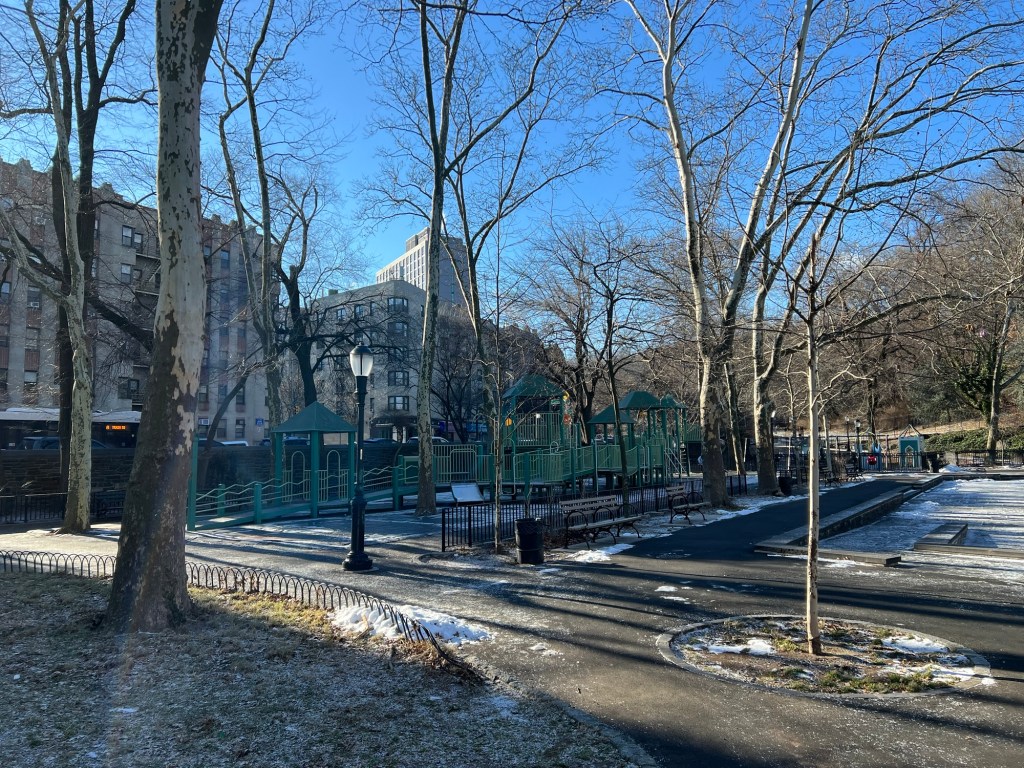
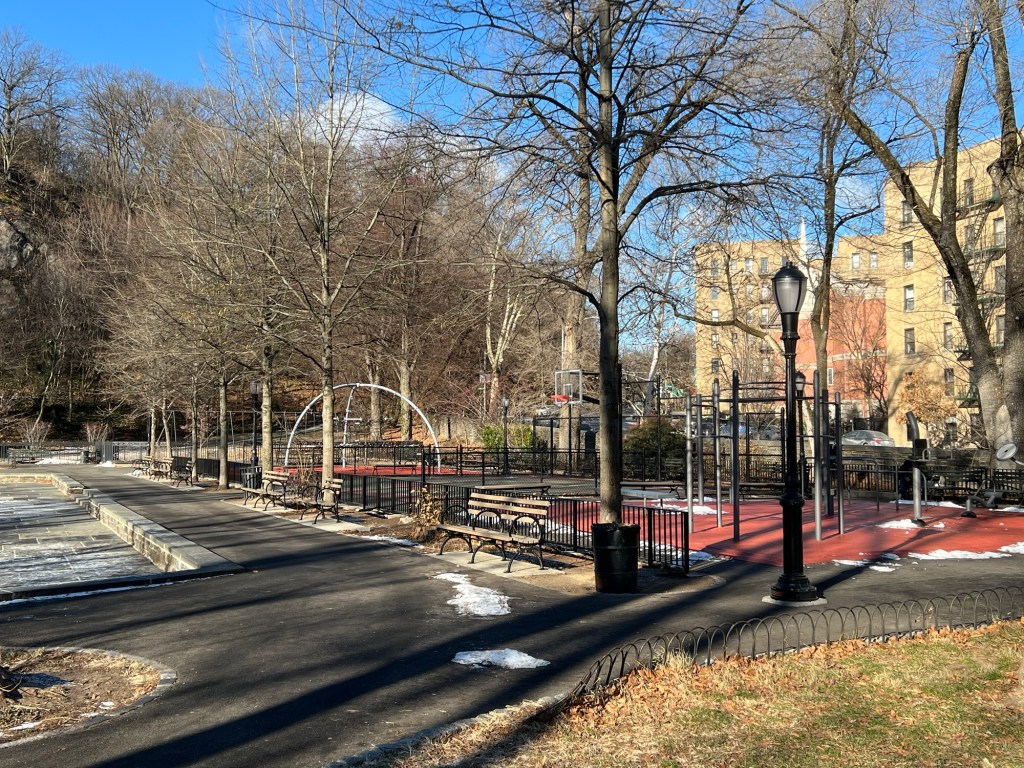
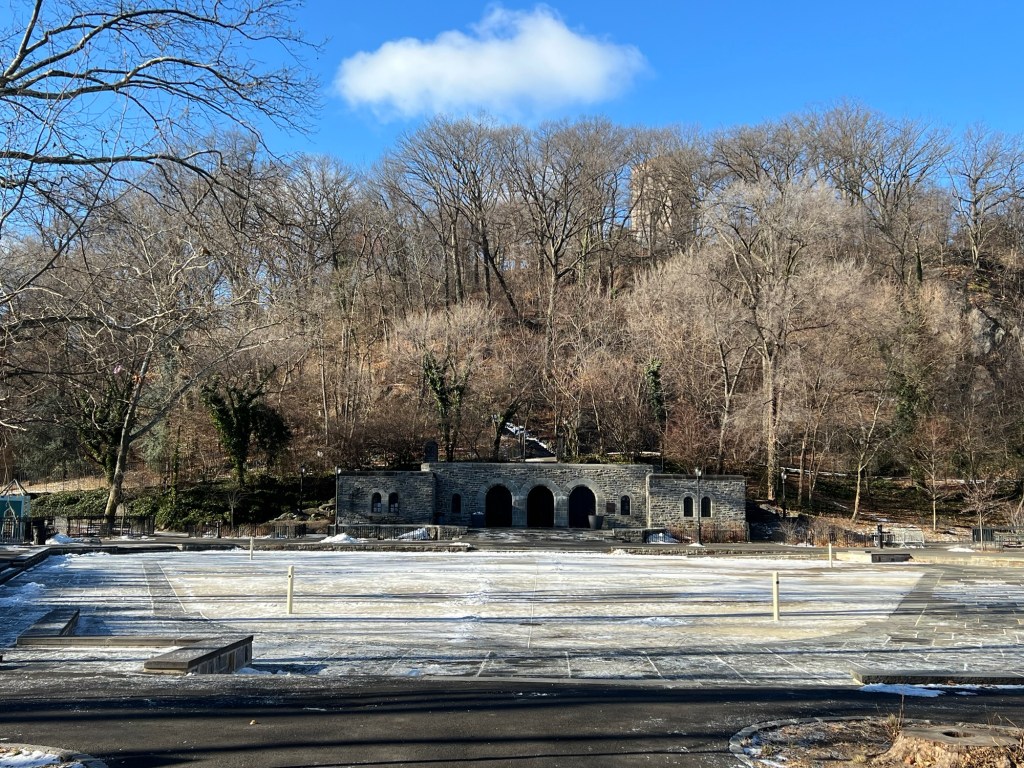
On my way down the stairs and out the door to Fort Tryon Park, I took another walk down the stone steps and walked through Ann Loftus Park. This popular playground was quiet this time of year, awaiting the Spring and the wonderful warm afternoons ahead.

Walking through Fort Tryon Park

Fort Tyron Park

Riverside Drive to Broadway

New York, NY  10040

https://www.nycgovparks.org/parks/fort-tryon-park

https://www.nycgovparks.org/parks/fort-tryon-park/history

Open: Sunday-Saturday 6:00am-1:00am

My review on TripAdvisor:

https://www.tripadvisor.com/Attraction_Review-g60763-d2305249-Reviews-Fort_Tryon_Park-New_York_City_New_York.html?m=19905

My review on VisitingaMuseum.com:

https://visitingamuseum.com/tag/fort-tyron-park/

Ann Loftus Park in the winter time

Ann Loftus Park quiet in the winter

Ann Loftus Park upon leaving the park that afternoon. The quiet beauty of the Winter.

https://www.nycgovparks.org/parks/fort-tryon-park/highlights/11234

https://www.nycgovparks.org/facilities/playgrounds/325

After the tour was over, I went to G’s Coffee Shop for second breakfast that morning.
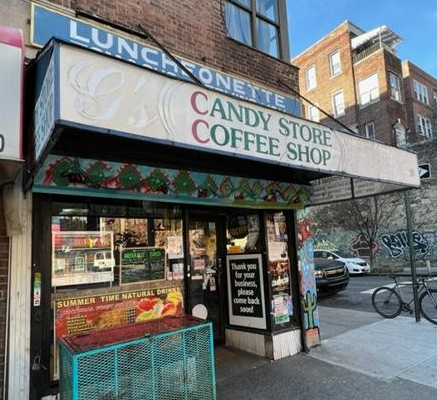
G’s Coffee Shop at 634 West 207th Street

G’s Coffee Shop

634 West 207th Street

New York, NY  10034

(212) 942-0679

Free Delivery

Open: Sunday-Saturday 7:00am-9:00pm

https://www.facebook.com/pages/category/Breakfast—Brunch-Restaurant/Gs-Coffee-Shop-205601462950934/

My review on TripAdvisor:

https://www.tripadvisor.com/Restaurant_Review-g60763-d17445018-Reviews-G_s_Coffee_SHop-New_York_City_New_York.html?m=19905

My review on DiningonaShoeStringinNYC@Wordpress.com:

My breakfast at G’s Coffee Shop

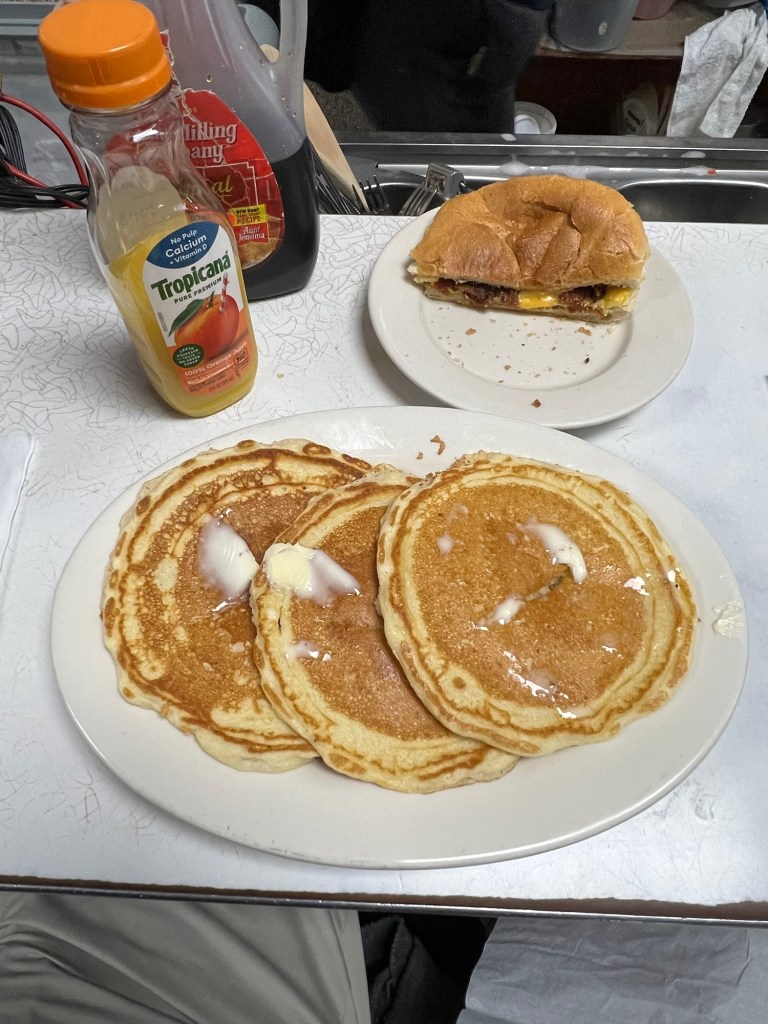
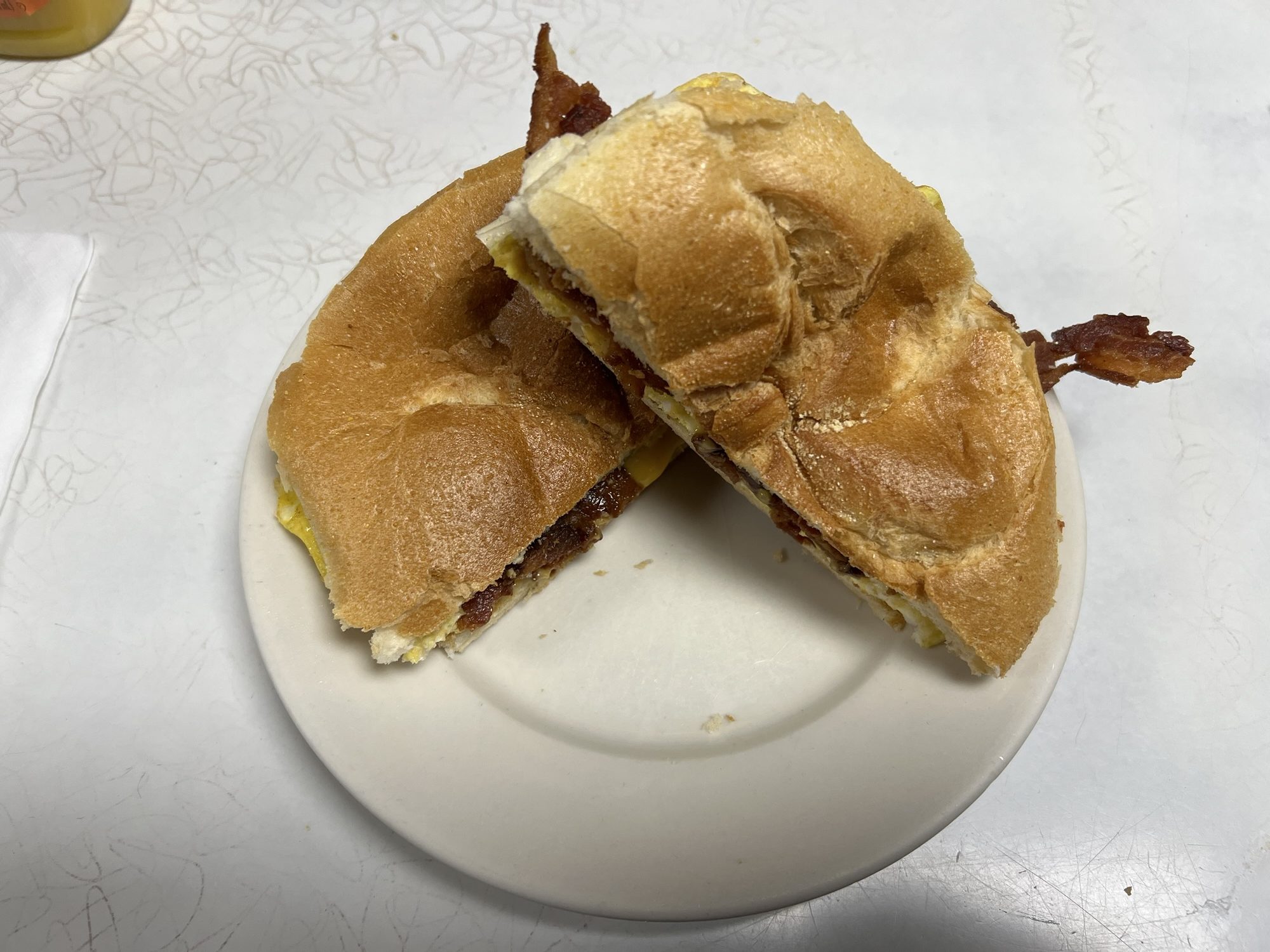
I love coming for breakfast at G’s Coffee Shop after a tour of The Cloisters. The food and service of this small ‘hole in the wall’ diner is wonderful. The meals are so reasonable and when you dine at the counter, you can watch the food cooked right in front of you. I had a wonderful Bacon, Egg and Cheese sandwich with a side of golden pancakes. What a great meal on a cold winter morning.
The Bacon, Egg and Cheese sandwich

The breakfast sandwiches here are so good

The pancakes were wonderful. The perfect comfort food on a winter day.

It was a really great tour and it was fun to walk around the neighborhood through the parks and seeing all the post Christmas decorations. Inwood is a really beautiful section of Manhattan with lots to do and see. It is the perfect place to spend the Christmas break.

Day Three-Hundred and Seventy-Three Walking through the Light show at the Brooklyn Botanic Garden                                                                         January 4th, 2026

Day Three-Hundred and Seventy-Three Walking through the Light show at the Brooklyn Botanic Garden January 4th, 2026

I promised myself I would cut back on holiday activities last year. Since almost all of my older blogs have been revamped and updated to reflect the work on my newer visits and walks of neighborhoods and towns, I took a step back and revisited one last holiday activity I enjoyed last year, The Light Show at the Brooklyn Botanic Garden.

The Gardens have been running this show for several years to increase traffic in the Gardens during the winter months to great success. These type of lightshows are gaining popularity in botanical gardens all over the country similar to the drive through holiday light shows. They are becoming a new tradition for families in usually quiet parks during the holiday season. The Brooklyn Botanic Garden has been an impressive show over the last four years that I have attended.

The directory of the ‘Lightscape Show’ at the Brooklyn Botanic Garden

https://www.bbg.org/lightscape

The brilliance of the “The Tree of Stars” display at the entrance of the show

I love how they illuminated the trees to the music

The Christmas music illuminated the trees in the “Shadow Play” and created a festive beginning to the light shows

One of the best parts of the light shows is displayed in the Japanese Garden “Let the Magic Begin”. The water show keeps people dazzled for almost five minutes. I find myself every year having to watch it three times. Once to check it out, once to film it and then the last time to be dazzled by it myself. It is one of the reasons why I put up with 35-degree weather.

The beautiful lights illuminate the gardens at its start

Then the water show “Let the Magic Begin” begins

The video of the water show is so impressive every year (excuse my coughing)

The end of the water show was spectacular

I walked down the pathway toward Daffodil Hill and could not wait until the sea of yellow flowers returned in four months. In its place was a sea of lights and sounds in the display “Papillion’s”.

I next walked through a sea of butterflies and the skies were full of color in the ‘Papillion’s’ display

The trees were full of colorful butterflies in ‘Papillion’s’

I then walked through the Shakespeare Garden and came across the ‘Threshold’ display which was a sea of lights that flipped and sparkled around.

The ‘Threahold’ display in the Shakespeare Garden

‘Threshold’ in full color

‘Threshold’ changing colors

I walked around the spiral of spinning lights s and admired all the beautiful colors as it moved around. I walked around the Shakespeare Garden and looked at where the colorful flowers and plantings are placed in the Spring and Summer.

As I walked to the lawns of the Watershed, I passed the ‘Sway’ exhibition with its layers of colorful lights on the trees.

The colorful lights of ‘Sway’ as the music plays on CD

The video of the ‘Sway’ lights against the trees

The illumination of the trees in the gardens during the light show

The next display on the lawn of the Watershed was ‘Fluxit’, which looked like outside fire. It clicked and sparkled as the music played.

The ‘Fluxit’ display as it lit and moved

The video of the ‘Fluxit’ display

Once I left the Watershed lawns, I walked into the ‘Winter Terrace’, where in the warmer months are the Lotus Pools and seasonal plants and flowers are displayed. It was now decorated with topiary women guiding in the pools, the fountains were decorated with blinking lights and where the bar and restaurant were located. The area is really crowded with people milling around and taking a break from the walk.

The ‘Winter Terrace’ in full illumination

The Lotus Pools with the illuminated women

The ‘Illuminated’ women in the pool

One of the ‘Illuminated’ women

The fountain was shimmering with lights in the “Winter Terrace”

While I was walking around the frozen pools admiring the lights, many of the patrons were in the glassed-in banquet room having snacks and drinks. The building was packed with people eating and drinking.
I walked through the next series of displays ‘Flock’ and ‘Shadow Lantern’s on the edge of the Water Basin lawn. “Flock” looks like illuminated pigeons flying around the trees.

The display ‘Flock’ on the lawn’s edge

The ‘Shadow Lantern’s’ were quite brilliant

The ‘Shadow Lantern’s’ cast their brilliant lights all over the sidewalks with a sea of snowflakes and could hear the music in the background.

One of my favorite displays in the show was walking through the giant ‘Lilly’s of the Valley’ display to what sounded like a 1970’s folk singer. It was like a surreal trip through ‘Wonderland’ and I felt like Alice when she was shrunk walking through the gardens.

The ‘Lilly’s of the Valley’ display

Walking by the floral displays illuminated with brilliant lights

My video of walking through the giant patch of Lillie’s and watching the plants and trees change colors. It was a lot of fun to walk around.

The next display was another favorite of mine, the colorful and interactive ‘Winter Walk’ with lights and music to the song ‘Sleigh Ride’ that sounded like the New York Pops. The colors popped and popped with the music.

The ‘Winter Walk’ in full color as the music played

My pictures and videos don’t give the display justice as I filmed everything from the side view of the display.

The festive lights dancing to the song ‘Sleigh Ride’

Talk about putting you in the Christmas spirit even after the holidays were over. “Sleigh Ride” is still one of my favorite songs at the holidays.

I loved walking past the lines of trees that were illuminated

I followed the path down to where in the Spring, the Bluebell flowers bloom brightly and the whole area is a sea of purples and blues. Now it was ‘Bluebonnets’, a sea of purple lights. It was just picturesque and brought the gardens back even in the dead of winter.

‘Bluebonnets’ light display

The light flowers replacing the Spring flowers

The ‘Robin’s Trail’ display at the end of the ‘Bluebonnets’ display

As I entered the Cherry Blossom lawn, which is a sea of pinks in various hues, there was now the ‘Leaf on the Light’ display on all the trees.

The ‘Leaf on the Light’ display

Towards the end of the light display for the spectacular finish of the display in the Cherry Blossom lawn, you had to walk through the lines of Cherry Blossoms that line the pathways on both sides of the lawn. Only this side of the pathway was open and lit for the display.

I walked through ‘Pulse’ , where the trunks of the trees kept changing colors. It was an interesting walk down the pathway.

The lighting of ‘Pulse’ as I walked down the pathway

‘Pulse’ as it changed colors

All this led to the best part of the show, ‘The Sea of Light’, where the whole Cherry Blossom lawn became a dazzling sea of lights, sounds and music. I love the creation of the lawn light display every year I visit the show.

The ‘Sea of Light’ as it started

The ‘Sea of Light’ as it changed colors

The dazzling ‘Sea of Light’ performance and the lively music that accompanied it.

This was the best way to cap off the evening with its dazzling lights and music. Even as it got colder, I stayed longer to see watch it at least three times. I wanted to get the perfect video to share with everyone. If there was part of the show I enjoyed most, it was this part of the display.

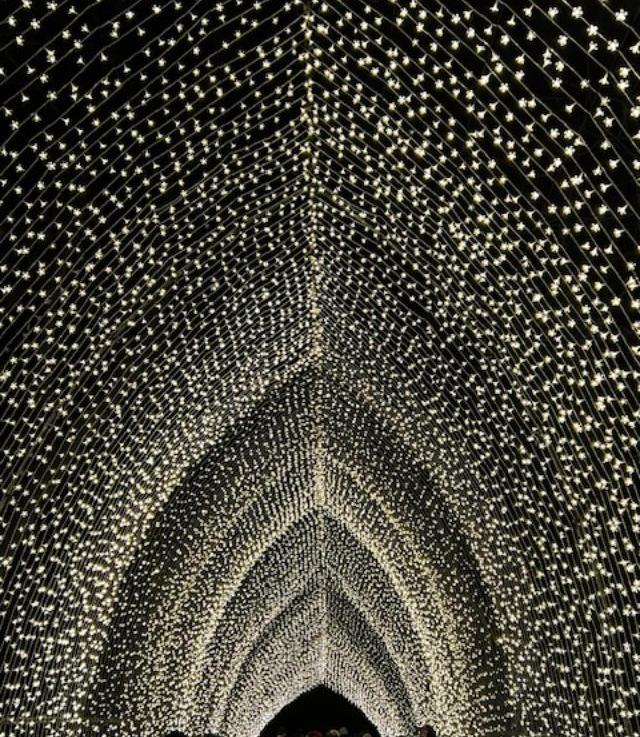
As I left the gardens that evening, I exited through the ‘Winter Cathedral’, an archway of an illumination of lights that is the one place that foot traffic stops as people always want to take pictures here. While this display has moved around the gardens over the years, it is still the one display that has been been consistent every year.

The ‘Cathedral of Lights’

Couples were stopping here asking everyone to take their pictures. It was a popular spot to take pictures.

The ‘Cathedral of Lights’

The last display I walked through to exit that night was the ‘Firefly Field’ at the old main entrance of the Gardens.

The ‘Firefly Field’ blazing with Tony lights

It was a nice way to wrap up the show. The “Lightscape” light display at the Brooklyn Botanic Garden was spectacular this year and always different. As cold as it was, it was still an amazing night of sights and sounds.

It was a nice way to rest and relax as the holiday season ended. Until next year!

Brooklyn Botanic Garden

990 Washington Avenue

Brooklyn, NY  11225

(718) 623-7210

http://www.bbg.org

Open:  Sunday and Saturday 10:00am-6:00pm/Monday Closed/Tuesday-Friday 8:00am-6:00pm

Admission: Depending on the time of year/please check the website

My review on TripAdvisor:

https://www.tripadvisor.com/Attraction_Review-g60827-d103900-Reviews-Brooklyn_Botanic_Garden-Brooklyn_New_York.html?m=19905

My review on VisitingaMuseum.com:

https://visitingamuseum.com/tag/brooklyn-botanical-garden/

Day Three Hundred and Sixty-Five Artist Party-Ruth Asawa-Member’s Night at the MoMA November 22nd, 2025

Day Three Hundred and Sixty-Five Artist Party-Ruth Asawa-Member’s Night at the MoMA November 22nd, 2025

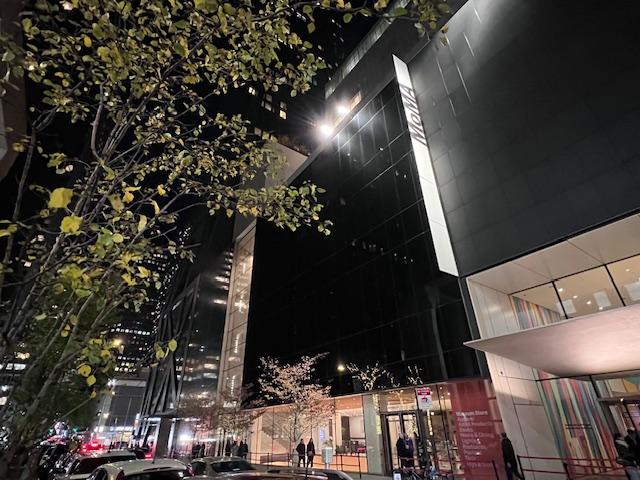
The front of the Museum of Modern Art on 11West 53rd Street

https://www.moma.org/

My review on TripAdvisor:

https://www.tripadvisor.com/ShowUserReviews-g60763-d105126-r1040038069-The_Museum_of_Modern_Art_MoMA-New_York_City_New_York.html?m=19905

There is always a lot of excitement when a new art exhibition is ready to open. It is even better when the museum opens it to its members first before the public gets a glimpse. It gives a chance to see the exhibitions before it opens to the public.

The long line of MoMA members waiting to get into the museum for the opening night of Artist Ruth Asawa’s exhibition

I noticed this year especially and right before Thanksgiving, all the museums are throwing open their doors for Member’s Nights. I have been invited to five Members Nights at museums all over the City. You can’t attend them all.

The excitement the museum creates for these evenings

Video of entering the museum at the start of the opening with 80’s Japanese Pop Music

I think in an economy like this, these Members Nights are one of the best ways to engage with the membership for both donations and renewals of memberships especially before the holiday season. Plus it gives the members a wonderful night out to see the exhibitions ahead of time and enjoy the evening after a long week at work.

The opening of the Ruth Asawa Retrospect

Artist Ruth Asawa

https://en.wikipedia.org/wiki/Ruth_Asawa

The biography of the artist and her works

https://www.moma.org/artists/21-ruth-asawa

Biography of Artist Ruth Asawa:

(from the Museum of Modern Art website)

Born on a farm in Southern California, Asawa began her arts education when she was a teenager and she and her family were among the thousands of persons of Japanese descent who were forcibly incarcerated by the US government during World War II. It was at the internment camp that Asawa began taking classes in painting and drawing. After her release, Asawa studied to be a teacher but was unable to get a license because of her Japanese heritage, so she enrolled at Black Mountain College, an experimental art school in North Carolina. Asawa took classes from and worked alongside fellow artists Josef AlbersRobert RauschenbergMerce Cunningham, and R. Buckminster Fuller. Black Mountain was also where she met her husband, the architect Albert Lanier.

I loved her wire woven sculptures.

The wire woven sculptures were the standouts of the exhibition

I thought these were a unique design

I liked here colorful paintings, these are of her child’s footprints. I loved the idea that her children were involved with the art

The patrons enjoying the art

The display of the wire art

The displays were impressive and graceful

The colorful faces looked tired

The look of nature in the wire art in the form of trees

I loved her works of food

At the end of the exhibition and the evening, I joined everyone on the main floor where the bar and gift shop were located. The main floor was the busiest part of the museum. I wondered if some of these people even went upstairs to see the exhibition or just stayed downstairs to socialize.

The main floor of the museum is always packed with people

Share in the excitement of the Membership opening

These evenings always get my mind off the stress of life. It is nice to just be in Midtown Manhattan and be in the moment. It is nice to see art, hear music and walk through the museum.

The Museum of Reclaimed Urbanspace                       155 Loisadia Avenue (Avenue C)                                New York, NY 10009

The Museum of Reclaimed Urbanspace 155 Loisadia Avenue (Avenue C) New York, NY 10009

The Museum of Reclaimed Urbanspace

155 Loisaida Avenue (Avenue C)

New York, NY 10009

(917) 577-5621

https://morusnyc.org/

Open: Sunday 12:00pm-5:00pm/Monday-Tuesday Closed/Wednesday-Saturday 12:00pm-5:00pm

Admission: Suggested donation $5.00

My review on TripAdvisor:

https://www.tripadvisor.com/ShowUserReviews-g60763-d4459121-r1027918582-Museum_of_Reclaimed_Urban_Space_MoRUS-New_York_City_New_York.html?m=19905

The Museum of Reclaimed Urbsn Space at 155 Loisaida Avenue (Avenue C)

The Mission of the museum:

(from the museum website)

The Museum of Reclaimed Urban Space preserves the history of the Lower East Side’s grassroots activism and promotes environmentally-sound, community-based urban ecologies.

We do this by:

*Archiving and documenting the history of the Lower East Side’s activism.

* Educating visitors with exhibitions and guided tours of the neighborhood.

*Empowering individuals to participate in the drive for sustainable change with workshops and events.

Information of the museum

While walking around Alphabet City for my blog, MywalkinManhattan.com, I came across the Museum of Reclaimed Urban Space on the fast gentrifying Avenue C. Alphabet City, technically part of the East Village, has been going through mass gentrification since the early 2000’s. One of the reasons why the neighborhood has not been fully gentrified as been the Public Housing in the upper parts of the neighborhood and lining Avenue D.

The predicament though is even the public housing is going through a renewal with the renovation of the grounds and the buildings with new lighting, landscaping and sidewalks. Hurricane Sandy had really damaged the infrastructure of the complex and the City has been working on this for a few years (Hurricane Sandy was in 2012).

What has been happening in the lower parts of Manhattan as well as parts of Harlem, East Harlem and Washington Heights is that these have become the ‘last frontiers’ for gentrification as New York City keeps getting more expensive. The museum captures the transition of the neighborhood from a burnt out section of the Lower East Side with the bankruptcy of the City to show the grit of the neighborhood not to let their neighborhood decline.

What I enjoyed seeing is how the neighborhood residents banded together to take empty lots and turn them into community gardens, many of them still exist today. These tiny pockets of green have made the neighborhood more desirable to live in. With the expansion of NYU and Pace into the neighborhood and boom of college students moving into the neighborhood made safer by these long term residents have been changing the makeup of Alphabet City. The museum did a wonderful job showing how they banded together and fought the City as it improved in the 1990’s and tried to ‘plow over’ these gardens. There presence today is what gives the neighborhood its character.

The founding of the museum

The history of the neighborhood

The History of the Museum:

(from the museum website)

he Museum of Reclaimed Urban Space (MoRUS) was founded in 2012 by members of Times Up! environmental organization and based in C-Squat. As a living history of urban activism, MoRUS chronicles the LES community’s history of grassroots action. It celebrates the local activists who transformed abandoned spaces and vacant lots into vibrant community spaces and gardens. Many of these innovative, sustainable concepts and designs have since spread out to the rest of the city and beyond.

The museum showcases an often untold version of New York City history through photography, videography, authentic artifacts, and documents. MoRUS is a 100% volunteer-run organization committed to open, community-based action. With this space, we invite visitors to learn, engage, and participate in grassroots activism of the past, present, and future.

One of the interesting masks that dot the corners of the museum

A view of the inside of the museum

The Collection and Purpose of the Museum:

(from the museum website)

MoRUS was born in the East Village out of the observation that the neighborhood and its inhabitants, undergoing rapid transformations, are beginning to forget about their own history. When New York City almost went bankrupt in the seventies, community members struggled to preserve and restore their neighborhood. These activists have become fewer, and the new residents, who reap the benefits of their predecessors’ efforts, are left unaware.

Noticing it, Bill DiPaola and Laurie Mittelmann, both long-term residents of the East Village and members of Time’s Up! Environmental Organization, were determined to provide new opportunities for long-term activists to share their story and to pass on their experience and knowledge firsthand to new generations.

Located in the historic building C-Squat, MoRUS officially opened its doors in 2012 as a non-profit organization. The museum’s storefront was renovated almost entirely by volunteers. They did electrical work and plumbing, built walls, ceilings, and floors, and constructed furnishings such as a reception desk and an elaborate mosaic sign. This process took eight months, and involved other volunteers simultaneously sourcing funds and exhibitions, designing tours, and creating structure for the volunteer collective that runs the museum, such as guidelines, by-laws and committees.

Decisions are reached, events are planned, and new volunteers are plugged in through weekly general meetings and committee meetings. Committees include marketing, fundraising, administrative, merchandise, programming, tours, and exhibition/graphic design.

The Museum has become an important fixture in the neighborhood, not only to preserve the untold story of the East Village, but also to encourage community activism and sustainable development.