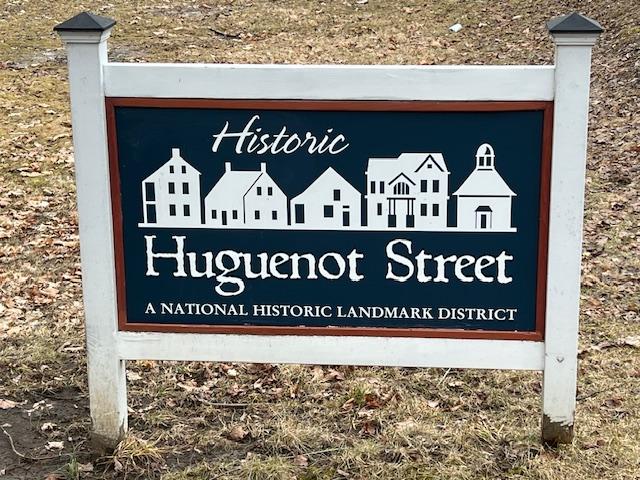
For current information on guided tours, group tour reservations, school groups, special events or accessibility, call (845) 255-1660 or visit http://www.huguenotstreet.org.
The history of Slavery in the area
App:
Our free Walking Tour mobile app features histories of the houses on the street with archival photos as well as photos of the house interiors and the collection pieces within. Mobile users can download the app on both the App Store and Google Play.
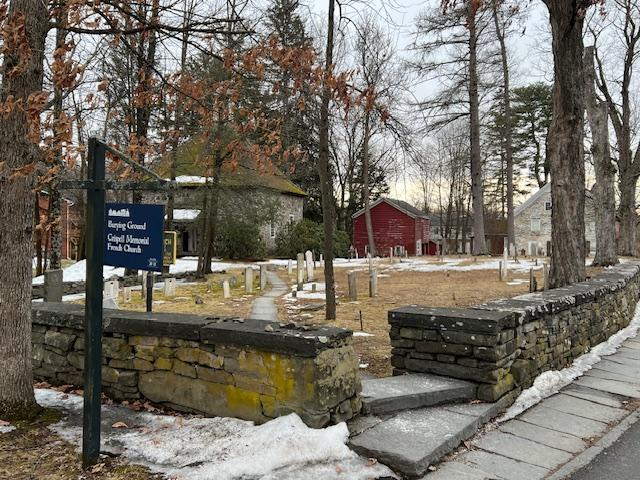
The entrance to the site
The historic sign at the entrance
History of the site:
At our 10 acre National Historic Landmark District, visitors experience more than 300 years of history through the lens of a French Huguenot community as it evolved over time. Guided tours begin with an introduction to the pre-colonial Munsee Esopus landscape dating back 7000 years and the religion, culture and architecture of New Paltz’s earliest European settlers and enslaved Africans. The experience continues as guests visit fully furnished houses reflecting unique human narratives and changing tastes across the Colonial and Federal periods, through the Gilded Age and into the early 20th century.
(Promotional Materials)
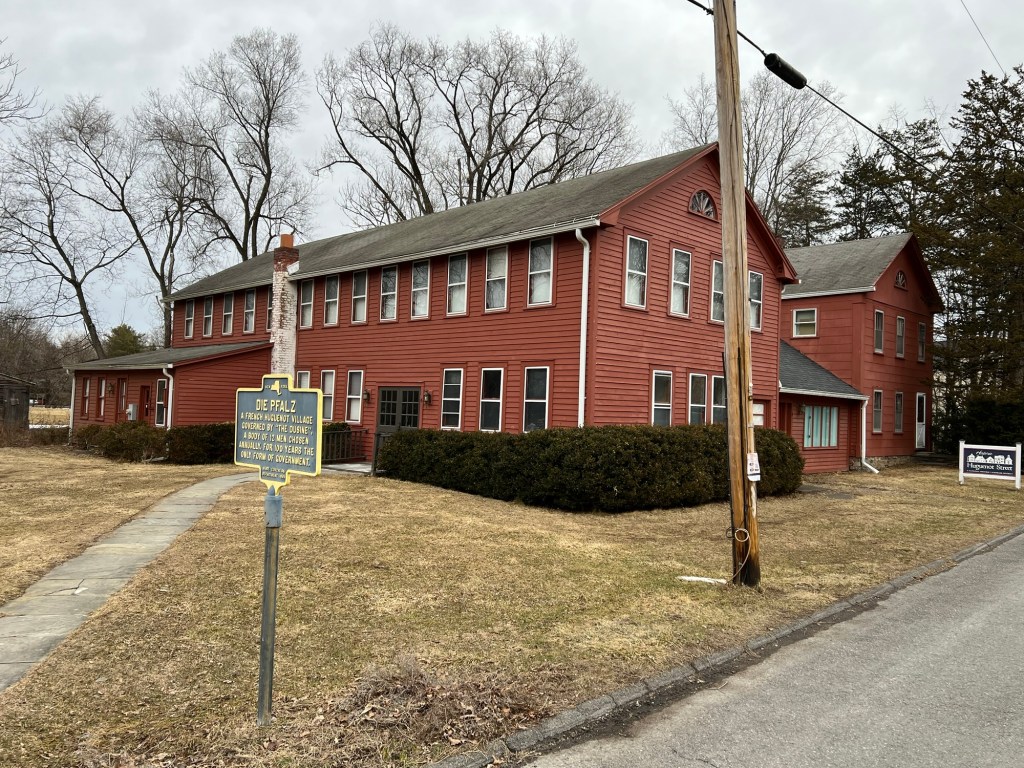
I visited Historic Huguenot Street one afternoon after visiting here about five years earlier during the holidays. The houses are easy to tour and the street is blocked so that you can walk amongst the houses. There are tours every half hour when the site is open. Here you can tour inside the houses instead of just the grounds. On a nice day, it is interesting to look over the architecture of the homes.
Make sure that you take time to look at the historical cemetery by the church at the end of the block. Some of the original settlers are buried here. It is also nice to tour around the Waykill River.
Take the extra time to visit the gift shop and see the information video on the site and look over the literature of the site.
The area has a pretty interesting history.
The map of the site
History of the Huguenot Street Historic District:
The site is owned and operated by Historic Huguenot Street (HHS), which was founded in 1894. In 1899, Historic Huguenot Street purchased the Jean Hasbrouck House as the first house museum on the street. In the 1950’s and 60’s, the organization and related family associations purchased most of the remaining stone houses in the district and subsequently opened them as museums. These acquisitions were funded in large part by descendants of the original Huguenot founders. Their family associations play a key role in supporting the institution today.
The Individual Houses:
Bevier-Elting House:
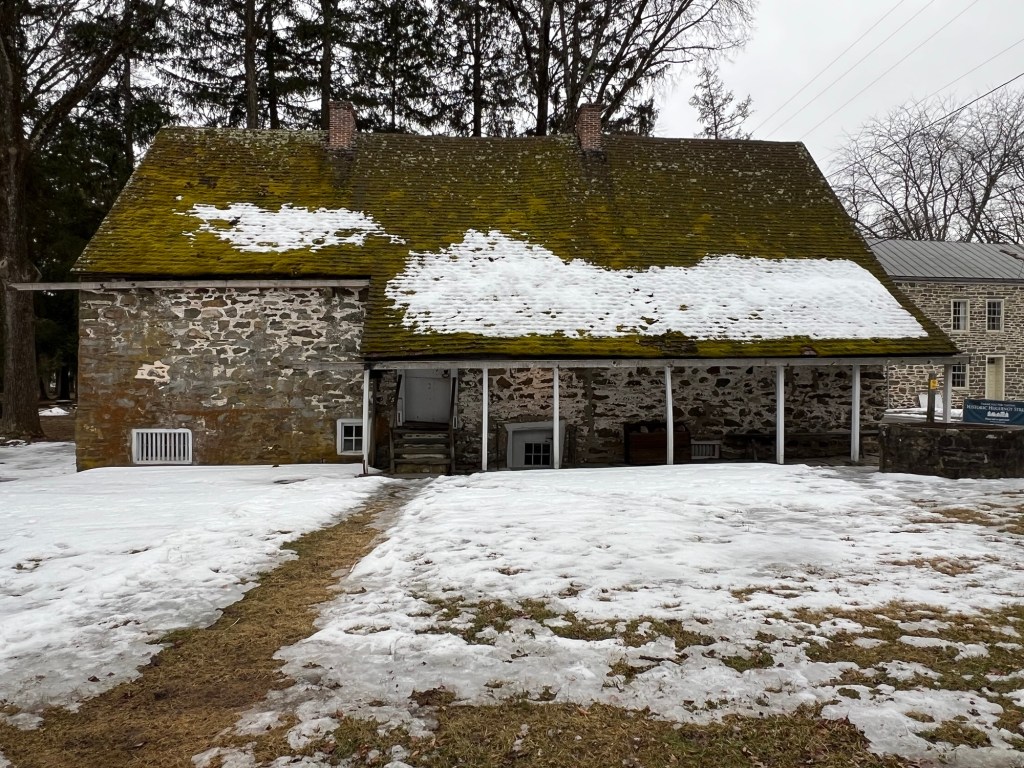
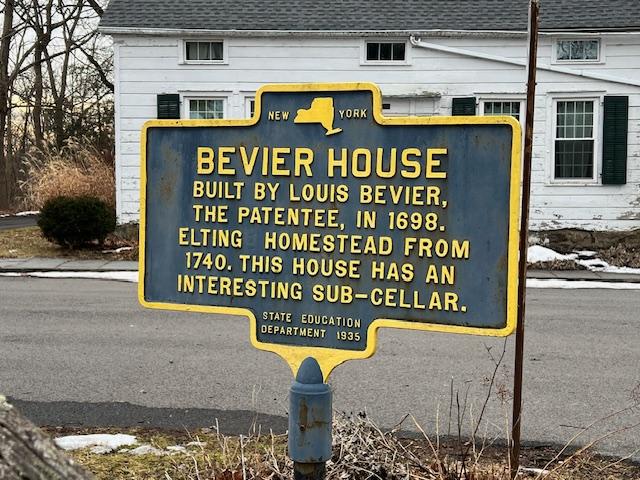
Dating to the early 18th century, the house was originally a one room building built with the narrow or gable end facing the street-then the prevailing style of the low countries of Northern Europe. Two expansions were built later as was a small cellar that was used to house African slaves. The house was built by the Beiver family, one of the founding families and subsequently sold to the Dutch Elting family.
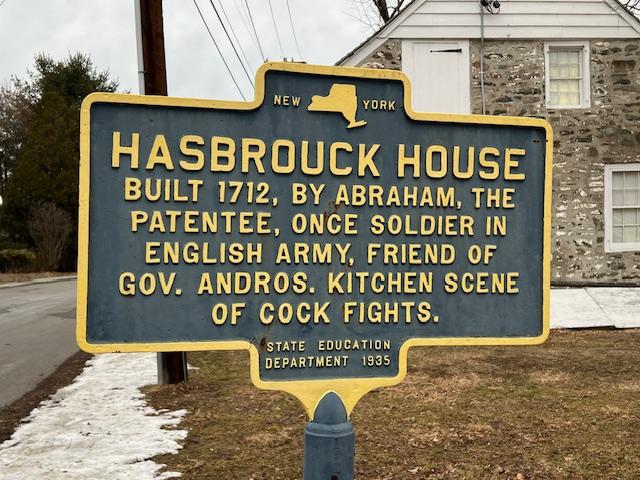
The structure as the Abraham Hasbrouck House was built in three phases in the 1720’s and 30’s. The first of the house-the center room-was constructed in 1721 by Daniel Hasbrouck, the son of Abraham Hasbrouck the patentee. The date 1721 is based on recent dendrochronology, which is a process by which wooden structural members are dated. This house represents a New World innovation in Dutch-style architecture. The initial houses in the Dutch region of New York, such as New Amsterdam, Albany and Kingston were built in the tradition of Dutch cities with the gable-ends to the street, which conserves street frontage. The basic structure of the house consists of a series of H-bents which spread the weight of the house across the entire expanse. The original one room house exhibited several defining elements of Dutch architecture, the jambless fireplace being the principal and most recognized feature in the house. Recently re-opened to the public in July 2012 following a restoration and reinterpretation focusing on the life of Widow Wyntje.
Also built in 1721 by Jean’s son Jacob (and perhaps incorporating elements of an early home built by New Paltz founder Jean Hasbrouck), this home is an excellent example of Hudson Valley Dutch architecture and the showpiece of Historic Huguenot Street. A National Historic Landmark in its own right, it boasts the only remaining original jambless fireplace of any of the Huguenot Street houses and is one of the few surviving examples in what was formerly the New Netherland.
In 2006, the north wall of the house was carefully dismantled, repaired and reconstructed. Reproduction Dutch-style casement windows were installed. Interior restoration followed, resulting in a house that is an excellent example of how a comfortable family in the region lived in the mid-18th century.
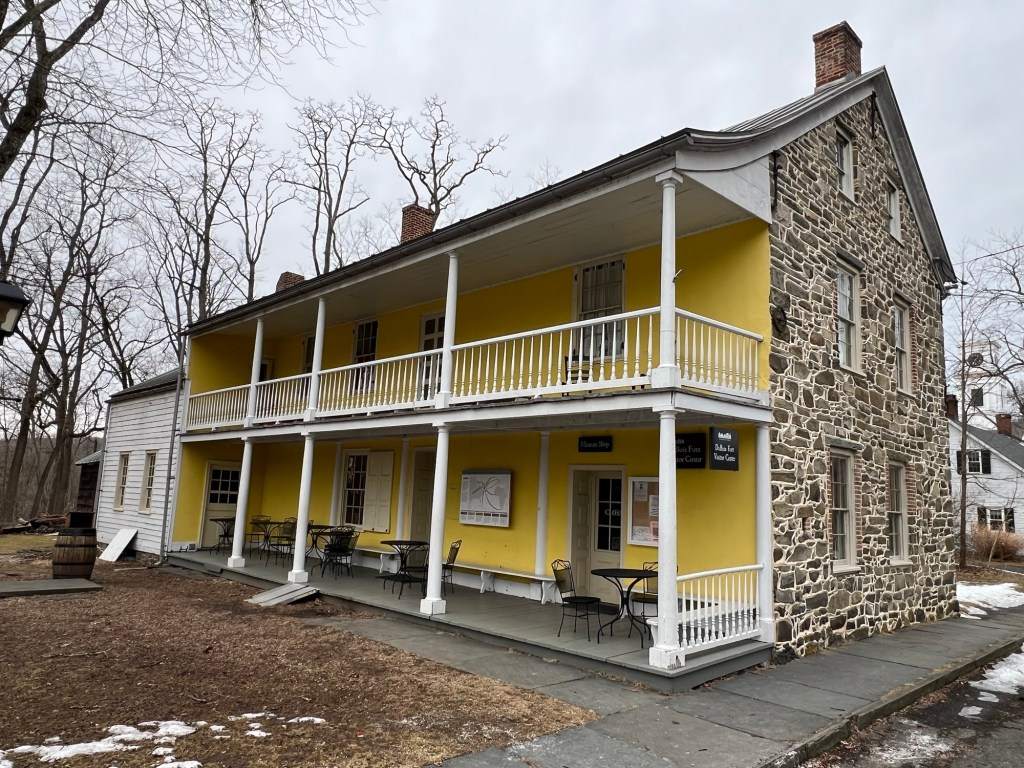
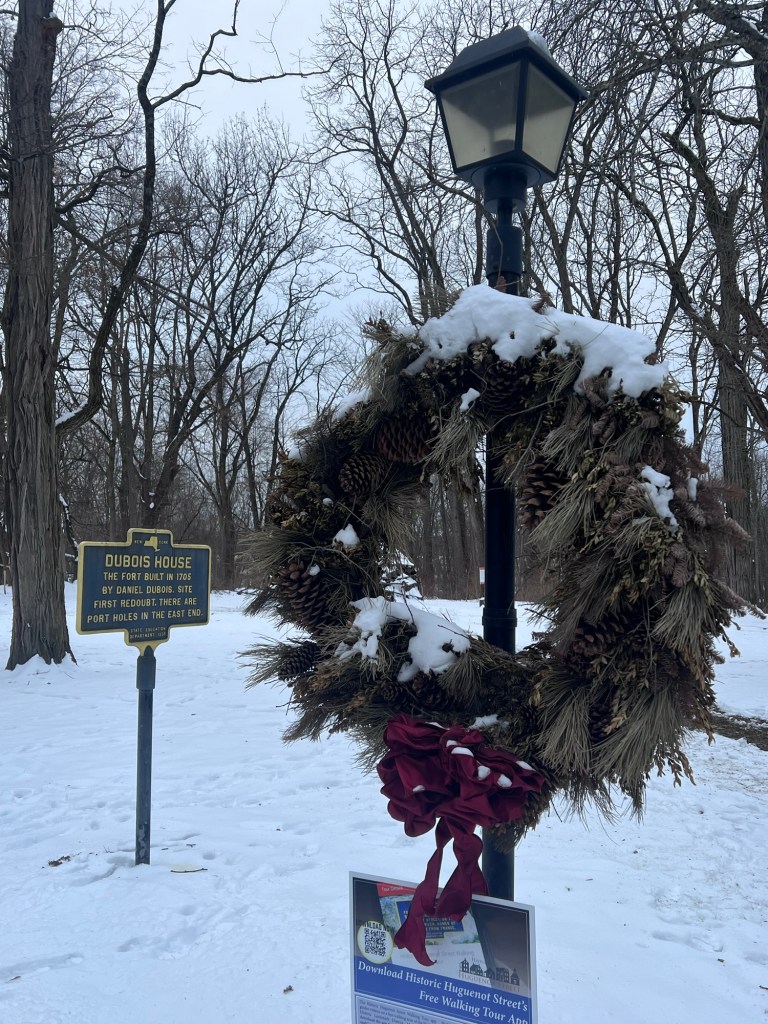
Built circa 1705 for the DuBois family, it might have served as a fortified place for the small community if needed. Originally a smaller 1 1/2 story structure, this building was expanded to its current size in the late 1830’s. Some historians and antiquarians believe that the presence of “gun ports” made it a fort but there is no evidence of the presence of any such portholes before the 19th century. The DuBois Fort currently serves as the orientation center and gift shop as well as a location for special events. Guest can purchase their admission tickets and memberships at this building. Over the last 300 years, it has also been used as a residence and a restaurant.
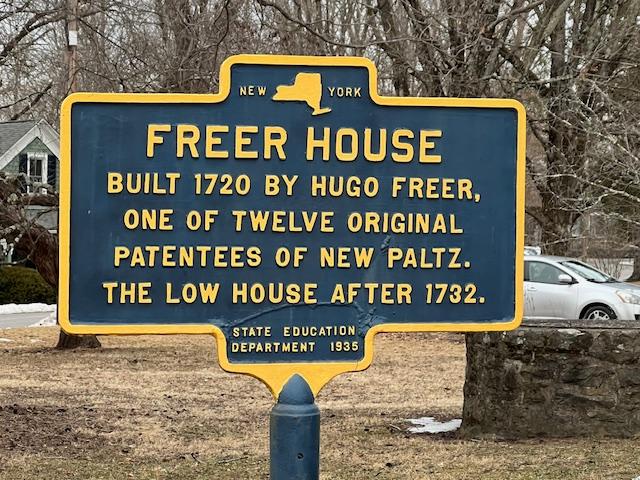
The Freer House is one of the six 18th century stone houses owned by Historic Huguenot Street. It was altered in various points in its approximately 250 years of occupancy with its most recent major alterations occurring in 1943 when it was purchased by Rev. John Wright Follette, a direct descendant of it s original builder, Hugo Freer. Over the years, the interior was modernized into a 20th century idea of a colonial home. This structure is not currently open to the public.
The original portion of the house was built around 1720 by Patentee Pierre Deyo. It began as a one room house was subsequently expanded to two rooms and ultimately to three when a stone addition was added off the rear by Pierre’s grandson Abraham. Circumstances for this house changed dramatically when at the height of the Colonial Revival movement, two descendants of Pierre Deyo, Abraham and Gertrude Brodhead, inherited the house.
The Deyo House at Christmas
Wanting to live on the street of their ancestors but also wanted a modern, gracious home that reflected their affluence, the Brodheads partially dismantled the original stone house and build a grand Queen Anne home around it in 1894. They also significantly changed their surrounding property in essence changing a small village farm into a handsomely appointed and landscaped mini estate.
The house passed out of Deyo family ownership in 1915. It was a private home until 1971, when it was purchased by the Deyo-Family Association and donated in order to be opened to be opened to the public as a house museum. The home was most recently restored in 2003 and features circa 1915 interiors.
The patentee Pierre Deyo died in 1700, so couldn’t have built the house in 1720 as stated. Per the plaque mounted outside the house it was built in 1692.
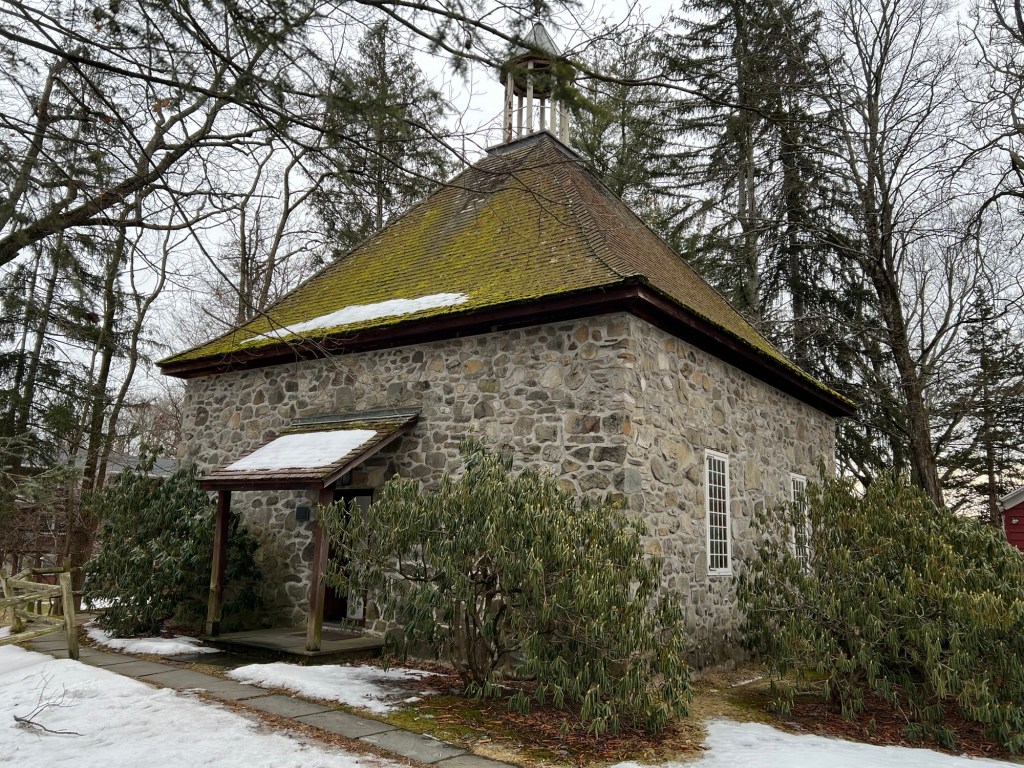
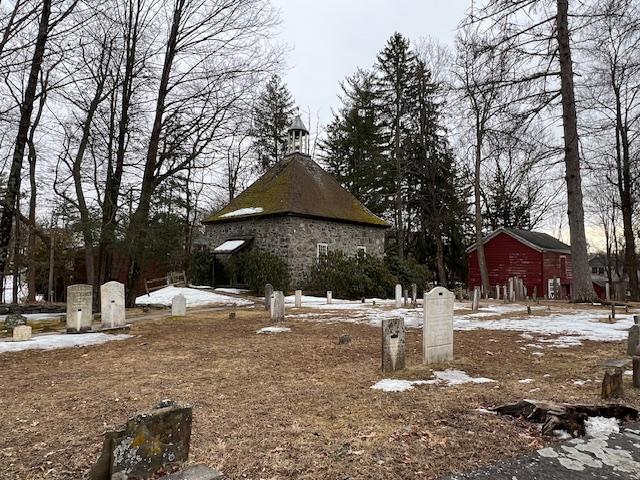
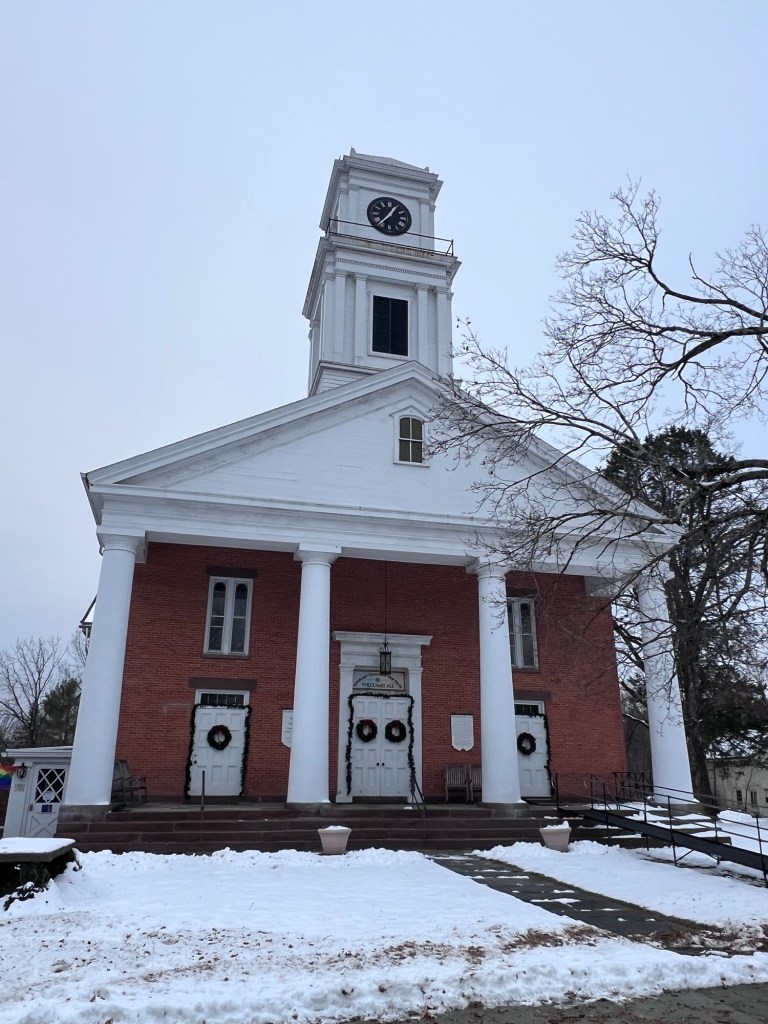
Since the community’s founding, there have been four sanctuaries built on what is today called Huguenot Street. The French-speaking Protestants who settled in New Paltz built their first church in 1683-a simple log building. This was replaced in 1717 with a straightforward, square stone building that reflected the permanence of the settlement. This existing building in the burying ground is a highly conjectural reconstructed of the 1717 building near its original location.
The Historic Walloon Church
As the New Paltz community increased in size throughout the 18th century, a larger church became necessary. A second stone church was built down the street in 1772. When it became too small, it was demolished and replaced by a third church built in 1839. This church survives today and is home to an active Reformed congregation.
The Church and the graveyard
The reconstructed church is named in honor of Antoine Crispell, one of the twelve founders or patentees of New Paltz and a direct ancestor of Franklin Delano Roosevelt. It was built as the result of a fundraising campaign led by the Crispell Family Association. The Crispell Family Foundation opted to create this reconstruction church in their ancestor’s honor. It was completed in 1972.
The 1717 church was designed to reflect Reform thinking; the pulpit was placed in a central location and the pews were placed so that everyone could see and hear more equally. This expressed the concept that each person had a direct relationship with God, rather than one mediated through a church hierarchy.
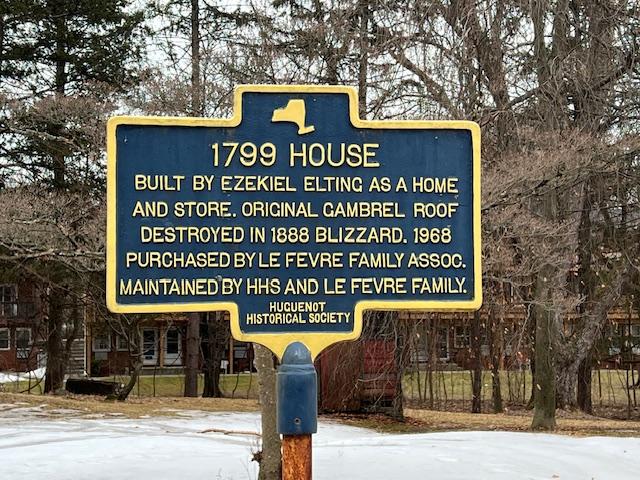
Built int 1799 by Ezekiel Elting, a prosperous merchant who was born in the Bevier-Elting House, this stone and brick building is quite different from the earlier stone houses on Huguenot Street. Its Georgian-style architecture reflects the transition of New Paltz from a French and Dutch settlement to an Anglo-American community and increasing refinement in architecture in this period as settlements matured. The house shows the changes in architectural style from the early 18th century. This house reflects the several changes in the society and home life of New Paltz in the early 19th century.
Located in the Roosa House, the Library and Archives at Historic Huguenot Street is a research facility devoted primarily to the history and genealogy of the Huguenot and Dutch settlers of the Hudson Valley. It also functions as a general repository for local history, regardless of ethnicity or religious persuasion. The collections consist of family genealogies, church, cemetery and bible records, wills and deeds, census records, genealogical periodicals, county histories and publications relating to Huguenot ancestry. Genealogists, local historians and other interested parties can access the collections by appointment. The colorful paint replicates the original colors of the house in 1891.
Native American presence on Huguenot Street:
Historians and archaeologist have learned more about the continuing relations between the Esopus, the original inhabitants of the area and the Huguenots. Some results of research can be found at the HHS site at “Relations between the Huguenots of New Paltz, NY and the Esopus Indians (http://www.huguenotstreet.org/library_archives/exhibits_research/Indian_affairs.html). The “Before Hudson” exhibit, currently on view at the DuBois Fort Visitor Center, shows some of the highlights of archaeological excavation in our area with artifacts dating back 6,000-8,000 years ago.
The Arts Center at SUNY New Paltz in New Paltz, NY
The Samuel Dorsky Museum on the SUNY Campus
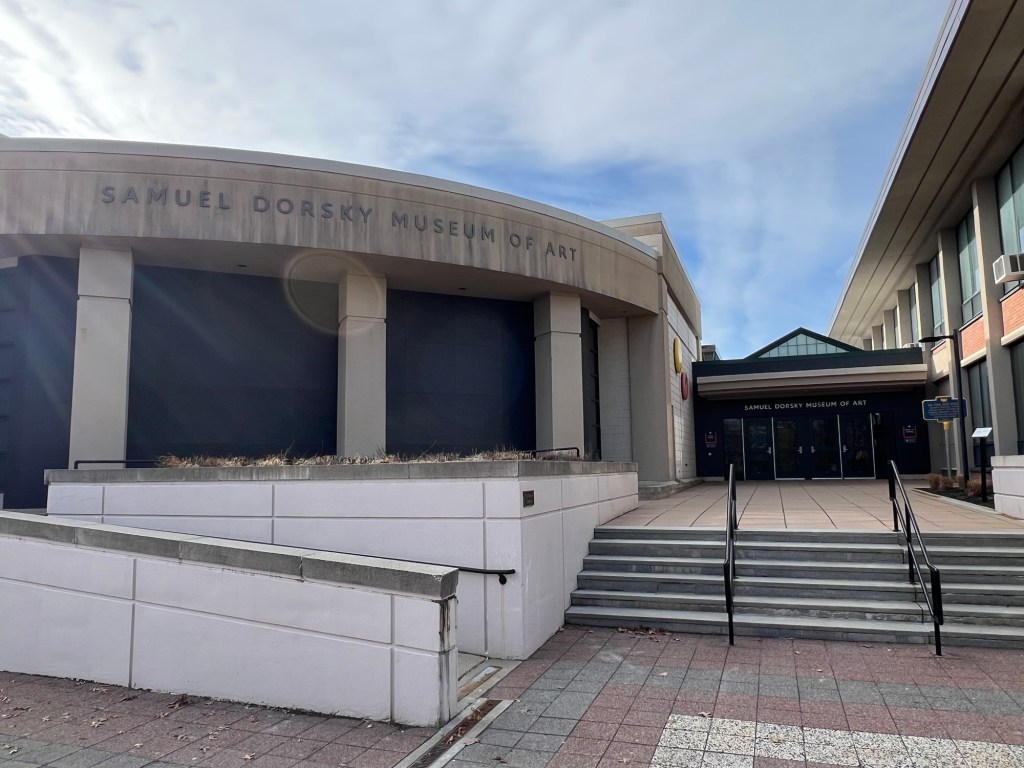
The entrance to the museum
The entrance to the Dorsky Museum
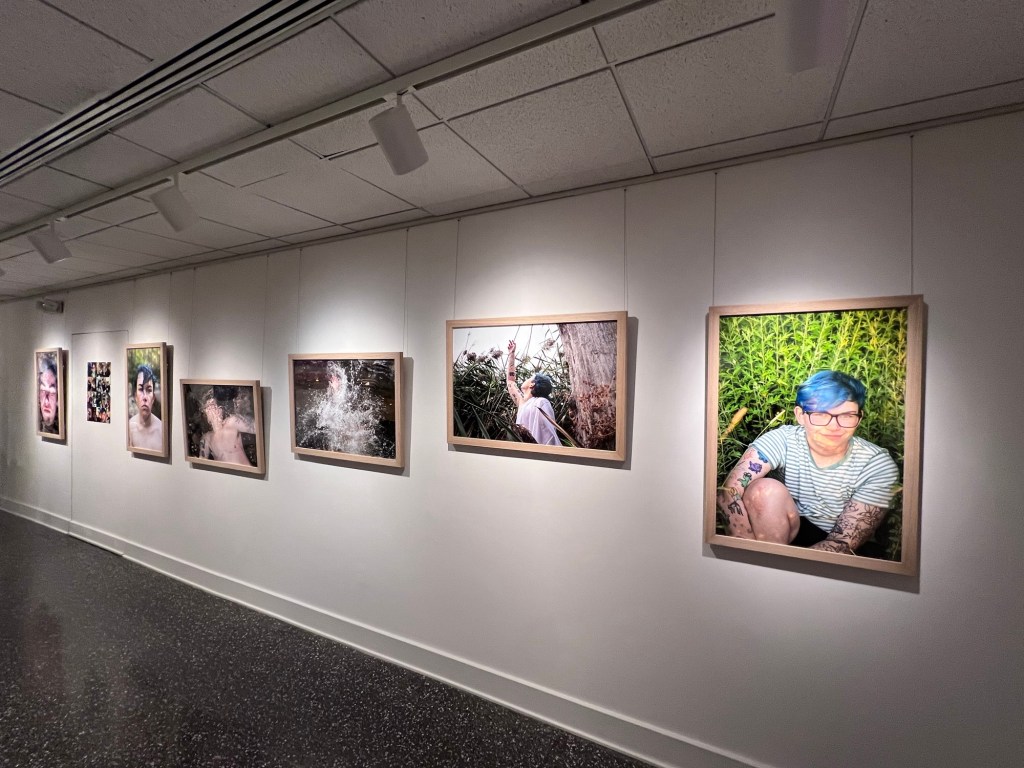
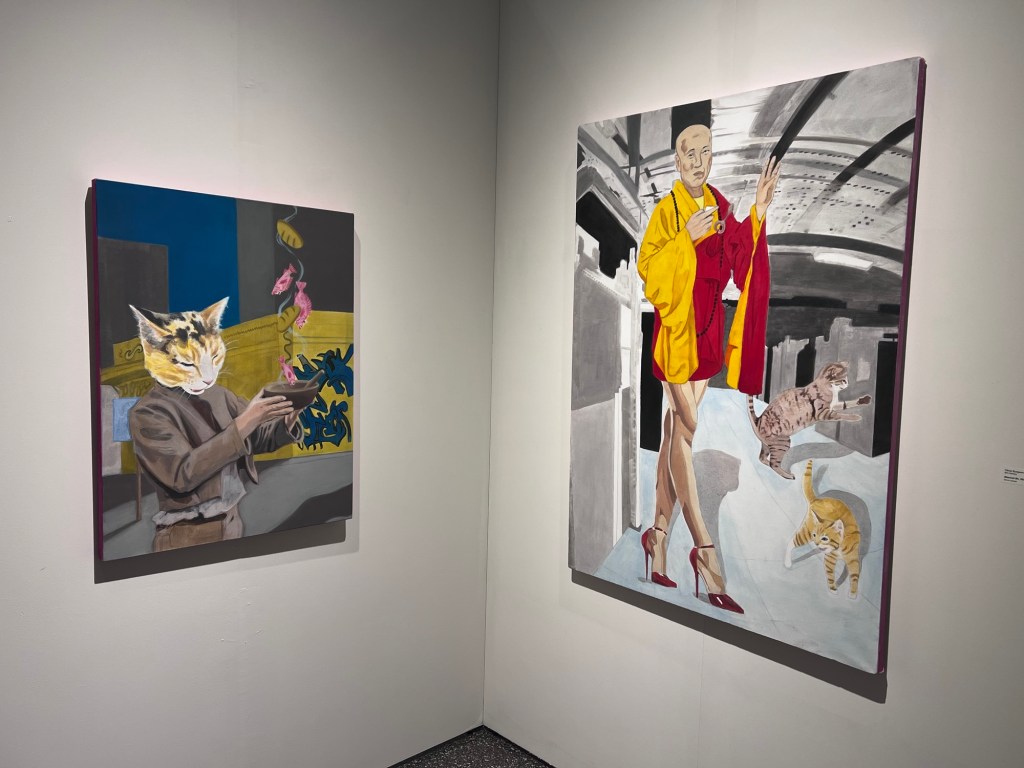
I visited the Samuel Dorsky Museum of Art in New Paltz, NY in 2019 and found it to be an interesting little museum that covers a lot of fields of art from ancient art to paintings and photography. The current exhibitions include “Just my Type: Angela Dufresne” and “In Celebration: A Recent Gift from the Photography Collections of Marcuse Pfeifer”. There is also a exhibition of a local institution “Mohonk Mountain House at 150”, which is on the history and progression of the development of the Mohonk Mountain House Hotel.
The Angela Dufresne exhibition was created by the artist of people who are the artist’s friends, family and of her community which are colorful and somewhat exaggerated views of people and their expressions. These giant colorful paintings had different expressions on their faces where you can only guess what the sitters were thinking.
The Angela Dufresne Exhibition
The photo collection of former gallery owner Marcuse Pfeifer, who has now relocated to the Hudson River Valley addresses the 19th and 20th Century that explore celebrity, location and life in the City. It has some interesting looks of life at a different time as well the expression of the subjects.
I went to the museum recently to see both the “Collecting Local: Twelve years of the Hudson Valley Artists Annual Purchase Awards” and “Jan Sawka: The Place of Memory” which were both interesting exhibitions both extended because of the campus being closed for the COVID-19 pandemic.
The “Collecting Local: Twelve Year’s of the Hudson Valley Artists” exhibition
The nice thing about the Dorsky Museum is its dedication to the Hudson River artist. “Collecting Local” is an exhibition that highlights the accomplishments and collections of the current artists from the Hudson Valley region and showcases their interpretations of art. It is nice to see not just local artists shine but what is being shown at the local galleries around the area.
Jan Sawka is a Polish born artist who was exiled from the county and settled into the Hudson River Valley with his family. His works were taken from the context of being a stranger in a new country.
Jan Sawka’s painting dedicated to his mother in law
Jan Sawka’s painting from his time living in Asbury Park, NJ
The museum offers also objects from the permanent collection and showing the areas in which the museum has collected in the past and currently. There is anything from a Warhol photo to ancient Chinese and Japanese statuary.
The Museum’s permanent collection
The collections rotate every season. The museum was closed when the college was closed during COVID from 2020-2021. It reopened when the campus fully opened in 2022. I finally got back to the museum in 2025 and saw the show “Movement” featuring New York City and State artists.
The exhibit ‘Movement’
The galley for the exhibition for ‘Movement’
This year’s theme, “Movement,” prompts viewers to consider the profound impact of physical journeys, both personal and collective. Reflecting on what compels people to leave their homes, the exhibition examines migration as a transformative force that shapes communities, melds cultures, and redefines societal landscapes. Through various mediums, including painting, sculpture, video and mixed media, selected artists explore themes of resilience, change and the legacies of movement that resonate across generations (from the Dorsky website).
I picked out the three pieces that really stood out in the show to share with everyone.
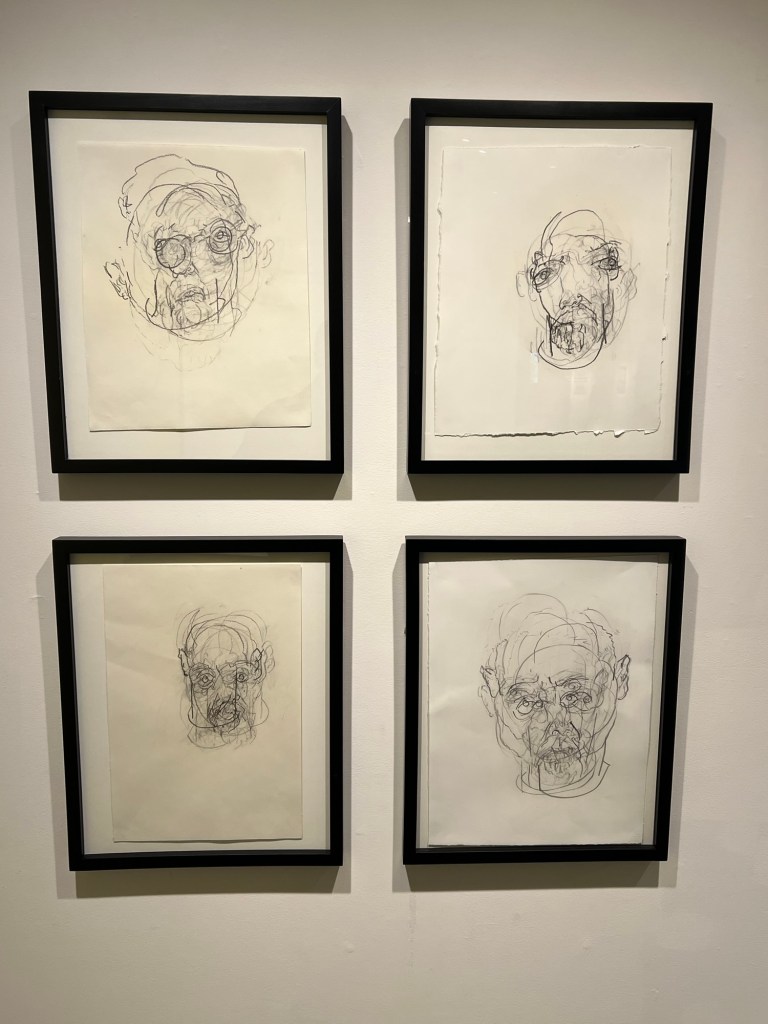
The Self Portrait
The artists of the Self Portraits
“The Dinner Guests” by Aaron Hauck
I loved the colorful look of guests at a dinner party.
The ‘Witnesses’
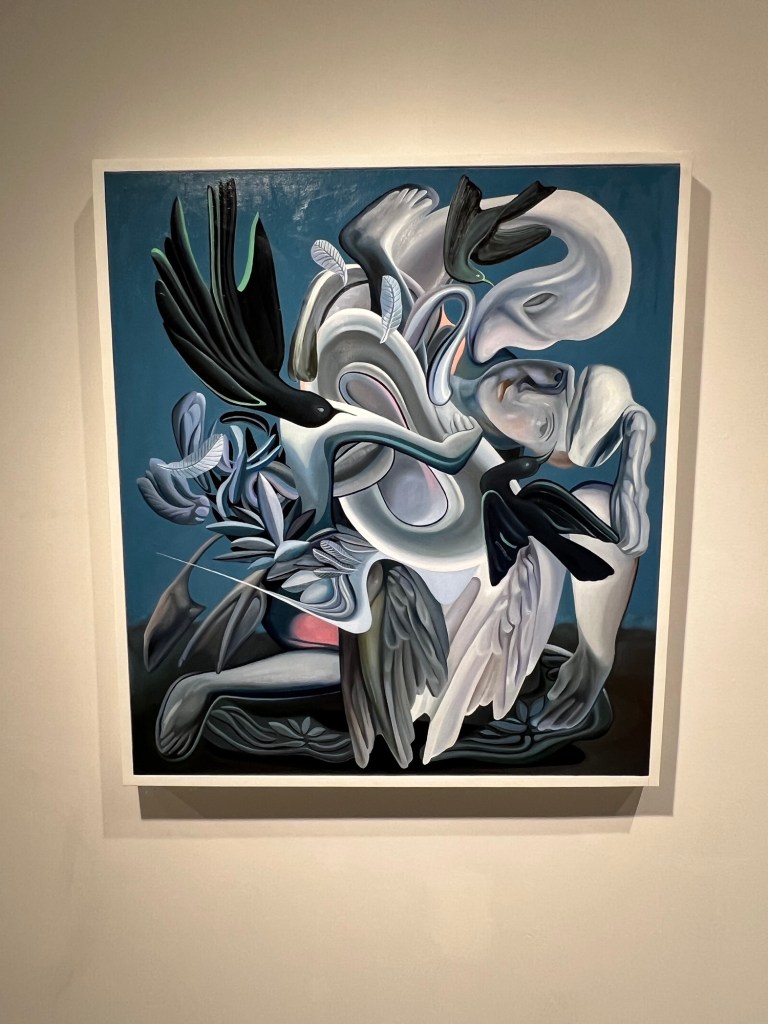
“Witnesses” was the one piece that stood out to me in the show. I loved the playfulness of the painting and that it looked whimsical and fun. It looked like something you would see in “Alice in Wonderland”.
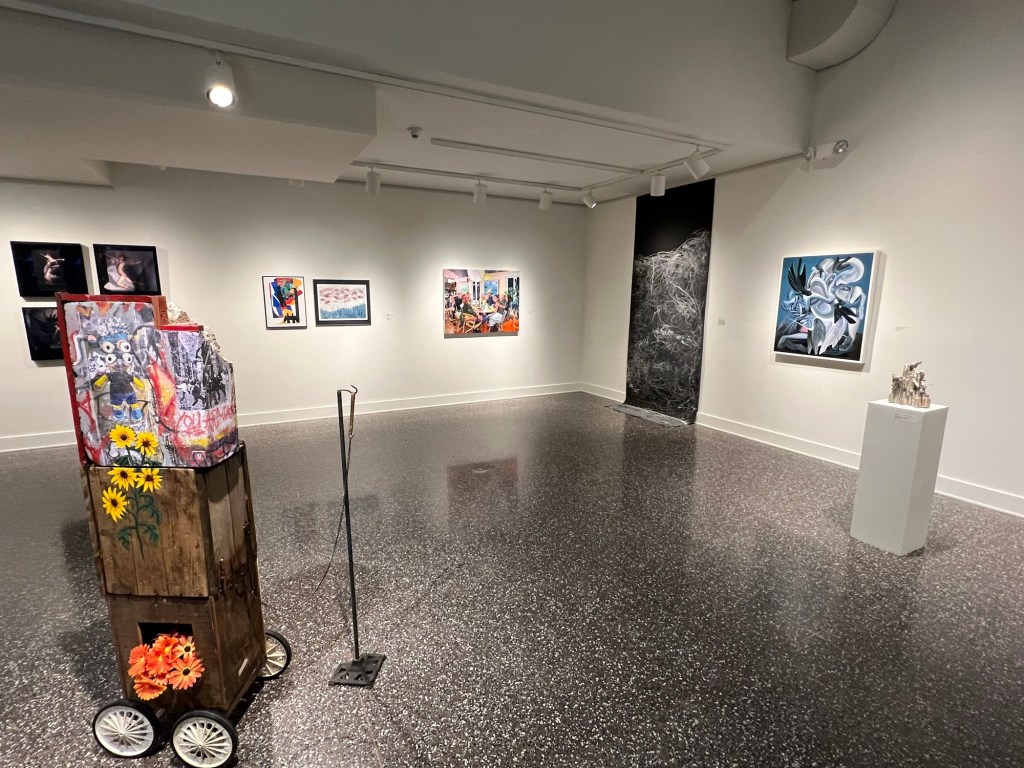
The gallery for ‘Movement’
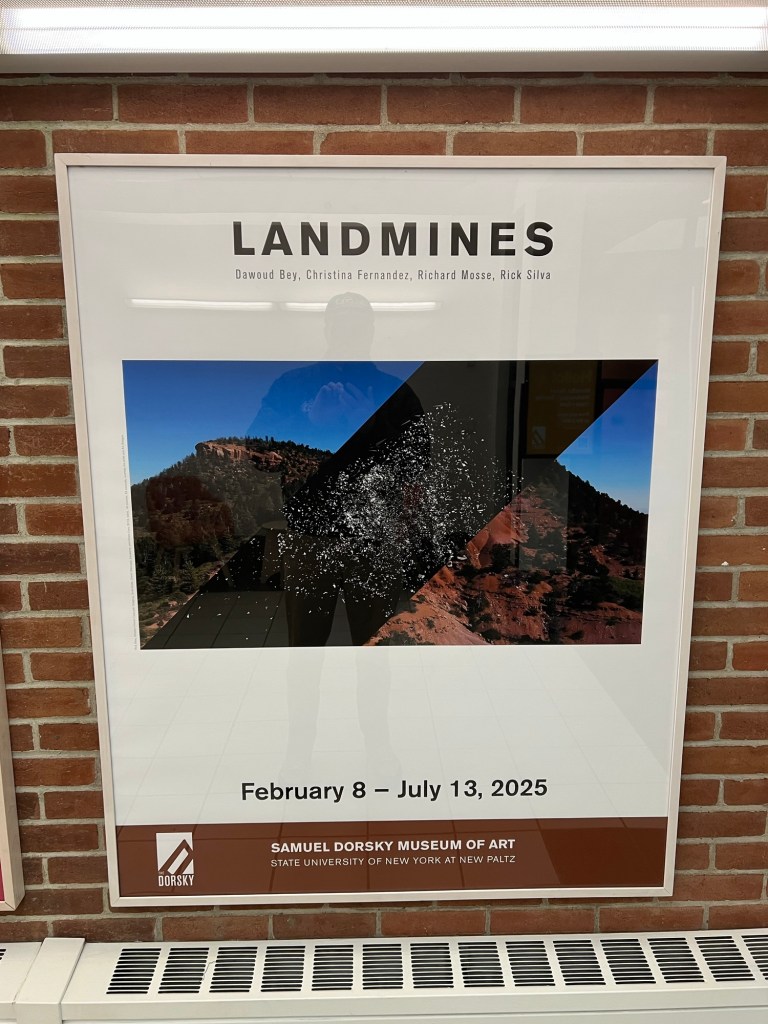
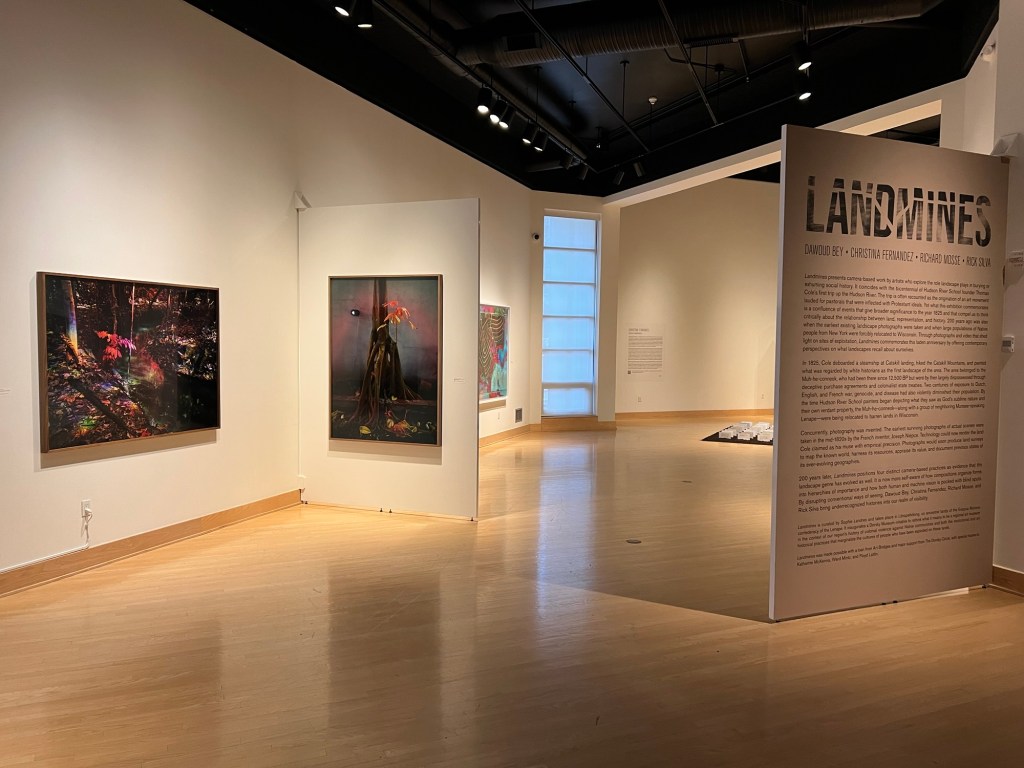
The exhibition ‘Landmines’
Coinciding with the bicentennial of the earliest existing landscape photographs, the founding of the Hudson River School, and a concentrated period in which Native people from New York were forcibly relocated to Wisconsin, Landmines presents camera-based work by artists who explore the role landscape plays in burying or exhuming social history (from the Dorsky Museum website).
The exhibition ‘Landmines’
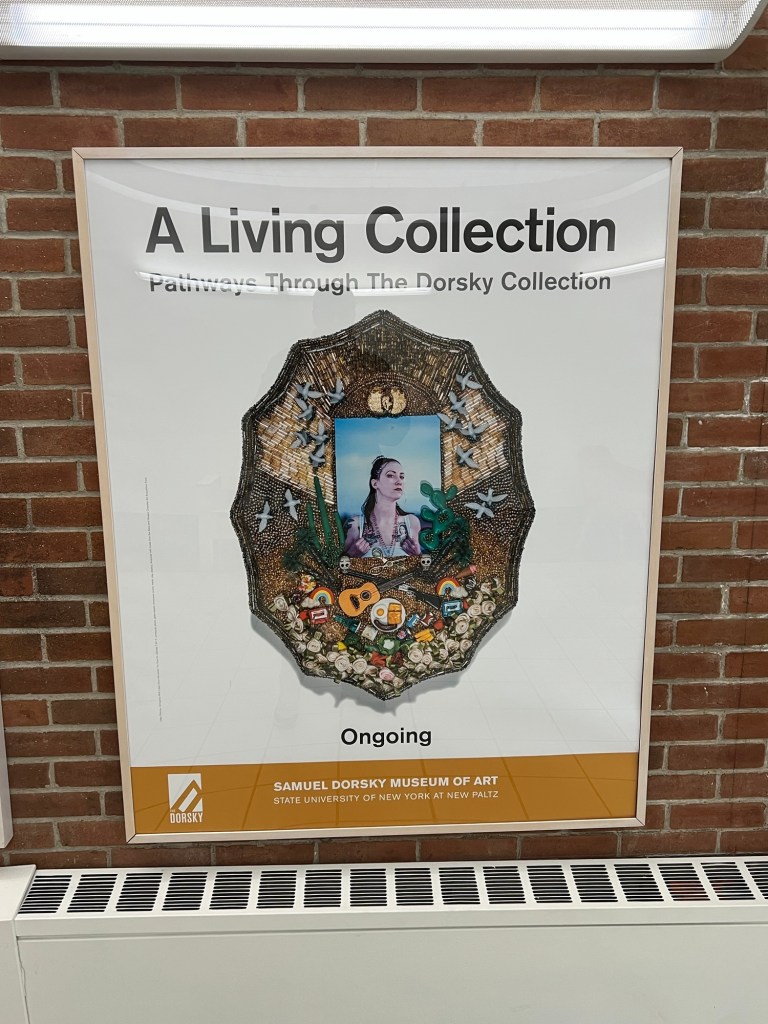
The permanent collection
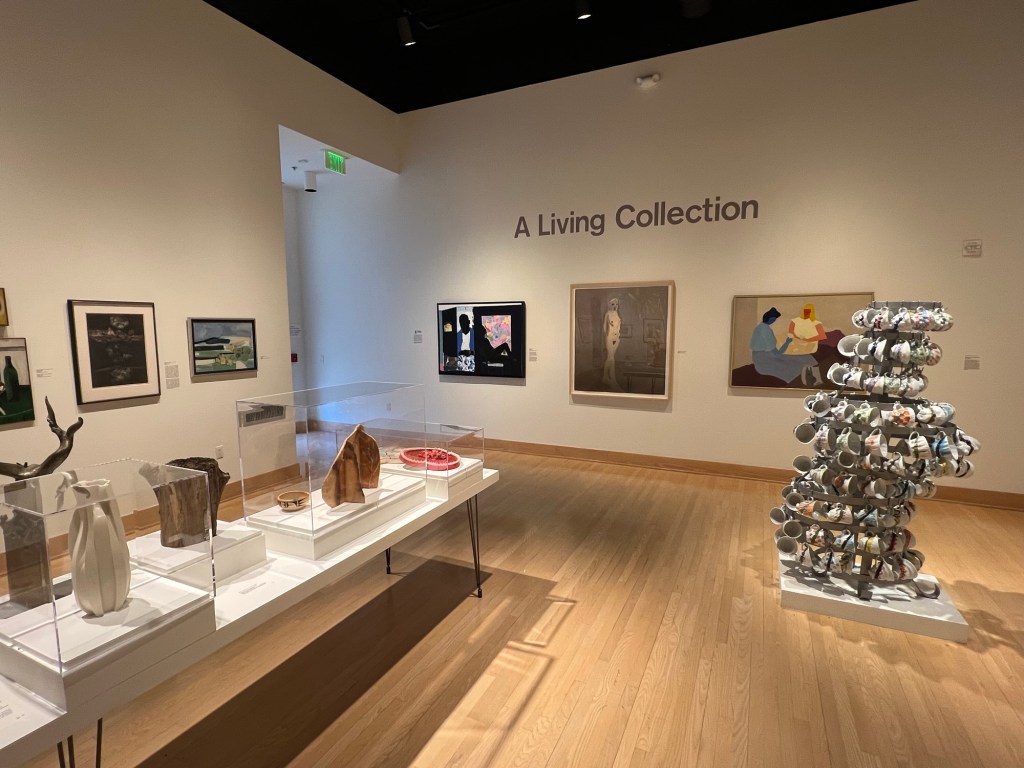
‘The Living Collection’ in the permanent collection
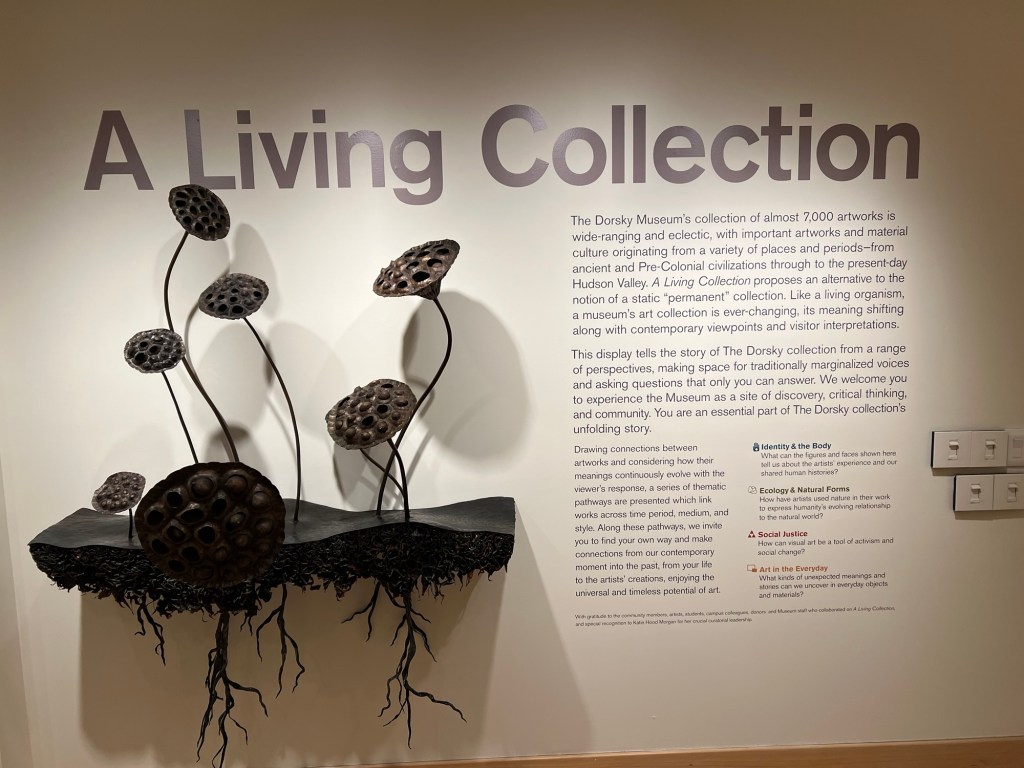
This new display of the Museum’s collection tells the story of The Dorsky from a variety of perspectives, making space for traditionally marginalized voices. Exhibiting collection highlights and audience favorites alongside new acquisitions and commissions, A Living Collection presents the collection as a living entity, continuously evolving and shaped by the viewer’s interpretation (from the Dorsky Museum website).
The entrance to ‘A Living Collection’
The gallery for ‘A-Living Collection’
A Living Collection:
The ‘A Living Collection’ Gallery
The ‘A Living Collection’ gallery
‘Shaky’s Meadow’ by Beverly Paterson
A video on the art:
A clip of the art display
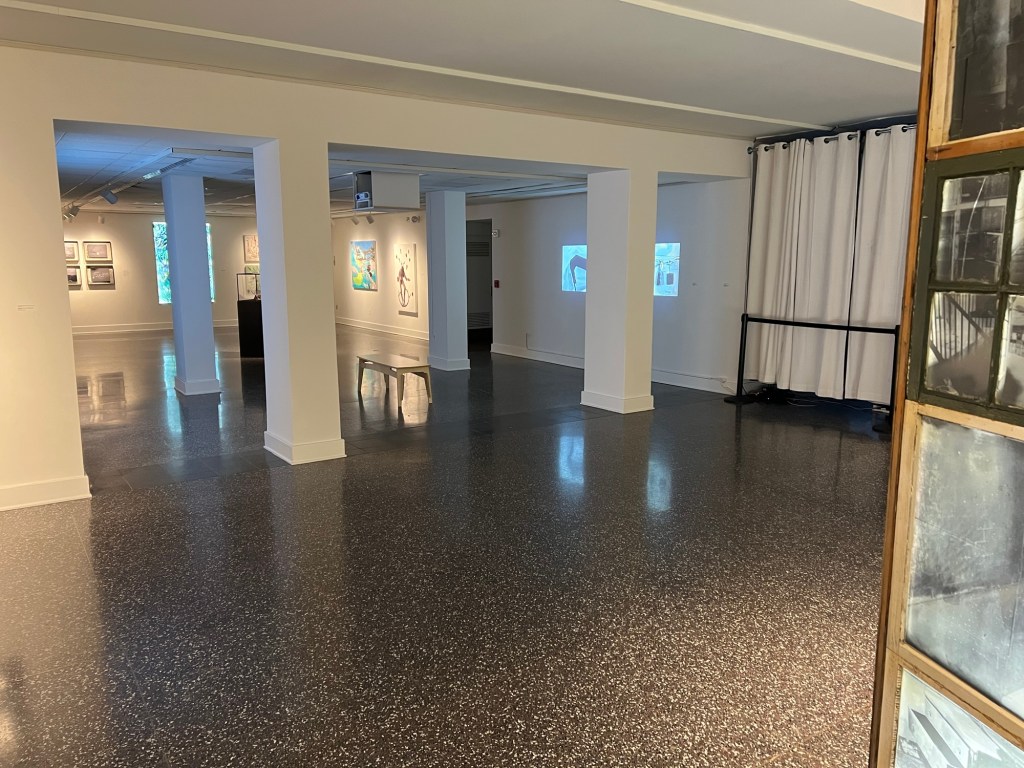
The full gallery on display at the Dorsky Museum
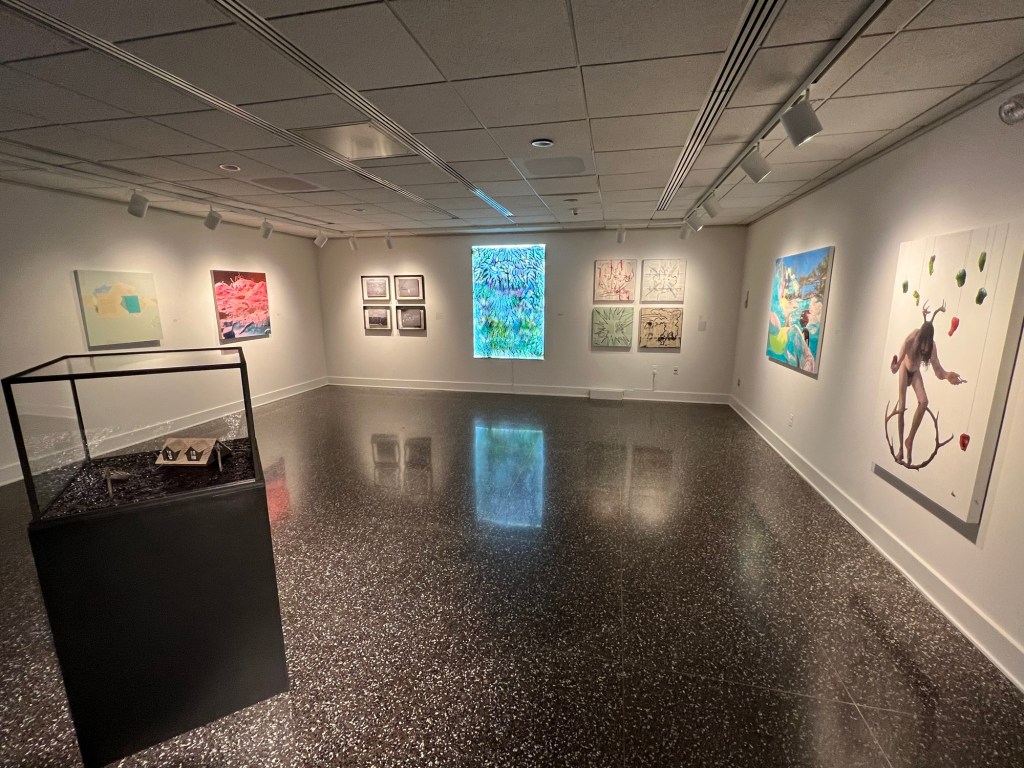
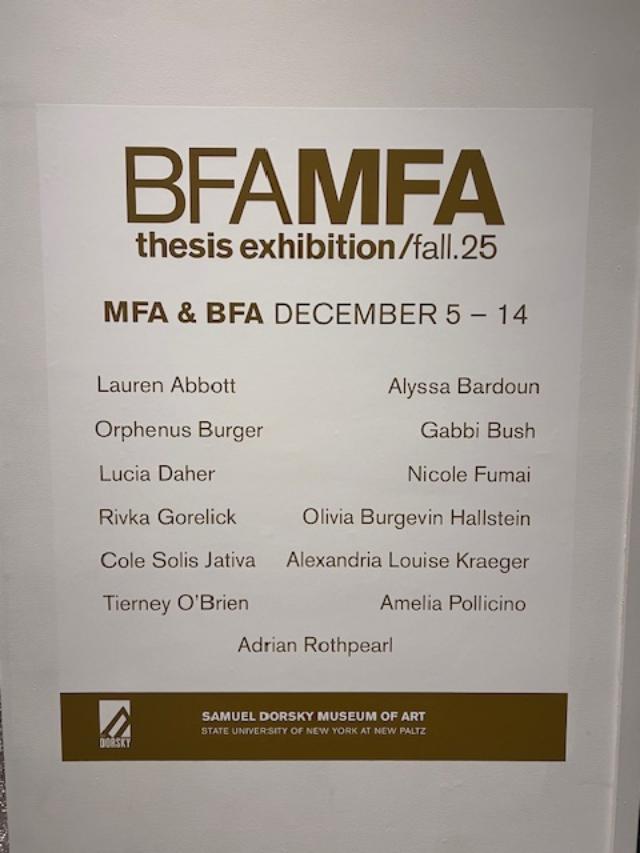
The museum does a lot in a small area and does a nice job promoting up and coming artists. It also does a lot for its in-house artists especially when I attended the opening of the Student Show for the BFA/MFA art students in December 2025.
As it got darker, I made my way to the SUNY campus and to the art museum. It really was a good show with a nice reception and interesting art. While the students were devouring the food at reception, I had the whole gallery to myself to look at the art. I have to admit that some of the art was quite unusual. The students did have a streak of creativity to them.
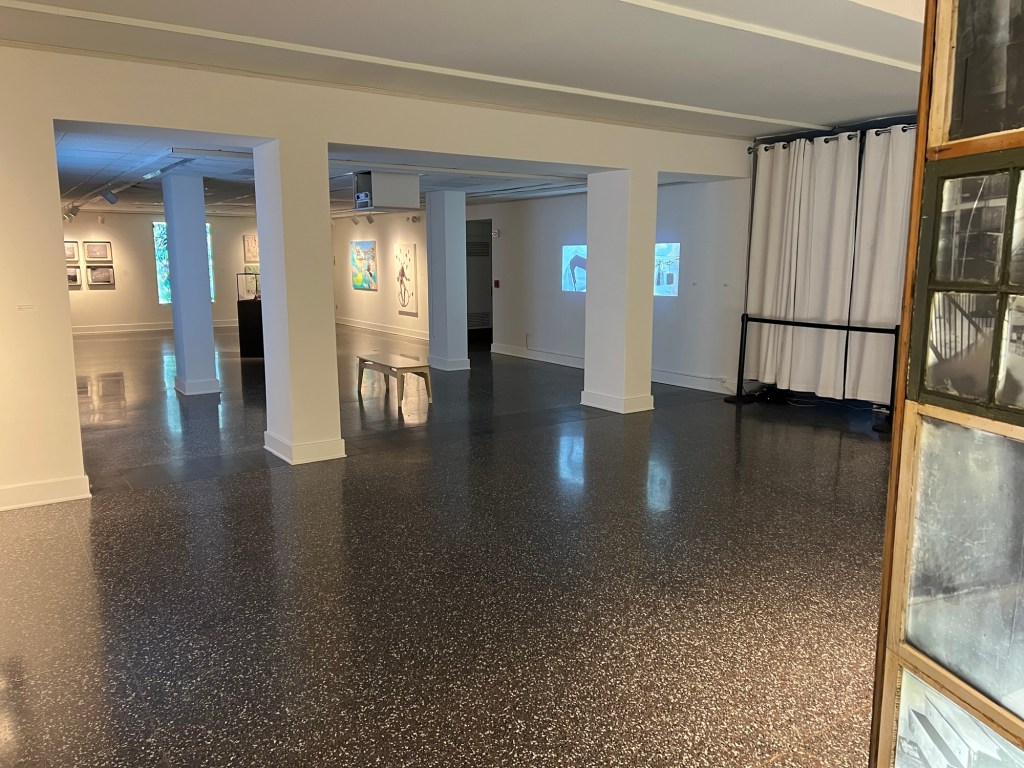
The Dorsky Museum Gallery
Some of the unique pieces
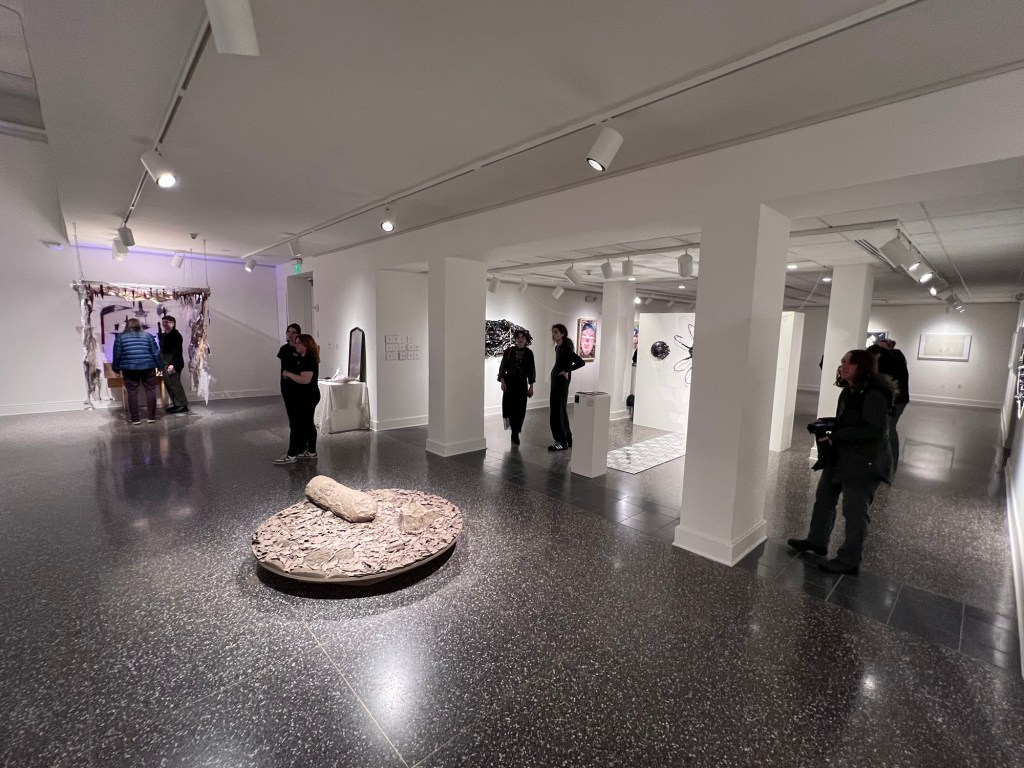
Once the students devoured the Reception buffet, everyone came in to see the exhibition
This is the one piece that really stuck with me at the show
Some of the pieces were rather unusual
The unique student works
The students got very creative on the material
The back room of the gallery
The patrons admiring one of the student works
Some of the works of the undergraduate students
Some of the unusual works in the show
More works by the student artists
The gallery at the museum is rather small do I got through the whole show in less than an hour. I had a quick snack with what was left on the buffet table, which was not much. The food was really good and a snared the final meatball.
Just enough of a snack to get through the next two hours
It was a nice opening for the show and my first on the campus. It just happened to fall at the same time I was attending the Snowflake Festival in Kingston on the same night so I was able to do both. I was glad I could support their students.
History of the Samuel Dorsky Museum of Art:
Mission of the Museum:
(from the museum website)
Through its collections, exhibitions and public programs. The Samuel Dorsky Museum of Art supports and enriches the academic programs at the university presents a broad range of national and international art for study and enjoyment and serves as a center for the arts and culture of the Hudson Valley.
About the Museum:
(from the museum website)
Located at the State University of New York at New Paltz. The Dorsky Museum comprises more than 9,000 square feet of exhibition space distributed over six galleries. The museum was launched more than 65 years ago by a dedicated committee of faculty members to enhance the teaching mission of the university. Originally known as the College Art Gallery, The Dorsky Museum was dedicated in 2001. The opening of The Dorsky Museum transformed the original College Art Gallery into one of the leading art museums in the region.
The Dorsky Museum’s permanent collection comprises more than 5,500 works of art from around the world and spans over a 4,000 year time period. While encyclopedic in nature, areas of focus include American art, with an emphasis on the Hudson Valley and Catskill Mountain region, 19th century American prints, photography and contemporary metals. The museum also has a strong World Collection that includes outstanding examples of both two and three-dimensional objects from diverse cultures, dating from classical to modern times.
The museum’s temporary exhibition program has been hailed as one of the best in the region and features exhibitions, installations and projects by internationally recognized artists as well as annual thematic exhibitions of work by regional artists. “The Hudson Valley Masters Series” is one of the unique exhibitions that the museum periodically hosts which focuses specifically on a body of work by an internationally acclaimed artist who resides in the area.
A painting by Angela Dufresne
Samuel Dorsky:
(from the museum website):
Samuel Dorsky was a self made and self realized individual who came to the art world relatively late after achieving success in the garment business. Emerging from the Great Depression, World War II and the post war boom years with the desire and the where withal to pursue both art and philanthropic, he opened a art gallery in 1963. Until his death in 1994, his gallery presented hundreds of exhibitions featuring such well-known artists as Henry Moor, about whom Dorsky was a recognized authority, Richard Hunt, Willem De Kooing, Larry Rivers and Robert Rauschenberg. Sam also generously championed the work of numerous lesser-known artists who he often befriended. The Dorsky gallery closed its doors to the public in 2001 after which Sam’s children, David, Noah, Karen and Sara established the Dorsky Gallery Curatorial Programs (DGCP) in Long Island City, a not for profit organization dedicated to promoting contemporary visual arts.
The dedication of the Dorsky Museum brought to fruition a project that had dominated the last decade of Sam Dorsky’s life. Sam’s lead gift to the SUNY New Paltz Foundation provided the impetus for the construction of the new museum building as well as the complete renovation of the former College Art Gallery to become part of the museum. The Dorsky Museum now comprises six galleries, offices and a small teaching space.
The Dorsky family continues to be a major supporter of The Dorsky Museum and SUNY New Paltz. David, Karen and Noah Dorsky serve on the Advisory Board of The Dorsky Museum. Karen and Noah also serve as trustees of the SUNY New Paltz Foundation.
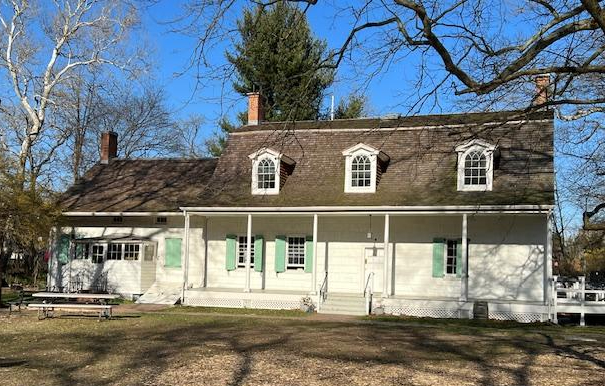
I have visited the Lefferts Historic House a few times when visiting the Brooklyn Botanical Gardens, The Brooklyn Museum and the Prospect Park Zoo, all of which are in the same cultural district of the neighborhood. The house is located near the entrance of Prospect Park just behind the Brooklyn Botanical Garden and right next to the zoo and the carousel.
The Lefferts Homestead in 2023
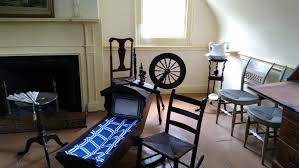
The house sits on a plot of the park to give it the look of the house when it sat in a rural setting in Brooklyn about twelve blocks away. When walking into the house, there are a few rooms that are furnished and have period pieces in them to show what the house must have looked like in the late 1700’s and early 1800’s. Most of the house is used for touring and for groups doing projects and games. You can’t go upstairs anymore. The house will be going through a renovation soon so watch the website for more information on that.
The historic objects of the house
The outside of the house has wooded grounds with a working garden, an outside oven and historic objects that bring the period back to tourists and residents alike of what life must have been like when it was a working farm. When in season, you can walk amongst the vegetable and flower gardens and talk to the docents about the history of the house.
The grounds of the Lefferts Homestead with the stables and smokehouse
The house is part of the Historic House Trust and part of the Prospect Park Alliance.
History of the Lefferts Historic House:
The Lefferts family was one of the original settlers in Brooklyn with Lefferts Pieterson buying 58 acres of land here in 1687 and built the original homestead on that property. In 1776, the house was destroyed by American troops before the Battle of Brooklyn so that the British could not use it. The house was rebuilt in 1783 by one of his descendants (Prospect Park Alliance).
The current house was the home of Continental Army Lieutenant Pieter Lefferts and was built in 1783. It was originally located on Flatbush Avenue near Maple Street. When Pieter died the house was passed onto his son, John and then when John passed, the house was inherited by his daughter, Gertrude Lefferts Vanderbilt. The house was lived in by four generations of the Lefferts family.
The Lefferts Homestead
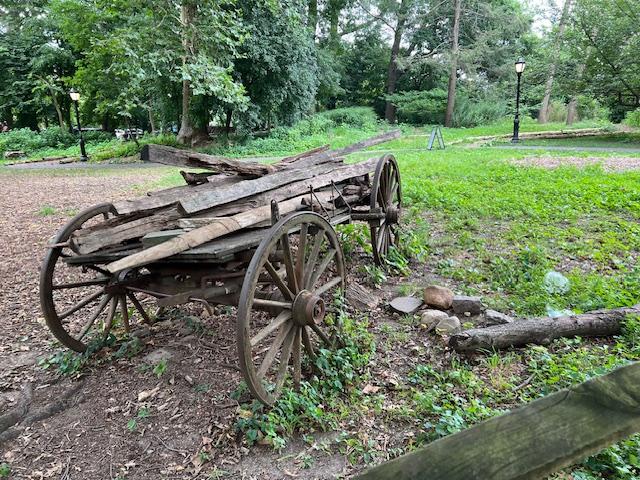
The cart on the front of the property
With impending development of the area around the house at the end of the 19th century, John Lefferts estate offered to donate it to the City on the condition that house be moved to City owned property for historic preservation and protection. It was opened as a museum in 1920 by the Fort Green Chapter of the Daughters of the American Revolution (Wiki).
The history of the house
The house is currently used as a Children’s Museum and Cultural site and open year-round.
The lawn and formal gardens on the Brooklyn Parkway entrance.
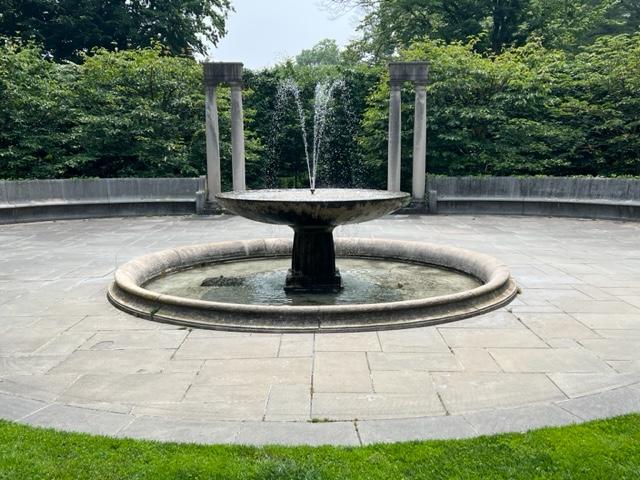
The beautiful fountain at the end of the formal gardens at the main entrance.
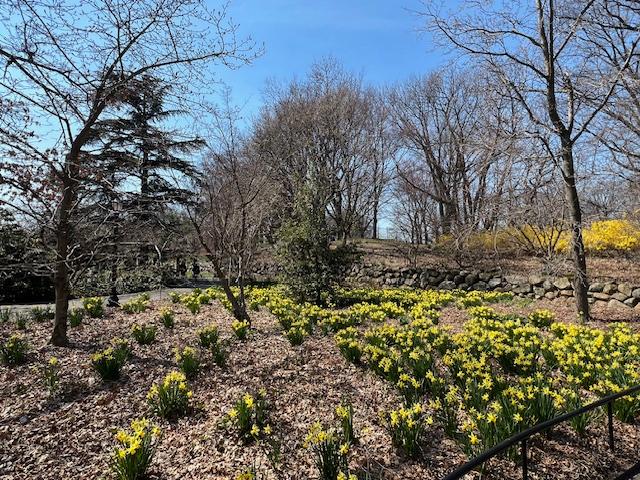
The daffodils in full bloom at the entrance of the gardens.
I have been a member of the Brooklyn Botanical Garden since 2002 and have never been bored on a trip to the gardens. In every season there is something new to see.
On a recent trip to the Gardens in 2024, the Garden was ablaze with the colors of almost a thousand purple crocuses that lined the hills on the Prospect Park side of the lawns. Beautiful purple and while colors were in full bloom and Mother Nature shined in the COVID era with all of us socially distanced but still enjoying the park.
Crocus Hills ablaze in purple in 2024
The purple crocuses in full bloom in 2024.
The beautiful purple crocuses in full bloom.
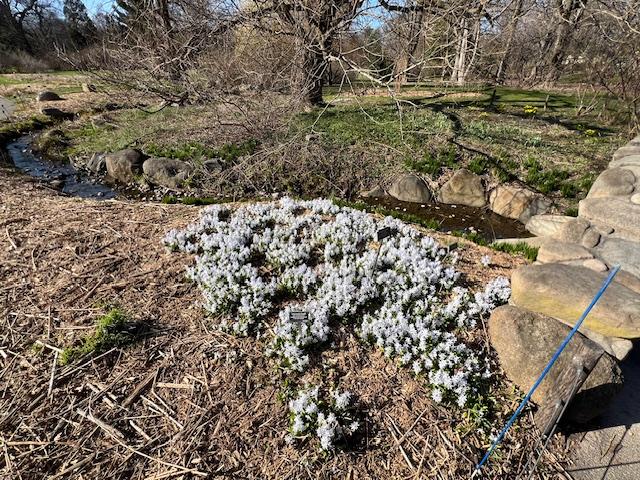
The crocuses only last about a week or two and with the inconsistency with the weather in 2024, they lasted only about ten days and then the weather went back down to the low 40’s. While I was taking pictures of the crocuses, I walked around the gardens and came across the Snowdrops and the Ironweed flowers were also in bloom. These sensitive flowers are only in bloom for just about two weeks.
The Snowdrops in full bloom in the gardens in 2024.
The Snowdrops up close.
The Ironweed just as beautiful. To see these graceful flowers in bloom are a real treat.
The Ironweed flowers in bloom right by the stream.
The Ironweed flowers in full bloom.
An Azalea that was early blooming in the garden in 2024.
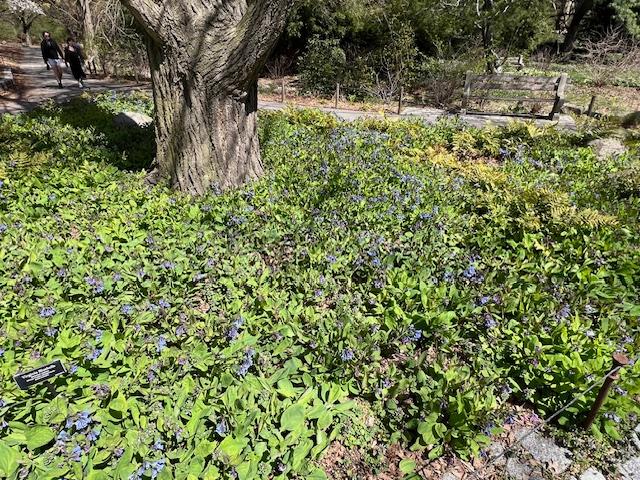
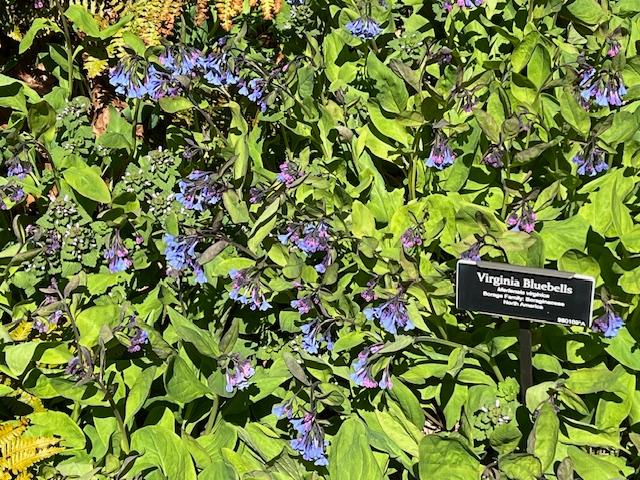
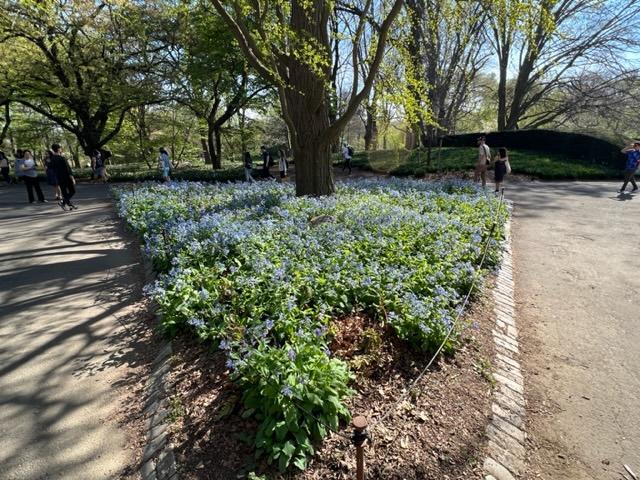
The Virginia Bluebells came out just as the Daffodils were at their peak in bloom. When you walked around this part of the Gardens, it was quite spectacular with colors.
The Virginia Bluebells at their peak during the Eclipse.
The Virginia Bluebells in bloom in early April.
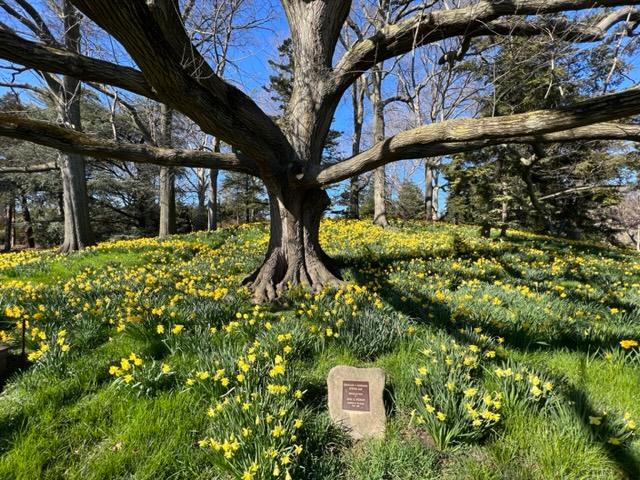
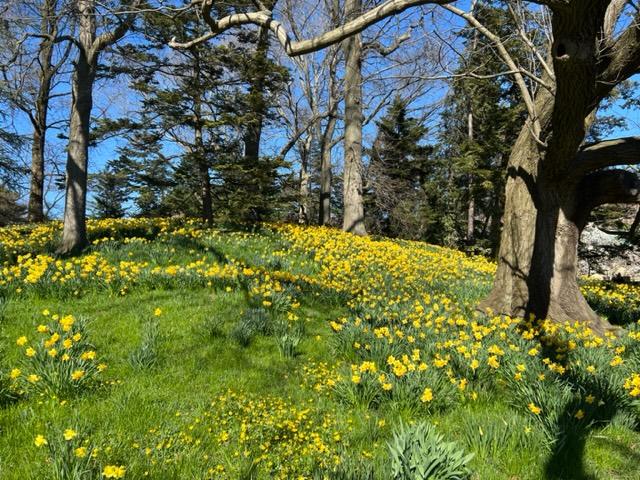
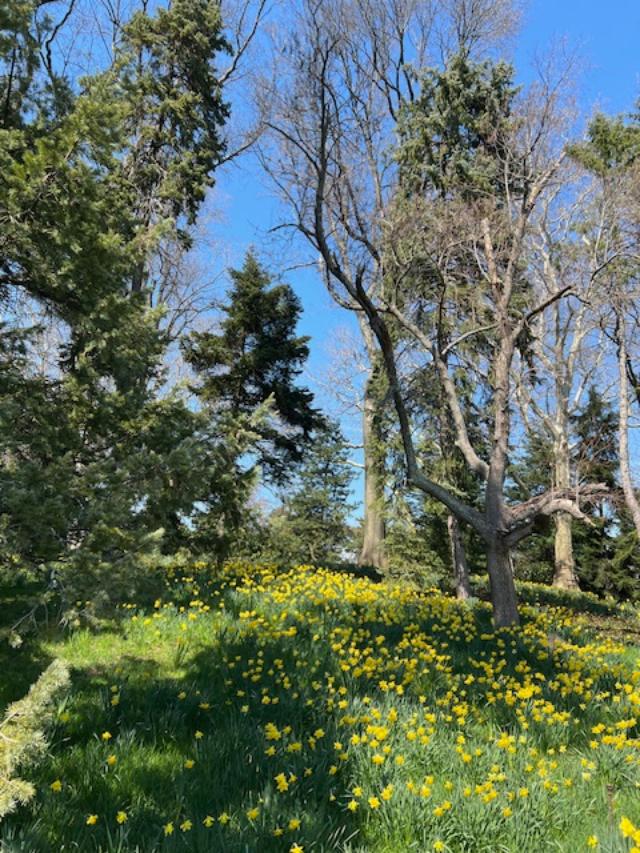
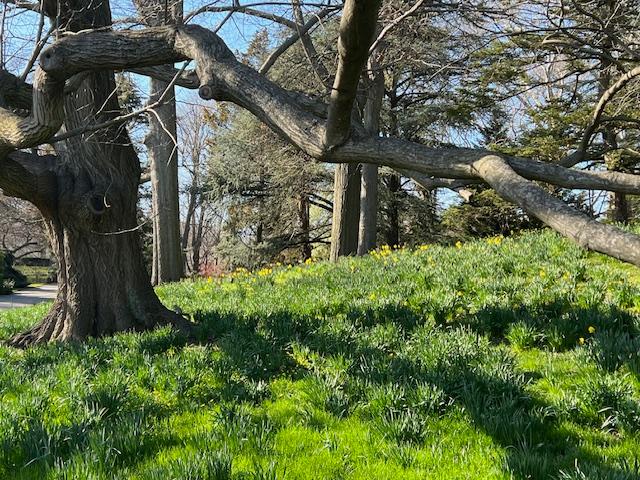
In the beginning of the Spring, Daffodil Hill is in full bloom and is a very impressive site. Hundreds of trumpet Daffodils line the hill of this side of the gardens surrounding the old oak trees.
Daffodil Hill in the Spring of 2023
Daffodil Hill in the Spring
Daffodil Hill
Daffodil Hill in all its beauty
The video tour of Daffodil Hill at its magnificent brillance
Daffodil Hill in full bloom in 2026
The Hybrid Oak plaque of this gracious oak tree.
There are fields of yellow on yellow and yellow on orange flowers surrounding the paths against the backdrop of the green lawns. The whole hill is a sea of yellows and whites against the trees which are bursting with new buds. This beautiful scene lasts only about a week to two weeks at full bloom in the first weeks of April.
Daffodil Hill in Spring 2023
Daffodil Hill with the Magnolia Plaza in the background
Daffodil Hill in 2024
Daffodil Hill in March 2024 was in full bloom even in the cold weather.
The beauty of Daffodil Hill in March of 2024.
The Daffodil Hill plaque in the garden.
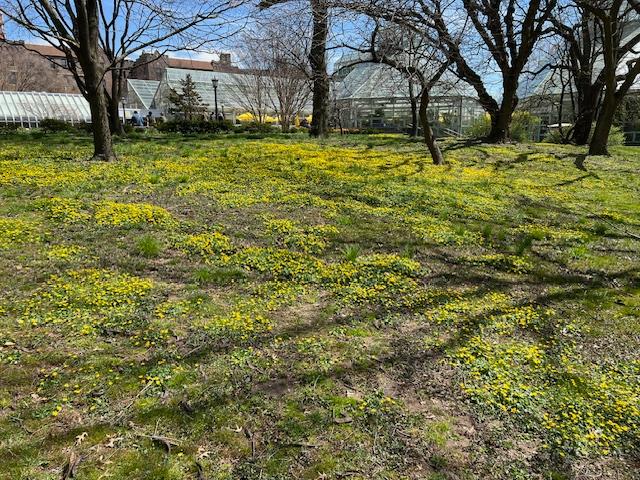
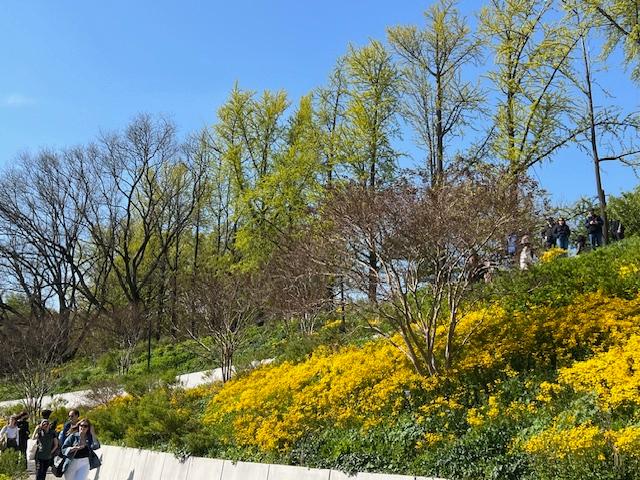
Another beautiful flower was in full bloom all over the garden on the hill across from Daffodil Hill. I was not sure what these tiny flowers were called but they blanketed the hills and lawns around the greenhouses during the Solar Eclipse in 2024.
The tiny yellow flowers in bloom during the Solar Eclipse.
These tiny yellow flowers were in full bloom on the day of the Solar Eclipse in 2024.
I visited the Brooklyn Botanic Garden in March of 2024 and took the 1:00pm ‘Highlights” tour of the garden. The tour guide was shocked that we had almost twenty people on a tour on a cool Friday afternoon but we were an enthusiastic bunch. We got to see most of the garden and the one hour tour went from one hour to an hour and a half.
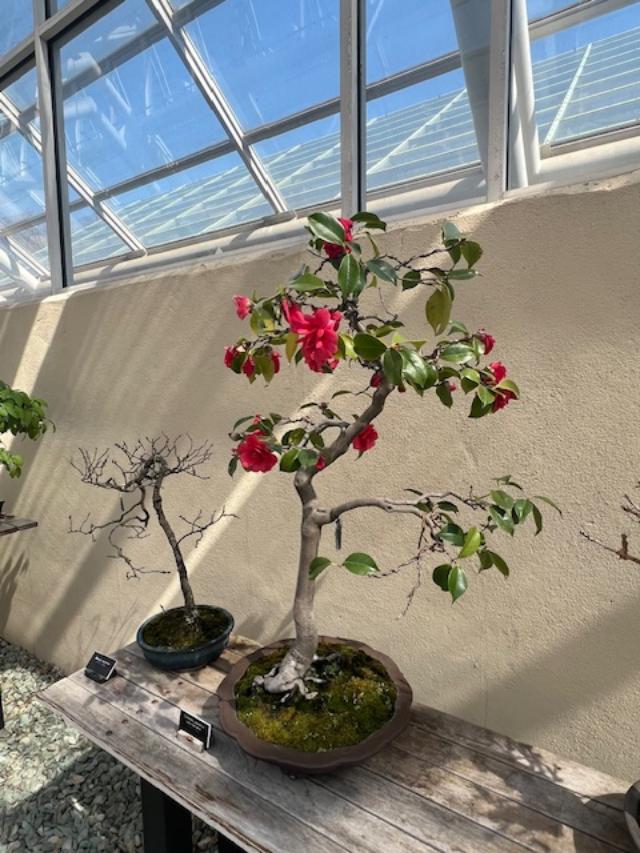
We toured the Bonsai Garden first and we admired these well pruned trees some of which are over thirty years old.
The Bonsai Tree display in March of 2024.
The beautiful flowering trees of the Bonsai display.
The flowering and well pruned trees of the Bonsai gallery.
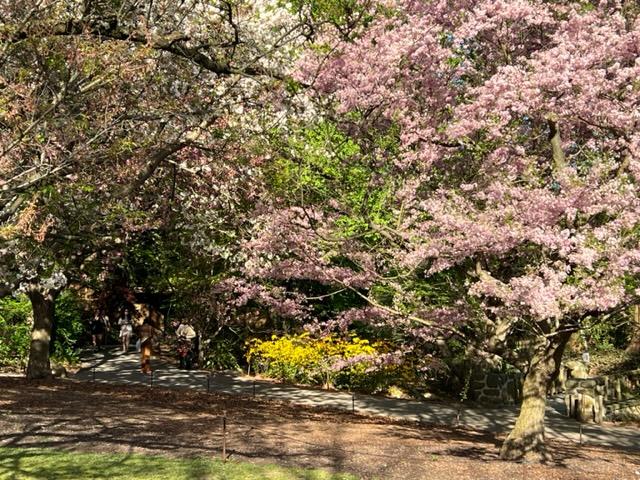
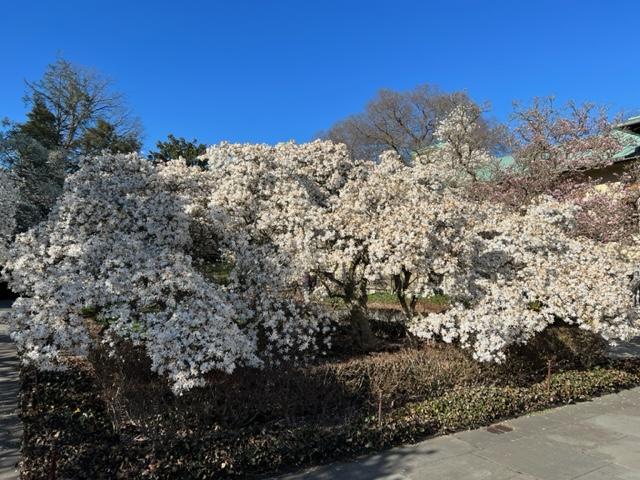
Magnolia Plaza where all the old flowering Magnolia trees bloom in full force in the Spring. The bright white and pink flowers are quite brilliant in colors and the sweet smell of the trees is wonderful. All the trees were just bursting with colors of pink, mauve and white.
Magnolia Plaza in the Spring of 2023
When it comes to the end of the season, you will be walking into a snow shower of colorful petals practically ‘snowing’ on you. You can smell the sweet petals on the flowering trees, and it is the most amazing site with the daffodils on the hill in the background. The scents of everything are just enjoyable. It is Mother Nature at her best.
The beauty of the Magnolia trees in the Magnolia Plaza
The next beautiful display is the Cherry Blossoms’ that bloom at the end of April. It is ablaze in all sorts of shades of pink and white. It brings the whole city out to see Mother Nature’s display of art.
Day Seventy-Four “Cherry Blossom Festival-Sakura Matsuri”:
The big Japanese festival happens during this time and the park is full of all sorts of artists, dancers and musicians who have come to perform for the many members entering the park.
The Cherry Blossoms in 2023
The Cherry Blossoms were just blooming in April of 2023
In 2021, the growing season on the Cherry Trees was hit with many days of rain that knocked the petals off the trees early. Still, I was able to get into the gardens by the end of the first week of May and they were still spectacular but limited in their petals. There are many species of Cherry Trees, so they are timed differently in flowering.
The Cherry Blossoms in the Japanese Gardens in Spring 2023
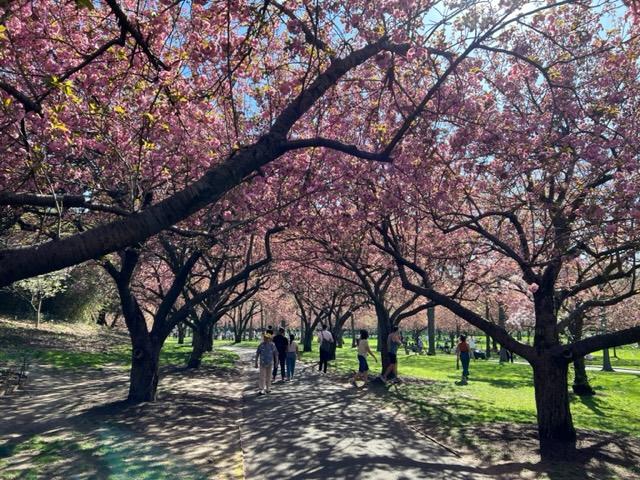
In 2022, the fluffy cherry blossoms were in full bloom, like a graceful wish. When I went to visit them in early May, they were in full bloom and all the paths in the main garden were awash with pink and green. With the lawn being a deep green, the effect was really beautiful, and people were all over the place taking pictures and smelling the flowers. This was the same at the height of their blooming in 2024.
The Cherry Blossom Lawn in 2024.
The lawn was packed with visitors that afternoon in early April 2024.
The beautiful canopy of blossoms that afternoon were just breathtaking.
People like myself just relaxed on the lawn and enjoyed the sunshine and the blossoms.
Spring has arrived in the gardens in April 2024.
The Cherry Blossom canopy path.
The canopy of trees.
The blossoms were amazing this year
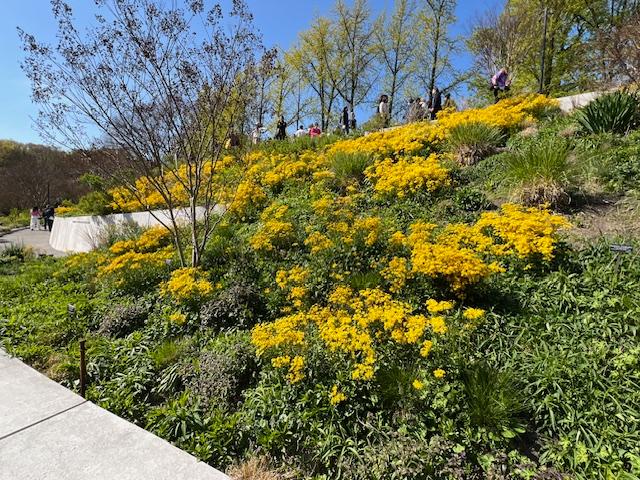
The Golden Rods were also in full bloom when the Cherry Blossoms were and it made quite a site.
The beauty of ‘Golden Rod Hill’ in the early Spring April 2024.
I had not seen the Cherry Blossoms in full bloom in Brooklyn in over three years, concentrating on seeing the ones in Newark, NJ’s Branch Brook Park and Washington DC Tidal Basin. All three are quite amazing in their own way.
I had to walk through the main lawn, the Japanese Garden and the back paths several times just to take it all in. The next rainstorm they would be gone again but for now you could bask in these gorgeous blossoms.
The Japanese Gardens in Spring 2023
The Japanese Garden in the Spring of 2023
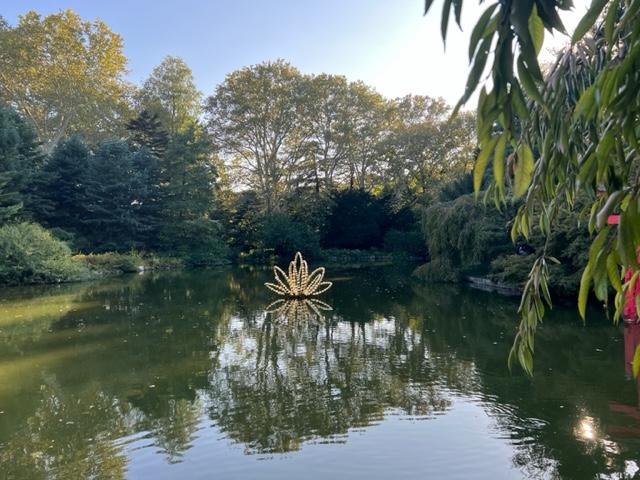
Later in 2023, the gardens sponsored an open-air art show with artist Jean-Michel Othoniel entitled “The Flowers of Hypnosis-The Gold Rose”. These interesting golden globe sculptures were located in different parts of the gardens especially in the Japanese Gardens and pools.
The Jean-Michel Othoniel exhibition
One of the sculptures in the Frangrance Garden
The sculpture “The Golden Lotus” in the Japanese Garden Pond
The sign on the event
The “Golden Lotus” sculptures at the Japanese Gardens.
“The Gold Rose” sculptures in the Japanese Gardens.
When the Brooklyn Botanic Garden is in full bloom with these trees, there is nothing like it. The Japanese Festival had been cancelled and the blooms in Washington DC had bloomed two weeks early and Branch Brook Park in Newark had already peaked so this is where to be at to see Cherry Trees at their finest.
In 2023, the Cherry Blossoms in the gardens were the last ones to bloom behind both Washington DC and Newark, NJ. The species that is dominate in the gardens are the last to bloom and the big pink fluffy flowers were just sprouting in April of 2023.
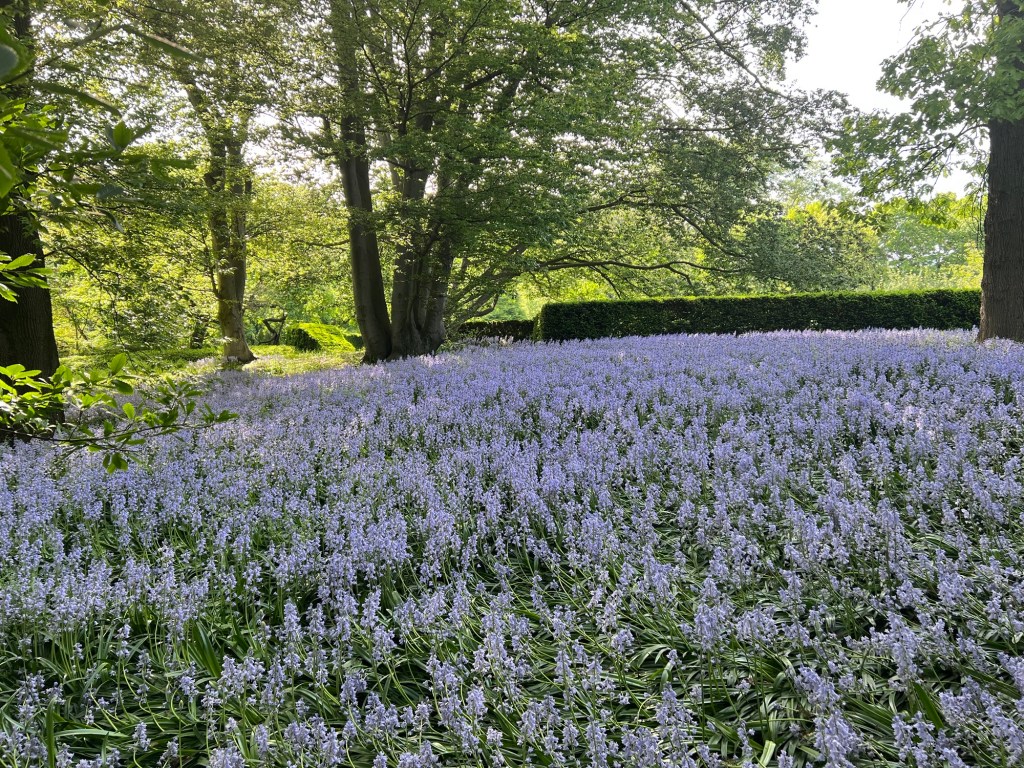
The bluebells were blooming at the same time and showed their beauty in the gardens just as the trees started to sprout their buds. It was natures way of welcoming in the Spring. It is amazing to see all of this knowing that I was just in the gardens five months ago walking through the Christmas Light Show.
The Bluebells and Ironweed are in full bloom in April 2023
Right off the Cherry Tree Arcade is the paths leading to the back part of the gardens and you will see all the purple and blue Bluebells and Ironweed as well as the purple corn flowers lining the paths. It is quite spectacular as you see hundreds of these flowers surrounding the trees and walkways. I had never seen this before.
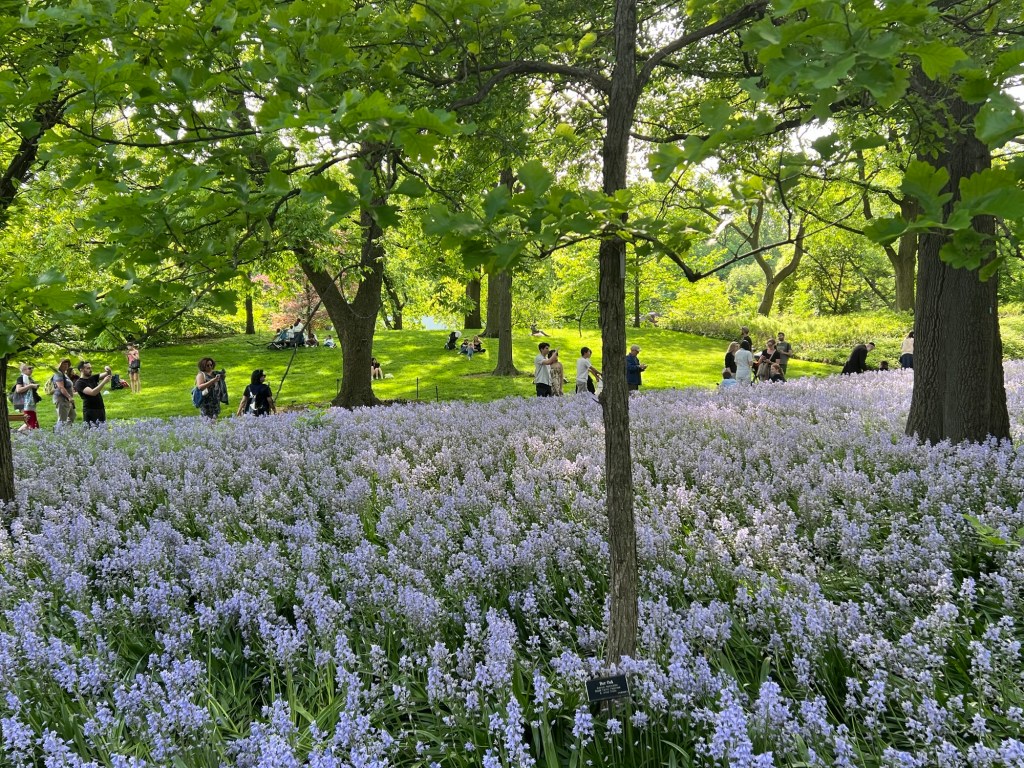
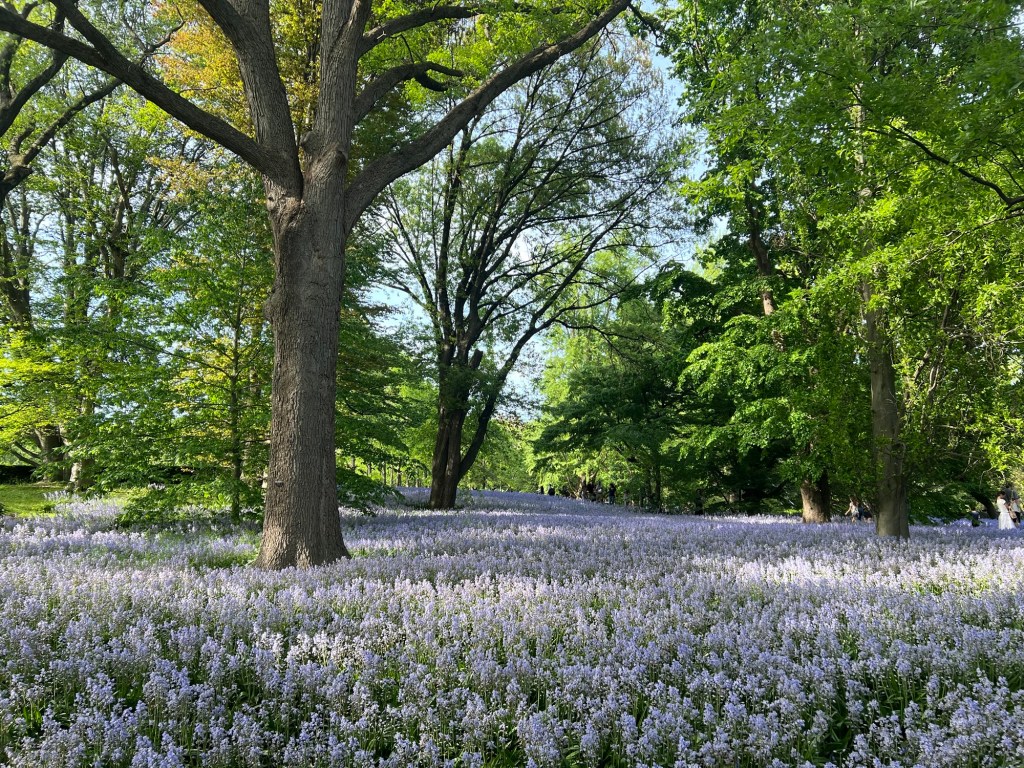
In May 2025, the Bluebells had really spread through this section of the gardens and had taken over this corner of the gardens.
The sea of light purple was spectacular
The crowds really enjoyed looking at the flowers
It was a gorgeous day
These flowers really spread
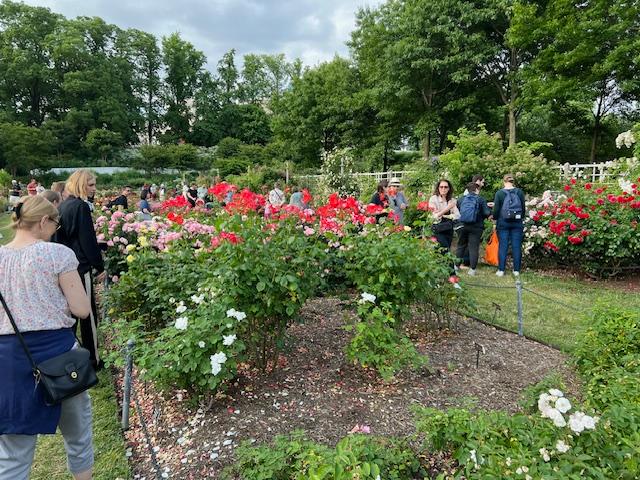
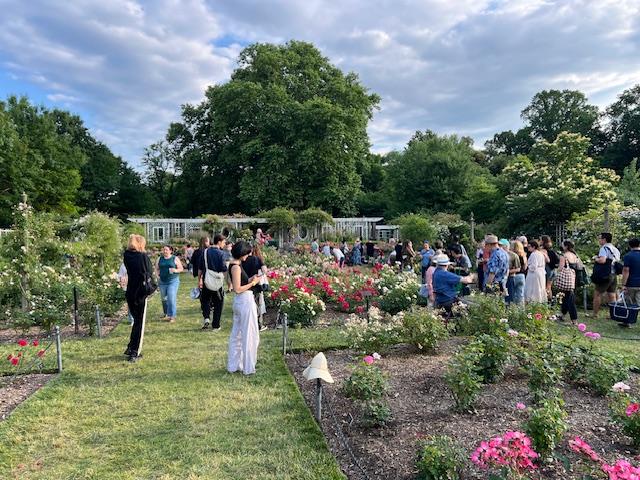
In June, The Rose Garden festival takes place with hundreds of types of roses blooming in the same time period. This is when the members Rose Night happens with an evening of music, cocktails and looking over the flowering bushes all over the gardens. They even create a Rose Petal cocktail for the event that is interesting.
Recently in May of 2021, the Garden sponsored “An Evening of Remembrance and Reflection” with the anniversary of the George Floyd incident and New Yorkers came out to show their support. It was an evening of jazz that brought members out on this warm spring evening.
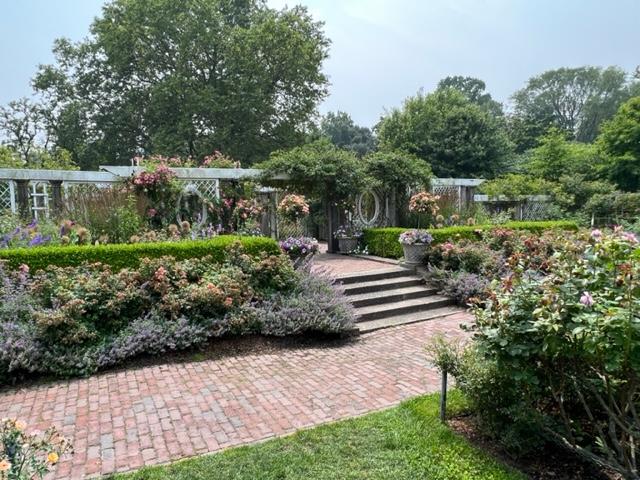
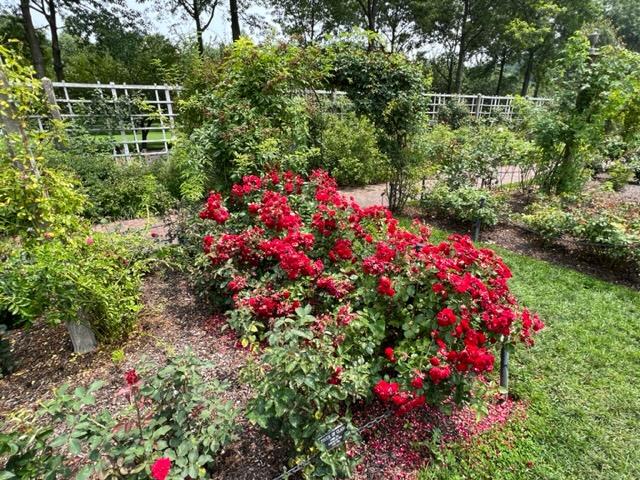
It also gave everyone a chance to walk through the Cranford Gardens which were in full bloom and perfumed the gardens with sweet scents of the flowers. There were roses of all colors in full bloom about two weeks ahead of schedule. So it was nice to see all the flowers at full peak lining the pathways.
Rose Garden Rose Night in 2017 and at “An Evening of Remembrance and Reflection” in 2021
In July 2021, as the Gardens have opened to the public since the COVID pandemic rules have lifted, there have been weekly Jazz Concerts in the Cherry Tree lawn. Recently I attended the concert of the Brownstone Jazz Ensemble who performed with a few guest singers. It was a cool sunny summer night and the perfect evening to have a picnic in the Gardens and enjoy the music.
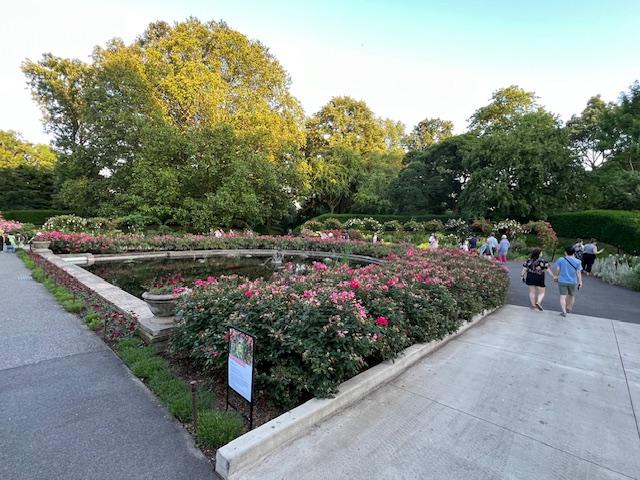
The Cranford Rose Garden in bloom
The Cranford Garden shows its true colors in early June and pre-COVID, Rose Night was when all the roses were supposedly at their peak. They were at their peak about two weeks earlier but the display was still amazing.
Visiting the Brooklyn Botanic Garden before Rose Night in 2026:
I got an email from the Brooklyn Botanic Garden saying that the Cranford Rose Garden was at its peak of blooming and that I should see it while it was at its prime. I was busy at work and was able to travel down to down to the gardens a few days later. Talk about perfect timing as the petals just started to fall.
The Cranford Rose Garden at peak is one of the most beautiful sites. The colors and the fragrances are just amazing. I could not attend “Rose Night” in 2026 because of a prior commitment plus it would be a gloomy night with the threat of rain. So I went the Friday afternoon for the event the next Wednesday.
The Cranford Rose Garden in bloom
The Cranford Rose Garden is amazing from every angle and the views from the top of the hill overlooking the garden shows the extensive amounts of roses planted and the array of colors.
The beds of roses of all colors and species
The entrance to the Cranford Rose Garden is full of an array of different types of colorful flowers
The beautiful and diverse flowers in the Cranford Rose Garden
The beauty of flowers up close
All sorts of roses line the trellis borders of the Rose Garden
What I love about walking around is that you can see the diversity of the roses. The garden is planted with different species so they bloom at different times giving the beds an array of colors at different times. Along the beds and trellis everything bloomed so vibrantly.
The beautiful orange roses that lined the trellis
The colorful trellis pathways
The reds and pinks in full bloom
Roses lining the lamppost
Admiring the beds of roses at the Cranford Rose Garden
Purple reins supreme
Walking through the trellis pathways of red
The beauty of the trellis
The back part of the garden
The back terrace of the Cranford Rose Garden
The elegant statuary of the rose garden and the sun dial
The back Terrace area
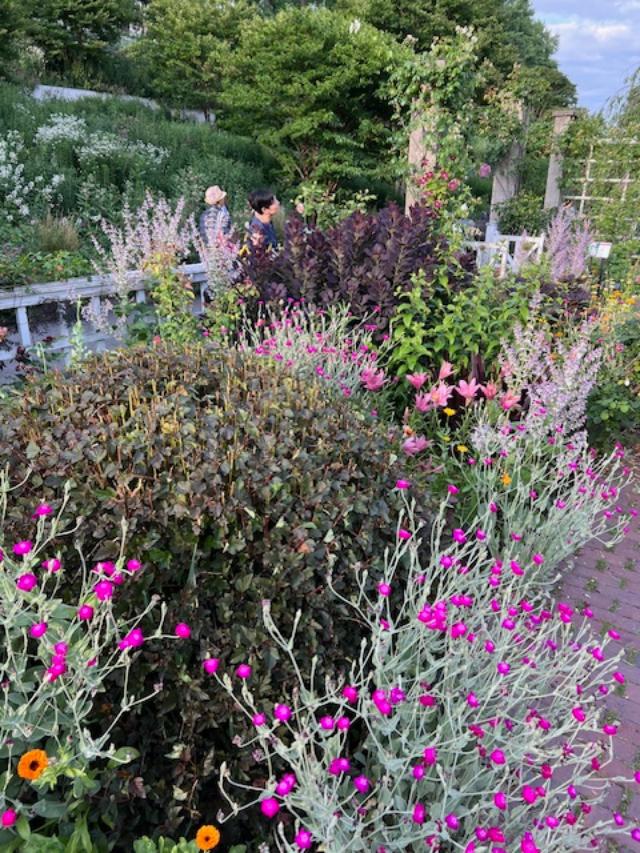
The back of the Cranford Rose Garden is lined with all sorts of flowering plants having a rainbow of colors.
Walking through the terrace gardens
The beautiful roses in the back of the garden
The roses in the back of the Cranford Gardens
Walking out the back of the gardens
The back path of the Cranford Rose Garden
The fountain in the back of the Cranford Garden
Visiting the Cranford Rose Garden when it flowering is one of the most interesting collection of colors and scents. This is why I try to time my visits around the blooming of the flowers.
Special Events at the Brooklyn Botanic Garden:
Private Members “Jazz Night”
The private members nights are evenings where we can picnic on the lawns while listening to music on the lawns of the Garden.
Members Jazz Night July 2026
The Summer Solstice Event:
There was a special Summer Solstice Event on the longest day of the year. The musicians started the music before twilight and it was a warm and breezy evening with excellent entertainment.
The Summer Solstice event
Becoming a member of the Brooklyn Botanical Garden has its advantages too. In August, in the height of the summer they have the member’s movie night where members from all over the area sit in the Cherry Blossom field to watch an outdoor movie. I have seen family films “Willy Wonka and the Chocolate Factory”, “The Goonies”, “Moonstruck”, “The Fabulous Mr. Fox” (which was not too fabulous of a film) and in 2023 “The Muppets take Manhattan”.
Day Eighty-Seven “Members Movie Night 2017 and 2022:
It is a nice evening of relaxing on the cool grass, eating a light picnic dinner and sitting under the stars watching a film. Could there be any other New York moment to enjoy?
Willy Wonka and the Chocolate Factory was the best film in the gardens.
“The Goonies” was another popular hit with the members.
“The Moonstruck” trailer
The “Muppets take Manhattan” trailer
“A Bugs Life” Trailer
The Fall months bring the changing of the leaves on the trees and all the late flowers that come out in September and October. During the holiday season there is not much to see in the park, especially during the winter months outside but there is a tropical display under glass in the enclosed buildings on the property and the Bonsai Garden display of plants also in the glassed-in enclosure. There are lots of walking tours of the new water gardens, rock gardens and of the Japanese Gardens.
The Japanese Gardens at the Brooklyn Botanical Garden
In the winter months though, there is a quiet elegance to the gardens. It is so quiet with all the plants in hibernation that it is nice to just walk through the gardens and imagine what they will look like in four months when Spring arrives again. Most of the gardens were shut due to COVID in December of 2020 but still you could walk around most of the gardens.
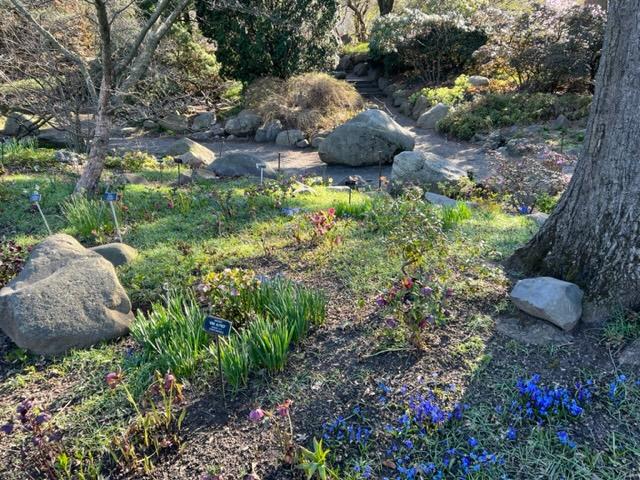
The Rock Garden in the Spring 2023
The Rock Garden at the Brooklyn Botanic Gardens
The robin’s arrival in the garden means that Spring in on its way
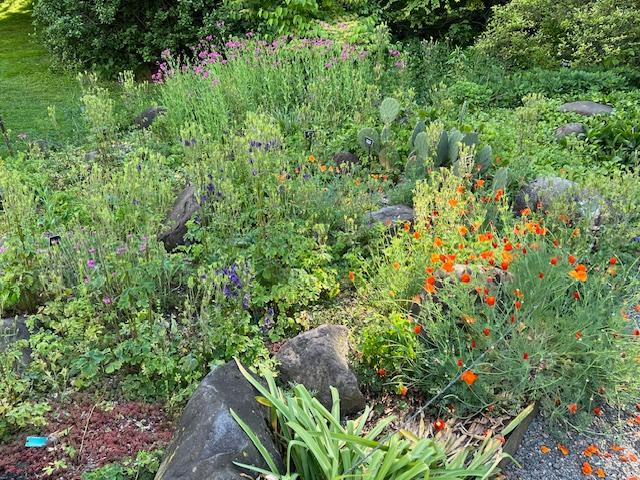
The Rock Garden in the June 2024
The Rock Garden in June 2024
Don’t miss the Japanese Garden’s during the winter months as the pine trees and green bushes add a little Spring to the cold months of the Winter. There is still so much green in this area of the gardens. There is something to be said about walking around the gardens in the cool weather.
The Cherry blossoms as you enter the Japanese Gardens
The Japanese Garden in Summer 2023
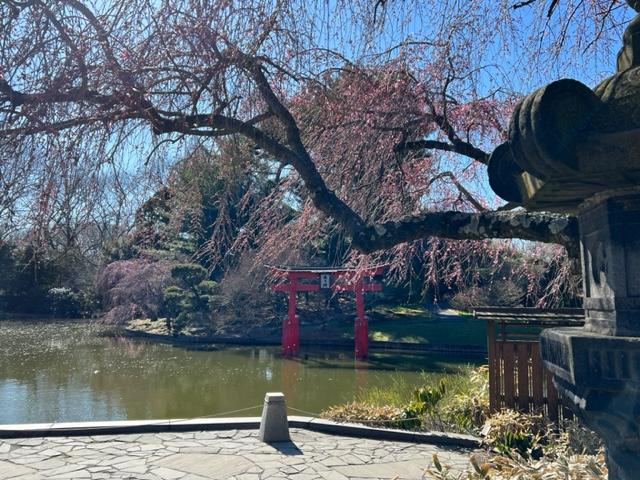
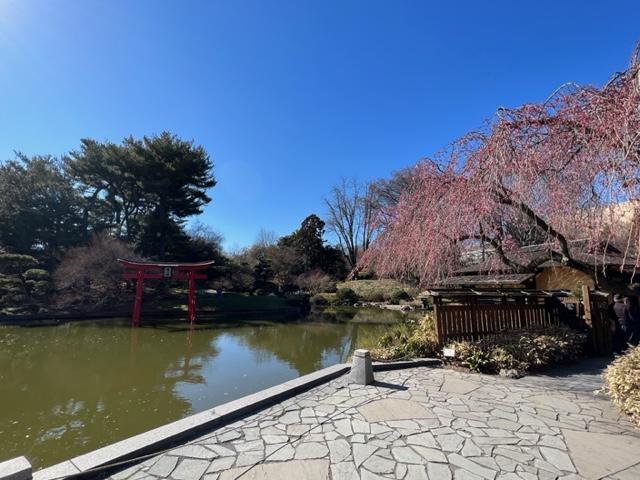
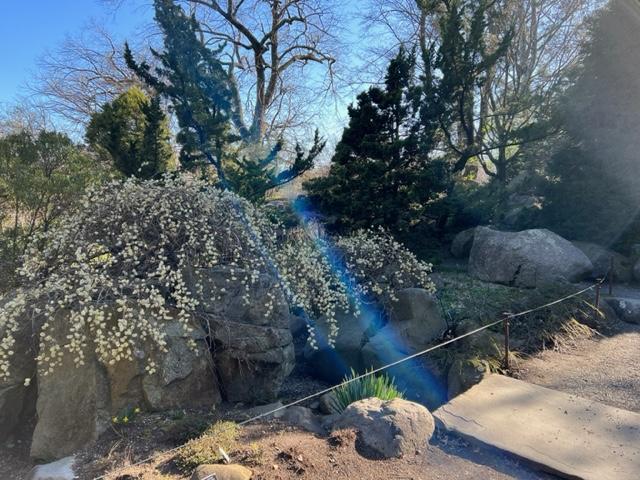
In March of 2024, the tour took us through the late Winter/early Spring Japanese Garden. Things were just coming into bloom.
The Japanese Gardens just starting to bloom in March of 2024.
The Japanese Gardens just coming into bloom.
The Japanese Garden in the middle of the afternoon.
White Cherry Tree in the late Winter/early Spring
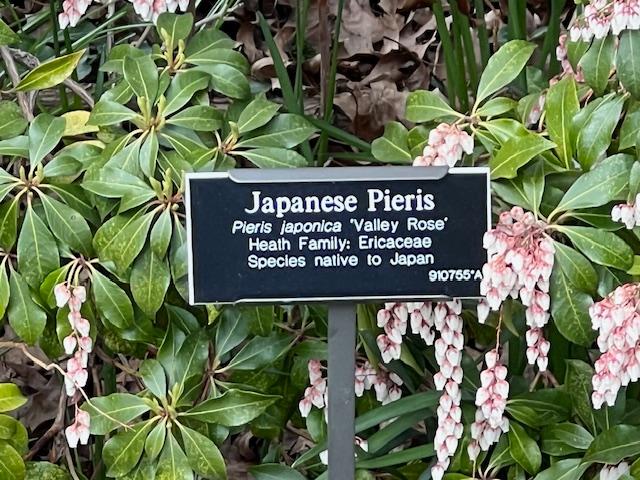
The Japanese Pieris Tree in the gardens was in full bloom on this early Spring day
The Japanese Pieris tree was in full bloom in March 2024.
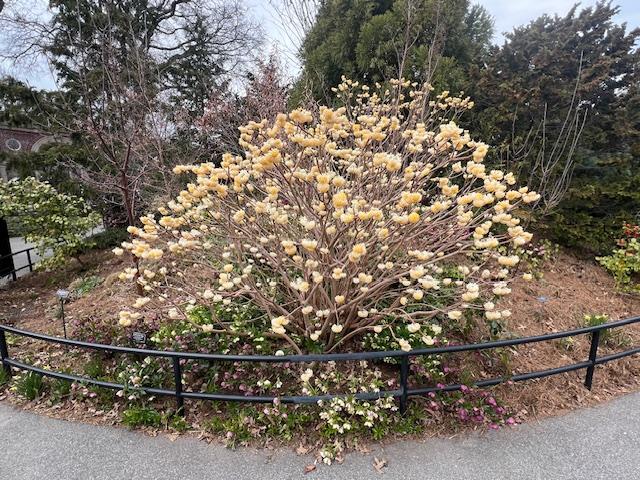
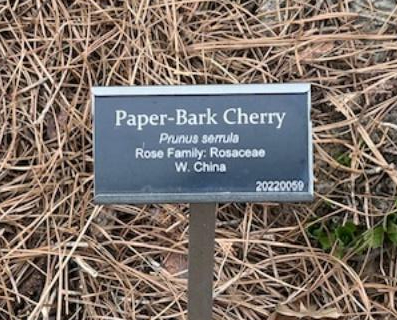
The Paper Bark Cherry Tree was in full bloom too and smelled of Butter and Lemon. It had the most amazing fragrance.
The Paper Bark Cherry Tree has the most amazing smell.
I passed this little bird chopping away at the berries left on this tree.
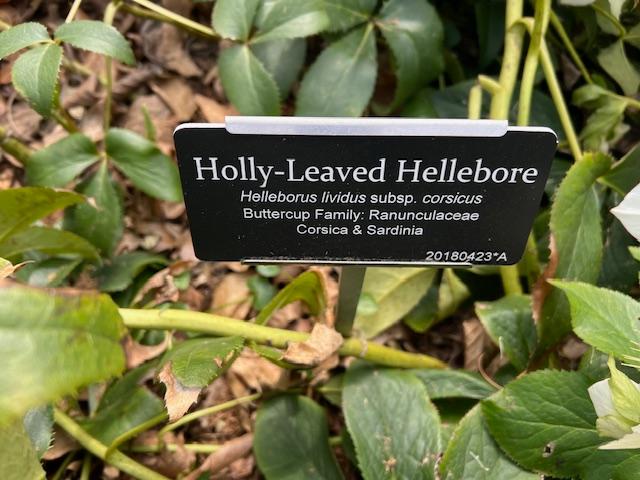
The Holly-Leaved Hellebore in full bloom by Daffodil Hill.
The Holly-Leaved Hellebore was in full bloom at this time.
The complexity of the gardens shows their true beauty from season to season when flowers and trees come into bloom and show their true beauty.
The beauty of the Spring at the Brooklyn Botanic Gardens
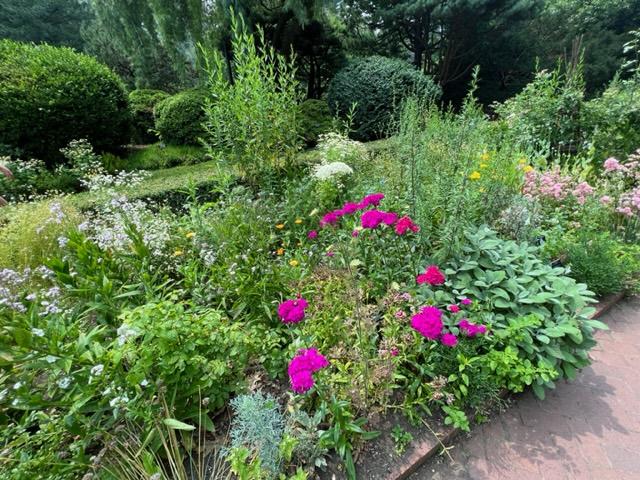
The Frangrance Garden was in full bloom both in the Spring and later summer months. The beauty of this garden is the array of flowers and plants that make a perfect design in the small space flanked by a small fountain of a boy who always looks so mysterious.
The Frangrance Garden in the late summer
The Frangrance Gardens in the Spring
The beauty of the Frangrance Gardens.
The mysterious little boy in the fountain.
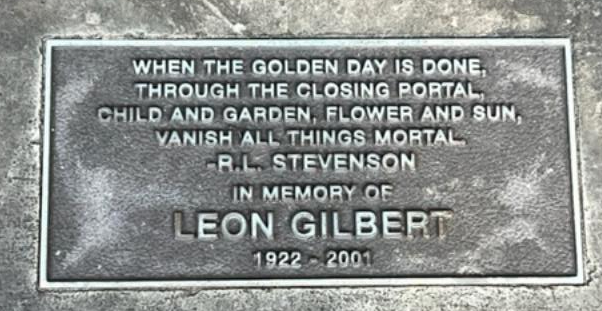
The plaque near the fountain dedicated in Memory to Leon Gilbert.
Walking through the Children’s Garden when it was at the end of the season and harvest time, you could see the last of the summer vegetables being picked and some fall vegetables coming up.
The Children’s Cottage where the magic happens.
The Children’s Gardens in the Summer months.
The Marsh Gardens
The Marsh Gardens
The Marsh Gardens
The flowers by the Lilly Pond in the summer of 2023.
The Lotus Pools are in full bloom in late July and the pools were wash with pinks, purples and yellows both in the main pools and the fountain by the Rose Garden. This was in the summer of 2024.
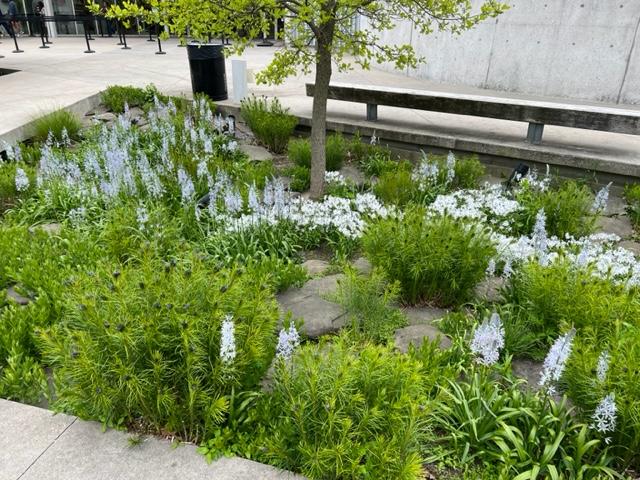
The Rain Garden by the Washington Avenue entrance.
The Shakespeare Garden in the Spring of 2026:
The Shakespeare Garden at its peak at the Brooklyn Botanic Garden was at its peak in blooming in early July of 2026.
The Shakespeare Gardens in Summer of 2026
The Shakespeare Gardens in the Summer of 2026
The Shakespeare Garden in the Spring of 2026
Being a member also has its privileges. You have a great restaurant in the late Spring and Summer months, the Magnolia Cafe, which has been closed because of COVID but will reopen soon. The Cherry Blossom Festival and Rose Garden Nights for members and the August Movie night which is really a treat. Hundreds of people picnicking on the lawn watching family friendly films like ‘The Goonies’ and ‘Willy Wonka and the Chocolate Factory’.
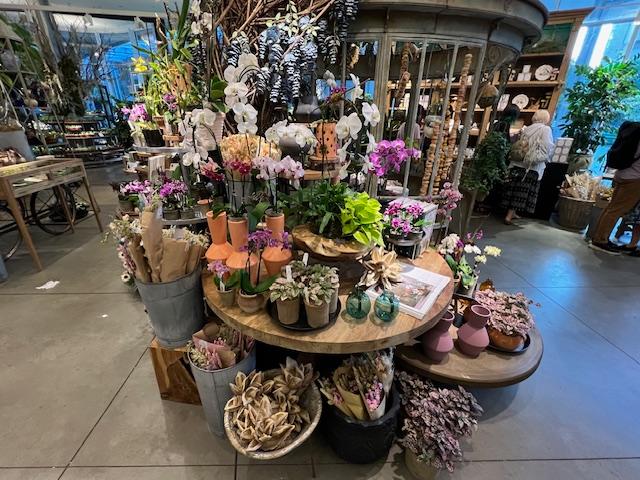
The gift shop at the Brooklyn Botanic Gardens
The gift shop on Rose Night 2024
The gift shop on Rose Night 2024
The Lightshow in December 2022
The Lightshow in December of 2022
The Japanese Gardens during the Lightshow in December 2022
The lightshow during the holidays is an experience.
During the Summer of 2023, the Gardens had a wonderful exhibition in the greenhouses “Plants of Little Caribbean”, which highlights the important culinary plants that grow in the region. Some of these plants are staples of the Caribbean food supply.
The “Trees of Little Caribbean” exhibit
Plants of the Caribbean
Plants of the Caribbean
Plants of the Caribbean
Plants of the Caribbean
Plants of the Caribbean
The greenhouses are home to many exotic plants and trees.
Another special event that happened in 2024 was the viewing of the Solar Eclipse. The Gardens were packed with people viewing the first major Eclipse in almost 100 years.
I finally settled in and sat in a small incline across from Daffodil Hill so I could admire the flowers in between the glimpses of the solar eclipse. We lucked out and it started off as a sunny day. We had some cloud coverage during the show but with the glasses on, it was an interesting show.
The sun as the celestial show begun.
The problem with the eclipse was that we were too far away from the path to really see the show so you could only see it through the glasses. The sun still looked like it was shining.
Just as the moon started to cross the sun.
The clouds kept rolling in and out, but it was not as gloomy as they thought the weather would be that afternoon.
The start of the show as the moon started to cross the sun.
Only through the glasses could see the passing which took a little over two hours to finish and it was not a complete eclipse from our viewpoint. It was still interesting to see.
The crowd was really getting into it and everyone was becoming the experts by the end of the afternoon.
In between the moon crossing the path of the sun (you could not look at this all the time), I admired the flowers blooming around us.
The Magnolia Gardens right across from the incline where we were all sitting.
It was a nice break from looking at the sun. I picked the best location in the garden to both view the eclipse and the flowers.
The moon crossing the sun at the midpoint. You could see nothing without the glasses.
The sun was totally covered by about 3:20pm and then started its movement away from the sun.
The moon moving away from the sun.
By 4:20pm, the eclipse was over, and most people left the gardens by that point. Others just relaxed and enjoyed the beautiful sunny afternoon that we were finally having. It had been such a cold early Spring (so much for Phil’s prediction). with temperatures in the low 40’s until just recently.
Some of the crowd lingering at the end of the show.
I left the gardens around 5:00pm after most of the crowds left and enjoyed one more walk around the gardens. Some of the flowers were at their peak and would not be in bloom when I returned the next time. I wanted to enjoy them now.
Leaving the Magnolia Garden.
Passing the Japanese Gardens when the crowds were gone, I finally got to enjoy the paths.
The path by the Japanese Garden
The Magnolia trees around the corner from the Frangrance Gardens.
The Cherry trees in the Japanese Gardens were in full bloom and were quite a show themselves. It was so colorful reflecting off the pool.
The beauty of the Cherry trees in full bloom.
The paths around the Japanese Gardens pool were crowed.
The vibrant light and dark pinks and mauve of the trees.
The Japanese Gardens at their peak bloom.
I went to the “Lightscape” show again during the Holidays in 2024 and they were even more amazing than the last time I went:
On the Sunday of the last day of the Christmas season, I visited the Brooklyn Botanic Garden to see their lightshow ‘Lightscape’ which I had seen a few years earlier. It was the last night to see it and it was crowded and really cold.
The problem was that the weather had turned really cold and it was in the low thirties even in the early evening. So I really had to bundle up for these visits. The show itself was well worth the trip.
The map would take us all over the gardens
The lit tree army the entrance of the gardens
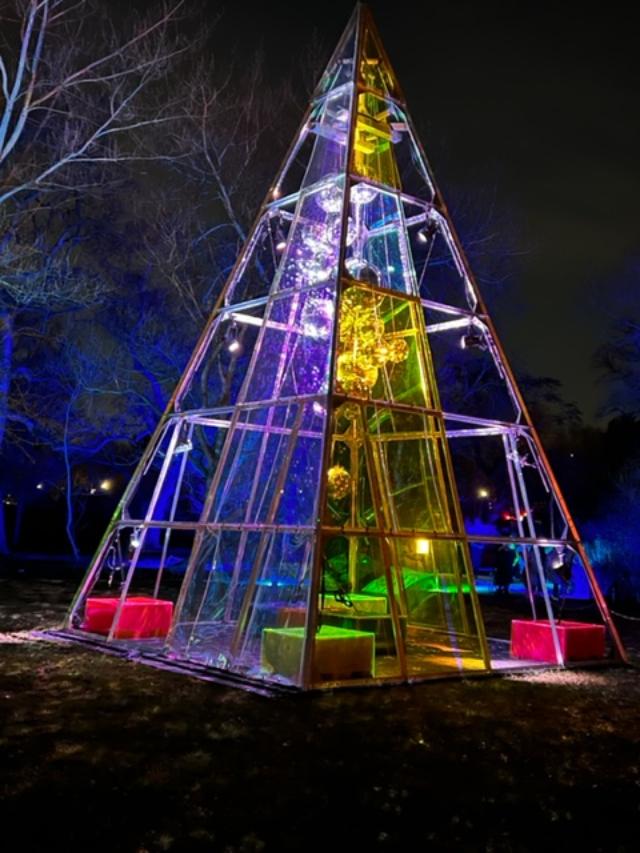
Then I entered the ‘Canopy of Light’ with its magical lights and music
At the entrance of the show was the breathtaking ‘Canopy of Light’
The beautiful multi lights with music
The lights moved to ‘Let it Snow’
I continued down the path to the Japanese Garden and saw the most spectacular light and water show in the lake of the garden.
The colors and fountains swayed to the music
What gorgeous colors
The movements and music were wonderful
The amazing water show in the Japanese Garden
The end of the show was beautiful
I ended up seeing the water show twice because I knew they would not let me turnaround to see it again. The I turned down the path.
The lights in the trees were amazing
The field of white lit roses
A closer look at the white roses
I continued down the path to the next display
I next moved on to the main lawn where the sculpture ‘Singularity’ was displayed. You could not stare at it too long or it could hypnotize you.
The sculpture ‘Singularity’
The sculpture ‘Singularity’
I walked around the Water Lilly ponds whose flowers would bloom again in the summer but had sculptures of Butterflies floating around in them.
These were called ‘Butterfly Effect’
The ‘Butterfly Effect’
I love the way the sculptures swayed and moved in the pond to the music. The Yellow Magnolia, the Garden’s restaurant was open that evening and was packed with people eating dinner. There was no way of getting in so I moved on down the path.
The pathways were lit with all sorts of colors
The next sculpture was ‘One Small Thing’ and the sculpture ‘Halo’ that lit the way in the back of the Gardens.
‘One Small Thing’
The lights alone the path for ‘One Small Thing’
The came the sculptures for ‘Halo’
The next interactive and musical sculpture was ‘Alumine’ which looked like trees in a Dr. Seuss book. Colorful and fun!
Walking through the ‘Alumine’ sculptures
The experience of walking through ‘Alumine’ is like walking through ’Whoville’ in the winter
The lights here changed color every minute and were so amazing.
As I left ‘Alumine’, the next series of sculptures were light shows with dazzling colors and music. This is what made this show stand out more than the shows of the past.
The beautiful lights lit the path through dormant trees
The colors kept changing
As I walked down the path, I entered ‘Rainbow Road’ with it colorful disco lights and energetic soundtrack.
The outdoor lights and music makes you feel like you are in a discotheque
I stayed here the longest to listen to the 70’s soundtrack
The music was fantastic that night
I moved on to the area of the gardens between where the crocuses will grow in two months and near Daffodils Hill was another amazing display entitled ‘Anemonia’. These sculptures looked like futuristic lamps.
The ‘Anemonia’ sculptures
The ‘Anemonia’ lit beautifully
The next light display rivaled the ‘Happy Waters’ was ‘Interface’, a display of memorizing lights and music. I stayed for three shows as it was so dazzling.
The ‘Anemonia’ sign
The lights and sounds of ‘Interface’
The sights and sounds of ‘Interface’
The show ended with some of the spectacular lights
I then walked through the ‘Neon Network’ to get to where the Cherry Blossom Esplanade dazzled everyone in April with its beautiful, fluffy pink blossoms. It was other bright colors showcasing this part of the gardens.
The ‘Neon Network’ sign
Walking through the ‘Neon Network’
The ‘Neon Network’
Walking through the ‘Neon Network’
The ‘Neon Network’ led to the last spectacular displays of lights in the Cherry Blossom Esplanade, ‘Winter Reflection’, a celebration of lights, trees and snowflakes.
The colors of ‘Winter Reflections’
The colors of ‘Winter Reflections’The
Video on ‘Winter Reflections’:
The tree brightly lit in ‘Winter Reflections’
The dazzling colors of ‘Winter Reflections’
To really appreciate the shoe of ‘Winter Reflections’ you had to walk up the pathways overlooking the Esplanade.
The pathway through the Cherry Esplanade was spectacular
The lightshow for ‘Winter Reflections’ was most entertaining from the top of the hill
The video of the show from the top of the hill show it’s true beauty and entertainment:
One of the most memorable show off ‘Lightscapes’
After I saw the show twice before I headed out of the gardens. I walked through the ‘Winter Cathedral’ which had been the biggest part of the light show a couple of years ago. This is most impressive.
The ‘Winter Cathedral’ at the end of the tour
The lights are so spectacular in the evening
The last display before I left the park was the ‘Lantern Garden’ at the original area of the gardens entrance.
The sign for ‘The Lantern Garden’
The ‘Lantern Garden’ at the end of the garden
The ‘Lantern Garden’
I exited the gardens after almost two hours of walking around and it started to get cold outside. It was still really busy in the gardens as the later ticket holders will still coming in.
The exit of the show at the Eastern Parkway entrance
Chinese New Year:
In January of 2025, I attended a talk about the plants associated with the Lunar New Year by member Sabrina Lee. Ms. Lee who is a docent at the Gardens pointed out all the plants that were part of the Chinese New Year tradition.
Docent Sabrina Lee giving the talk on Chinese New Year at the Brooklyn Botanic Garden
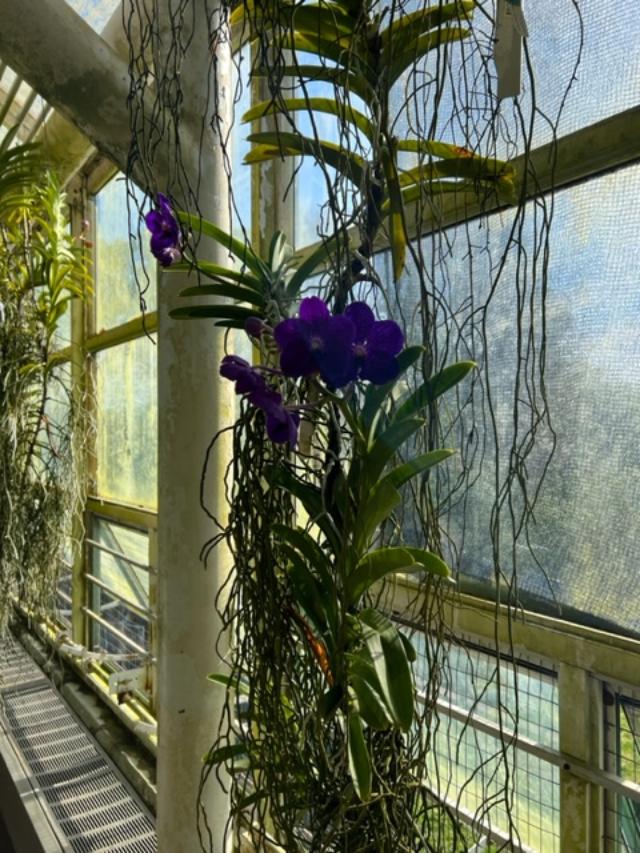
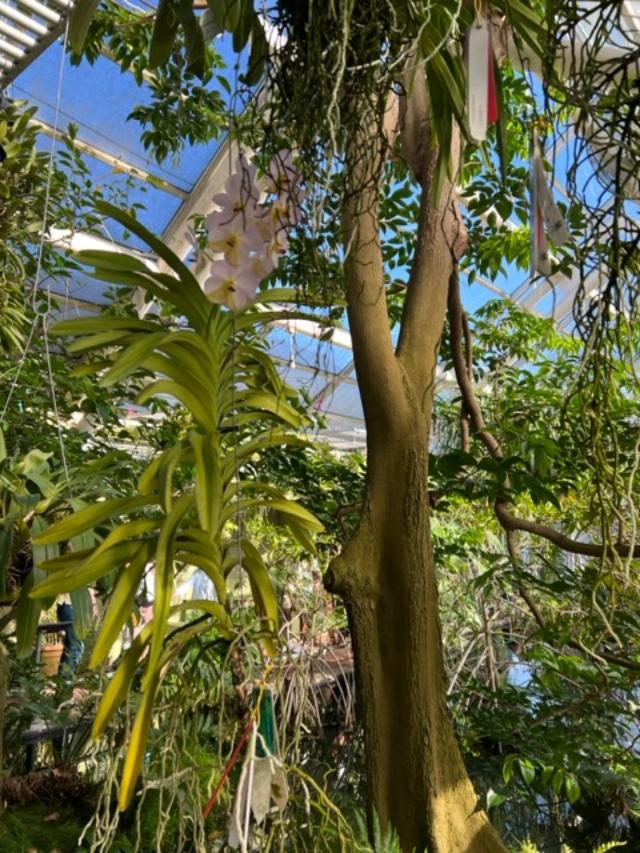
The Orchid and Clementine plants for gift giving
The Bamboo plants which are part of the celebration
What I learned from the talk was the symbolism that comes from these plants and why they were they were so important to the holiday.
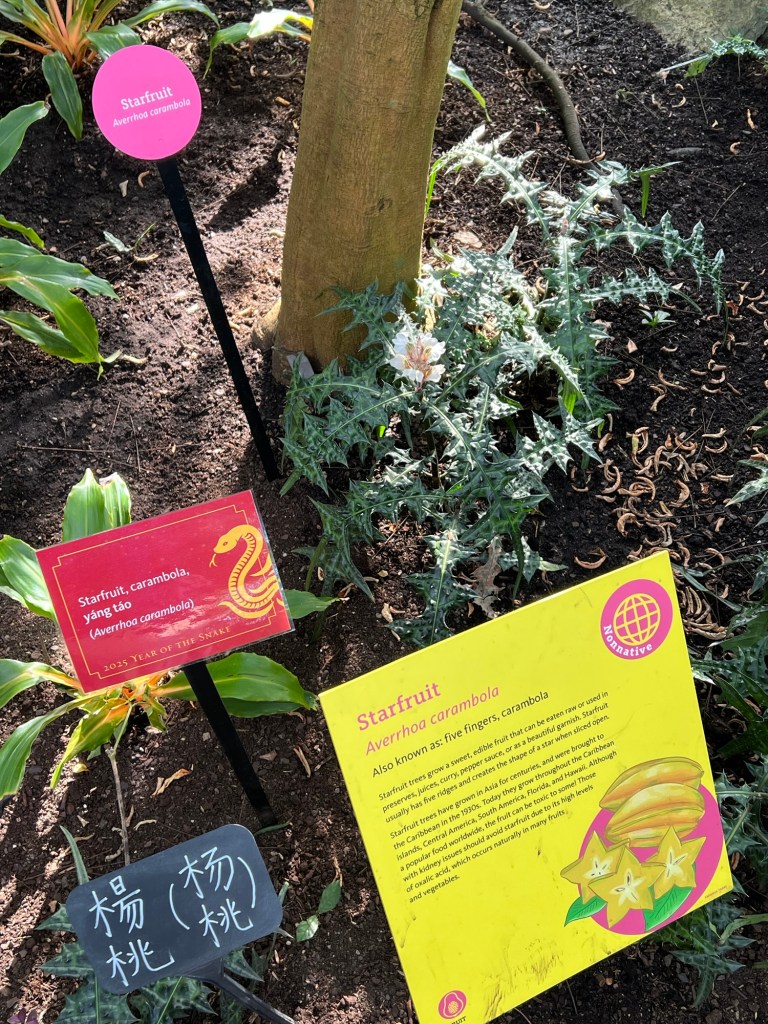
Then she gave us about forty-five minutes to travel to through the various exhibits in the Steinway Conservatory and visit the various plants associated with the New Year which were marked with special red Snake signs.
The Chinese Rain Bell plant
The Banana Tree
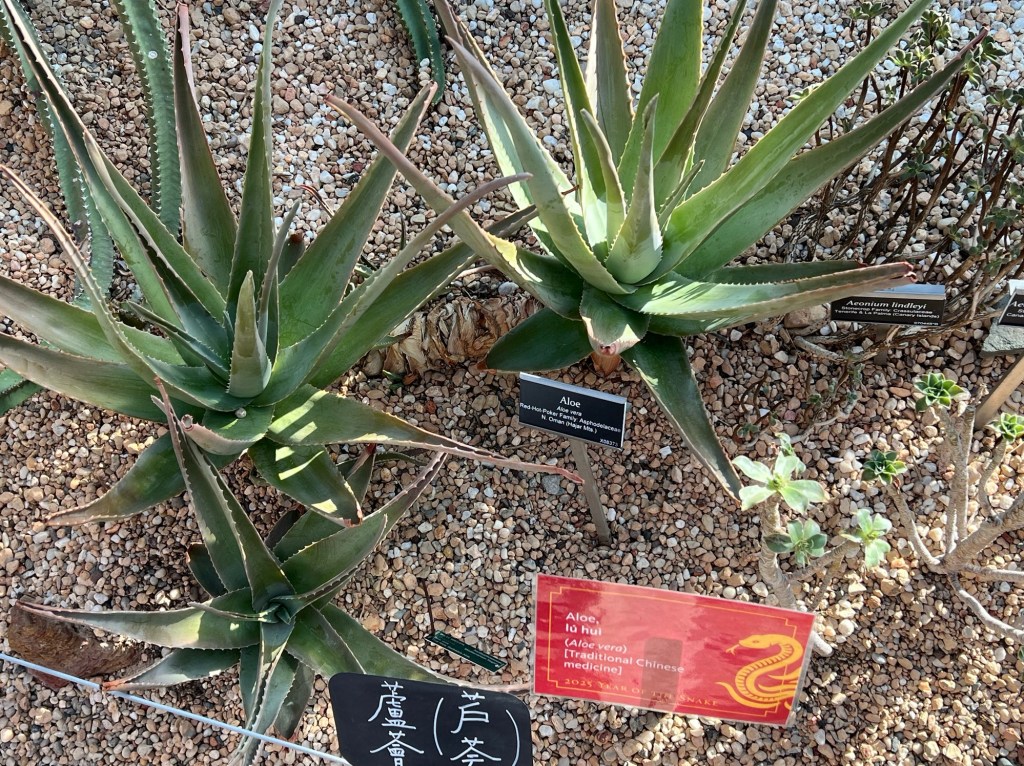
The Aloe plant for healing
The Banana tree
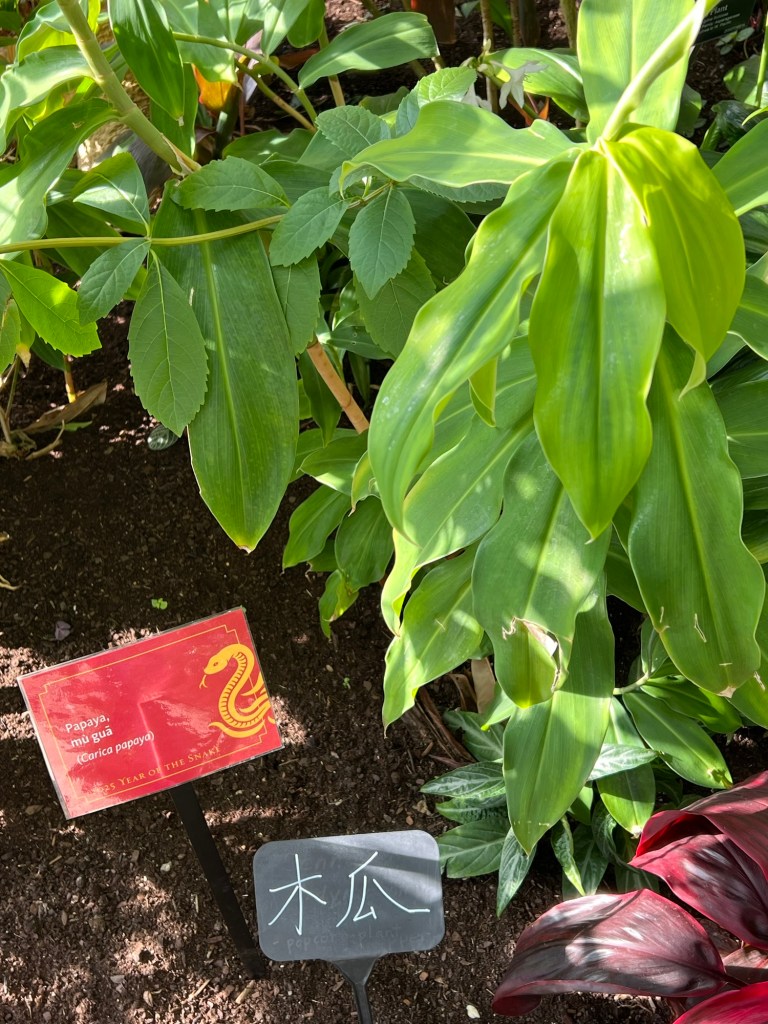
The Papaya tree
The Golden Shrimp Lollipop plan
The Starfruit plant
As we walked through the various halls of the Conservatory with the warm tropical halls, we got to see other plants in bloom and growing in the temperature controlled climate.
The Cactus display
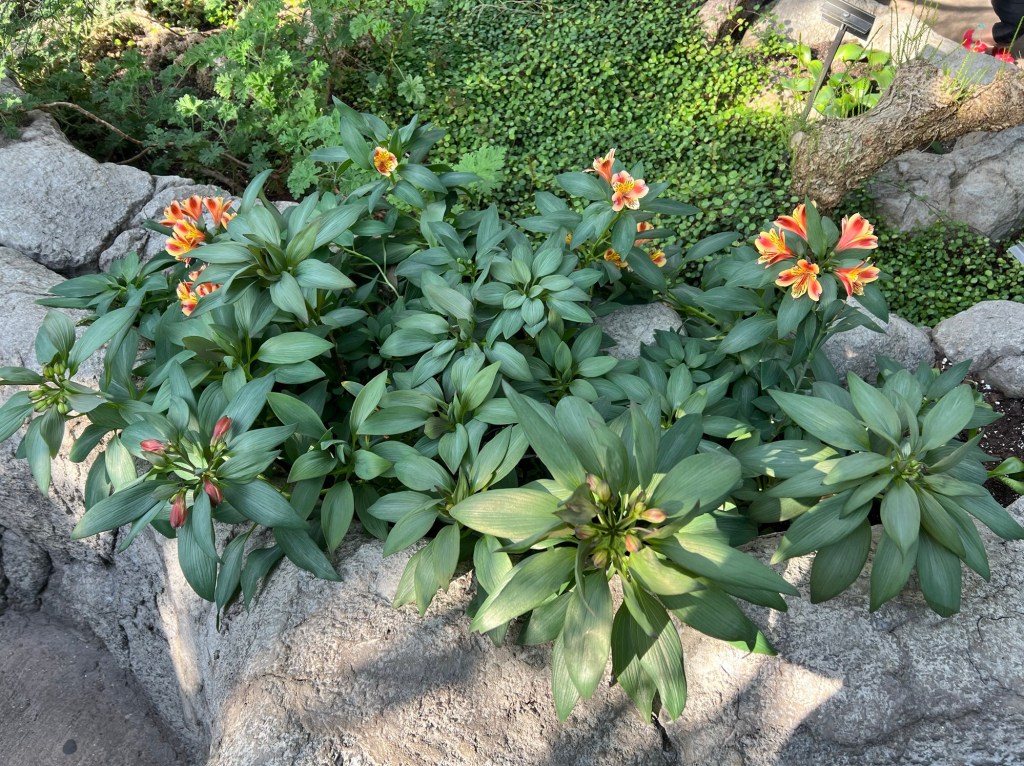
The beautiful tropical flowers
The lushness of the Tropical exhibition
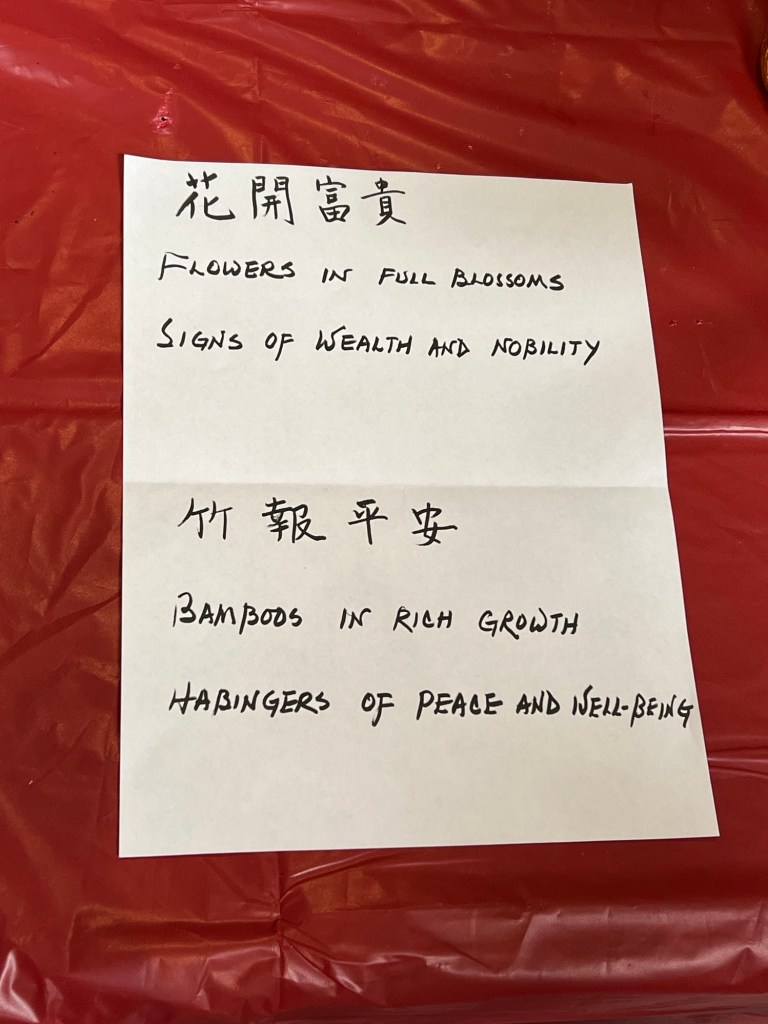
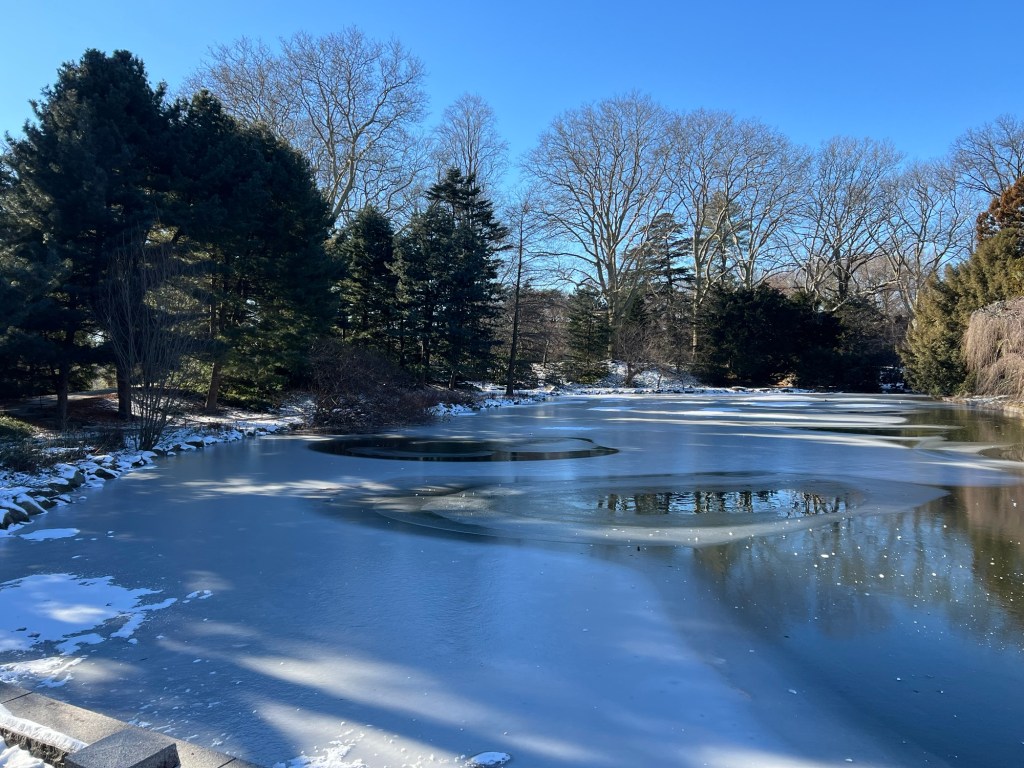
Ms. Lee even gave a beautiful calligraphy page with the symbols of the New Year After the Tour was over, I walked around the gardens which were still covered with snow from the recent storm. It made all more beautiful.
The beauty of the Japanese Garden in the Winter
The Japanese Garden during the Lunar New Year
The pond at the Japanese Garden
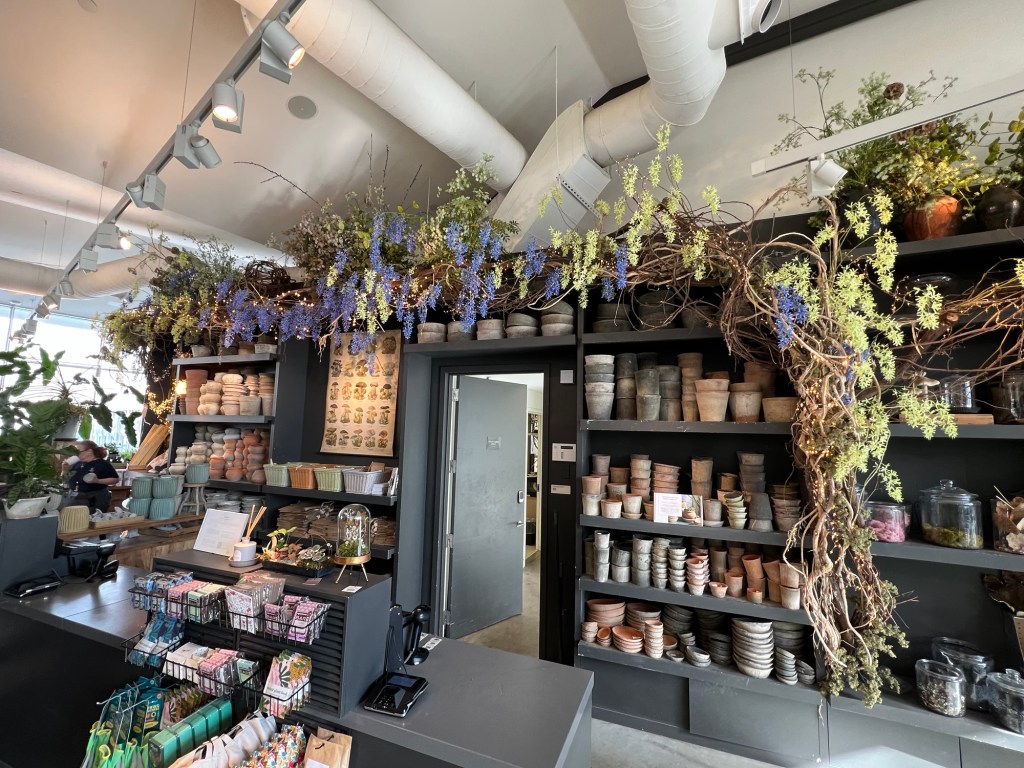
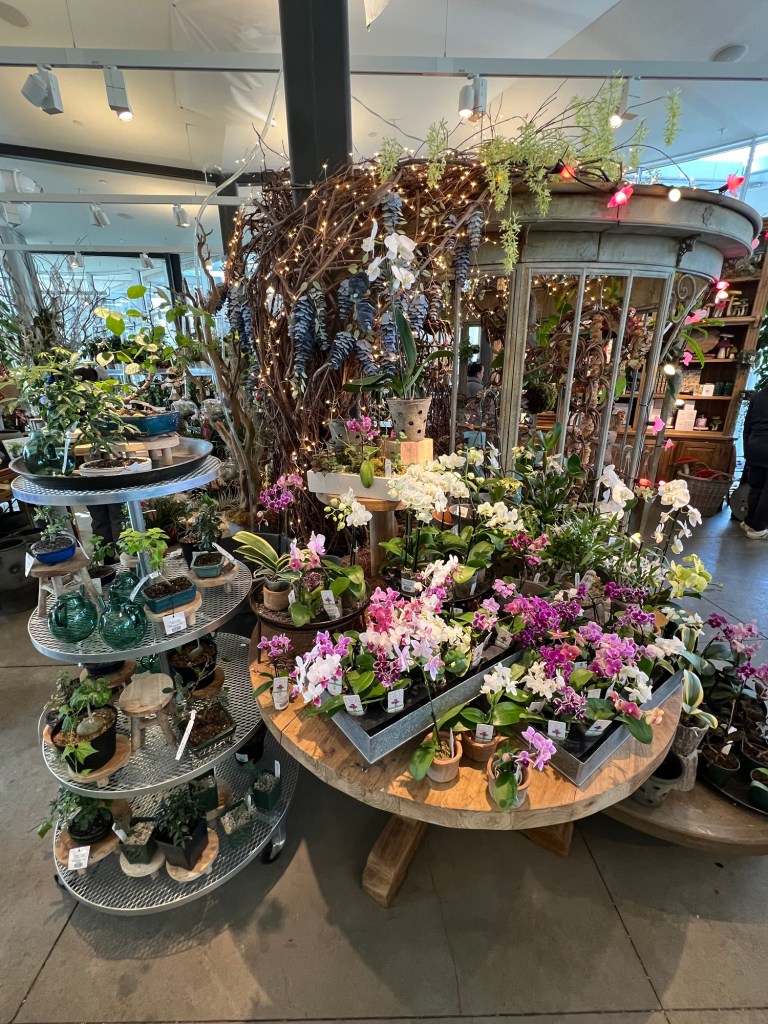
Then I visited the gift shop at the Gardens that was decked out for the Spring.
The new ‘Terrarium’ gift shop
Even the gift shop was in full bloom that day
I am always amazed by these Gardens. Even in the dead of Winter there is always something
The summer months offer all sorts of activities but the weather has been a pain. Either it is too hot or it rains. They have cancelled two evenings concerts on us.
This is when it is great to be a member of the Gardens!
History of the Brooklyn Botanical Garden:
Early plans for Prospect Park called for the park to straddle Flatbush Avenue. The City of Brooklyn purchased the land for this purpose in 1864. When Fredrick Law Olmsted and Calvert Vaux brought their final plans to the city for approval in the 1860’s, they had eliminated the problematic decision along Flatbush. The northeast portion went unused, serving as an ash dump (WIKI).
Legislation in 1897 as the city moved toward consolidation reserved 39 acres for a botanical garden and the garden itself was founded in 1910. The garden was initially know as the Institute Park. It was run under the auspices of the Brooklyn Institute of Arts and Sciences, which included (until the 1970’s) the Brooklyn Museum, Brooklyn Children’s Museum and Brooklyn Academy of Music. It opened as the Brooklyn Botanical Garden on May 13, 1911 with the Native Flora Garden being the first established section (WIKI).
Harold Caparn was appointed as the landscape architect in 1912. Caparn designed most of the rest of the grounds over the next three decades, including the Osborne Gardens, Cranford Rose Garden, Magnolia Plaza and the Plant Collection. Construction of the Laboratory Building and Conservatory began in 1912 and the building was dedicated in 1917. The building-now simply the Administration Building-was designed in the Tuscan Revival style by William Kendal for McKim, Mead & White, the architectural firm that built the Brooklyn Museum, Manhattan Municipal Building and many other prominent New York City buildings. It was designated a New York City Landmark in 2007 (WIKI).
The cherry blossoms starting to bloom
The Magnolia trees in full bloom in 2023
The Specialty Gardens & Collections include:
The Cherry Trees
Japanese Hill-Pond Collection
Cranford Rose Garden
Native Flora Garden
Alice Recknagel Ireys Fragrance Garden
Children’s Garden
Water Garden
The Water Garden in April 2023
The Water Garden in April 2023
Other Gardens:
Plant Family Collection:
The Bonsai Collection
The Bonsai Collection
The Bonsai Collection
Steinhardt Conservatory
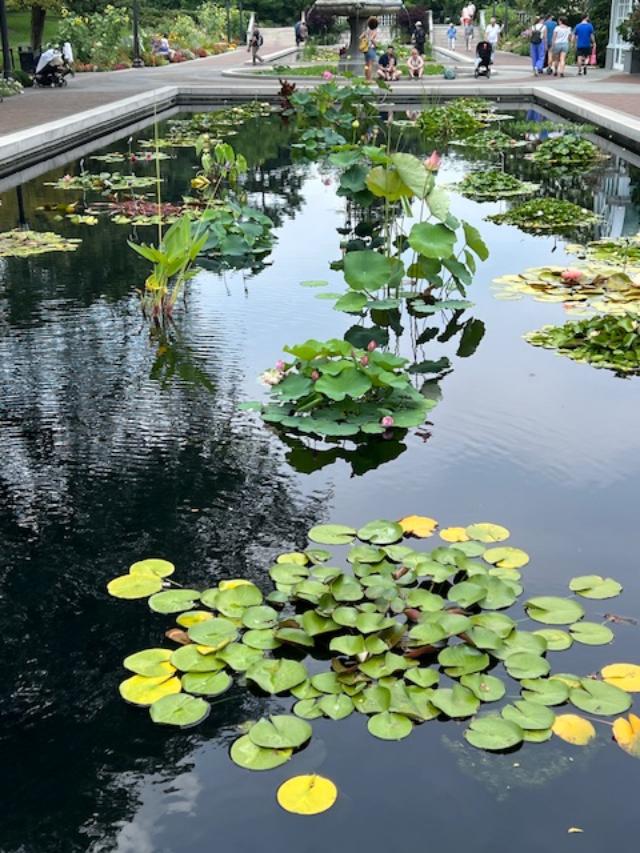
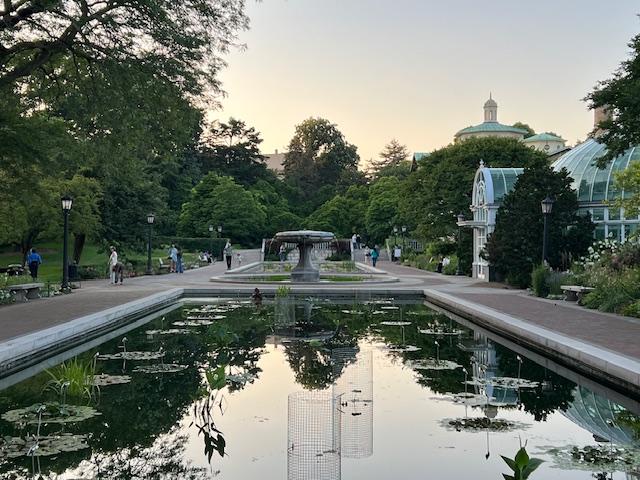
The Reflection pool by the Steinhardt Conservatory
The Garden Fountain
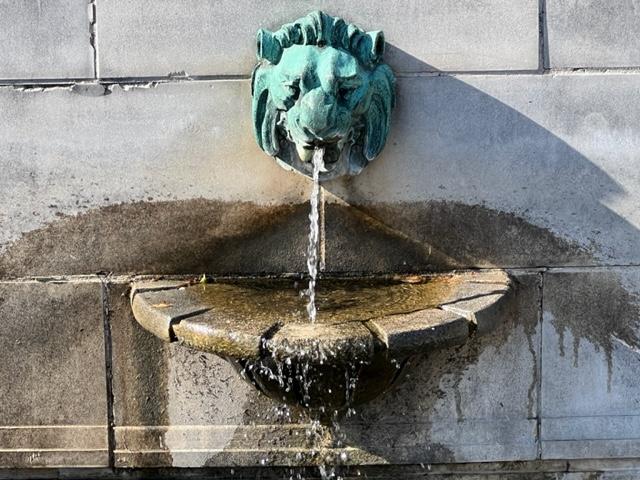
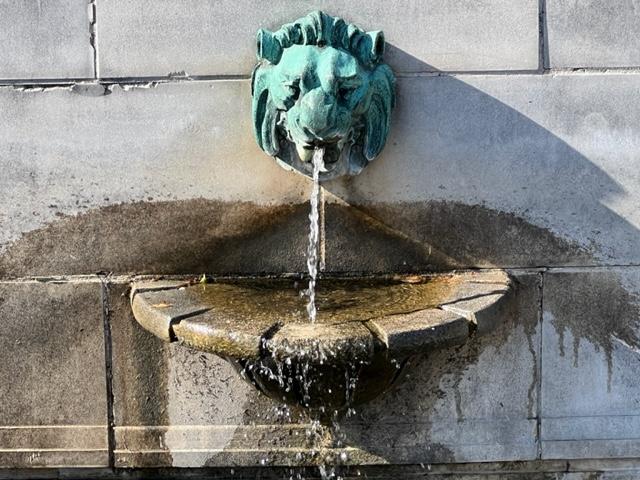
The Lion Fountain
The beautiful tulips in bloom by the reflection pool
The magnificent Fish Fountain by the reflection pool
Fighting Developers trying to build around the gardens perimeters:
Fight For Sunlight!
Text Sunlight to 484848 to help protect Brooklyn’s Garden from new buildings that would block vital sunlight to our plants.
bbg.org/sunlight
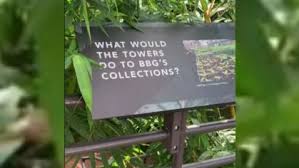
Brooklyn Botanic Garden’s Fight for Sunlight!
Brooklyn Botanical Garden’s Fight for Sunlight!
Brooklyn Botanic Garden’s plant collections are under serious threat from a proposed massive building development including two 39 story towers at 960 Franklin Avenue (the spice factory site) just 150 ft from the Garden.
The buildings for the ‘Fight for the Sunlight’ proposal (The proposal was struck down in 2022!)
Towers of this size would block hours of sunlight to the Garden’s 23 conservatories, greenhouses and nurseries. These facilities grow plants for the entire 52 acre Garden and serve as a hub for community and educational programs.
Current zoning protects the Garden’s access to sunlight by capping building height at this location. These laws must remain in place to prevent irreparable damage to the Garden. Join us in signing a petition to City officials to protect the integrity and beauty of Brooklyn’s Garden.
Three ways to take Action!
Enroll in mobile updates by texting SUNLIGHT to 484848. We’ll text you new ways to get involved and important upcoming campaigns dates.
Sign the Garden’s petition at bbg.org/sunlight urging elected officials to protect the irreplaceable assets of Brooklyn Botanic Garden and oppose high-rise construction at this location. While you’re there, opt in to receive campaign updates so you can make sure your voice is heard on this issue.
Check out our Fight for Sunlight exhibit in the Conservatory to learn more about this project and why it has to be stopped. Share your support on social media using #FightFor Sunlight to tag your photos taken at the Garden.
Magnolia Plaza and Daffodil Hill in Spring 2023
bbg.org/sunlight
Disclaimer: Please call the Brooklyn Botanical Garden for more information on the gardens. The “Fight for the Light” campaign can be found online and on the Garden’s website for more information.