Tag: Walking Manhattan

Museum of Arts & Design (MAD)                Jerome and Simona Chazen Building                                                                2 Columbus Circle New York, NY 10019

Museum of Arts & Design (MAD) Jerome and Simona Chazen Building 2 Columbus Circle New York, NY 10019

Museum of Arts & Design (MAD)

Jerome and Simona Chazen Building

2  Columbus Circle

New York City, NY  10019

(212) 299-7777

Open: Sunday 10:00am-6:00pm/Monday Closed/Tuesday-Saturday 10:00am-6:00pm

Fee: General $16.00/Seniors $14.00/Students $12.00/ Members Free

My review on TripAdvisor:

https://www.tripadvisor.com/Attraction_Review-g60763-d524927-Reviews-Museum_of_Arts_and_Design-New_York_City_New_York.html?m=19905


I recently visited the Museum of Arts & Design for the “Too Fast to Live, Too Young to Die: Punk Graphics 1976-1986” exhibition on the rise of Punk and New Wave music that came onto to the radar during the end of the Vietnam War to the Second Reagan  Administration. I remember how the music was changing from folk and funk to the beginnings of ‘Underground’ music and then the rise of the Disco era.

Museum of Arts & Design II

The posters of ‘Punk Graphics’

The exhibition displayed all the posters and flyers from the clubs like the Mudd Club, CBGB’s, Max’s Kansas City and Danceteria when they were in their heyday. Groups that were included in the exhibition were such known names as DEVO, The Talking Heads, Blondie, Richard Hell and The B52’s. This was at a time of collages and photocopying so the posters and flyers could be rudimentary but made their point. It got people into the door.

It was also a time that graffiti artists could show their work off and integrated themselves into the music scene. So it is a nice combination of music, video and pictures. Take time out to listen to the songs and really look at the pictures at the music leaders at the time. It really does capture a moment in history.

Museum of Arts & Design III.jpg

‘Punk Graphics’

I also got to see the Roger Brown exhibition of paintings and ceramic work which bought to light the artists paintings along with items that he found over the years to match with his work. It was different.

The latest exhibition running through the holidays and into the new year of 2020 is the Anna Sui, the American designer, exhibition with a retrospect of her work over the last twenty years.

Museum of Art & Design Anna Sui.jpg

Designer Anna Sui at the opening of the exhibition of her work

Musueum of Art & Design Anna Sui.jpg

Ms. Sui’s works can be labelled as Grunge, Surfer, Street Wise and Classic. The exhibition covers her clothing line, jewelry and accessories and extensive cosmetic line. When I was taking the walking tour of the exhibition, the docent said that she was involved in every aspects of her business as well as the runway shows. It was a unique display of her work over her career.

History of the Museum of Arts & Design:

The museum first opened its doors in 1956 as the Museum of Contemporary Crafts whose original mission of recognizing the craftsmanship of contemporary artists. Nurtured by the vision of philanthropist and craft patron, Aileen Osborn Webb, the museum mounted exhibitions that focused on the materials and techniques associated with craft disciplines. From the earliest years, the Museum celebrated the changing roles of craftsmanship in society, served as an important advocate for emerging artists and linked art to industry (Wiki).

From 1963 to 1987, under the directorship of Paul J. Smith, the Museum presented dynamic and often participatory exhibitions that reflected the social currents of the era and broke down hierarchies in the arts with the celebration of popular culture and mundane materials. In 1979, the Museum reopened as the American Craft Museum in an expanded location at 44 West 53rd Street. To accommodate its ever-growing programming, the Museum relocated again in 1986 to its 18,000 square foot home at 40 West 53rd Street, where it remained until 2008 (Wiki).

The next ten years were a period of rapid growth and change as the American Craft Council was restructured and the Museum and the Council were established as independent organizations. Holly Hotchner was appointed as director of the Museum in 1996 and served as director for 16 years until 2013. Hotchner initiated a comprehensive strategic planning process that expanded the Board of Trustees, curatorial staff and exhibition and educational program. This process led to the Museum’s name change in 2002 to the Museum of Arts & Design to reflect the institution’s  increasingly interdisciplinary collections and programming. The continued growth of MAD’s collections, public programs and attendance resulted in its successful 2002 bid to the New York Economic Development Corporation to acquire the building at 2 Columbus Circle (Wiki).

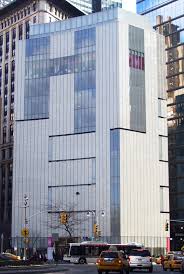
The Museum opened in its new home at 2 Columbus Circle to great controversy. The purposed changes to the building originally designed by Edward Durrell Stone sparked a preservation debate by many artists. The new building was designed by Brad Cloepfil of Allied Works Architecture in September 2008. With its facade of glazed terra-cotta tile and fritted glass, the Jerome and Simona Chazen Building reflects MAD’s craft heritage and permanent collection and animates Columbus Circle (Wiki).

Museum of Arts & Design

The new Brad Cloepfil Building


American Folk Art Museum                                    2 Lincoln Square (Columbus Avenue between 65th and 66th Streets)                                         New York, NY 10023

American Folk Art Museum 2 Lincoln Square (Columbus Avenue between 65th and 66th Streets) New York, NY 10023

American Folk Art Museum

2 Lincoln Square (Columbus Avenue between 65th and 66th Streets)

New York, NY 10023

(212) 595-9533

https://folkartmuseum.org/

Open: Sunday 12:00pm-6:00pm/Monday Closed/Tuesday-Thursday 11:30am-7:30pm/Friday 12:00pm-7:30pm/Saturday 11:30am-7:30pm

My review on TripAdvisor:

https://www.tripadvisor.com/Attraction_Review-g60763-d266582-Reviews-American_Folk_Art_Museum-New_York_City_New_York.html?m=19905

I recently visited the American Folk Art Museum in New York City for the “Made in New York City” exhibition and it is a very interesting and engaging museum. The artwork for the museum was a combination of painting, sculpture, pottery and metal work created at different periods of the City’s history. It really showed the extent of manufacturing in New York City and the craftsmanship that was once here.

American Folk Art Museum Made in New York II

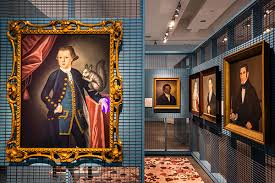
The paintings of Colonial New York

Some of the interesting things you will see are the paintings by artists in both Colonial New York and from the Hudson River School of prominent New Yorkers through its first 200 years of history. You will see how the styles of art have changed over the years.

Also there is a lot of metal work in the ways of signs and rods for the front of doors and for the roofs. The woodwork carvings that once graced the front doors of merchants all over the City is now a lost art. Here you could see the works of German and Russian carvers and the craftsmanship that was put into every piece. It was interesting too to see the racial themes and stereotypes that were used in the art.

American Folk Art Museum Made in New York

Wood Carvings and Metal work in the “Made in New York City” exhibition

Another program that the museum does well is they have afternoon Jazz Wednesdays and Free Concerts on Friday nights. There are family programs, walking tours, curator talks and lectures as part of the museum programming so there is something for everyone.

The American Folk Art Mission:

Since 1961, the American Folk Art Museum has been shaping the understanding of art by the self-taught through its exhibitions, publications and educational programs. As a center of scholarship and by showcasing the creativity of individuals whose singular talents have been refined through experience rather than formal artistic training, the museum considers the historical, social and artistic context of American culture. Its collection includes more than seven thousand artworks dating from the eighteenth century to the present, from compelling portraits and dazzling quilts to powerful works by living self-taught artists in a variety of mediums (Museum bio).

Self-Taught art, past and present, tells empowering stories of everyday life. The field of American folk art was first defined at the turn of the twentieth century by collectors, professional artists, critics, dealers and curators whose search for an authentic American Art seemed to be finally answered in works that presented a nuanced  of national identity, faith, progress, ingenuity, community and individuality. Under the umbrella of “folk art” expanded to also include artists working in the present. For the last twenty years, the term self-taught has more regularly come to address these artists, whose inspiration emerges from unsuspected paths and unconventional places, giving voice to individuals who may be situated outside the social mainstream. Those individuals have been active participants in the shaping of American visual culture, influencing generations  of artists and establishing lively artistic traditions (Museum History).

American Folk Art Museum History:

The museum of Early American Folk Arts as it was known initially held its first exhibition in a rented space on 49 West 53rd Street in 1961. The museum’s collection was launched in 1962 with the gift of a gate in the form of an American flag, celebrating the nation’s centennial. The gift reflected the museum’s early focus on eighteenth and nineteenth century vernacular arts from the northeast America.

In 1966, after receiving a permanent charter, the museum expanded its name and mission. As the Museum of American Folk Arts, it looked beyond the traditional definitions of American folk art. Its exhibitions and collection began to reflect “every aspect of the folk arts in America-north, south, east and west.” Founding curator Herbert W. Hemphill Jr. “expanded the notion of folk art beyond traditional, utilitarian and communal expressions.” Under his direction, the museum began to champion idiosyncratic and individualistic artwork from the fields of traditional and contemporary folk art. In doing so, the museum ushered in a new era in the field of twentieth-century folk art (Museum History).

The 1990’s brought new focus to the diversity and multiculturalism of American Folk Art. Offering a more inclusive vision. the museum began to present African American and Latino artworks in their exhibitions and permanent collections. Director Gerard C. Wertikin announced American folk art’s common heritage as “promoting an appreciation of diversity in a way that does not foster ethnic chauvinism or racial division.” (Museum History).

The museum further established  its broadened outlook with the 1998 formation of the Contemporary  Center, a division of the museum devoted to the work of 20th and 21st century self-taught artists as well as non-American artworks in the tradition of European art brut. In 2001, the museum opened the Henry Darger Center to house 24 self-taught artist’s works as well as a collection of his books, tracings, drawing and source materials (Museum History).

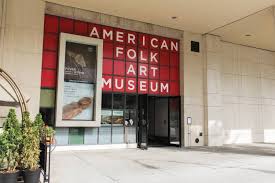
American Folk Art Museum

The new home of the American Folk Art Museum

In 2001, the museum chose its current name, American Folk Art Museum. Recognizing that American Fold Art could be fully understood in an international context, the word American functions as an indication of the museum’s location, emphasis and principal patronage rather than as a limitation on  the kind of art it collects, interprets or presents. The museum’s current programming reflects this shift in focus. Past exhibits have included folk arts of Latin America, England, Norway, among other countries and continents (Museum history).

Don’t miss this amazing little museum on the Upper West Side of Manhattan.


Ford Foundation Gallery at the Ford Foundation Center for Social Justice                                      320 East 43rd Street                                           New York, NY 10017

Ford Foundation Gallery at the Ford Foundation Center for Social Justice 320 East 43rd Street New York, NY 10017

Ford Foundation Gallery at the Ford Foundation Center for Social Justice

320 East 43rd Street

New York, NY  10017

(212) 573-5000

https://www.fordfoundation.org/about/the-ford-foundation-center-for-social-justice/ford-foundation-gallery/

Open:  Sunday Closed/Monday-Saturday 11:00am-6:00pm

Fee: Free to the public

My review on TripAdvisor:

https://www.tripadvisor.com/Attraction_Review-g60763-d615514-Reviews-Ford_Foundation_Building-New_York_City_New_York.html

The Ford Foundation at 320 East 43rd Street

https://www.fordfoundation.org/about/the-ford-foundation-center-for-social-justice/visitor-information/

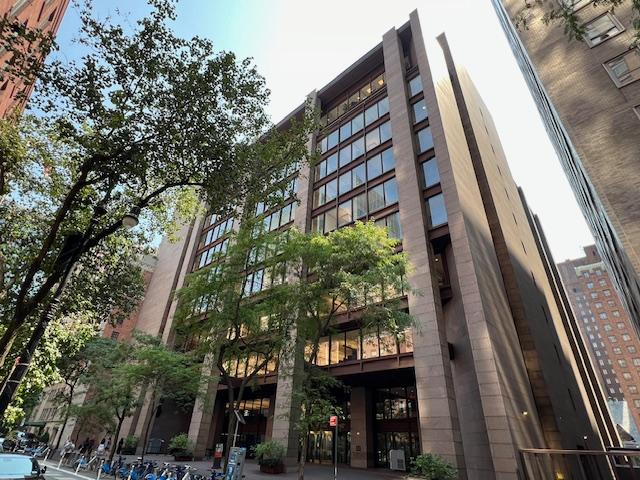
The Ford Foundation Building

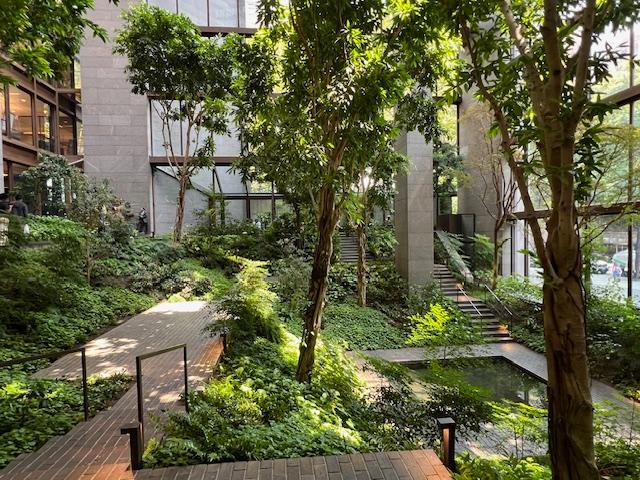
The Ford Foundation Building at 320 East 43rd Street in the Turtle Bay neighborhood. Take time after visiting the gallery to tour the gardens in the lobby.

When I was touring the Turtle Bay neighborhood for my blog, “MywalkinManhattan.com”, I toured the Ford Foundation Building on East 43rd Street and wondered through the lobby area gardens I came across the Ford Foundation Gallery, which is just off the main lobby. The small gallery delves into some deep material on social commentaries about life and the artists featured have some pretty interesting perspectives on their work.

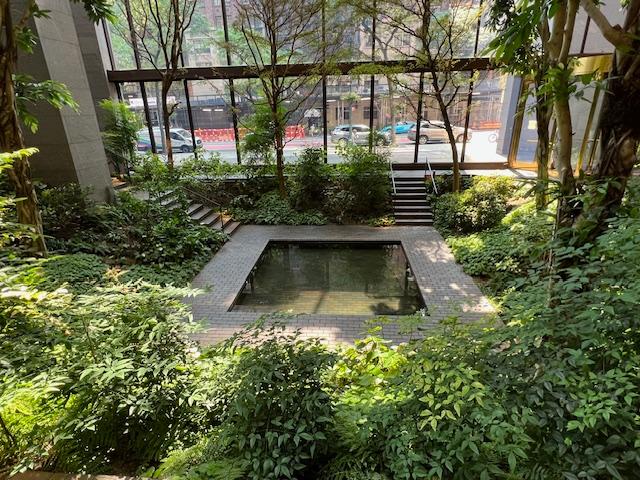
The Ford Gallery gardens inside the building

The pool of the Ford Foundation Garden

The beauty of the Ford Foundation gardens

The Ford Foundation Gallery entrance

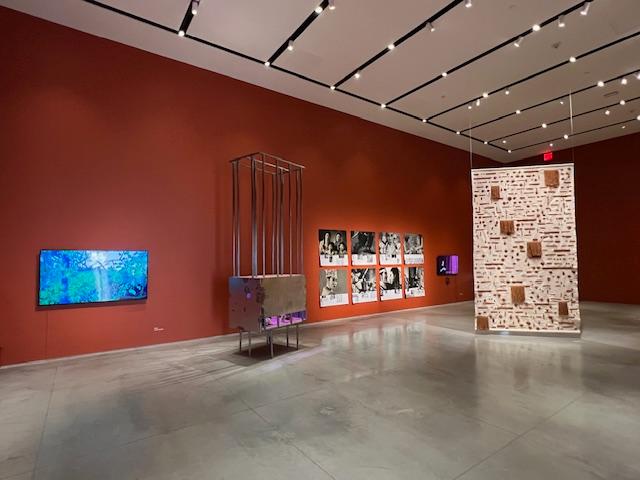
The first exhibition I saw there was “Radical Love”, a theme is dealing with ‘love as the answer to a world in peril’. This interesting exhibition offers multidisciplinary art dealing with human nature and society. How different cultures show their respect and love to one another. It is an interesting mix of paintings, photos and video art from all over the world with each other showing their interpretation of dealing with the issues in life. You really have to read between the lines with this exhibition.

Ford Foundation Gallery II

The ‘Radical Love’ exhibition at the new Ford Foundation Gallery

(from the museum website on the exhibition)

Through the theme of Utopian Imagination, the trilogy of exhibitions in the gallery’s inaugural year create a trajectory toward a more just future. The first exhibition, Perilous Bodies (March 4 – May 11, 2019), examined injustice through the intersecting lens of violence, race, gender, ethnicity, and class. Radical Love responds to the first show by offering love as the answer to a world in peril.

Love, in the context of this exhibition, is defined by a commitment to the spiritual growth and interconnectedness of the individual, their community, and stewardship of the planet. Guided by the powerful words of bell hooks, “Were we all seeing more images of loving human interaction, it would undoubtedly have a positive impact on our lives.” The works in Radical Love are grounded in ideas of devotion, abundance, and beauty; here, otherness and marginality is celebrated, adorned, and revered. The Utopian Imagination exhibition trilogy concept was developed by Jaishri Abichandani.

In 2024, I saw the new show “Cantando Bajito Incantations“:

The sign from the exhibition:

(from the website)

The Gallery

Work from the exhibition

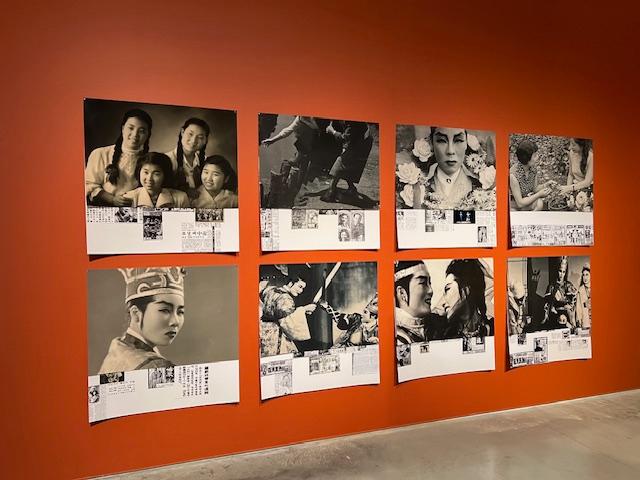
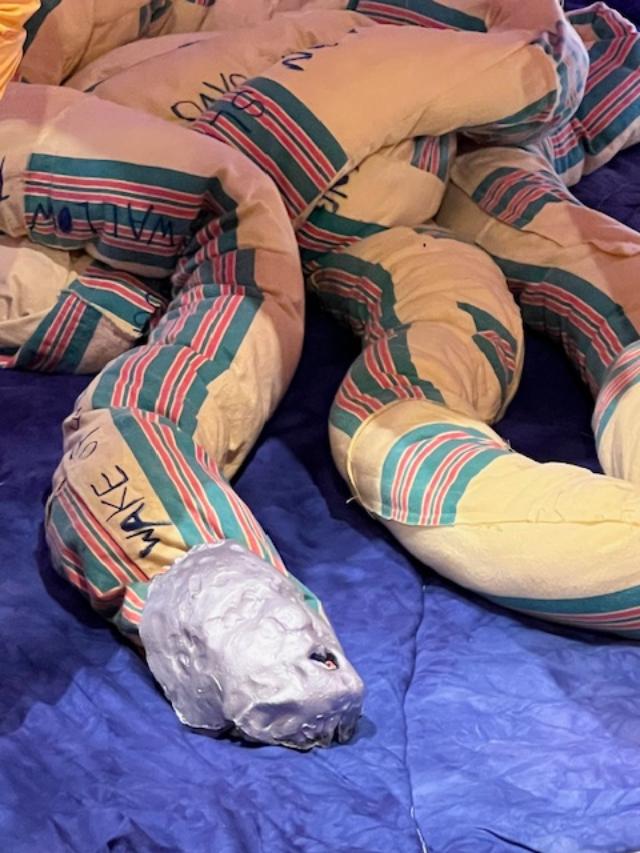
Translated into English as “singing softly,” the exhibition series title is drawn from a phrase used by Dora María Téllez Argüello, a now-liberated Nicaraguan political prisoner, to describe the singing exercises she did while she was incarcerated in isolation. Helping her to conserve her voice and defeat the political terror she endured, Téllez’s quiet singing became a powerful strategy for survival and resistance. Conceived in three movements, Cantando Bajito features artists who explore similar forms of creative resistance in the wake of widespread gender-based violence. The second chapter, Cantando Bajito: Incantations, brings together artists who consider ancestral, contemporary, and future-facing networks of support and care that safeguard feminized bodies through forms of knowledge transmission. 

Work from the exhibition

Such networks—symbolic systems, subversive spaces, or covert forms of language—are as varied as the communities that develop them. They include Nüshu, a form of script passed from mother to daughter in China; the use of henna as an agent of protection; and forms of therapeutic communication that have been deemed “gossip.” All have long existed, whether in the shadows or in plain sight. Preserved not in written history but in the body, these channels prepare feminized bodies for potential violence while giving them tools to resist it. 

Works from the show

Works from the show

From inside the tent

The History of the Ford Foundation Gallery and it’s recent opening:

(From the museum website)

This new 1,900 square foot gallery space opened in February of 2019 after a two-year renovation of the Ford Foundation Building. The Ford Foundation Gallery will be an innovative exhibition space dedicated to presenting multidisciplinary art, performance and public programming by artists committed to exploring issues of justice and injustice. In creating a space for artists whose work addresses pressing social issues, the foundation continues its decades long history of investing in the arts to advance human welfare (Ford Foundation Press Release).

Ford FOundation Gallery V

Athi-Patra Ruga’s ‘Umesiyakazi in Waiting’

With a mission focused on addressing inequality in all its forms and providing more than $600 million annually in grant support to organizations on four continents, the Ford Foundation is a natural home for art that challenges viewers to grapple with fundamental questions of fairness and dignity. Three exhibitions in this inaugural year offer varied interpretations on the theme of Utopian Imagination (Ford Foundation Press Release).

The gallery is small and you can see these exhibitions in under an hour.

New York Historical Society Museum & Library 170 Central Park West                                        New York, NY 10024

New York Historical Society Museum & Library 170 Central Park West New York, NY 10024

New York Historical Society Museum & Library

170 Central Park West

New York, NY   10024

(212) 873-3400

http://www.nyhistory.org

@nyhistory

https://www.nyhistory.org/

Open: Sunday 11:00am-5:00pm/Monday Closed/Tuesday-Thursday 10:00am-6:00pm/Friday 10:00am-8:00pm/Saturday 10:00am-6:00pm

Fee: Adults $21.00/Seniors & Educators $16.00/Students $13.00/Children (5-13) $6.00/Children (4 and under) Free

On Fridays from 6:00pm-8:00pm are pay as you wish for Museum Admission

My review on TripAdvisor:

https://www.tripadvisor.com/Attraction_Review-g60763-d136143-Reviews-New_York_Historical_Society_Museum_Library-New_York_City_New_York.html?m=19905

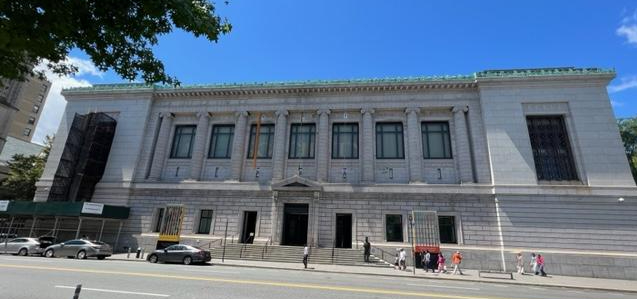
The New York Historical Society at 170 Central Park West

I have visited the New York Historical Society several times over the years and I have to say that make quite a statement on the history of New York City and the State of New York City. It has a interesting permanent collection of paintings and statuary. There are a lot of things that First Families of New York City have donated to the museum that tell the story of families born and raised here.

I was honored here years ago when a picture I took for the 9/11 Photo Album Book came out in 2002. All the photographers that contributed to it were in attendance. Another time I was here for a private event on John Adams back in the early 2000’s that was injunction with the American Museum of Natural History. Over the years, the Historical Society has brought in more interesting exhibitions. The current exhibition “Hudson Rising” on the history and ecological changes due to humans along the Hudson River. It was an interesting look of the natural changes to the river from manufacturing times today as the river is being reclaimed for recreational uses.

Hudson Rising Exhibition

‘Hudson Rising’ Exhibition

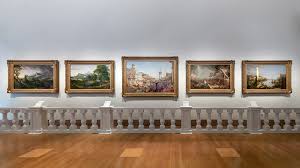
The whole museum is a retrospect on the timeline of the New York City with an array of art out any one time. There are Masters from the Hudson River School, statues from all eras and special exhibitions that tell an interesting story of some part of the City’s past.

NY Historical Society

Hudson River School Paintings for ‘Hudson Rising’

History of the NY Historical Society:

The Historical Society was founded on November 20, 1804 largely through the efforts of John Pintard. He was for some years secretary of the American Academy of Fine Arts as well as the founder of New York’s First Savings Bank. With a group of prominent group of New Yorkers on the founding board including then Mayor DeWitt Clinton, the organization was established on December 10, 1804 (Wiki).

New York Historical Society II

The Collections of the NY Historical Society

The NY Historical Society had its share of growing pains over the years in that it had been in heavy debt during its first couple of decades. It also moved several times over the years as well. It moved from the Government House, which it had been housed in since 1809 to the New York Institution, the formerly the city almshouse on City Hall Park in 1816. In 1857, it moved into the first building constructed specifically for its collection at Second Avenue and 11th Street. The collection moved to its final home to Central Park West in 1908 (Wiki).

The current Society building was designed by architects York & Sawyer, who were known for bank designs. The second part of the building was designed by architects Walker and Gillette. The building has just finished a $65 million dollar renovation in 2011 and all the galleries have been refreshed. The new director of the Society, Louise Mirrer is leading the establishment into the 21st Century.

On Friday night’s from 6:00pm-8:00pm it is ‘pay as you wish’ to enter the museum.