Tag: usa

Lewes Life Saving Station & Museum                                                            2 Shipcarpenter Street                                                                        Lewes, DE 19958

Lewes Life Saving Station & Museum 2 Shipcarpenter Street Lewes, DE 19958

Lewes Life Saving Station & Museum

2 Shipcarpenter Street

Lewes, DE. 19958

(302) 645-7670

Open: Sunday-Tuesday Closed/Wednesday-Saturday 10:00am-4:00pm (In Season April 1st-October 11th-closed the rest of the year)

Admission: Free but a $5.00 donation is appreciated

My review on TripAdvisor:

https://www.tripadvisor.com/ShowUserReviews-g34028-d17640480-r1060547919-Lewes_Life_Saving_Station_Museum-Lewes_Delaware.html?m=19905

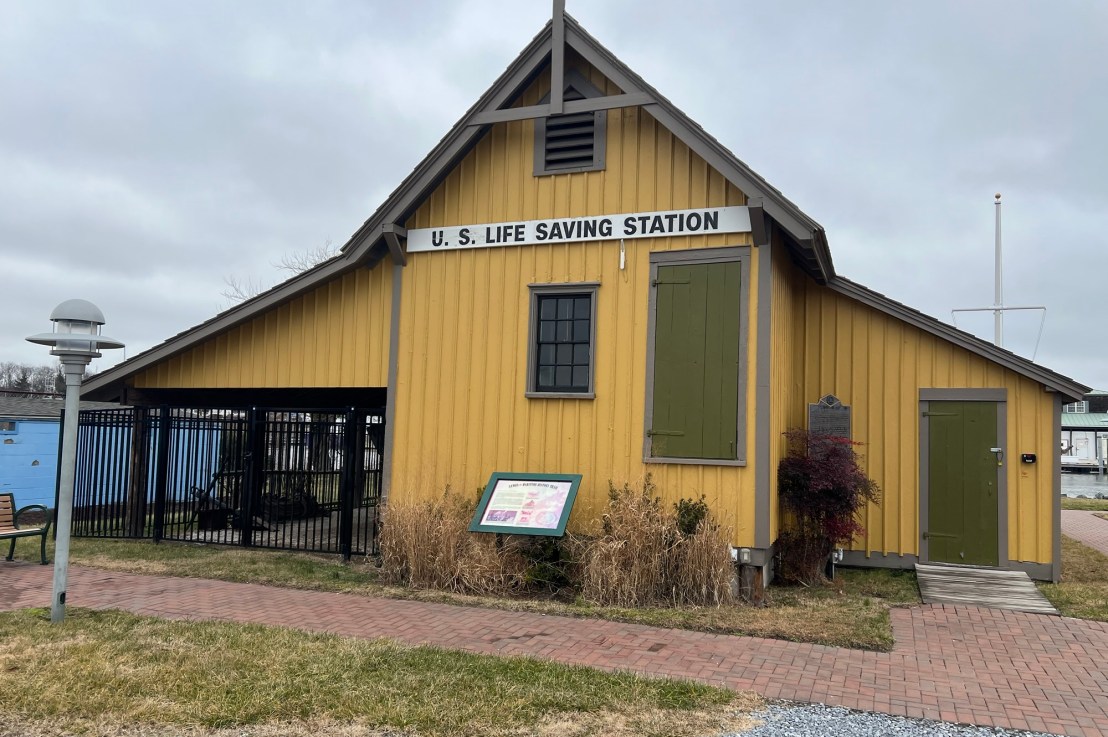
The back of the Lewes Lifeguard Station Museum
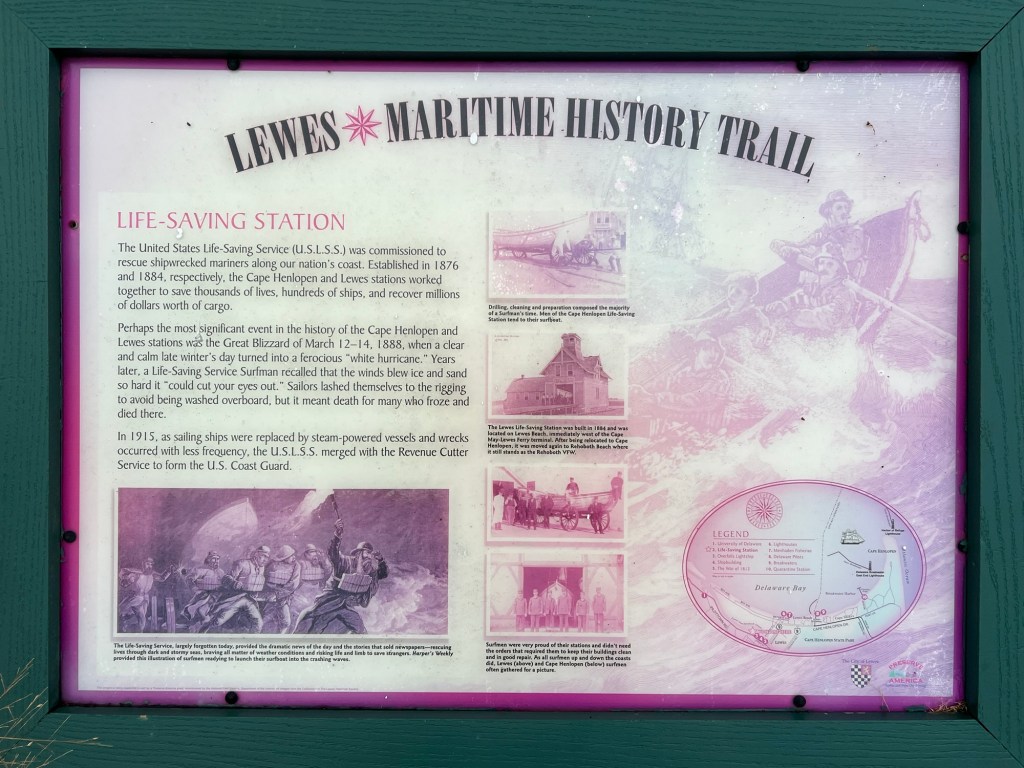
The description sign up front

I recently visited Lewes, DE for ‘Maritime Day’ by the harbor and there were a lot of interesting booths on the watersheds, environmental agencies that discussed their purpose with harbor issues and what the town of Lewes does for the environment.
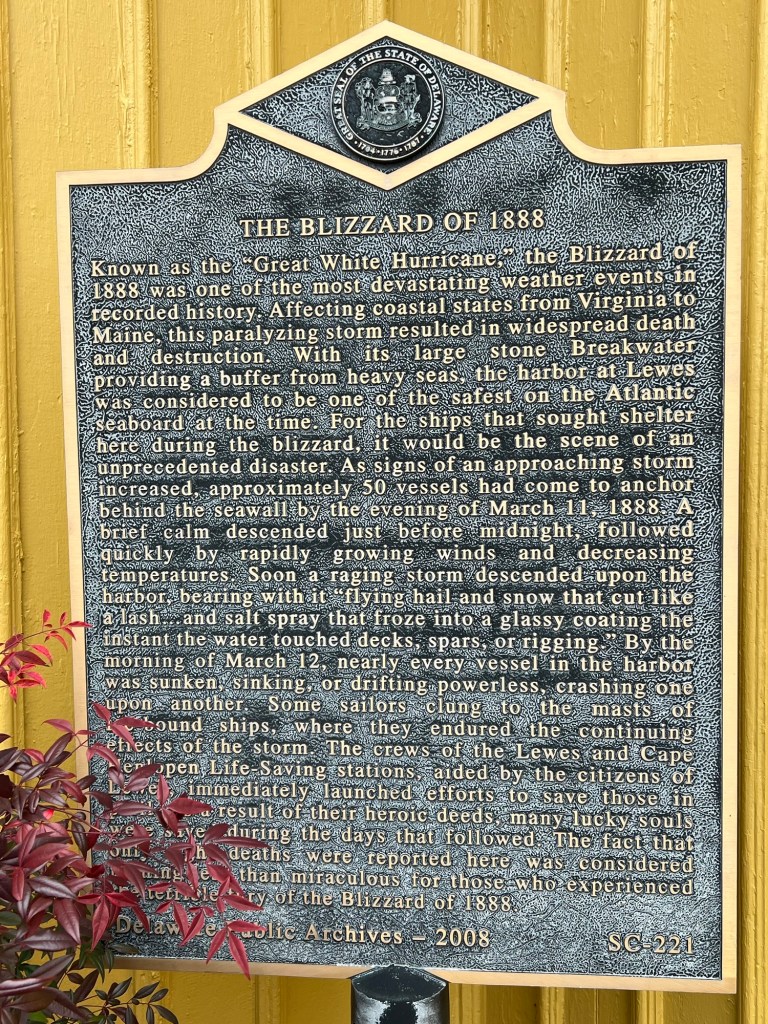
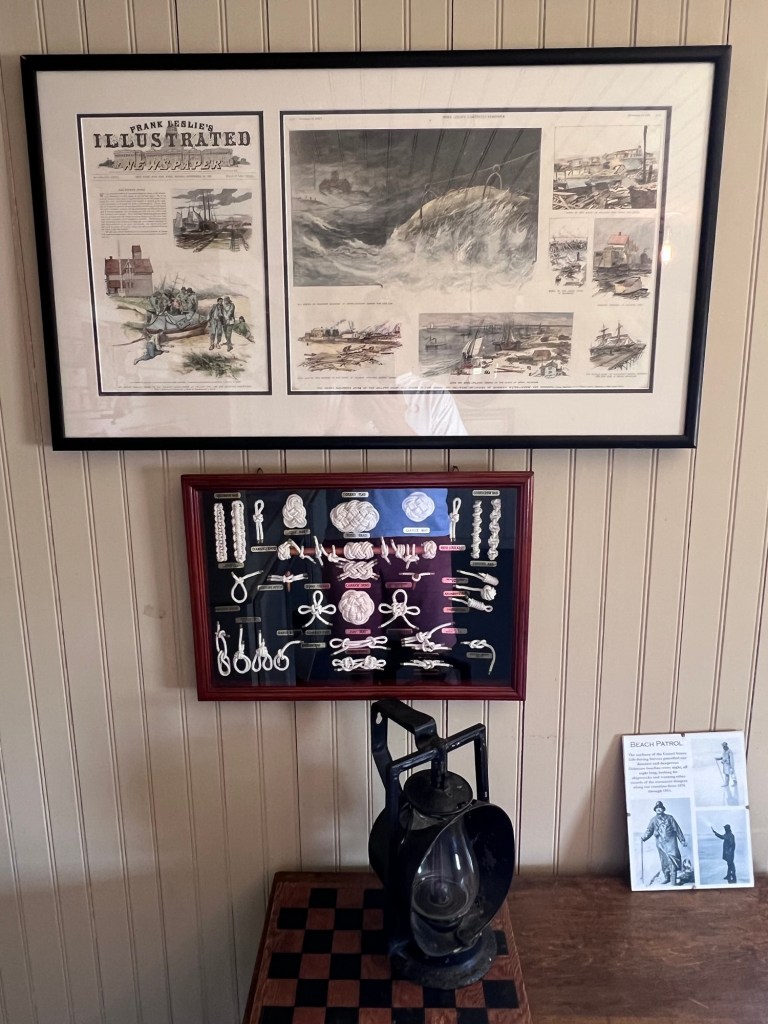
The historic Blizzard from 1888

History of the Lewes Life Saving Station & Museum:

(From Historic Lewes.com)

It was also a busy station, guarding both the mouth of Delaware Bay and the protected waters created by the massive breakwaters of the National Harbor of Refuge. Its string of Keepers and their six- or seven-man crews of Surfmen enacted scores of rescues through the years and in particular won great praise for their tireless heroics during the Great White Hurricane of 1888, when they pulled scores of sailors from the frigid waters and iced-over hulks of wrecked vessels to safety.
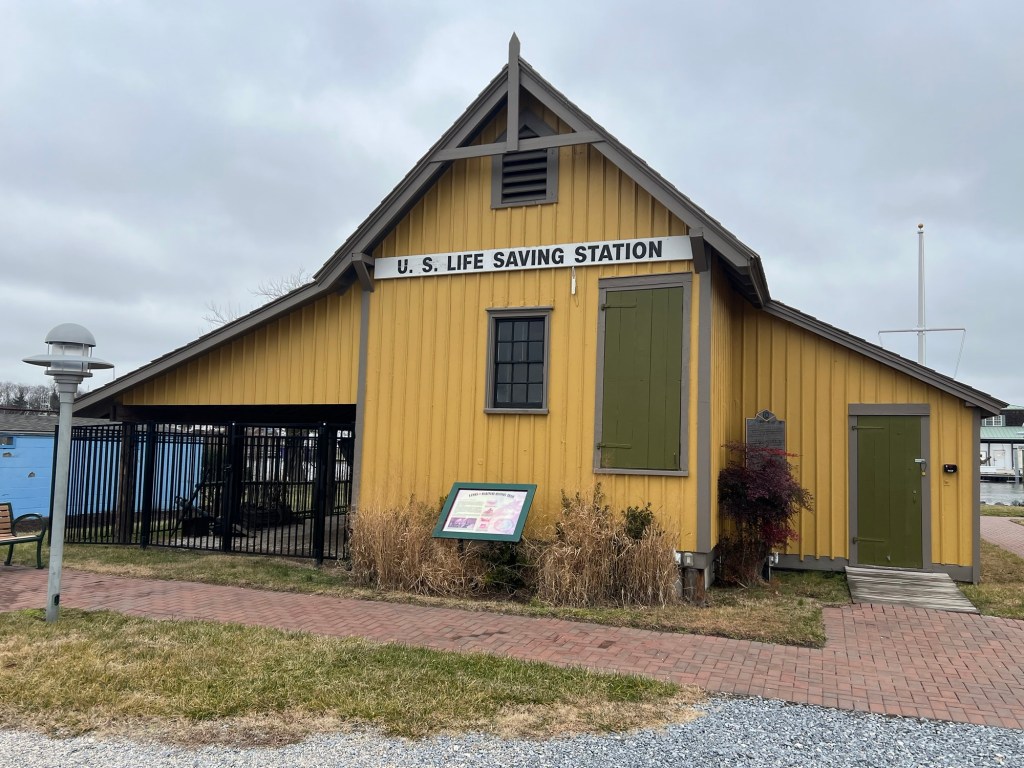
The front of the museum

The History of the Lewes Lifeguard Museum:

(From the Historic Lewes.com)

The United States Life-Saving Service (USLSS) protected the American coast and saved lives in peril at sea from 1871 until 1915, when it became a part of the new United States Coast Guard (USCG). This incredible humanitarian mission came to Lewes in 1884, making it the fourth of six stations to be established in Delaware. Lewes was among the most desirable stations for the Keepers and Surfmen who manned it, with its original location on the site of the present-day Cape May-Lewes Ferry Terminal placing it not far from town and therefore civilization.

The view of the harbor which has changed over the years

I spent my time touring the Lewes Lifeguard Museum, which is an interesting little museum on the history of life saving along the Delaware coast. The museum’s artifacts show some of the earliest and innovative forms of rescue equipment from before the Civil War. This was the precursor to the United States Coast Guard.

The inside of the museum

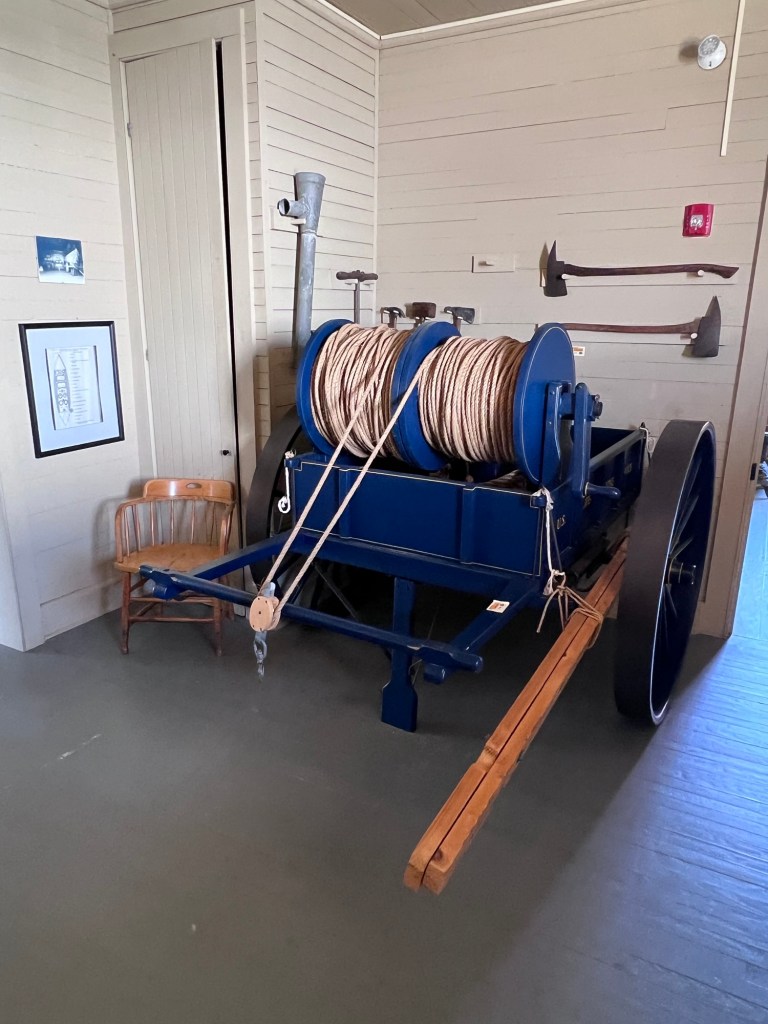
The lower part of the museum contained most of the equipment, items like rescue ropes, wenches, rescue apparatus, lanterns and uniforms like jackets and boots.

Pulled and equipment used to rescue stranded people

History of the Lewes Historical Museum:

(Historic Lewes.com)

The United States Coast Guard maintained the Station Lewes from 1915 until 1969, when it was closed, declared surplus, and sold. The original main station building was relocated numerous times and still stands today, heavily modified, as the Rehoboth Beach VFW. The Boat House preserved by Historic Lewes, a unique 1884 addition to the USLSS station intended to launch lifeboats on a marine railway directly into the harbor, was acquired from the Pilots’ Association of the Bay & River Delaware in 1979 and moved to its present home at Canalfront Park. It stands proudly beside the Lightship OVERFALLS (LV-118), together commemorating the nation’s and community’s efforts to preserve life on hazardous waters.

The bullies and wenches used by the men

Information in the Lewes Life Saving Station

Biography of the men who worked there

Information on the Boat House

Some of the ropes and wenches used in the rescue procedures

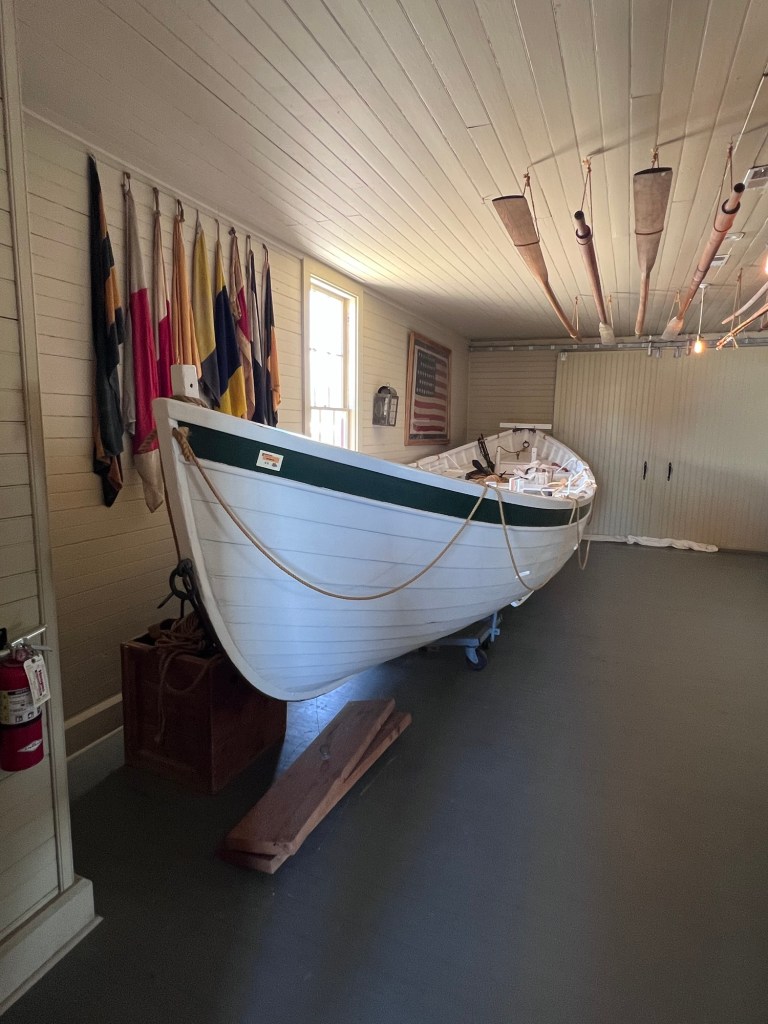
On the other side of the building was the rescue boat the ‘Life Car’, a rudimentary form of rescue boat that the docents said was effective but clunky and hard to use. It shows how we have progressed in life saving.

The Life Car rescue unit

Information on the ‘Life Car’

The ‘Life Car’

The ores and other rescue equipment used

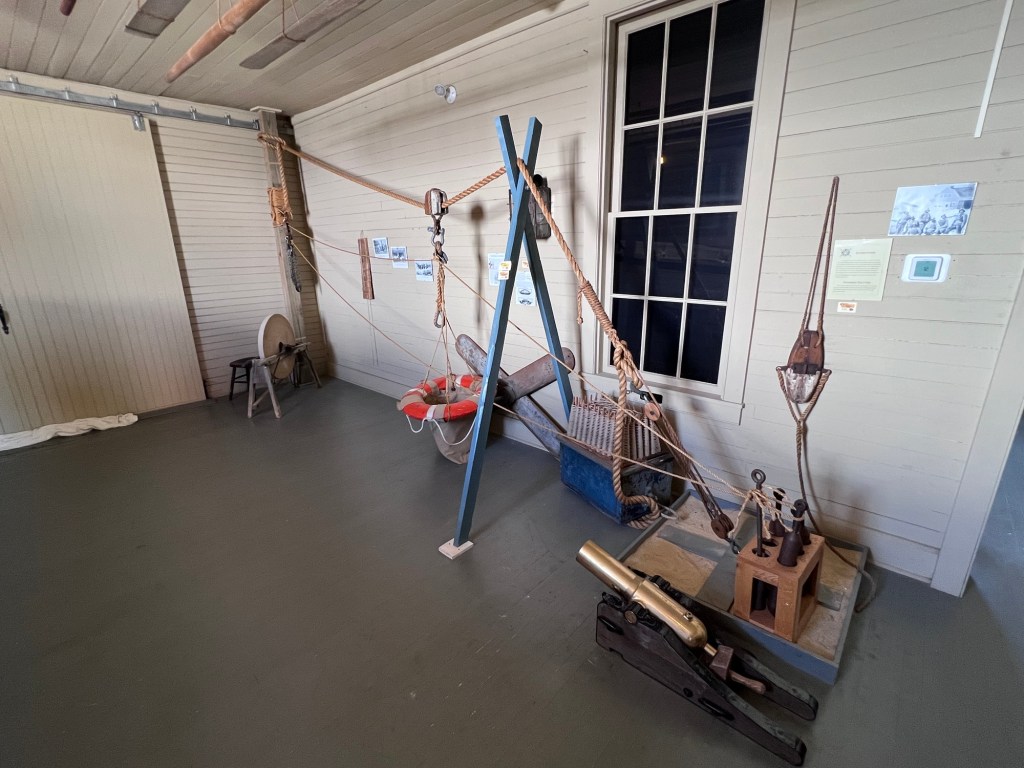
The small rope cannon

The ores

The rope equipment

The story of the ‘Great White Hurricane of March 1888’

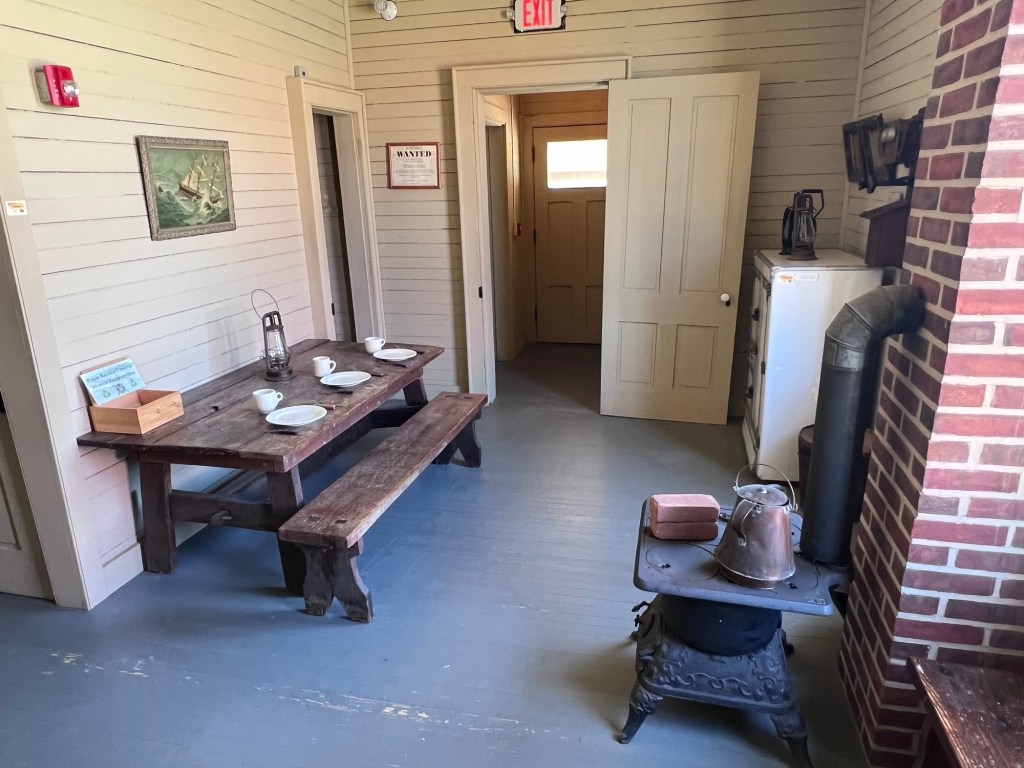
The Men’s Dining area in the front of the building

There was no living area in the facility but a place to gather the team, eat and socialize when manning the station.

History of Lewes Lifeguard Museum:

(From the Lewes Lifeguard.com)

Guests visiting the USLSS Boat House today will find it furnished just as Keeper John Clampitt and his courageous Surfmen left it on March 12, 1888, as they pushed out into the roaring gale and whipping snow for their finest hours. It also features a display of early life-saving equipment, including the rope-and-pulley Breeches Buoy rescue system, a steel life-car, and a rare 1887 Long Branch, New Jersey-style surfboat under restoration.

The dining area and the schedule

The dining room table

The Lewes Life Saving Station & Museum is an example of early beach and shipping rescue at the East Coast Shore. It also shows the daily life of these brave men and how lonely and dangerous this job could be. It shows how times have progressed and how they have stayed the same. To save people and property.
Coney Island History Project c/o Deno’s Wonderful Wheel Park                                                    3059 West 12th Street                                         Brooklyn, NY 11224

Coney Island History Project c/o Deno’s Wonderful Wheel Park 3059 West 12th Street Brooklyn, NY 11224

Coney Island History Project

C/O Deno’s Wonder Wheel Park

3059 West 12th Street

Brooklyn, NY 11224

https://www.coneyislandhistory.org/

Open: Sunday-Saturday 1:00pm-7:00pm (summer months only-May 24th-September 1st)

My review on TripAdvisor:

https://www.tripadvisor.com/ShowUserReviews-g60763-d4777489-r1014119112-Coney_Island_History_Project_Walking_Tour-New_York_City_New_York.html?m=19905

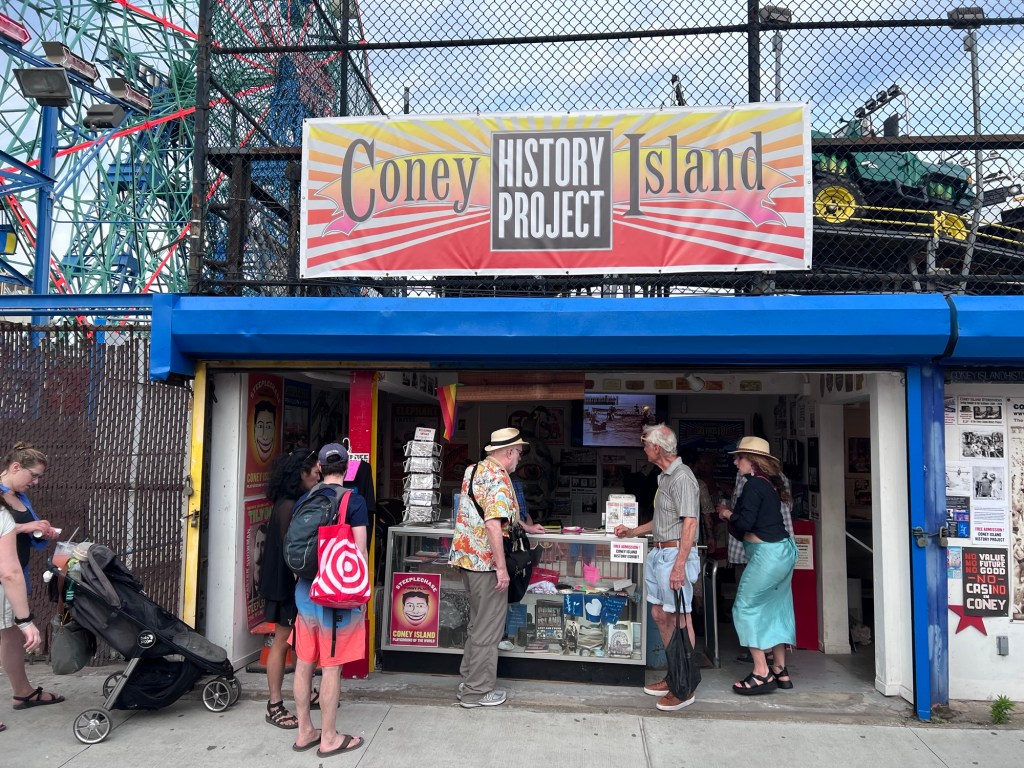
The front of The Coney Island Project

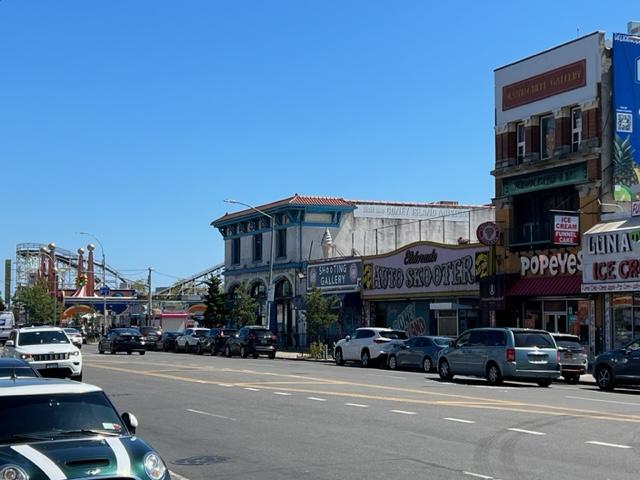
I came across this interesting museum/gallery when I was walking around Coney Island. The museum is a few small rooms located in one of the buildings in Deno’s Wonder Wheel Park. The museum is not related to the Coney Island Museum on Surf Avenue.

The small gallery space has a wealth of information and some interesting artifacts on Coney Island’s history both past and present.

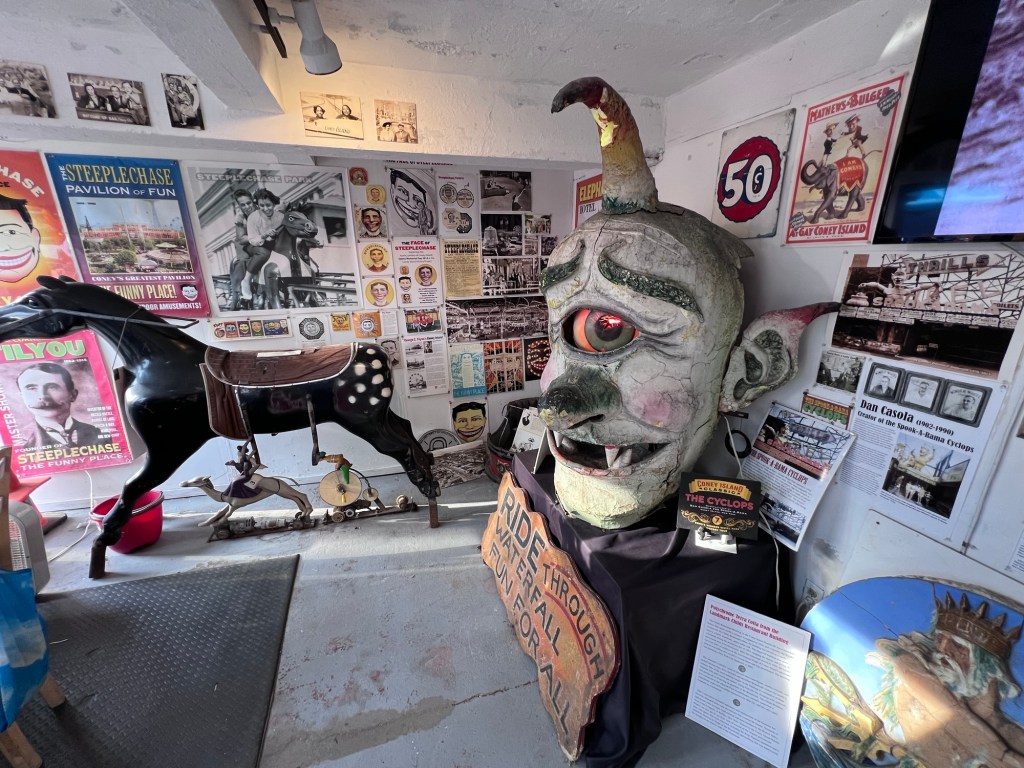
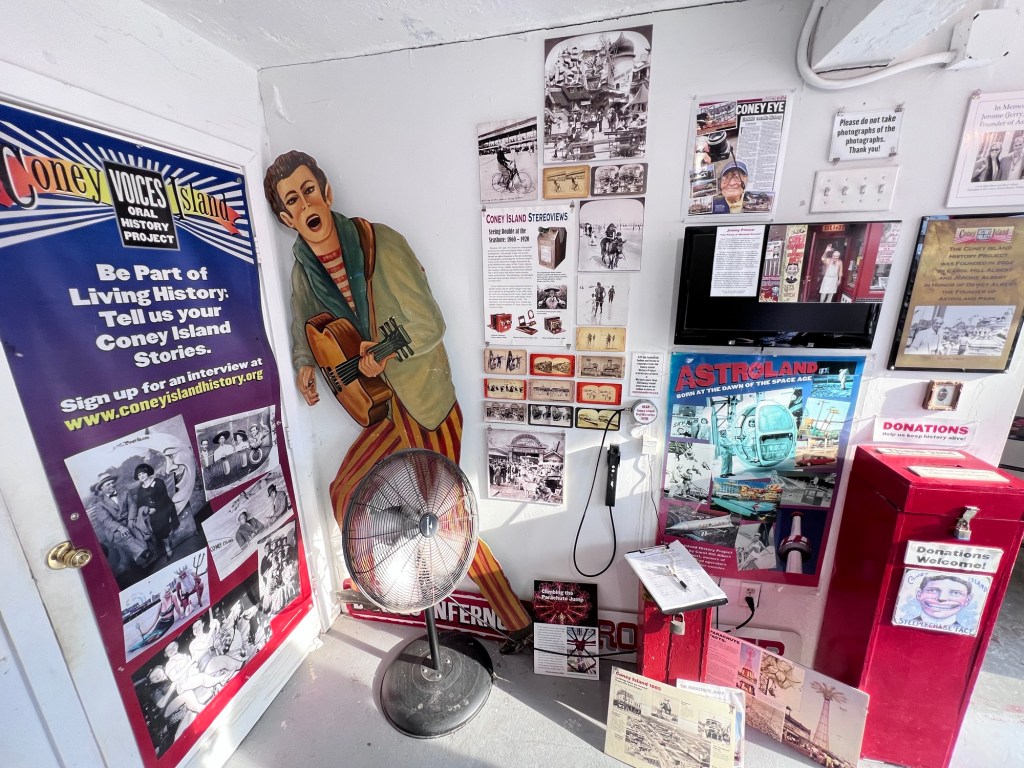
The main room had artifacts and pictures of Coney Island’s past amusement history. There were many photo’s of the old parks, especially Steeplechase Park before its closing in 1965. It shows its development, growth and changes after the 1907 fire that destroyed the park.

There was all sorts of artifacts from that time as well as the former Astroland that was replaced by the new Luna Park. If you know the history of Coney Island, this can fascinating to read.

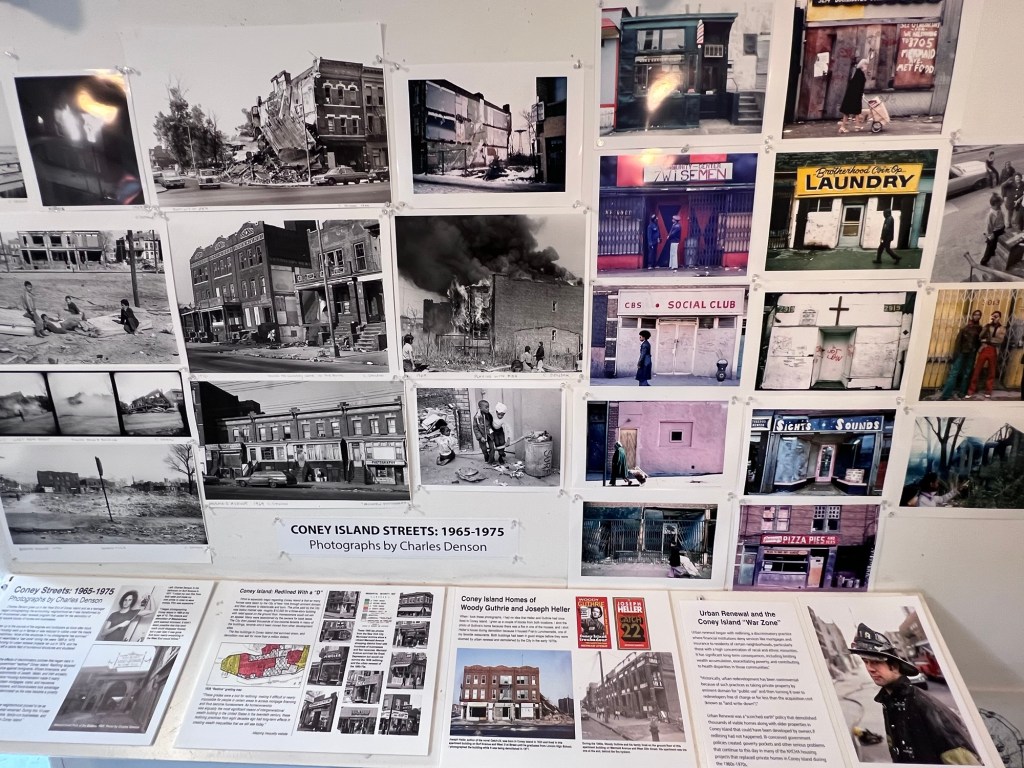
The second room had the later history when the Island’s amusements fell into disrepair and the whole island seemed to fall apart. The pictures show a very run down Coney Island.

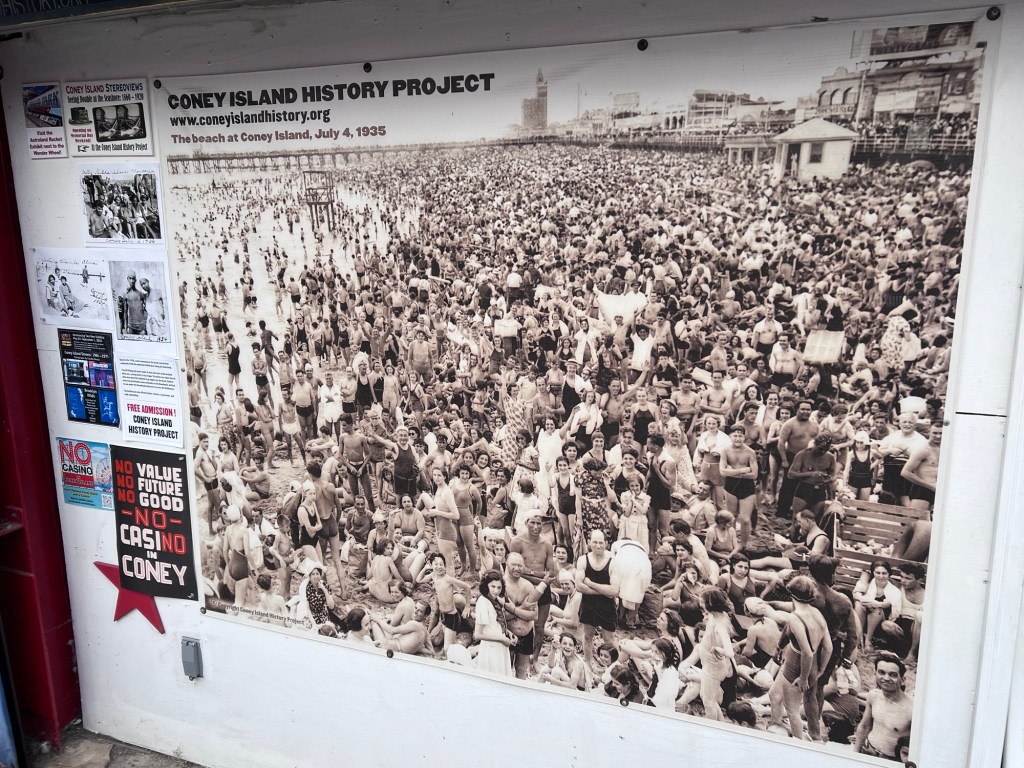
The outside pictures show Coney Island in its heyday when during the 1930’s and 40’s before and during WWII, the island being a place of relief for so many New Yorker’s especially the working class.

The inside of the gallery

The main gallery

The Steeplechase Exhibition

Coney Island in ruin in the 1970’s

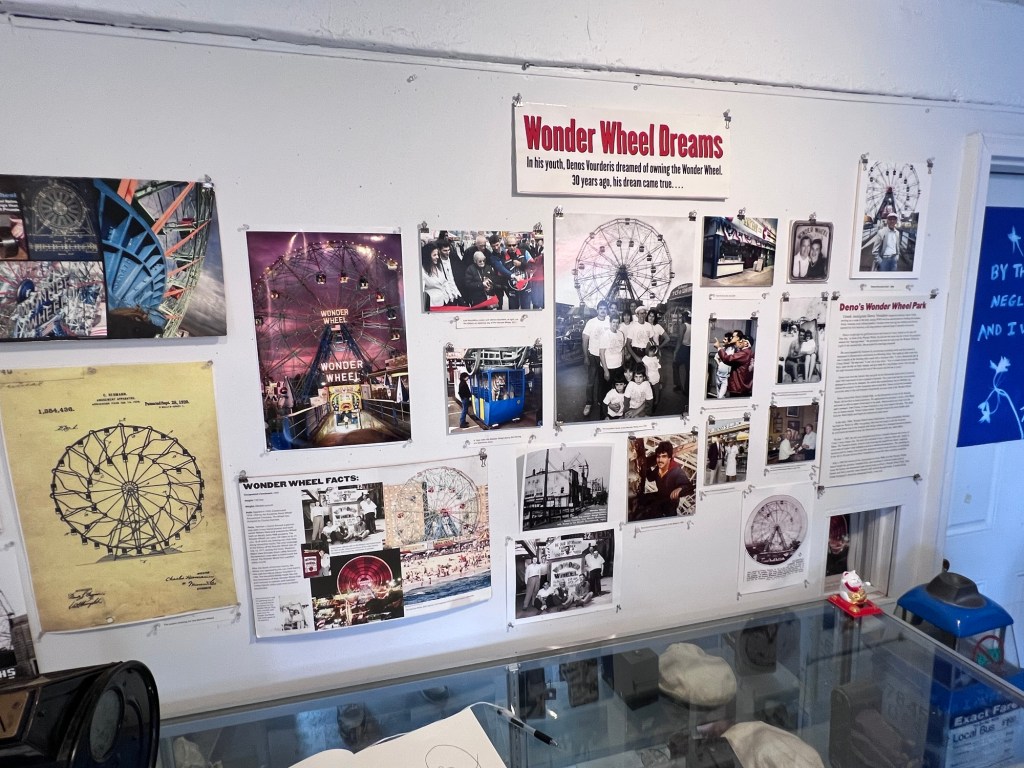
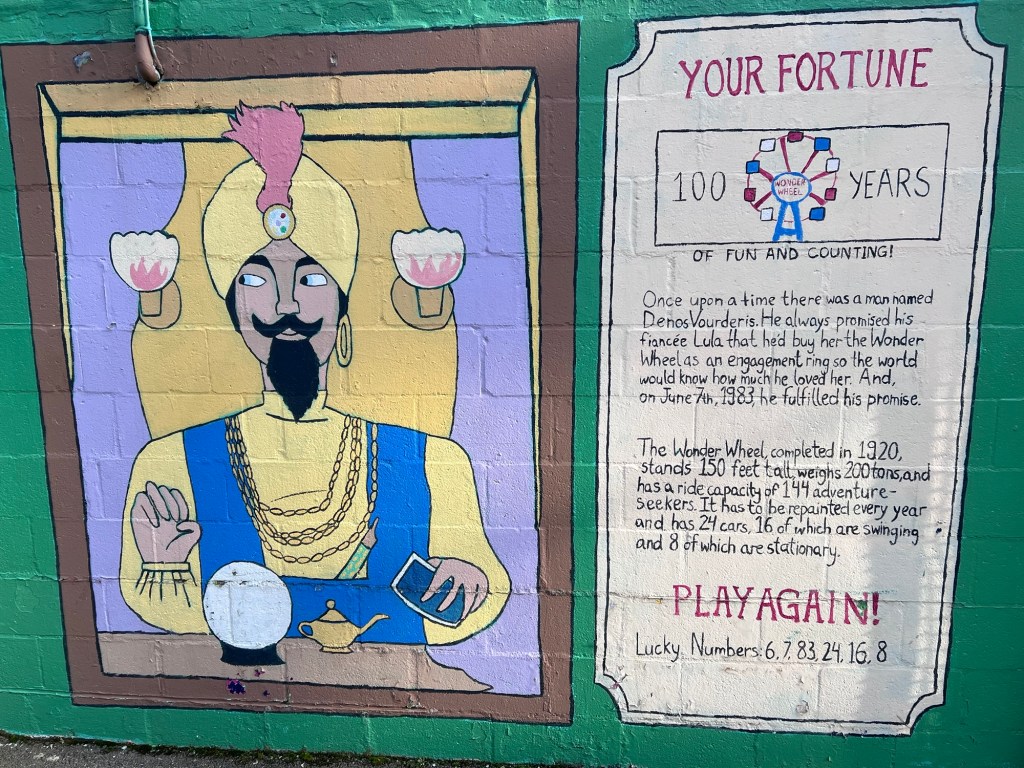
The history of Deno’s Wonder Wheel Park

The display outside the museum

The mechanical display that sings and dances

The Miss Coney Island robot is a throwback to old technology and campy robotics that is fun to watch. For a quarter, you can take an interesting video with this robot.

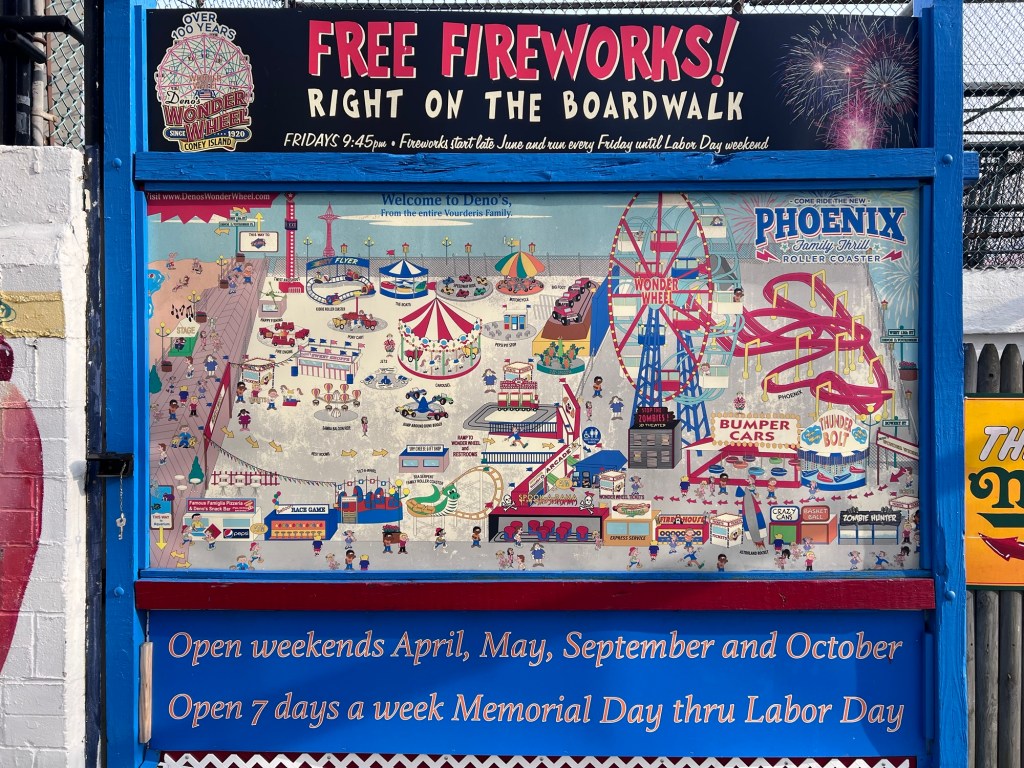
The Deno’s Map of the park

The history of the park

The History of the Museum:

(From the Coney Island Historical Coalition website)

The Coney Island History Project’s 2025 exhibition center season begins Memorial Day Weekend with a combination of free indoor and outdoor exhibits.  Visitors to the exhibition center are invited to take free souvenir photos with Coney Island’s only original Steeplechase horse, from the legendary ride that gave Steeplechase Park its name, and the iconic Cyclops head from Deno’s Wonder Wheel Park’s Spook-A-Rama, Coney Island’s oldest dark ride. 

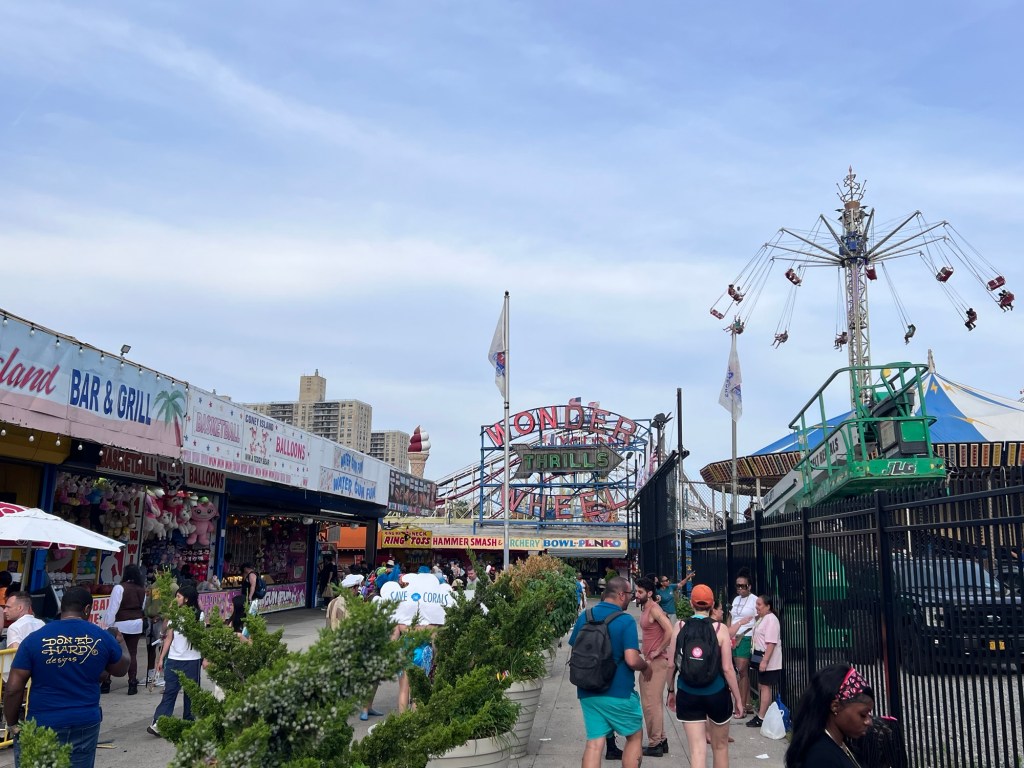
The real Midway

I took pictures after the Mermaid Parade and showed how busy the amusement section was that day. There is so much potential to update the amusements and modernize the area with new rides and concessions. There is so much that can be done here. I already see new luxury apartment buildings being built and the revamping of the main shopping drag.

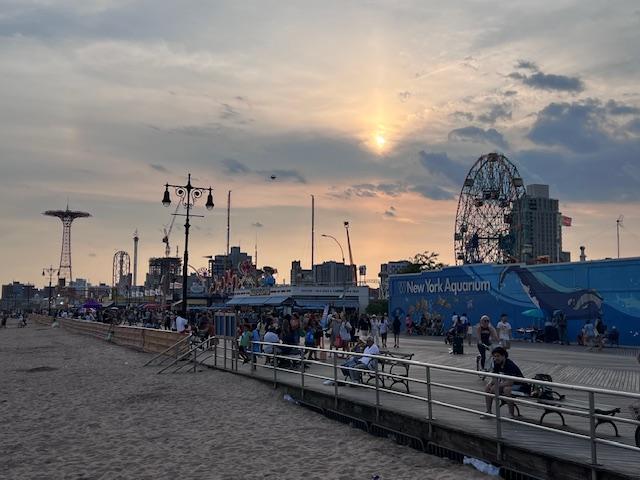
The Boardwalk at the end of the evening.

The Coney Island Boardwalk at twilight

Indian River Life Saving Station Museum                  25039 Coastal Highway                                             Rehoboth Beach, DE 19971

Indian River Life Saving Station Museum 25039 Coastal Highway Rehoboth Beach, DE 19971

Indian River Life Saving Museum

25039 Coastal Highway

Rehoboth Beach, DE 19971

(302) 227-6991

https://www.destateparks.com/park/indian-river-life-saving-station/

https://visitsoutherndelaware.com/listing/indian-river-life-saving-station-museum

Open: Sunday 9:00am-3:00pm/ Monday-Saturday 9:00am-4:00pm (Schedule is flexible with the seasons)

Admission: $4.00

My review on TripAdvisor:

https://www.tripadvisor.com/Attraction_Review-g34048-d208535-Reviews-Indian_River_Life_Saving_Station_Museum_at_Delaware_Seashore_State_Park-Rehoboth_Be.html

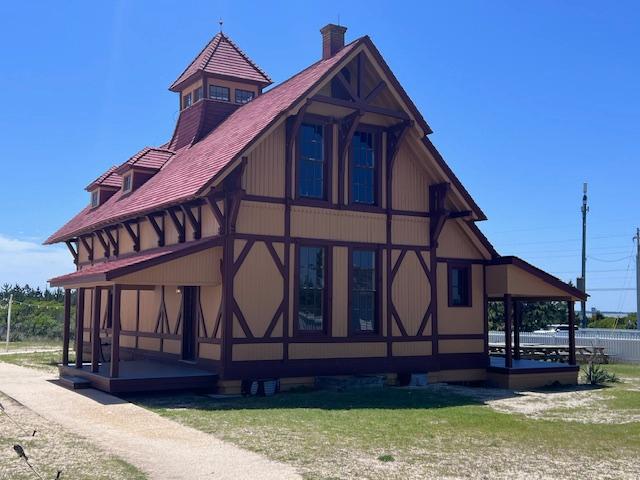
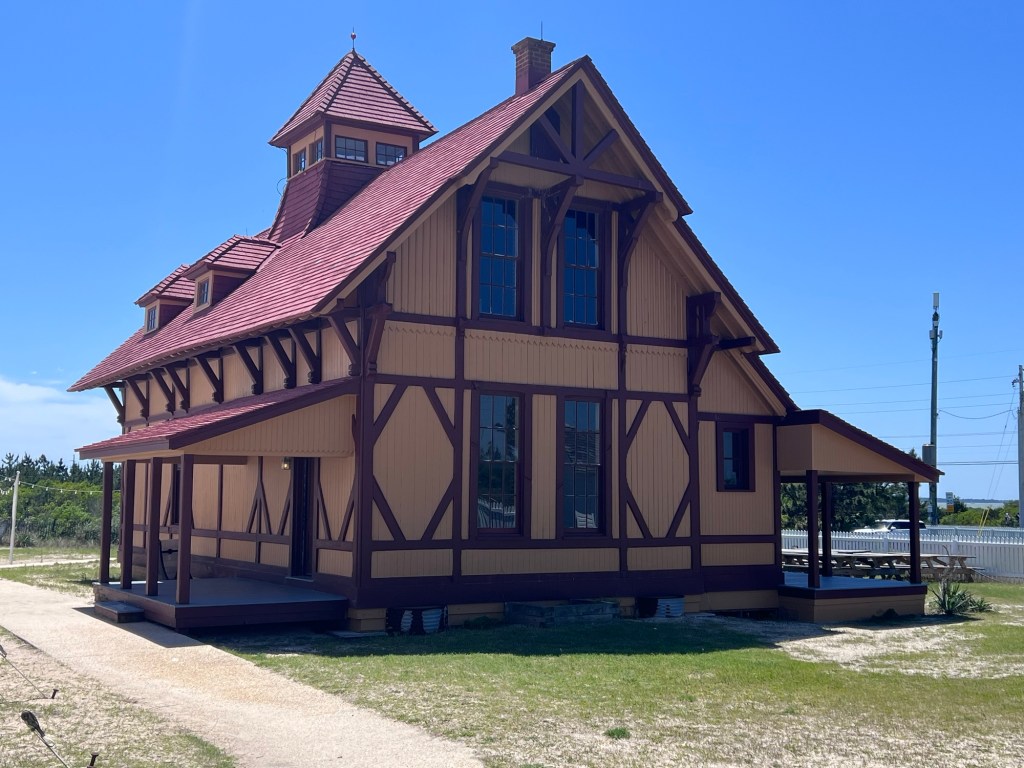
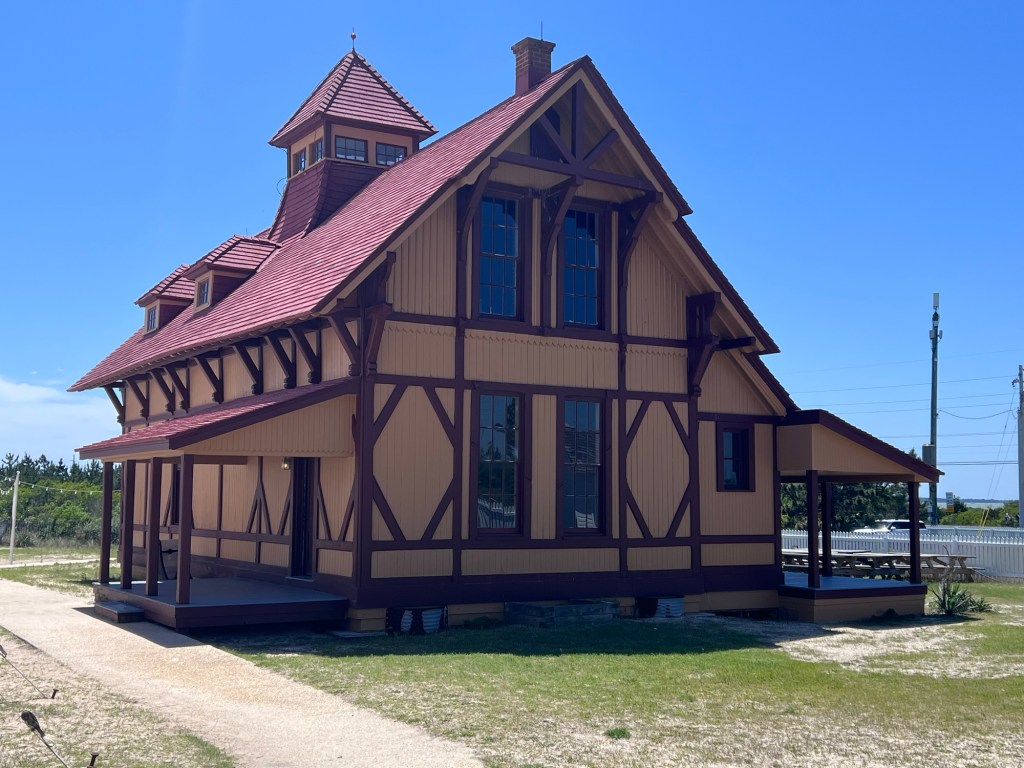
The front of the Indian River Life Saving Museum at 25039 Coastal Highway

History of the Indian River Life Saving Station:

(From the Delaware State Park website)

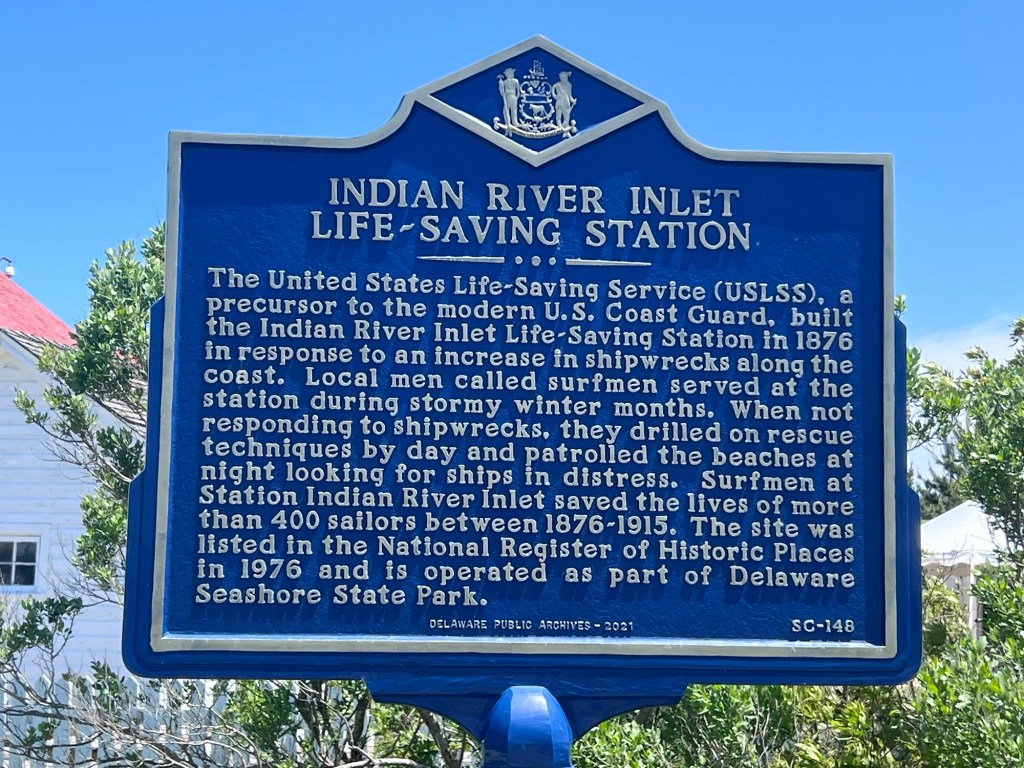
The original Indian River Life-Saving Station was built in 1876 for use by the United States Lifesaving Service, a government organization created to respond to the alarming number of shipwrecks along the coastlines of the United States and the precursor to today’s U. S. Coast Guard. The Life Saving Station today is a maritime museum that honors these courageous sailors and the rich history of their deeds. Listed on the National Registry of Historic Places, it is a must visit piece of Delaware history.

The front of the historical sign describing the park

The recent History of the Museum:

(From the Delaware State Park website)

The building was first located 400 feet closer to the shore, but a sand dune began to form around it almost as soon as it was finished. It was moved to its present location in 1877, and today has been meticulously restored to its 1905 appearance, complete with diamond-shaped trim. The museum is listed in the National Register of Historic Places.

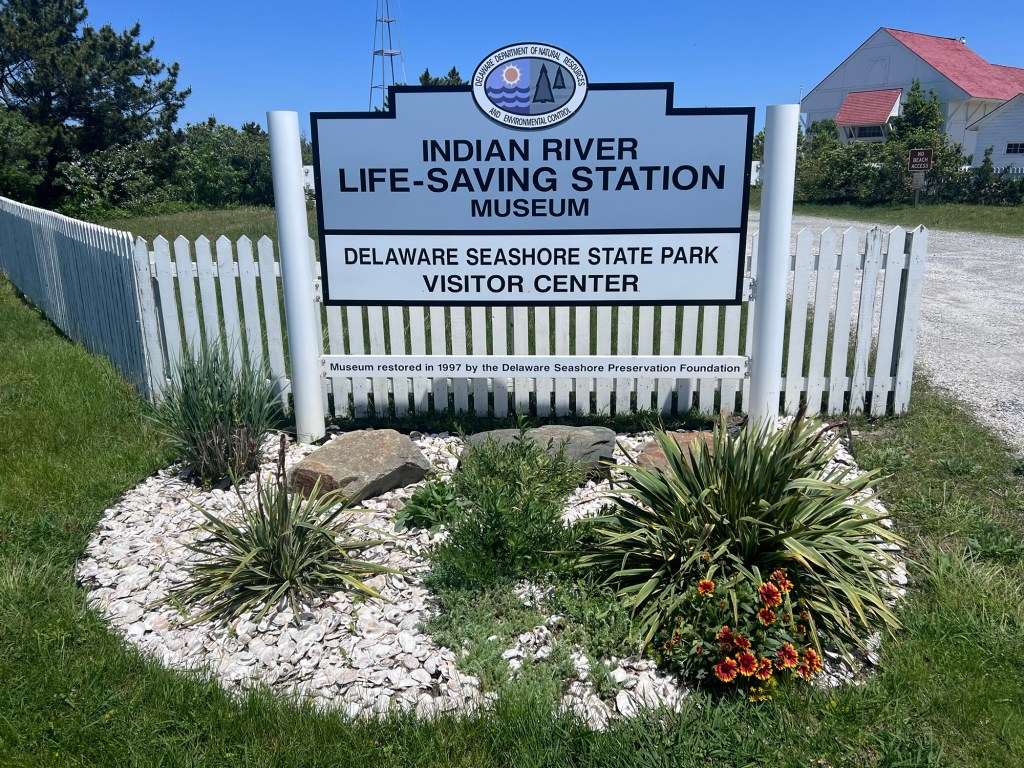
The entrance of the museum

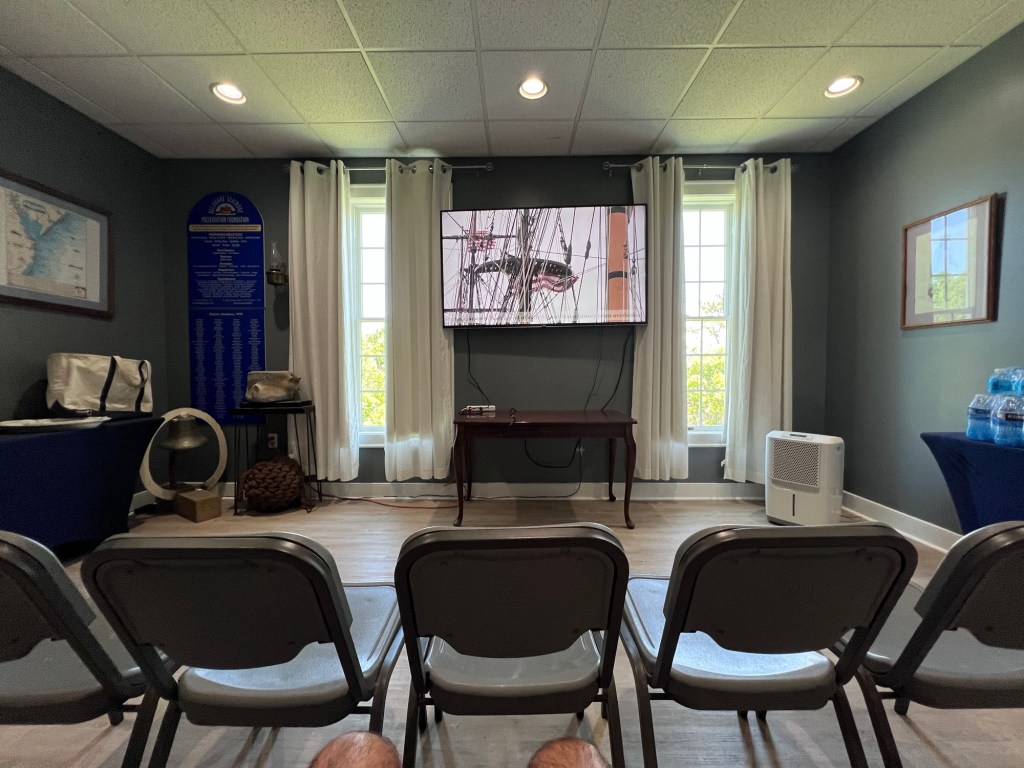
The Screening Room in the Visitors Center where you learn about the Life Saving Center

I started my tour of the Indian River Life Saving Museum at the Visitors Center with a quick video of the history of the building and the men who lived and worked here. The organization was the precursor to the modern Coast Guard. What I thought was interesting is that the way of rescuing people has not changed that much since the 1800’s. It has modernized with equipment and knowledge but the process is still similar to what it was then.

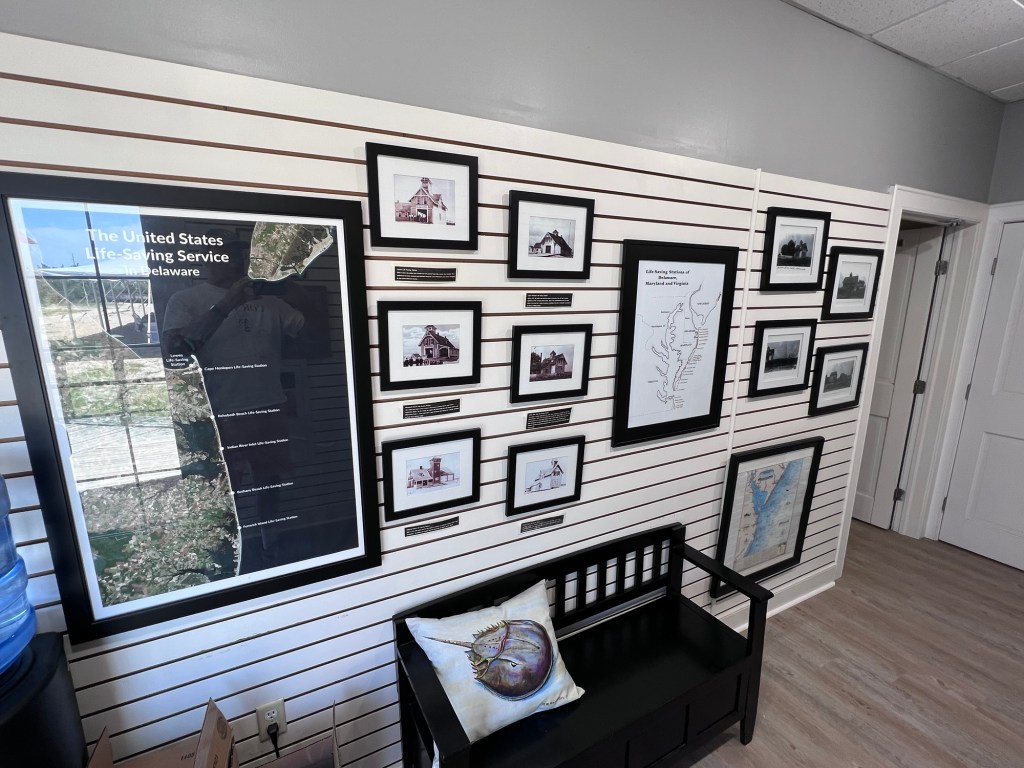
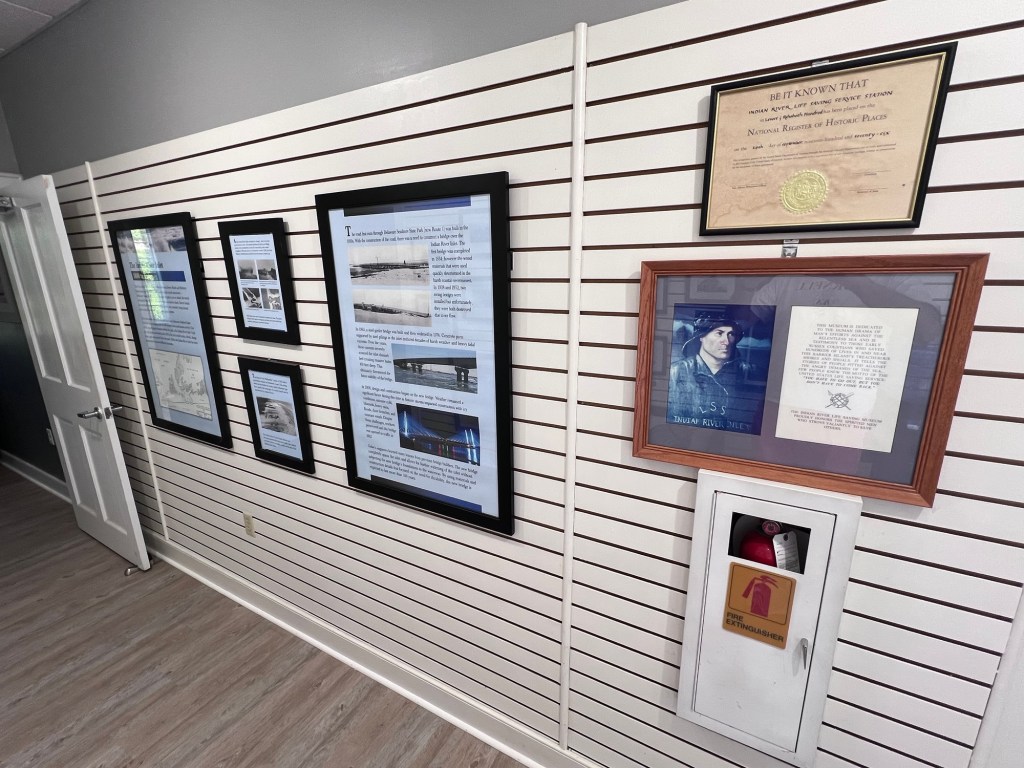
The Screening Room lined with historical pictures

The Screening Room lined with pictures of the history of the area

You can take two audio tours as you start to tour the station building just by calling into your phone, one of the exterior and one of the interior, room by room. Each room and many objects have a number assigned to them and you can listen to a description of the subject matter.

The Rescue Saving Station from the exterior. The building has a Queen Ann design.

The first room you enter is the kitchen area where all meals were prepared and the men ate their meals. These men could not leave the facility because of the hours and type of work required, supplies were brought in and stored in this area.

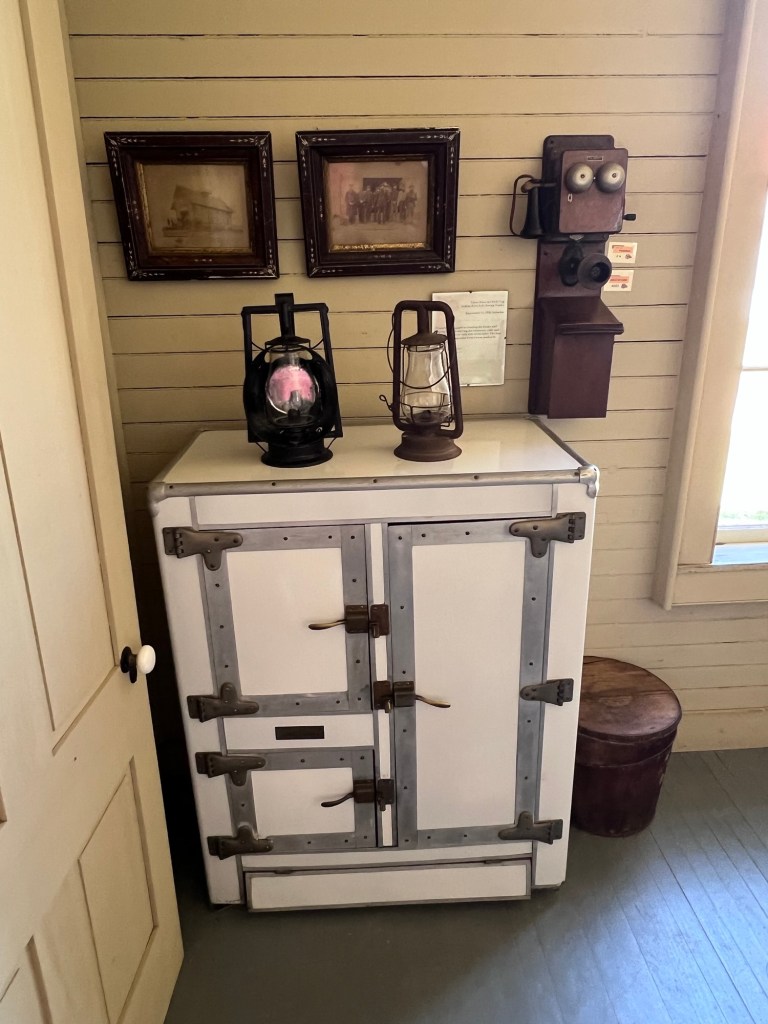
The old ice box where foods were stored

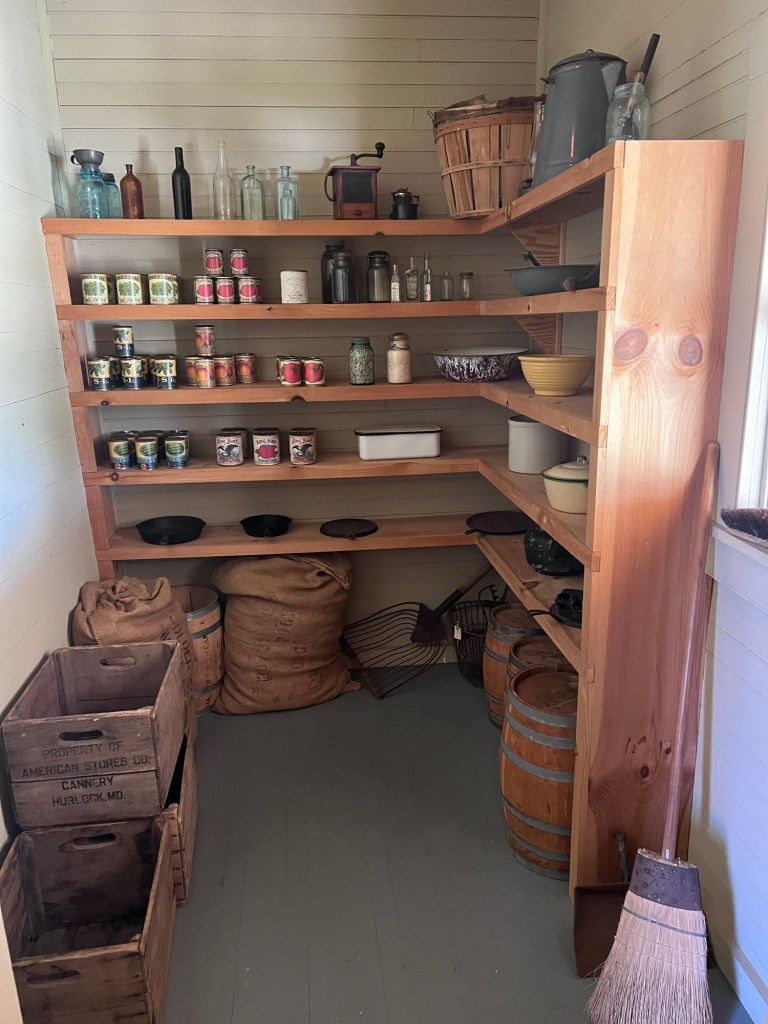
The pantry area where all the dry goods were stored

For recreation, the men read, entertained themselves with music and conversation. This room was used for recreation purposes and some down time for the staff.

The first floor downstairs room was used for entertainment and recreation during the downtimes

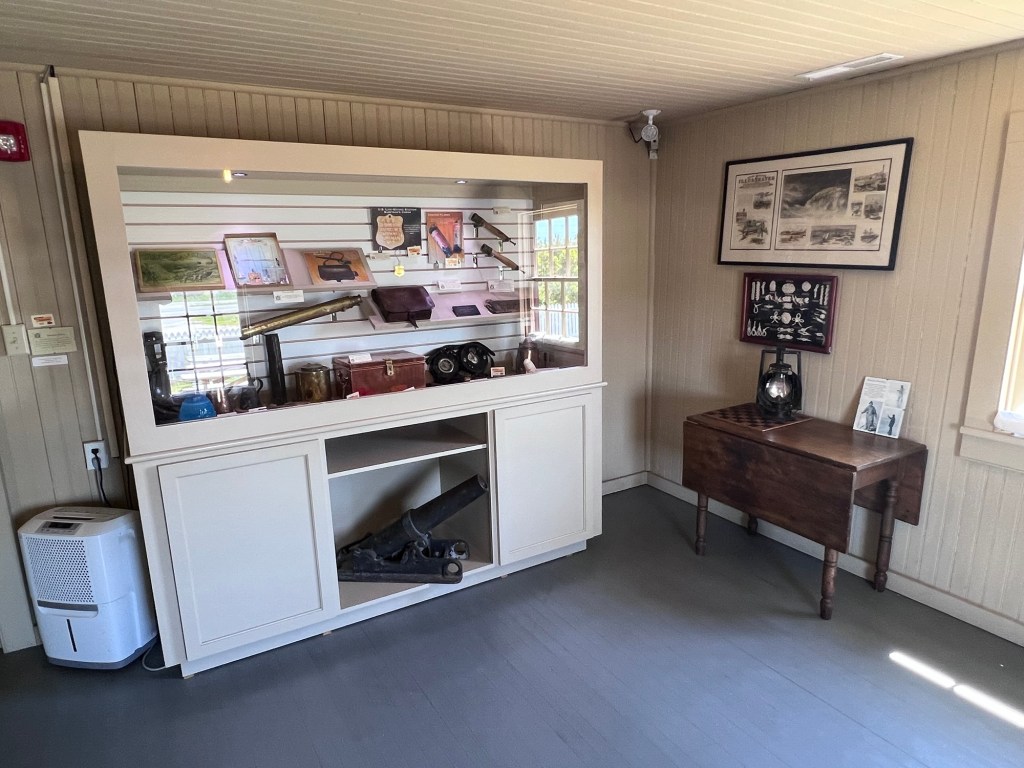
Old equipment and relics on display in the main room

Old equipment used at the station house

Methods of tying ropes and nautical rescues illustrated

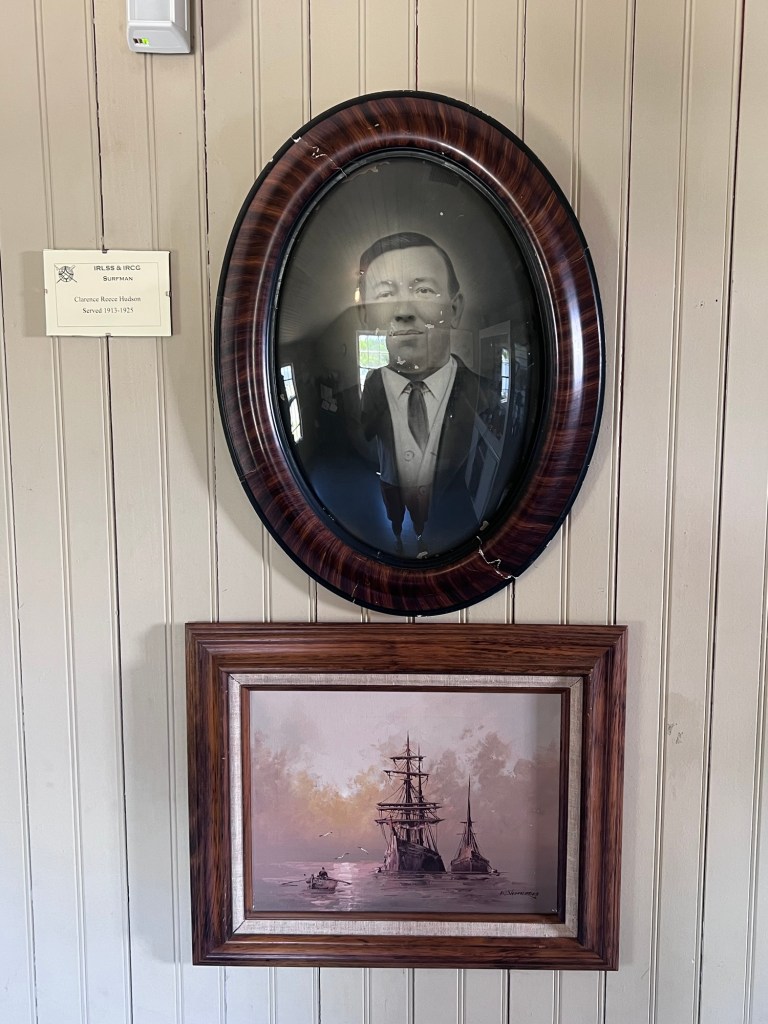
Portrait of one of the old station masters

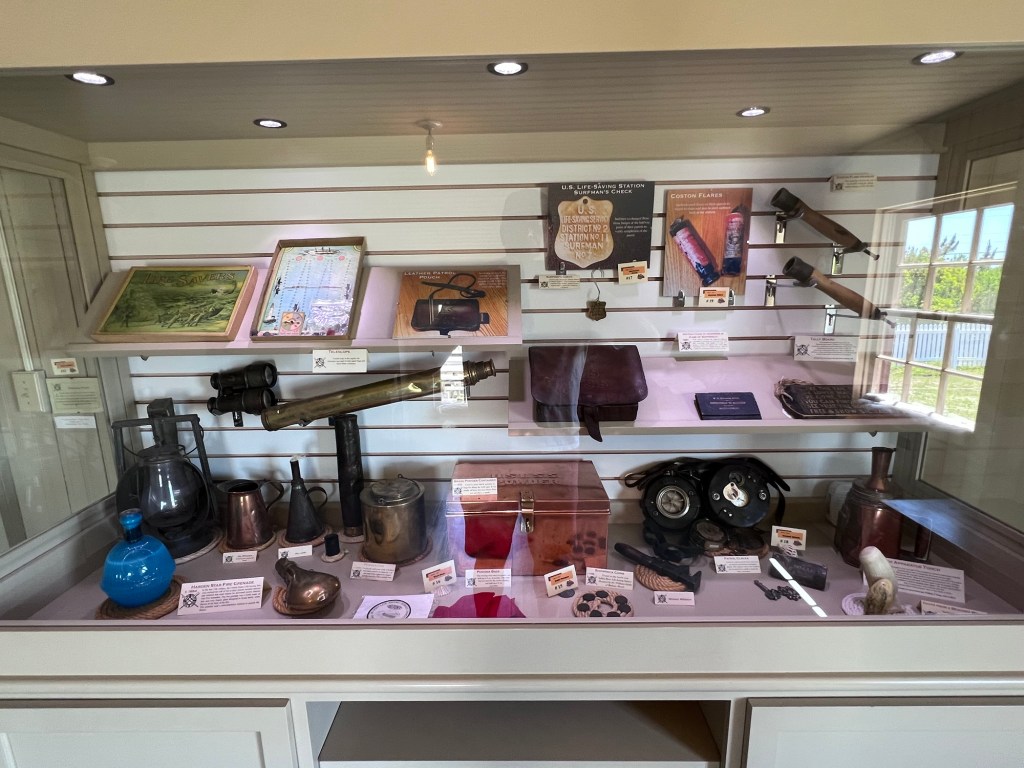
The main room held all the rescue equipment used to save both people and property. This included all the boats, ropes, pulleys and buckets for rescue.
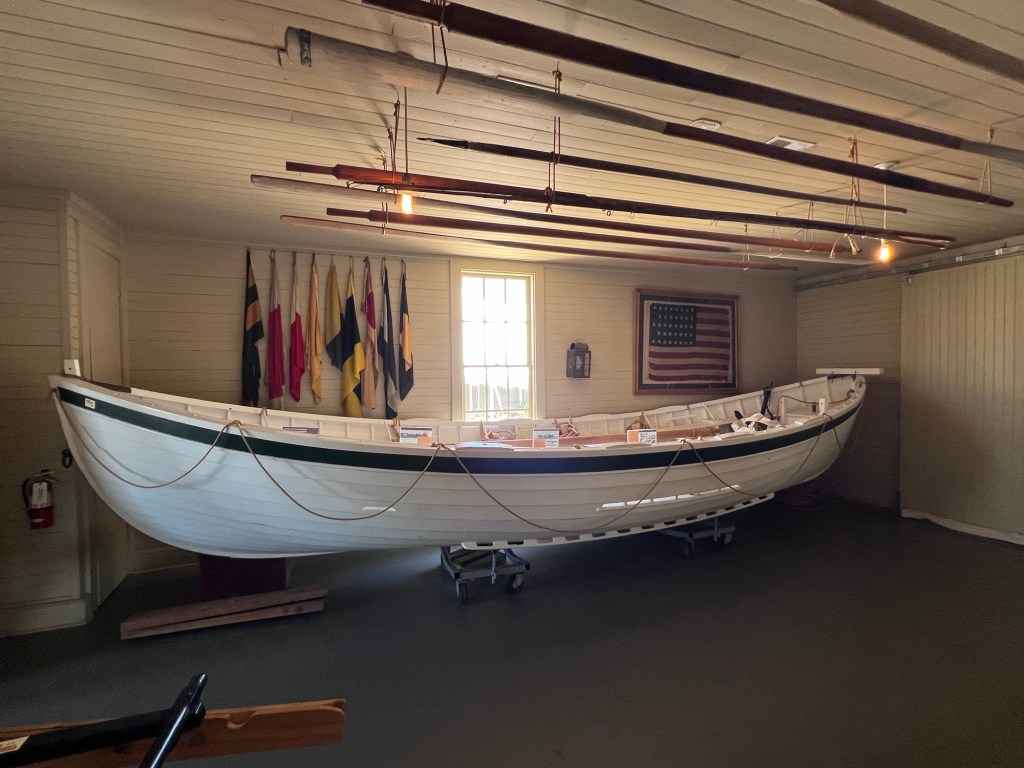
The main rescue boat and paddles

The rescue boat used by the station to save people and cargo

Ropes and wenches to save and pull in damaged vessels

The bucket rescue method

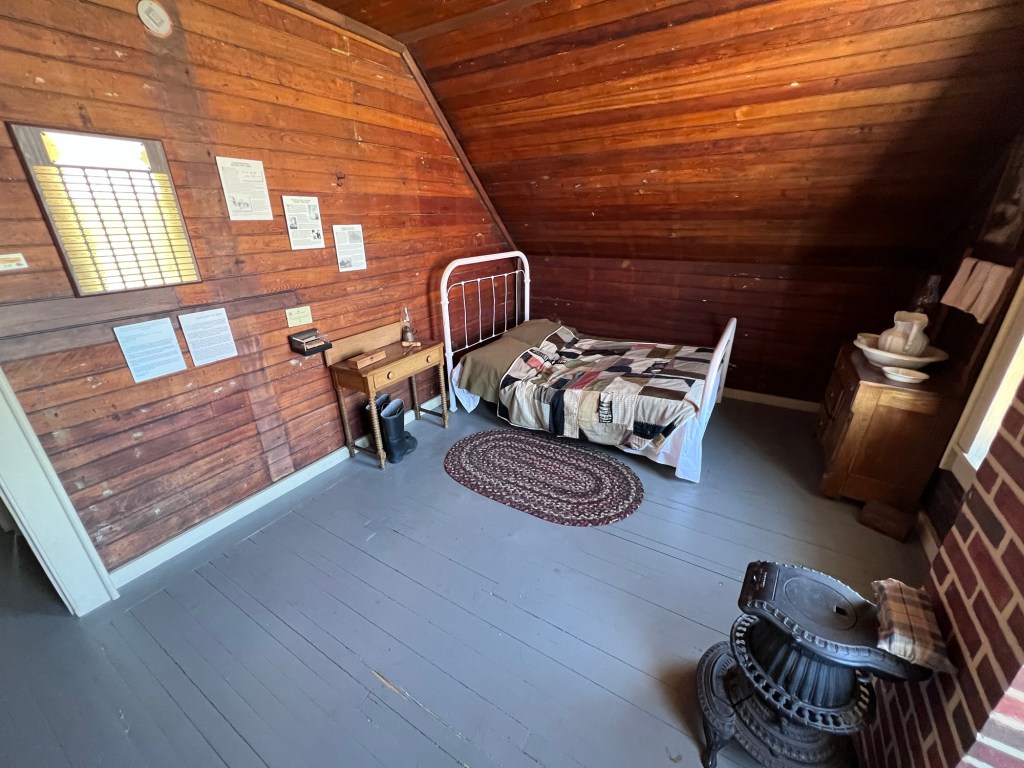
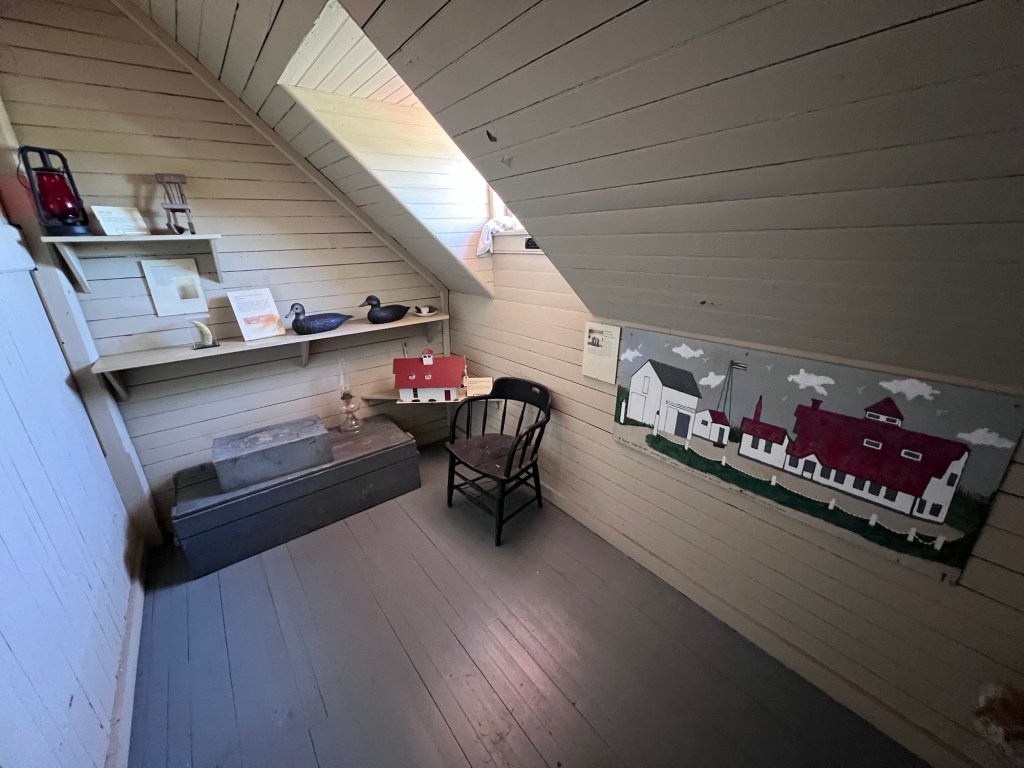
The second floor contained the living quarters. Since the Team worked in shifts, pretty much no one left the building except for small breaks. The men slept in shifts with one man working night duty in four hour intervals to watch the shore for wrecks.

The living quarters for the station master

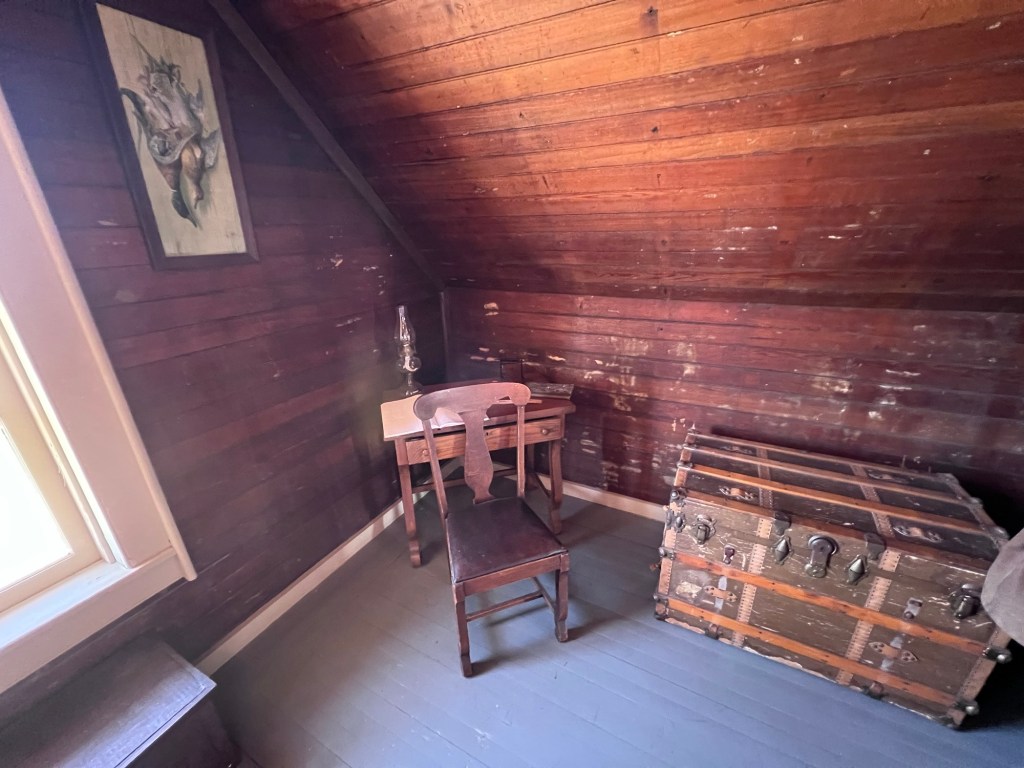
The small office in the room

The men slept on one room with the window facing the sea in a dorm like setting. The room was equipped with natural light and a view of the sea to watch over the coastline.

The bedroom of the men on duty

The bedroom

Separate room for private time

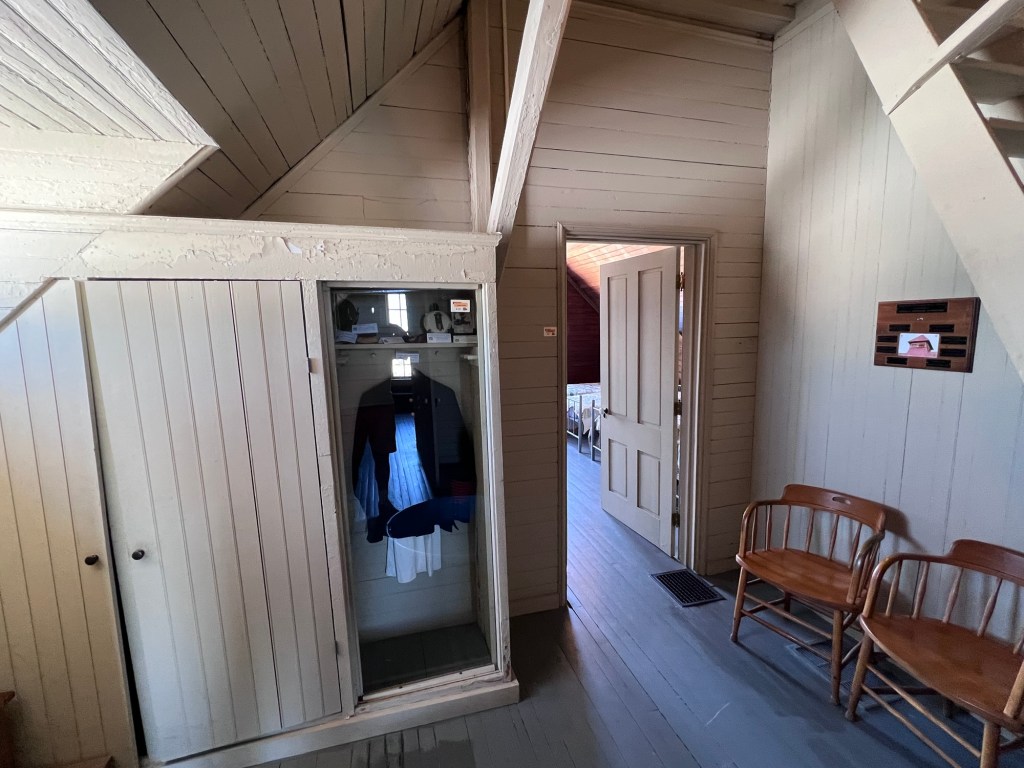
The locker storage area where each man’s personal items

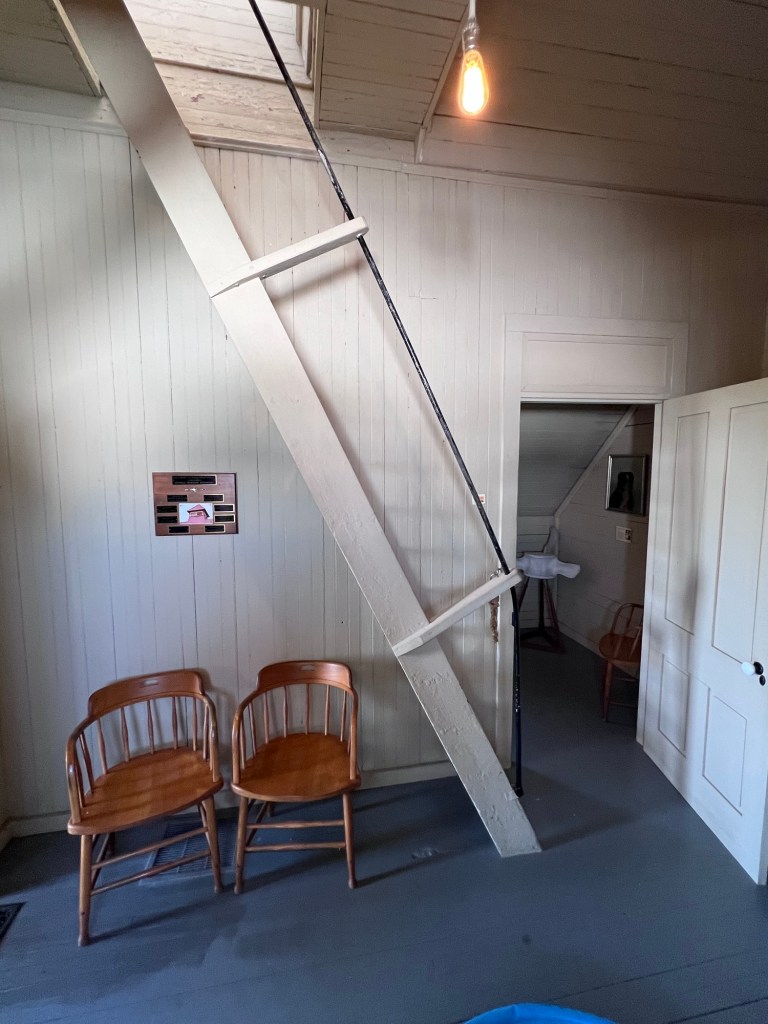
The stairs leading to the portico for lookout duties

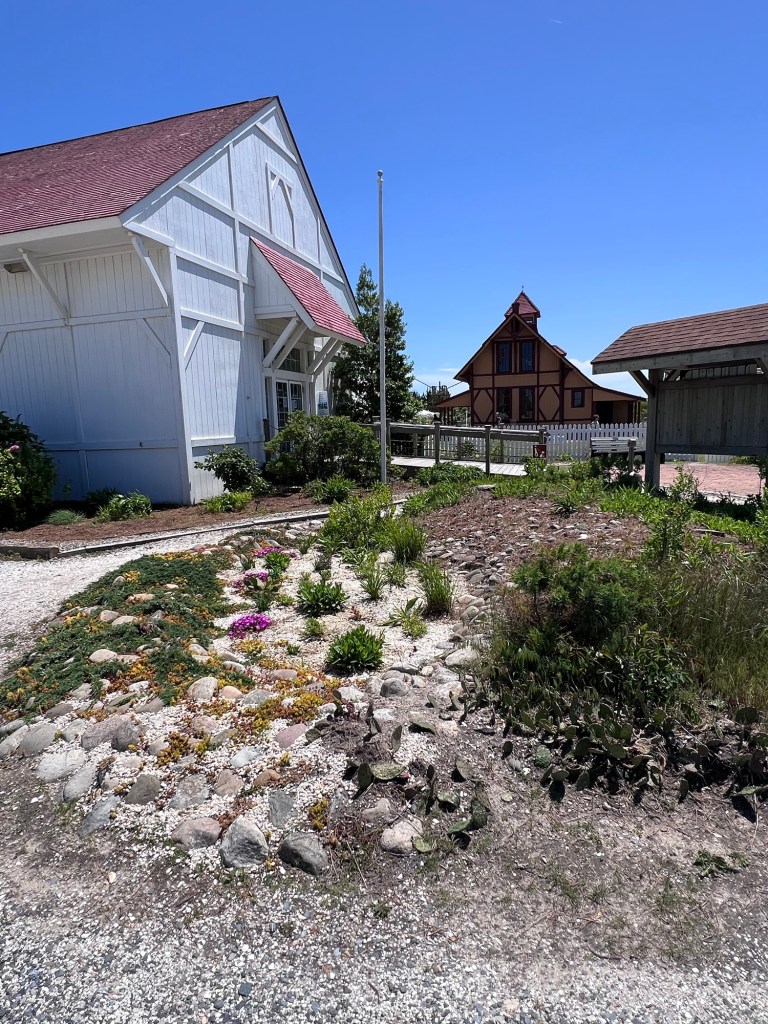
The grounds of the Rescue Saving complex and its location near the beach.

The tour was a lot of fun and gives you a glance of the heroism and isolated life of these men must have been back then. Today there are things like rotations and vacations, opinions that some of the men back then did not seem to have. Still these brave, well trained men kept the beaches and the oceans safe for many seafarers.