Lewes Life Saving Station & Museum
2 Shipcarpenter Street
Lewes, DE. 19958
(302) 645-7670
Open: Sunday-Tuesday Closed/Wednesday-Saturday 10:00am-4:00pm (In Season April 1st-October 11th-closed the rest of the year)
Admission: Free but a $5.00 donation is appreciated
My review on TripAdvisor:

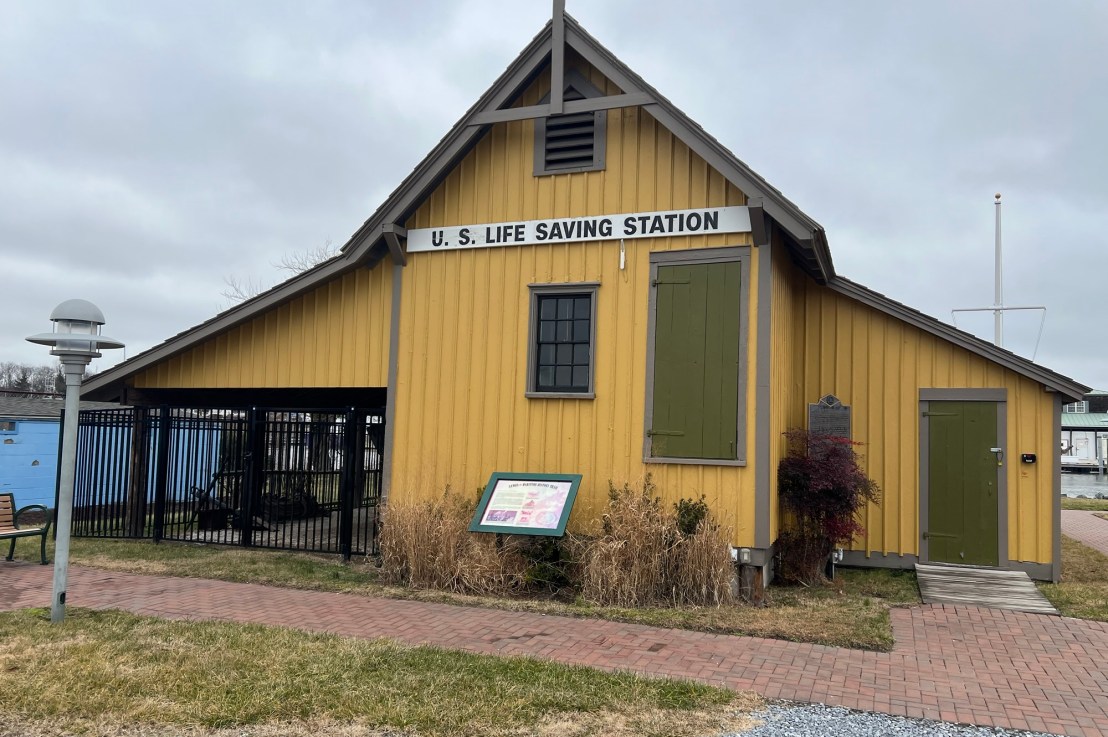
The back of the Lewes Lifeguard Station Museum
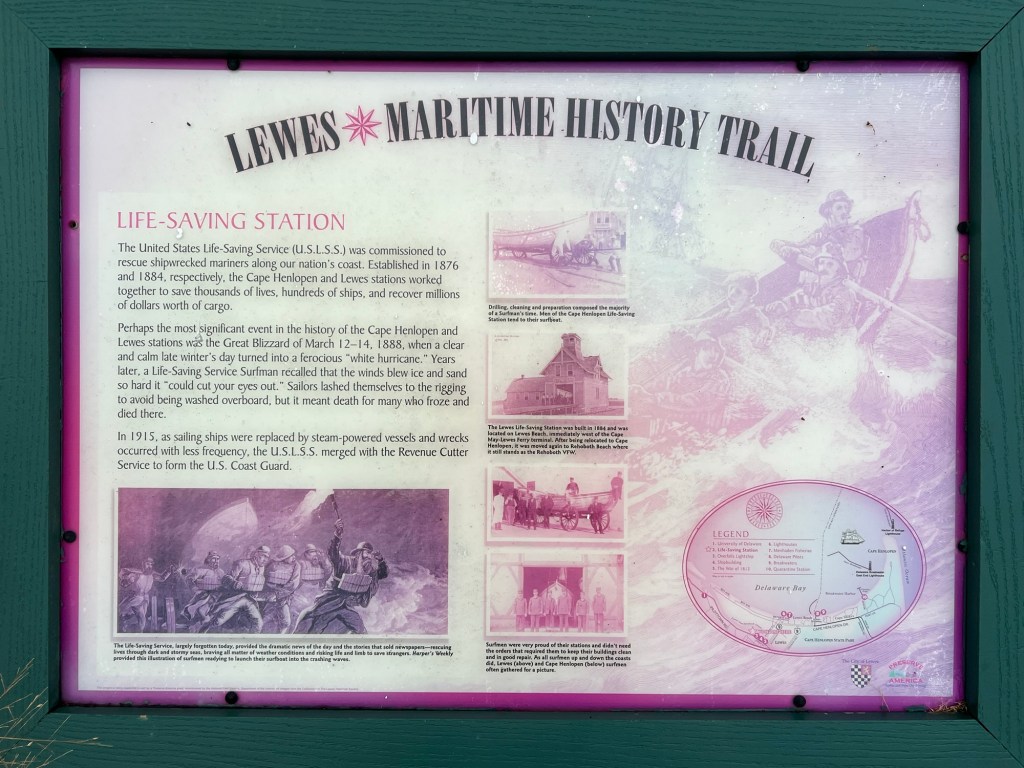
The description sign up front
I recently visited Lewes, DE for ‘Maritime Day’ by the harbor and there were a lot of interesting booths on the watersheds, environmental agencies that discussed their purpose with harbor issues and what the town of Lewes does for the environment.
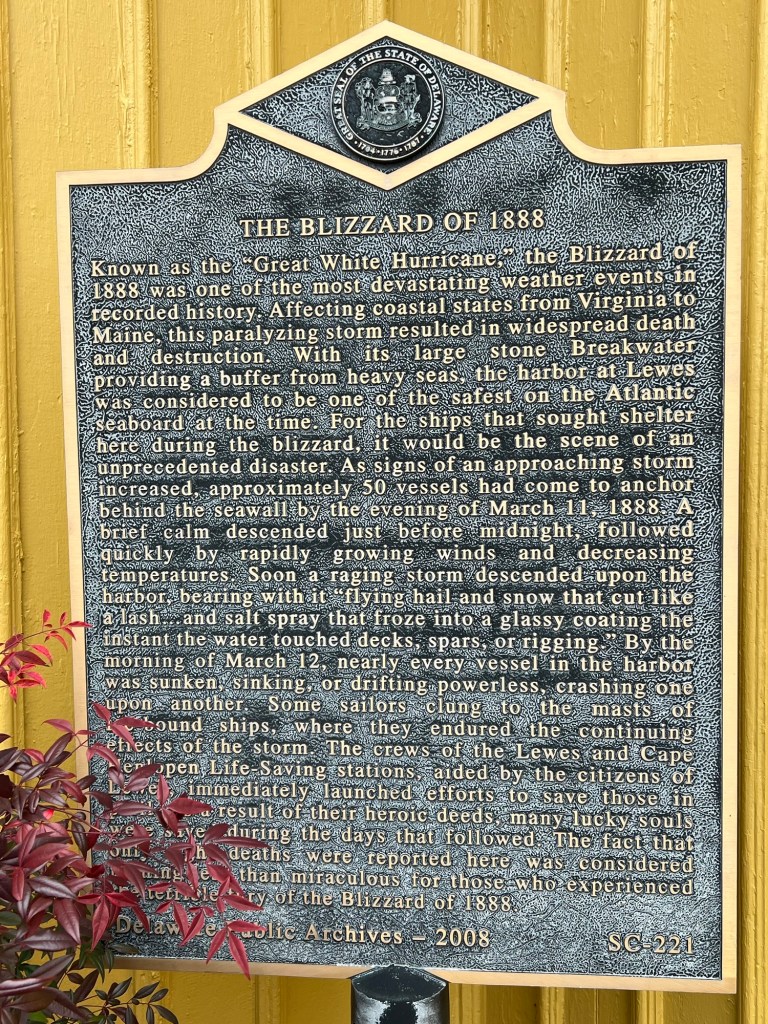
The historic Blizzard from 1888
History of the Lewes Life Saving Station & Museum:
(From Historic Lewes.com)
It was also a busy station, guarding both the mouth of Delaware Bay and the protected waters created by the massive breakwaters of the National Harbor of Refuge. Its string of Keepers and their six- or seven-man crews of Surfmen enacted scores of rescues through the years and in particular won great praise for their tireless heroics during the Great White Hurricane of 1888, when they pulled scores of sailors from the frigid waters and iced-over hulks of wrecked vessels to safety.
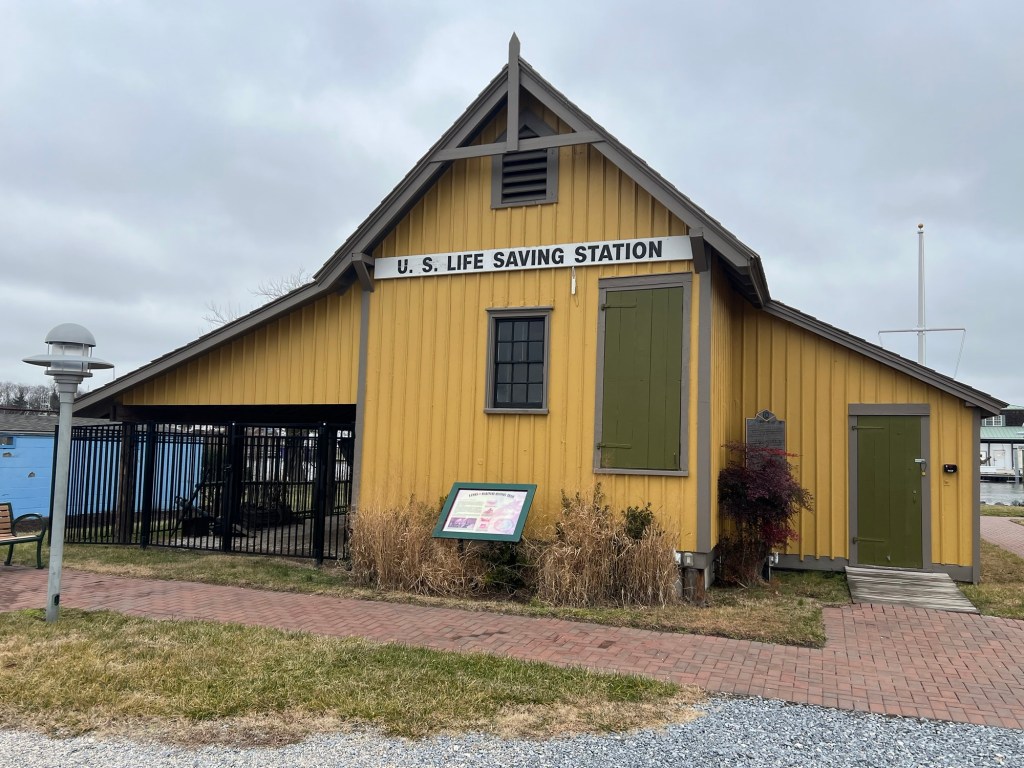
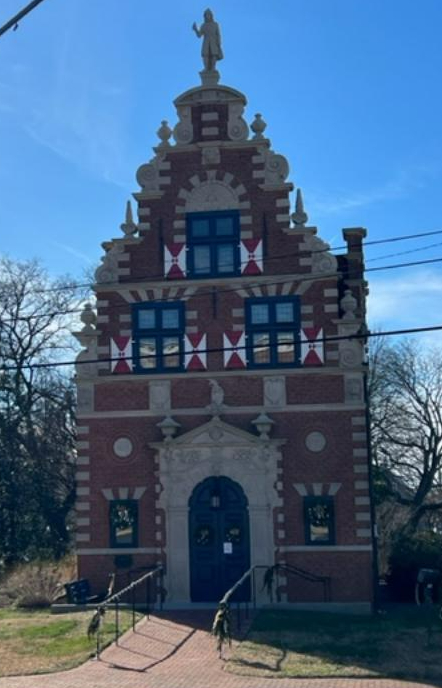
The front of the museum
The History of the Lewes Lifeguard Museum:
(From the Historic Lewes.com)
The United States Life-Saving Service (USLSS) protected the American coast and saved lives in peril at sea from 1871 until 1915, when it became a part of the new United States Coast Guard (USCG). This incredible humanitarian mission came to Lewes in 1884, making it the fourth of six stations to be established in Delaware. Lewes was among the most desirable stations for the Keepers and Surfmen who manned it, with its original location on the site of the present-day Cape May-Lewes Ferry Terminal placing it not far from town and therefore civilization.

The view of the harbor which has changed over the years
I spent my time touring the Lewes Lifeguard Museum, which is an interesting little museum on the history of life saving along the Delaware coast. The museum’s artifacts show some of the earliest and innovative forms of rescue equipment from before the Civil War. This was the precursor to the United States Coast Guard.

The inside of the museum
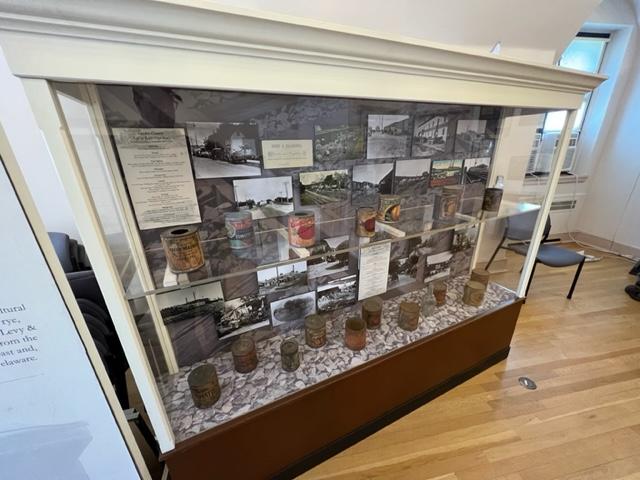
The lower part of the museum contained most of the equipment, items like rescue ropes, wenches, rescue apparatus, lanterns and uniforms like jackets and boots.

Pulled and equipment used to rescue stranded people
History of the Lewes Historical Museum:
(Historic Lewes.com)
The United States Coast Guard maintained the Station Lewes from 1915 until 1969, when it was closed, declared surplus, and sold. The original main station building was relocated numerous times and still stands today, heavily modified, as the Rehoboth Beach VFW. The Boat House preserved by Historic Lewes, a unique 1884 addition to the USLSS station intended to launch lifeboats on a marine railway directly into the harbor, was acquired from the Pilots’ Association of the Bay & River Delaware in 1979 and moved to its present home at Canalfront Park. It stands proudly beside the Lightship OVERFALLS (LV-118), together commemorating the nation’s and community’s efforts to preserve life on hazardous waters.

The bullies and wenches used by the men

Information in the Lewes Life Saving Station

Biography of the men who worked there

Information on the Boat House

Some of the ropes and wenches used in the rescue procedures
On the other side of the building was the rescue boat the ‘Life Car’, a rudimentary form of rescue boat that the docents said was effective but clunky and hard to use. It shows how we have progressed in life saving.

The Life Car rescue unit

Information on the ‘Life Car’

The ‘Life Car’

The ores and other rescue equipment used

The small rope cannon

The ores

The rope equipment

The story of the ‘Great White Hurricane of March 1888’

The Men’s Dining area in the front of the building
There was no living area in the facility but a place to gather the team, eat and socialize when manning the station.
History of Lewes Lifeguard Museum:
(From the Lewes Lifeguard.com)
Guests visiting the USLSS Boat House today will find it furnished just as Keeper John Clampitt and his courageous Surfmen left it on March 12, 1888, as they pushed out into the roaring gale and whipping snow for their finest hours. It also features a display of early life-saving equipment, including the rope-and-pulley Breeches Buoy rescue system, a steel life-car, and a rare 1887 Long Branch, New Jersey-style surfboat under restoration.

The dining area and the schedule

The dining room table
The Lewes Life Saving Station & Museum is an example of early beach and shipping rescue at the East Coast Shore. It also shows the daily life of these brave men and how lonely and dangerous this job could be. It shows how times have progressed and how they have stayed the same. To save people and property.